
Kindergarten Class November/December
Dear Families,
Finally, here is your blog update. The longer it takes to get one of these up live, the more there is to write! As you read, do keep in mind that this is merely a sampling, an overview, of what happens in kindergarten. There are many more details and really, we could go on and on. Also, you should know that this is a Rosy/Colleen collaboration, both in the writing and in the activities, so reading this should hopefully give you an insight into how we work together, even though we’re not with the children together, except for special occasions.
As we move from fall to winter, our projects, songs, science experiments, stories have shifted to reflect this seasonal change. Here is a video of the apple song/story we worked on for our first months. We have began a new song/story last week that will take us through the holidays featuring King Winter, gnomes, lanterns, Jack Frost and other wintery themes.
When we practice these song/stories, we’re not just having fun and moving our bodies; the children are also developing their capacity to remember and order long sequences of events, learning how to match movement to words, working on coordination and control, inner-picturing and their imaginations, crossing the midline to encourage the right and left brains to work together, a foundational development necessary for skills like effective reading, that pairs phonetics and comprehension to the maximum degree. Enjoy!
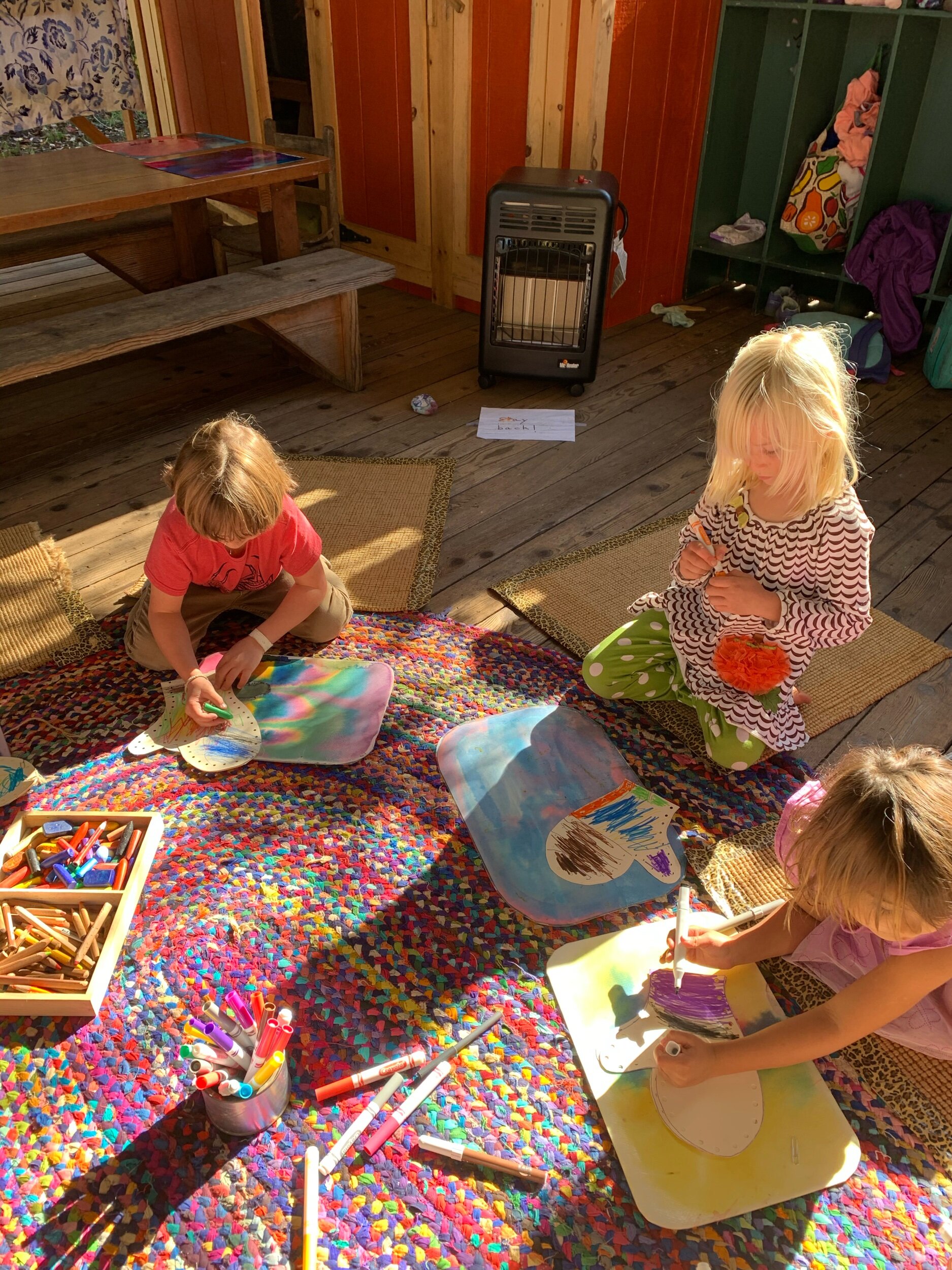
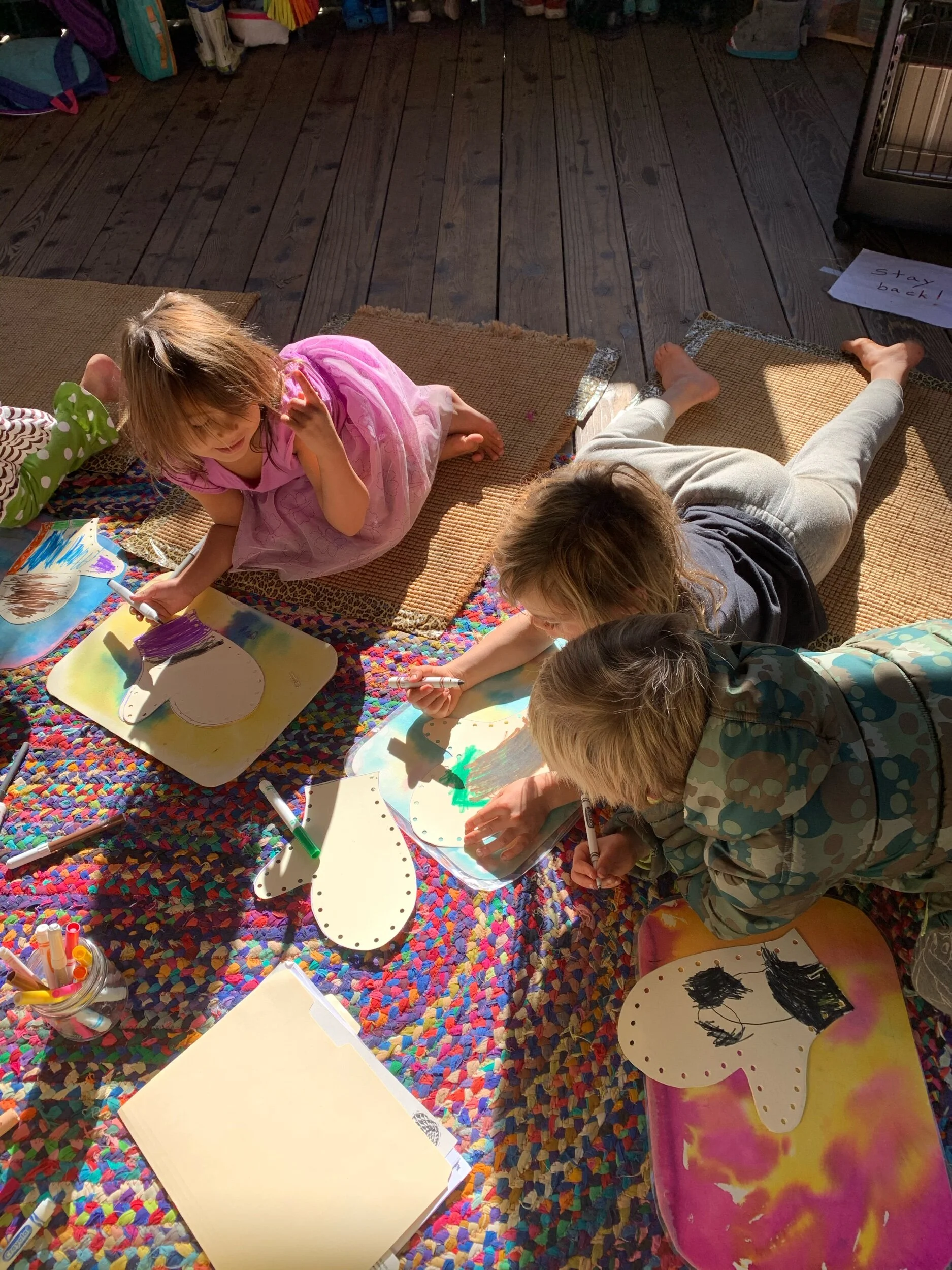
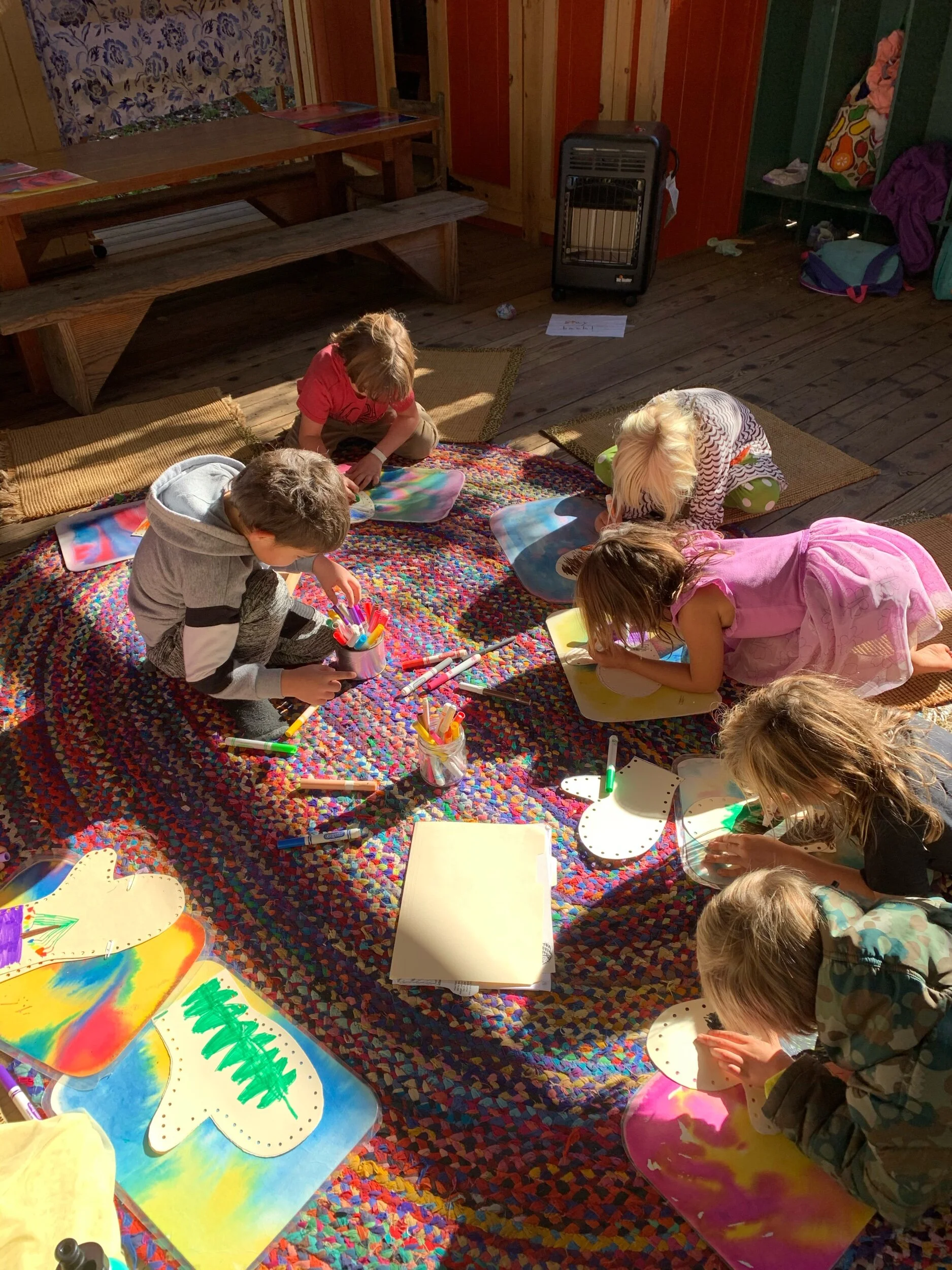
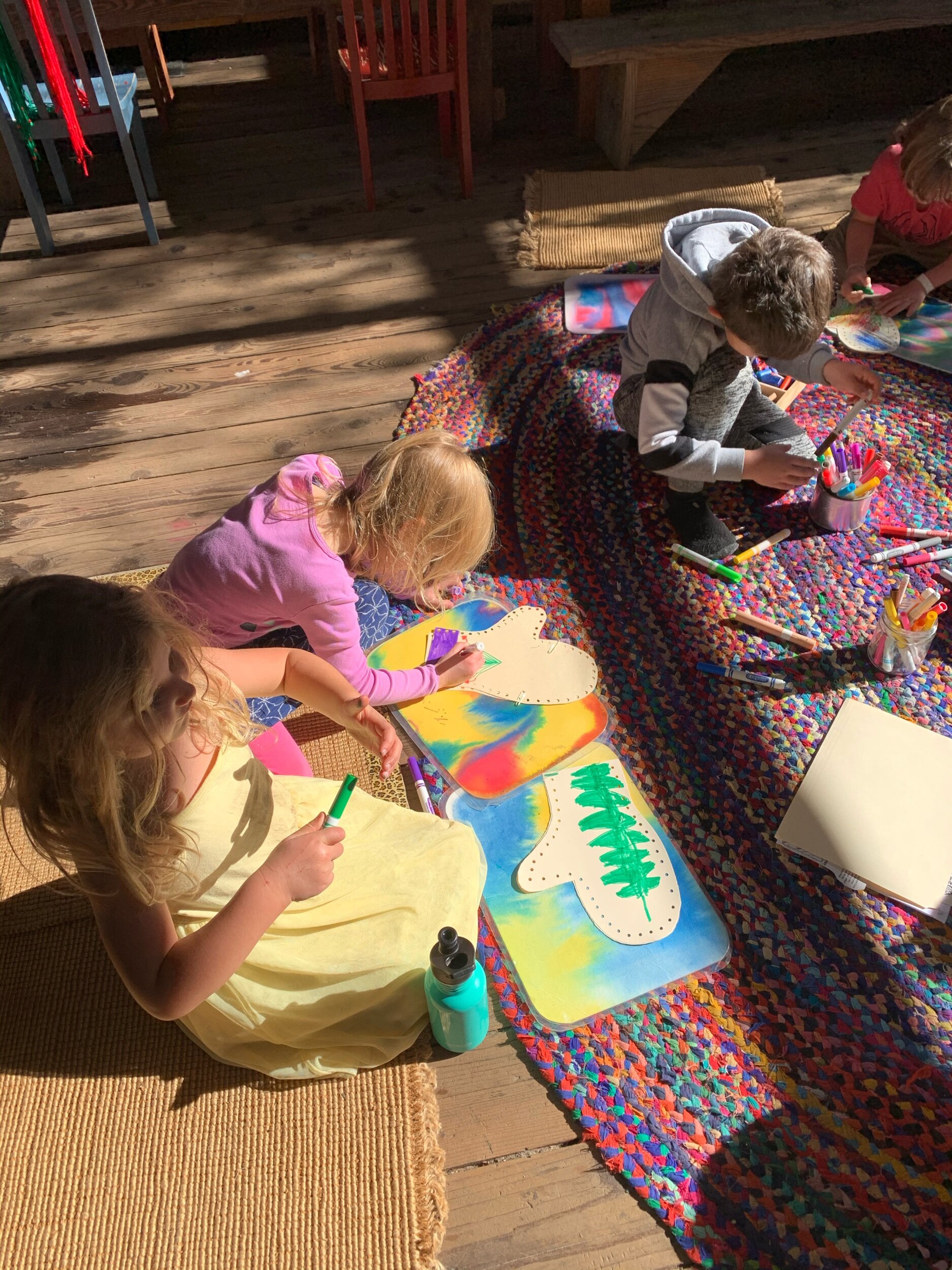
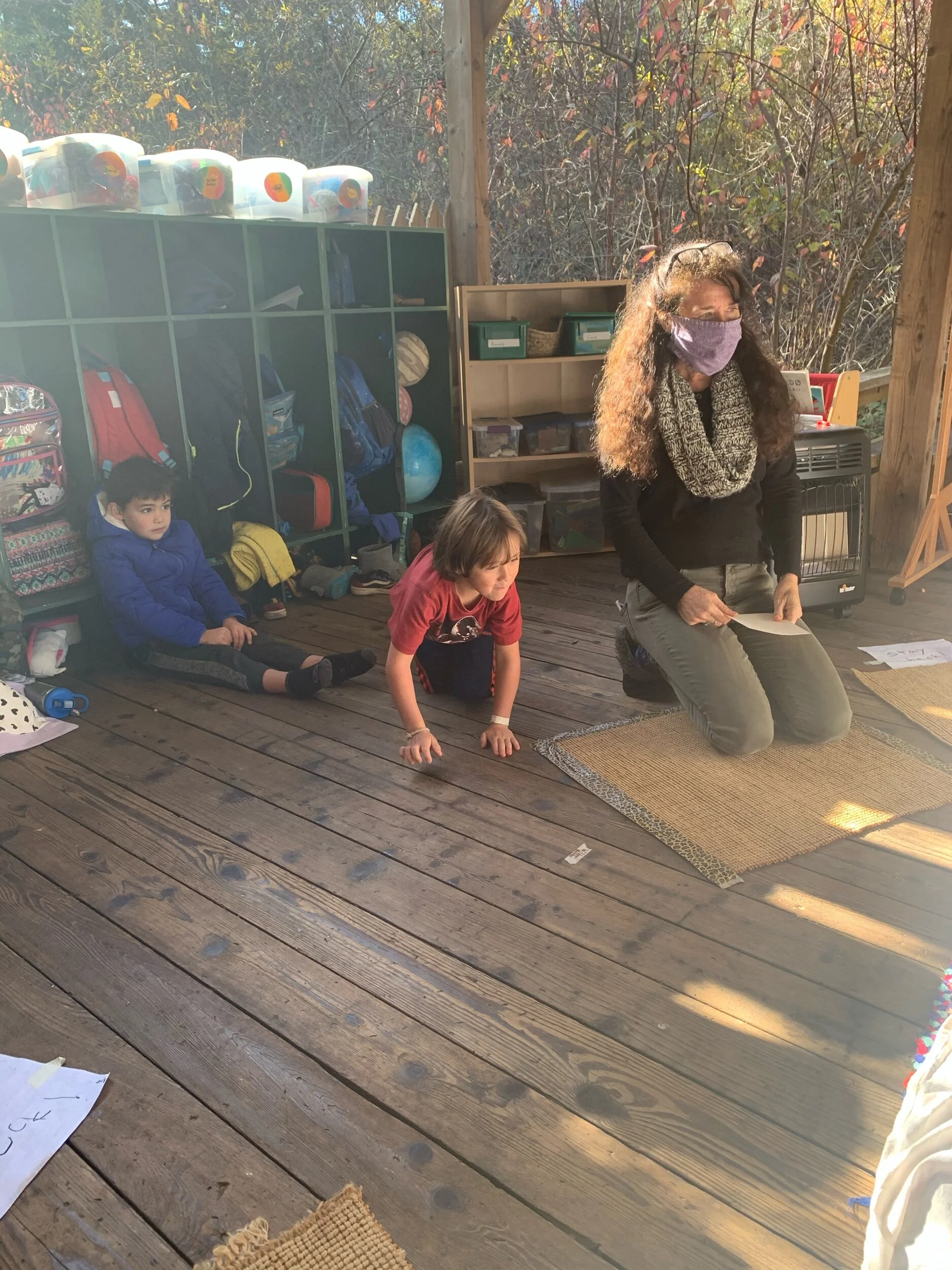
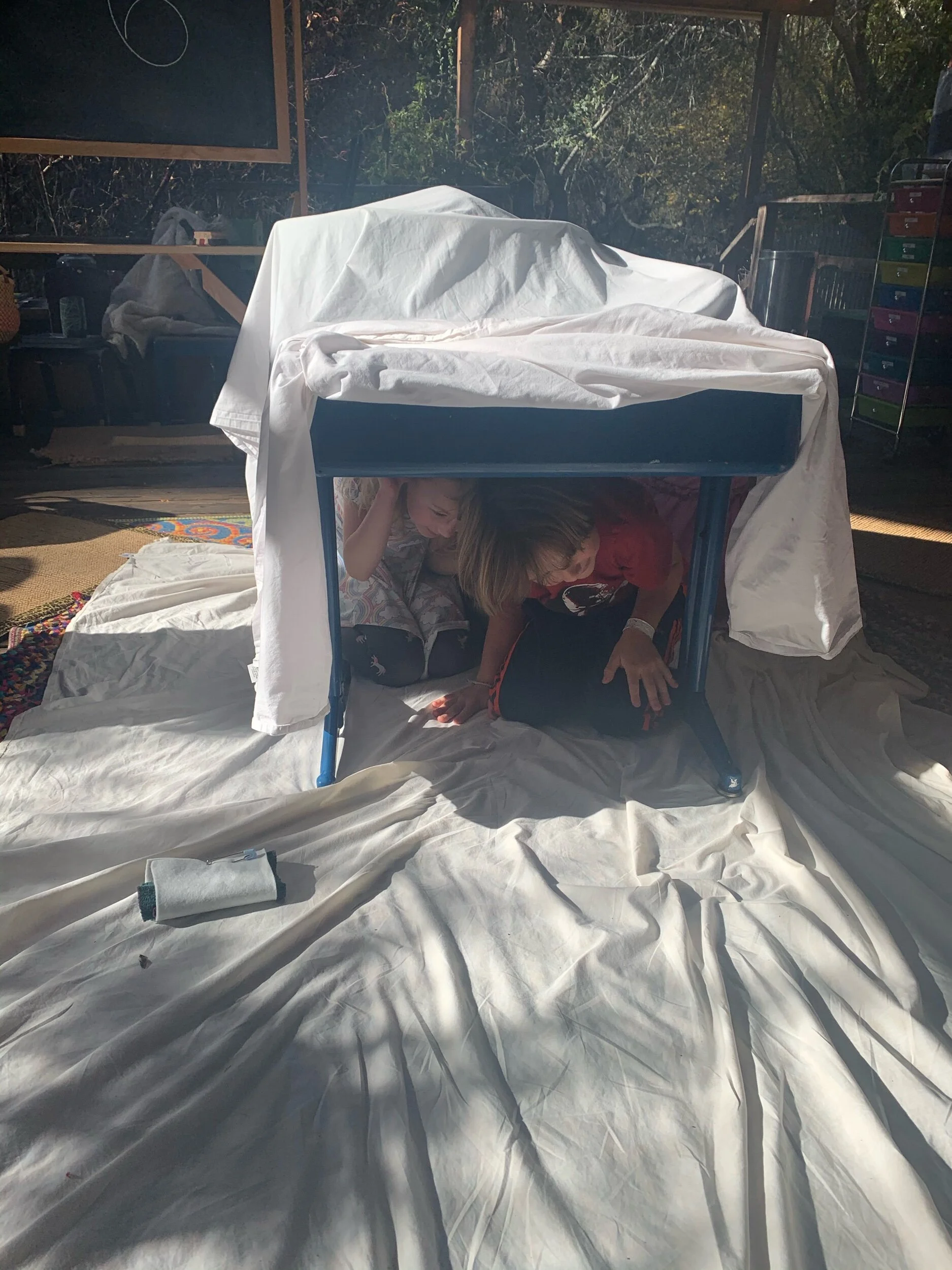
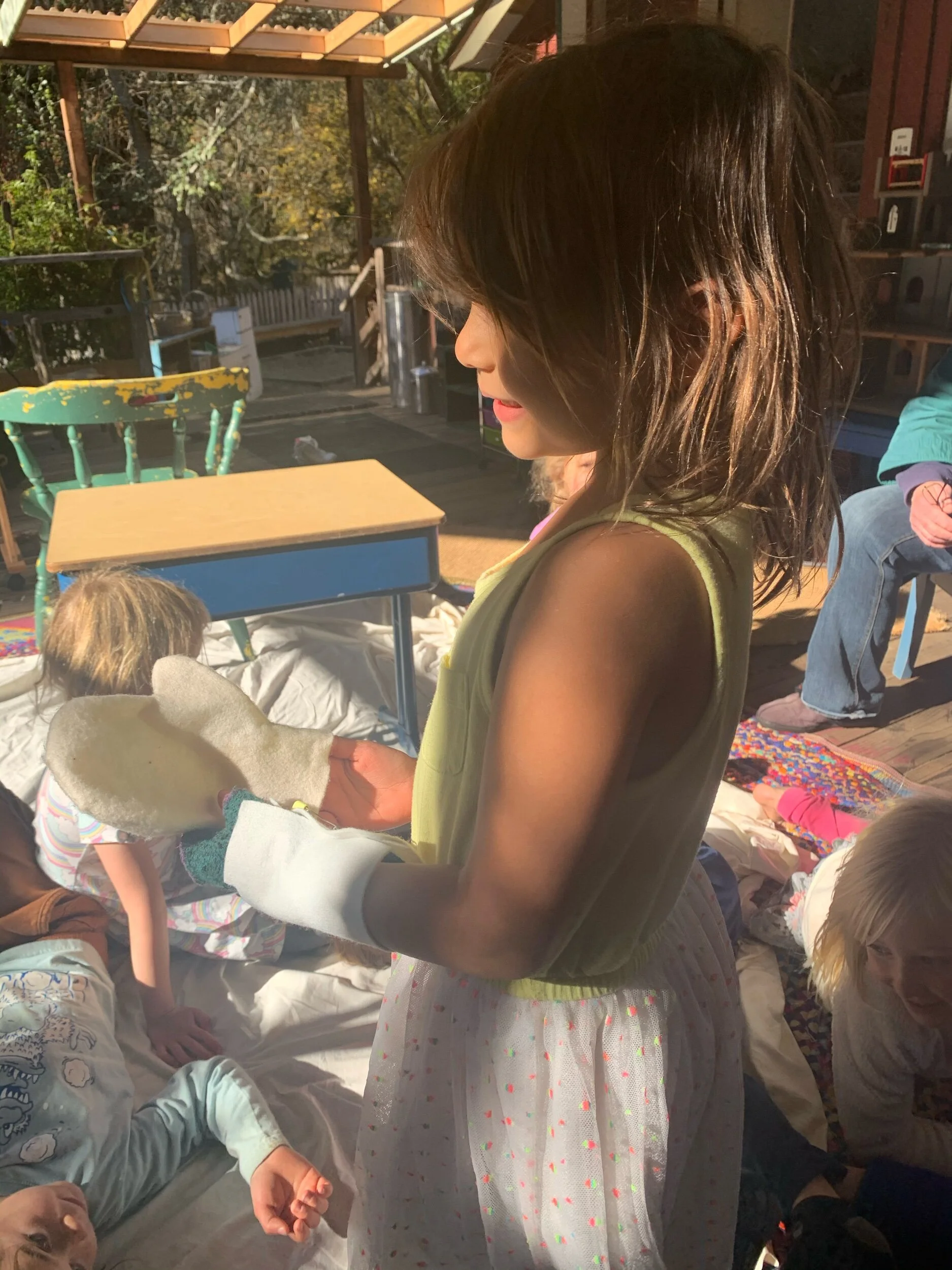
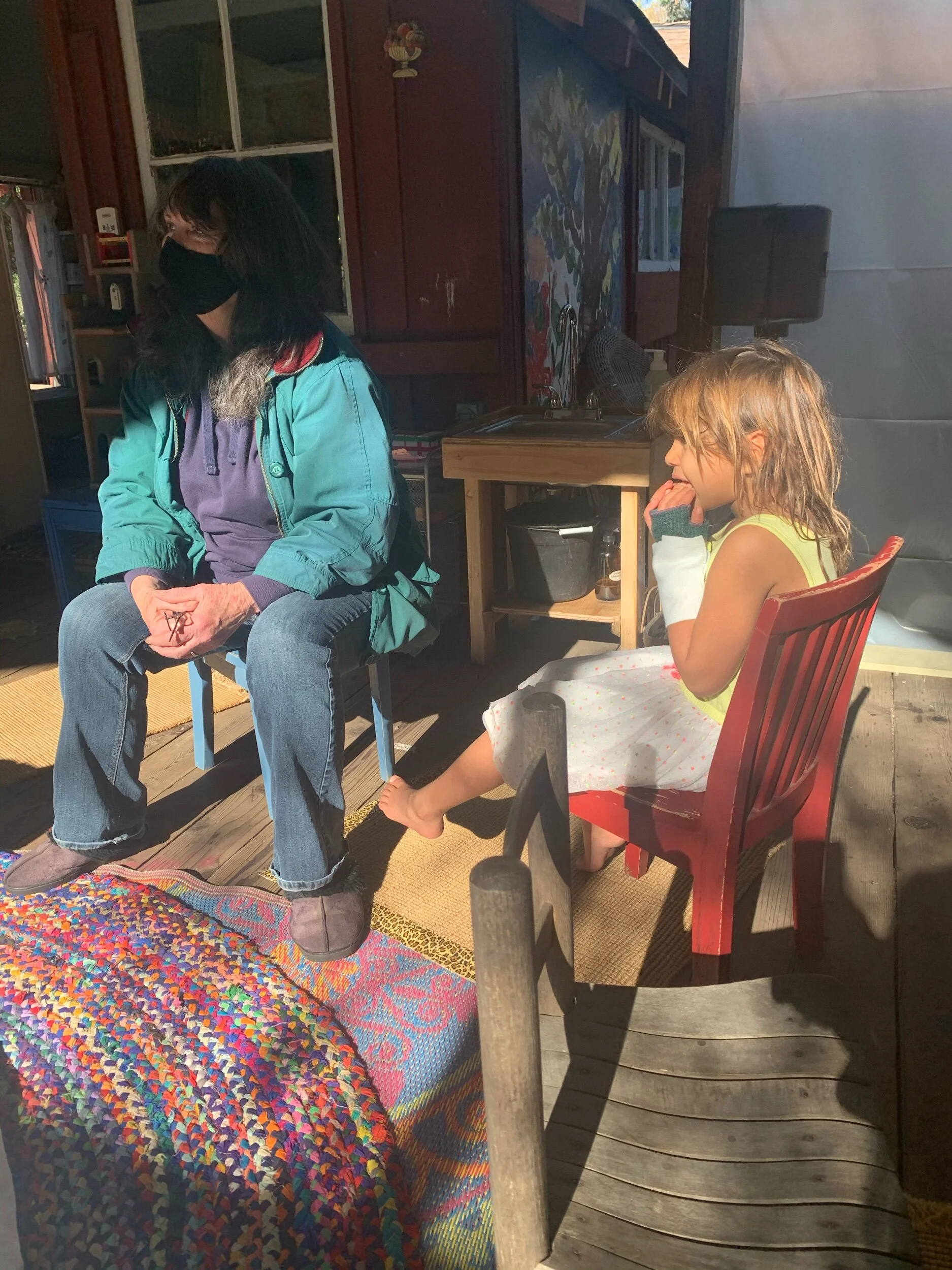
We embarked on a unit exploring the classic tale, The Mitten. We looked at Jan Brett’s version, and after an initial reading, the children cut out animal characters from the tale, laced and decorate a set of paper mittens, and used these as a guide, a map, to be able to retell the story to you at home. They also practiced telling the story at school using story stones, rocks with the animal cutouts pasted to them, and they re-enacted the story in a play bringing it to life in a very physical way. Here are some highlights from this rich endeavor. The last four shots are the play performance.
Another classic story that provided a jumping off point for curriculum was “Stone Soup,” a story with numerous versions about a village that comes together as a community, inspired by the wisdom of three travelers who show them how to make soup from stones, and thus open their hearts with generosity. The story is traditionally told/acted out each year at Orchard during Thanksgiving time, and we were glad to still be able to make it part of our curriculum, albeit in a downscaled way. The story became the inspiration for another play. David led the performance as the traveling gentleman with his pot and stone looking for soup ingredients.
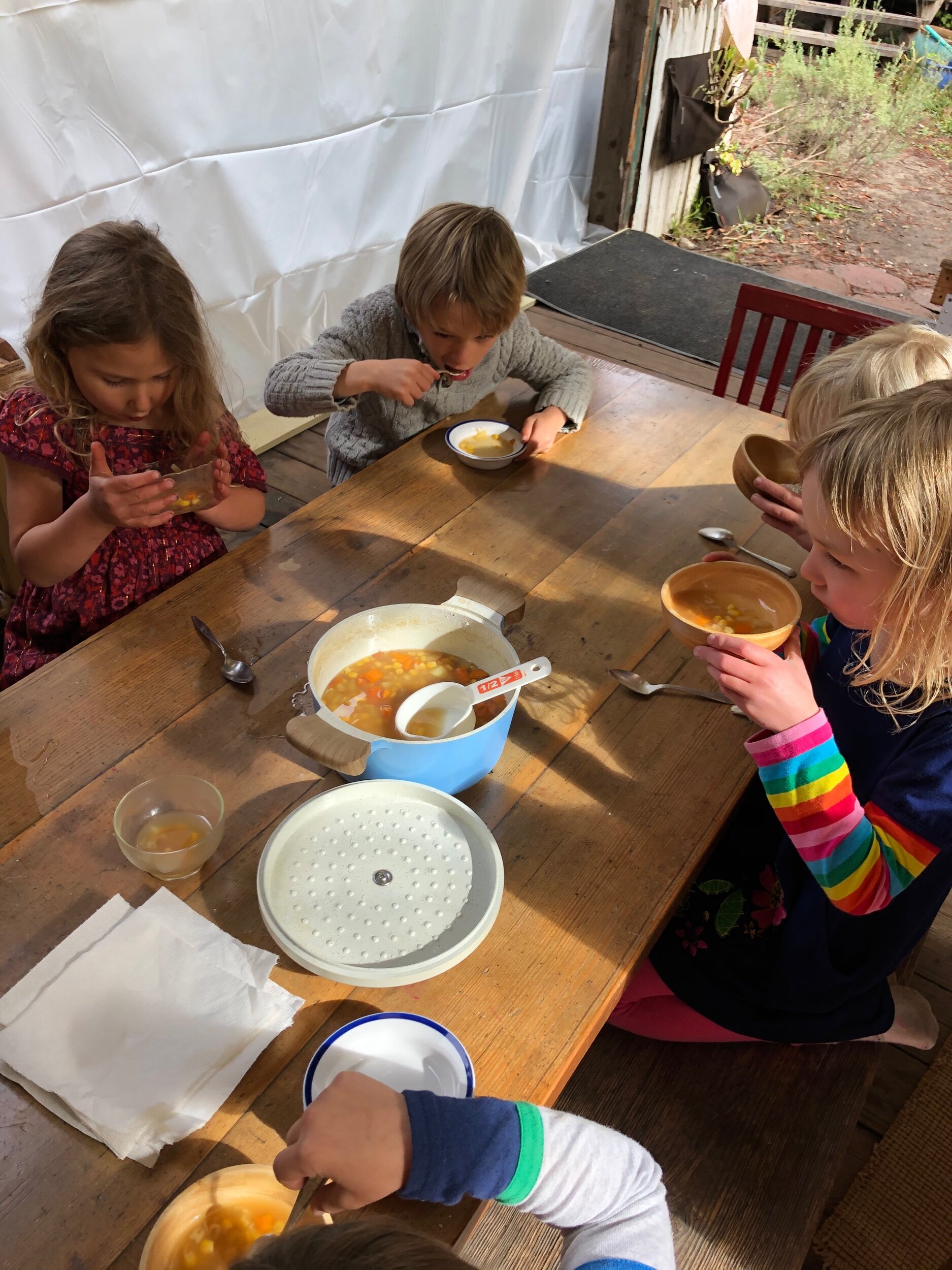
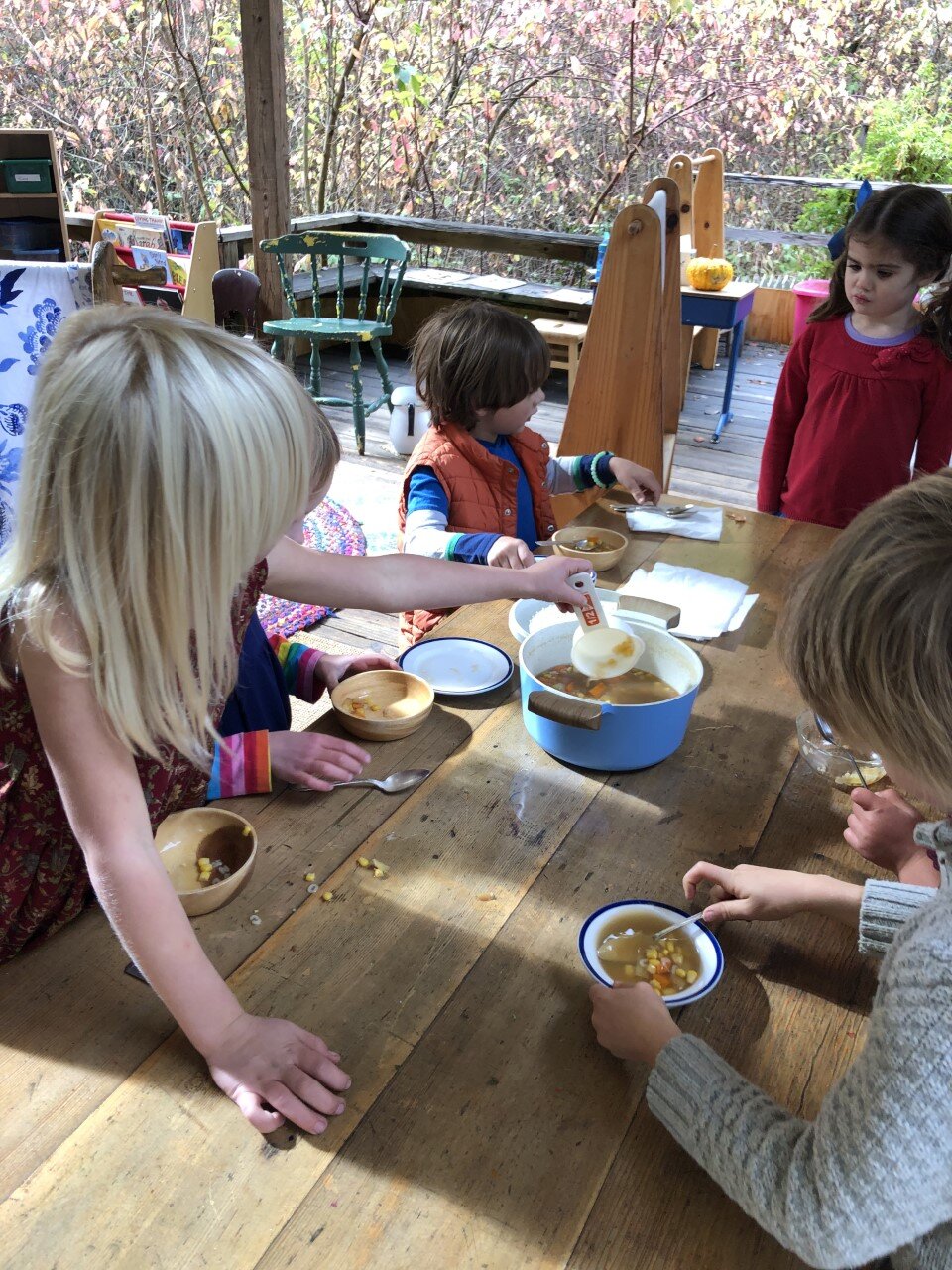
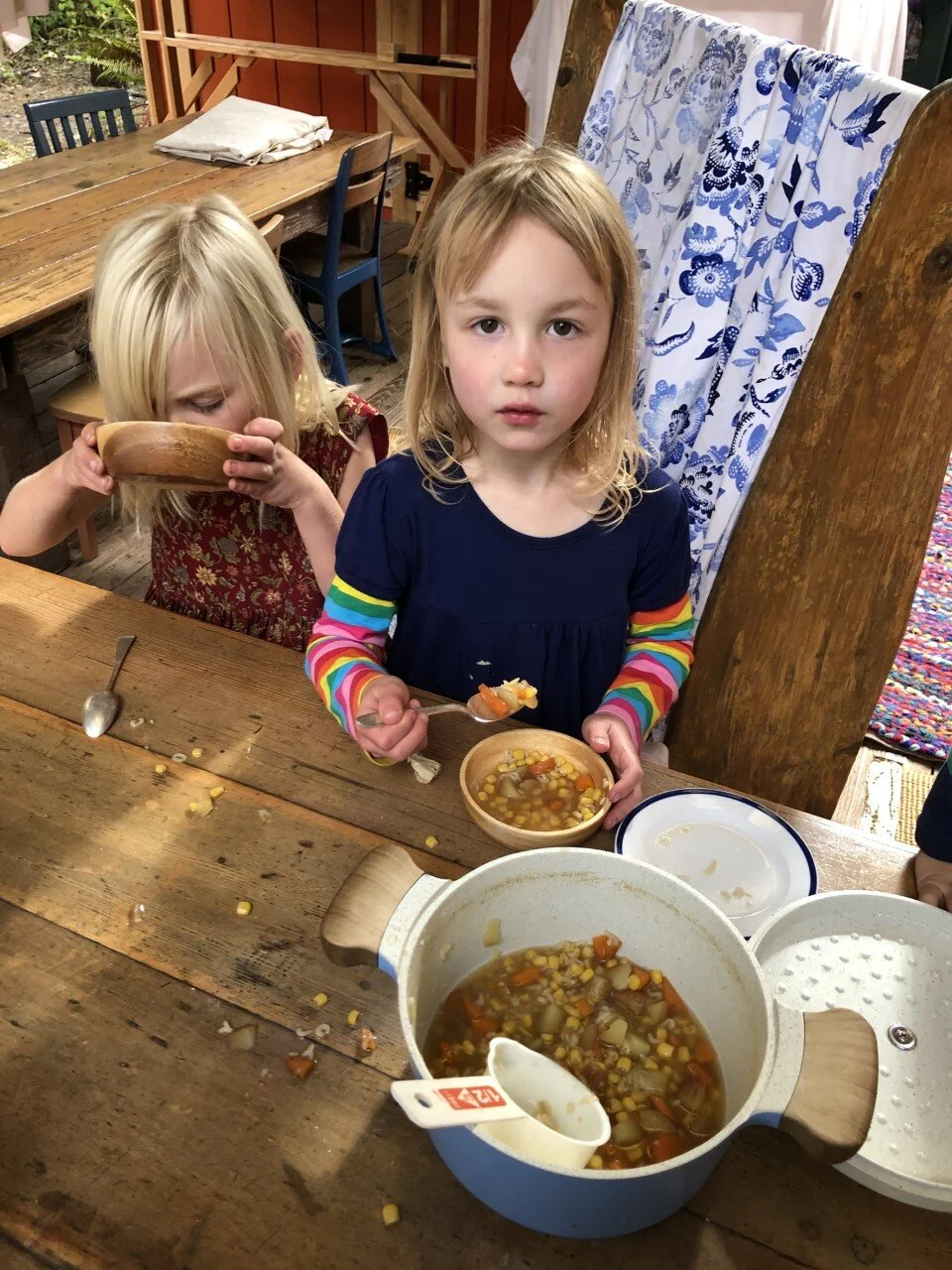
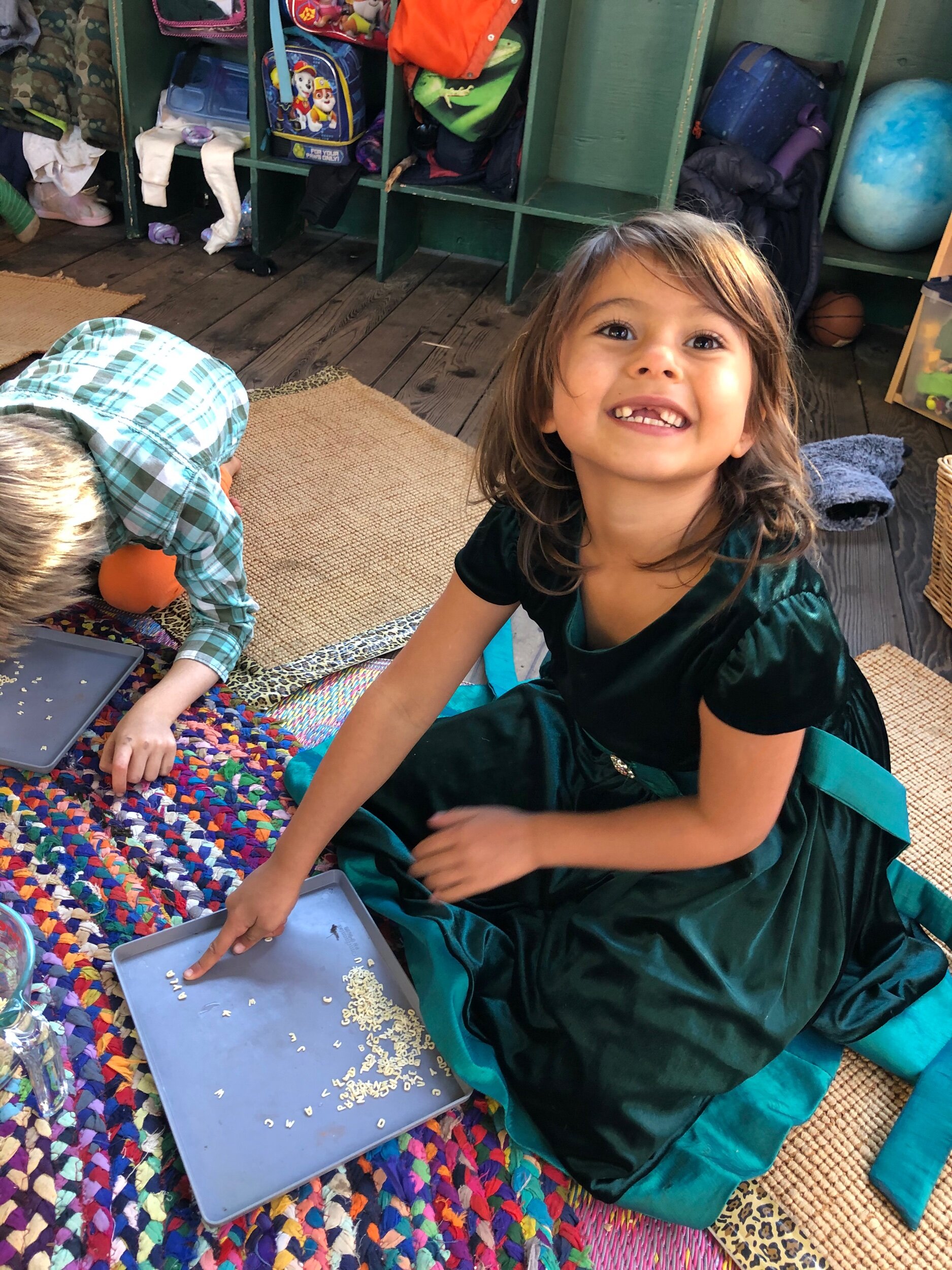
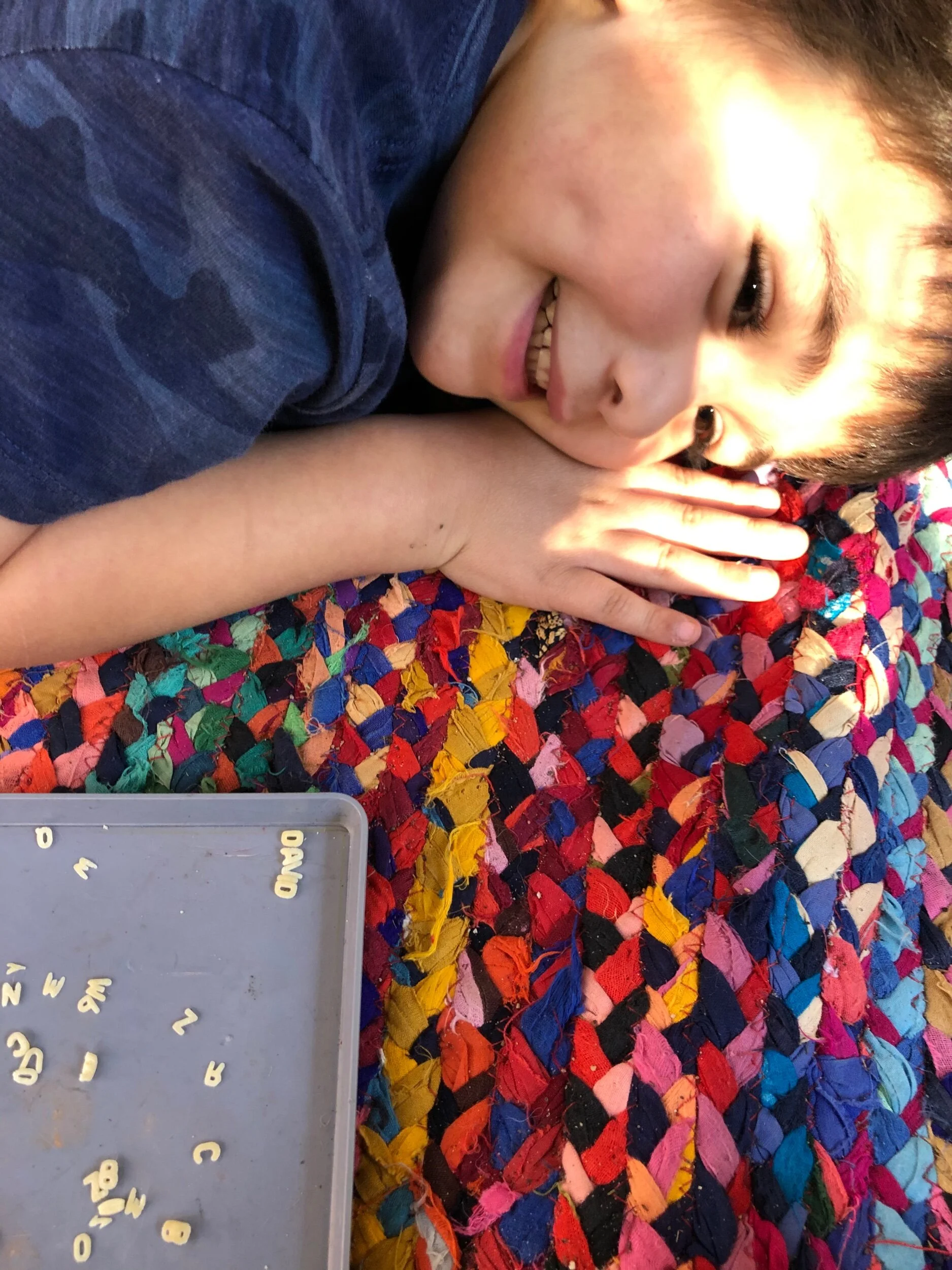
The children then cooked vegetable soup as the travelers had. They loved it so if you’re looking for a way to have your kids enjoy a hearty vegetable soup, just reference stone soup and we’re guessing they’ll gobble it down. In preparing the soup, they practiced their small cutting knife skills and math measuring skills. We added alphabet pasta to the soup but first, we played a letter hunt game with the pasta. Some found the letters to their names.
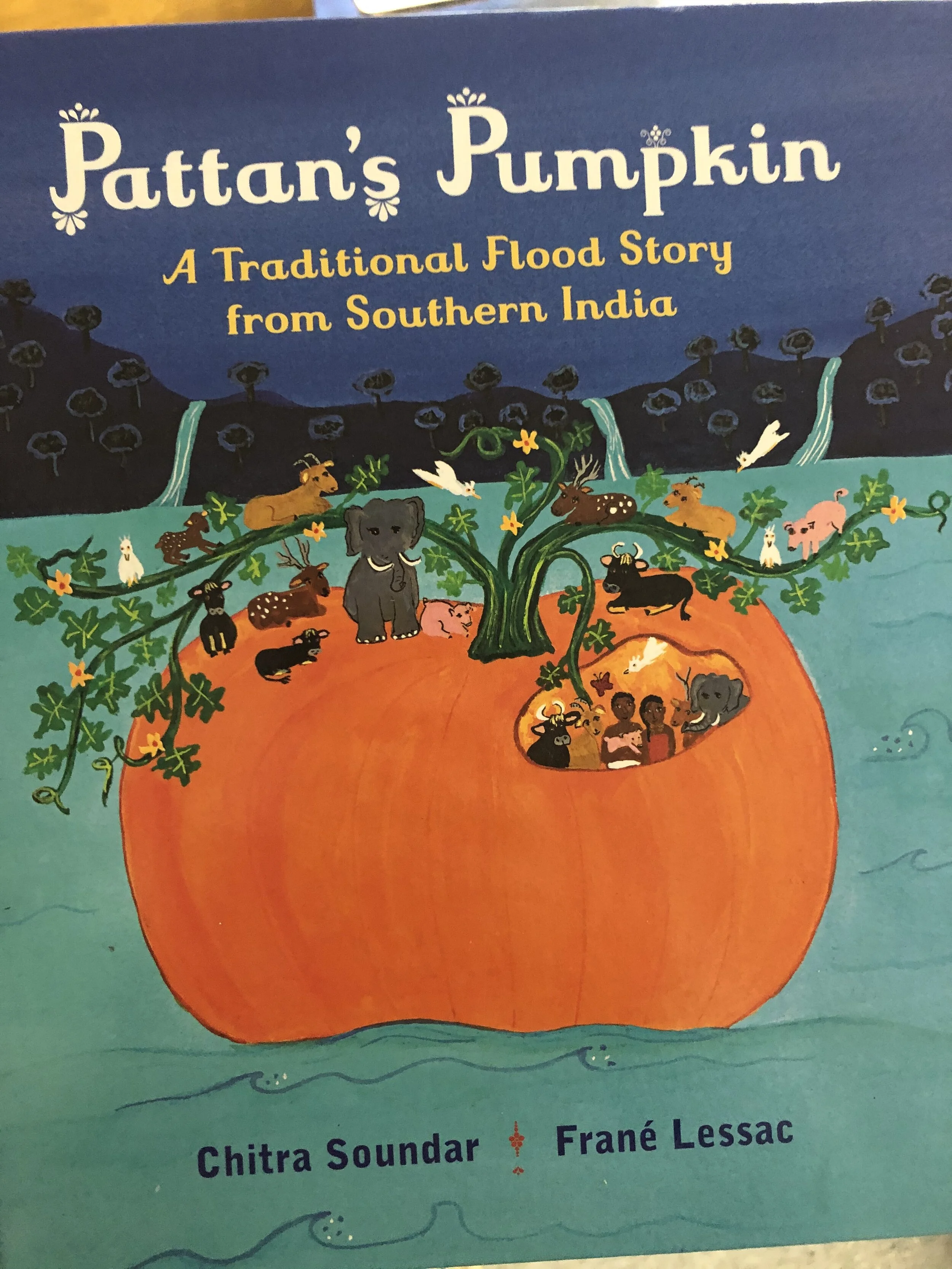
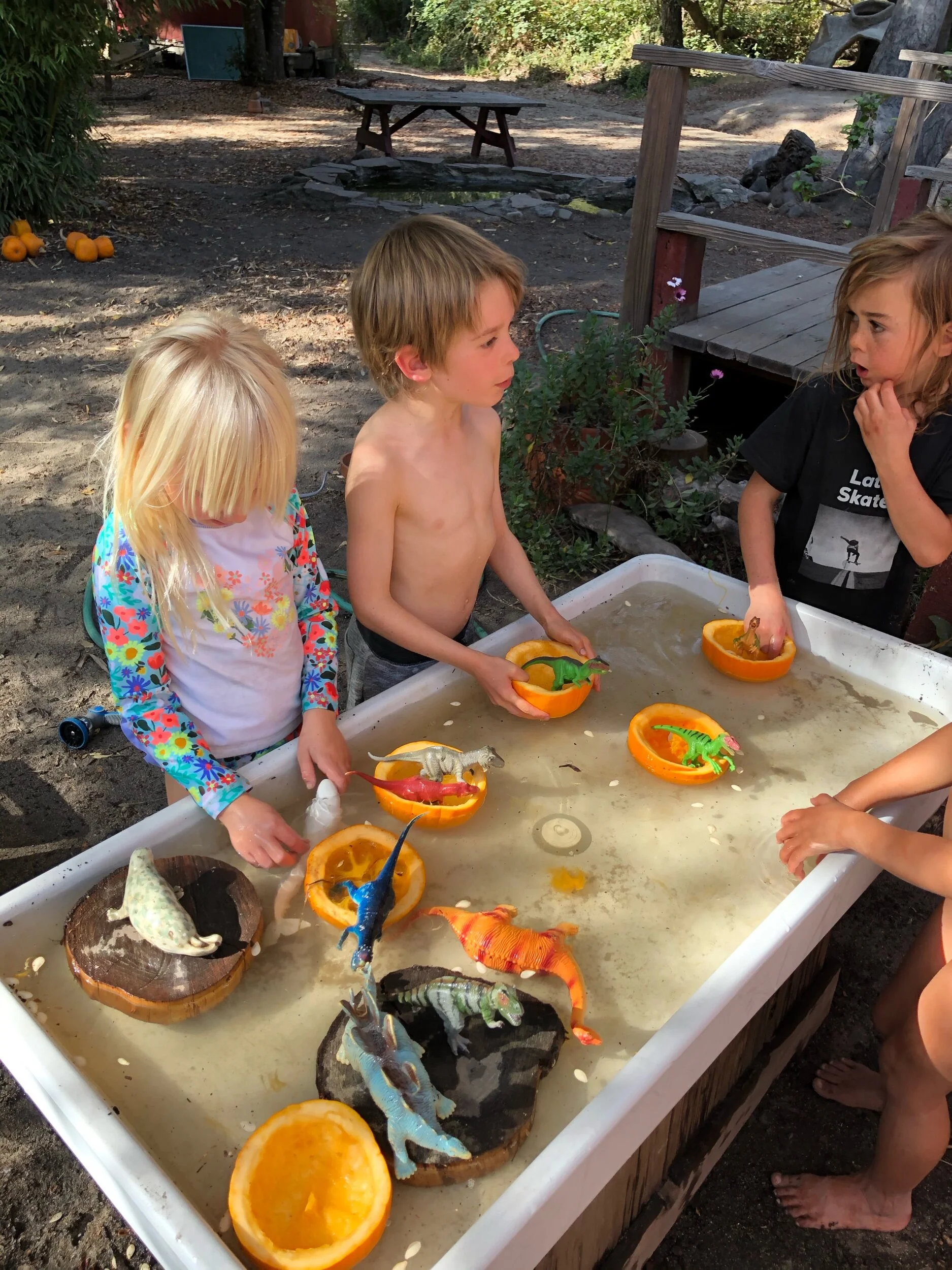
Reading books outside the mainstream has broadened our perspectives and inspired new activities. Pattan’s Pumpkin, a classic flood story from India involving a pumpkin, was perfect for the fall. It inspired pumpkin and water play (with the addition of dinosaurs, of course.)
Other stories that explore social/emotional themes also helped iron out some wrinkles in the class dynamic, as the children negotiated sharing materials, sharing friendships and how to more effectively communicate with each other. If you’d like book titles to help deal with similar issues that may arise at home or with friends outside of school, just ask!
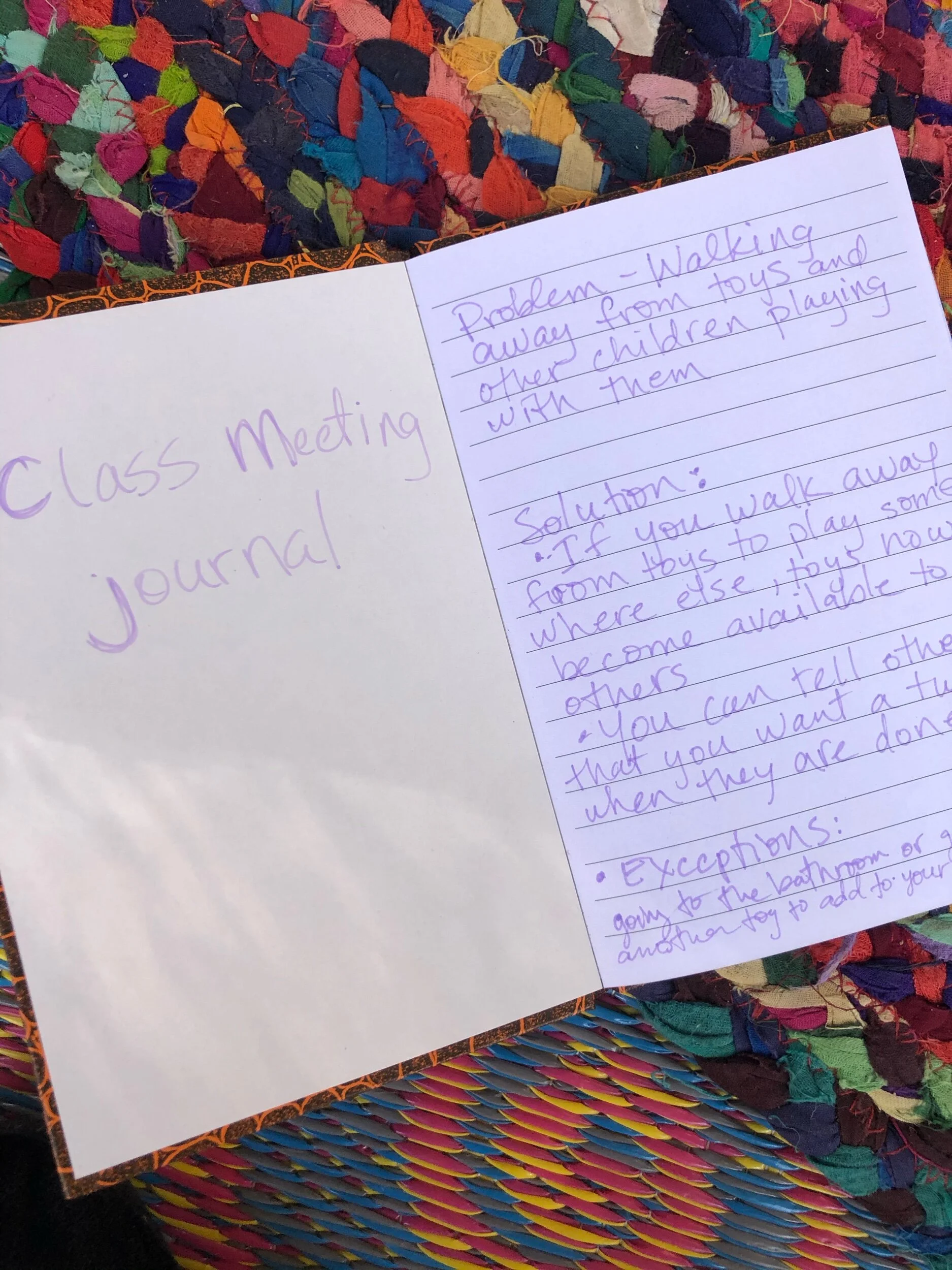
Social/Emotional: Every day provides rich opportunities to work through different opinions and conflicts Short, structured weekly class meetings are held to express appreciations to each other, air grievances, and to work together towards solutions we can all agree to. Our class meeting journal records our problems and solutions.
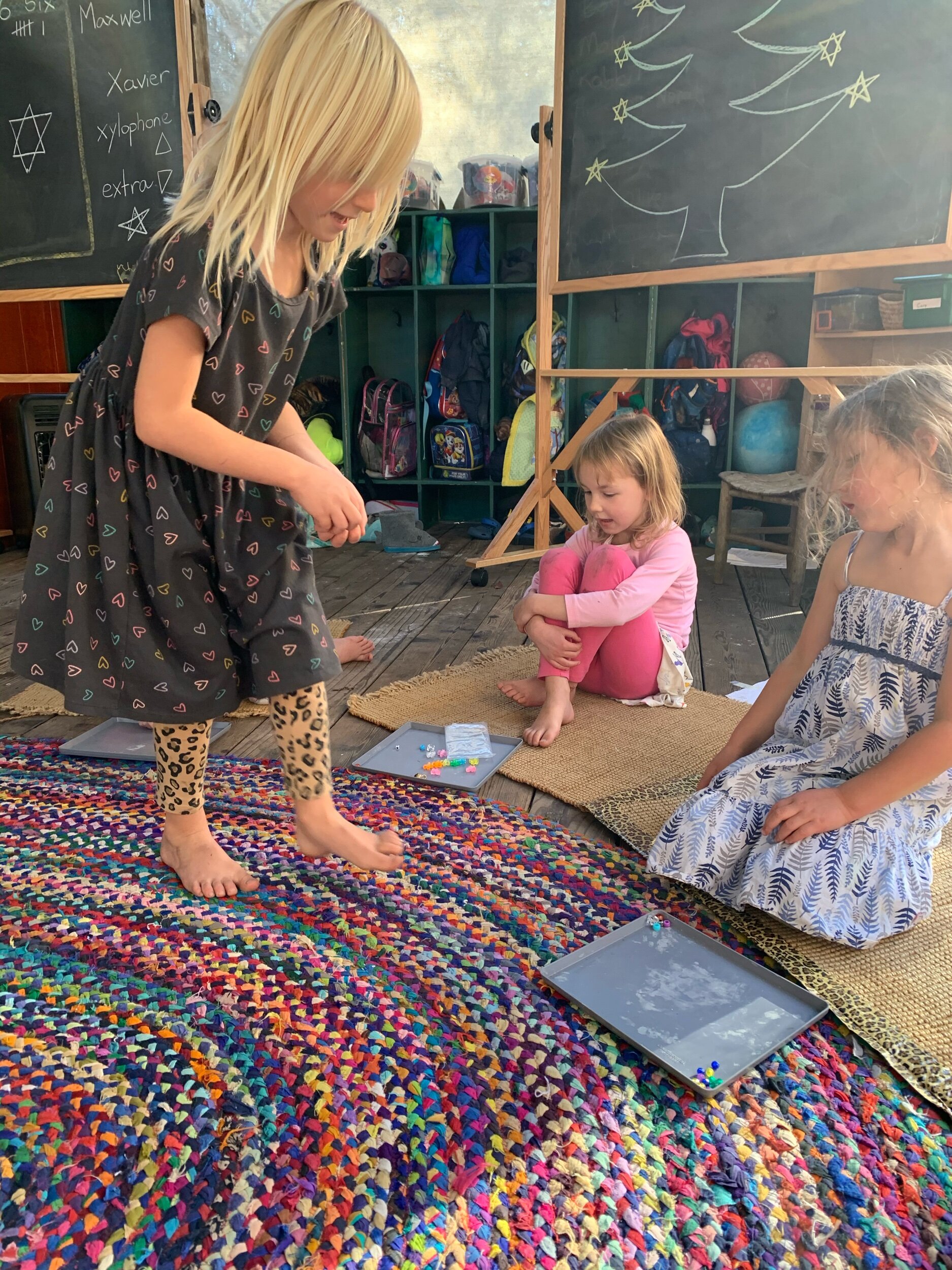
One attempt to encourage bonding was beading the friendship necklaces. We made quite a ceremony of handing out the beads, discussing how each symbolized one friend, putting them in the same order so they read like a friendship map, and it’s been really sweet seeing the children wearing their necklaces to school.
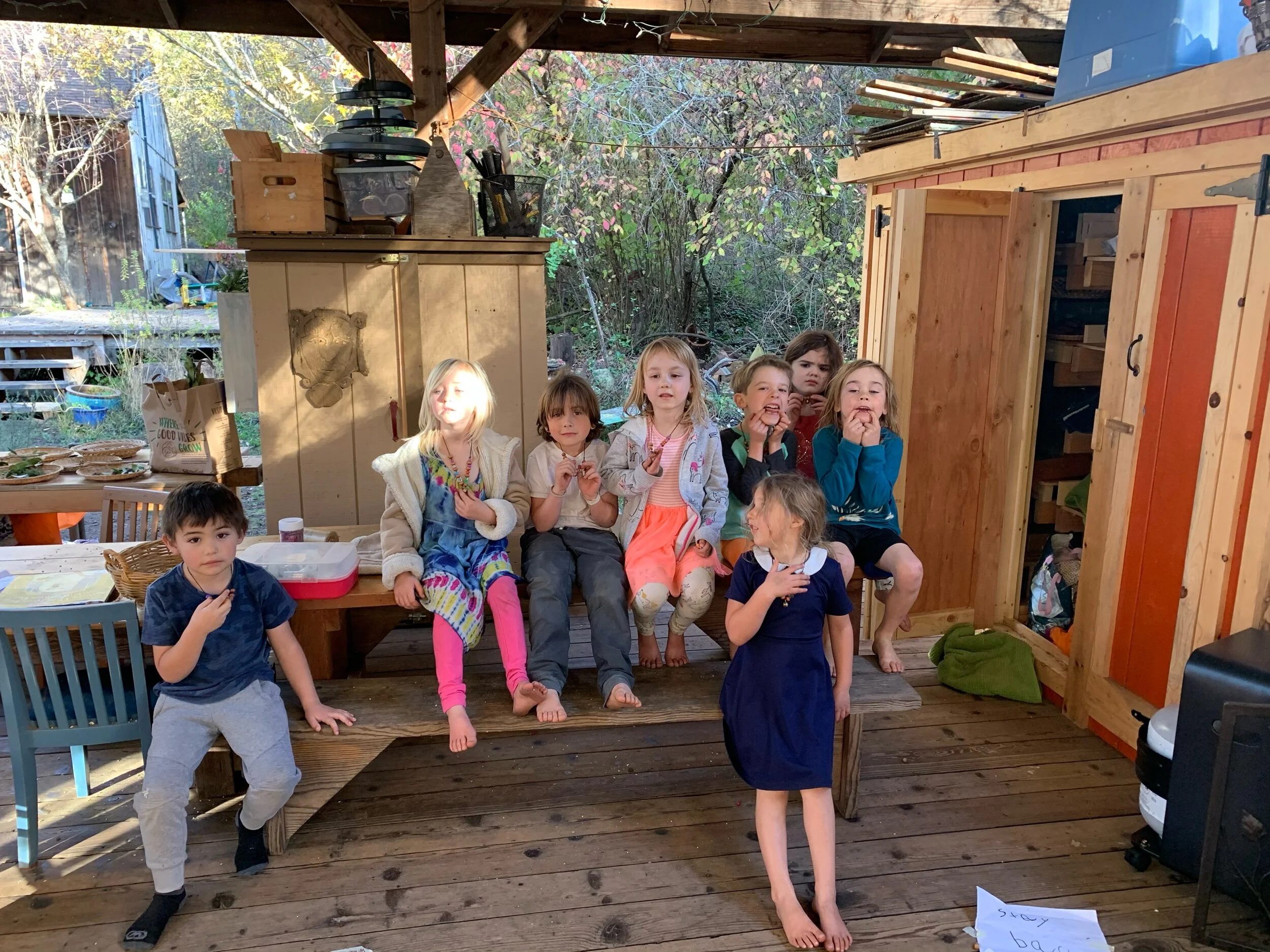
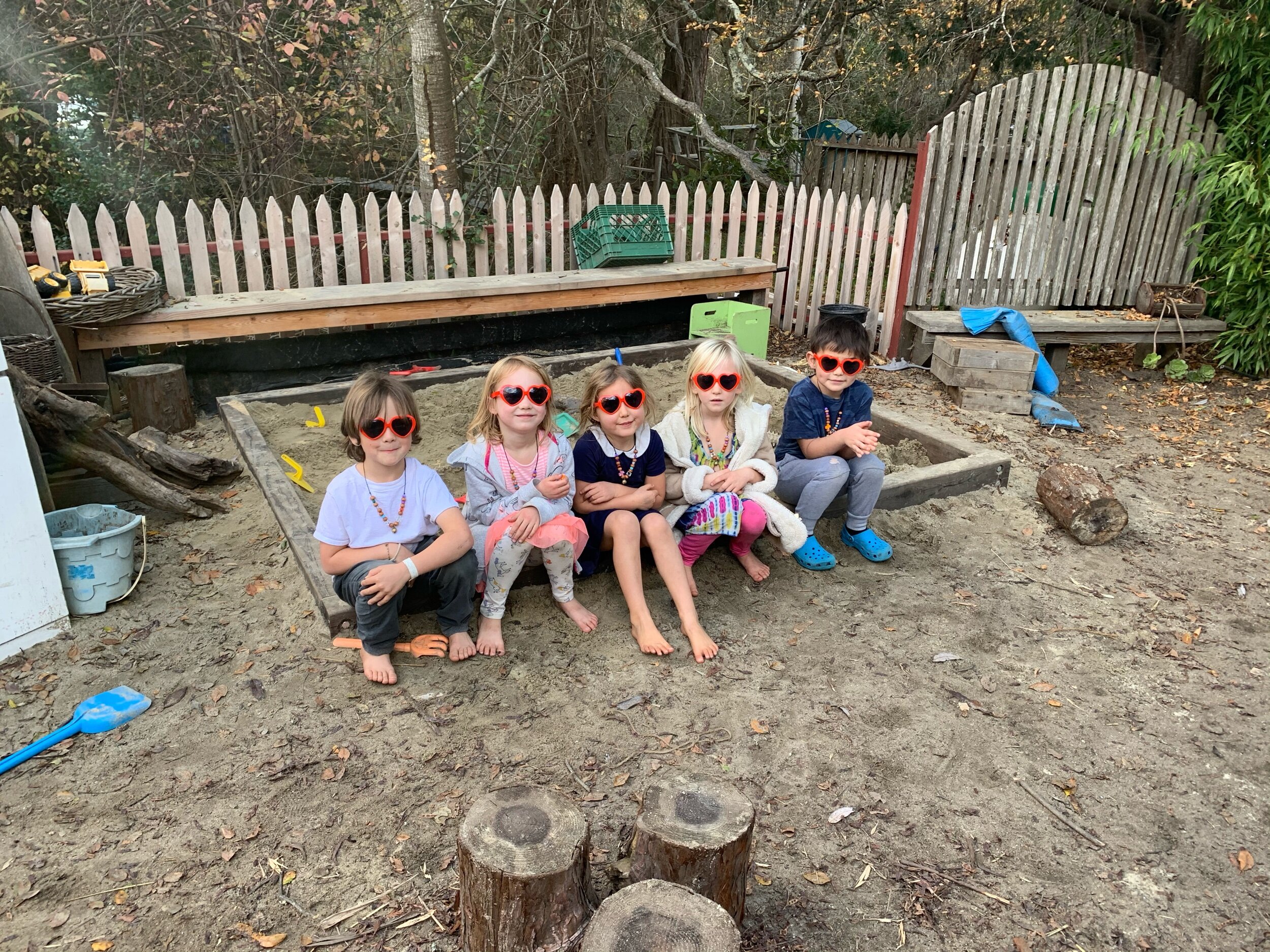
Assembled for a brief photo op huddle wearing their new friendship necklaces and below, after school, wearing their fashion forward sunglasses, compliments of Wilder Hinkle, aka Sinbad.
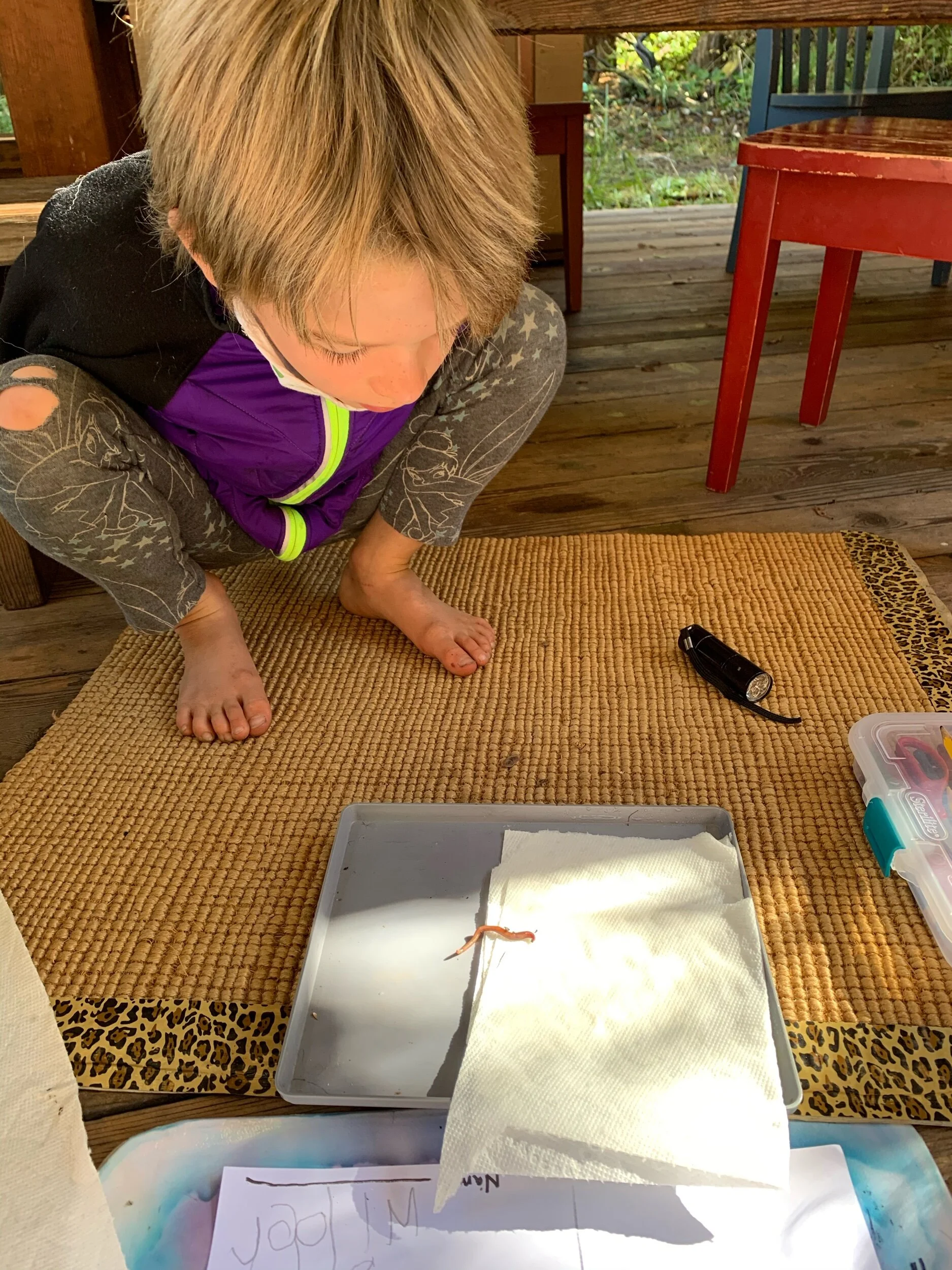
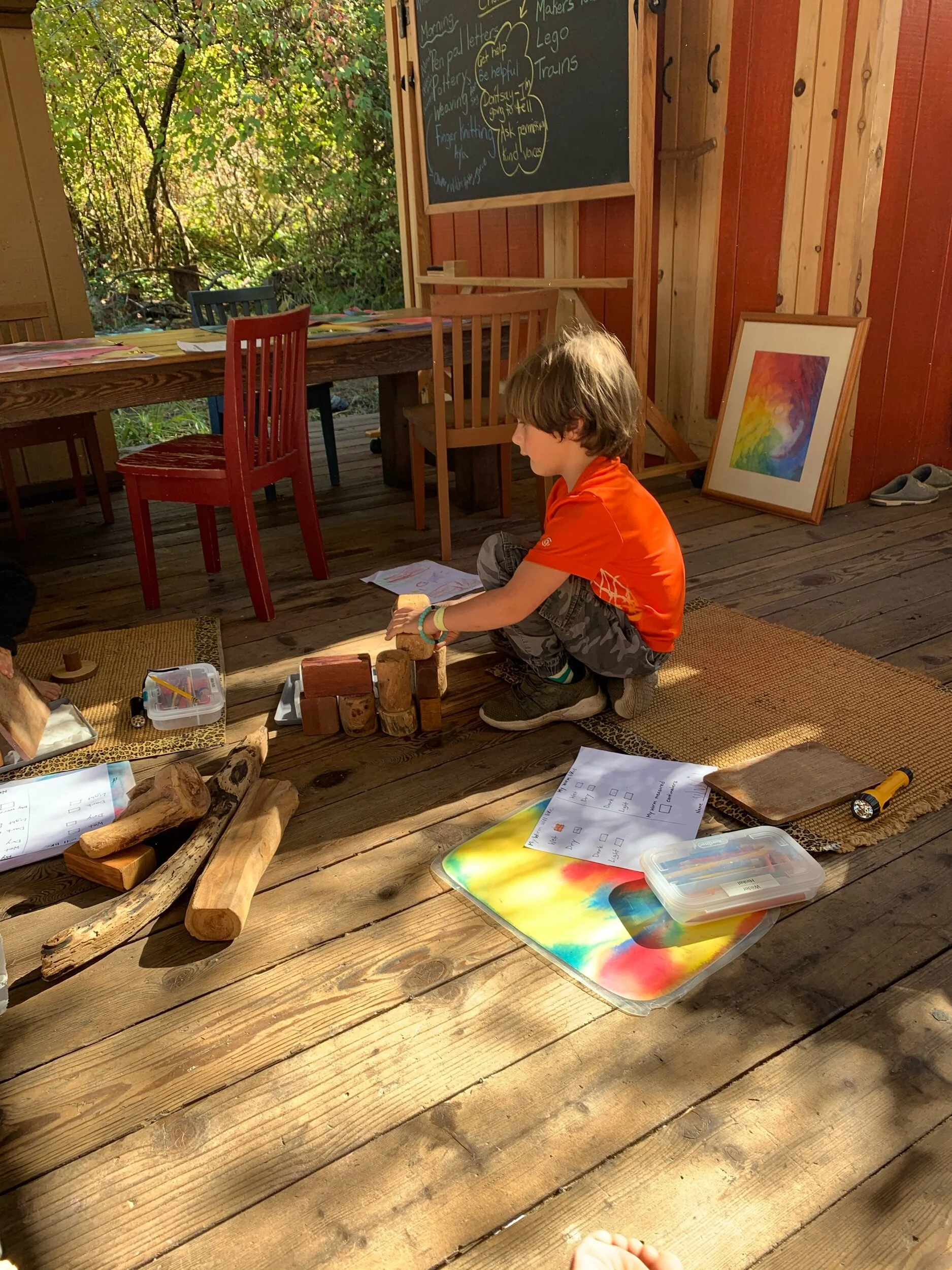
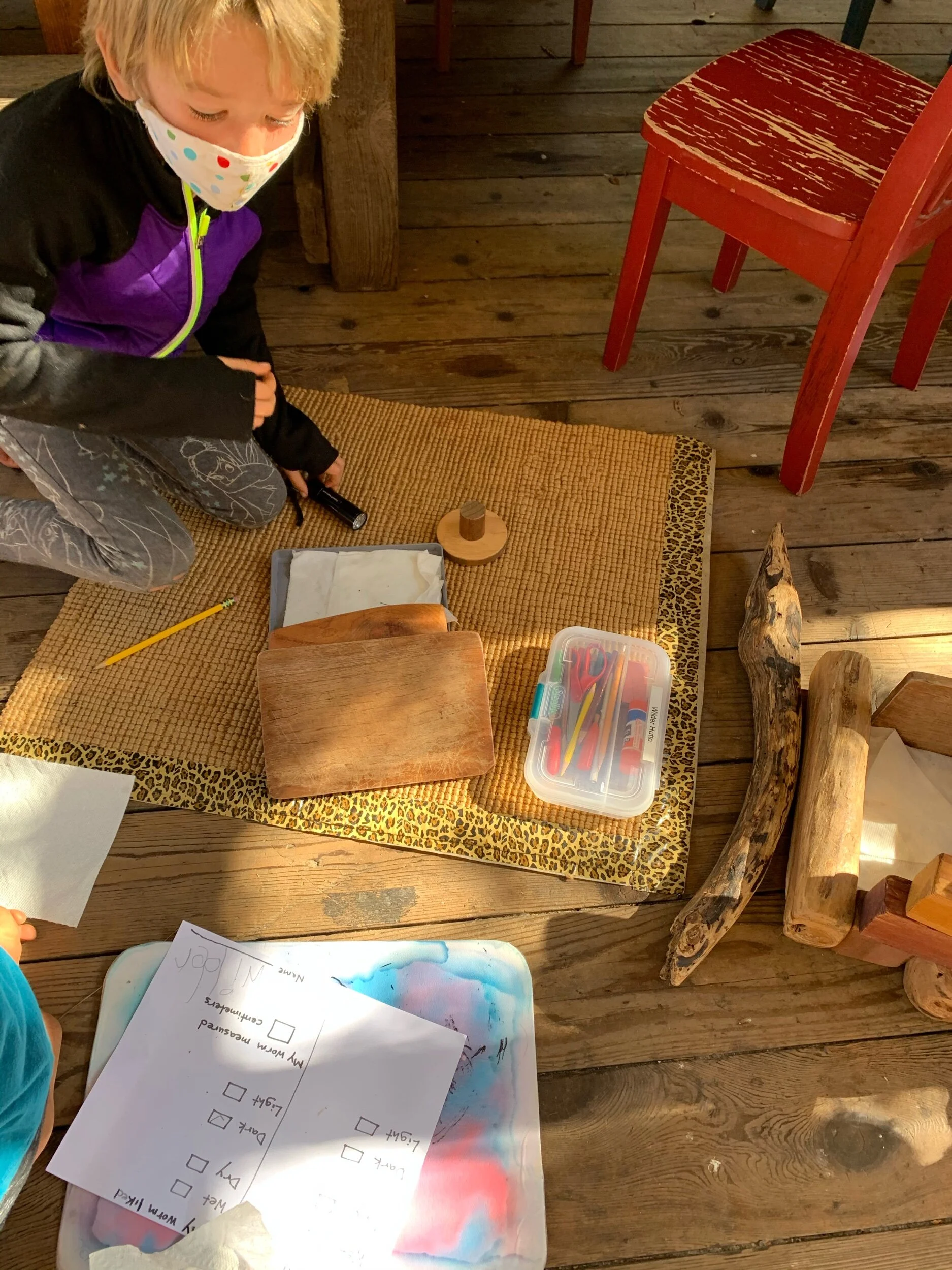
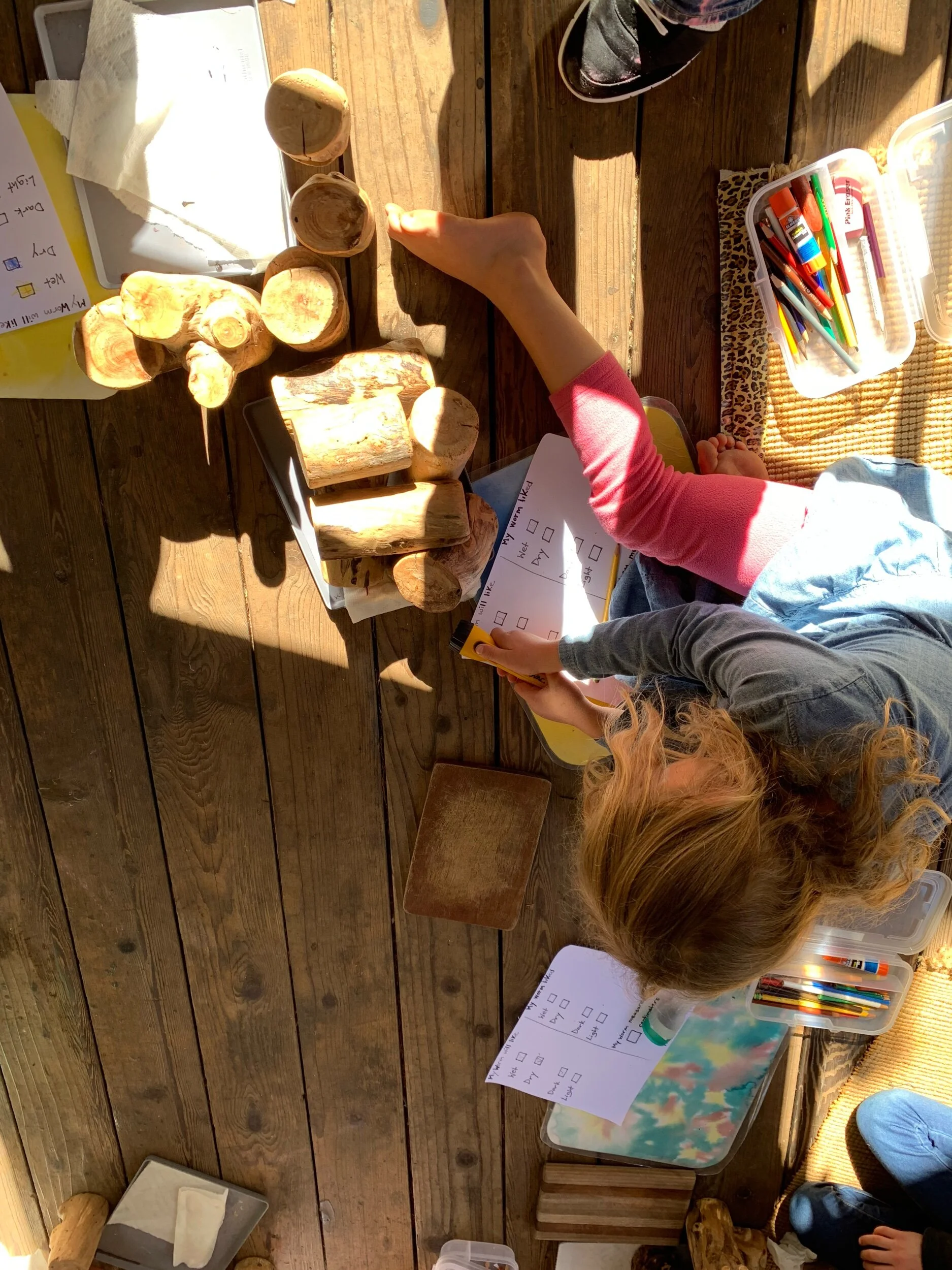
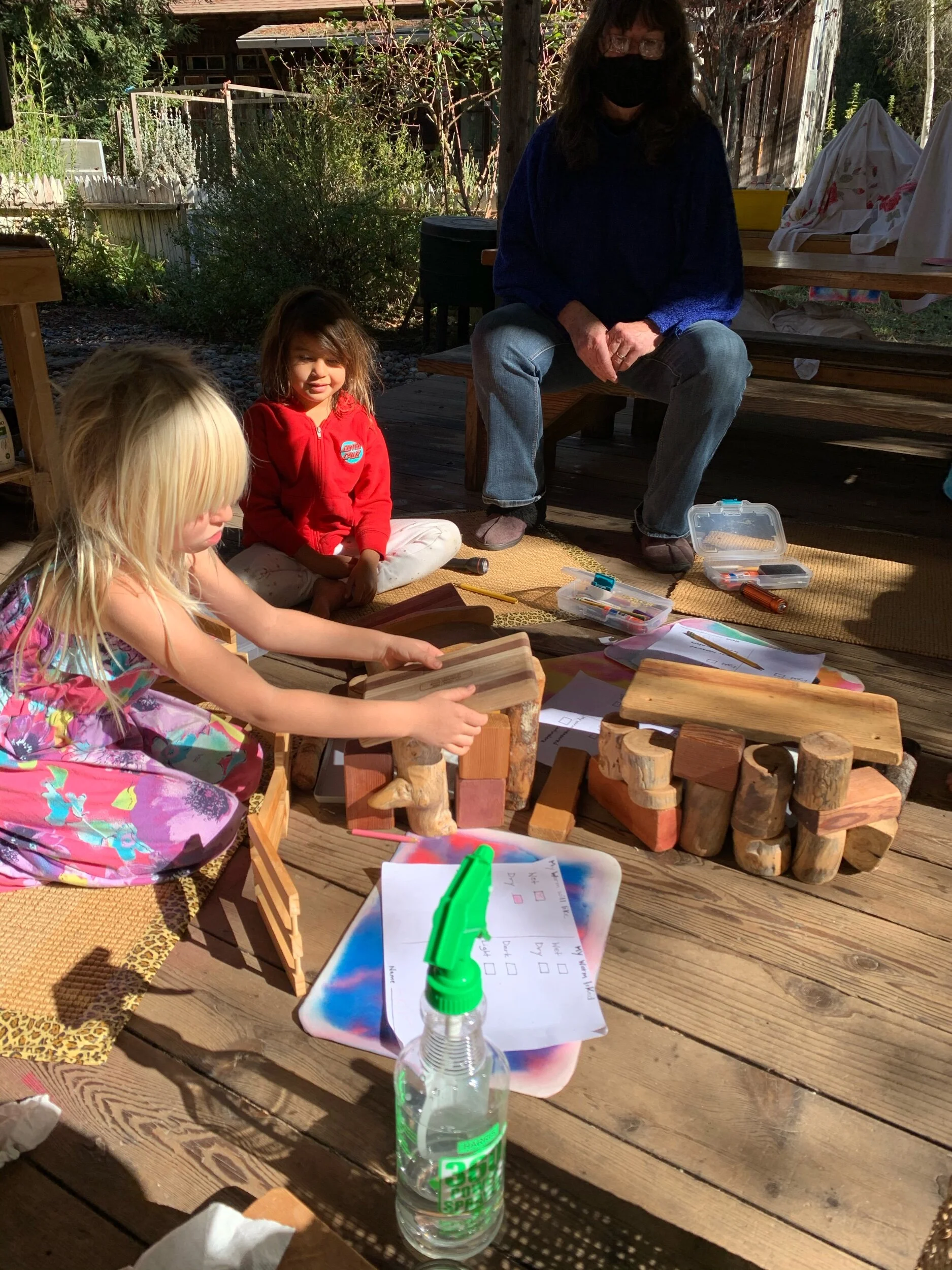
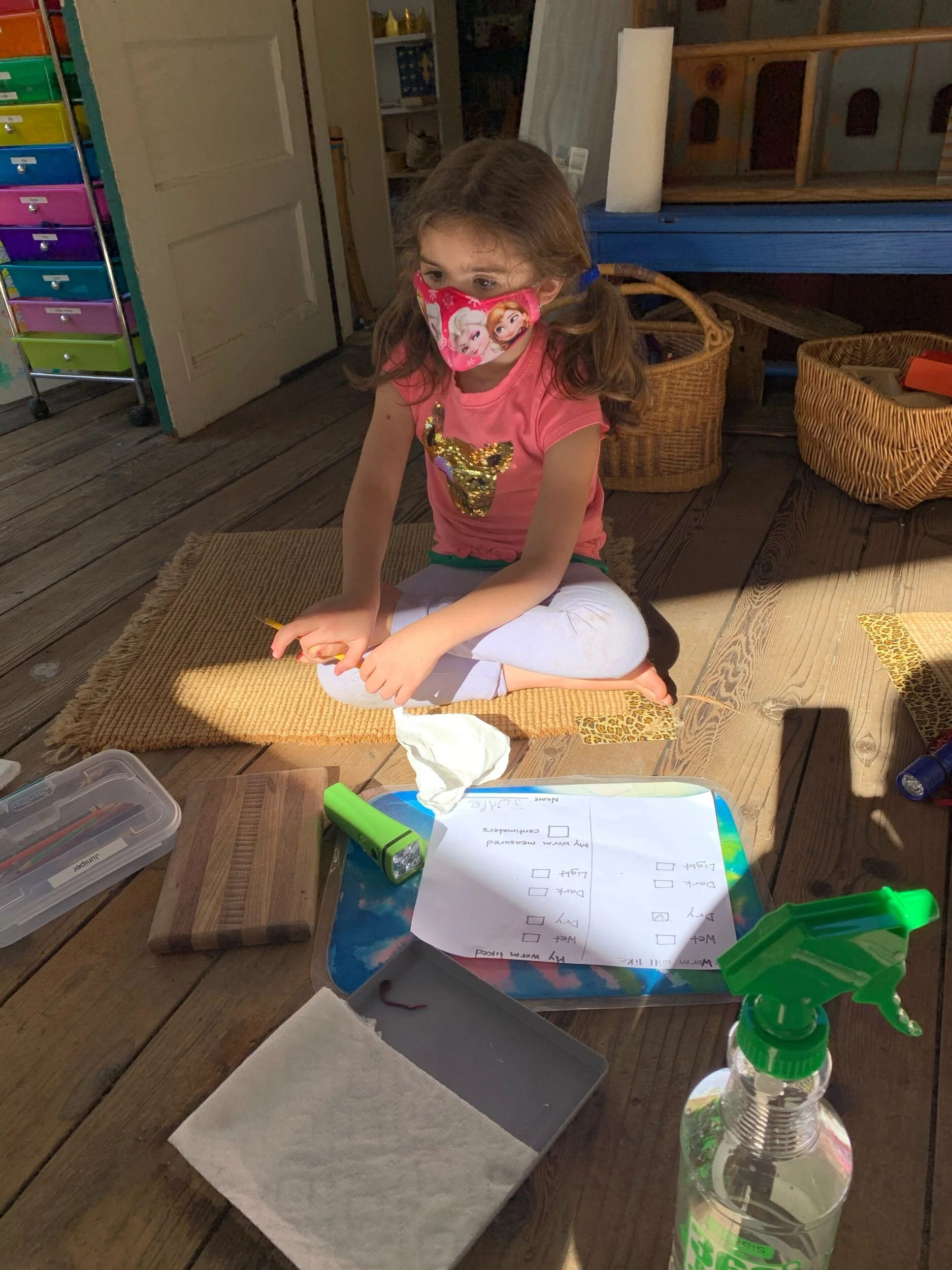
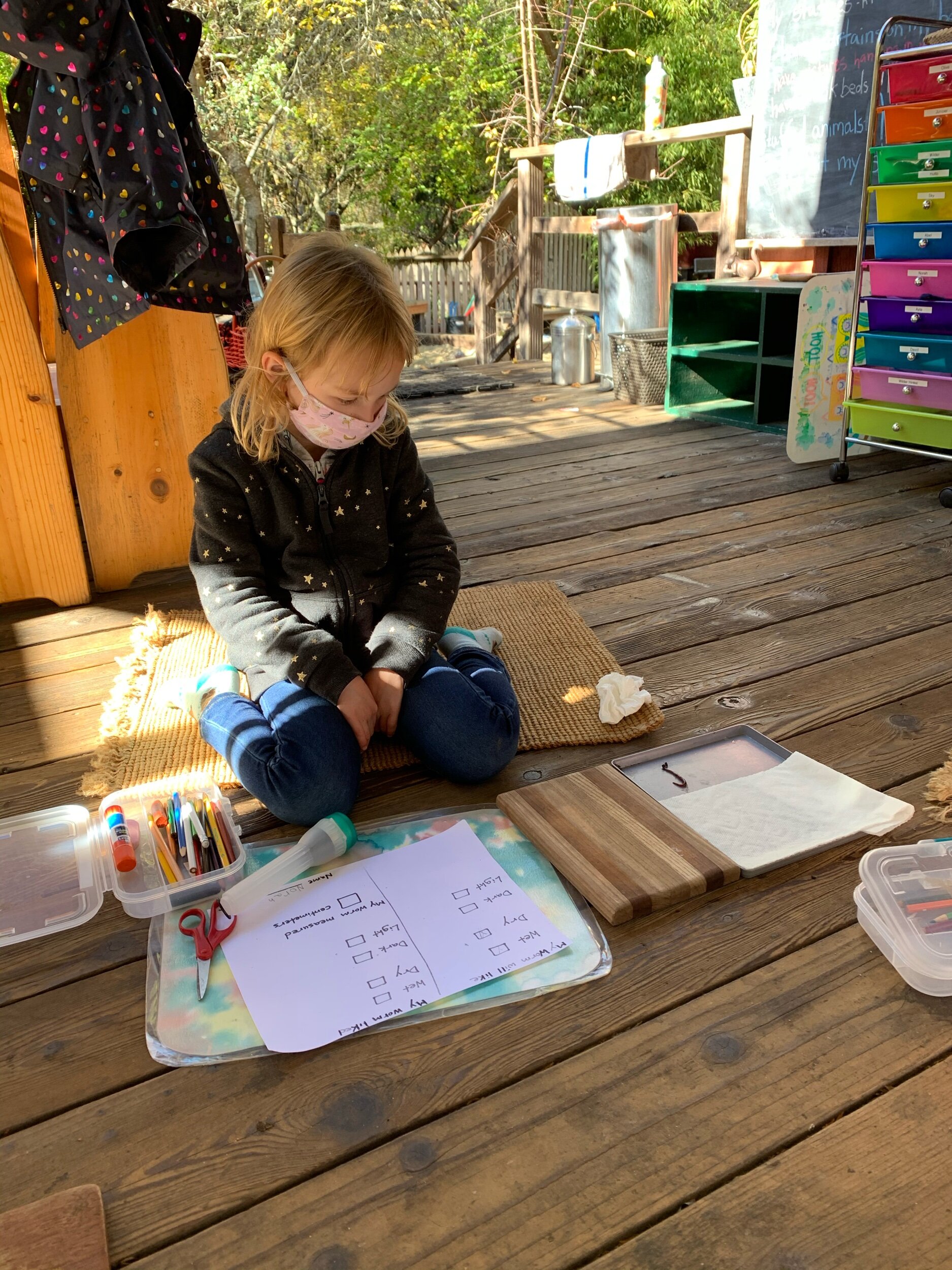
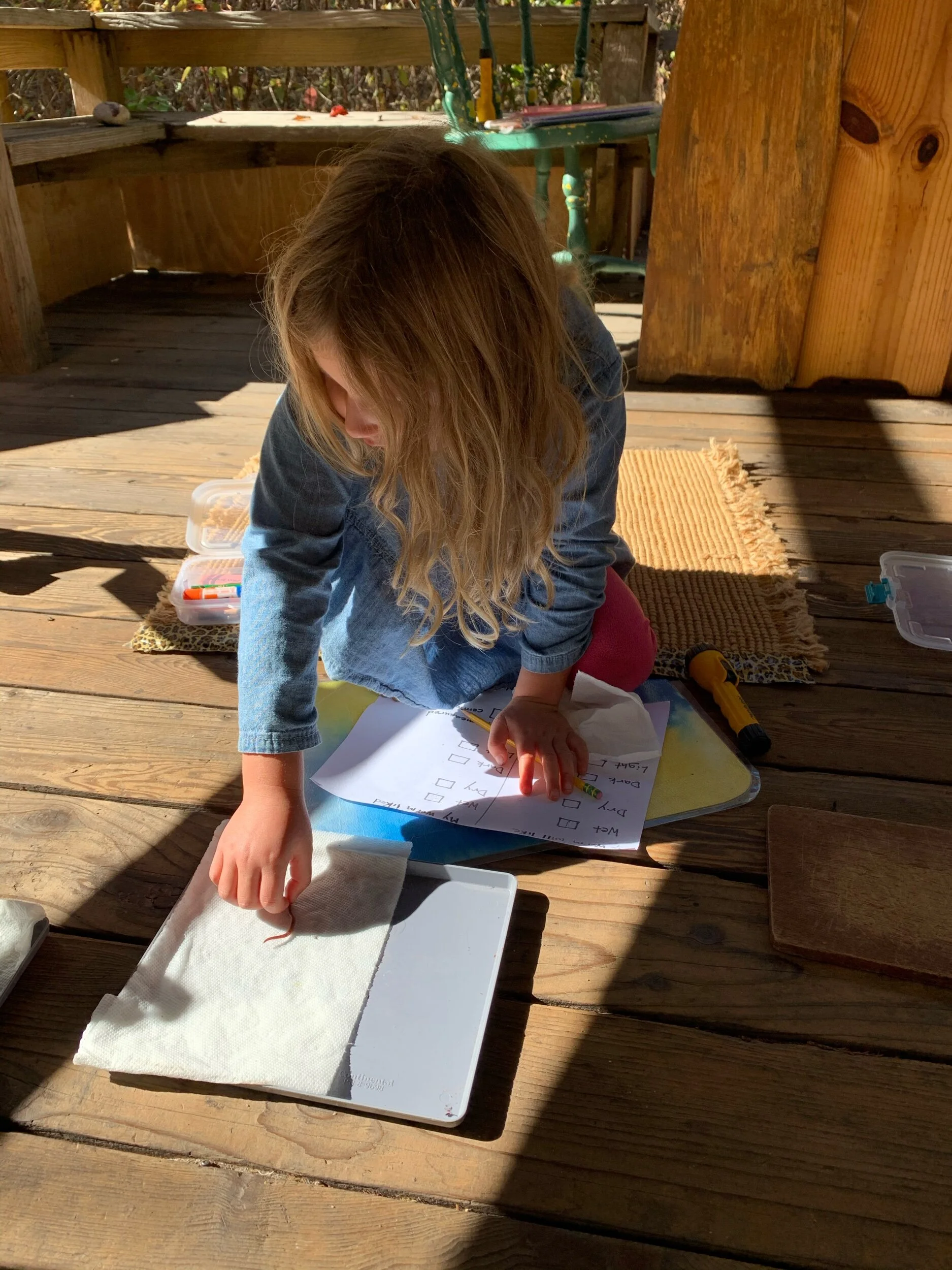
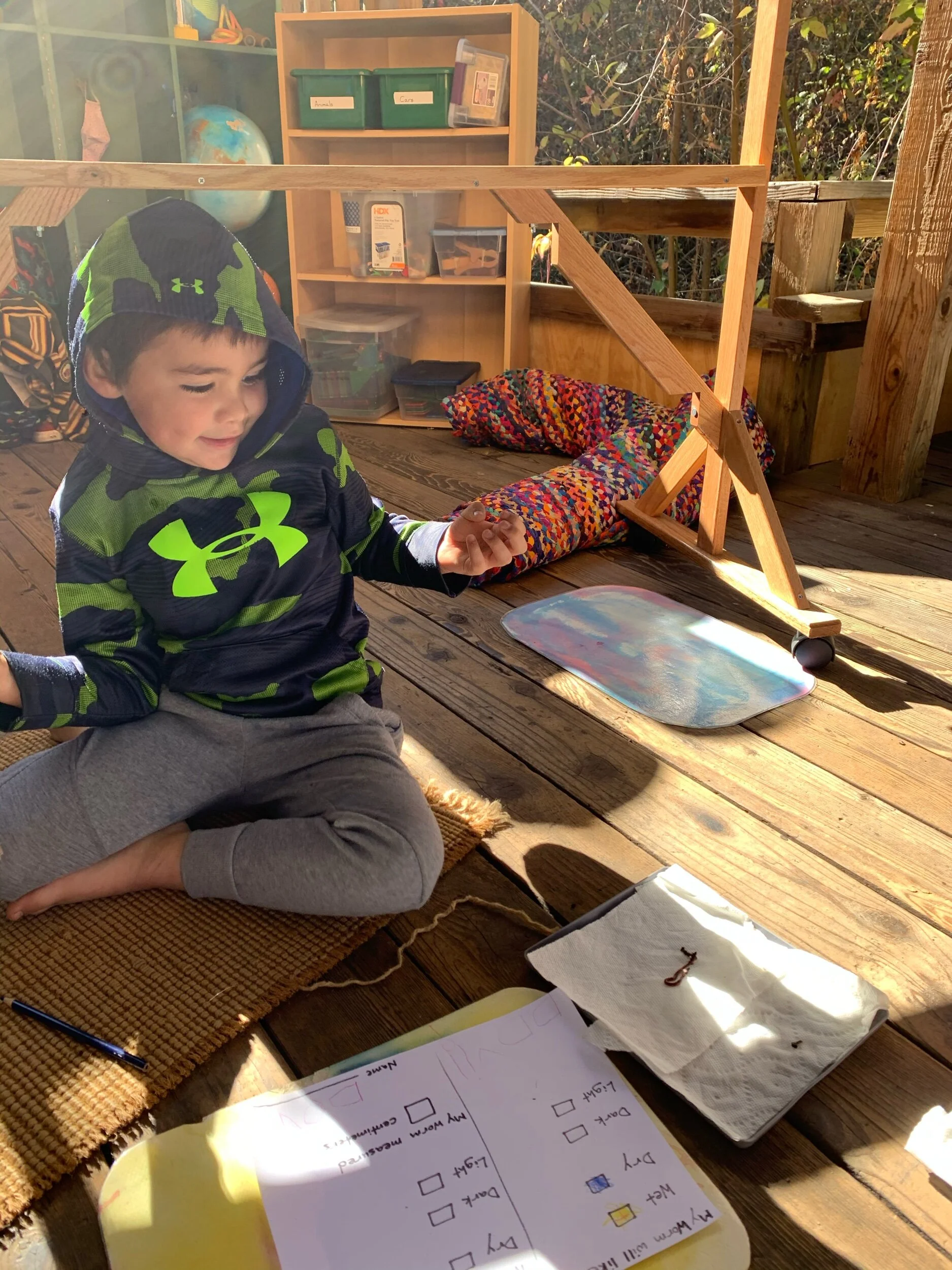
In science, we’ve been focusing on studying different creatures that live amongst us and on developing observational skills. This month, we took a close look at worms, through story, but also by deconstructing our worm bin and putting it back together. With their flashlights, and some impromptu shelters built out of blocks, the children did an experiment to see if their worms, red wrigglers borrowed from the worm bin, preferred light to dark, and then if they liked the wet paper towel they were placed near or the dry surface.
Another observational study was a mold in a jar experiment. What to do with old pumpkins? Observe what makes them grow mold. After writing up some hypotheses, we discovered the refrigerated pumpkin did not mold compared to the one left outside in the sun. We did a partially failed experiment to test the process of leaves “breathing”. They are supposed to bubble when placed underwater and in the sun, but not a lot of bubbles happened. An experiment is just that. It doesn’t always work out how you expect.
Also, we went on a leaf hunt and skewered found leaves onto kebab sticks. Kinders just love kebab sticks for some reason.
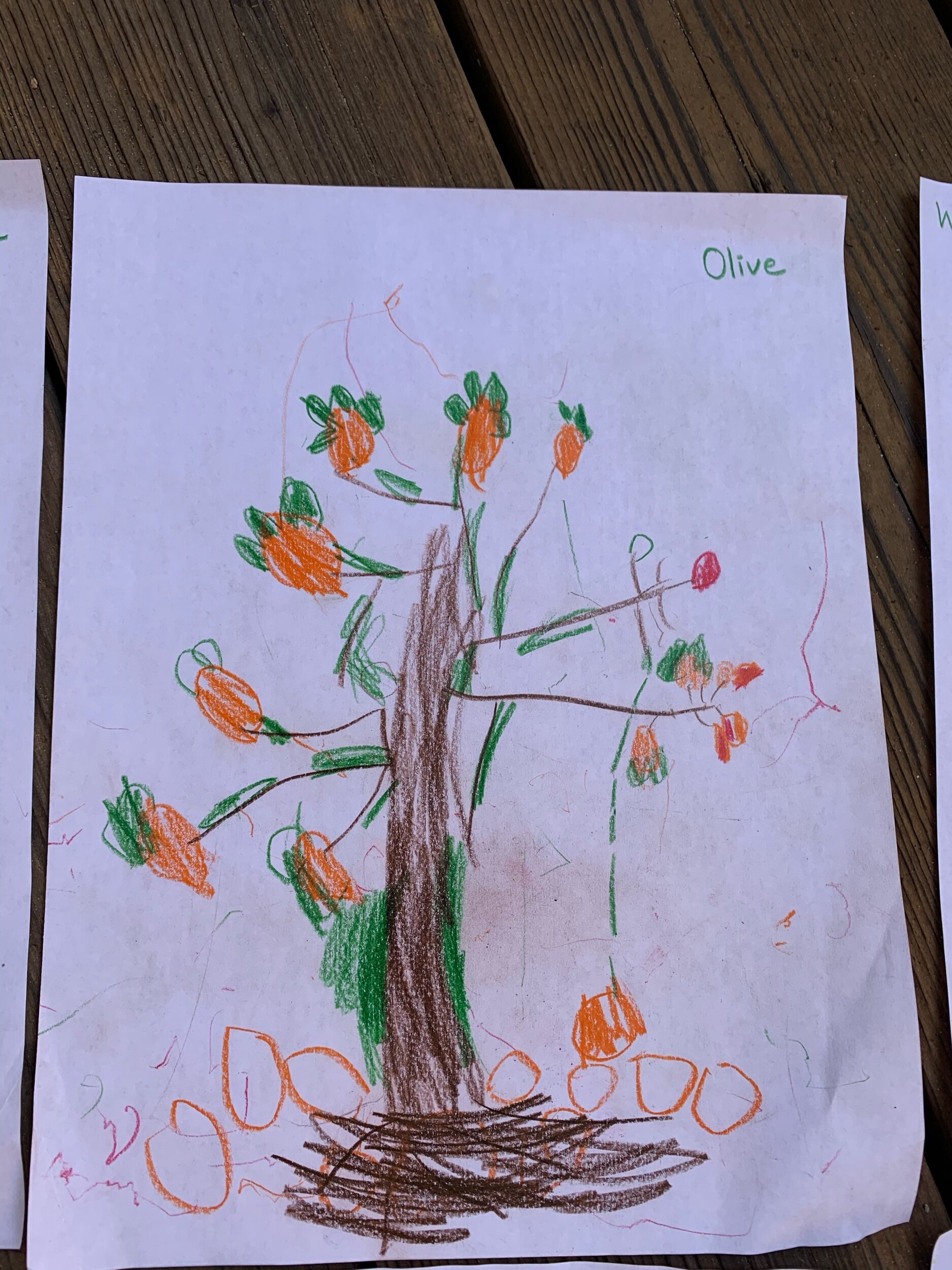
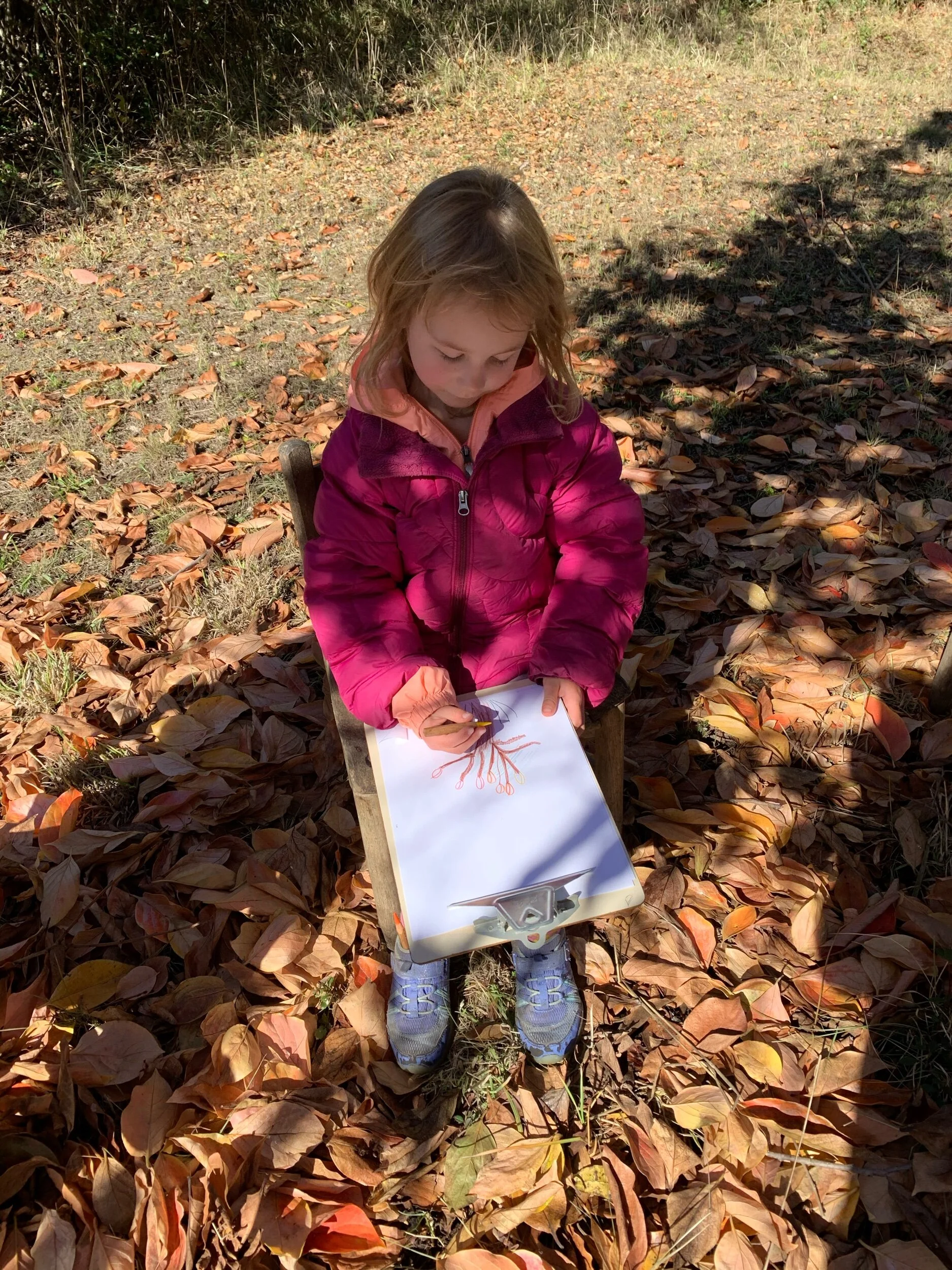
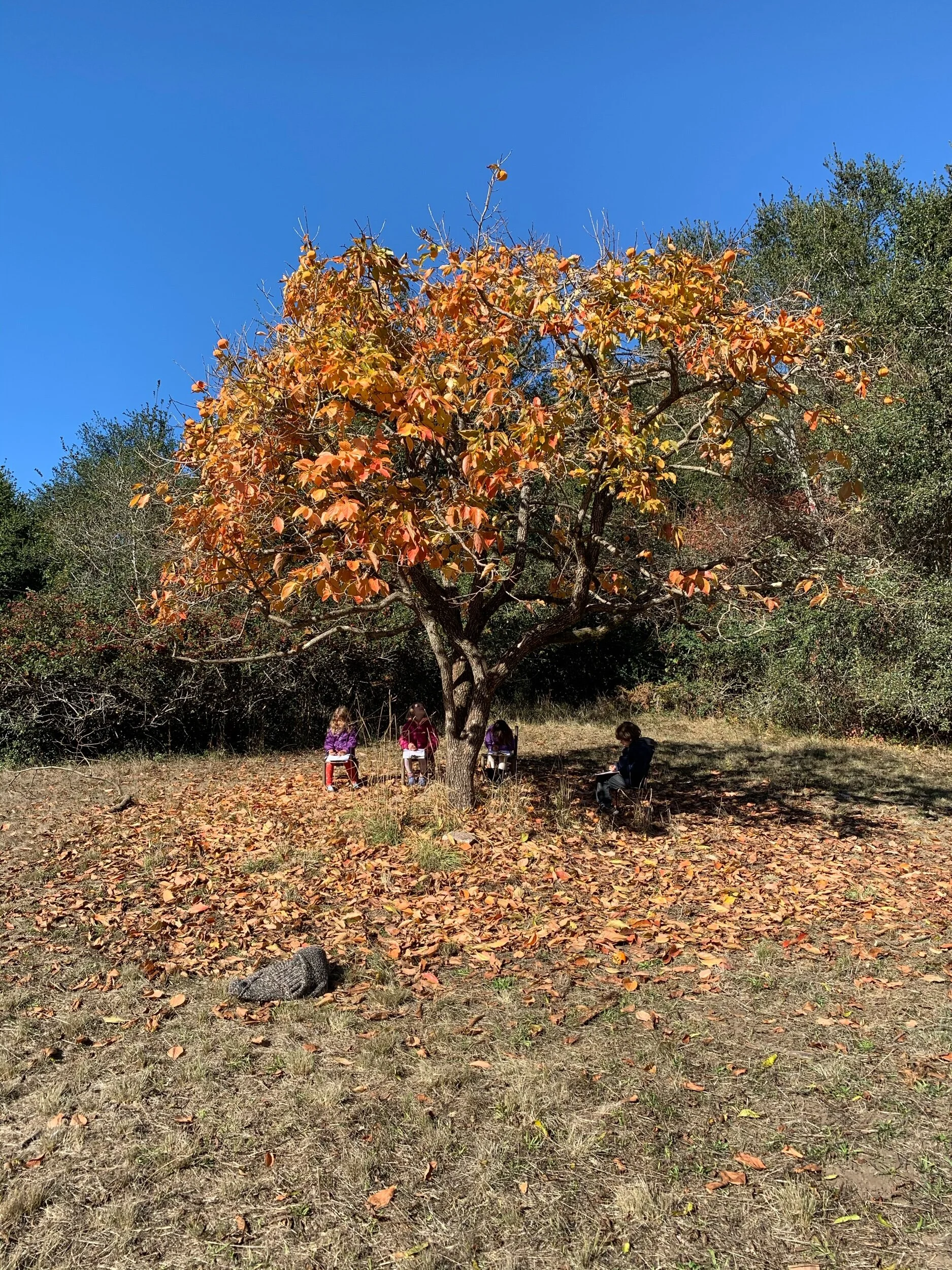
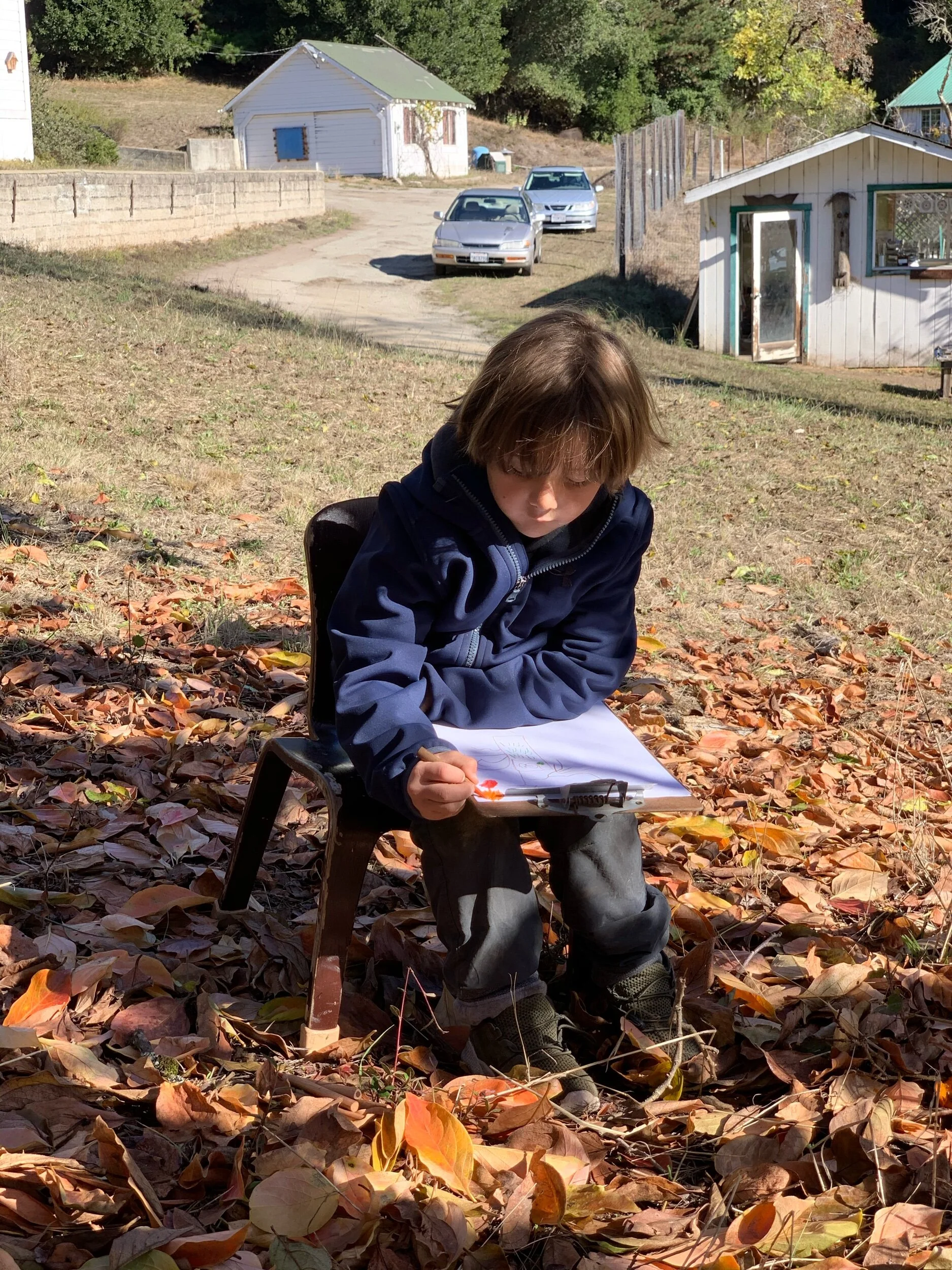
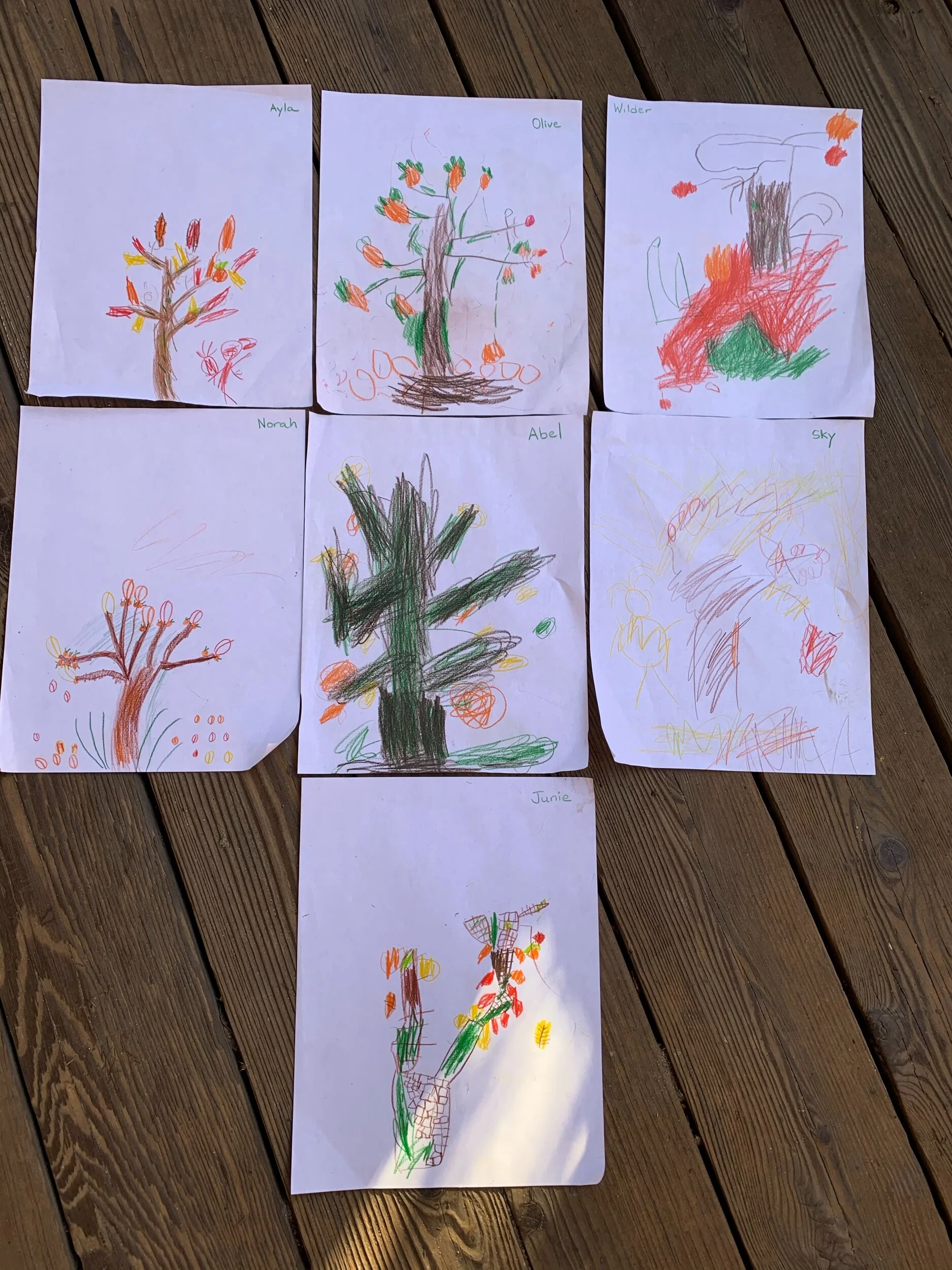
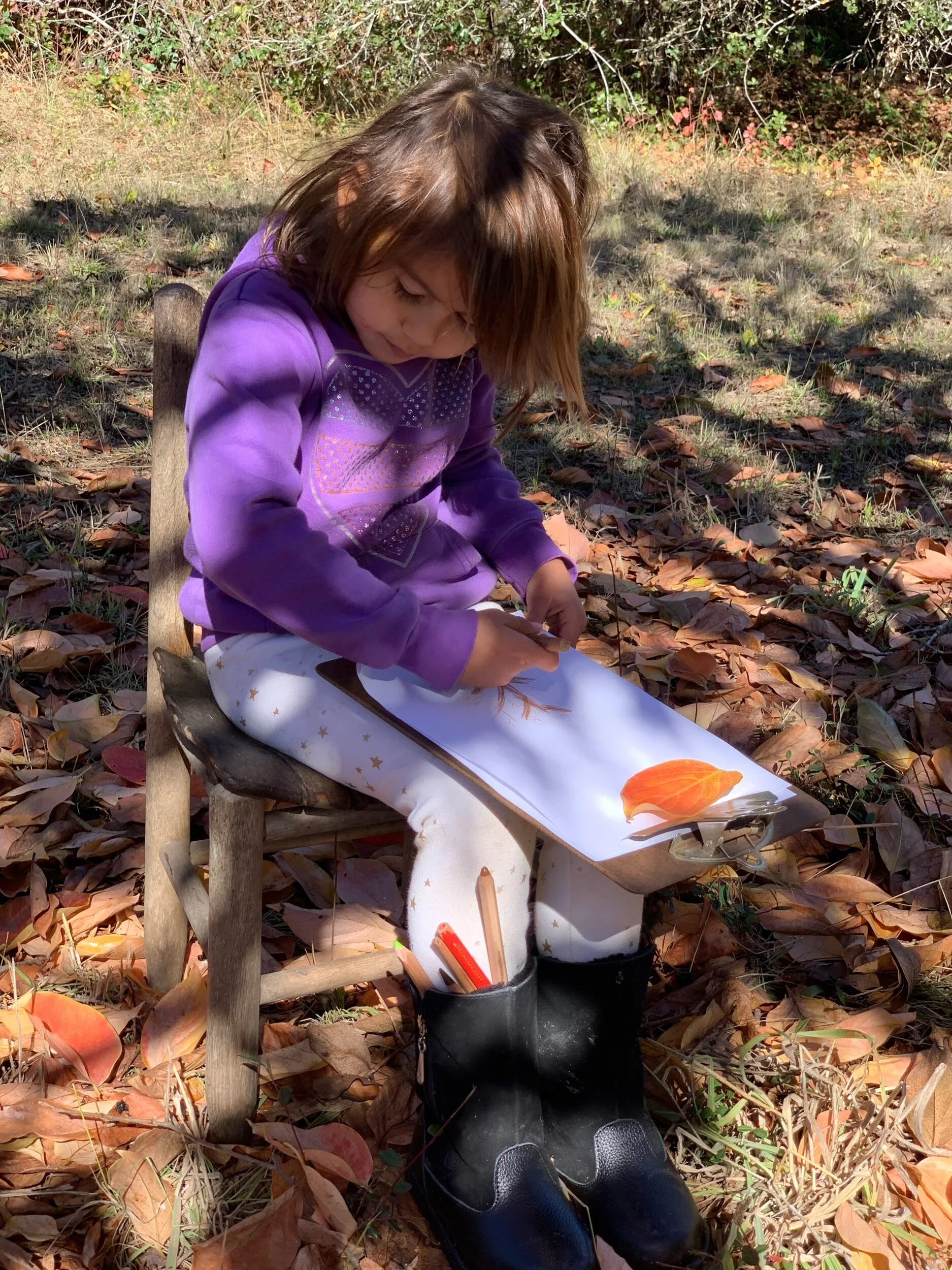
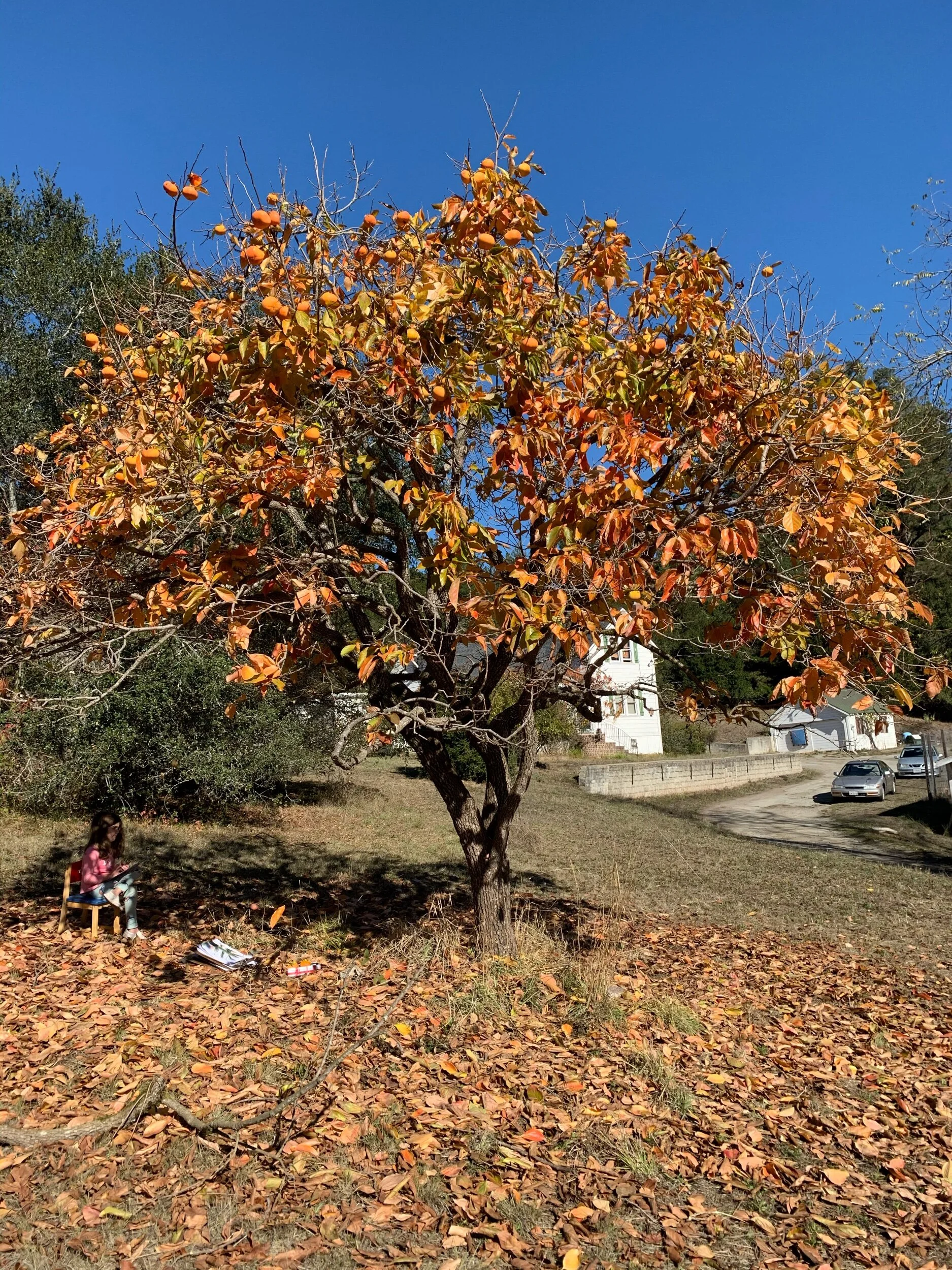
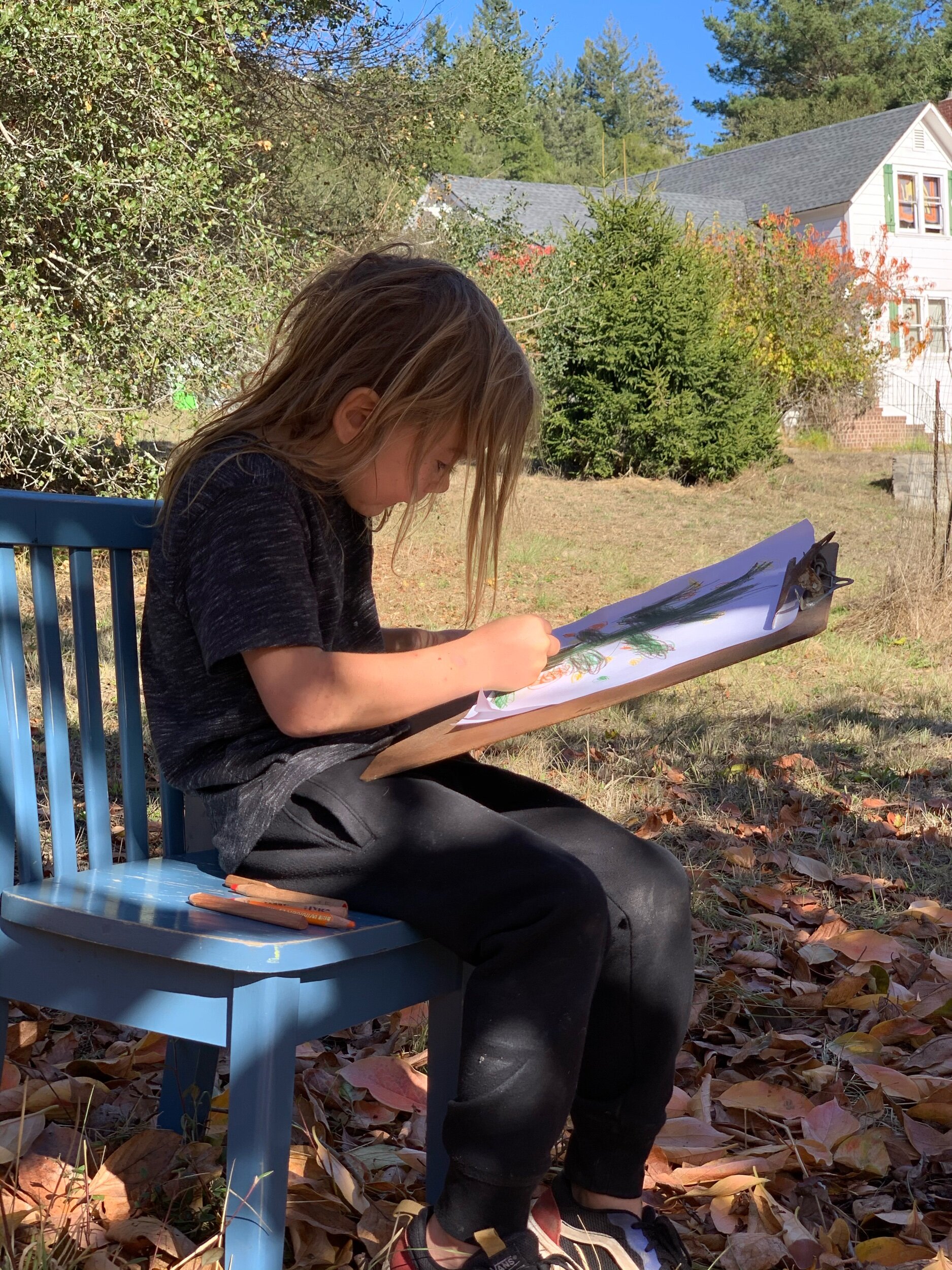
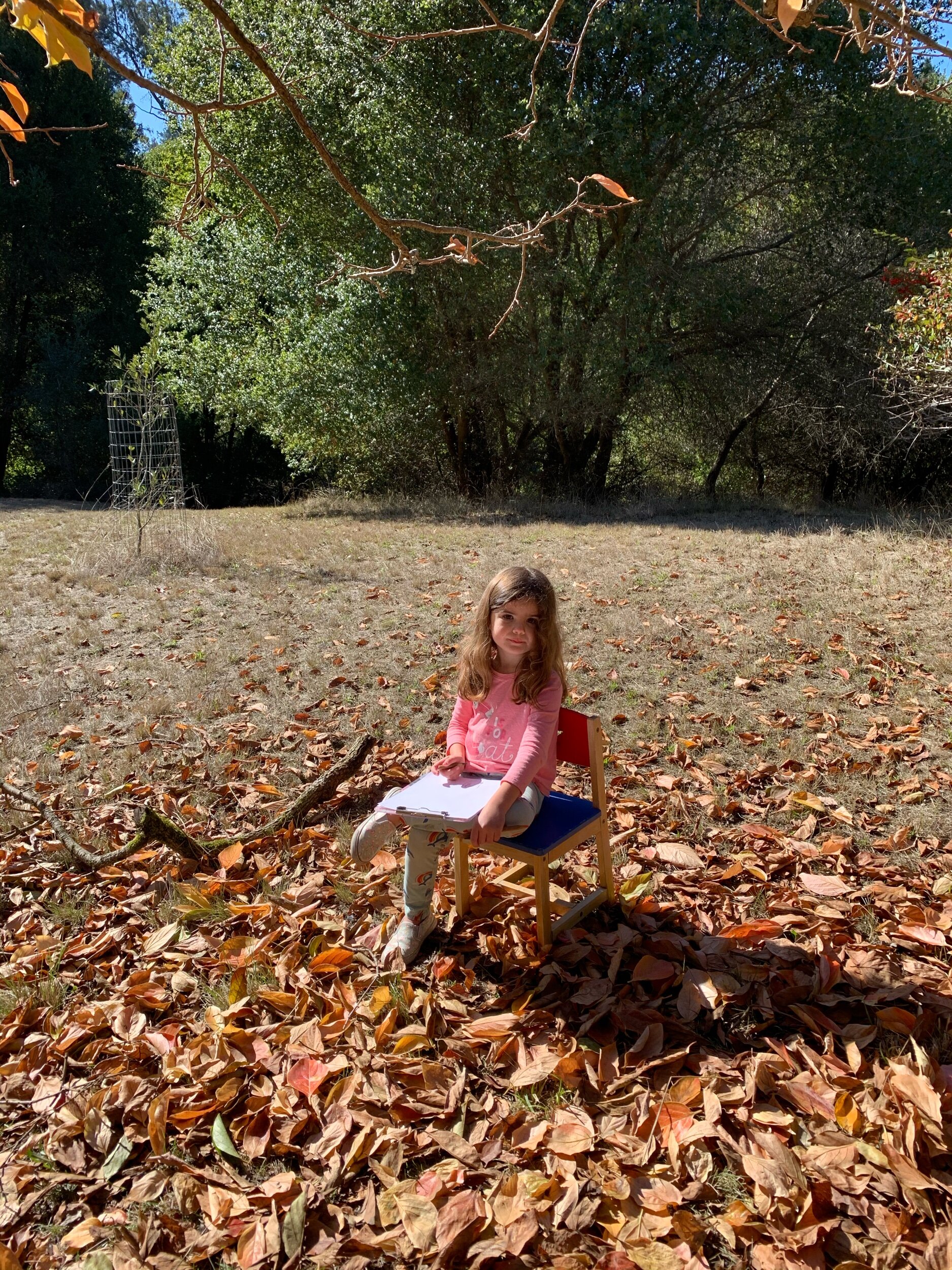
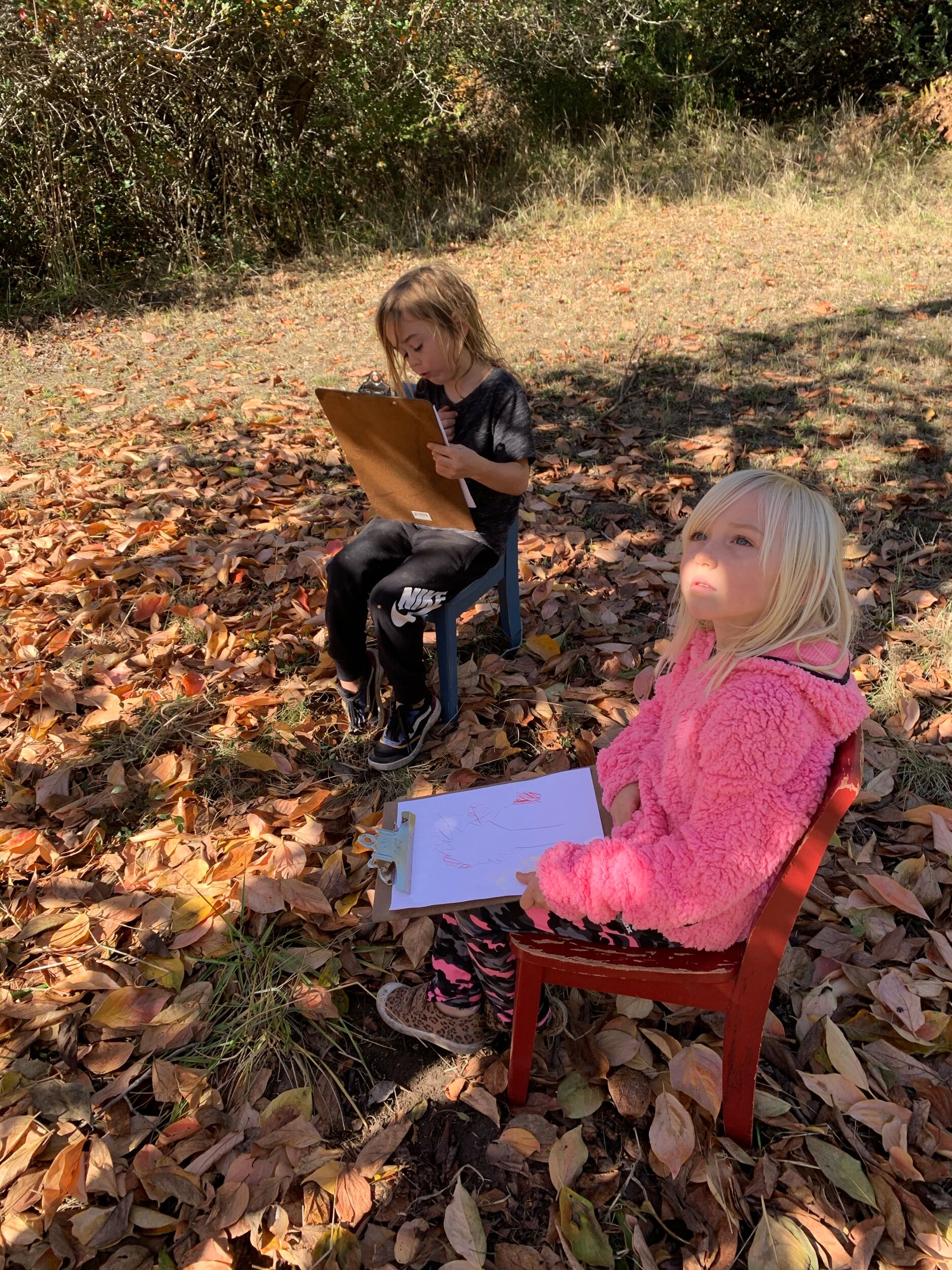
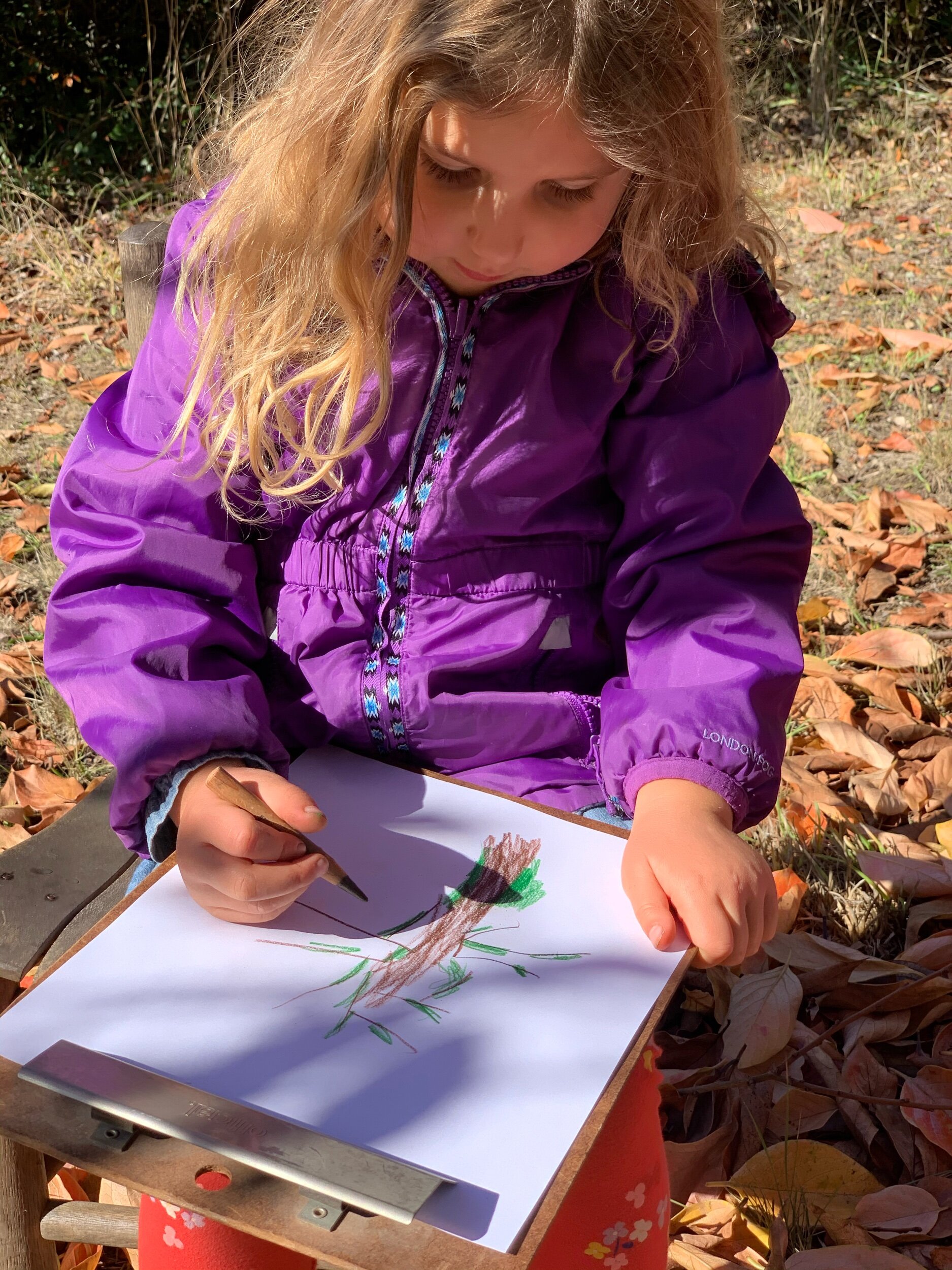
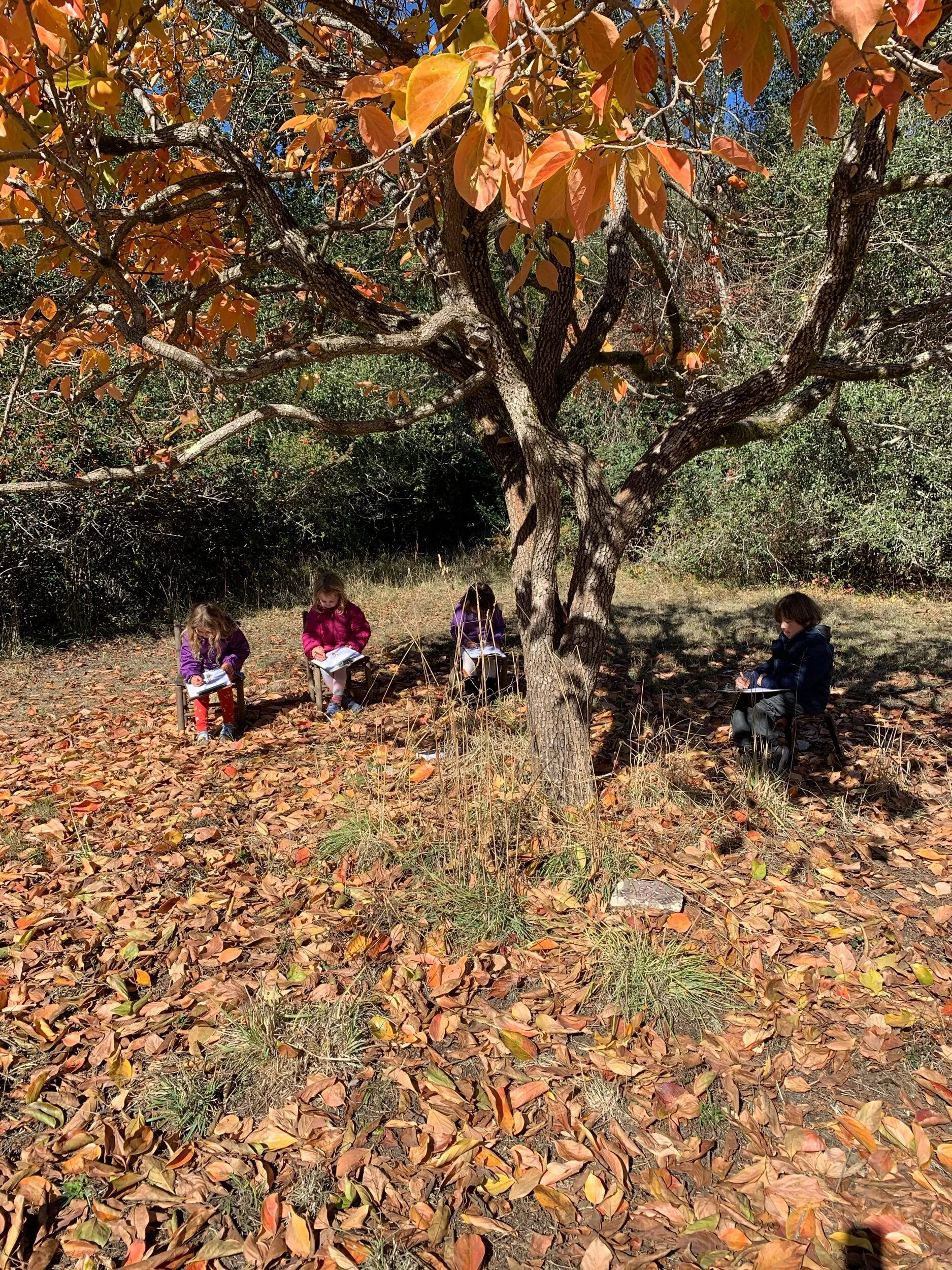
We took one of many planned trips to the persimmon tree near the merry-go-round. We looked at the structure of the tree, the moss, the bark, the leaves and the fruit, with a keen eye to all of the amazing detail we take for granted usually and overlook, especially us adults. Then the children drew what they saw. We’ll visit this tree during each season and record the changes. It’s so interesting how different each child’s drawing is, how unique to each’s perspective.
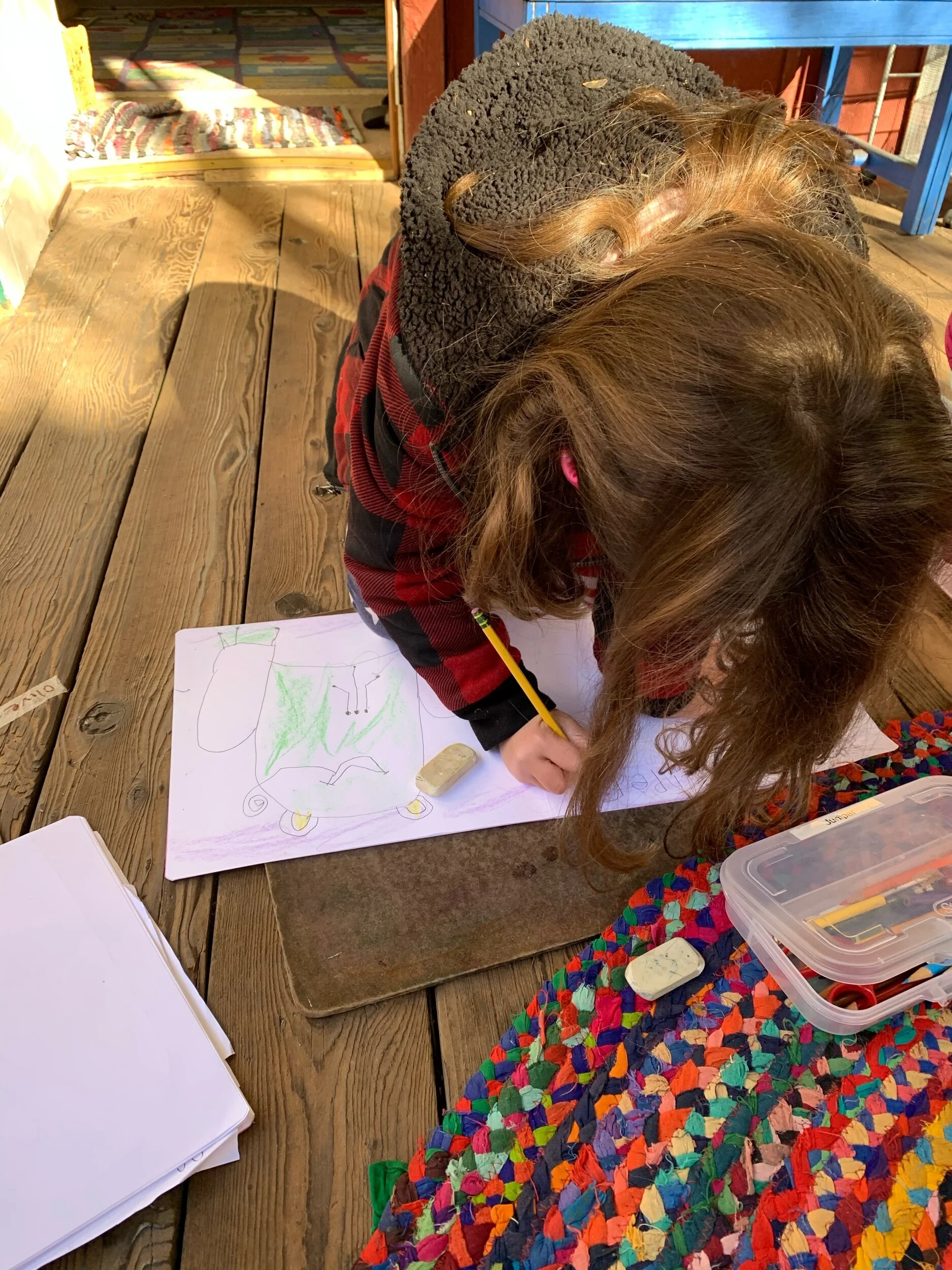
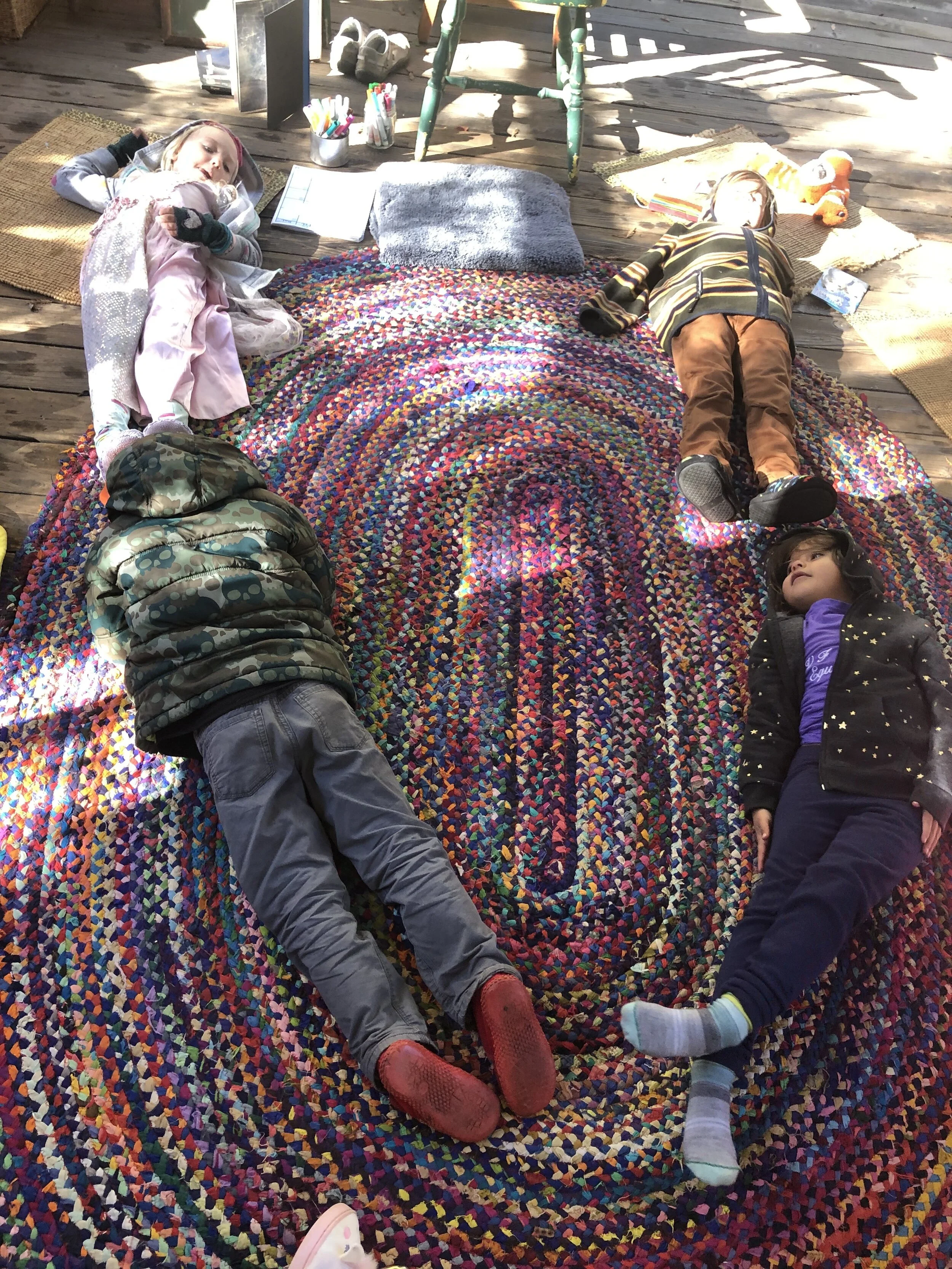
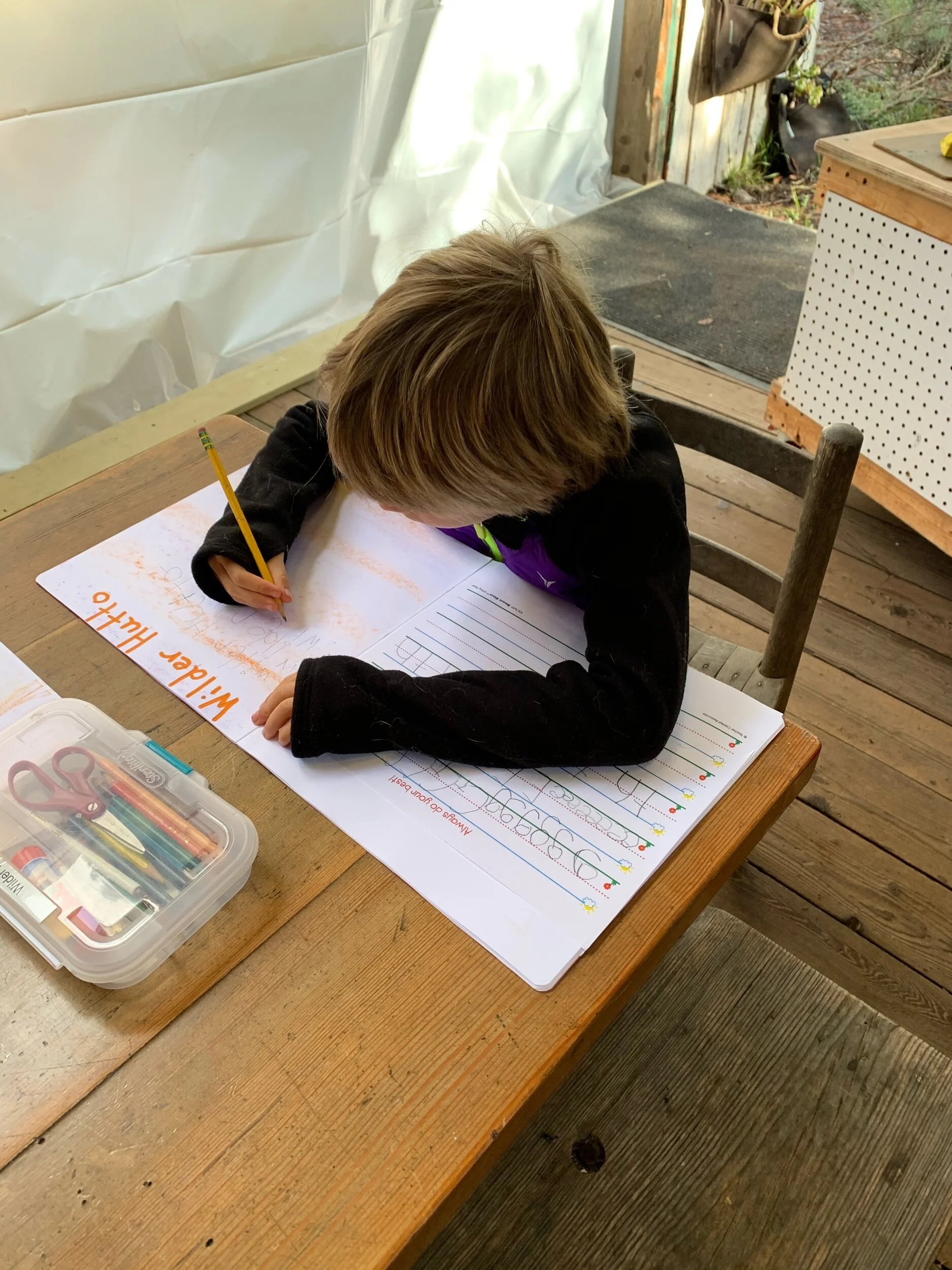
Language Arts curriculum is peppered through most of our activities but we also carve out specific times to really focus on letters, sounds and penmanship. Some recent activities include the students making giant letters with their bodies, practicing letters with their fingers in cornmeal, matching capital/lowercase letter exercises and games, learning to write first and last names and initials, and delving into the sound “th” as in the, this, that etc, as well as the official introduction of “G,g” and “E,e”.
The children had ample time with their book boxes, a couple are reading, and many are getting the hang of sounding out simple words, recognizing beginning and ending sounds to words, and rhyming. Others are not there yet and that’s totally fine. Children are ready when they are ready. Pushing them in this regard is counter-productive. Exposing them nonetheless, giving them opportunities with letter and sound recognition, is valuable to gauge interest and readiness. If nothing else, it is yet another chance to work on art and fine motor skills if it’s truly too soon for retention of this abstract and symbolic world where little characters that are only different in their minute details represent completely different letters (think p, b, d, q, g).
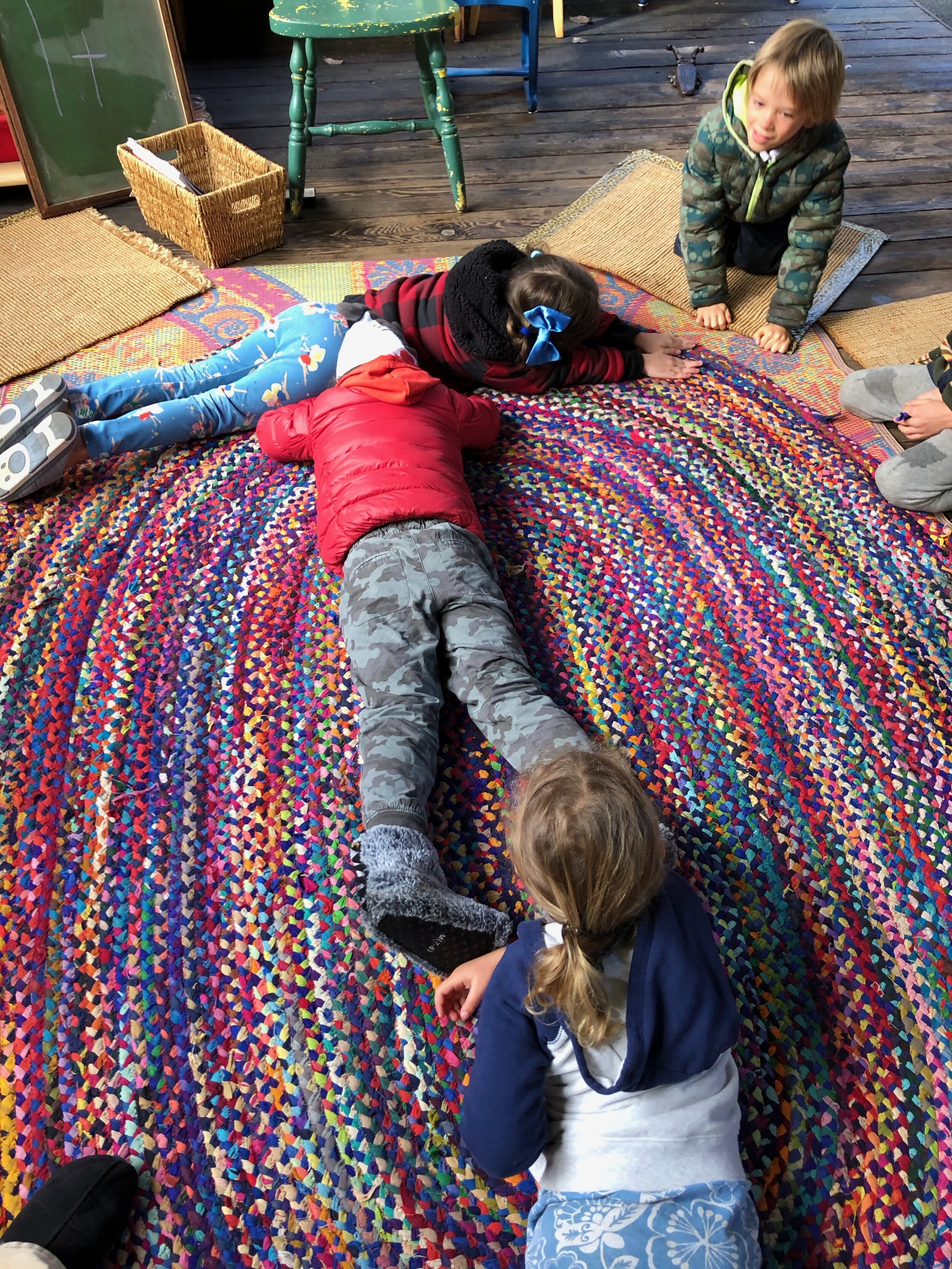
Letters T and V
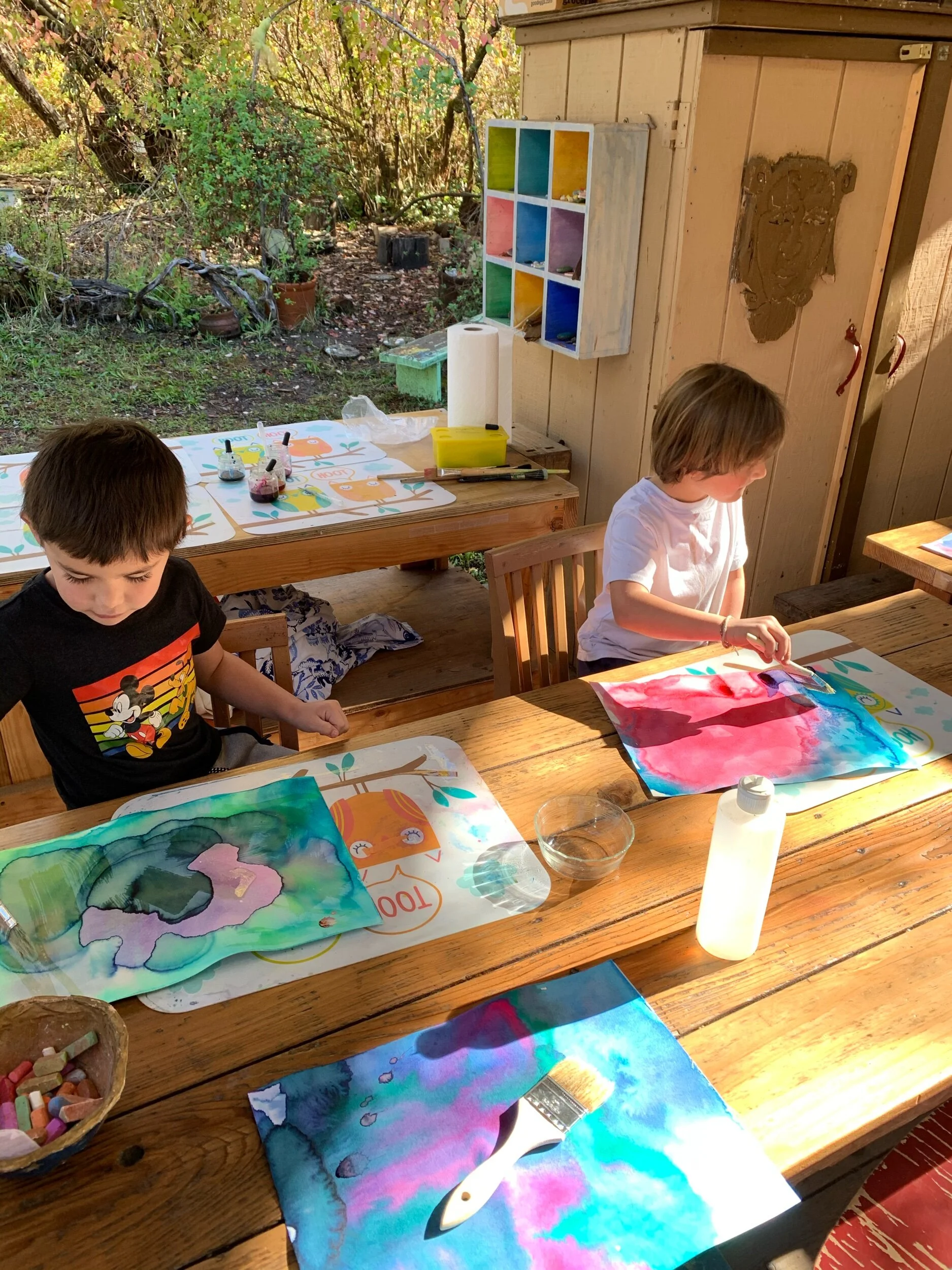
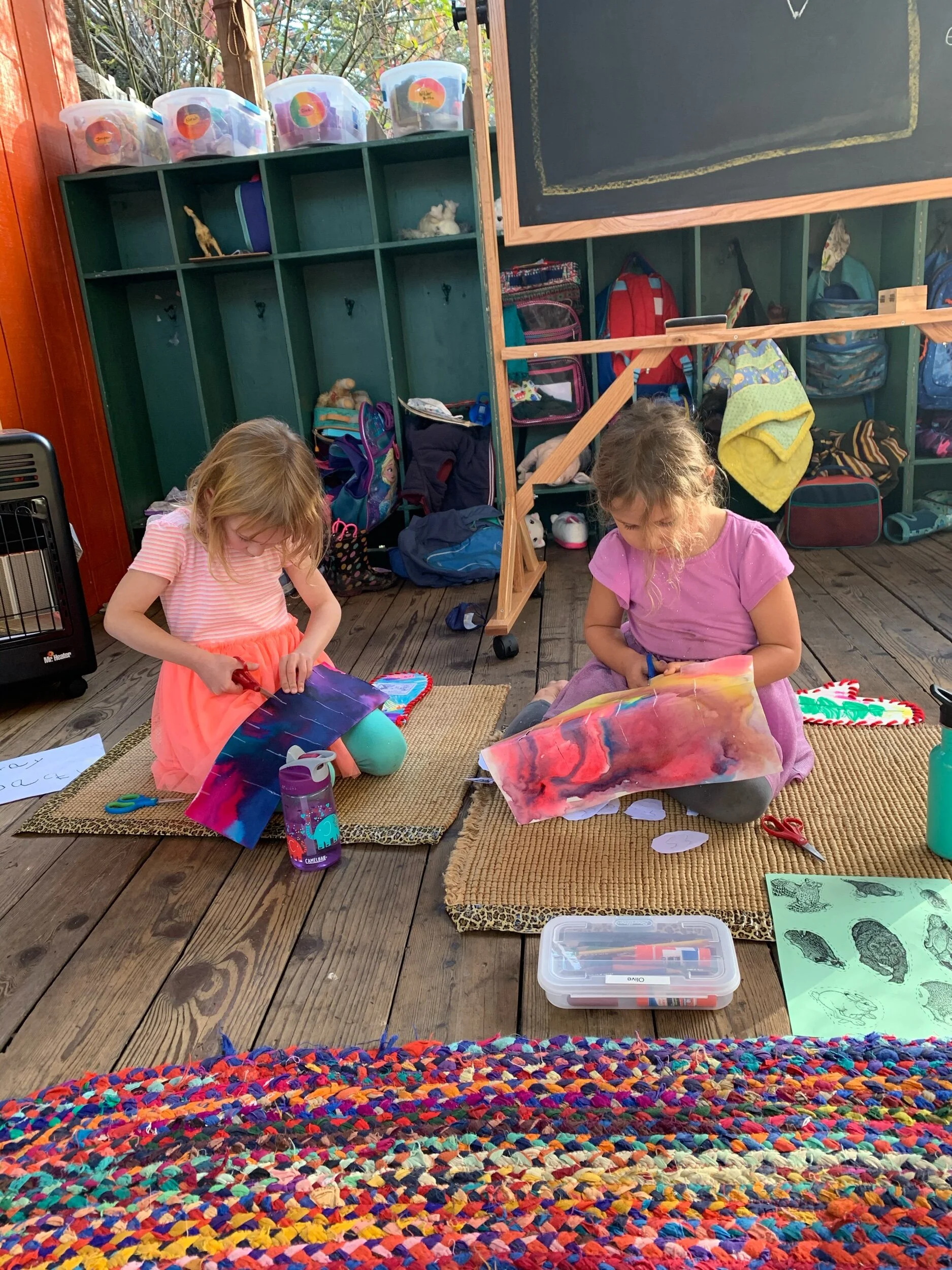
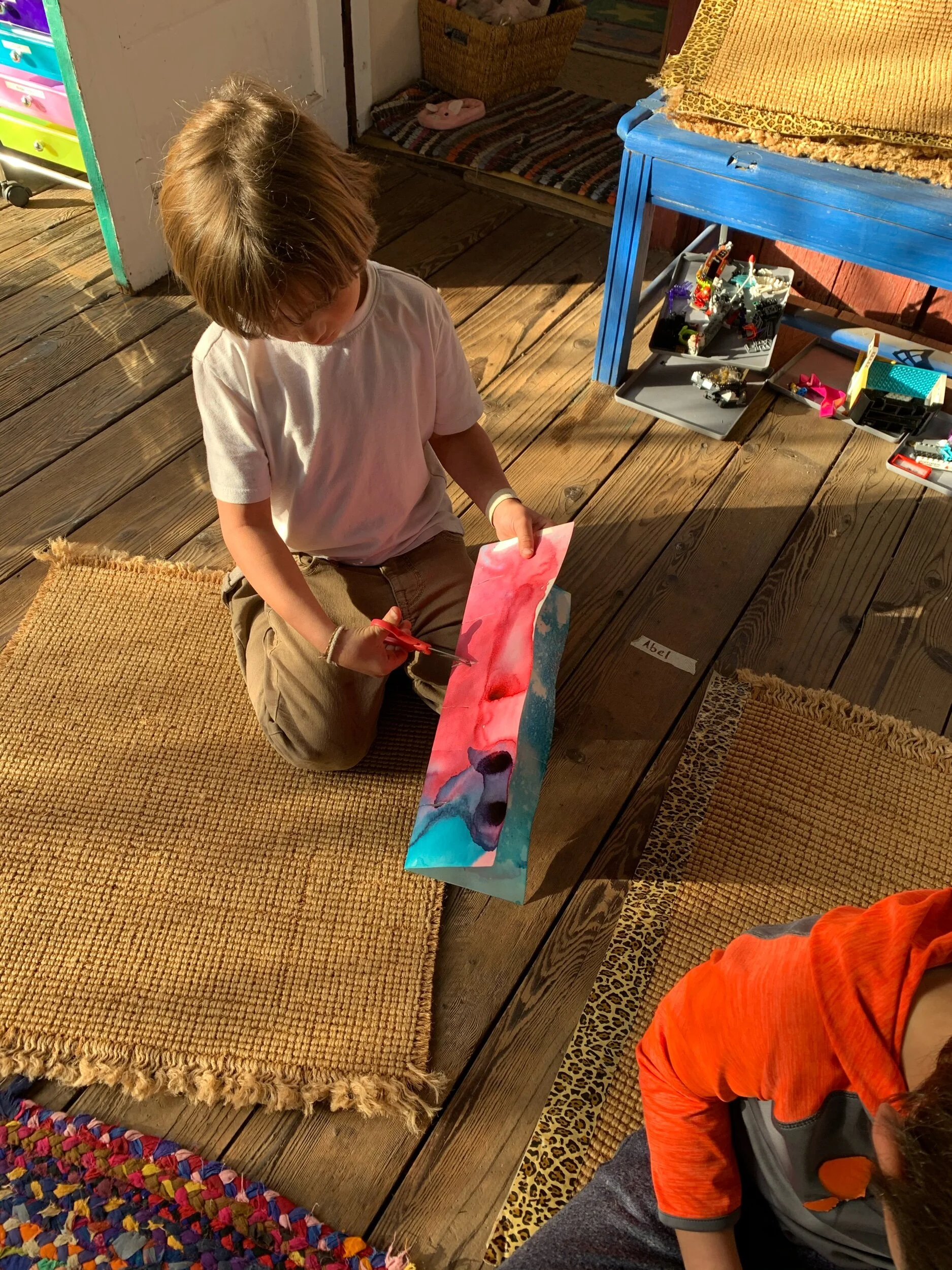
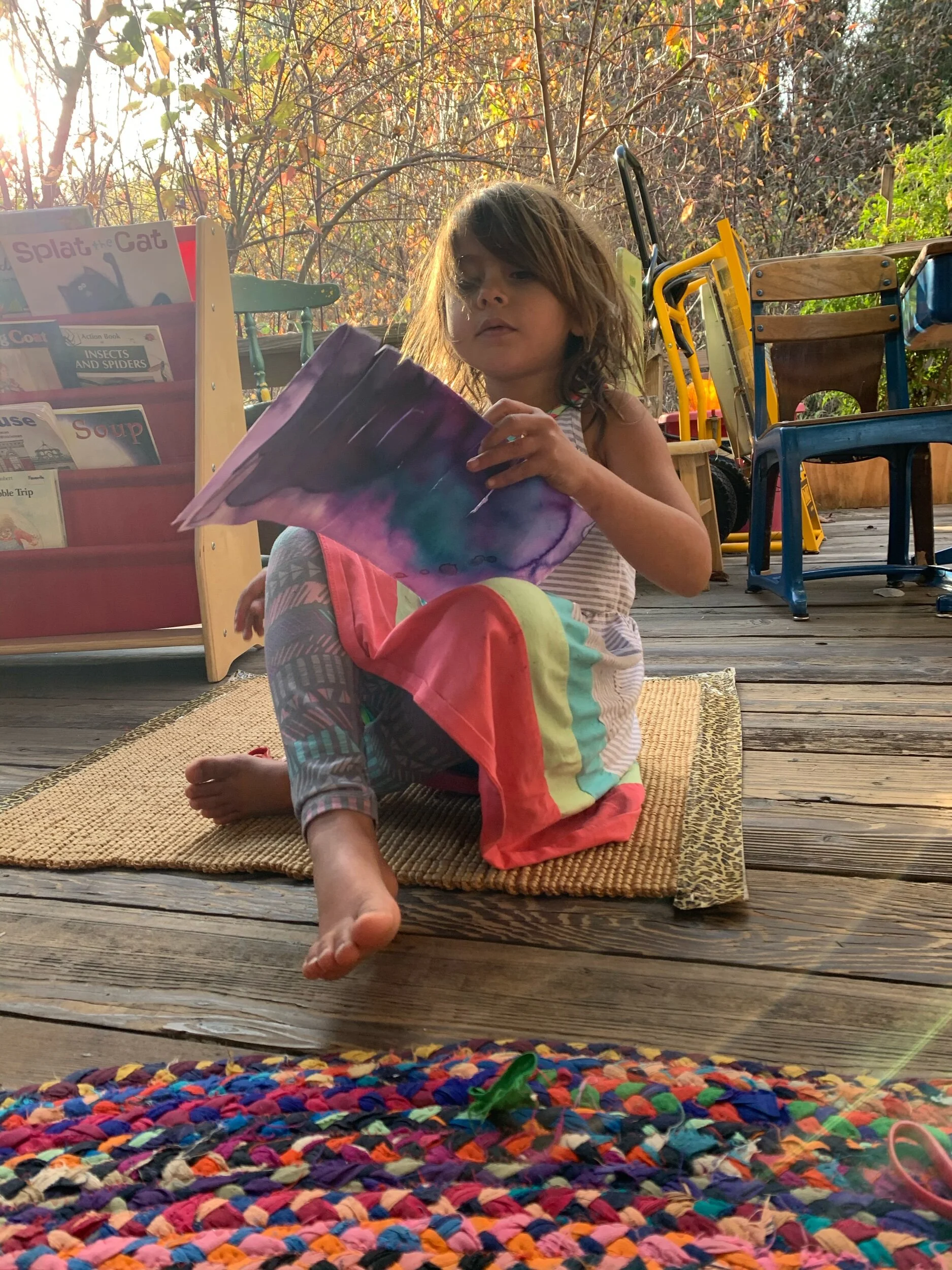
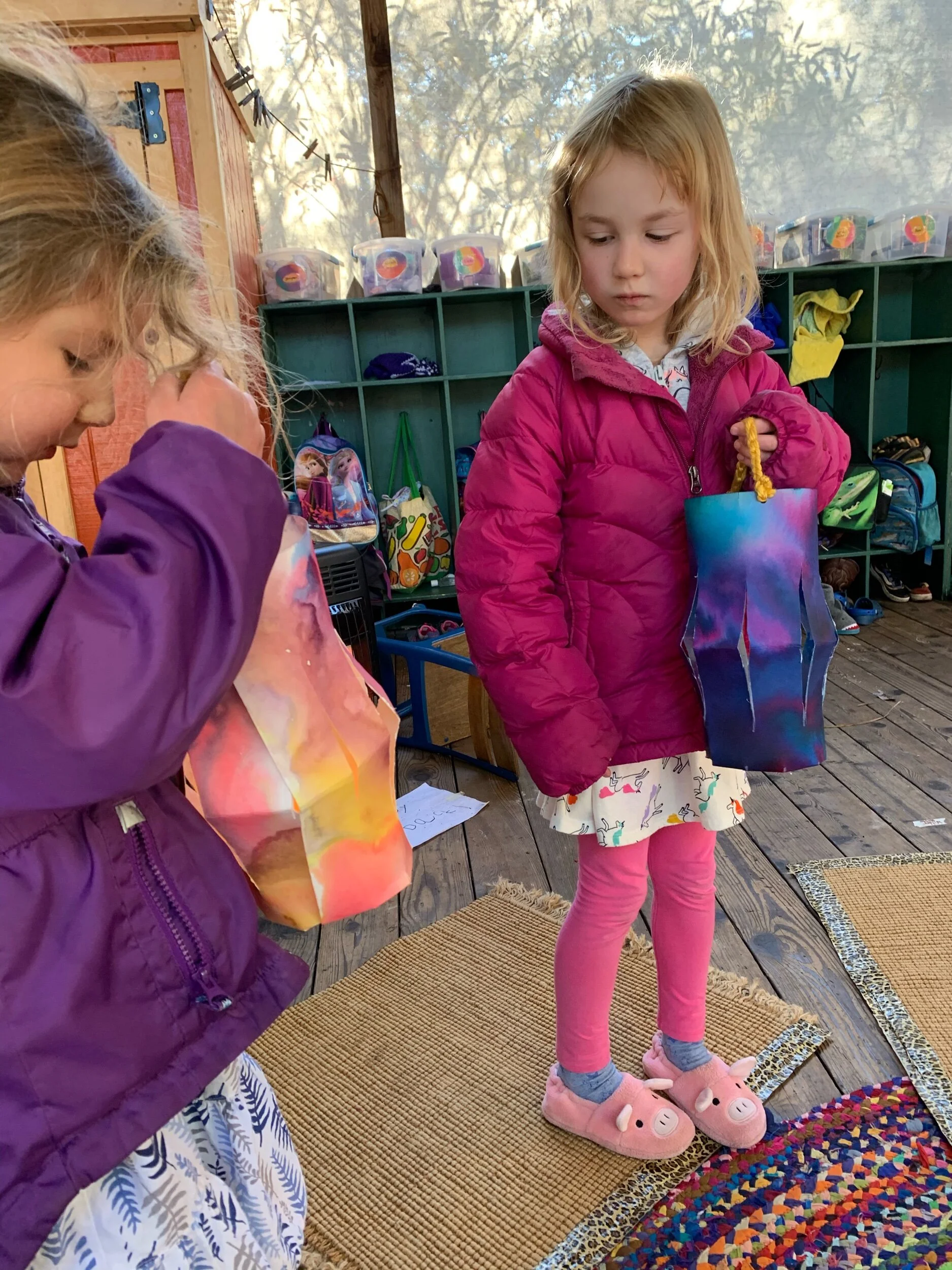
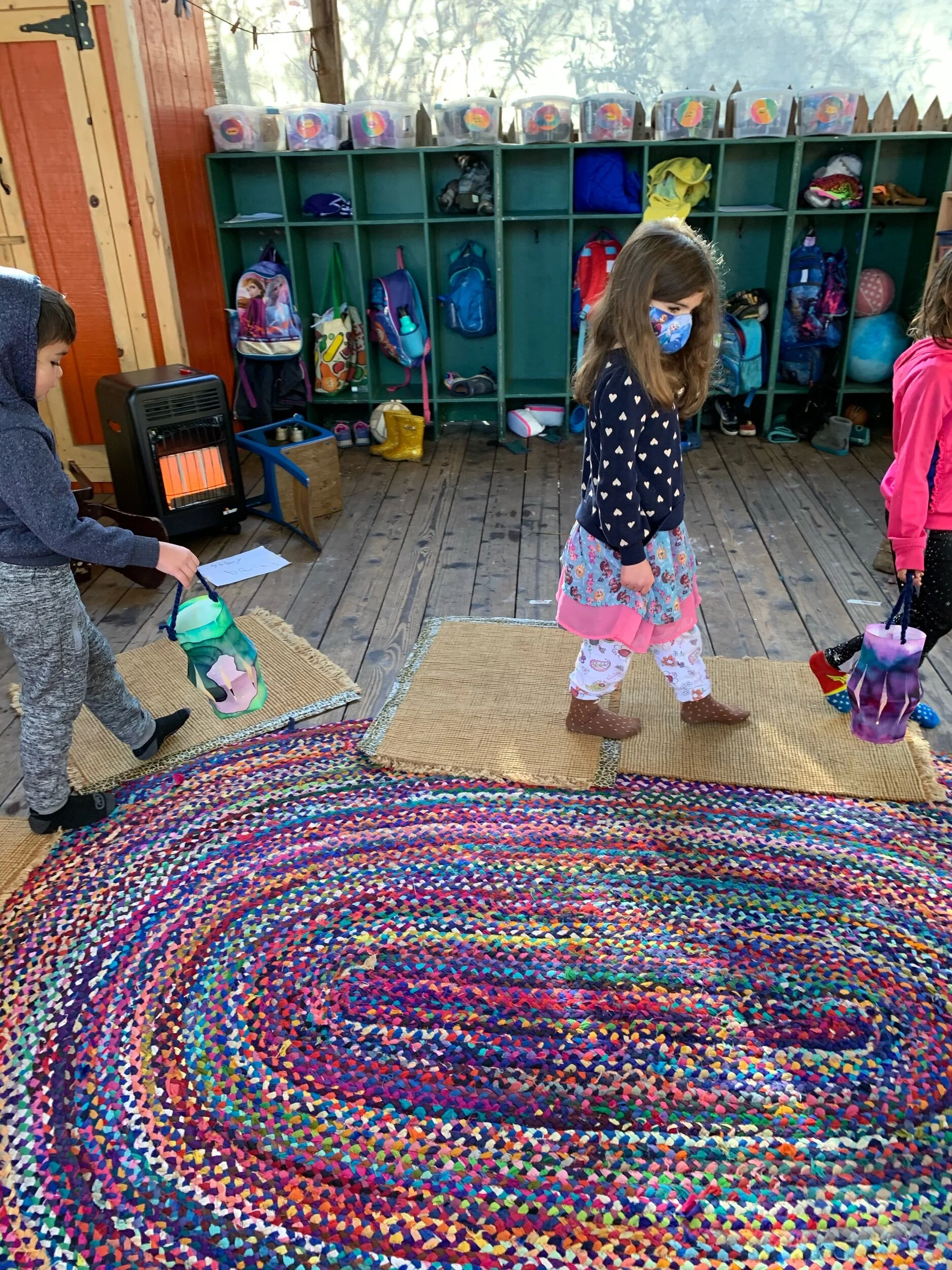
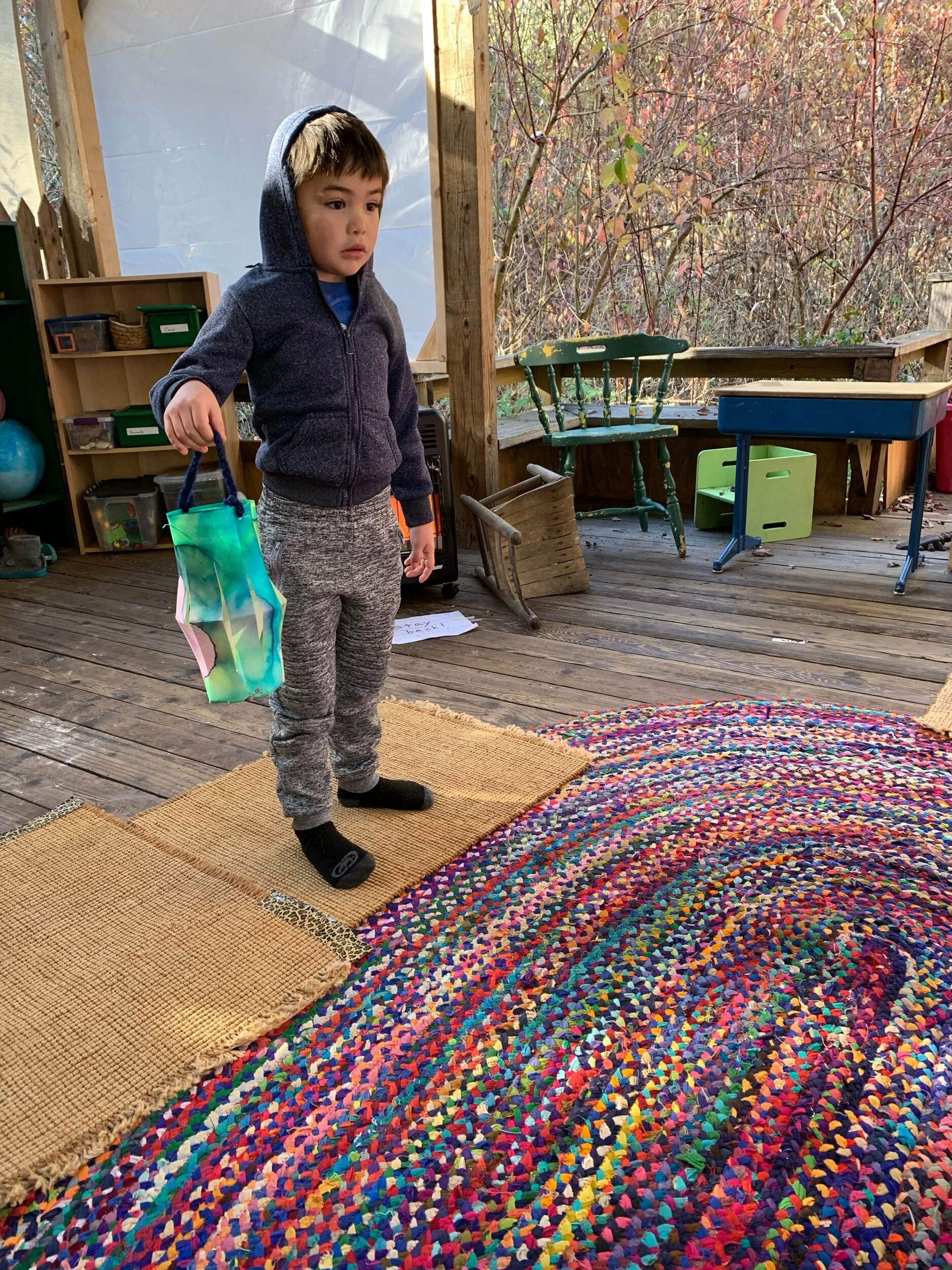
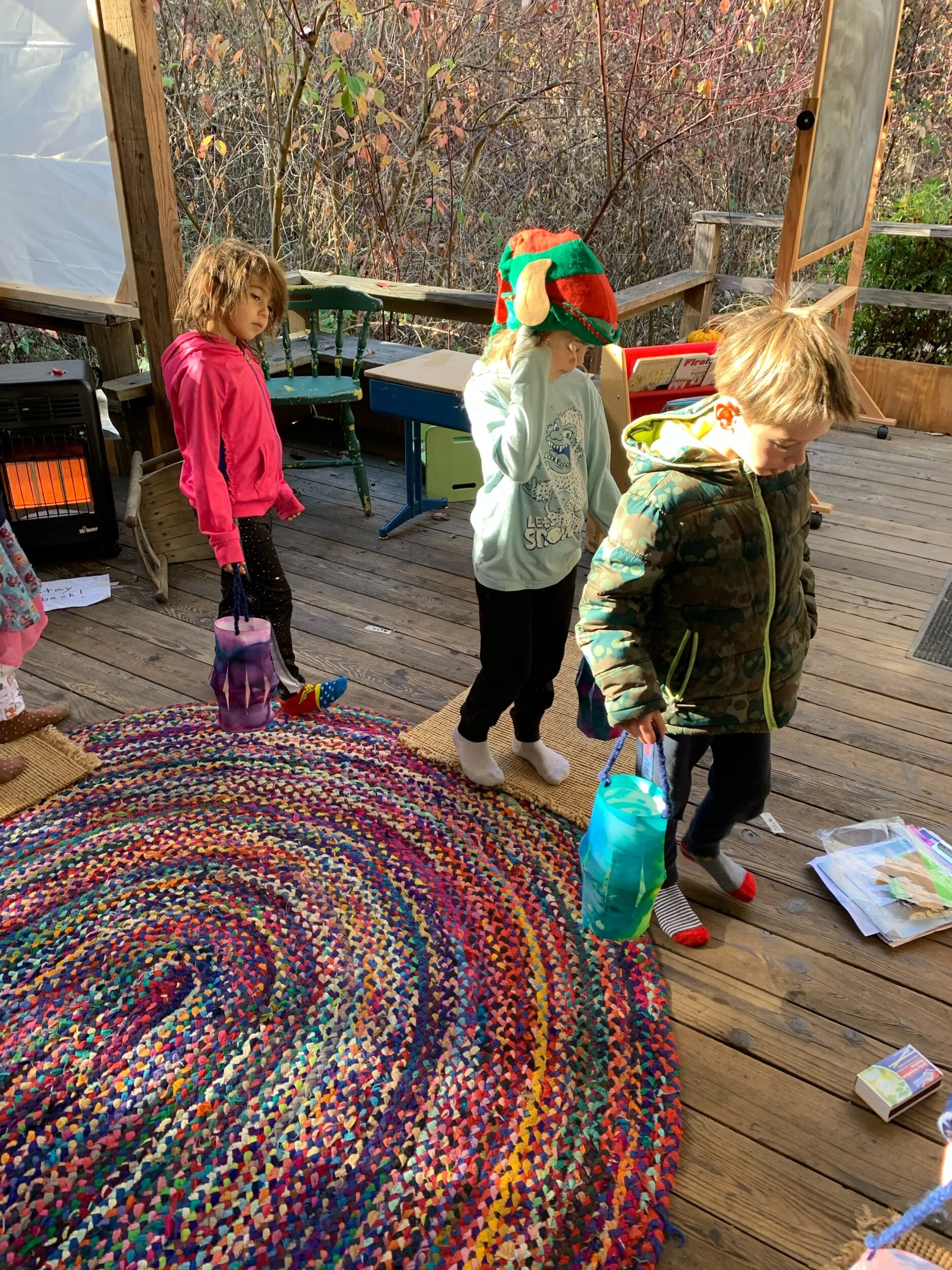
Often our projects are multi-step affairs, preparing and assembling components over the course of many days. One example is the paper lanterns the kids made. They watercolored paper, oiling it to give it a translucence on another day, then cut it according to instructions, stapled and glued, and finally we lit the candles inside (with a lengthy explanation about candle safety first) and sang our lantern song holding their homemade lanterns. We’re also in the midst of sewing sweet little felt gnomes that the children will stuff with alpaca wool from our very own alpacas (after carding the wool to get the fibers organized).
In math, we worked on the numbers 4, 5 and 6. The children drew 5 and 6 pointed stars, worked on number sentences that add up to 5, we’ve been counting by 10s, playing dominoes, and generally surrounding ourselves with mathematical activity in order to organically master all of the concepts expected for this kindergarten age.
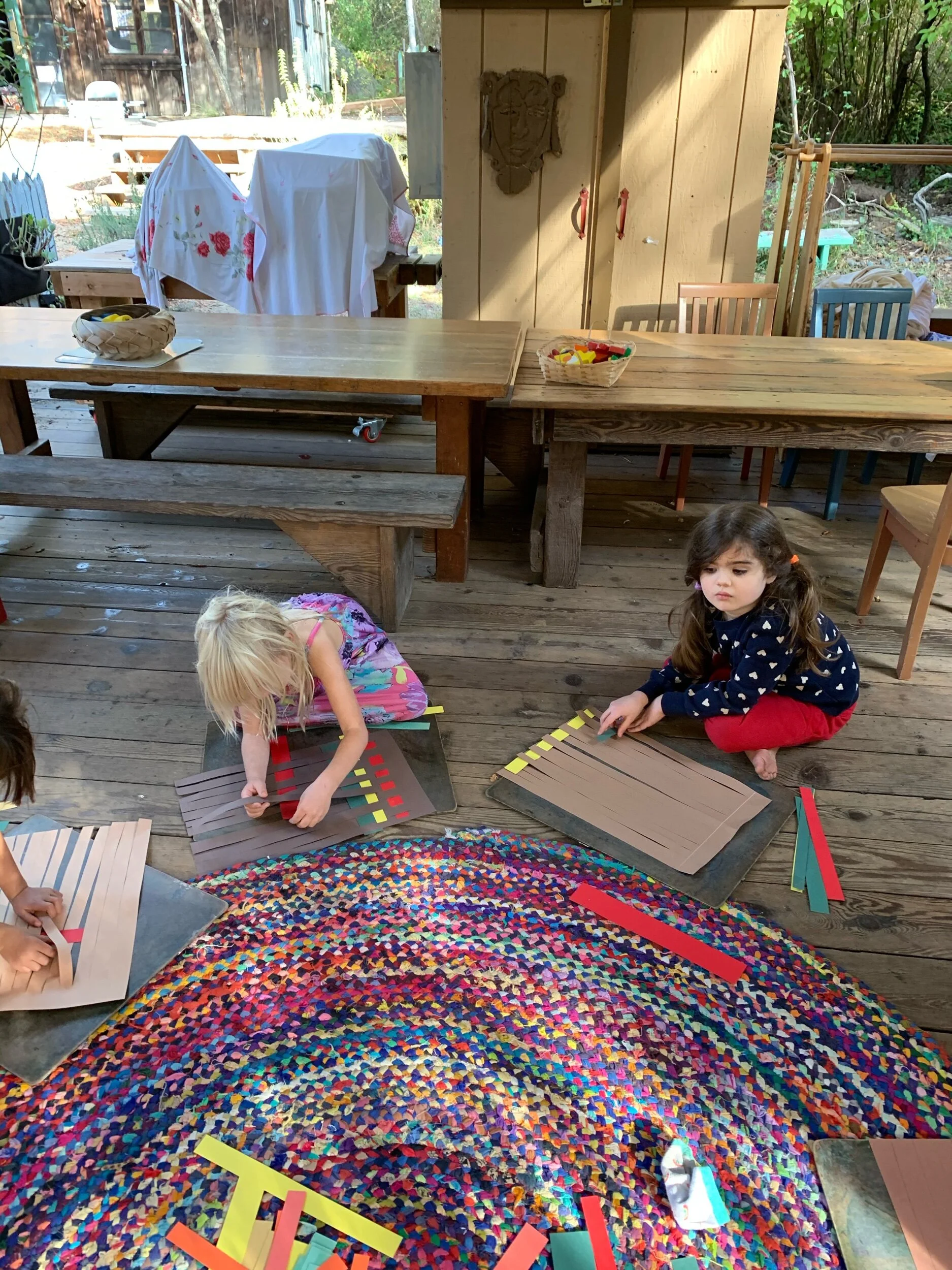
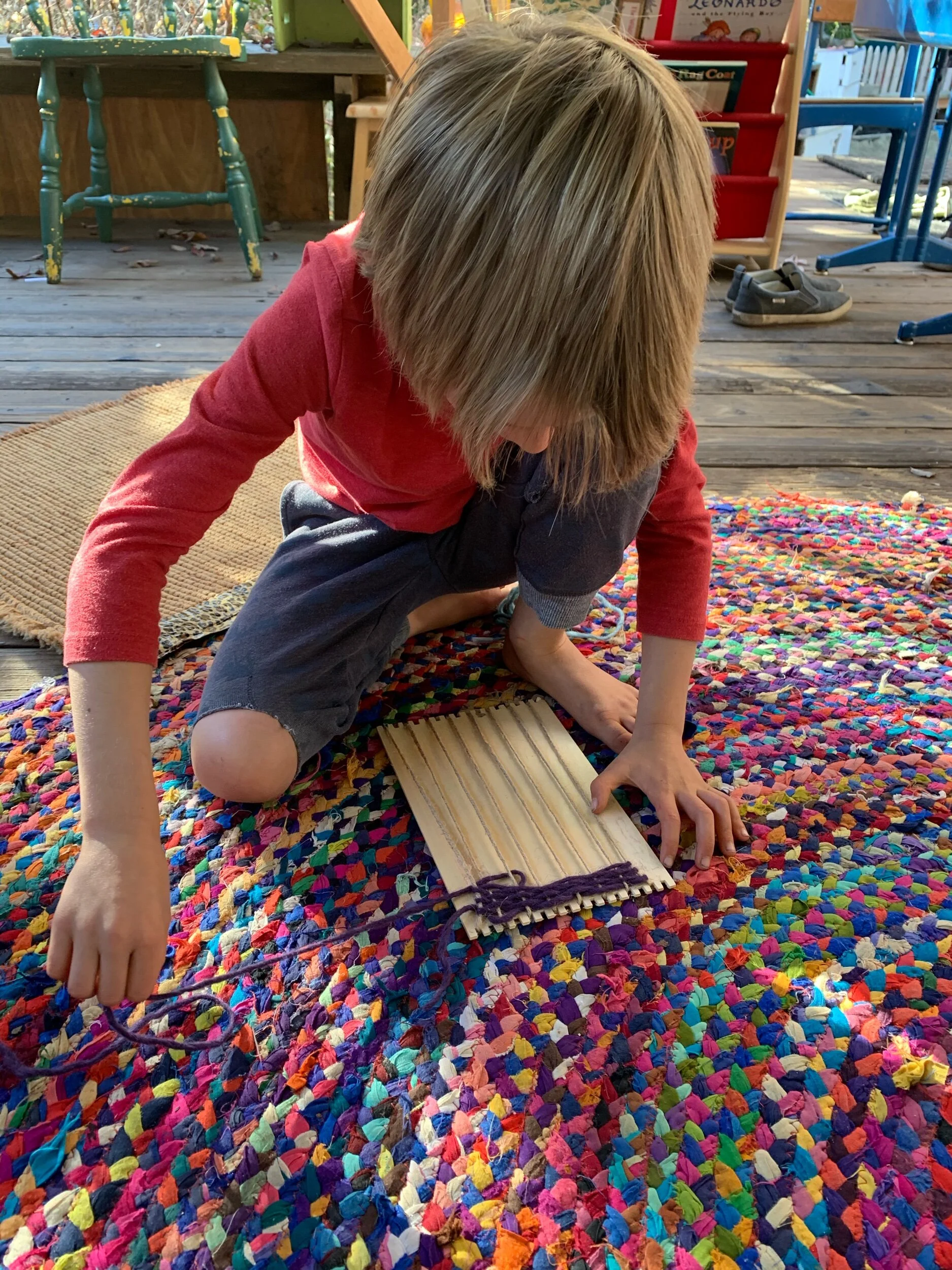
After practice paper weaving with the Thanksgiving mats that came home, the children have now moved on to weaving with yarn. These types of handwork activities are vital for fine motor control, organized thinking, and all are a type of math for the fingers.
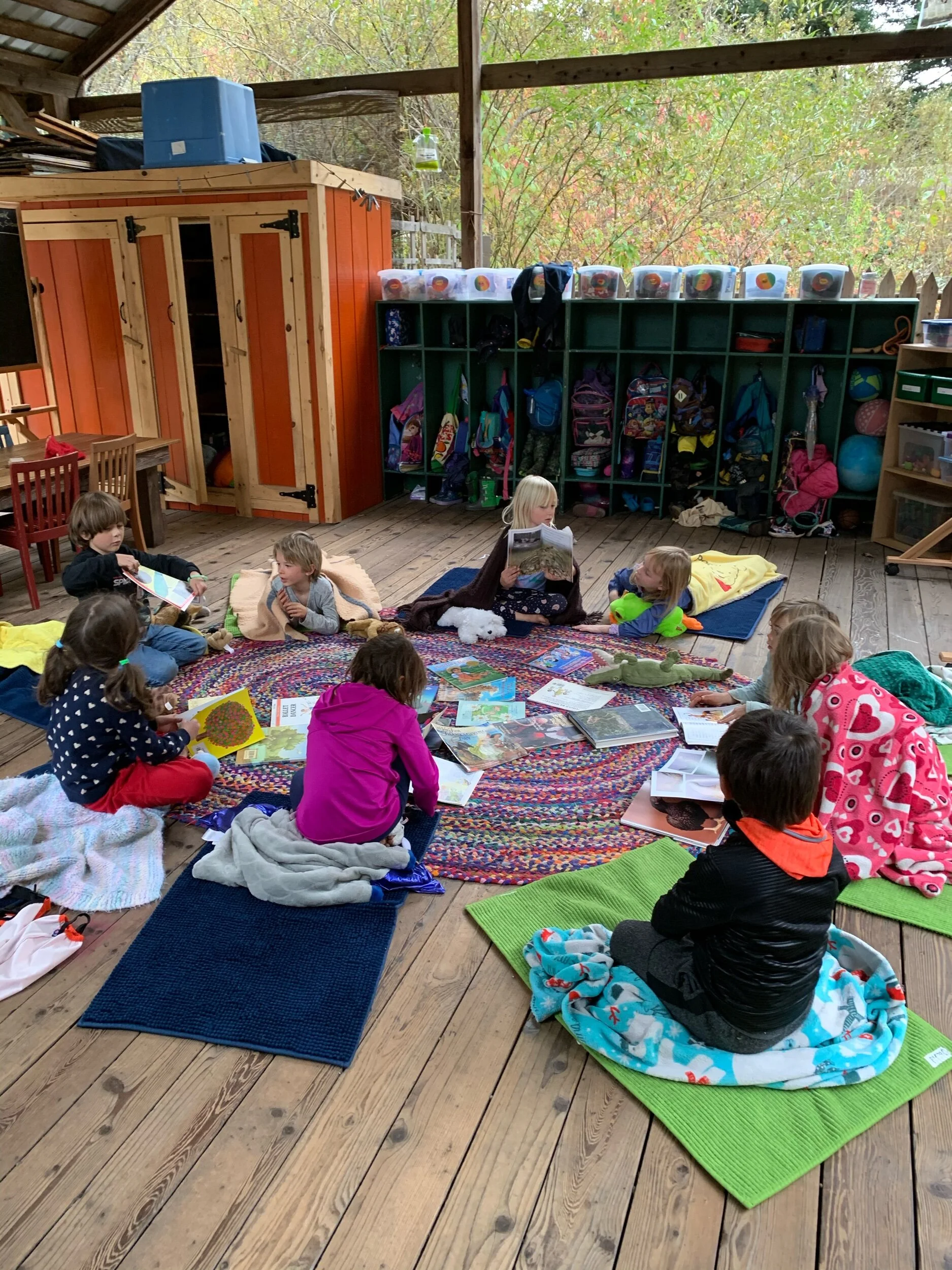
Rest time. The children quietly look through books, share a small snack, hear a story, share news and feelings, the teacher makes announcements sometimes, and then the kids have play time on the deck or continue resting and reading if they prefer.
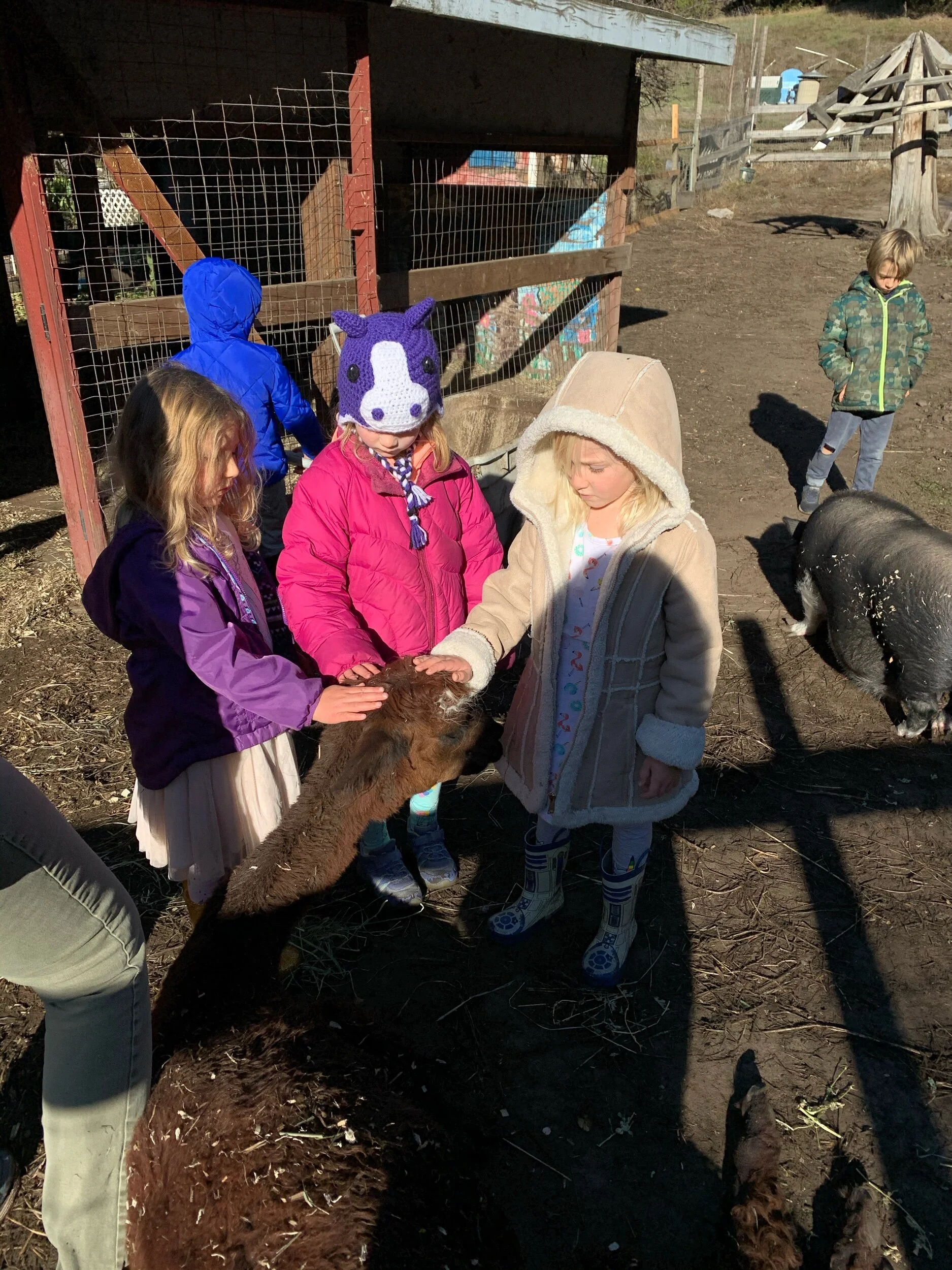
A rare moment with Aurora who was quite ill last month. The children were gentle and since she wasn’t feeling well, she didn’t resist their love.