
Kindergarten Class January/February/March
Hello Everyone,
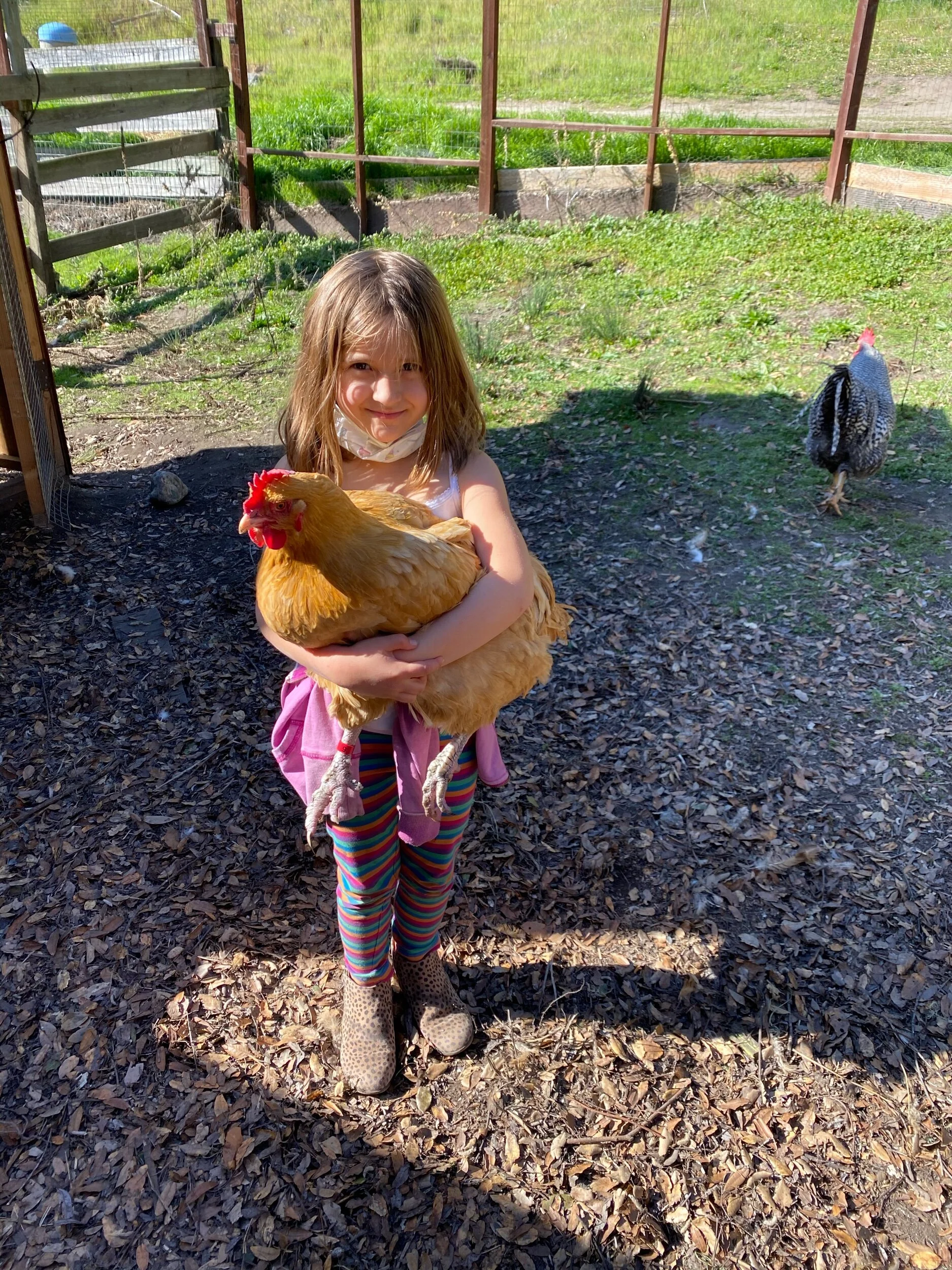
Finally, your blog. Lots of catching up to do here. We are hoping for some calm now that we’ve had so many crazy roadblocks in our way. It’s been a year of resilience and adaptability, that’s for sure. We’re all gaining life lessons, and despite the hardships, inconveniences and uncertainties, Orchard kindergarten remains a joyful, happy place, where blessings are everywhere. One such joy was welcoming back Luz to kindergarten. Here is a photo of her in case you haven’t yet had the pleasure of meeting her. She impressed us right away with her chicken knowledge and her ease with the animals. You can never have too many chicken whisperers around.
Winter Weather Curriculum:
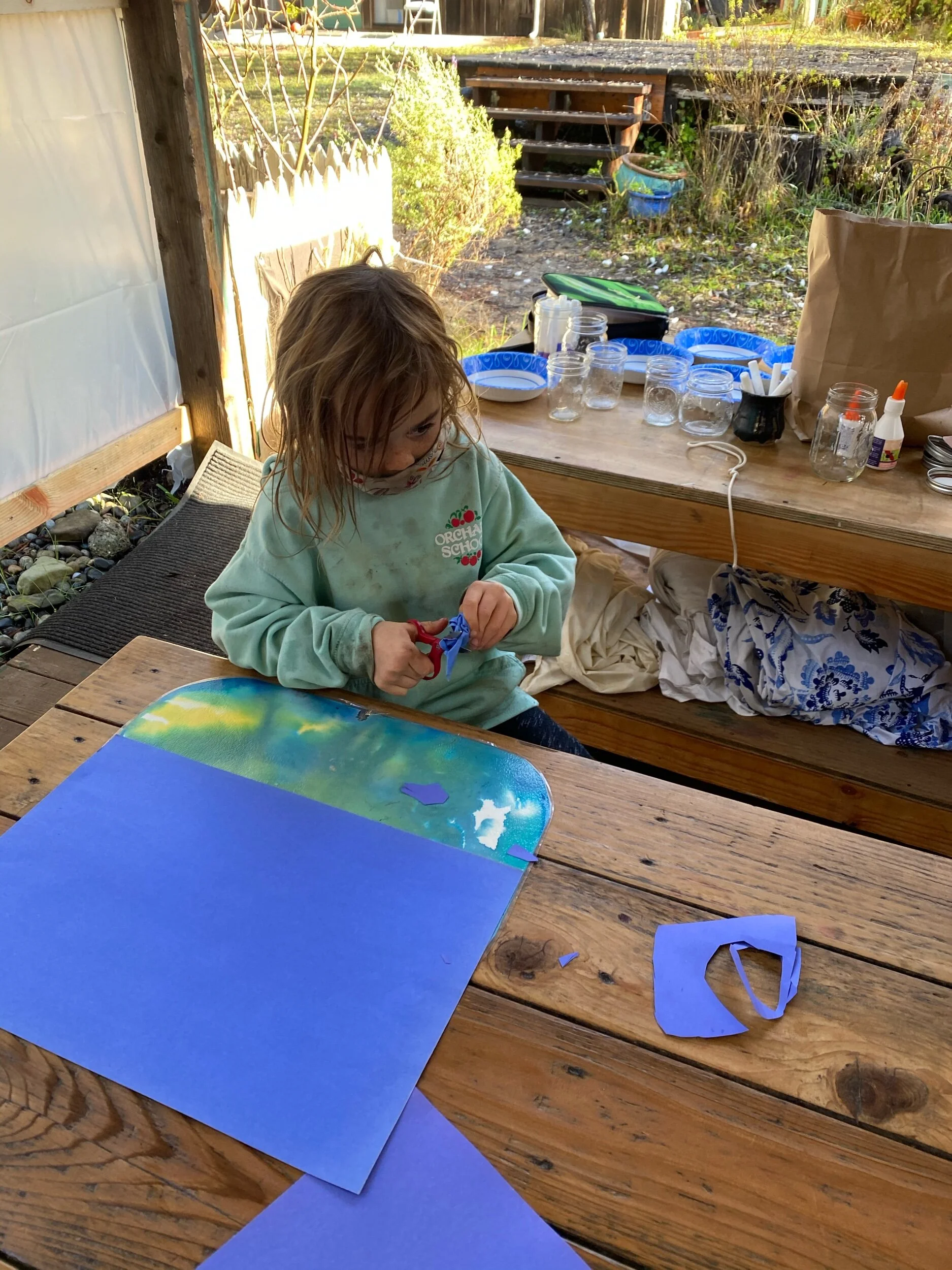
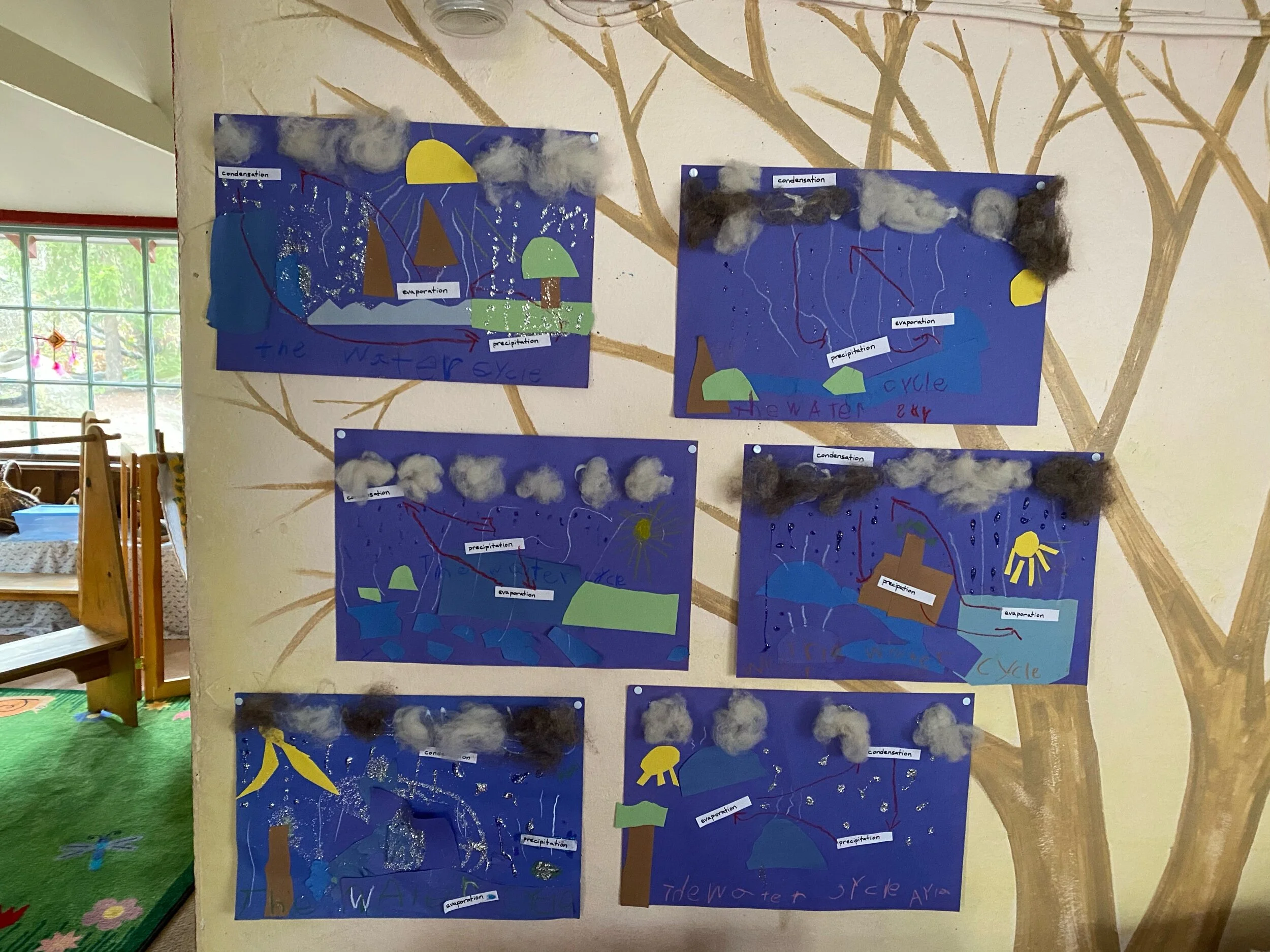
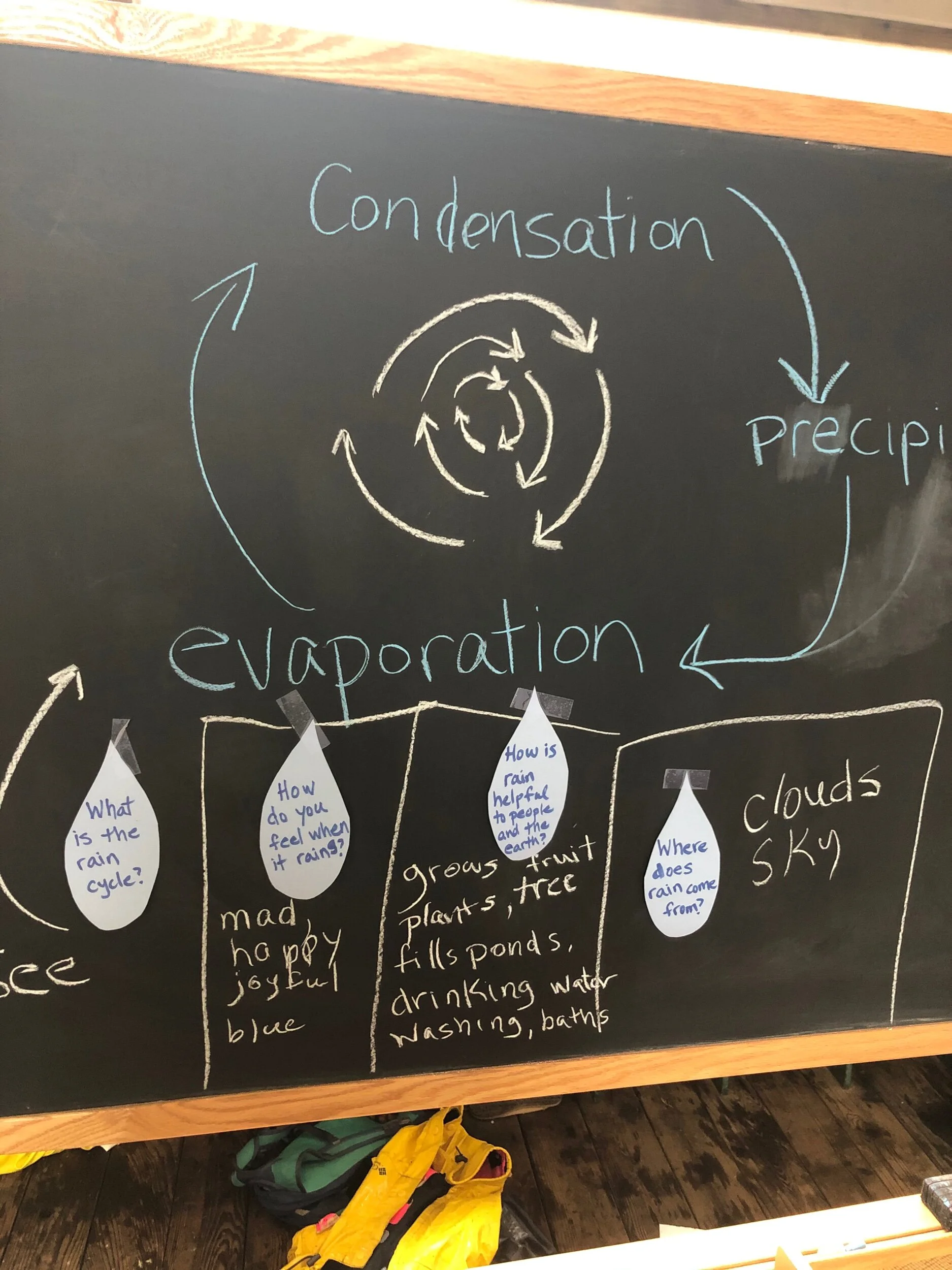
Our rainy, windy weather provided wonderful curricular inspiration in January and February. We introduced the concept of the water cycle and the idea that every drop of water on Earth has been part of this cycle since the beginning of time. The children made multi-media water cycle posters showing evaporation, condensation and precipitation. This after we made it “rain” in the classroom — each student had a glass jar filled with hot water and topped with a lid with ice and they got to see the steam evaporate, condense on the cold lid and then drip down as precipitation. Quite a thrill.
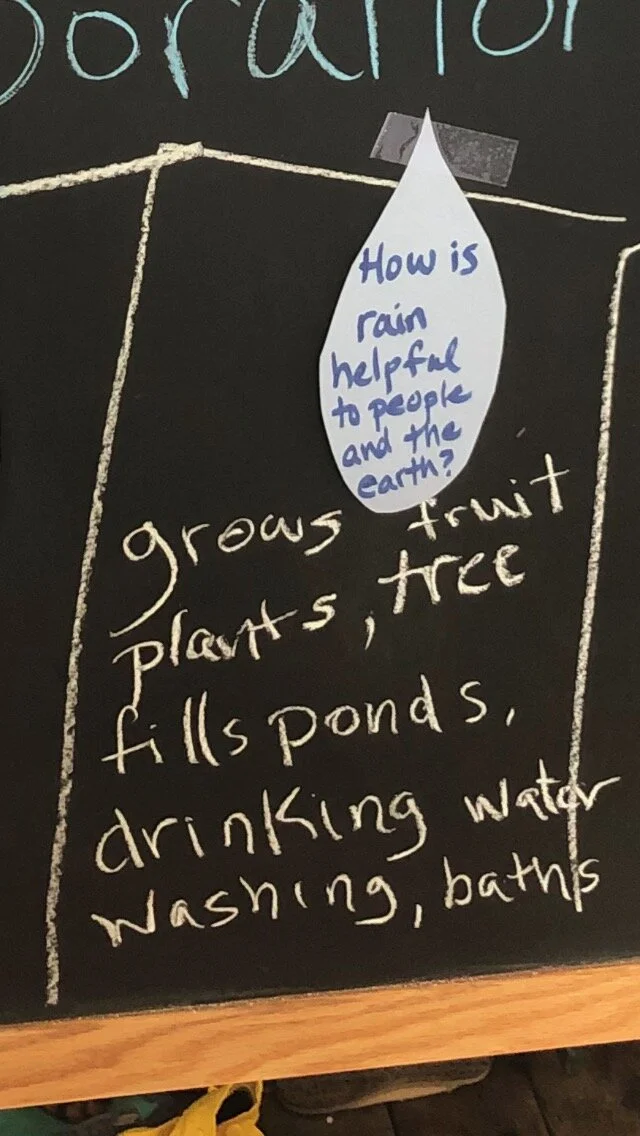
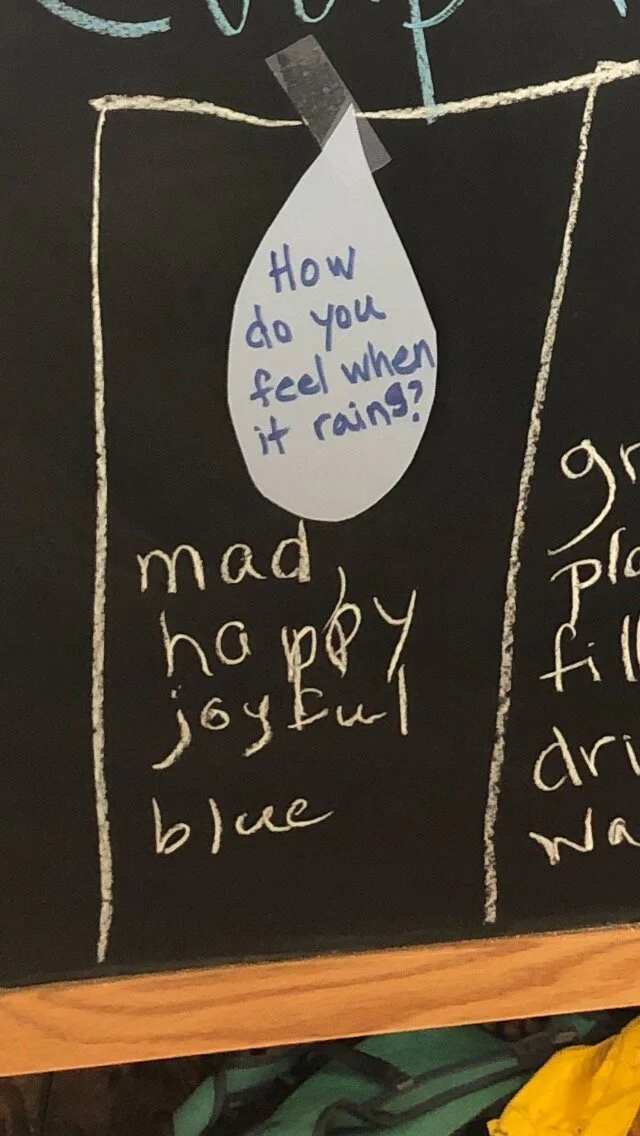
The kids danced to the Banana Slug String Bands’ song “Water Cycle Boogie,” and we asked and answered questions about rain during circle time and read several stories about rainy days . The kids collectively wrote a rainy day story, each kinder adding a part. It took place on a rainy day in Hogwarts where Harry Potter fell into a 100 foot deep puddle. He got swallowed several times by creatures but was eventually saved by a princess. It’s aptly titled “Harry Potter Gets Eaten and Saved.”
We made frost develop on the outside of a metal bucket using ice and rock salt. We also discovered in comparison that ice without rock salt does not make frost develop. The kids learned about different kinds of clouds (cirrus, cumulus and stratus) and worked with a partner to write these scientific words and to recreate their specific shapes using cotton balls on paper.
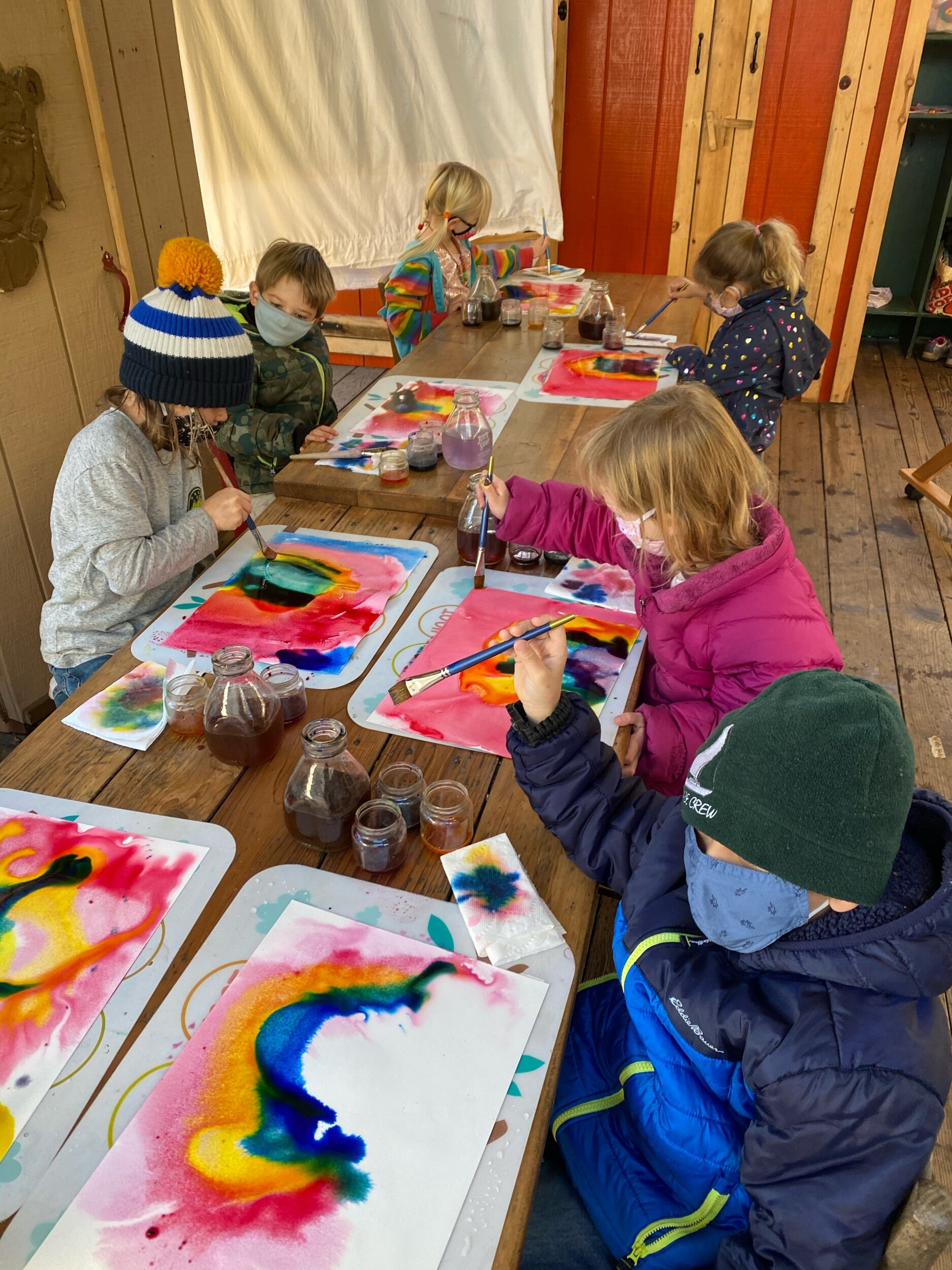
We also explored rainbows with a variety of art projects, including making all of the colors of the rainbow using the three primary colors. And then of course, we couldn’t forget about snow. The children grew “snowflakes” using pipe cleaners and a borax solution to form crystals on their 6-sided structures and made lots of paper snowflakes too. Most of this is documented in gallery below.
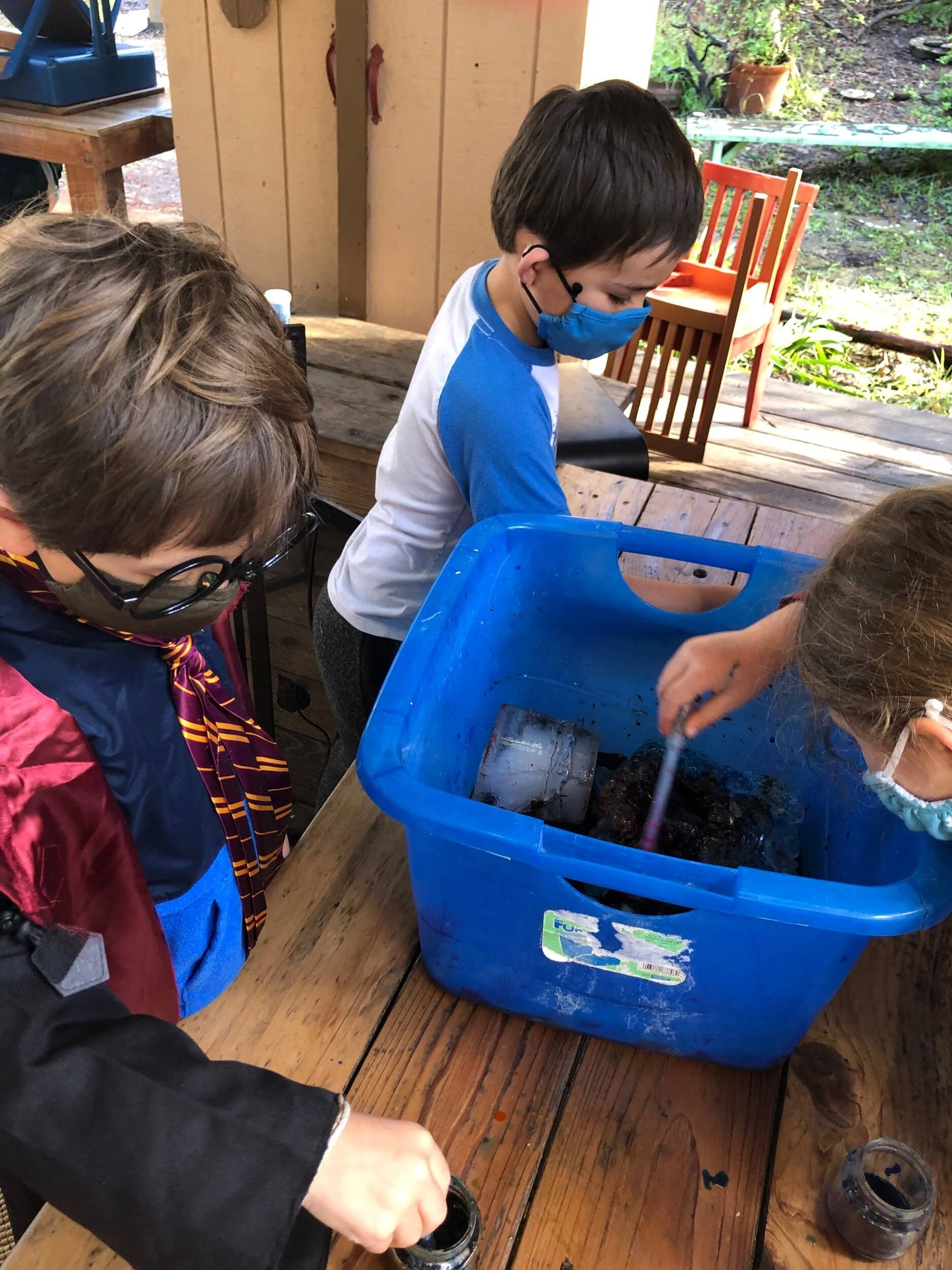
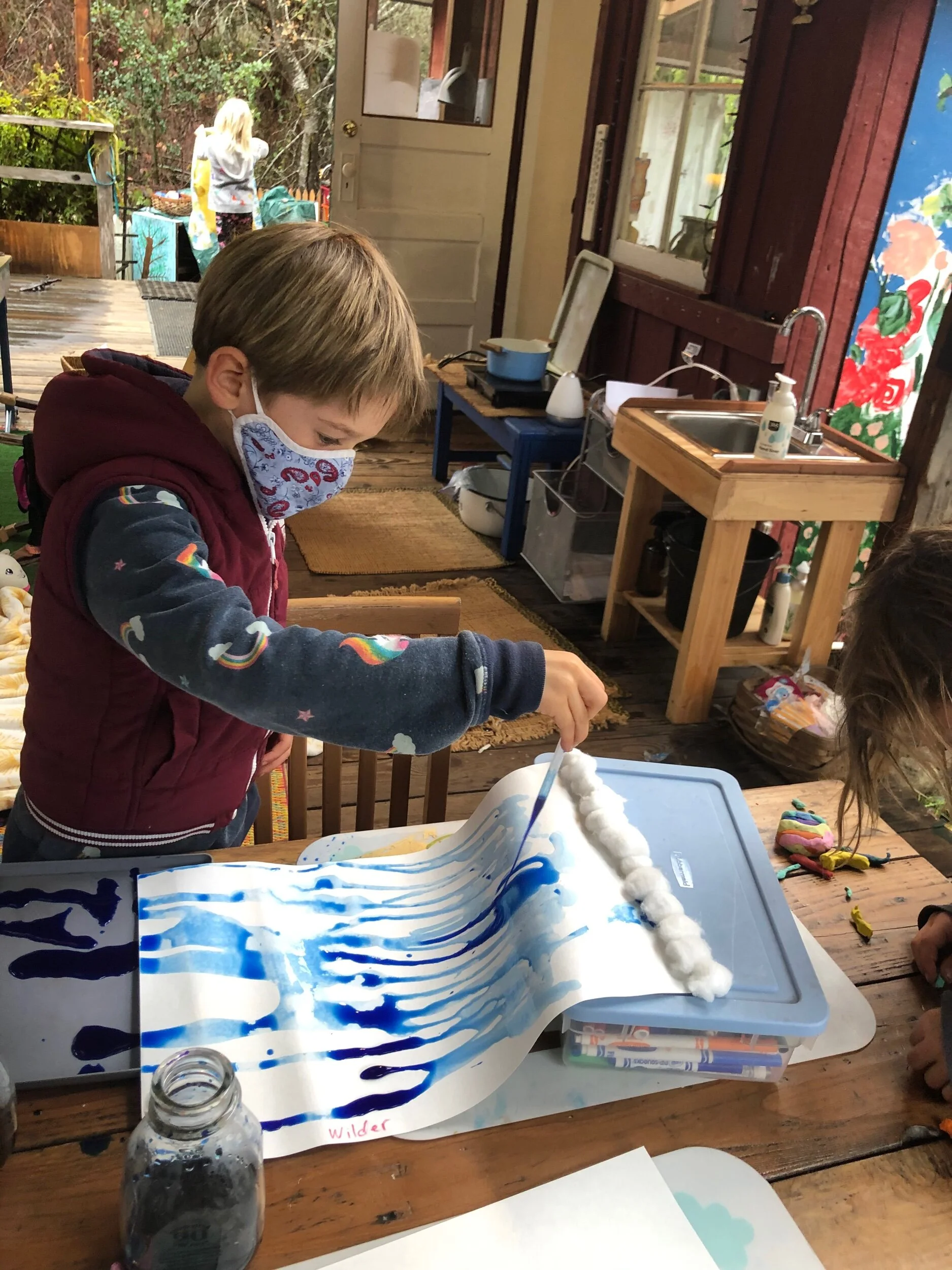
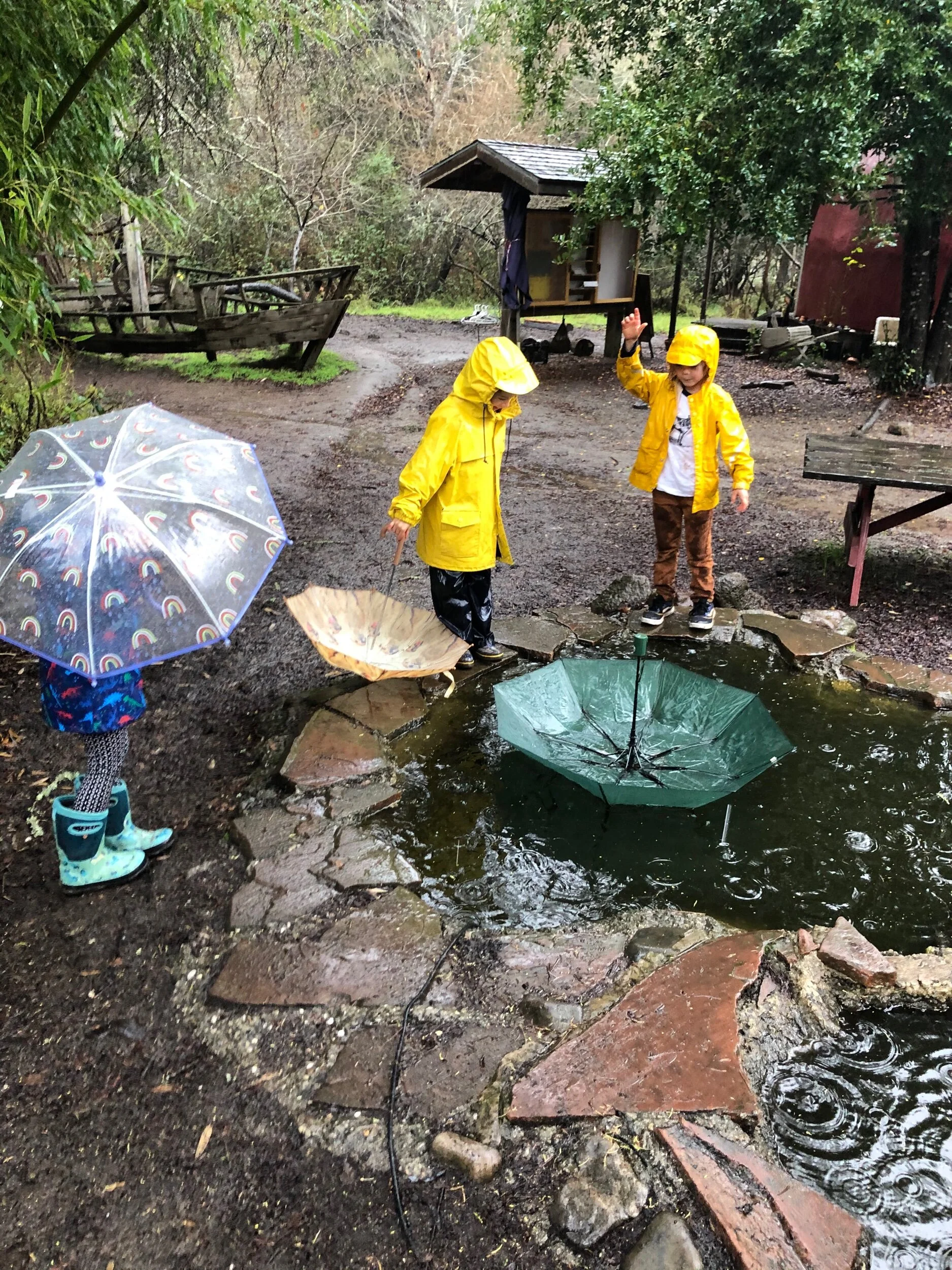
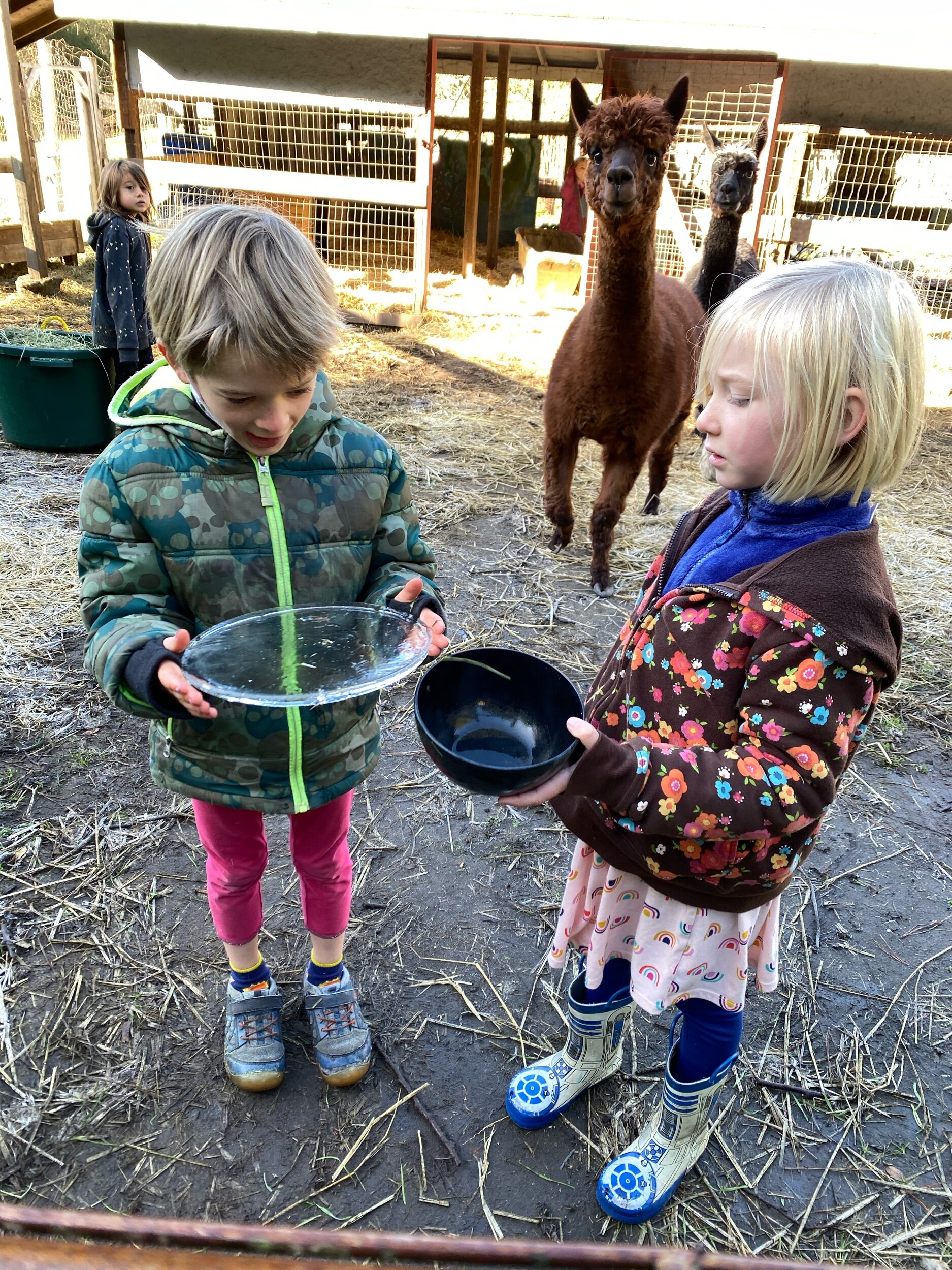
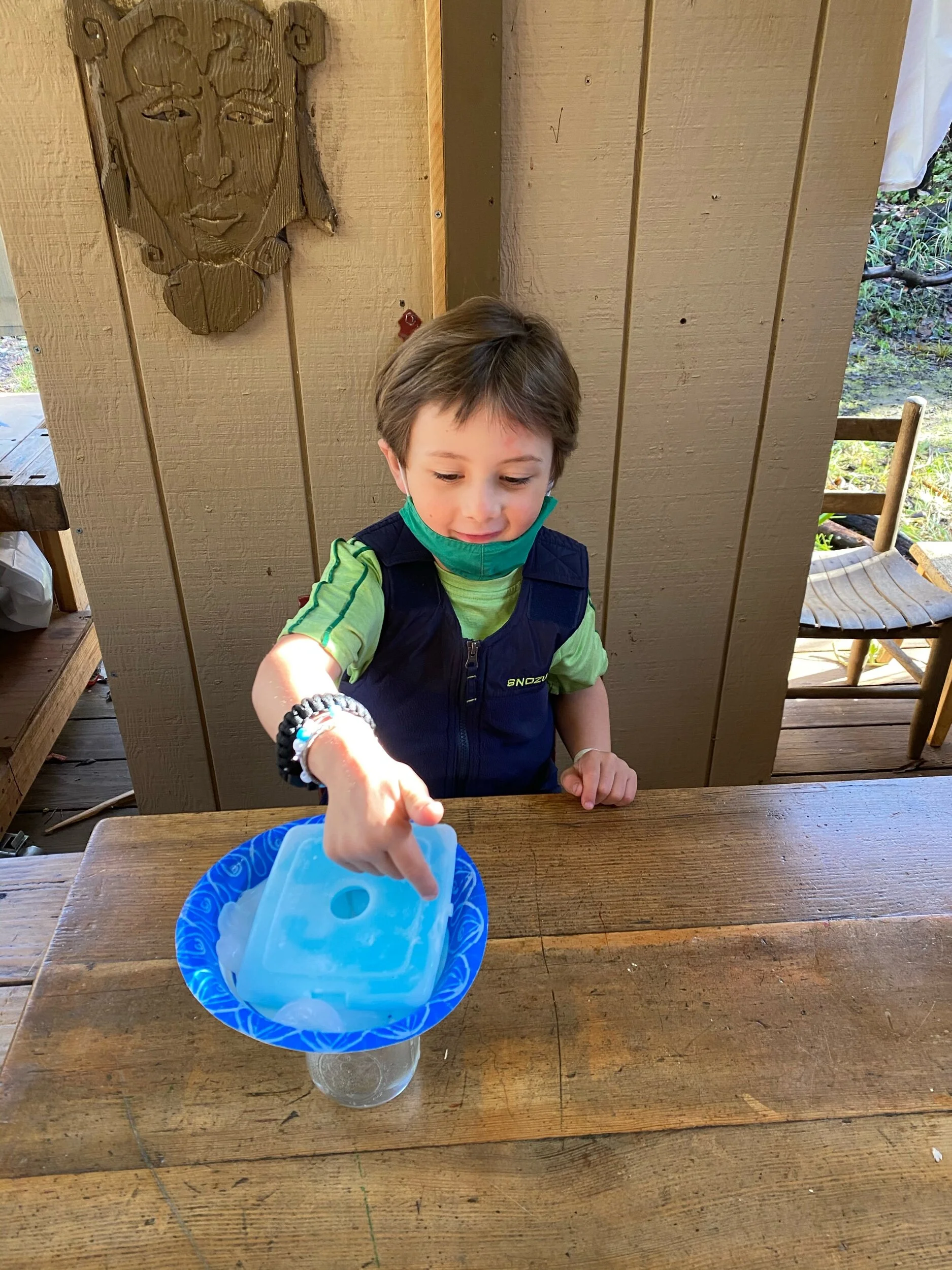
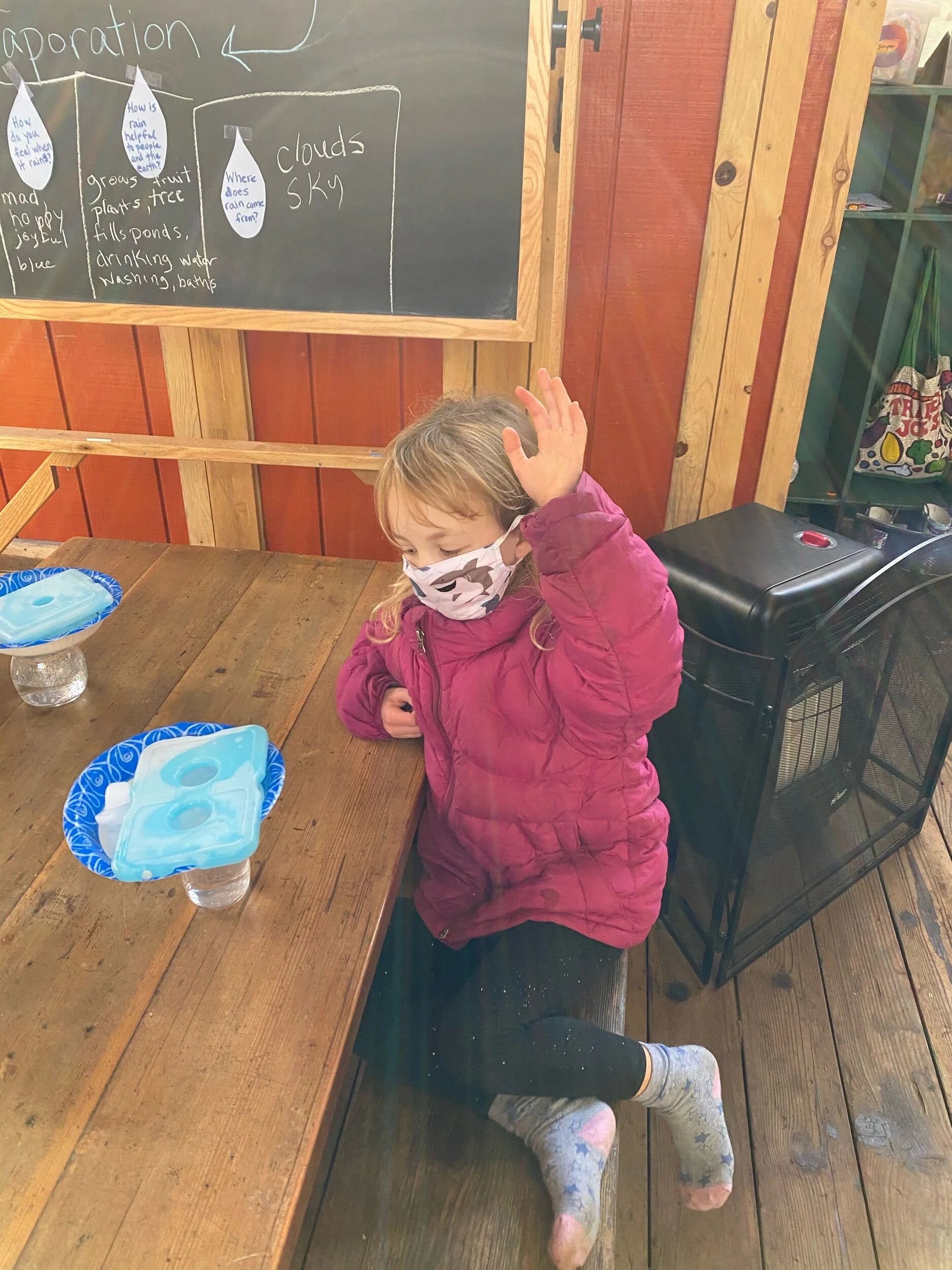
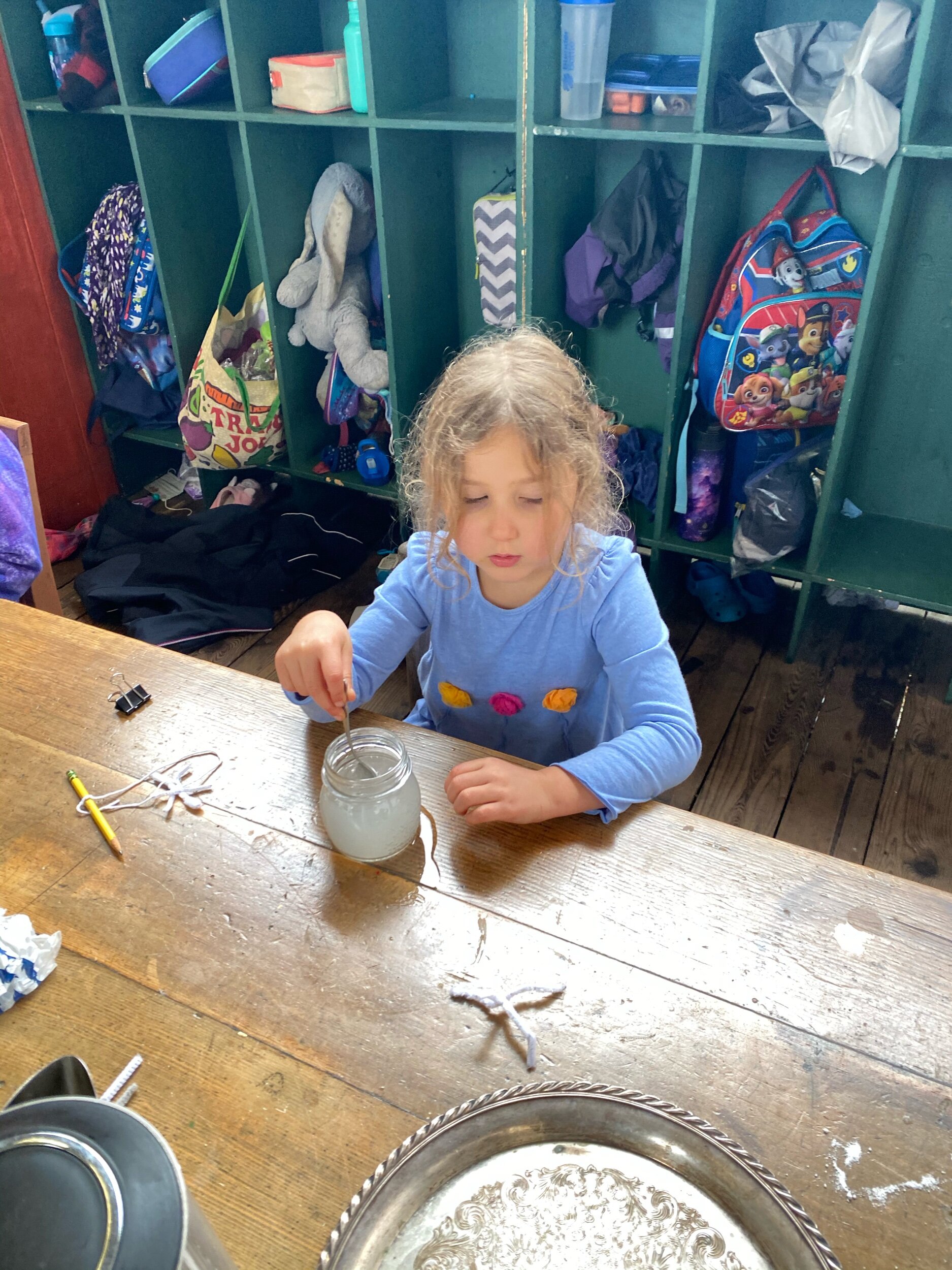
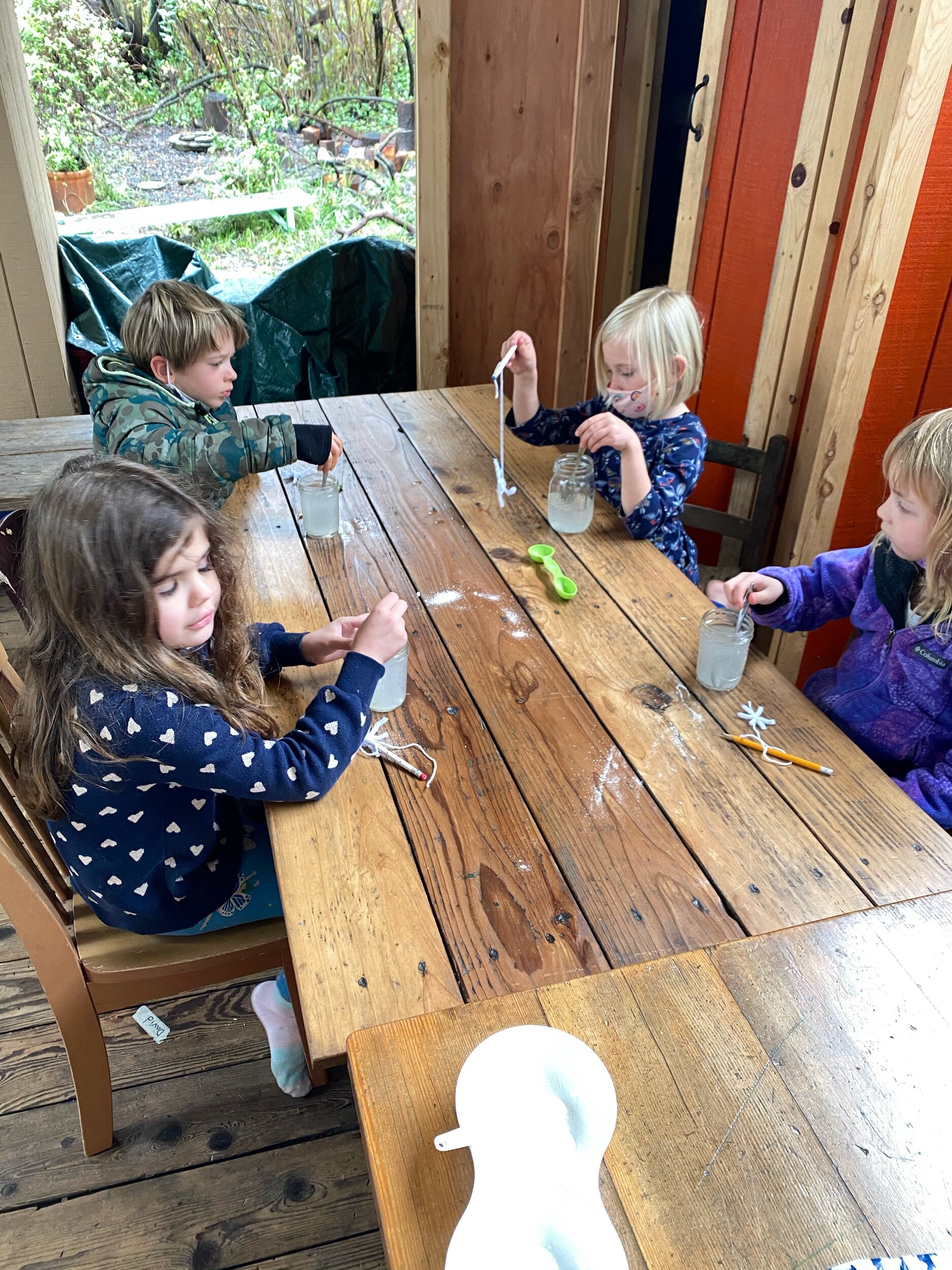
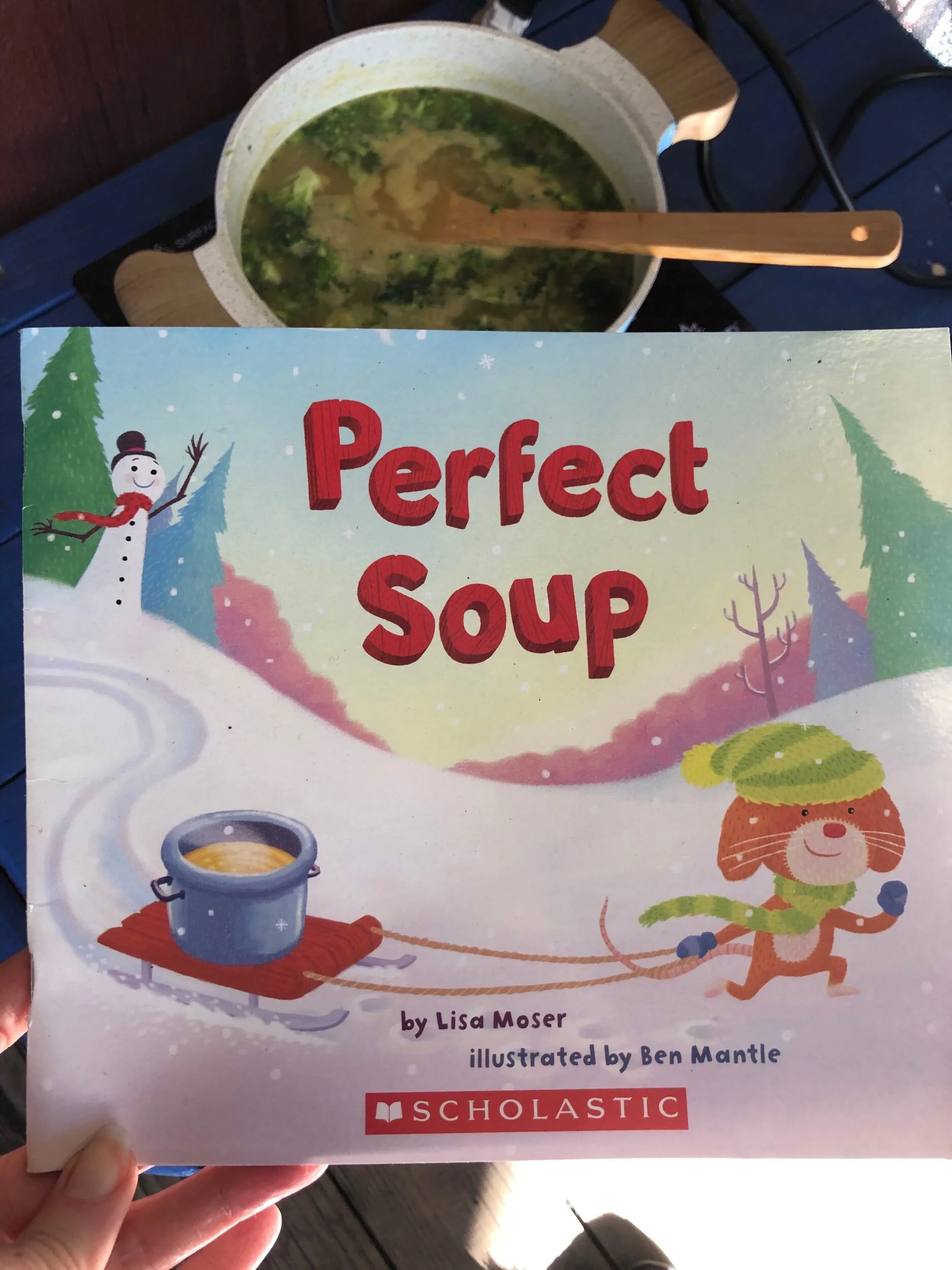
Keeping in line with all things cold, our cooking project was our own creation called Ice Soup. The children created the recipe which included their vegetable of choice, noodles and ice. The skilled sous chefs expertly chopped up vegetables and added to the ice. After 20 minutes of cooking, we slurped up our soup which had turned from icy soup to nice and hot soup. See photos in gallery above.
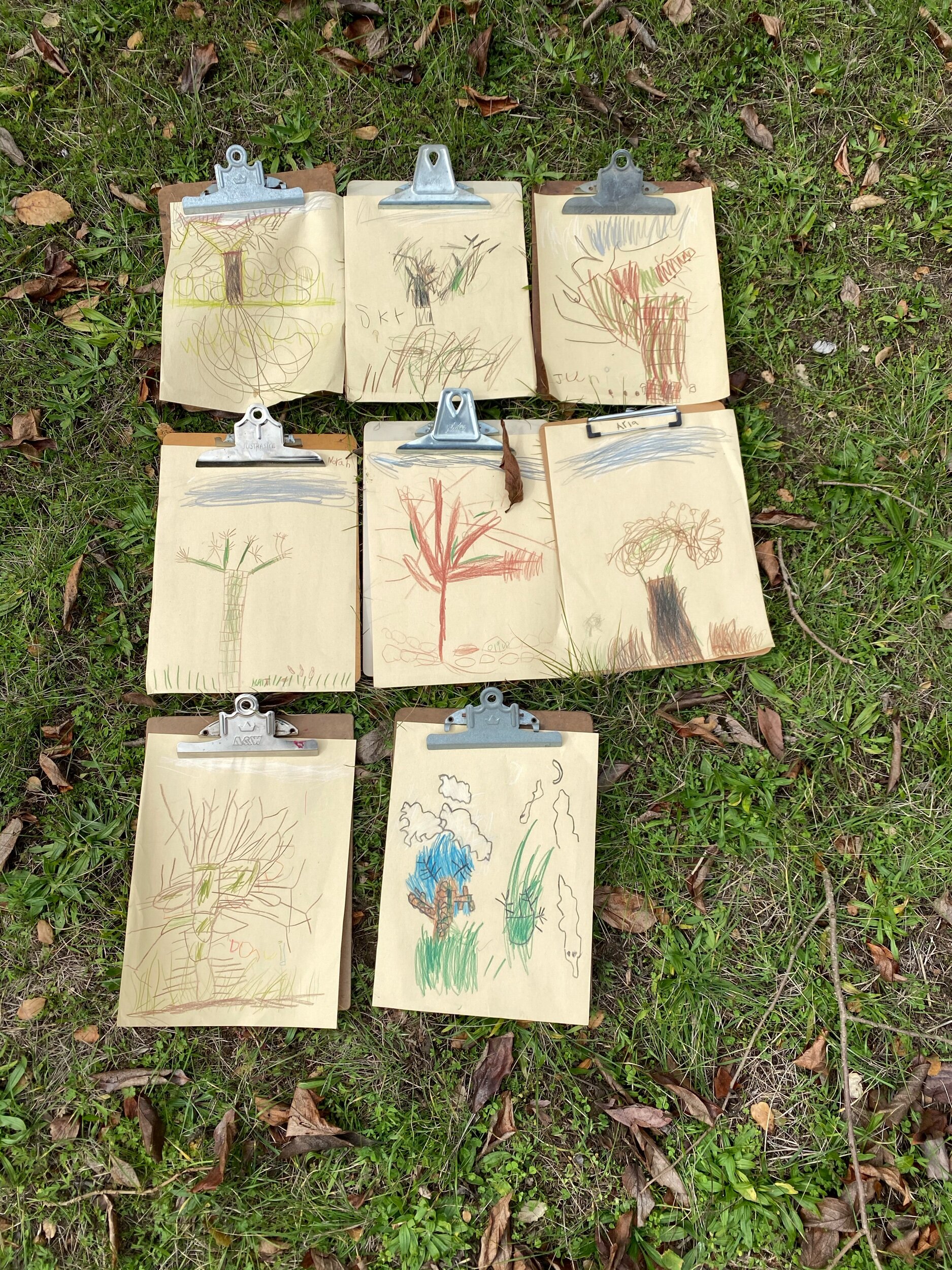
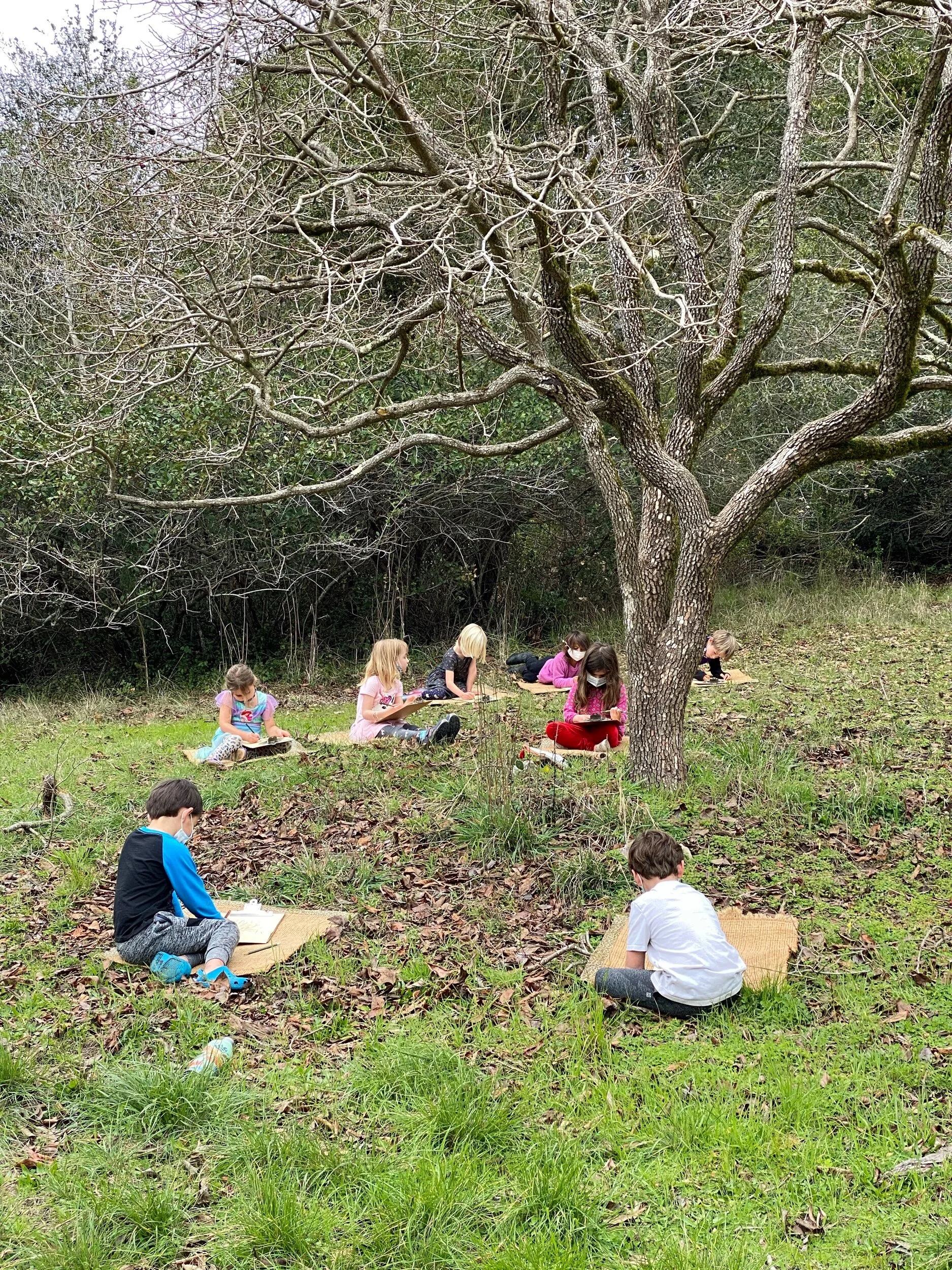
We visited the persimmon tree again to see how it had changed from the fall and the kids drew the winter tree, noticing and documenting how the leaves and fruit were gone, as was the carpet of dried leaves at it’s base, while the moss had grown even more plentiful on the bark. If you still have their fall tree studies, you should add the winter drawing to the collection. Spring drawing coming soon!
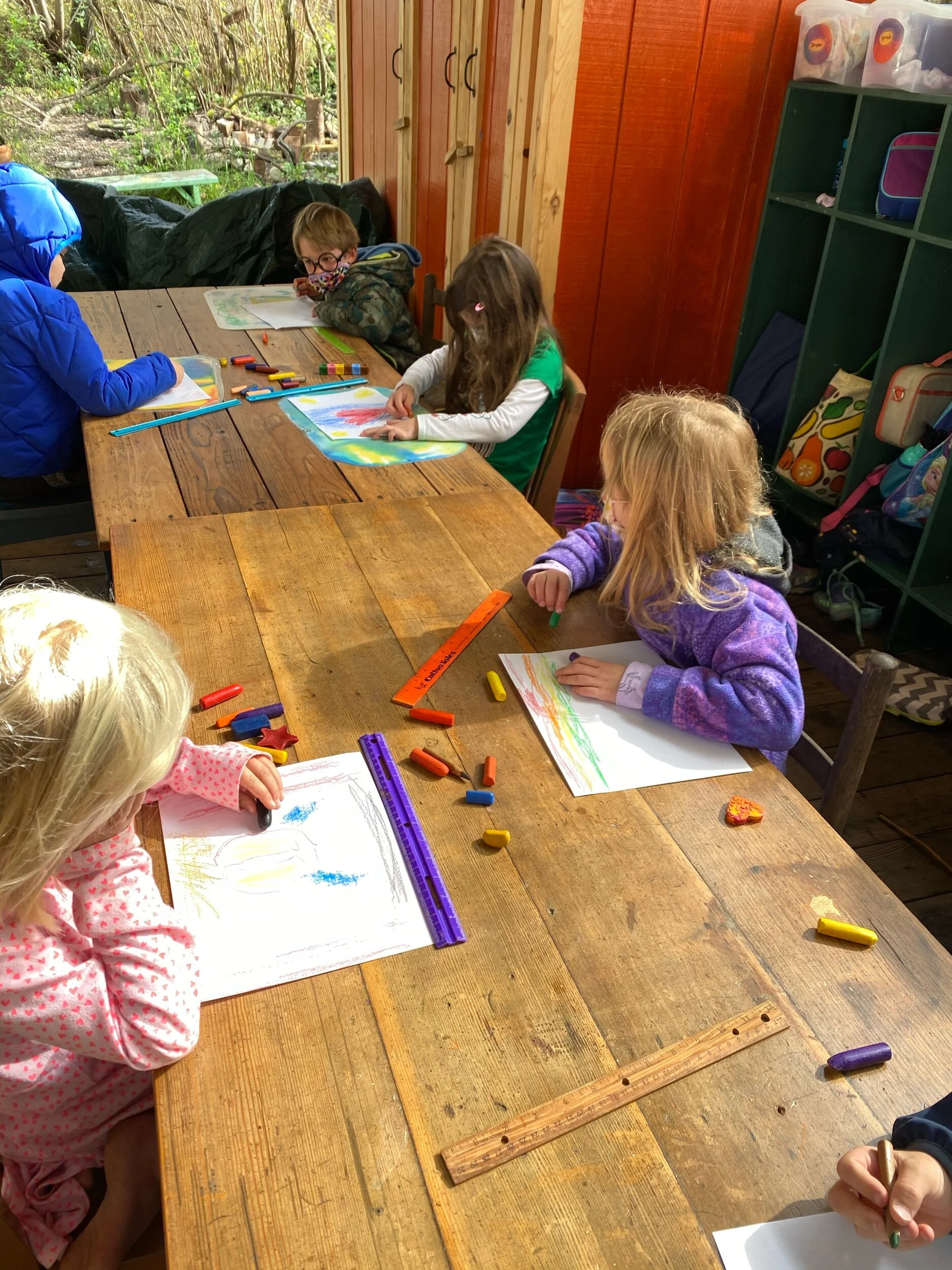
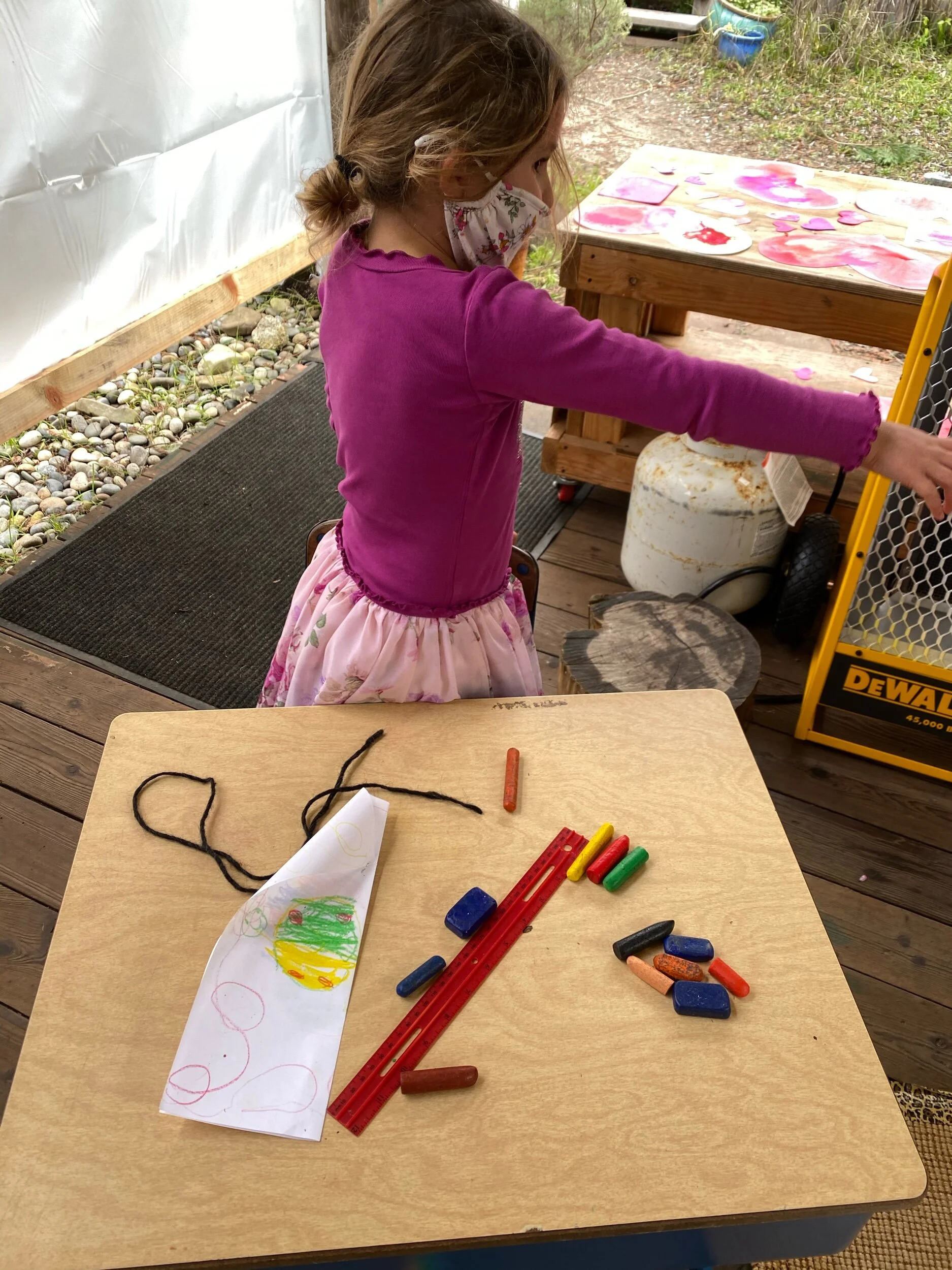
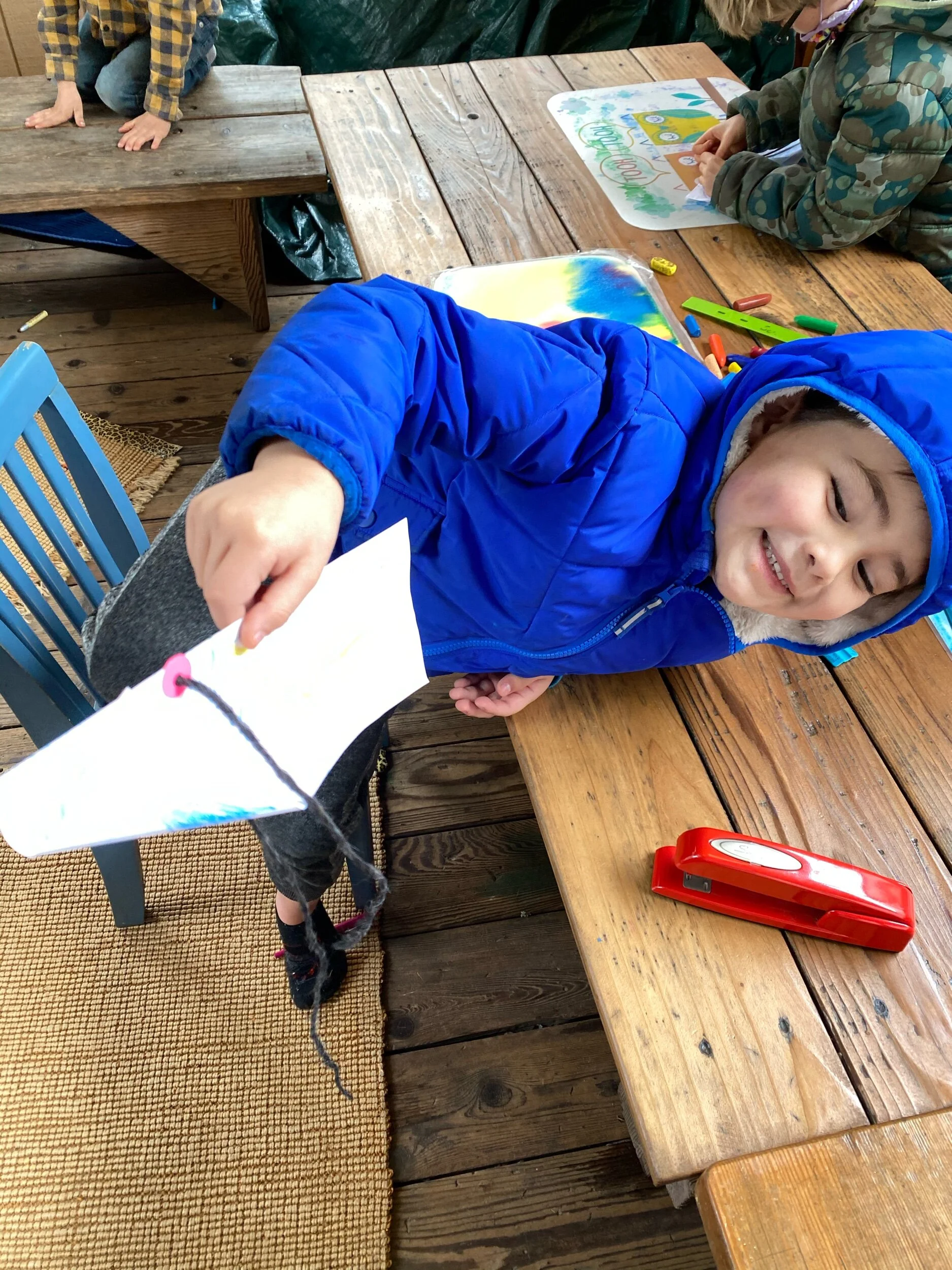
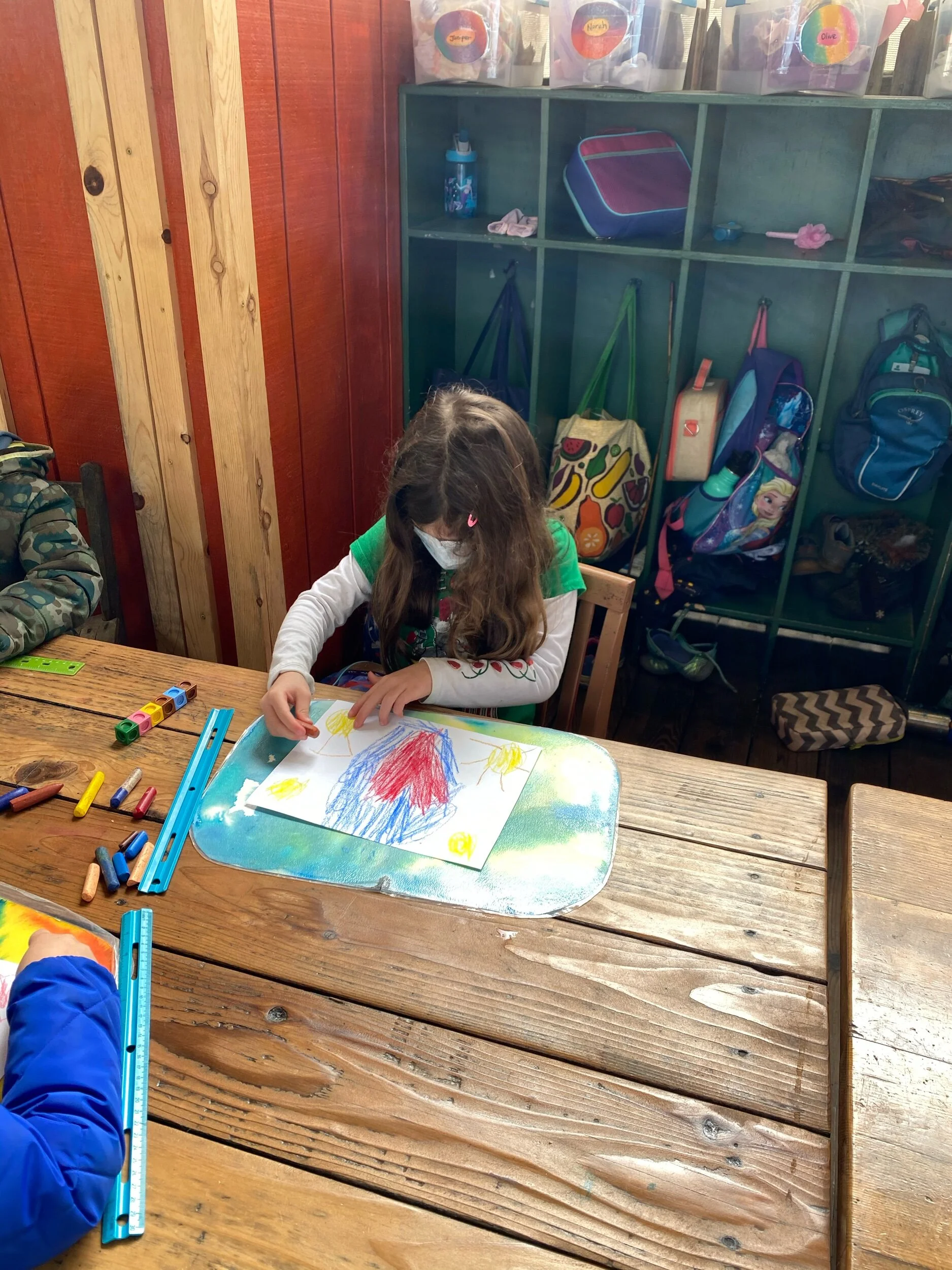
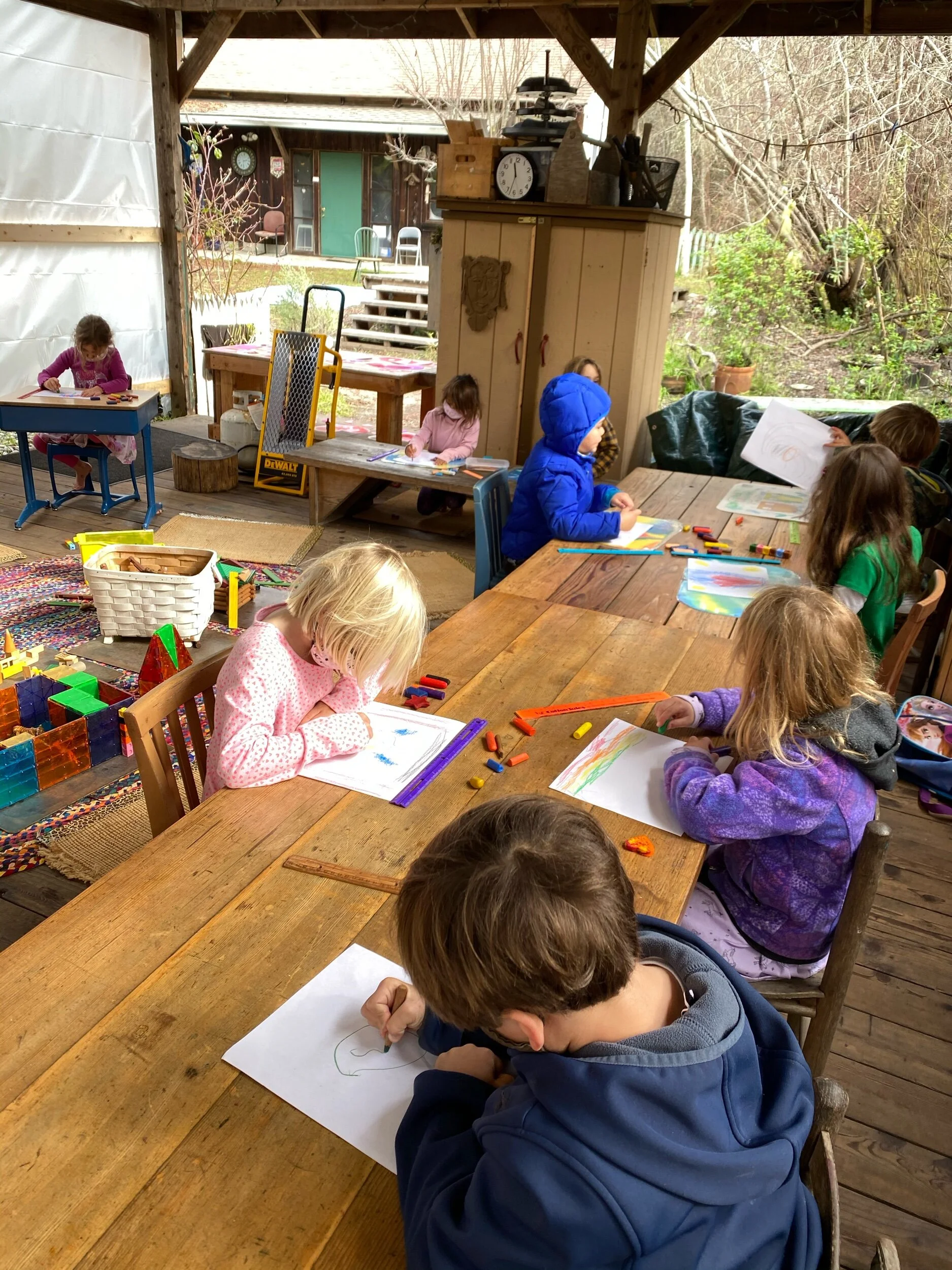
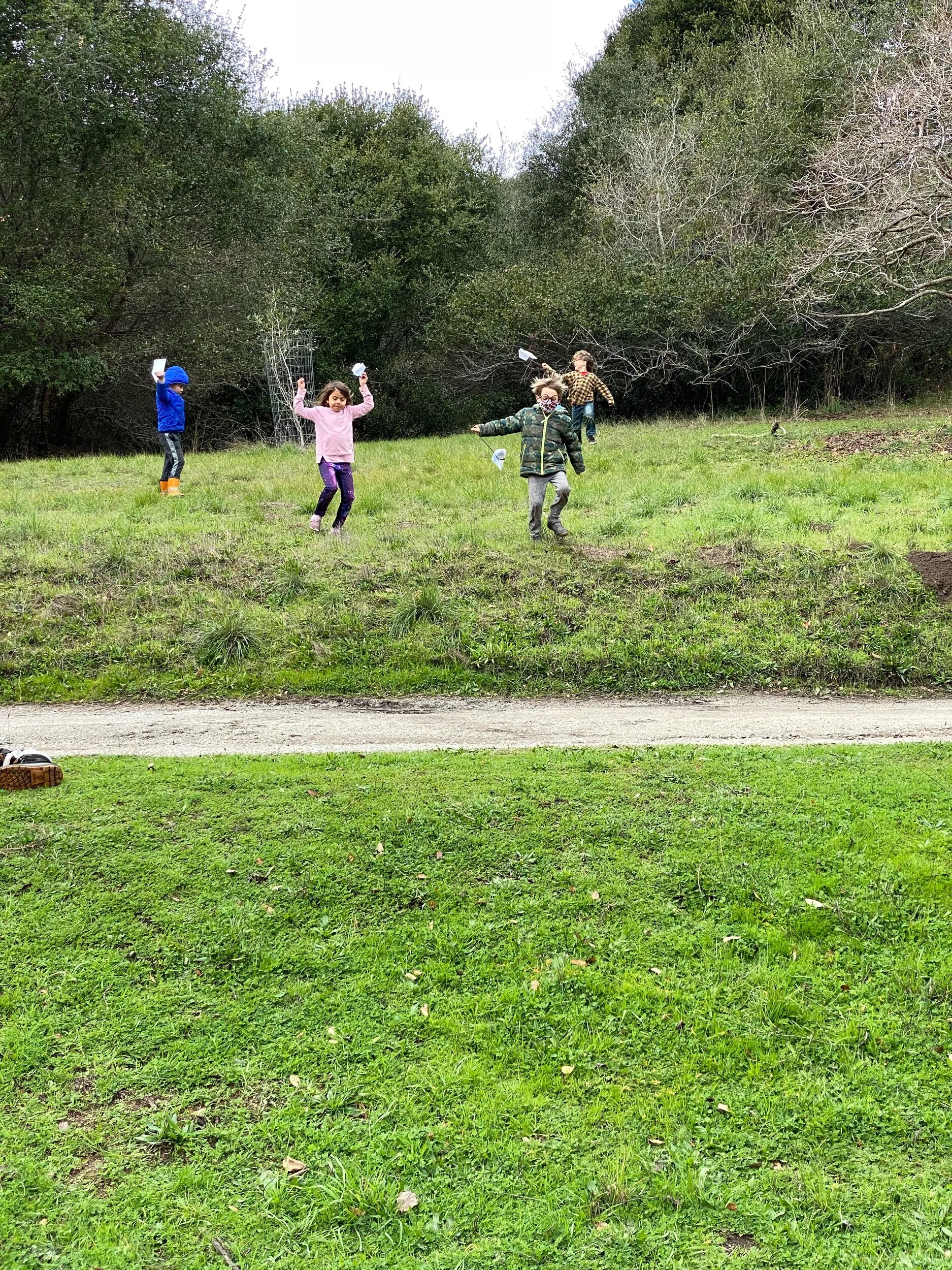
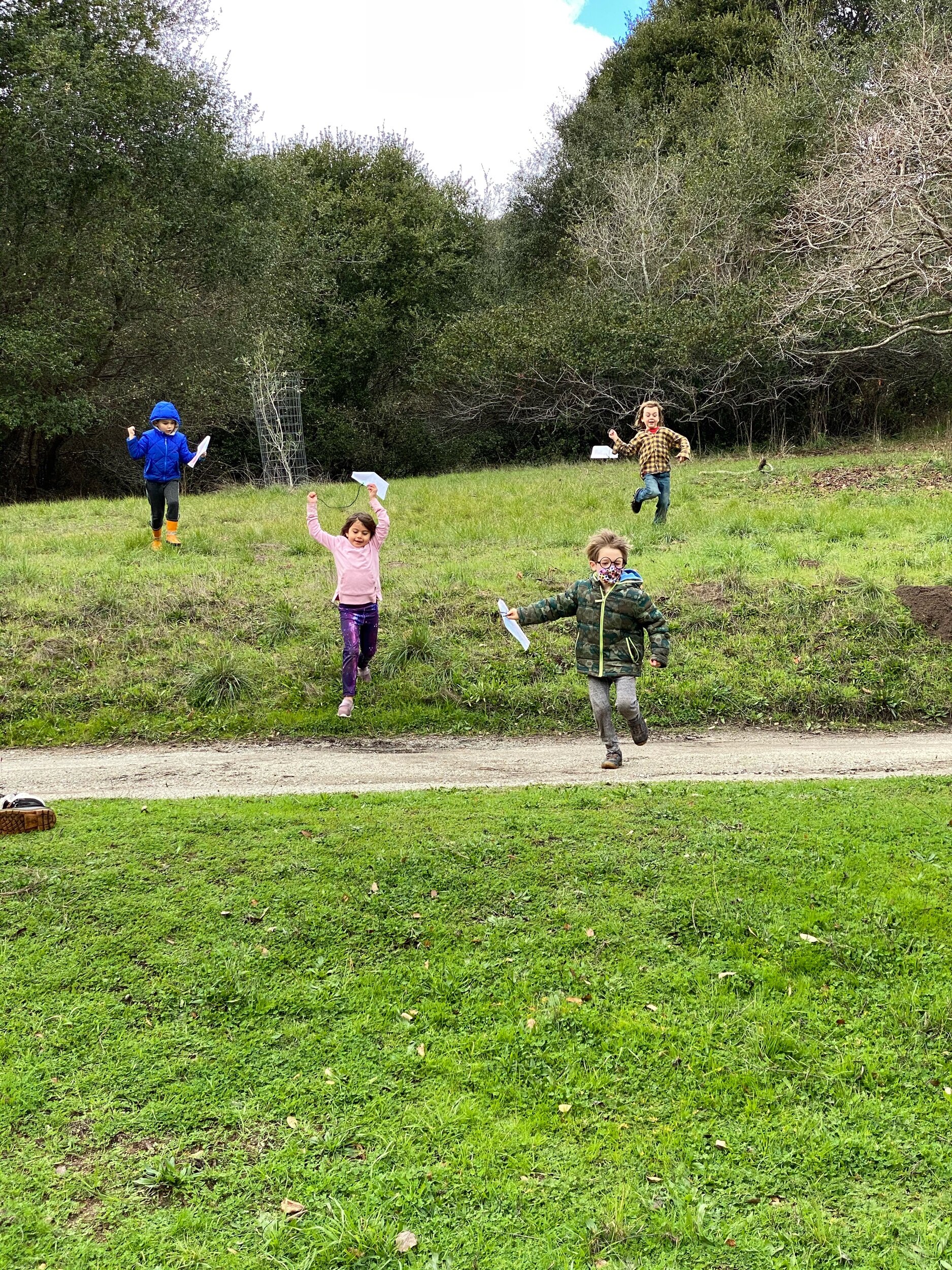
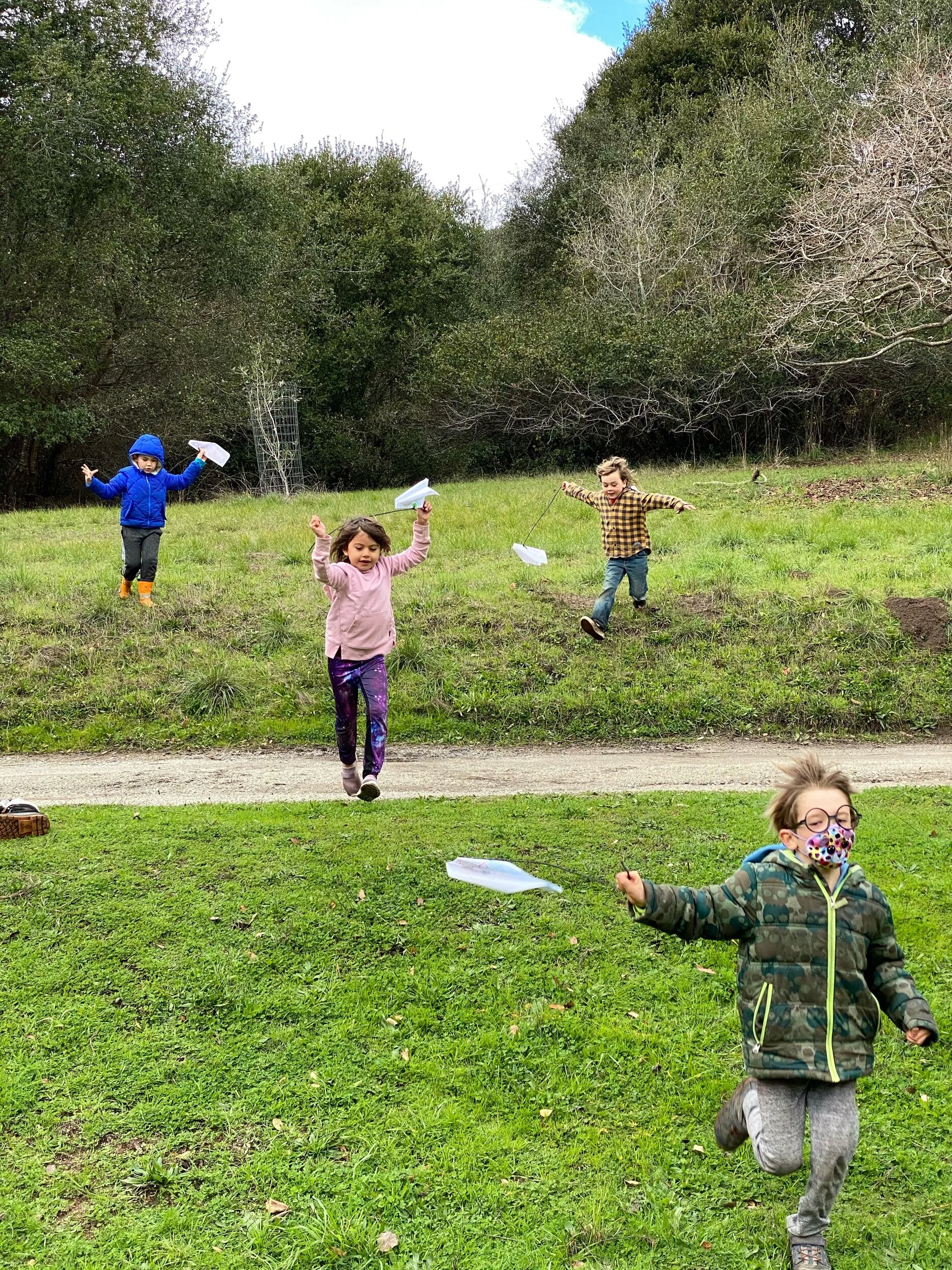
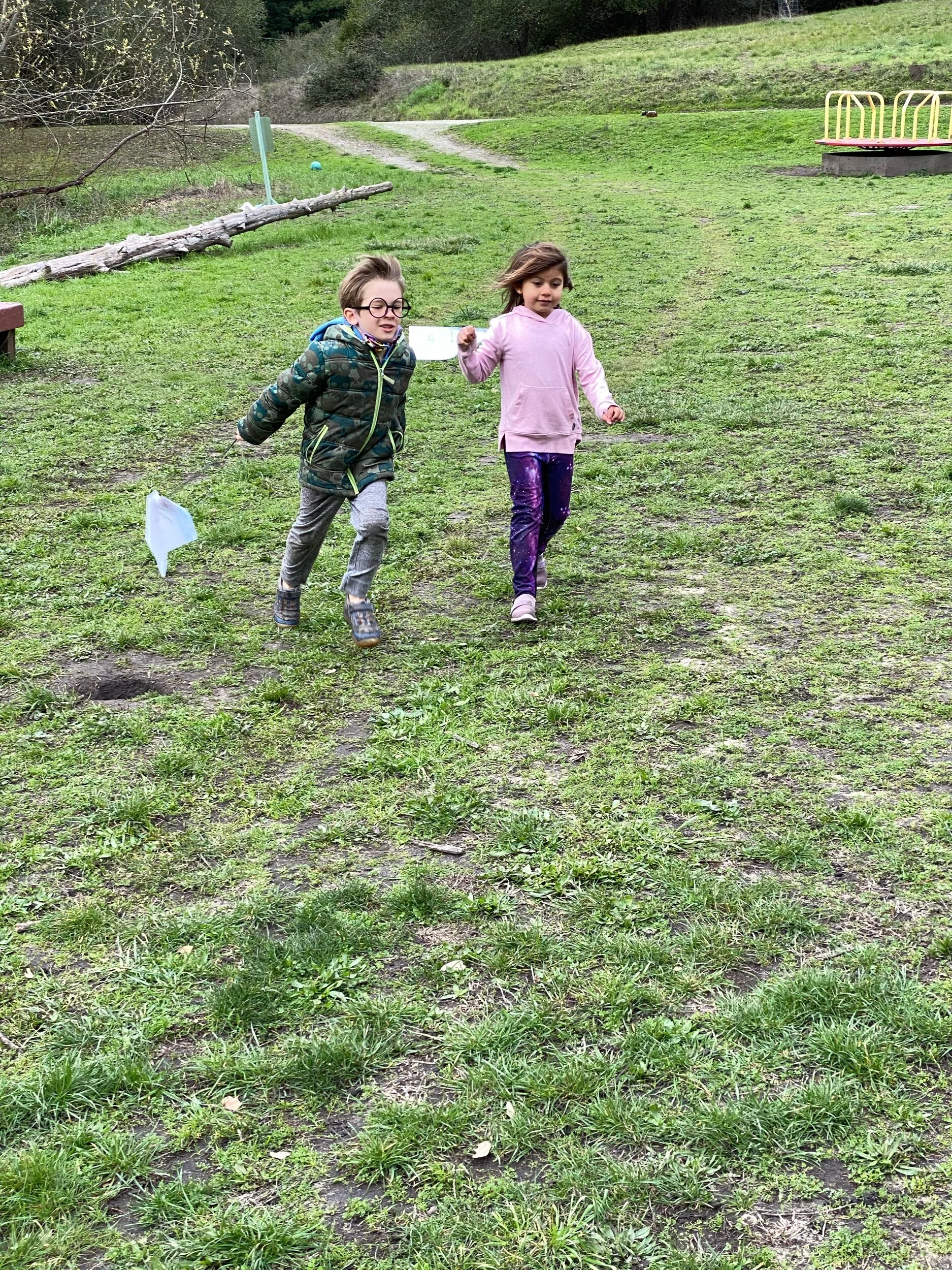
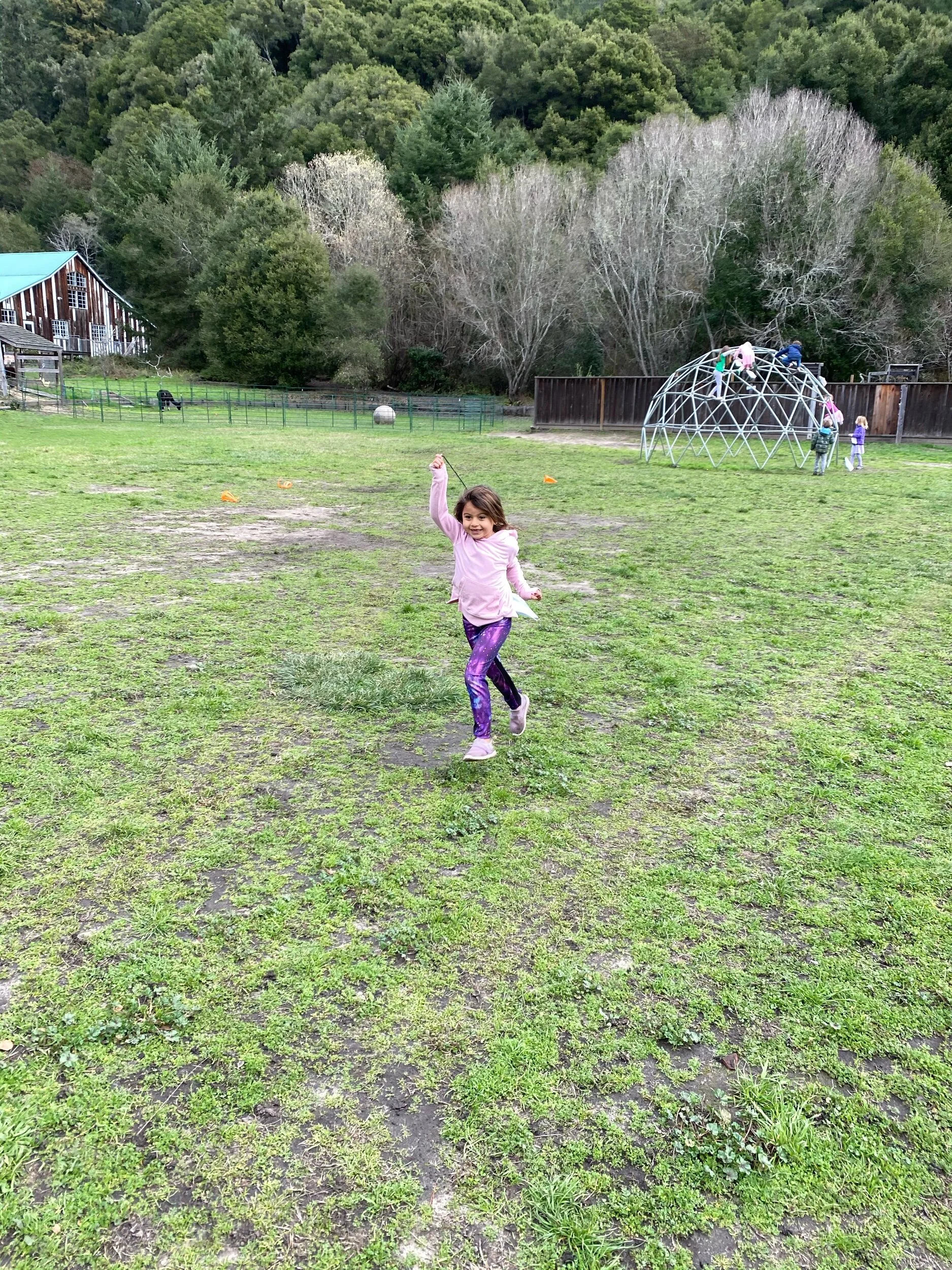
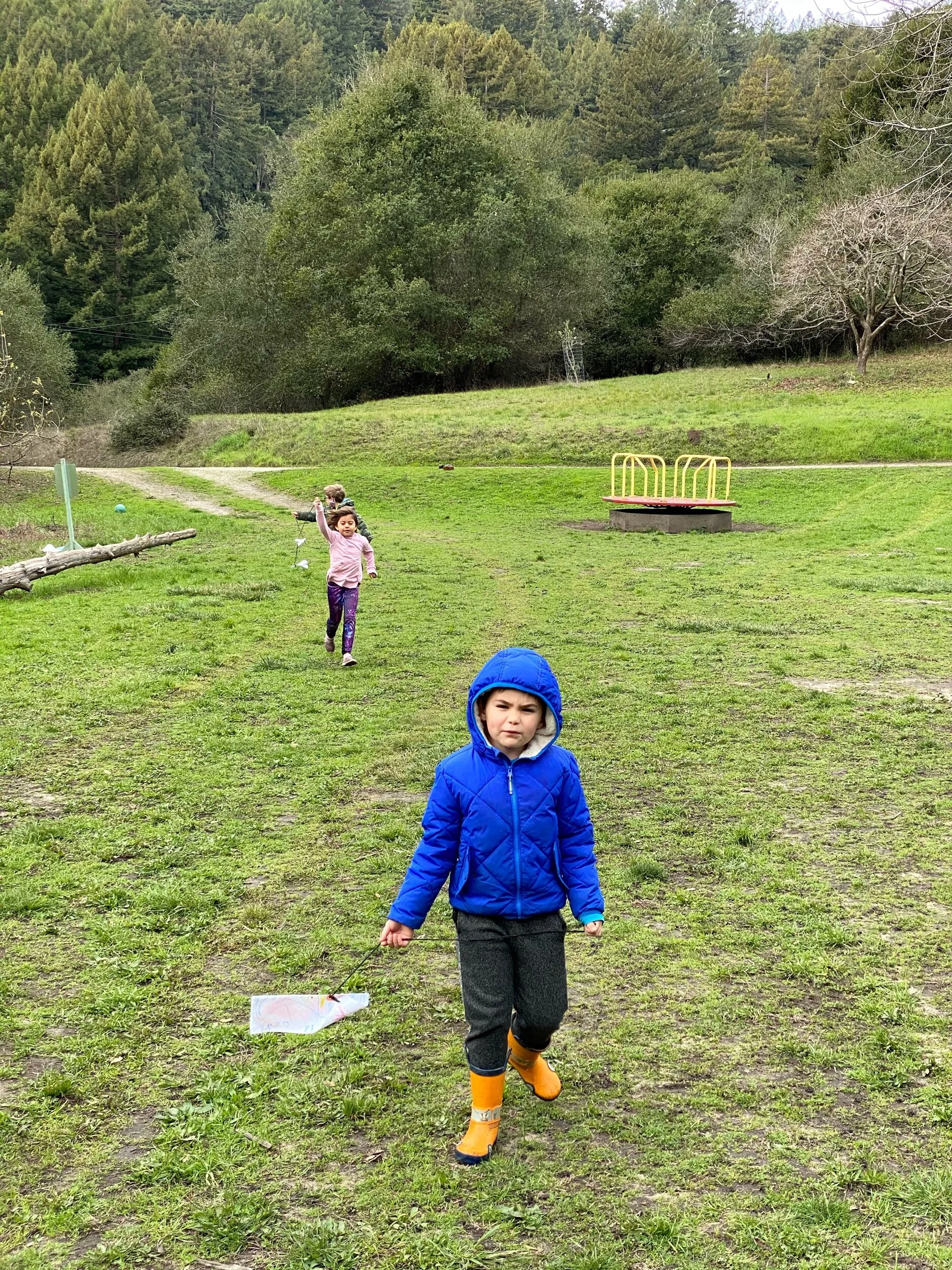
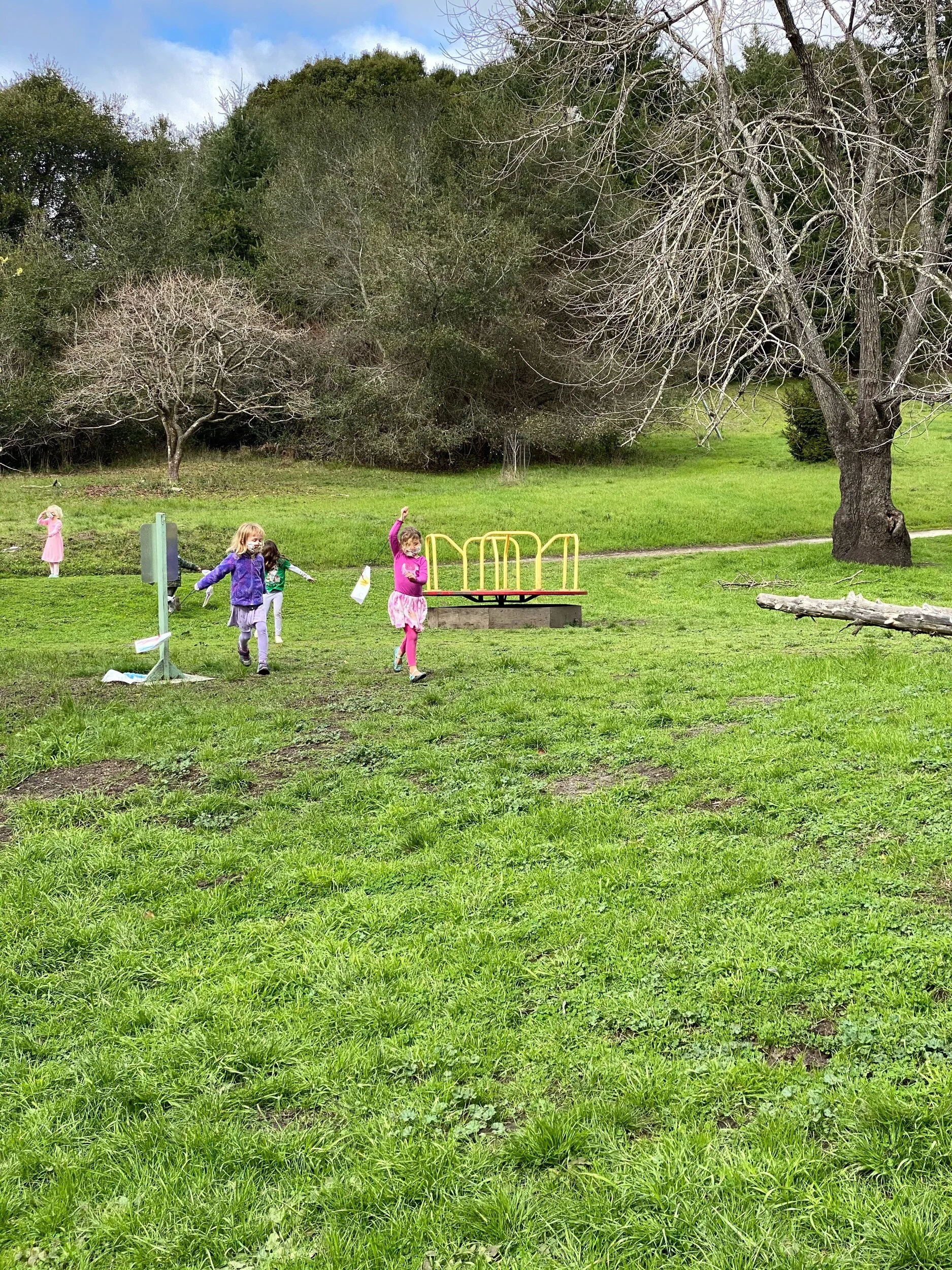
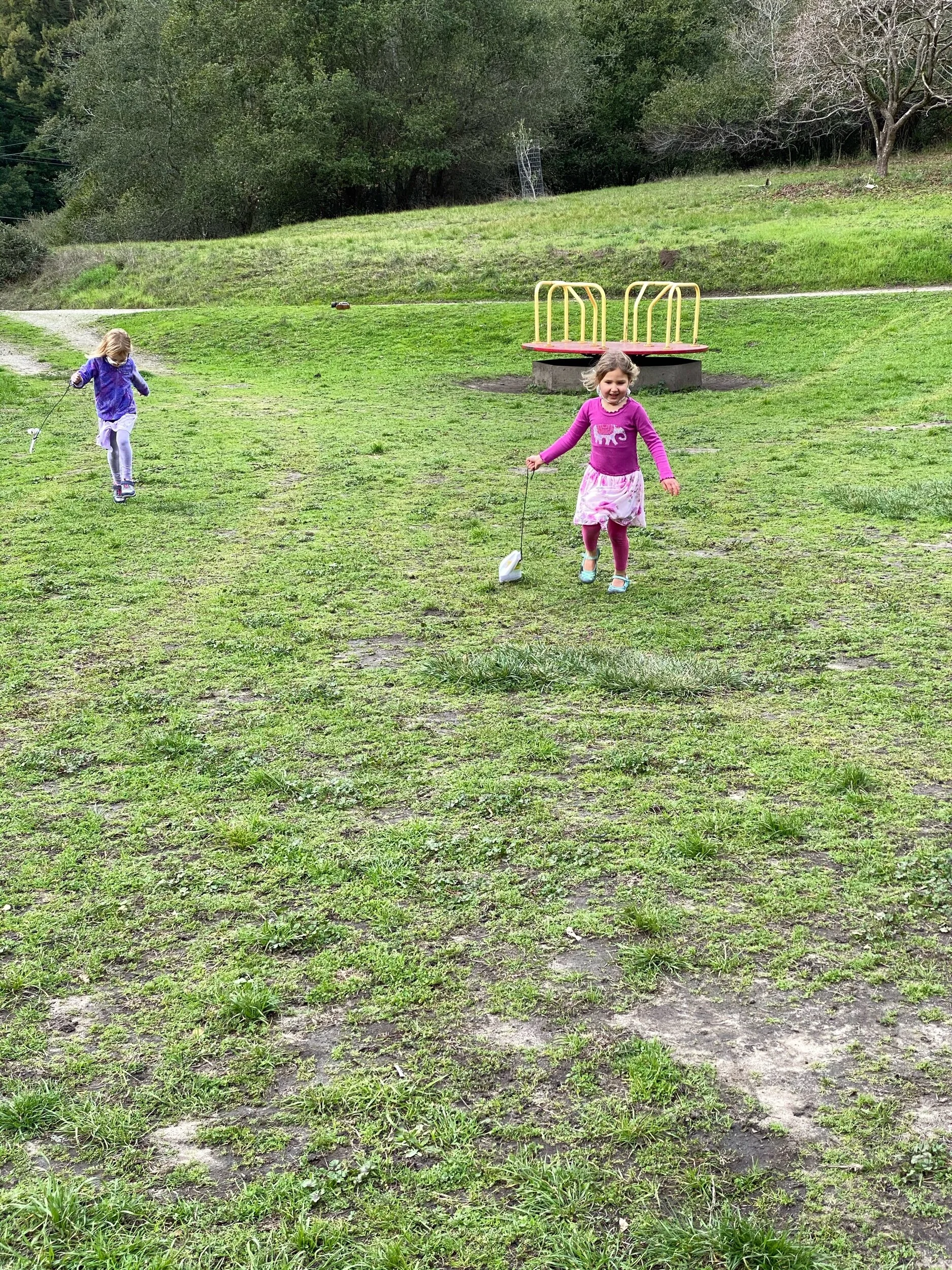
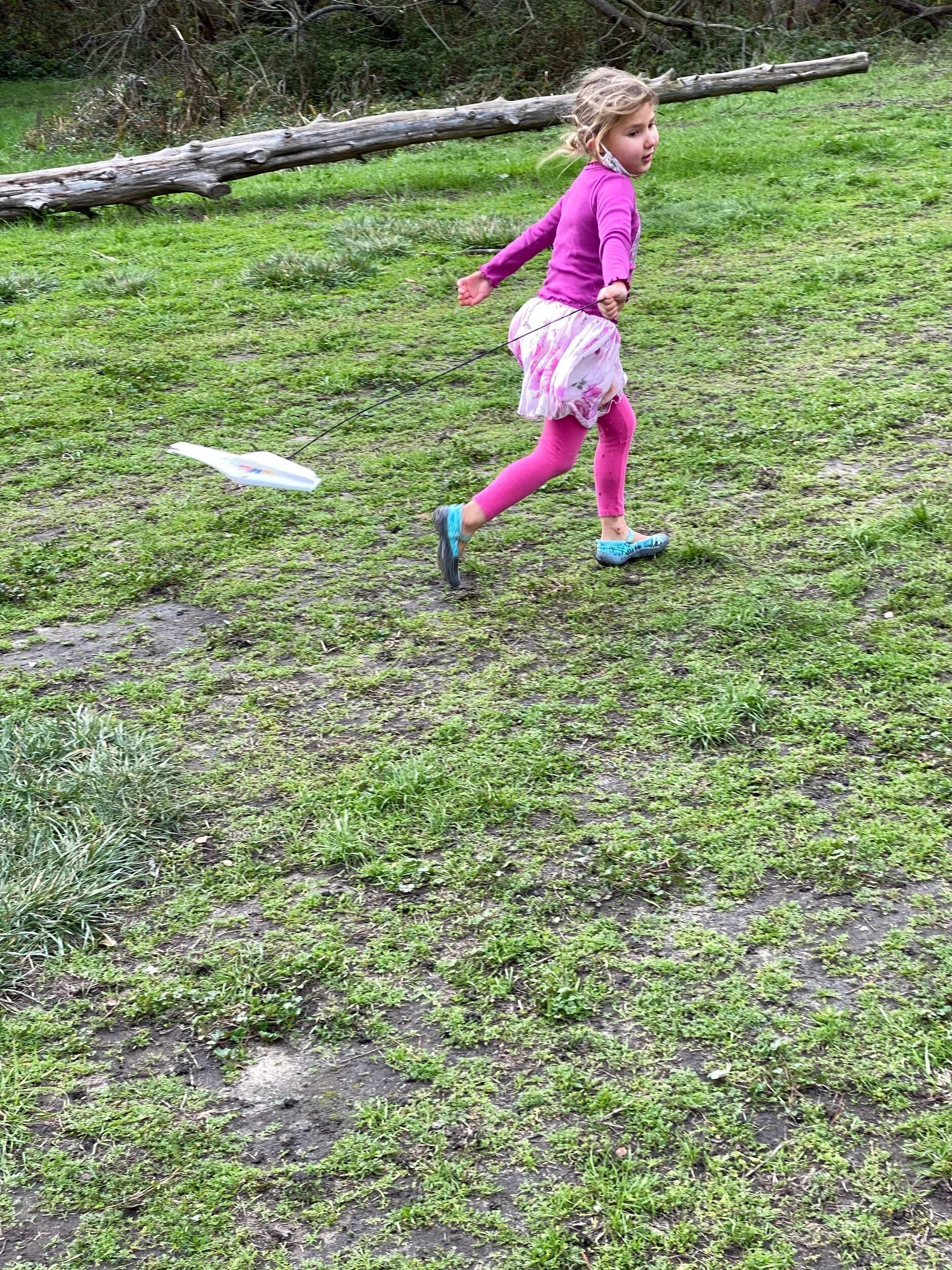
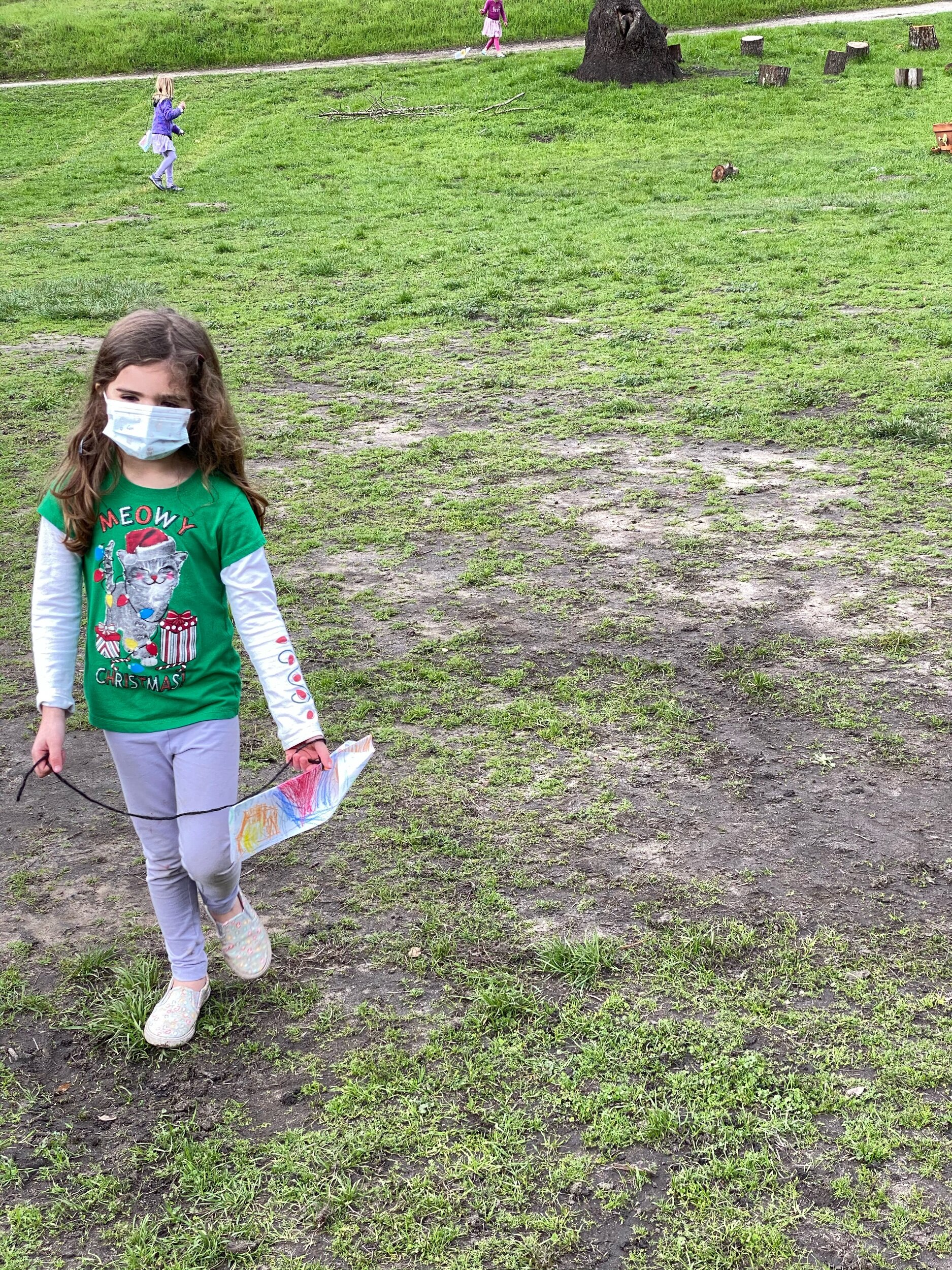
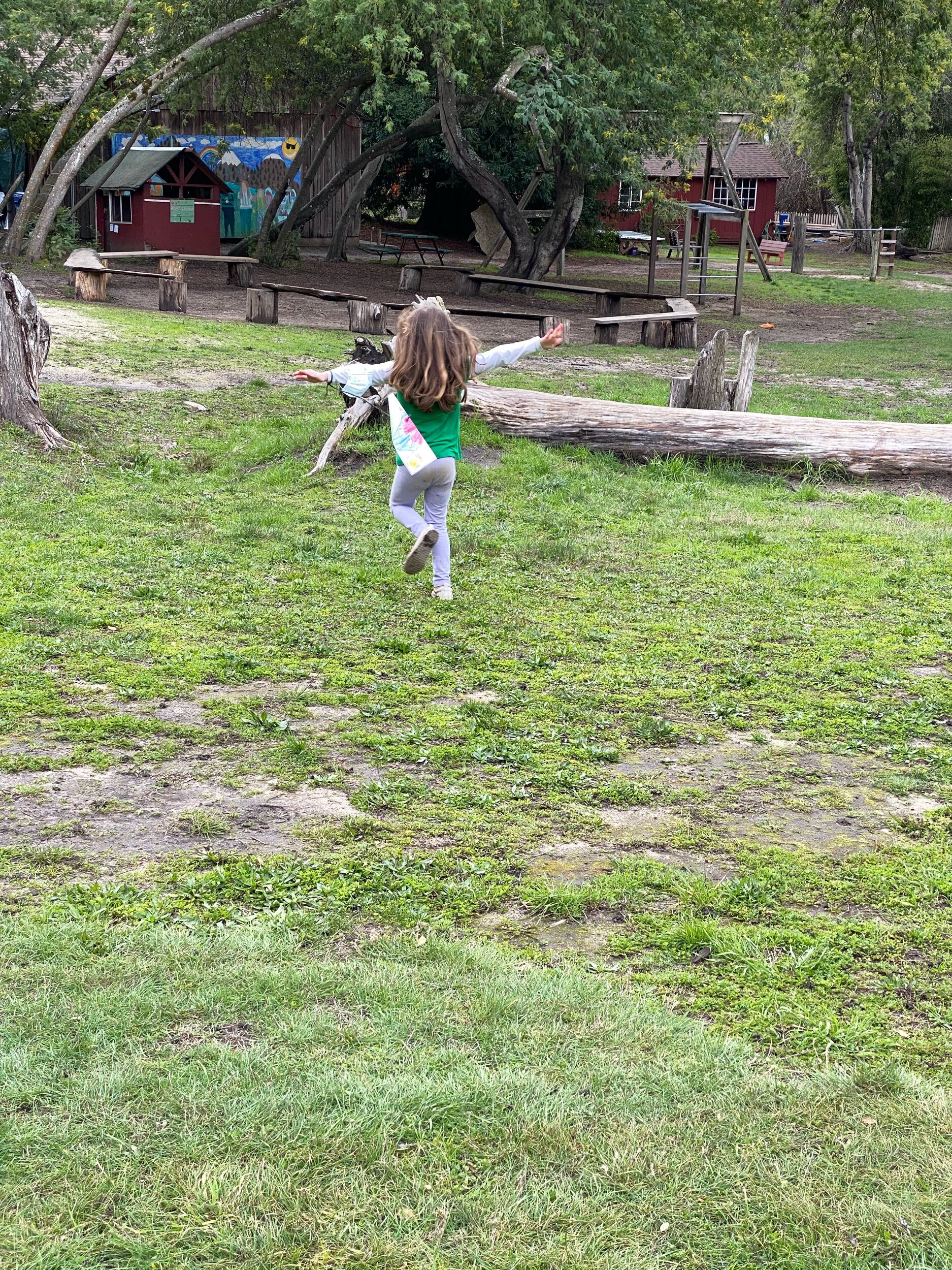
We made kites and had the perfect windy day to fly them. For the kites, students practiced precise folding methods (practiced again later when making origami hearts for Valentine’s) and also we took a look at measurement using snapblocks (unifix cubes) and then used rulers as precision measuring was needed to make the kites aerodynamic.
Celebrations:
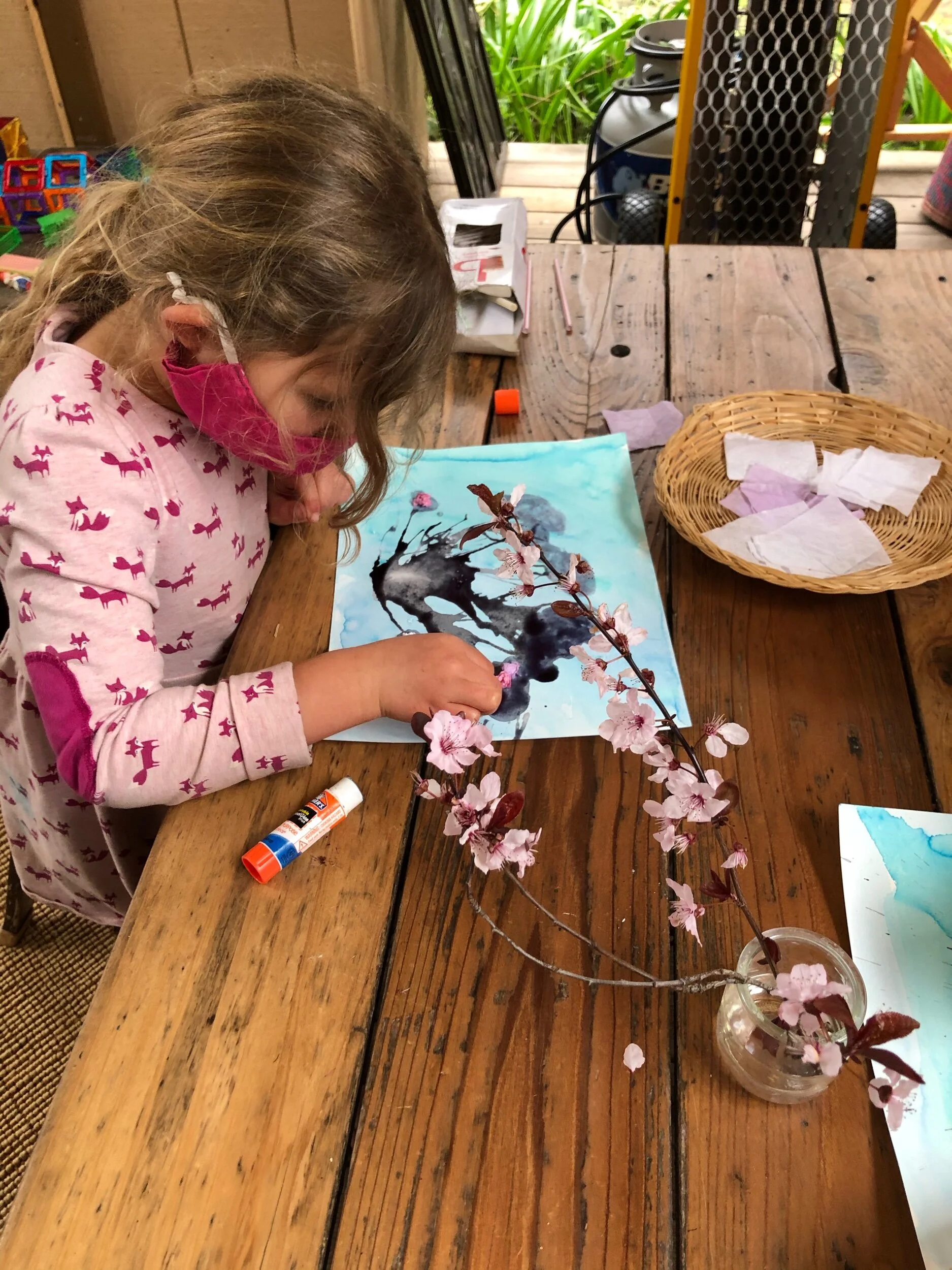
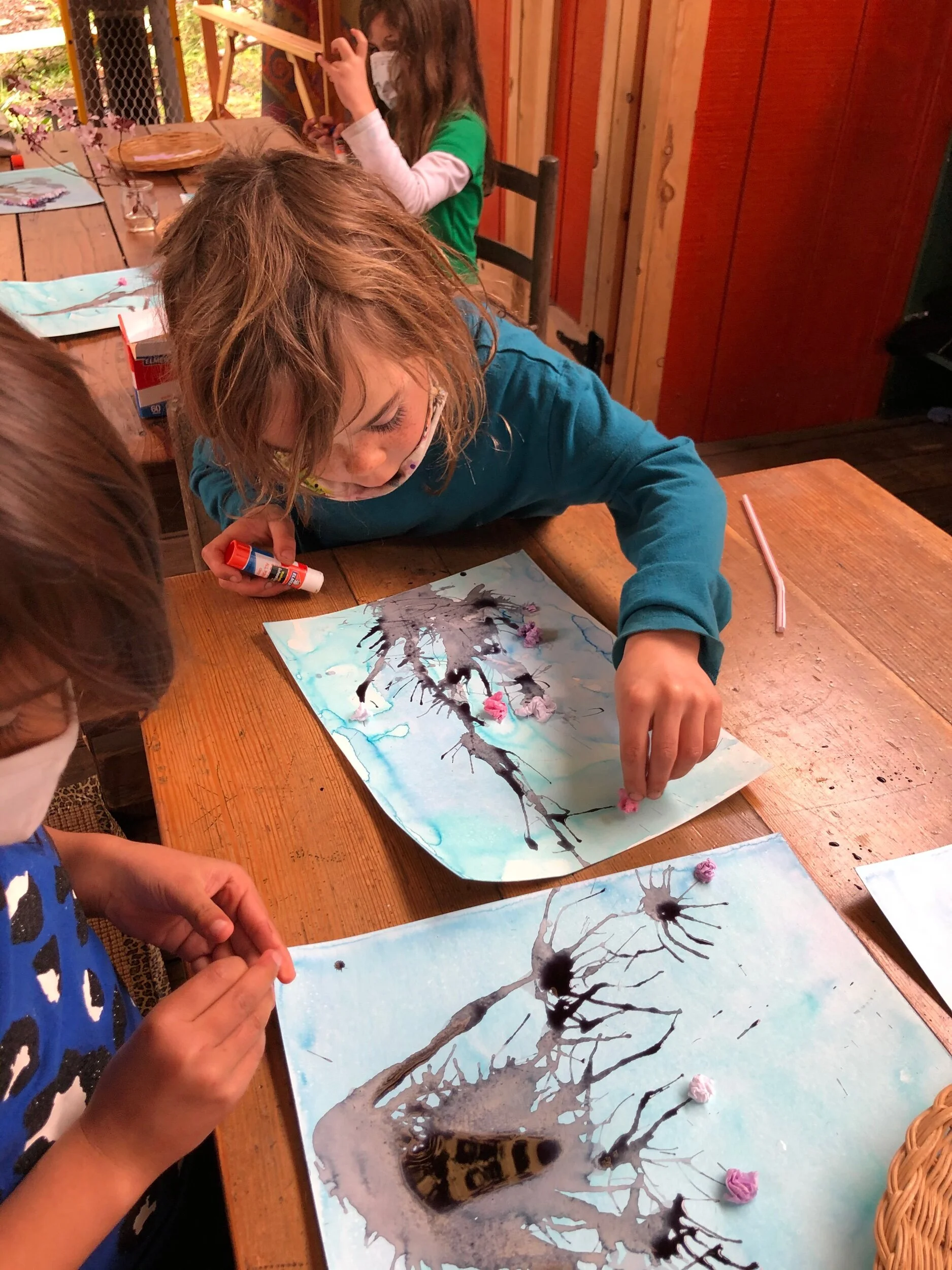
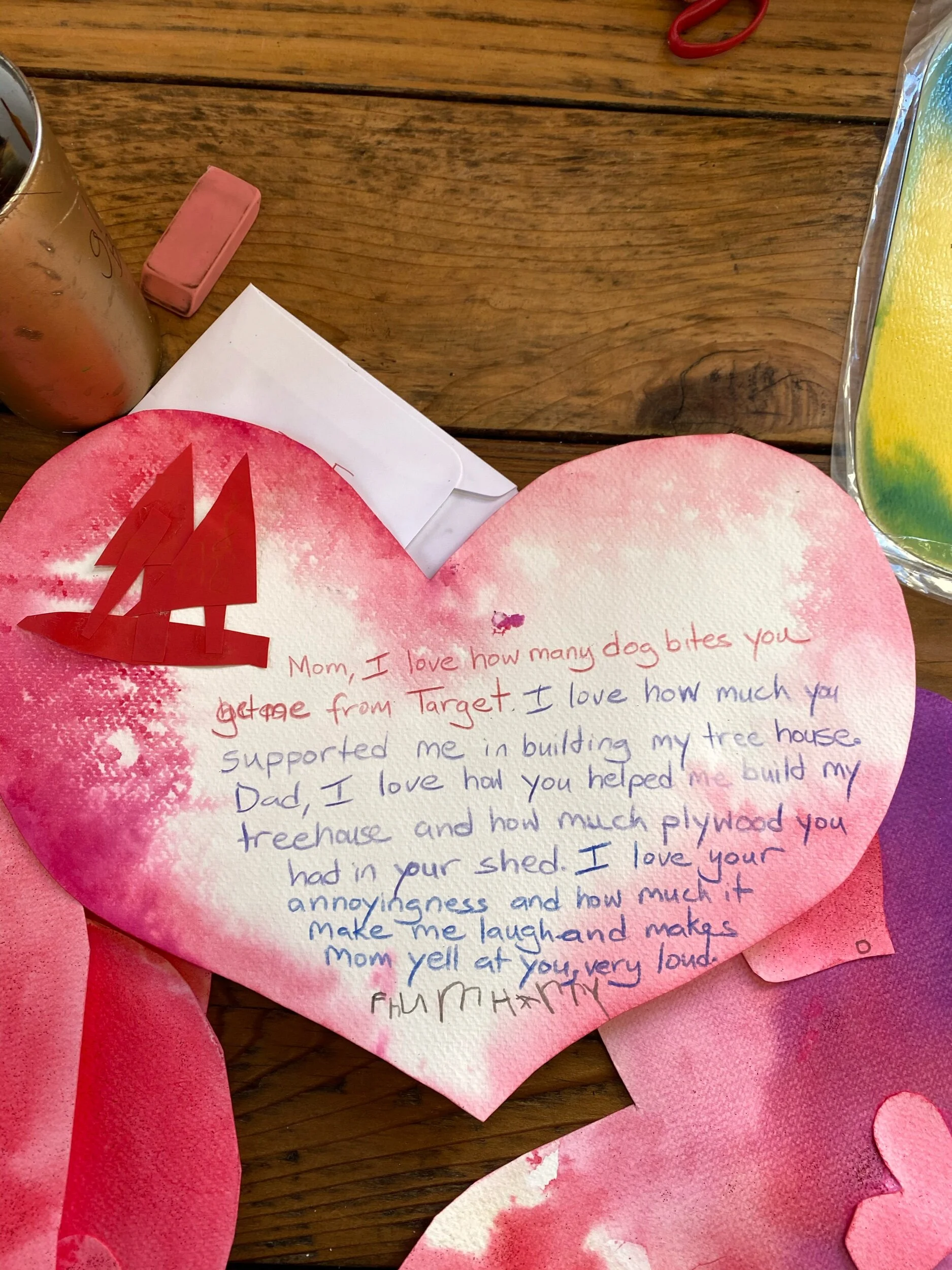
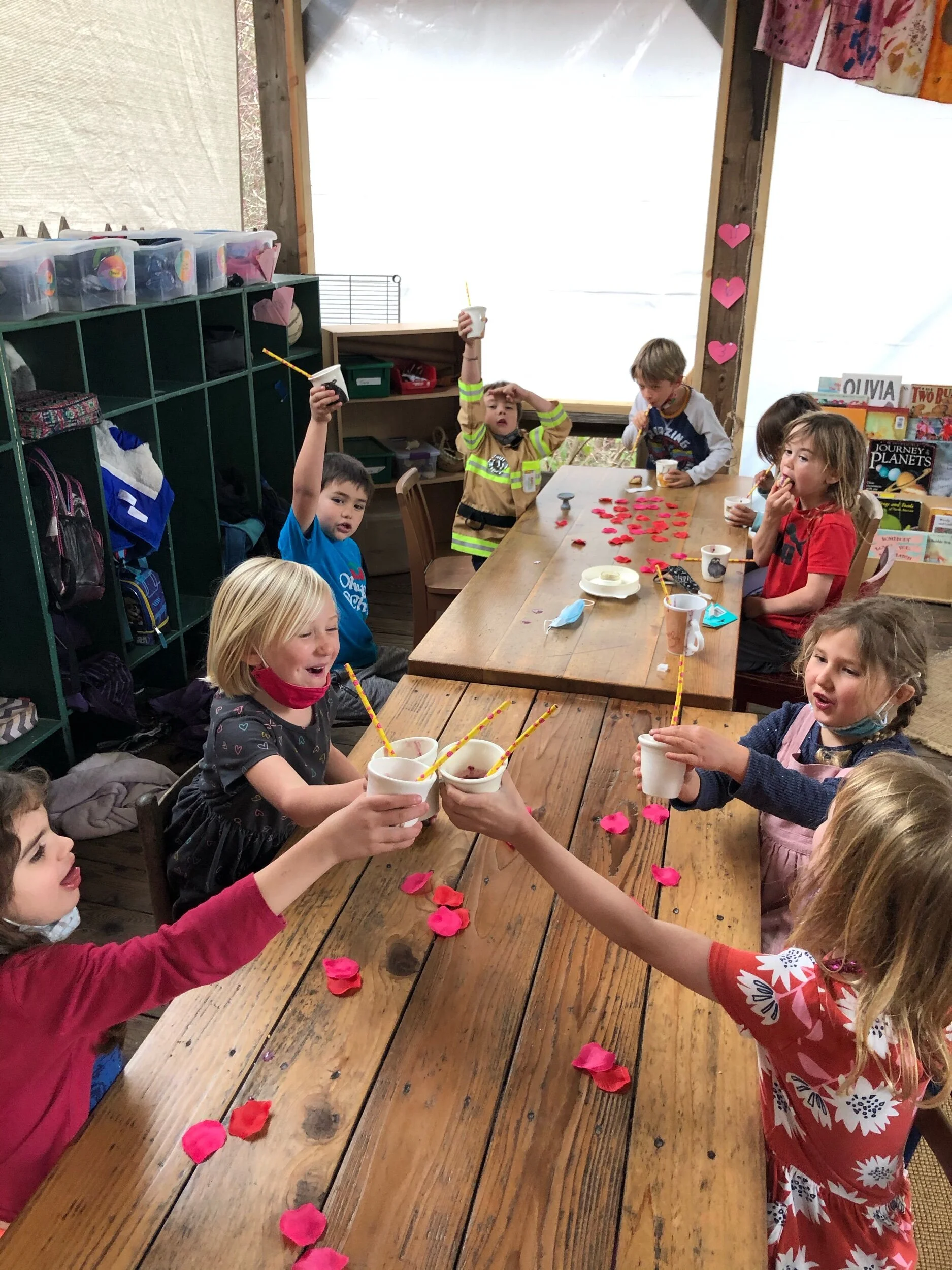
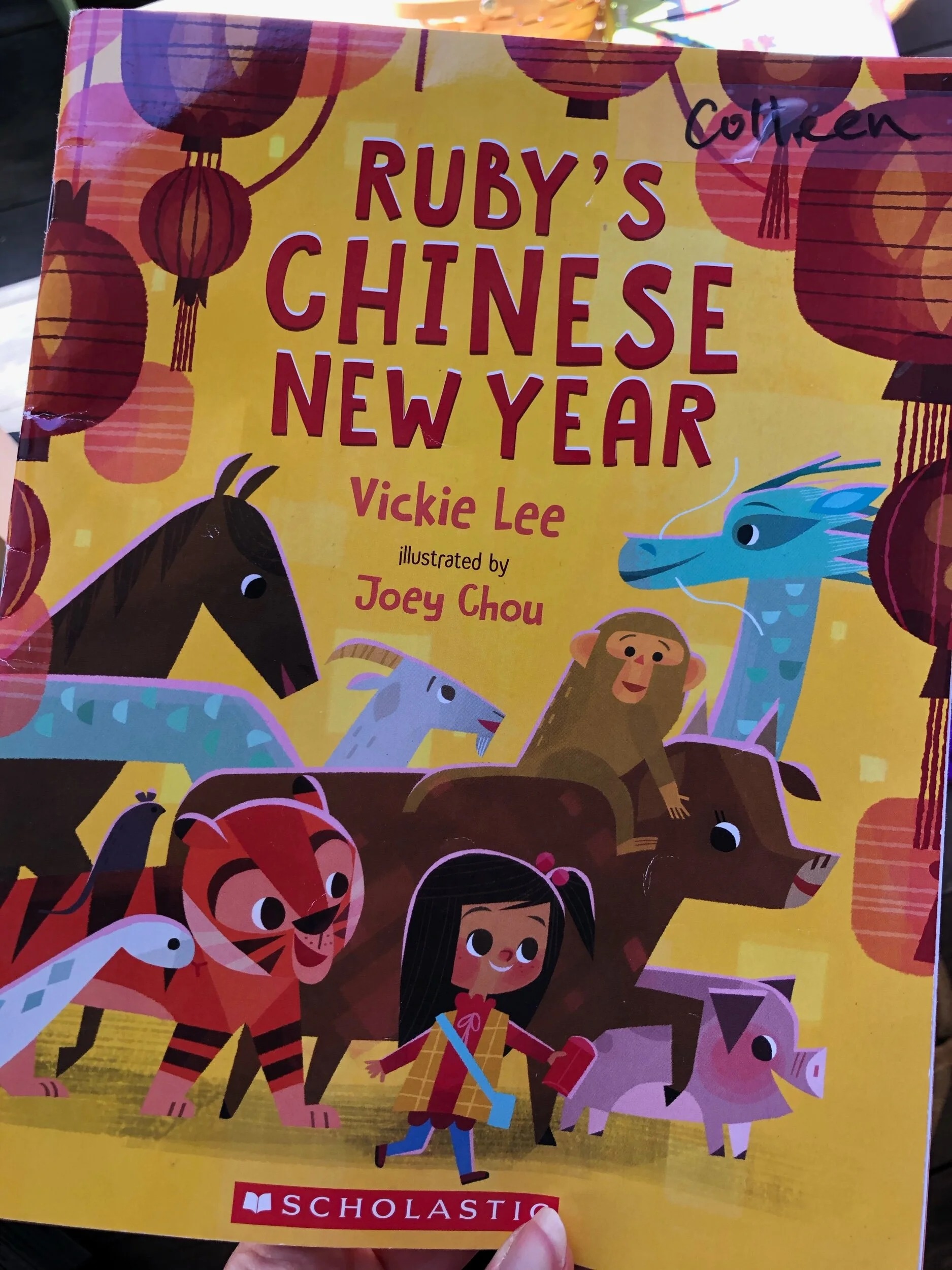
In keeping with Orchard traditions, we celebrated Valentine’s Day in style. Kids painted and decorated Valentine’s mailboxes, they exchanged cards, made a love potion smoothie (see them toasting each other in the photo gallery below), wrote love letters to families, and wrote a group poem called “Love is Everywhere”. We did a little bit of curriculum surrounding the Lunar New Year, sharing multi-cultural stories about the holiday and painting spring cherry blossom trees. We also had a couple of birthdays, Norah and Olive, and held birthday circles for them.
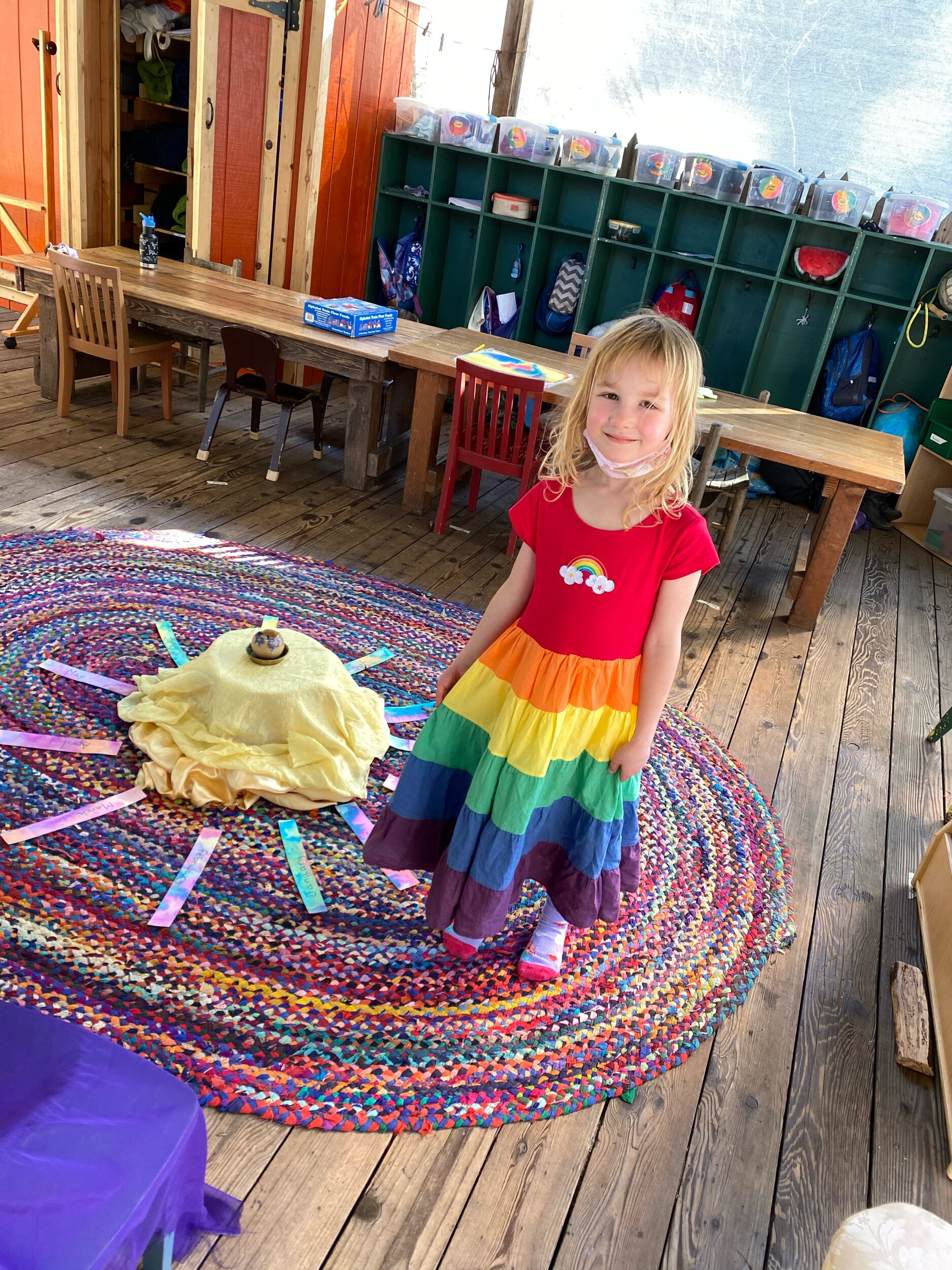
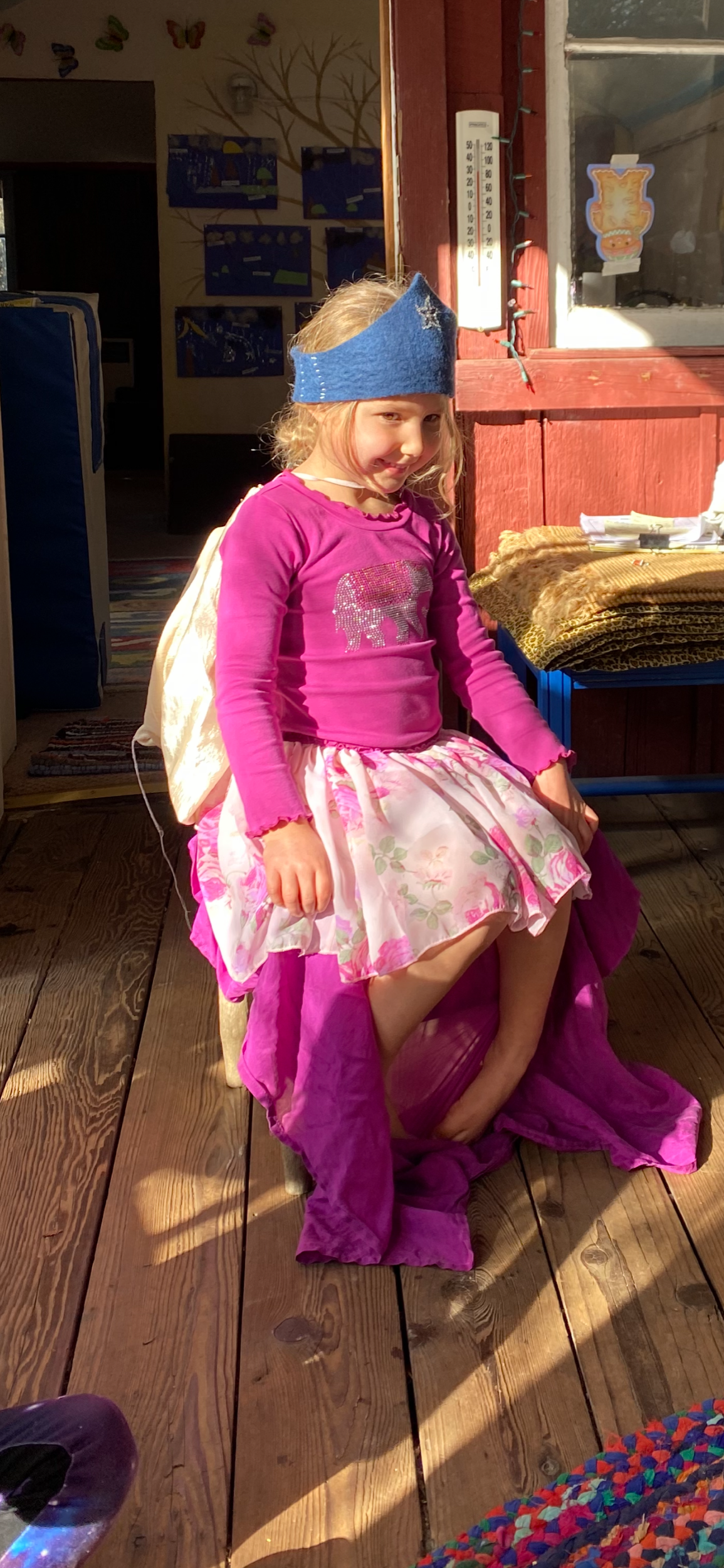
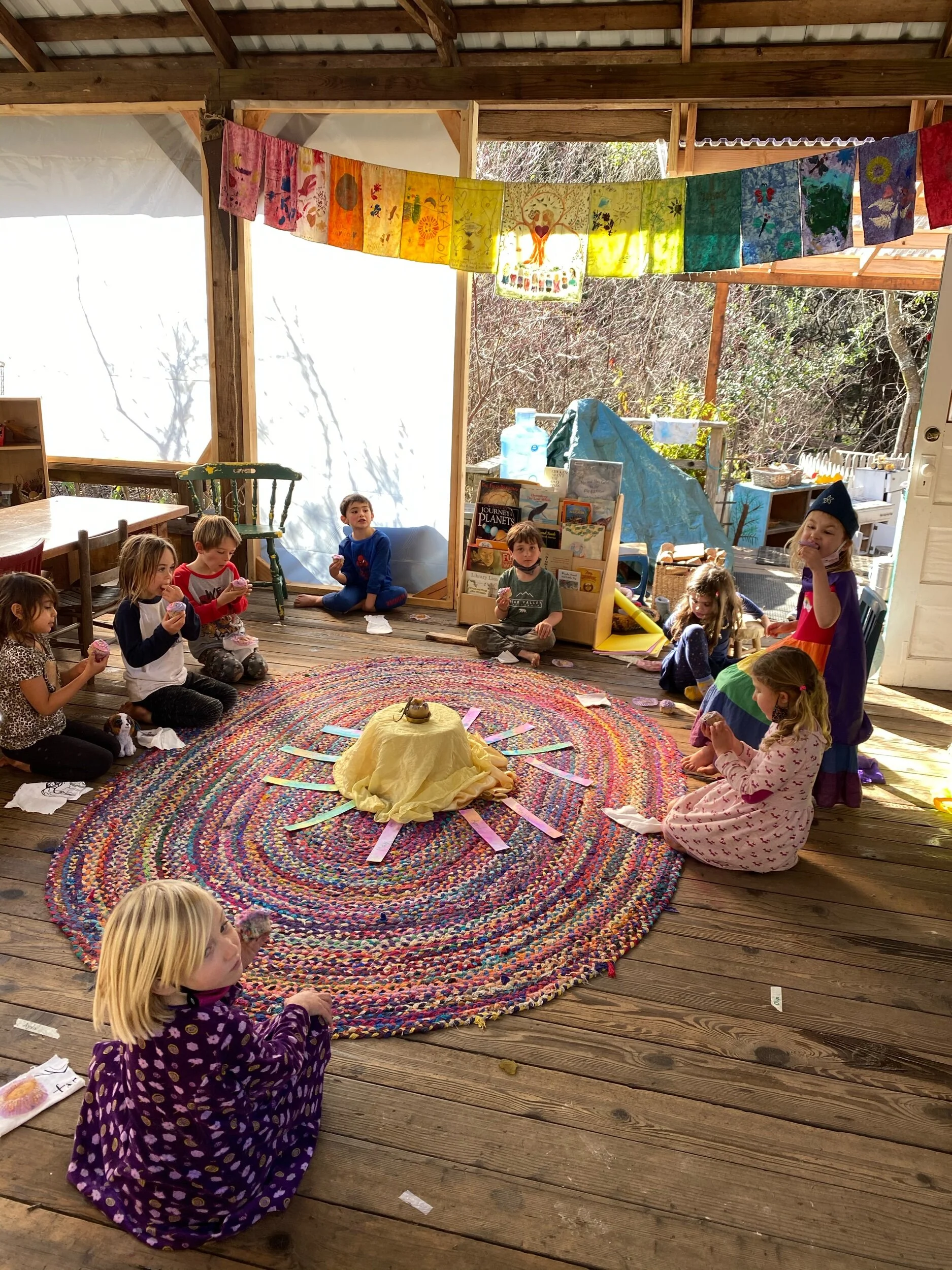
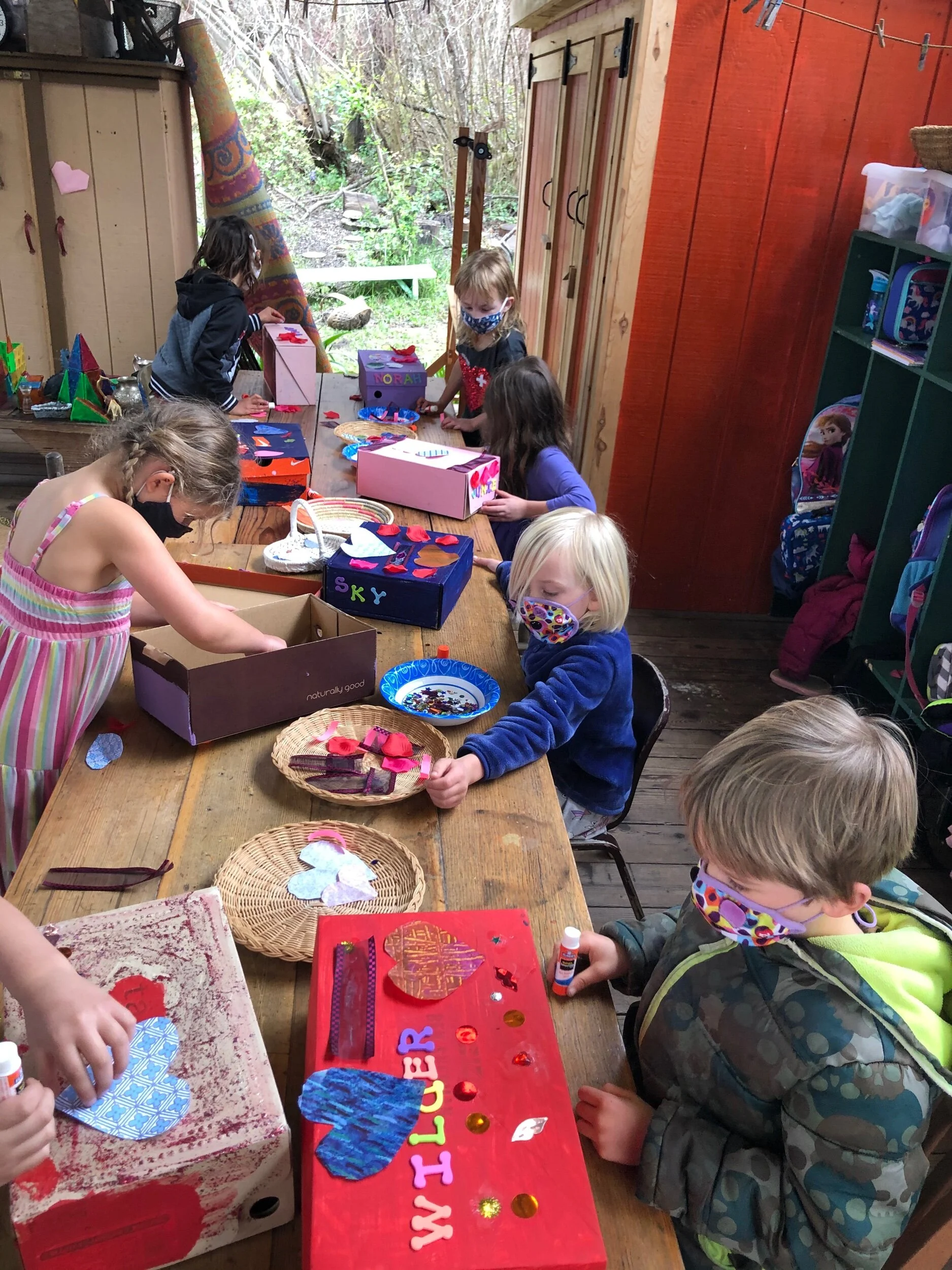
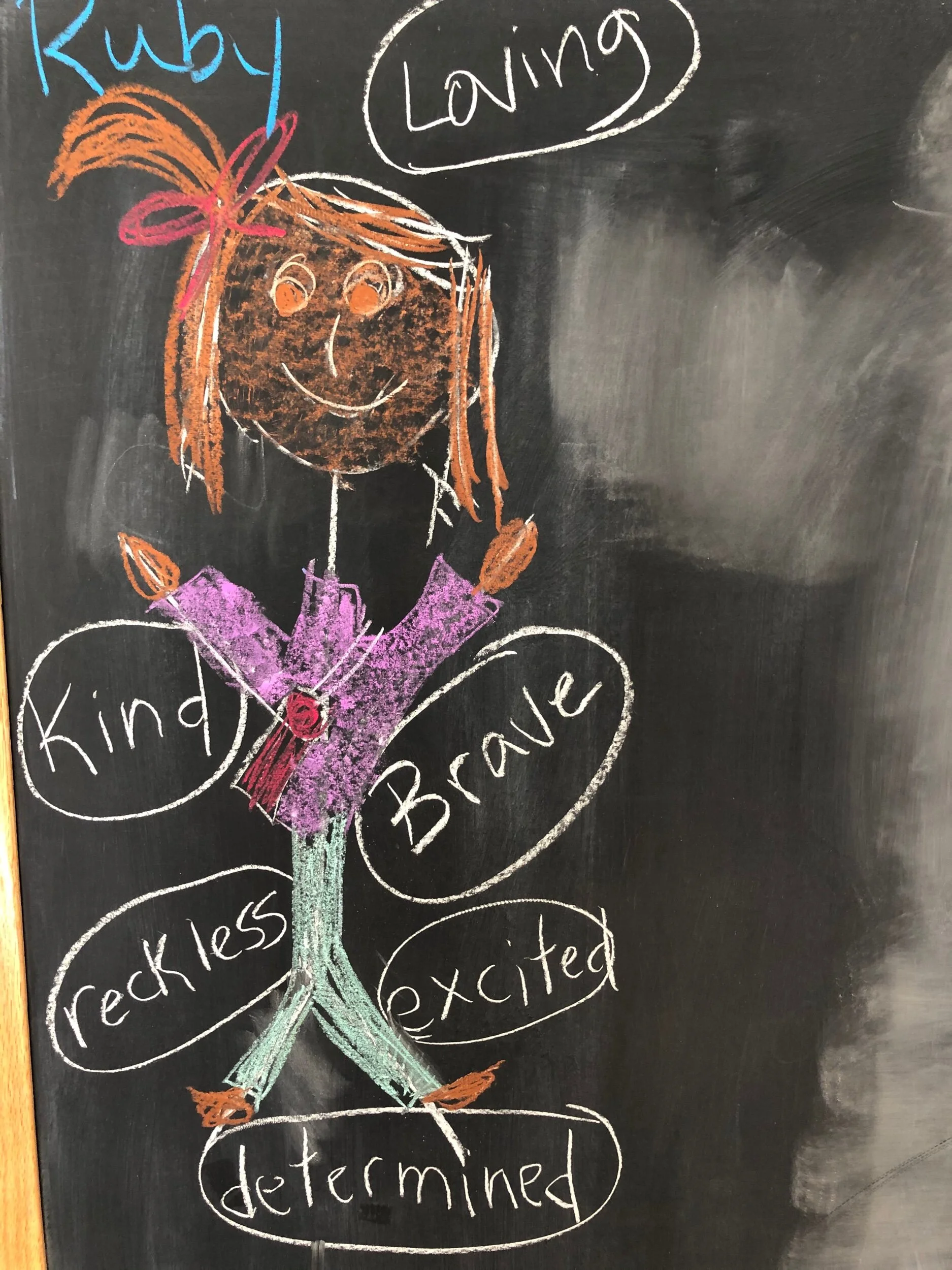
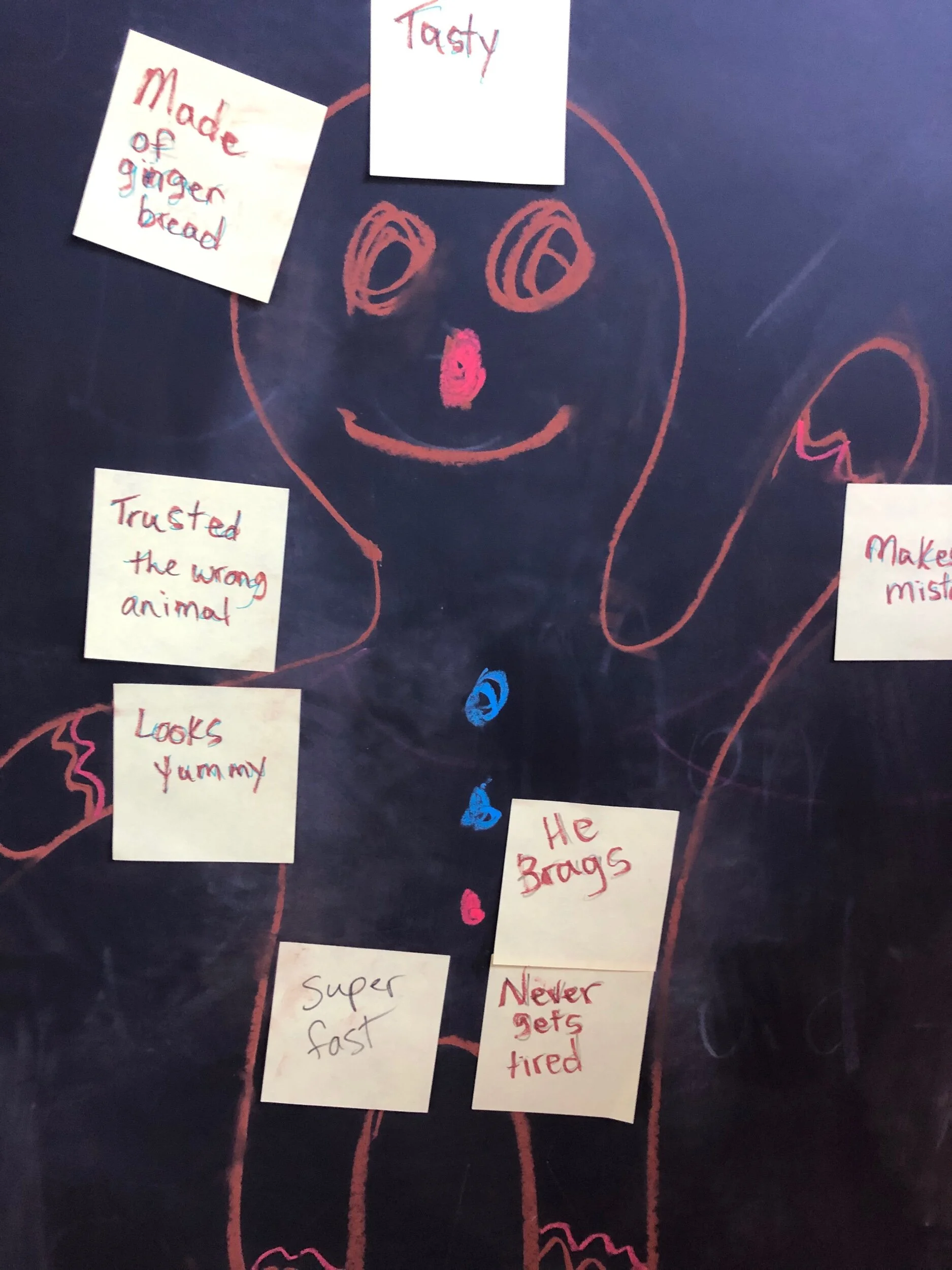
We have continued to act out a play per month which has been a big hit for the class. It is a time they all come together to help create the set, play their roles and clap for each other. We did the Gingerbread Man which included a character study and we acted out a classic with a new spin, Rubia and the Three Osos. The bears make sopa (soup) instead of porridge. Rubia returns after she runs away from their home with a nice pot of soup to share.
We’ve moved into gathering and recording their own personal stories on our “Once Upon a Time” clipboard. The children dictate these to us so they are free to draw upon their rich imaginations without being slowed down by actually doing the writing themselves. They are asked to extend their thinking by describing actions or characters in more detail, and by making the storyline cohesive. Then they act out the these short stories as a class. There’s nothing more thrilling than having your words put on paper and then come to life. The children’s enjoyment of this activity has been wonderful to witness.
The gallery below shows some character studies. This practice is helping the children understand how descriptive adjectives fit into storytelling and writing, as well as developing their ability to interpret and communicate deeper meanings in stories.
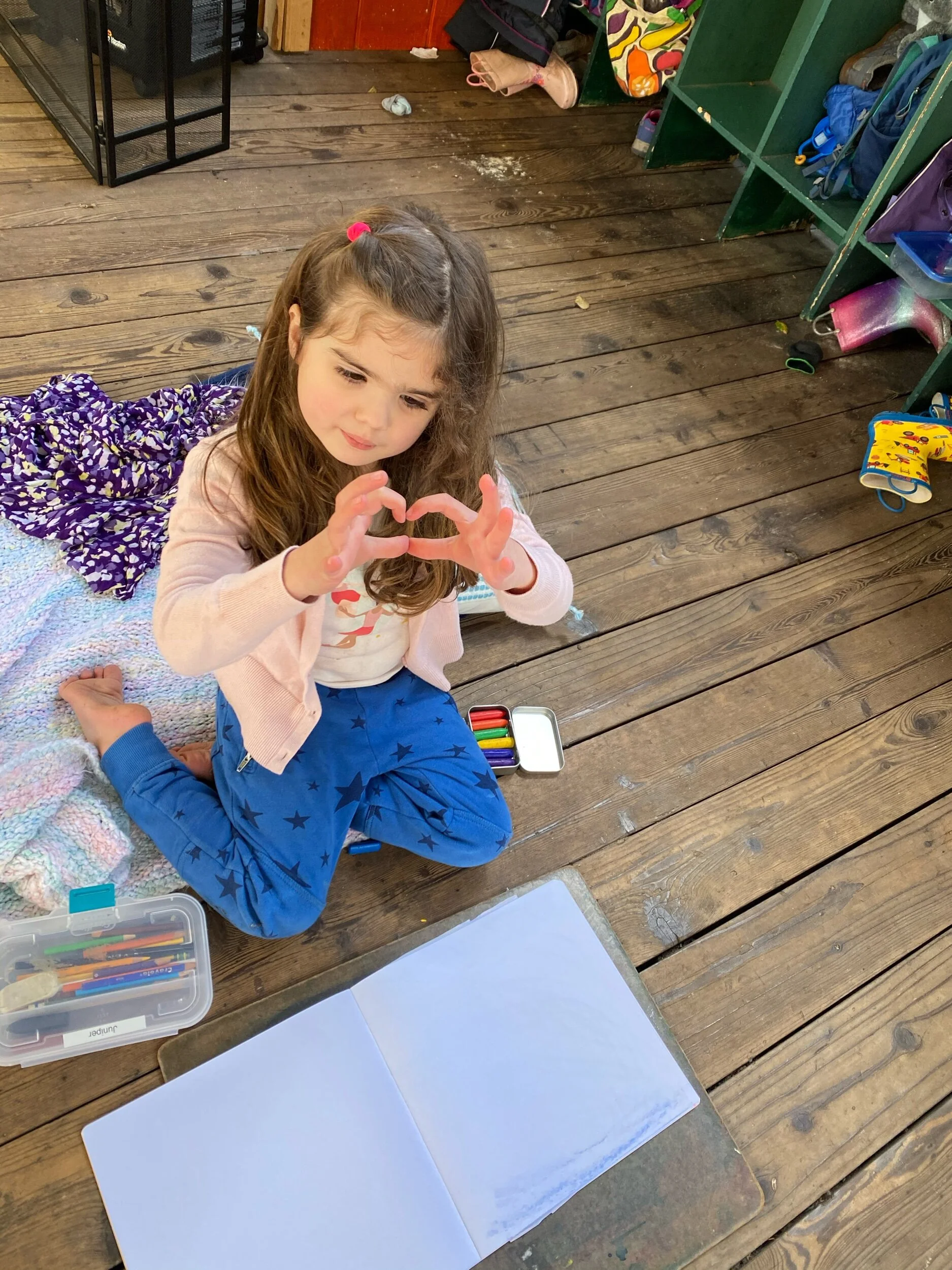
In addition, a few have begun writing their own stories in their “Lovely Language Books.” With this activity, they are practicing their handwriting, and using a combination of sounding out words using “inventive spelling” (also known as “kid spelling”) techniques, learning sight words and other writing conventions and rules. English is not an easy language to master — so many irregularities and oddities, as in the word “night” or “know” or “would.”
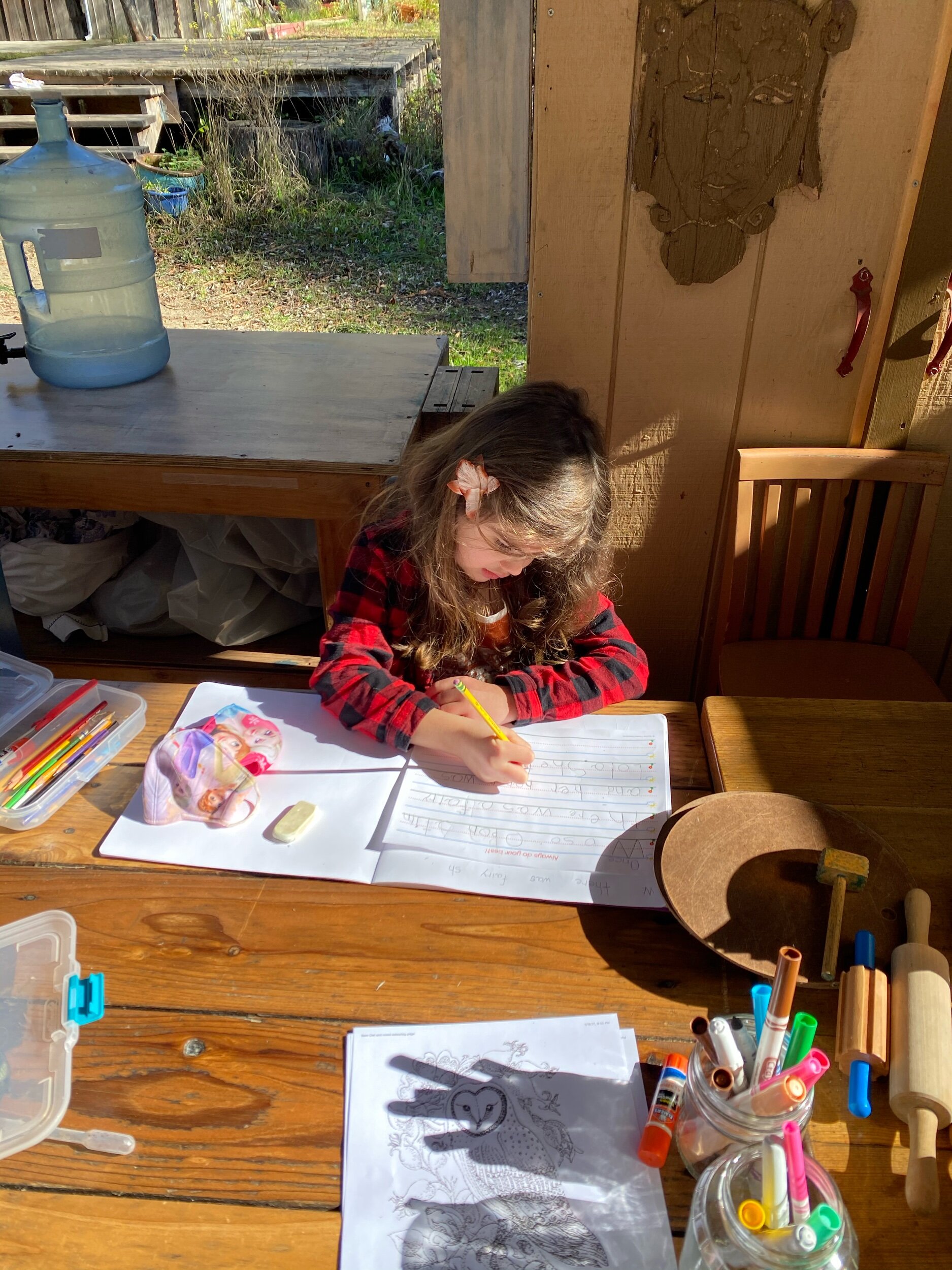
Junie working on her story.
Math:
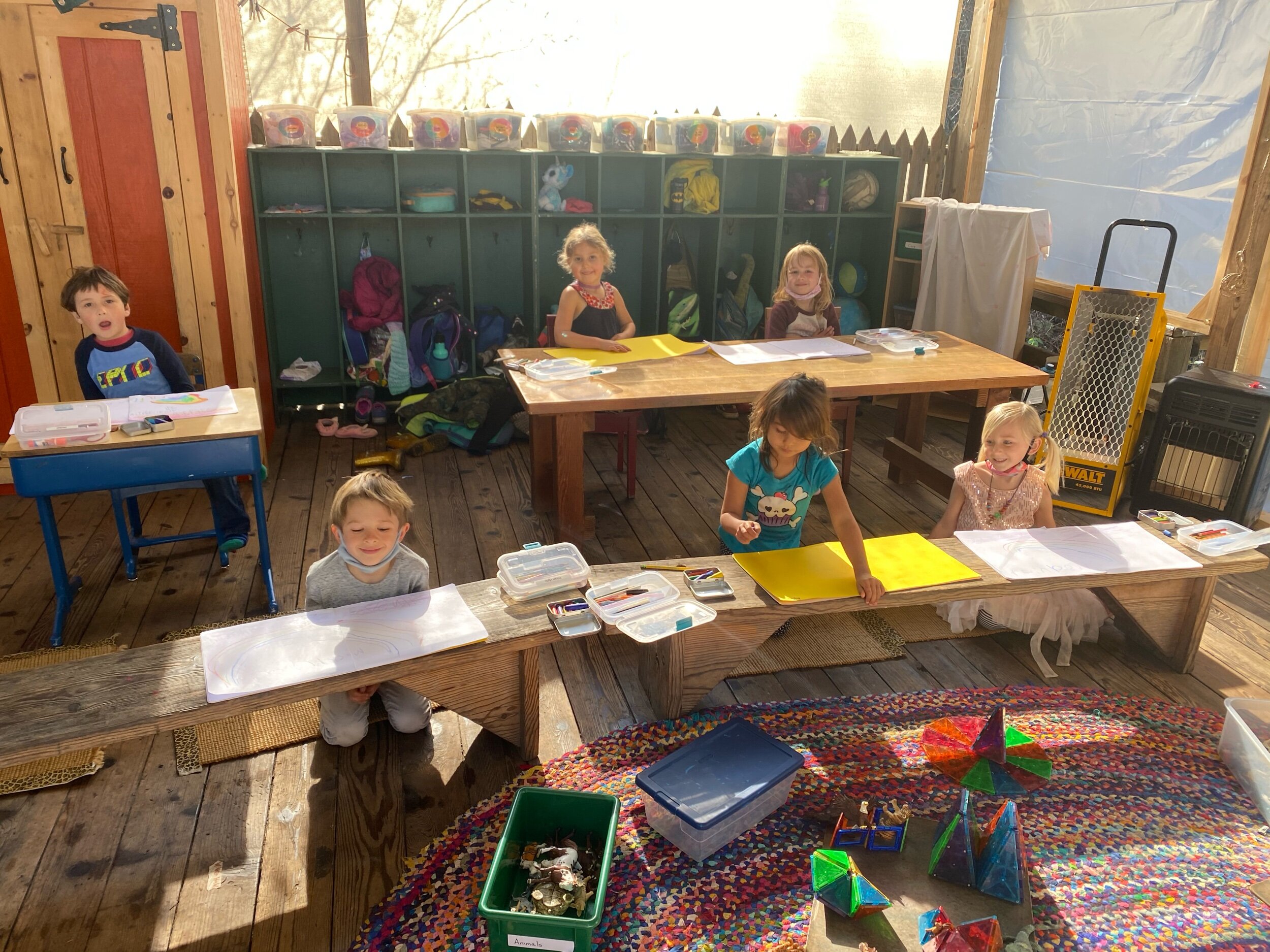
Working in the Golden Number Books.
All of the golden numbers 0, and 1-9 have been introduced. They are “golden” because every number you can think of is made up of some combination or variety of these 9 integers and 0. Quite an amazing concept, when you think about it. We did an exercise where the kids thought of numbers (large and small) and then we recorded these numbers using the ingredients in their golden number books and they got to see that that’s all you need!
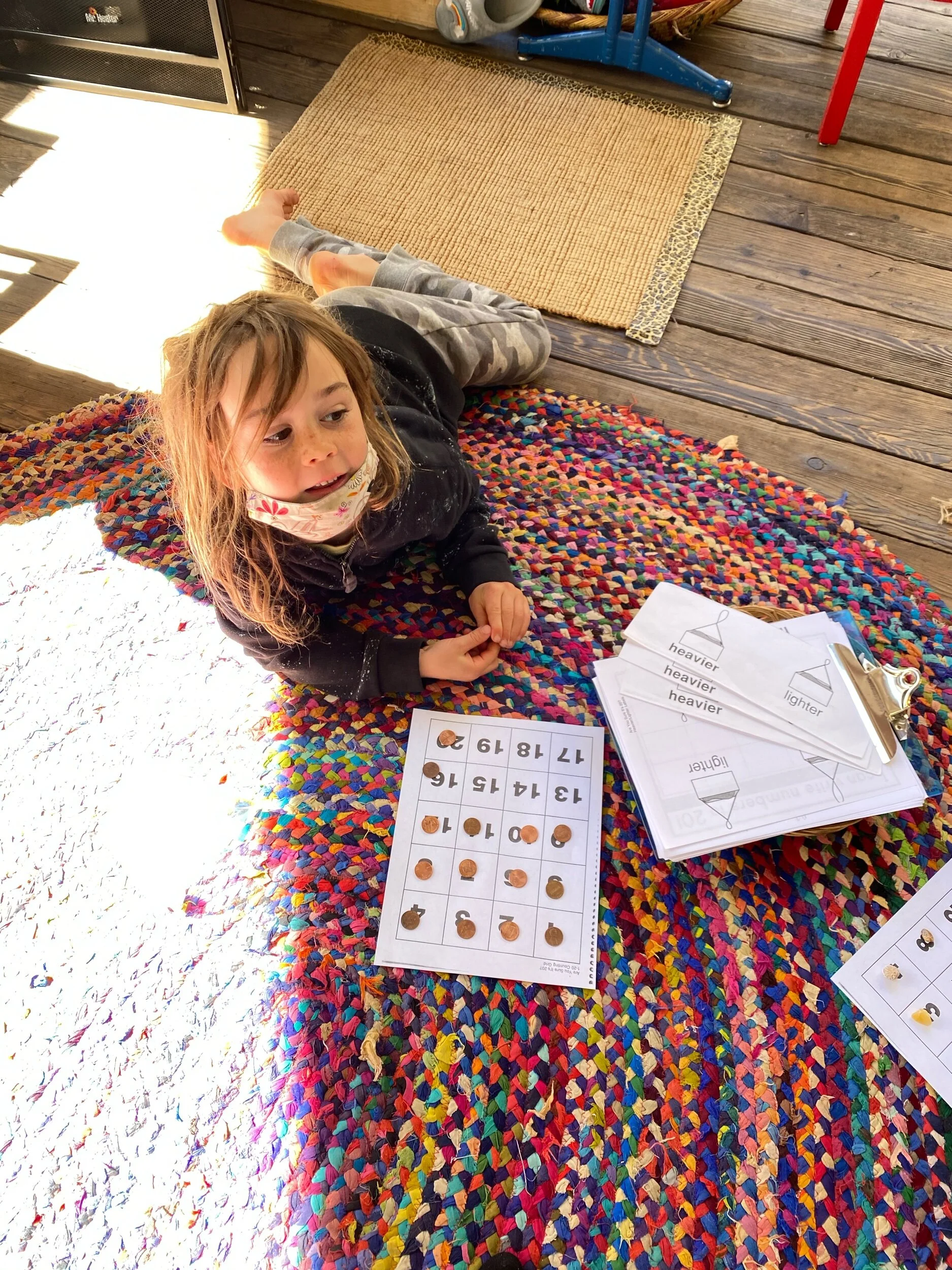
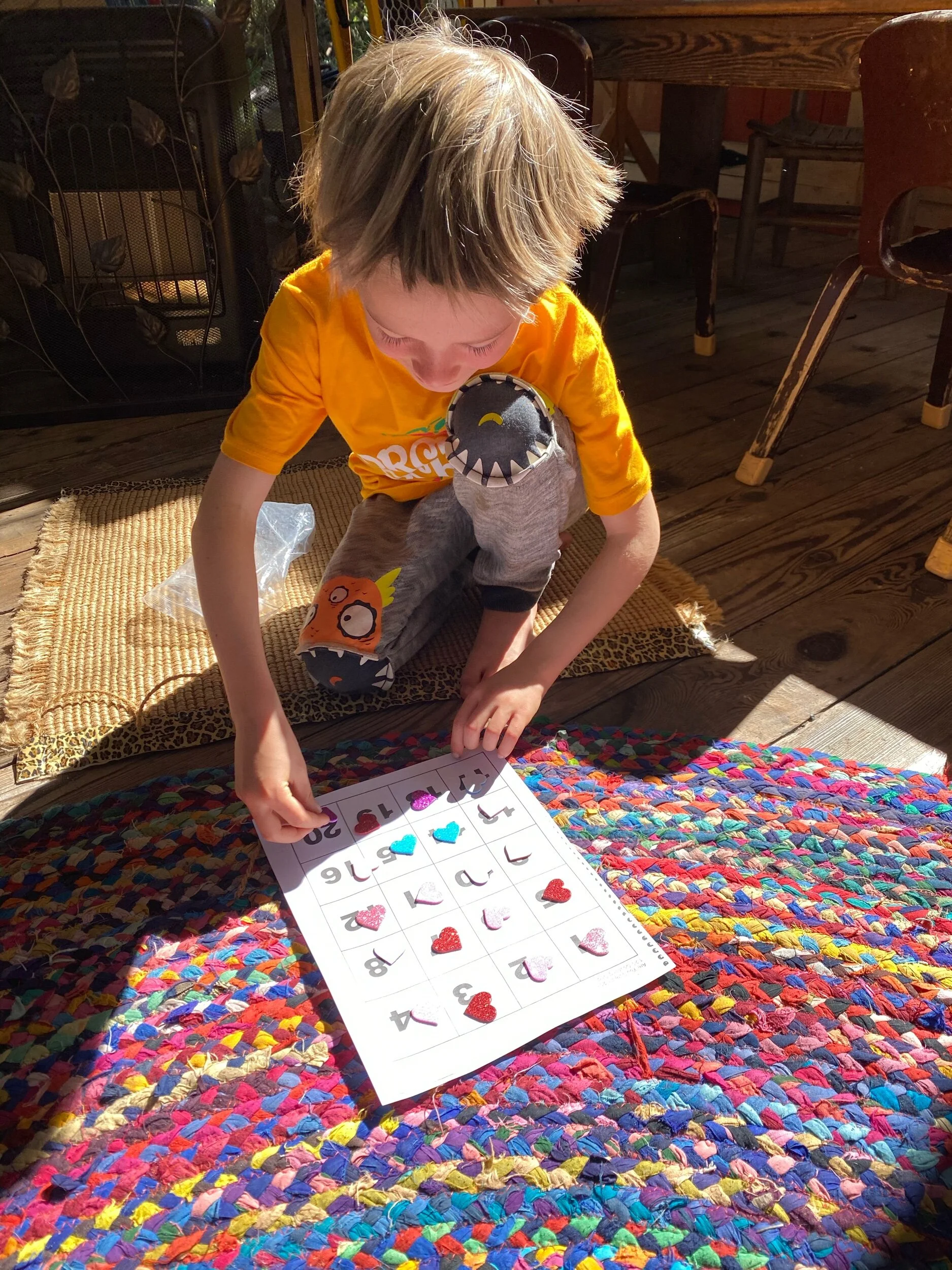
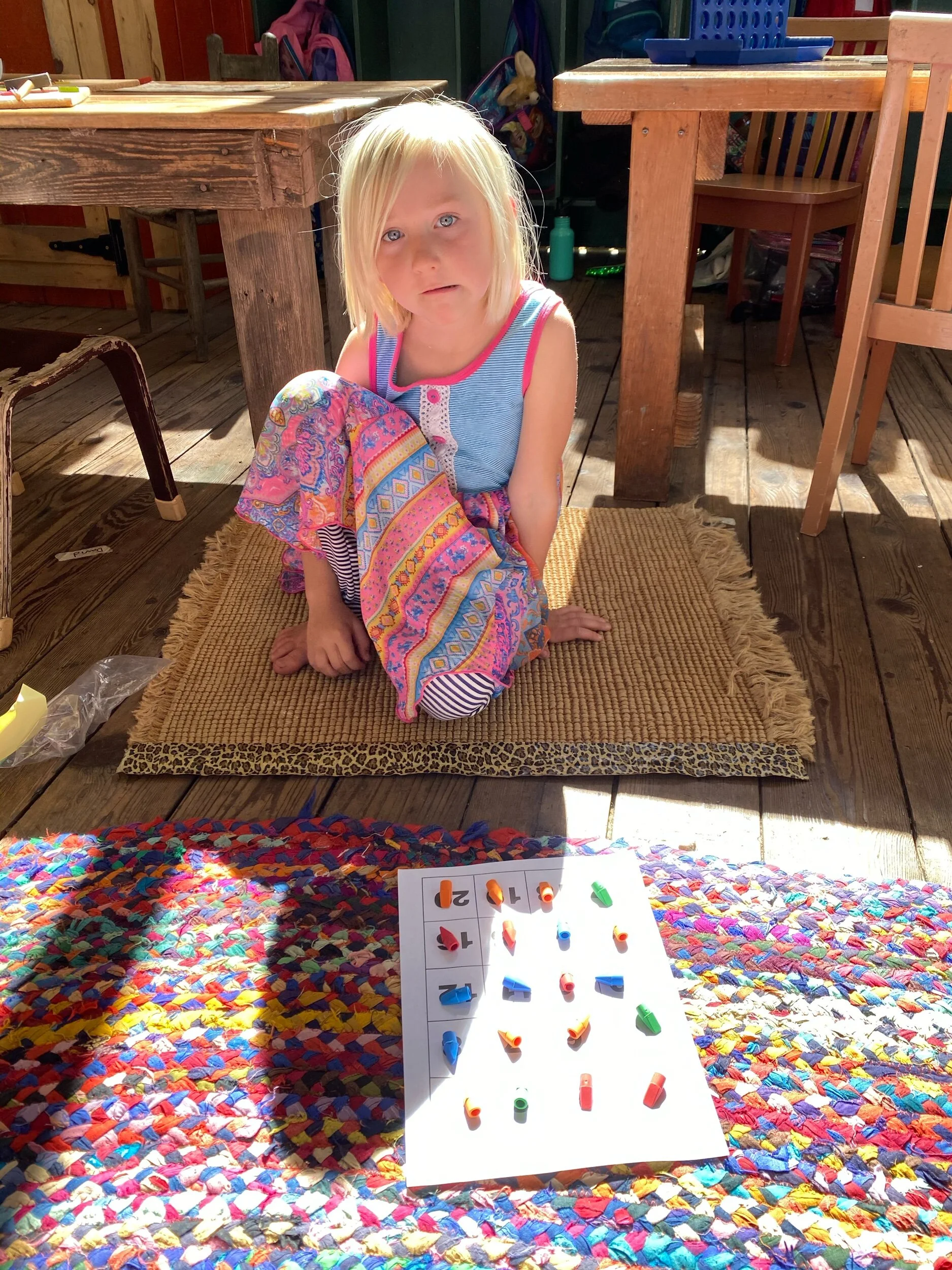
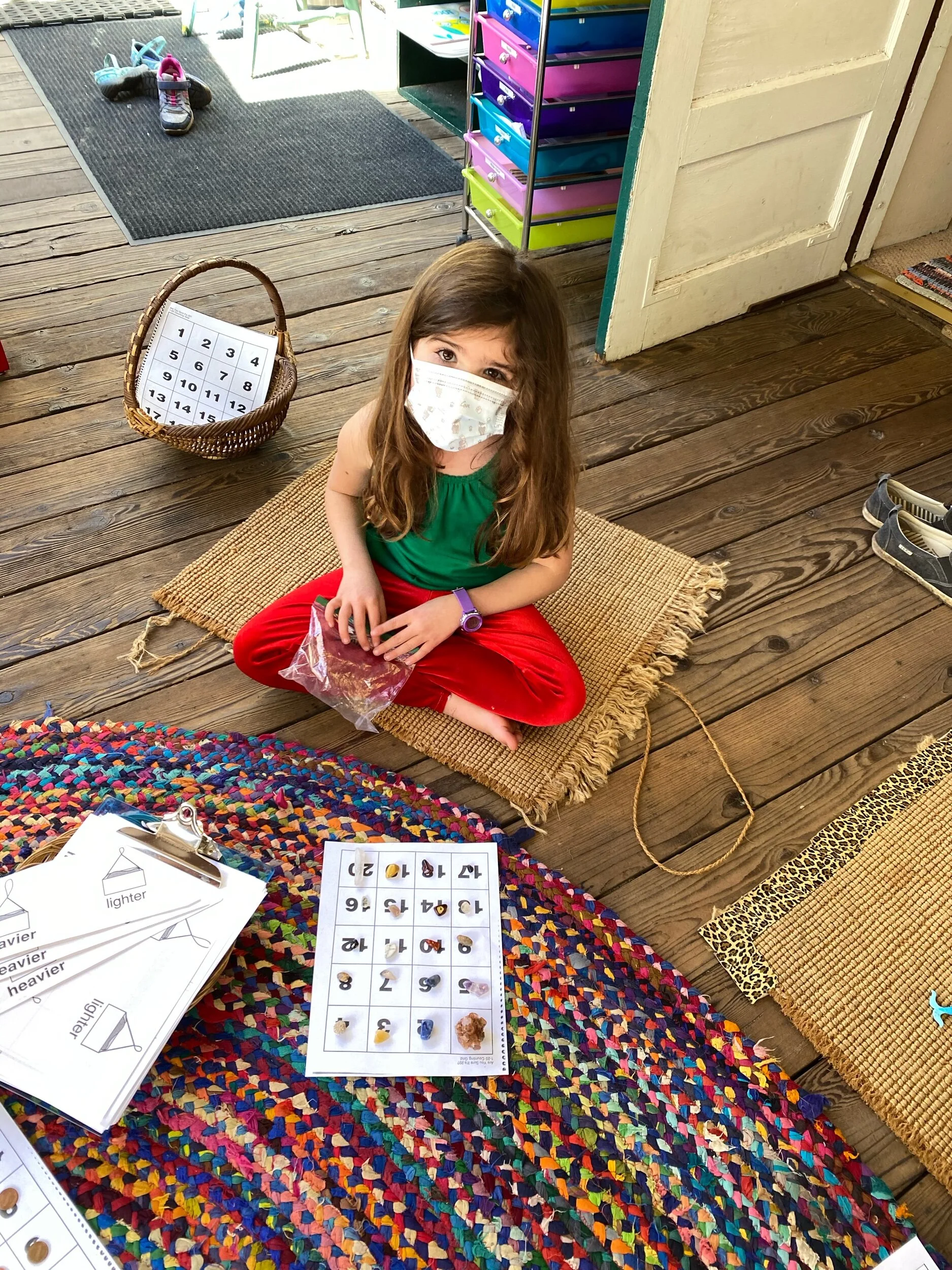
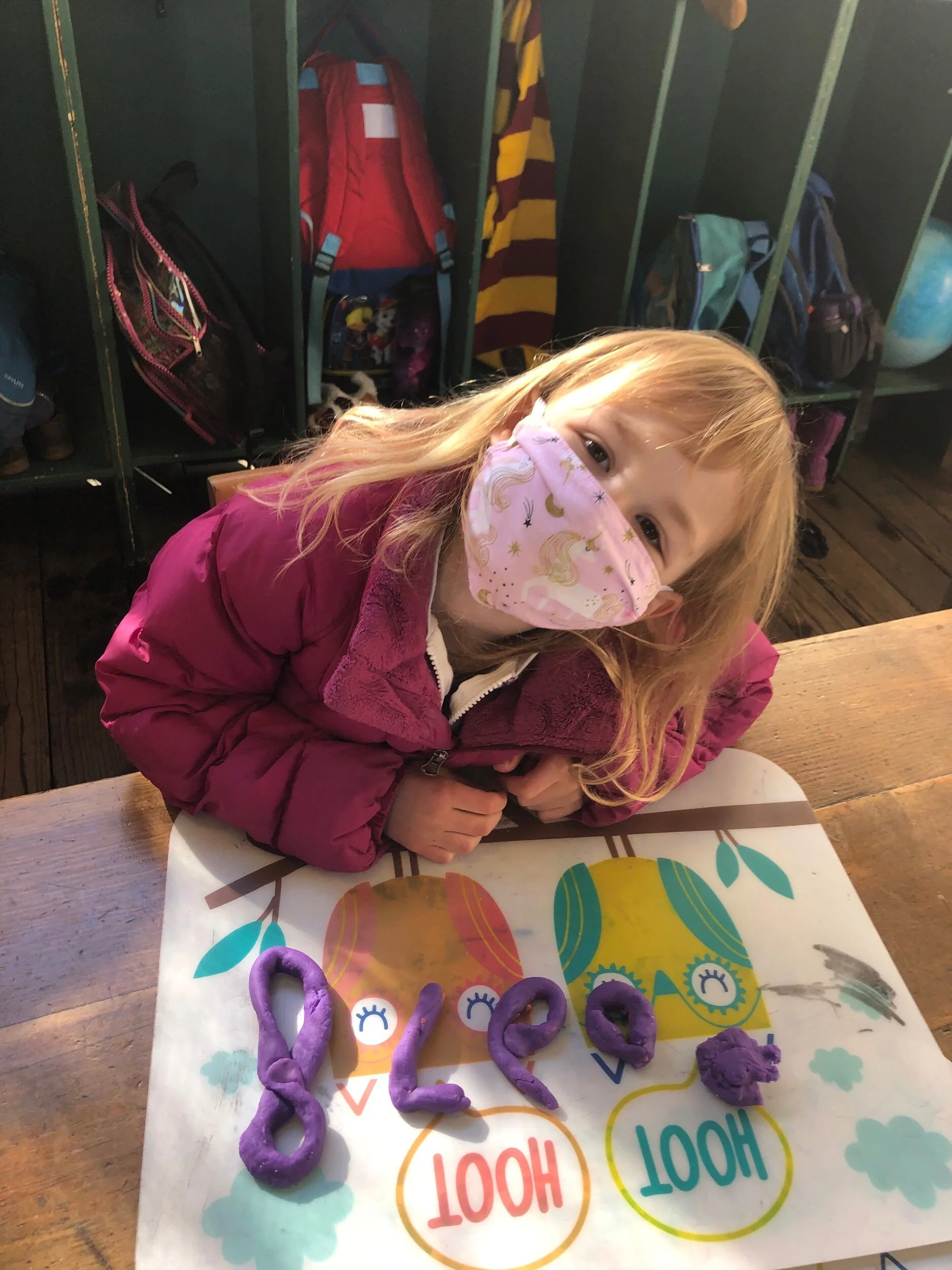
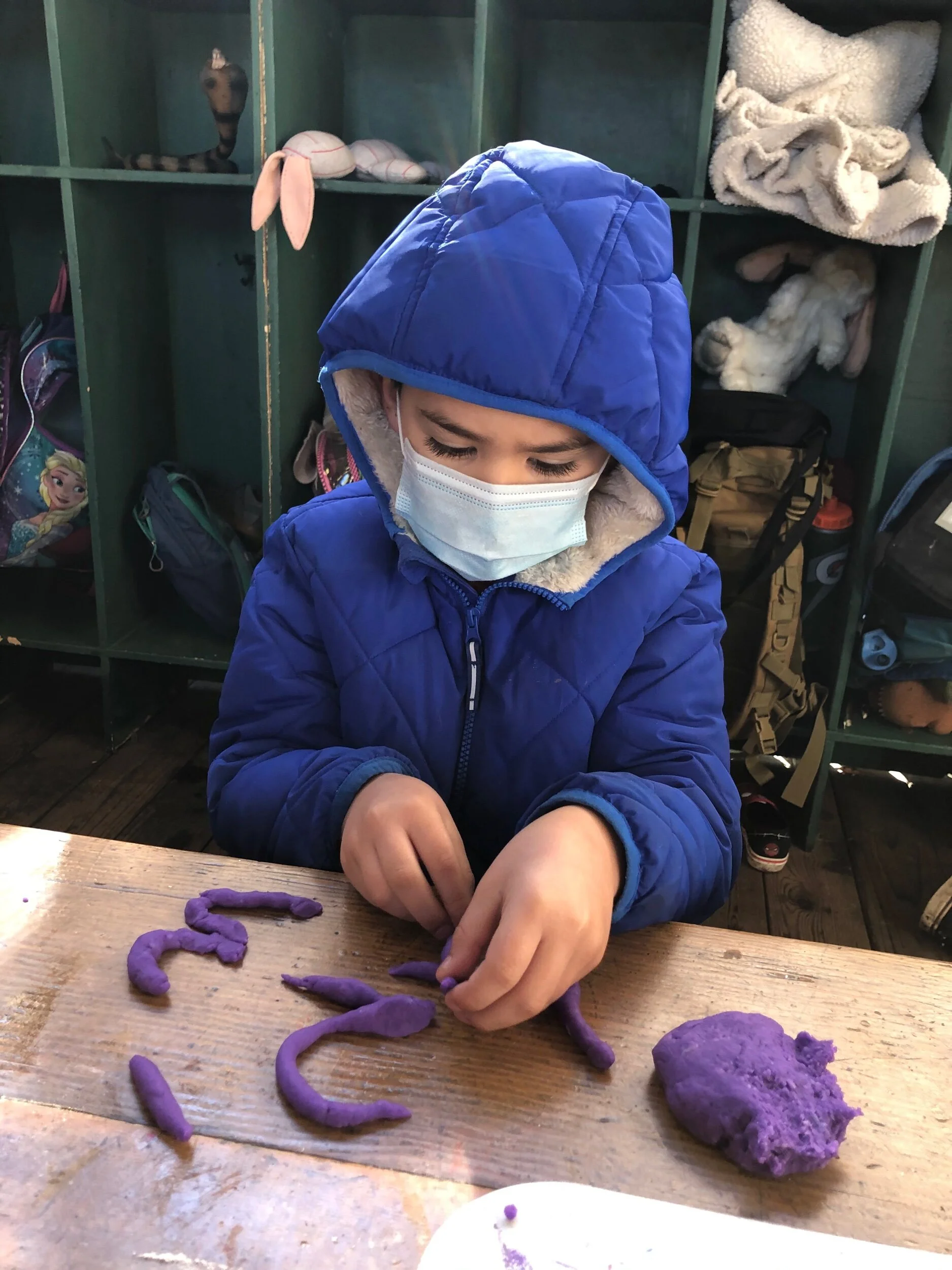
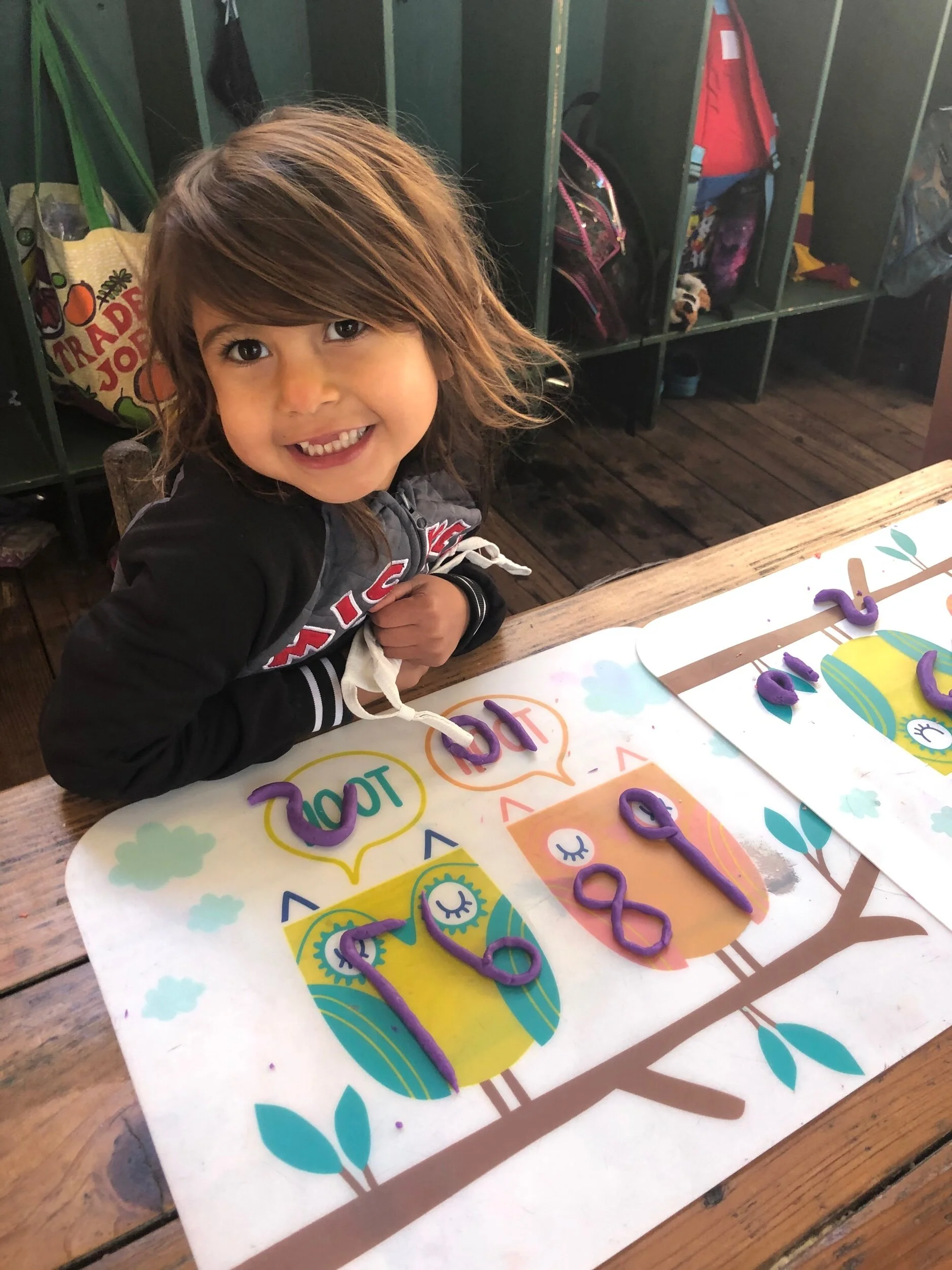
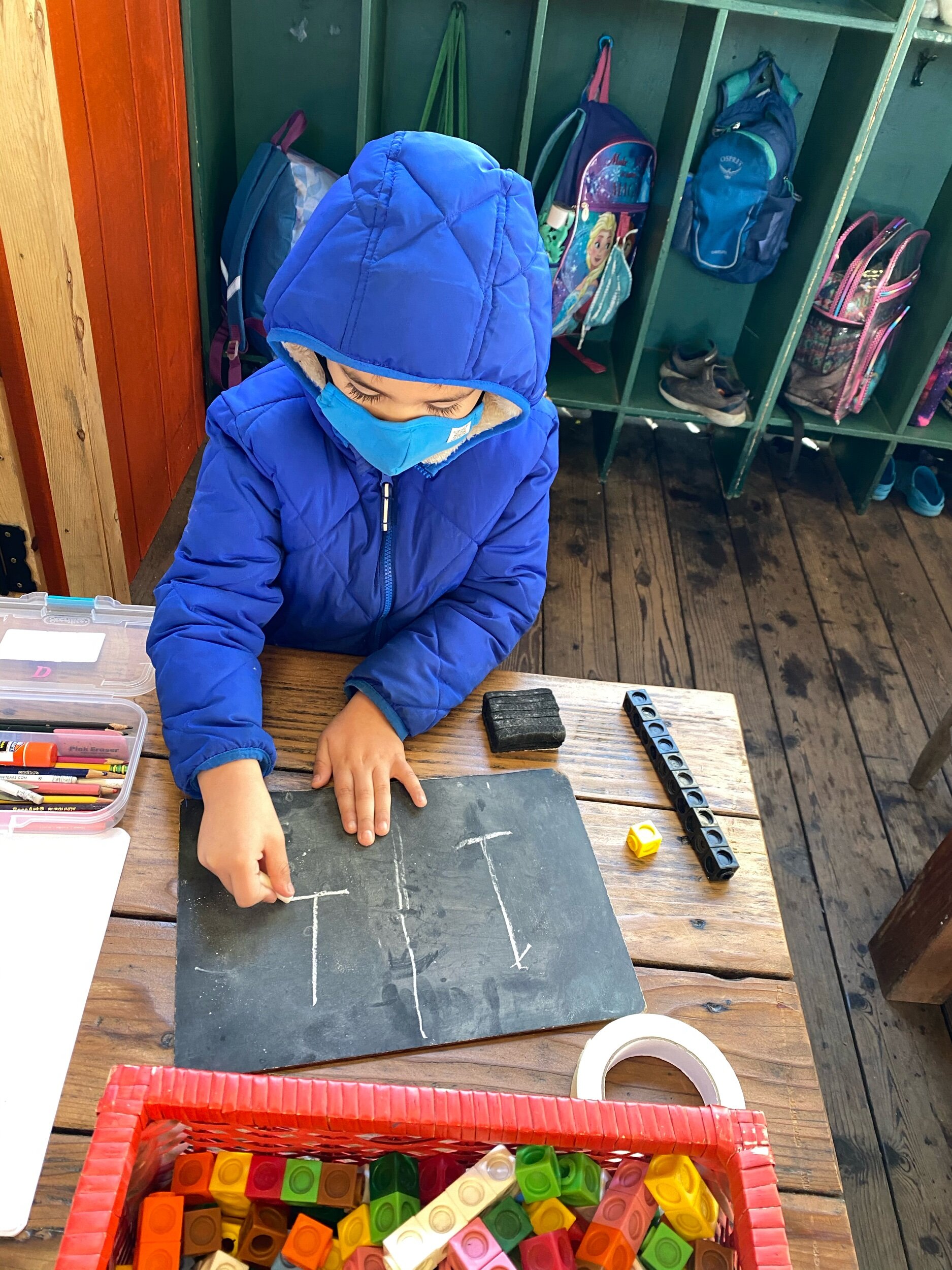
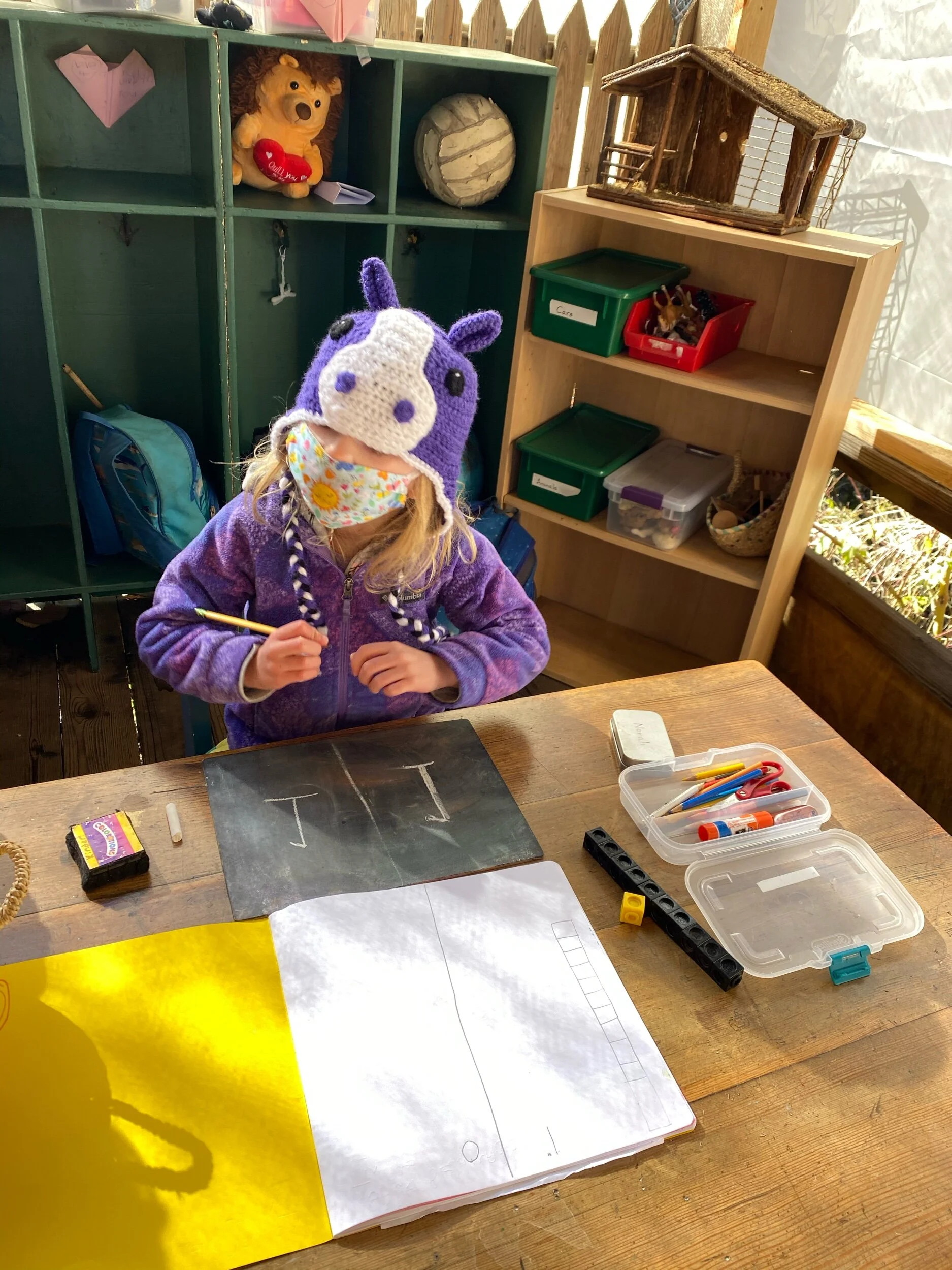
The children are now moving into two digit numbers. We built the numbers 10-19 using snapblocks to make a stick of 10 to put in the tens column and then 0, 1, 2, 3 and so on to put in the ones column. Then the children recorded this in their number books. Some of them have this concept down pat and others don’t see it yet but it was a good beginning foray into what the number 10 actually means (one ten and zero ones, eleven is one ten and one one etc). With their collections of 20, they practiced counting to 20 and we explored weight, checking whose collection was the heaviest/lightest. More activities were planned but with the tree fall, we have yet to find the students’ collections though we know we removed them safely from the crushed classroom.
More Science:
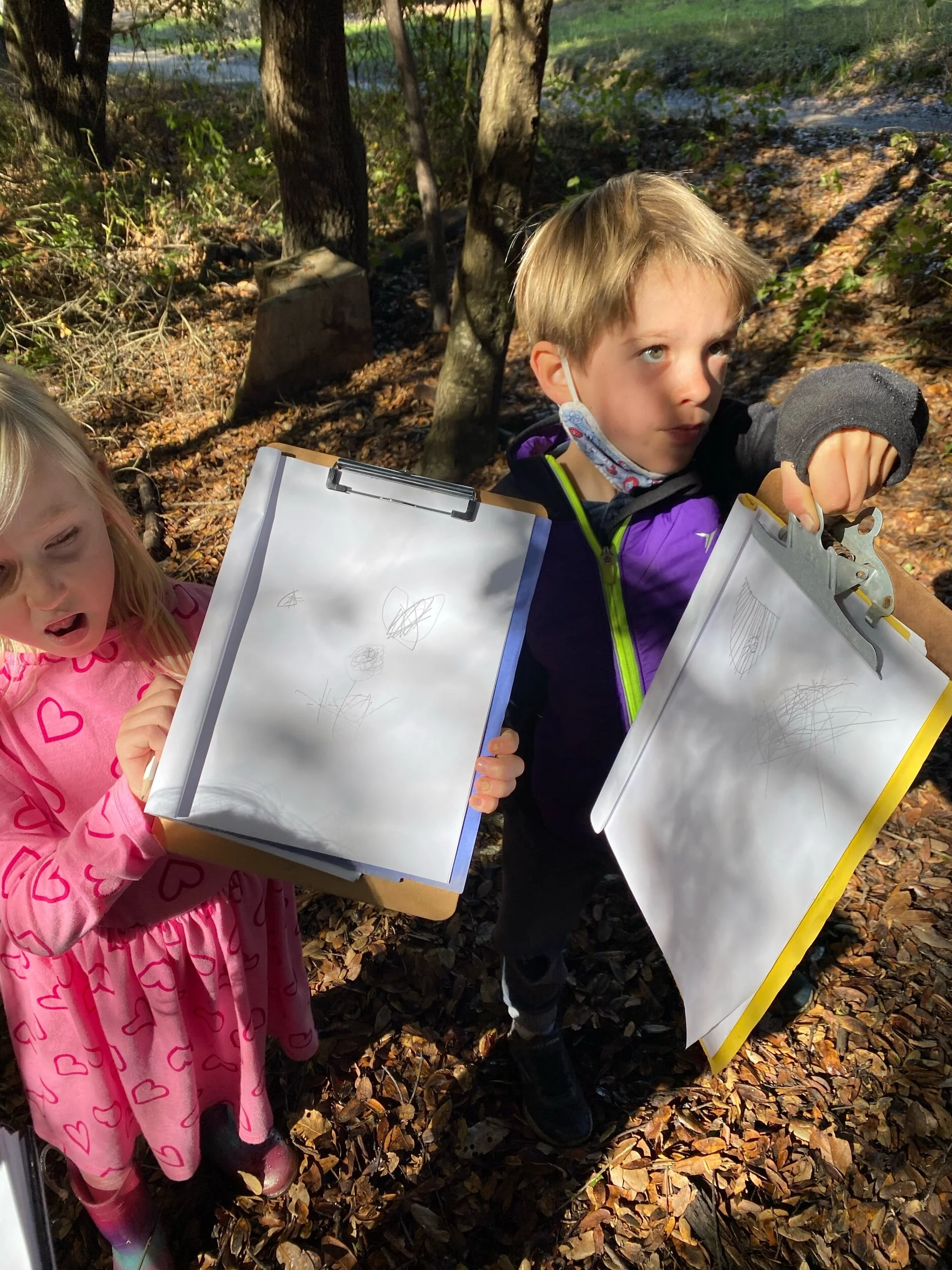
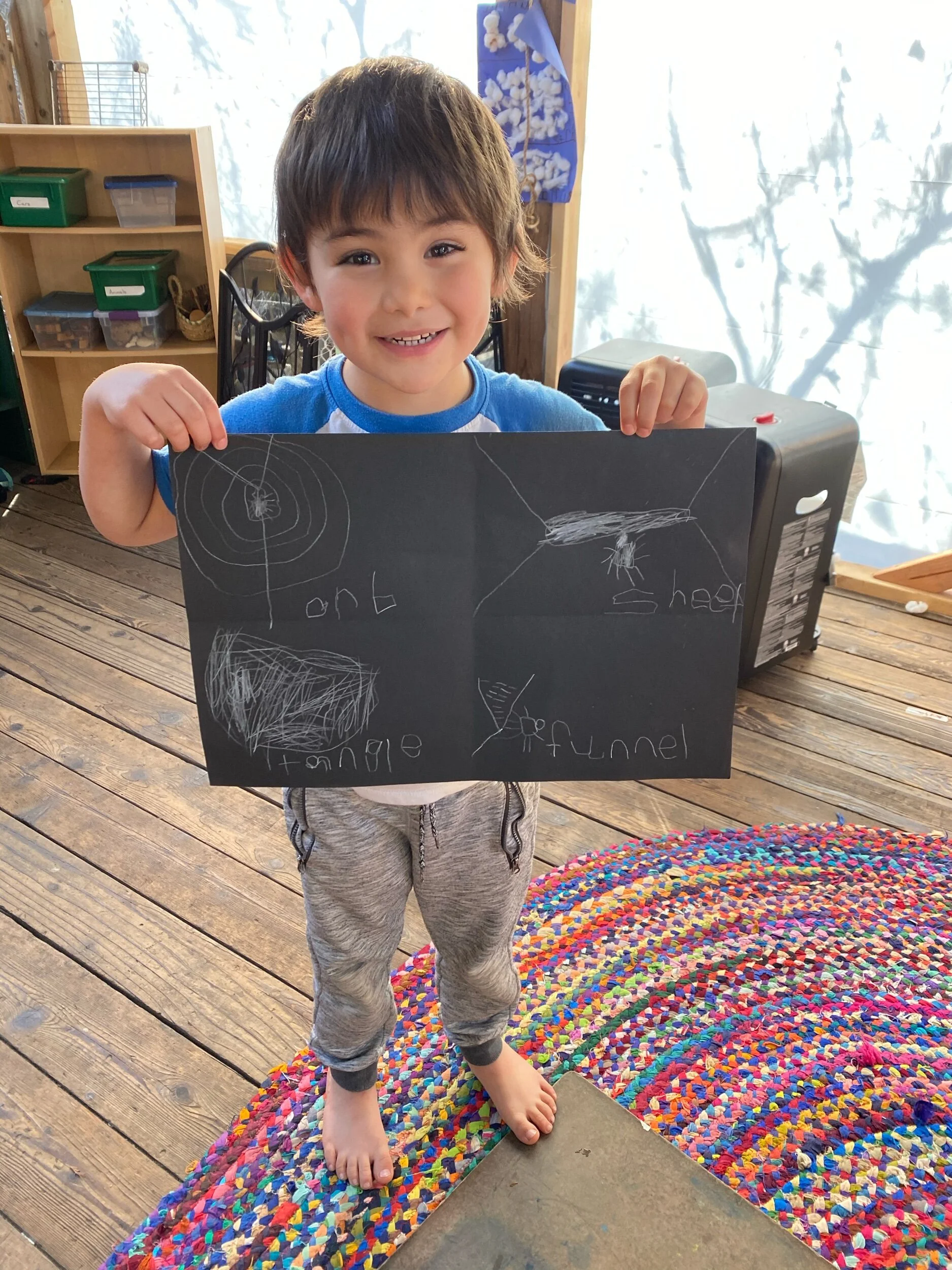
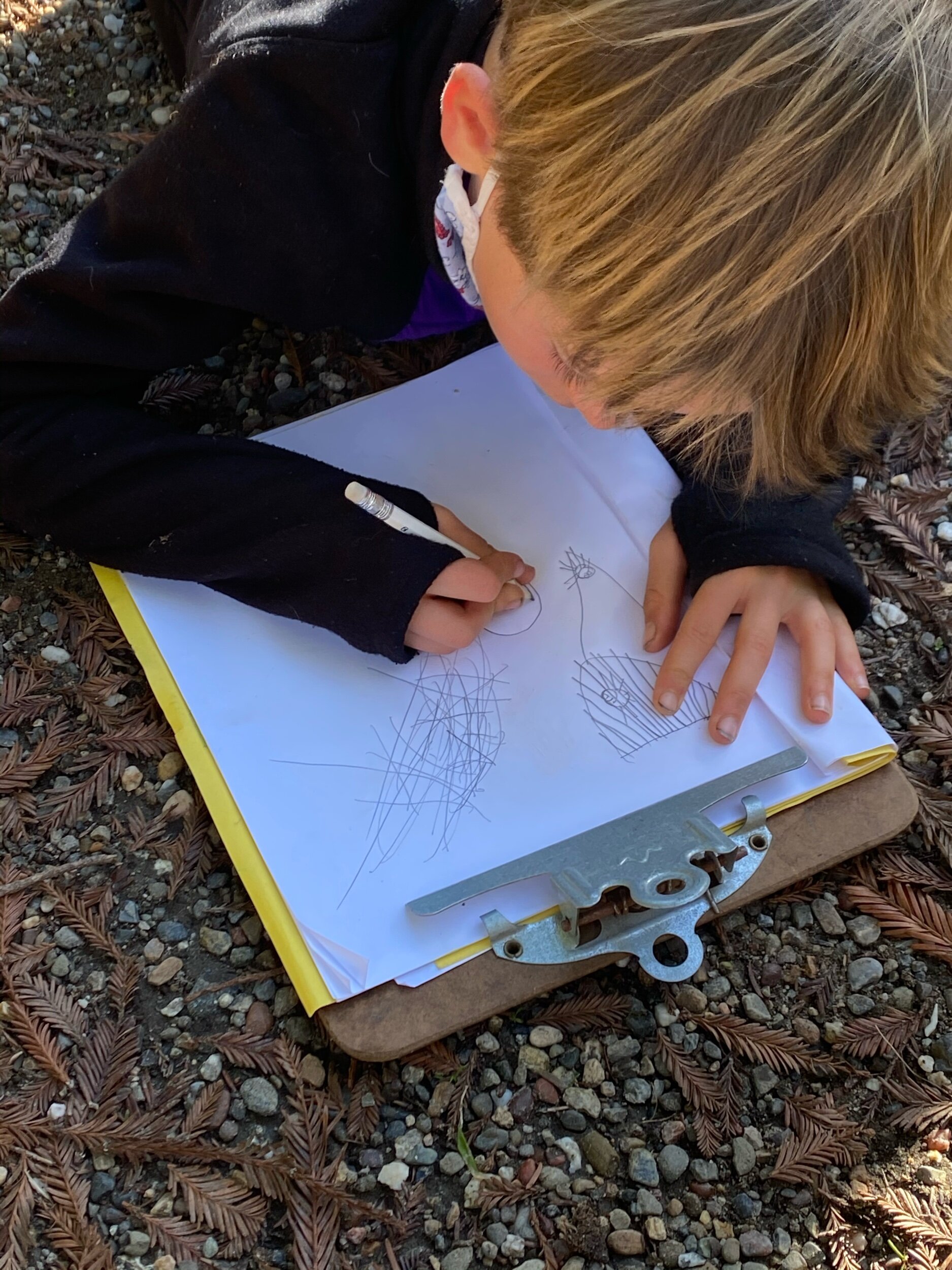
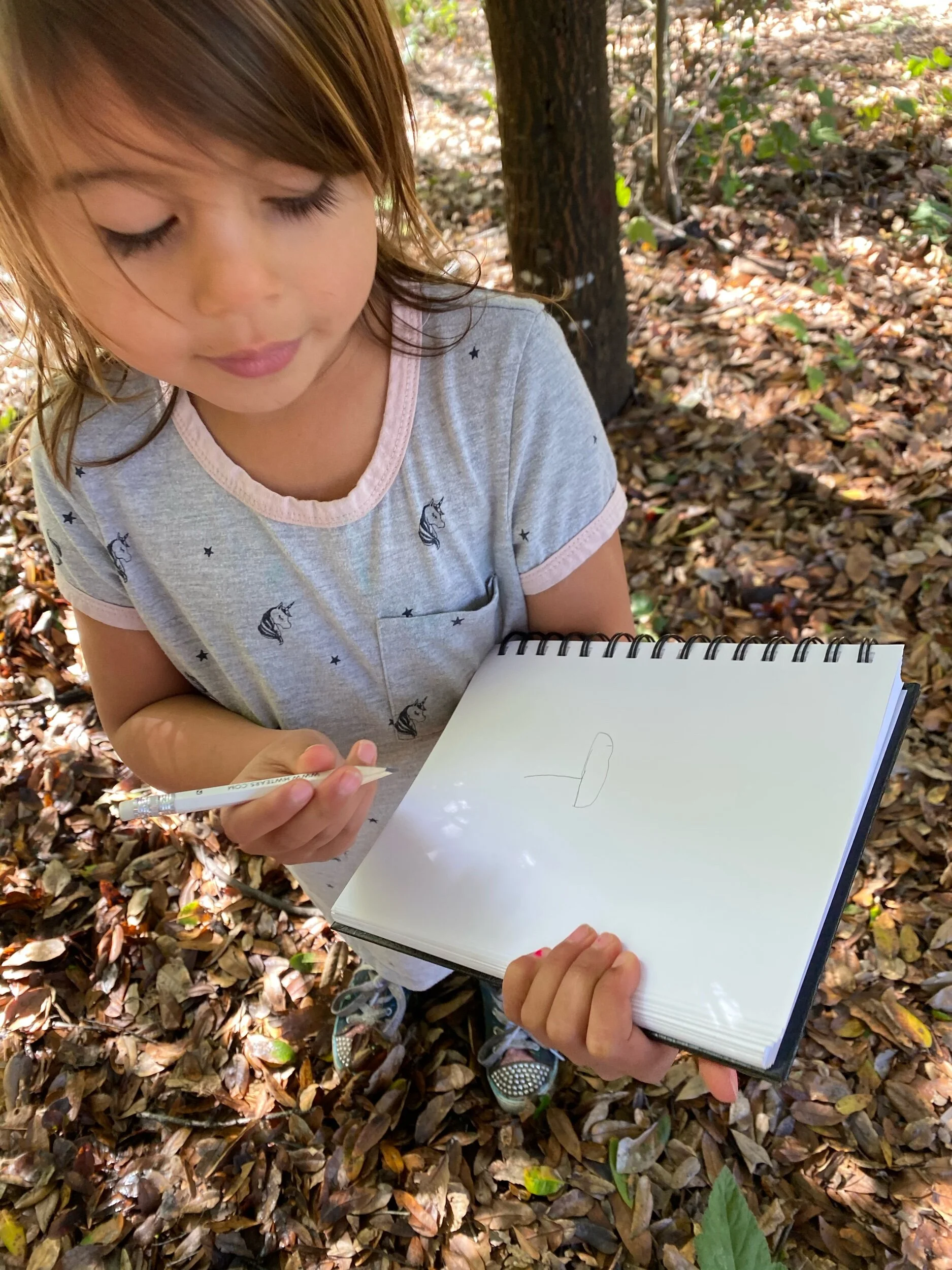
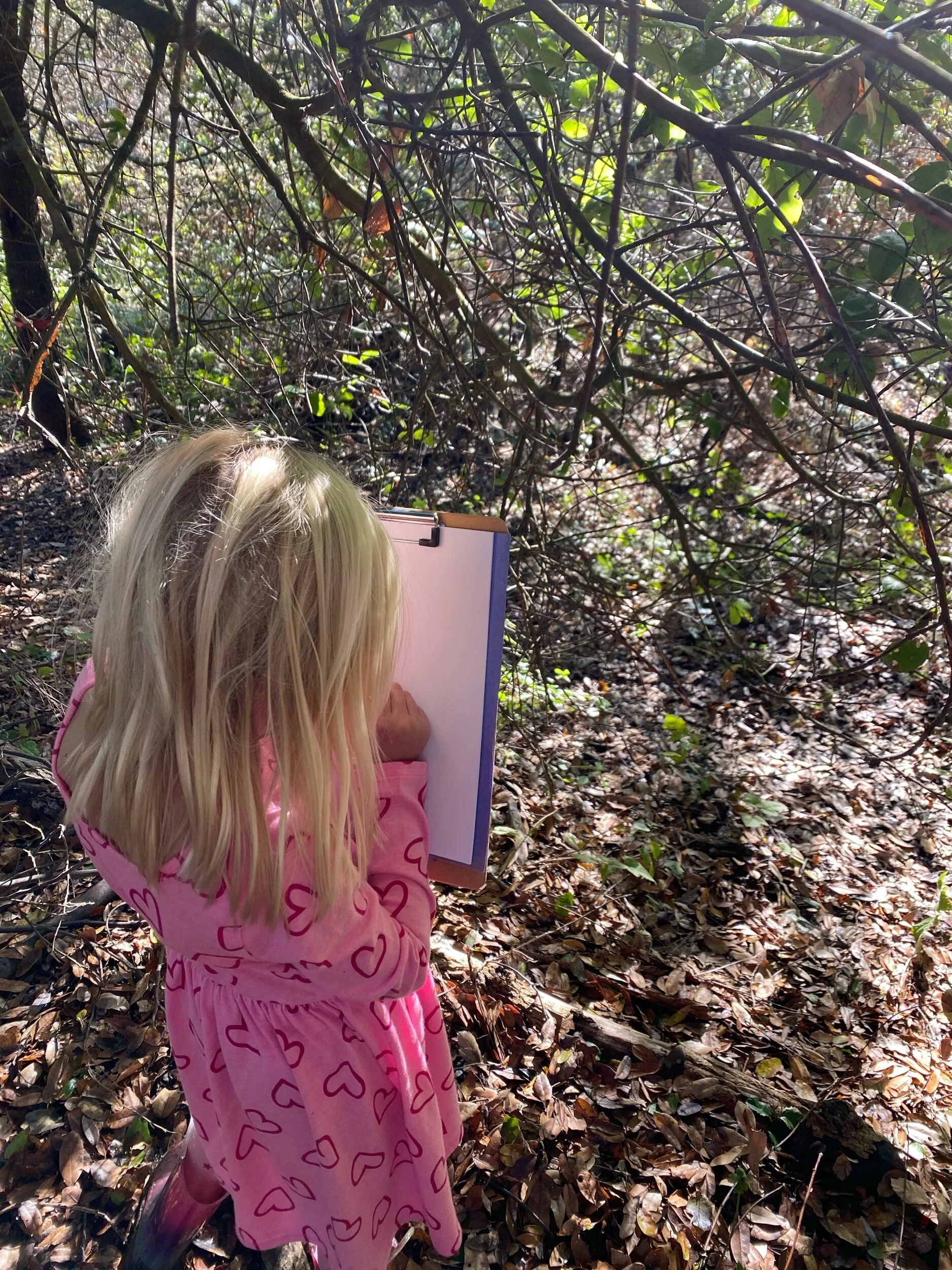
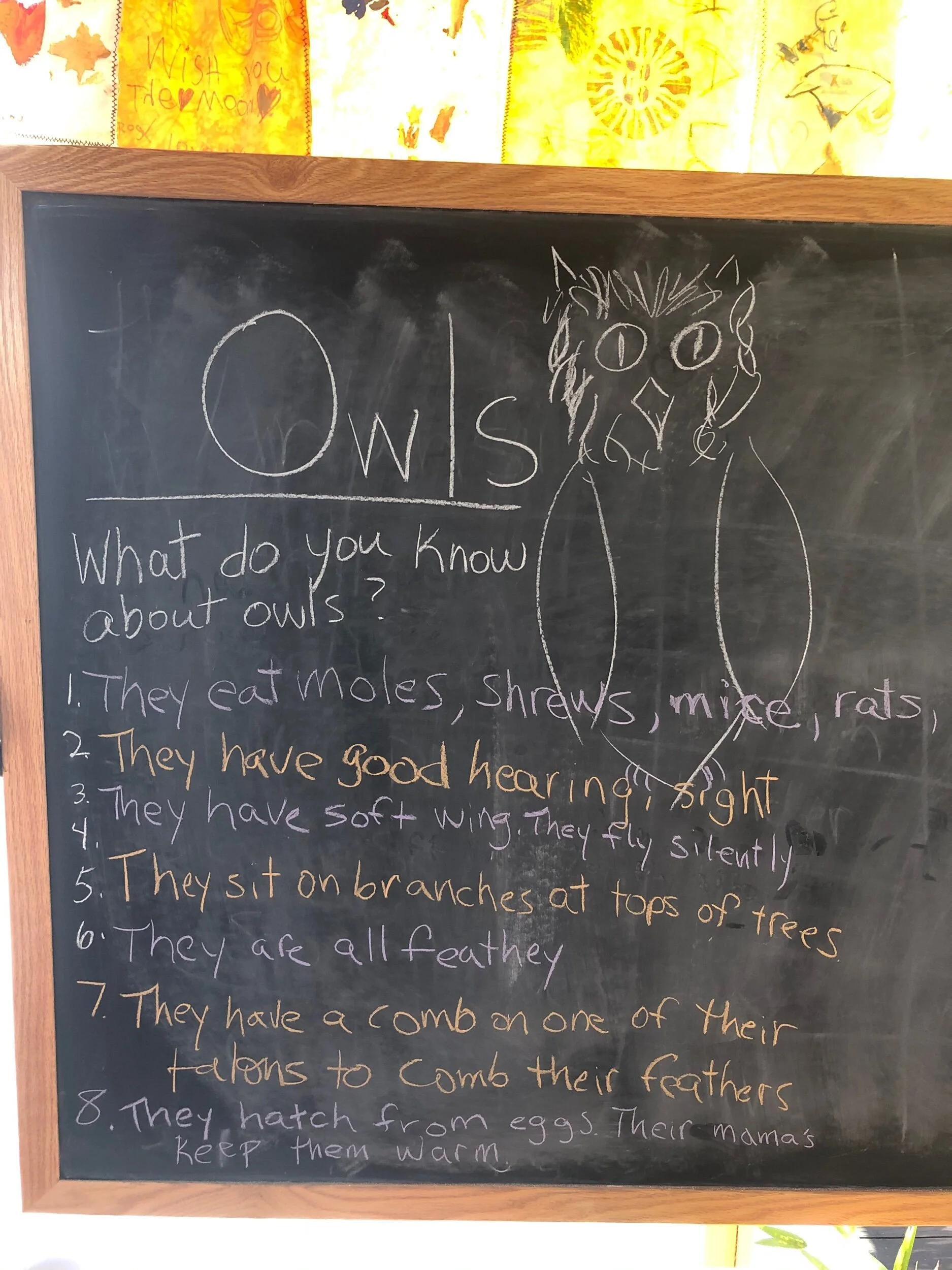
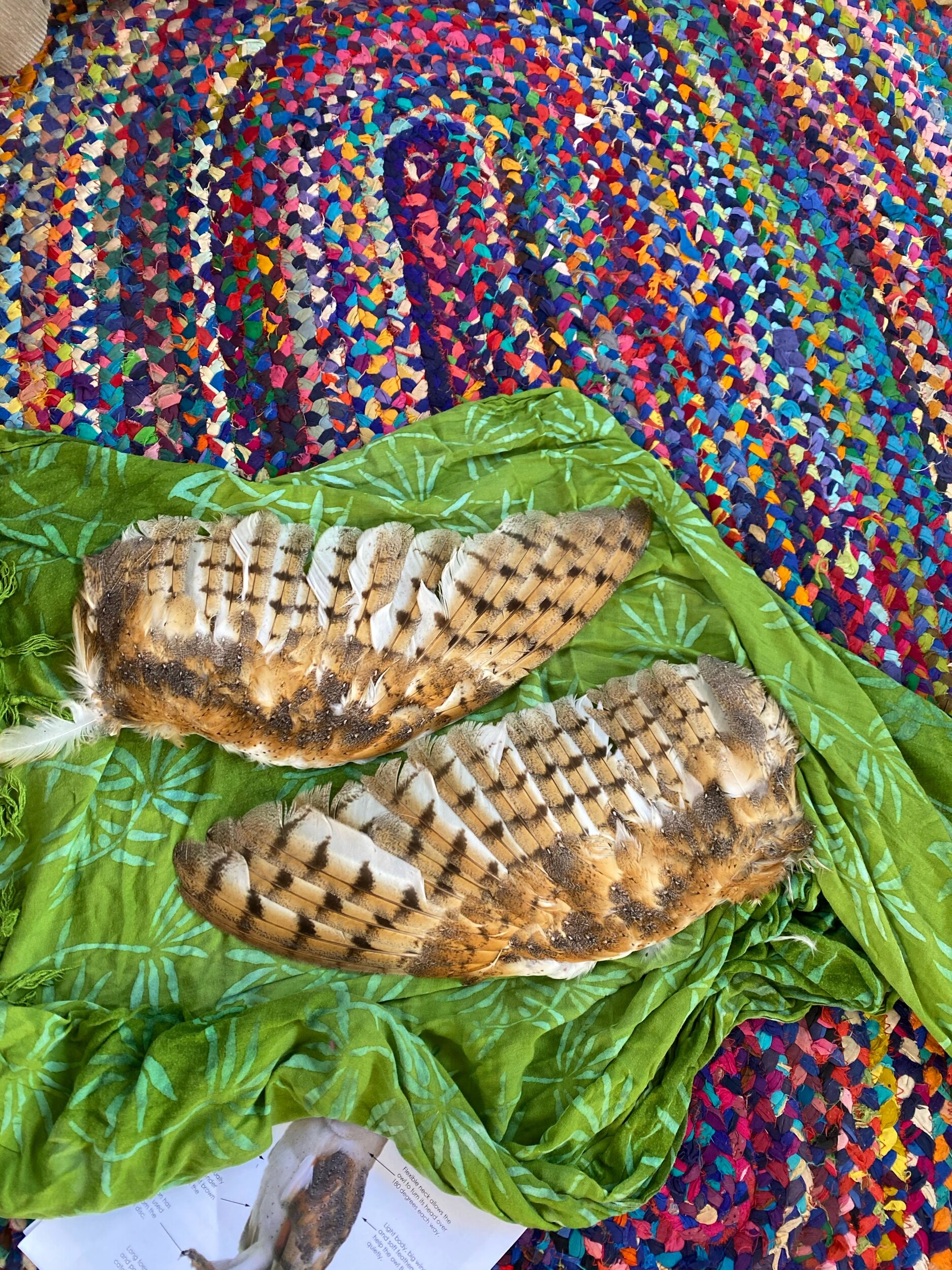
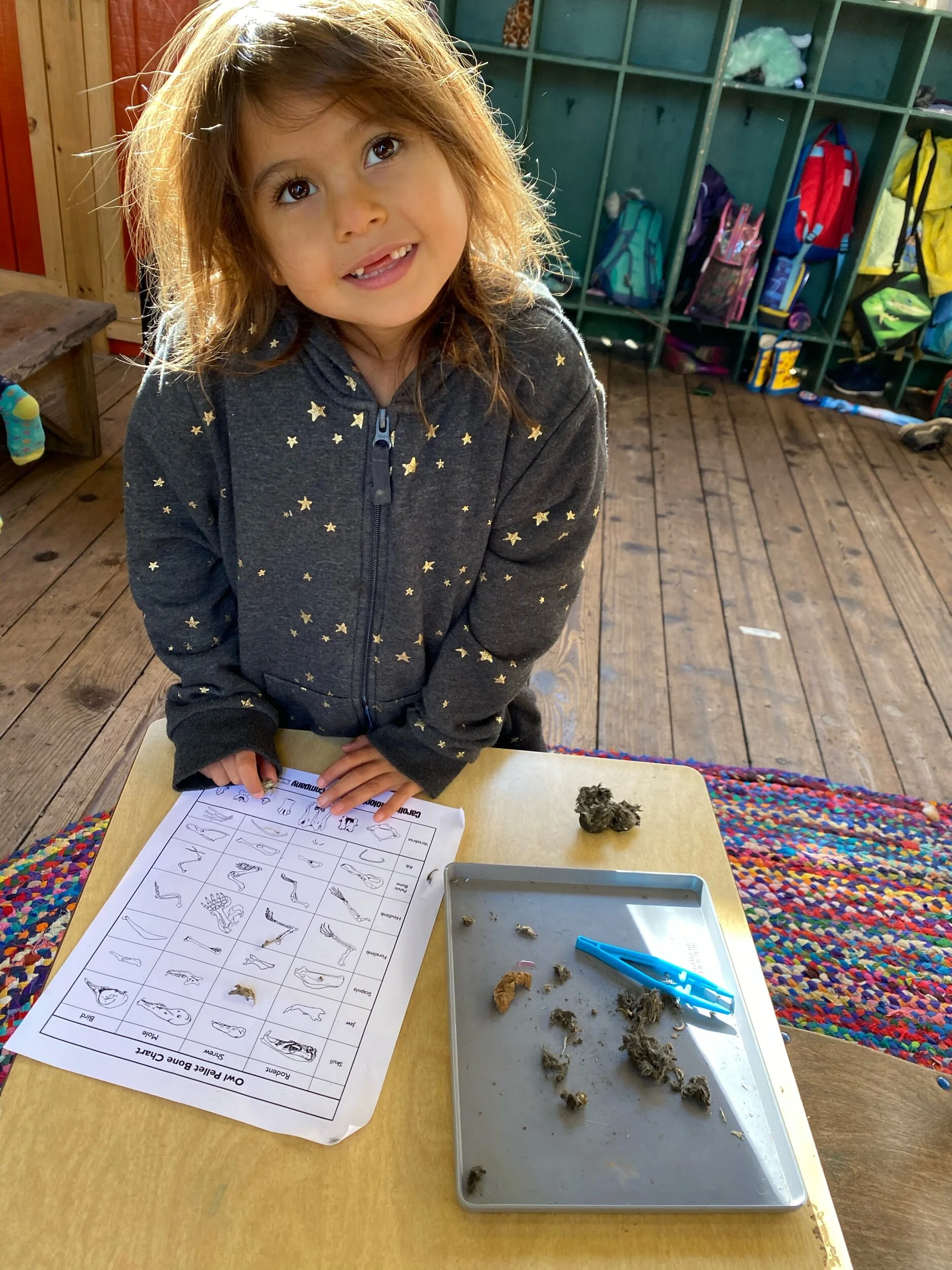
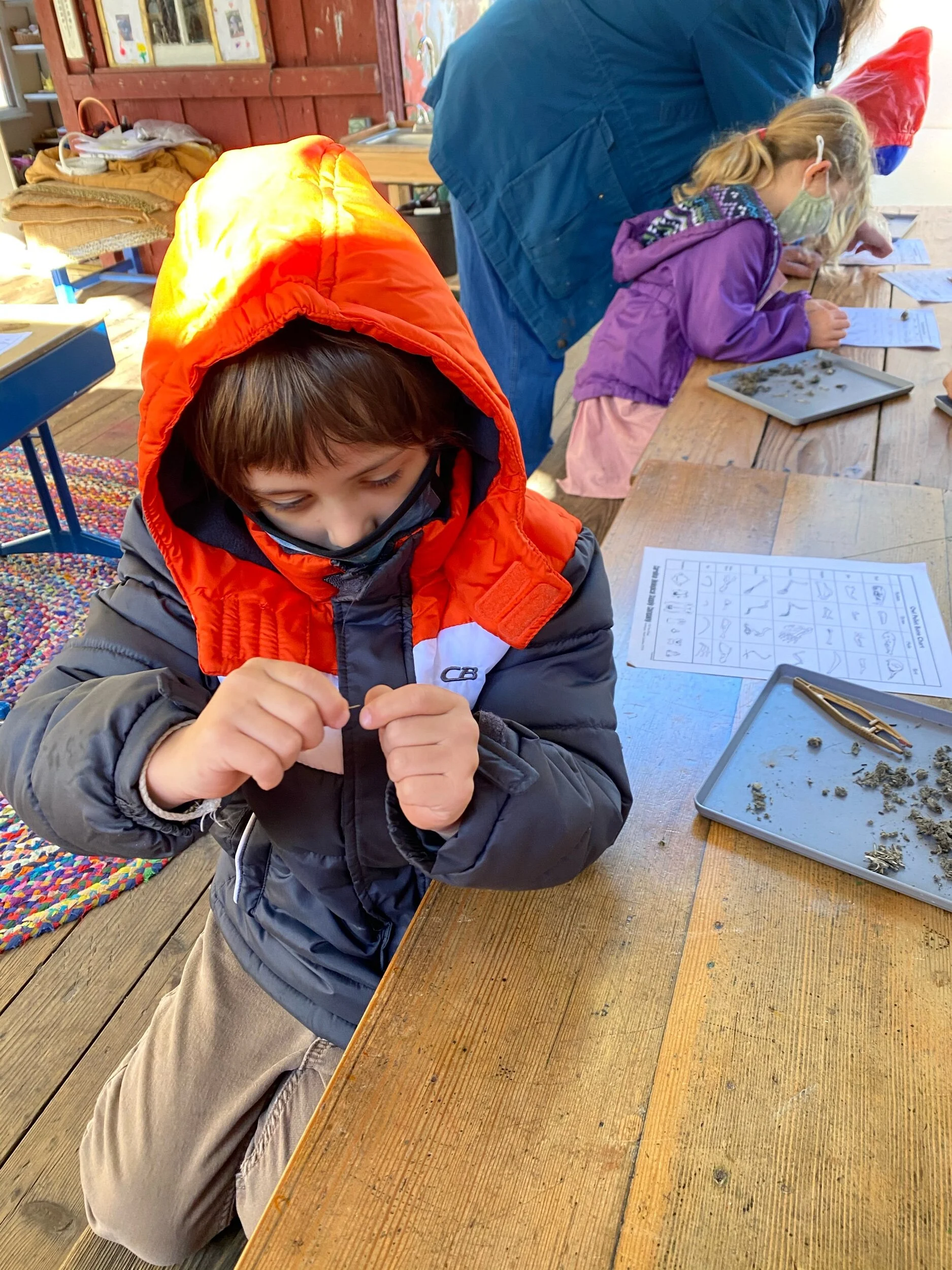
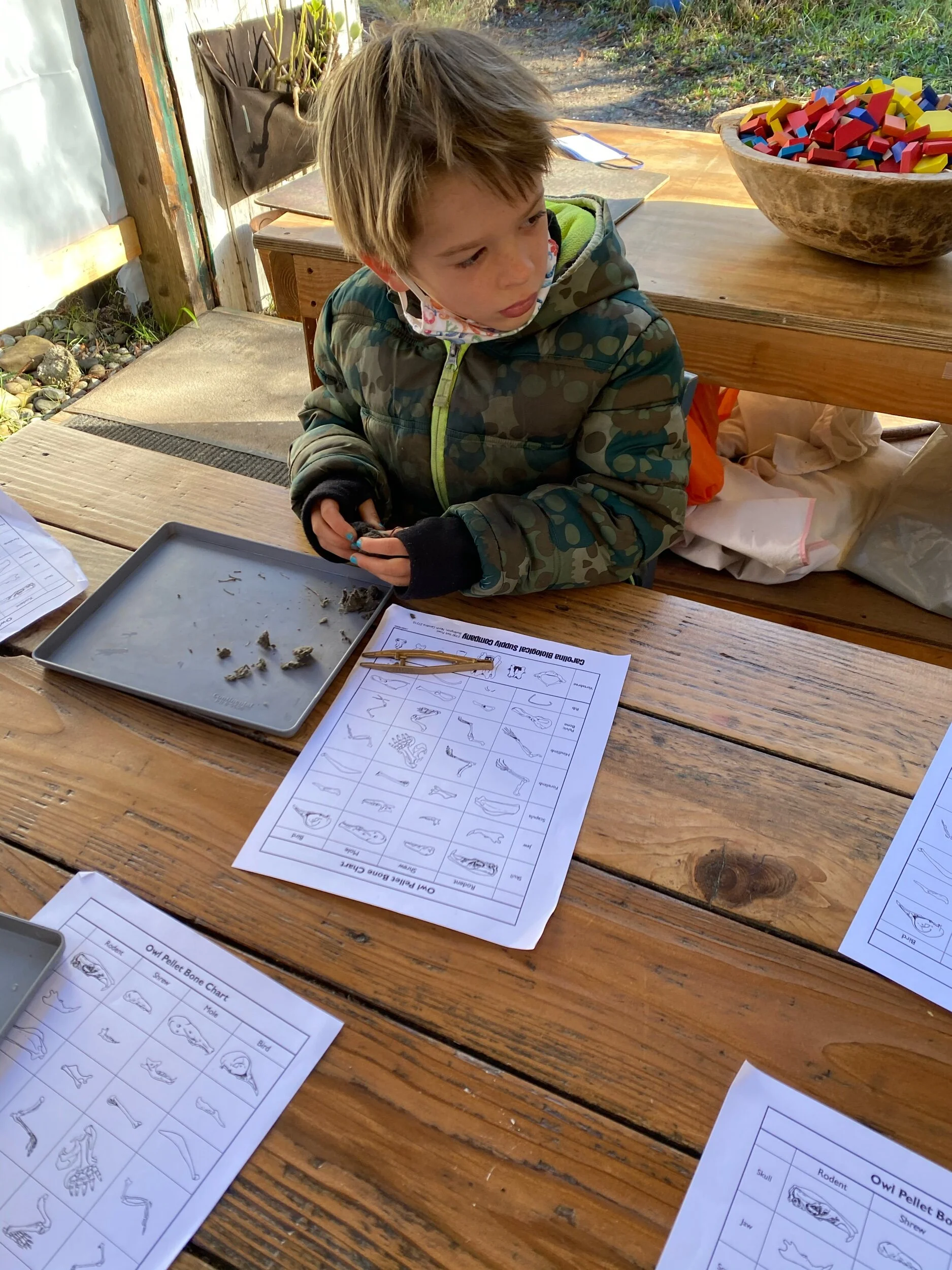
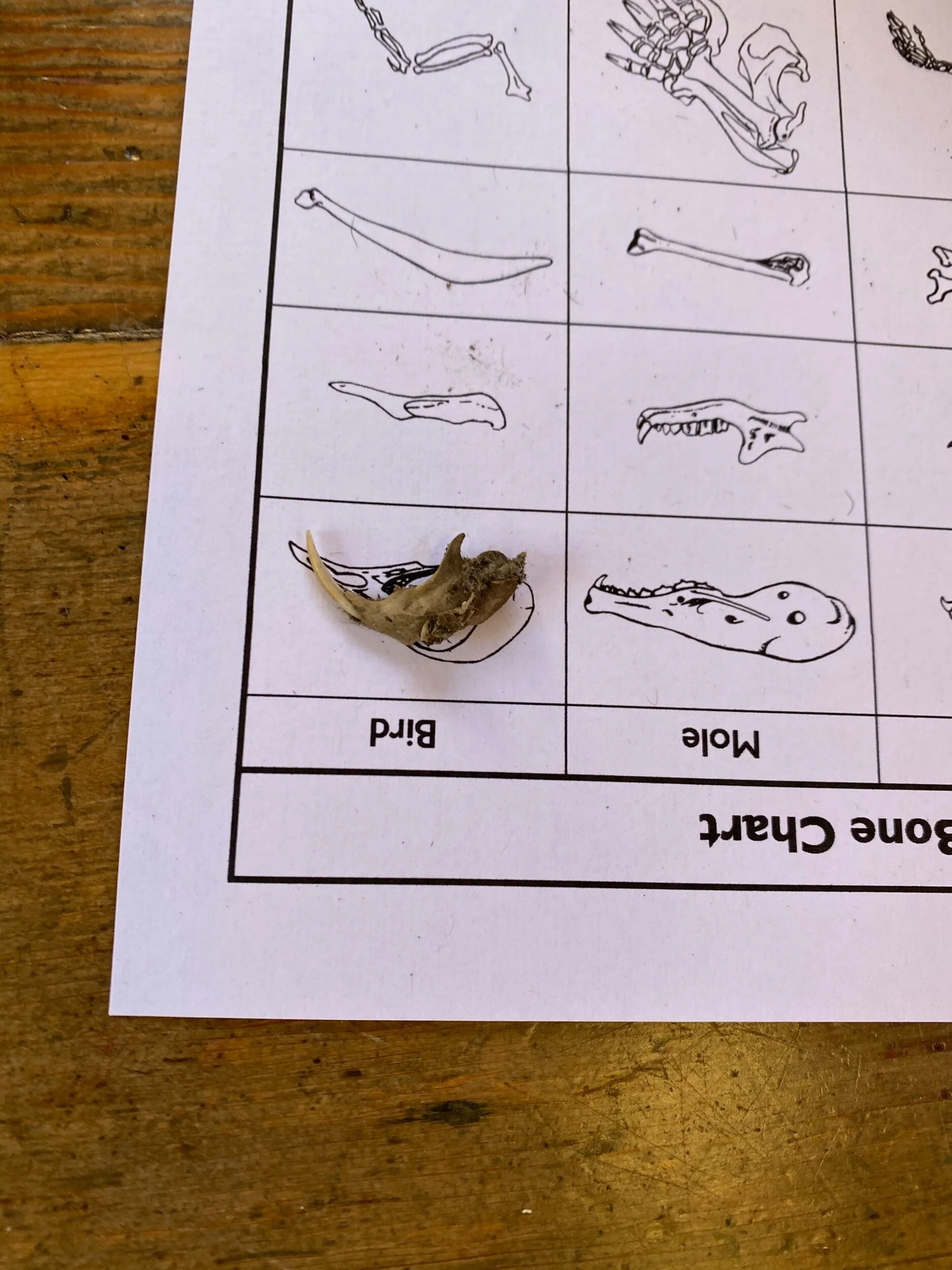
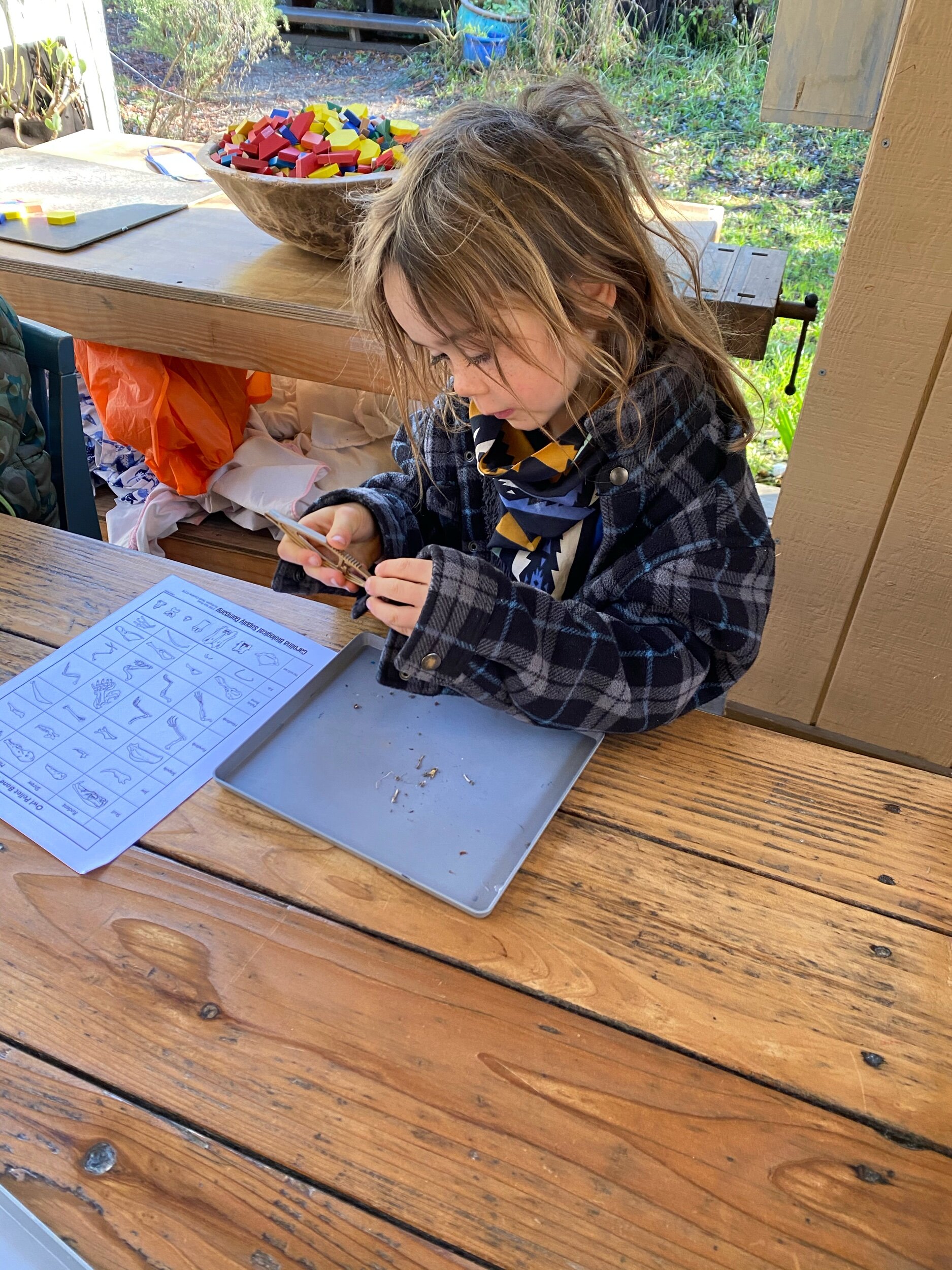
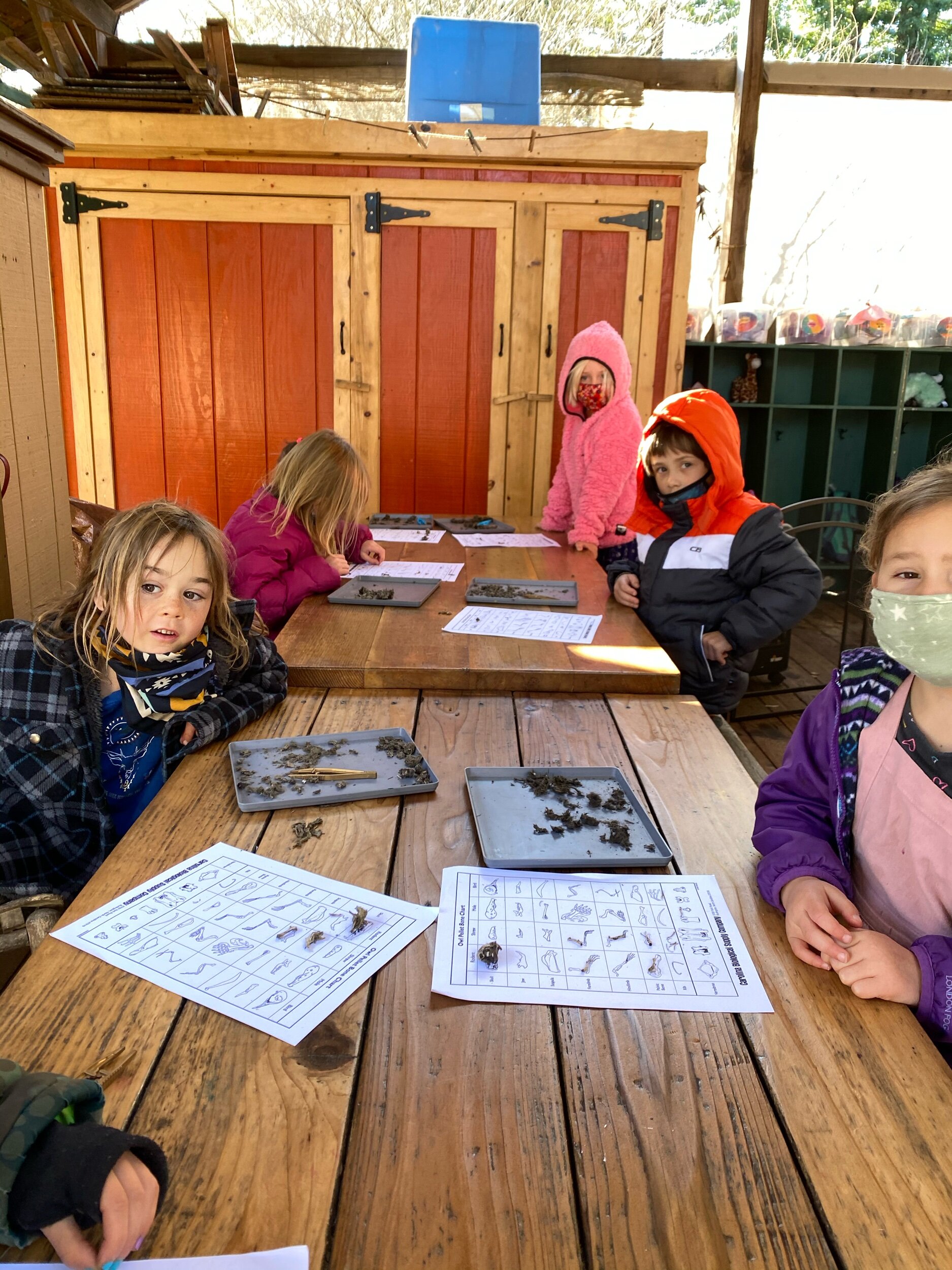
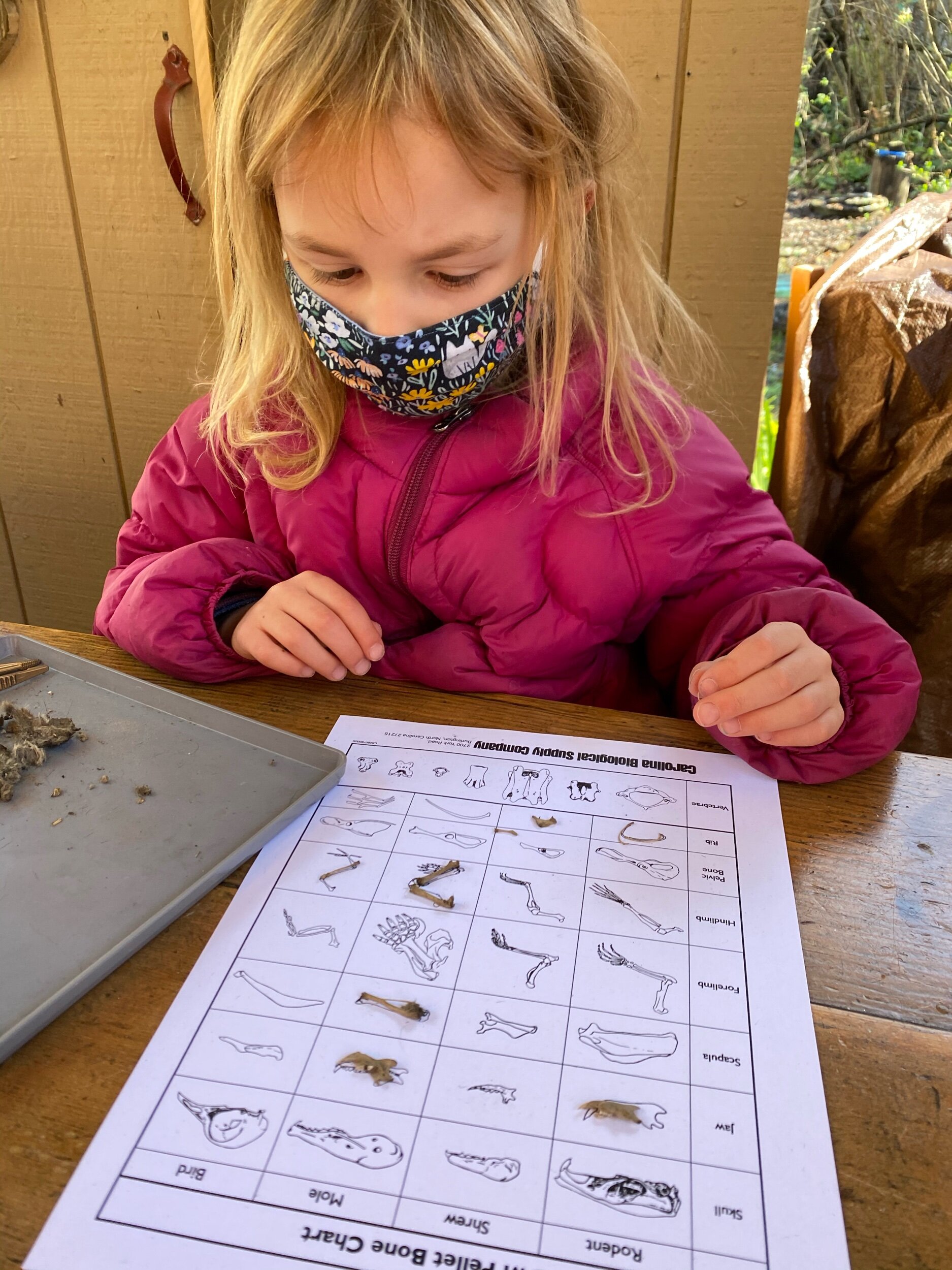
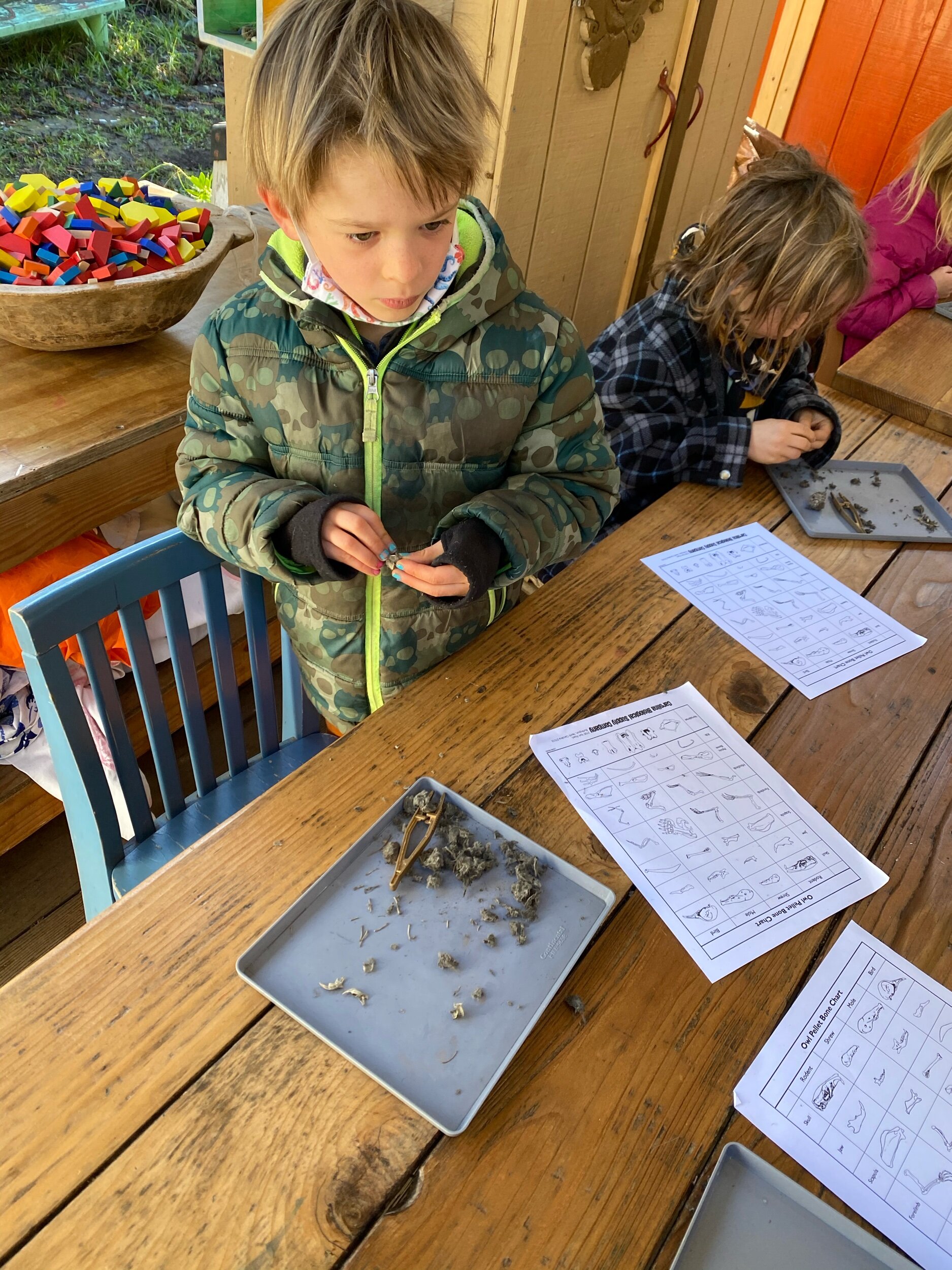
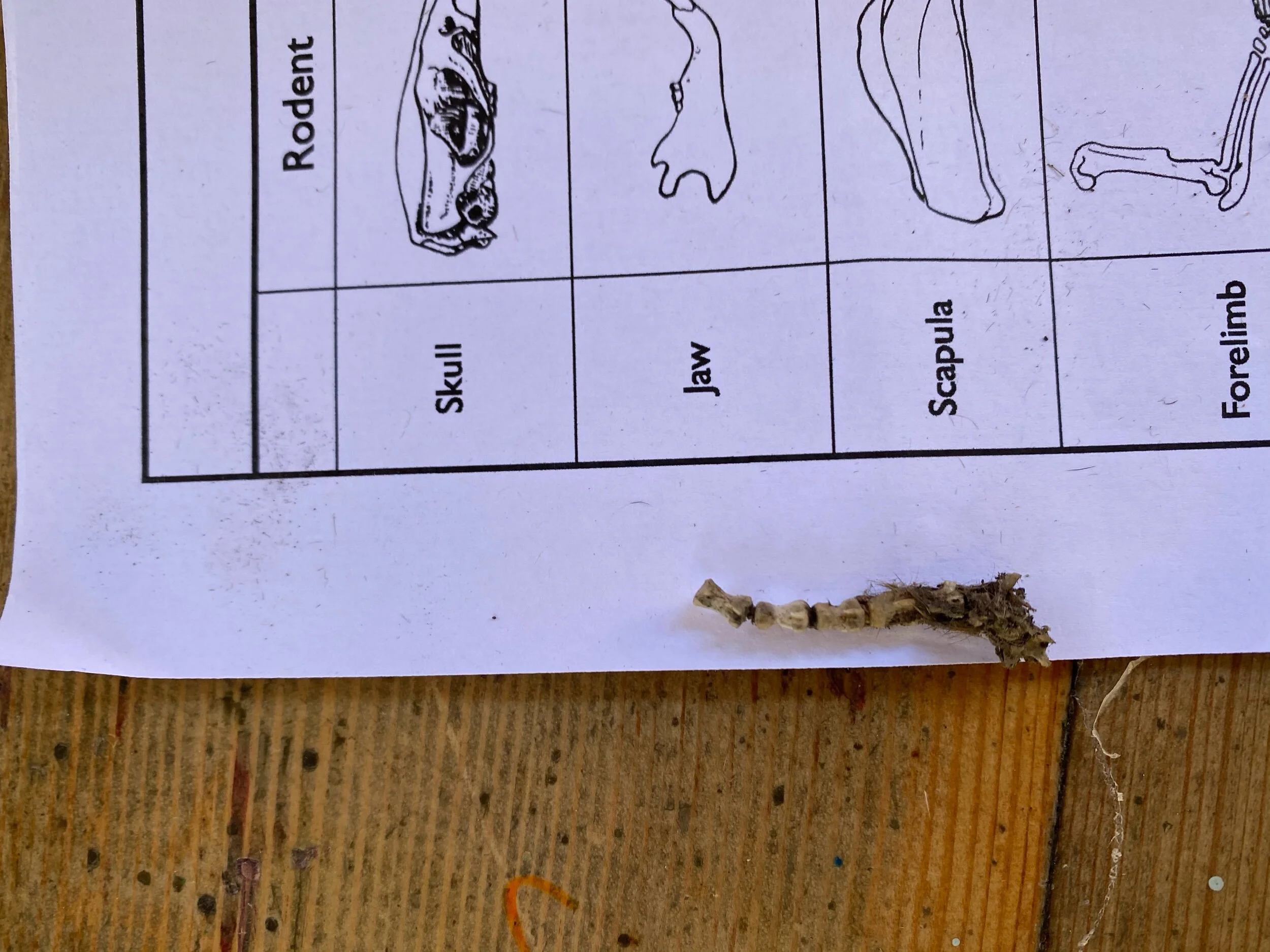
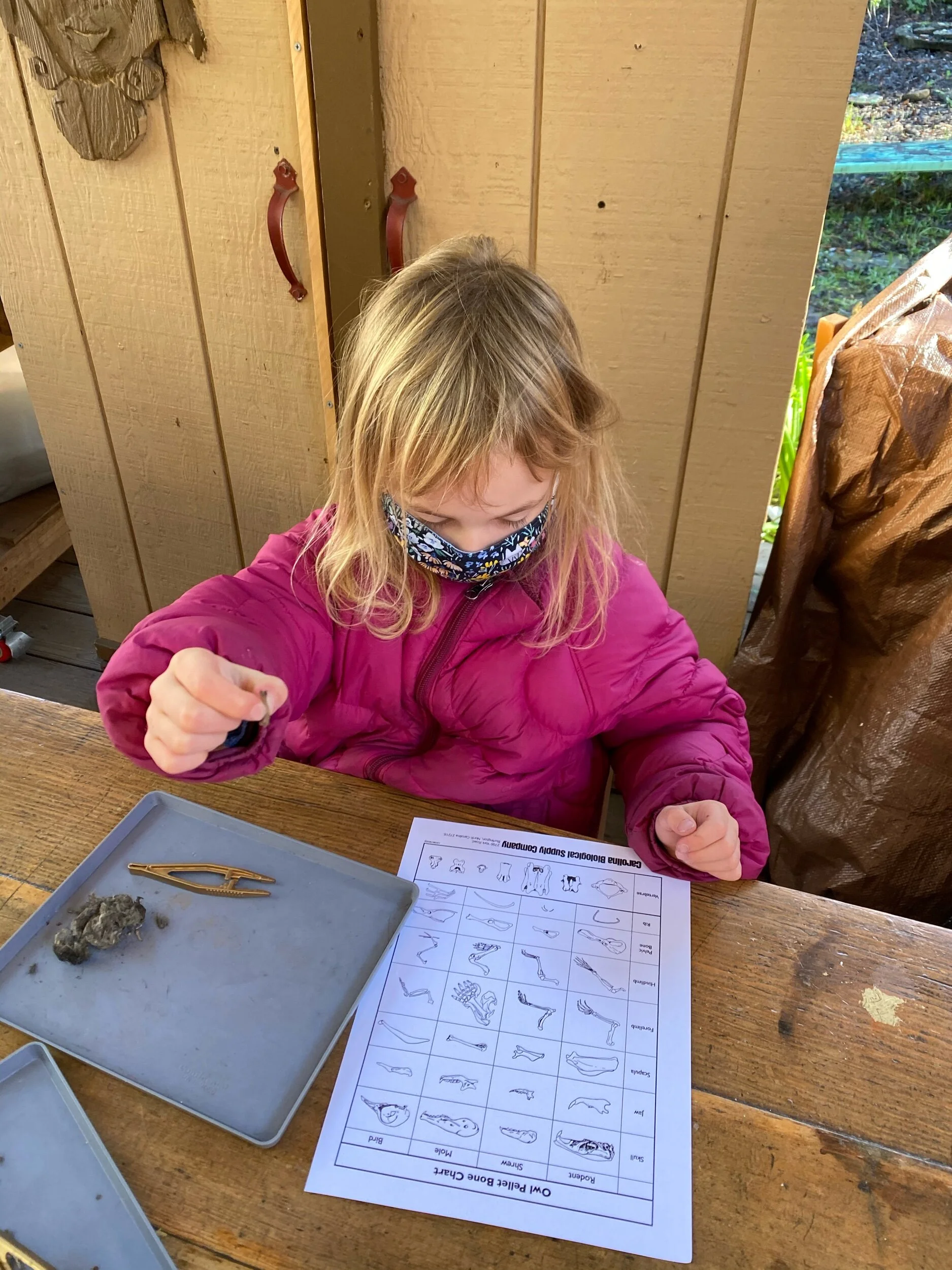
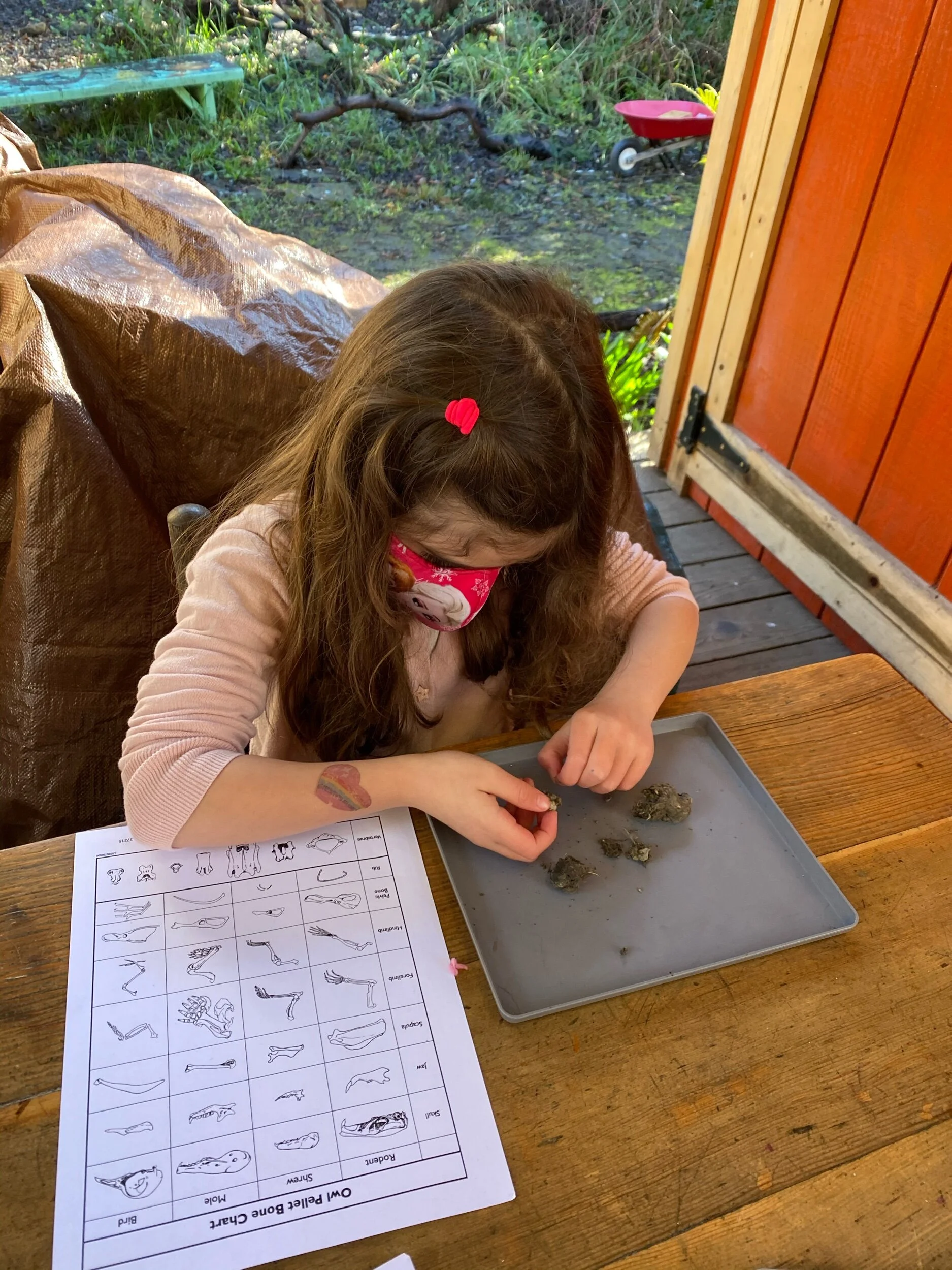
We continued our animal studies — spiders and their different webs and then owls. The first gallery below shows the children drawing and then looking for different types of spider webs (orb, funnel, sheet and tangle webs). Gallery two shows our study of owls. We discussed owl characteristics at length, a parent leant us a real pair of barn owl wings and we dissected barn owl pellets to reveal the bones of what particular owls had eaten the night before.
Social/Emotional:
Social emotion education continues on. We have dived into a study of feelings: naming them, sharing stories of when we felt these feelings and grouping them into categories. We’ve brainstormed ideas how to resolve conflict and created a class poster reflecting our findings, namely a list of ideas and strategies that can help in common situations. Please come take a look at the poster if you are interested. In order to communicate and problem solve, it’s vital to be able to identify our feelings. Here are some books we’ve been using to help with this process: Ruby Finds a Worry by Tom Percival and Happy Sad Today by Lory Britain.
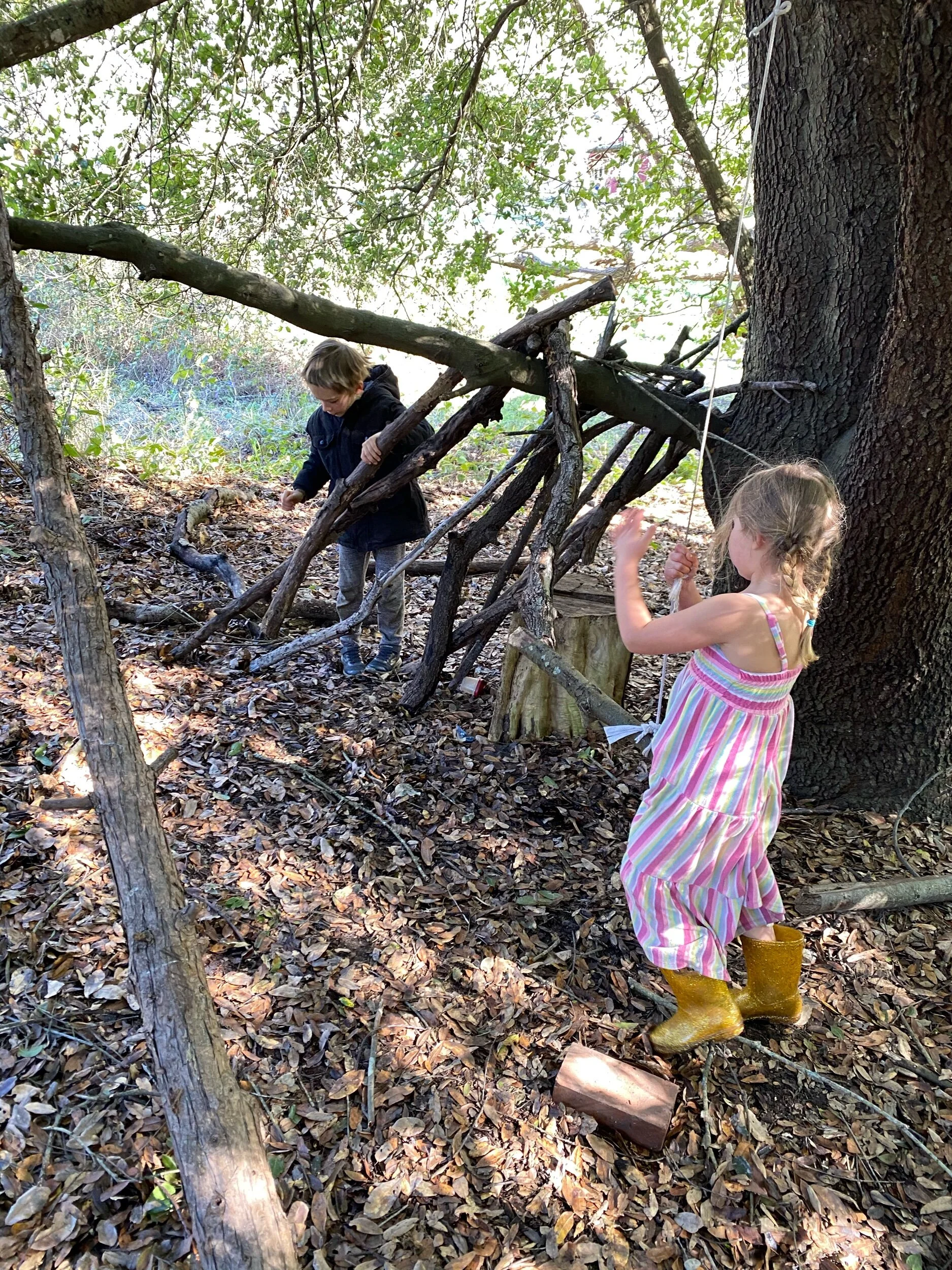
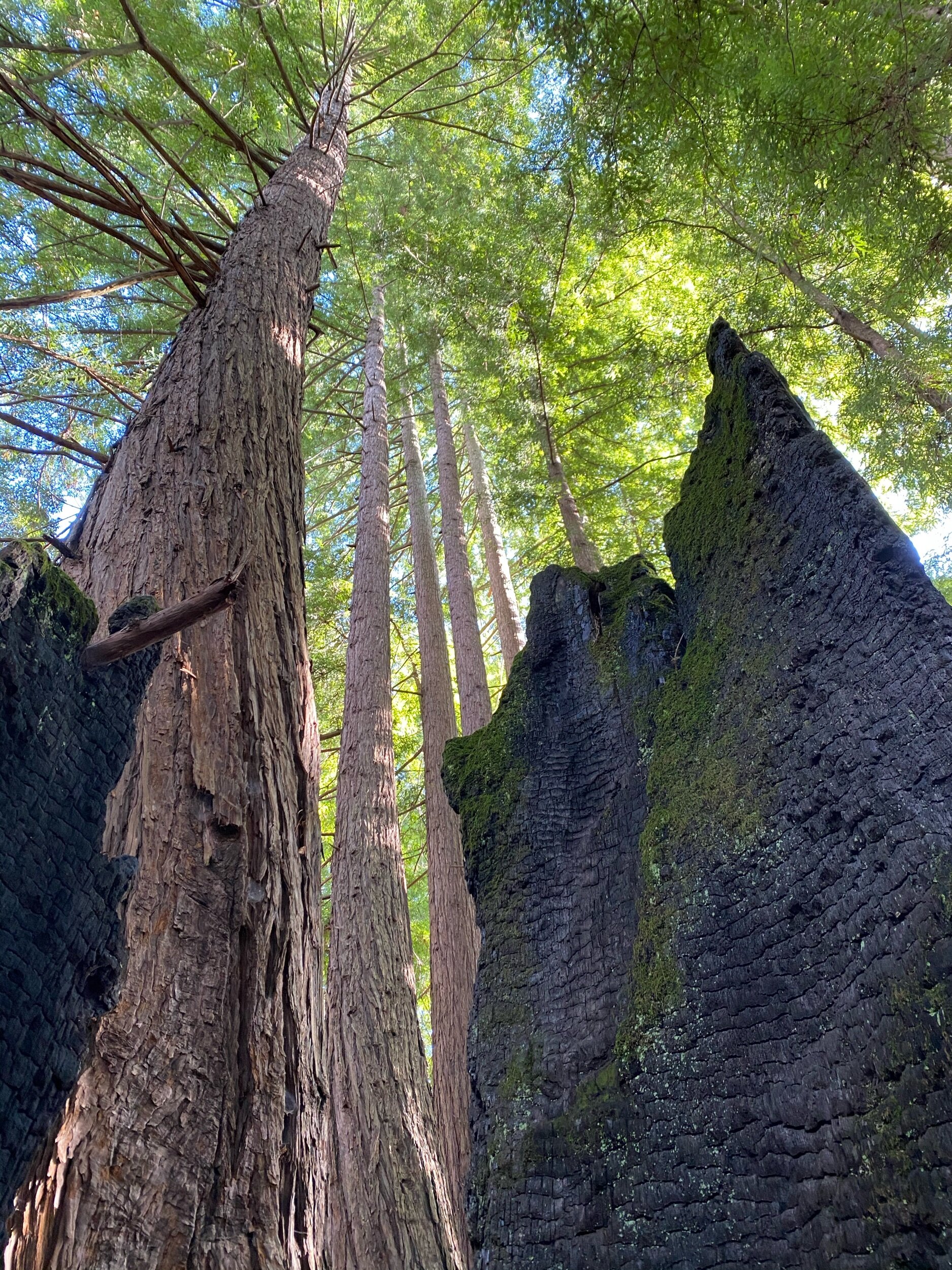
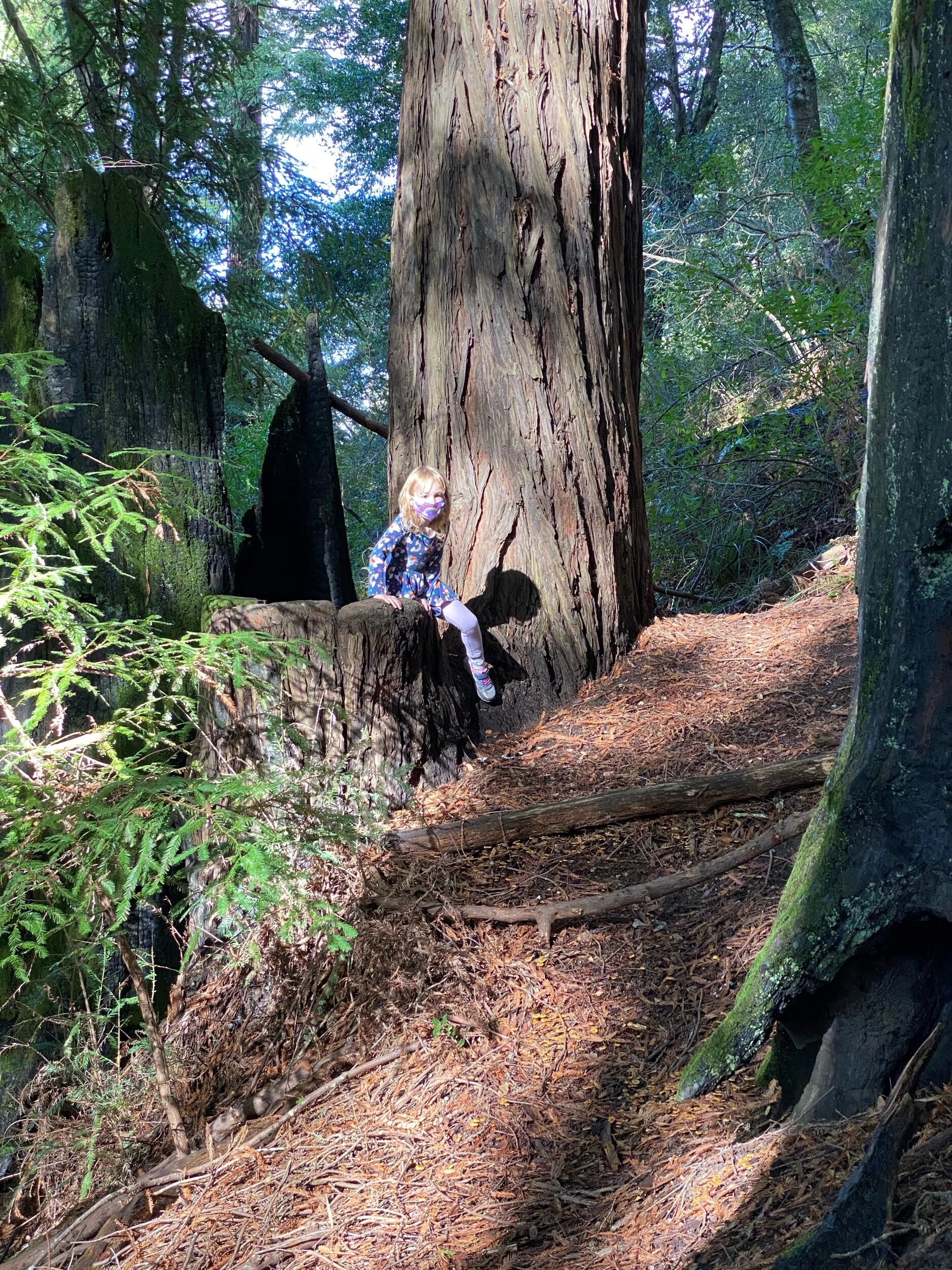
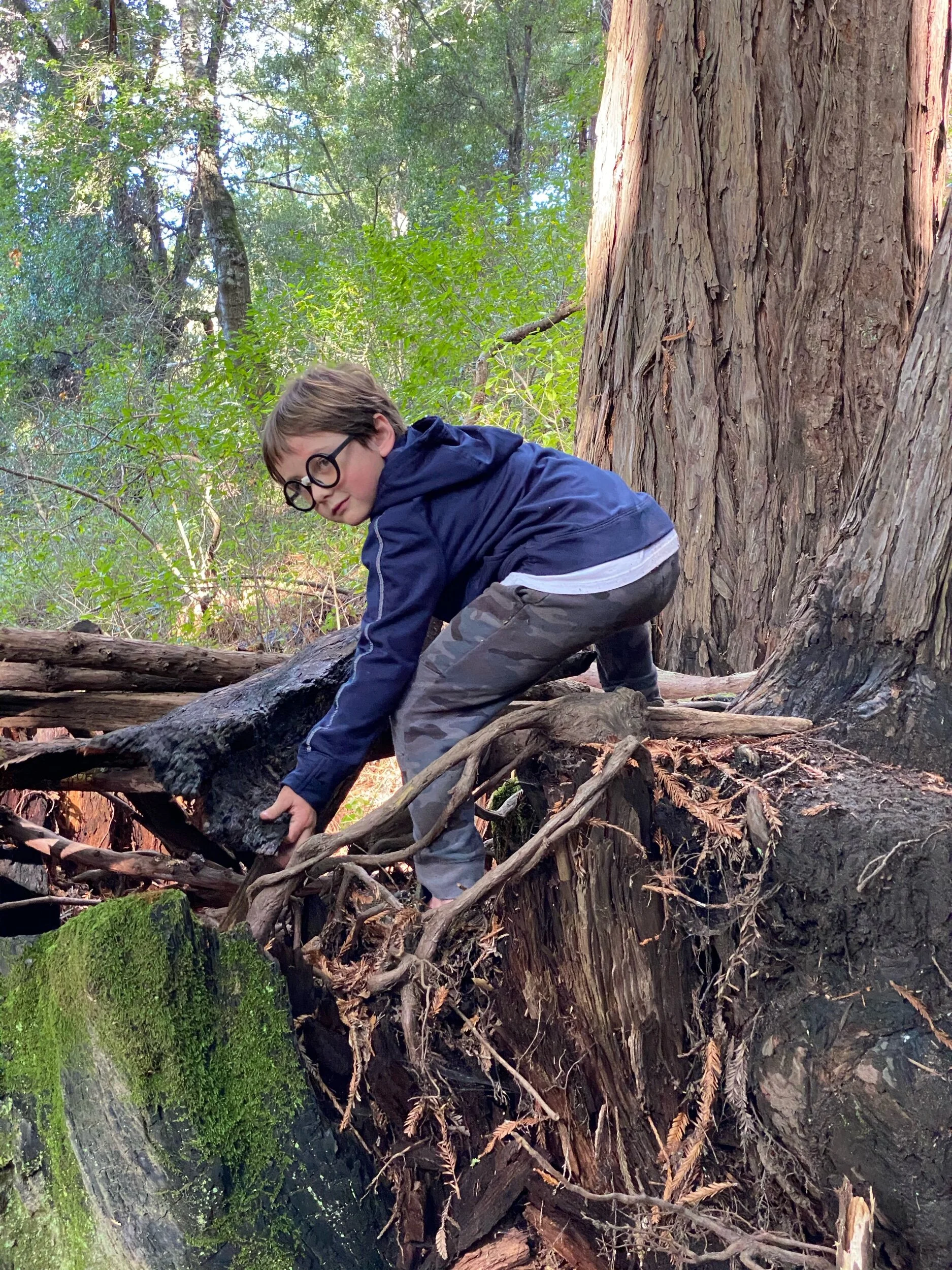
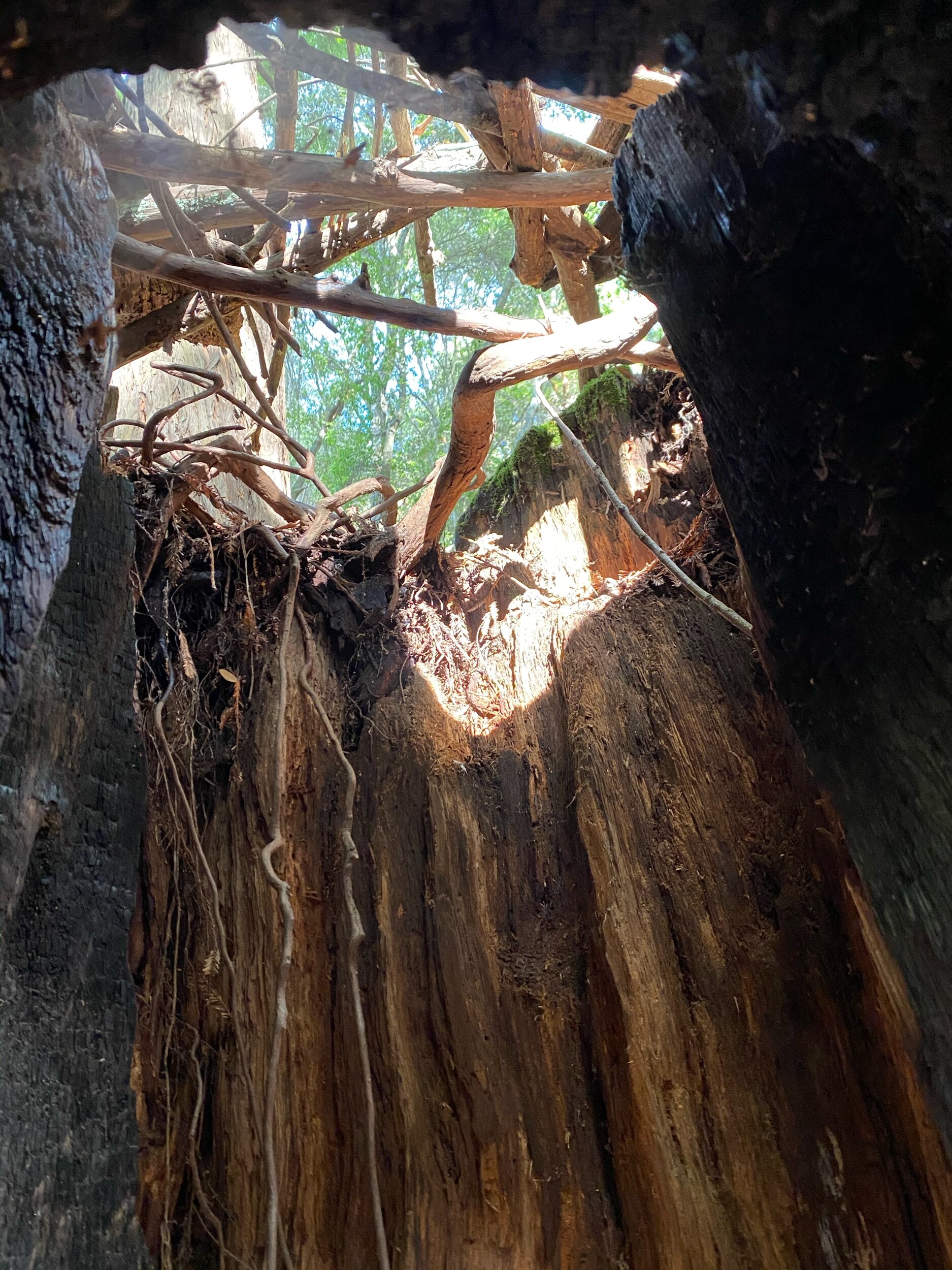
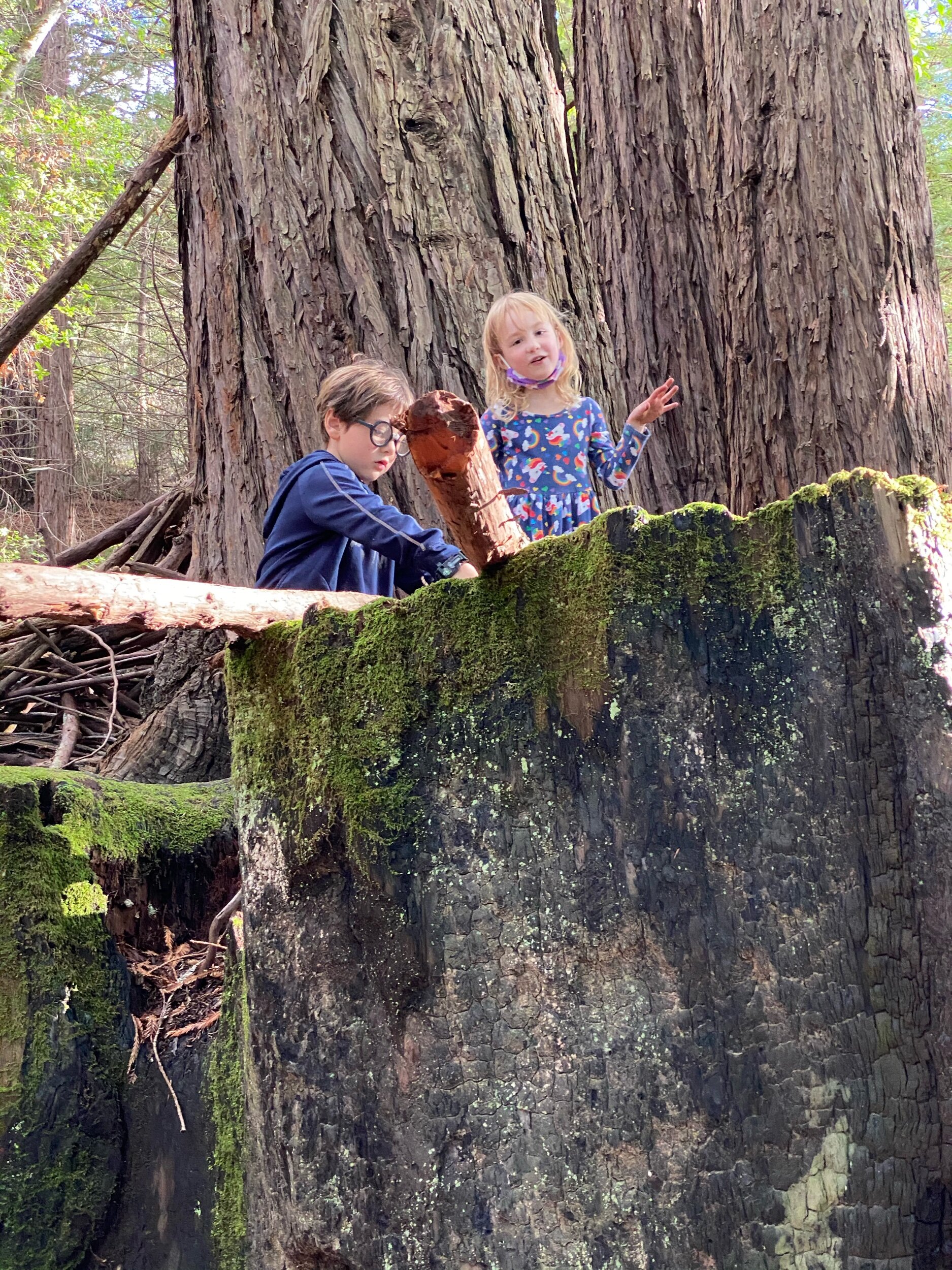
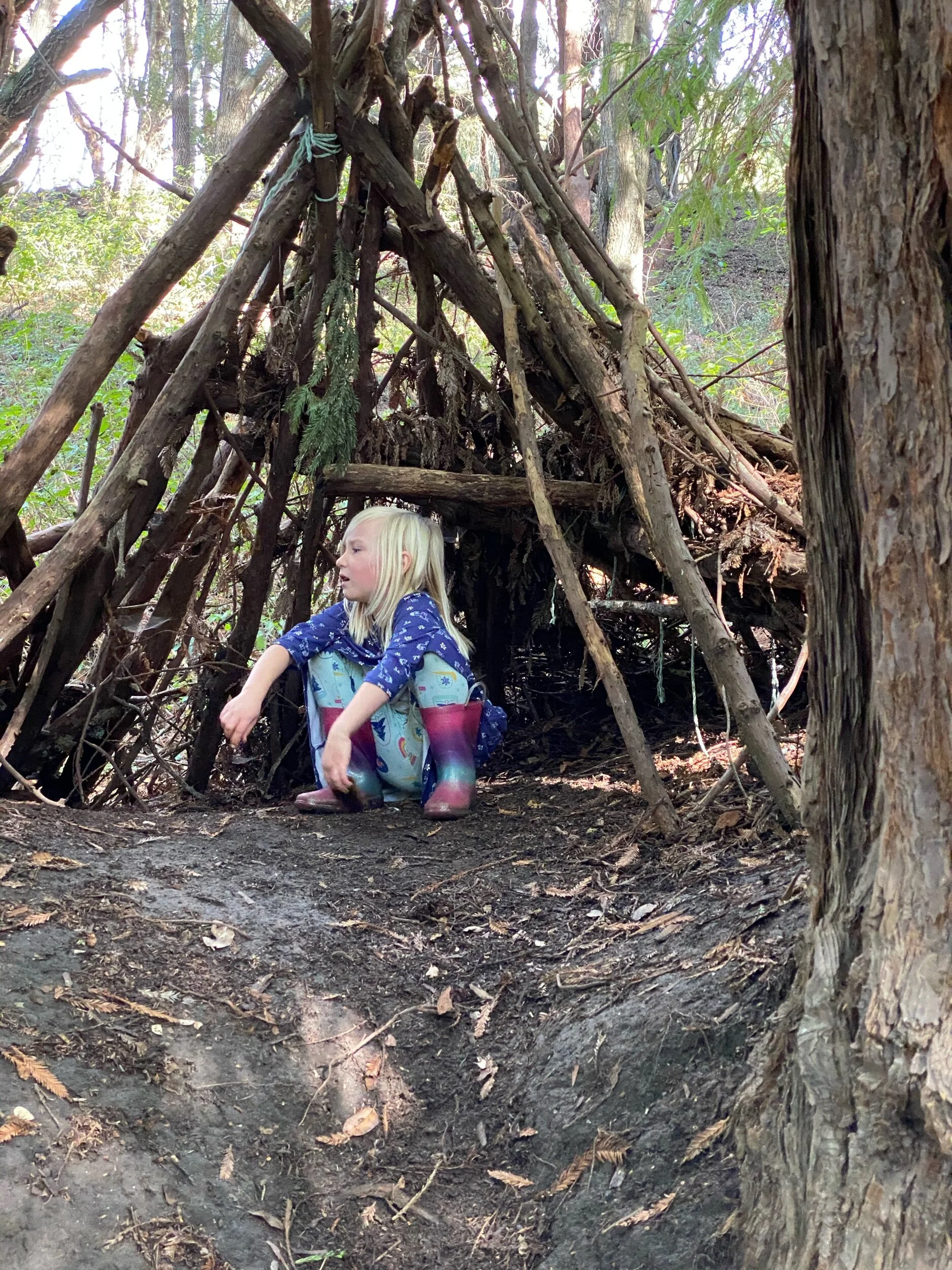
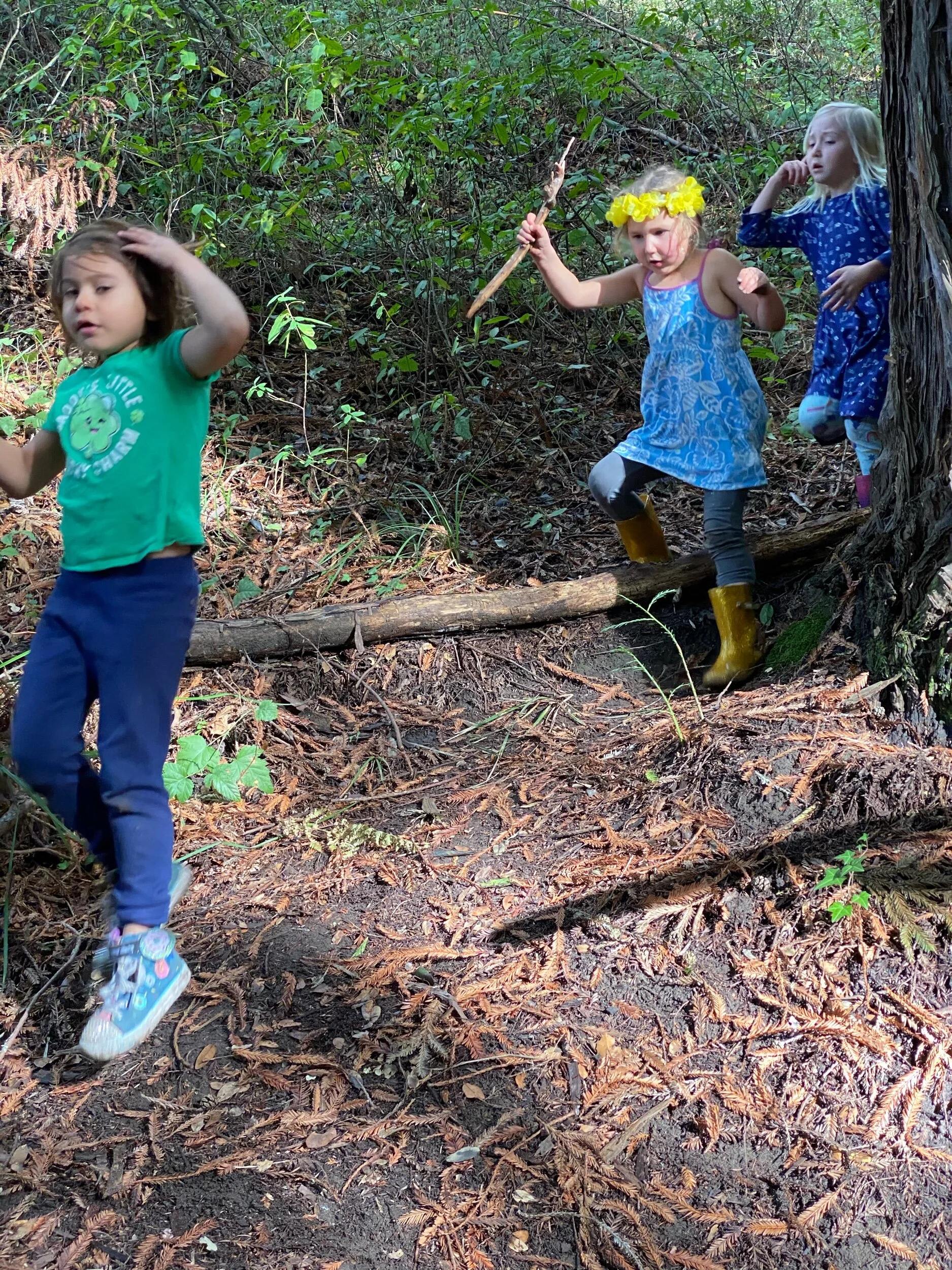
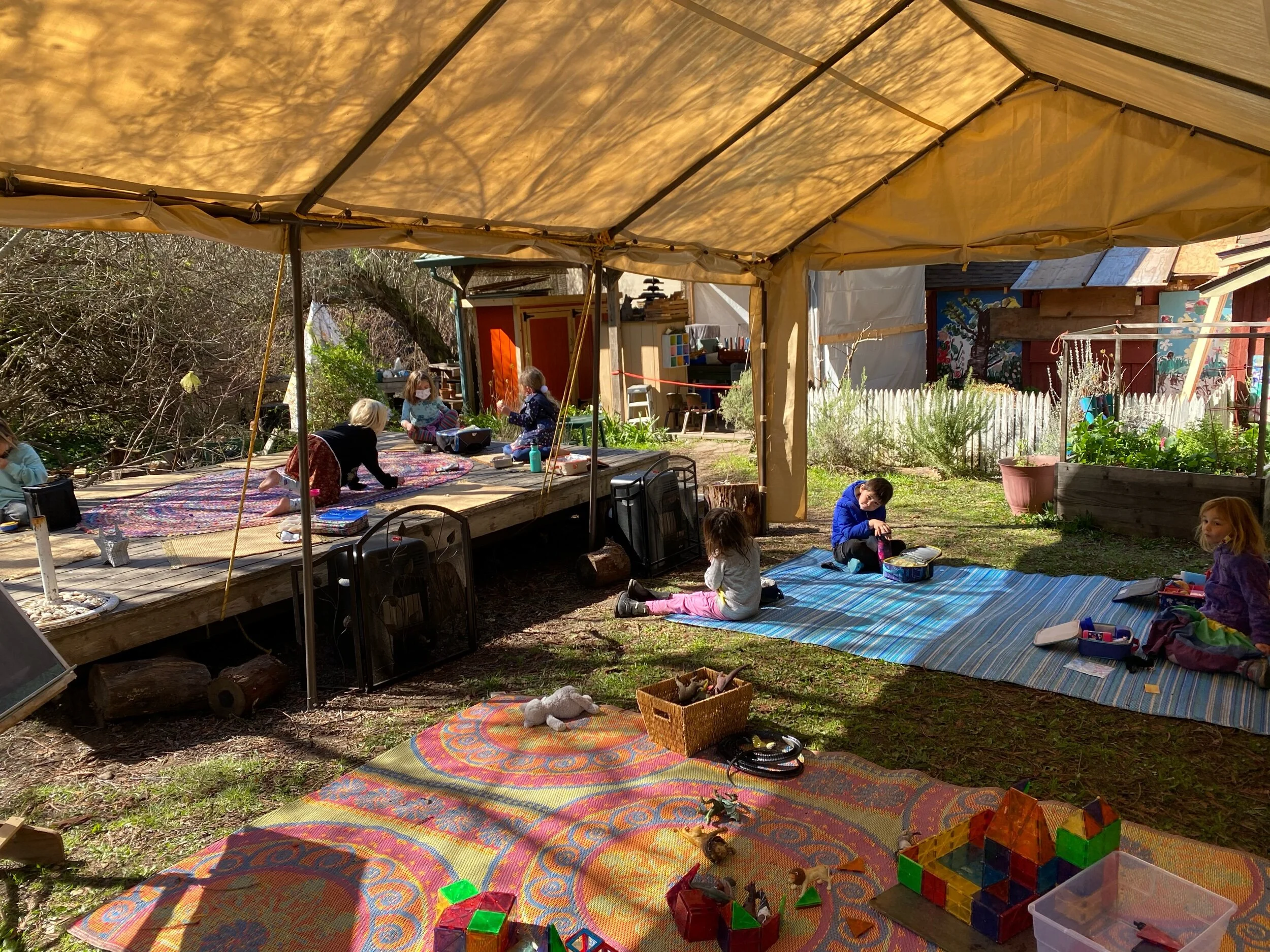
Some photos from our wonderful trips to the redwood grove. And one of our fort building excursion to the willows .
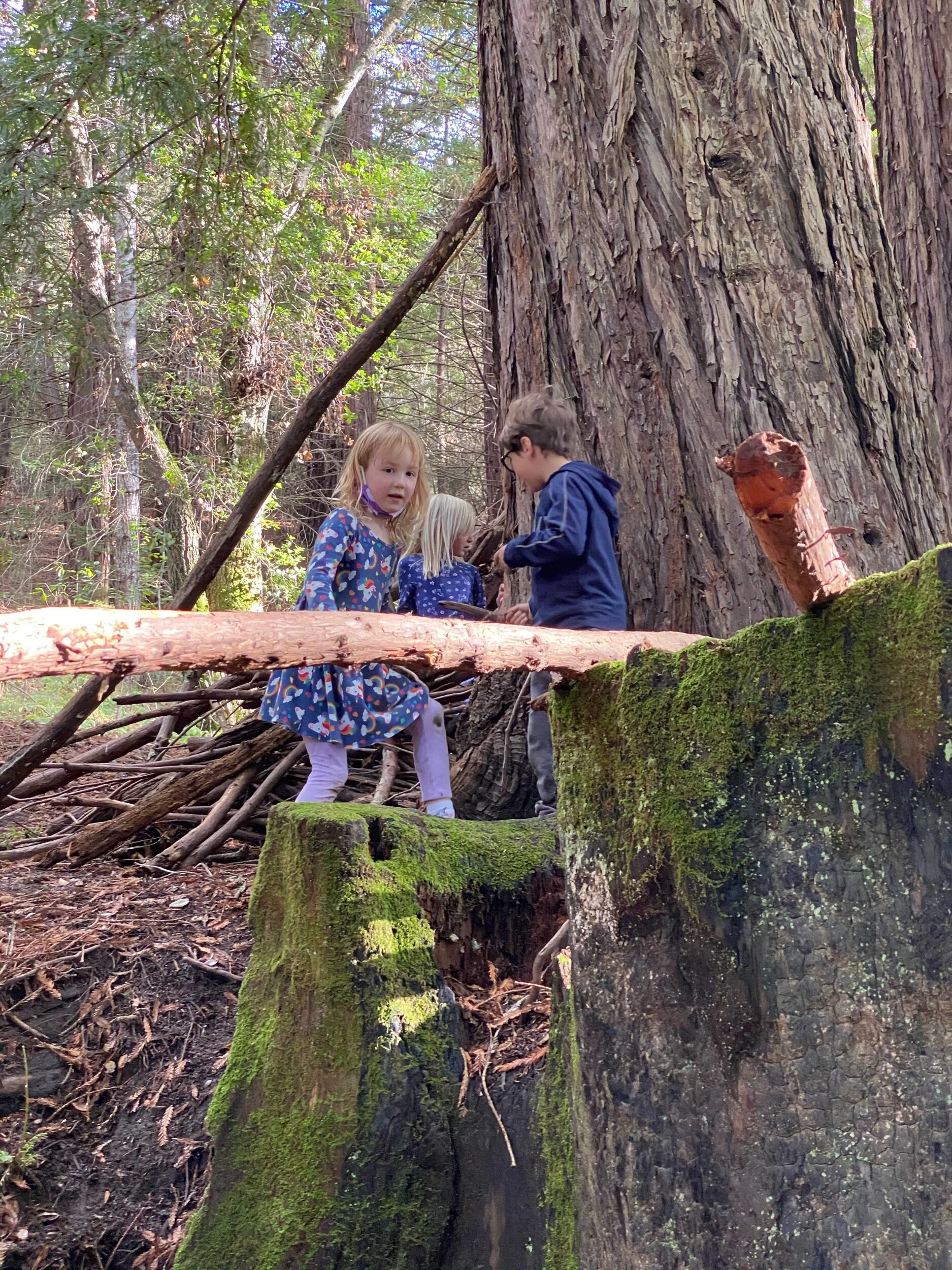
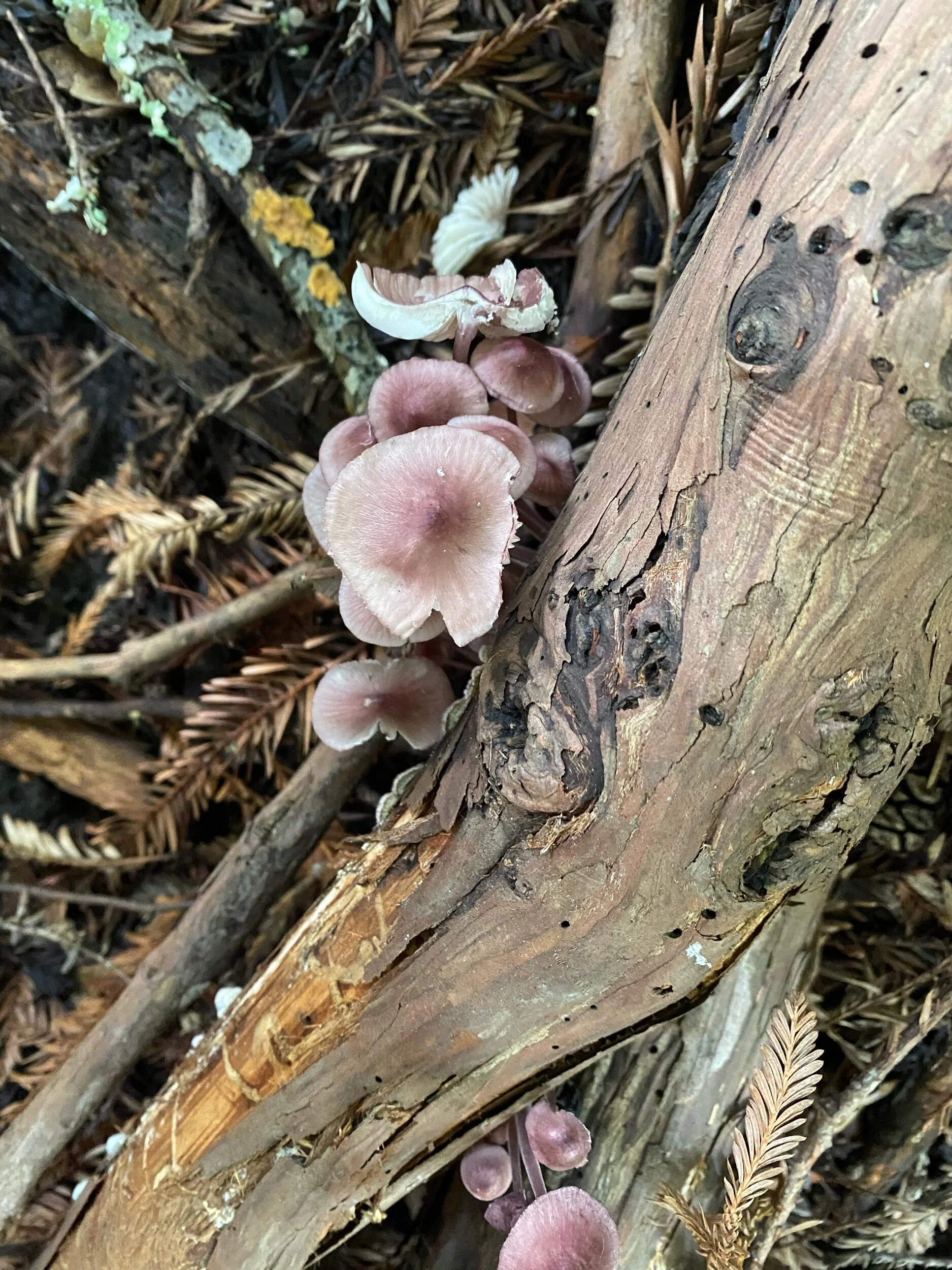
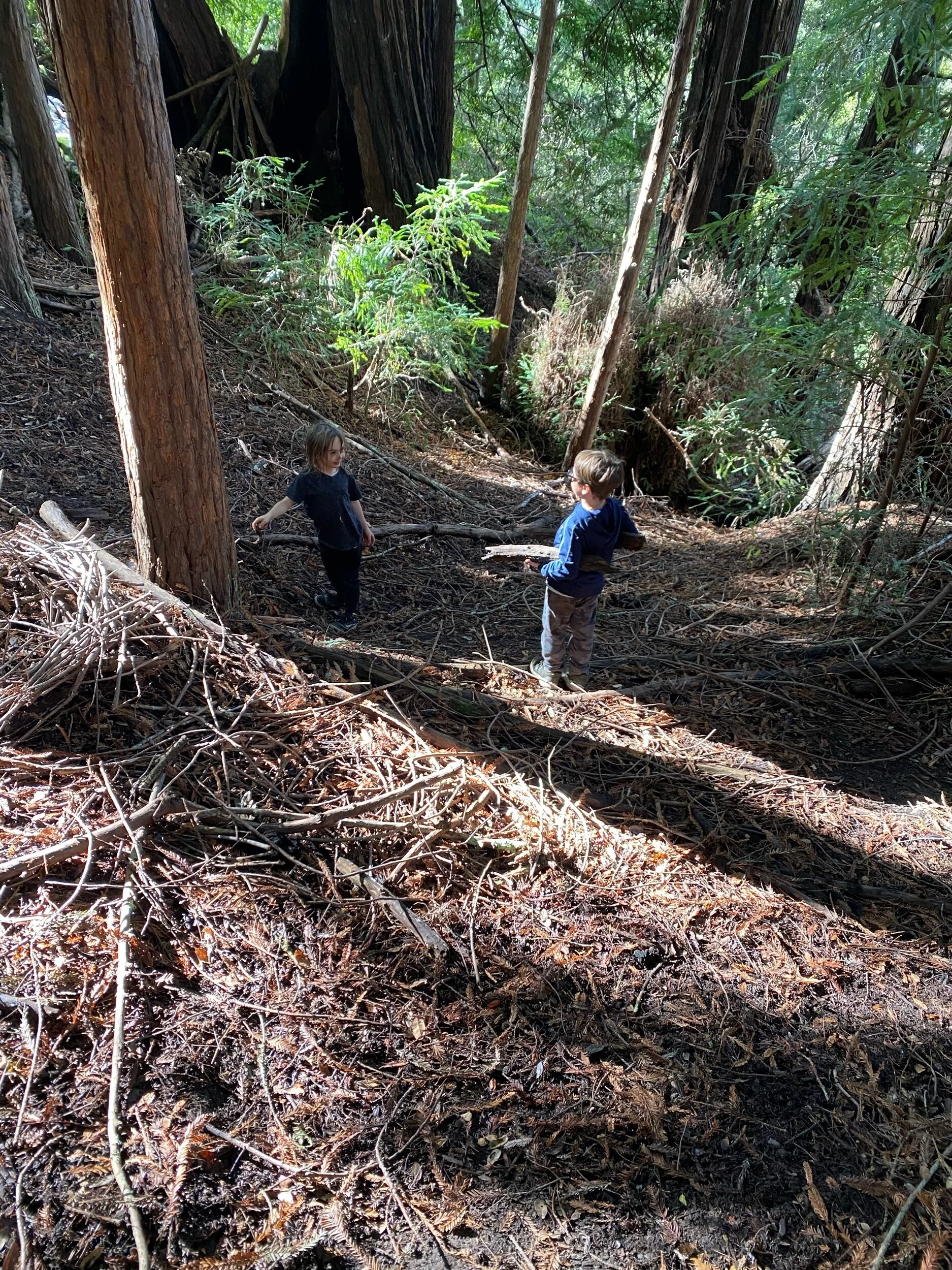
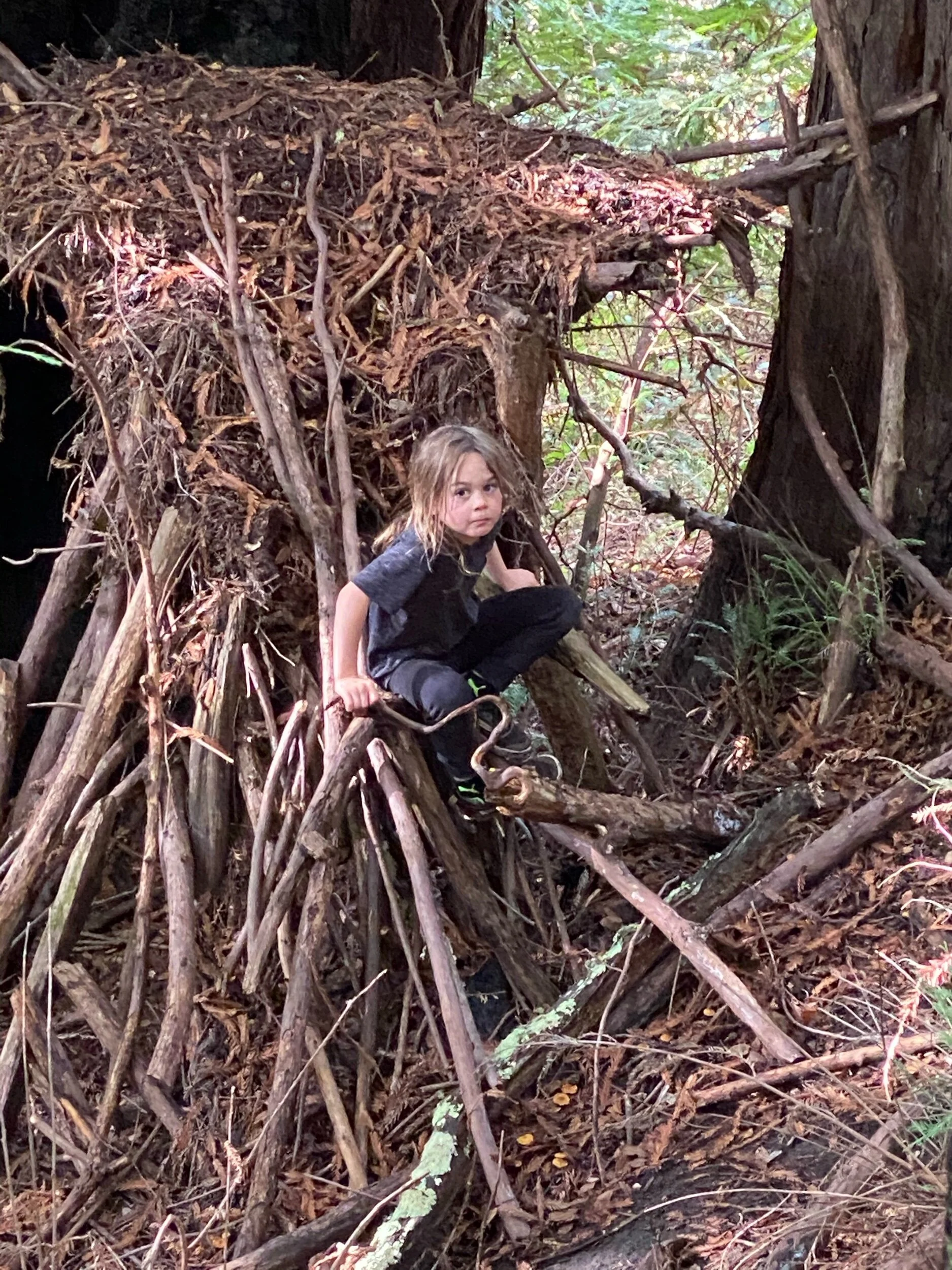
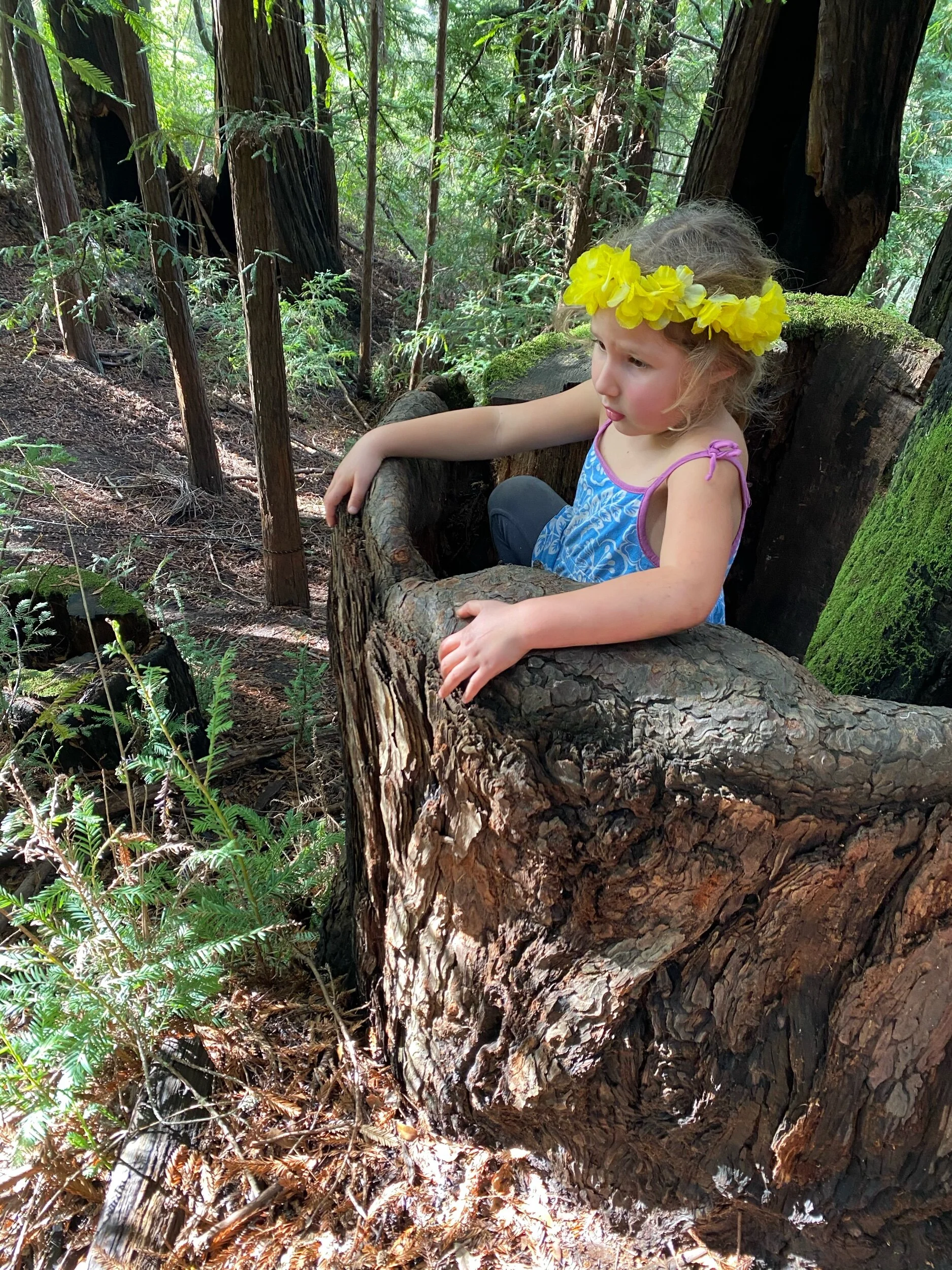
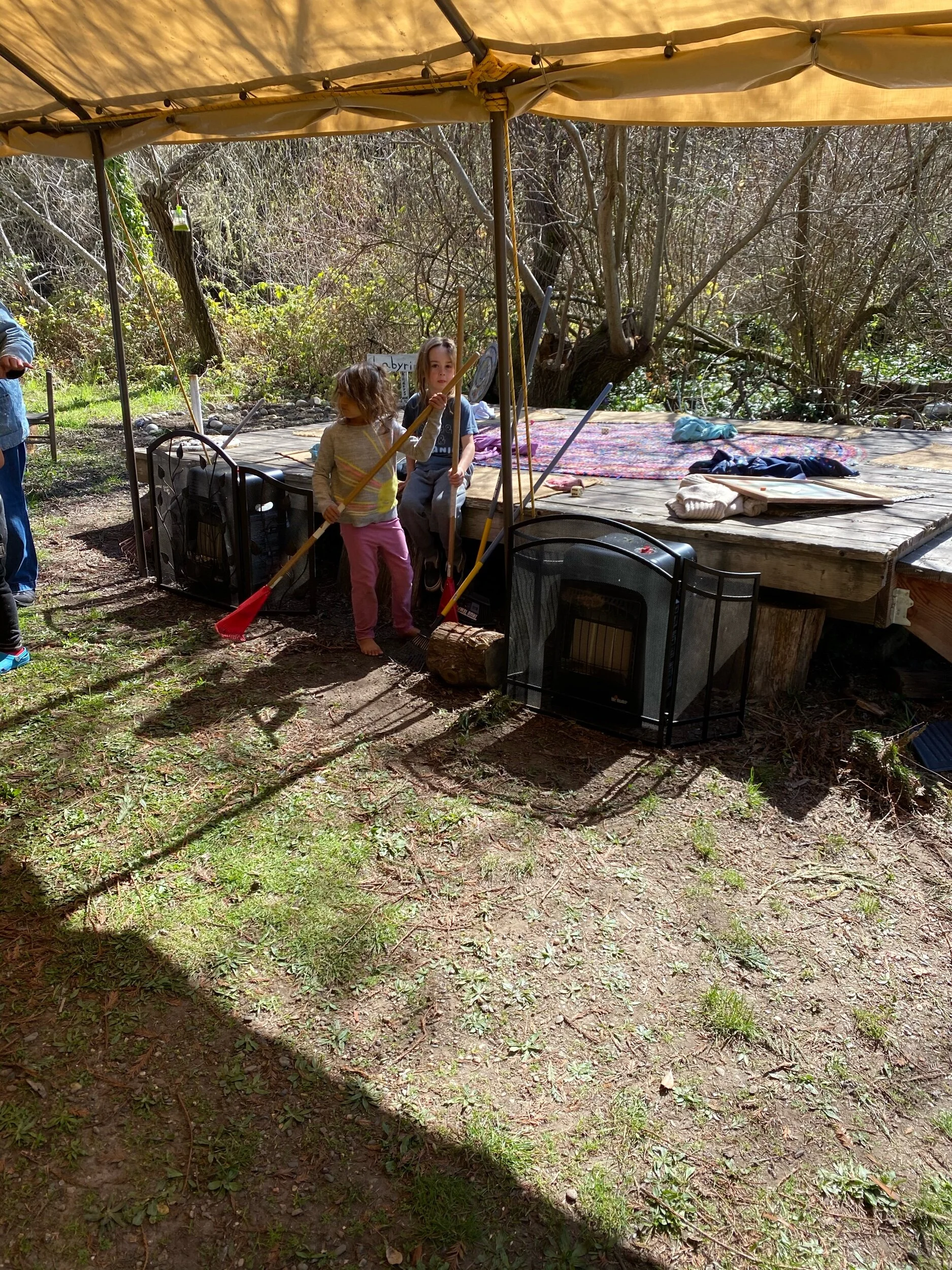
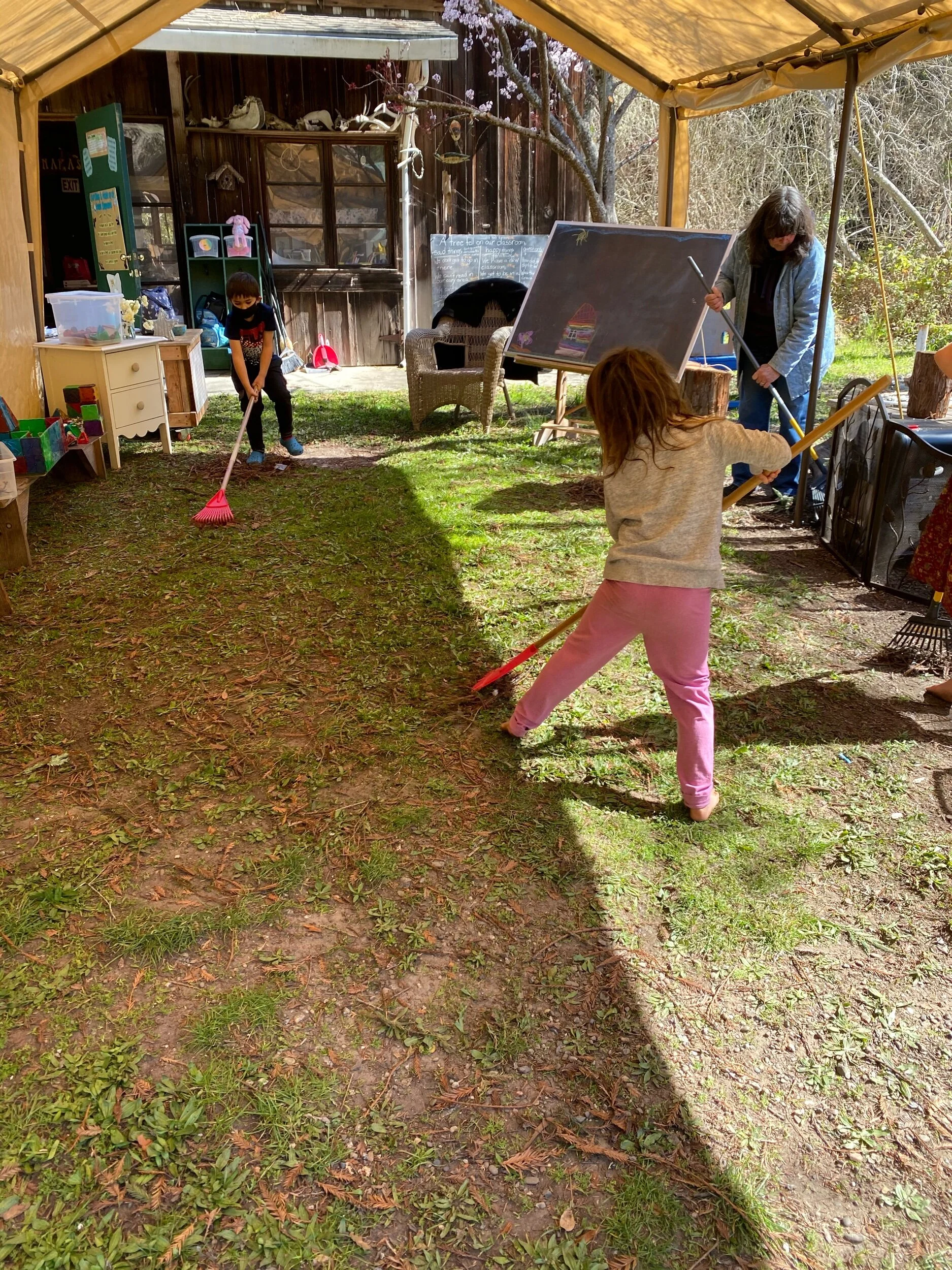
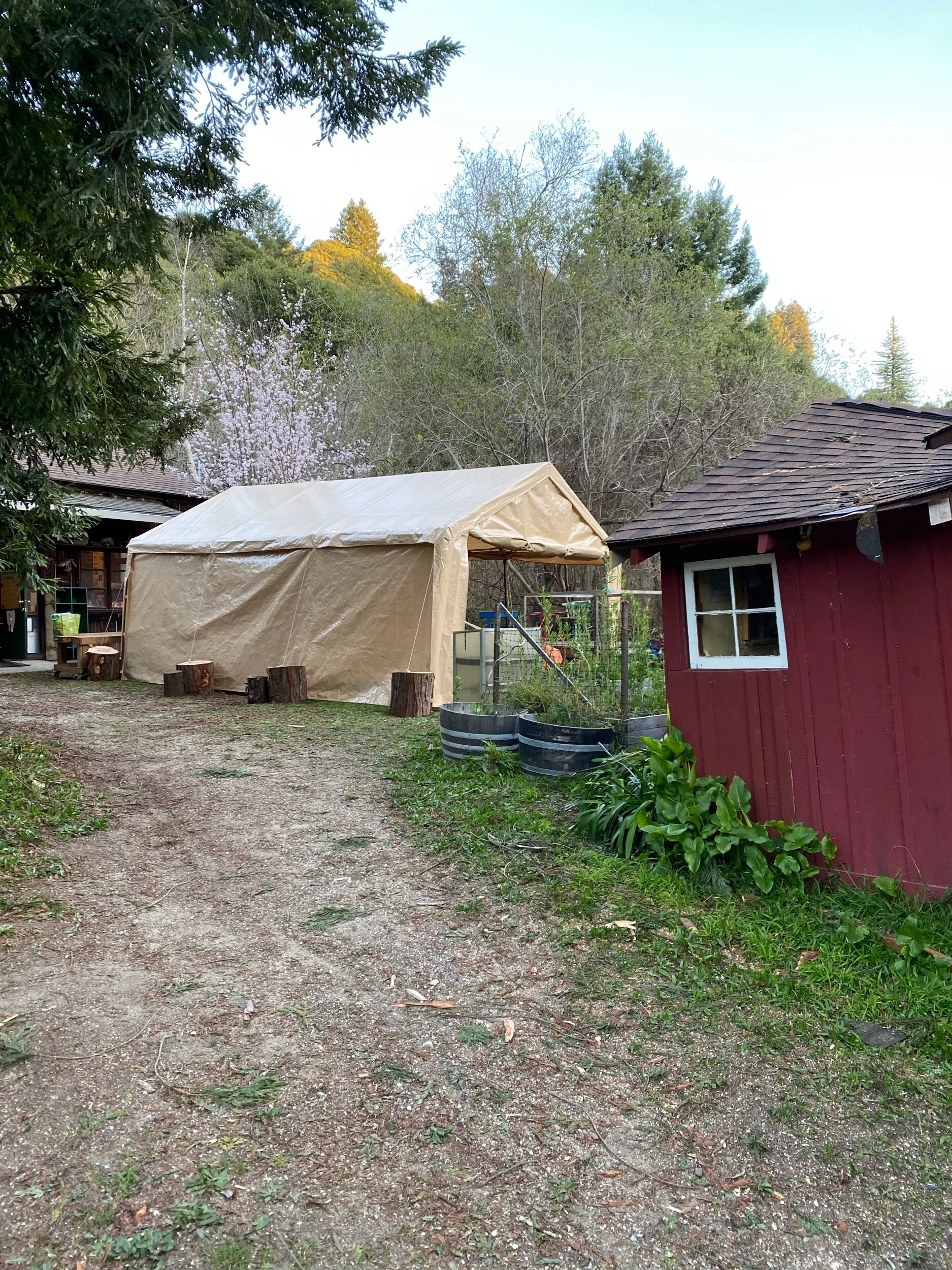
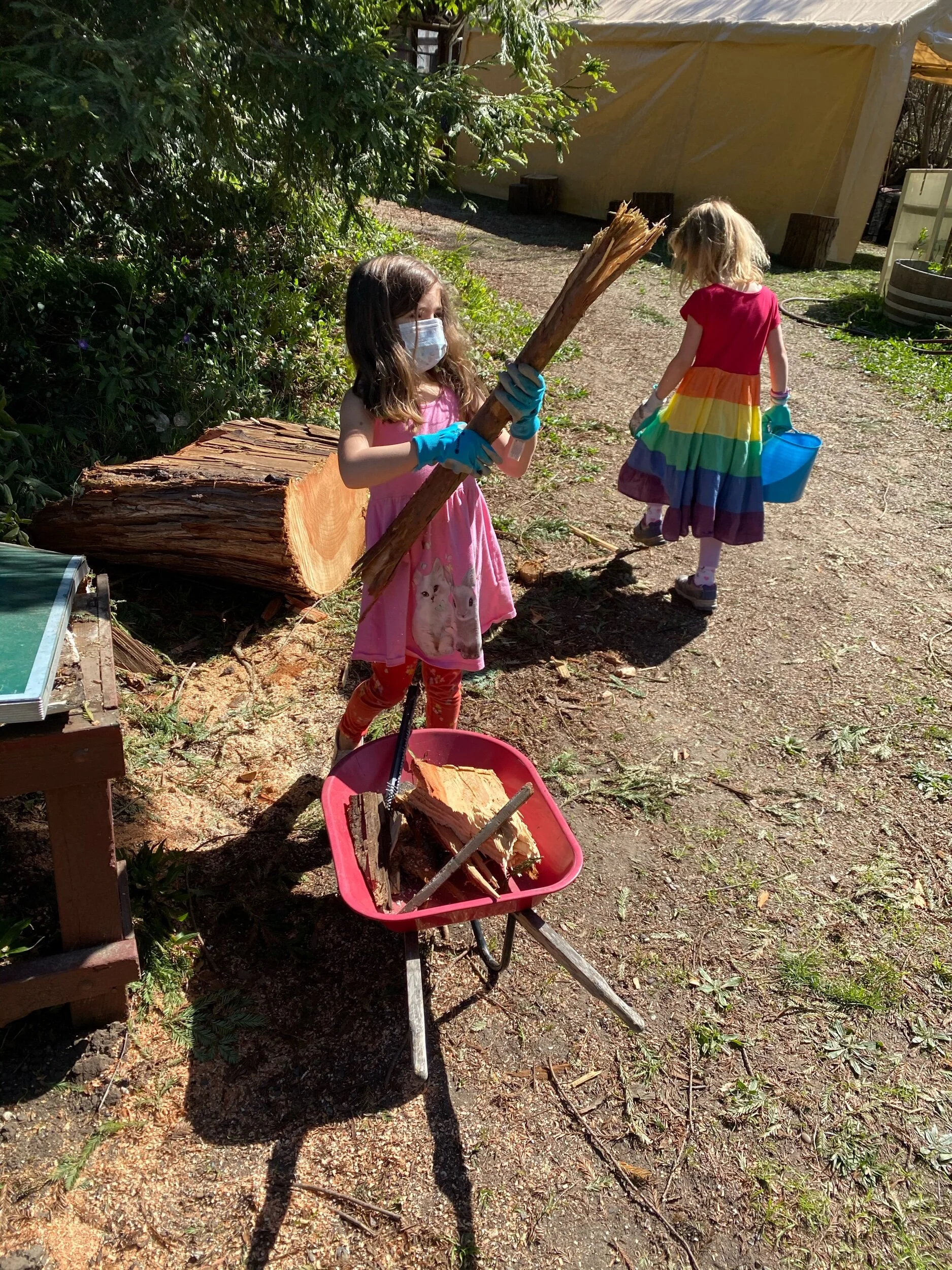
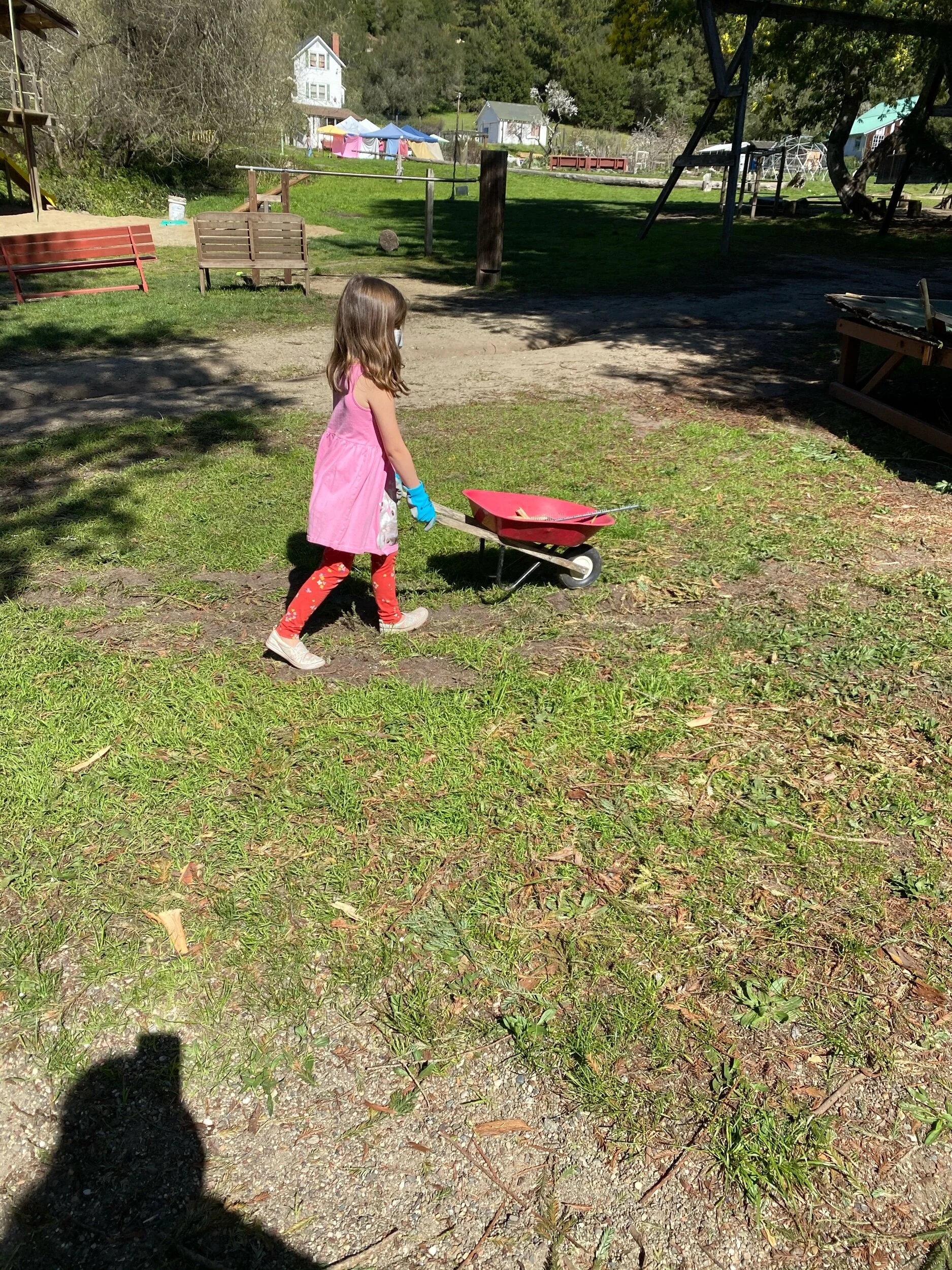
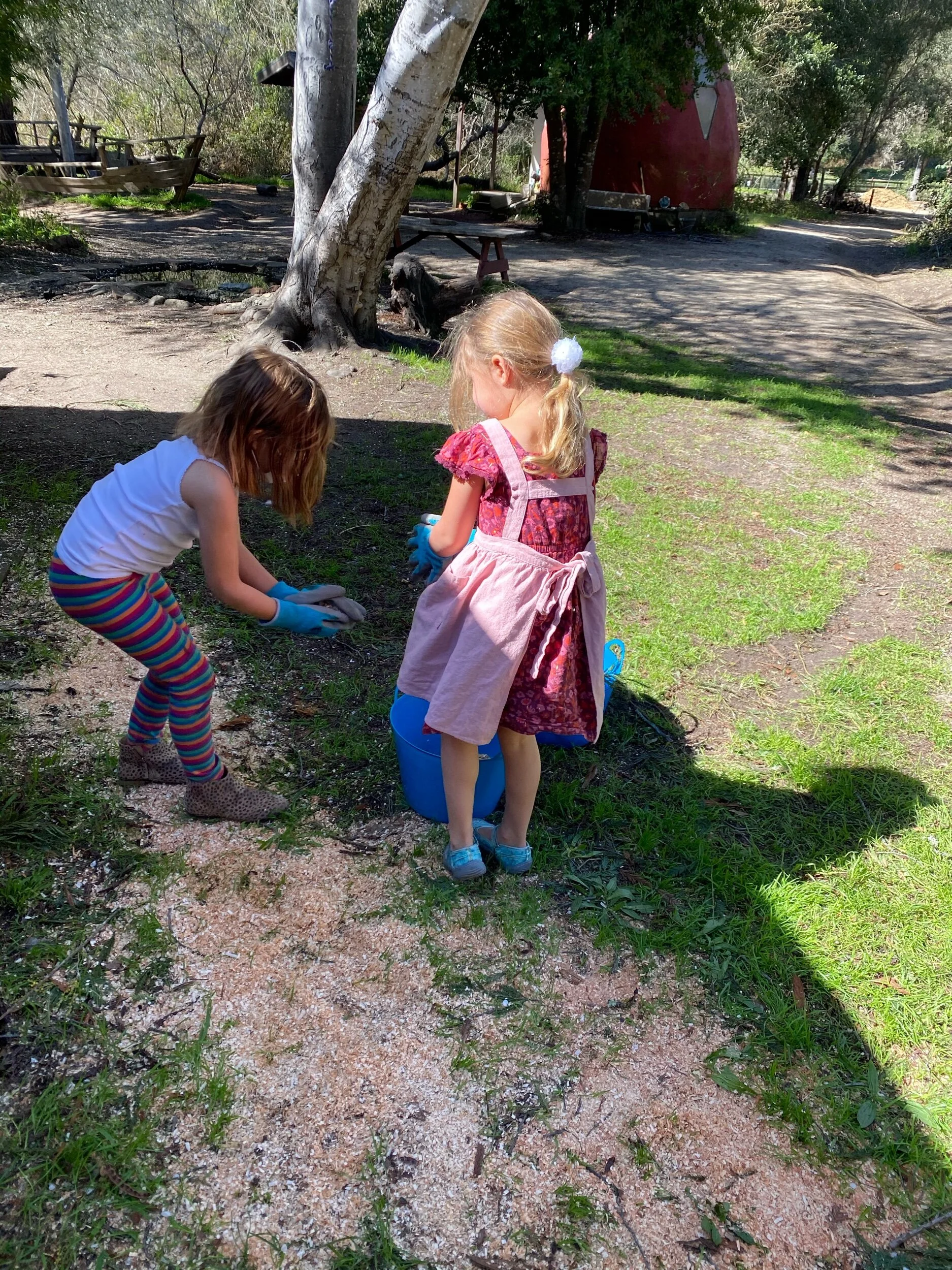
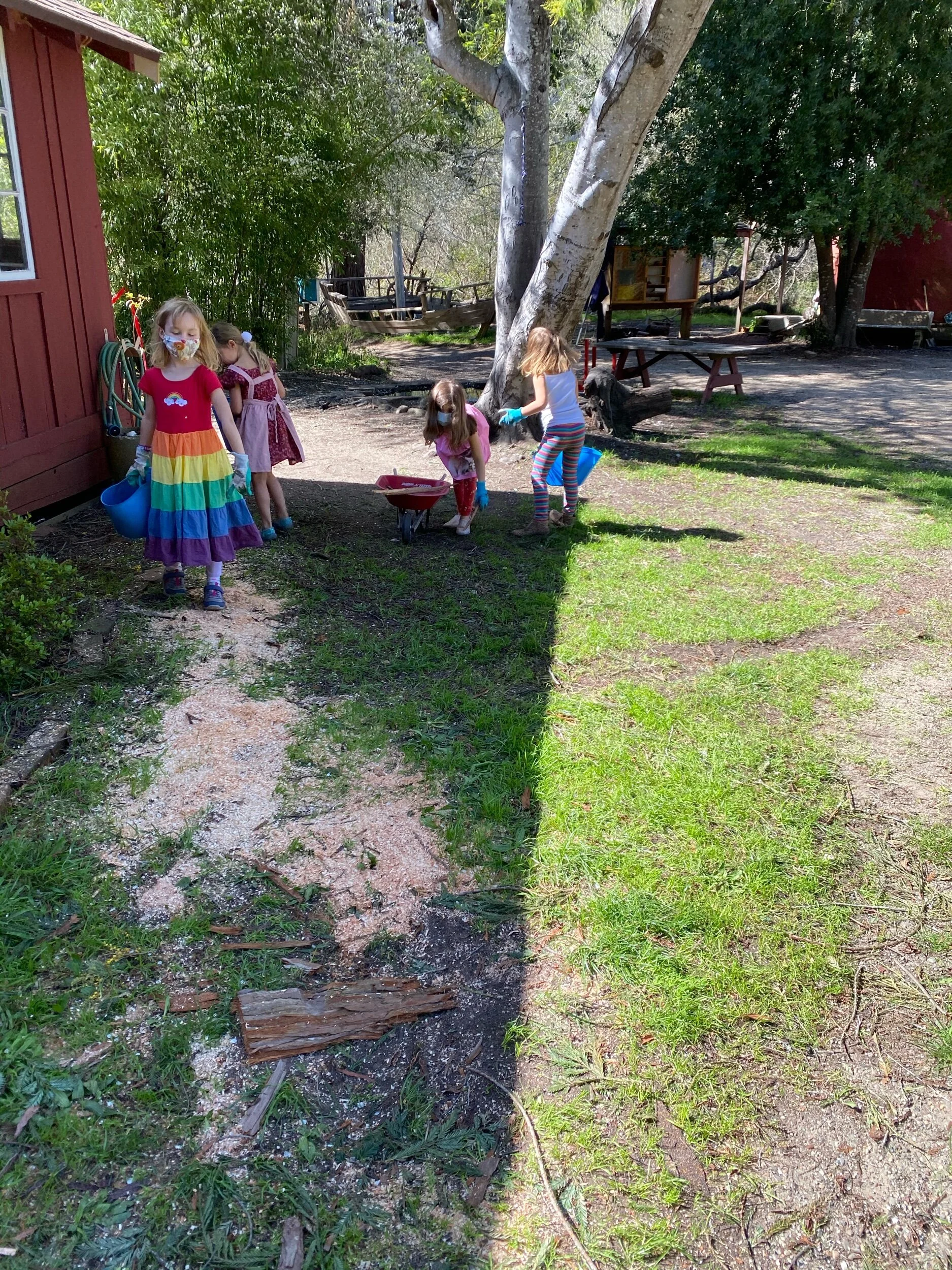
Our new space: We've spent some time cleaning it up together. Productive, hands on, full body work like this is so important for children (and adults!) and they seem to feel invested in making our classroom beautiful. There is more work to do in the fairy garden area. If anyone has some time, we welcome the help. A delicate wind chime, an arched arbor and possibly a little bridge would all be welcome additions.
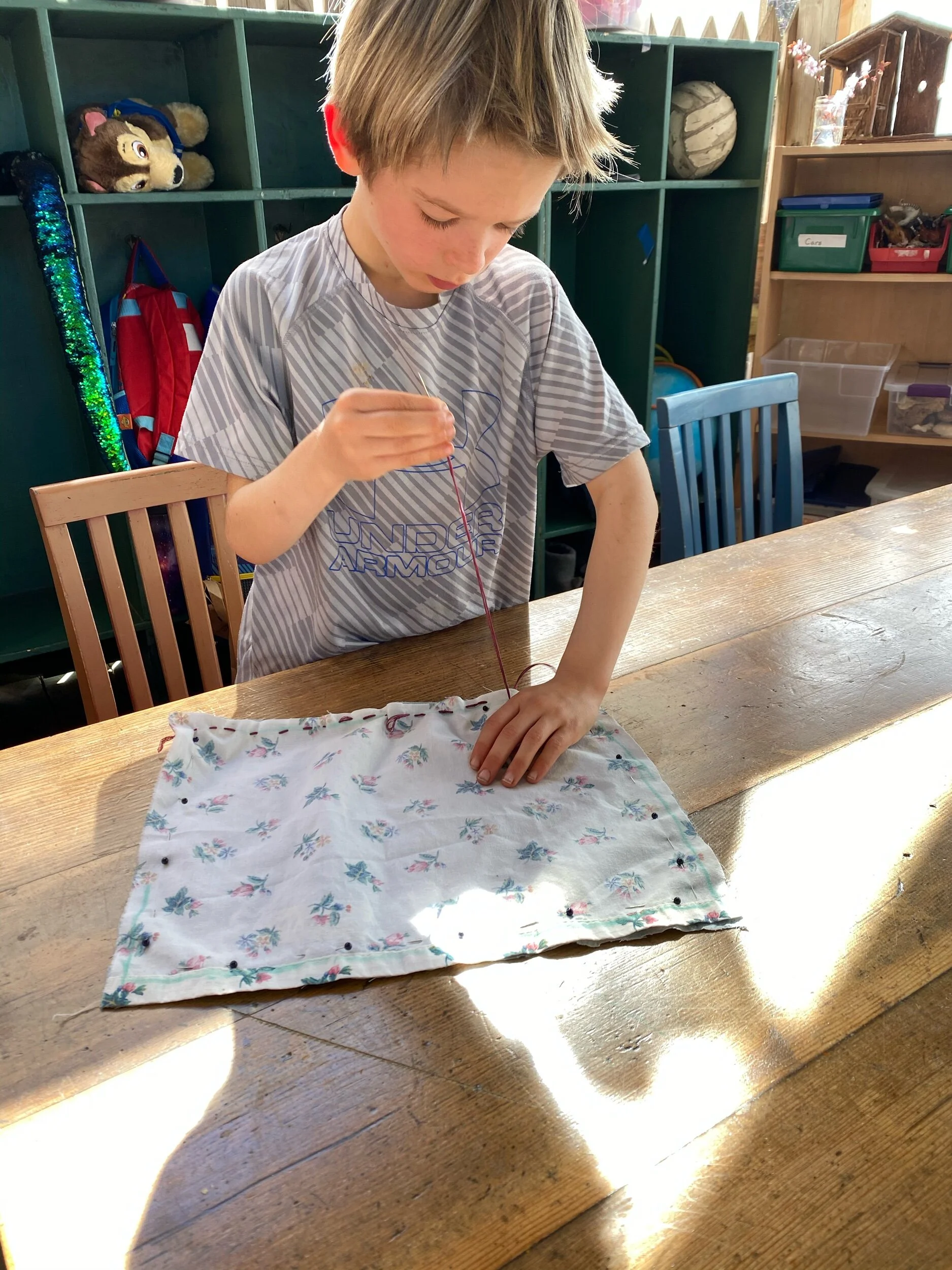
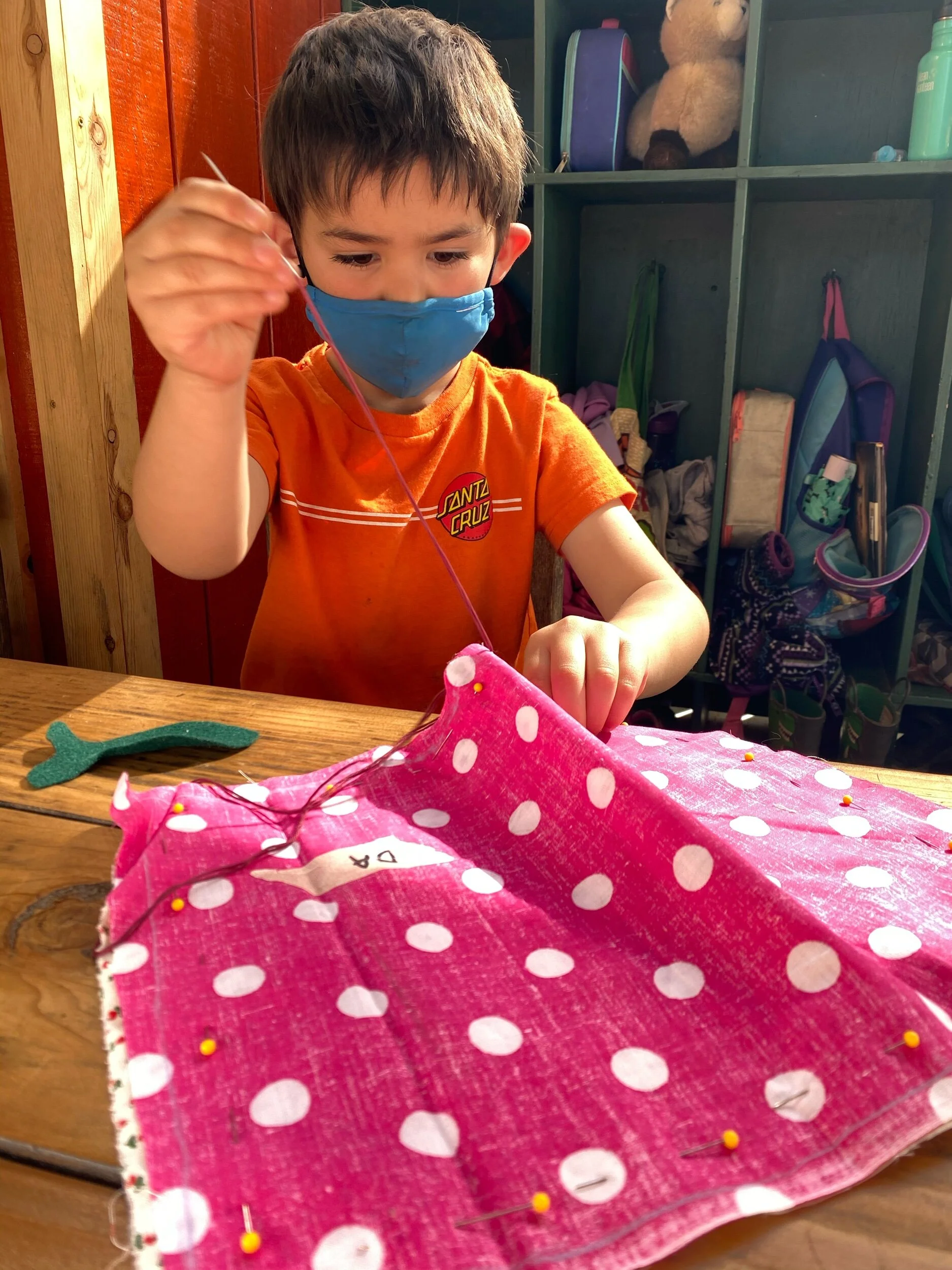
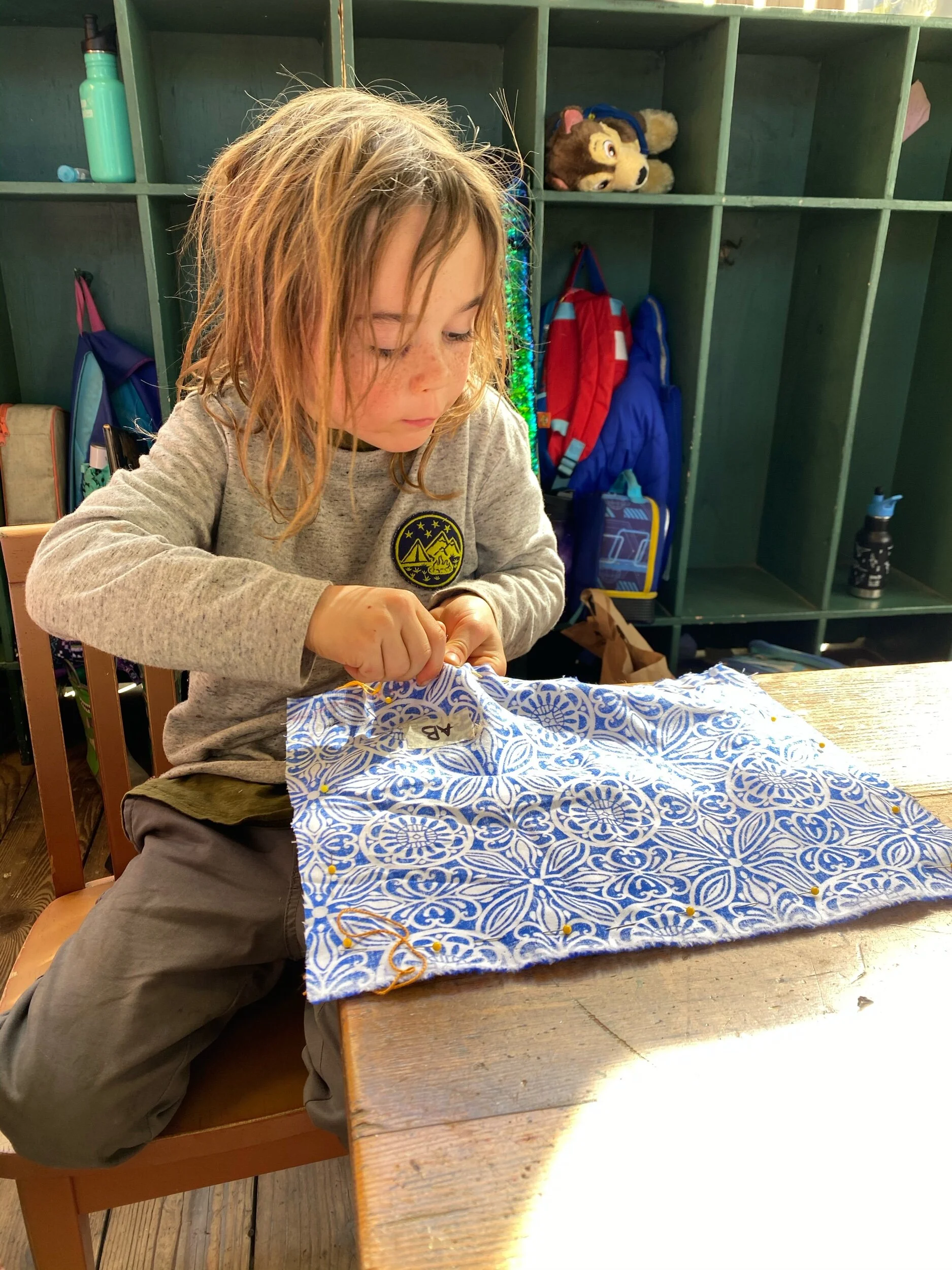
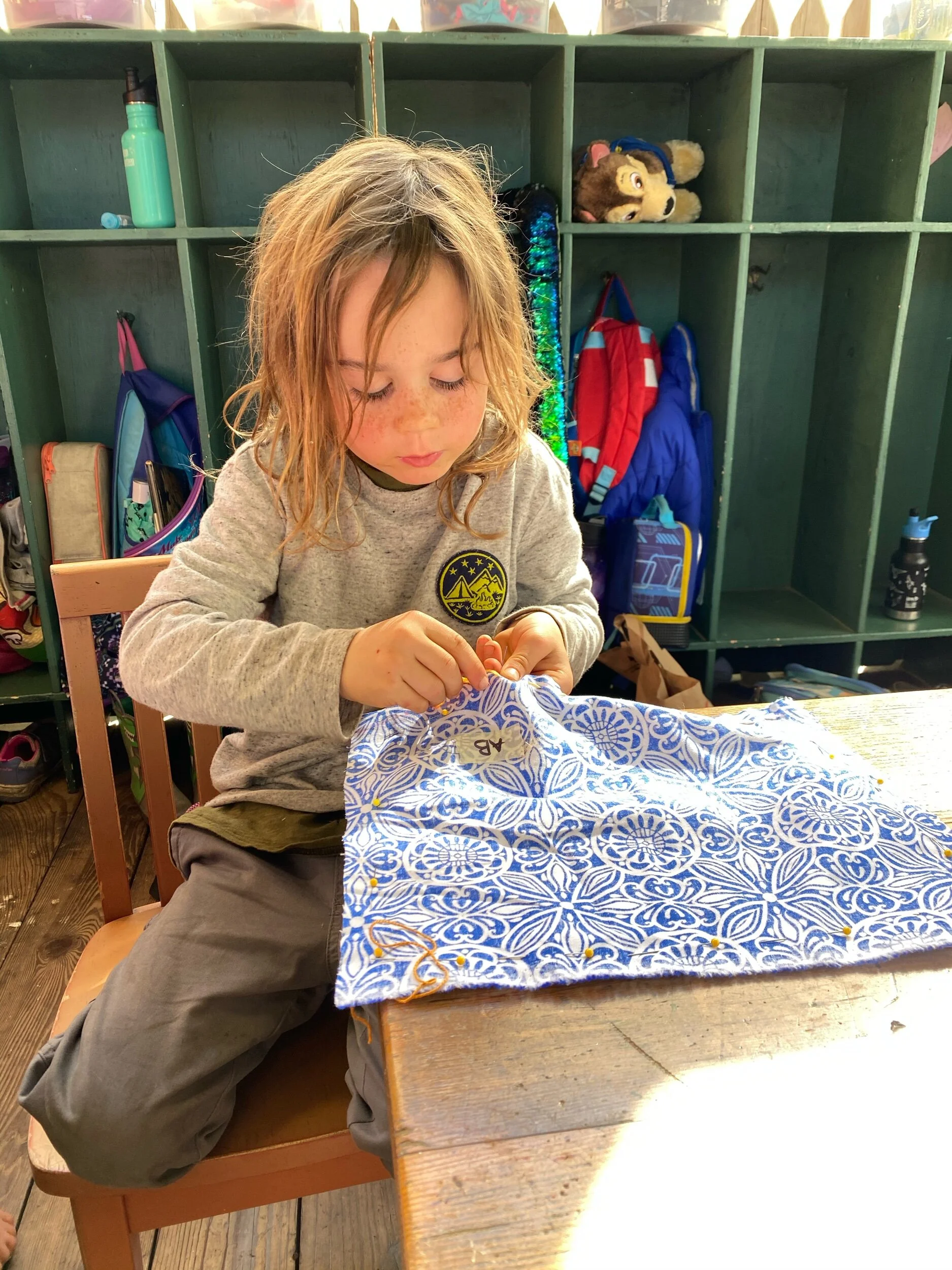
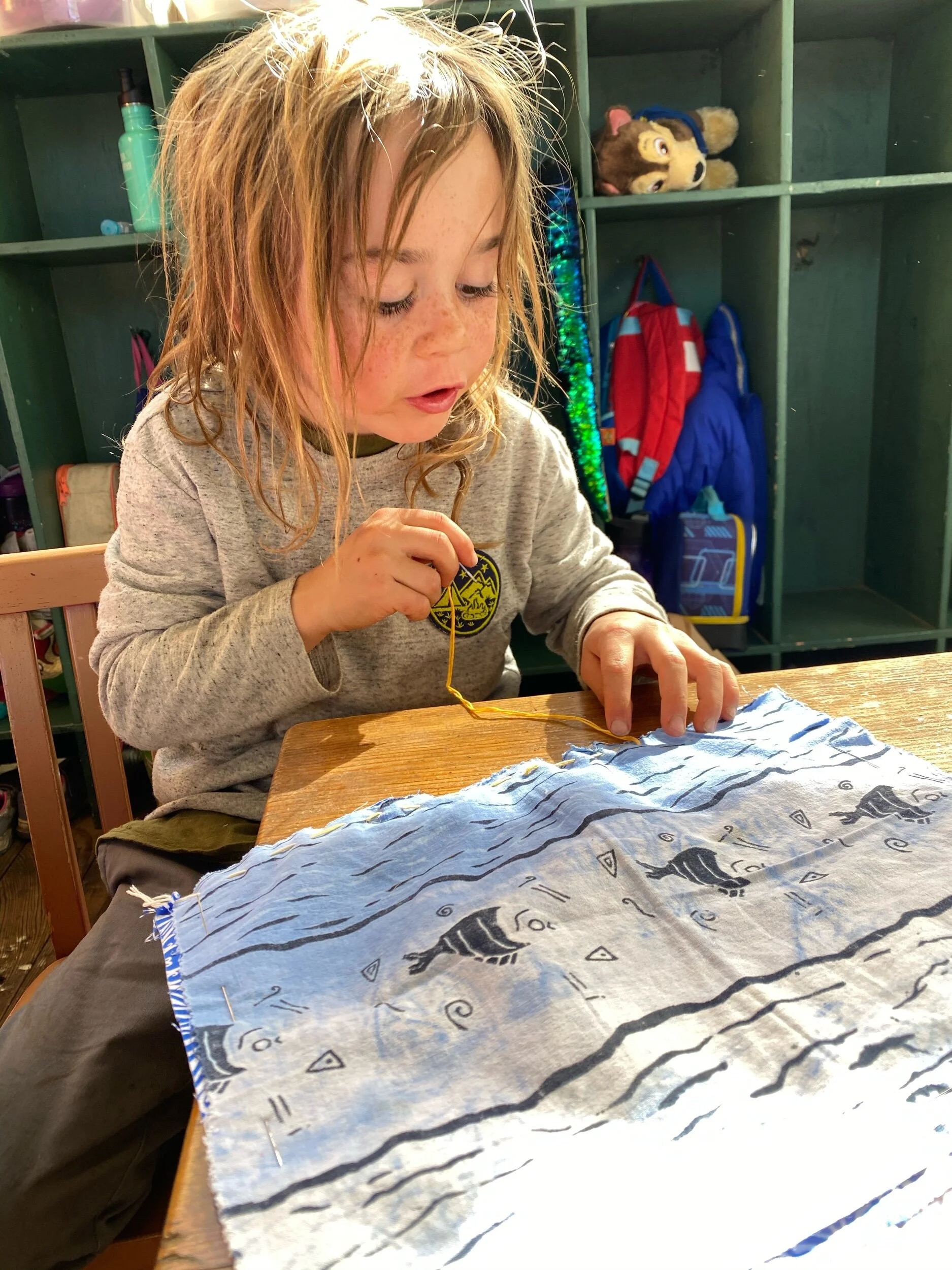
Students have been working on sewing a pillow for rest time. A few are finished. All are progressing impressively with their fine motor skills and concentration as you can clearly see in this series — titled: Boys Who Sew Well.
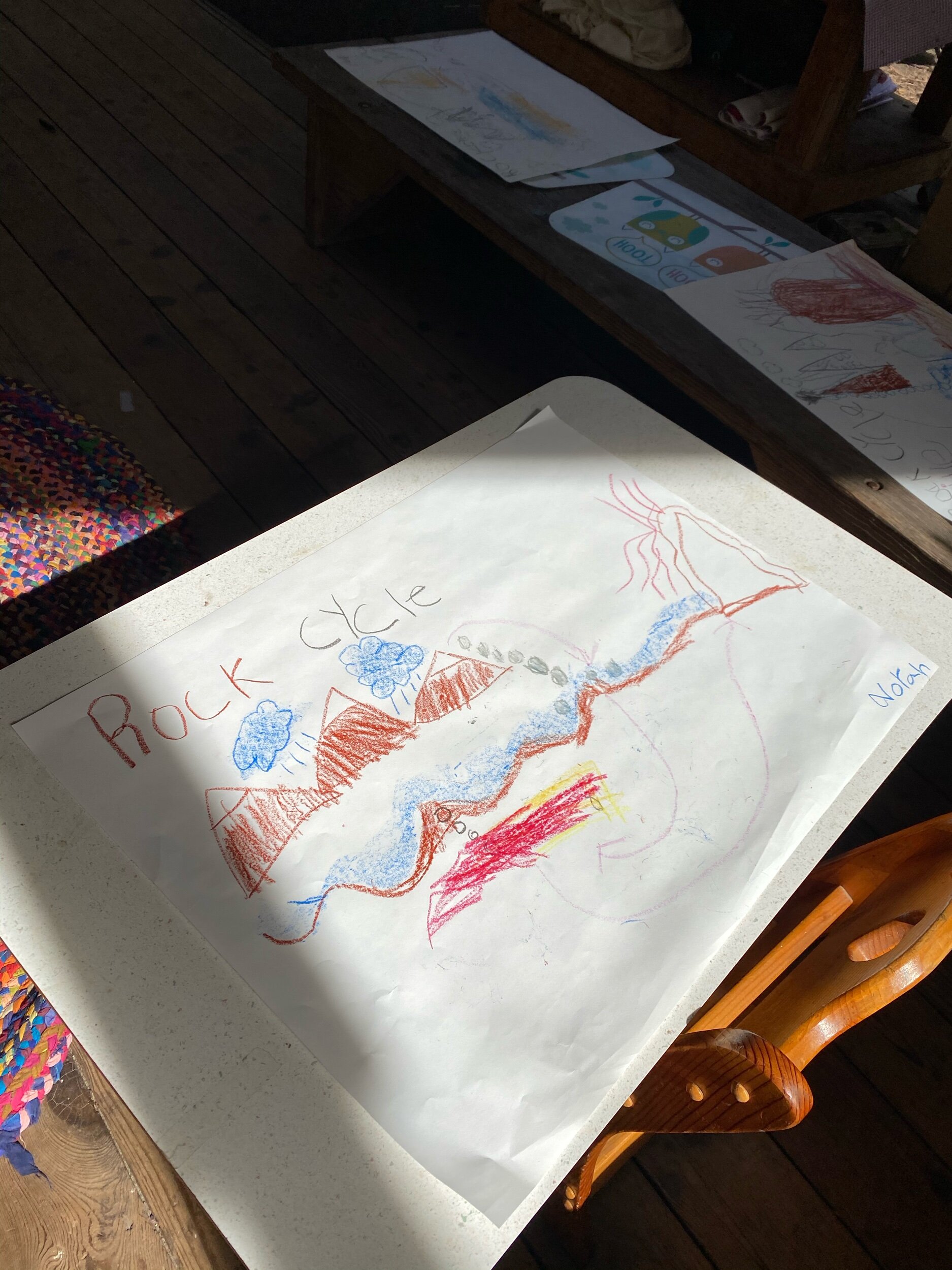
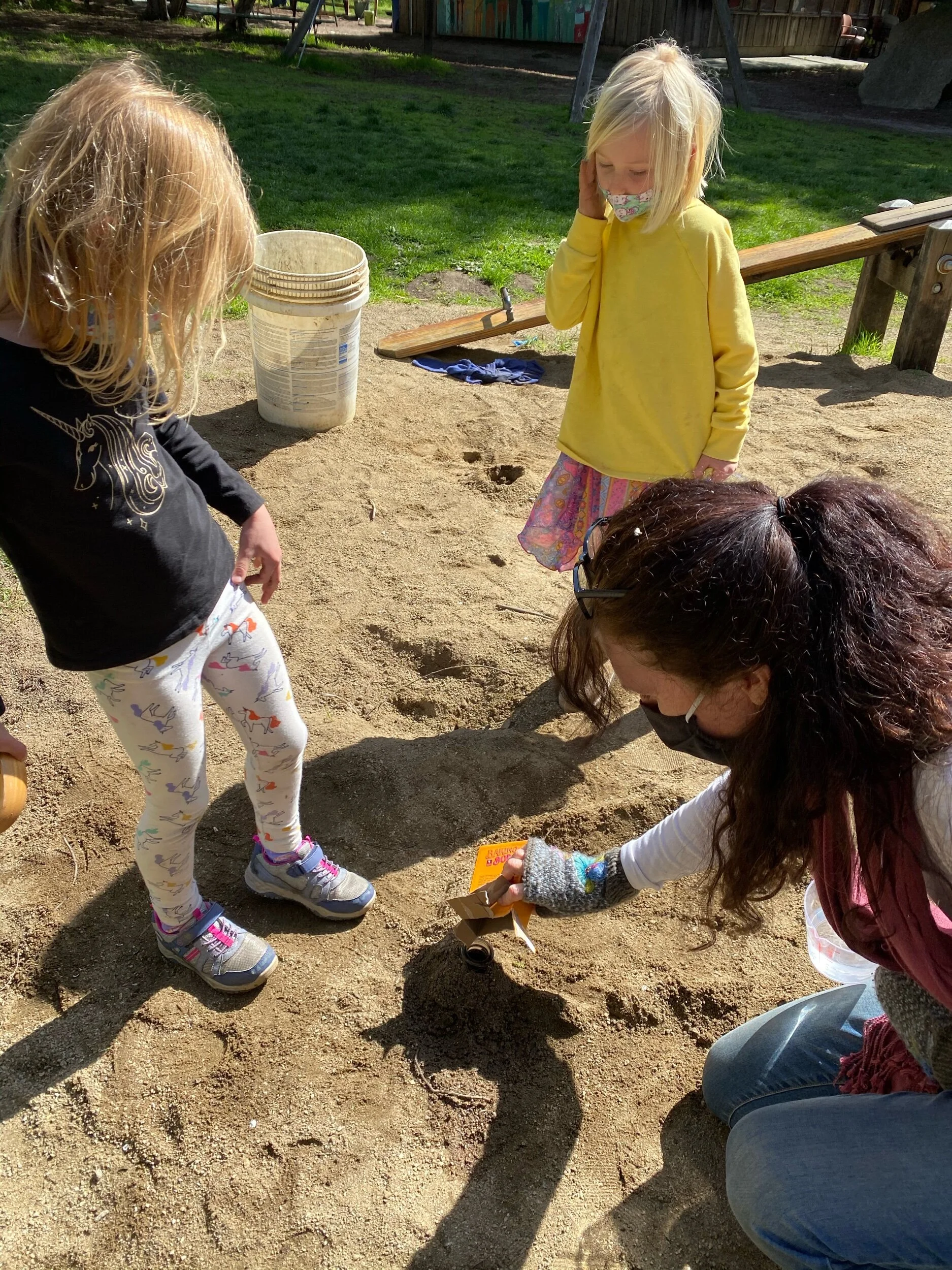
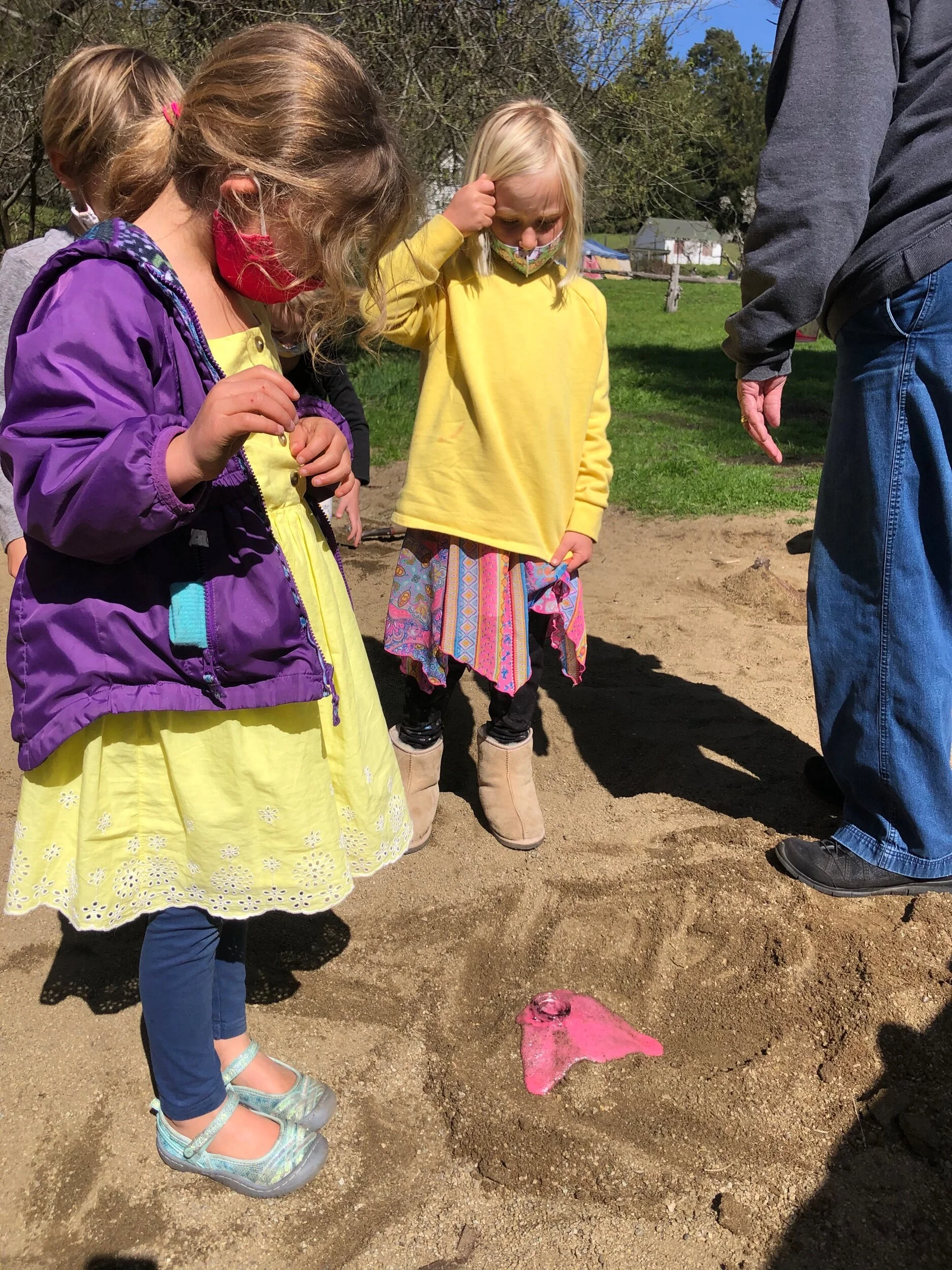
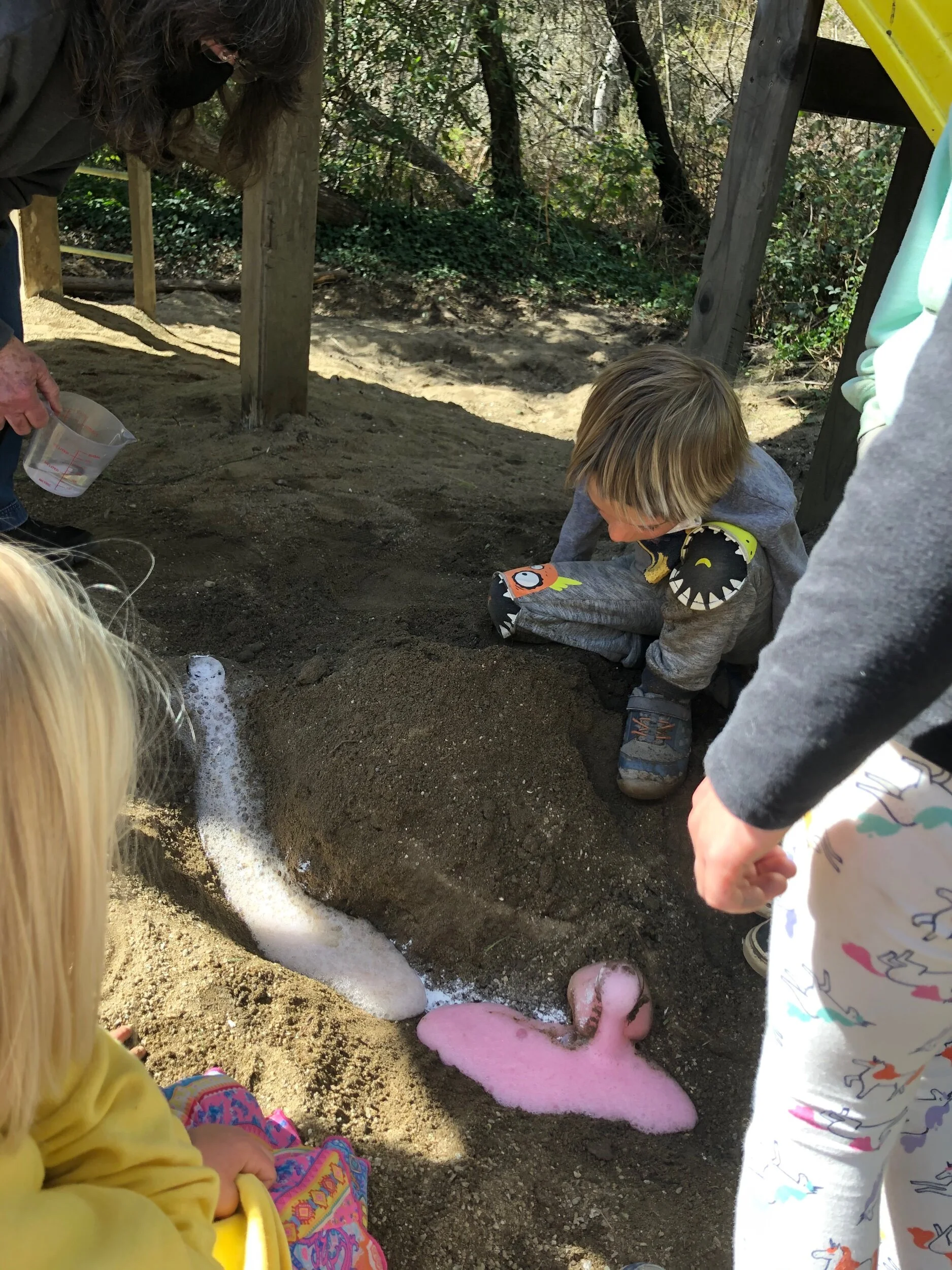
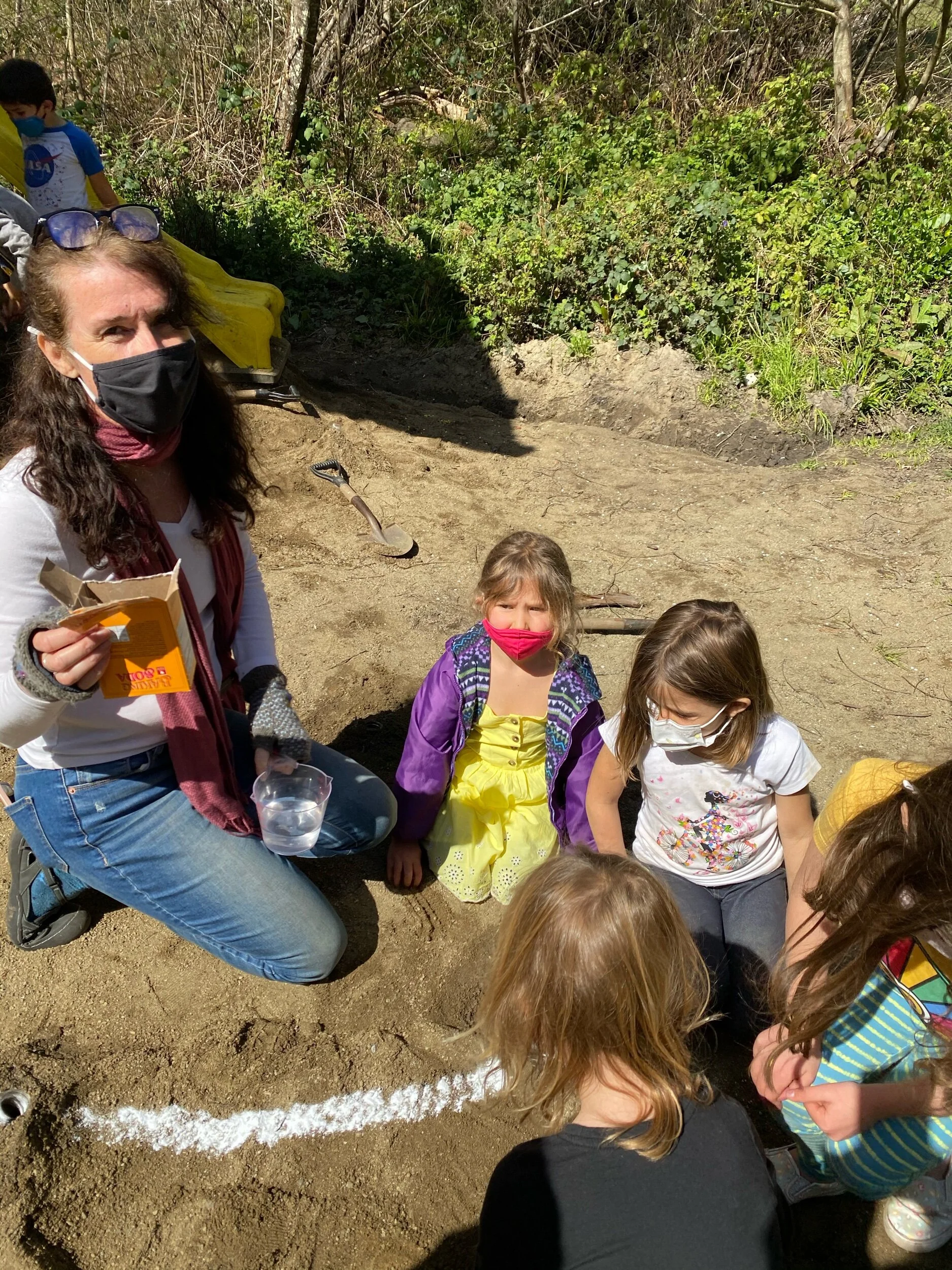
We recently began our study of the rock cycle. The children made posters documenting this cycle and we explored the concept that our Earth is basically a giant rock recycling machine, where every rock is as old as time, just like every drop of water. The kids brought in their special rocks and gave a quick presentation about why it was special. Then they wrote “rock reports”. We are setting up a rock museum in the Tile Room and they will give you tours once they are finished. They painted volcanoes, a key part of the rock cycle (and the water cycle too!) and then recreated volcanic eruptions in the sand box. They also painted rocks with mandala patterns to further beautify our fairy garden. We’ll move on to studying fossils next.
Click on Gallery Above to Scroll
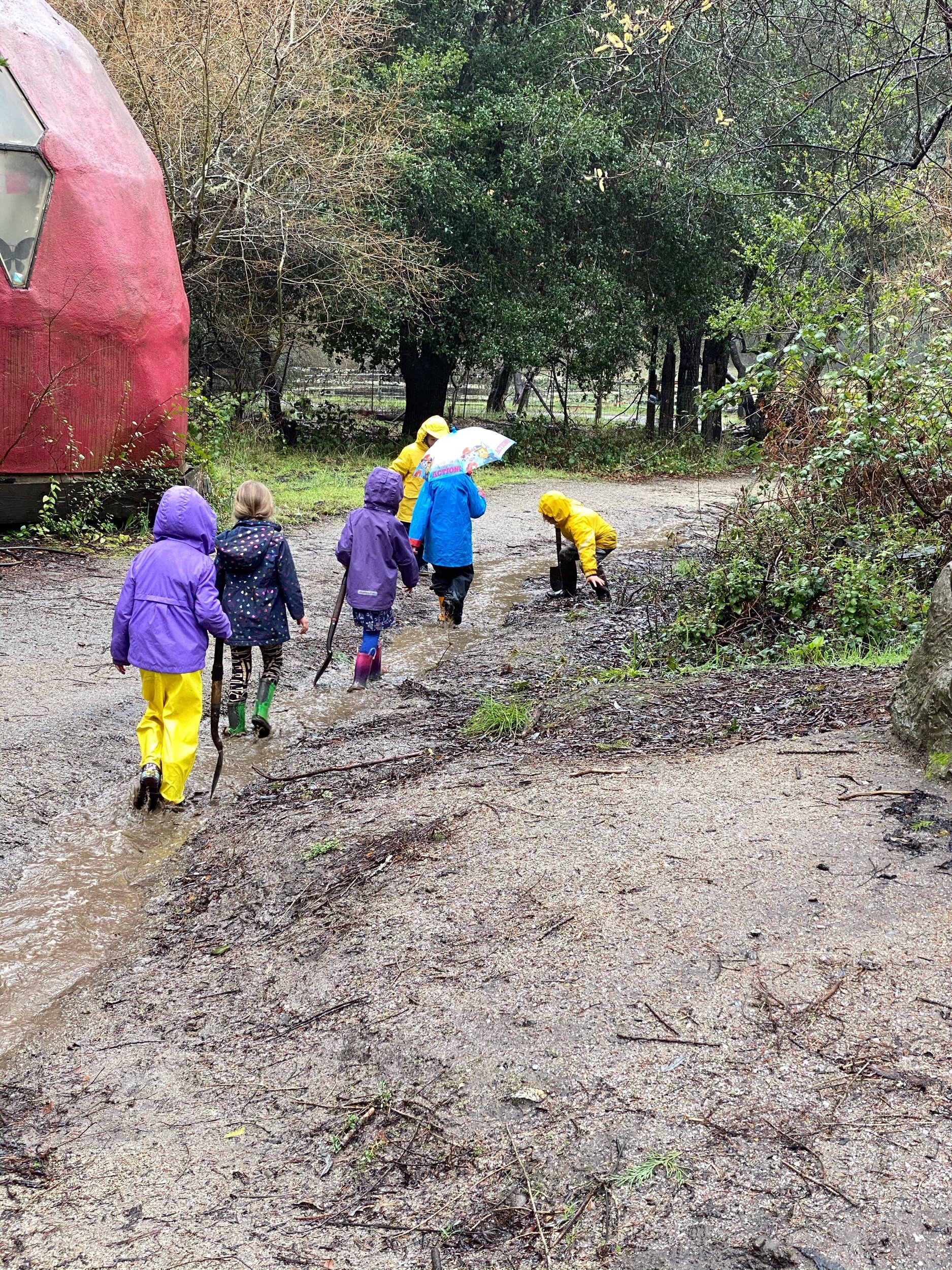
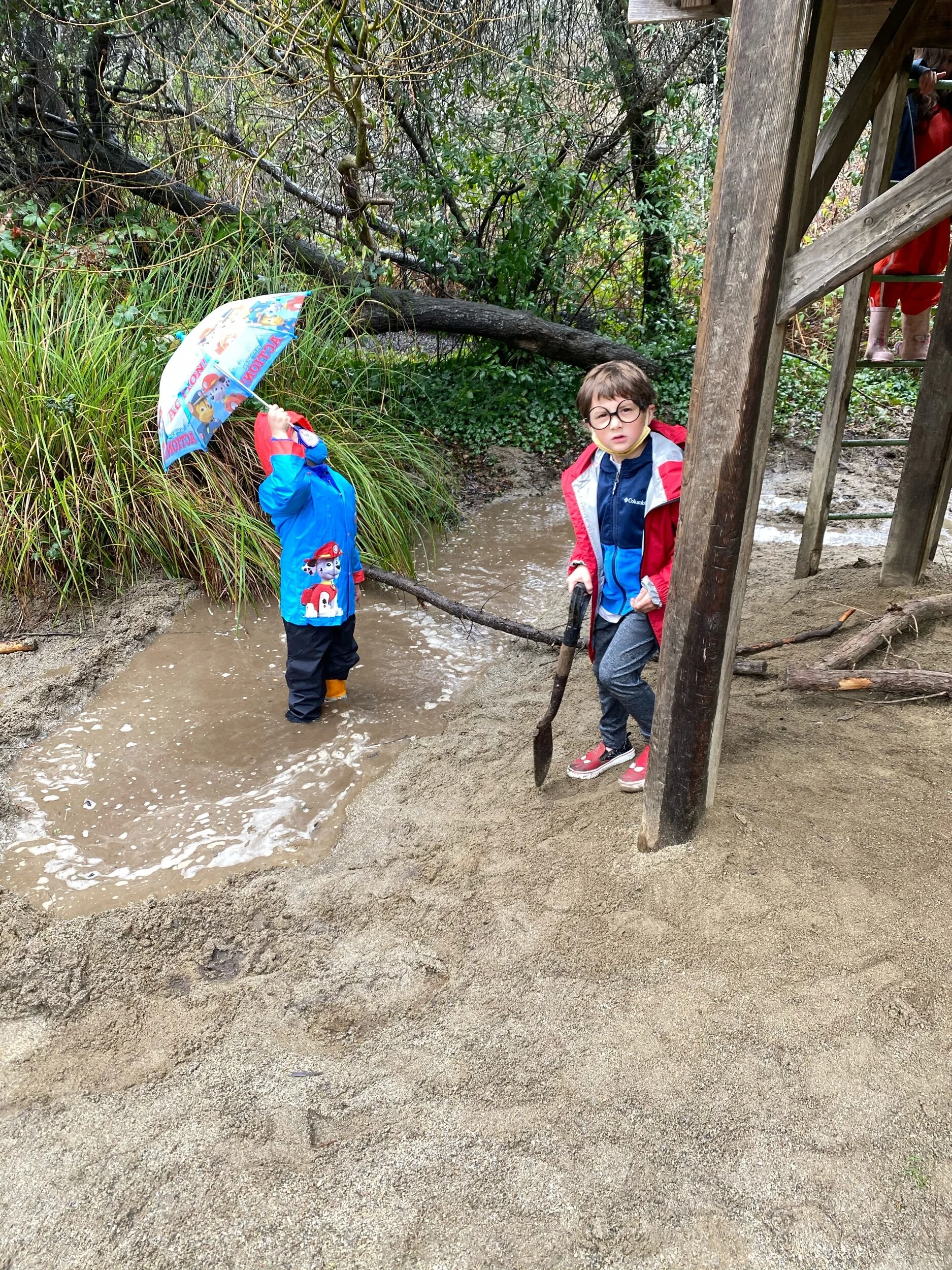
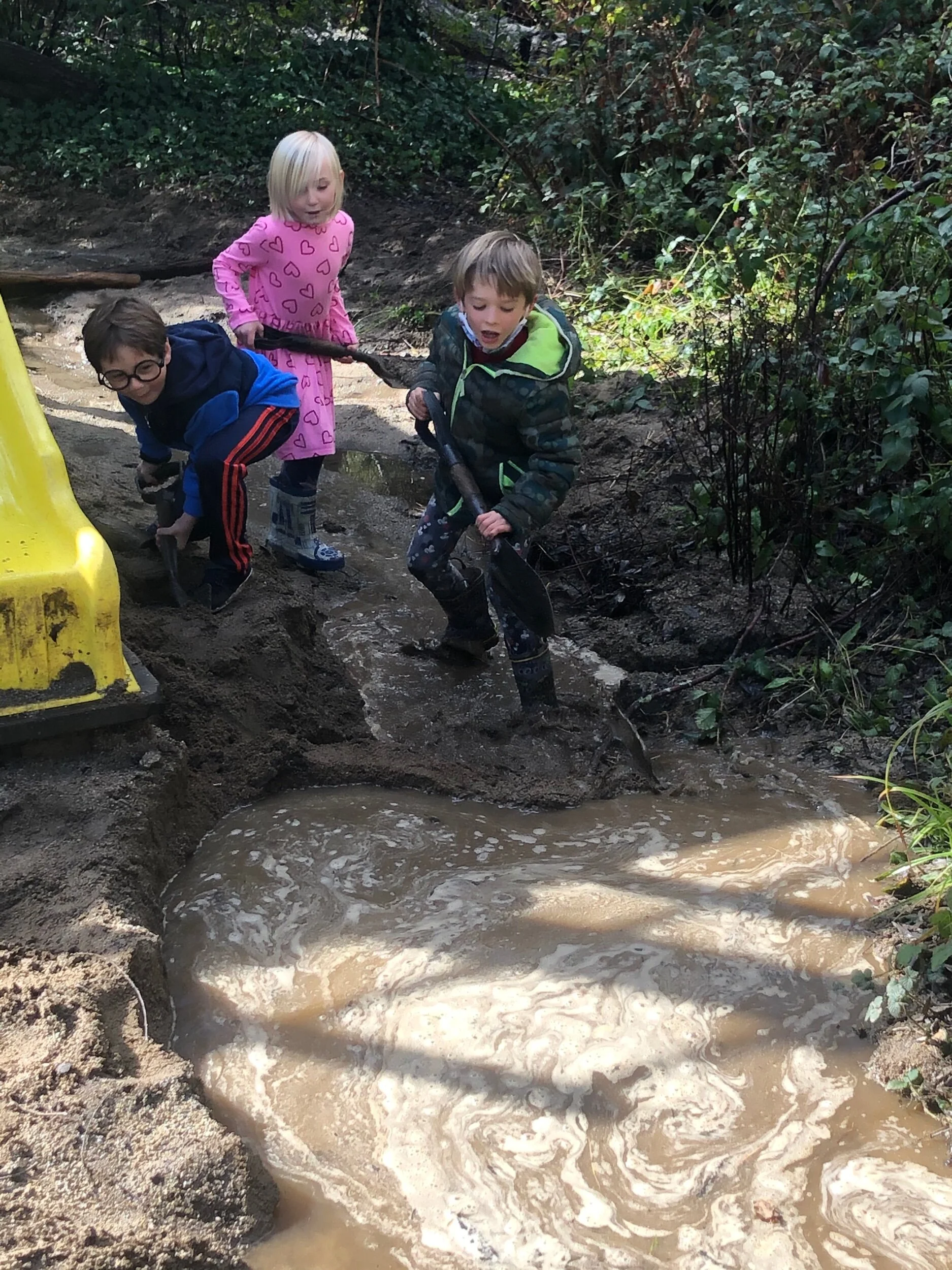
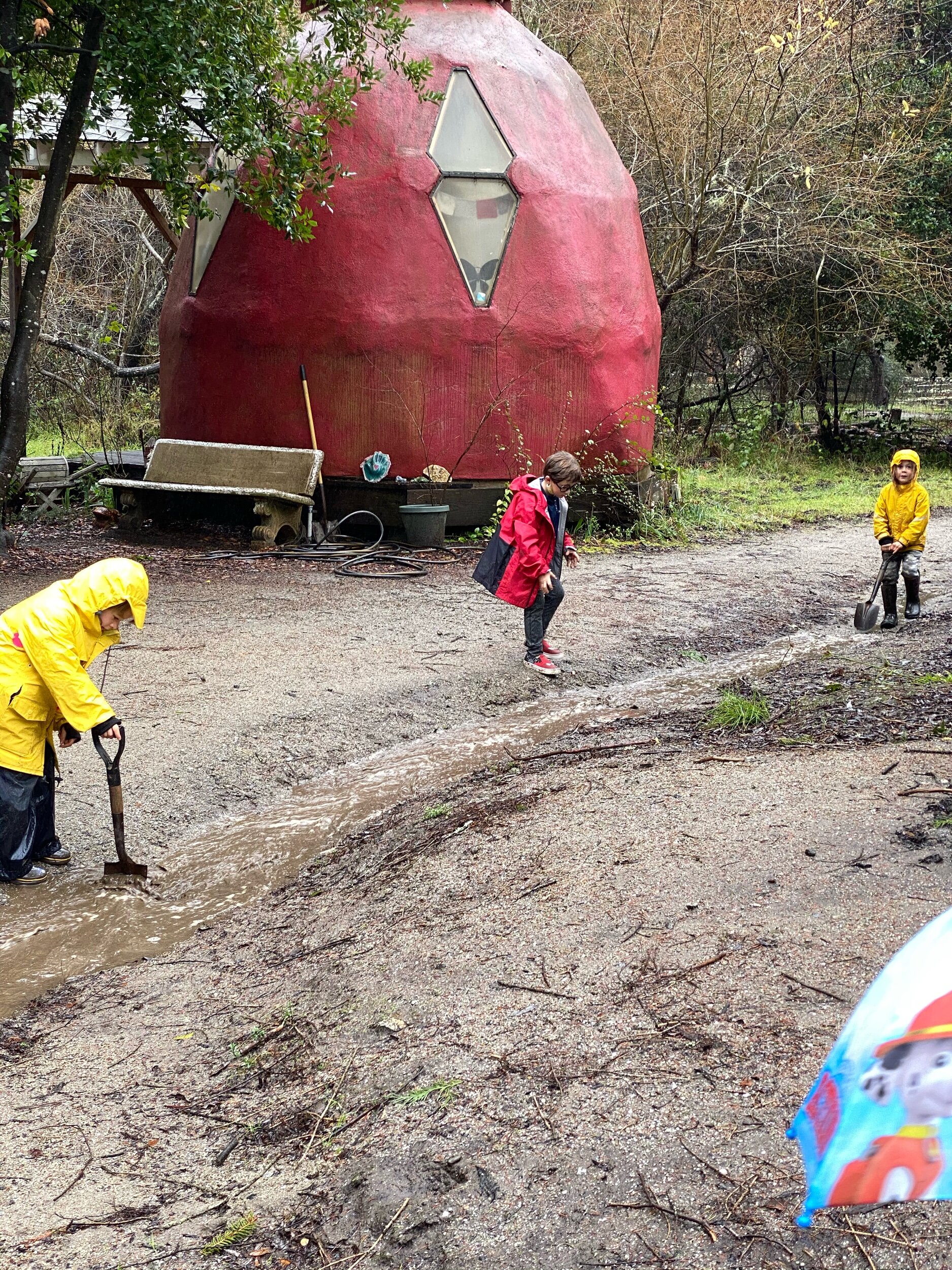
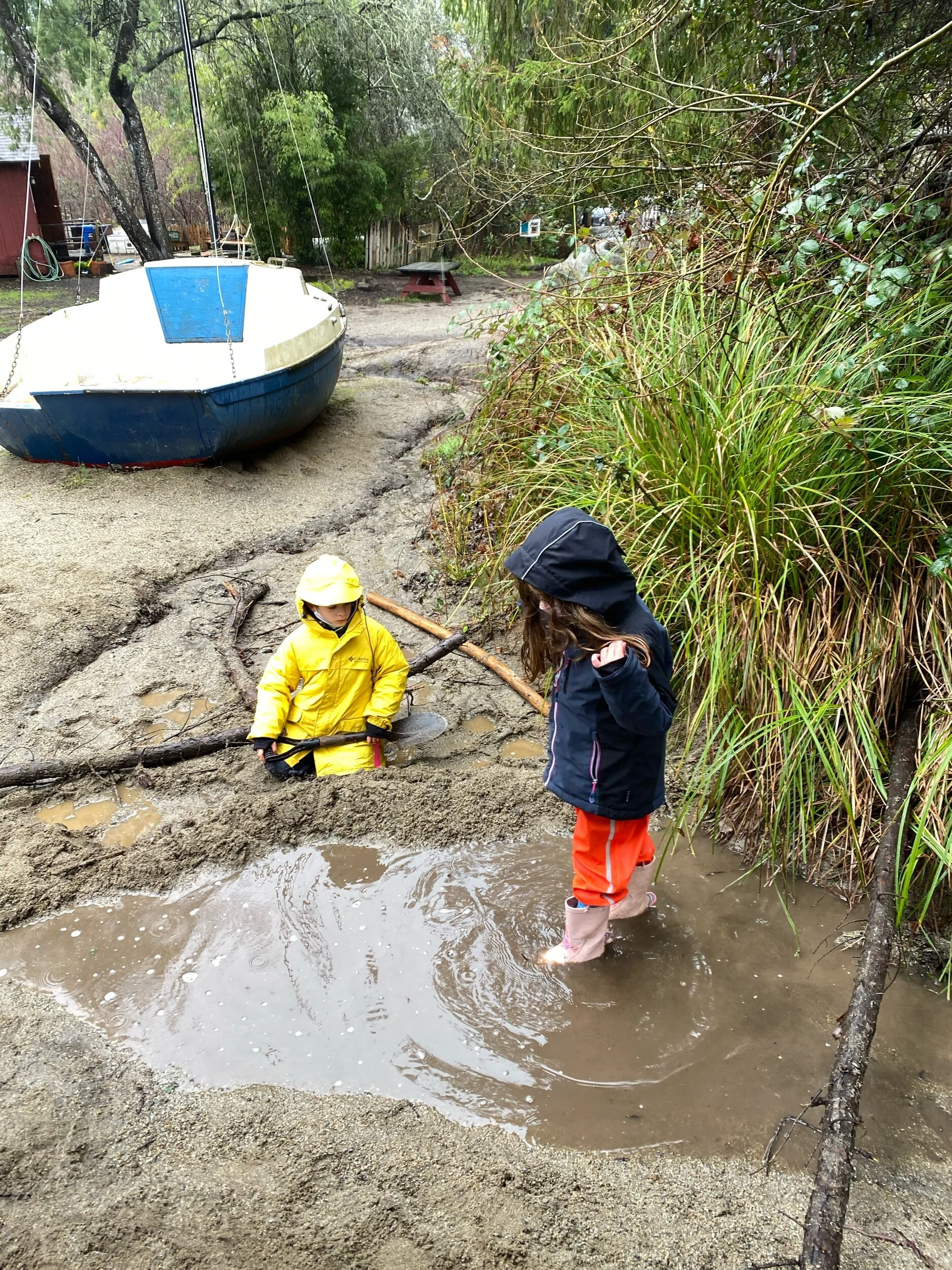
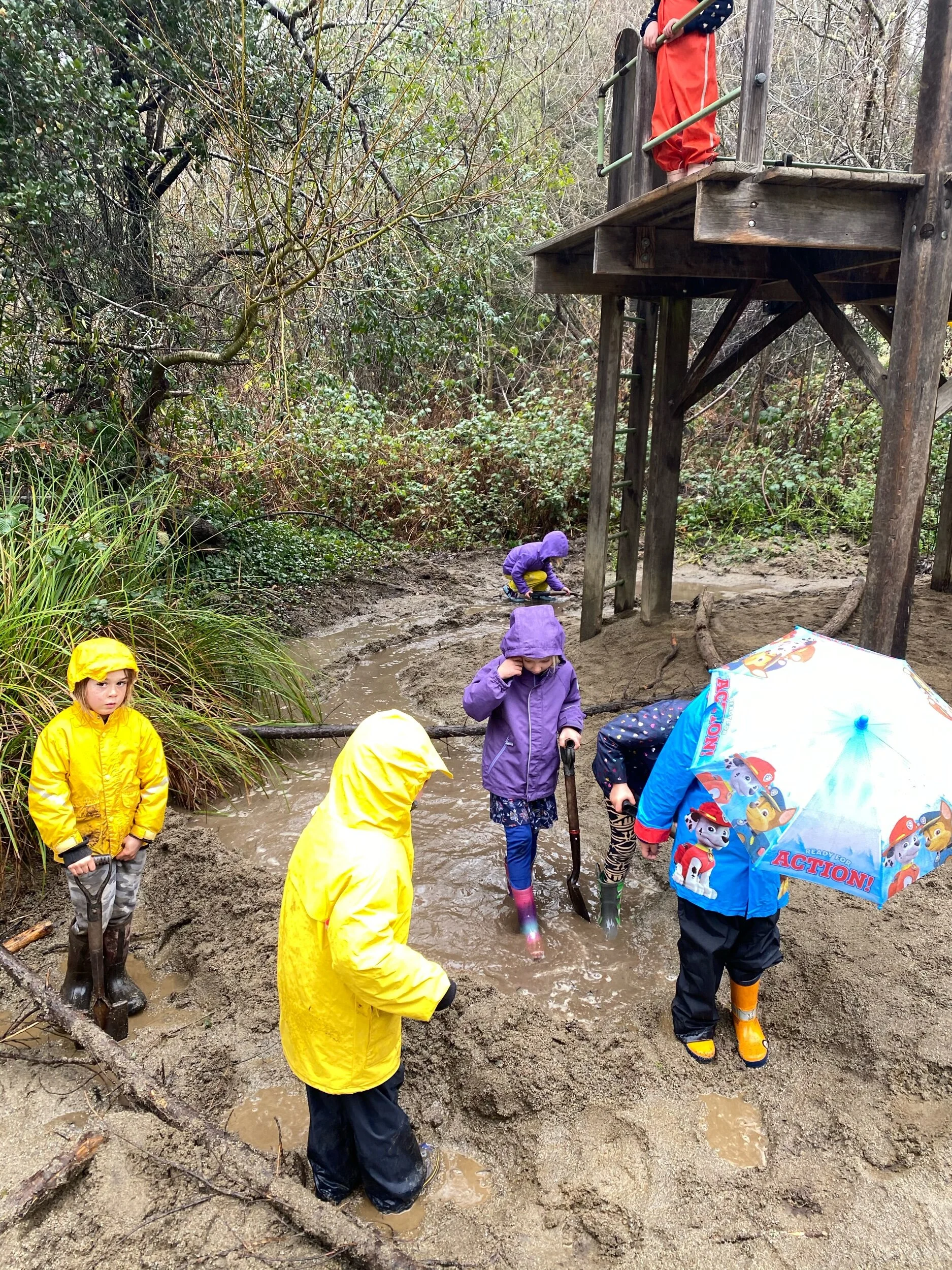
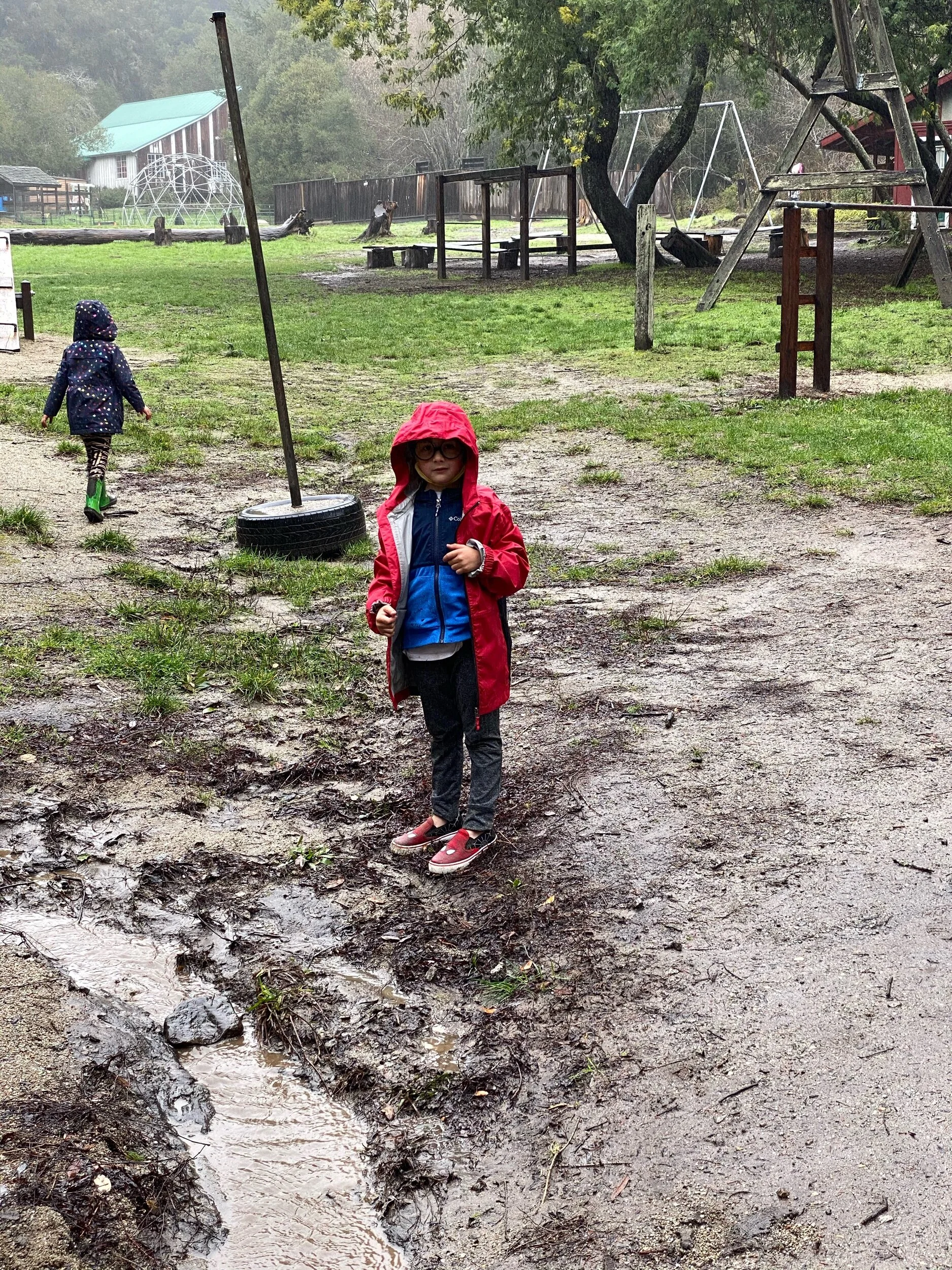
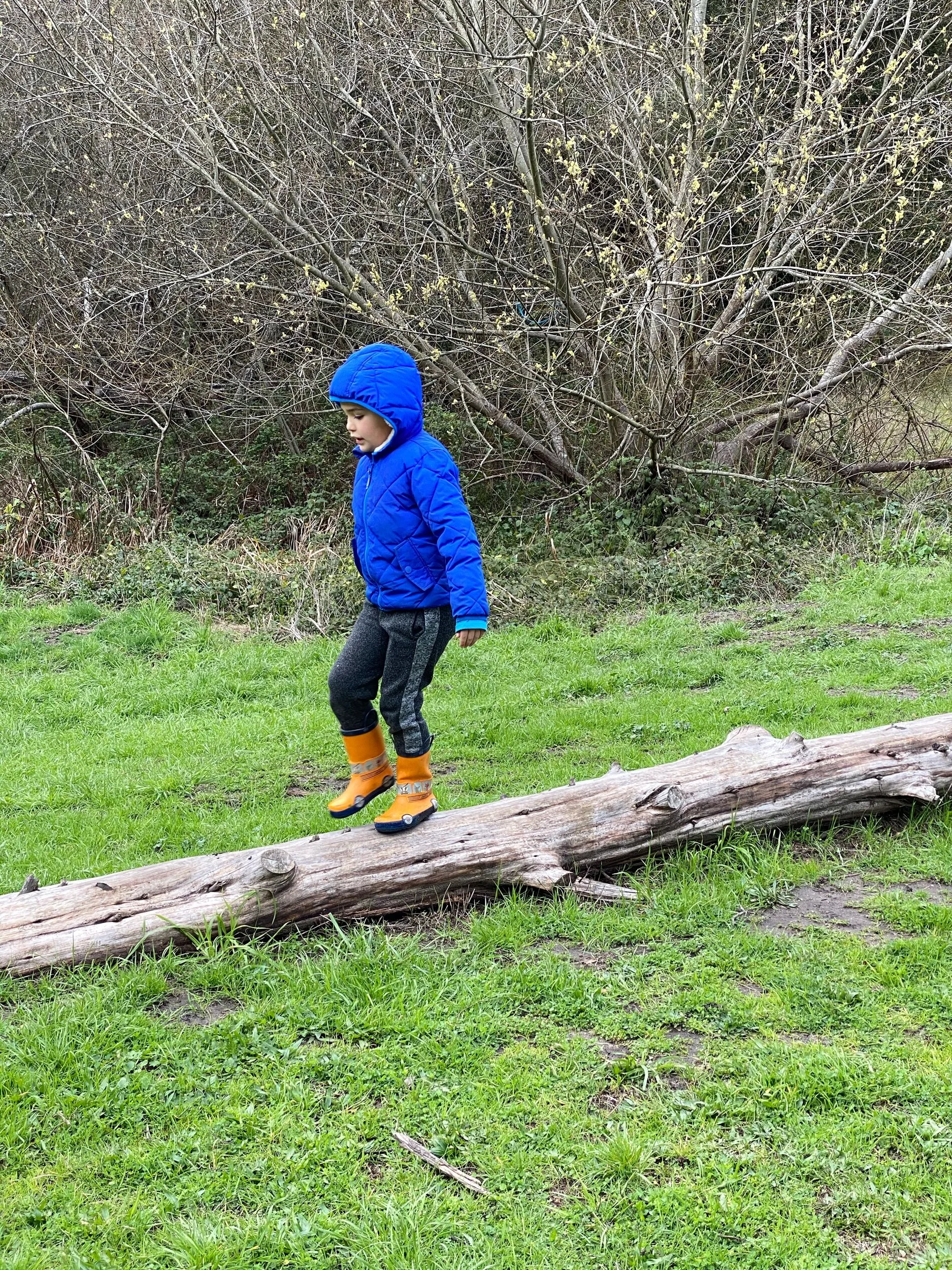
Photos of Rainy Day Fun:
That’s it from Rosy and Colleen and the Kindergarten Digest. We’ll try to write our next blog by the end of April so it isn’t such a novel!