
Kindergarten Class October 2020
Dear Families,
November is here and it’s past time we told you about what we’ve been up to this past month. It’s truly impossible to give you anything but a glimpse; we try hard not to fixate on taking too many photos, preferring to be in the moment, however, photo ops abound and we do want you to feel connected to what happens in our kindergarten, especially during these Covid times when parent involvement on campus is so limited.
Some areas of focus for this fall season have been projects involving pumpkins (of course), and a close look at seeds, leaves, and trees.
Language Arts:
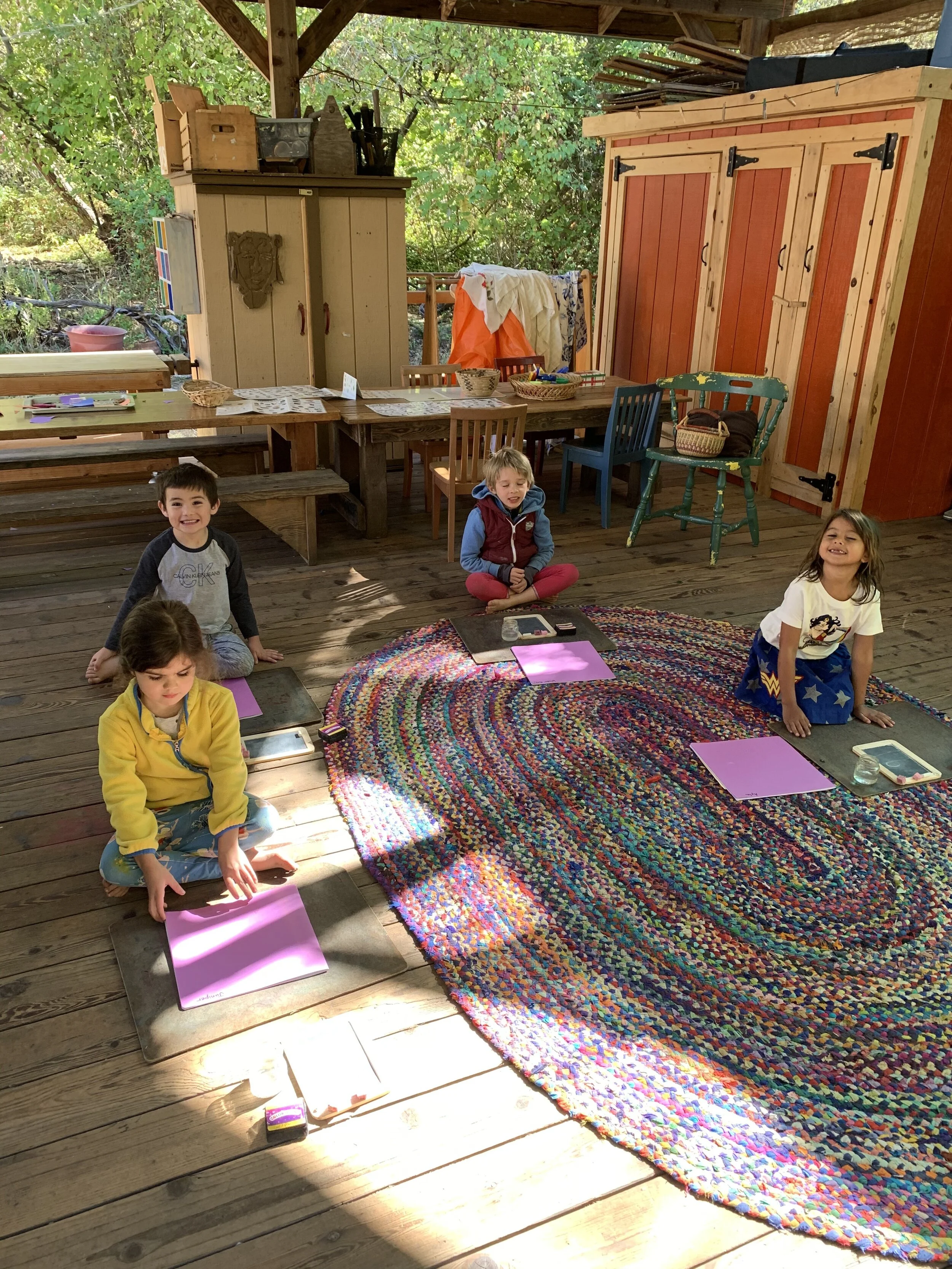
On Wednesdays, I have the opportunity to work with the children in a small group while Linda takes half the class to pottery. Then we switch groups. Here are the kids ready to practice handwriting. As you can see, the sun shining through the apex of the shed roof continues to be a problem. We really need some rolling shades that can be pulled down when the sun is shining directly in students’ eyes and then can be raised when we need the sun to help warm us up. If anyone has ideas or materials to this end, we welcome the help!
We continued with letter/sound explorations moving into the letters r, m, and d, adding these to c, s, l, a, o and t. The kids started basic reading practice with the “-at family”, rhyming words with -at on the end (mat, sat, and so forth). We played with adding different endings (mad, sad) and then created other consonant-vowel-consonant words using this collection of letters, like dad and mom. The kids now have book bags with a book or two they can work on reading themselves and other books of particular personal interest to each.
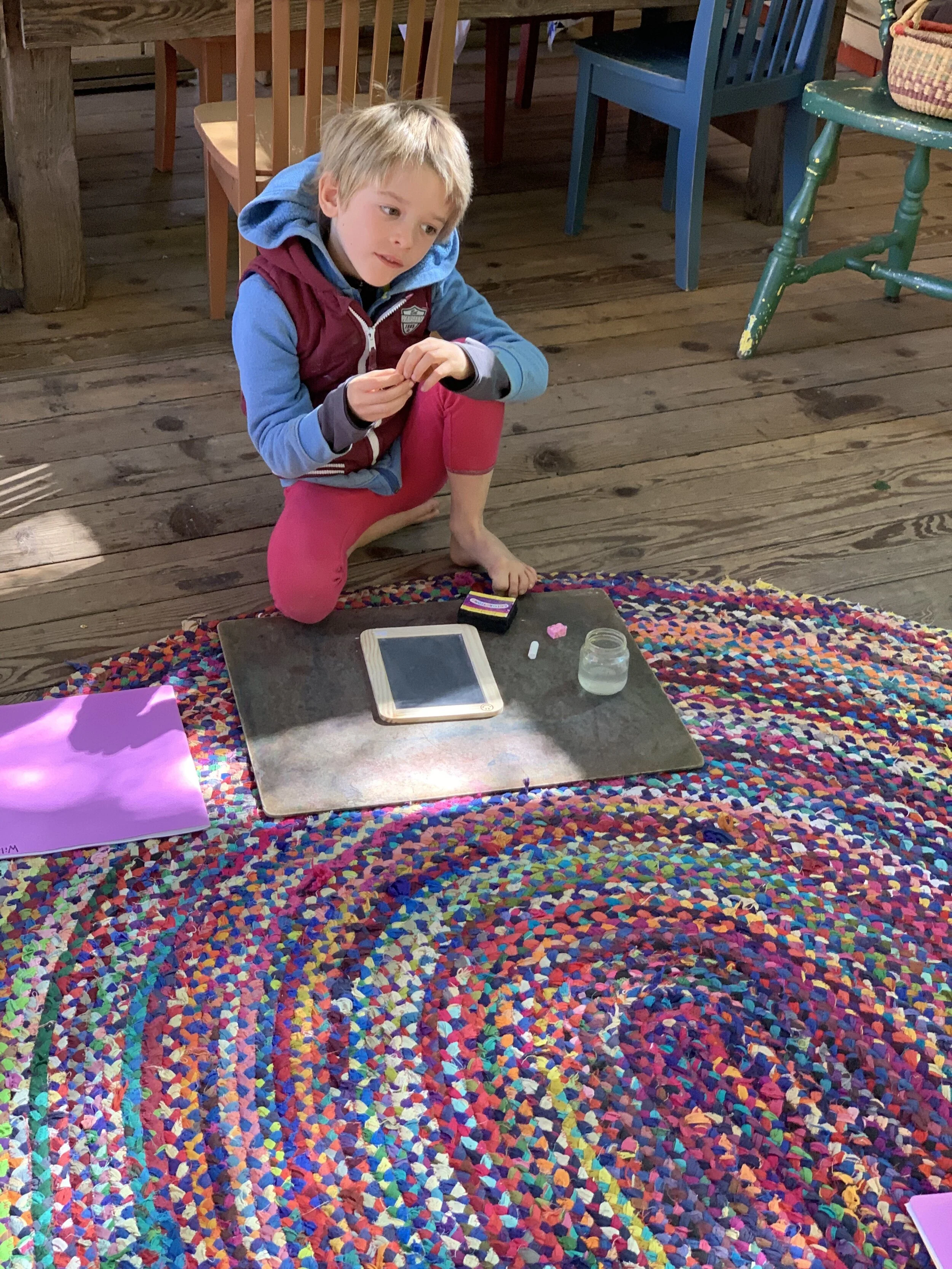
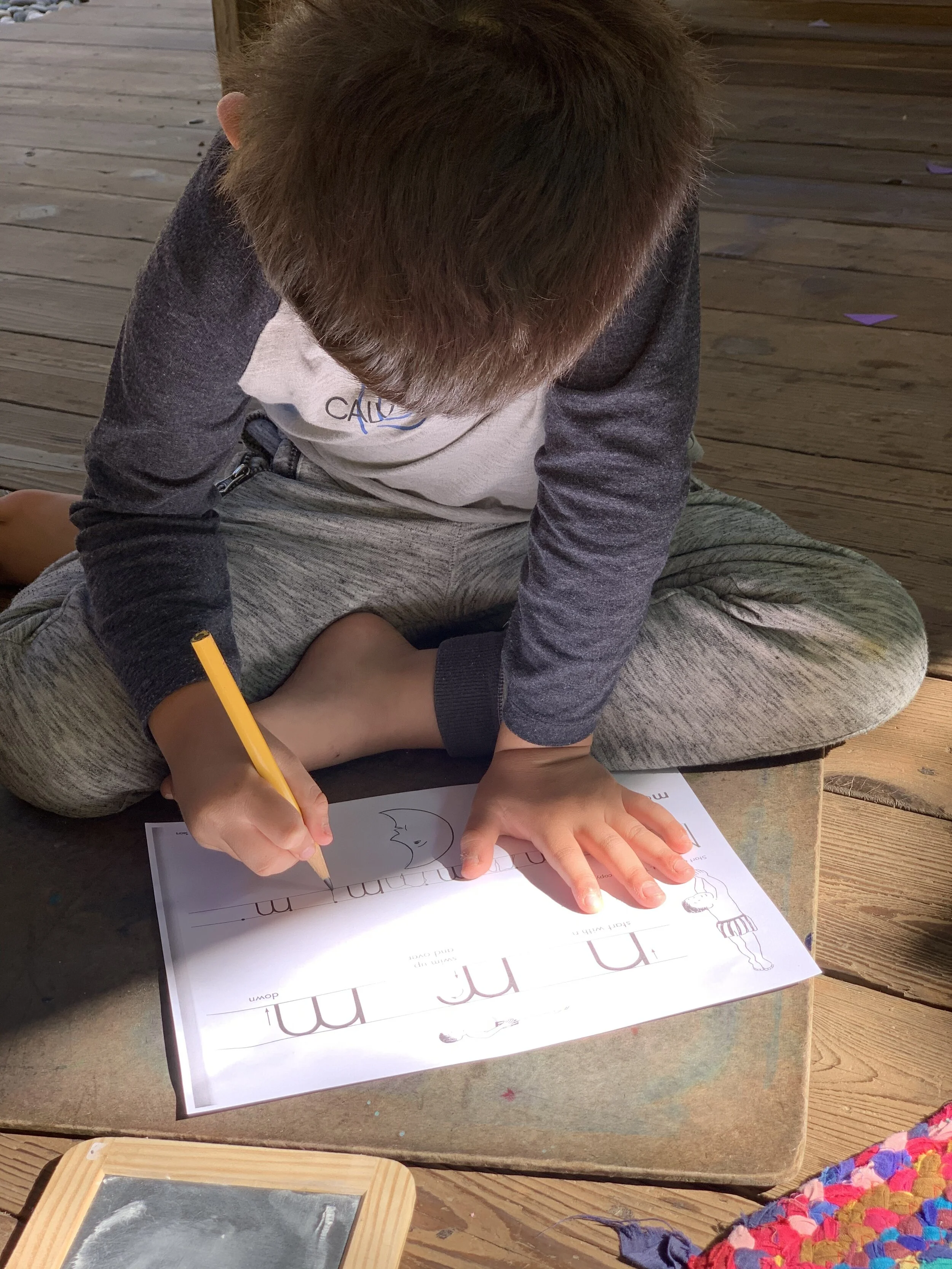
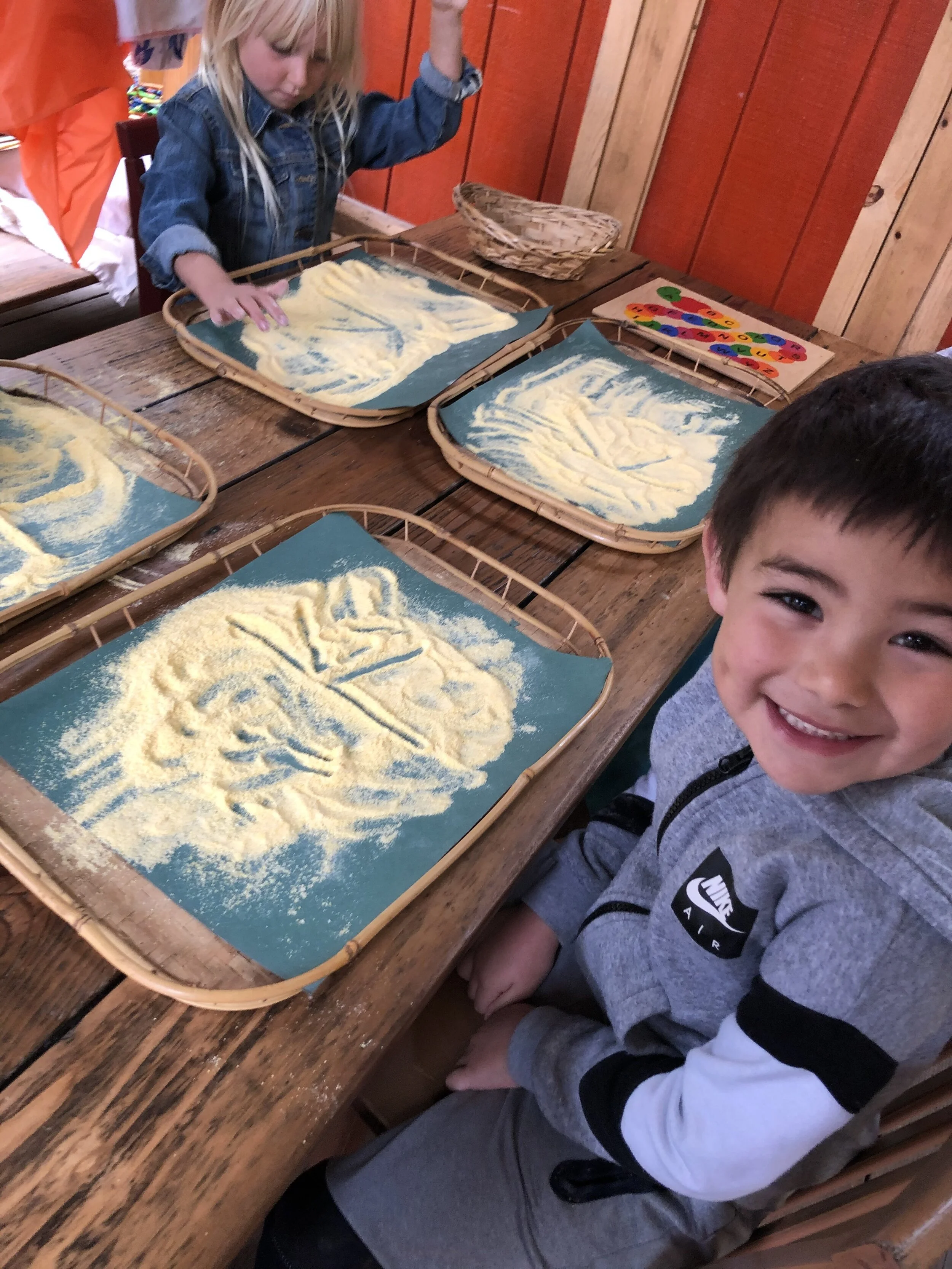
While working with letters, the children also continue to focus on handwriting using the Handwriting without Tears curriculum and the wet, dry, try method of writing letters with water, drying the water with a little sponge following the correct writing method and then finally replicating the letter with chalk. This way, hopefully, the letters take on a physical component and are more likely to become part of the kids’ knowledge base.
The kids have been partnered with Orchard students in the 4/5/6 class and have begun a pen pal exchange. They are very excited! There’s a mailroom on campus (the little red playhouse by the bathrooms) and the educational opportunities with this project, as well as the social possibilities, are so rich. Hopefully, we’ll emerge from the precautionary model of keeping students in different groups, separated, sometime this year and the kinders will be able to meet their big buddies, have lunch with them, and work collaboratively as is usually the case.
Colleen’s re-enactment of the classic story, “The Little Old Lady Who Wasn’t Afraid of Anything,” was another rich foray into language and story, with the focus on story sequence, learning lines and timing, getting comfortable performing/presenting in front of an audience and more.
(Note: Erica, Norah’s mom and one of the teachers for the older kids, videoed the play. It was performed twice, with some role changes, however I’ve only been able to upload one version since I’m at my free weekly limit with Vimeo after one upload. I can try to add the other version next week.)
Math: In math, we are slowly investigating each number, one by one, and the kids are writing/drawing about these in their “golden number books.” For number one, we talked about things there are only one of: the Earth, the sun, the moon, and of course, each of them. For two, we talked about the symmetry in the body, named all the body parts of which we had two, and then traced their two hands. For three, they plotted three dots on paper and used these to make dot-to-dot triangles and listed stories of 3’s like the Three Bears and The Three Little Pigs, And for four we discussed the four seasons. As well as learning the correct number formation for each number, they learn the word for each number, and how to represent it with tally marks.
In addition, Colleen brings out rhythm sticks each week for children to create rhythms based on the number for the week. Each child creates a rhythm (one-beat rhythm, two-beats, three-beats, etc) and we all copy the beat created. Each week it gets a little more complicated as we add in another beat.
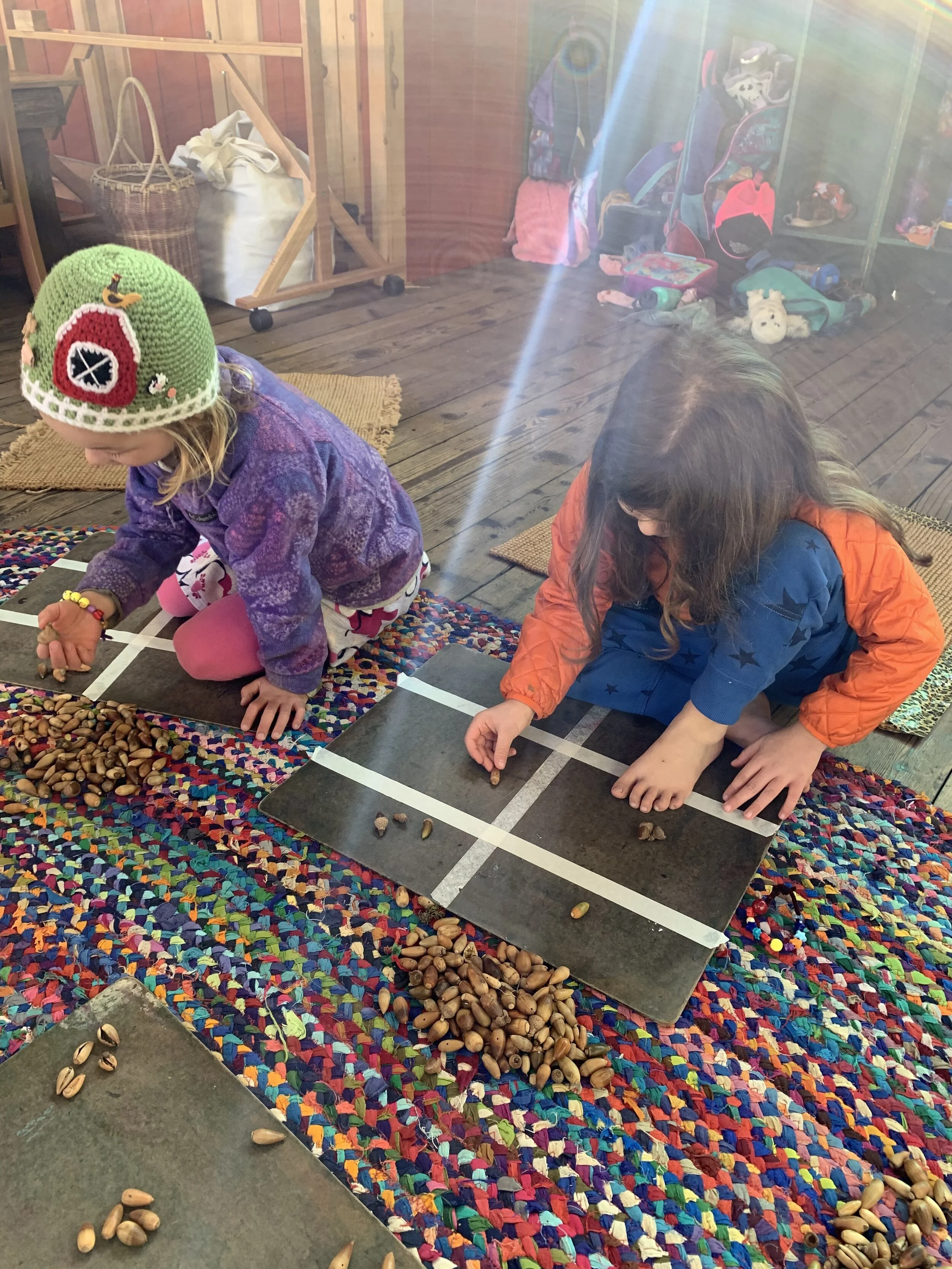
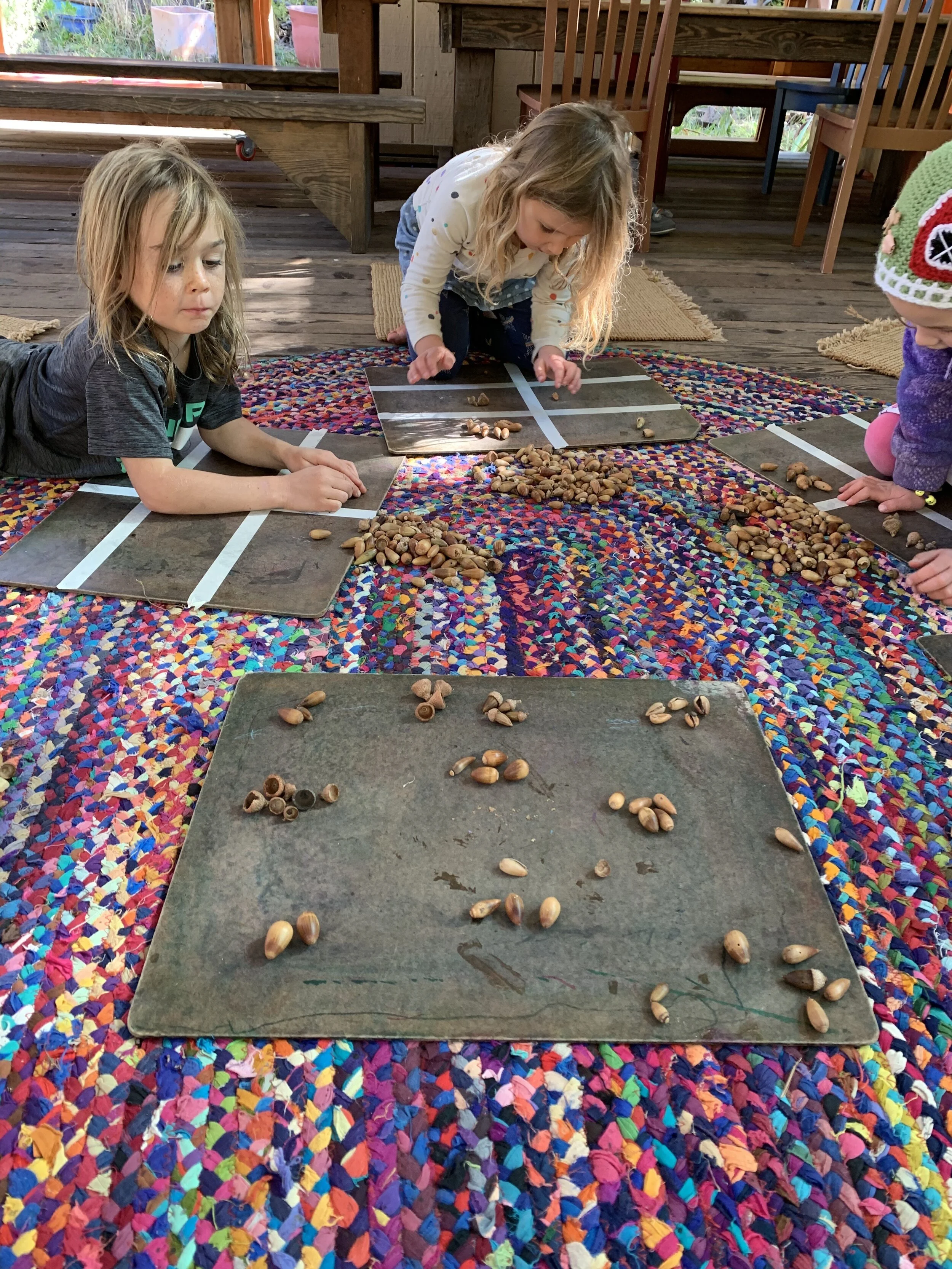
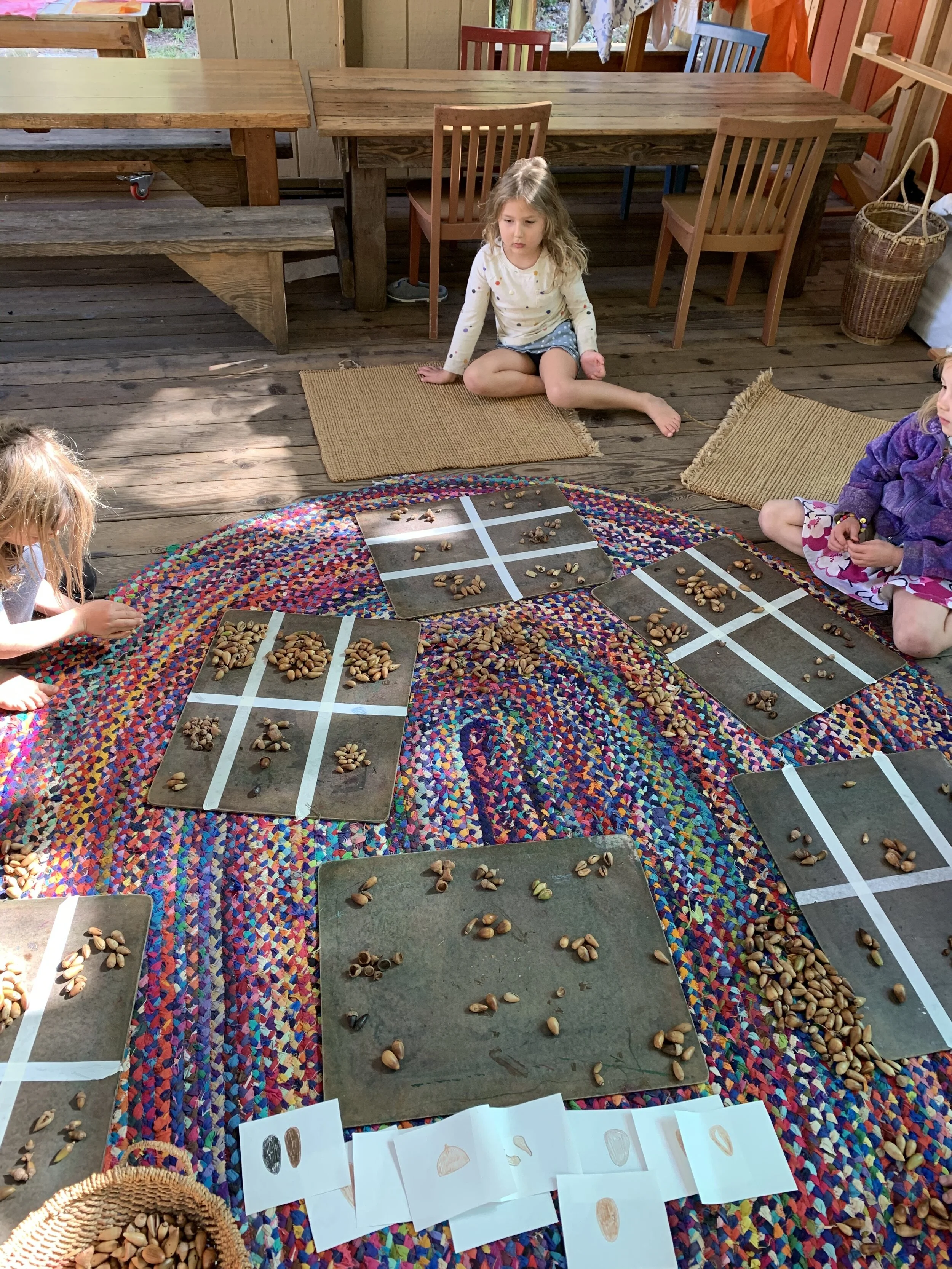
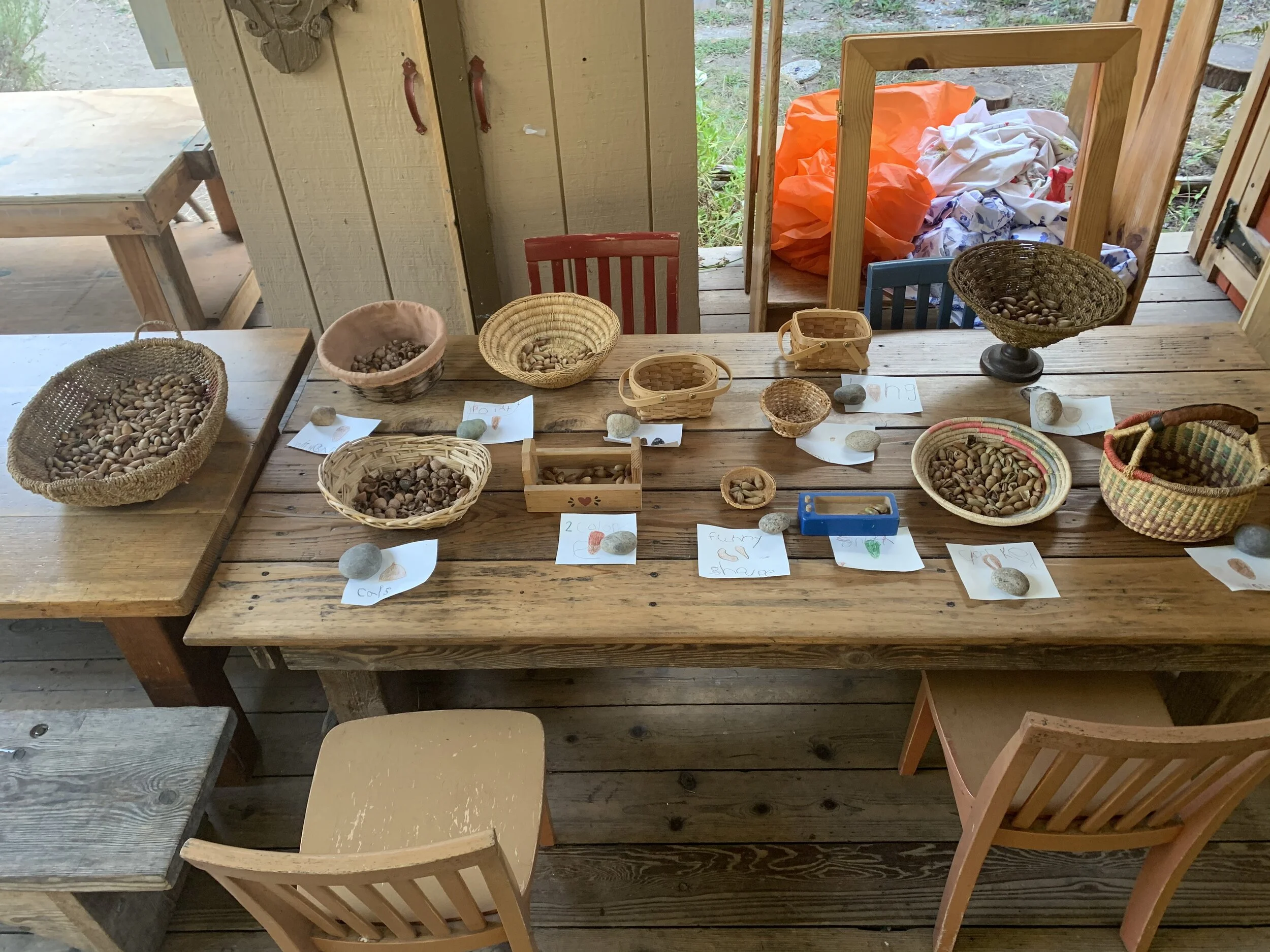
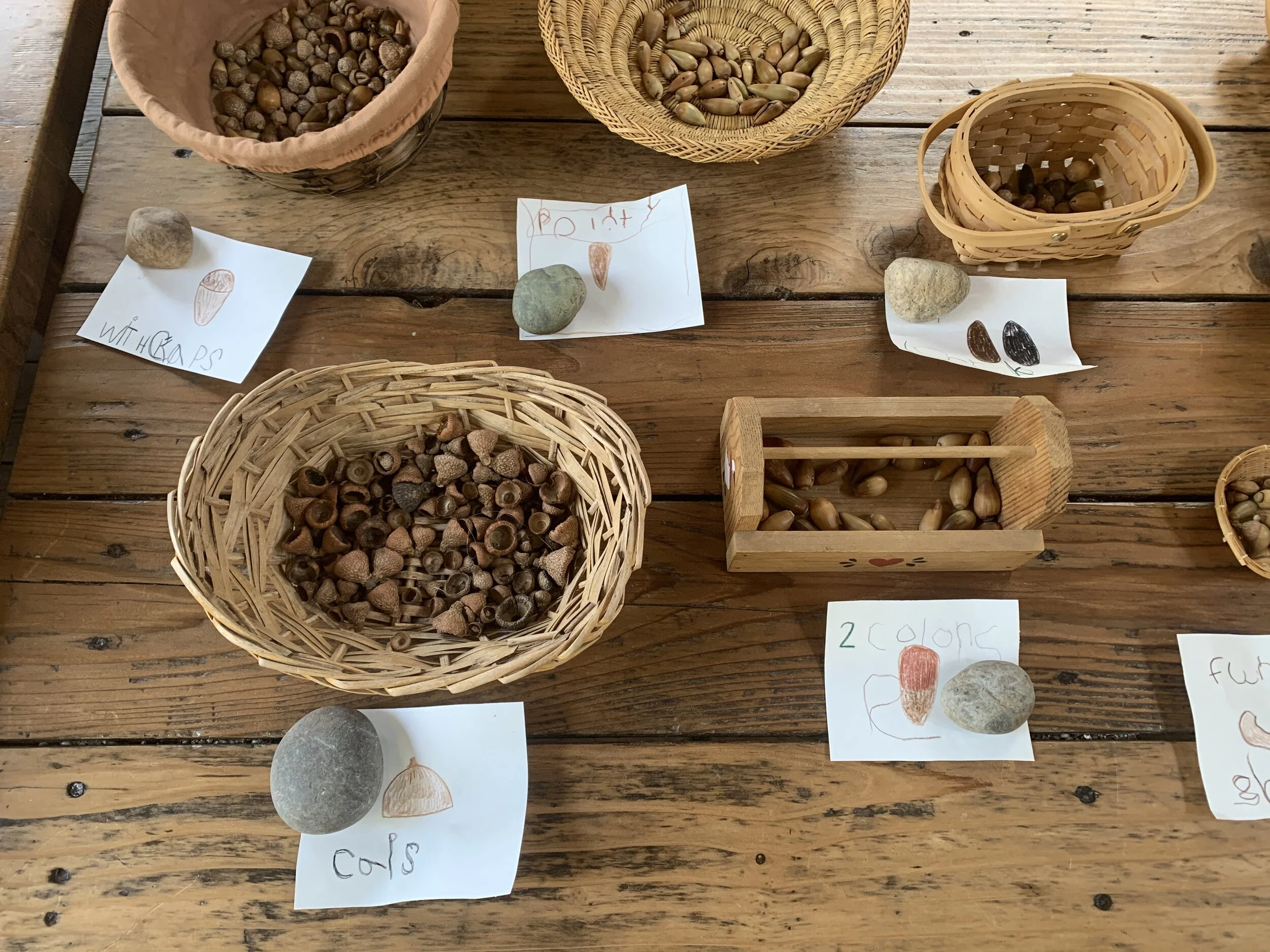
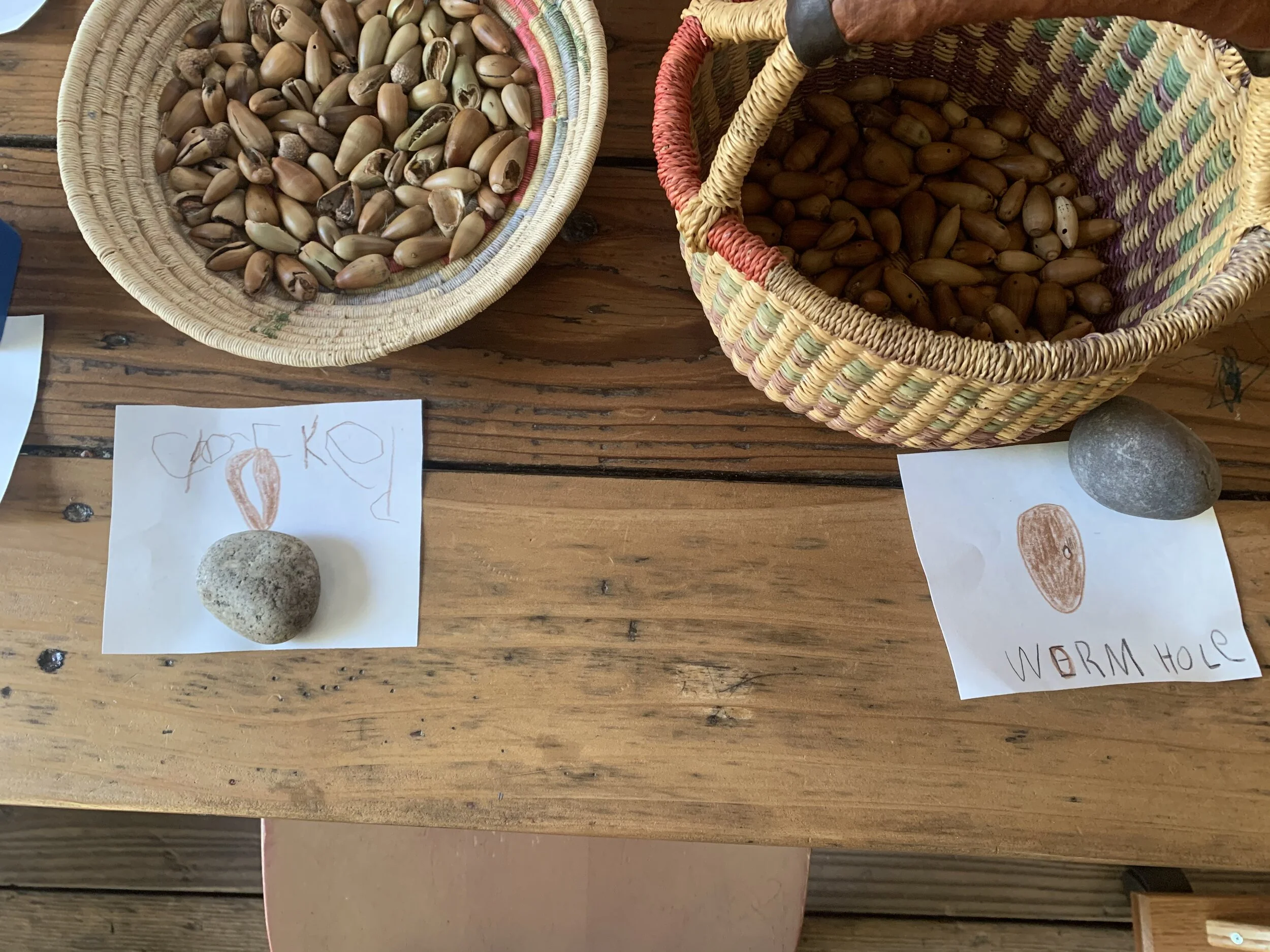
We have sorted out our acorns according to categories that the children developed, like acorns with caps, green acorns, fat acorns, pointy acorns etc. Organizing by attributes is an important foundational mathematical concept. Acorns were a native food in our region and we have discussed this. They are also relied on by many of our native animal species. If we’re lucky, a former Orchard parent who lives up the road will harvest some plump white acorns for us (one of the best varieties for eating as they are not as full of tannins) and we’ll have the opportunity to process the acorns in a long painstaking process much as the Ohlone Indians did. Then we’ll add a decidedly modern twist and make delicious and nutritious acorn cake. So far, my acorn source has not delivered. She says it may be a dud acorn year.
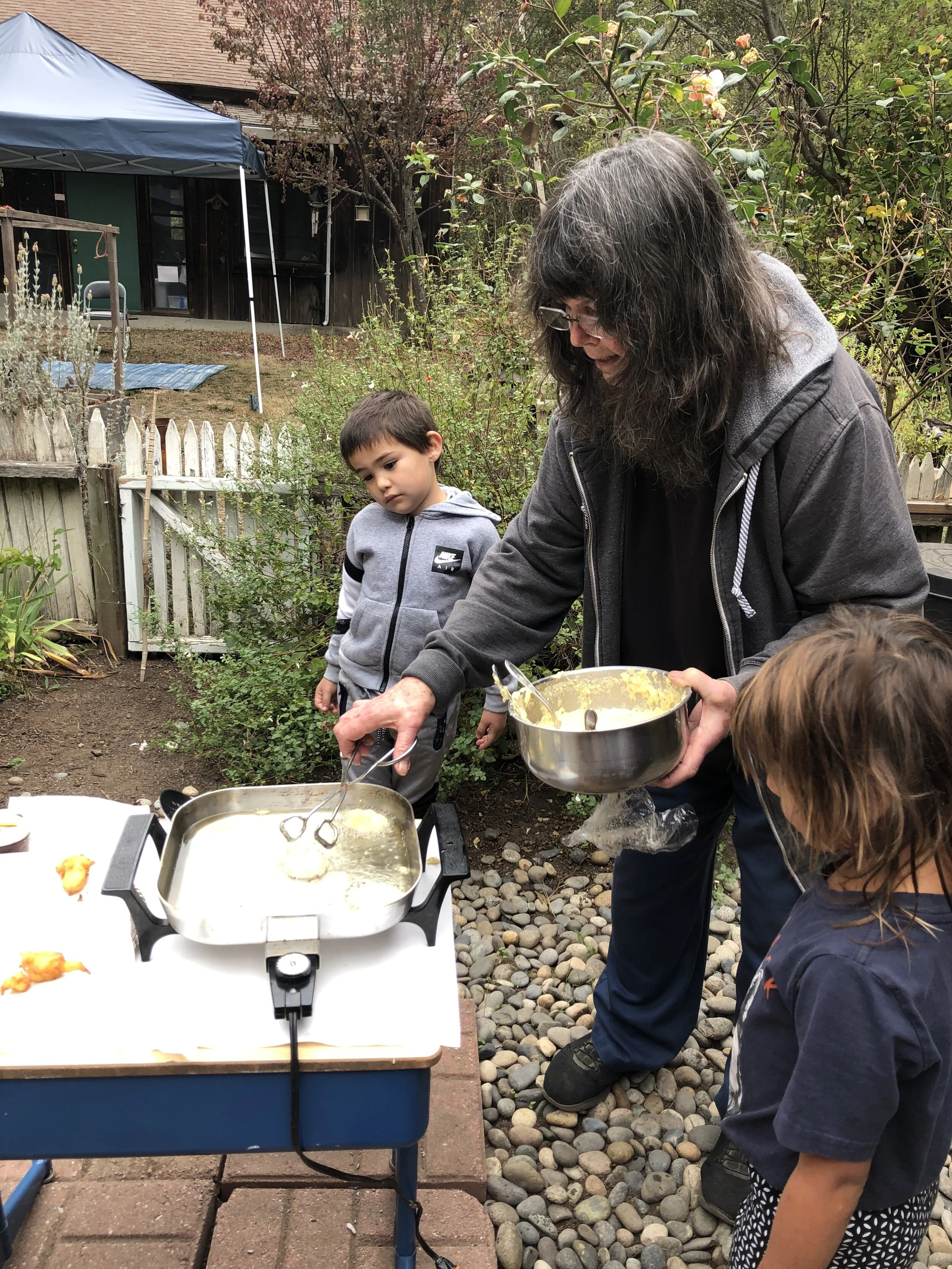
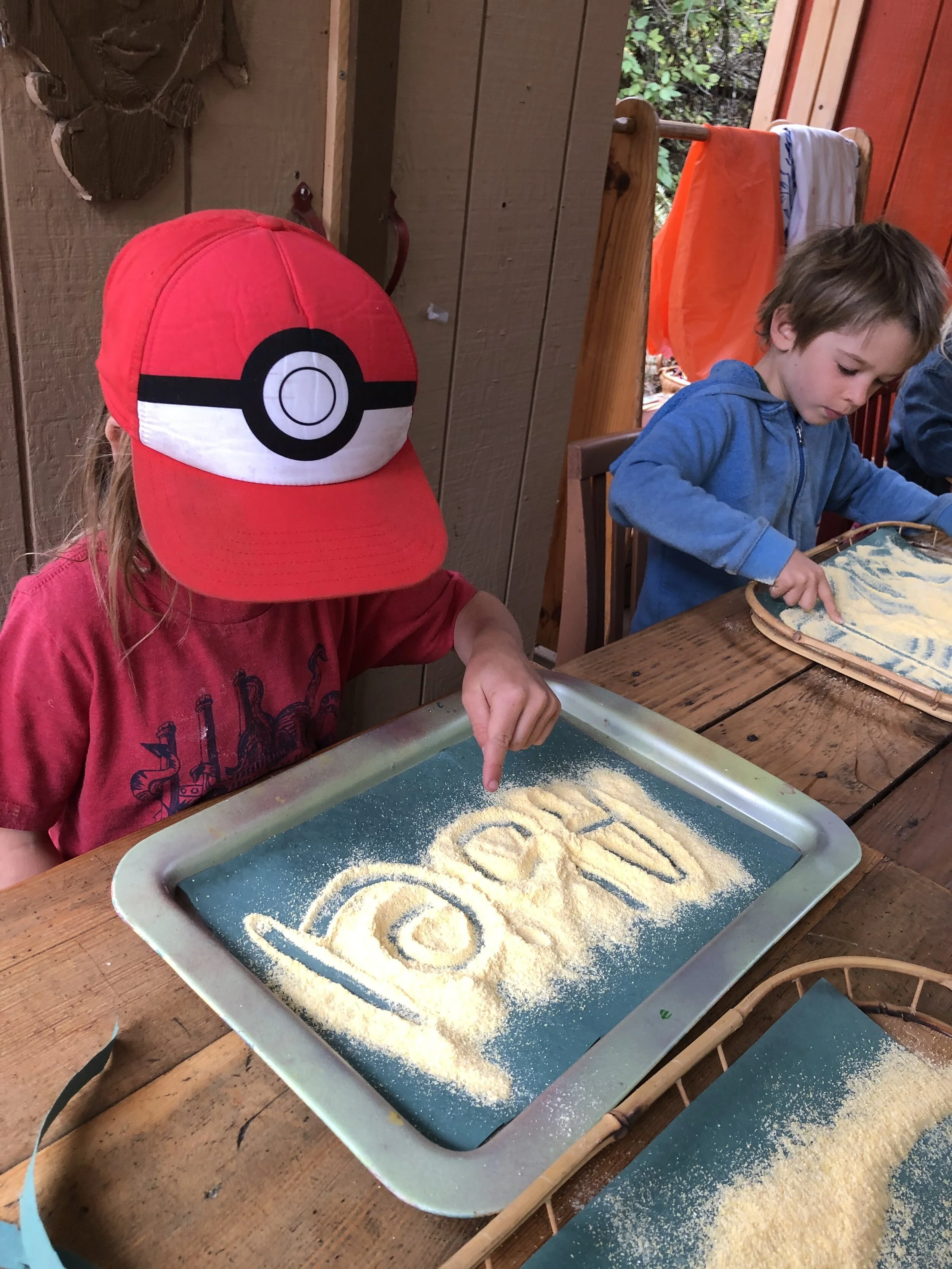
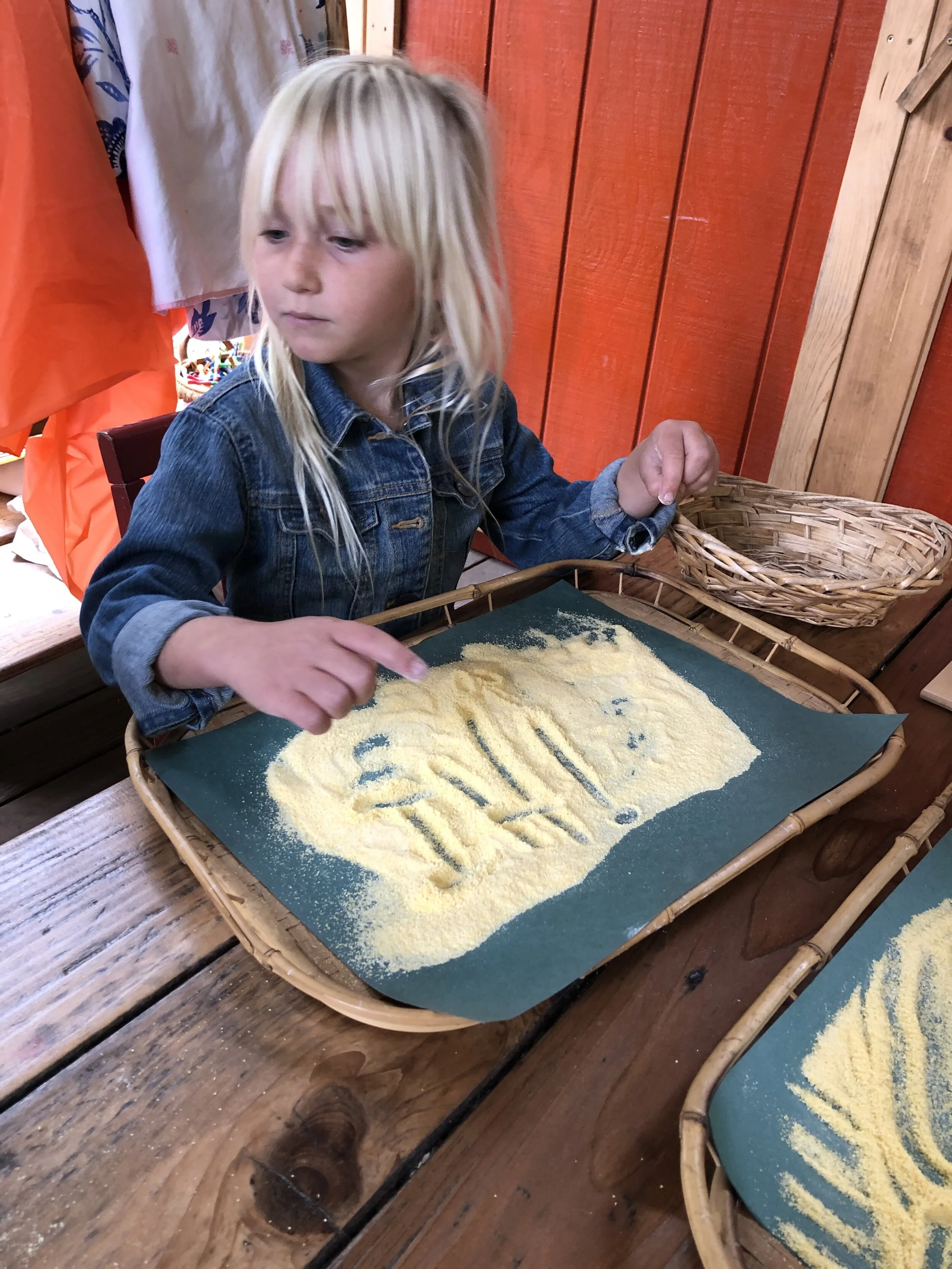
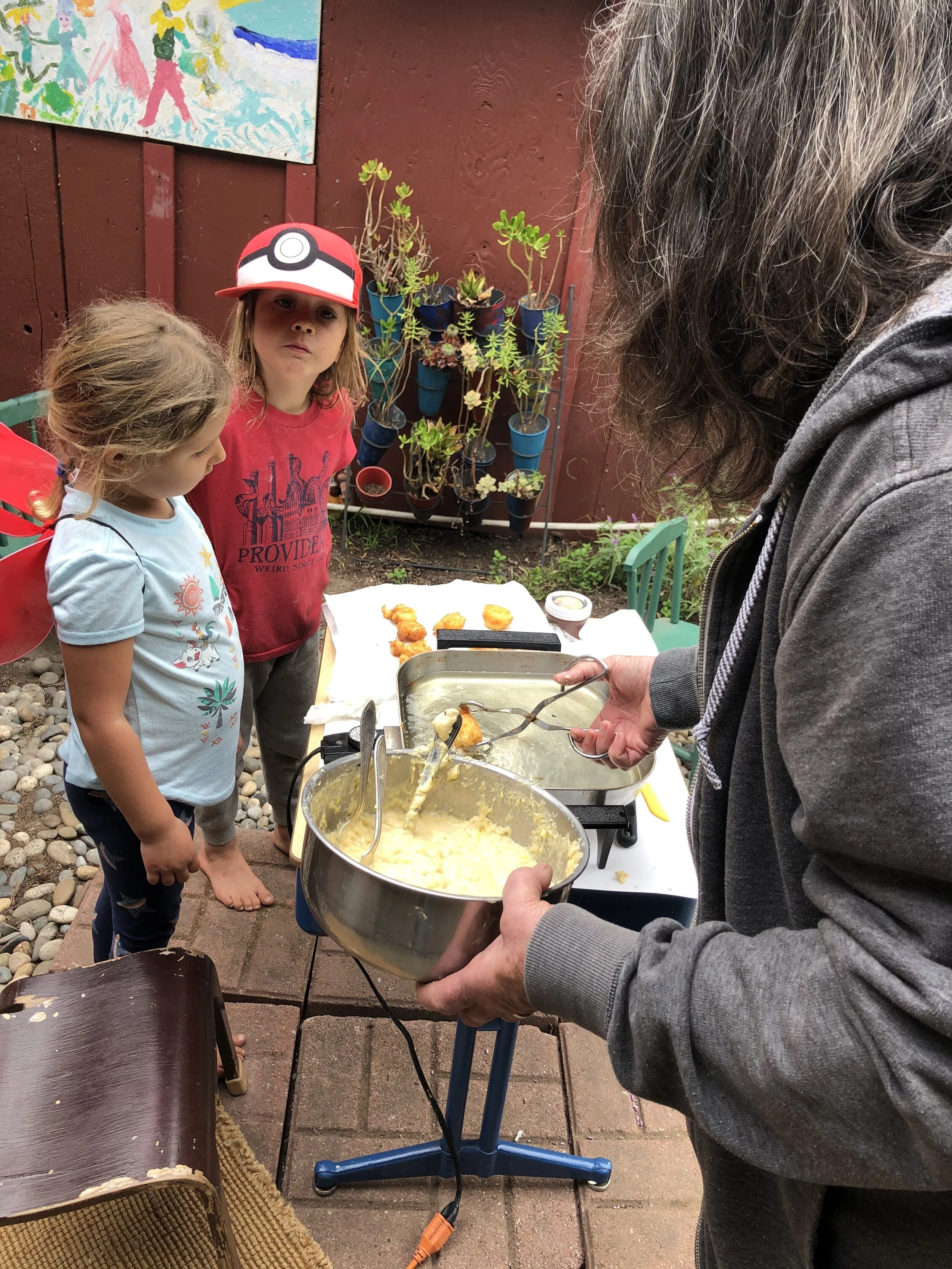
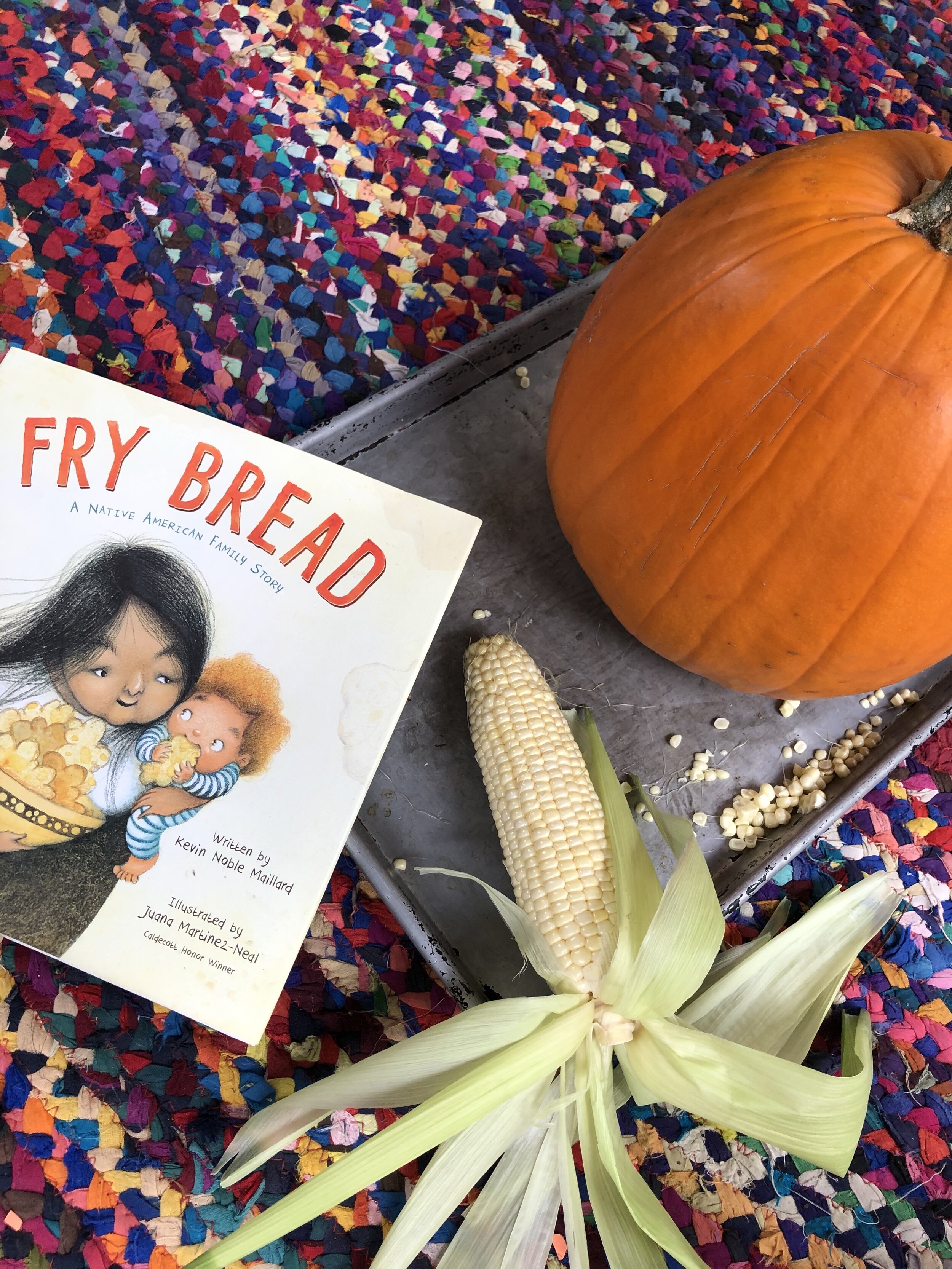
Social Studies: Indigenous People’s Day inspired discussions of the First Nations. During rest time, Colleen has spent the month reading different stories out of the book, In a Circle Long Ago, a collection of Native myths. She said, “This has sparked discussions about myths and facts. We read another book, Fry Bread: A Native American Family Story, that discusses the complicated and painful history of fry bread. It tells the story in a simple and poetic way. Fry Bread represents perseverance, strength, and change. A recipe was included so of course we had to make it, fry it and eat it! We also discussed the native food available long ago like pumpkins and corn. We used cornmeal on trays to draw our names and practice letters.” Scroll through the photos below to see by tapping on each photo.
Social/Emotional:
Colleen’s Project: “Social/Emotional learning goes hand in hand with academic learning. To that end, I have worked together with the children using some of the exercises from Positive Discipline to create a feeling of safety and a structure to problem solve.
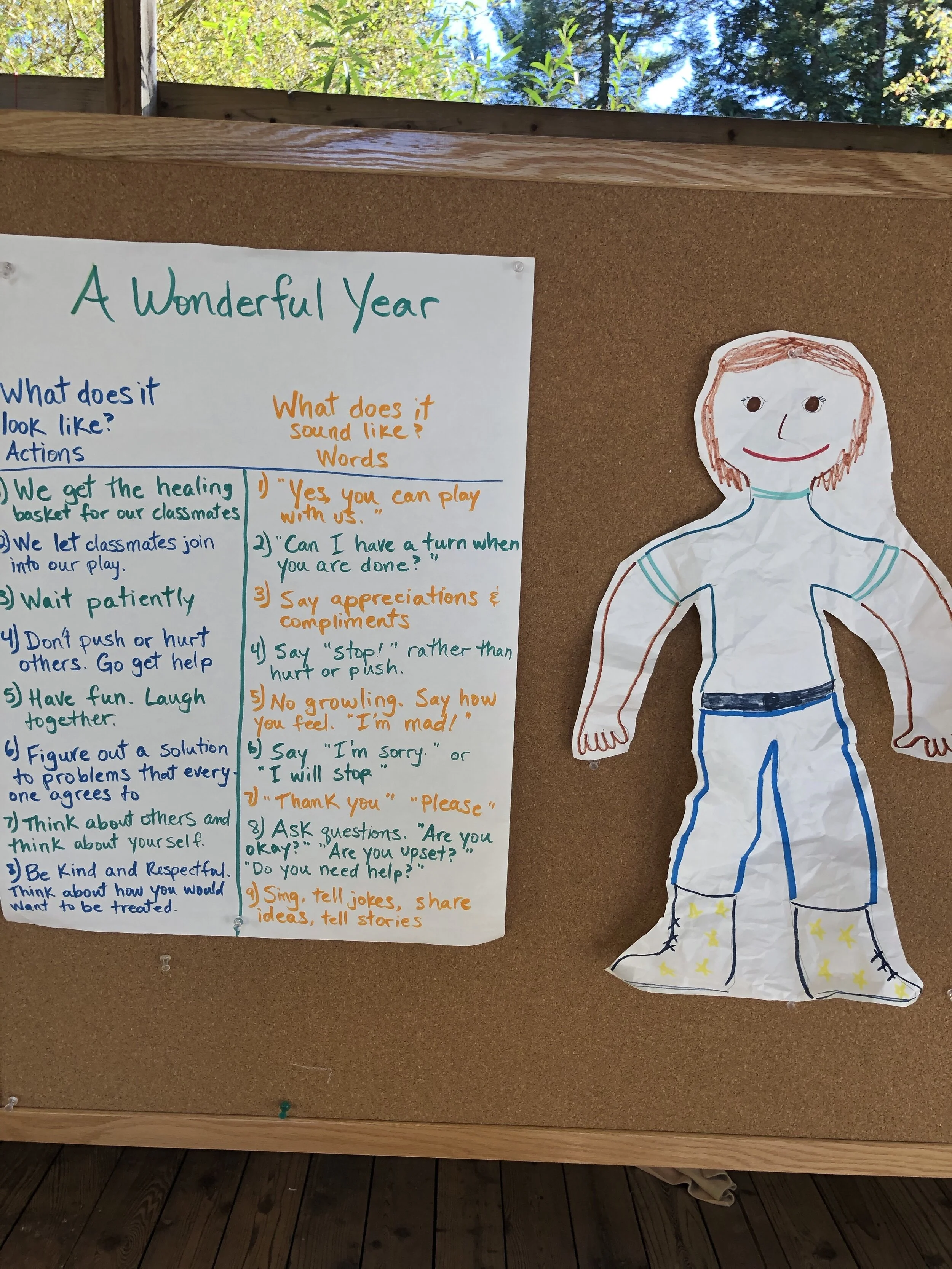
First I created a “paper” student and named her Alex. The children helped me think of possible hurtful things people might say to each other in classes such as “you can’t play” or name-calling. With each insult, I wrinkled up parts of the paper until Alex was a small wad of paper. Next, we thought of kind words and actions. Then Alex began to unfold. The children noticed that there were wrinkles left behind on Alex that can never be entirely smoothed out which opened up the idea that hurtful words and action have a lasting impact. At the end of each Thursday, we assess with Alex’s help: did I say or do anything that caused wrinkles, or did I do or say anything that was helpful and kind? The children have grown attached to Alex, even giving her hugs.
Secondly, I asked the question: How can we have a wonderful school year? The children listed what it would look like and sound like. From their ideas, we created a chart for us to review and acknowledge when we are inline with our ideas of a wonderful year and when we are getting off track.”
These children are attuned to each other and seem very open to considering each other’s feelings, making amends, practicing reflective listening, and they’re engaging willingly in problem solving as issues arise. They are learning how to negotiate friendships, how to be inclusive and yet still cement bonds with preferred playmates. We have a remarkably cohesive group and we are really enjoying the positive, playful energy and the natural inclination they have to work together as a unit.
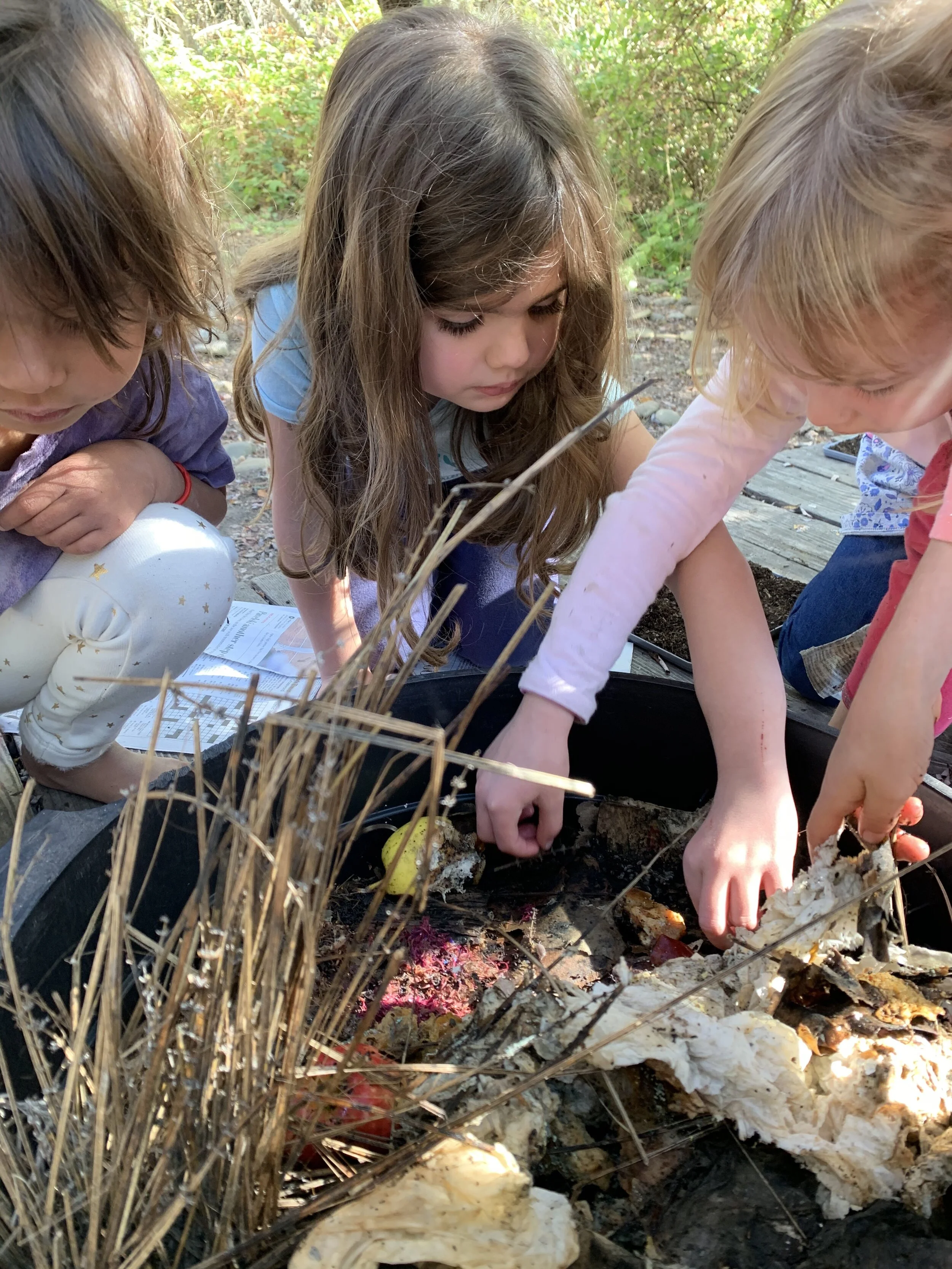
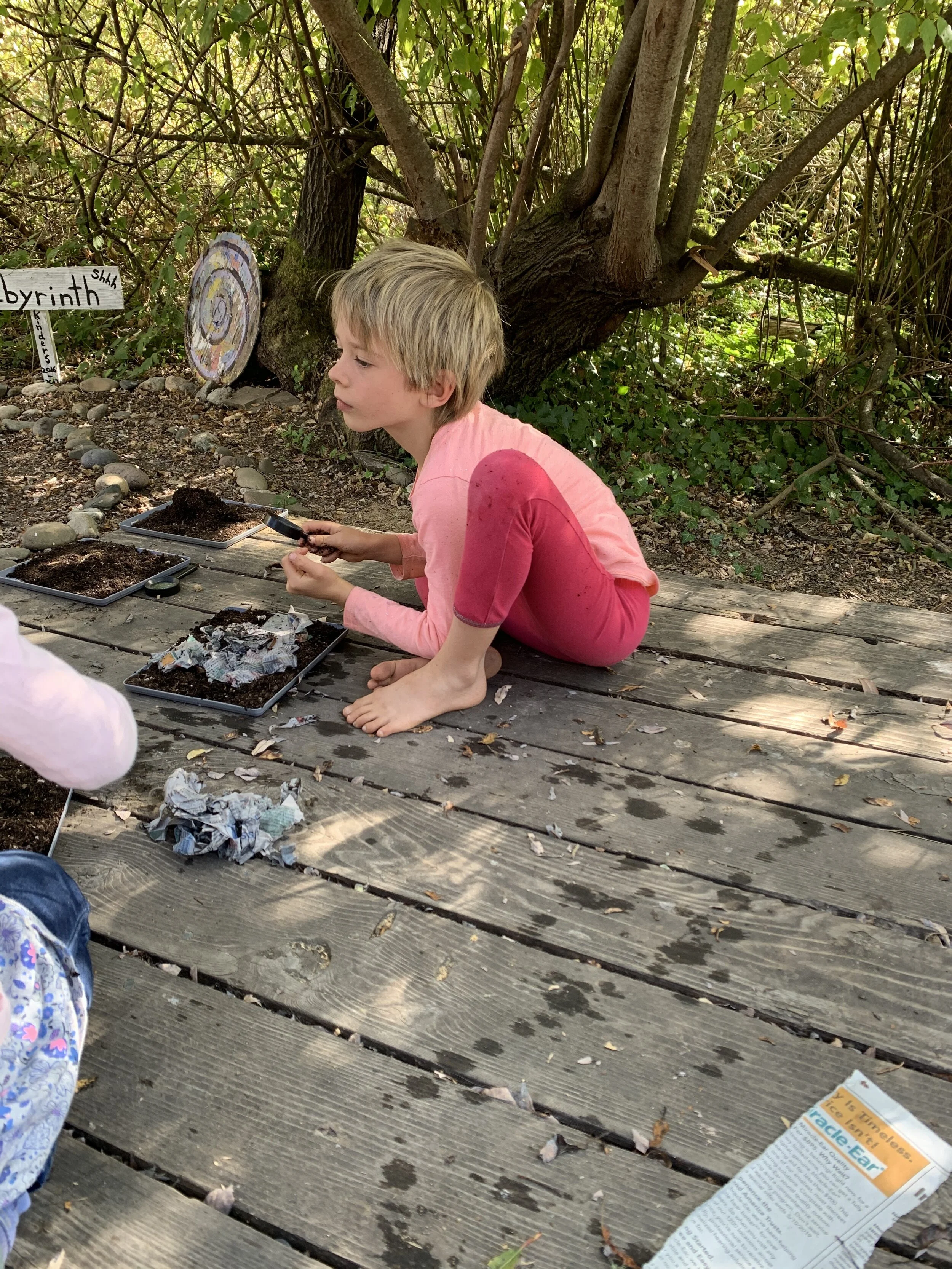
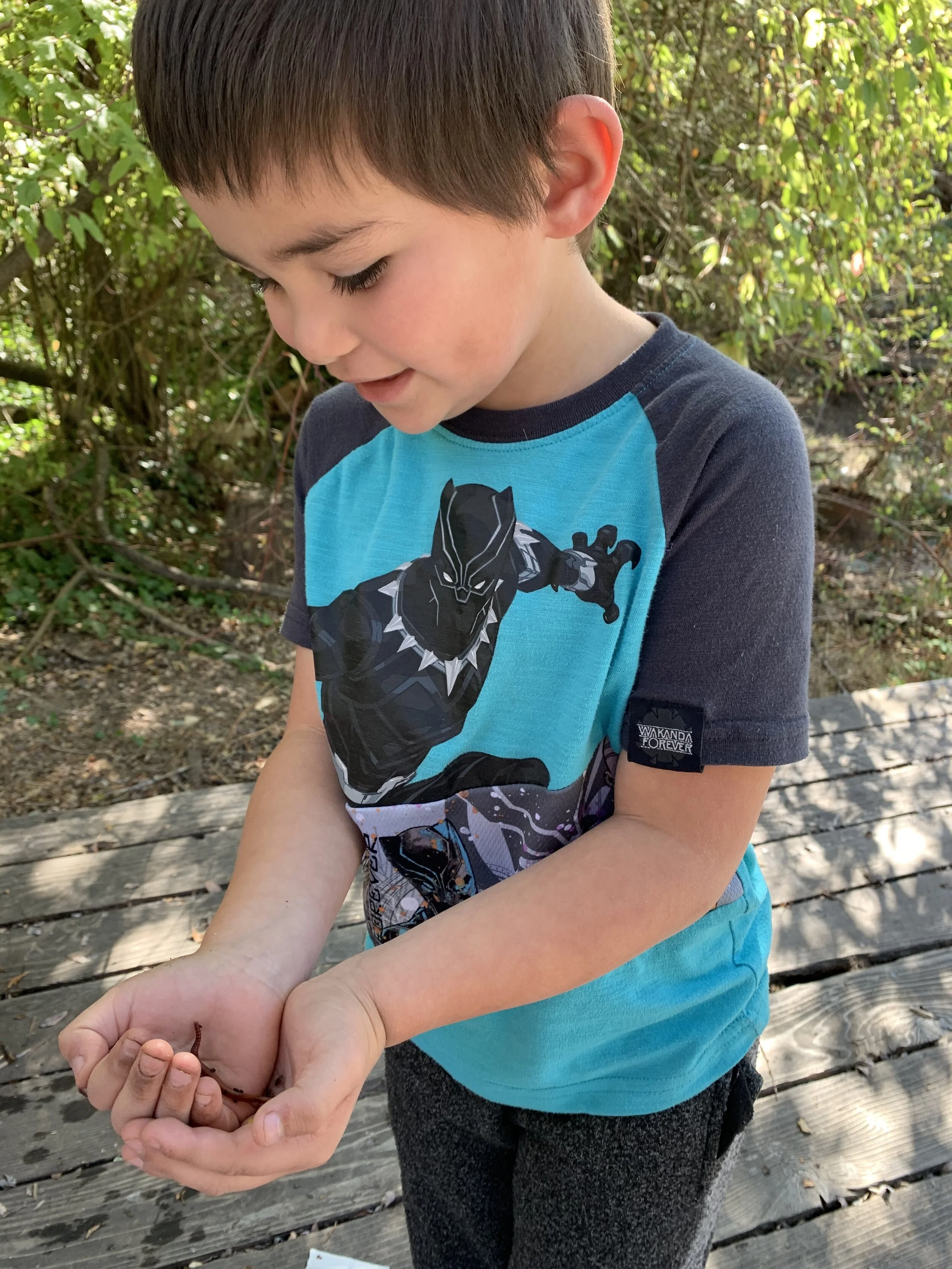
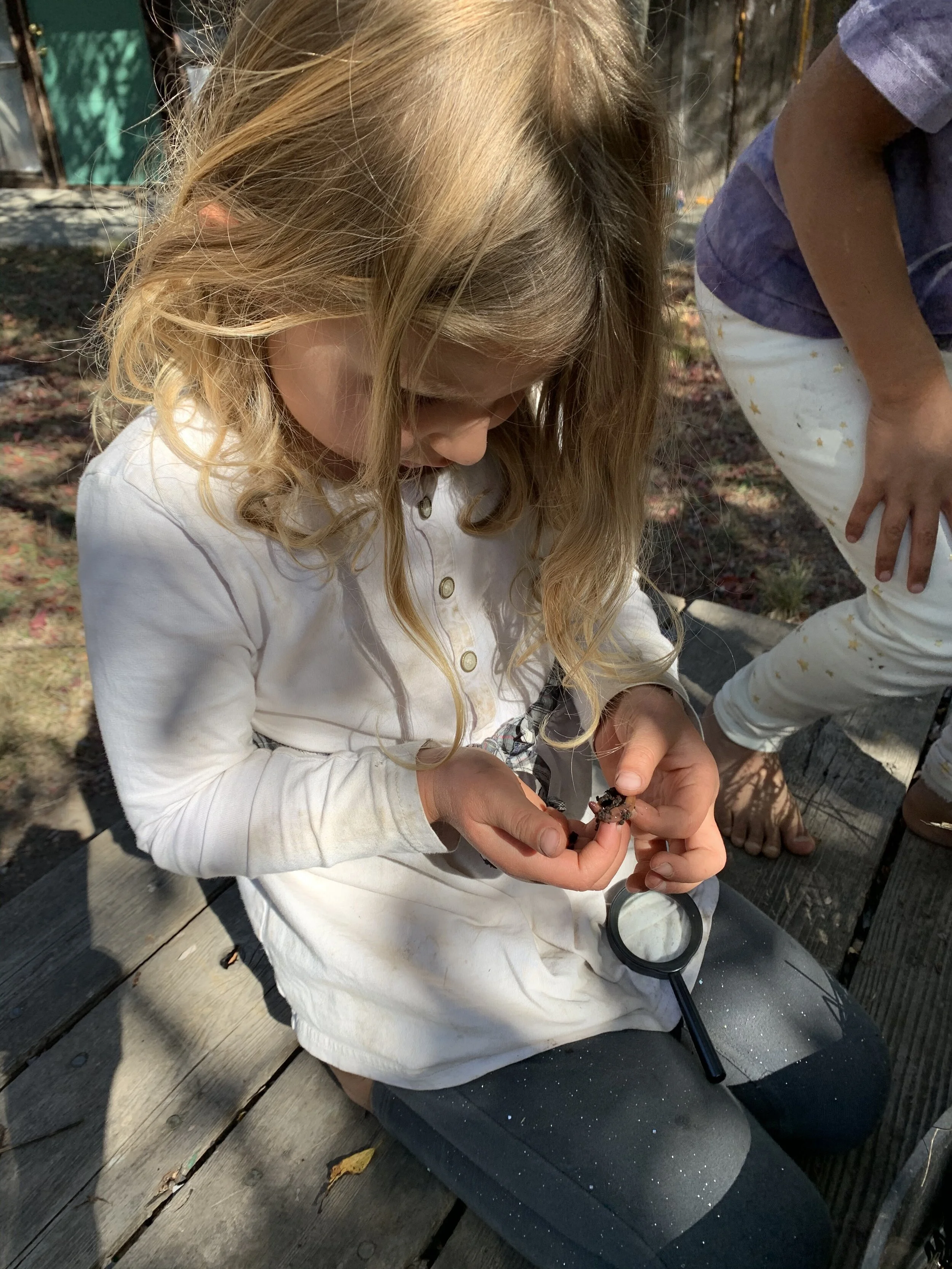
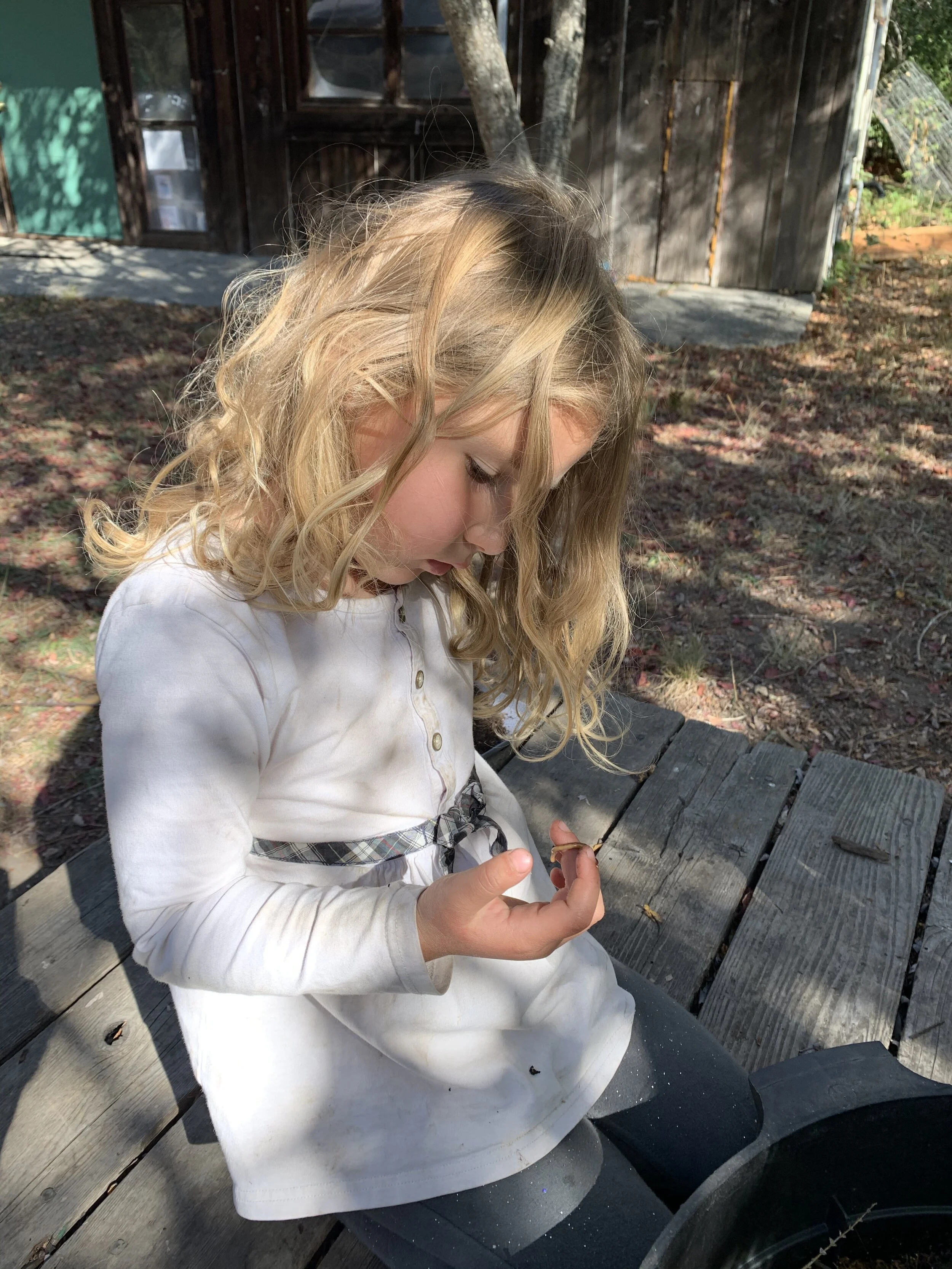
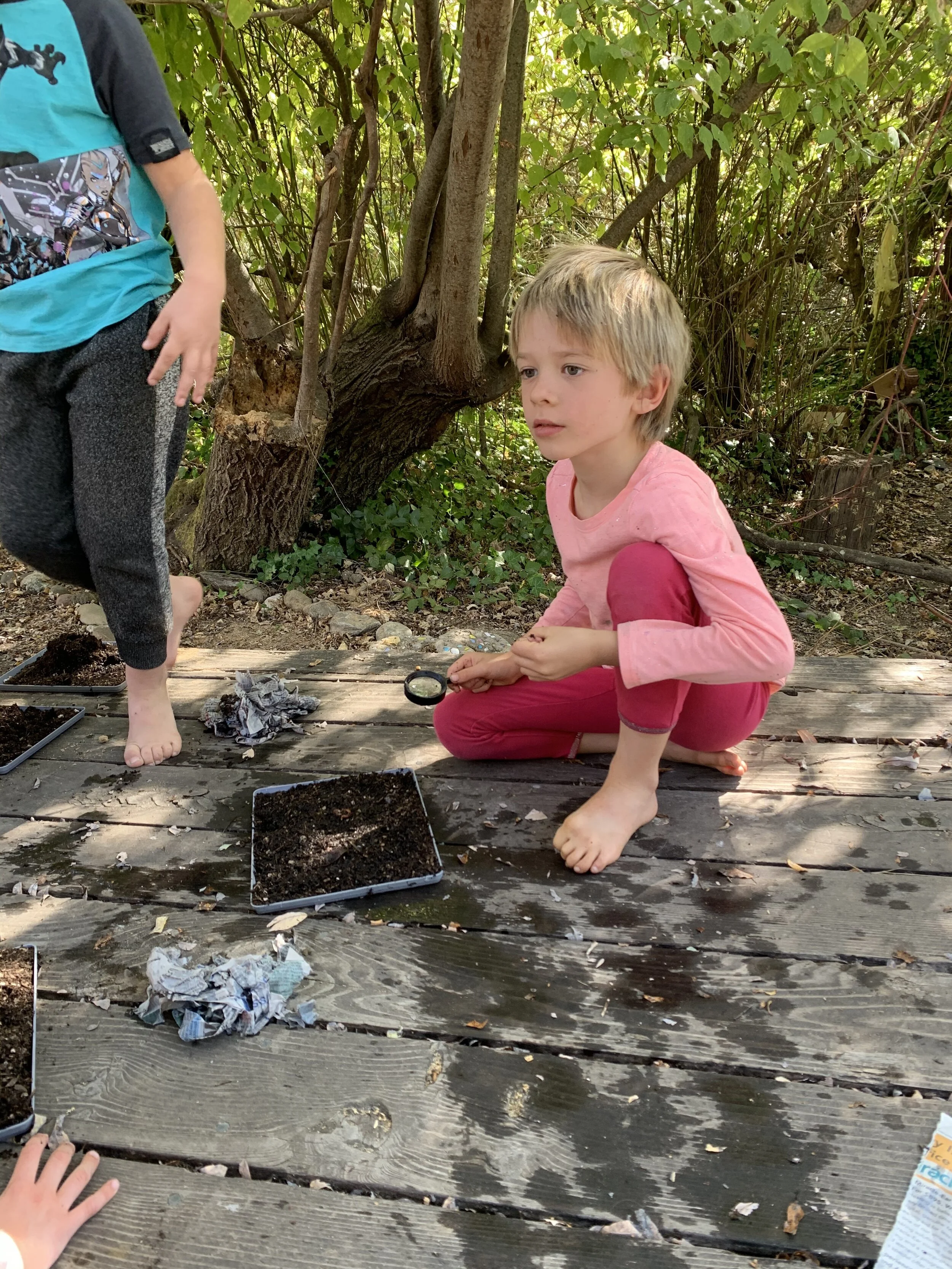
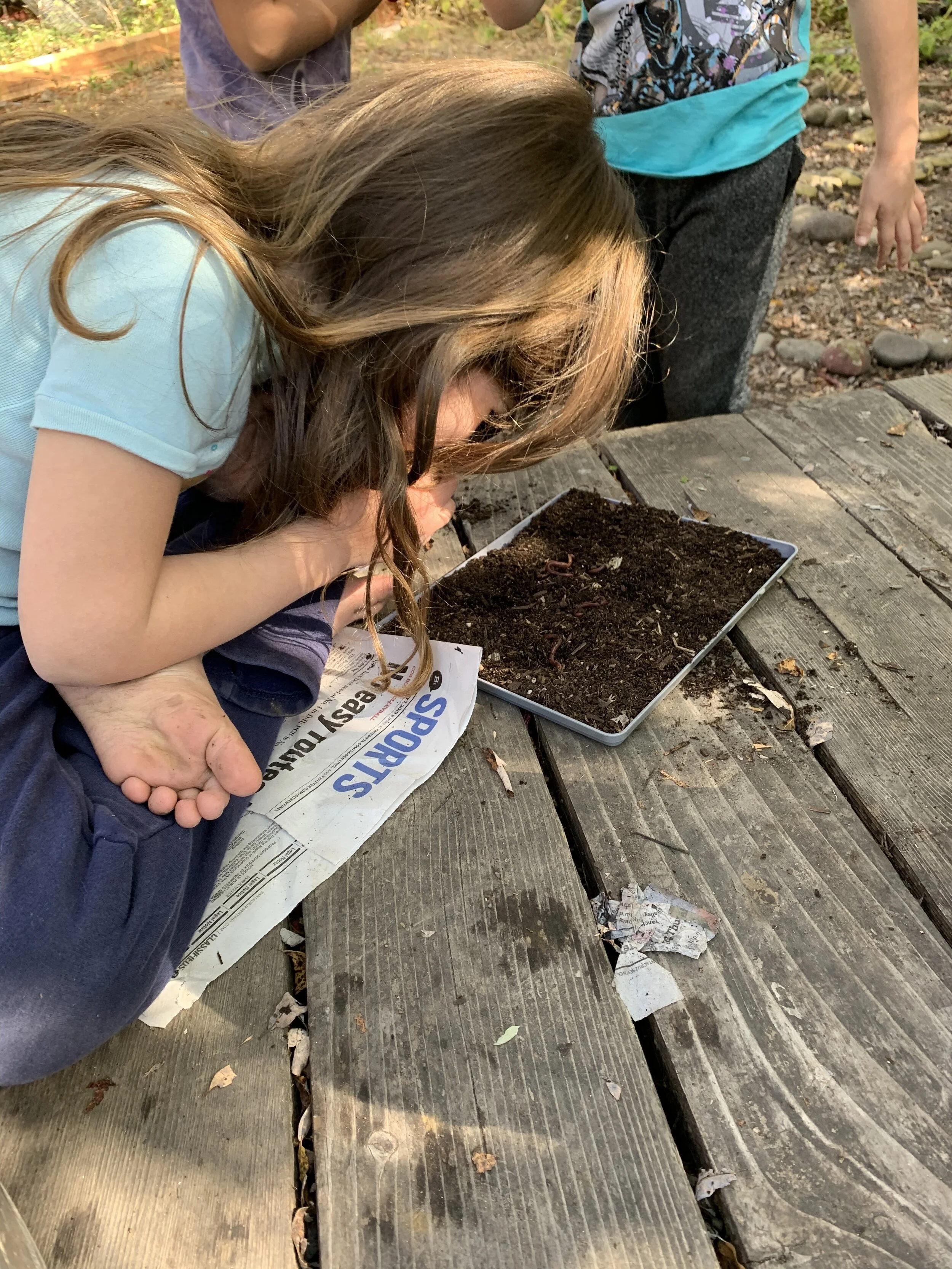
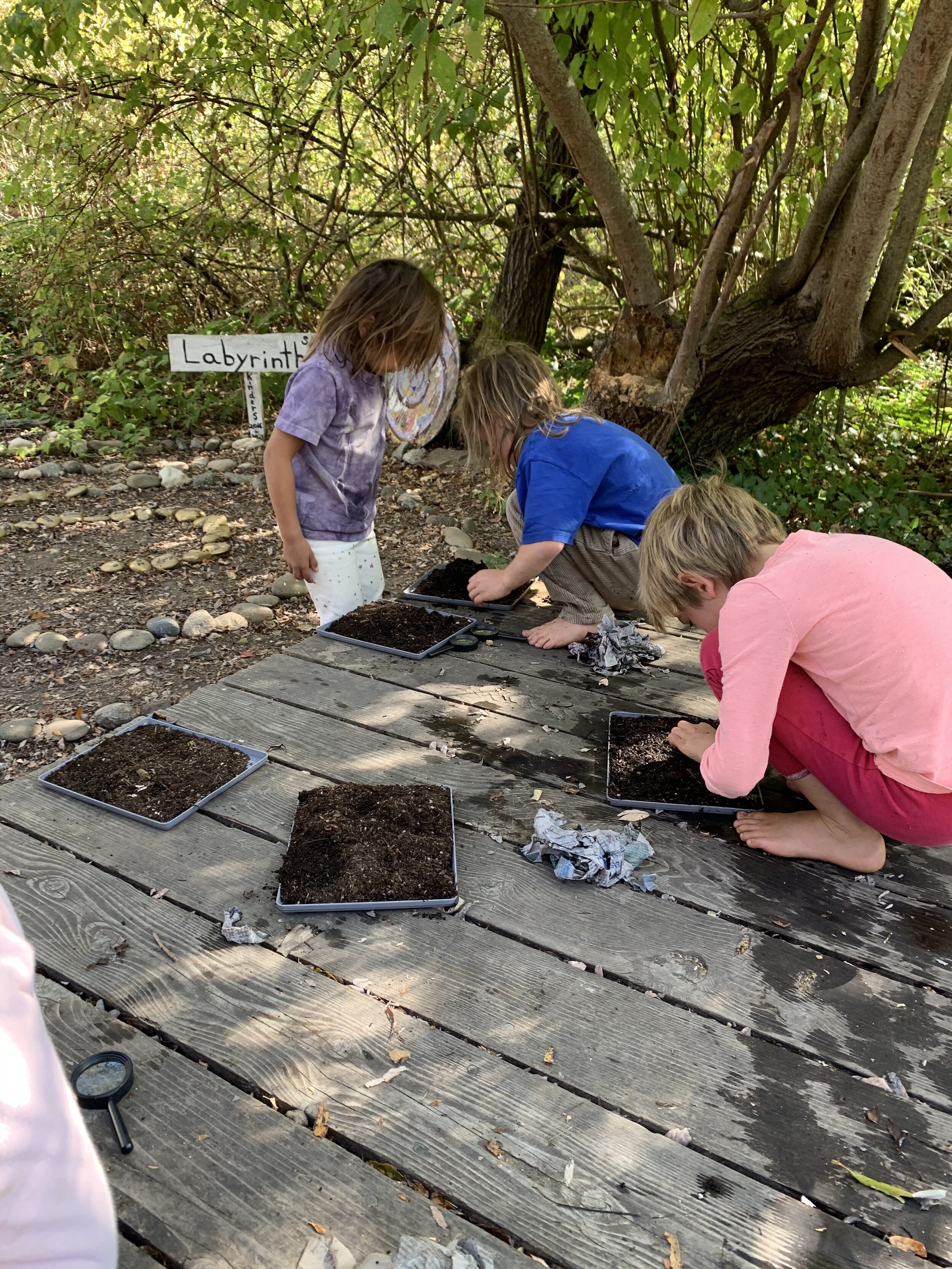
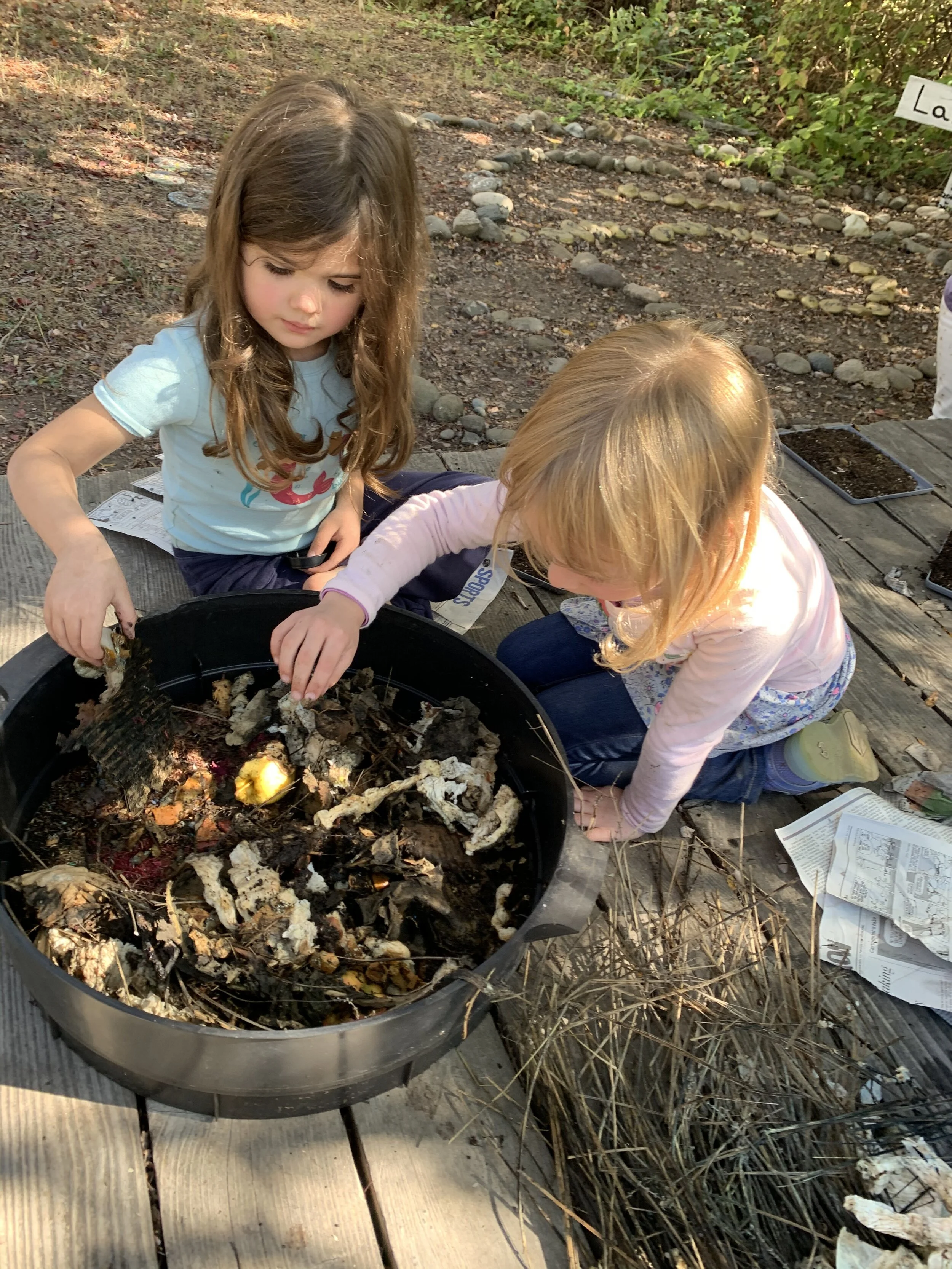
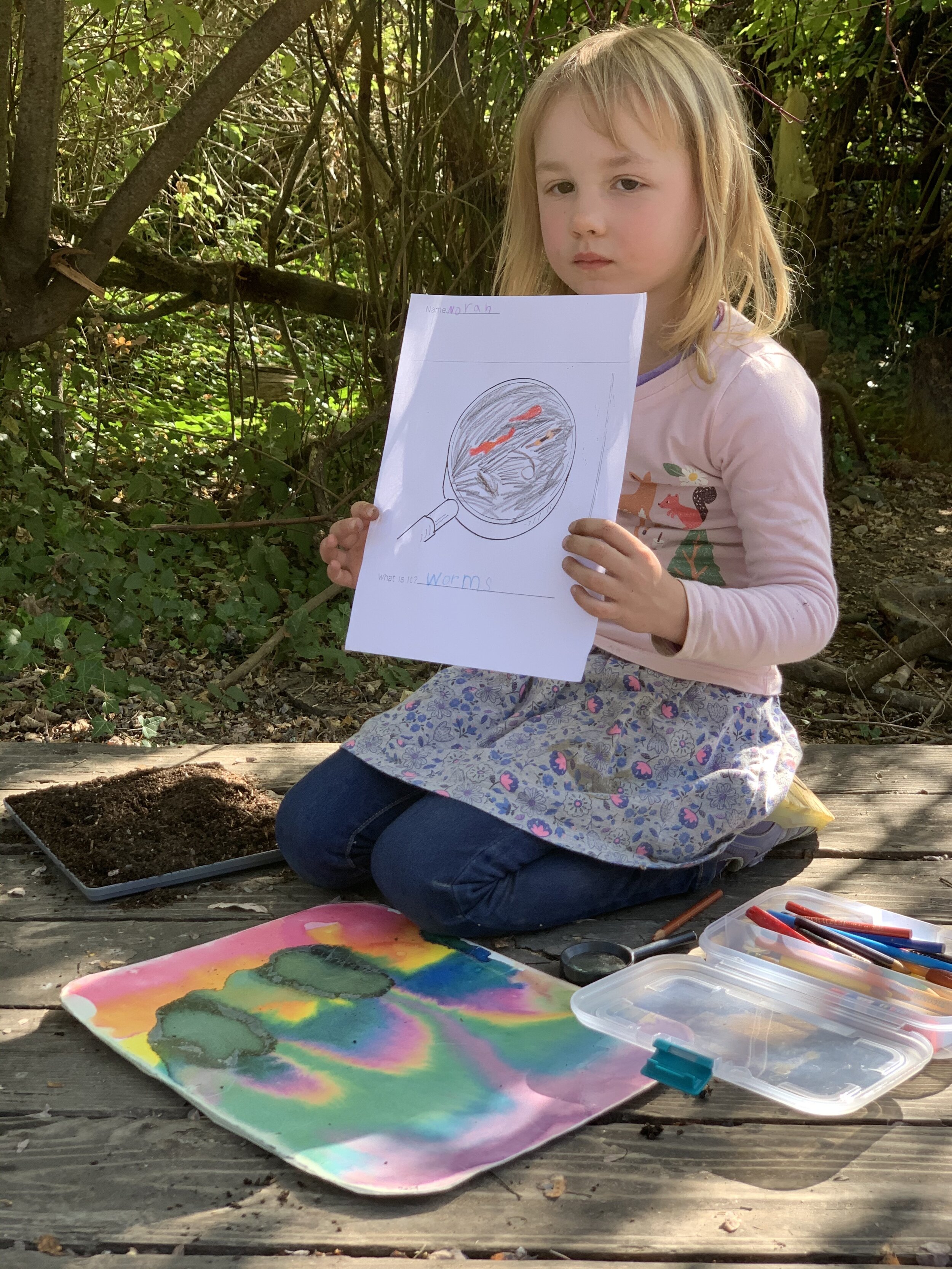
Science: We continue to look at lifecycles and the creatures that live amongst us. This month the focus has been on worms. We shared cool worm knowledge and then studied the worms living in our worm house/composter. Several students gained new insights and appreciation for these little soil factories and while some were initially a bit squeamish, learning that worms have no teeth, have 5 hearts and are both boys and girls at the same time endeared these wrigglers to everyone. The kids made quite a few discoveries while examining worms with magnifying glasses, including which end is the head and that worms have tiny hairs that help them with traction. We will continue with worm work next week and do some worm experiments (nothing cruel, don’t worry). We also revamped the worm bin, giving fresh food, fresh bedding and water and removing the exploding population of roly-polys. Enjoy the photos below.
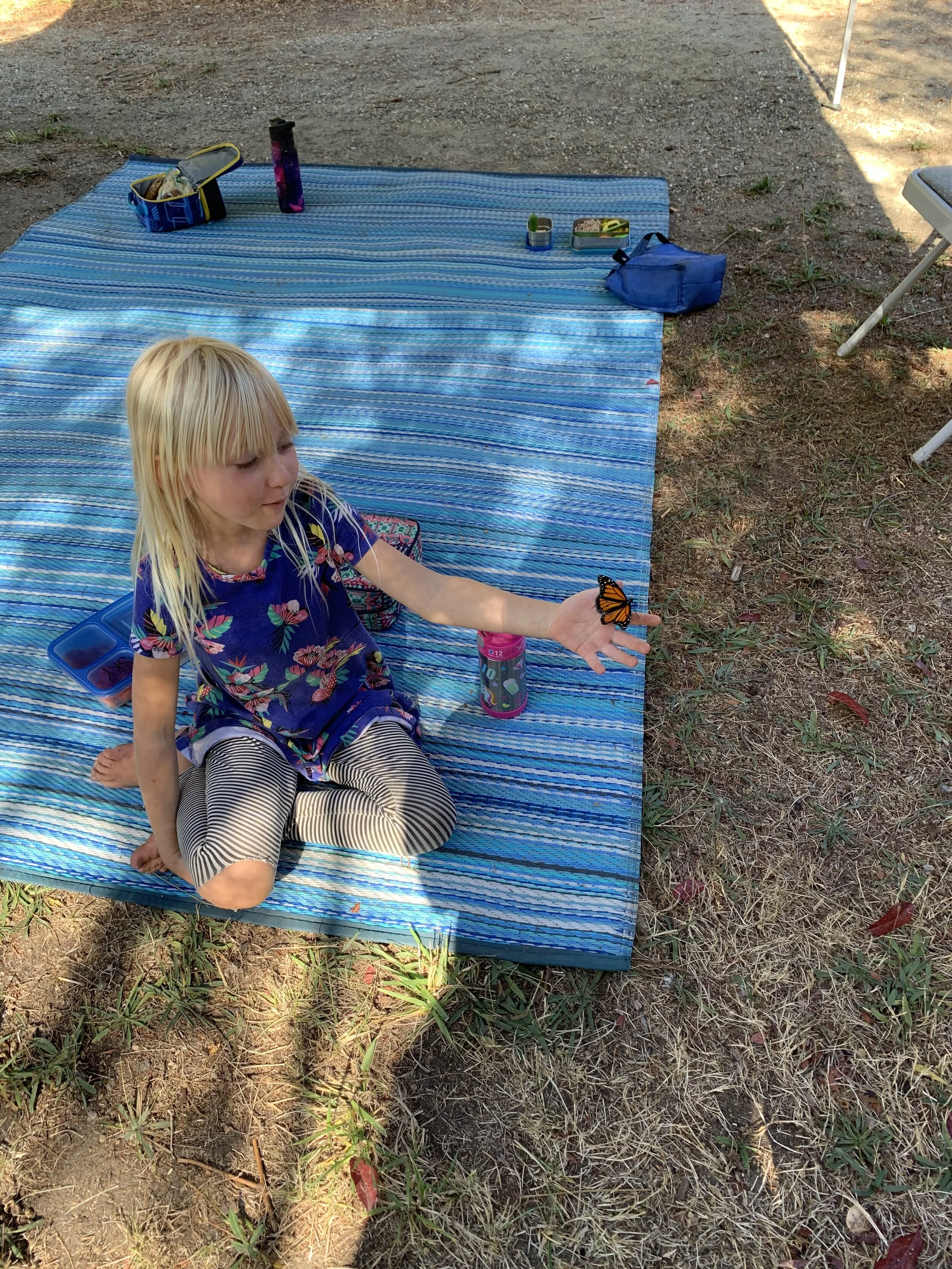
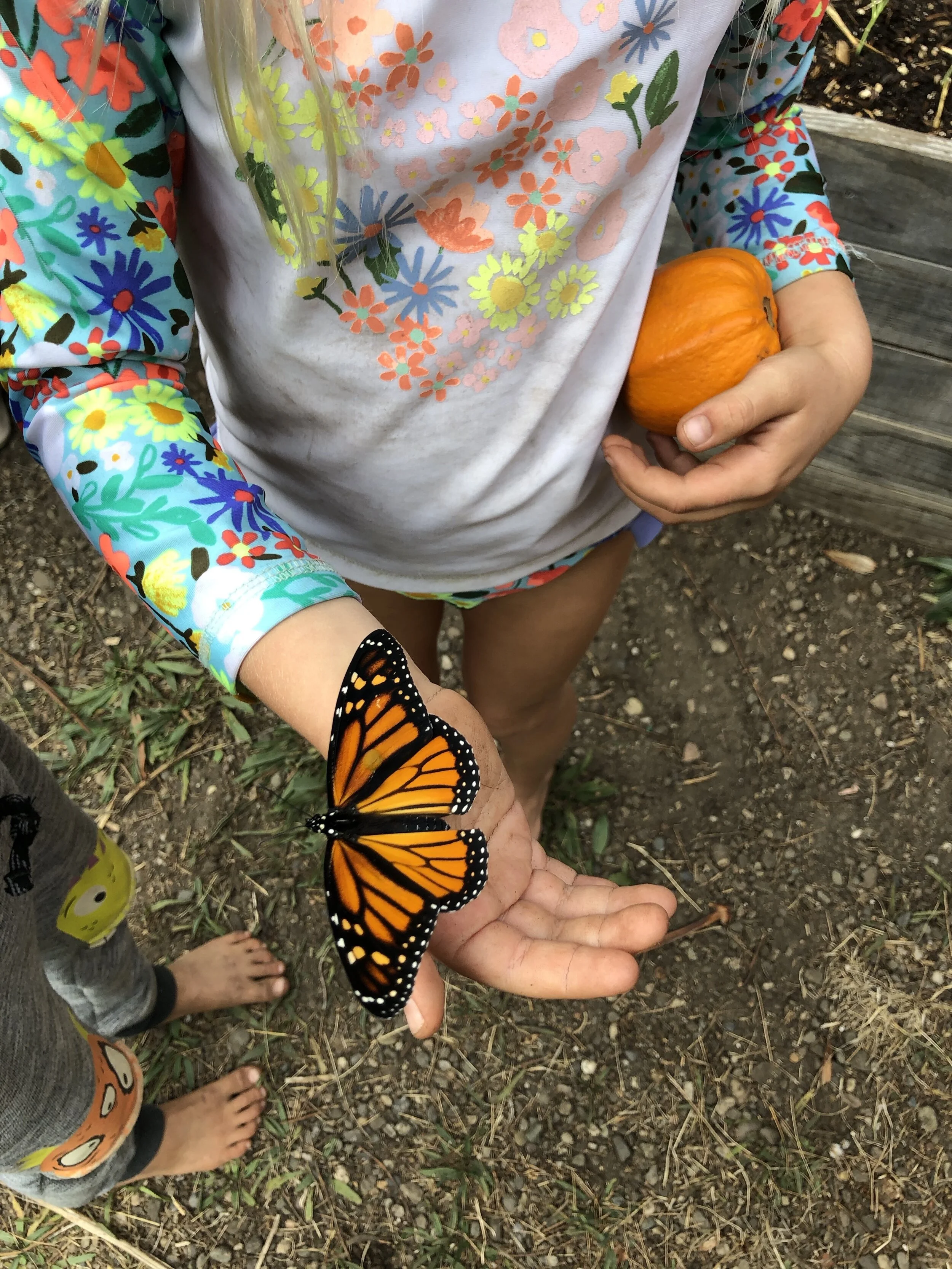
We had so many monarch caterpillars feeding on our milkweed this season. We were able to watch the butterfly lifecycle up close and in person, including watching a caterpillar split open and envelop itself into its emerald green chrysalis. It was incredible to see this little creature engage in such a feat of magic right before our eyes. Another highlight in the process was when a newly hatched monarch landed on Wilder Hinkel and then flew straight to Sky before going back to a hungry search for nectar.
On another day, a butterfly paid us a long, extended visit, flying and landing on child after child, content to crawl on their fingers and even up Olive’s dress until it reached her neck, making her giggle.
We created a list of things we know already about butterflies and then created a list of things we want to learn more about such as what kind of weather they like and why are they called butterflies.
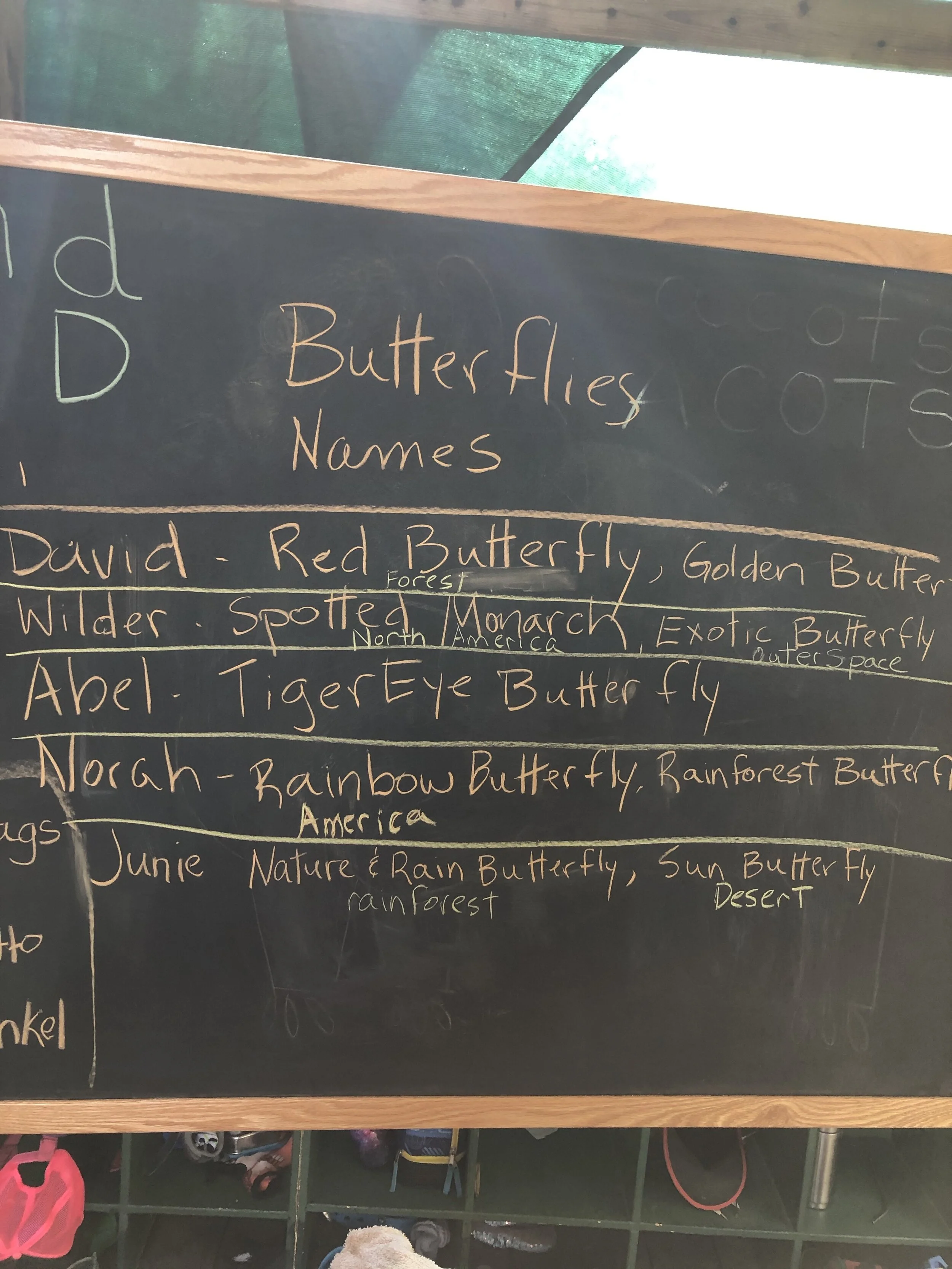
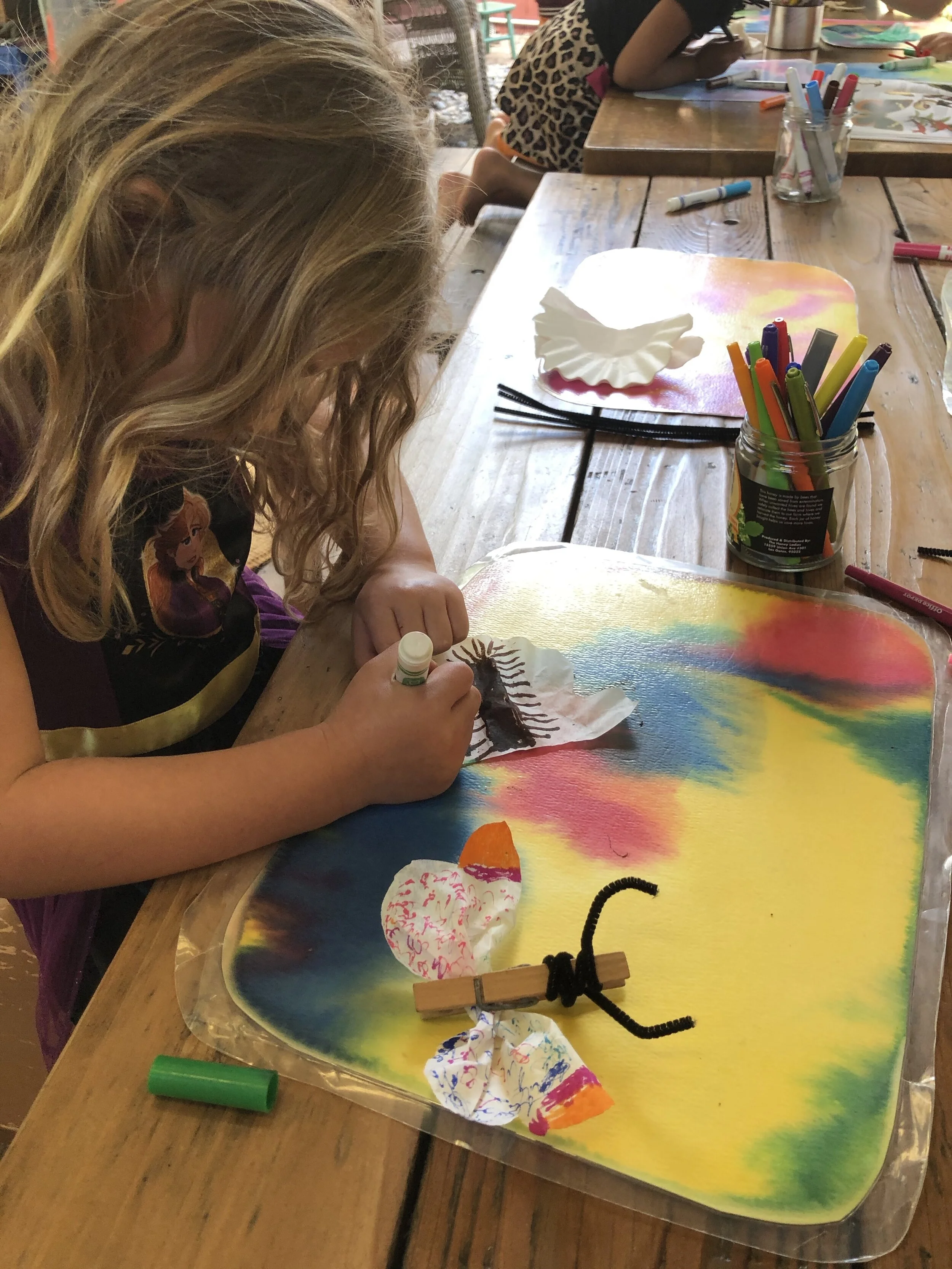
An Eyewitness Book on butterflies showed us just the tip of the iceberg of the many varieties of butterflies in our world. Using craft supplies and our imaginations, we designed our own butterflies, named them, and decided what habitat they live in.
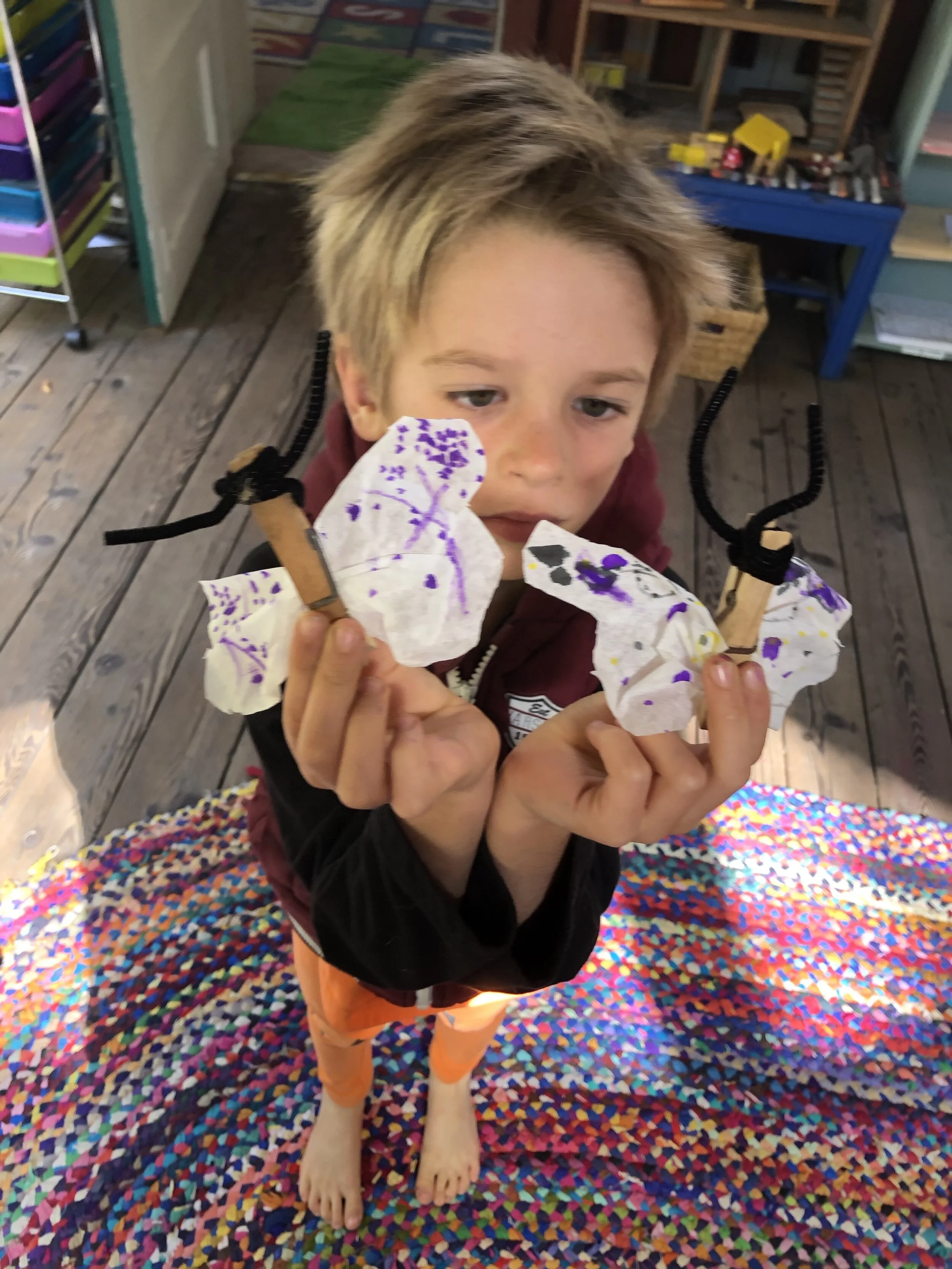
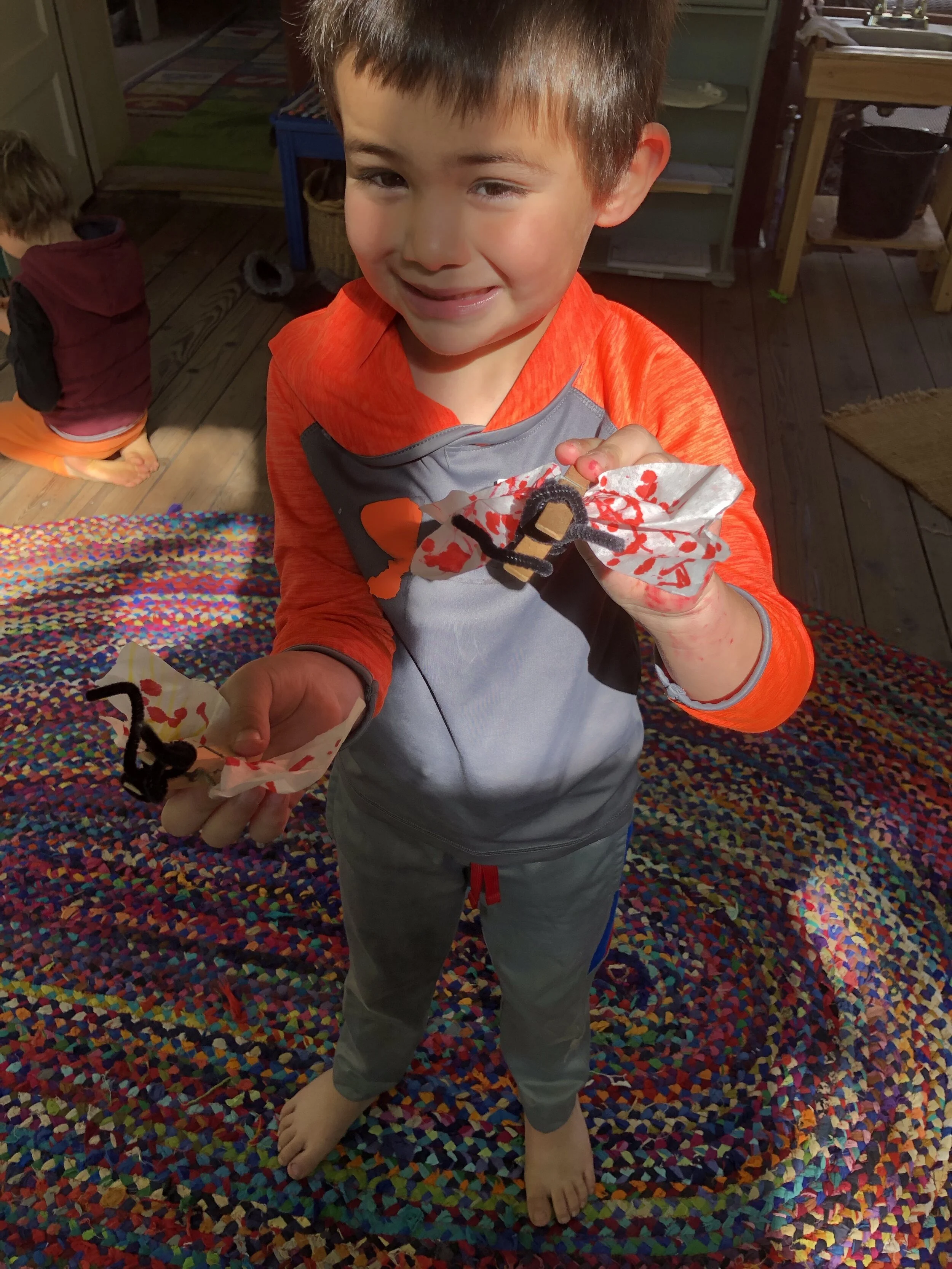
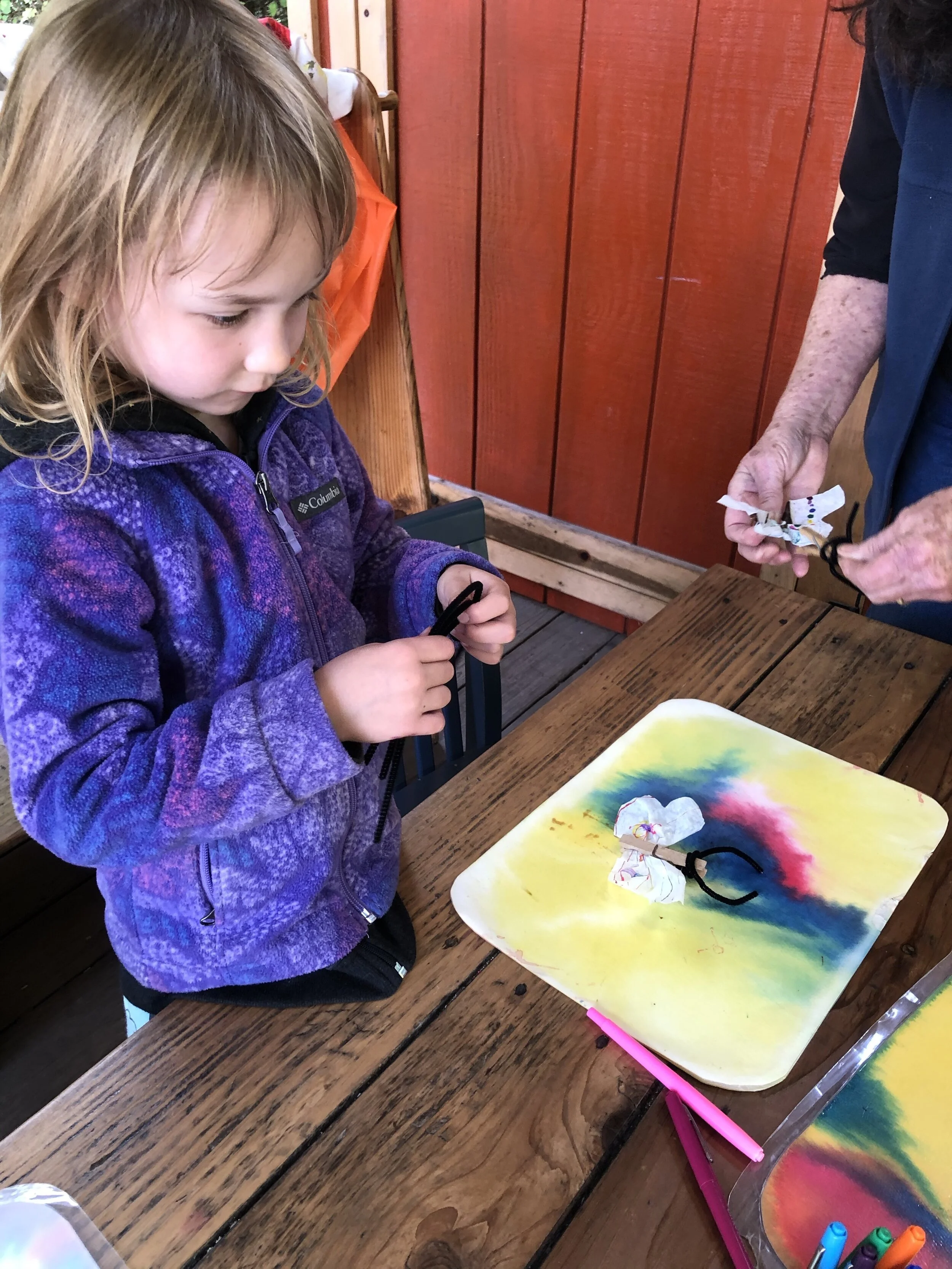
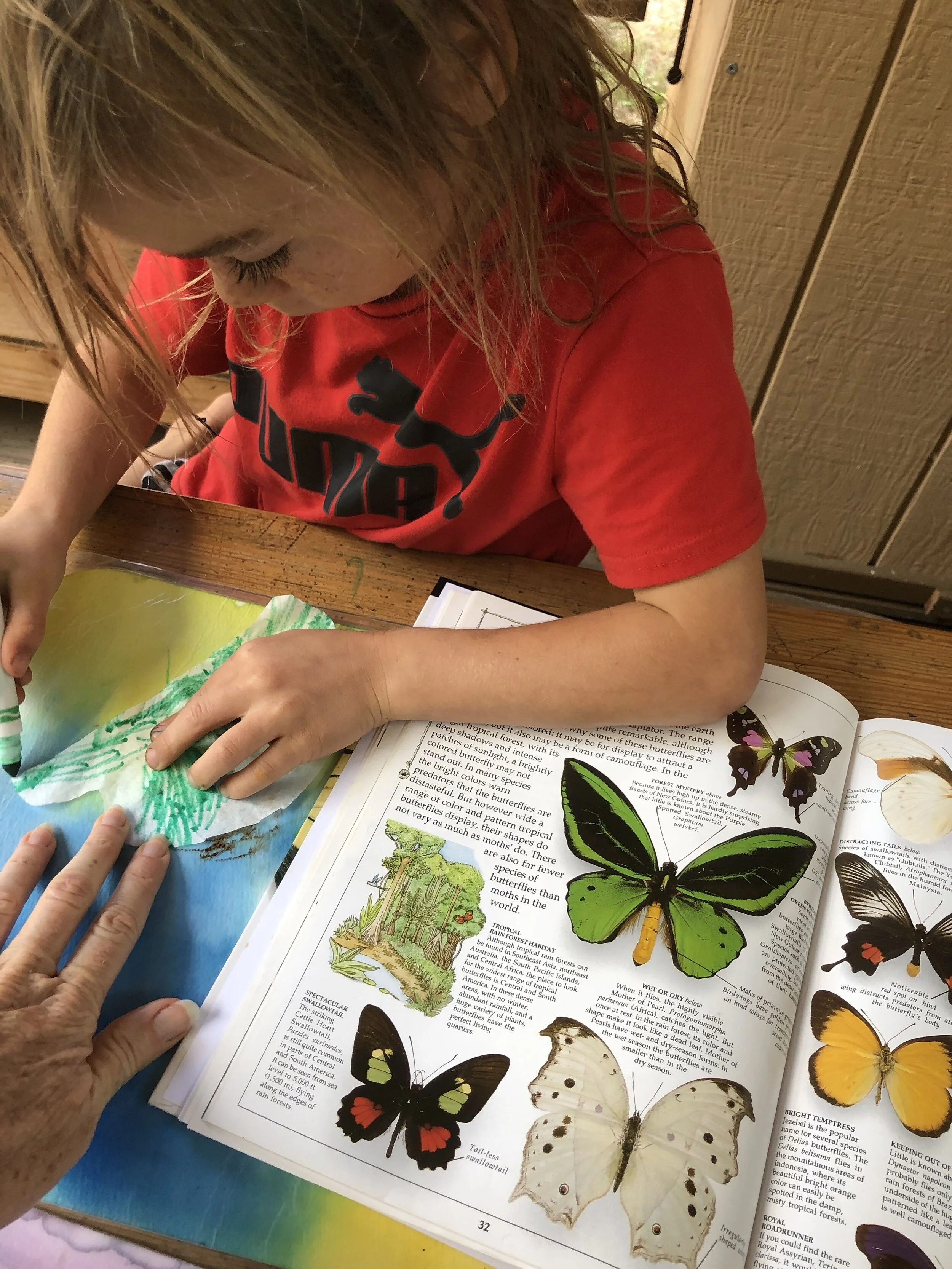
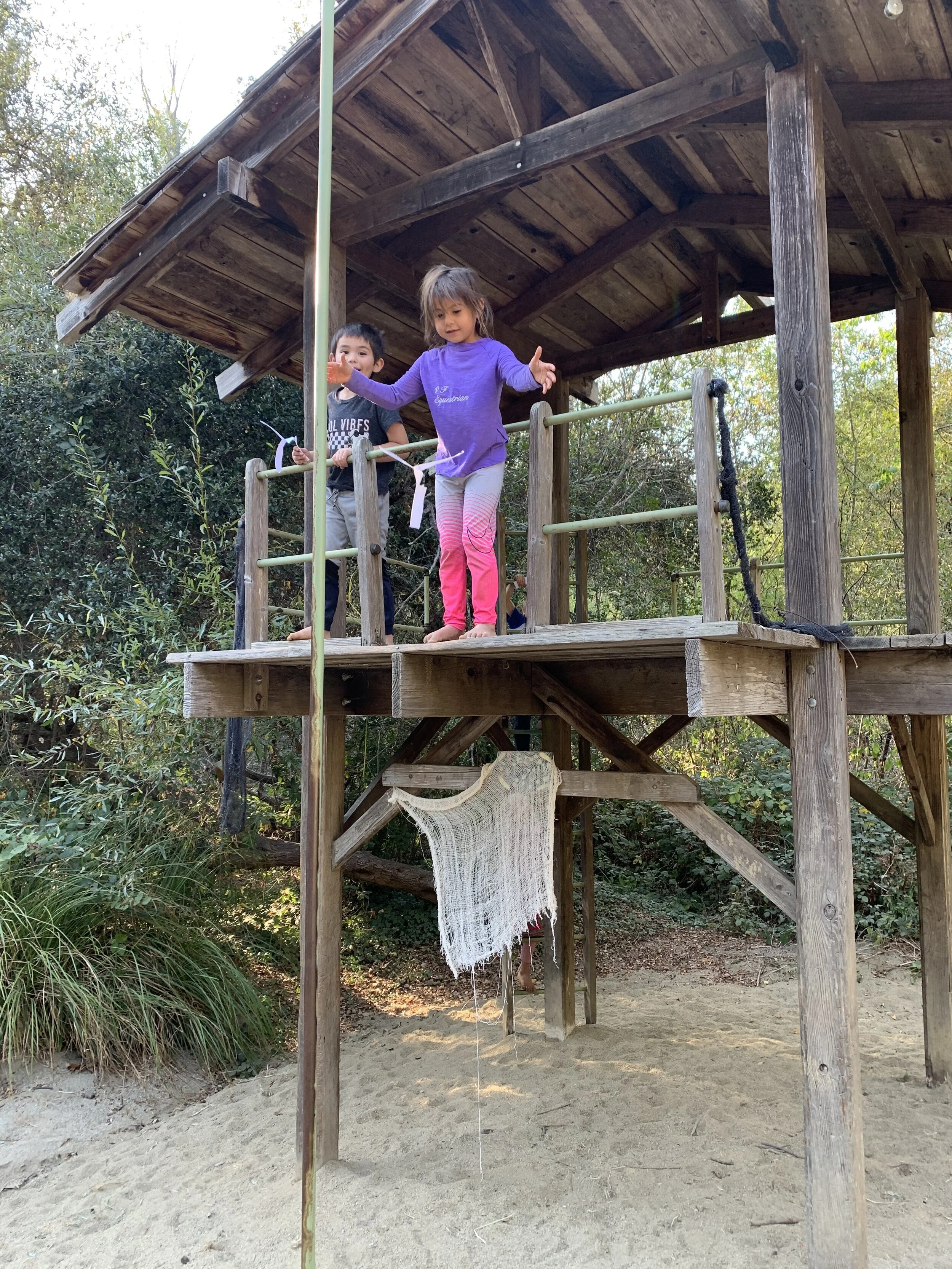
Also in Science, we continued our look at seeds, at why plants have seeds and at the different dispersal methods plants use to spread their seeds. One example is the maple tree that produces spinning seeds that helicopter out and away from the tree to promulgate. To that end, the kids cut out a template that replicates the downward twirl of a maple seed and floated these off the play structure. Great fun!
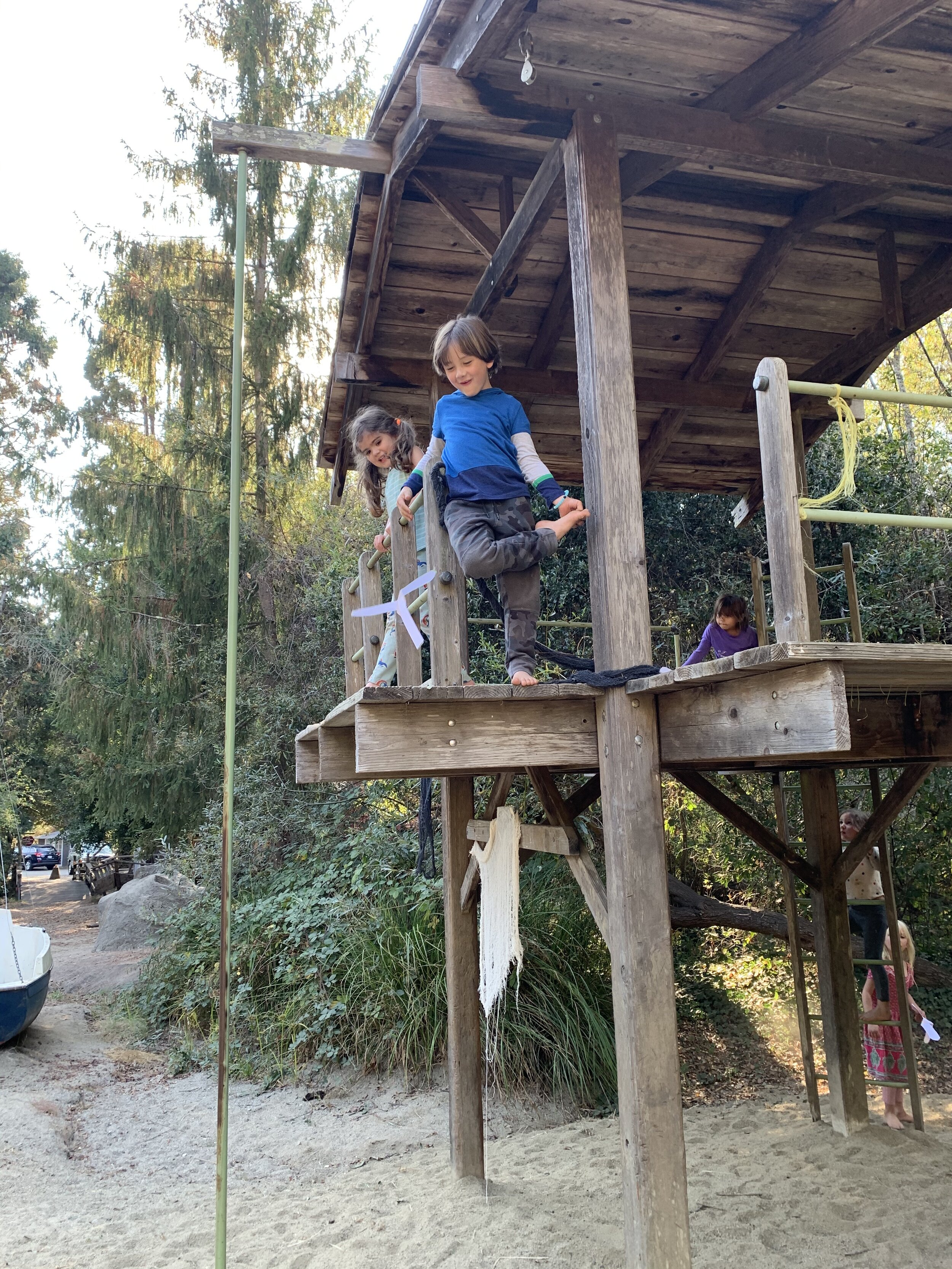
Watching the maple seed fliers twirl to the ground
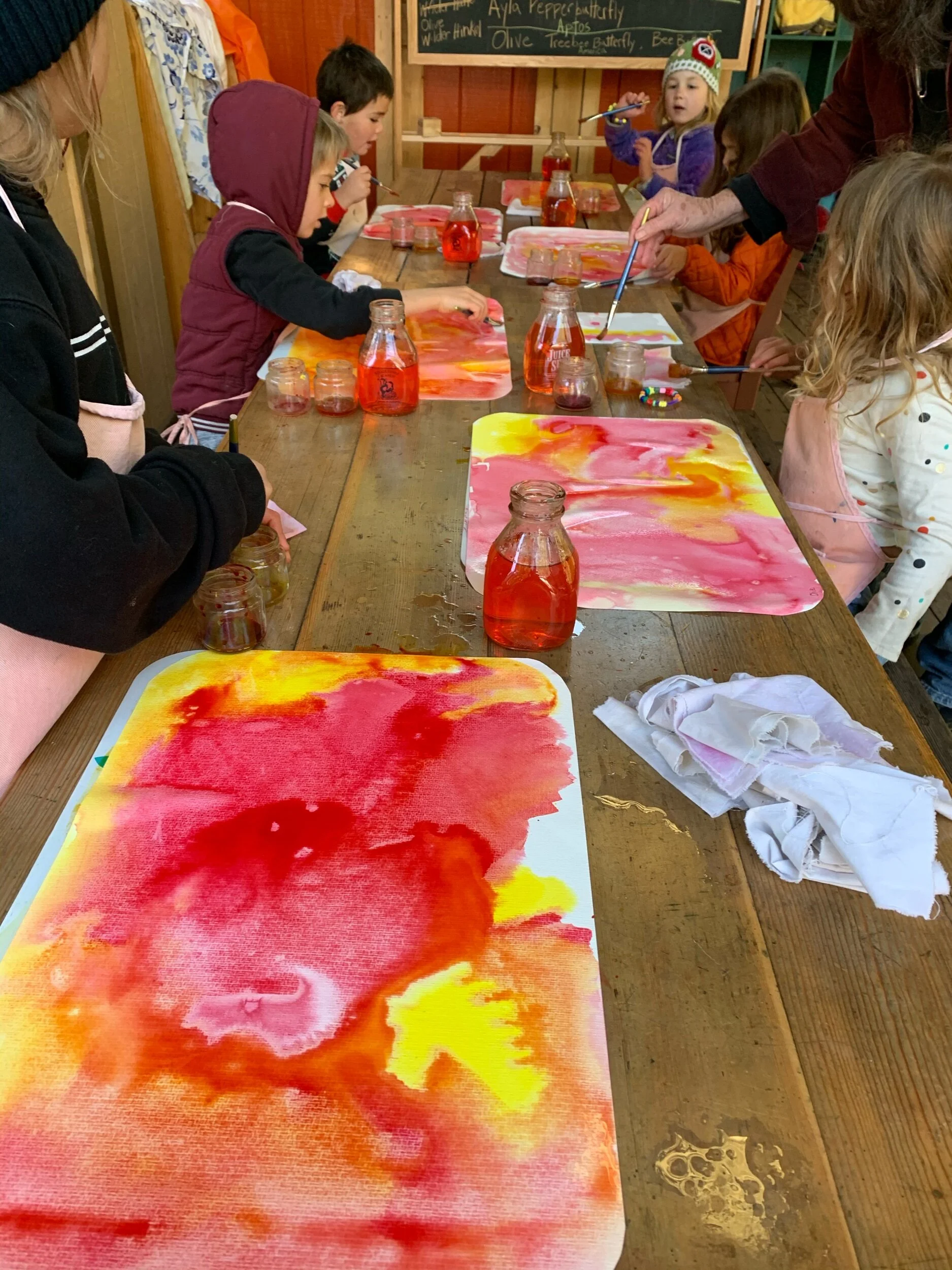
We have continued our “color story”, working with wet on wet watercolors and moving through the primary colors and now the secondary colors. This medium is wonderful, especially for the young child who is not confident with traditional drawing. This is the child that says “but I can’t draw” or “I don’t know how to draw that”. It can be frustrating when the image on paper doesn’t accurately represent the richness of real life or the imagination. With wet-on-wet, there is a freeing quality as the child can watch the paint move, almost with a life of it’s own, and can really focus on the amorphousness of their creations, as well as simply the color and gradations of color, rather than representational art, for a change.
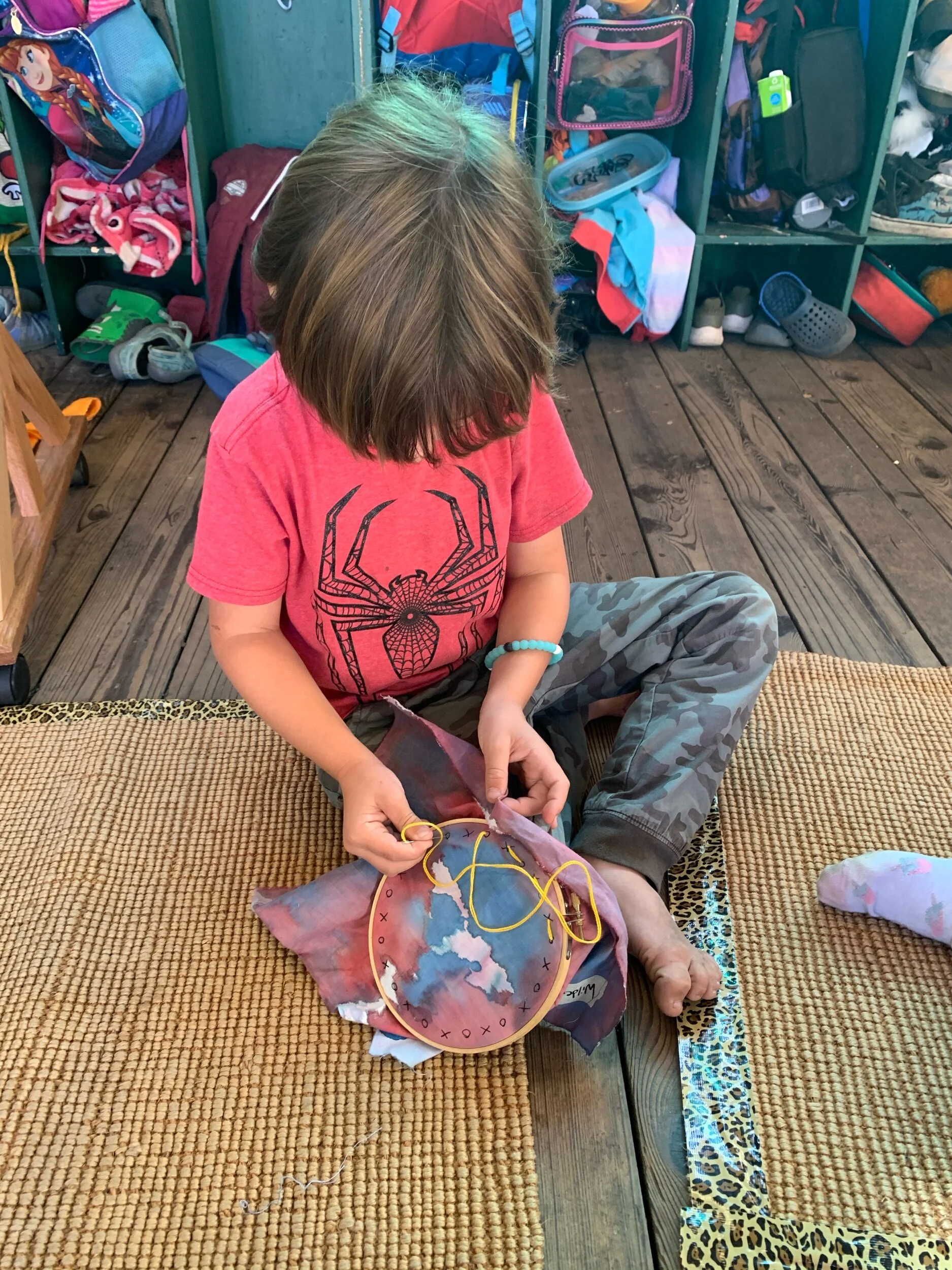
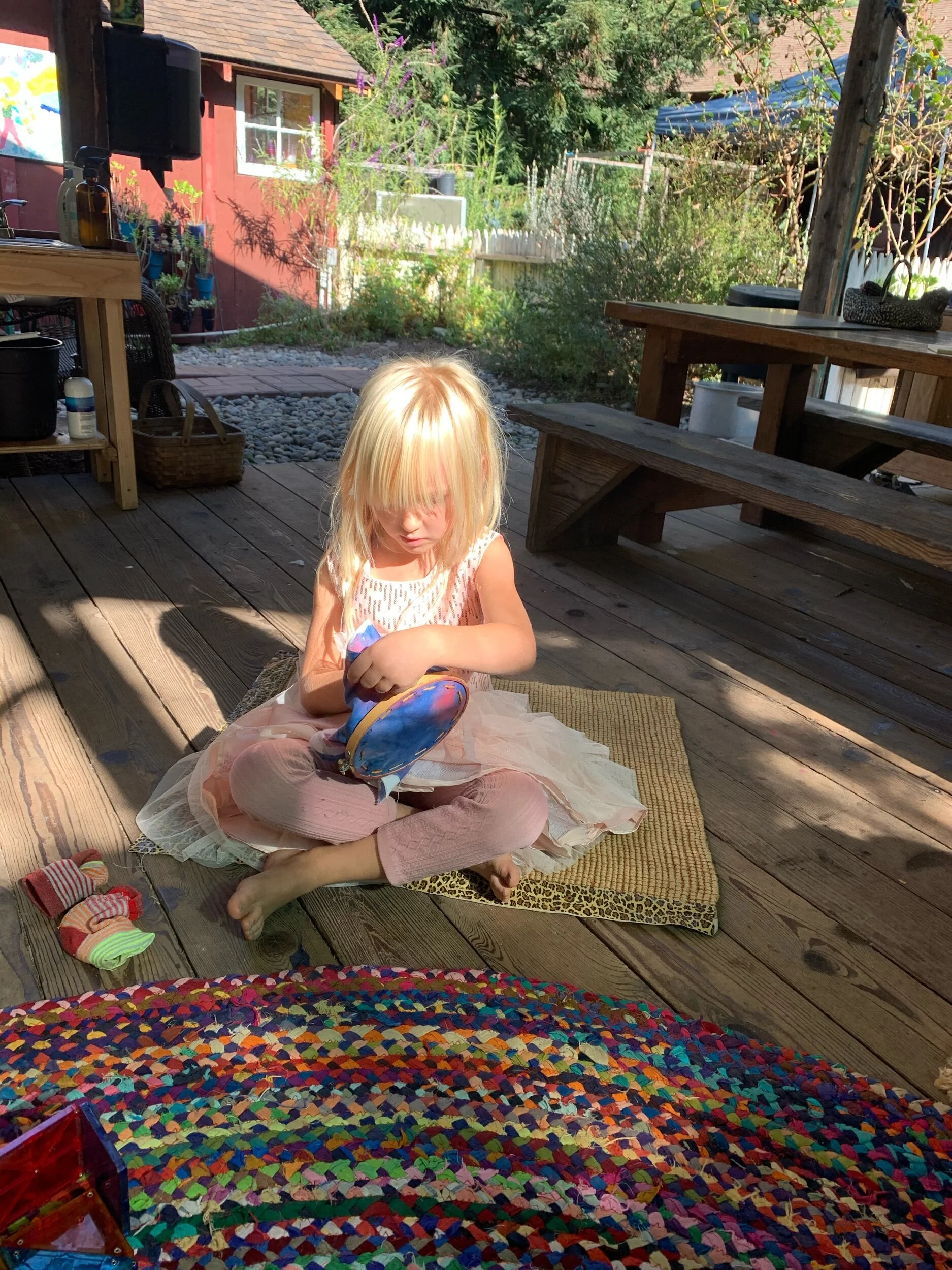
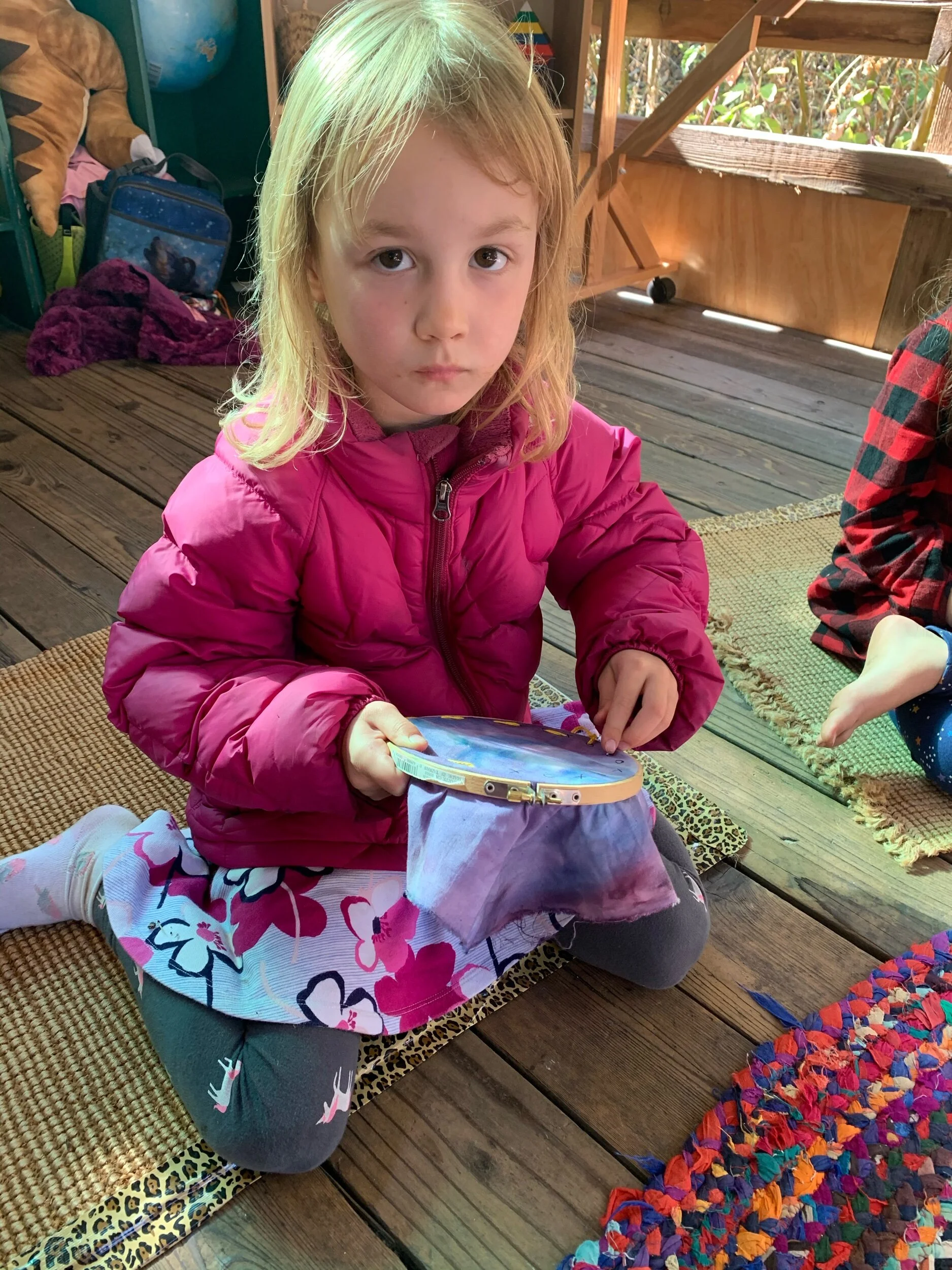
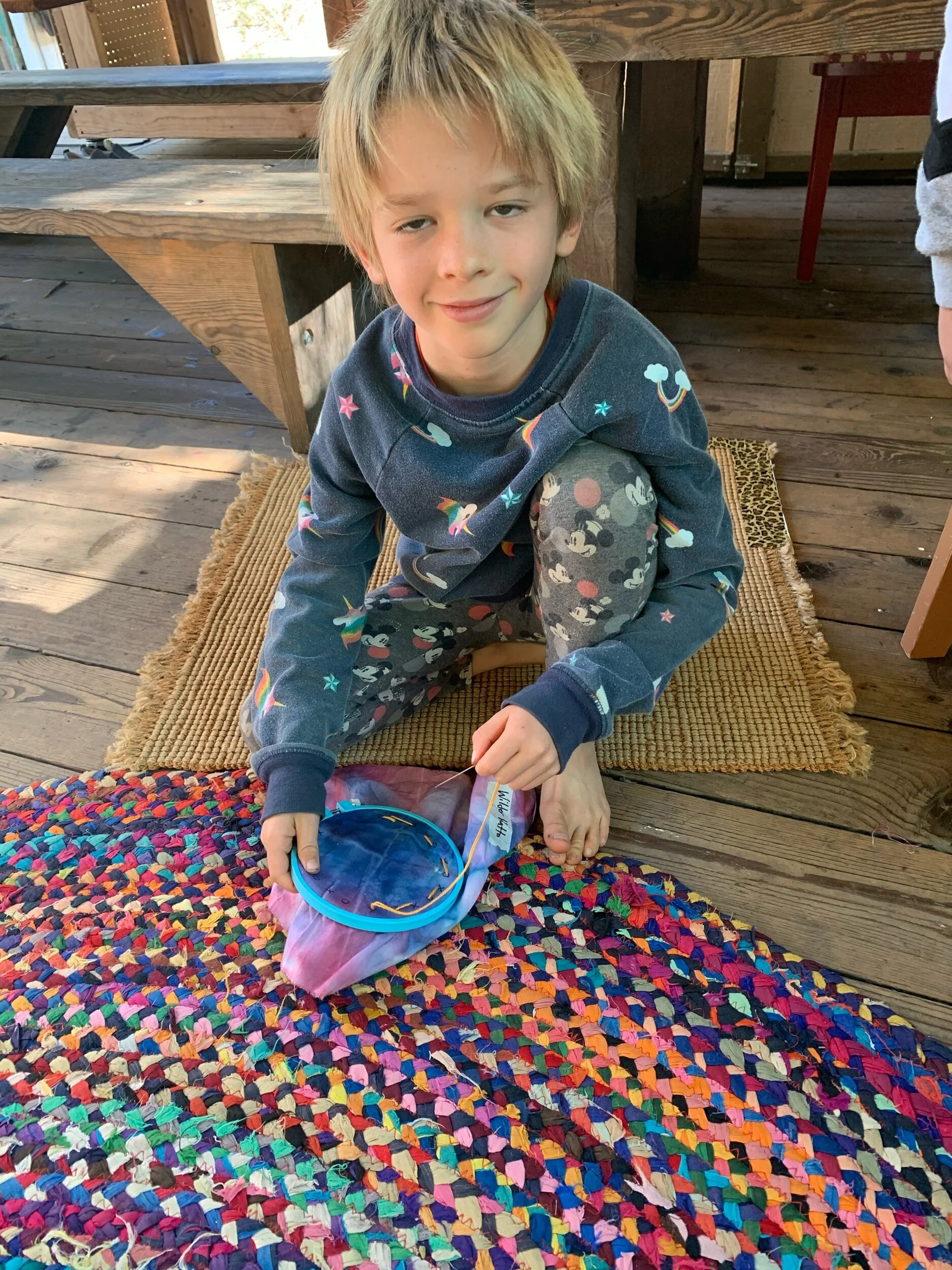
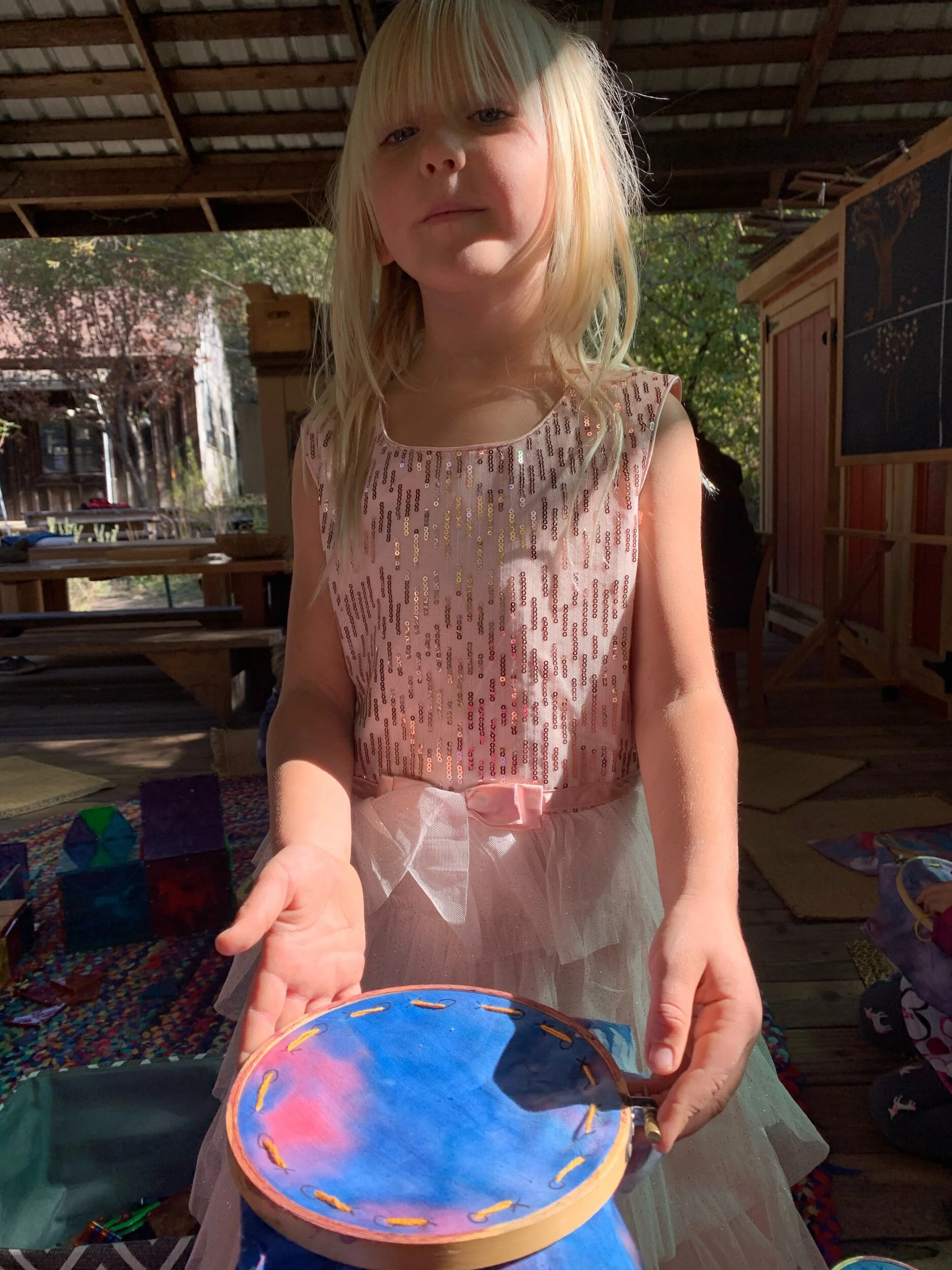
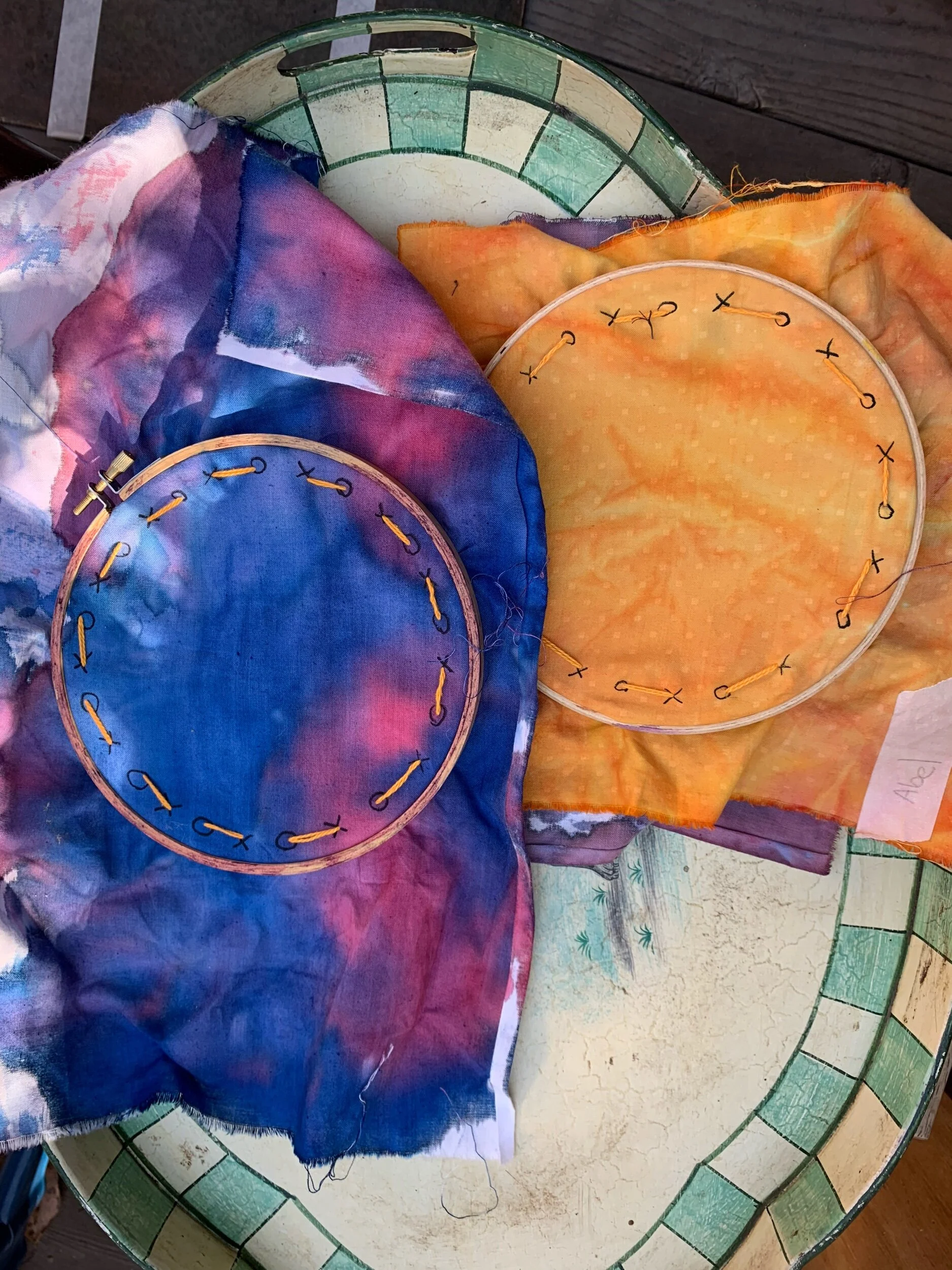
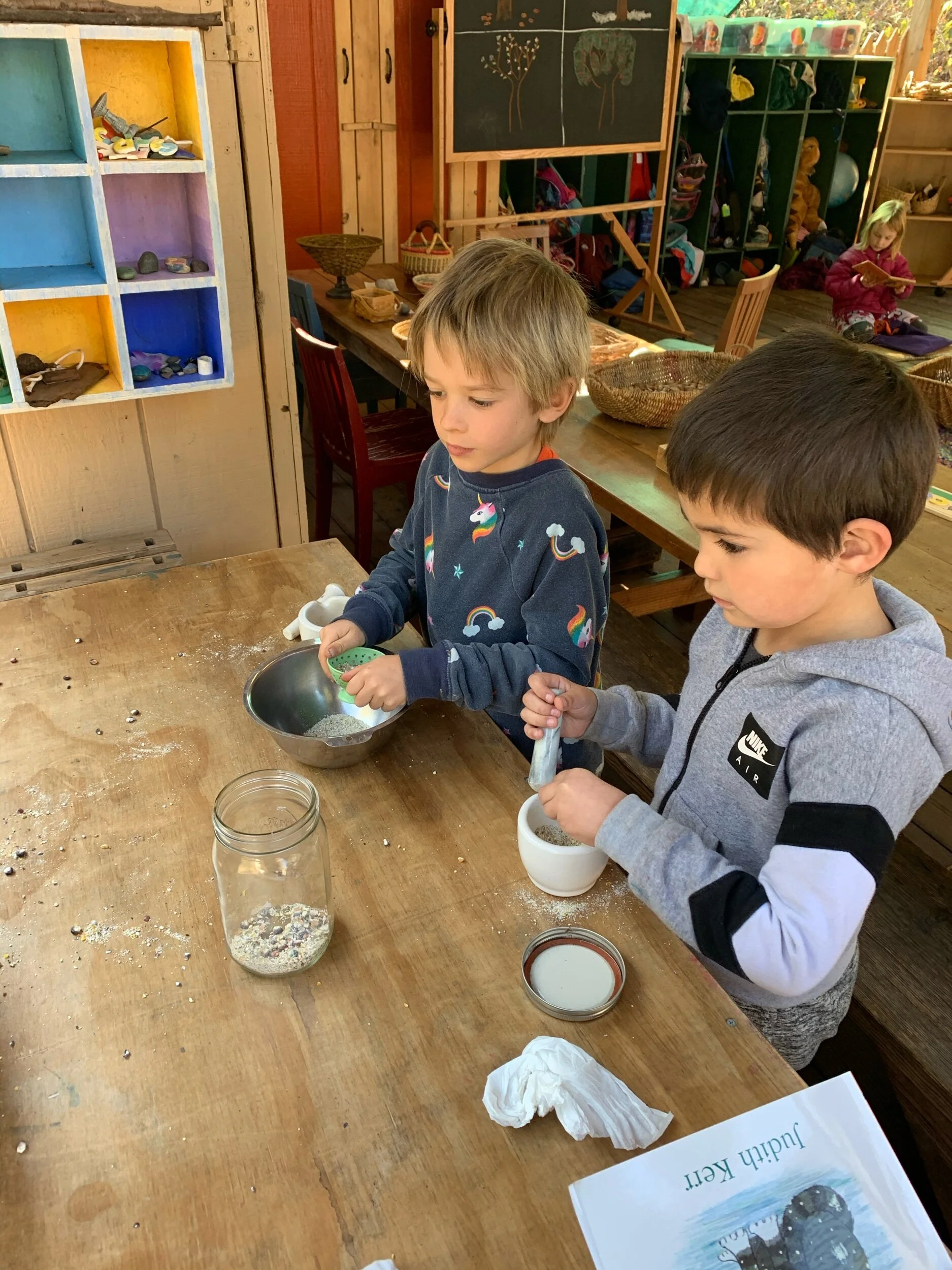
We've begun a focus on sewing which we’ll work on periodically throughout the year. This is a great activity to develop fine motor skills (imperative for neat and organized handwriting), work on mental organization, focus on left to right —all qualities necessary for future academic endeavors. This class of kids is capable and motivated and they seemed to really enjoy their sewing lessons. To get used to needles and threads, I first had them sew cranberry/popcorn necklaces. Lesson two was sewing around a sewing hoop. They used fabric they had painted during wet on wet. Then they ground Indian corn and filled the pouches they sewed with the intention of using these to feed the birds. Olive sprinkled the contents of her pouch all around the kindergarten before taking it home and after everyone left for the day, the chickadees went to town, feasting on the offerings.
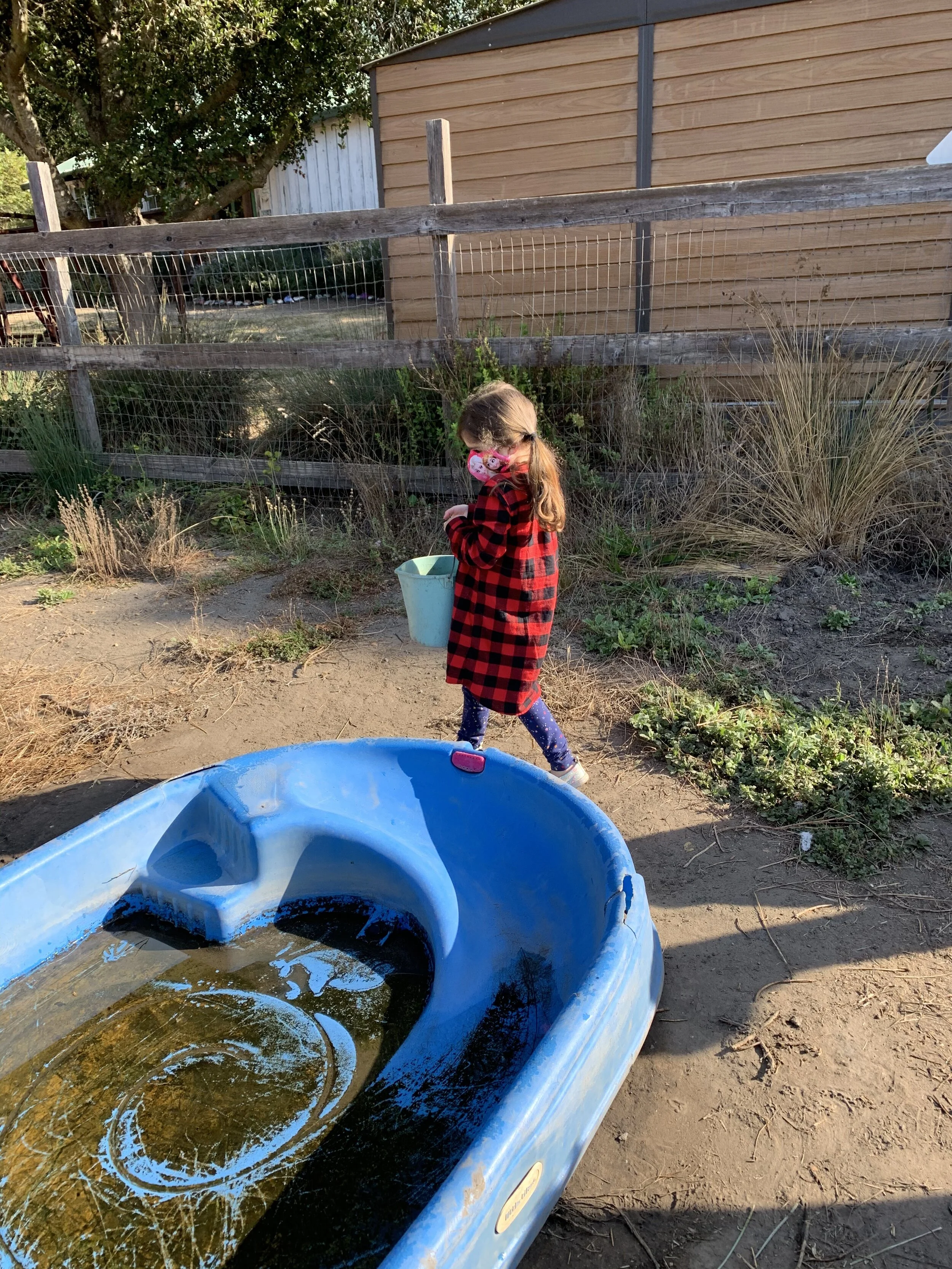
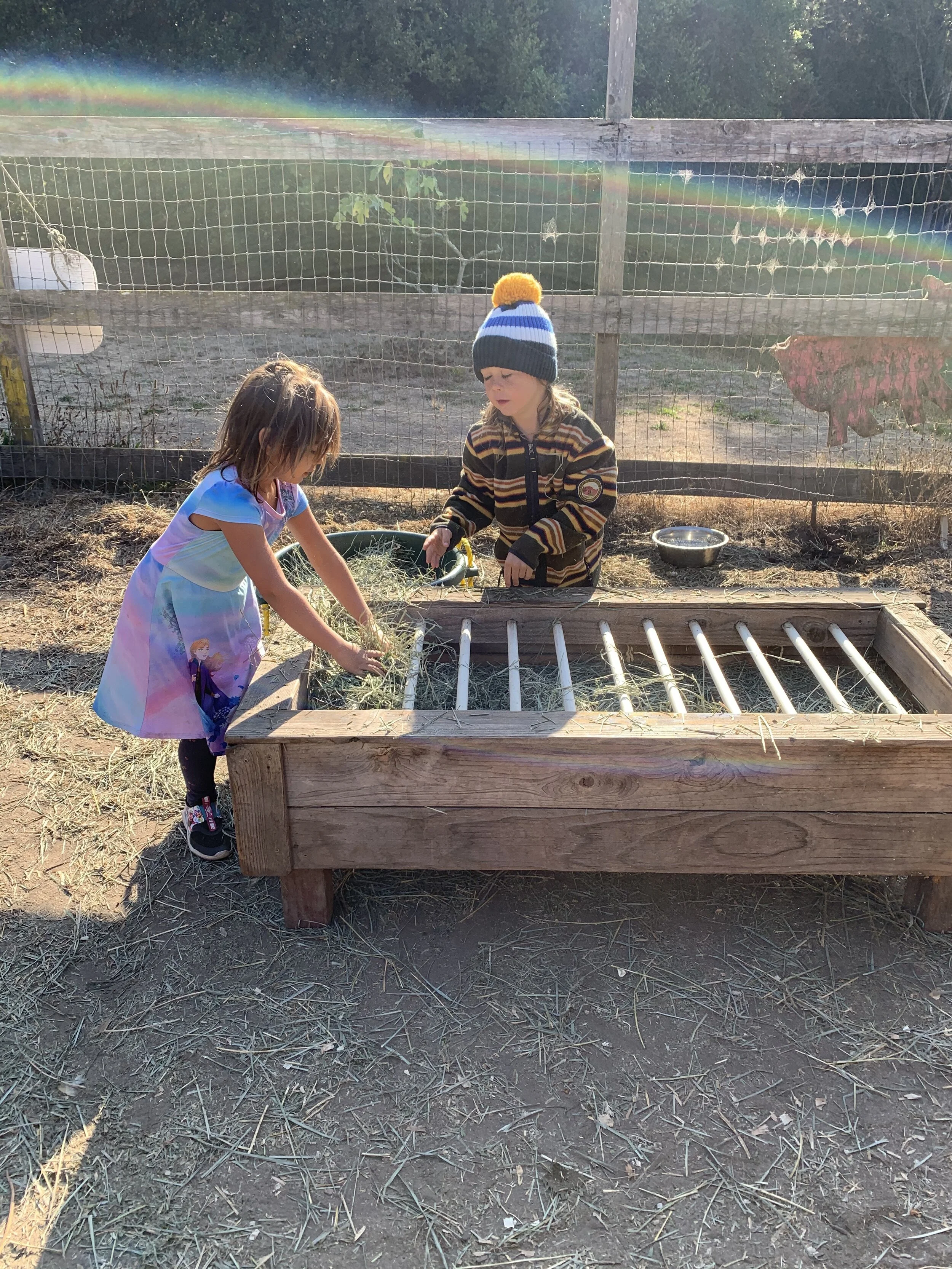
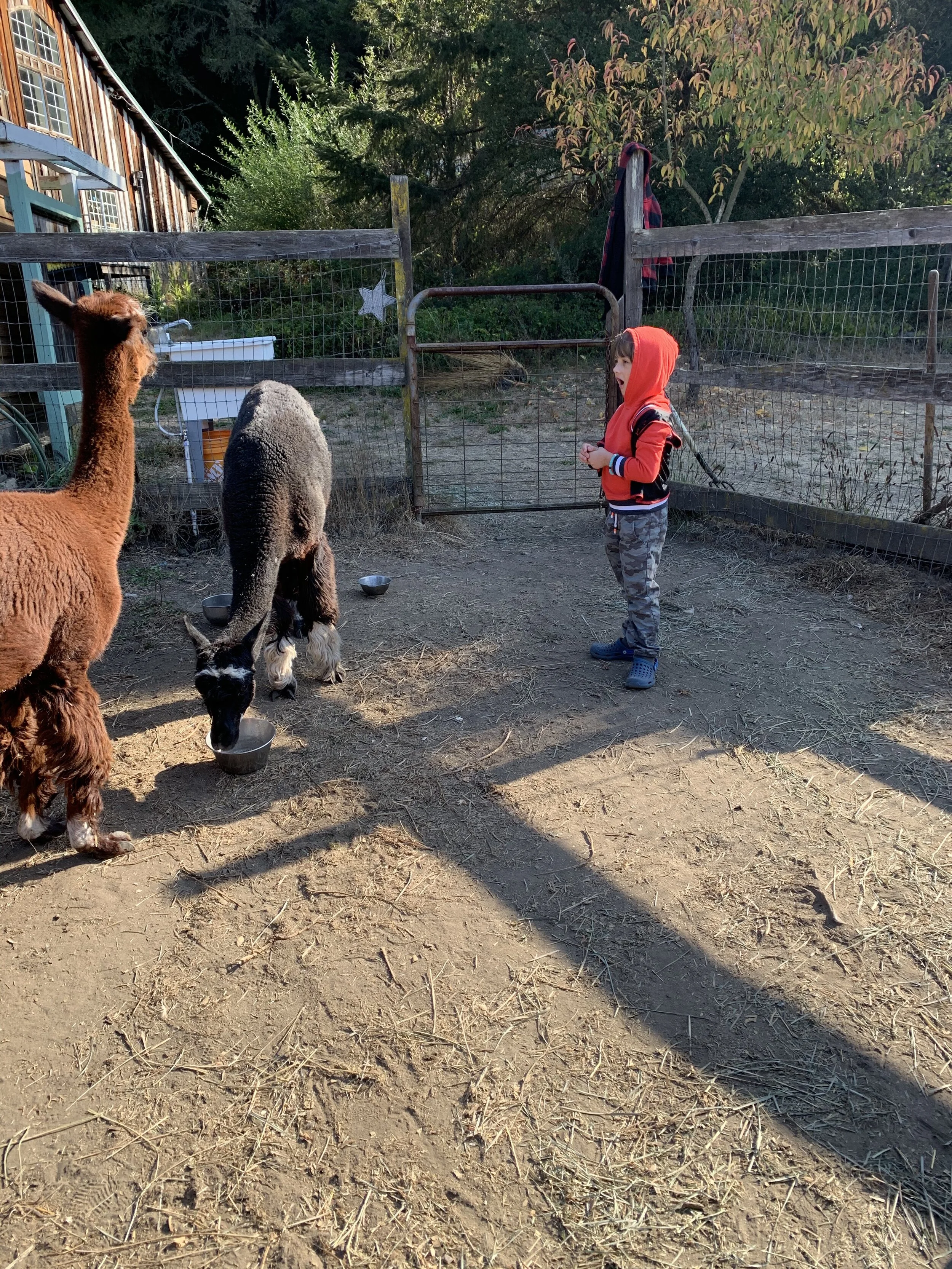
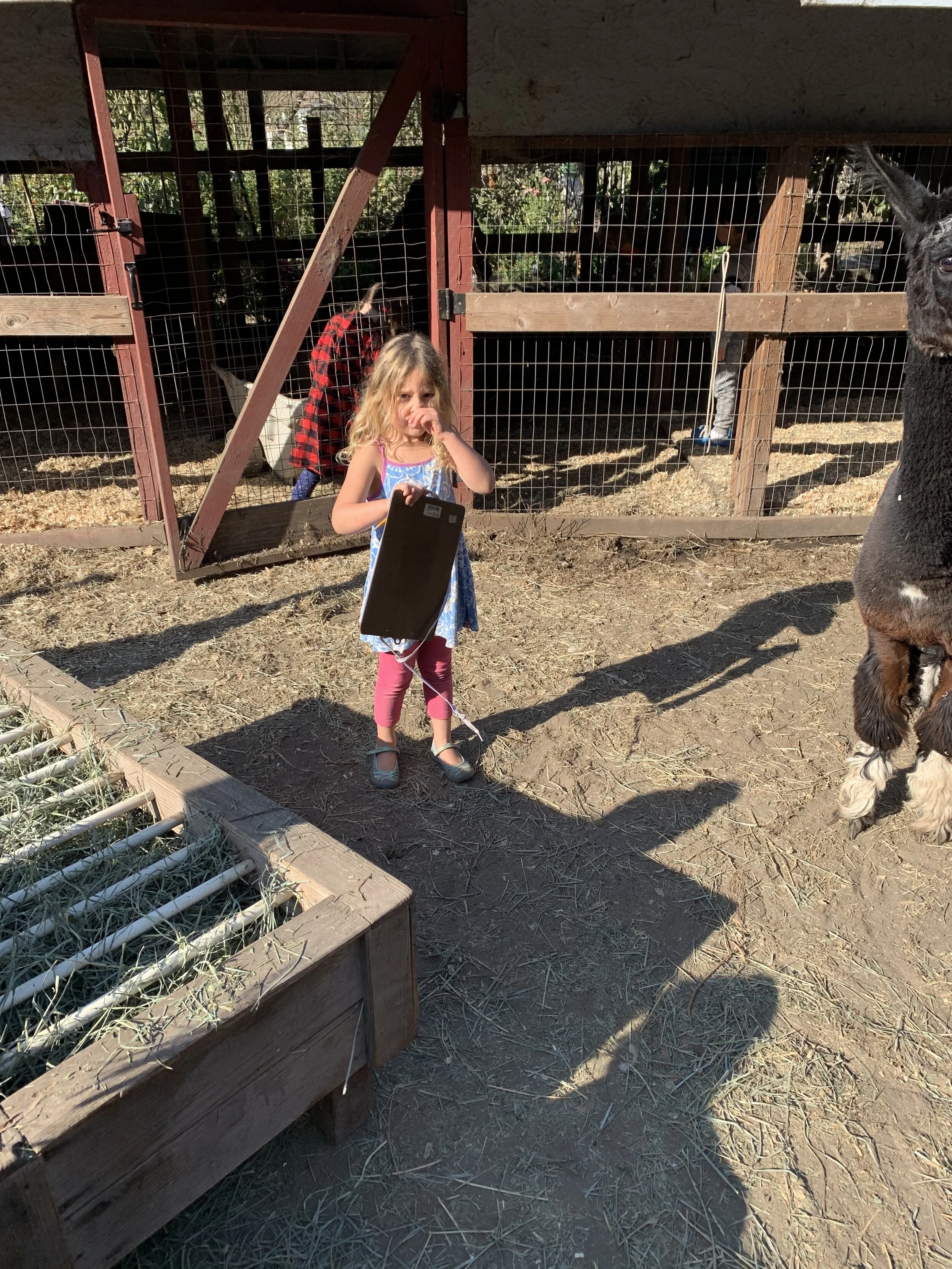
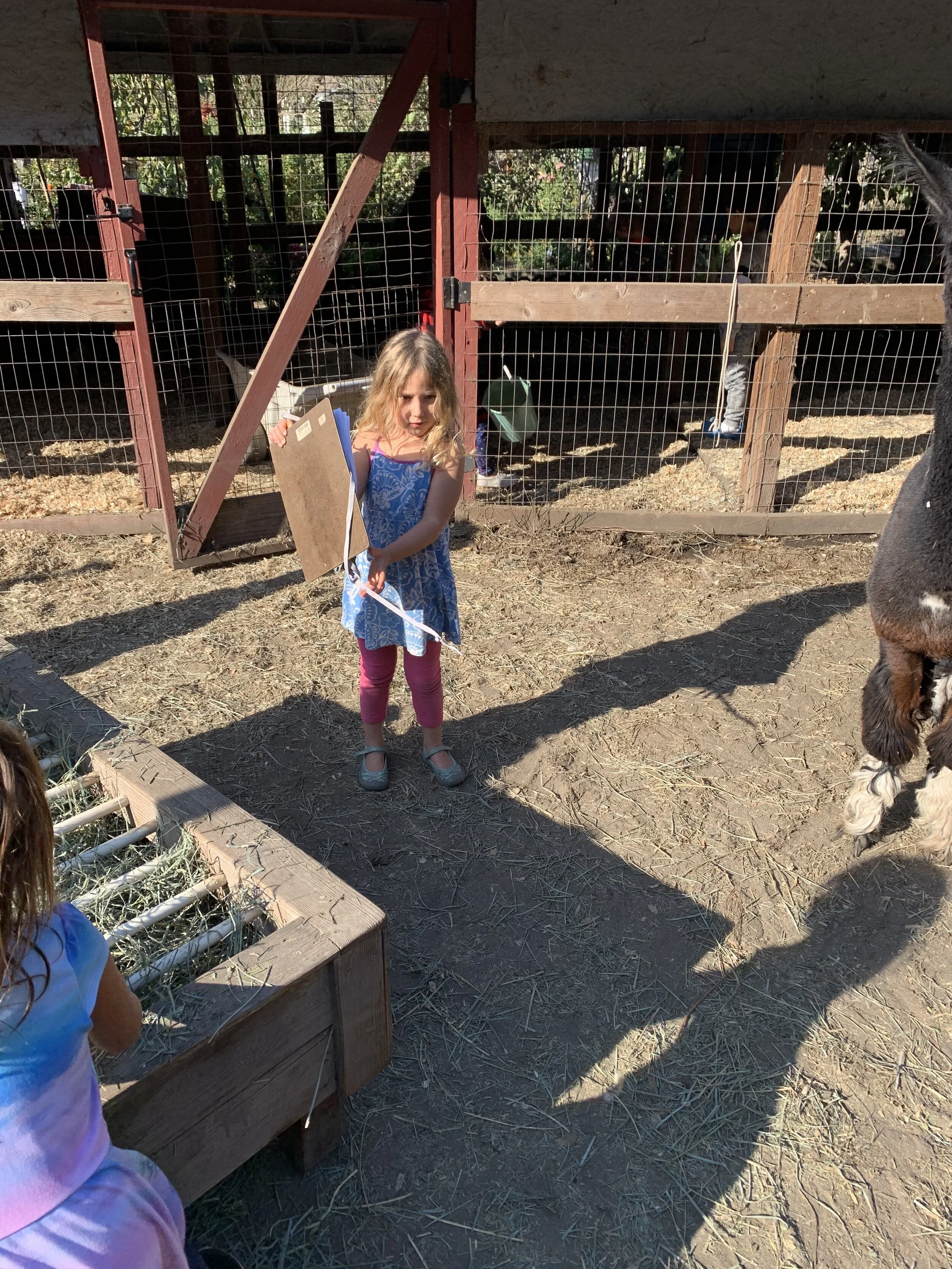
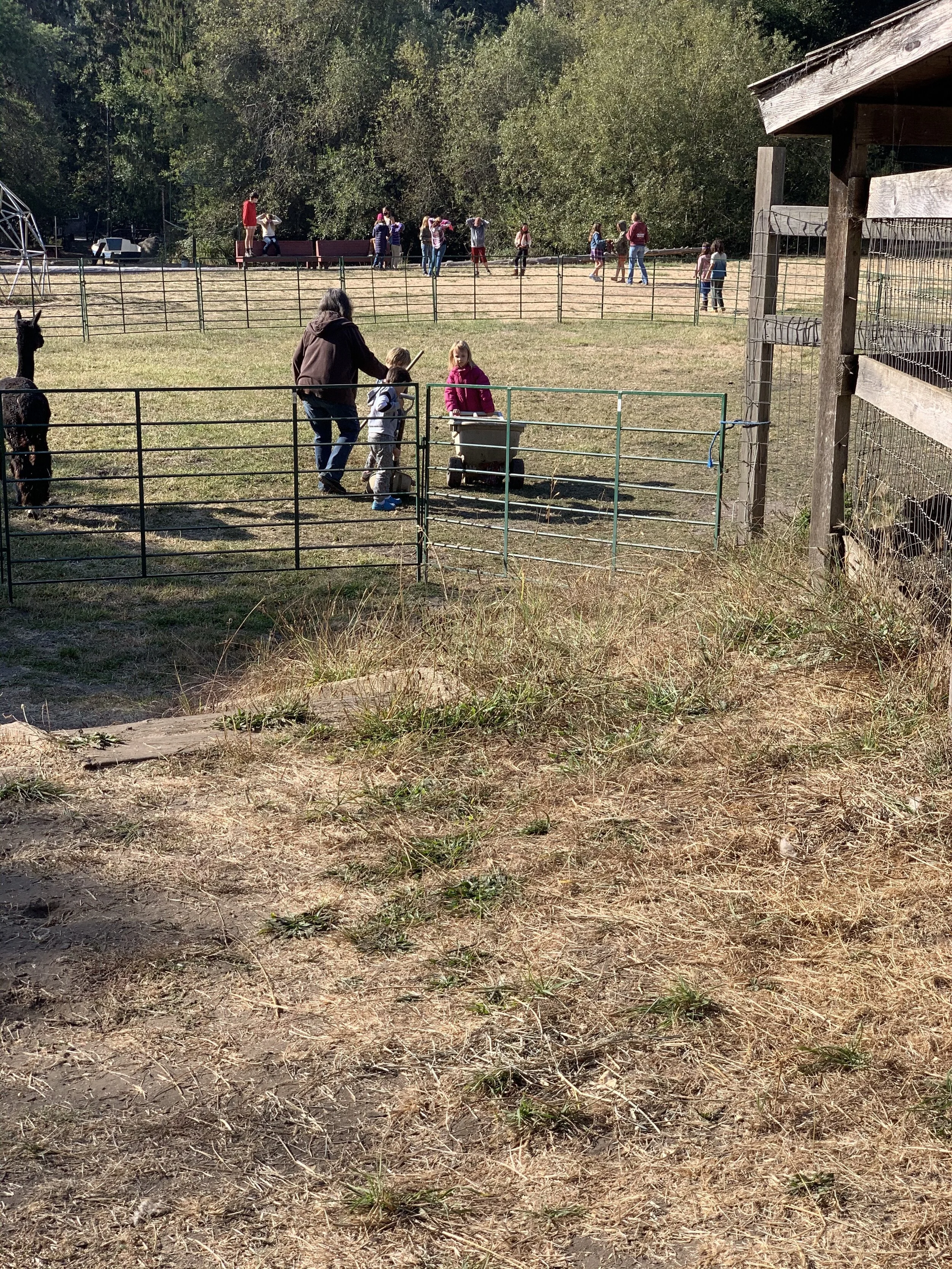
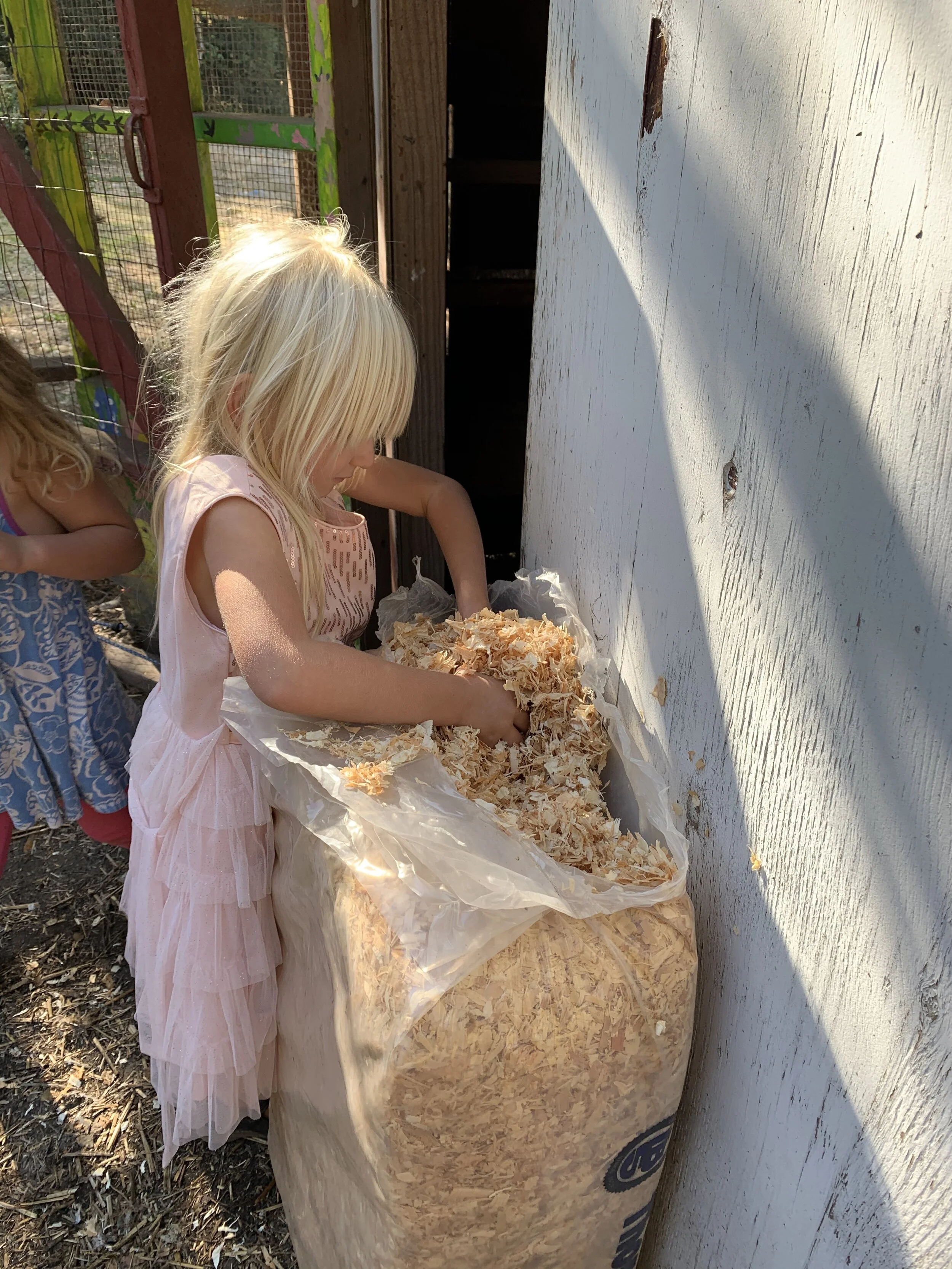
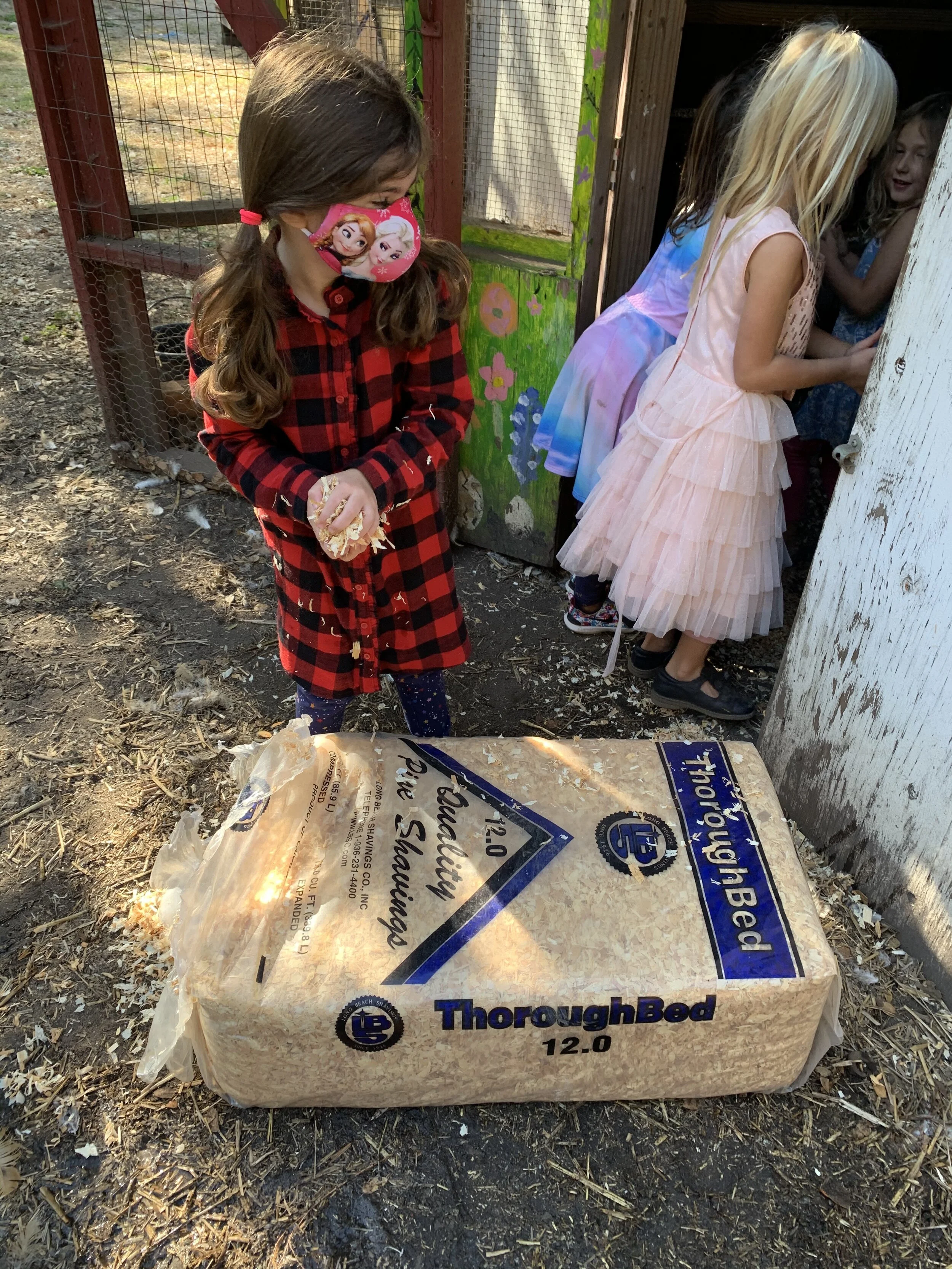
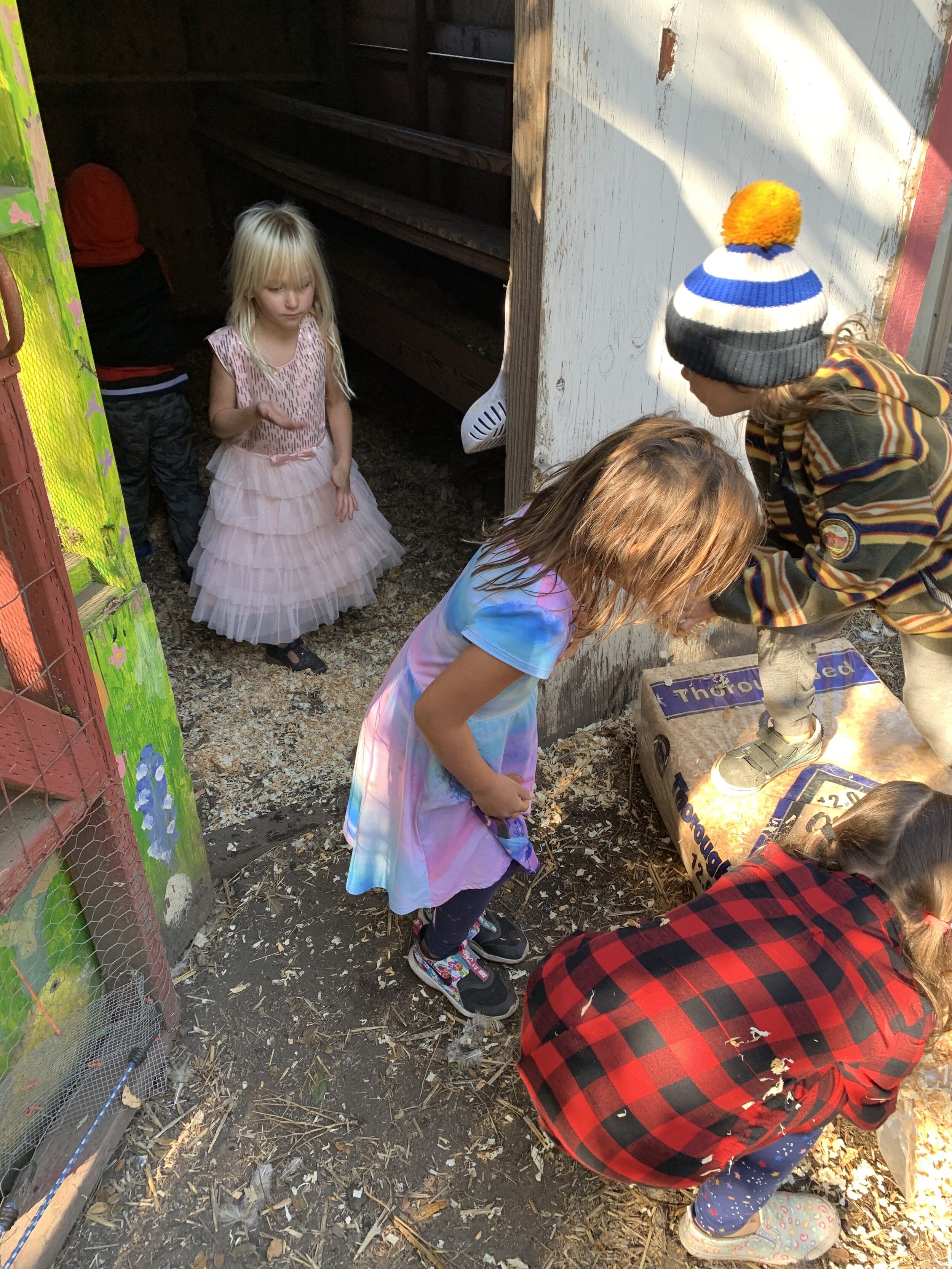
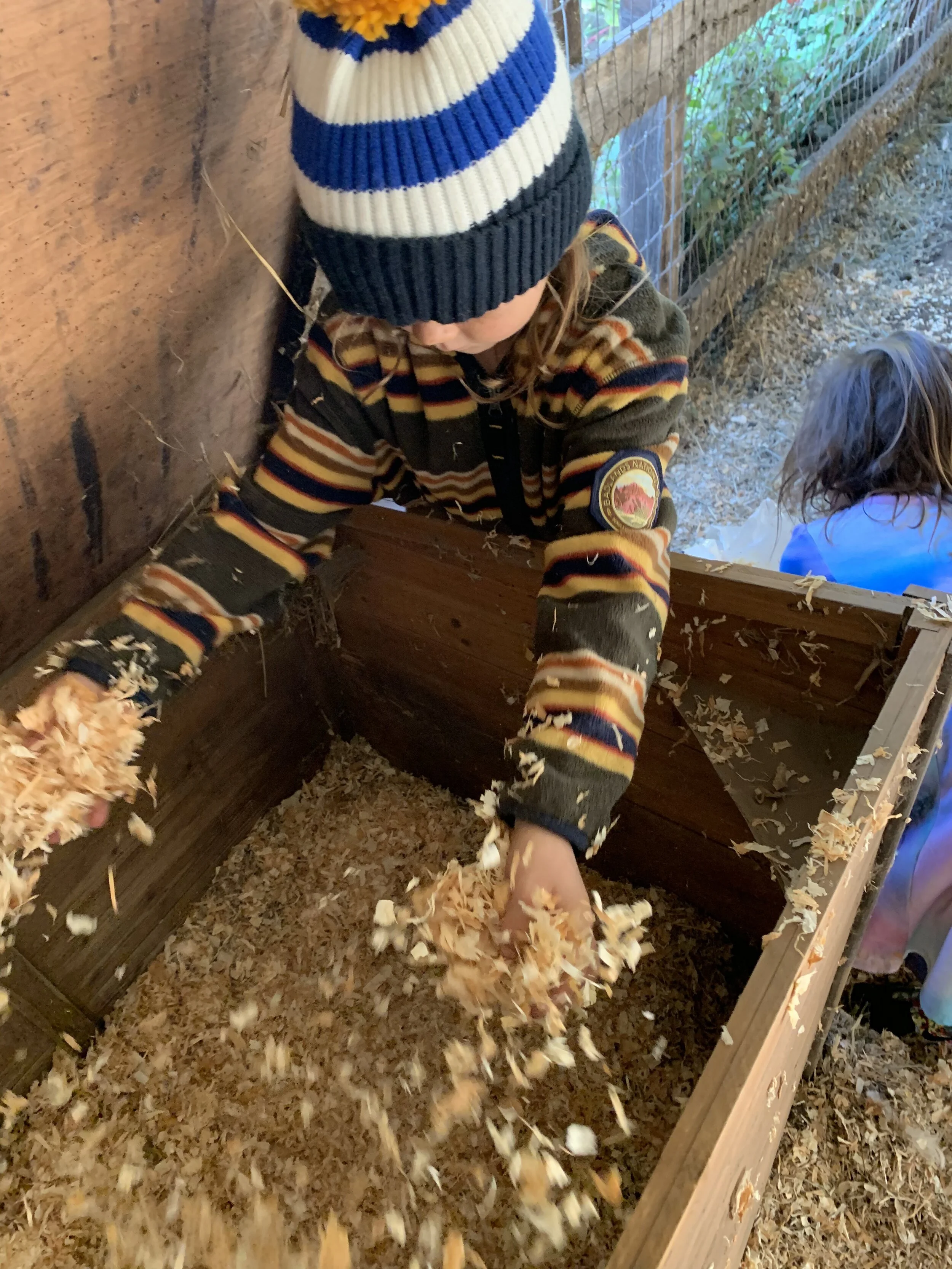
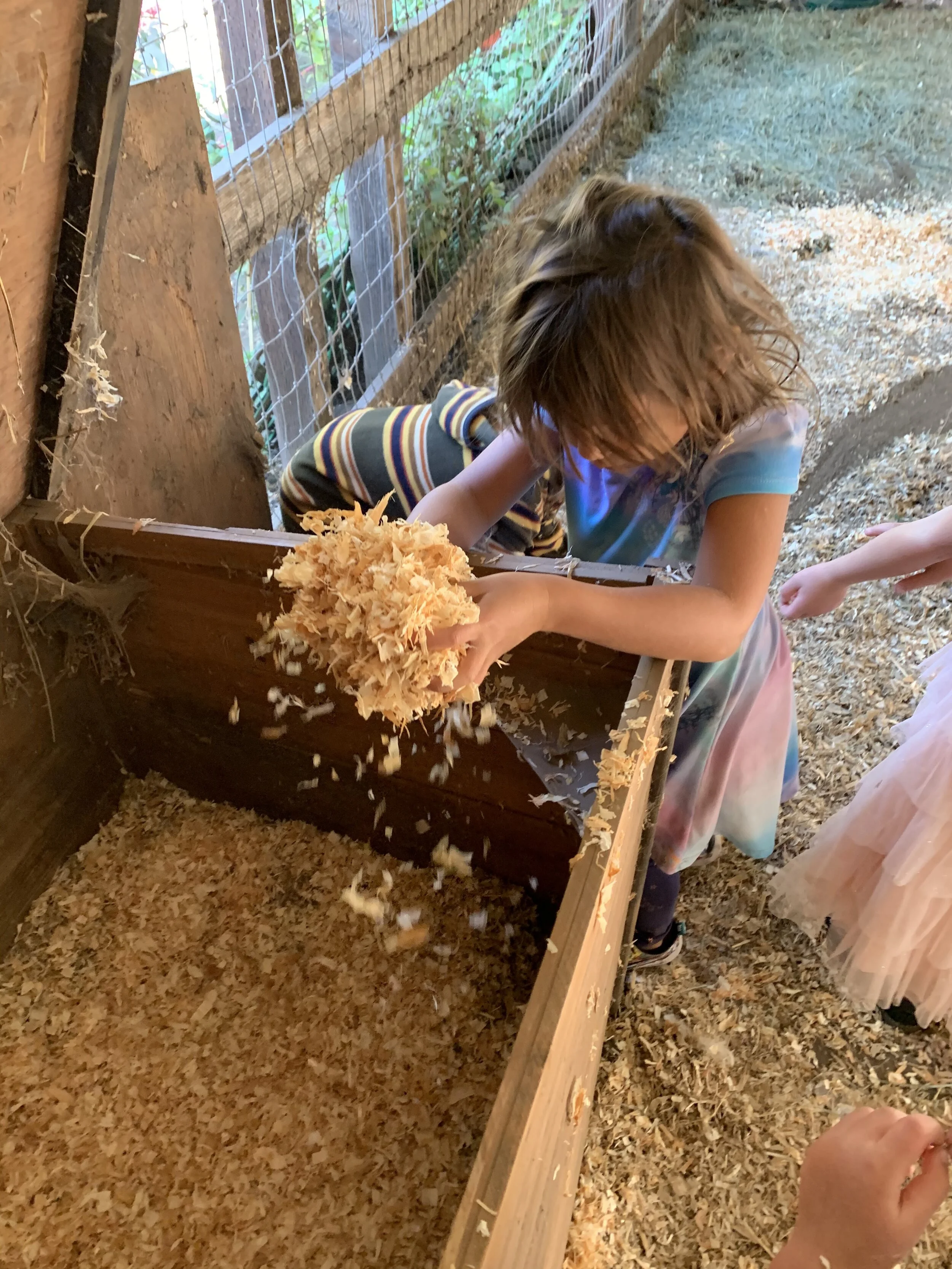
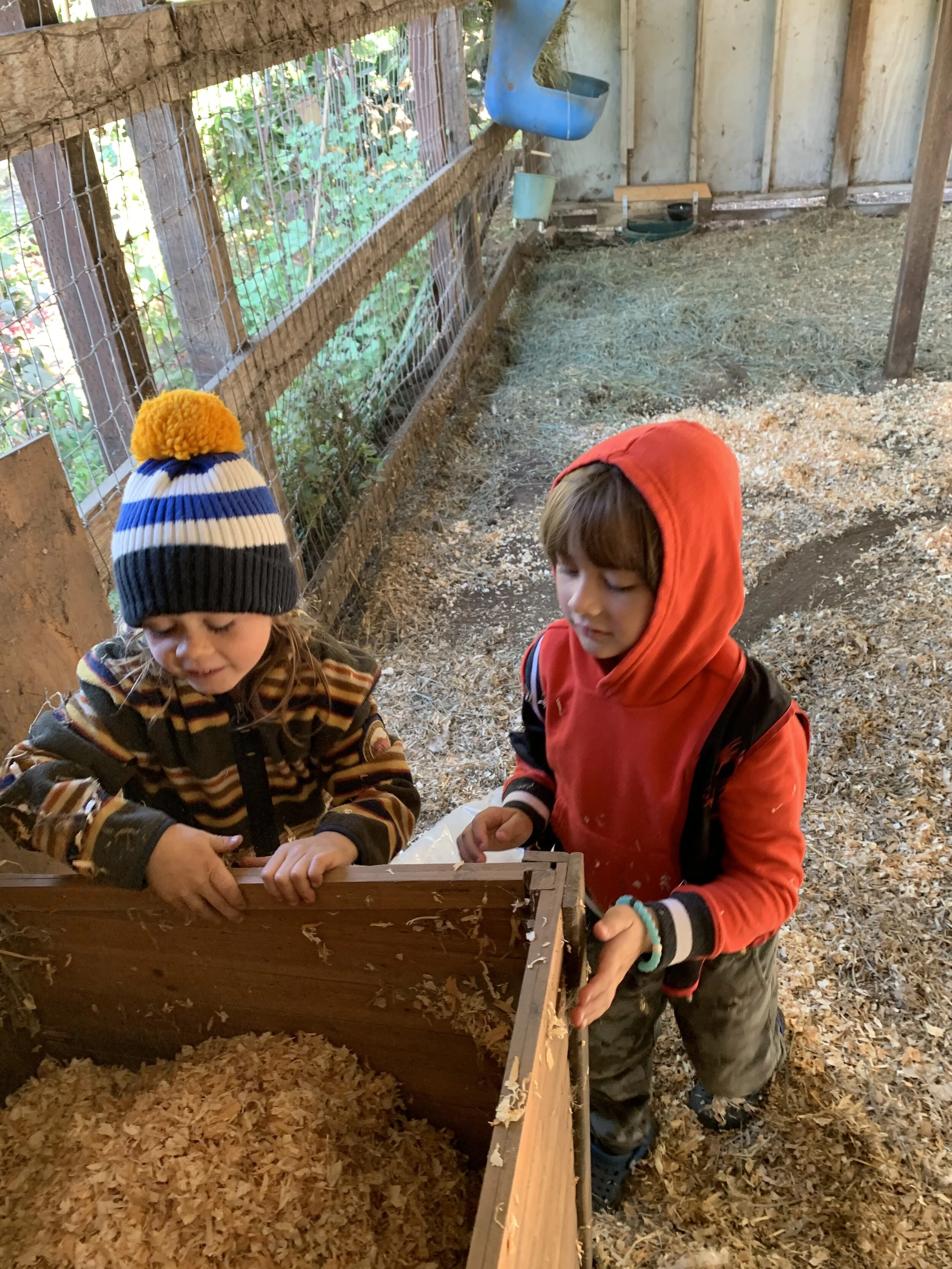
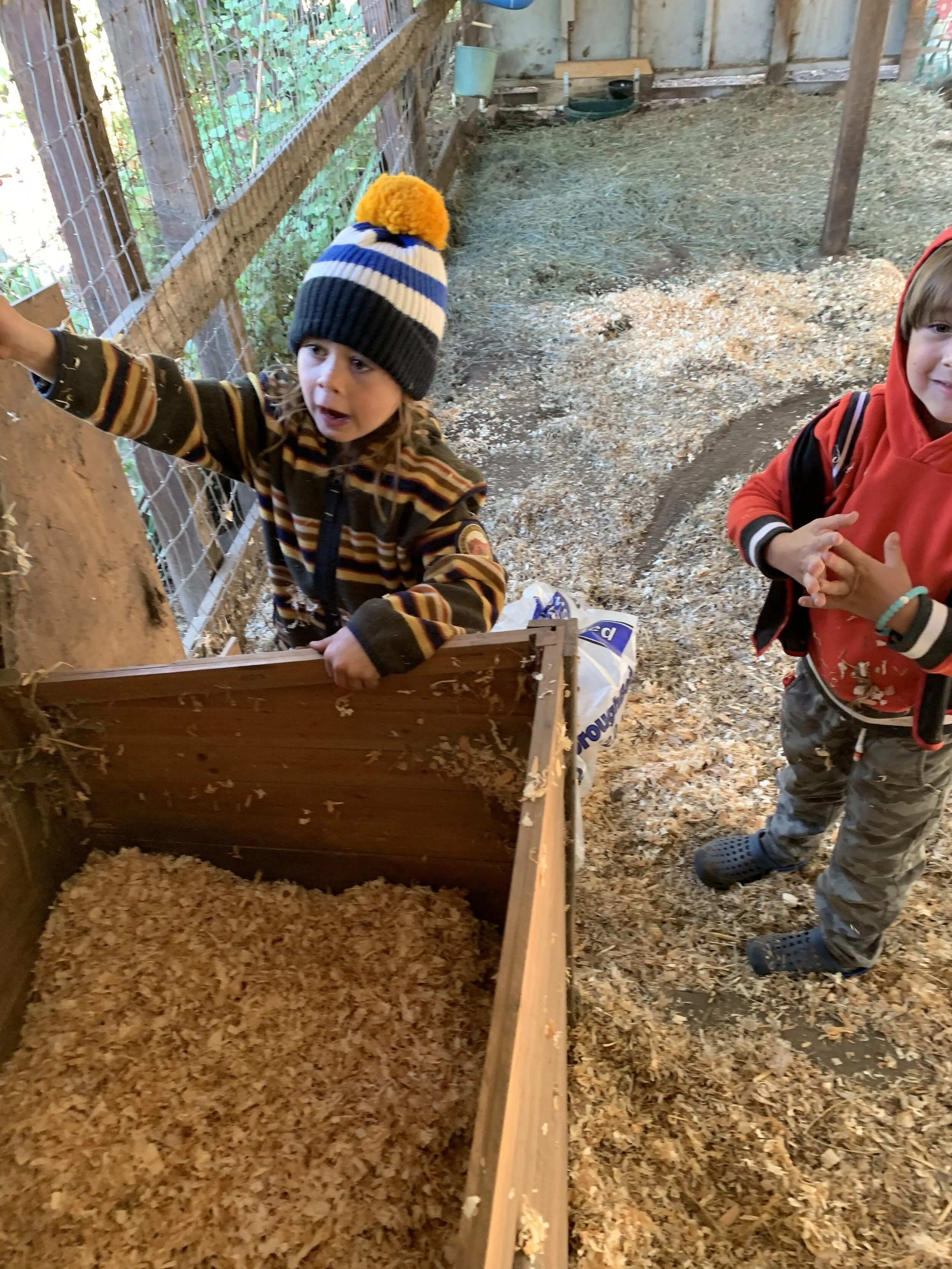
Here are some scenes from animal care. It’s particularly hard to take photos at this time as we are so busy doing our farming work but as the kids get more and more familiar with the duties and chores, I was able to step back for a moment and capture some of the work for you to see. As I hinted earlier, they are a great team, cooperative and diligent!
And finally…our Halloween festivities — an all school parade on the field, a trick or treating visit to different buildings where some older kids graciously handed out goodies, the play, and an all around celebratory day. These kids are so lucky!
Thanks for reading this long summary! Thanks for being great parents and for having your kids be part of our class and our school. We’re having a really great time together!
Rosy and Colleen.