Math: Apple Investigation week
Hi Families,
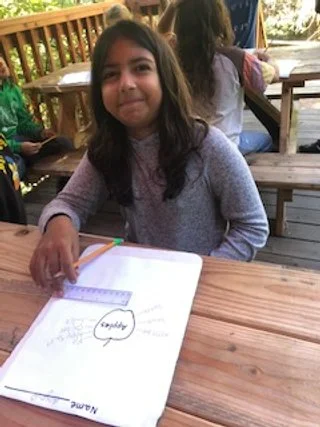
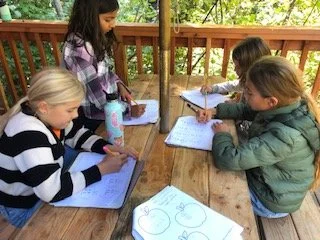
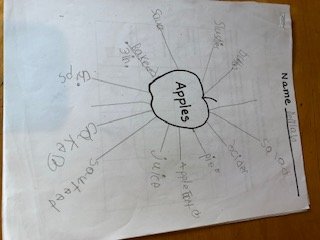
All last week we were privileged to have Manila with us for Apple Explorations and Preparations for the Harvest Festival. Students had the opportunity to pick their apples. Third and fourth chose from a beautiful basket of donated apples, the second grade picked theirs from the children’s garden and first graders went to the “Roxaboxen” apple tree. Manila and I enjoyed conversations and discussions with students about what we can do with apples. Students created “Mind Maps” to illustrate their shared ideas. Many of the younger students chose to draw pictures, while the older students used rulers to draw their line segments and words. We all got hungry just thinking about all the deliciousness that can be made with apples, and we looked up and clarified the difference between apple pie, apple crisp and apple crumble. After discussions on food, the mathematical investigations began.
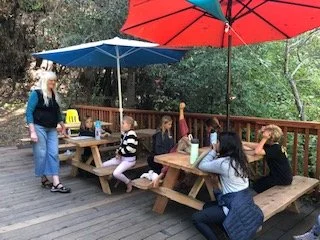
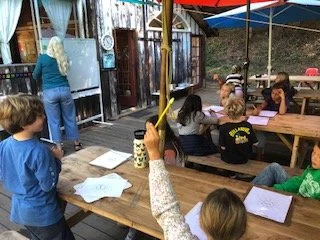
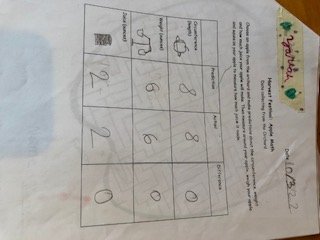
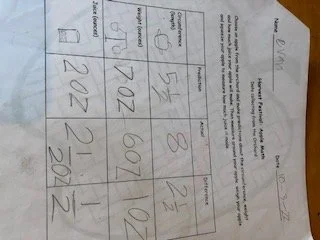
Students in all grades followed similar explorations and investigations as they made predictions, weighed and measured actual amounts and calculated the difference between their estimations and the real measurements. The lessons included: inches on a tape measure (how big one is and comparisons to centimeters), circumference around an object, weight on a pounds/ounces scale with fractions (1lb = 16 oz, ½ lb = 8 oz, ¼ lb =4 oz), liquid ounces in a measuring cup (vs dry ounces) and making estimates or predictions (educated guesses). Students made their predictions then used tape measures to find the circumference of their chosen apple, and a scale to find the weight of their apple. The first graders used a balancing scale and sticks from the Base 10 Blocks to weigh how many sticks their apple was, and the 2nd - 4th graders used the ounces scale to determine their weights. After the predictions and actuals were written in their notes, they calculated the difference using a variety of methods. Some students simply did a subtraction problem, others counted up, and others counted down, and some used a manipulative (visual tool) to see the difference.
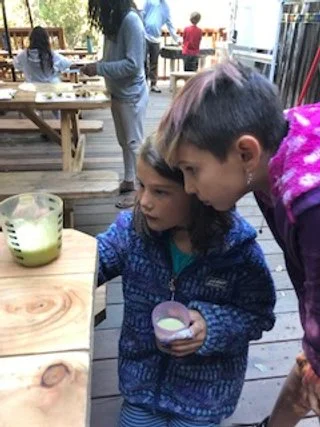
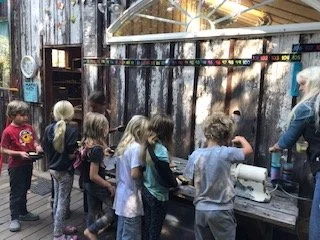
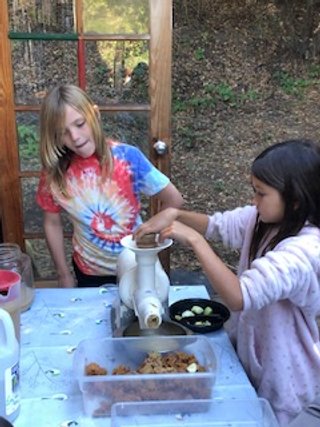
In order to find the amount of juice their apple made, students had to prepare their apple for juicing. They were all given an apple cutting, culinary lesson to keep them safe, and we had no injuries! Students used Manila’s juicer to juice their apples into the liquid measuring cup for the actual amount of juice calculation. Then, they enjoyed the fruits (juice) of their labor. And, calculated the difference between their predictions and the actual amount of juice they made.
The data from the actual amounts will be used to practice data analysis, and students in the older grades will have lessons on calculating the mean, median, mode and the range.
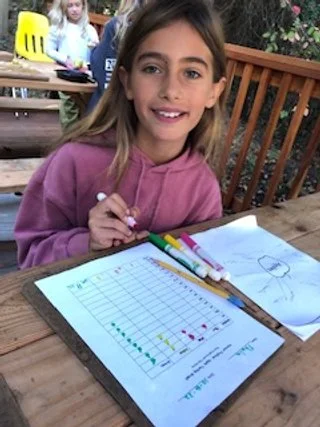
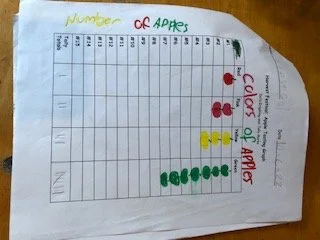
On Wednesday students were provided an apple taste test. They were offered 4 types of apples to try, and had conversations and discussions with each other as they described what they were tasting, and whether they liked it or not. Once they tried all 4 they had to pick a favorite for the class graph. The graphs were then discussed, and the data analyzed, considering the mode and the range between the most liked and the least liked. The graphs were recorded, and tallied by individual students in the older grades.
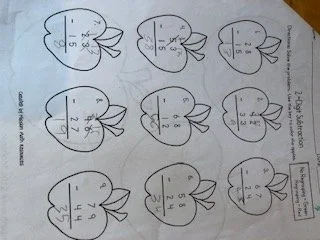
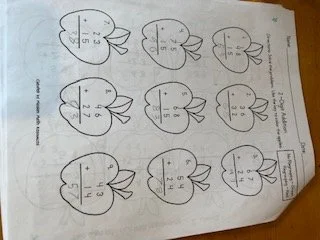
During the rest of the week students continued to improve their culinary skills, cutting and juicing many apples for the families to enjoy apple juice at the Harvest Festival. They also continued to work in their math packets which were designed to reinforce concepts and practice skills. All included a maze for fun. Students in first grade practiced counting apples, doing a dot-to-dot to practice sequencing, and worked on additions and subtraction facts through the fact families that have single digits equal to ten. Second graders also did these fact family apples, along with practicing subtracting 6, 7, 8, and 9 from numbers under 15. Third and fourth graders reviewed adding and subtracting double digit numbers with and without regrouping. All students were given lessons on multiple ways to solve these problems, and many choices in hands-on manipulatives to use to help them “see” the problem.
It was a fantastic Apple Exploration Week at the Math Cabin, and a wonderful experience at the Orchard School Harvest Festival.
Jenni