Math
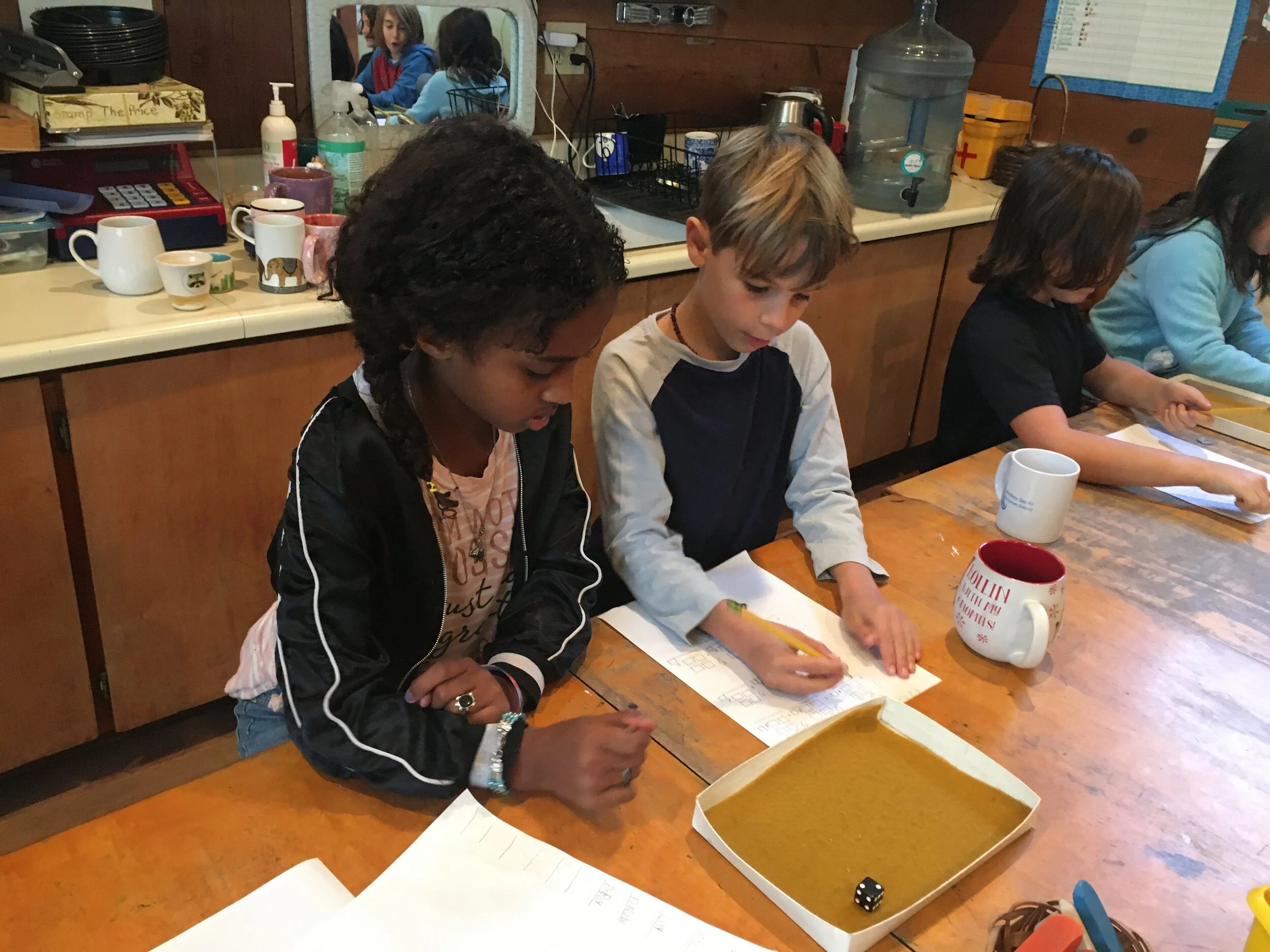
The students seem to be enjoying having a bigger class; there are many friendship options for all and new connections to be made. I find that having new students and mixing the grades has created a more accepting social environment for all and a classroom in which everyone has several friends. Older students can mentor, inspire, and make friendships with younger students; and younger students can connect more deeply socially and mentally with older students. The students continue to benefit from the presence of Valerie Phipps (art) and Brenda Surrey (grandparent) because they either provide more support in whole group lessons or teach a group themselves enabling two math lessons during the same period.
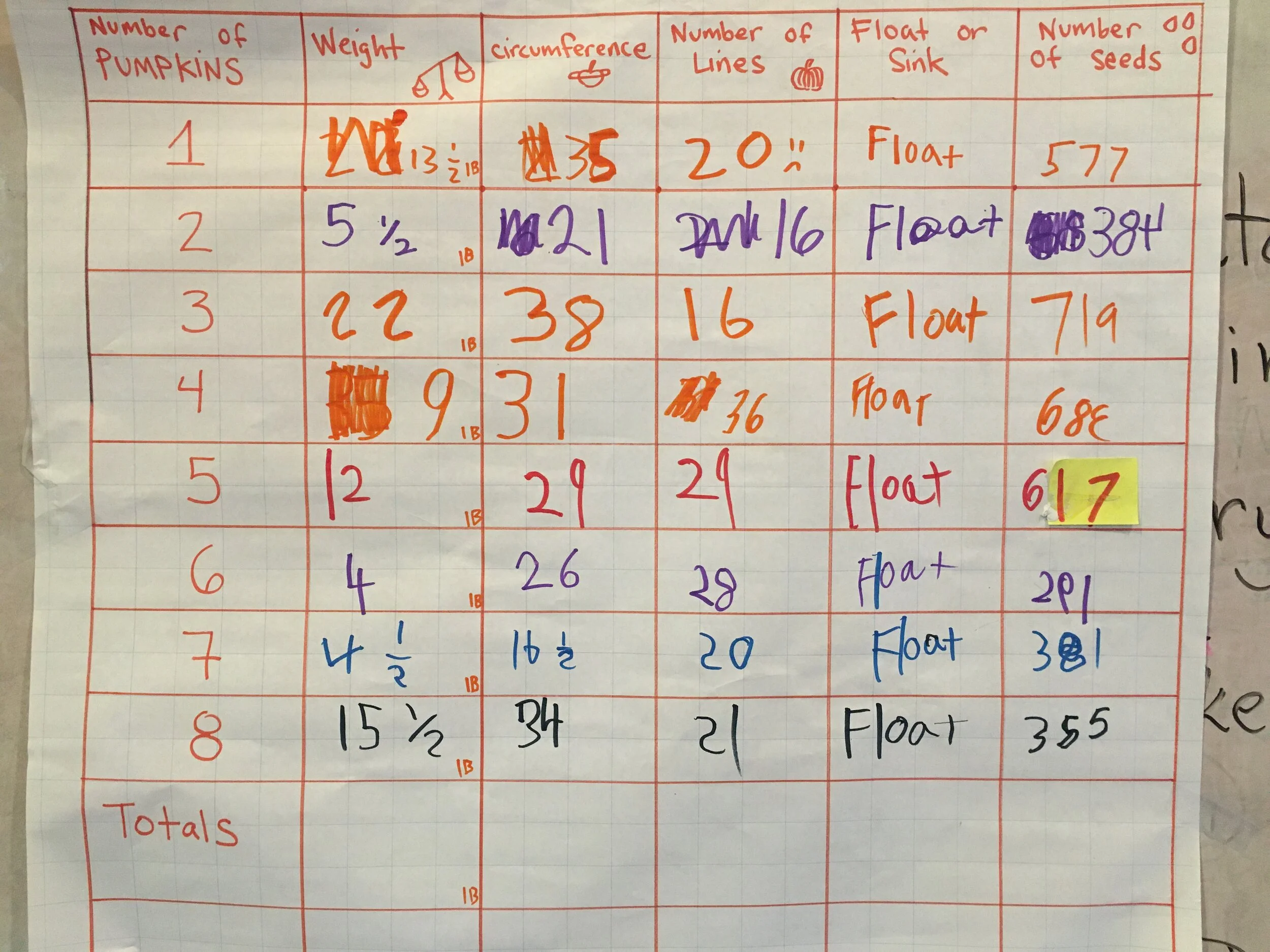
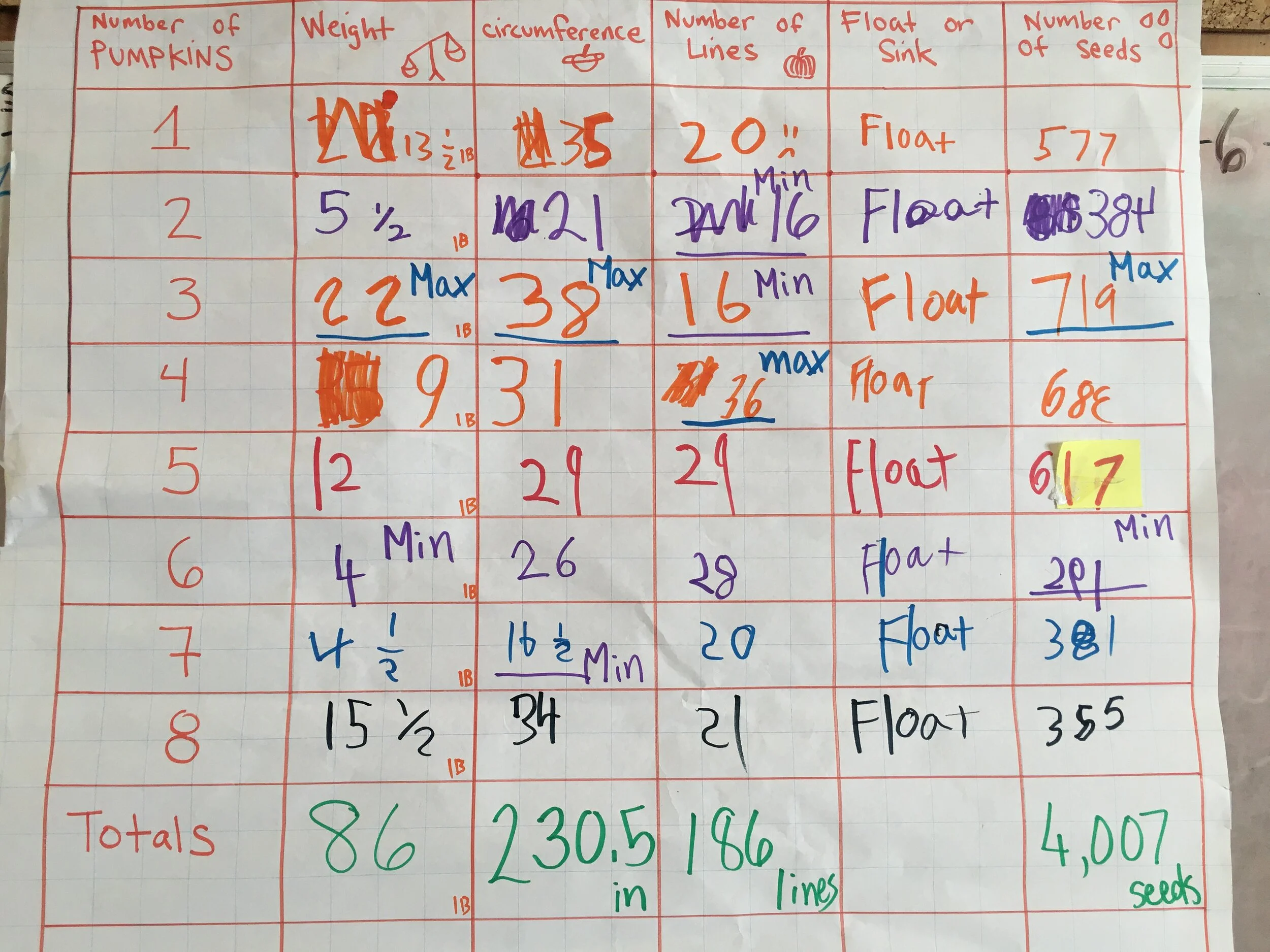
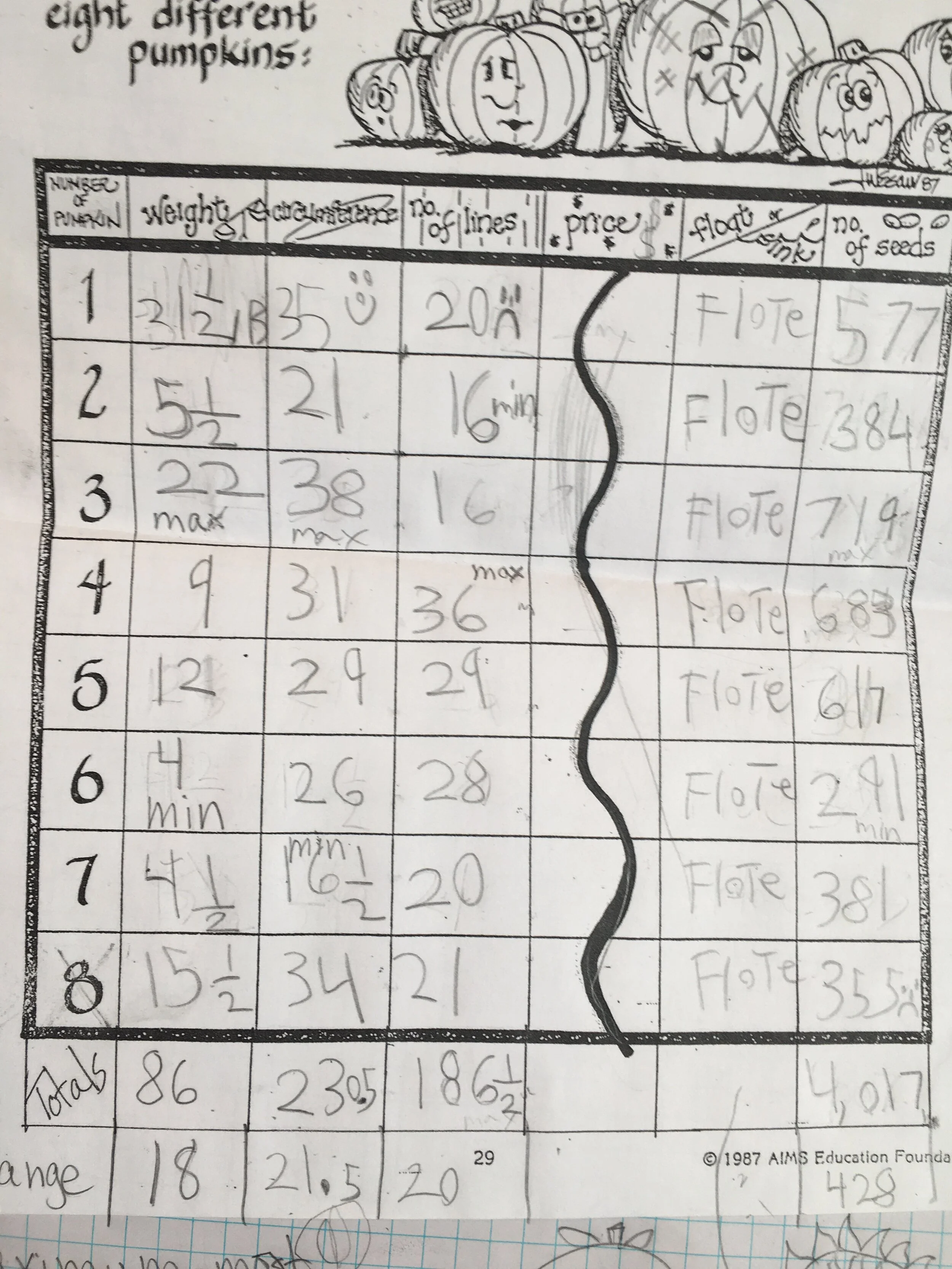
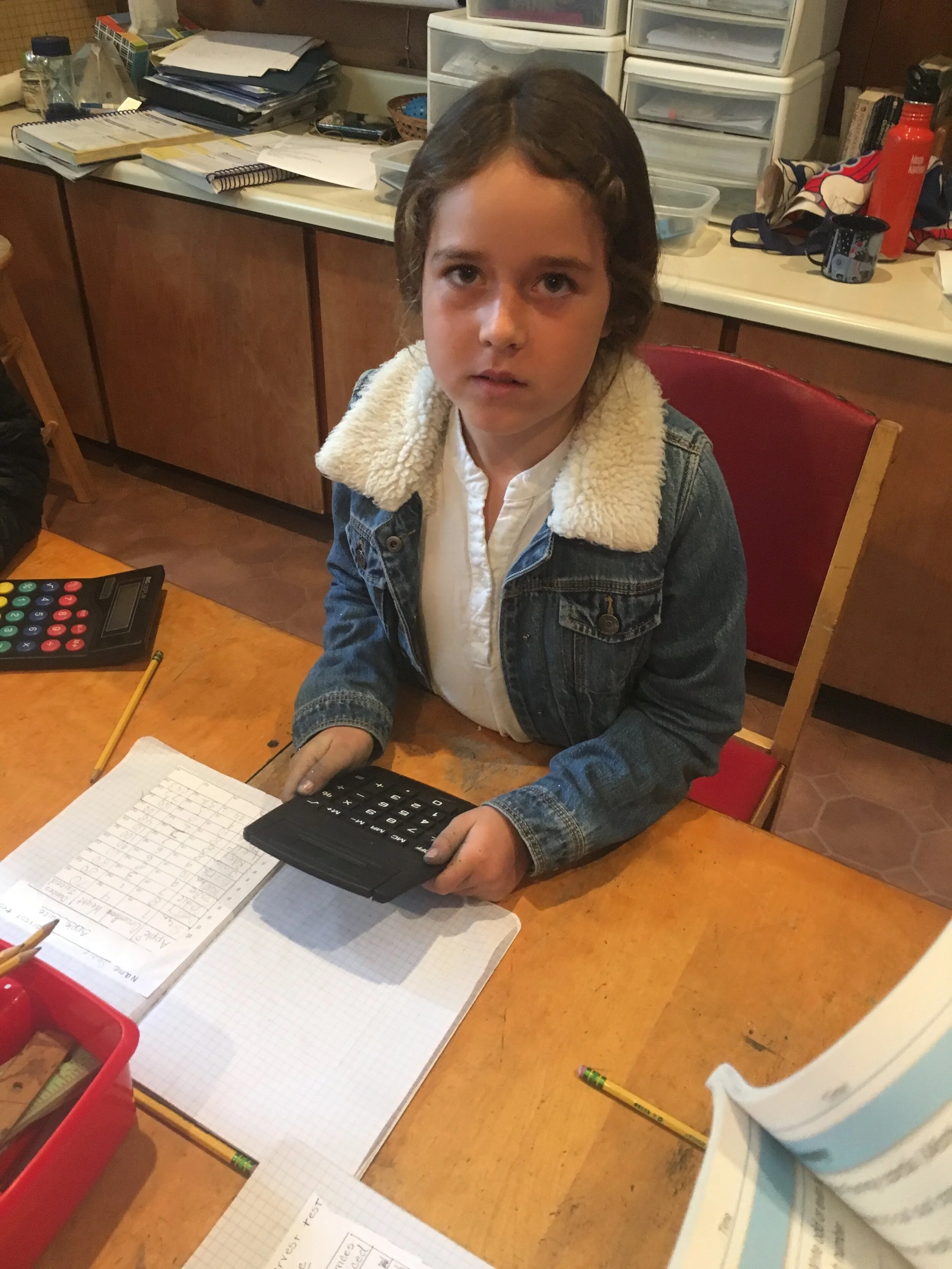
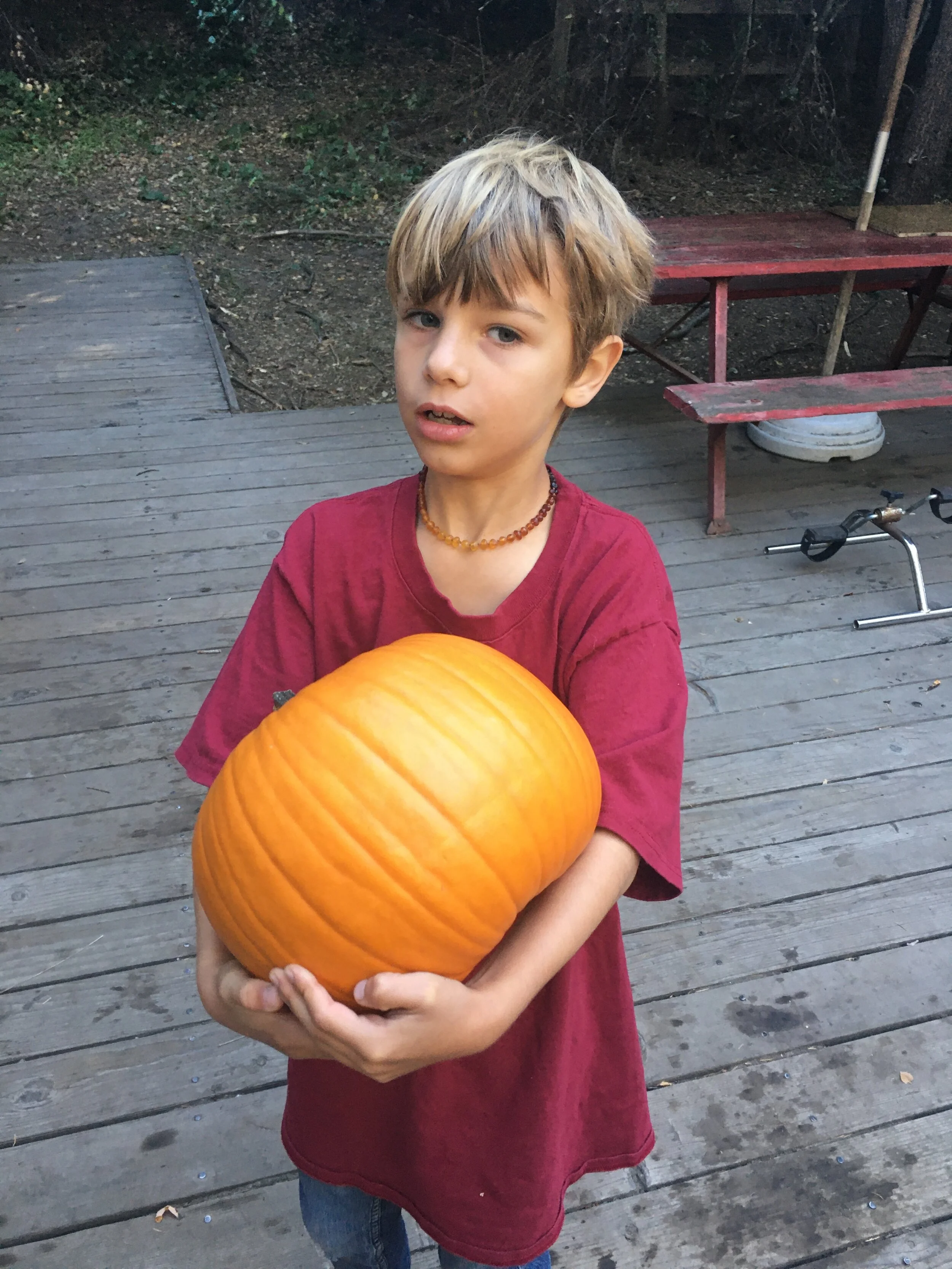
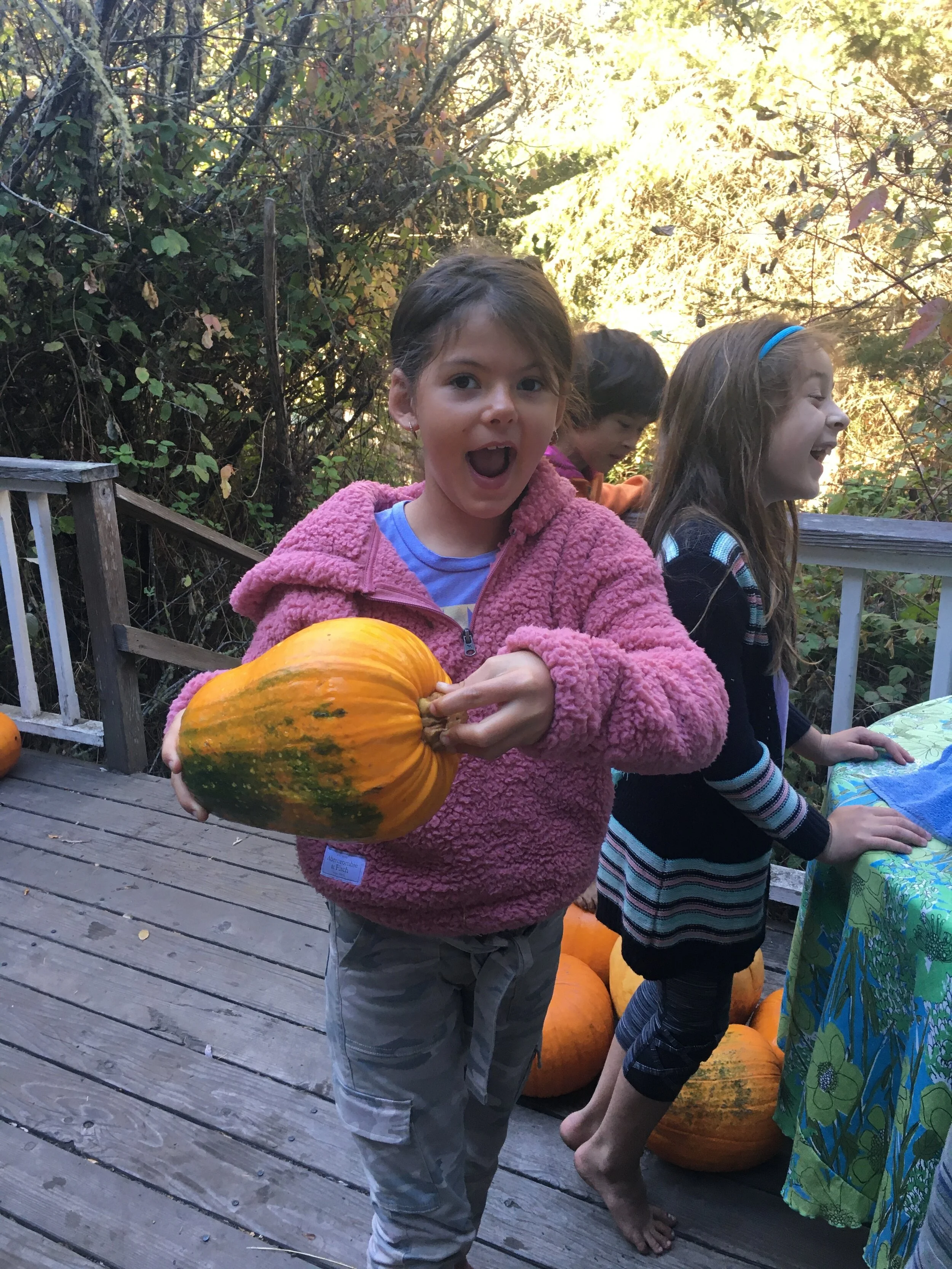
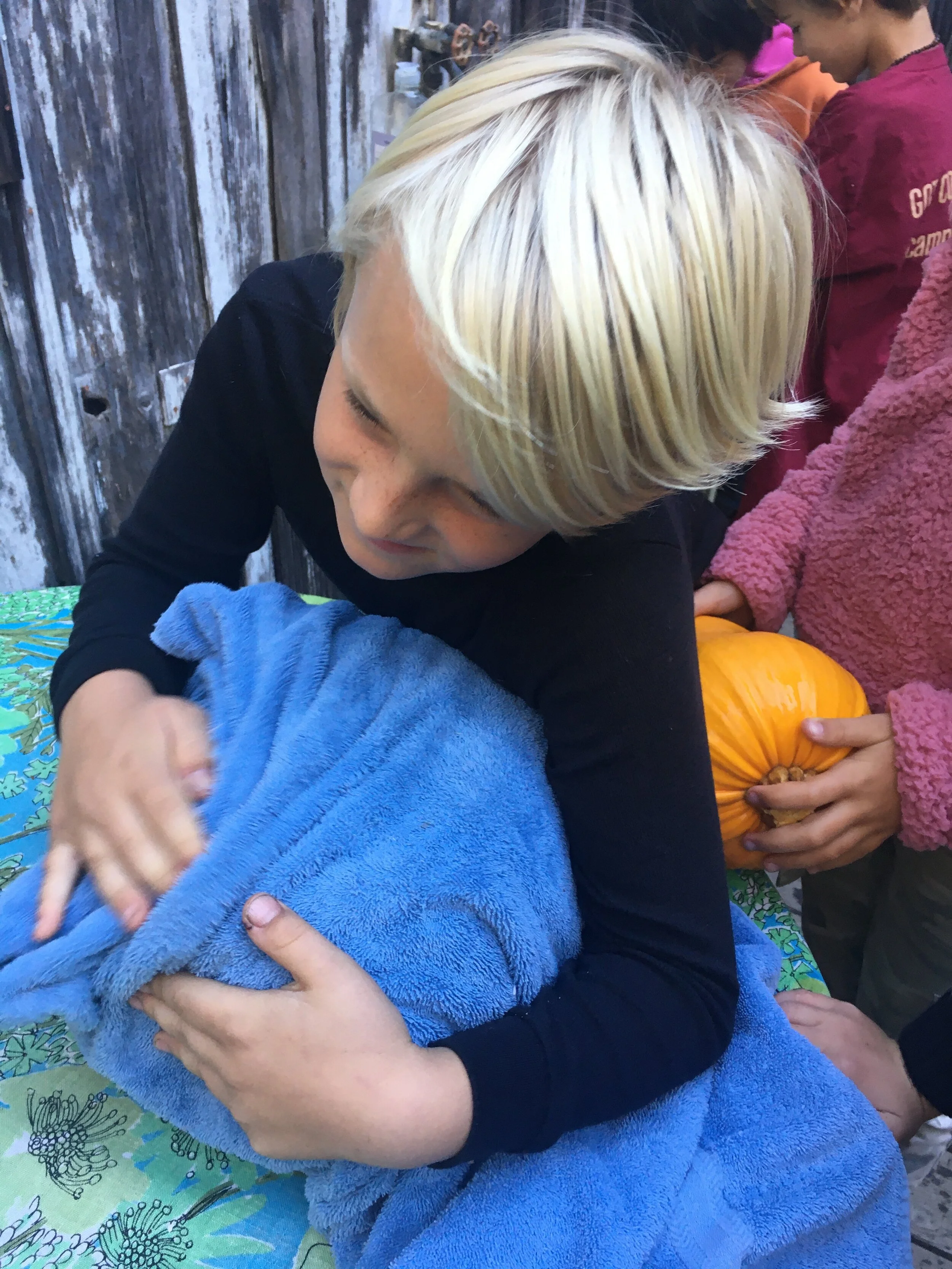
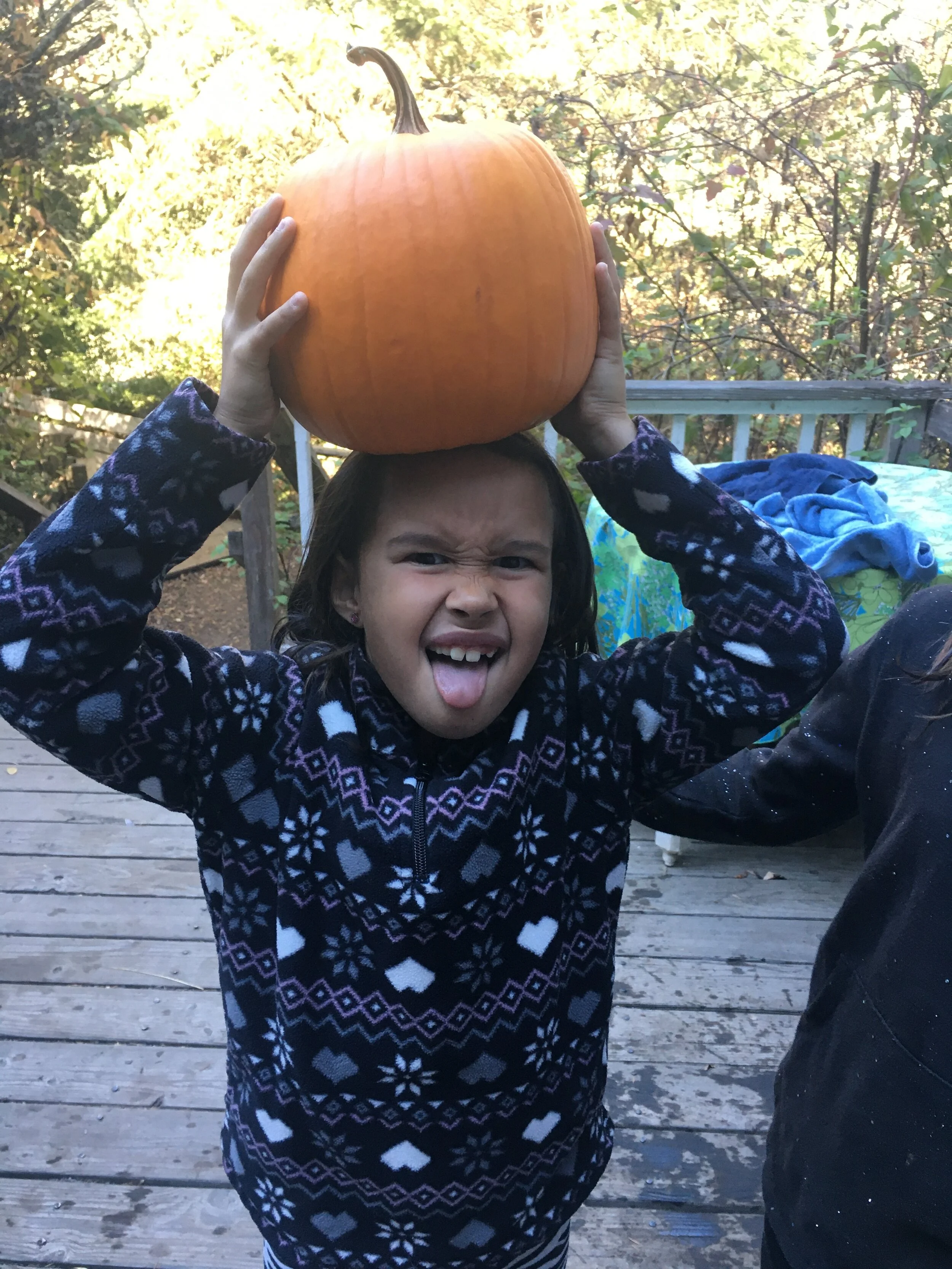
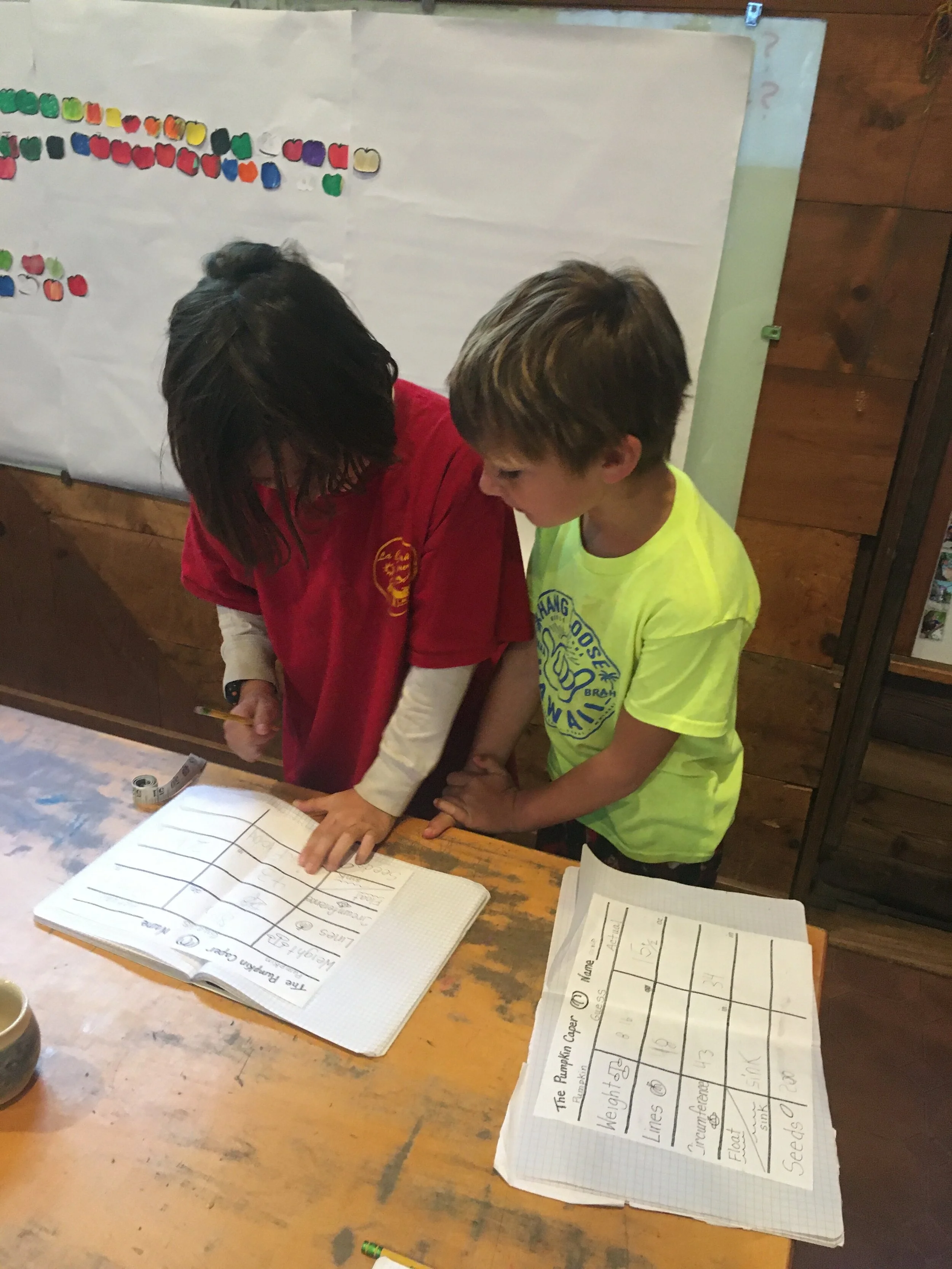
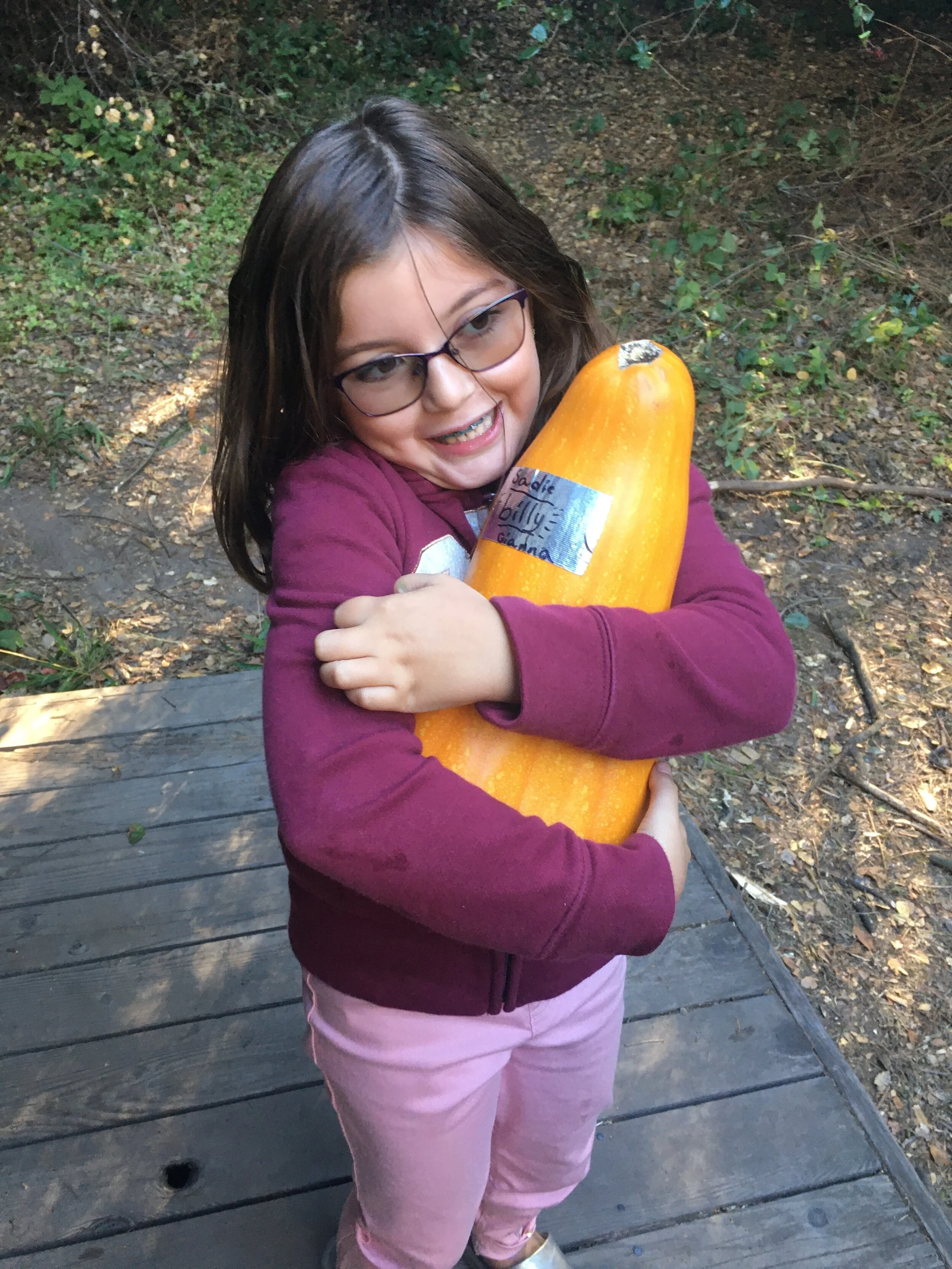
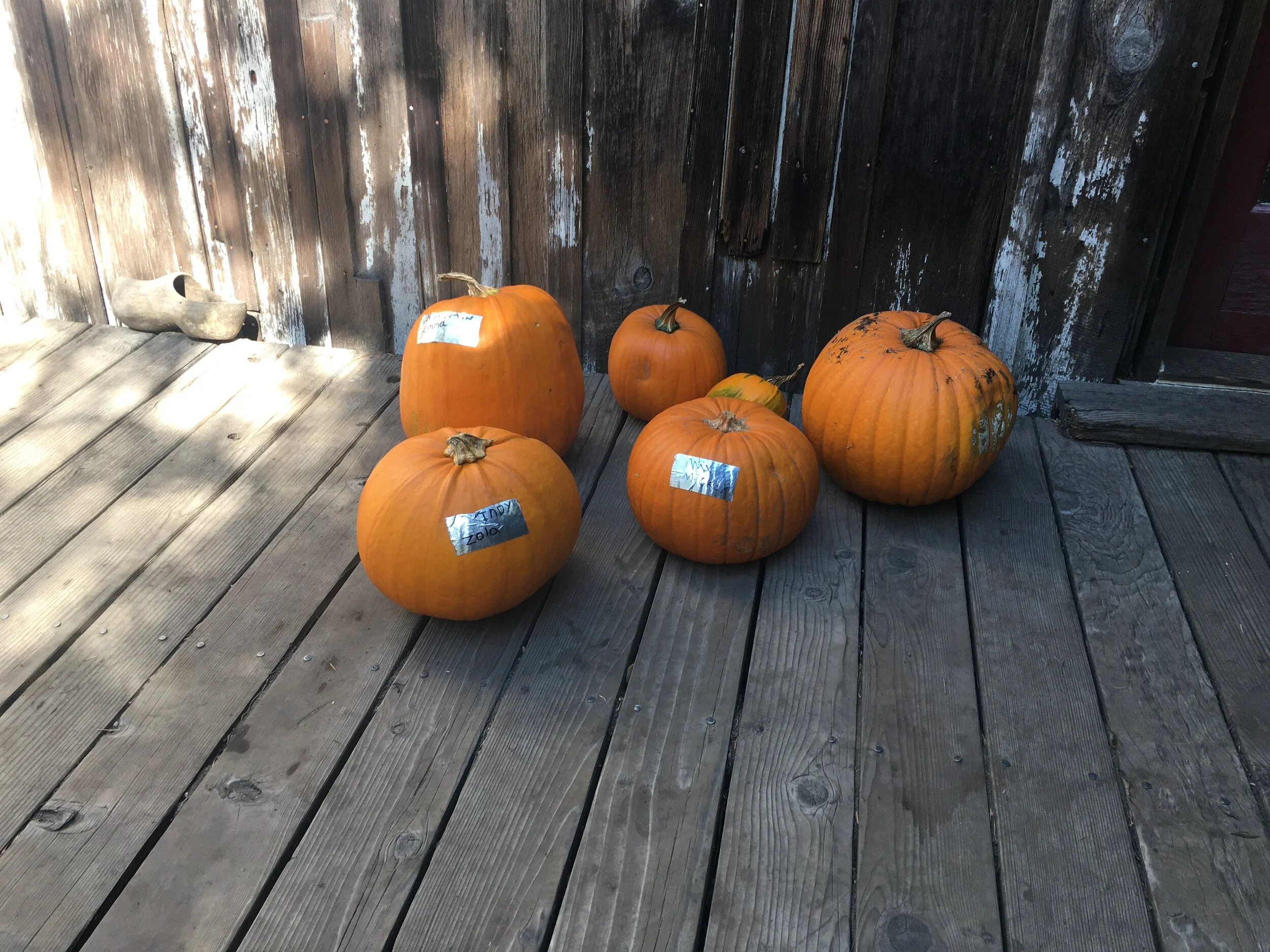
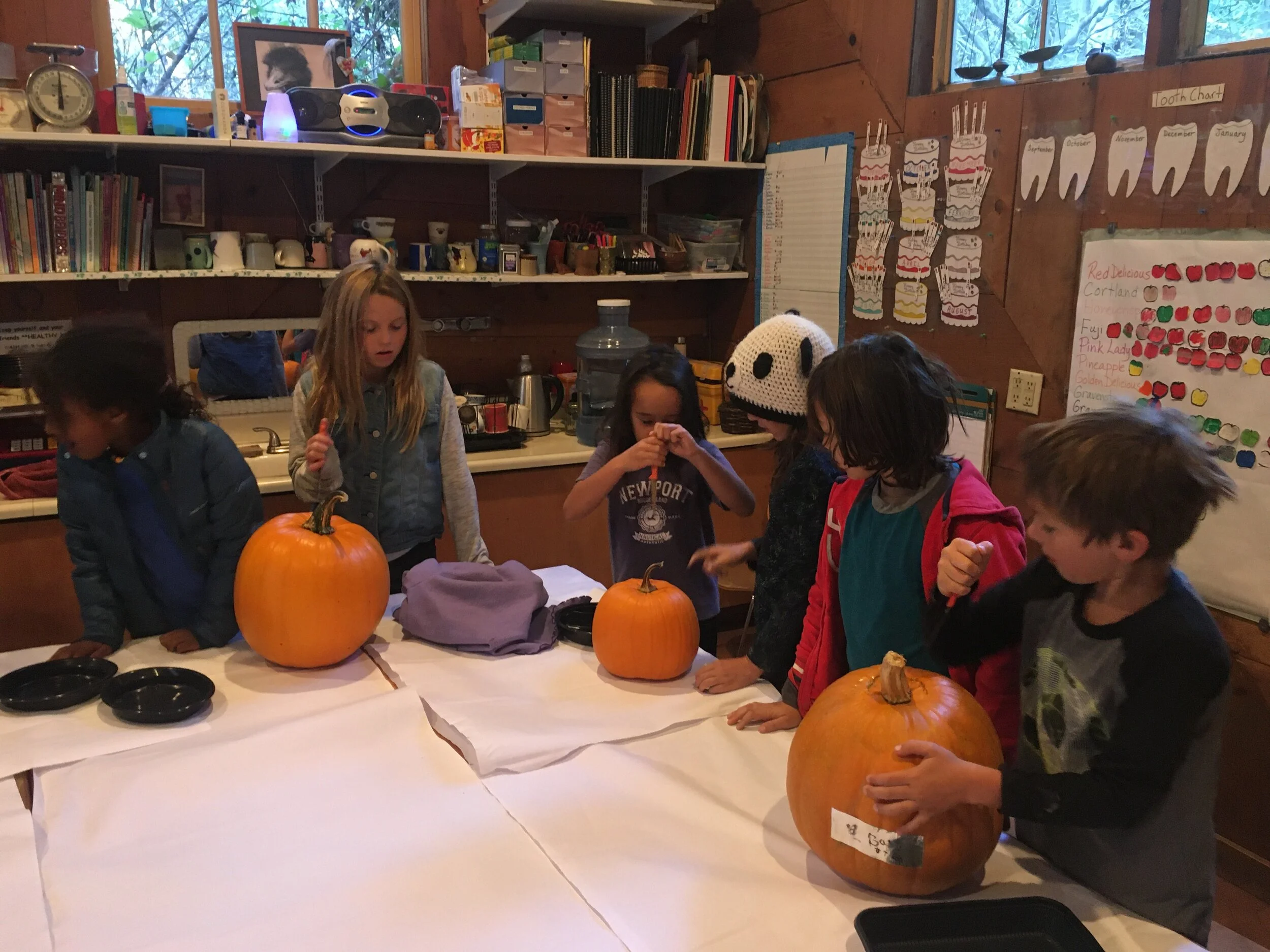
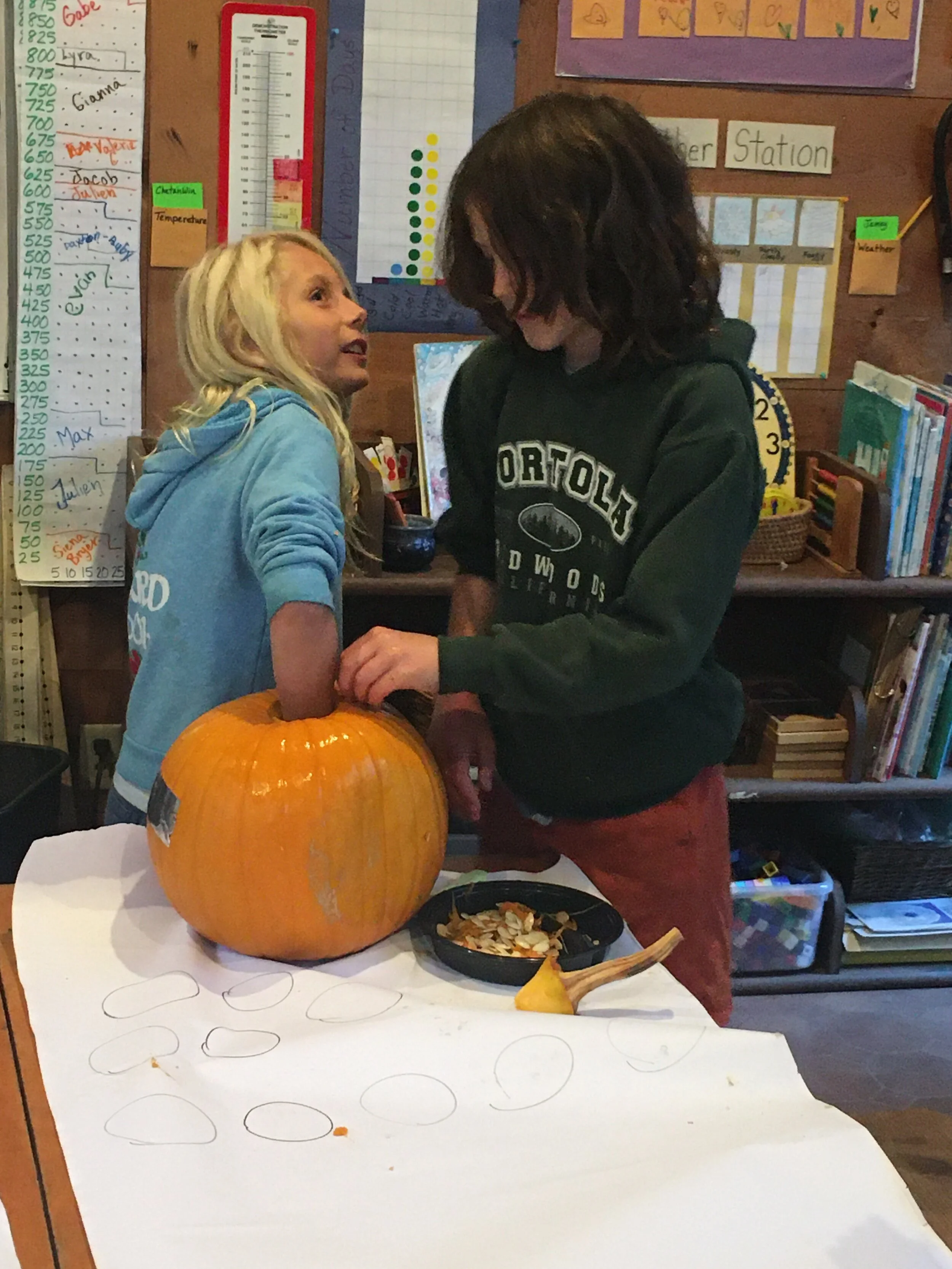
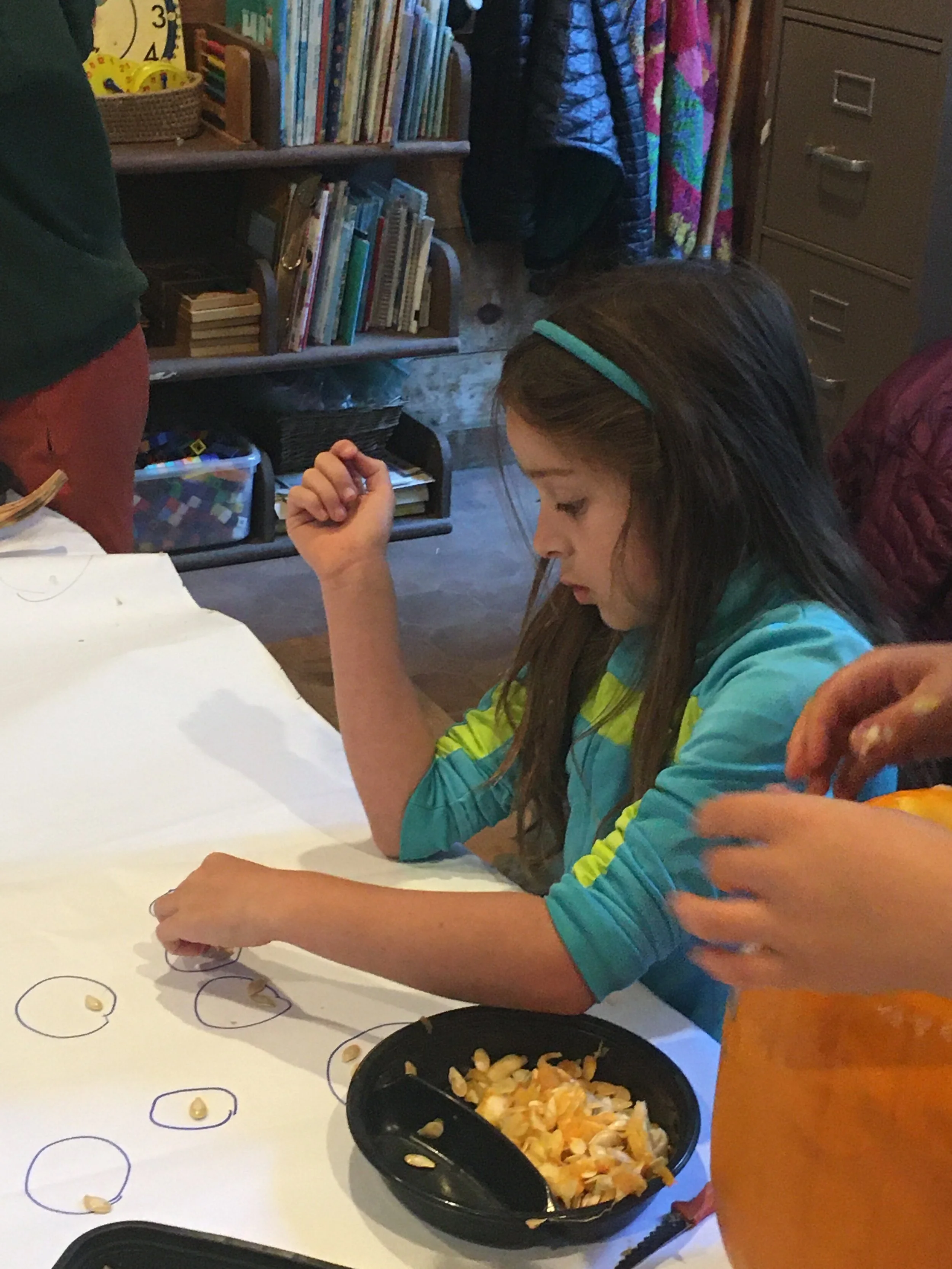
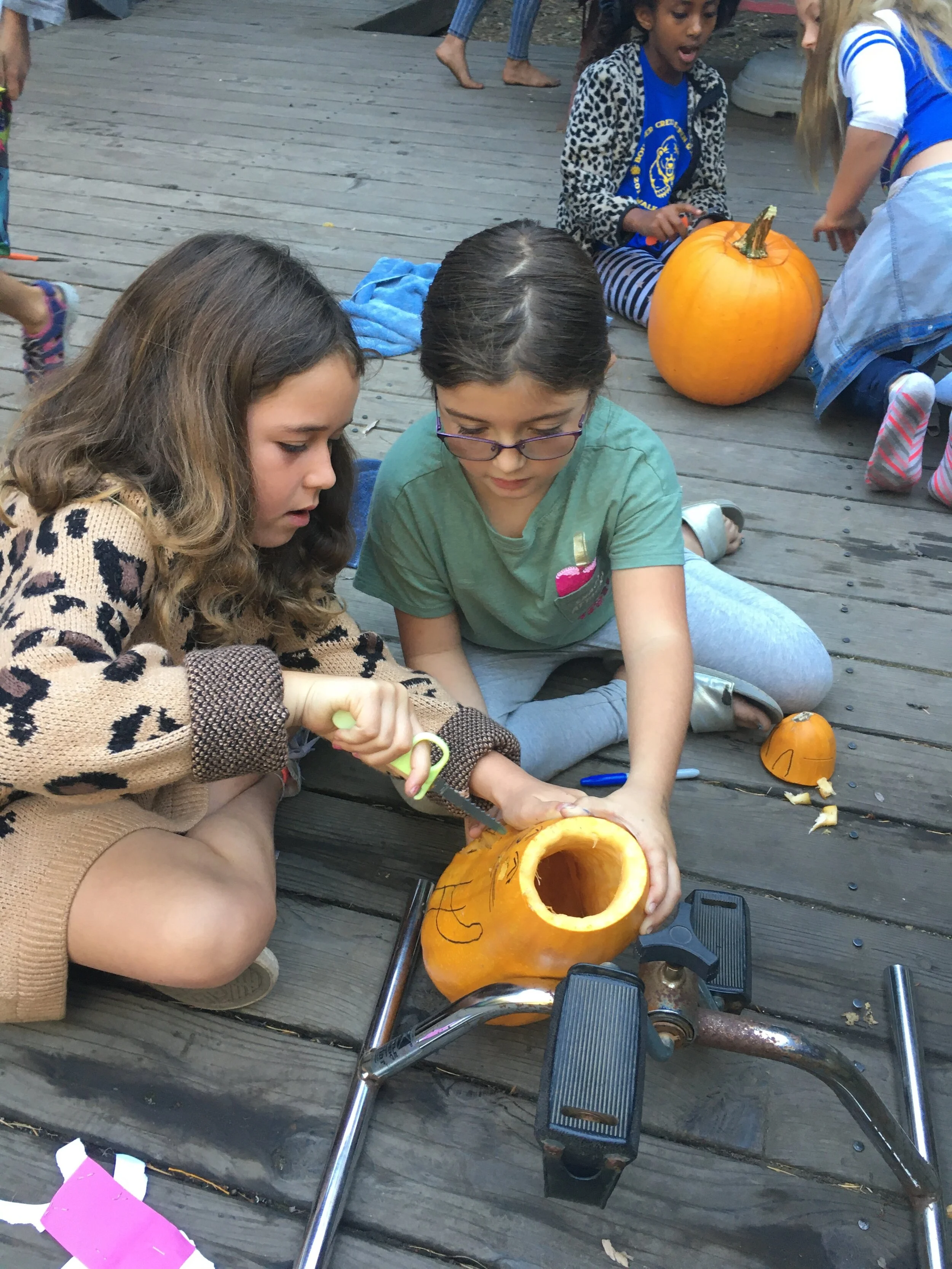
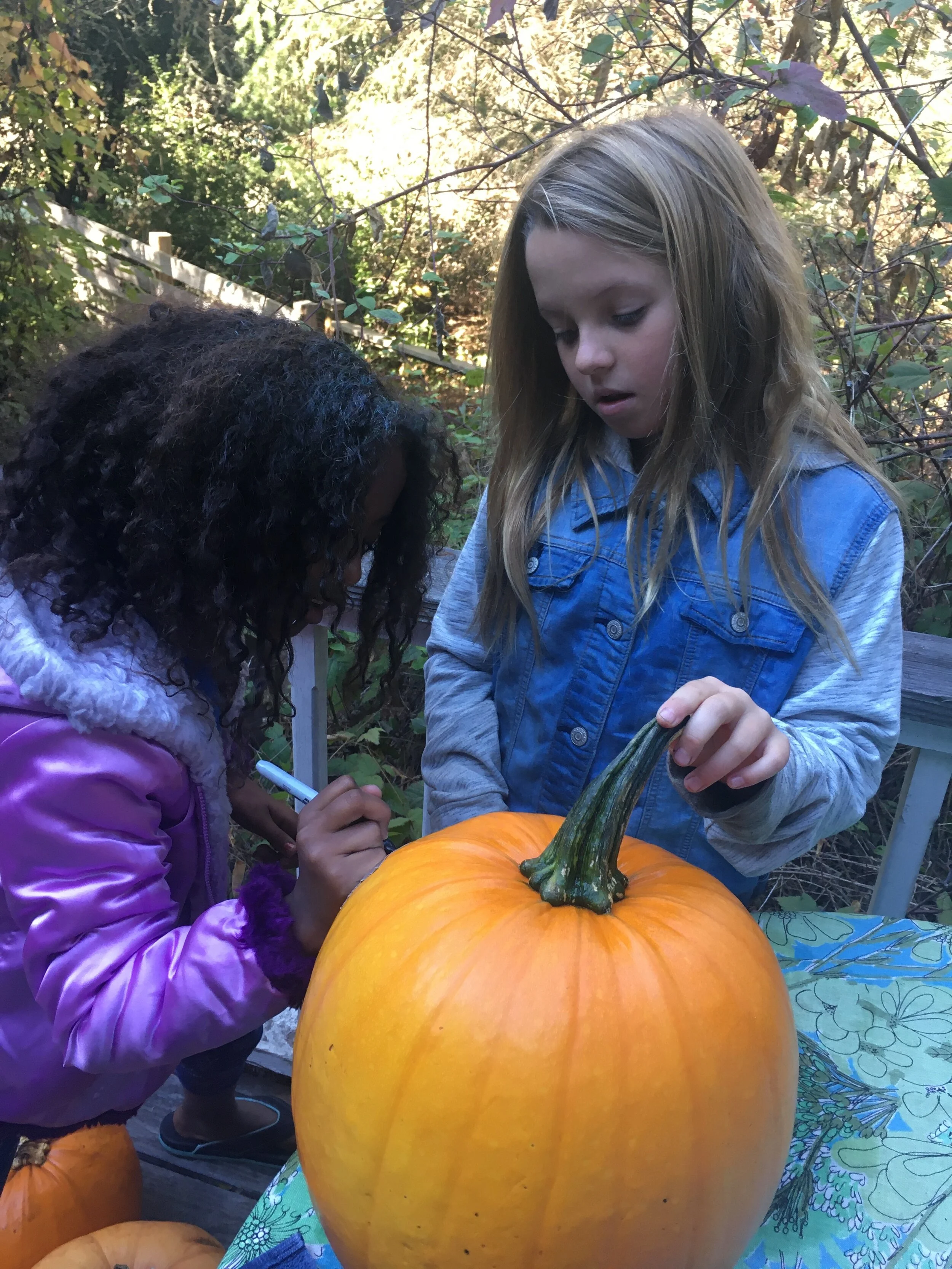
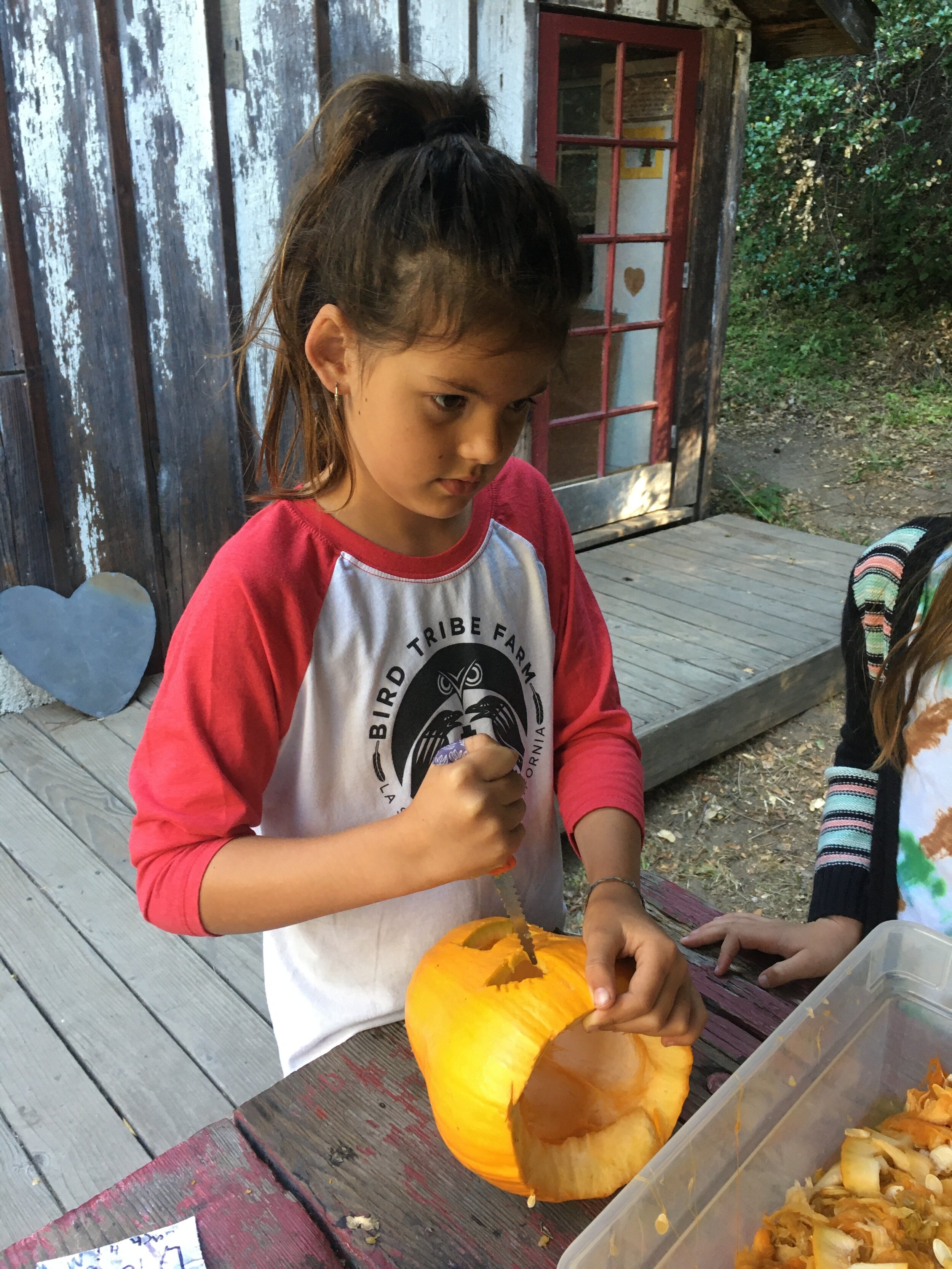
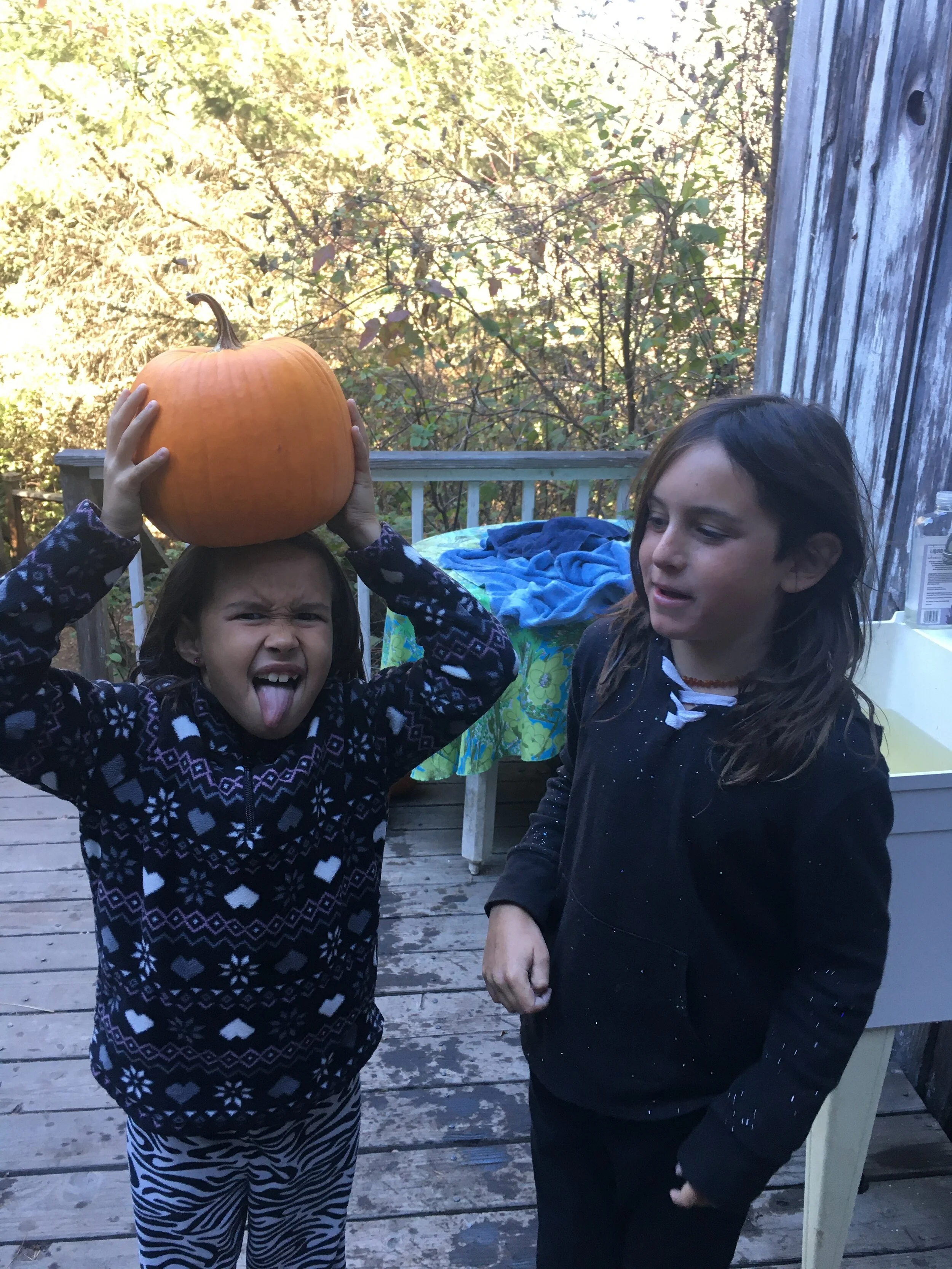
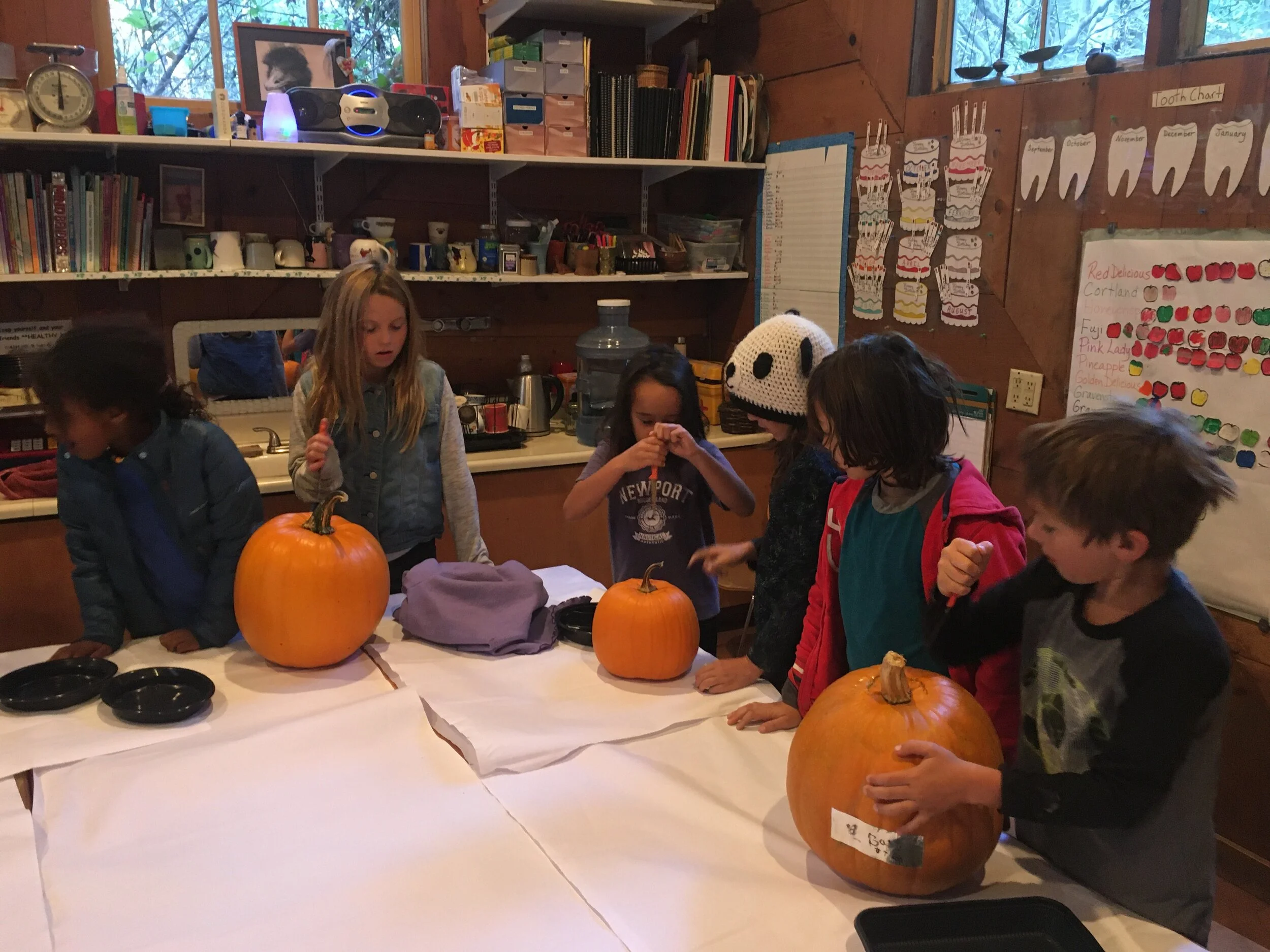
In terms of data, students turned in their favorite apple homework and created a class graph of all of the favorite apples, with honey crisp and fuji receiving the most votes. We even had a pineapple! We continued our data practice with the Pumpkin Caper. For this activity, we created a Pumpkin Mind Map as a whole group brainstorming all the various uses for pumpkins. Students were placed in partnerships as determined by the popsicle picker for the week. The partners predicted the number of seeds, weight, circumference, and wether or not their pumpkin would float or sink. They then collected the data for their pumpkins and recorded it on a class graph. Students copied the information for all of the pumpkins into their own graphs, determined totals for each category using calculators. They then found the maximum and minimum value for each category as well as the range. We discussed why data like this is important, giving the example of height and weight as recorded at the doctor’s office compared to the national average. Students ended the Pumpkin Caper by carving their pumpkins and decorated the campus for Halloween.
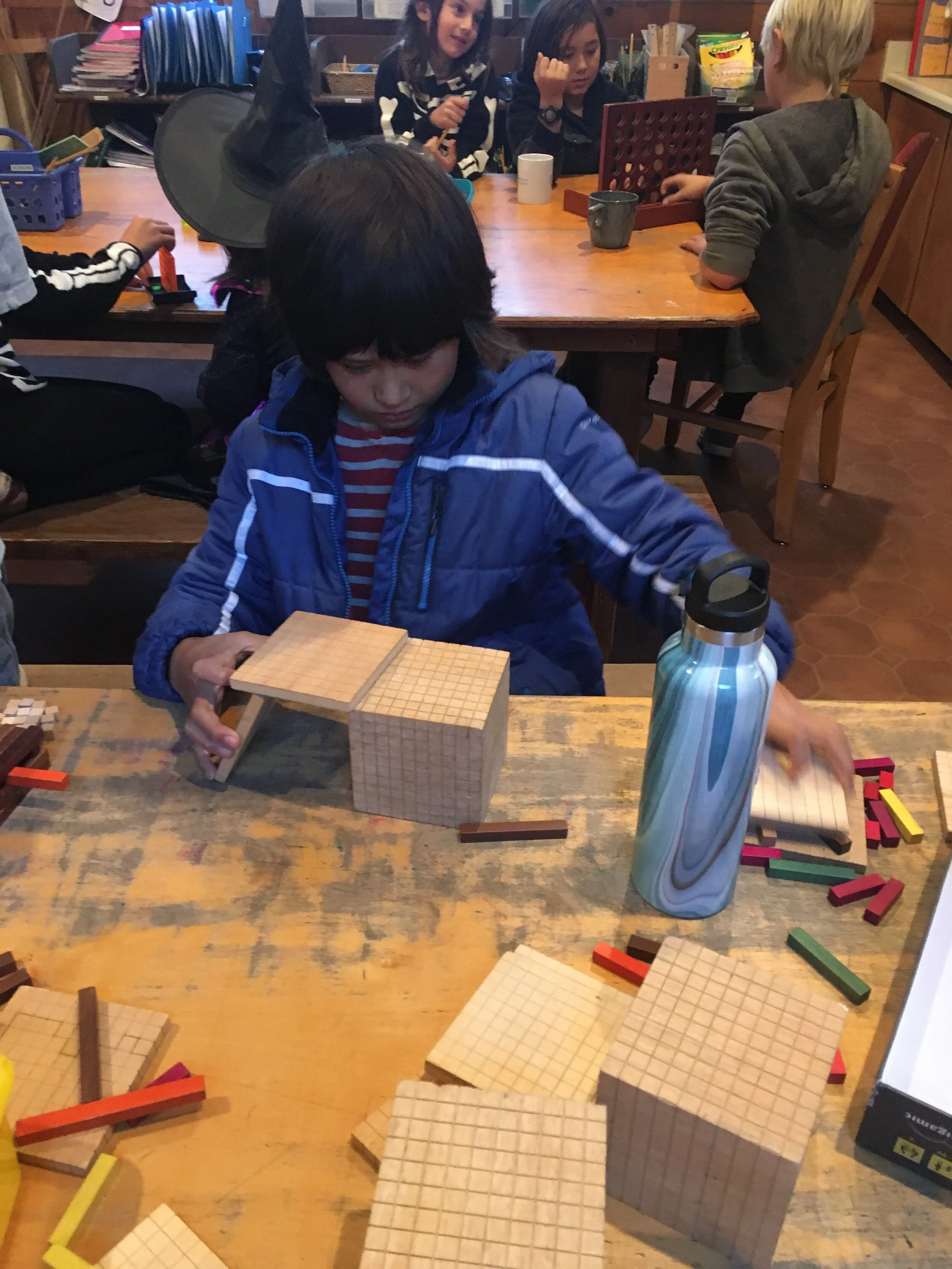
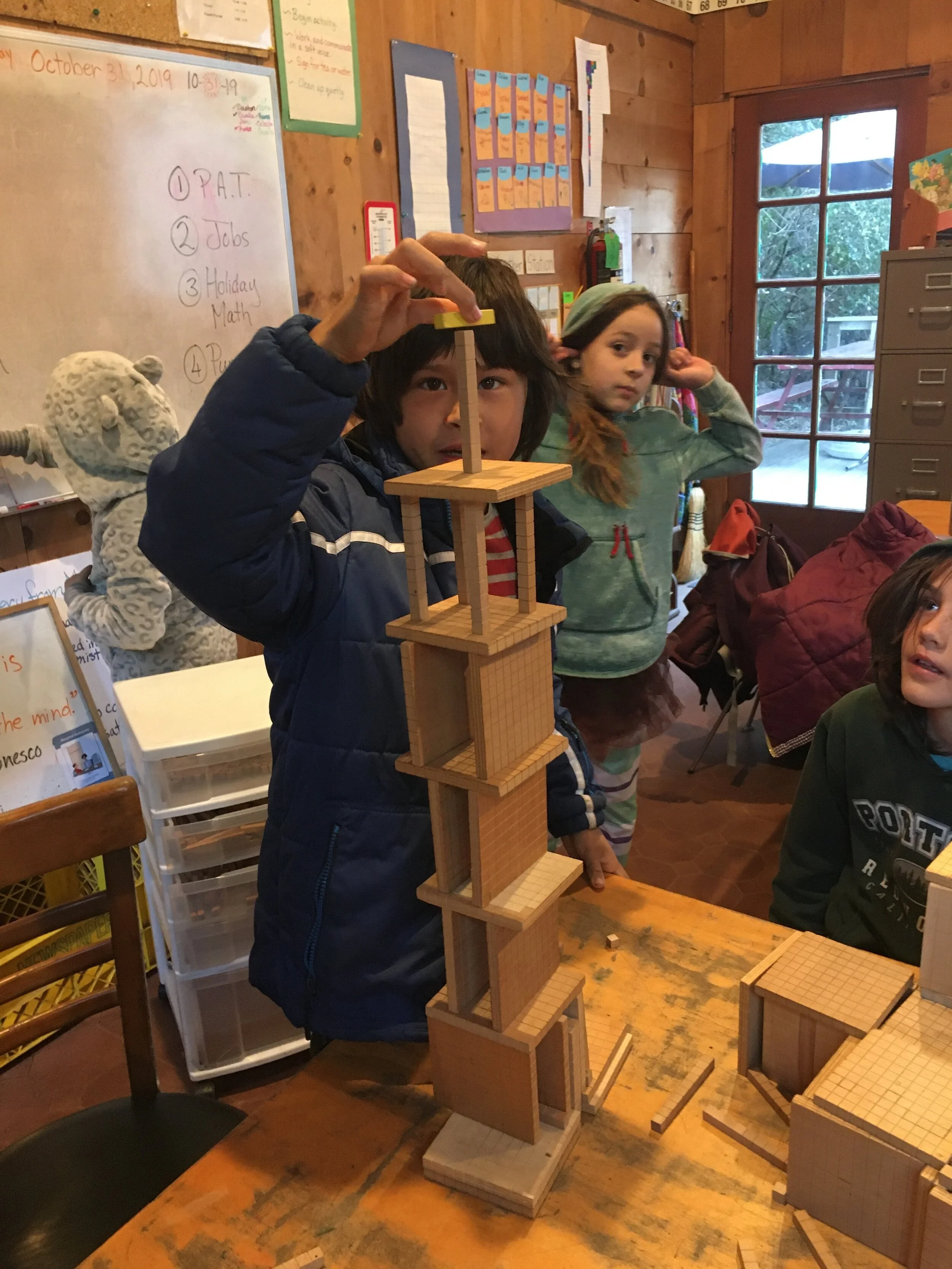
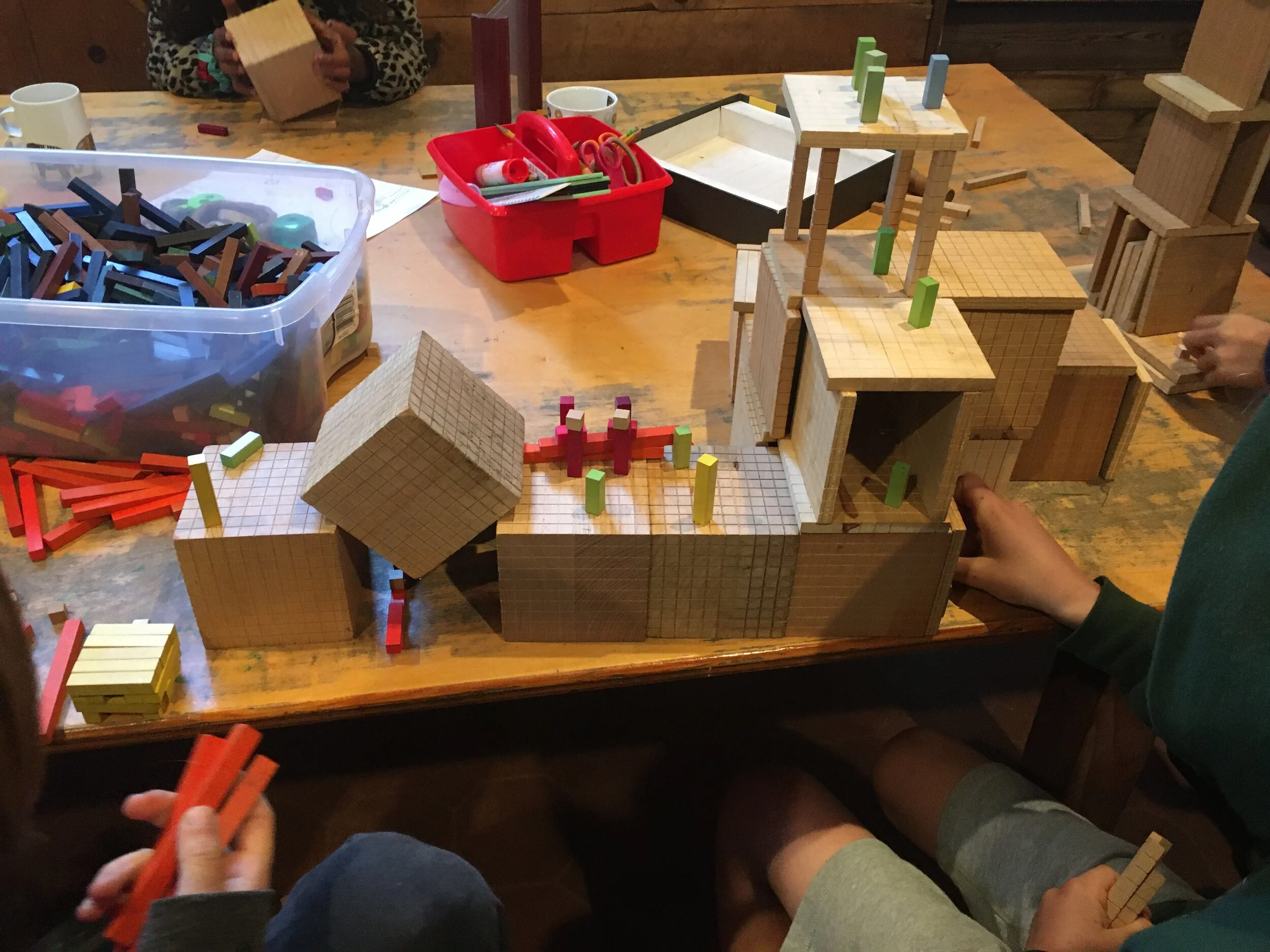
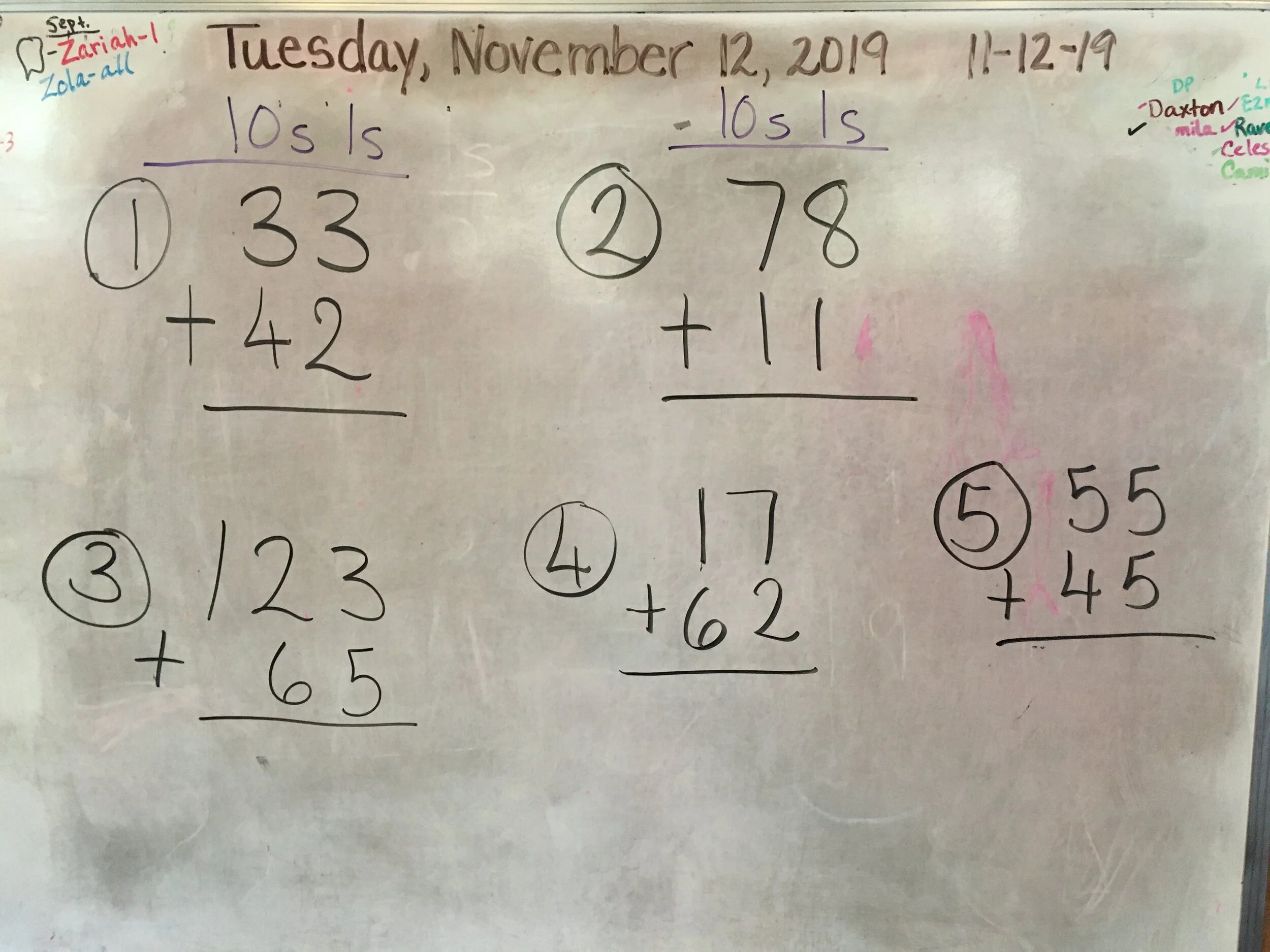
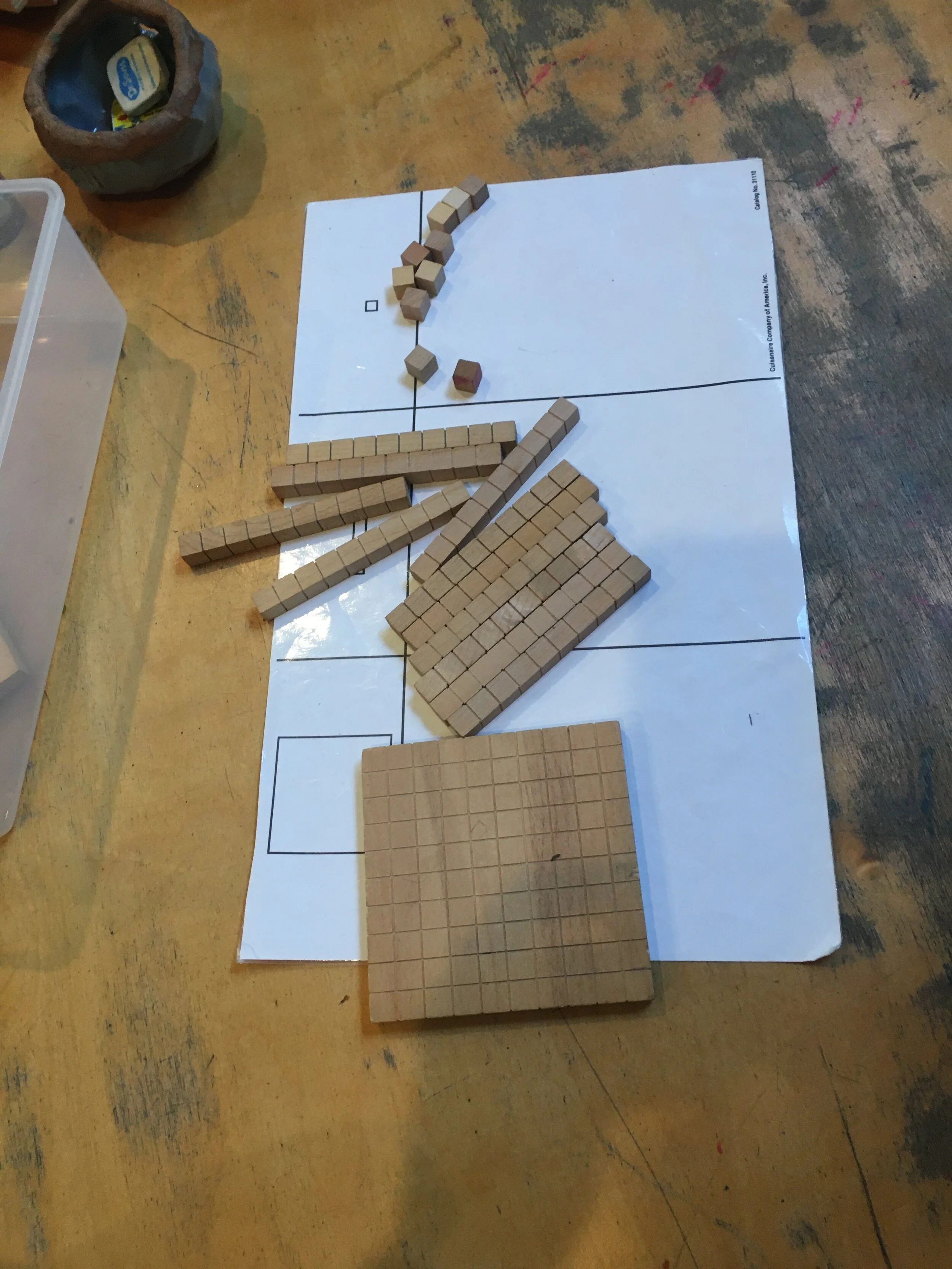
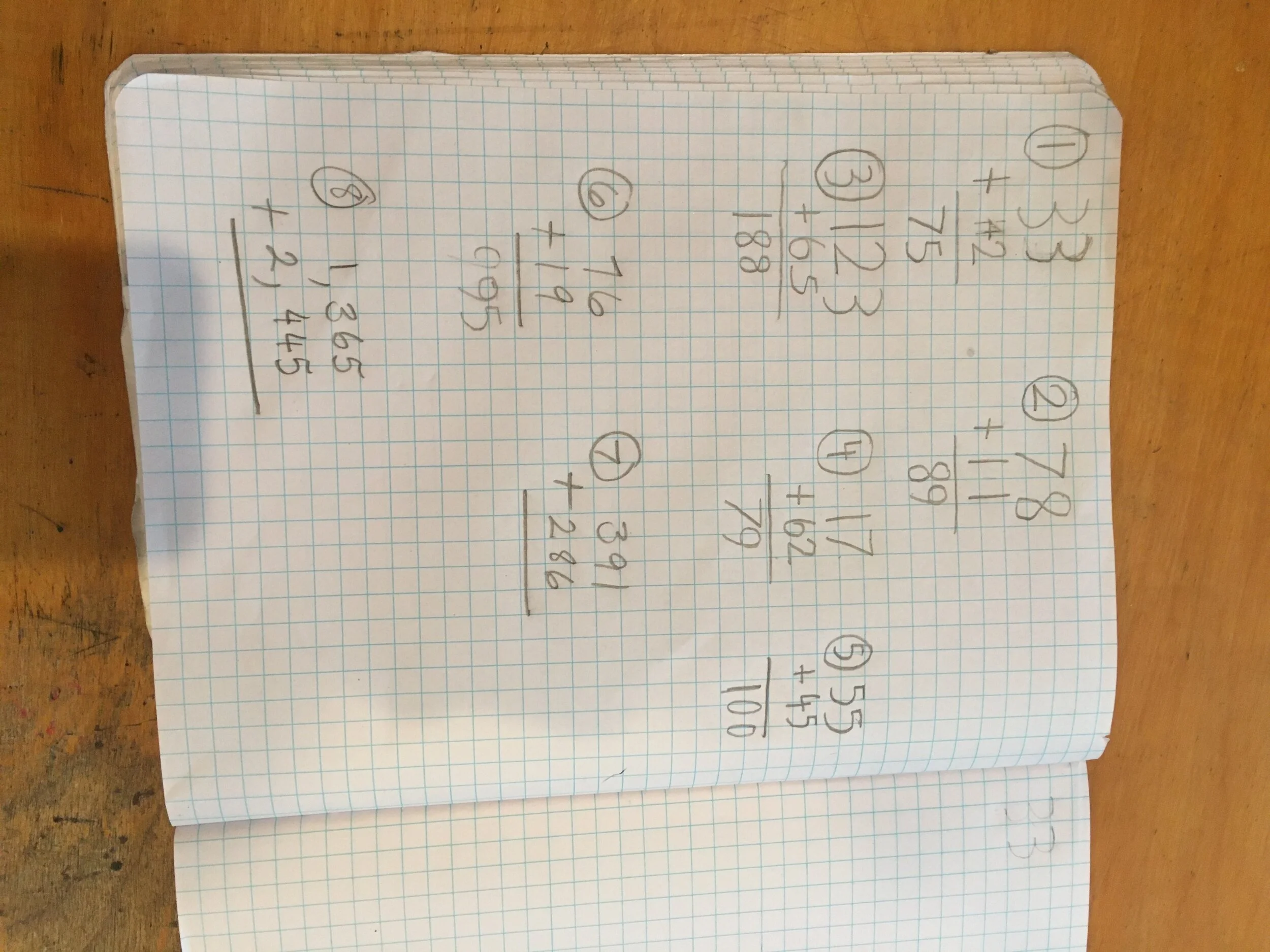
In addition, students have been practicing math facts by solving addition, subtraction, and in some cases multiplication wrap ups. Students have worked independently in their math journals and have played a mental math game called Digits in Place. We began a lesson on column addition (addition of large numbers) and used the base ten blocks to help make the lesson more concrete.
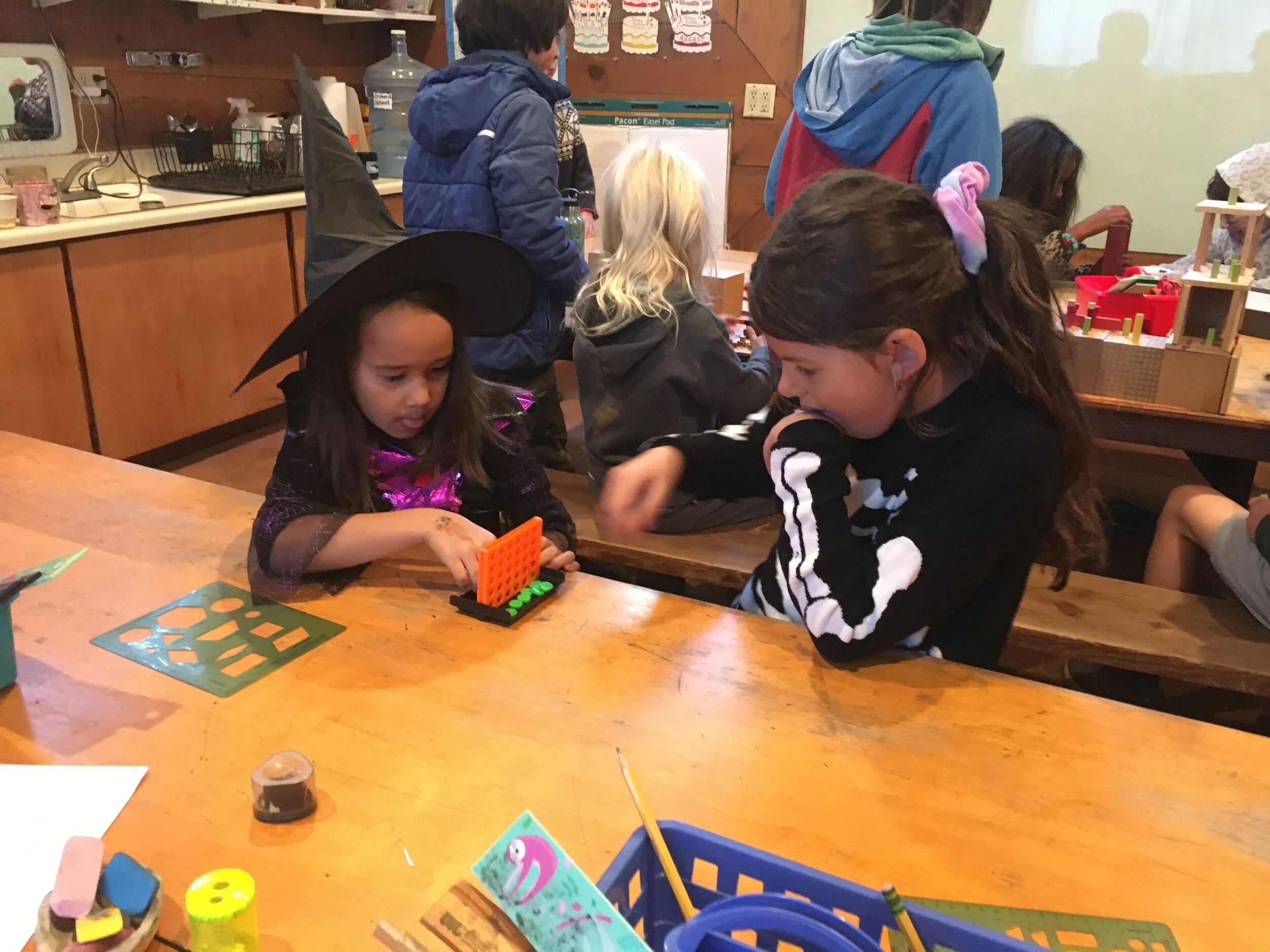
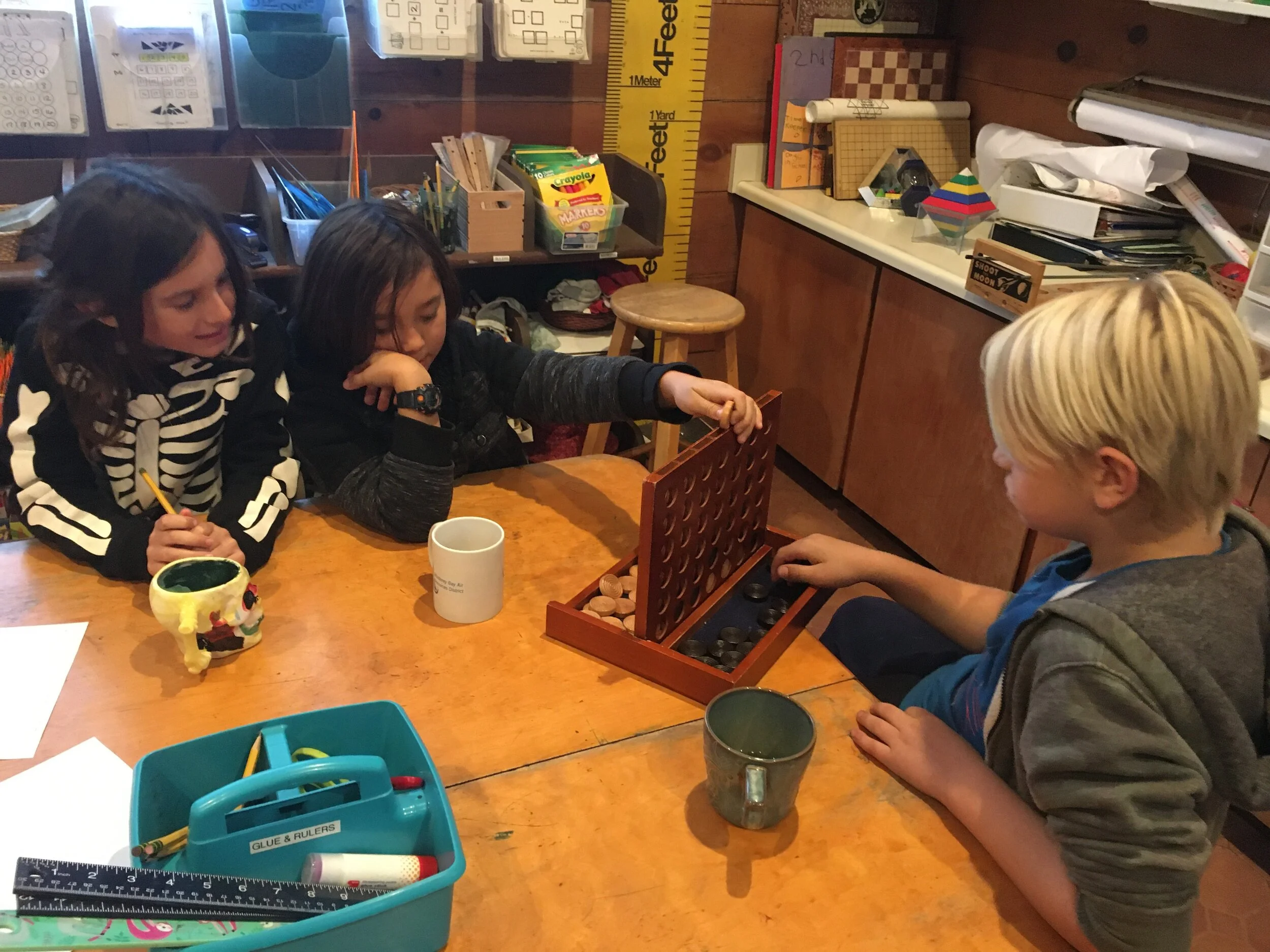
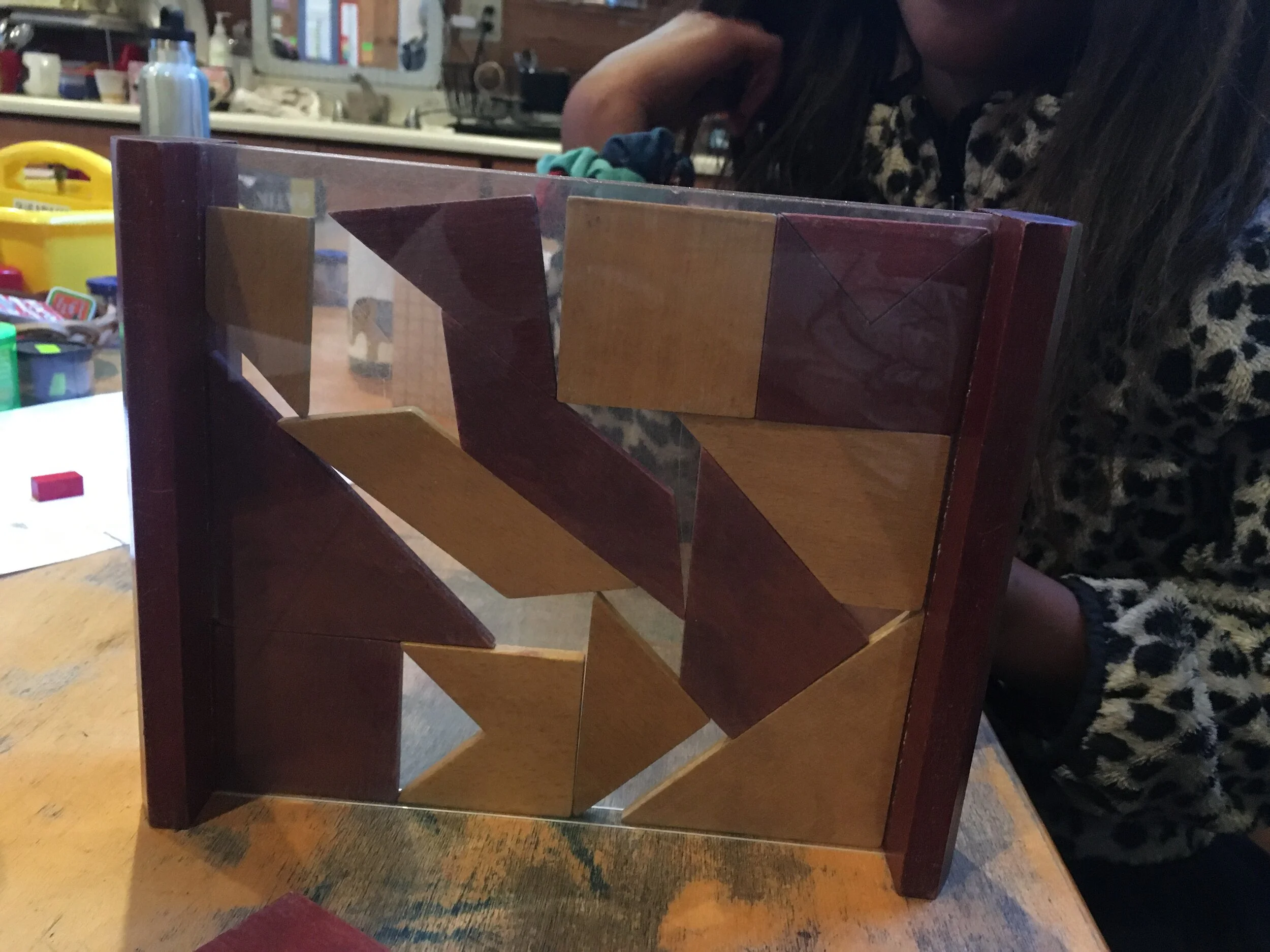
Second graders learned how to play Shakin Tic Tac Toe and practiced addition through the game of Addition Top It, wrap ups, and parcheesi. They practiced money value with the penny nickel exchange game and learned the game, Less Than You. Students played Time Bingo in order to practice telling time and filled out a calendar for the month of October. Students have begun solving the task cards and for some this involves a review from last year, or finishing a set they began last year, or moving on to a new set that matches their skills and challenges them to acquire new skills.
Third graders have reviewed the game of Addition Top It and learned the game of Less Than You, practicing addition and logic. They also played the place value mental math game of Digits in Place are working in their Everyday Math journals.
For positive discipline, we have reviewed the I feel statement: I feel ______when_______because______and I need/would you be willing to ________. We also went over the thought that ‘Mistakes are opportunities for learning’ and the 4 Rs of Recovery from Mistakes.
Thank you to Brenda Surrey (grandparent) and Valerie Phipps (art, leadership, electives) because thanks to them I have extra support for our students.