2nd grade Math
Second Grade,
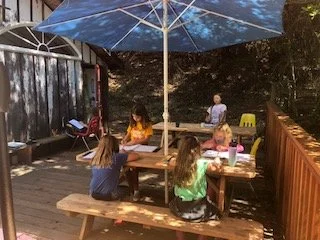
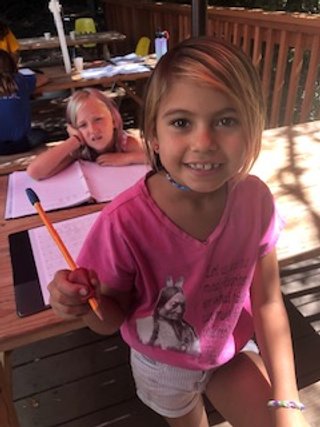
Hard to believe we've only been in school for 3 whole weeks. I’ve been getting to know the campus, the teachers and administrators, the students and many of the parents. Here is what the students have been working on in Math class.
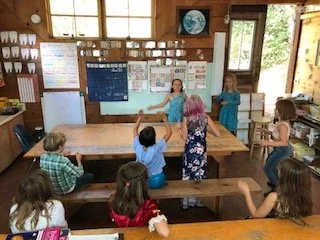
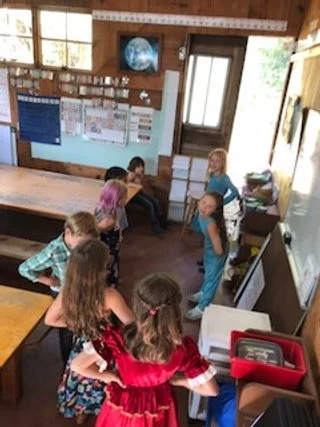
We begin the class with a whole group Math Meeting. Each day students have a “job” to perform and a report for the class to hear, or a song to lead the class in. We had many discussions on what was included in each job and how they would share the responsibility. They voted to work in pairs and asked that the pair change after a full rotation through each job. Jobs include: #1) Add one and count the daily sticks (popsicle sticks are added each day and bundled in 5s and then 10s for the daily count for a 100 day celebration), and then add the number to the pocket chart and lead the count with the class. #2) Take the class vote on how the weather is at their math class period and post the adjectives on the board, change the season when needed and lead the “seasons song”. #3) Post the next date on the calendar, report the date (“today is, day, month, date and year), chart the days of the week “yesterday was, today is and tomorrow will be” arrows, and lead the “days of the week song” (“The Addams Family” tune) and the “months of the year song and dance” (To the “Macarena”). #4) Check the temperature on the outside thermometer, report the temperature to the class and graph the temperature on our weather graph. #5) Bankers add a penny daily to the piggy bank, then dump the money and count the coins. They exchange 5 pennies for a nickel, and 2 nickels for a dime and so on, practicing counting coins and exchanging change for equivalent coins. Or, we leave the Math Meeting for the end of class and we begin the period with a quiet activity or the lesson, to set the tone for the math class period.
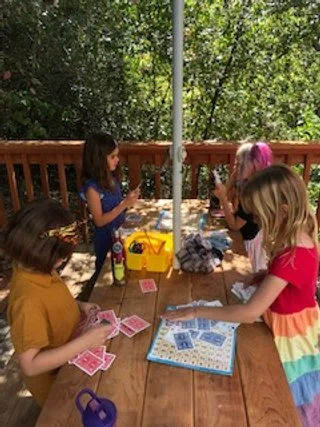
Second graders have been exploring the Base Ten blocks after reviewing whole numbers, place values, and grouping ten whole 1s to make one ten, grouping ten 10s to make one hundred, and grouping ten 100s to make one thousand. They are practicing identifying number amounts from concrete objects, and writing their numbers in the correct direction in the correct place value. They worked with the base ten blocks to create numbers and practiced counting up skills. Students are advancing to larger numbers and will be implementing addition, subtraction, multiplication and division strategies as they build on prior knowledge. They have also been playing a card game called “Top It”. We grew up calling it war, and the same concept applies for single digit comparisons. Students have been turning over 2 cards, making the highest 2-digit number possible to compare, or adding their card values together to create an addition comparison version. They will continue to add on to their game as their skill sets increase. Students played the “Monster Squeeze” game, where a double digit number is concealed and each classmate takes a turn trying to guess the number. If the guess is higher than the number, the the monster on the right squeezes the number line down and says, the number is less than the guessed number, and visa versa, if the number guessed is lower than the concealed number the monster on the left squeezes the number line and proclaims the number is more than the guess. They love this game!
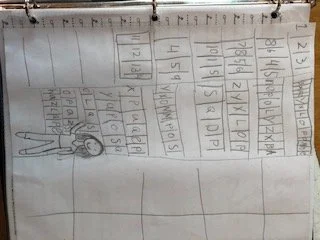
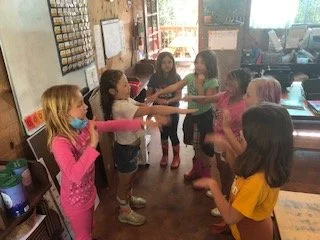
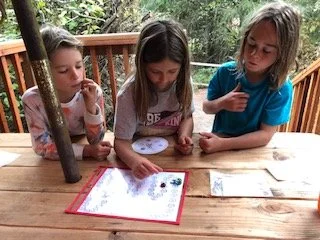
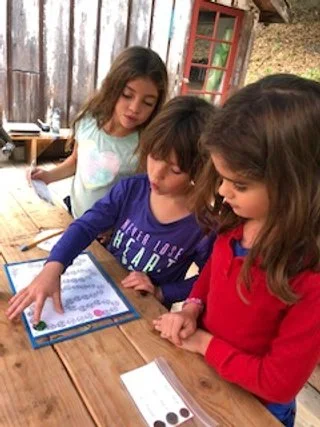
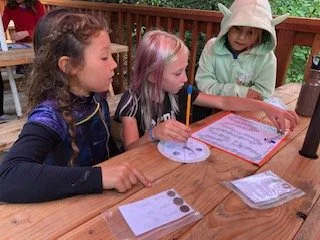
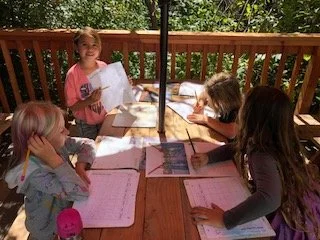
Second graders started their Everyday Math lessons. They looked at and practiced counting using number lines, and compared them to number grids, and found patterns as they explored the number grid in pairs. Students practiced number sequencing by adding or subtracting one and worked with numbers in the thousands. They practiced skip-counting by 10s, 5s and 2s, and learned a cheer to remember the odd and even numbers. Second graders have been working with coins (penny, nickel, dime, quarter, ½ dollar and silver dollars) finding their attributes, comparing them, and learning who is on each of the coins. They practiced singing songs to memorize the amount values (“a penny is one, a nickel is five, a dime is ten and a quarter’s twenty-five to the tune in “Farmer in the Dell”). They worked to label and count up a group of coin values, starting with the highest value first. This is not an easy task, especially with an odd number of quarters first, then adding either a dime or a nickel, so it is recommended to practice coin counting at home. They played “Money March” in groups of 3. They spin a spinner and land on the penny, nickel or dime, then move their marker on the board the value of the coin and the first player to 65 cents wins. This game reinforces coin values with a visual of the actual coins. Second graders are practicing their calendar skills by looking through actual calendars, comparing differences and similarities, as well as finding past and upcoming holidays. They then wrote the numbers and named their own calendar page for the month of September. They were practicing transferring information, writing numbers in the correct direction and sequencing their numbers correctly, while learning calendar skills. In the coming weeks students will be continuing to learn about the calendar, thermometers, number grids, money (including counting 1-100 dollar bills) and number sense. They will practice telling time to the quarter hour, addition and subtraction strategies, identifying place values into the hundreds, 2D geometric shapes recognition, simple algebra skills, calculator skills, tally marking, and further explore base ten blocks. This week we are shifting the focus to our Orchard School Harvest Festival, and the kids will be exploring math concepts such as weight and measurement through APPLES.
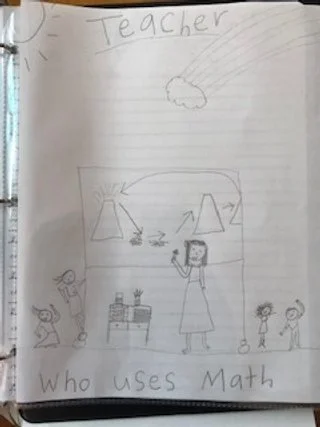
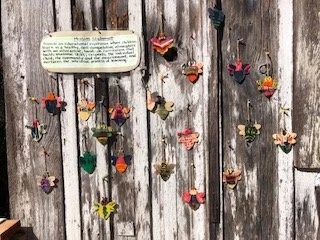
We started the year by brainstorming and discussing topics related to building a safe, meaningful learning community, and how they wanted to be in our classroom environment. We used the idea of “Be Kind” and the students shared their own “Be” related words for our Math Cabin Bees. Each child colored a wooden bee with their favorite bee idea for the classroom to inspire a loving, thoughtful and helpful community. For example: Be Brave, Be Helpful, Be Cooperative, Be Yourself… Students brainstormed “What is Math?” and students generated a fantastic list of ideas that covered each of the Mathematical Content Strands: number sense, properties, and operations, measurement, geometry and spatial sense, data analysis, statistics, and probability, and algebra and functions. Students also generated ideas about who uses math. They listed many occupations, and each student concluded that everybody uses math. Students examined how they use math in their everyday lives which helped them make new connections to the subject and have a purpose for learning new concepts. Students also drew themselves as mathematicians or using math in some way for their new binders. They spent time practicing writing numbers, and following dot-to-dot activities to warm up their hands and brains for a new year of mathematics.
The Orchard School “Community Spirit” reminds students to contribute to a learning community by showing respect, acting with kindness, participating in the learning process and taking responsibility for their learning. It is my goal to encourage each and every student in this class to engage everyday with curiosity and inquiry, to use positive communication, to demonstrate care and compassion, and develop cooperative relationships for a productive school year.