
Science
April was a busy month in the tile room. In first grade we started with a discussion and series of activities about camouflage including the different strategies that animals use when employing the different types of camouflage. This was initiated with an activity where I hid brightly colored pom poms in the plants near the lunch hut and the students predicted which of the colors would be the easiest to spot and the hardest. Most thought that bright yellow and bright blue would be the easiest but it turned out that for our activity the color of the pom pom was less critical than the placement - the students had a great time taking turns rehiding the pom poms and trying to trick each other.
We next expanded our understanding of the idea of camouflage away from just concealing coloration (which is what we tend to think of) and viewed some different examples of animals that mimic other animals colors and patterns, those that use warning coloration and those that use disruptive patterns to blur their sillouettes and trick predators or prey.
We played a game where we colored templates of lizards to hide in or around the tile room (practicing one of the camouflage strategies) and played hide and seek with the lizards seeing what types of coloration or placement were the most tricky.
Following camouflage, we took advantage of all the spring blooms to dissect flowers. We looked at different types of flowers and matched their parts to a diagram - it was interesting to see how different the stamens of different types of flowers are. Many of the students, especially the boys, were fascinated by this activity.
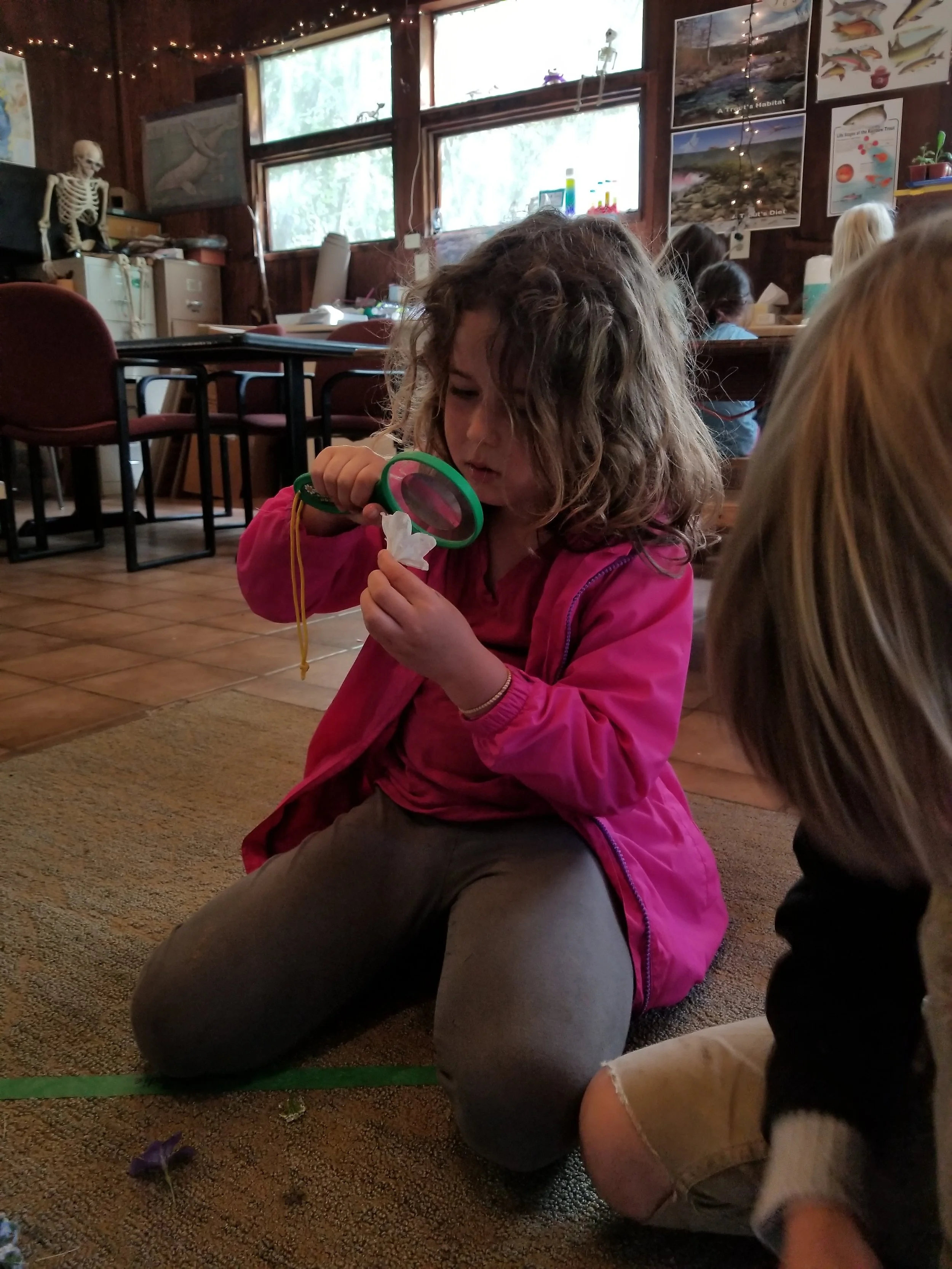
Sadie examines a cherry blossom.
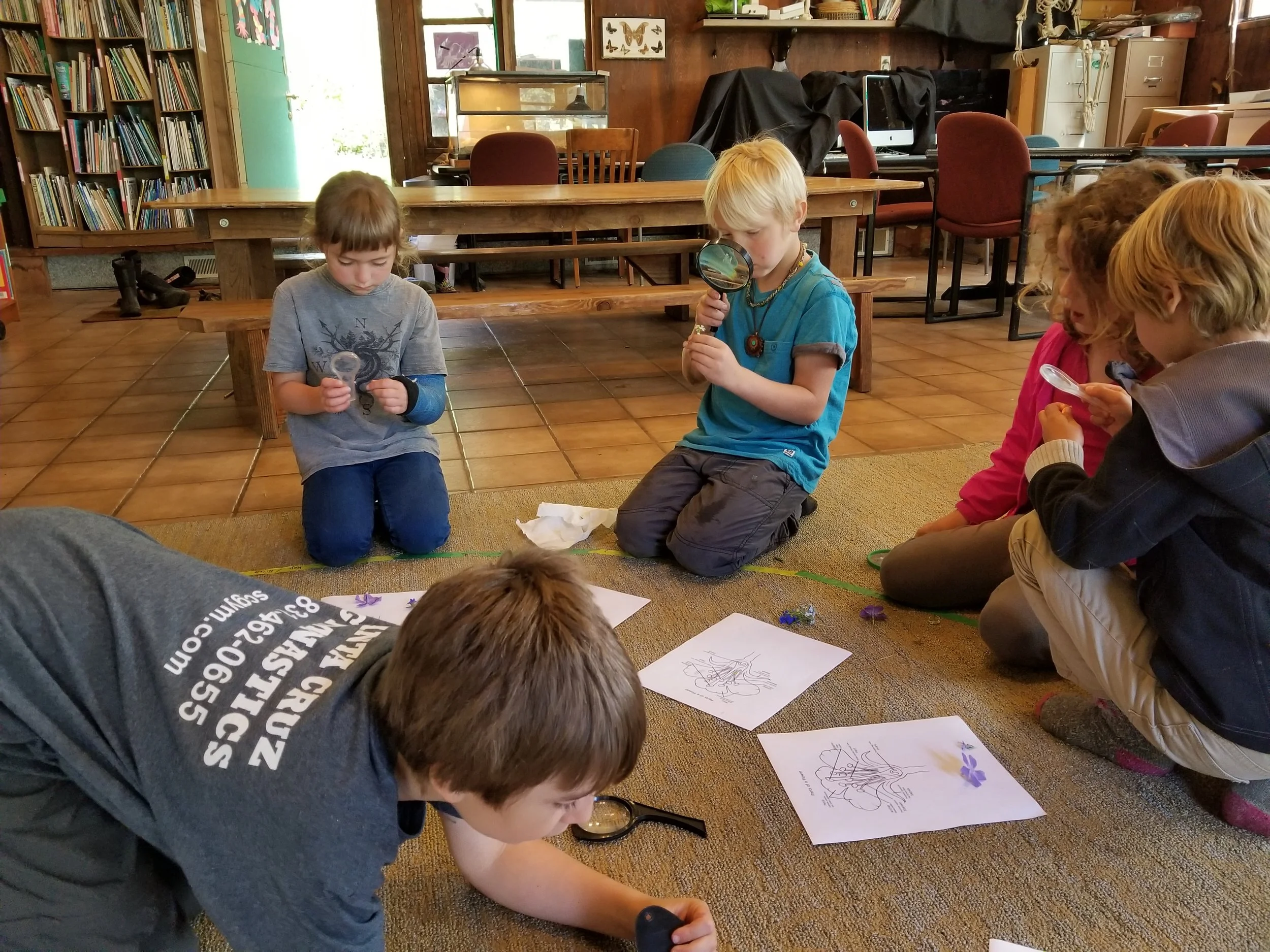
Looking closely at flowers and dissecting them.
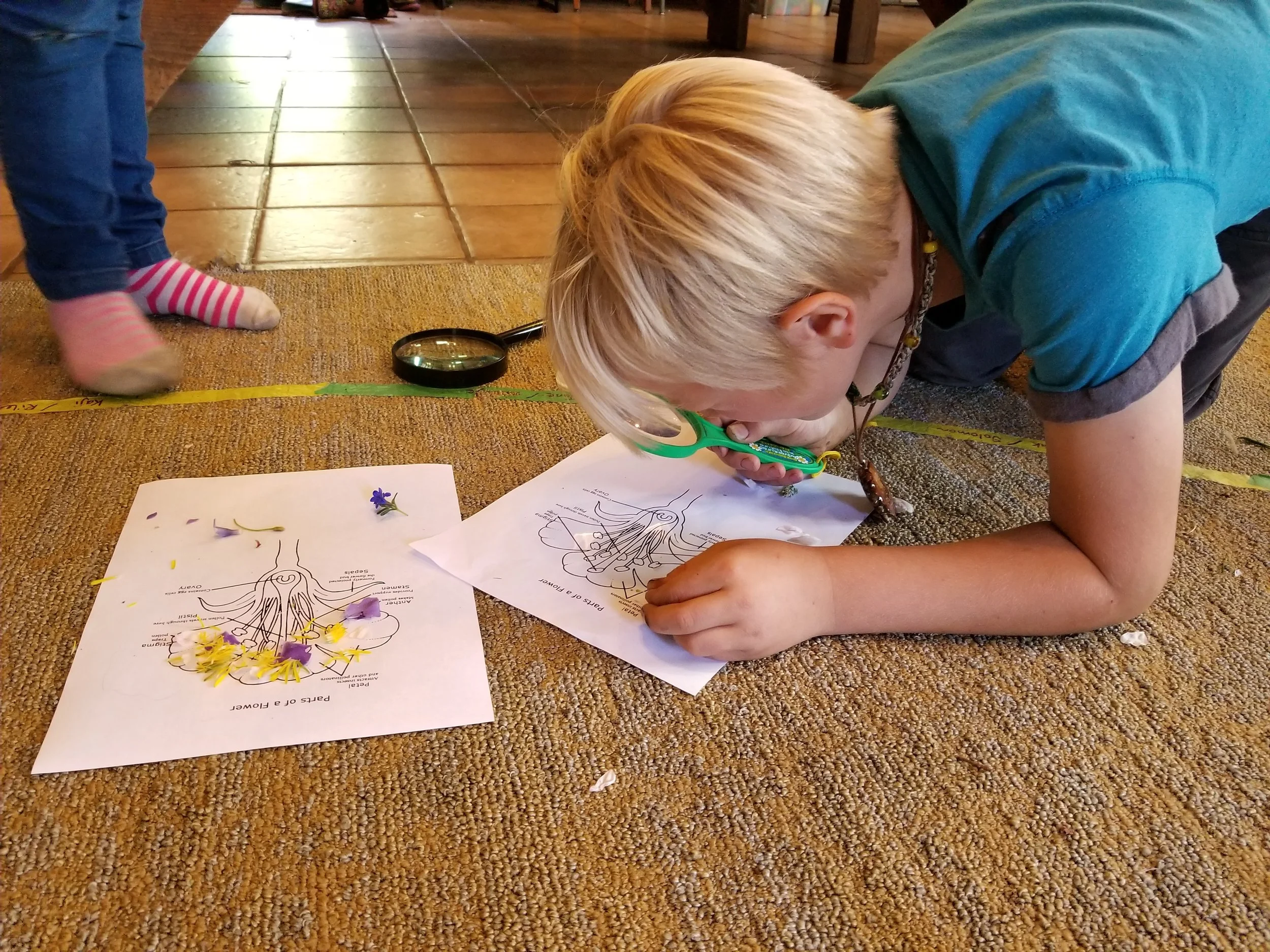
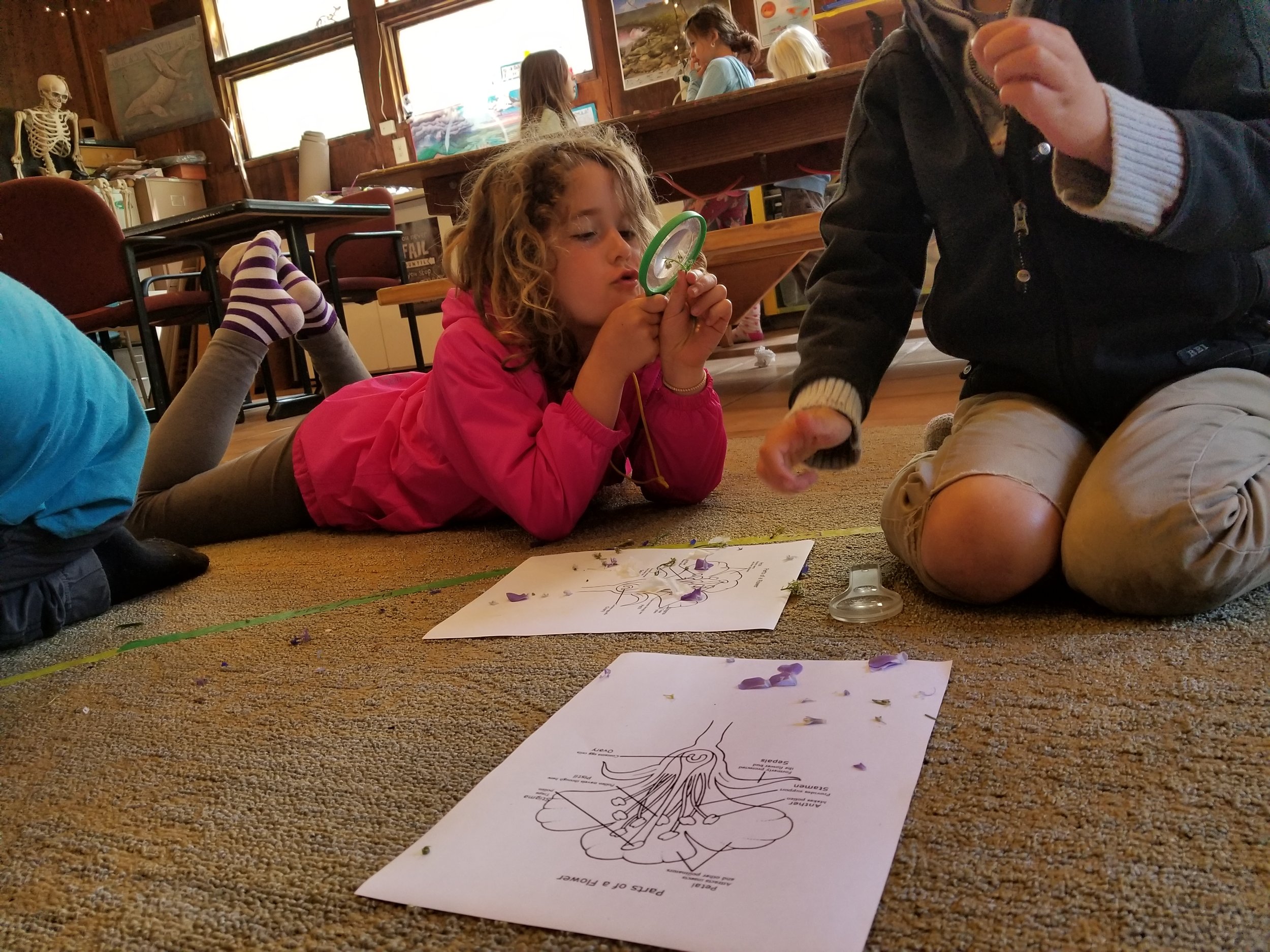
Our study of flowers led us naturally into an ongoing unit on pollinators and insects. Rock is also studying bees in gardening class, so this has been a happy confluence of lessons that are supporting each other nicely. We first discussed that different flowers are pollinated by different types of pollinators and have different colors or characteristics to attract their preferred pollinator. Bees are especially attracted to blue or violet flowers, red flowers are attractive to hummingbirds, yellow and orange flowers are attractive to butterflies and flowers with a strong fragrance especially at night might be pollinated by moths or bats.
In the activity pictured below, the students were butterflies with long curled tongues (or proboscises) and were instructed to gather nectar from the flowers (blue cups) by exhaling and placing their tongues in the flowers to pick up nectar (pom poms) with double sided sticky tape on the ends of the tongues. It is a little bit of a stretch of the imagination - but was really fun!
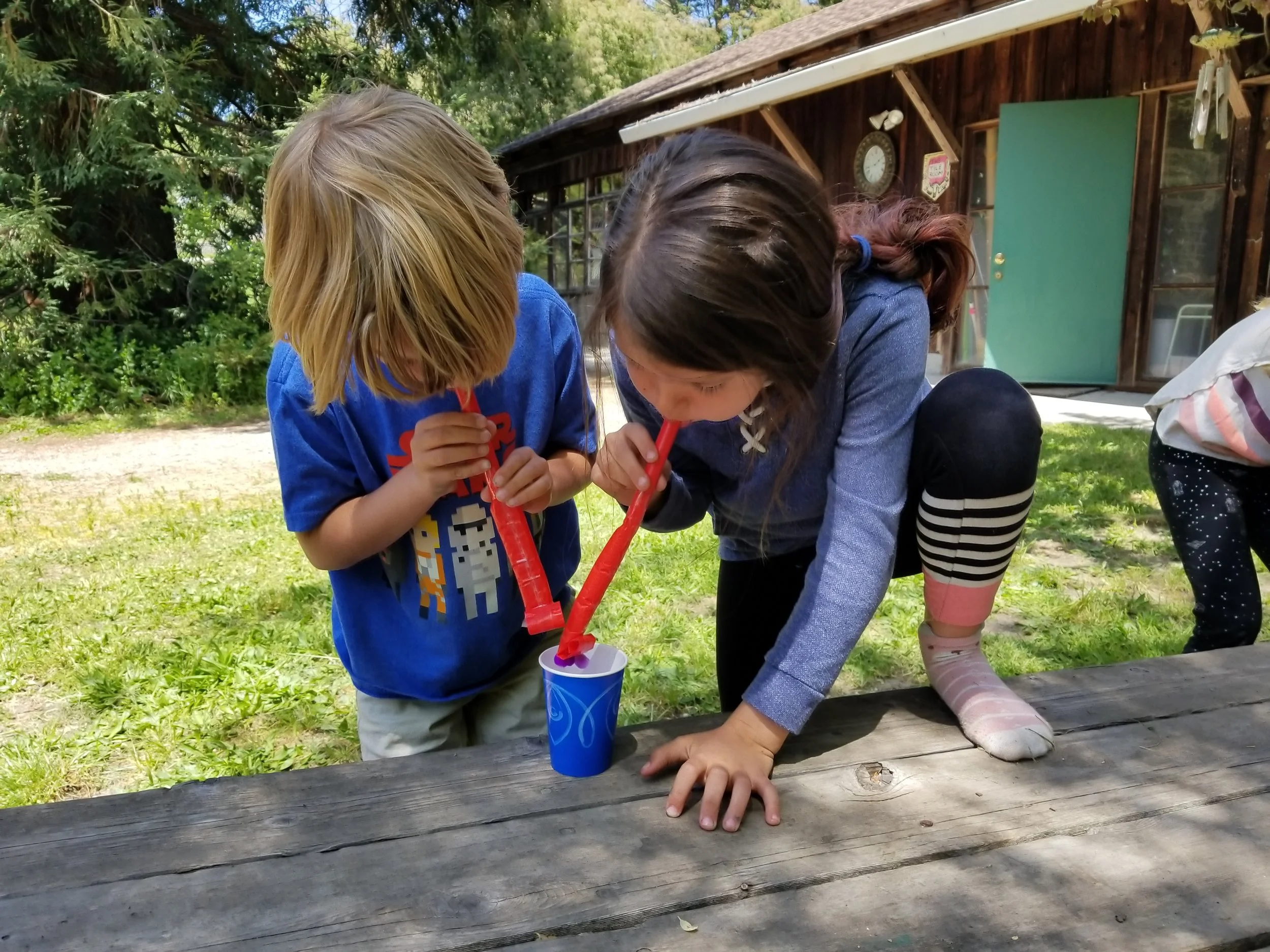
Ezra and Lyla Lou share a flower.
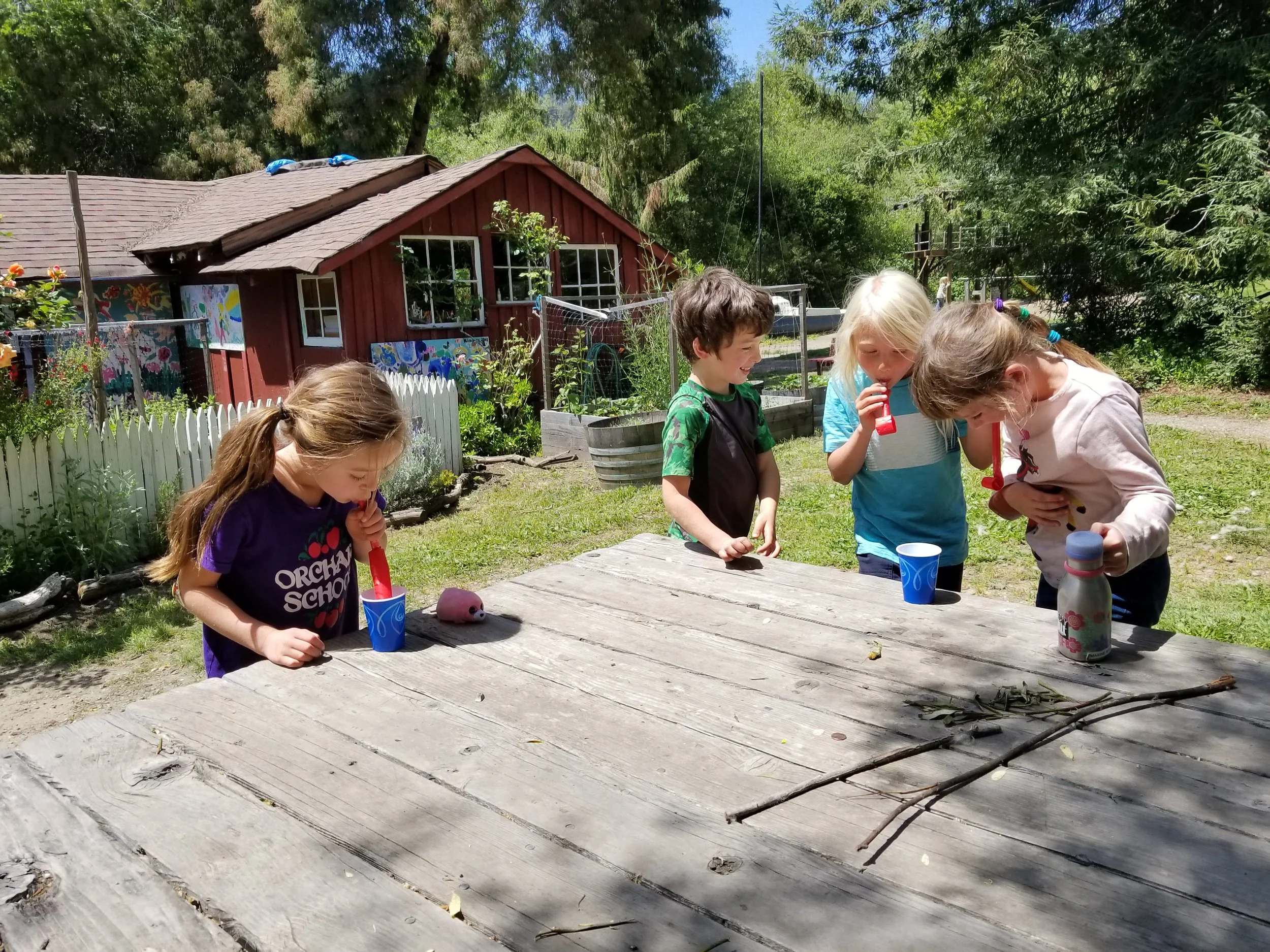
We even had Finn come over to watch our butterflies.
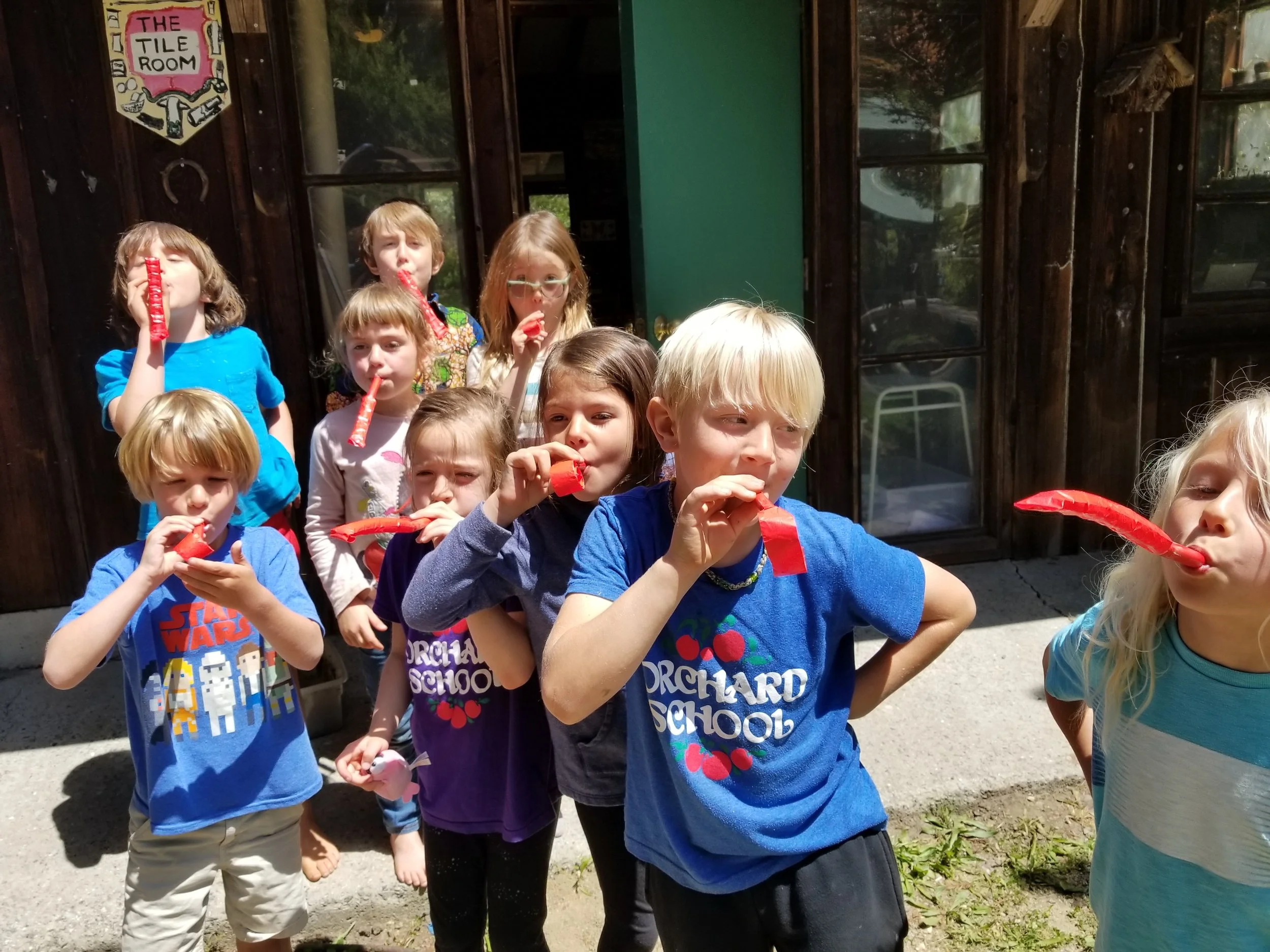
All the first grade butterflies.
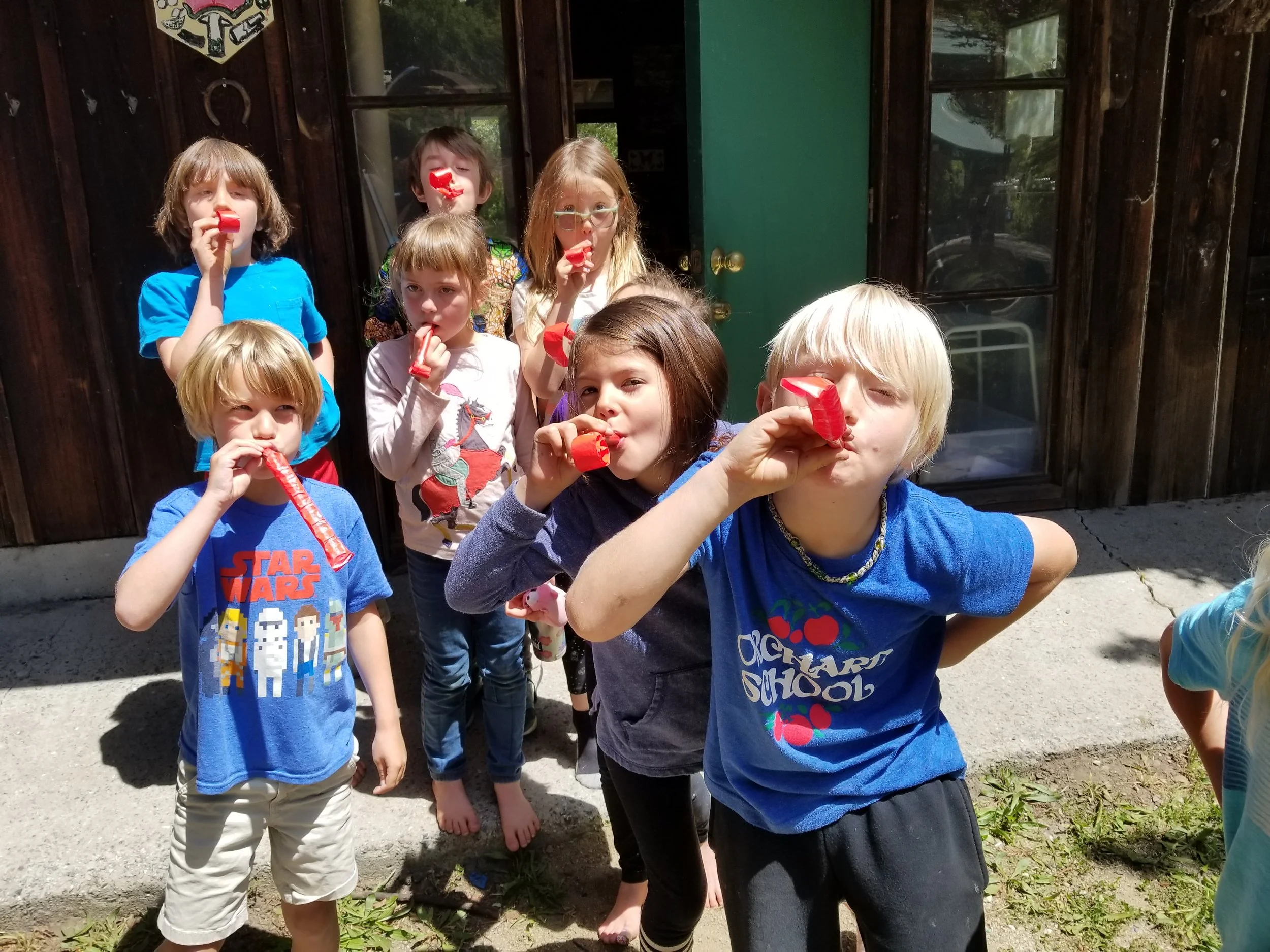
We have also conducted a bit of a bug hunt on the archery range by placing light colored sheets under a low hanging bush and shaking out any insects and other small invertebrates that might be attached We found quite a few interesting arachnids including a yellowish green camouflaged spider and a spider that was textured and colored to match the bark of the tree. We have spent time outlining that insects have three body parts, 6 legs, often 1-2 sets of wings (though ants are not all winged) and have similarities in terms of lifecycle.