
Science
First graders in science this March finished up static electricity experiments, delved into the concepts of sink/float, watched trout eggs develop and hatch into fry, and made an awesome and ambitious series of marble race and ping pong ball tracks for science fair!
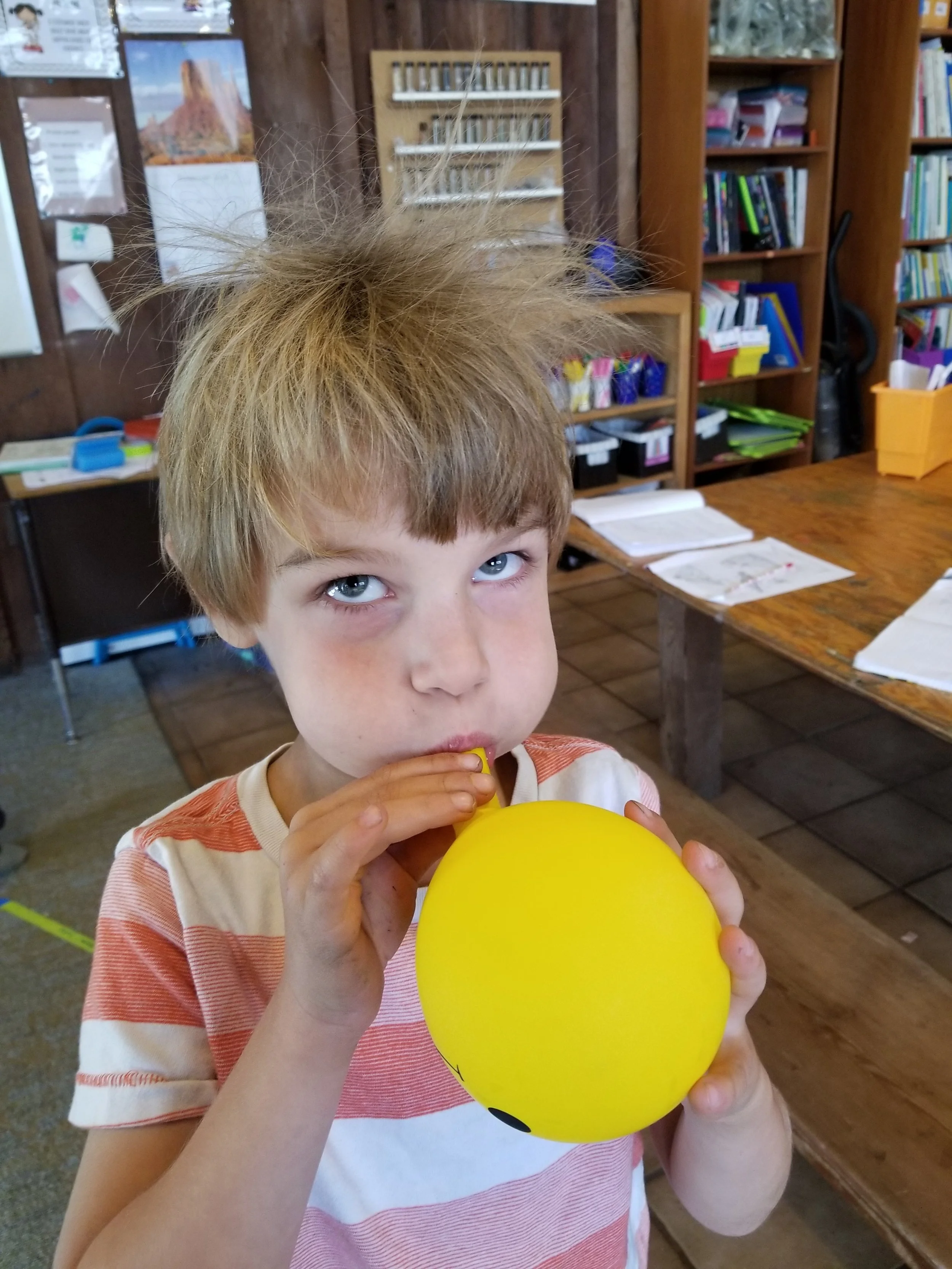
Static electricity.
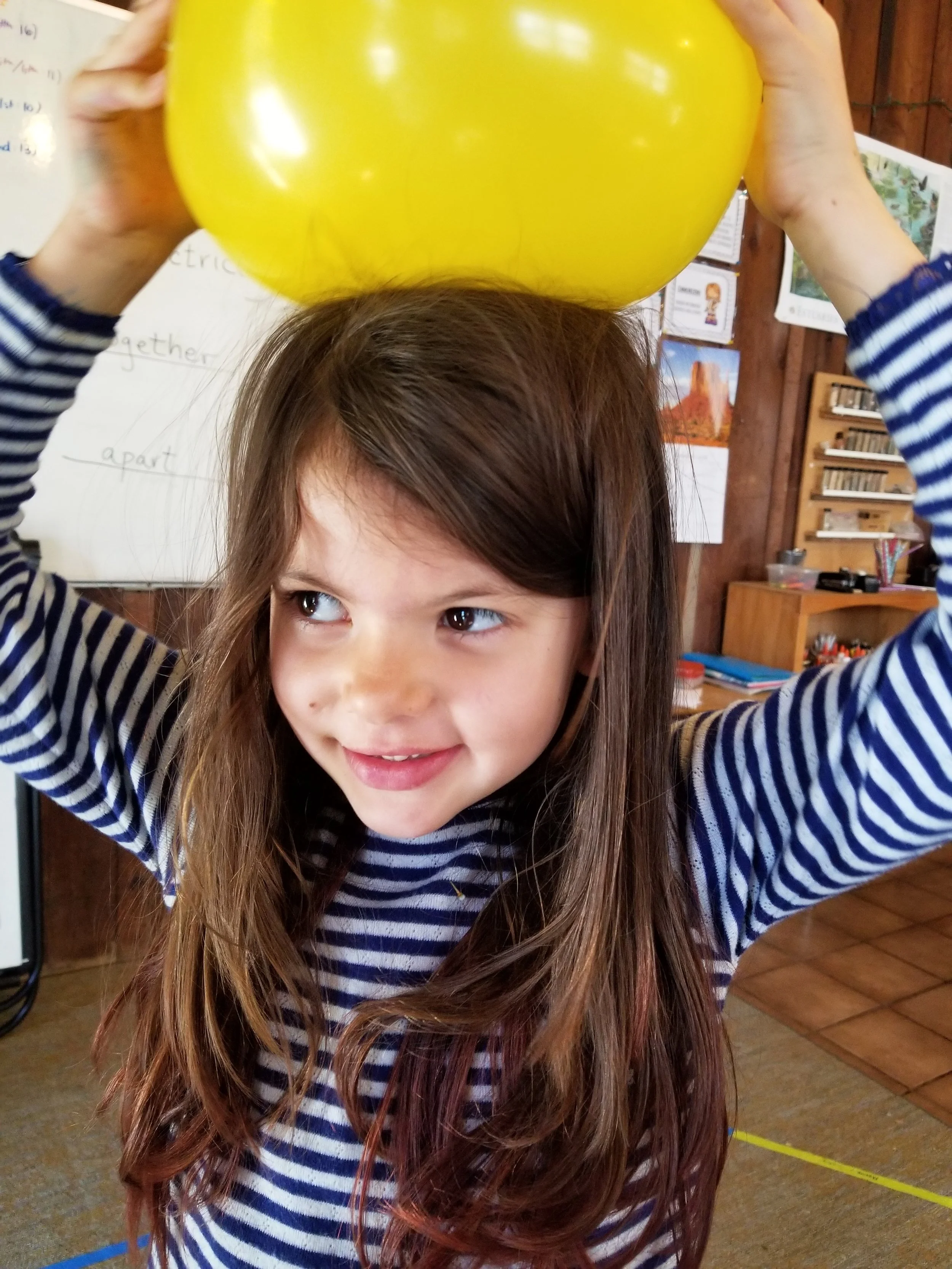
The children always are super excited about any science that has to do with balloons! Students experienced how rubbing a balloon on their heads is a great way to make crazy hair and charge the balloon. The charged balloon can be used to repel a ping pong ball across a table or attract a piece of aluminum in a simple, homemade device similar to a compass (but for electricity).
Next up, we built on their knowledge of things that sink and float by making predictions about a handful of items found around the tile room. This progressed into an experiment comparing the buoyancy of mandarins with and without their peel and making guesses as to why the peeled fruit sinks but the unpeeled fruit floats.
We also explored the idea that not every liquid acts the same as water in different sink/float experiments. We added oil to water and noticed that oil floats on water. We added food coloring and salt to make "lava lamps" (As the salt sinks through the oil it picks up food coloring and brings little globs of oil into the water).
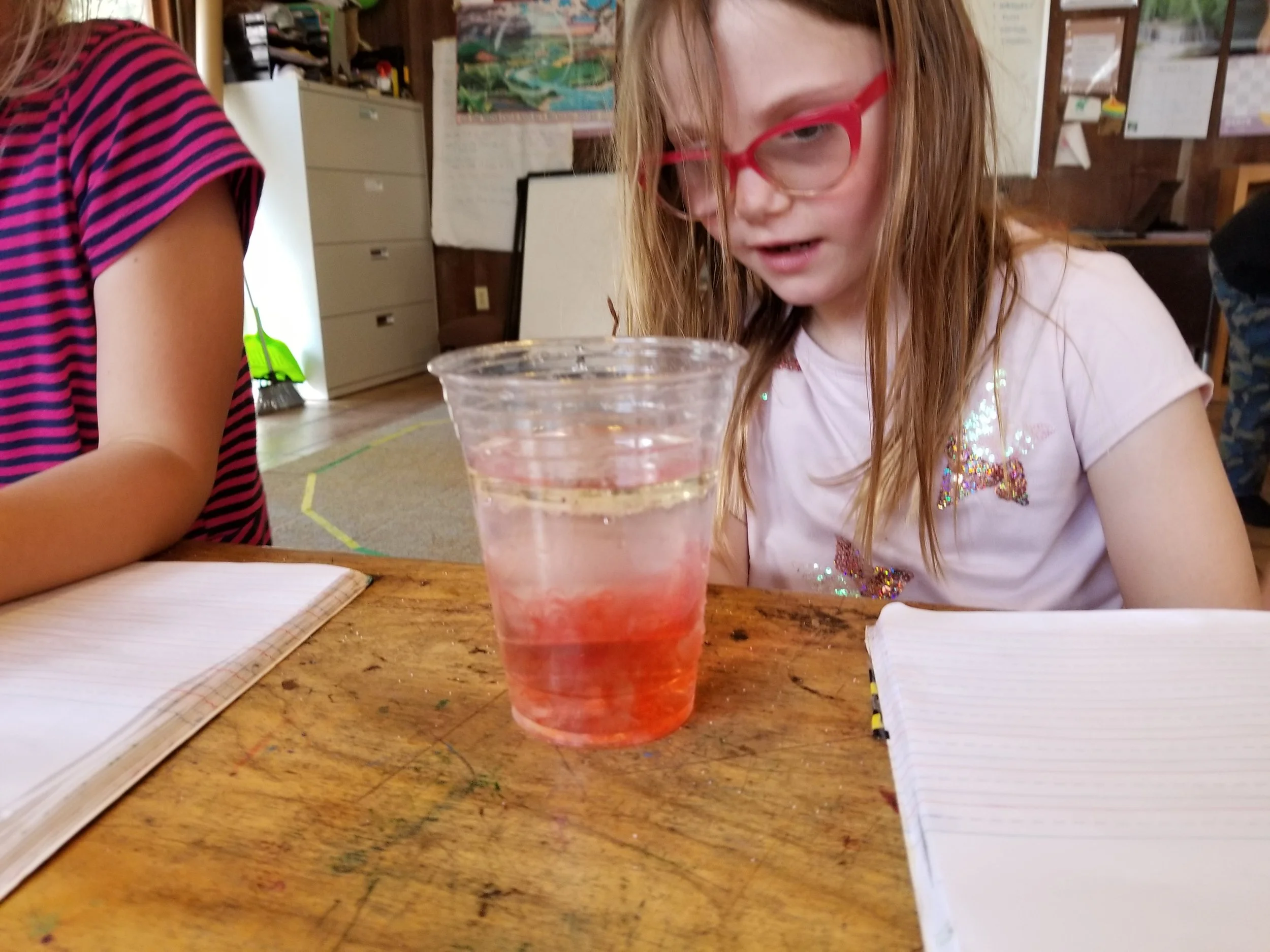
Oil and water layers with salt and food coloring.
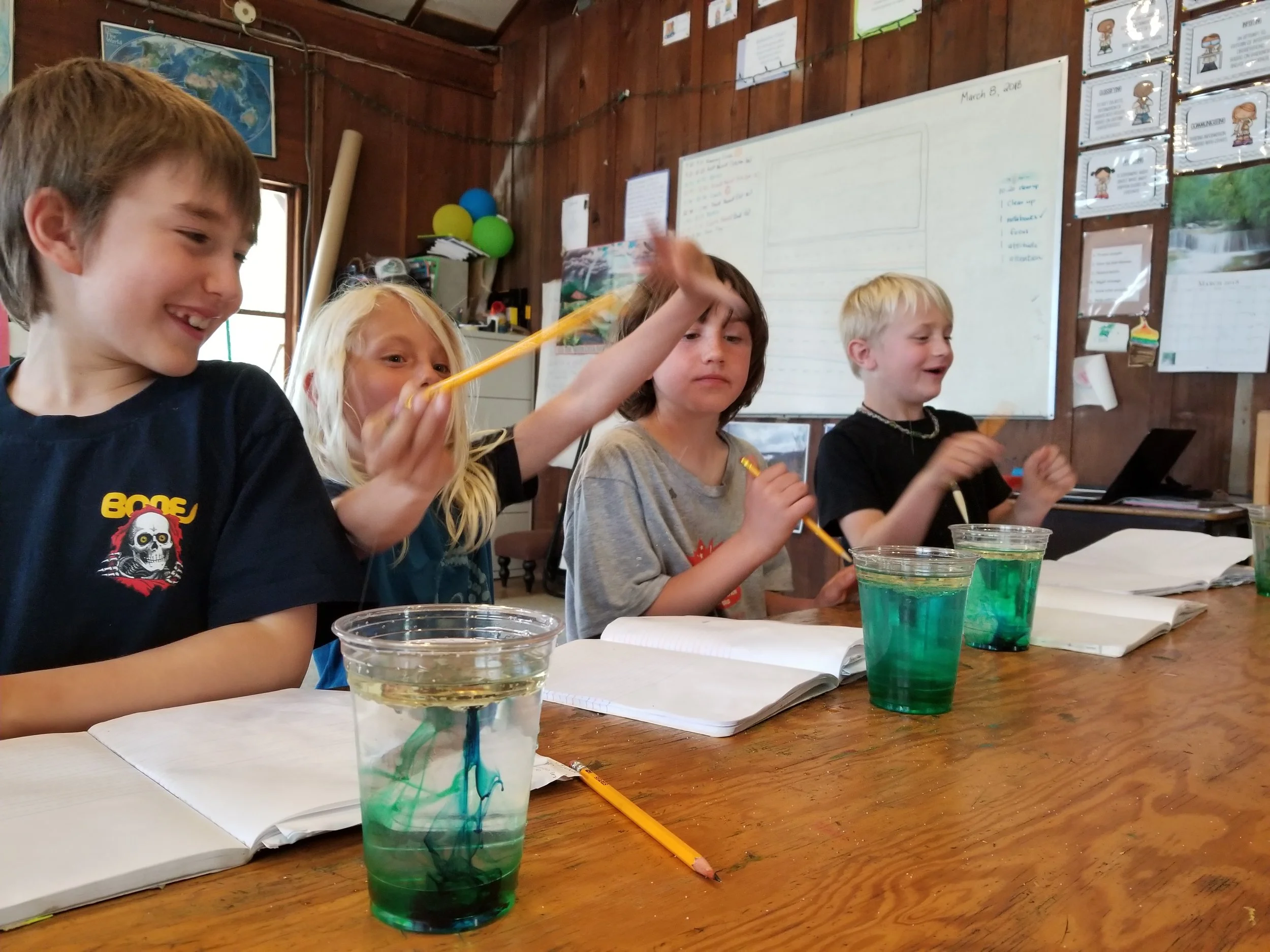
The boys all chose blue and green.
We had a great deal of fun exploring another liquid that doesn't act the same as water - soda water! When you add raisins to soda water initially the raisins sink. Then as carbon dioxide bubbles form on their surface the raisins rise up only to fall back down again when the gas is released.
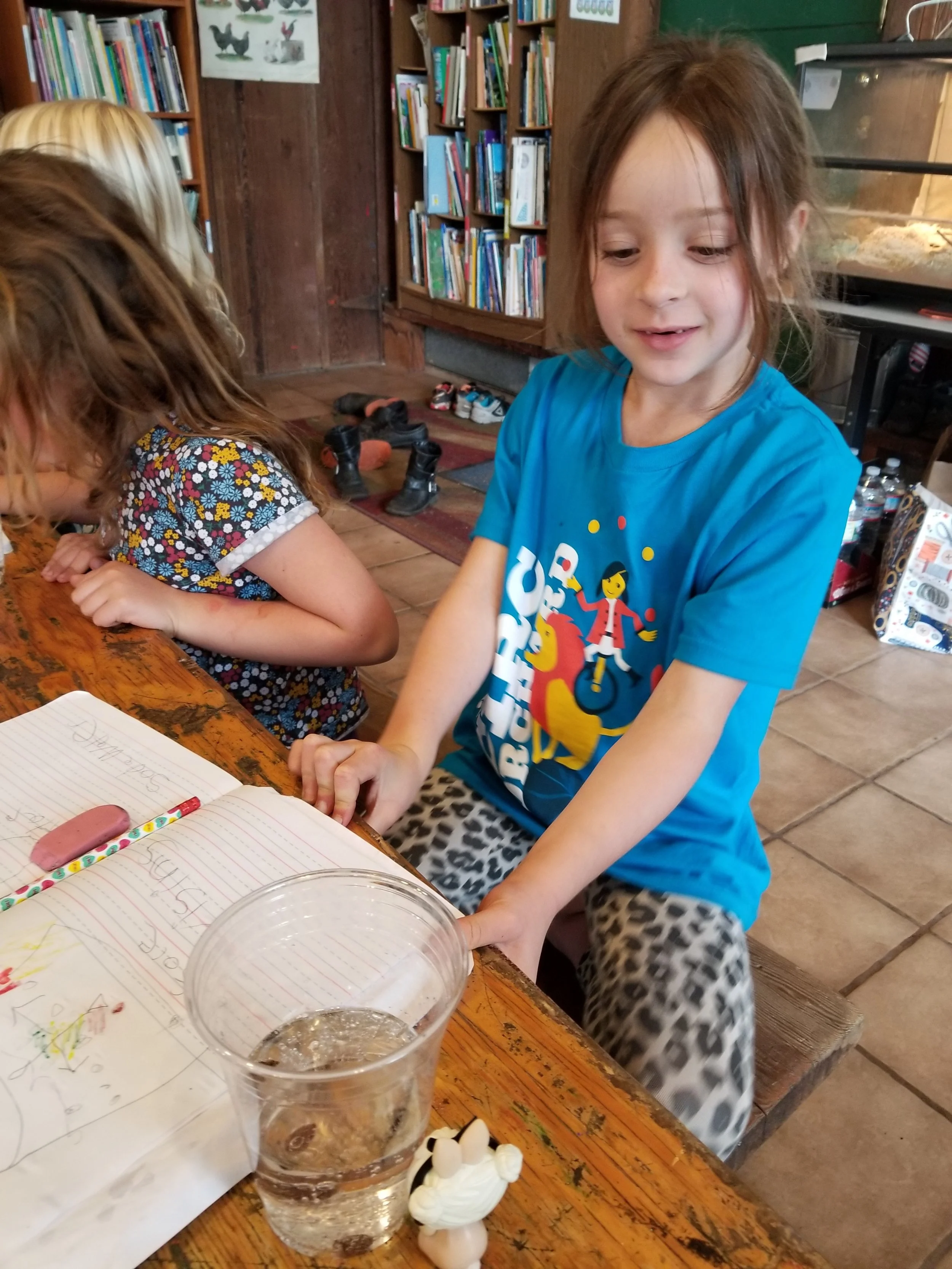
Katha was the first to notice that the raisins "get charged up" at the bottom of the cup.
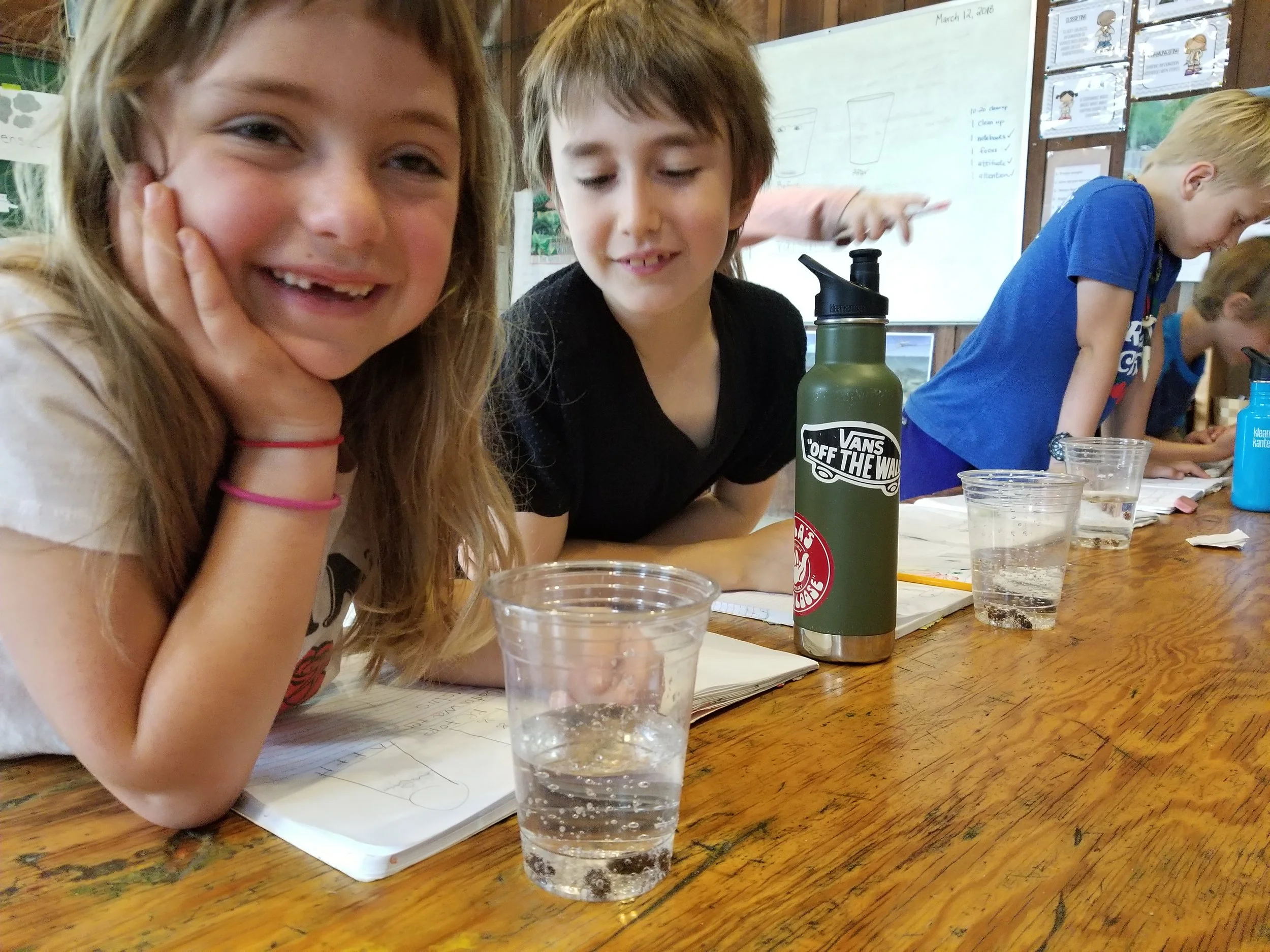
More submarine raisins.
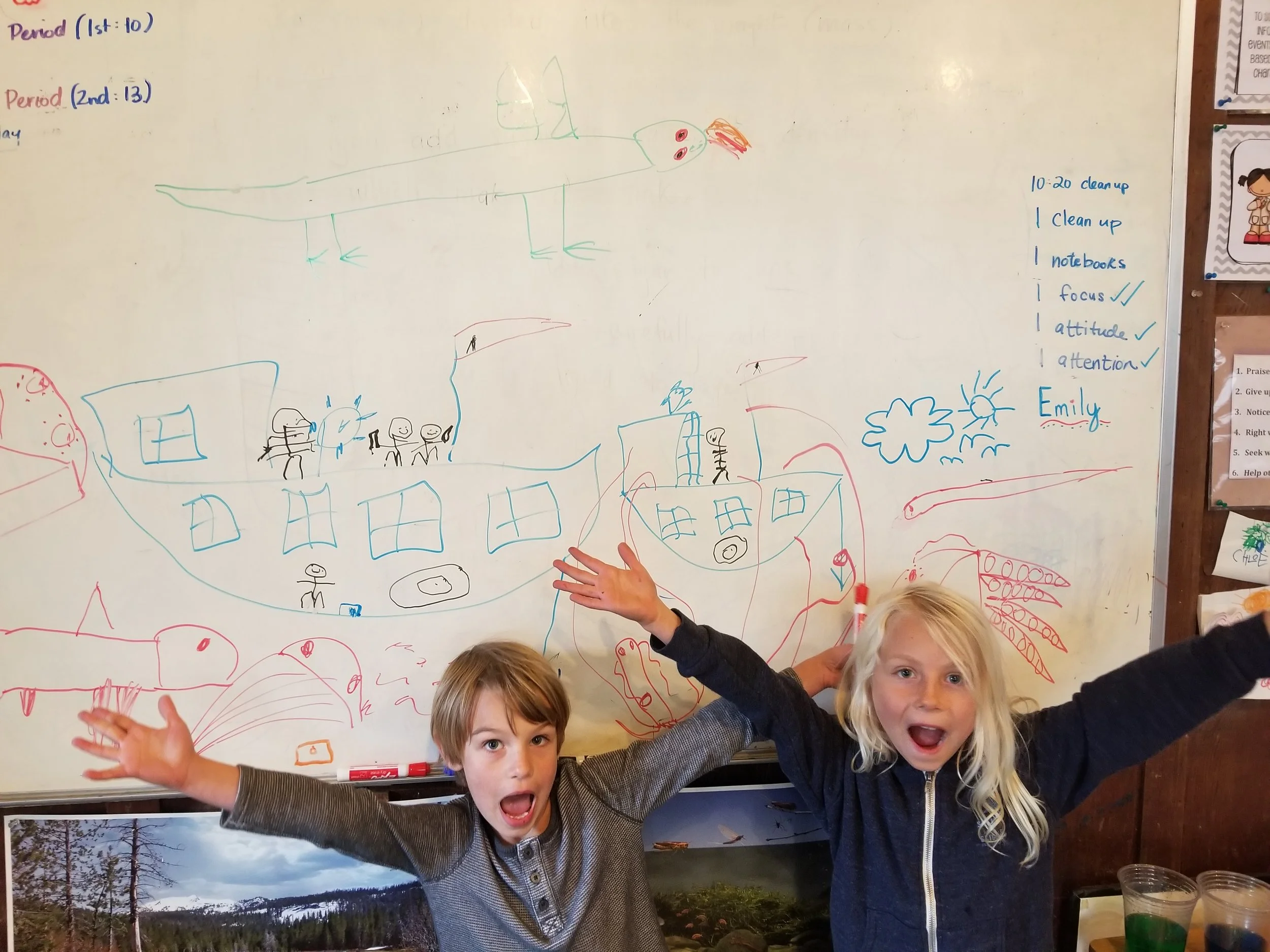
An elaborate pirate scene created during recess by Leif and Ezra.
The final manipulation of sinking and floating was adding salt to water until a grape (which sinks in tap water) will float. This reinforced the idea that different conditions produce different results and set us up nicely for the density rainbows we made for St. Patrick's day
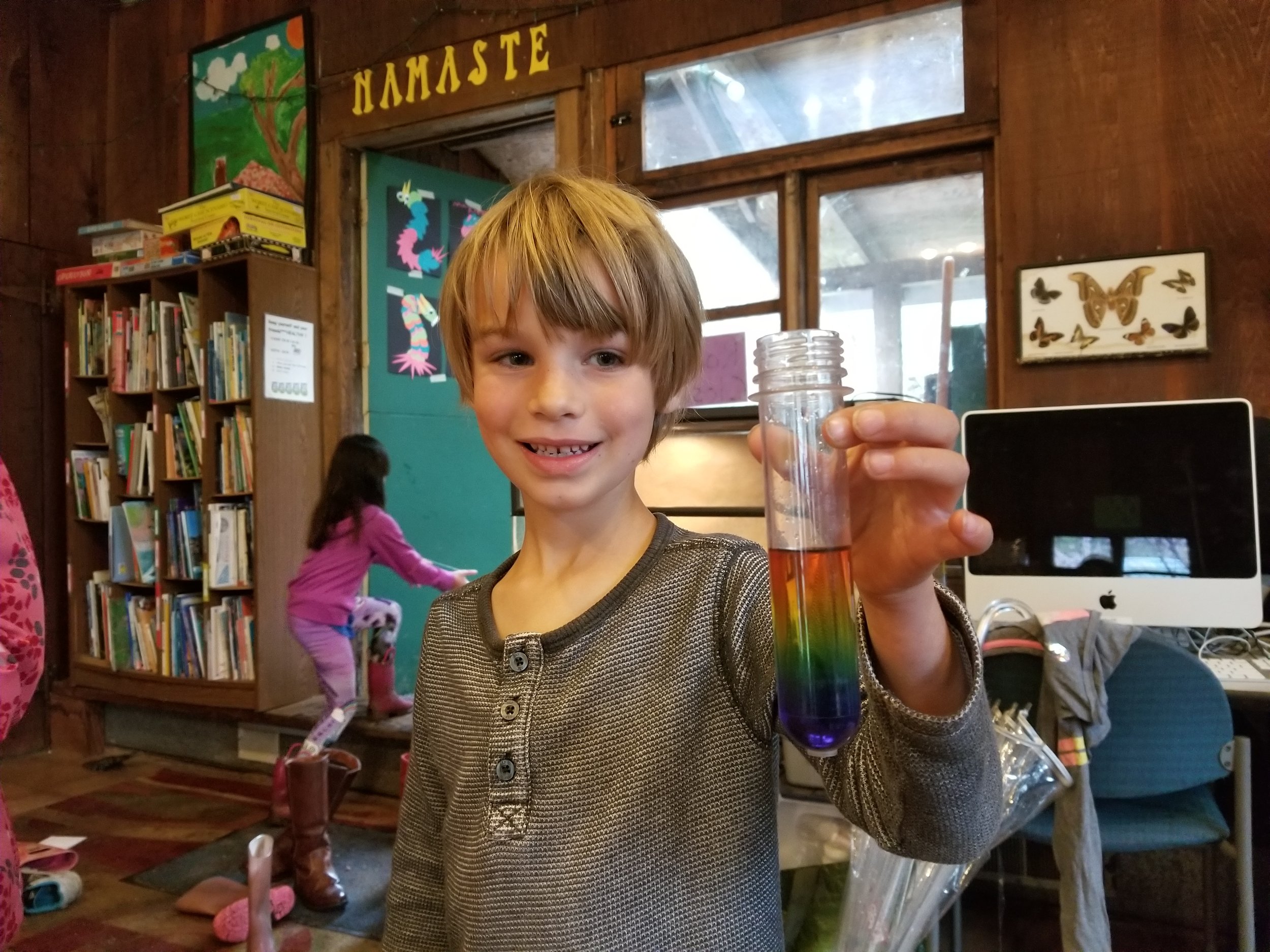
Ezra was very patient in carefully adding the layers of decreasingly sugary water to create a rainbow.
The rainbows in a test tube were creating by mixing different amounts of sugar into cups of water and food dye. The colors with the most sugar are the heaviest (densest) and so if carefully layered you can achieve a rainbow. The rainbows are temporary as the layers are easily miscible.
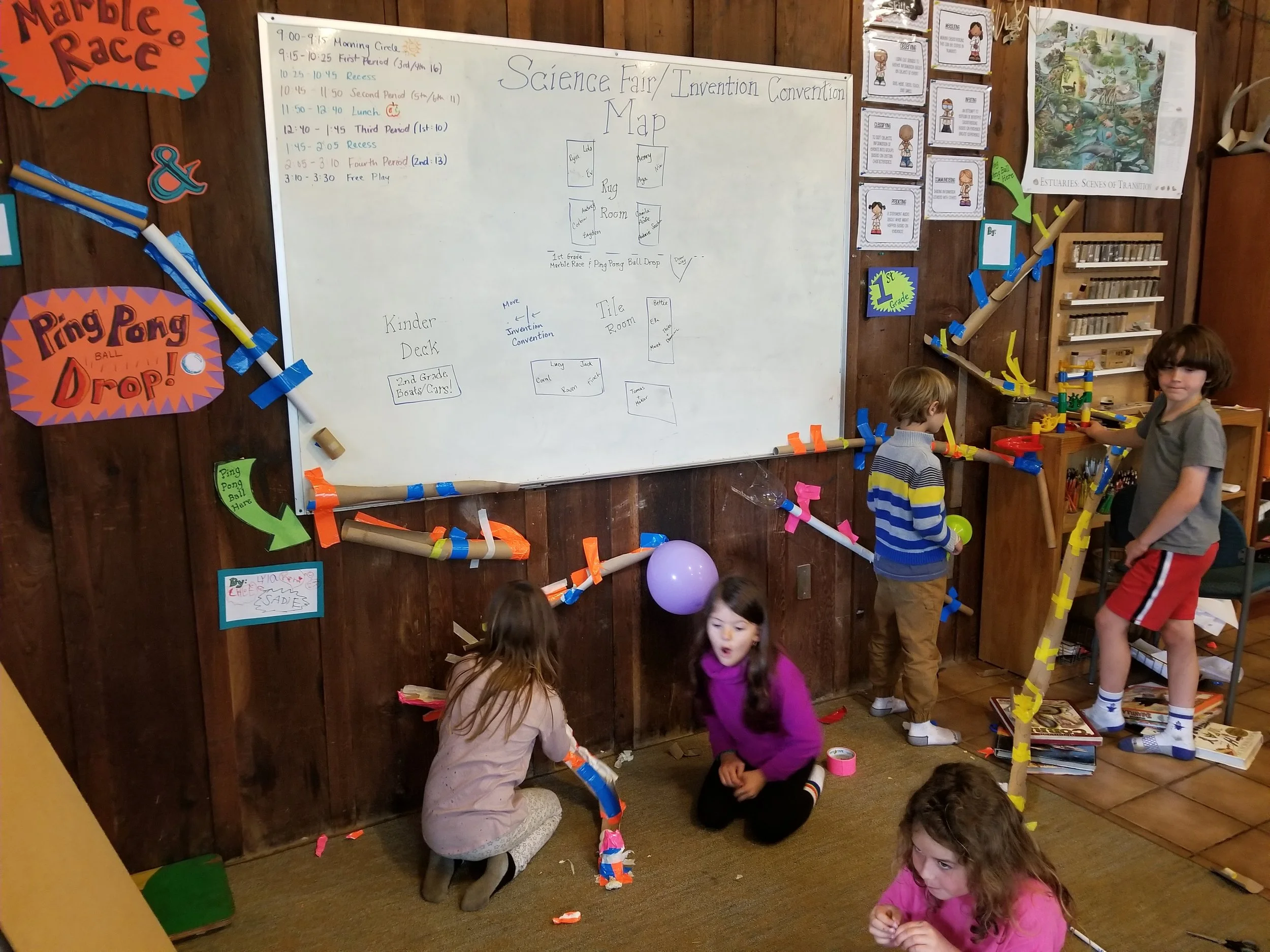
For science fair, the first graders created this series of marble and ping pong ball tracks. They worked well together to collaborate on multiple tracks and problem solve banking turns and placement of track.
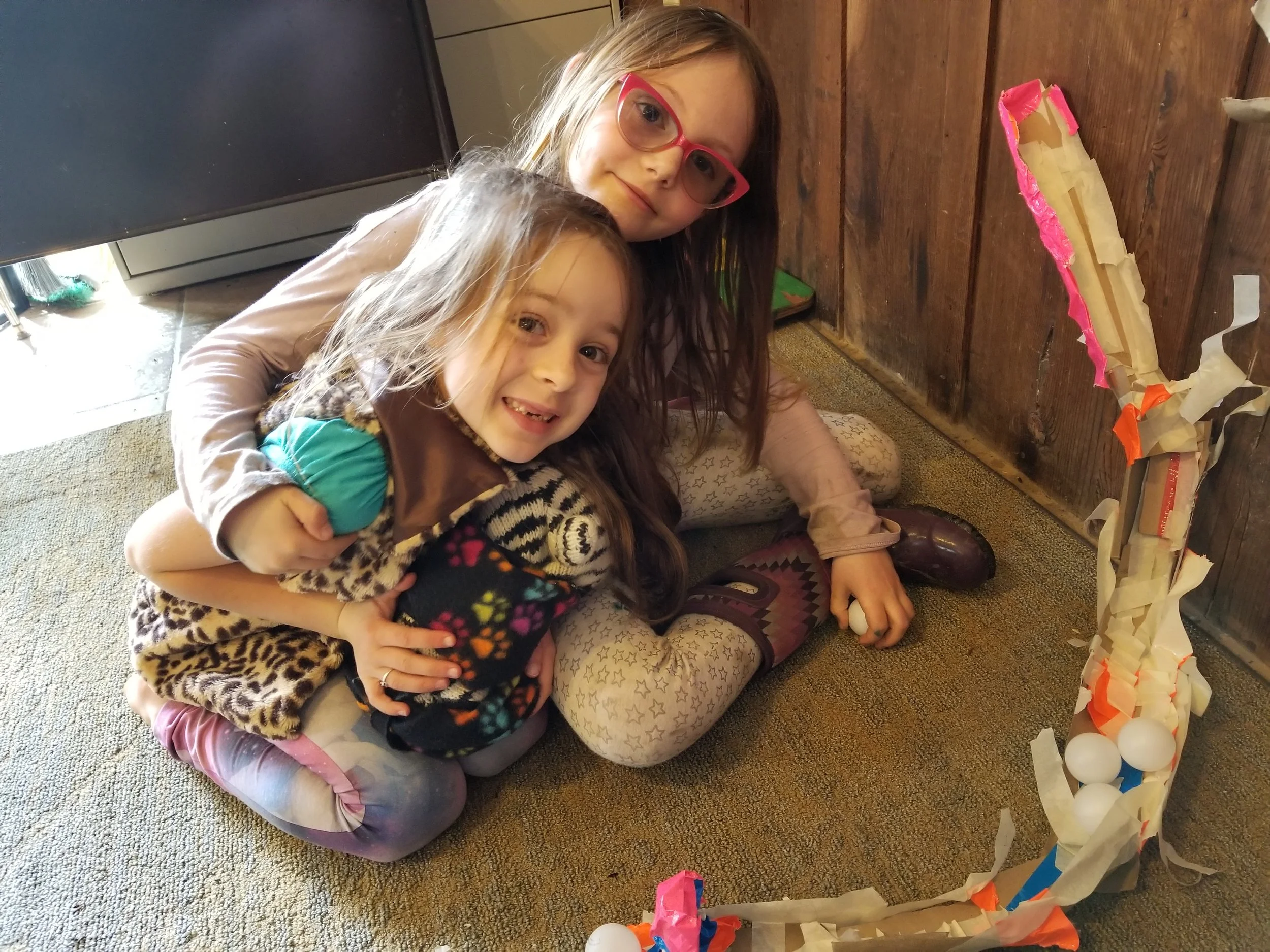
Proud ping pong track engineers!
Finally, we have been monitoring the progress of the trout eggs and young alevin development throughout the month. The first graders were very keen to realize that we received eggs that were already developing (as you could see the eyes of the embryo inside the egg). We have been taking notes and doing activities about what trout need to survive and how many survive in the wild. To celebrate the baby trout being released over spring break we made trout hats on Thursday.
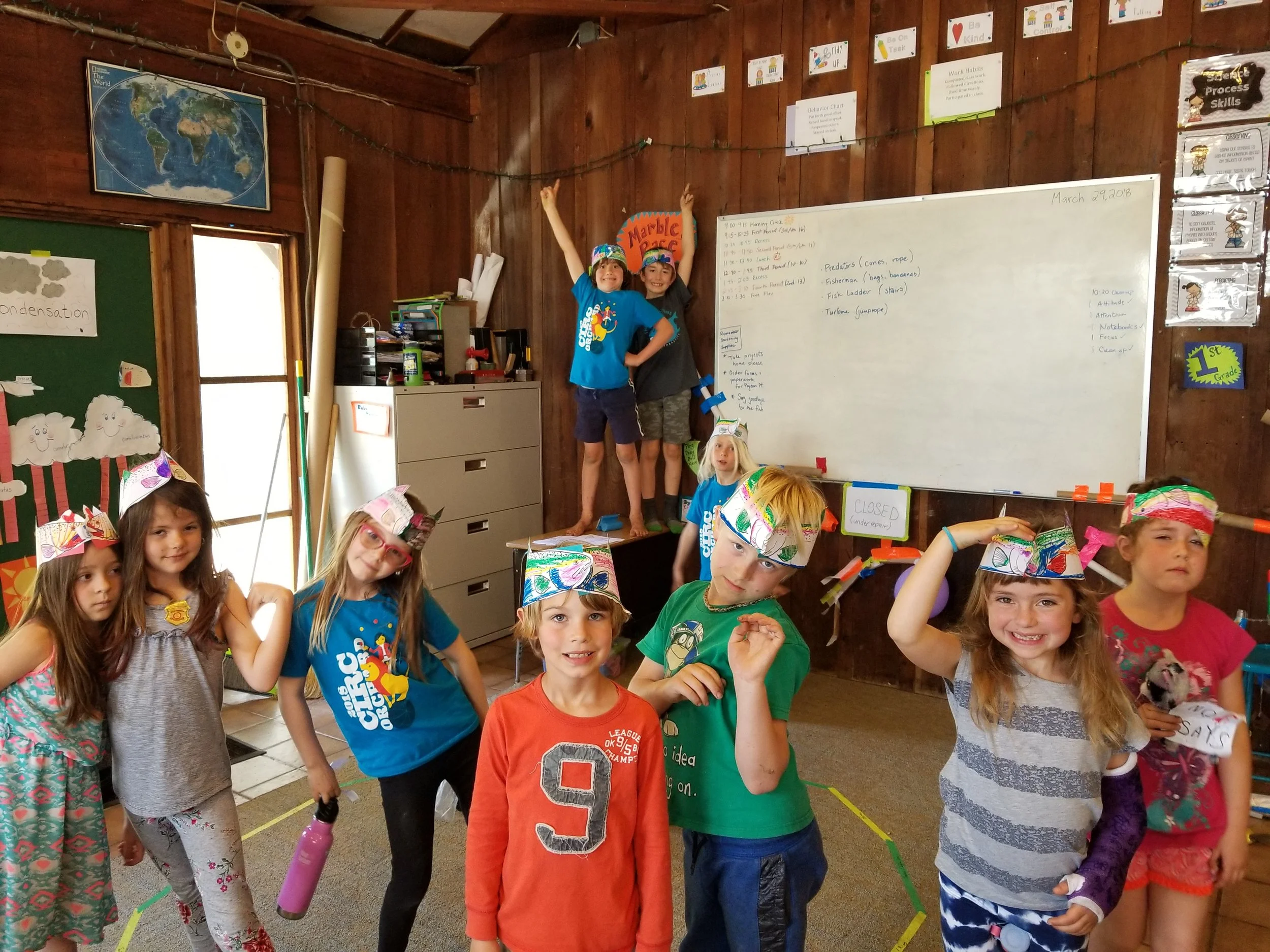
Trout hats!