
Math
It feels like a really long time since I wrote. Since then, we have experienced CircOrchard, Valentines Day, Asian New Year, and the 100th day of school. Each of these events affected our first grade class in various ways.
CircOrchard prompted some students to create circus themed coloring sheets for their classmates. They drew their fellow students performing with juggling balls, on stilts, and unicycling on a three wheeler. We also devoted half of our class period for one week to rehearsal for the performance. Our students were engaged and excited by this great event.
On Valentines day we joined the whole school in the rug room for a poetry reading. Thank you Liana! The first grade students shared their poems and then were eager audience members for other grades.
Asian New Year, we chopped, grated, and sliced our way into making 150 potstickers for the Asian feast. This was an activity that was shared amongst the 1-4th grades. There was amazing collaboration between first grade students who sometimes shared a large cutting board in completing their tasks. In honor of Asian New Year, I read The Great Race, a story of the Chinese zodiac, and students were required to graph their zodiac sign on our class graph. We also read the story of Grandfather Tang, a story which introduces the tangram puzzle pieces. Students then created their own tangram shapes.
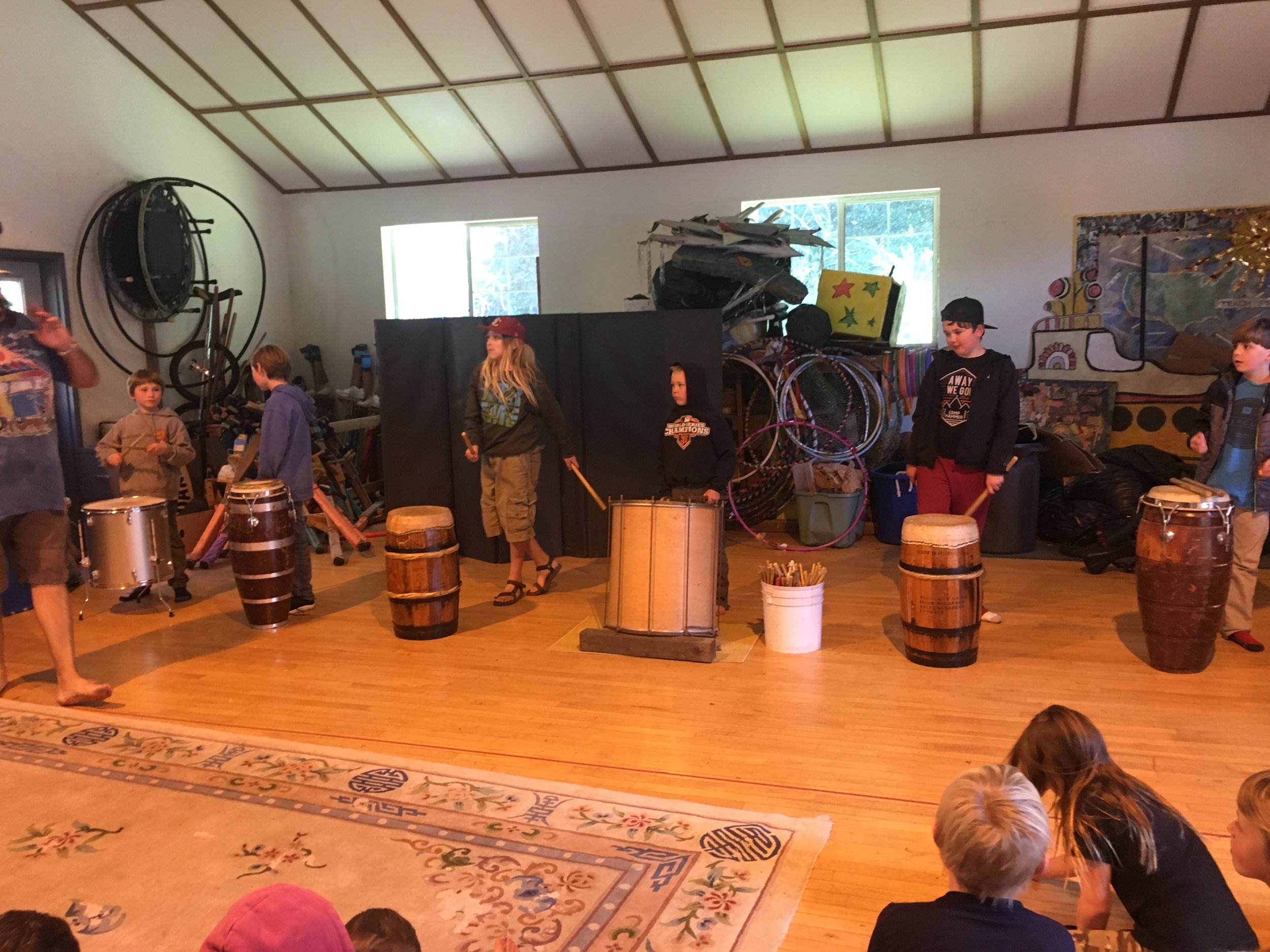
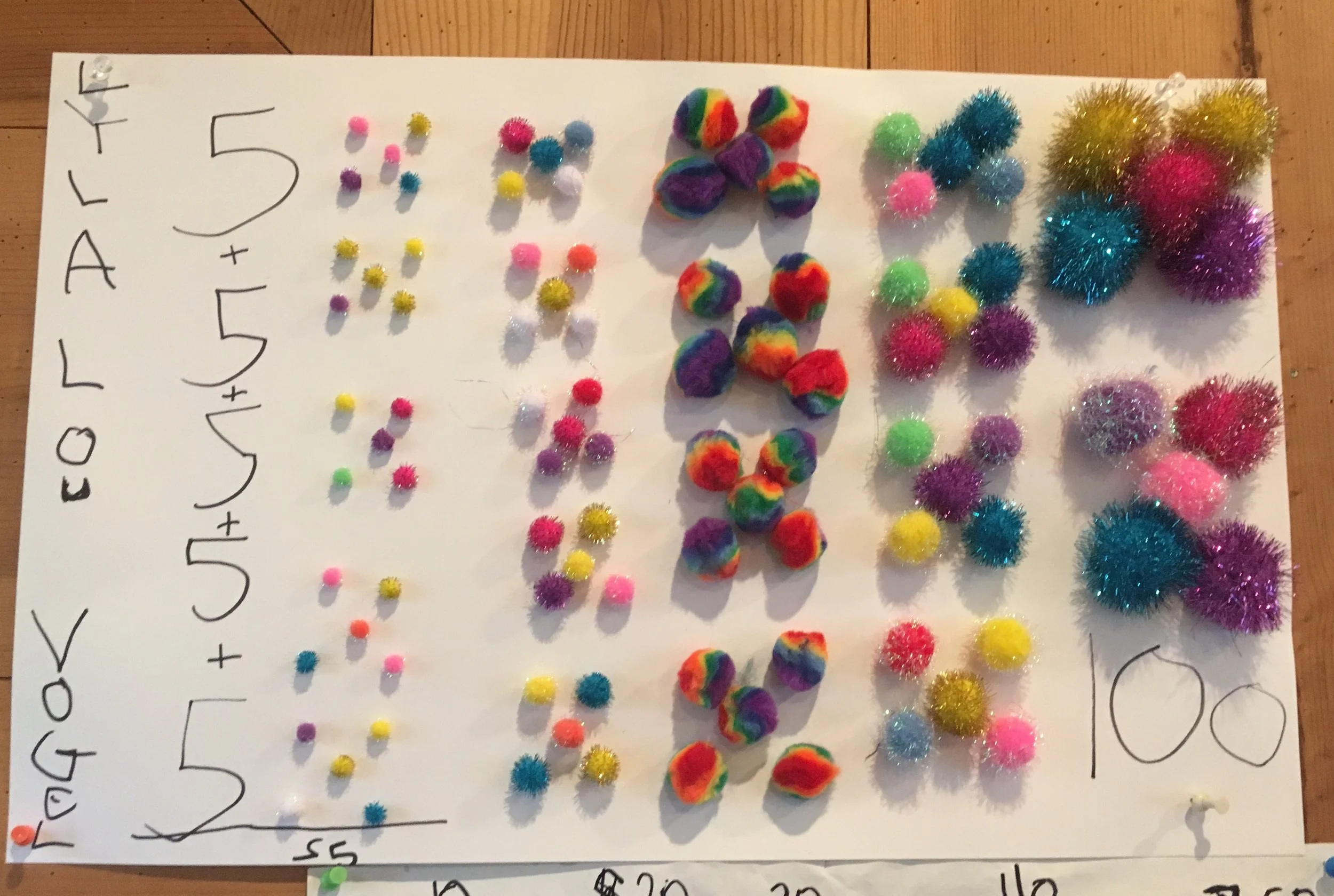
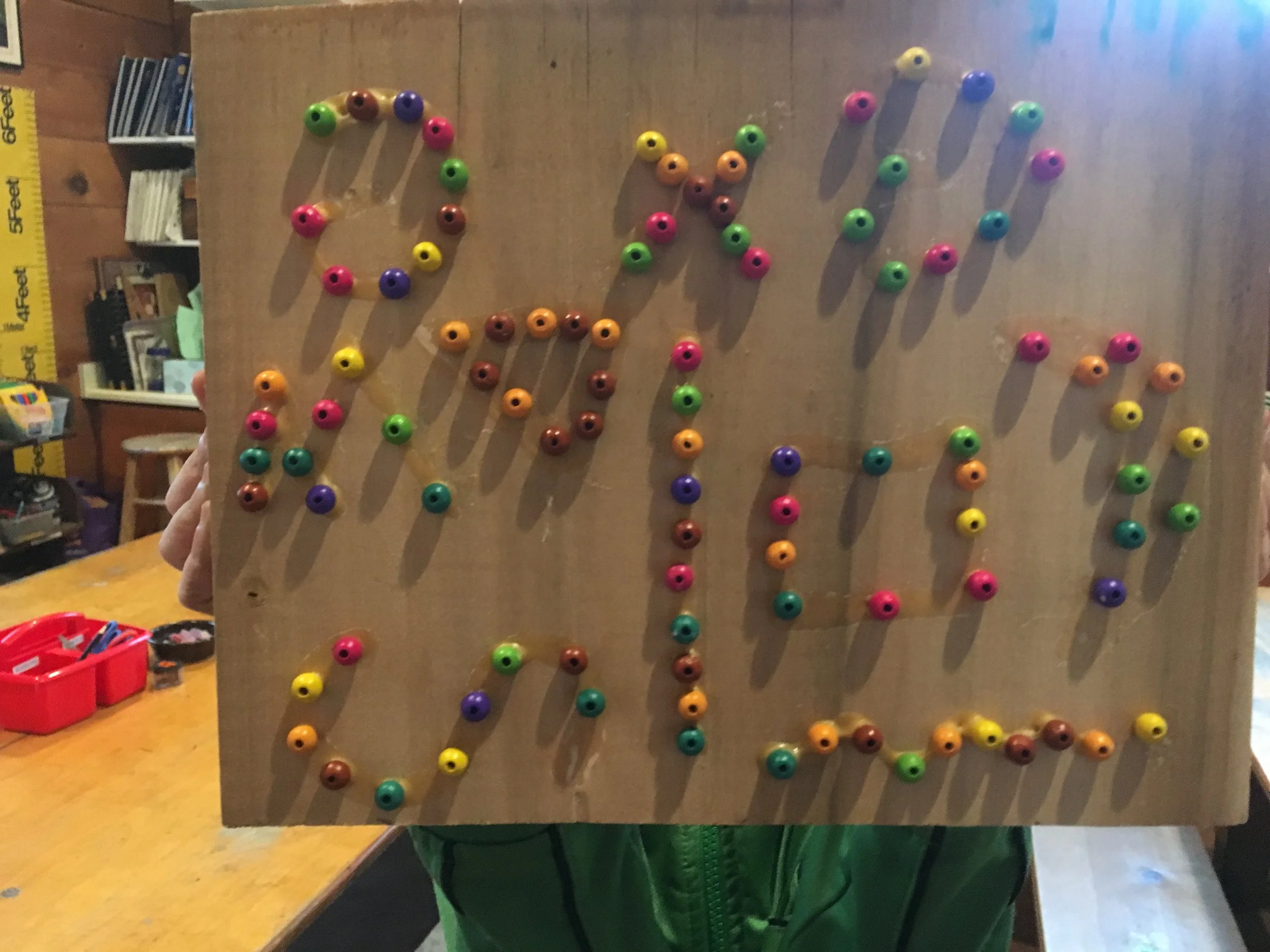
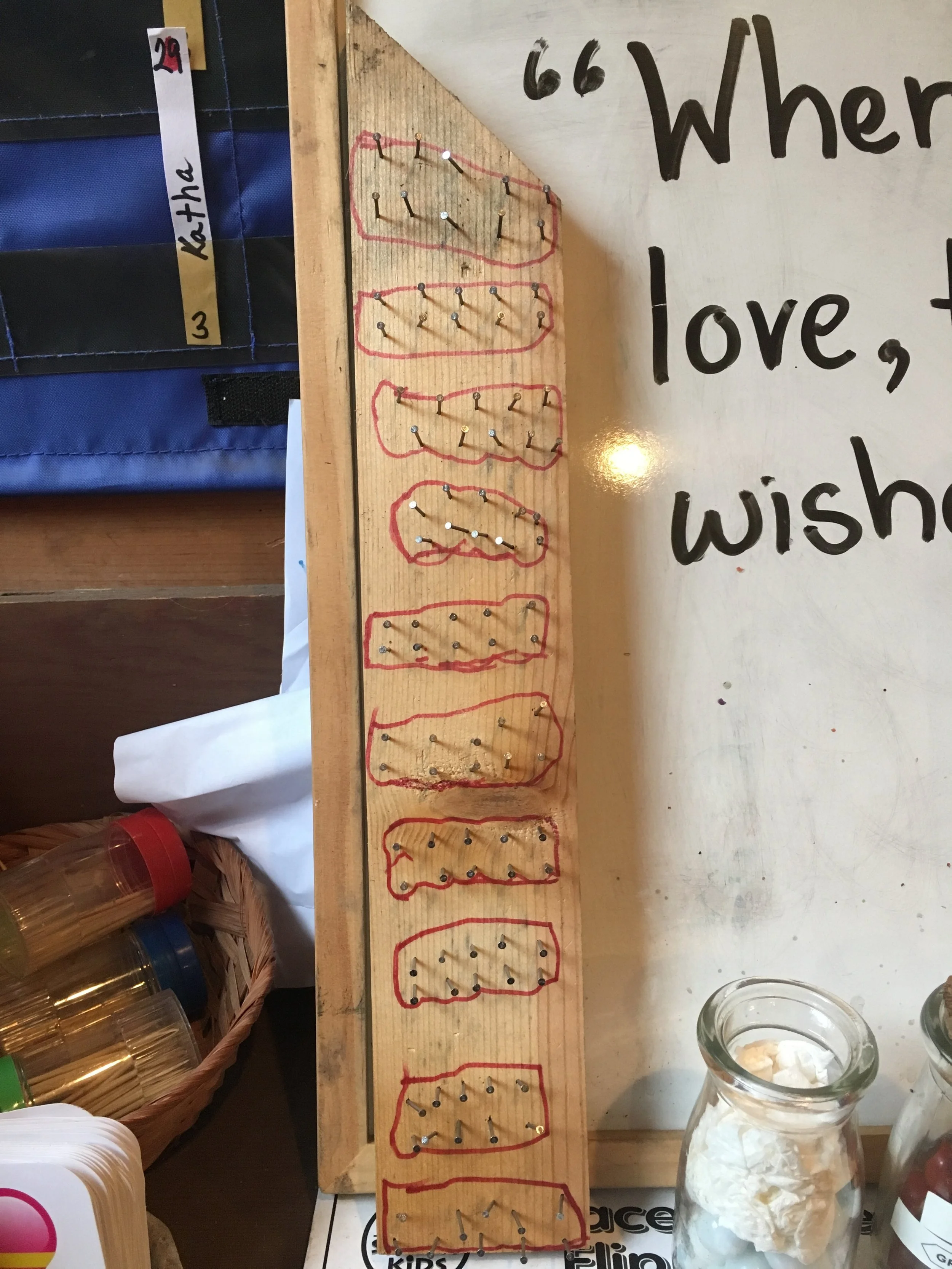
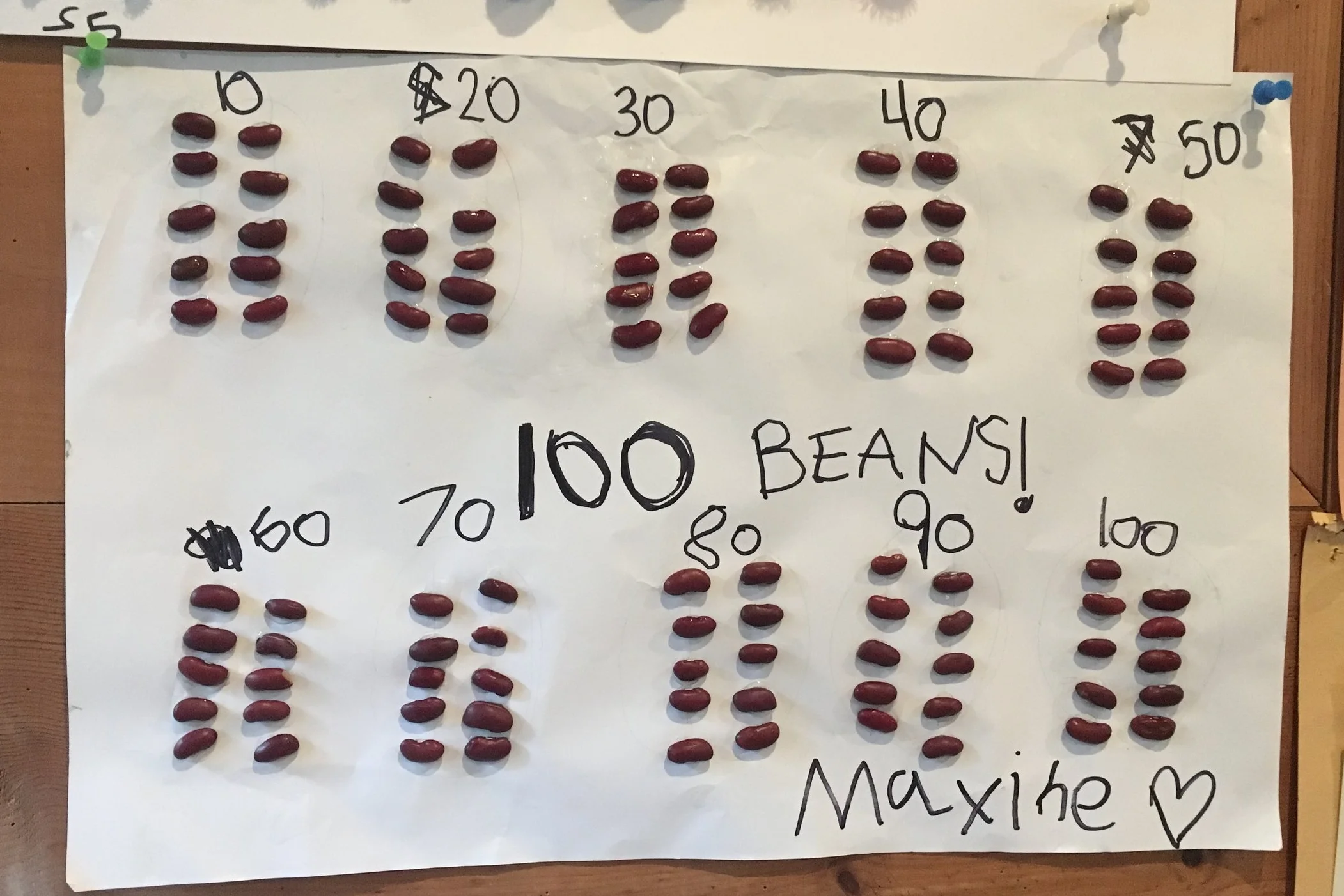
And the 100th day of School was very exciting. We counted the days left as it approached. And when it arrived, students began bringing and sharing their creative hundreds projects. As a class, we practiced timing 100, performed 100 exercises (each student led 10 movements), and kept track of how many times we could perform various activities on our campus during 100 seconds.
Besides all of these special days, we continue with weekly jobs and routines. Students played Penny Grab and began the Story of Money poster, in which they examine pennies with magnifying glasses, describe them, and share the denomination: $0.01 and 1 cent.
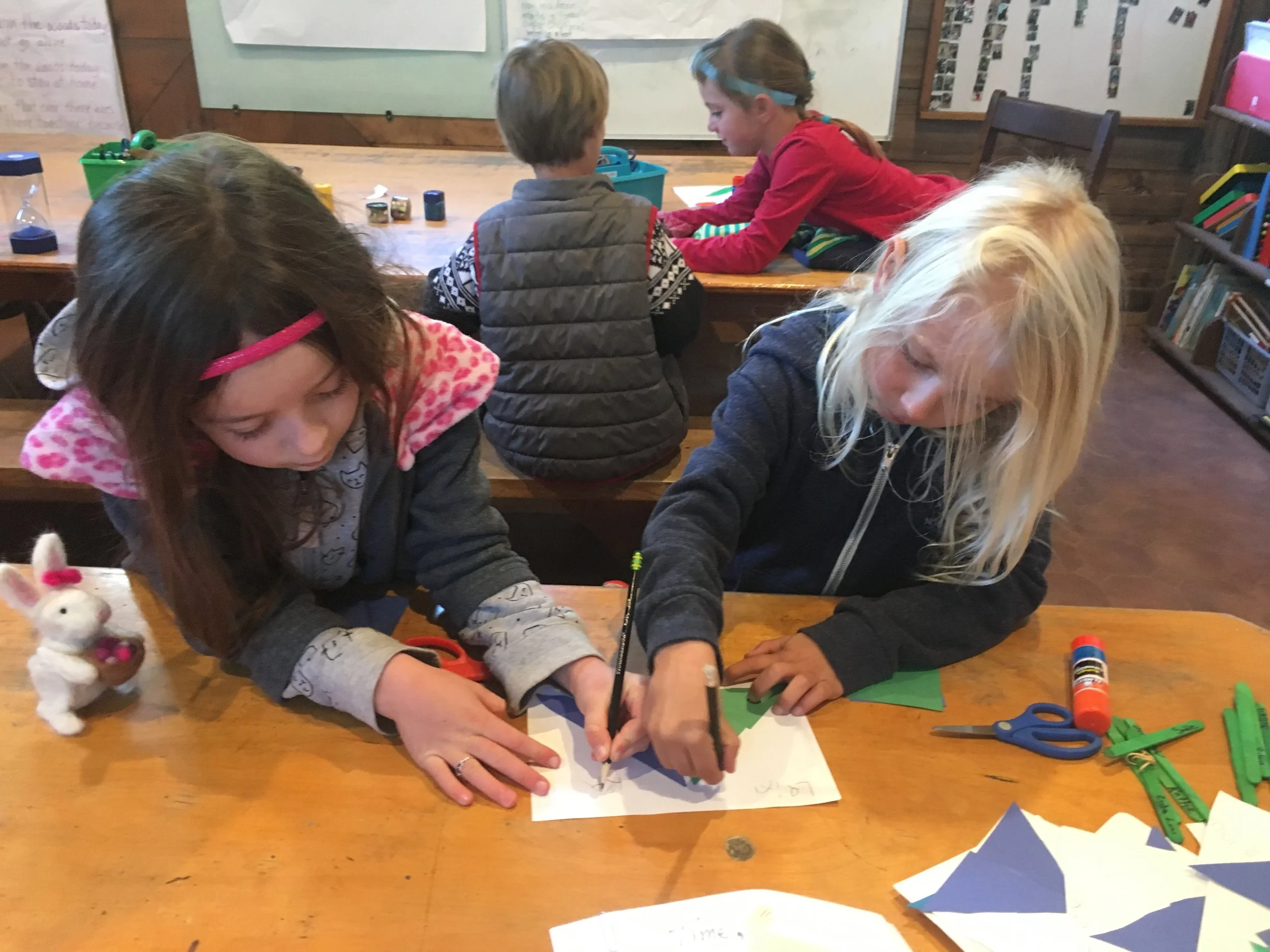
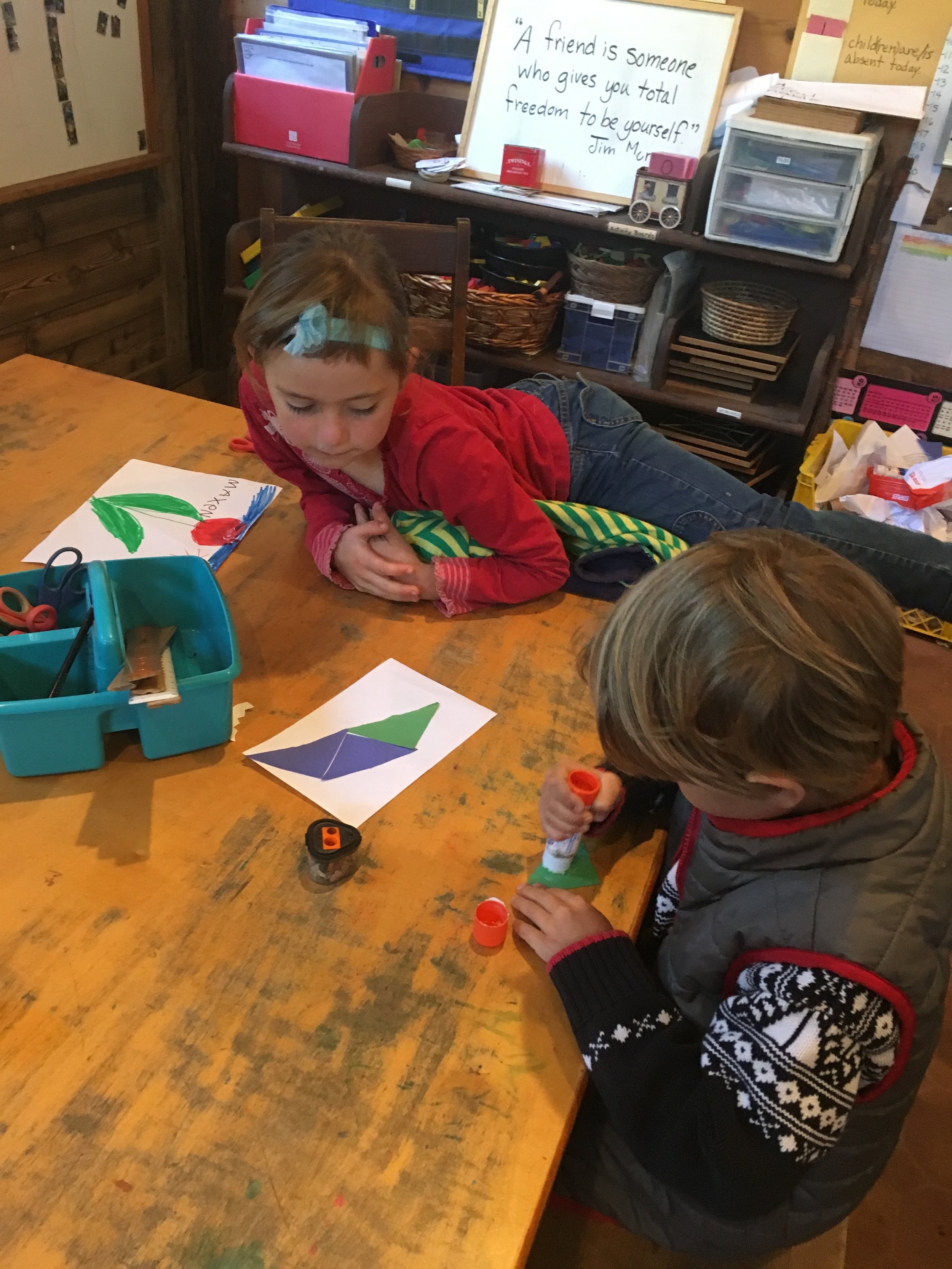
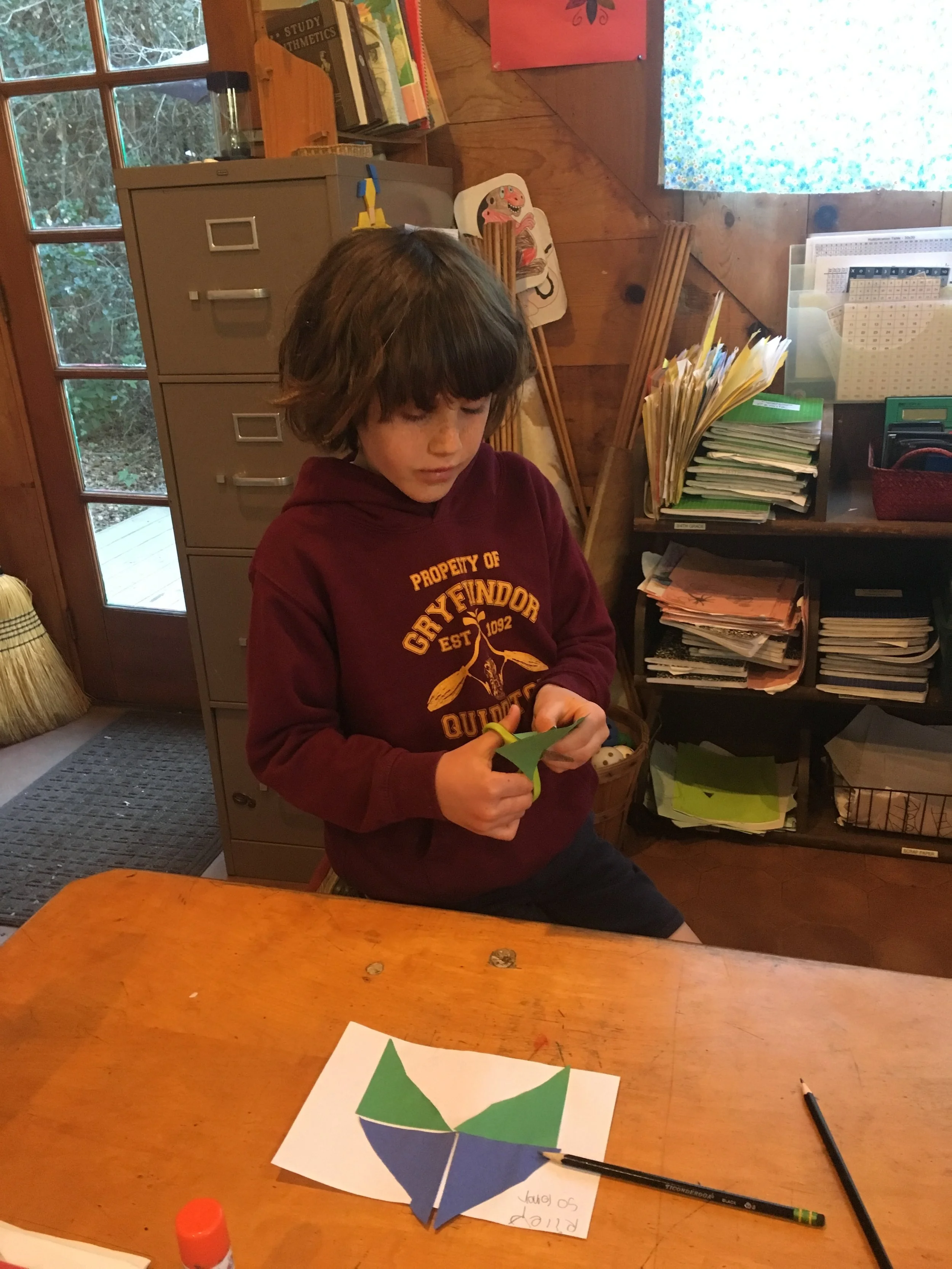
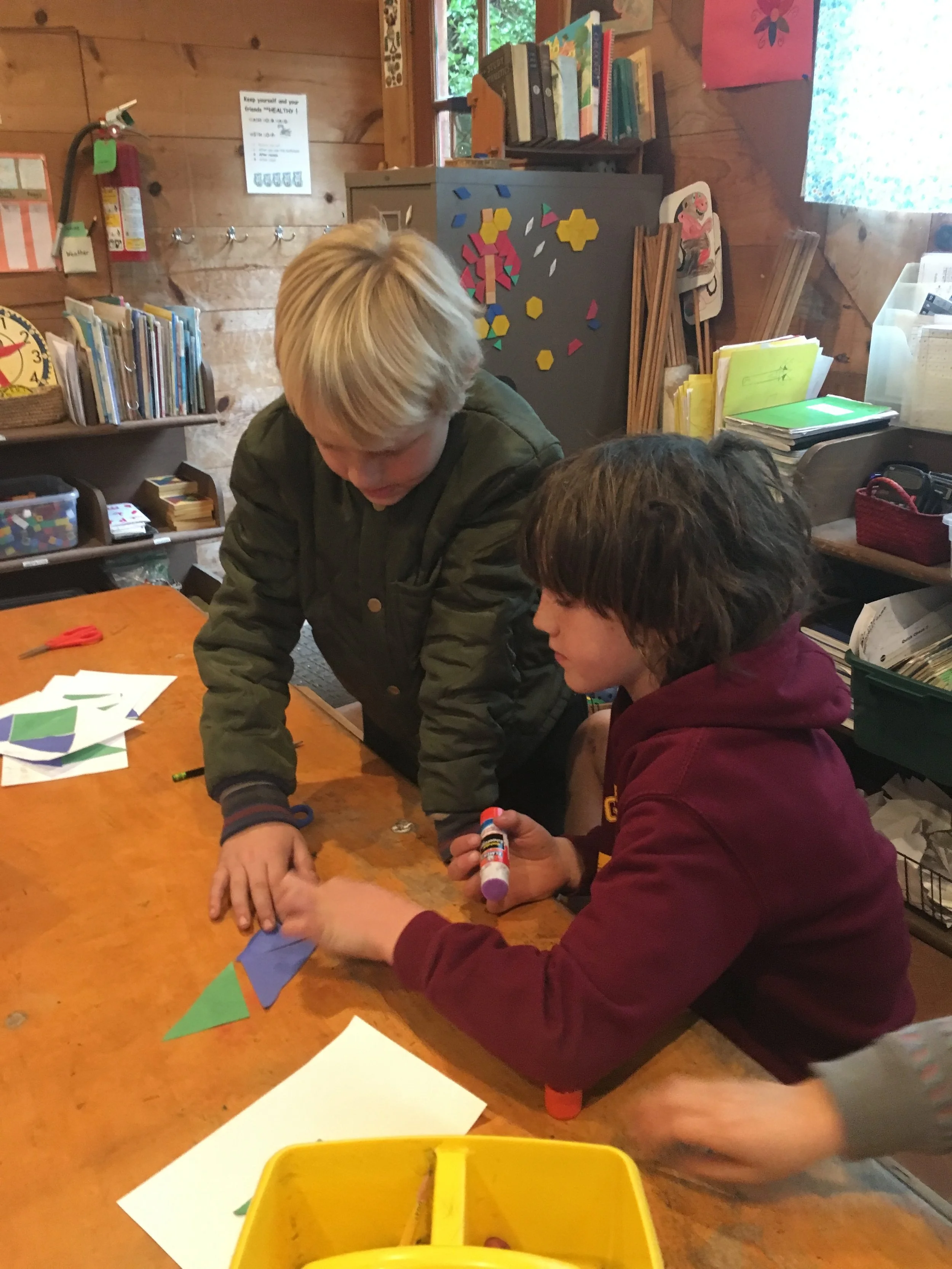
In partnerships, students completed the 4 triangle problem. In this investigation, partners practice fine motor skills as they cut squares along the diagonal into two triangles. They then try to create as many different shapes as they can using two green triangles and two blue triangles. Finally, we classify the various shapes and speak of their attributes and graph them on a large poster. I love sharing the words parallelogram and trapezoid and hearing the students use them to describe their shapes.
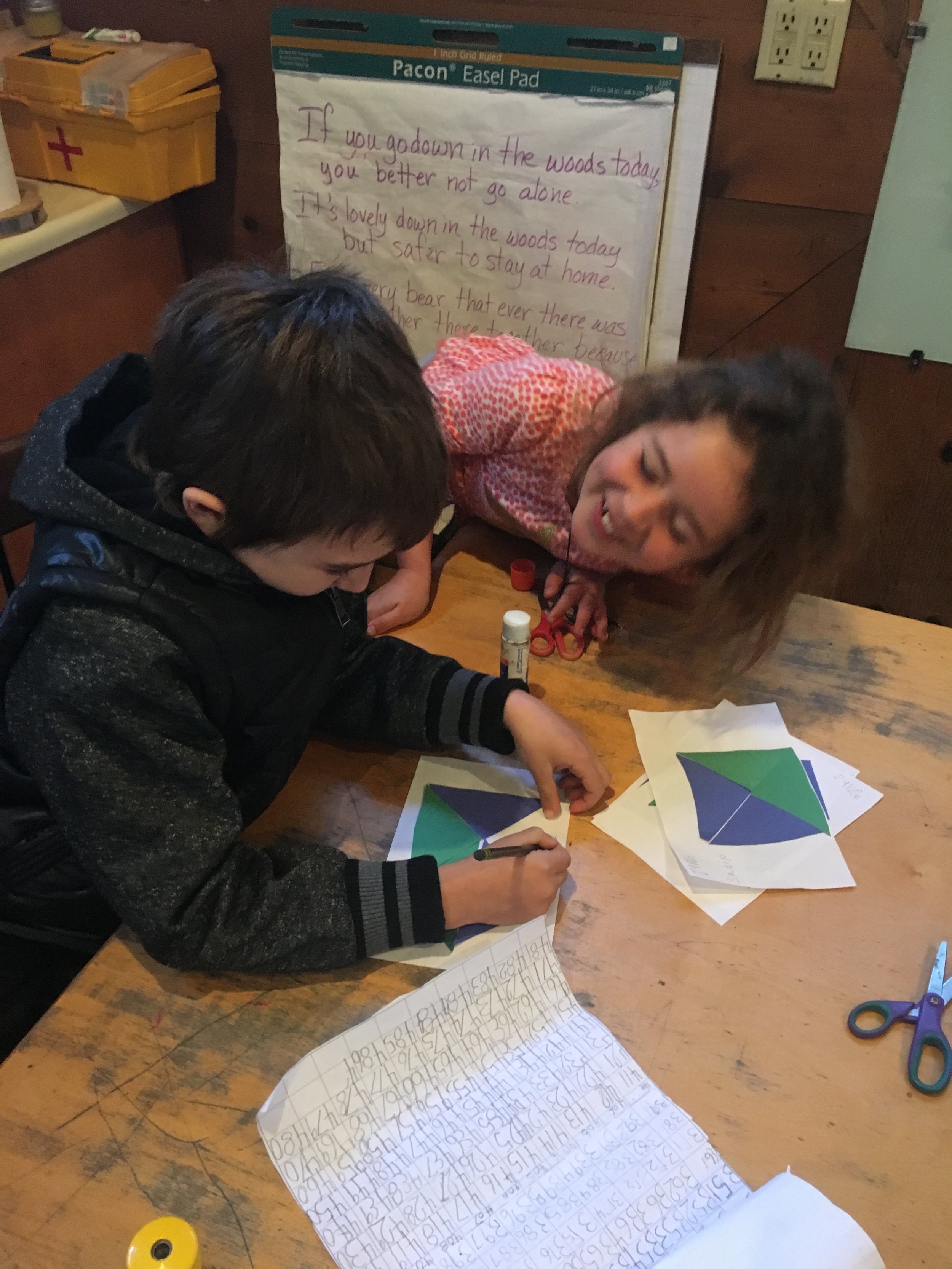
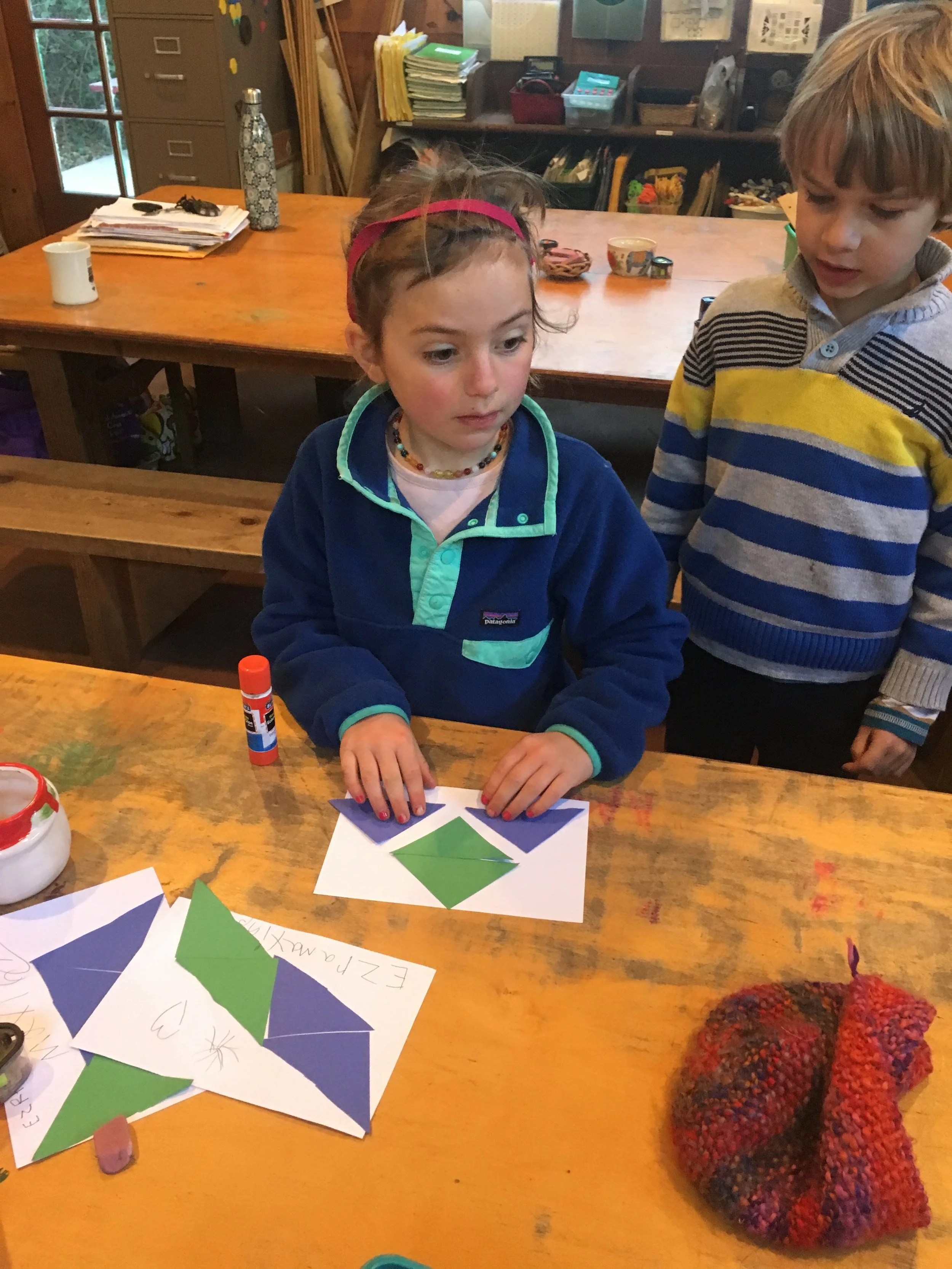
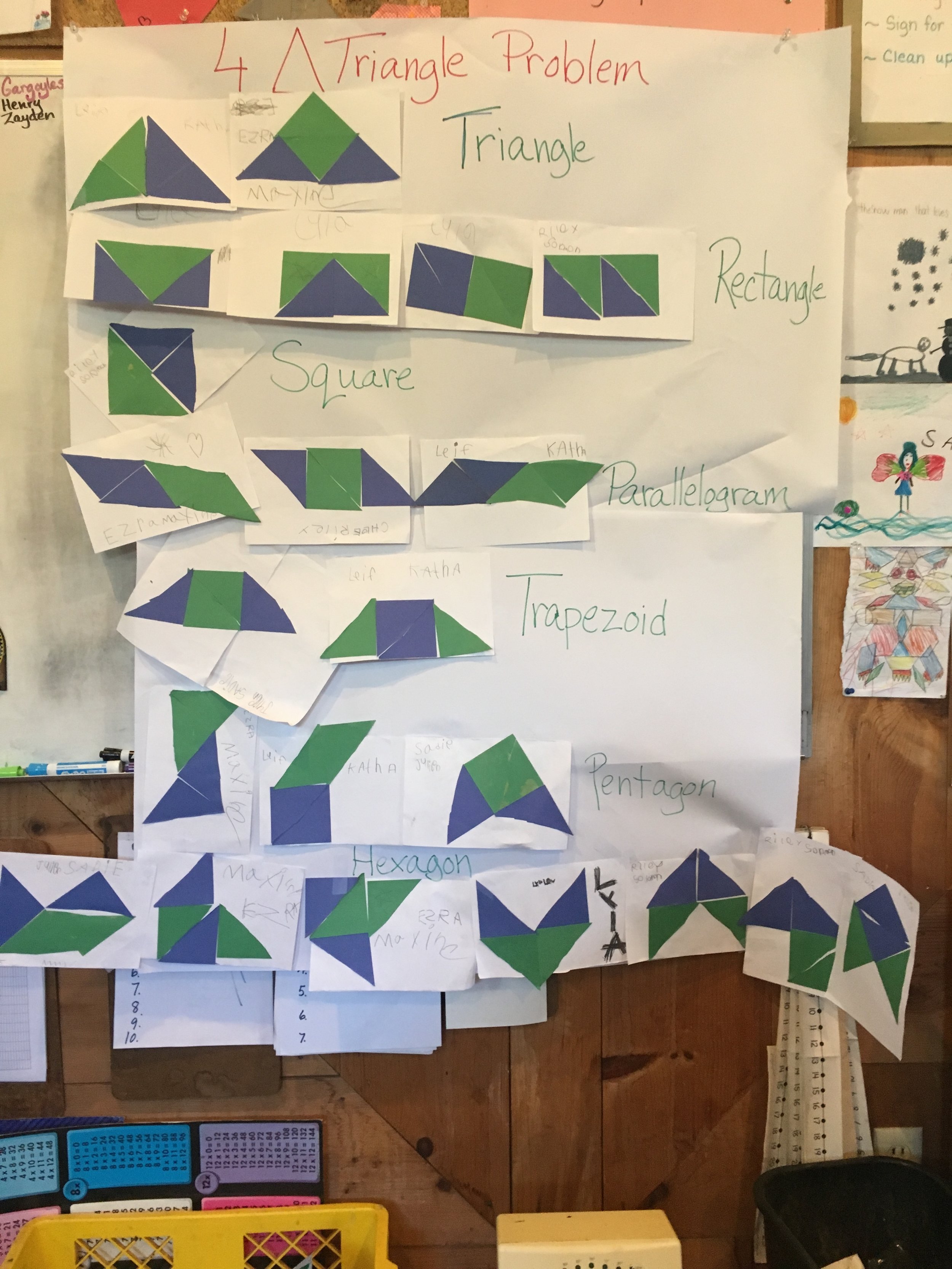
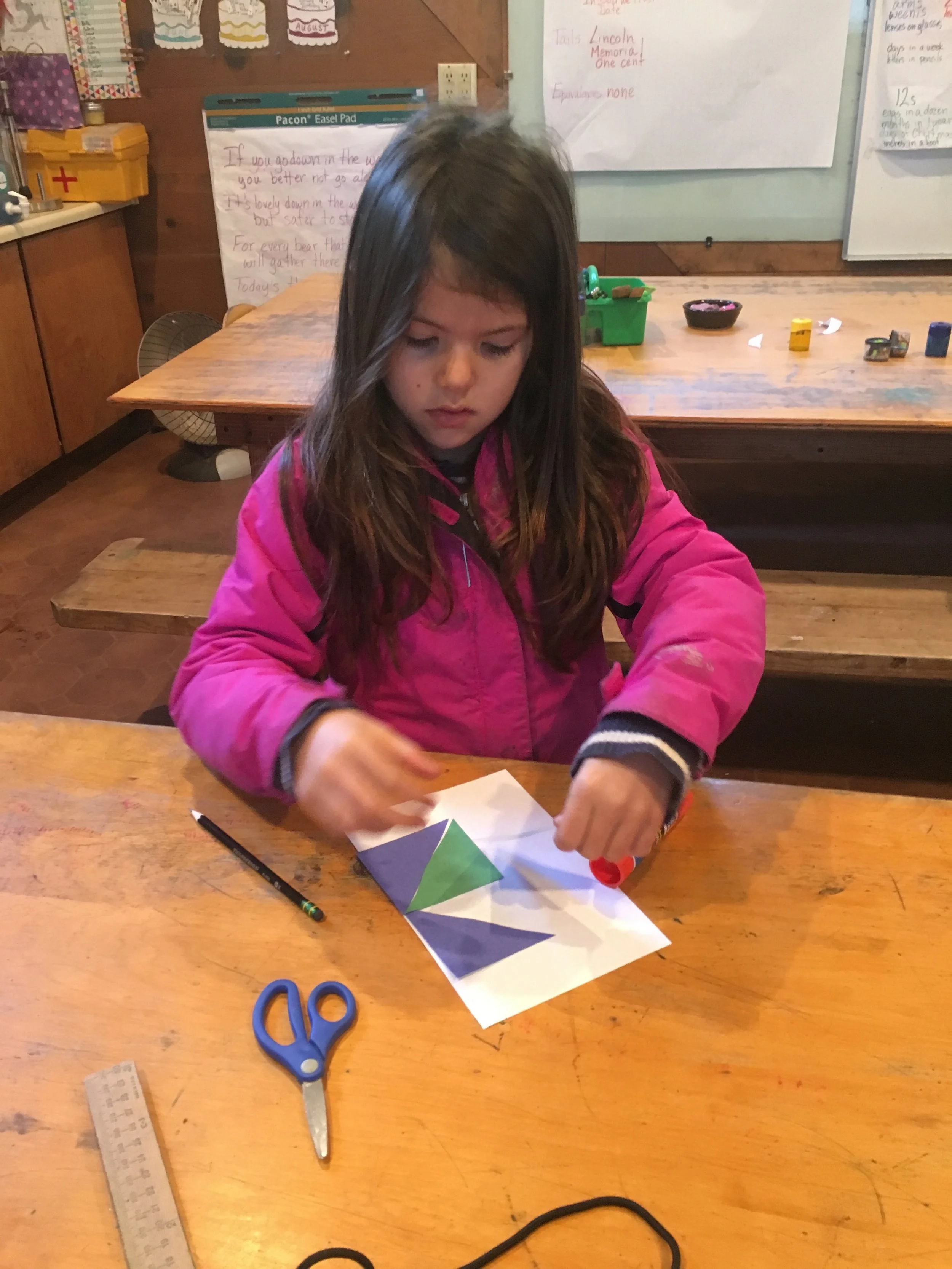
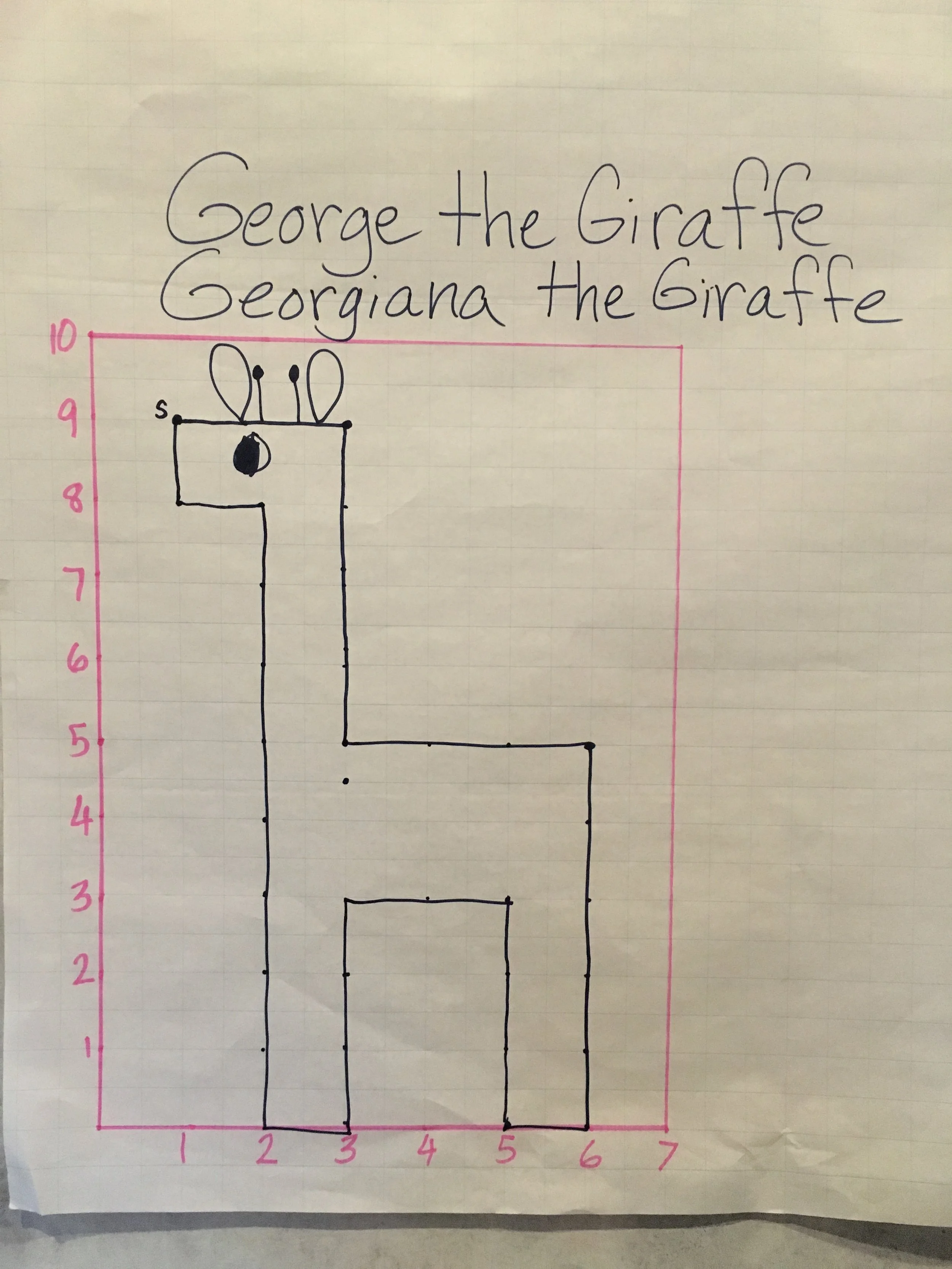
In terms of graphing, we also did our first graphing activity from the book Grid and Bear It, in which students followed directions to plot and connect points on a graph. They were excited to discover a giraffe at the end of the activity.
Cuisenaire rods have been a favorite activity during P.A.T., so I introduced an investigation of ratio using the rods. First, I asked students to predict how many of the largest orange rods it would take if I lined them up across one of our tables. Then, they watched as I measured. One student had accurately predicted 12. Then, I asked the students to determine how many yellow rods it would take if placed end to end across the table (two yellow rods are equal to one orange). Partners came up with an answer and showed their work.
In terms of number sense and formation, students continue to work on their number scrolls, completed a calendar for February and March, have been working on task cards, and practiced writing the number zero.