
Math
Since I last posted, the first grade students have become very excited about their number scrolls. All students have reached 100 and are working on place value understanding to continue recording their numbers. Last week, Liana brought the 2nd graders for a visit and older students shared their number scrolls with younger partners and they worked side by side on their scrolls. There was general amazement as Riley unfolded his scroll and had to stretch it diagonally across the room since it was so long: 3,140.
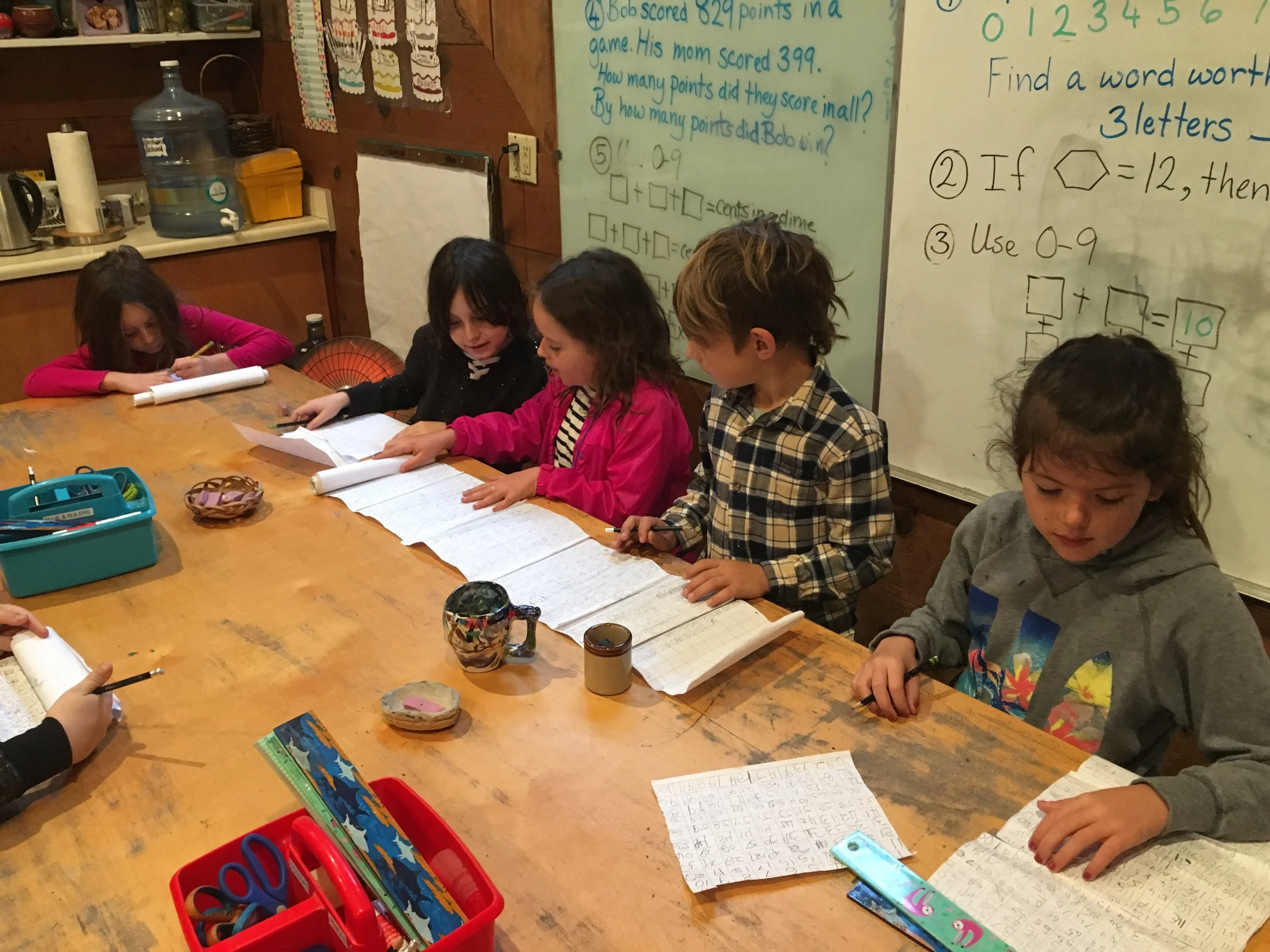
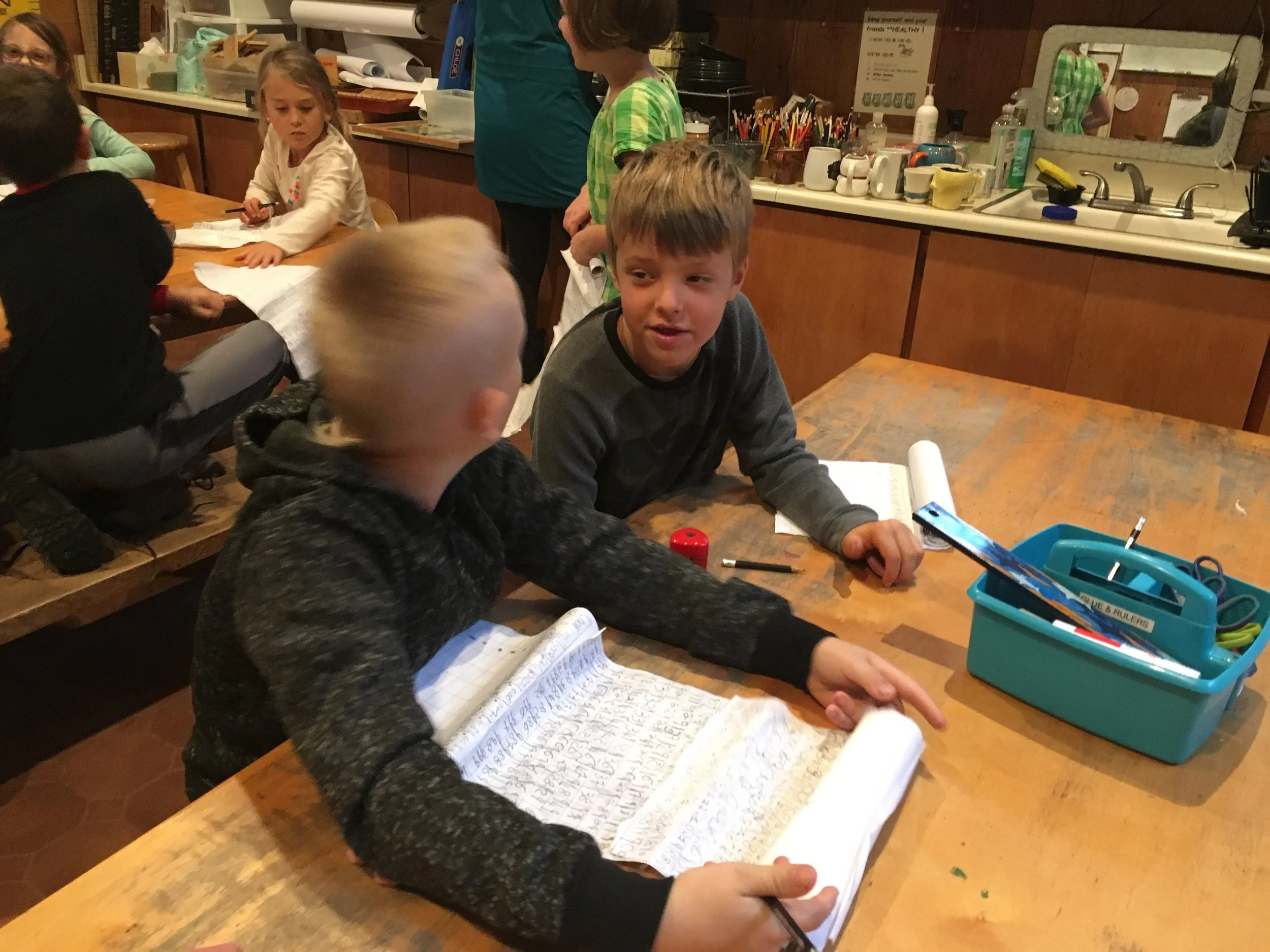
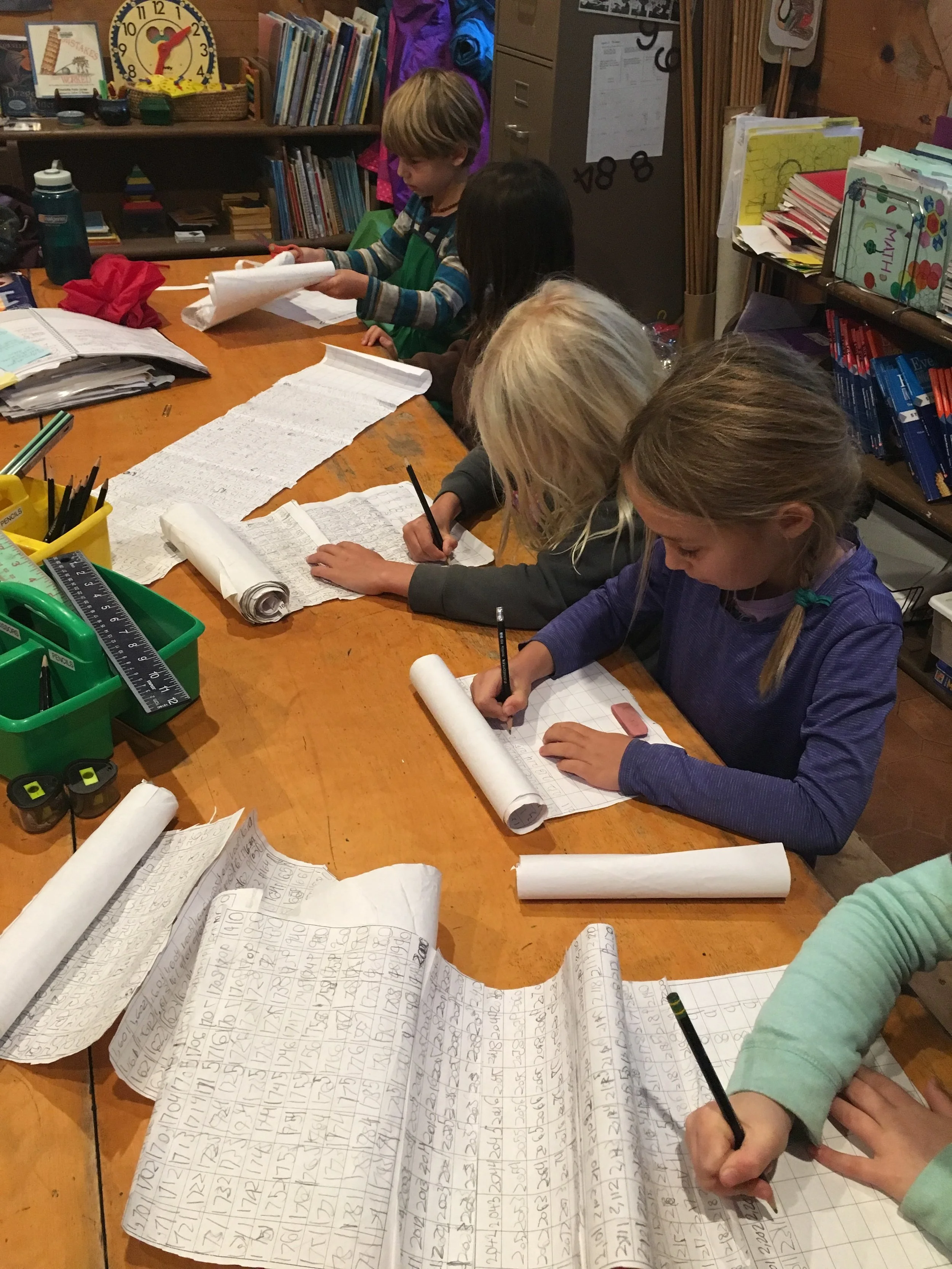
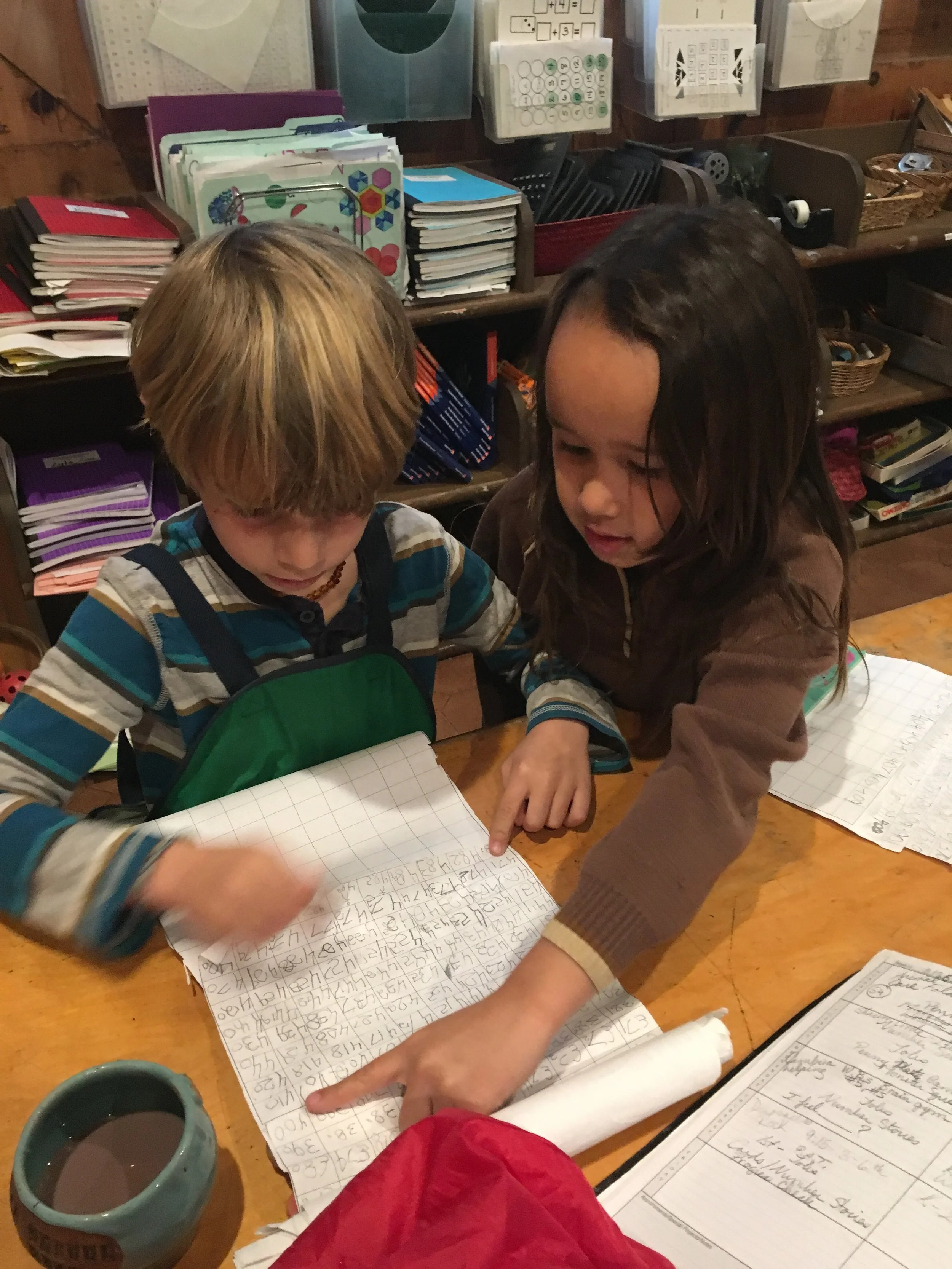
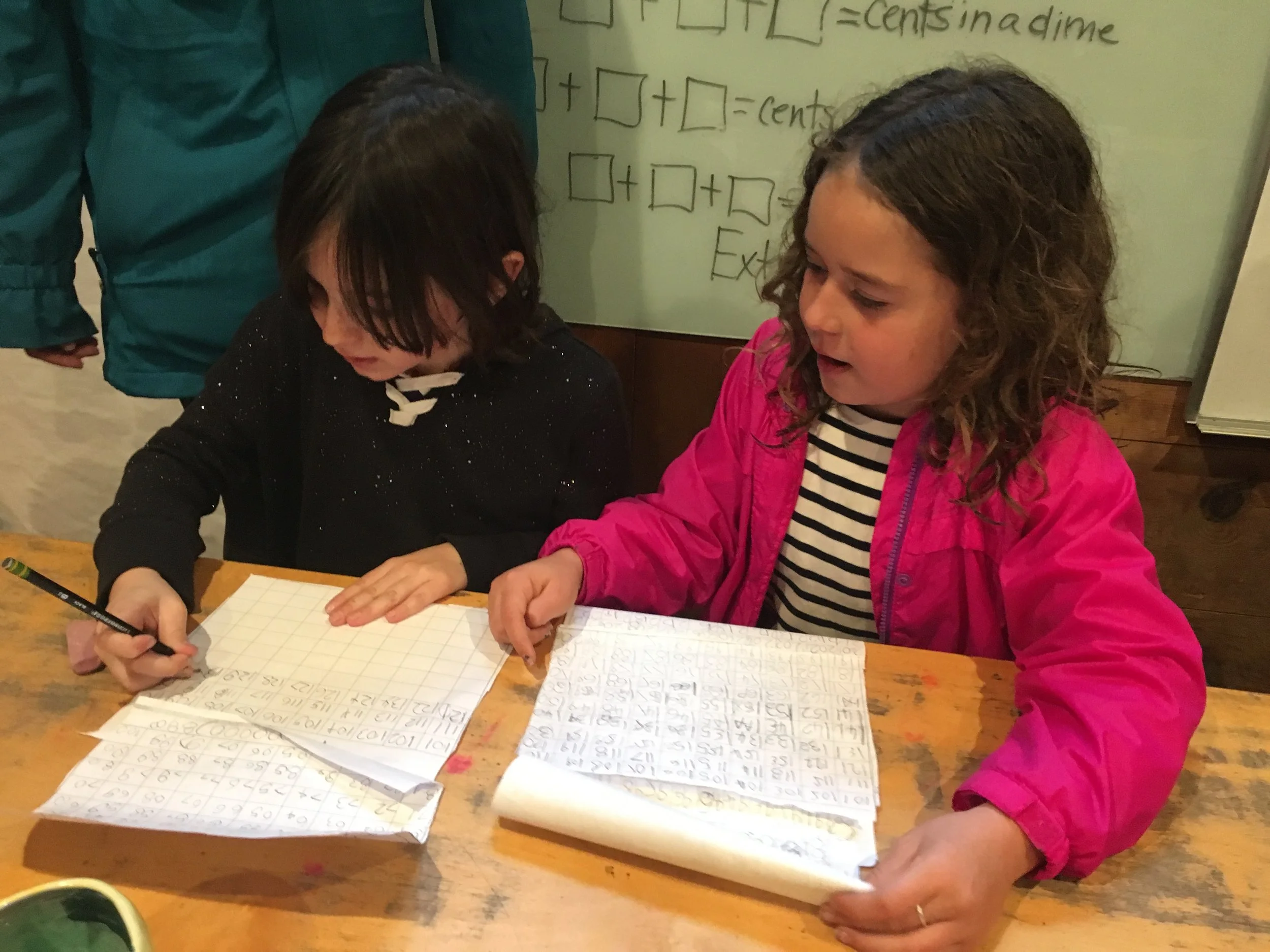
In addition, we have been practicing our number formation and pencil grip while completing our scrolls, practicing the numbers 4, 5, and 6, and filling out a calendar for the month of November. When observing your child at home, please encourage correct pencil grip and number and letter formation from top to bottom, sky to earth. Before practicing the number six, students did some brain gym movements: cross crawl, infinity symbols in the air, infinity symbols on white boards, and drawing with both hands simultaneously. These activities connect the two sides of the brain. Thank you to Cambria, who helps every other Wednesday in the math cabin.
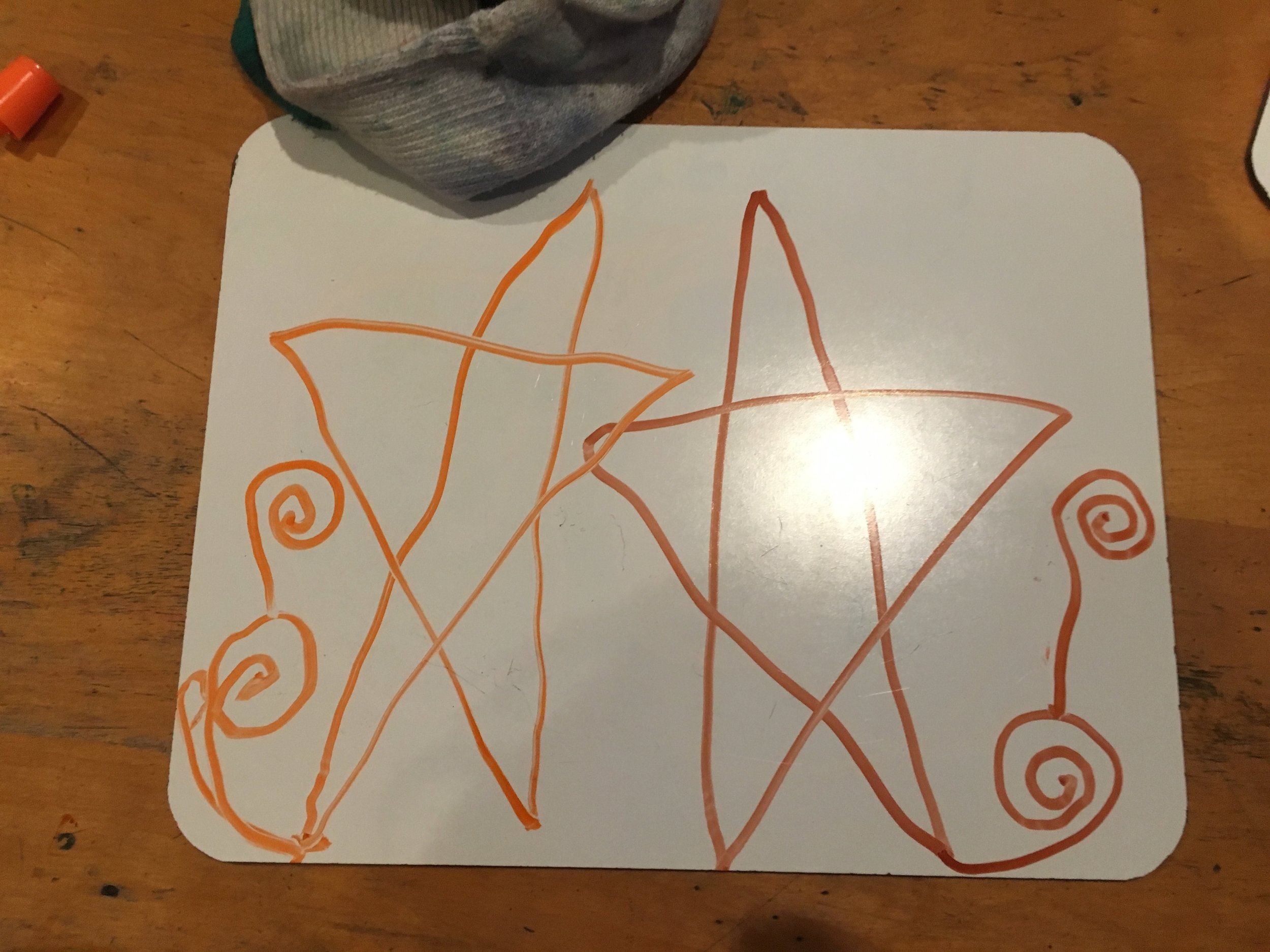
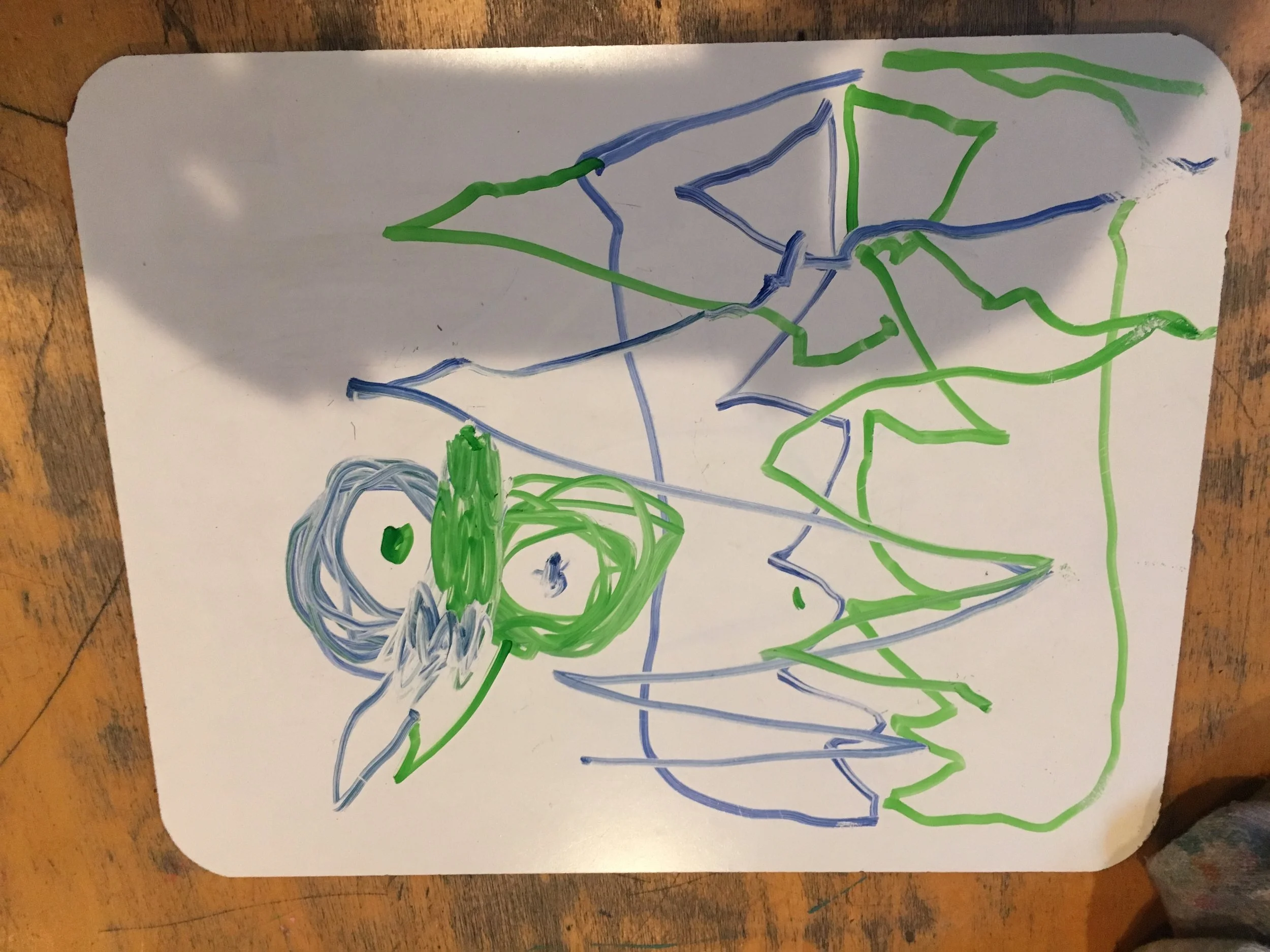
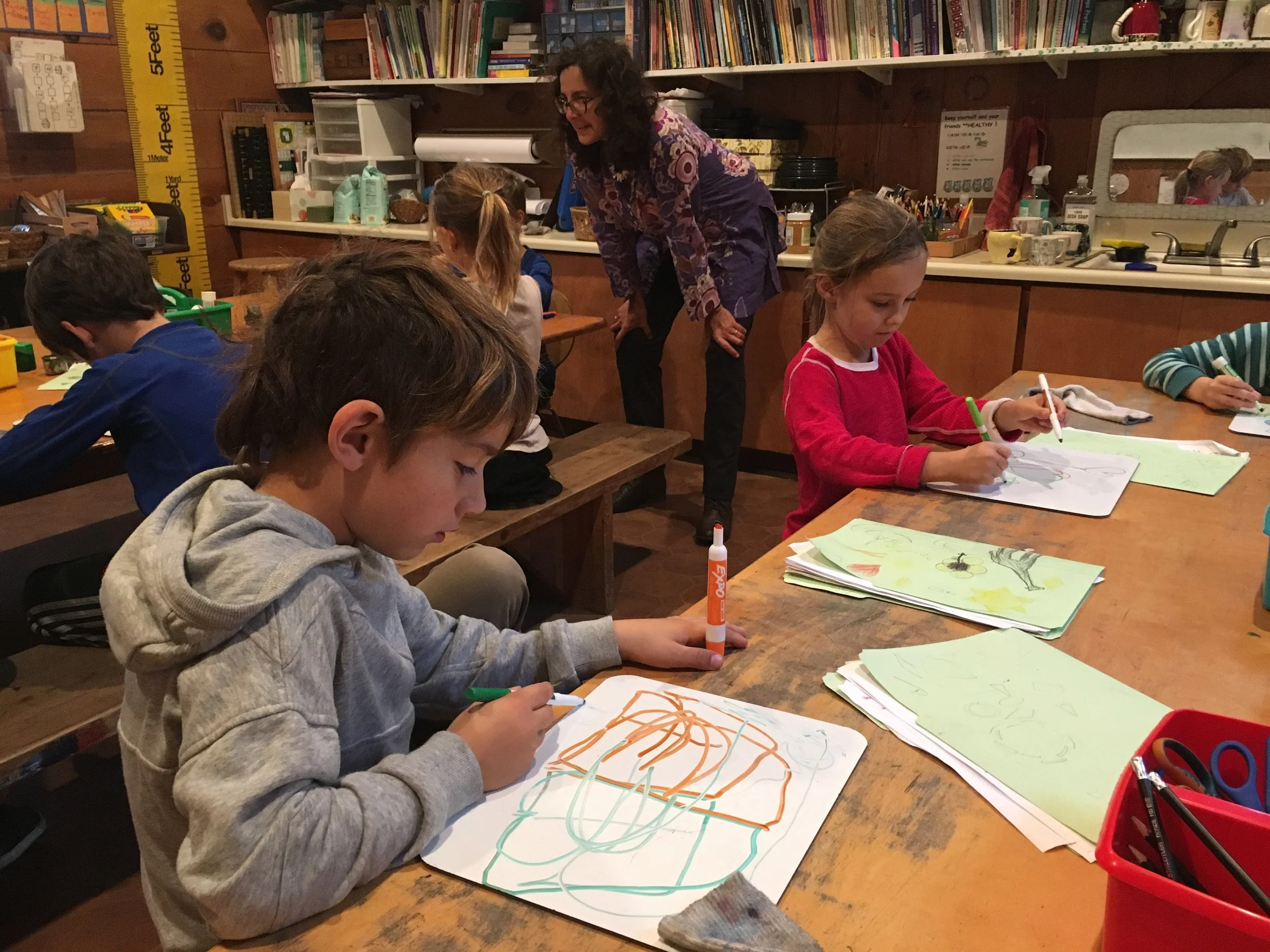
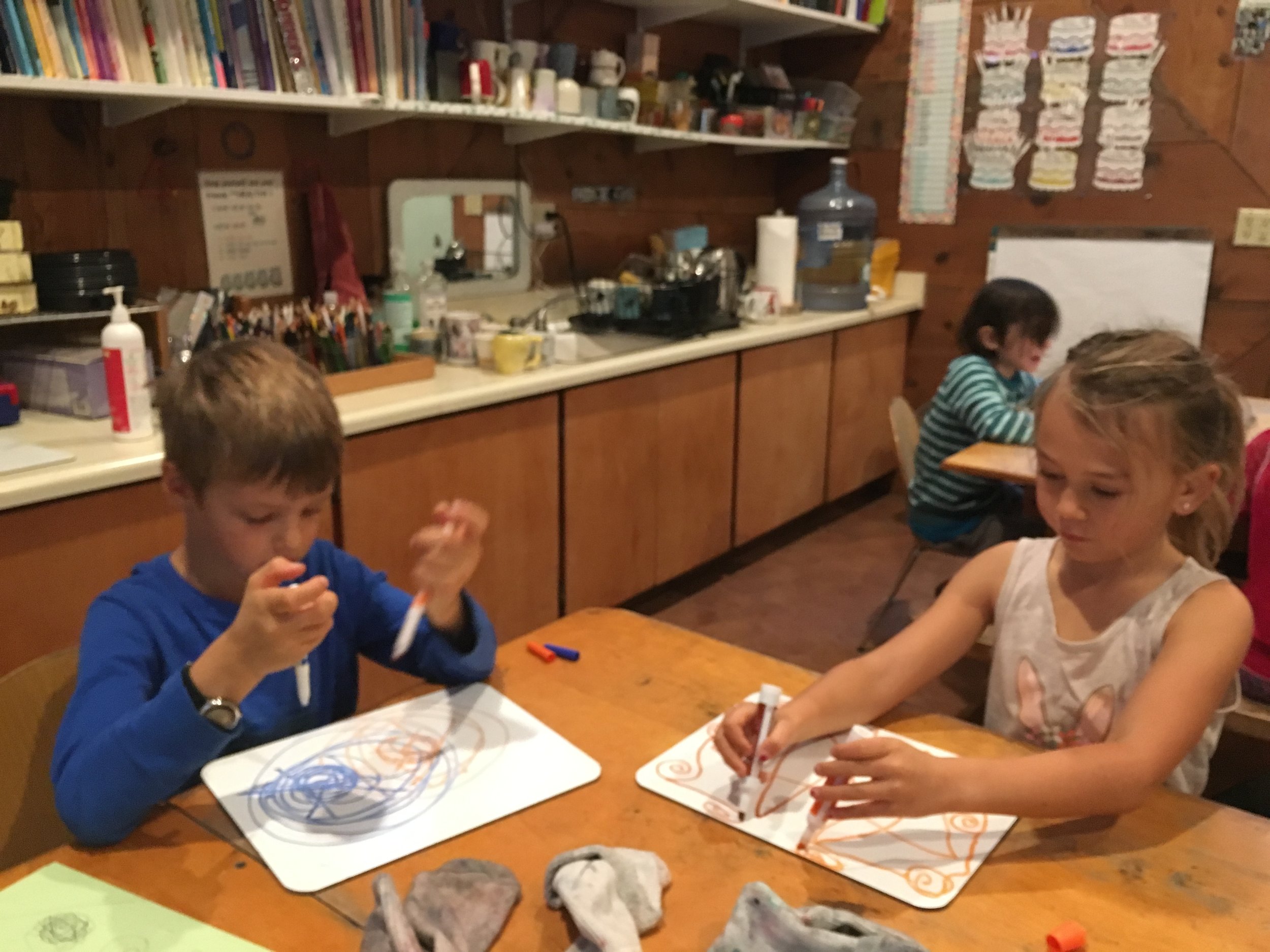
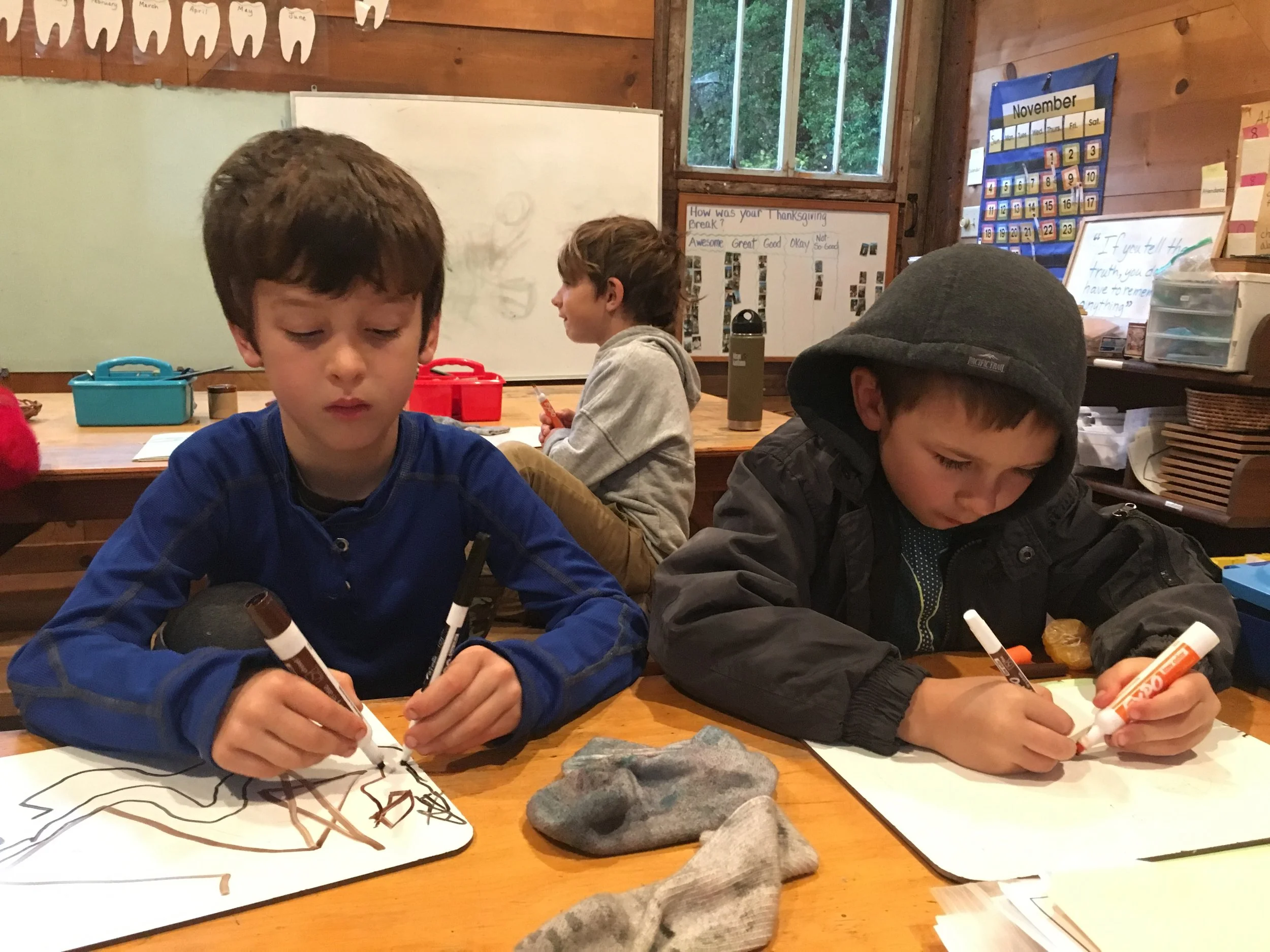
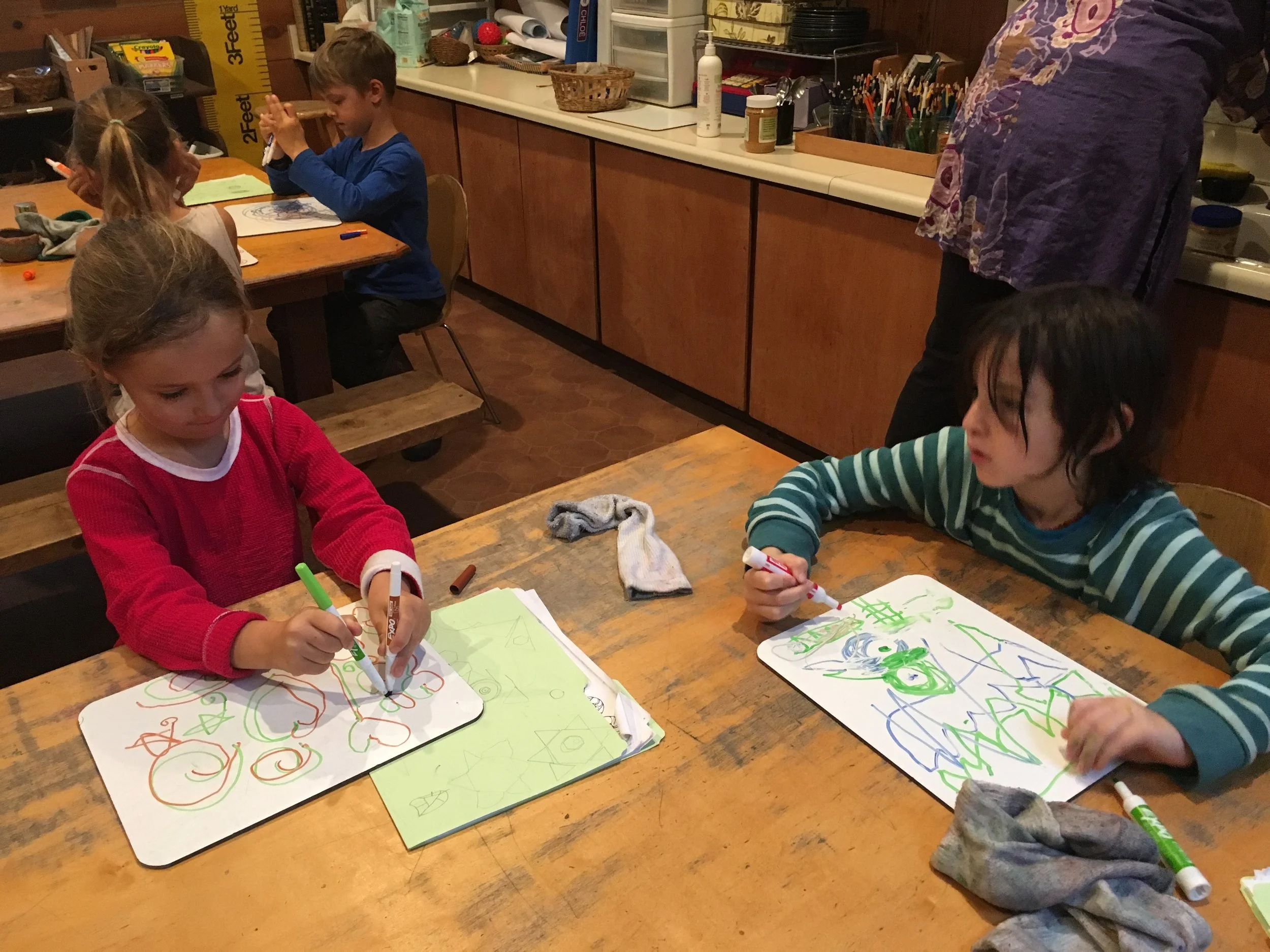
We read about the number six historically and discovered that the Greeks thought of six as six dots arranged in a pyramid as well as six dots arranged to make a hexagon. Students were able to provide three numbers by which six could be divided evenly: 1, 2, and 3. They are so brilliant!
First graders also practiced addition, subtraction, and complements by playing two games with pennies from our Everyday Math curriculum: Penny Dice Game and Penny Plate Game. In Penny Dice Game, partners take turns rolling a die to determine how many pennies they can take from a plate containing 20 pennies. Person who gathers the most pennies wins and players must compare amounts. Penny Plate Game practices complements: Partners begin with 10 pennies in a plate. One partner takes a handful and the other partner counts how many are left to determine how many are in the other player’s hand. After playing a few rounds with 10 pennies, players increase number of pennies to 20 and continue playing. This is a wonderful game which helps to develop a concrete understanding of addition and subtraction. It can be played with any type of objects and any number of objects. I highly encourage you to play at home.
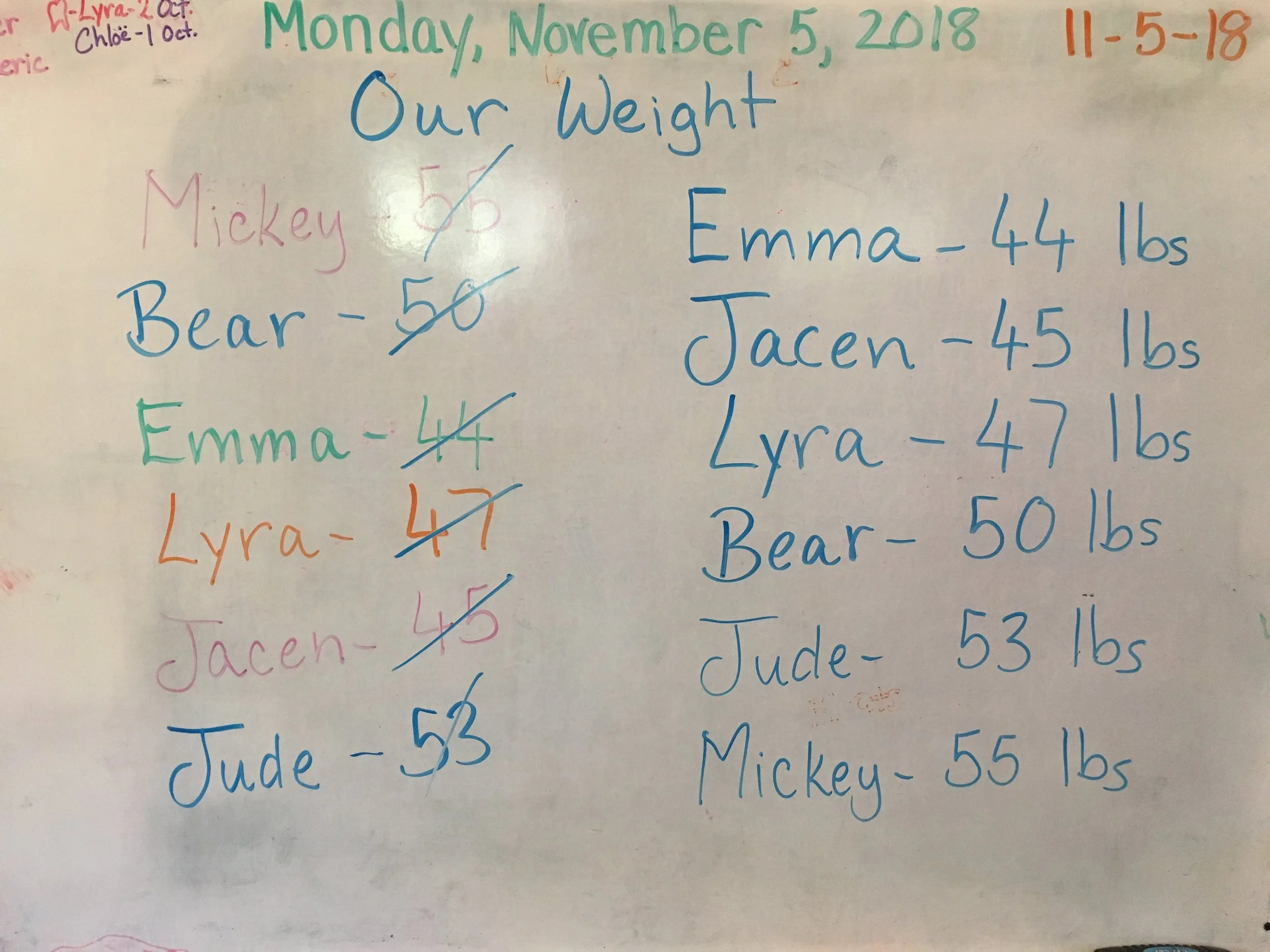
I almost forgot this wonderful emergent curriculum, when the students began weighing and measuring themselves and then we ordered the information from lightest to heaviest.
And..we performed our jobs every day, did template drawing, pattern block constructions and puzzles, played Rock, Paper, Scissors and recorded with tally marks, solved Seeing Dots challenges, had Preferred Activity Time (P.A.T.), discussed temperature and filled out personal calendars, and played Monster Squeeze on our class number line.
I have taken over the positive discipline class meetings for this grade and we have had our first few meetings. For right now, we are practicing the building blocks of being in a circle, taking turns speaking, giving compliments and appreciations, discussing feelings using a feeling faces chart, and discussing mistakes as opportunities for learning.
Thank you all for this opportunity to work with your children.