
Math
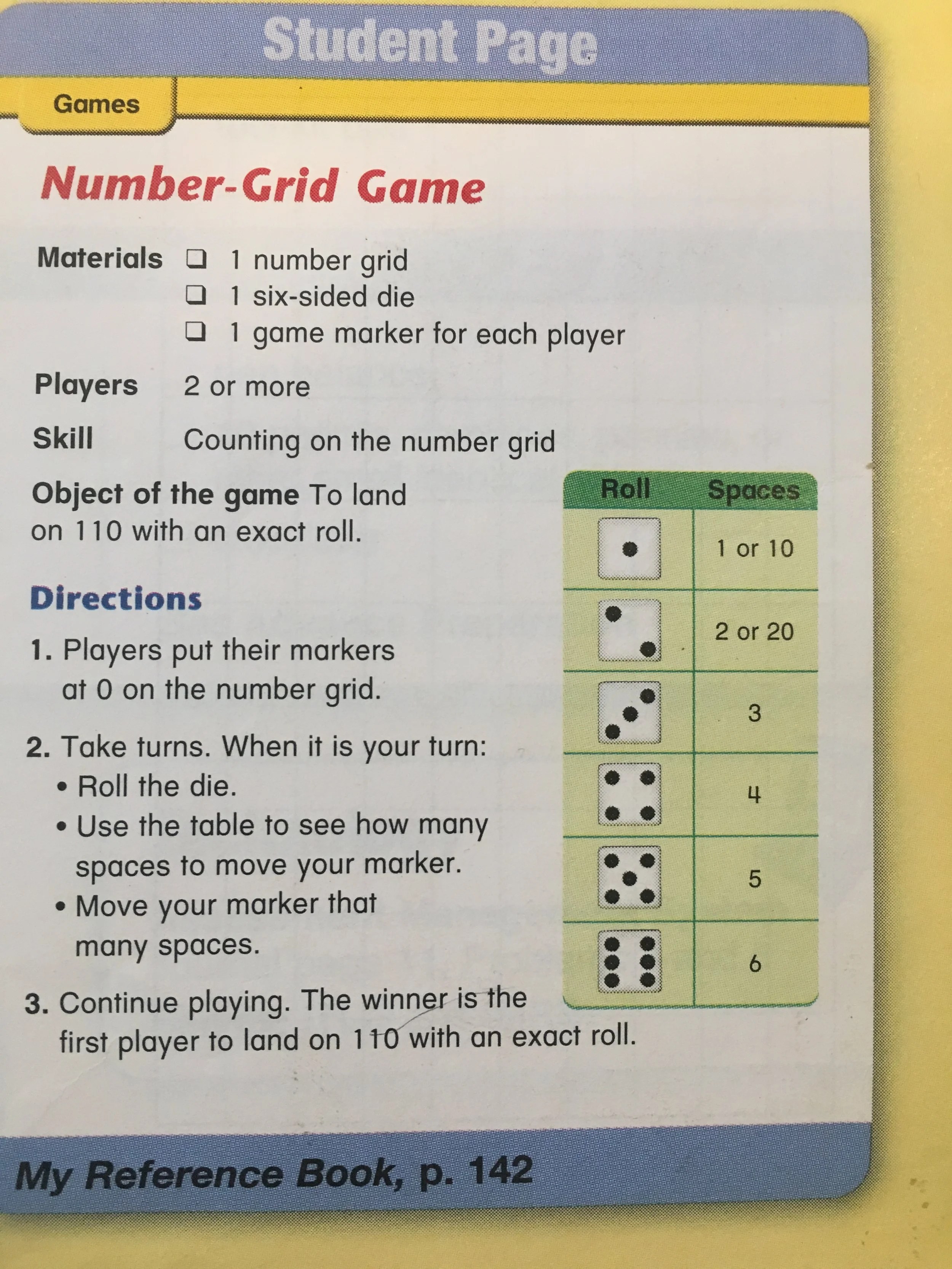
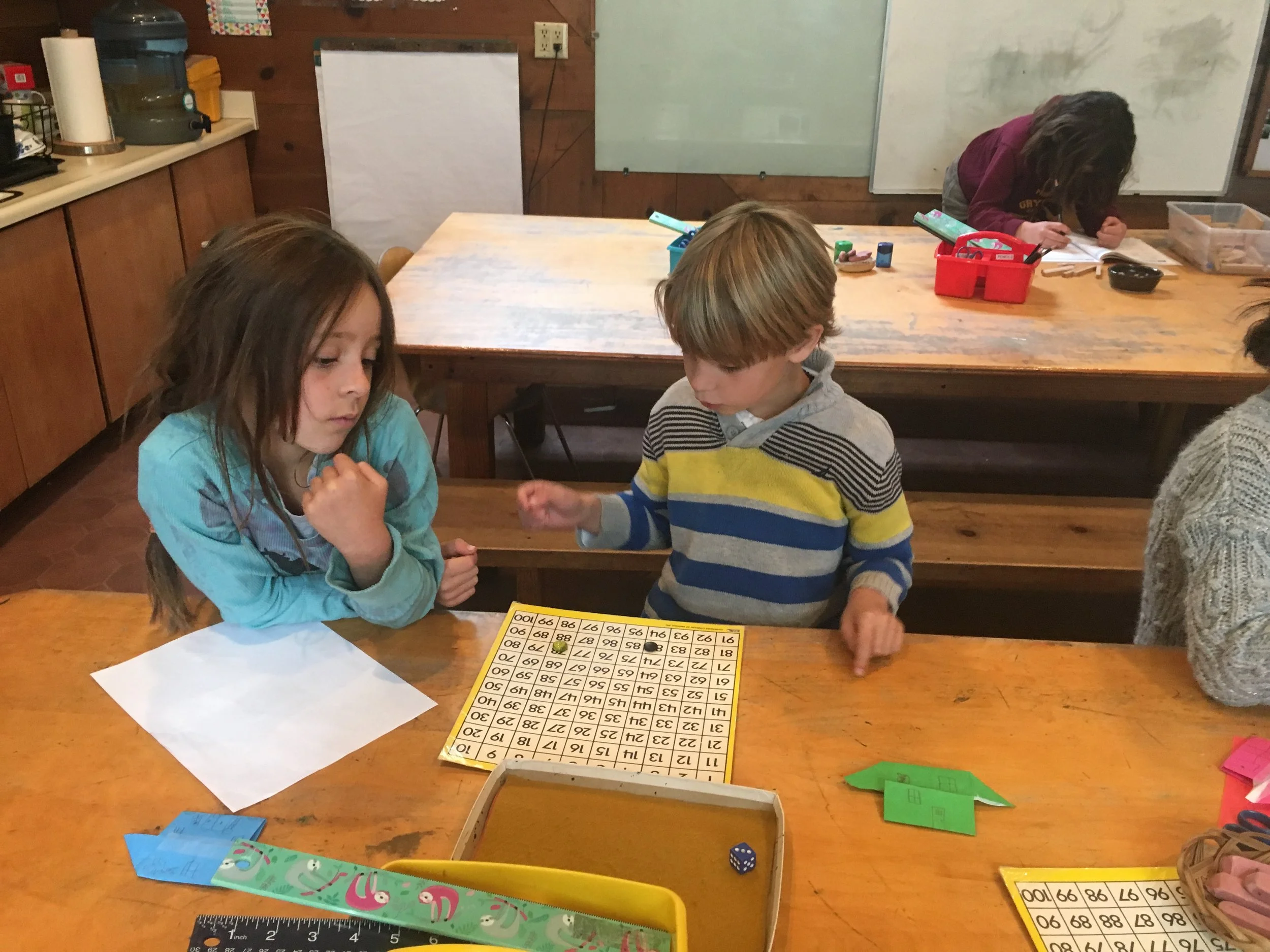
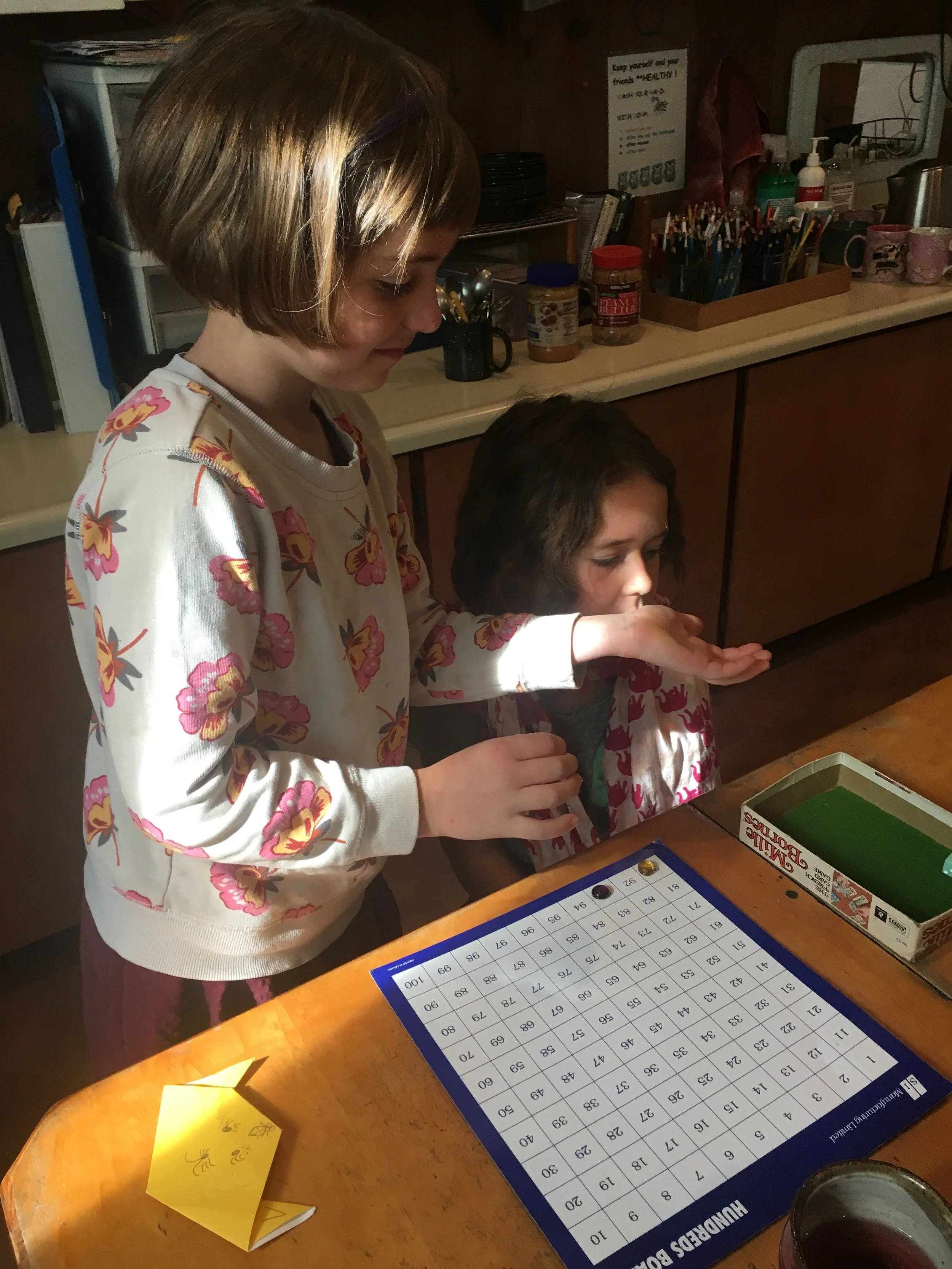
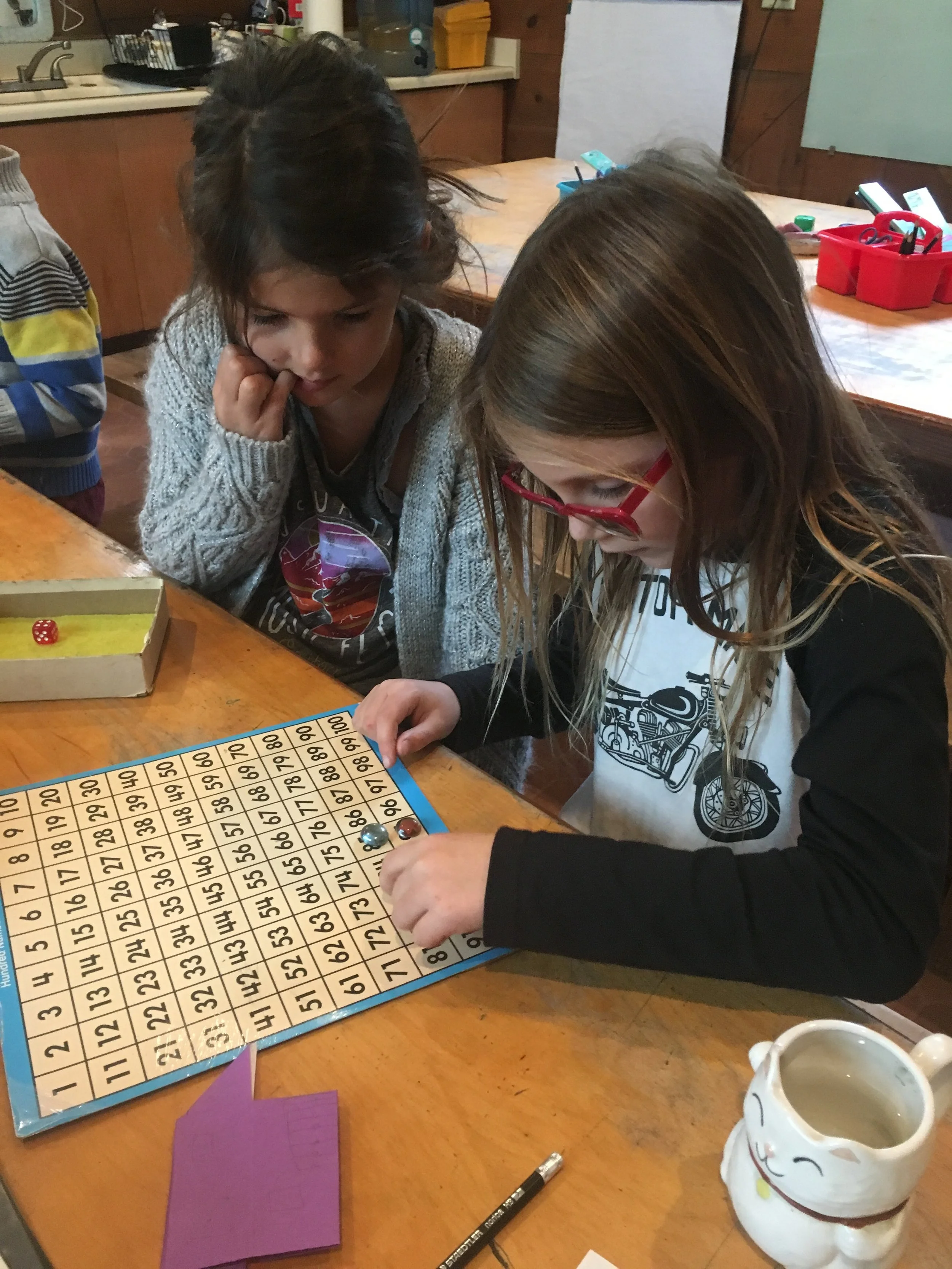
So many exciting activities during this time! We have been doing many lessons from our Everyday Math curriculum in conjunction with working in Everyday Math student journals. Students practiced addition within 100 by playing the Number Grid game in partnerships. In this game, partners take turns rolling a die and then choosing whether to move the number he or she rolled, or that number times 20. This is a fun game to play at home. I am happy to provide you with a 100s chart, or you can print one off the internet.
One of my absolute favorite lessons is that of equivalent names for numbers. It is woven throughout the everyday math curriculum and is introduced in 2nd grade. Students are asked to represent a number in as many ways as they can. I love this activity because all different types of learners can represent the numbers and we all learn from each other by doing this in a group lesson. They also expose each other to different mathematical operations and spur each other to expand their thinking/awareness. Then, students take this understanding and apply it when completing their Everyday Math work journals.
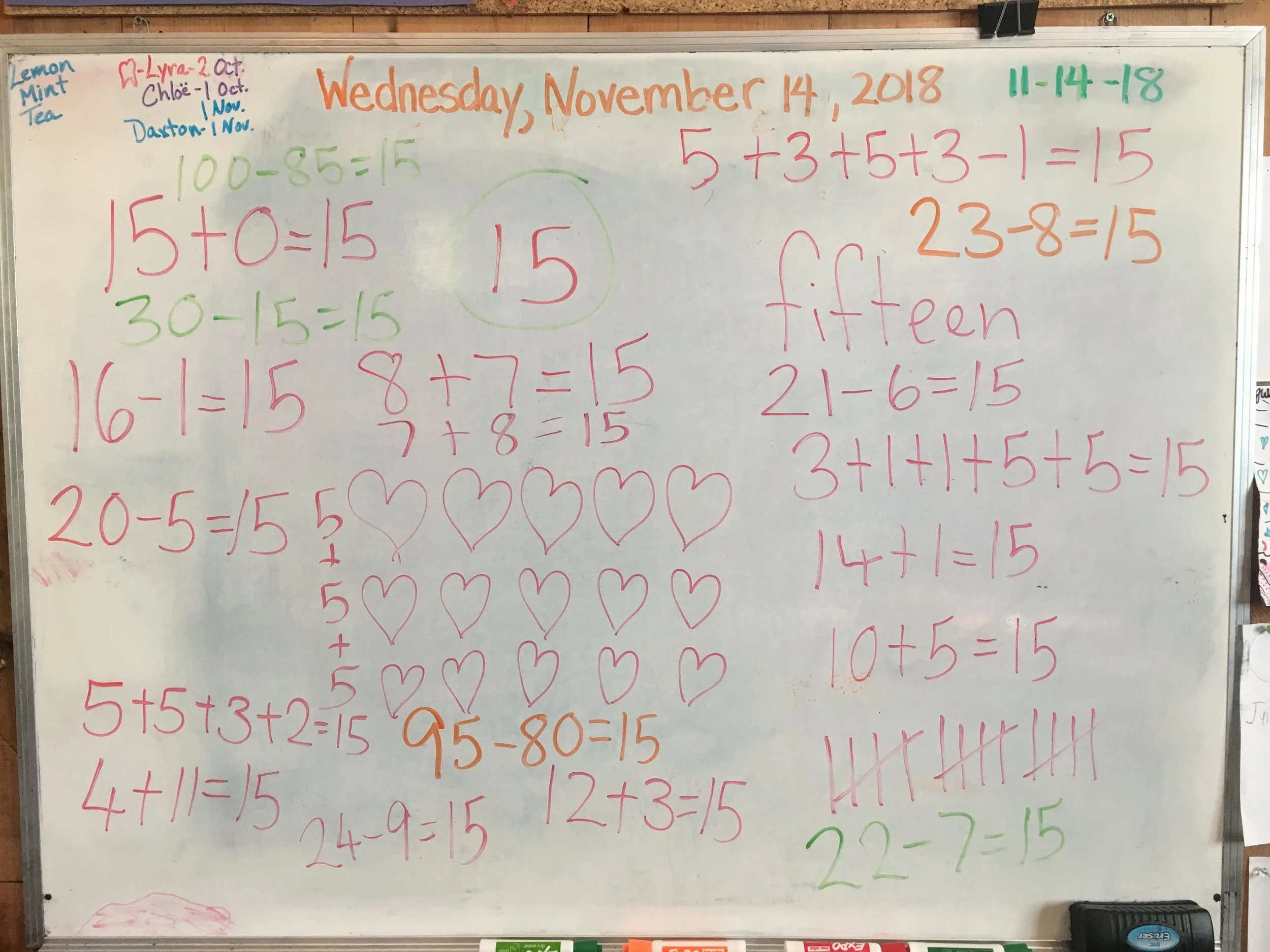
These were all the ways your children found for showing the number 15.
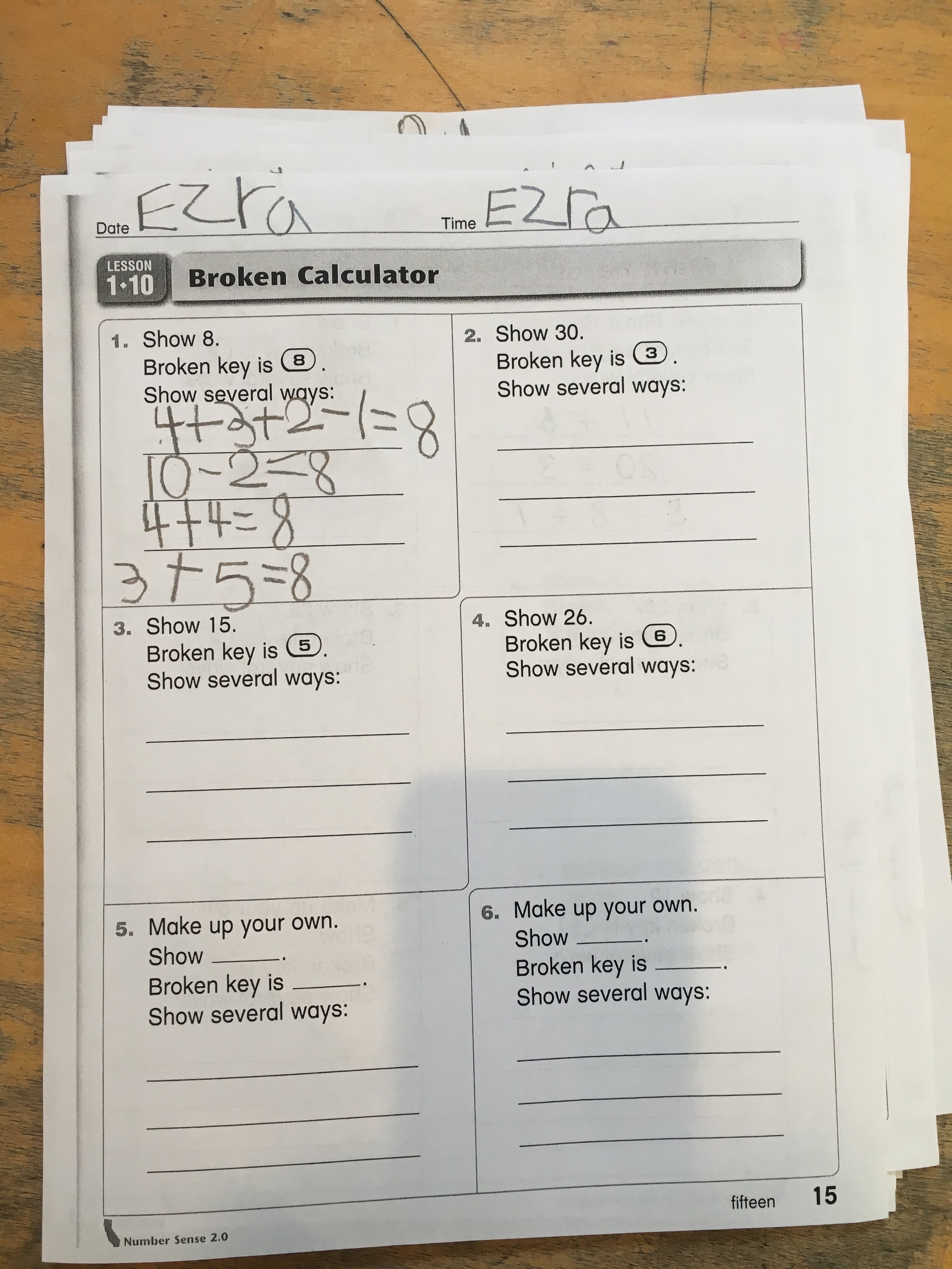
We also extended this understanding by completing broken calculator activities. In these activities, students are given a target number such as 8. They are then asked to create 8 using a calculator, given the number 8 key is broken. They may use several numbers and various operations.
Students practiced number complements by playing the Penny Dice Game: partners begin with 10 pennies in a plate. One partner takes a handful and the other partner counts how many are left to determine how many are in the other player’s hand. After playing a few rounds with 10 pennies, players increase number of pennies to 20 and continue playing. This is a wonderful game which helps to develop a concrete understanding of addition and subtraction. It can be played with any type of objects and any number of objects. In class, 2nd graders then moved onto numbers such as 13, 15, and 23. I highly encourage you to play at home.
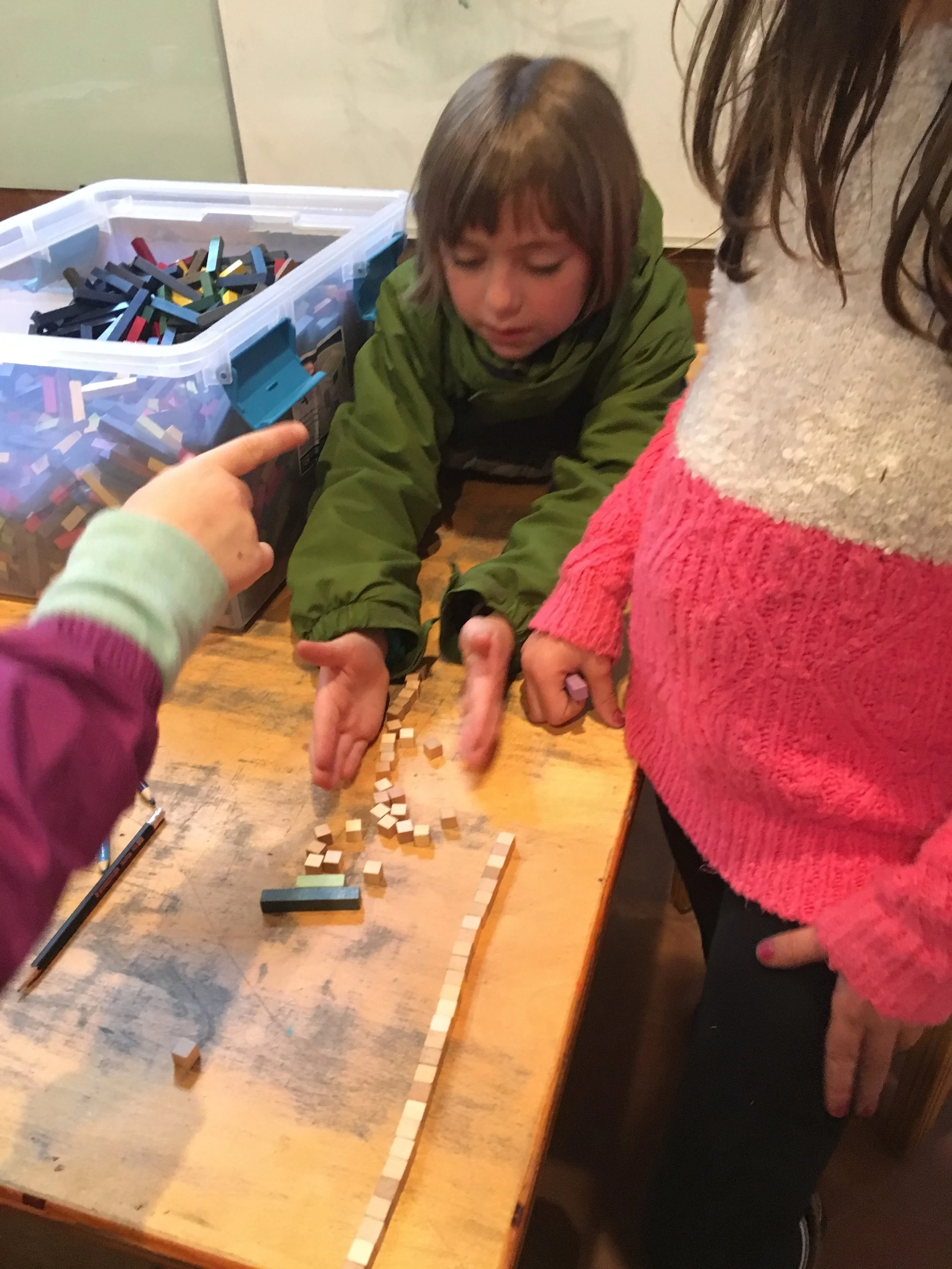
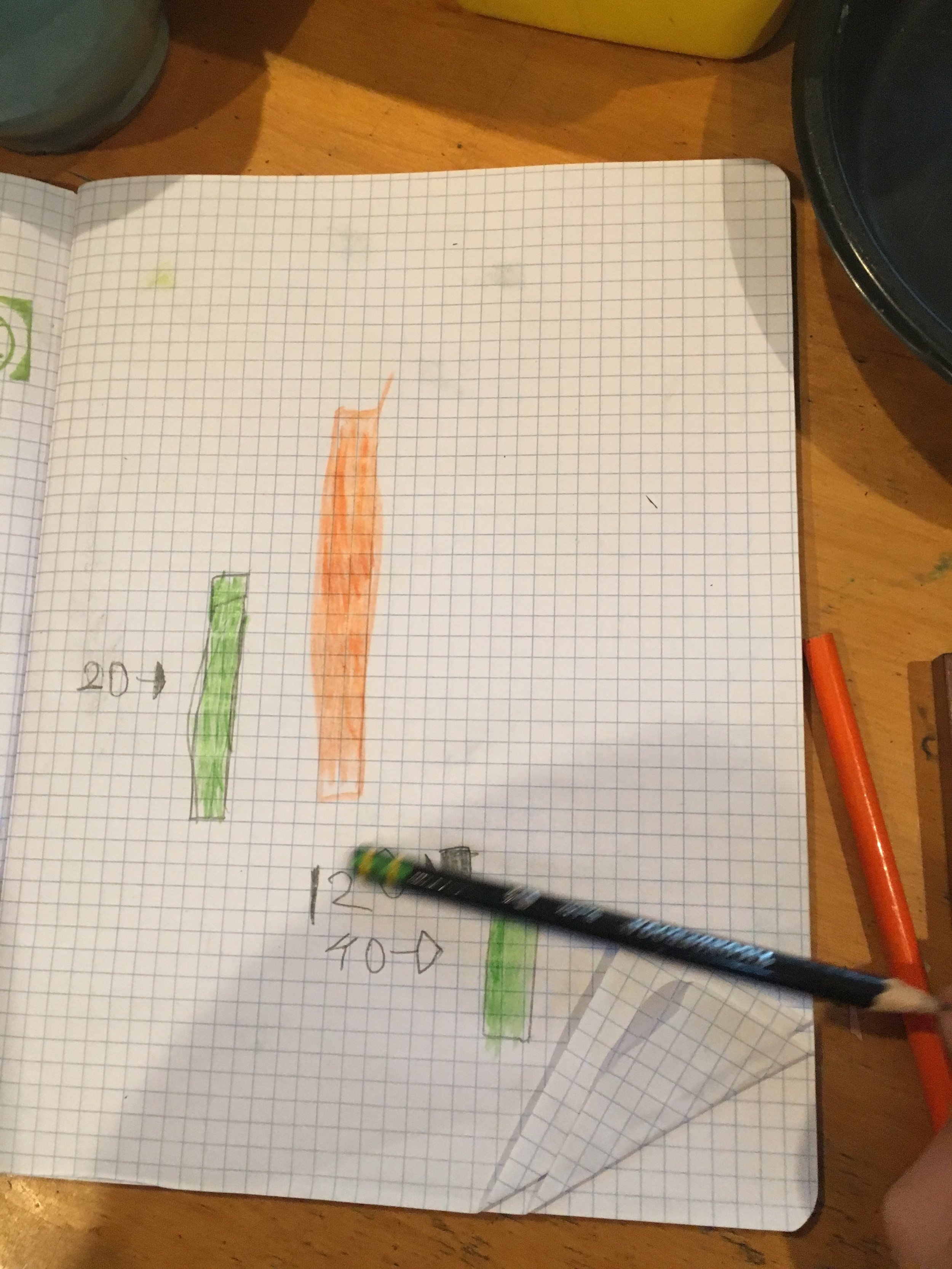
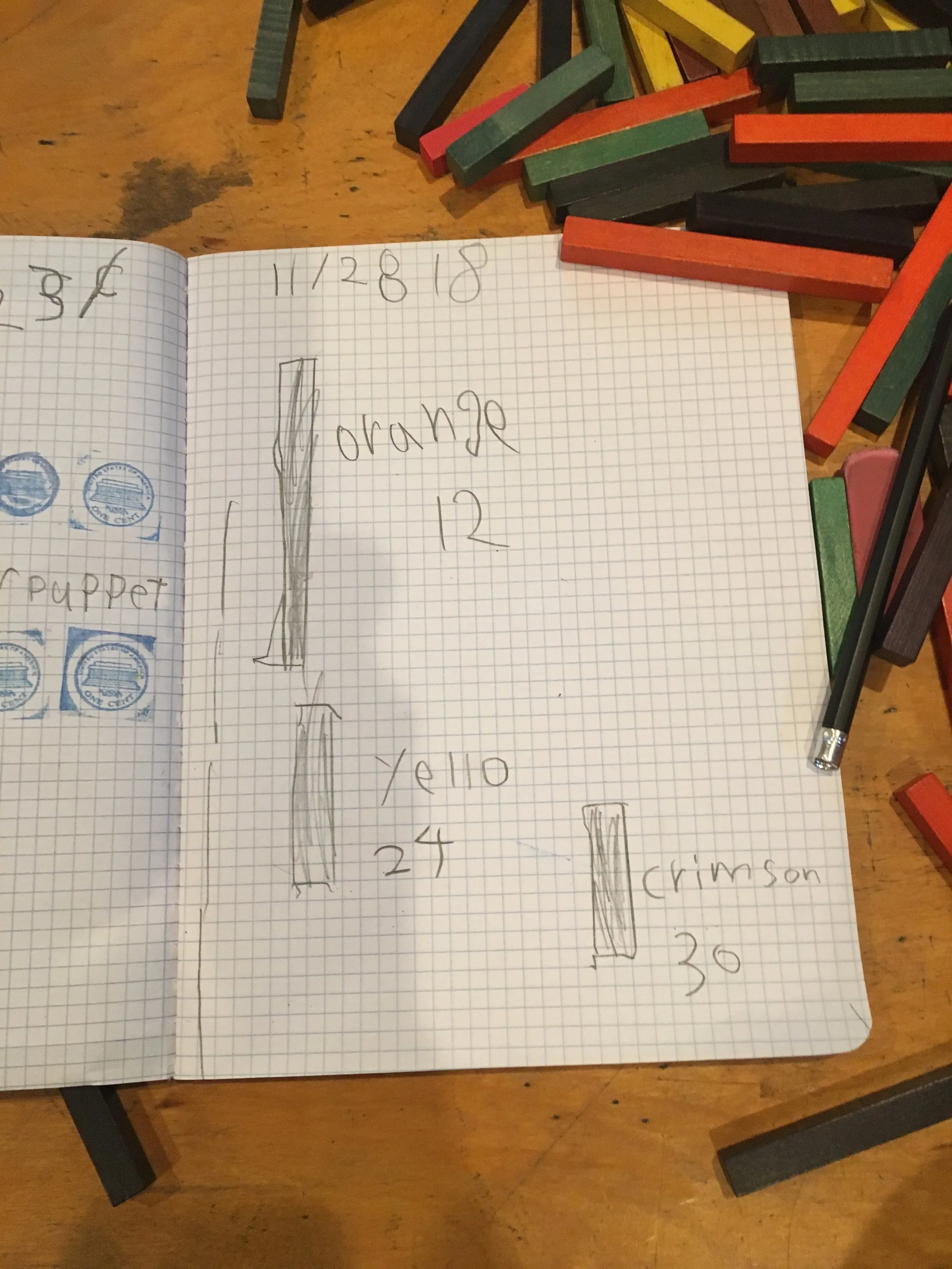
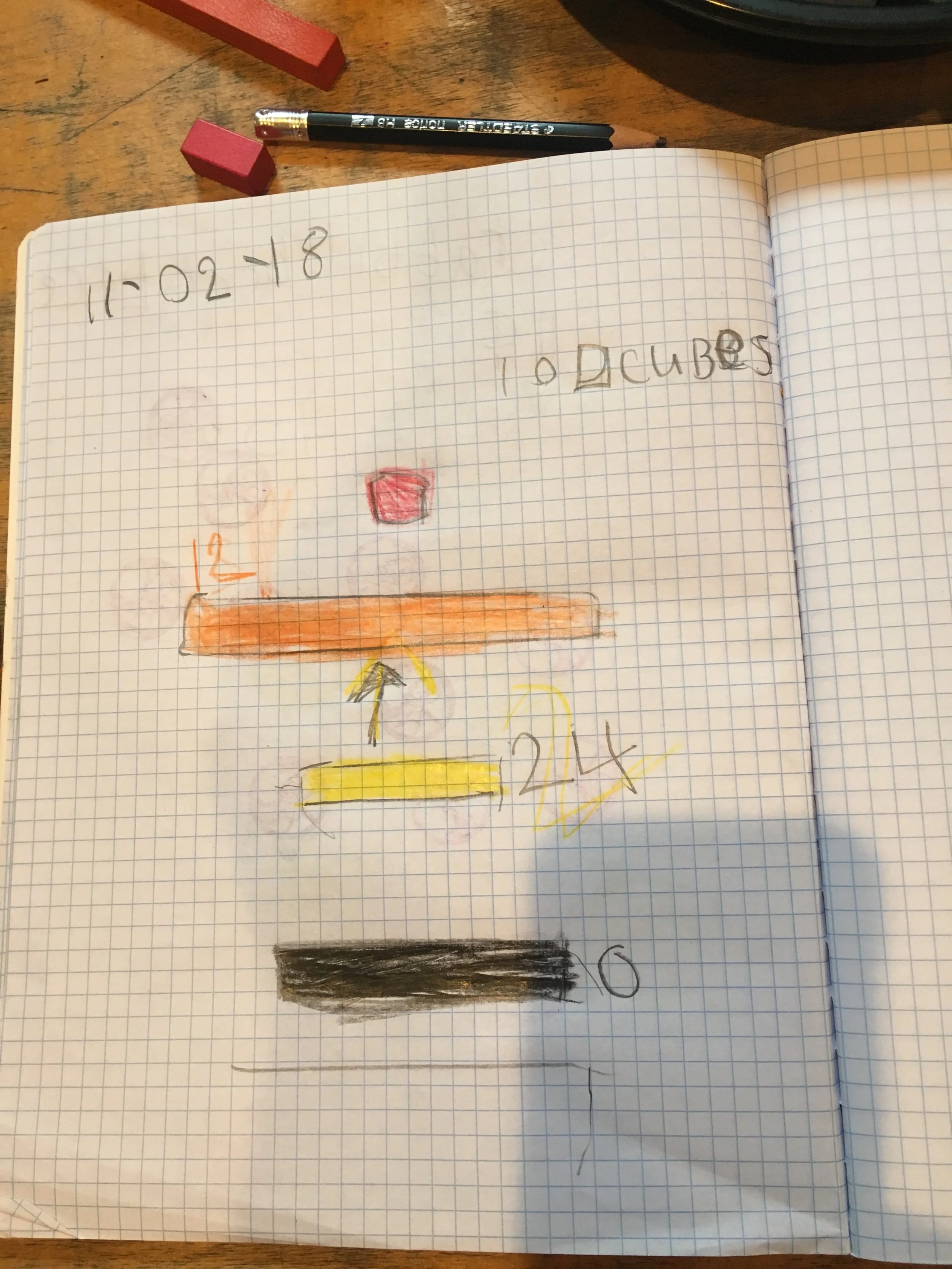
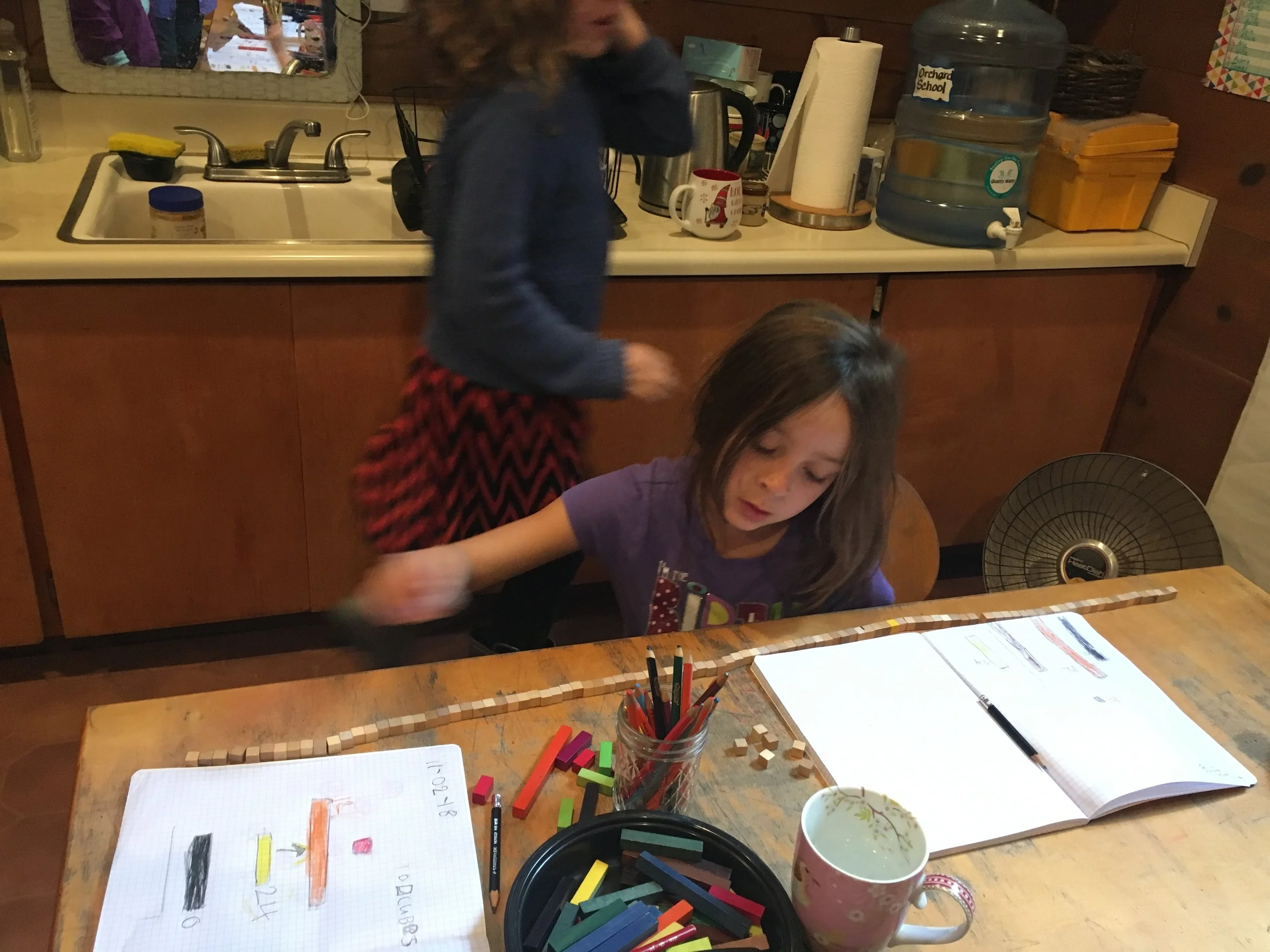
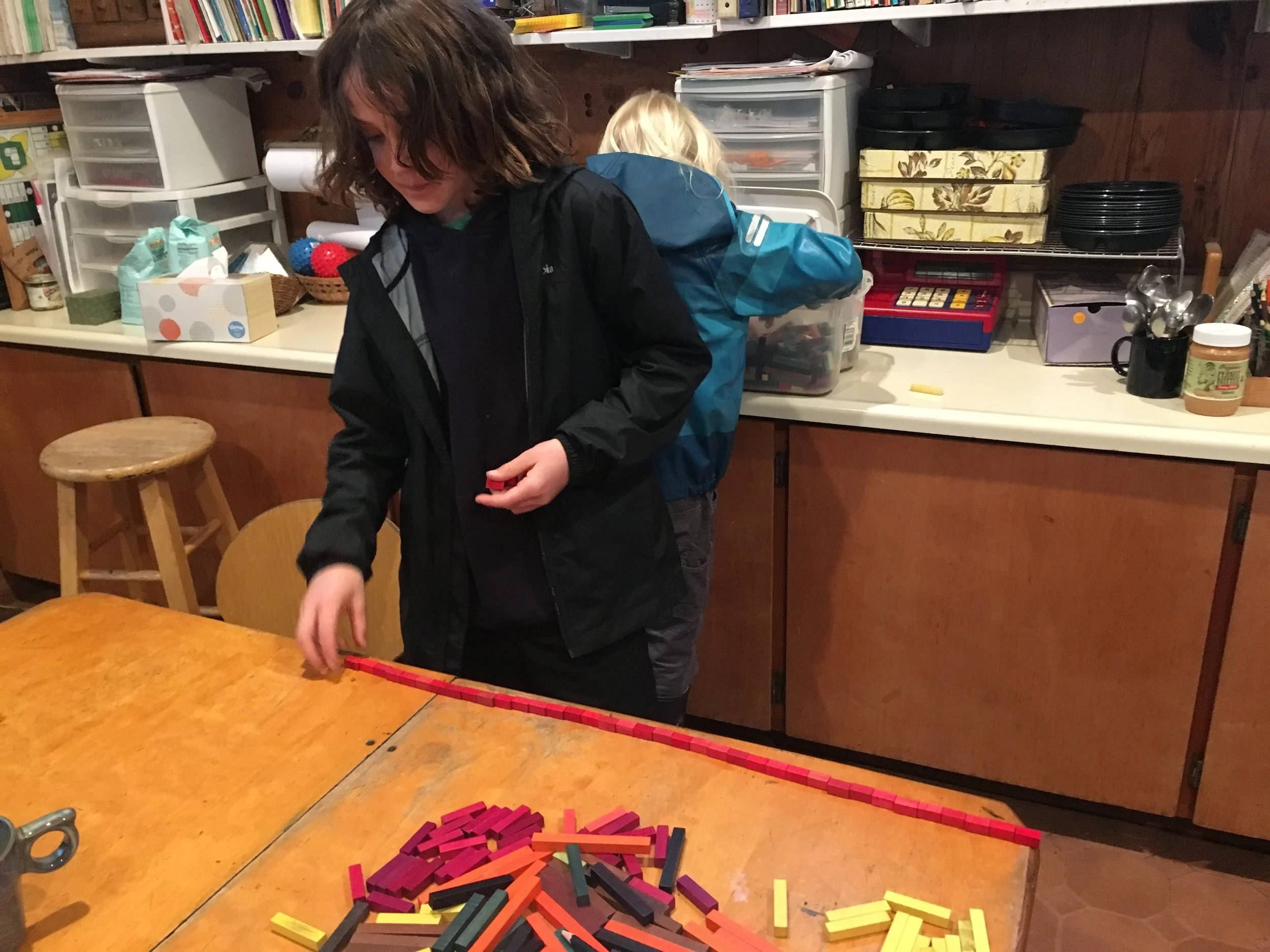
We have embarked upon an investigation involving cuisenaire rods and ratio from educator, Marilyn Burns. In this investigation students try to determine how many of each size of cuisenaire rod it takes to measure across the math tables, given that it takes 12 orange rods (largest measuring 10 centimeters) to go across. There are ten colors and sizes of rods, with the smallest being a centimeter cube. This is an ongoing investigation which we will finish in the coming week or two.
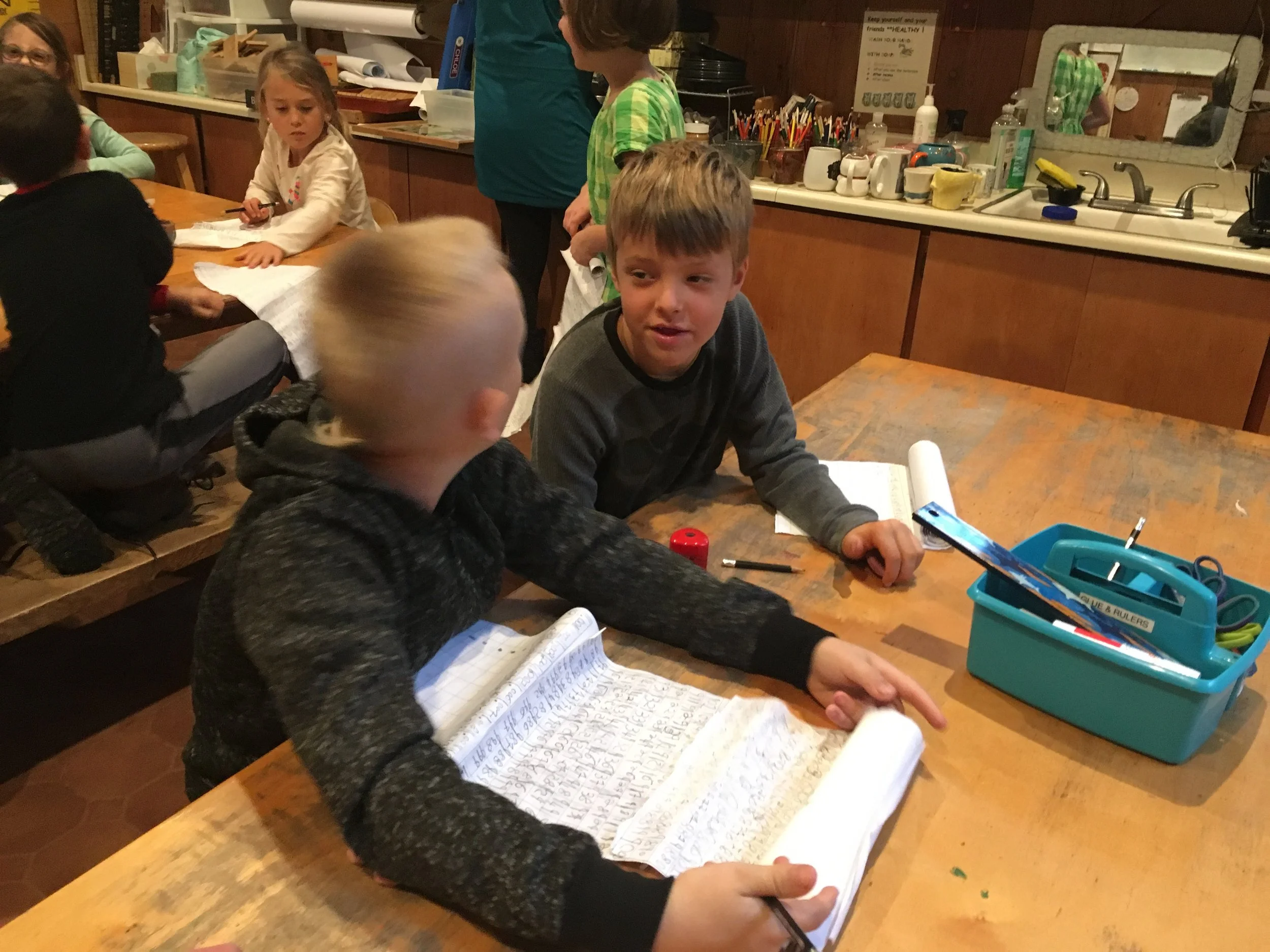
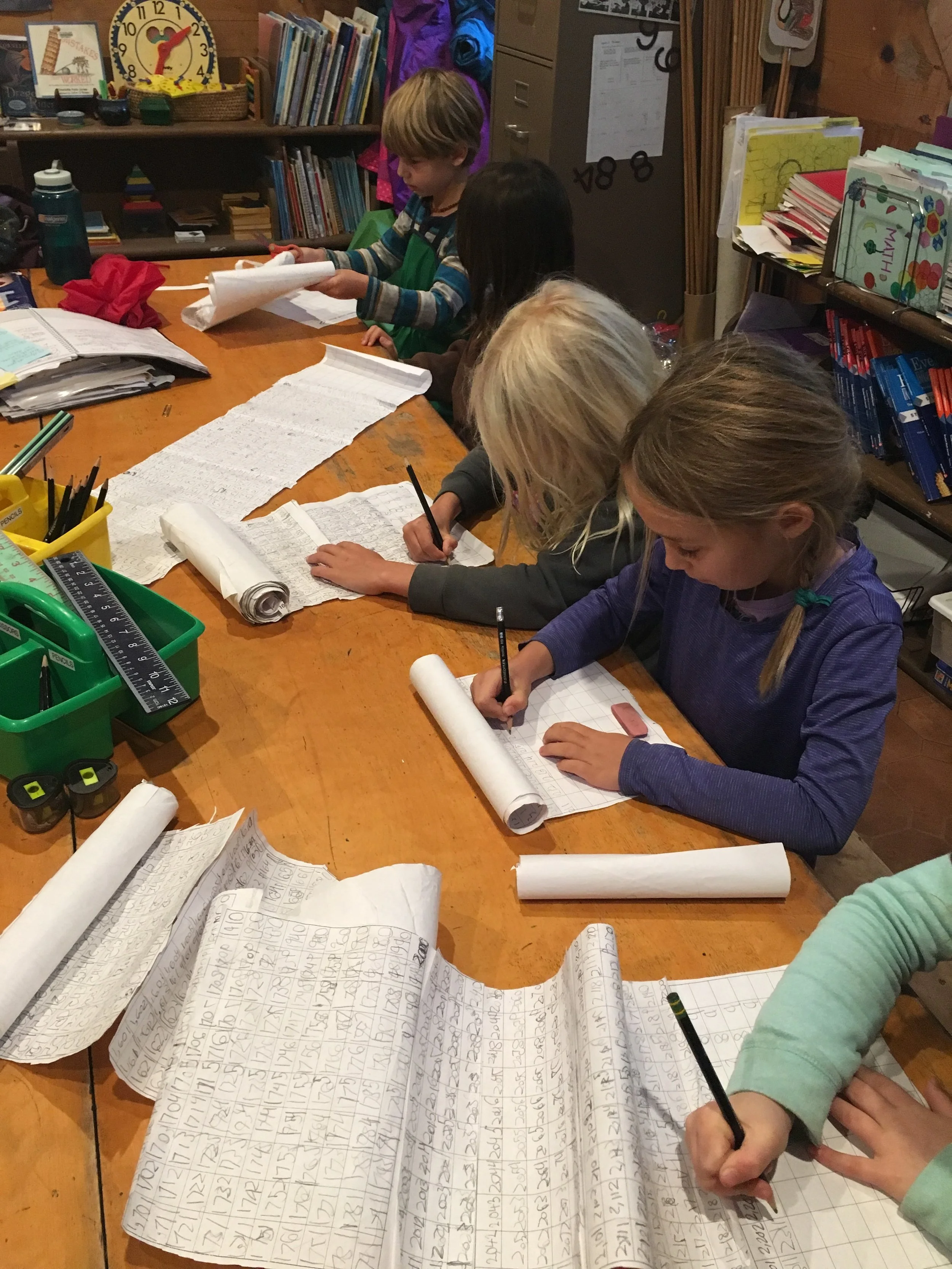
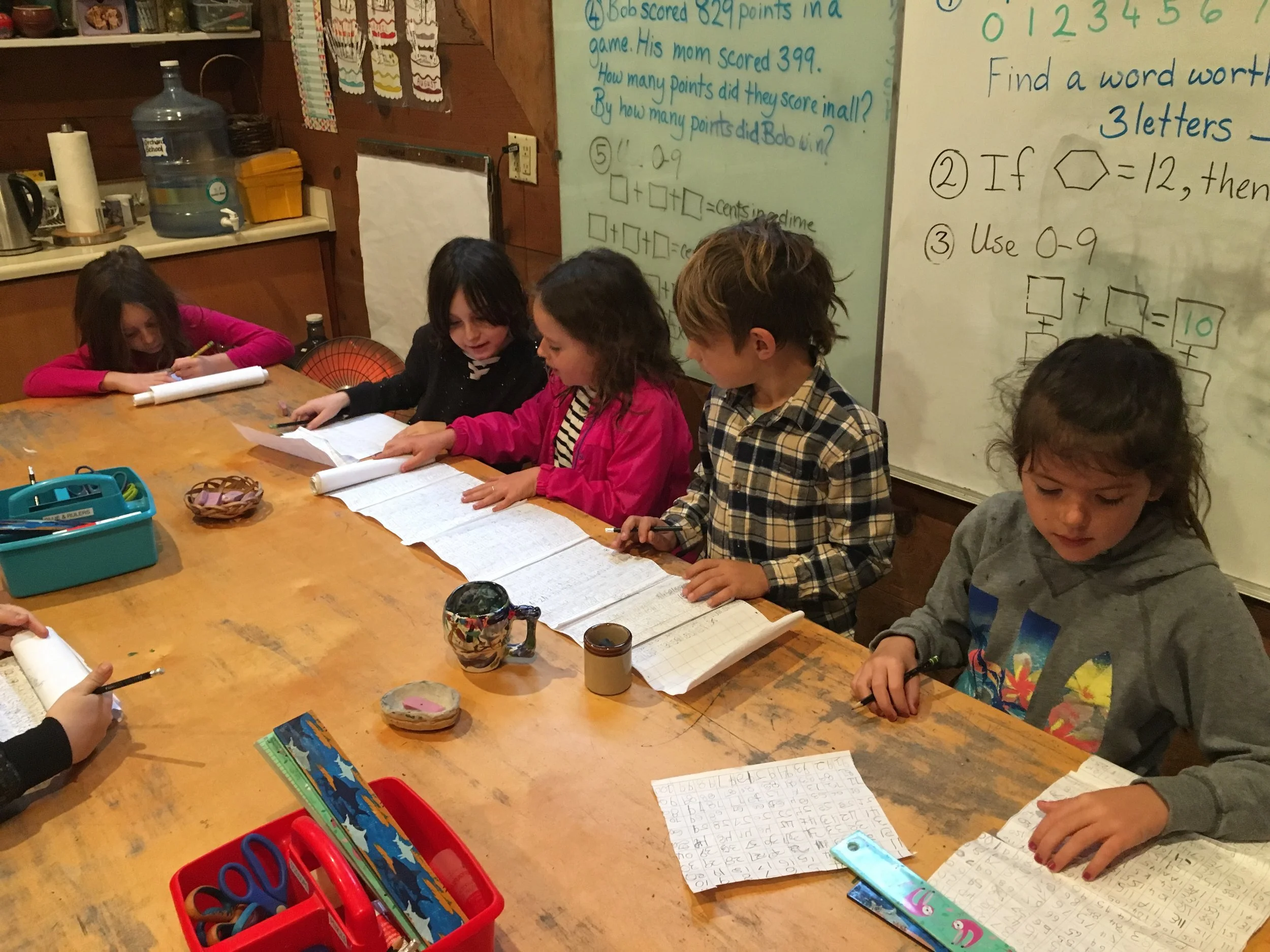
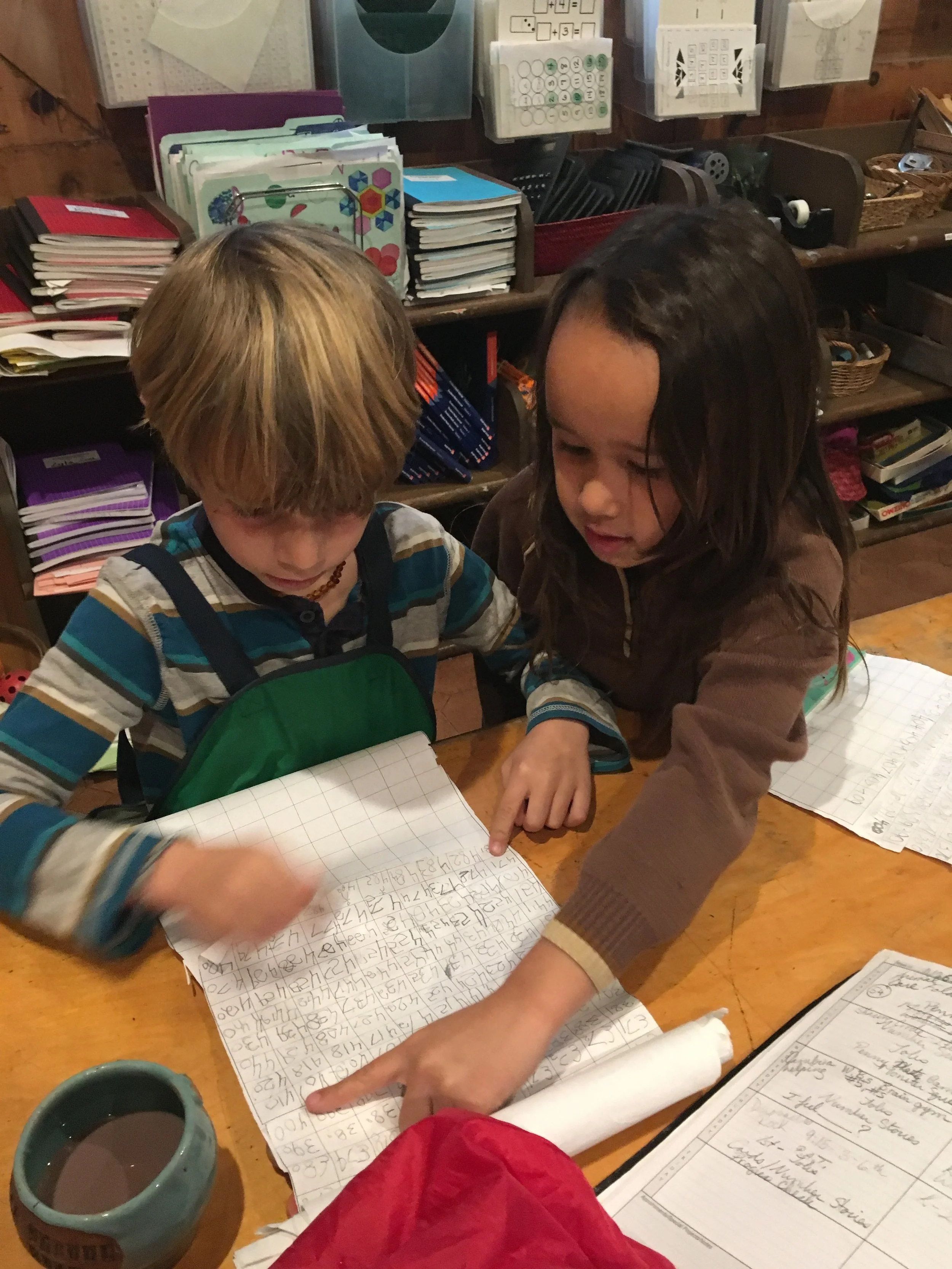
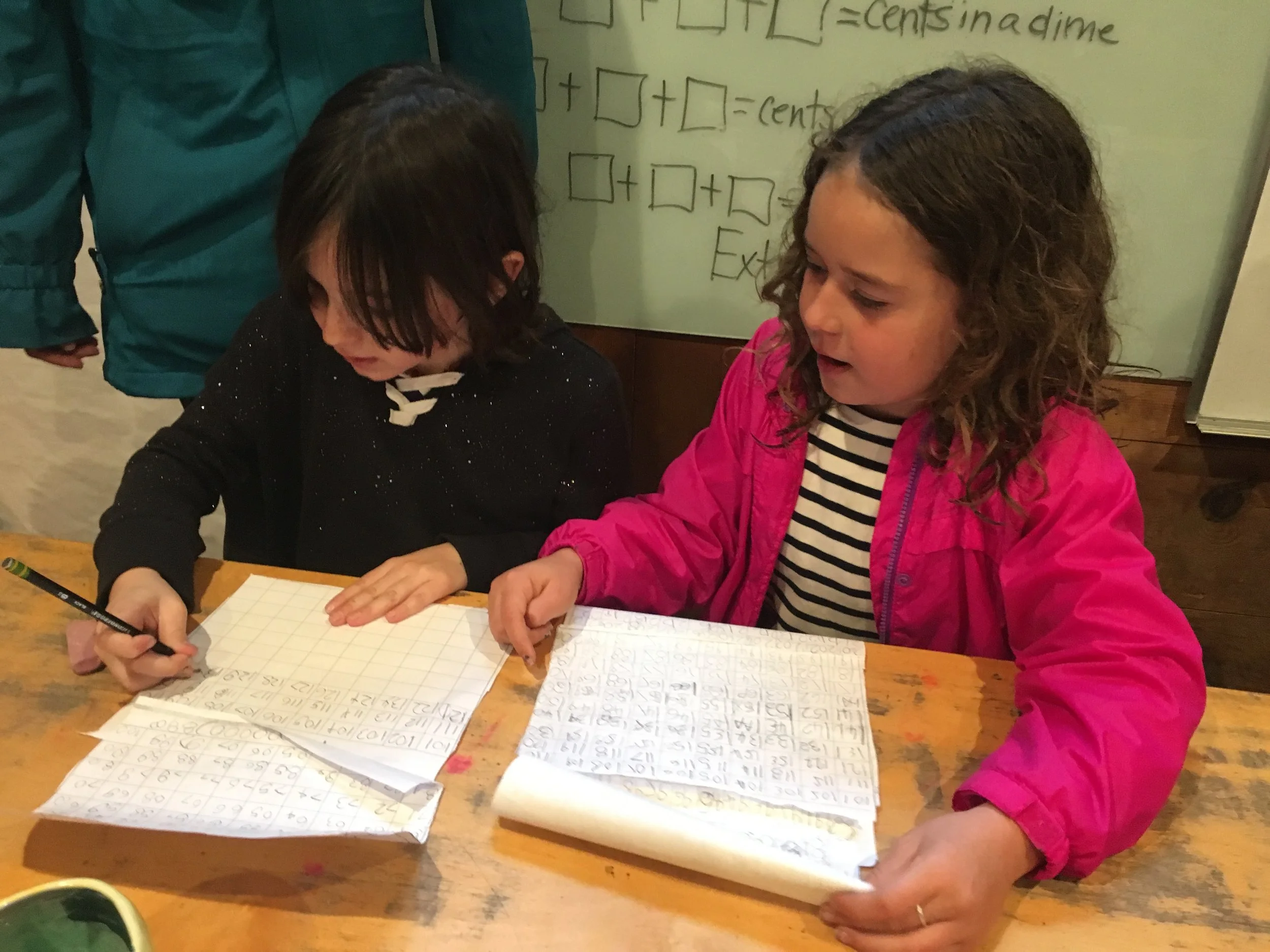
Last week, Liana brought the 2nd graders for a visit and older students shared their number scrolls with younger partners and they worked side by side on their scrolls. There was general amazement as Riley unfolded his scroll and had to stretch it diagonally across the room since it was so long: 3,140.
We will continue this month by finishing our cuisenaire rod ratio and measurement exploration, progress through our Everyday math curriculum, and include some probability exercises through playing Dreidl and graphing and recording everyones outcomes. Happy holidays!