
October/November in the kindergarten classroom
Dear Families,
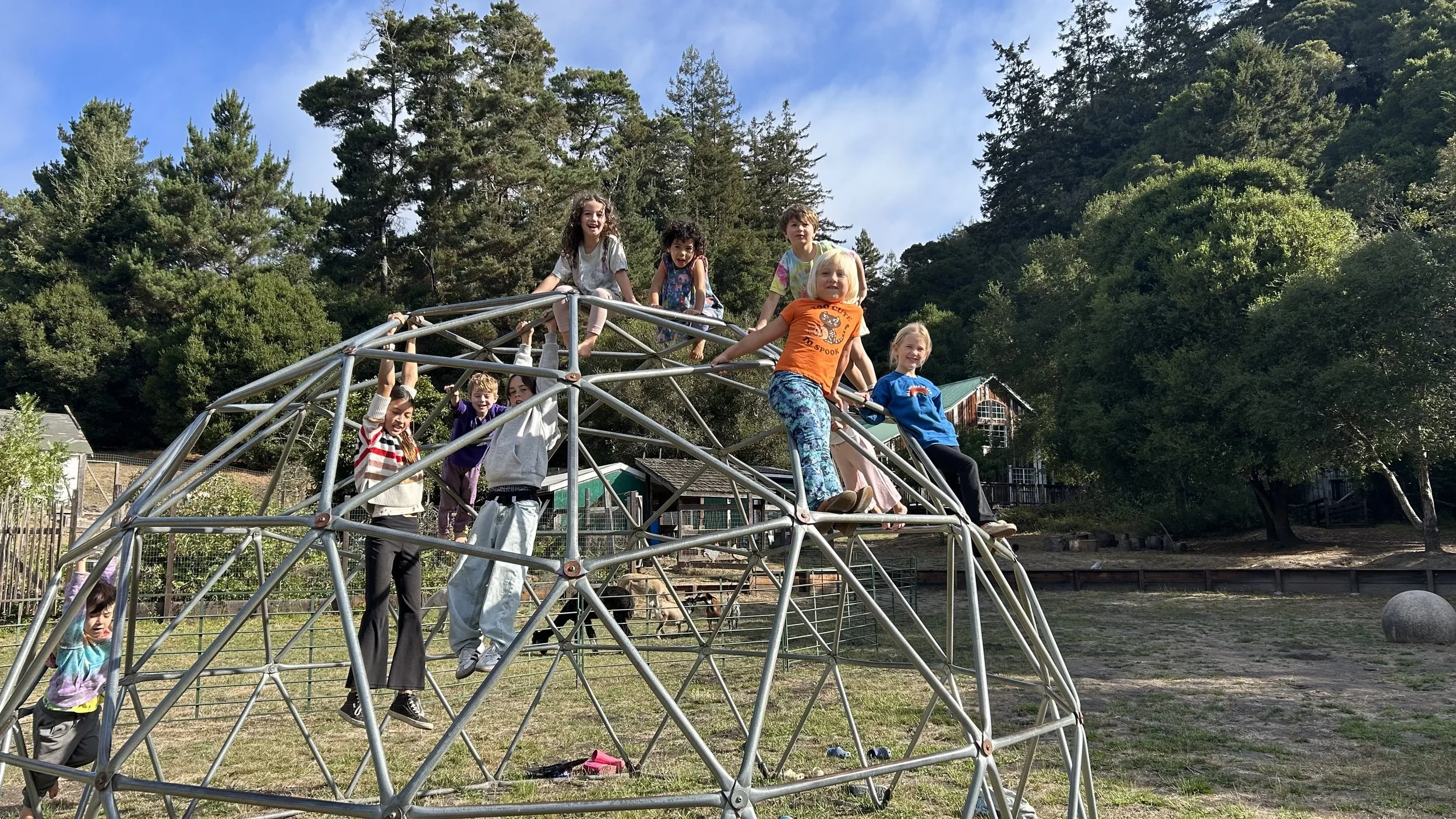
This is your second blog post for the year and roughly covers the past two months and the start of December. I already wrote a page and then lost everything due to accidentally logging myself out without saving… so here goes again:
We are just having the best time with this kindergarten class. Tara and I (along with all of the other kindergarten teachers) frequently marvel about how lovely these kids are — so eager to learn, cooperate, collaborate, and participate. There is a beautiful balance of personalities and energies and maybe because there are only 8 of them, they seem to especially value and enjoy each other. It feels good to be able to give them more attention than we could if the group was bigger, and to really get to know our charges on a deep and meaningful level. Work time is quite productive as well thanks to the small class, both when they work as a whole class and when they break into groups. It’s also great that you, their parents, are forming bonds and socializing after school and outside of school.
math
Concepts: Patterns, Symmetry, Sorting by Attributes, Numbers 0-9, Beginning addition and subtraction, counting by tens, drawing triangles, 5 and 6 pointed stars and learning other geometrical shape names.
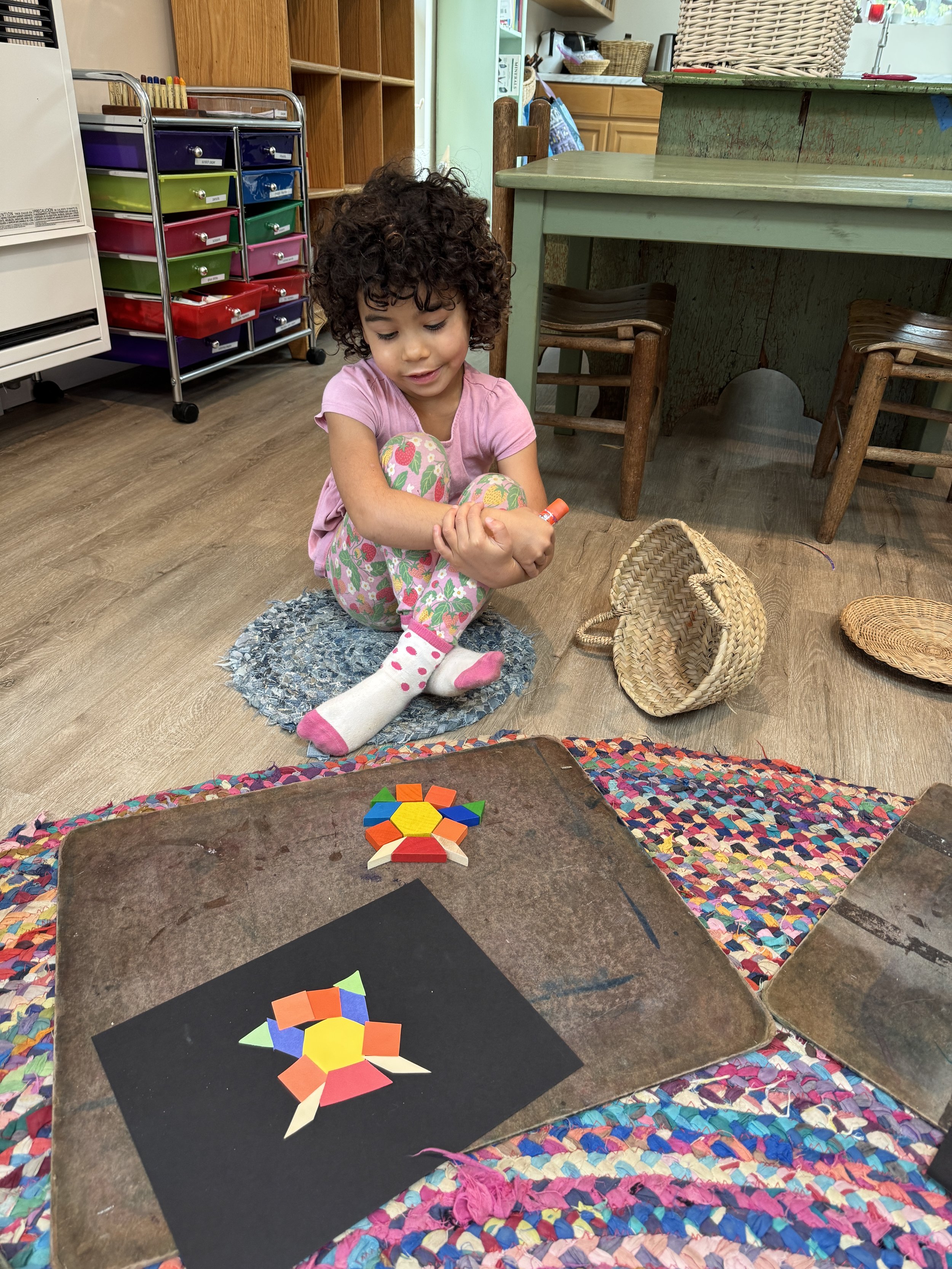
The children created symmetrical designs with pattern blocks and then had to count the different shapes they used and match that to paper cut outs that they glued to paper to try to identically match their designs. These are tacked up on our “Symetree” in the classroom (formerly the Family Tree). This was a challenging exercise for some — staying focused, keeping track of where they were in the project as well as replicating the direction of the shapes. Some kids had no trouble. It’s always interesting how different minds work and seeing the variety within a group of learners. By providing a variety of projects that require the use of different parts of the brain, everyone has a chance to shine at some point.
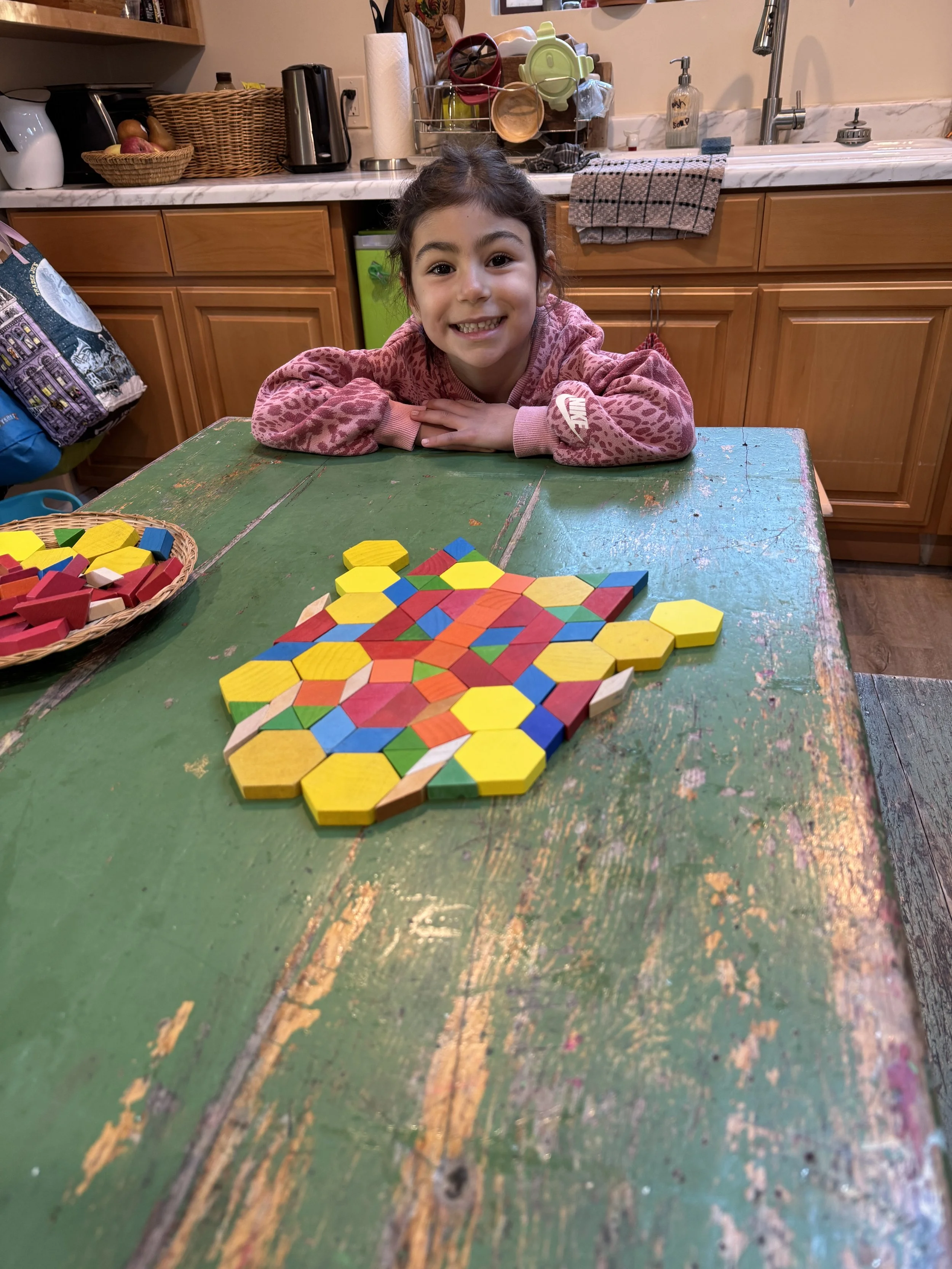
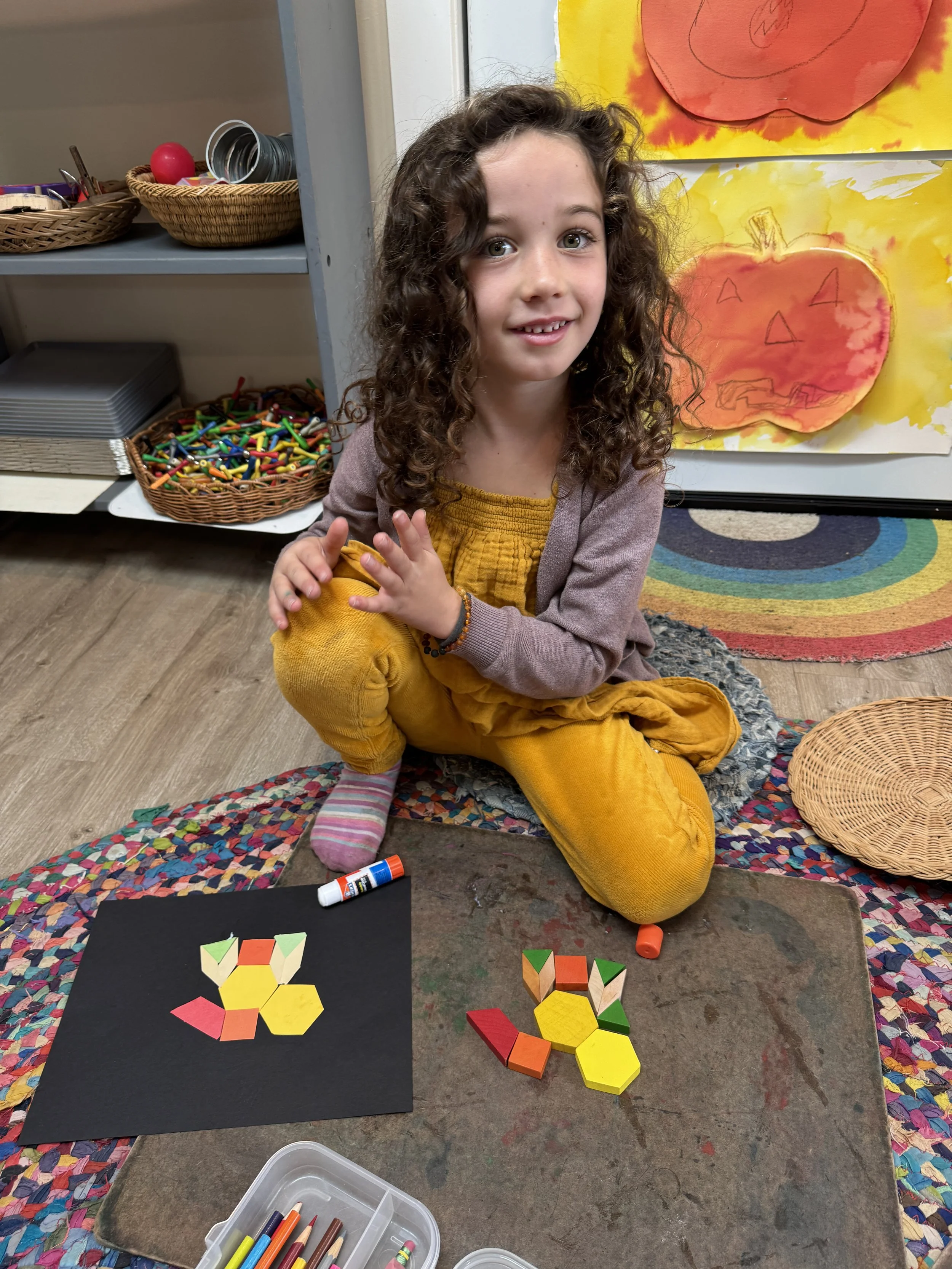
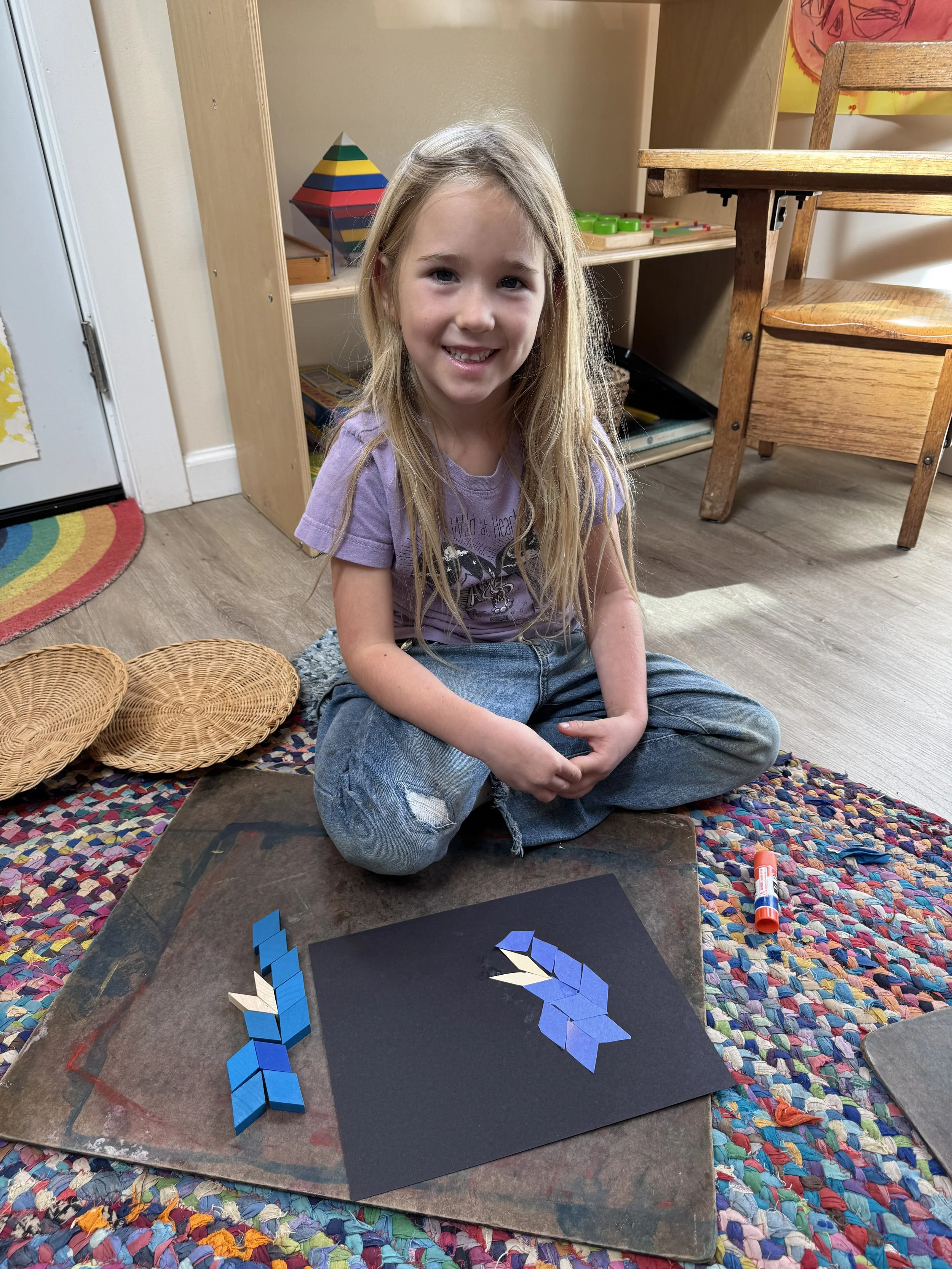
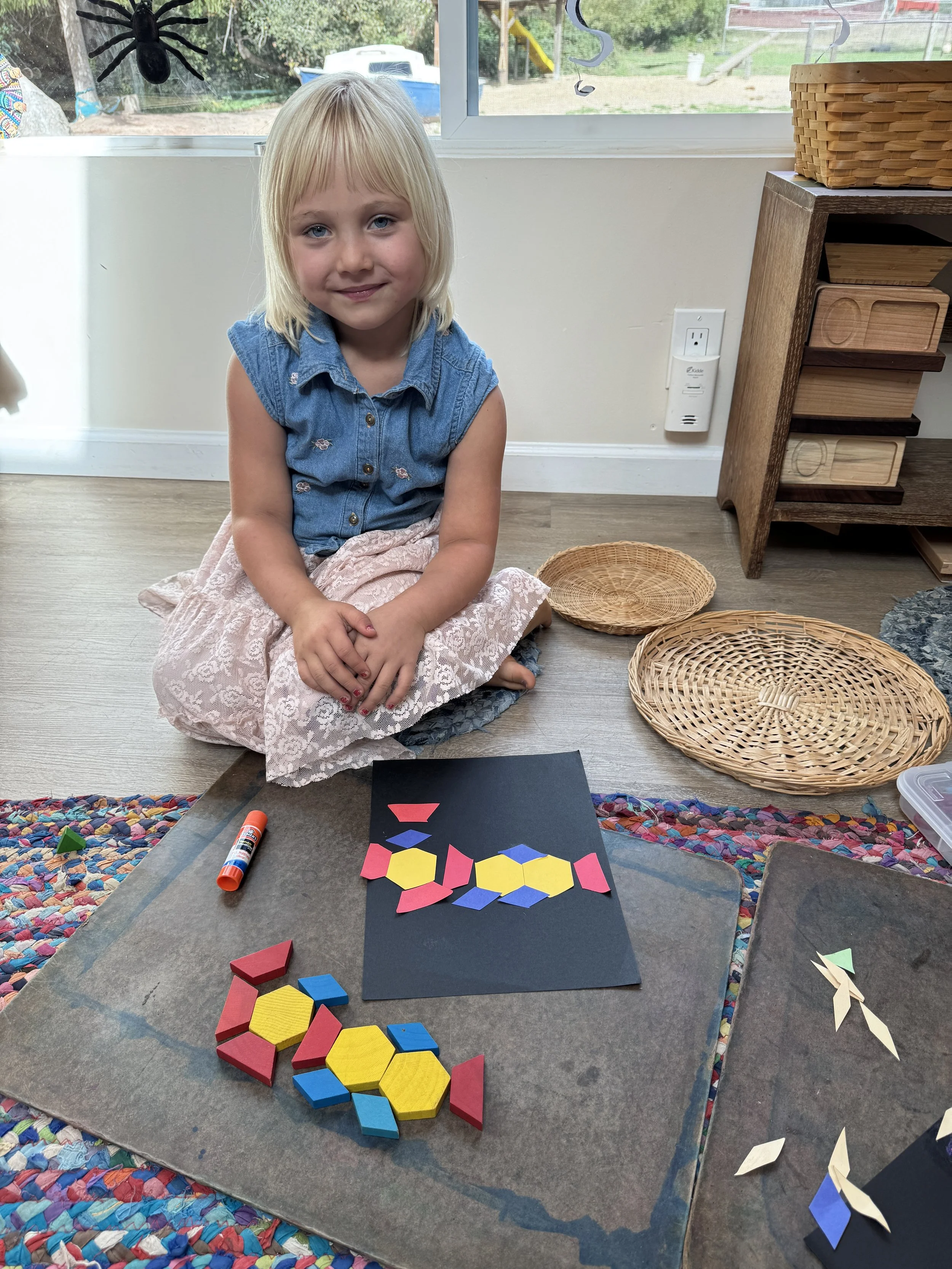
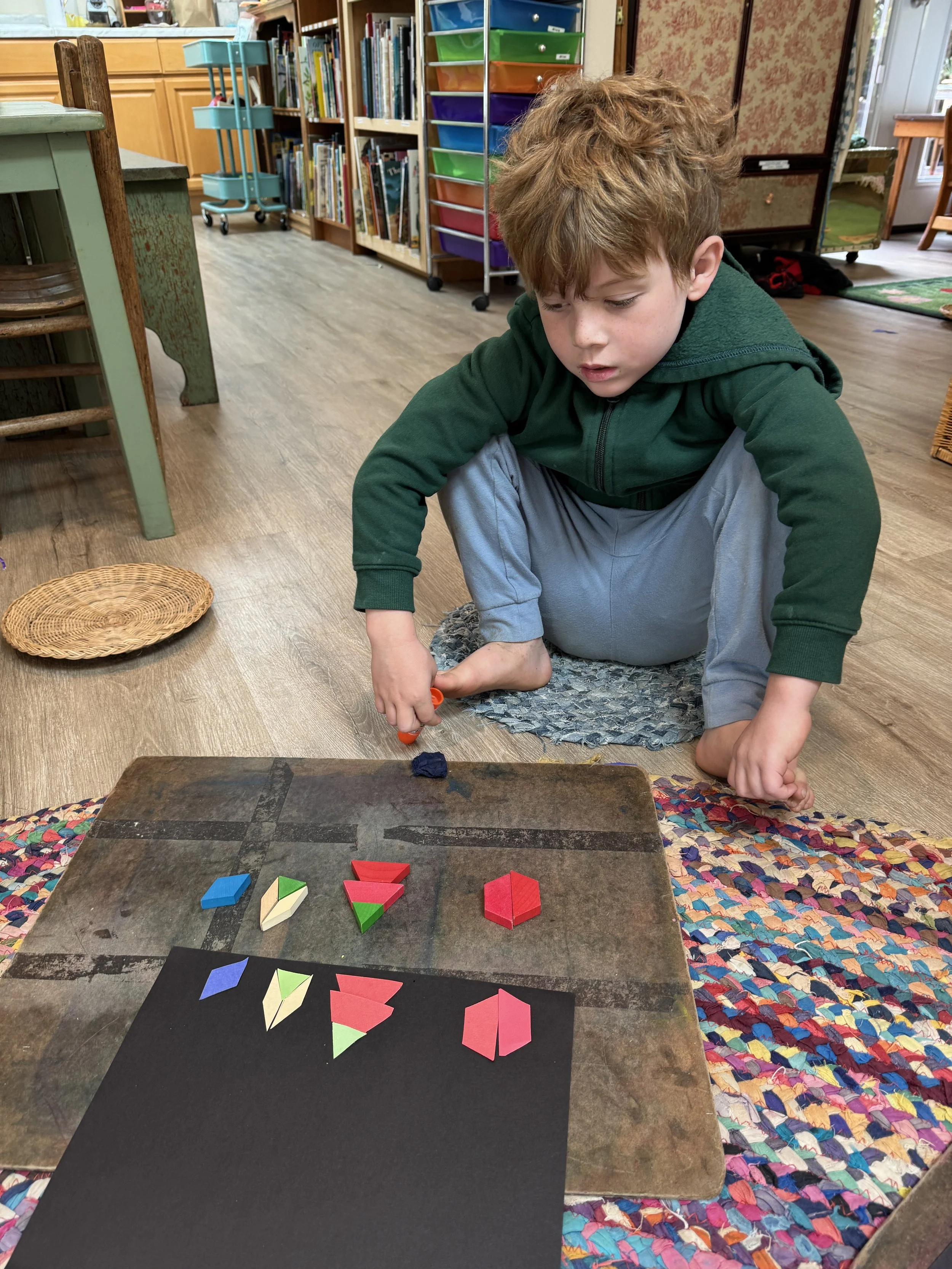
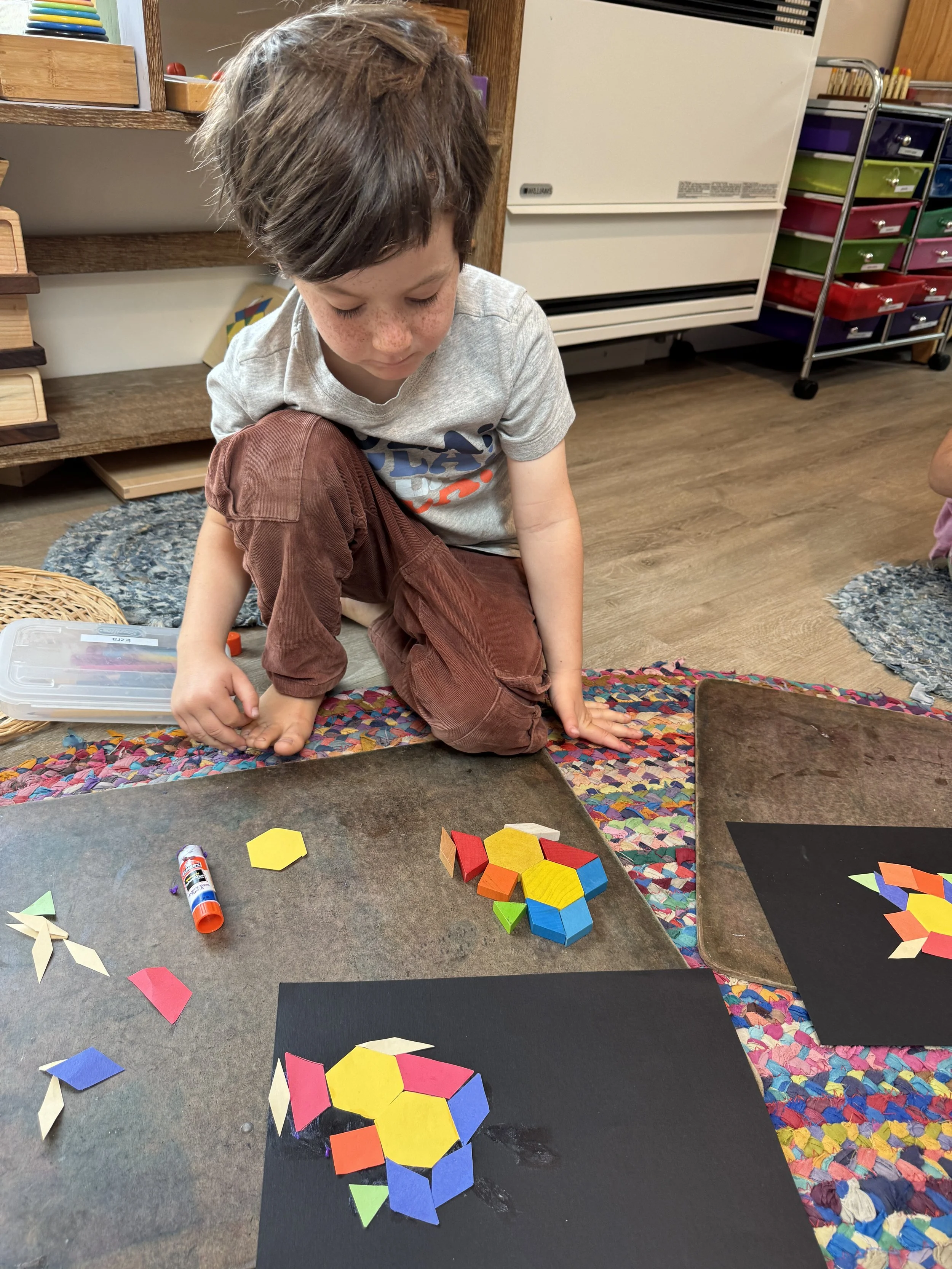
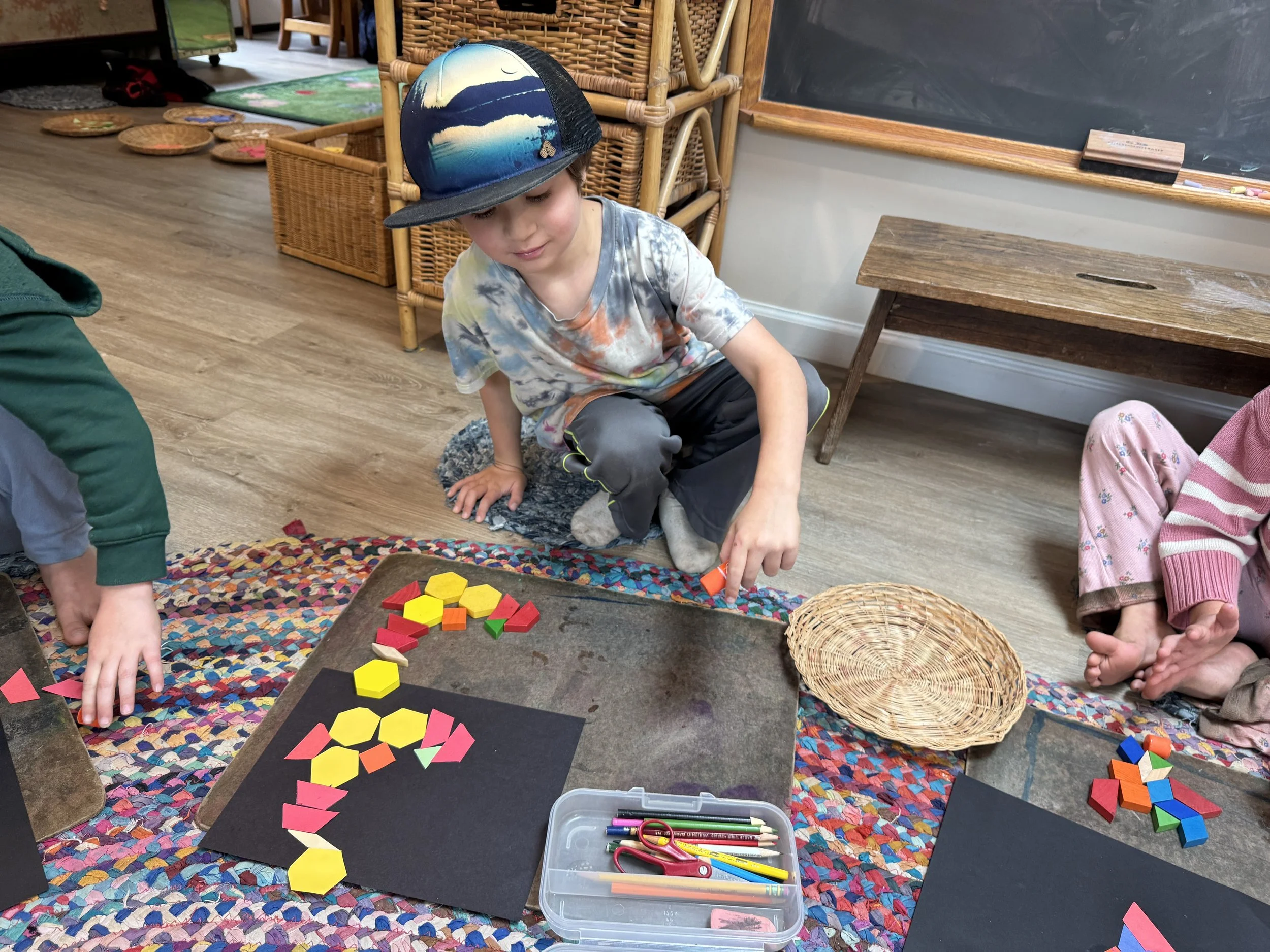
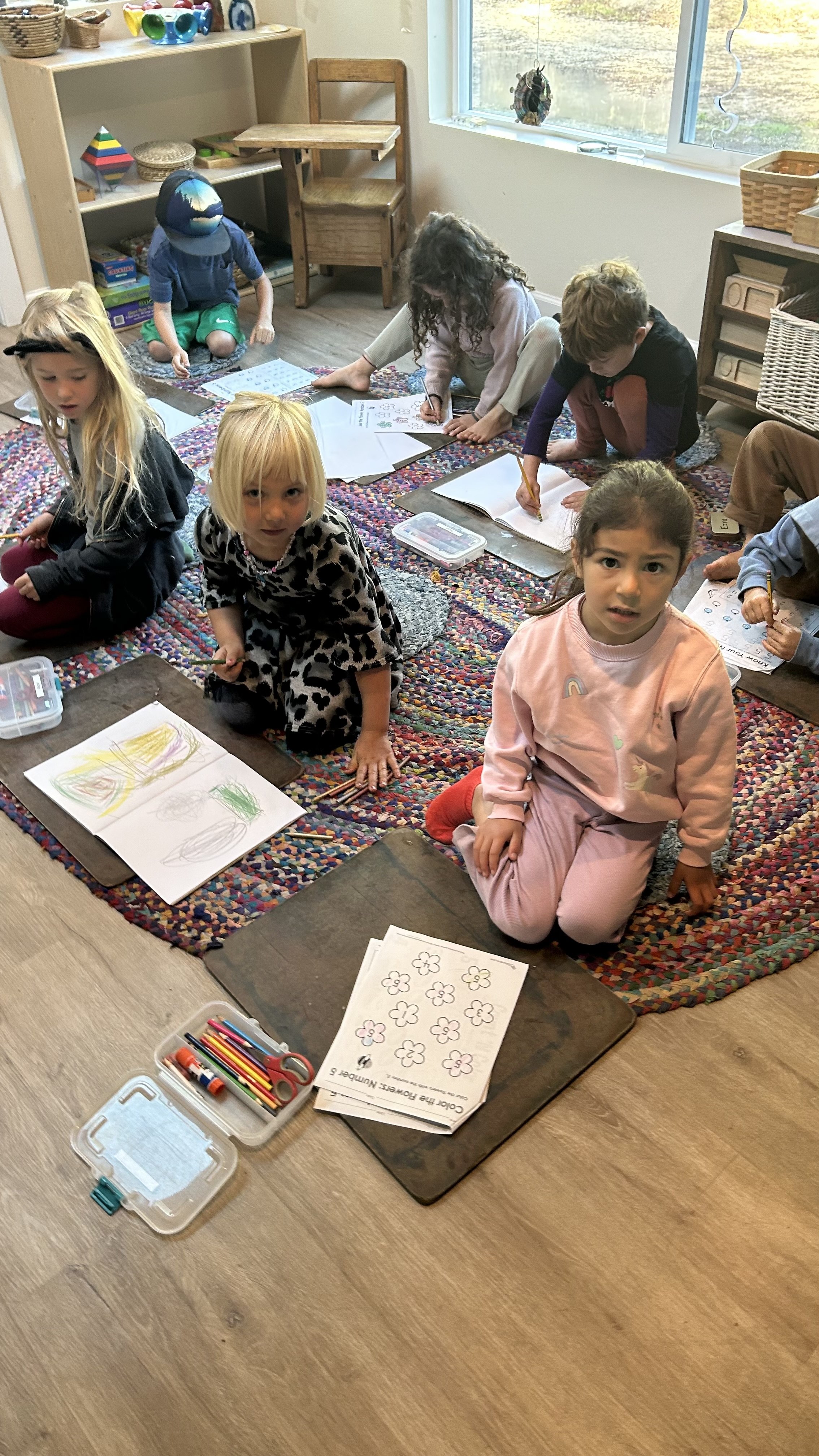
Working on the number 2. Tricky, tricky.
We finished the “Golden Numbers” and discussed how all of the numbers in the world from the largest to the smallest are comprised of some or all of the golden numbers (1 to 9 and 0). It’s a fascinating concept. We’ve been working hard to give the kids practice writing the single digit numbers correctly, facing the right way. Some are still working on this. Do help them at home as it comes up. They want to get them facing the right way and the more they practice, the more second-nature it will become.
Math games are a great way to get kindergarteners thinking mathematically while having fun. In class we play dominoes, Uno, memory, dice addition, bingo, dice games, and soon, dreidel.
Ezra began “tile math” and loves it. This is from the first grade math curriculum and is also accessible at various levels for kinders. We’ll expose all of them to this as they show interest. It’s a great way for them to work independently and at their level.
Finally, we sorted the hundreds of acorns collected over the past few months. The kids decided on sorting categories based on the acorn attributes: shiny, fat, pointy, brown, green, with and without caps etc. Activities like these are foundational for more advanced math in later years — sorting is part of algebra, symmetry as well, and so on.
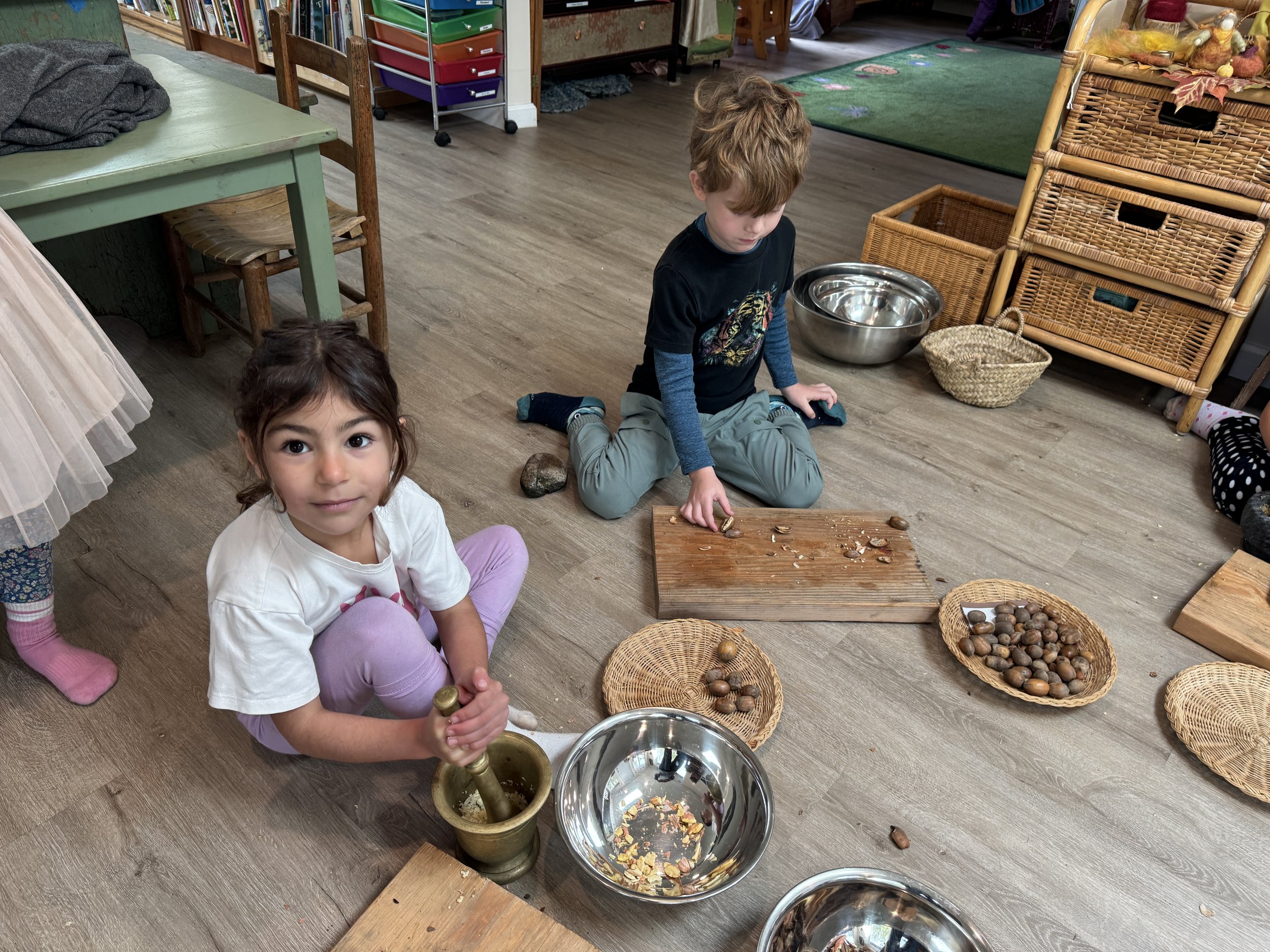
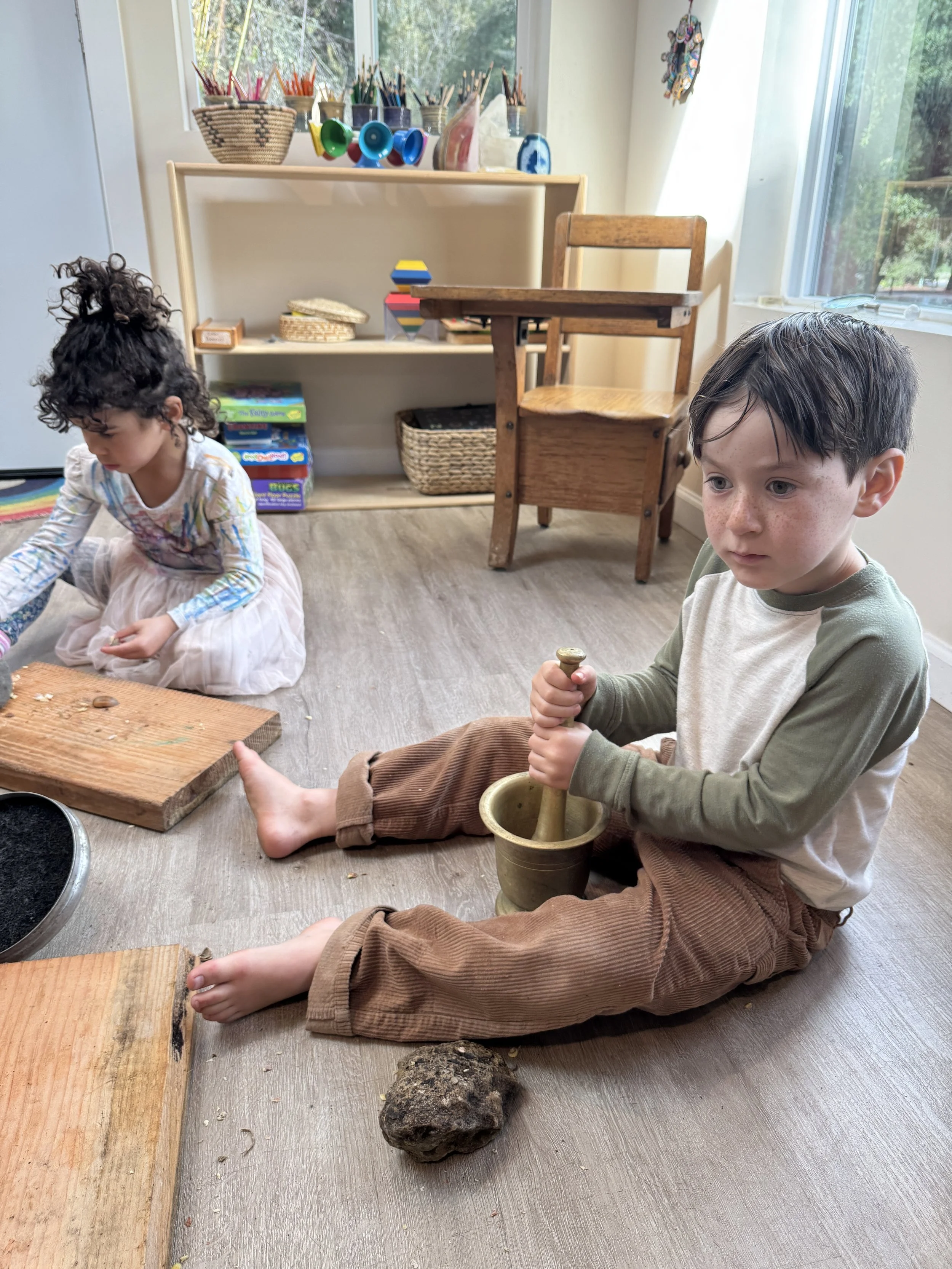
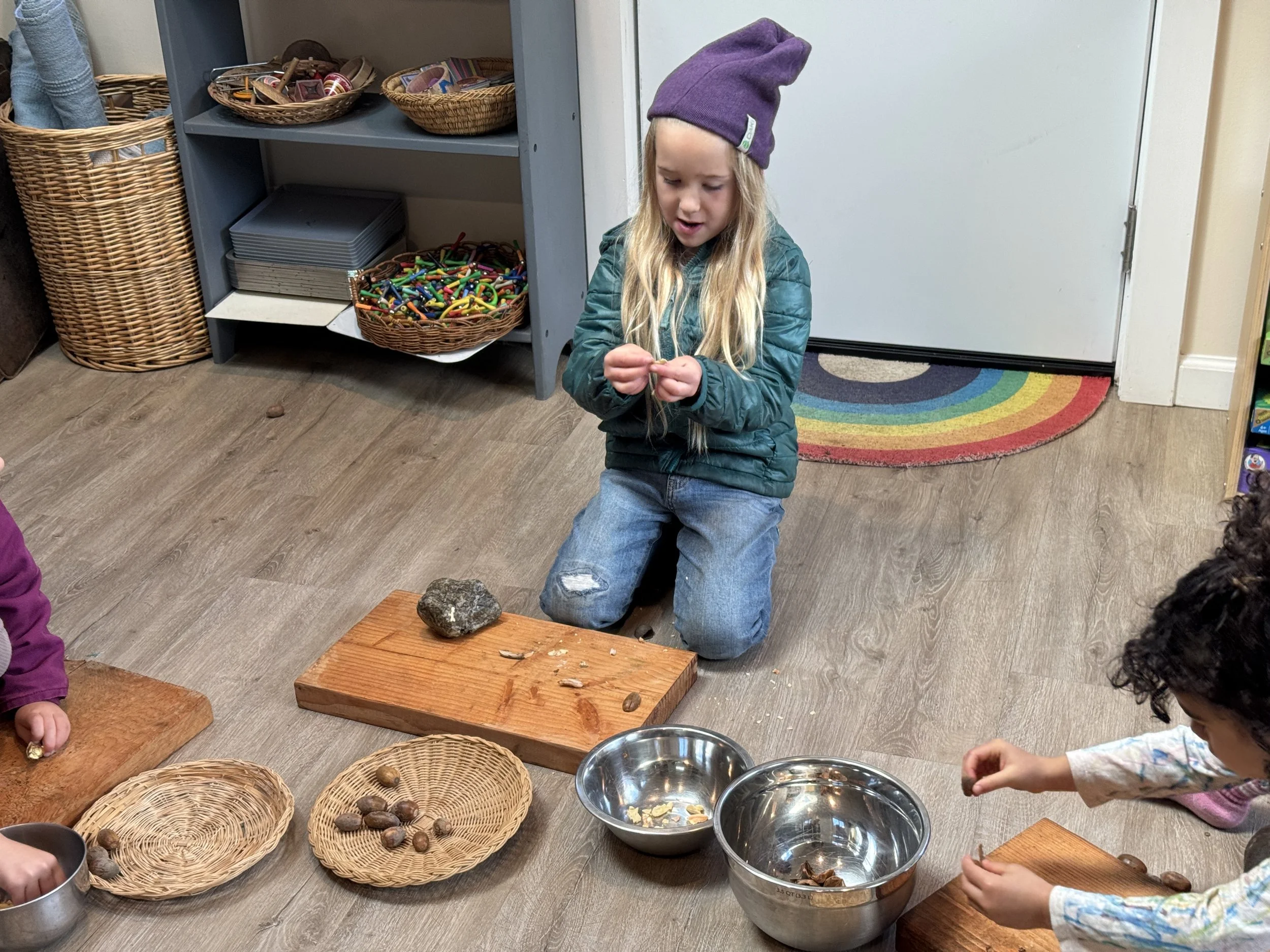
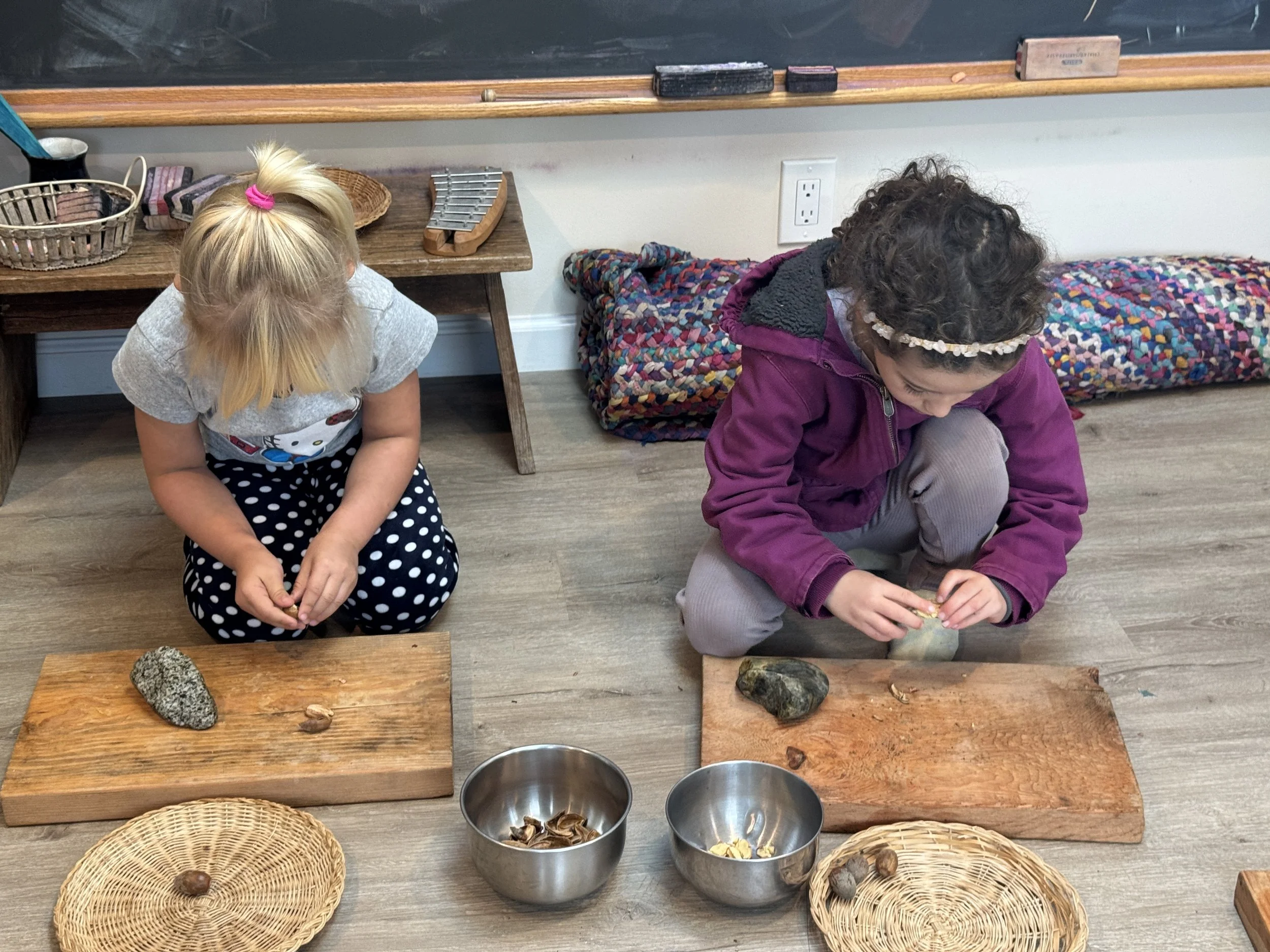
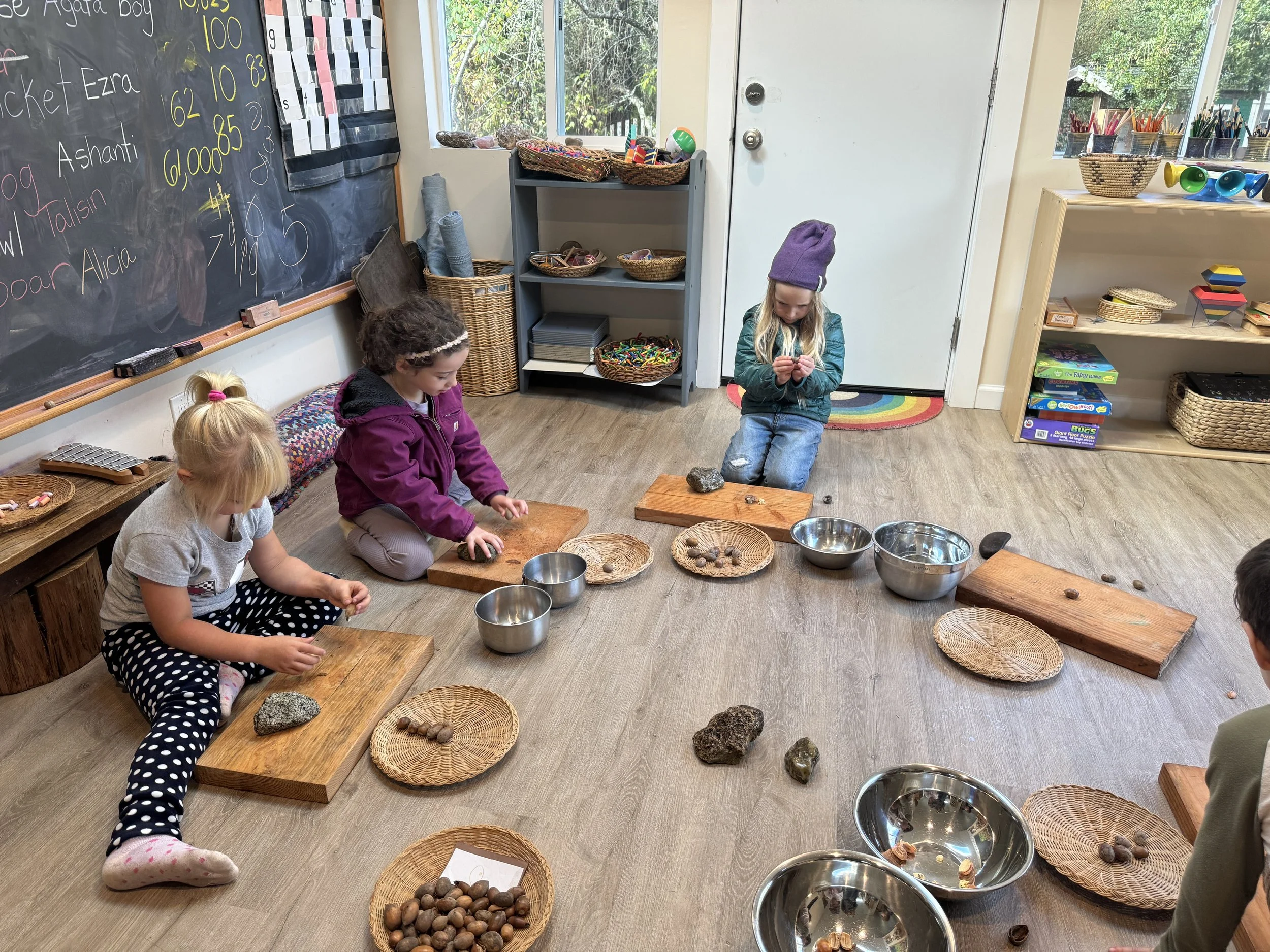
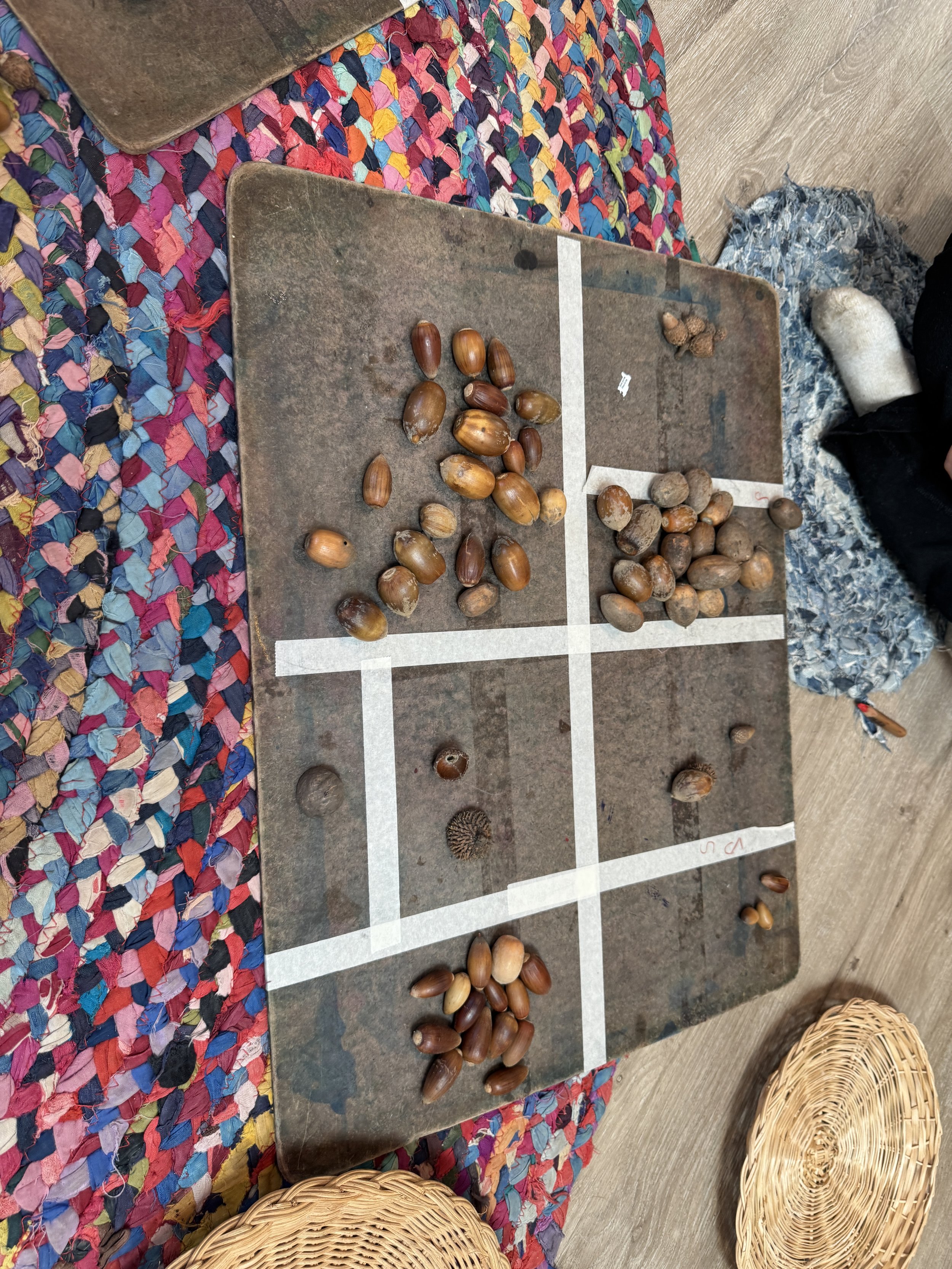
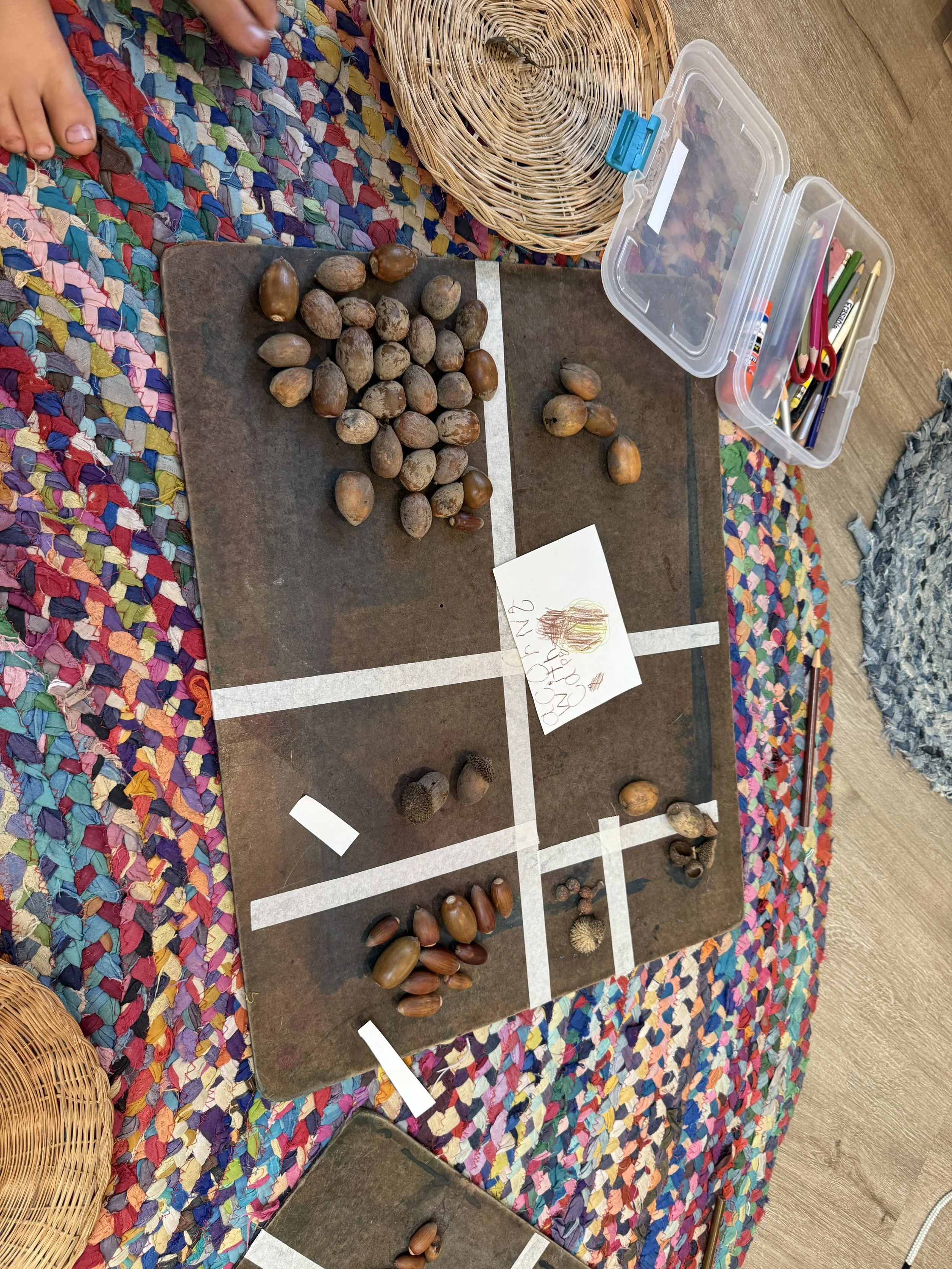
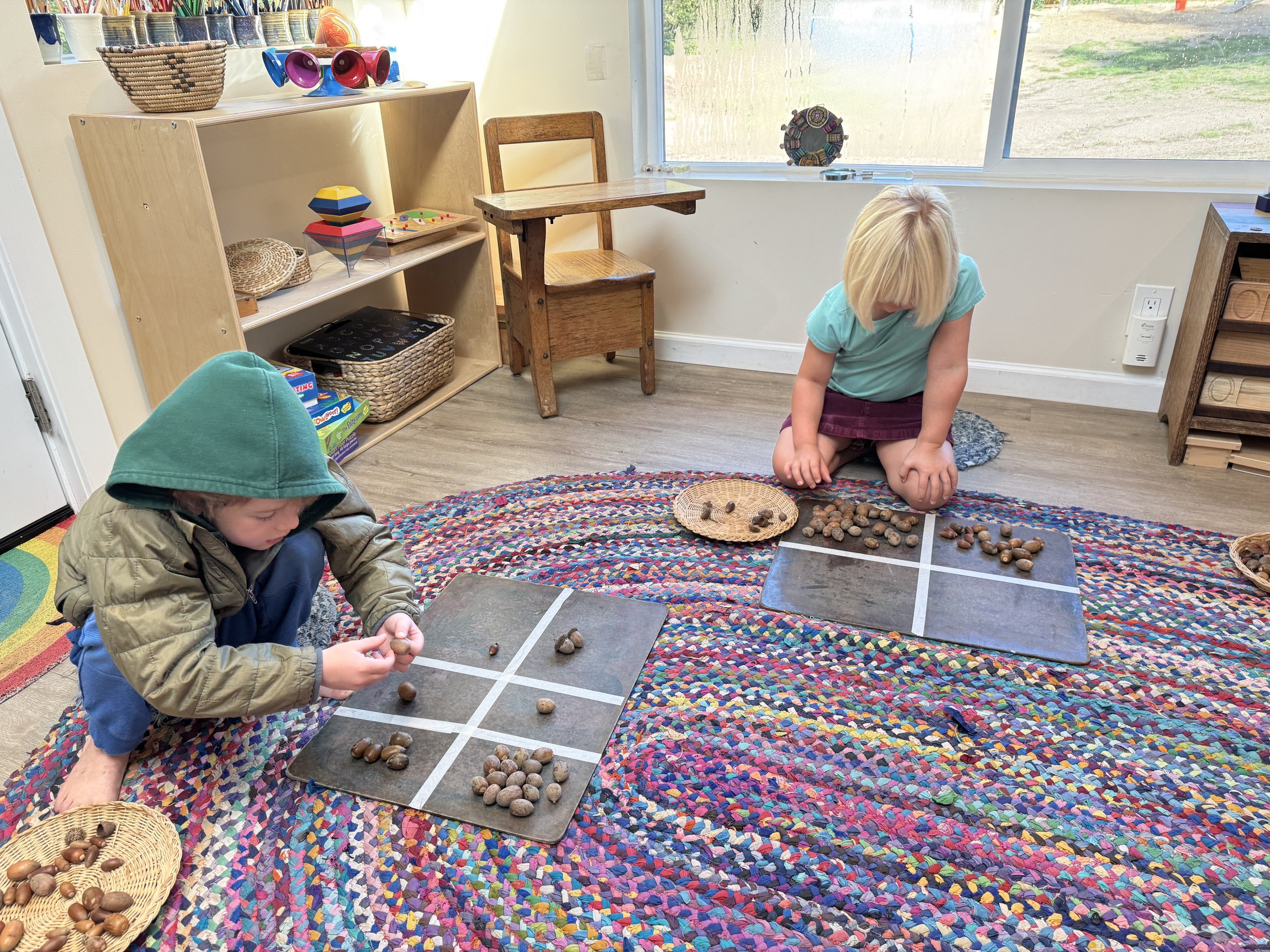
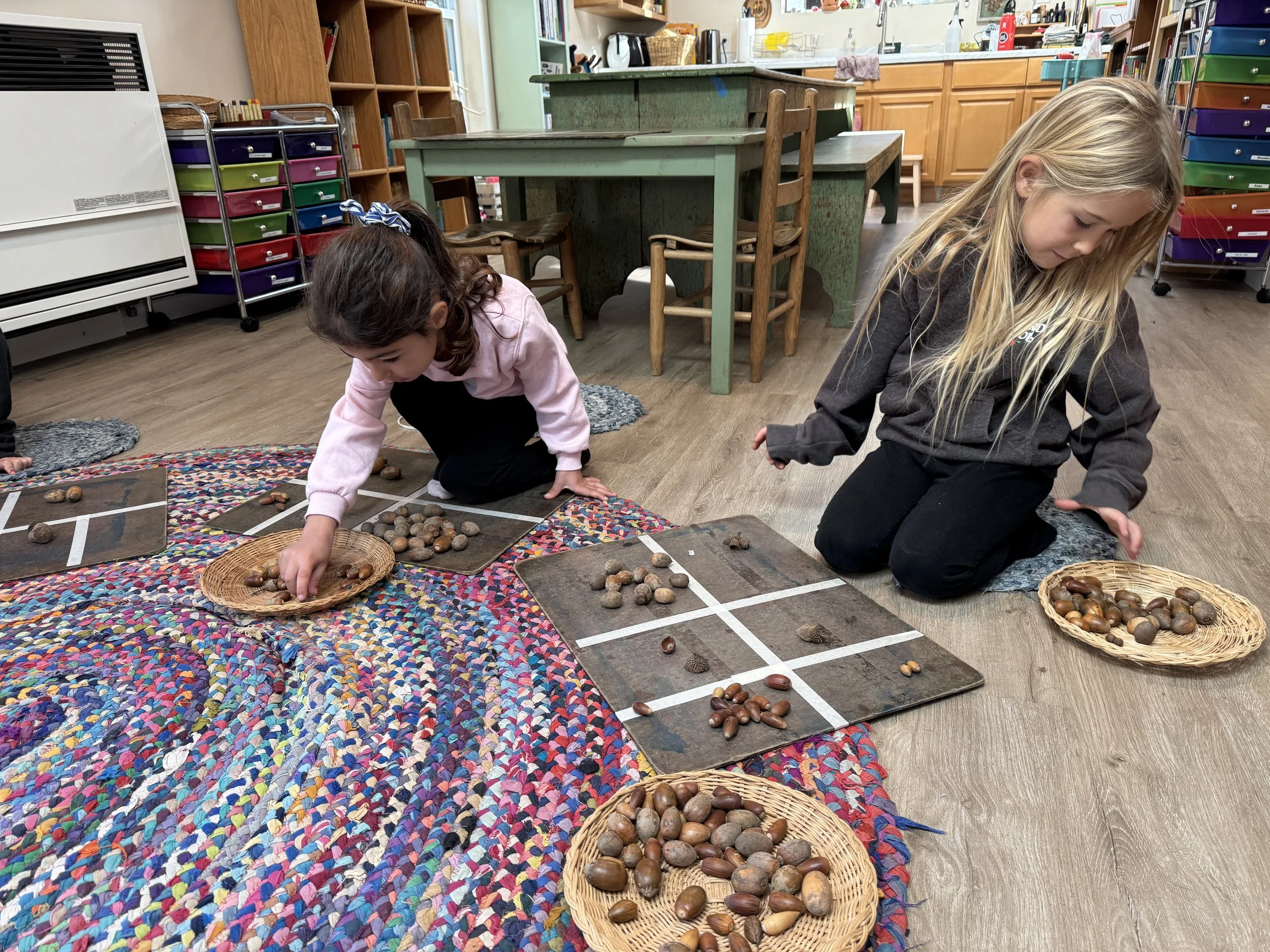
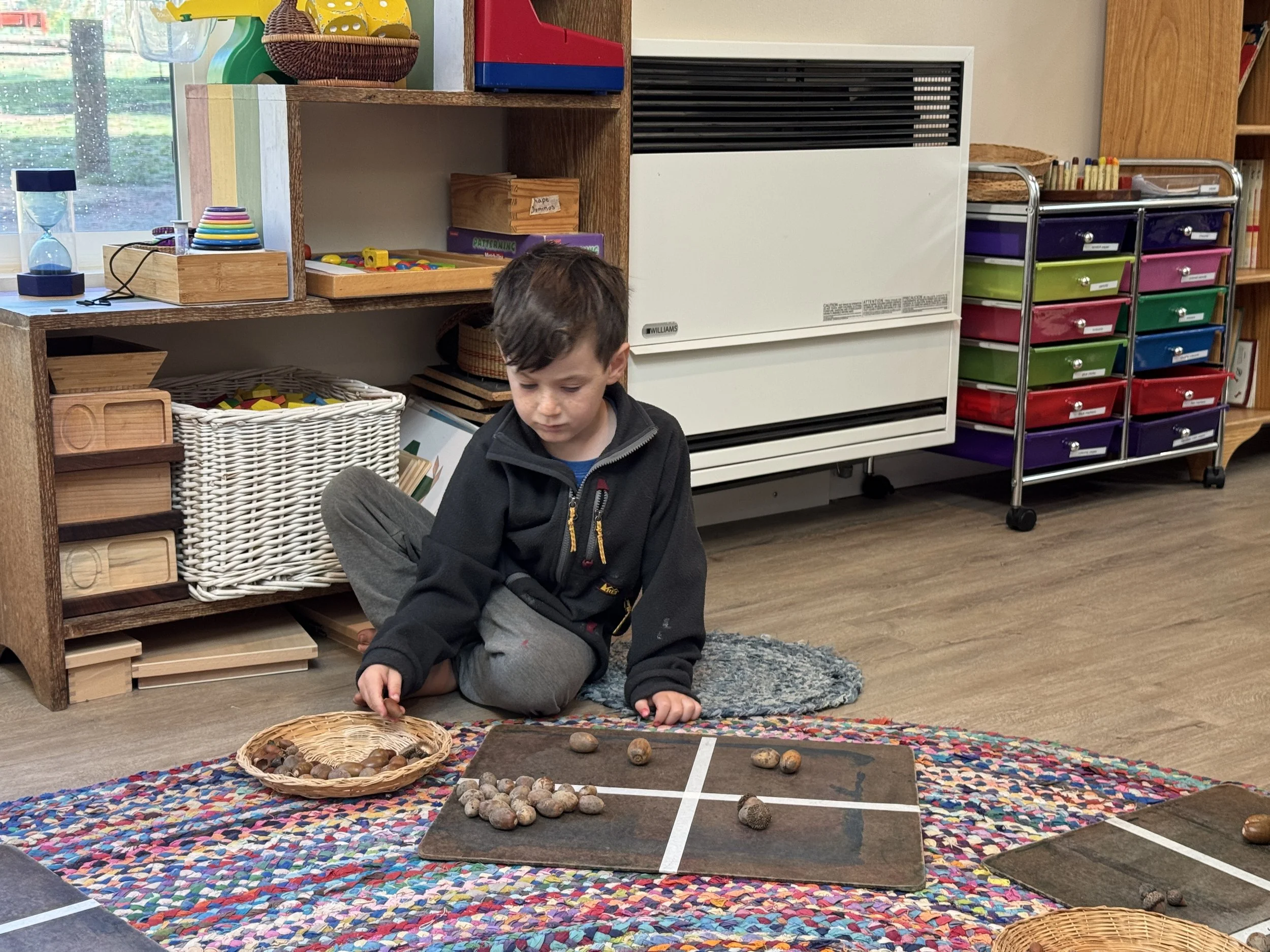
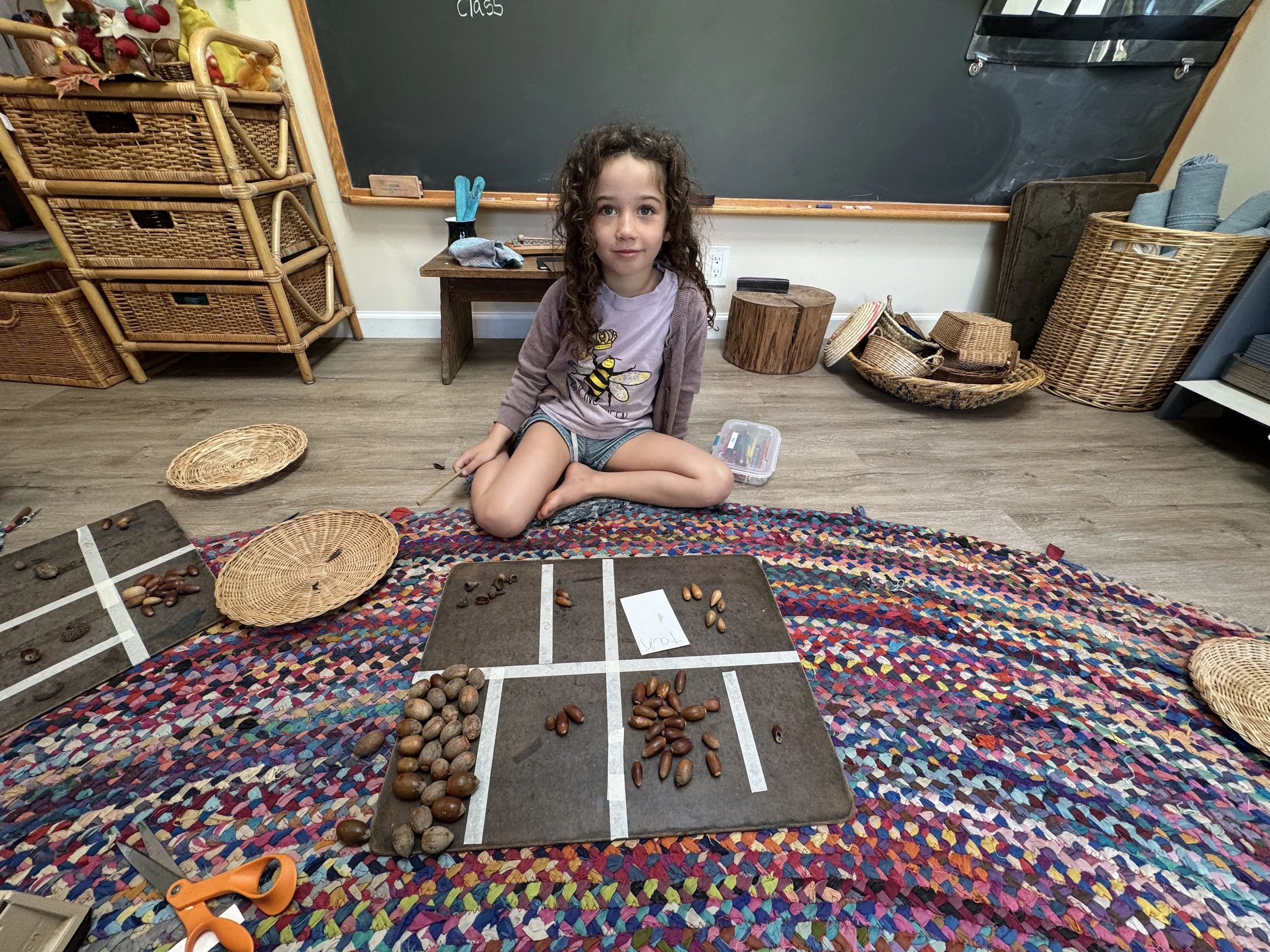
Aliya sorted her pile of acorns into 7 categories, then made a sign for one of her groupings. We later displayed all of the sorted acorns in the classroom in little baskets with labels identifying the attribute.
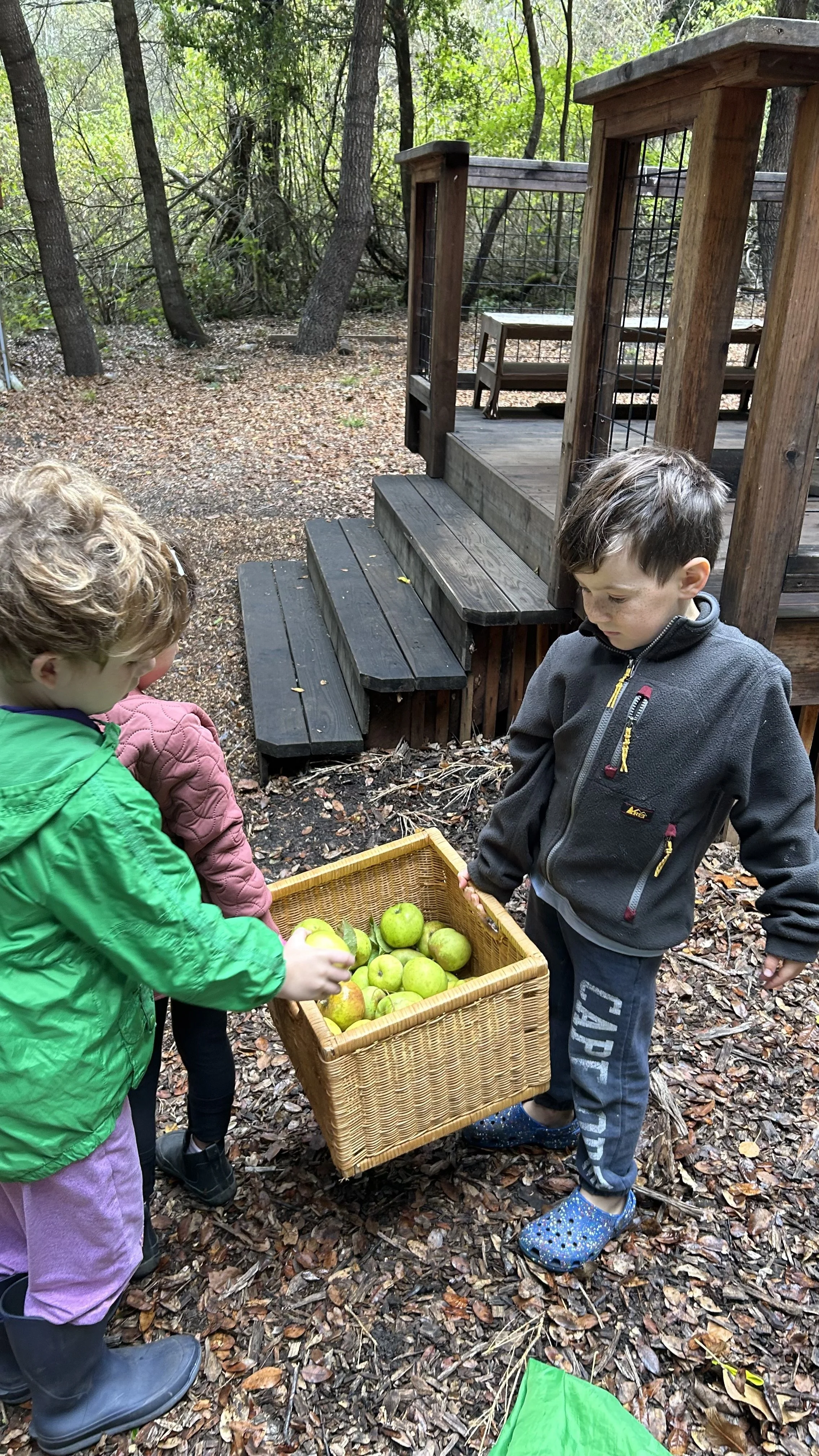
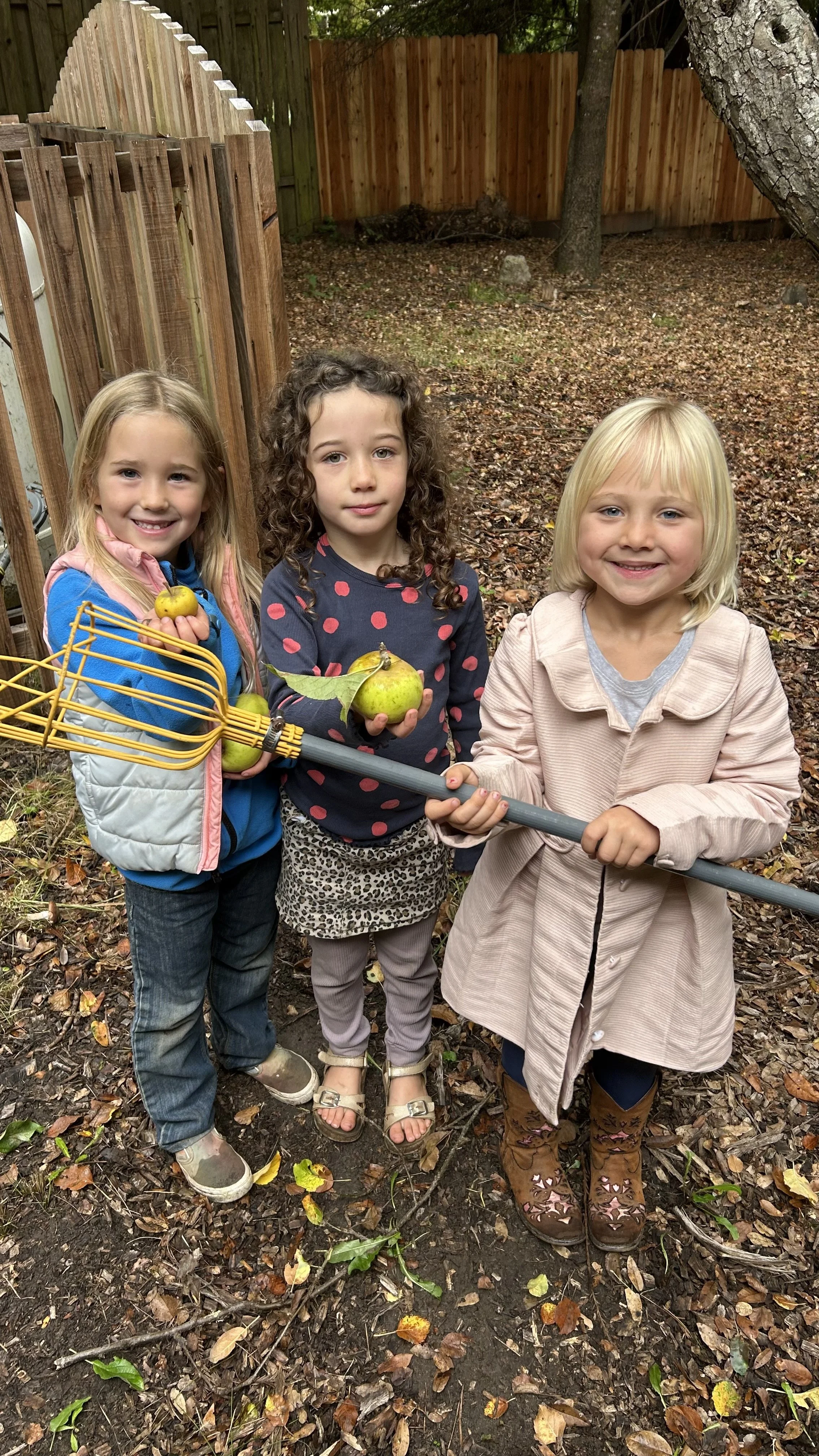
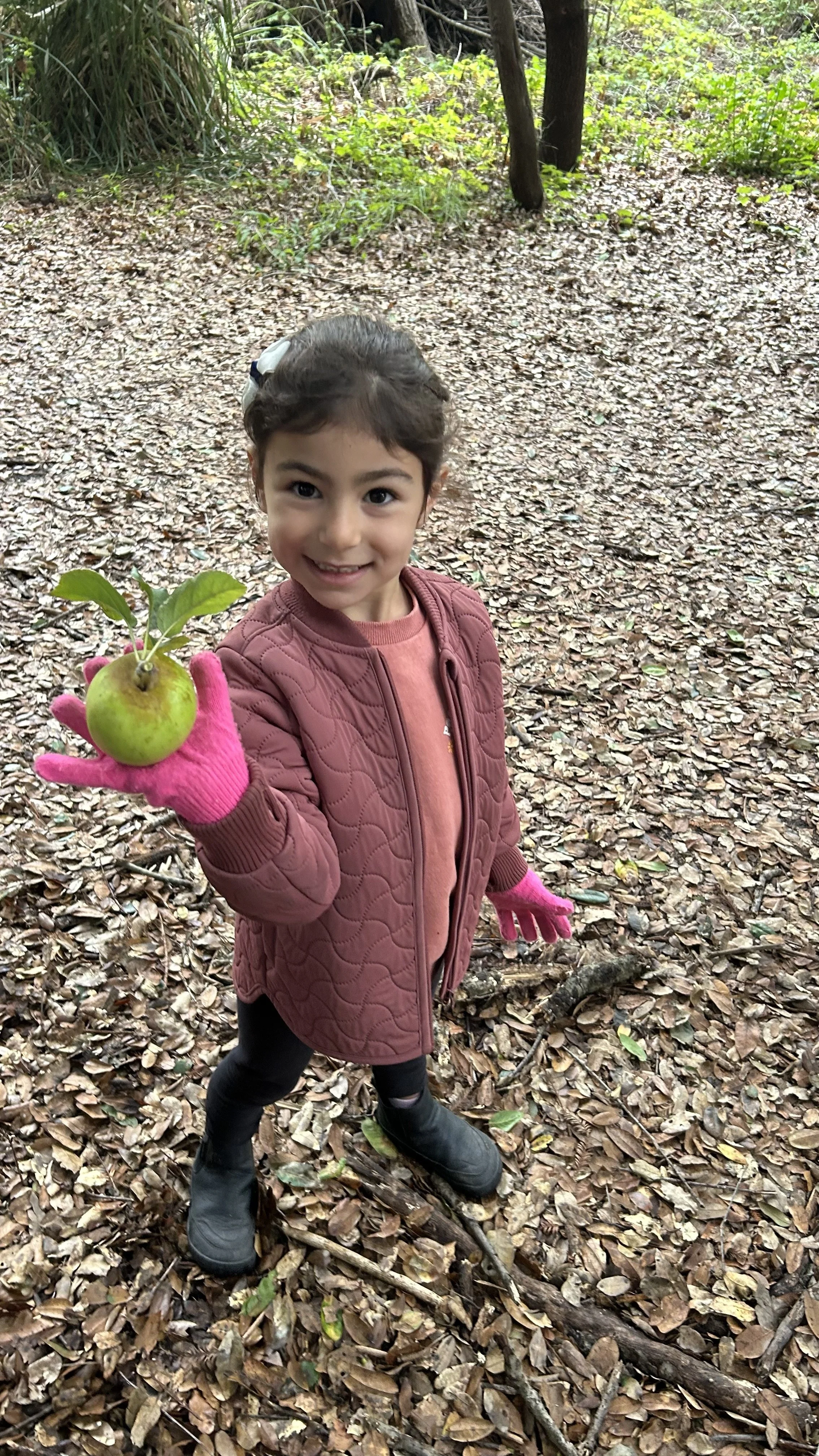
The beauty of the acorn project is it blends history (food source for native Indianas from the Aptos area), science (lifecycle of an oak, what animals eat acorns), math of course, and then we also get to smash acorns and make acorn flour and then cake. First, I am leaching the acorns daily to remove the tannins. We’ll learn a lot more about acorns and the Ama-Mutsen Indians when we go to the natural history museum in the spring. I threw in a few photos of the kids apple picking around campus.
Language arts
Concepts: sounds of letters, phonemic awareness and word play, handwriting, dictations, sound bingo, storytelling, discussions about gratitude, friends, different families, and death, songs, nursery rhymes, poems.
We’ve continued building a phonics bank for the children. They’ve all had practice with the following letter sounds:
a, c, t, s, g, d, l, p, m, t
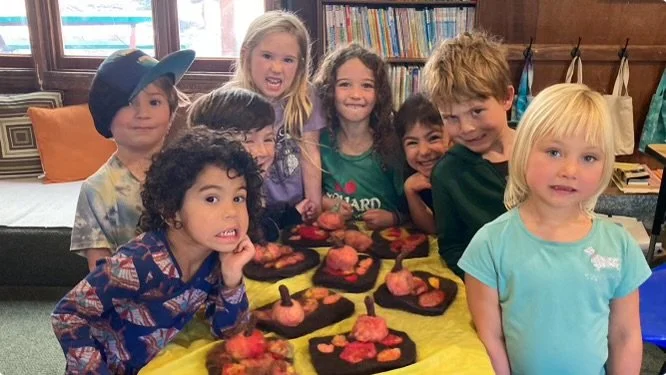
Felting class. As well as getting really good with their needles, the kinders get practice with storytelling in felting class, setting up story worlds with the felted dolls and putting on improvised mini-plays for each other.
We are at the point where we can shuffle these letters around and they can read the resulting word. For example, cat, mat, map, dad, sad, gas and so forth. A few of the children need a lot of repetition and even still, forget the letters from one day to the next. Several others know all of their lowercase letter names and sounds. A couple are reading simple text and starting to recognize a number of sight words like “the” and “to”. We are careful to level the work, grouping kids according to ability for language arts while grouping them more randomly for other activities. There is always a whole class portion of each lesson as well. Finally, they are all writing their names with lowercase letters, apart from the first letter!
With Alicia suddenly losing her uncle over the Thanksgiving break, the kids have been trading stories about family members who have died. Alicia shared details about her uncle who was getting water in the kitchen and then just died. She shared that she was sad and that her parents cried a lot. We made a card for Alicia’s family together and this prompted other kids to suggest we make cards for their grandparents and great grandparents who have died in the past. We decided the card would just be for Alicia since this was a very recent event but that individual kids could draw pictures honoring their family members who have passed on, anytime they like.
Science
Concepts: Observation, lifecycles (pumpkins, acorns, trees), habitats and adaptations, hibernation, native animals, spiders and insects, and the seasons.
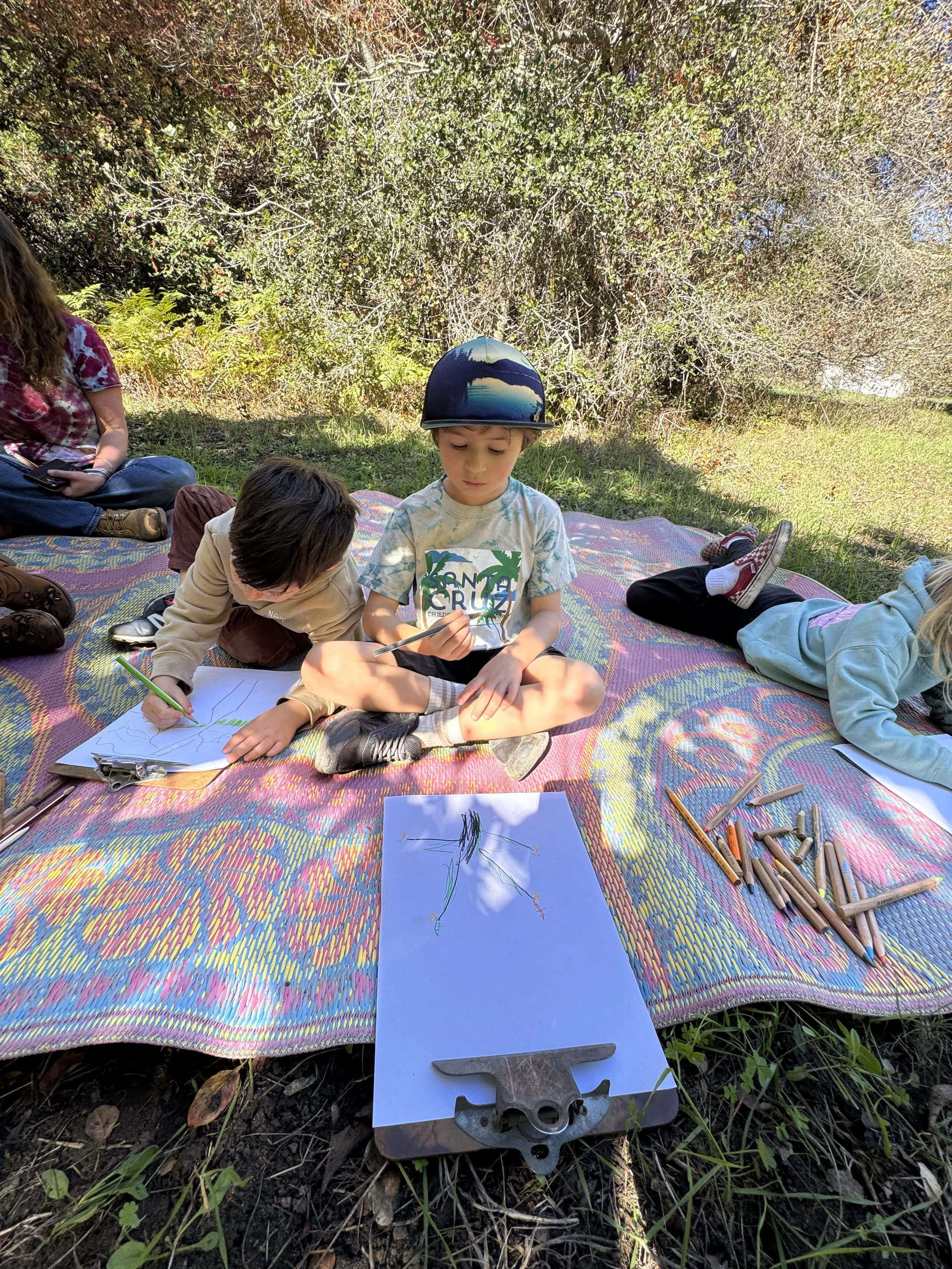
Sage looks at his beginning sketch of the persimmon tree.
We've been playing some games to hone observation skills. The children went to the persimmon tree on the hill and studied it closely (noticing the leaves in green, red, and orange, the trunk with moss and lichen growing in places, and the crown adorned with persimmons. We’ll revisit the tree in winter and spring to see and document the changes.
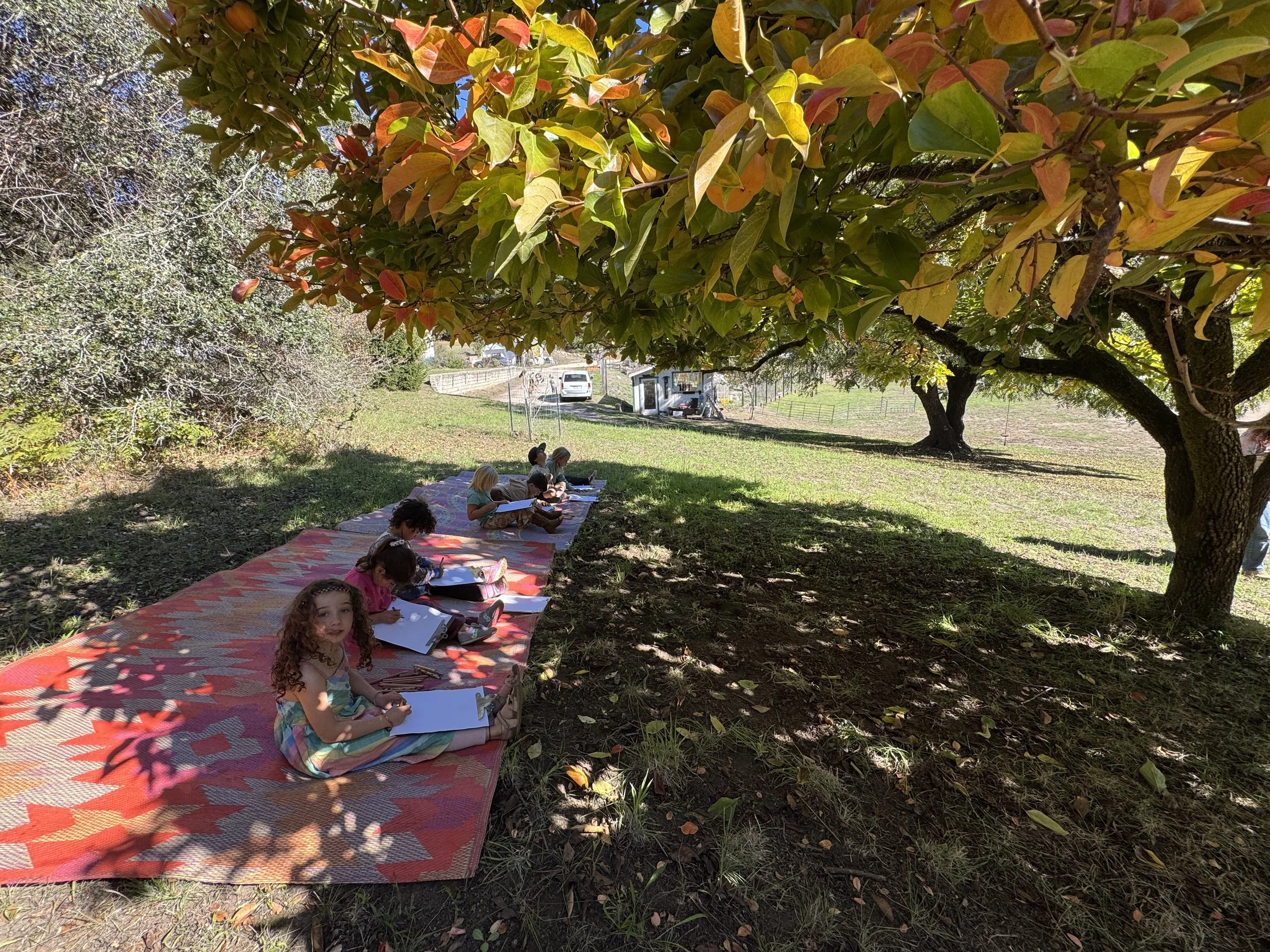
Tree sketching party
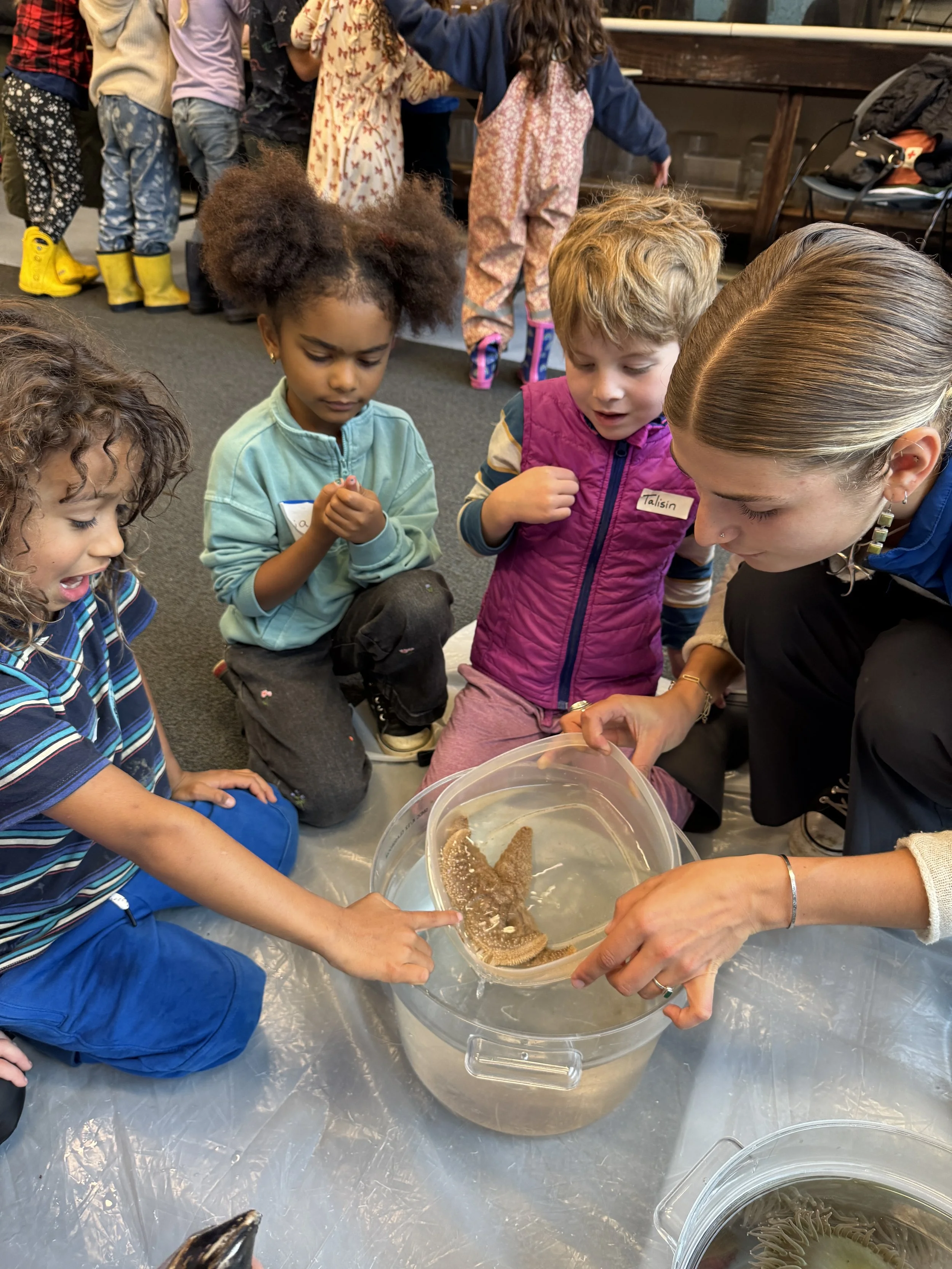
We went on an enjoyable and successful field trip with the first graders to the Seymour Center. The kindergarteners behaved perfectly and seemed comfortable and engaged with the curriculum.
the arts
The kids had their first sewing lesson using sewing hoops to make drawstring pouches out of fabric they painted. These guys were focused and careful and really whizzed through this project far more efficiently and adeptly than many previous kindergarteners. They are a capable bunch — with their hands and their mental organization.
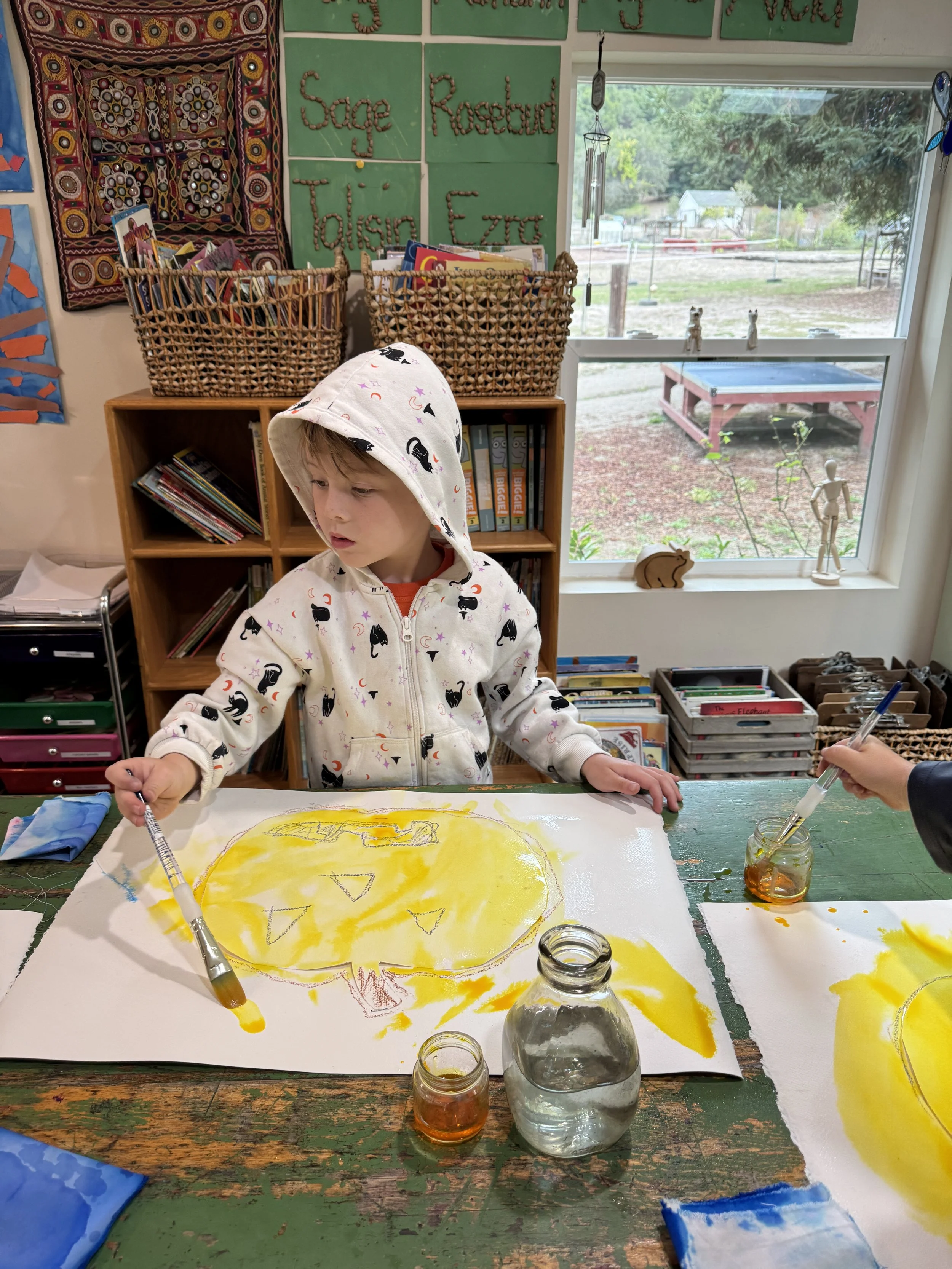
They made slime one day and another, a giant spider web in the fairy garden. They painted pumpkin watercolors for Halloween starting with yellow and then adding red to make orange. They also carved real pumpkins for the festival night where they performed Heckedy Peg, a story about a witch, a dad, his seven children and a spooky adventure. Sadly, Agata was coming down with a virus and didn’t feel up to performing but the rest were bold and brave in this, their first experience on stage in front of an audience.
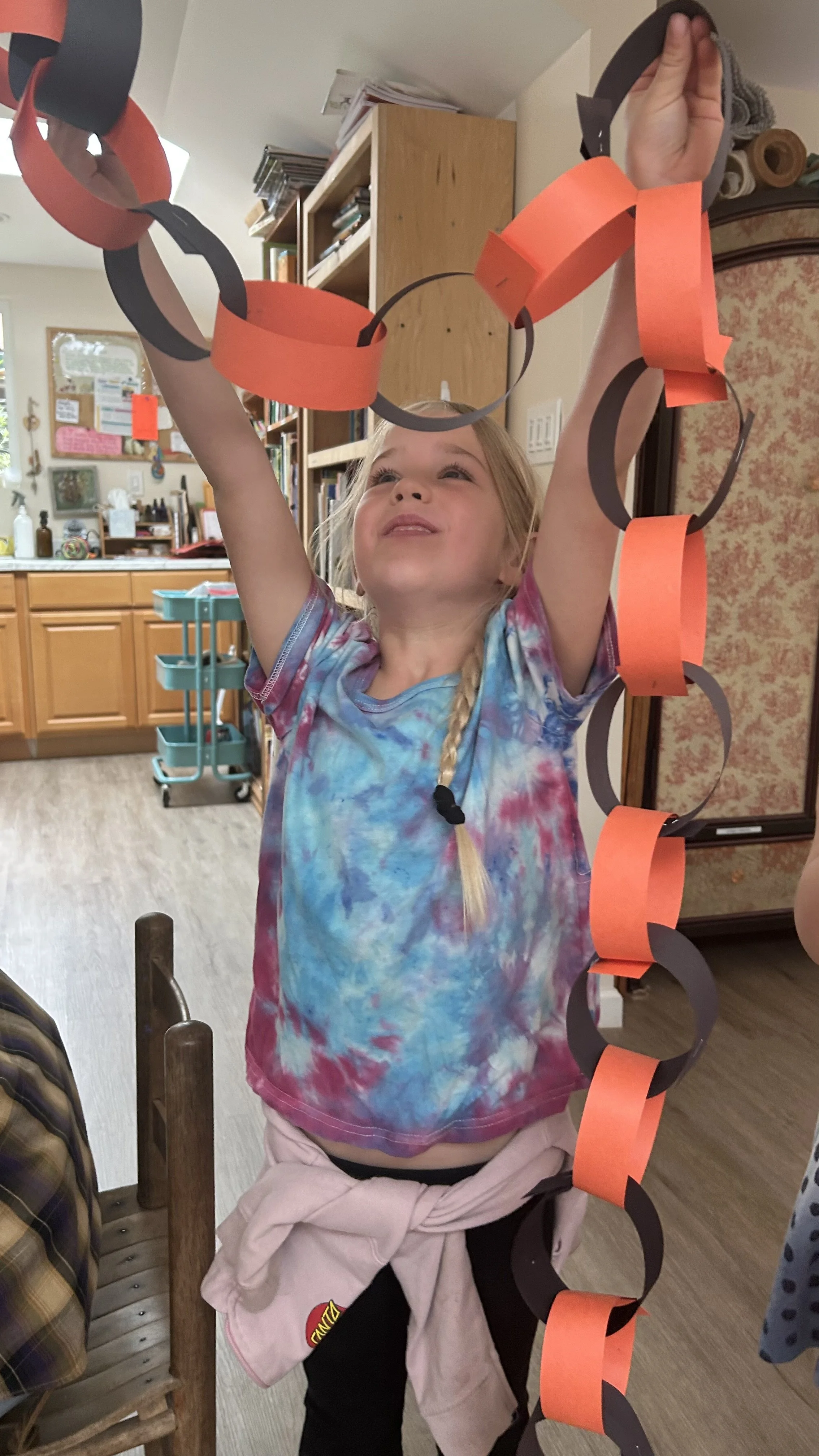
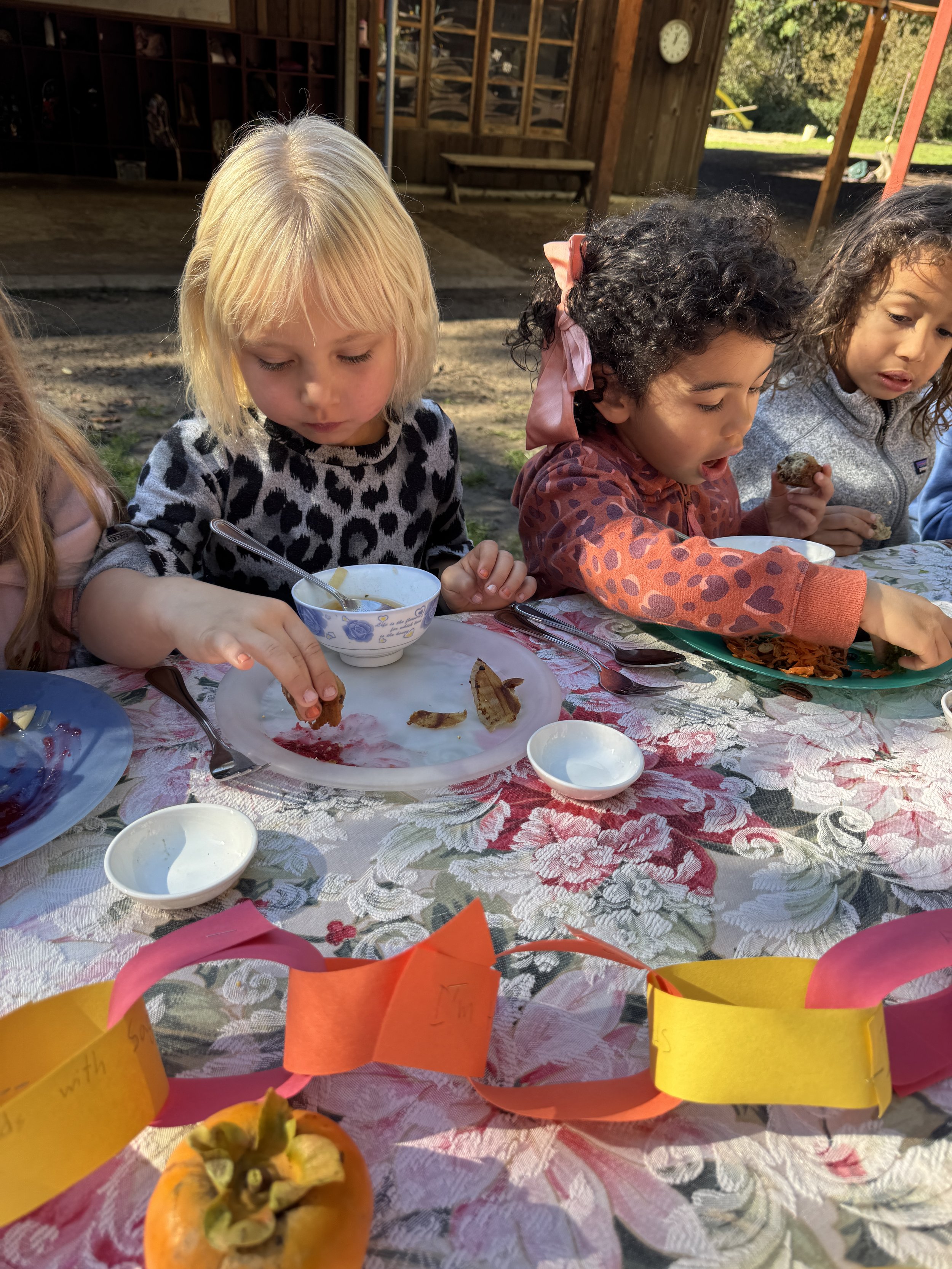
Other projects included making monsters following Tara’s instructions, making bell ornaments with pipe cleaners, making an apple trees collage using contruction paper they could only tear, not cut with scissors, and making paper chains with their big buddies who wrote down things they were grateful for on the chains.
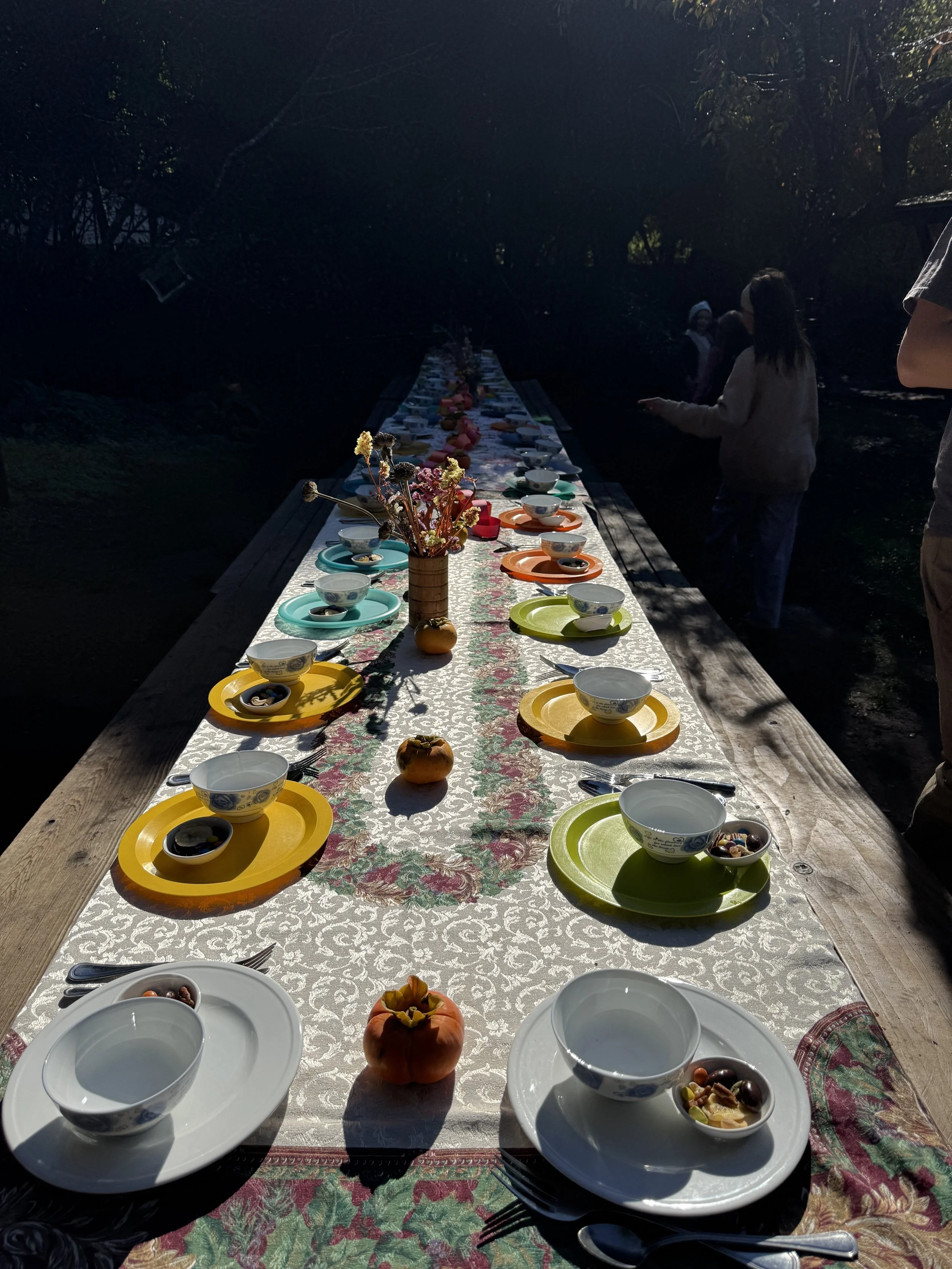
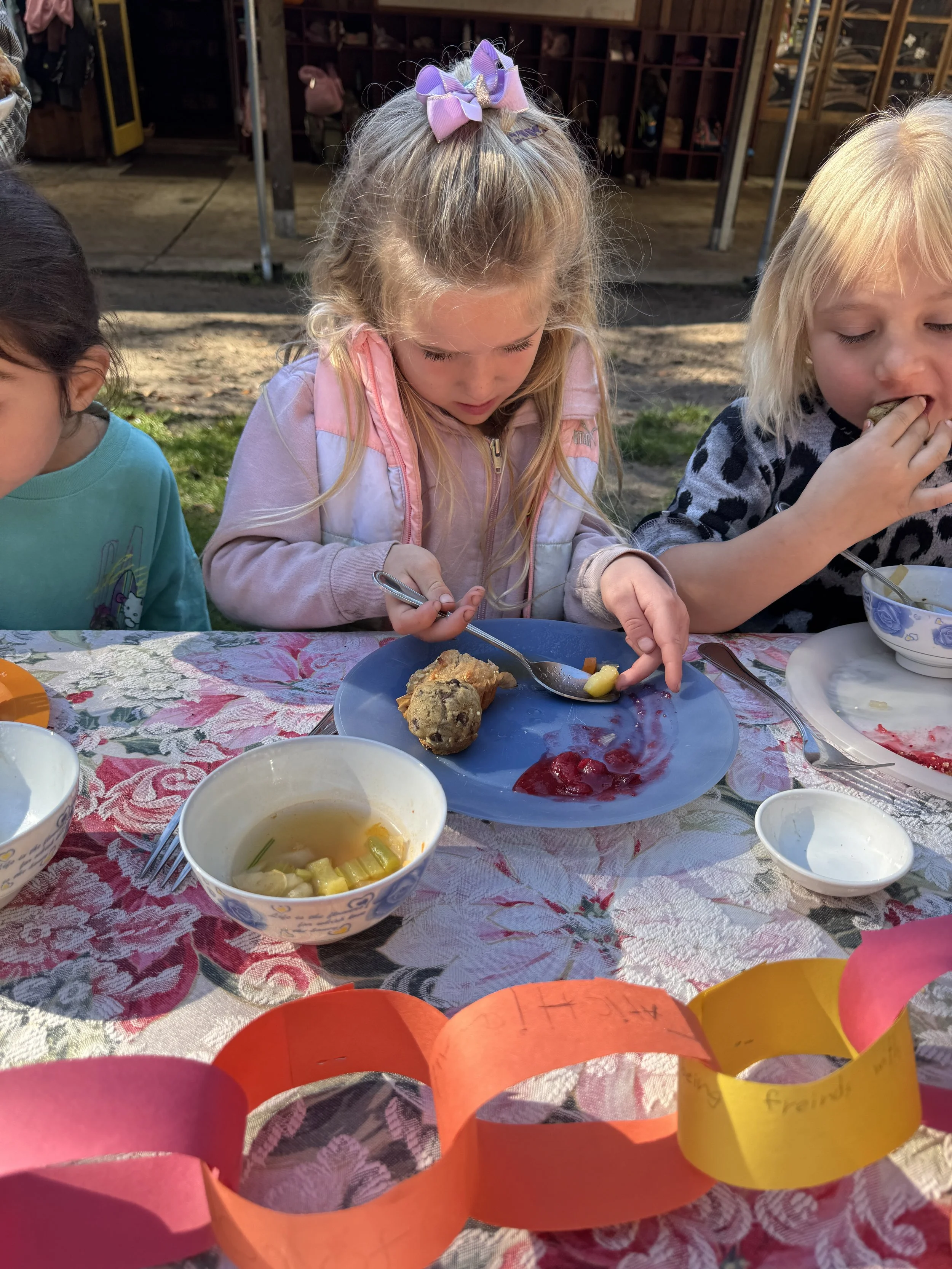
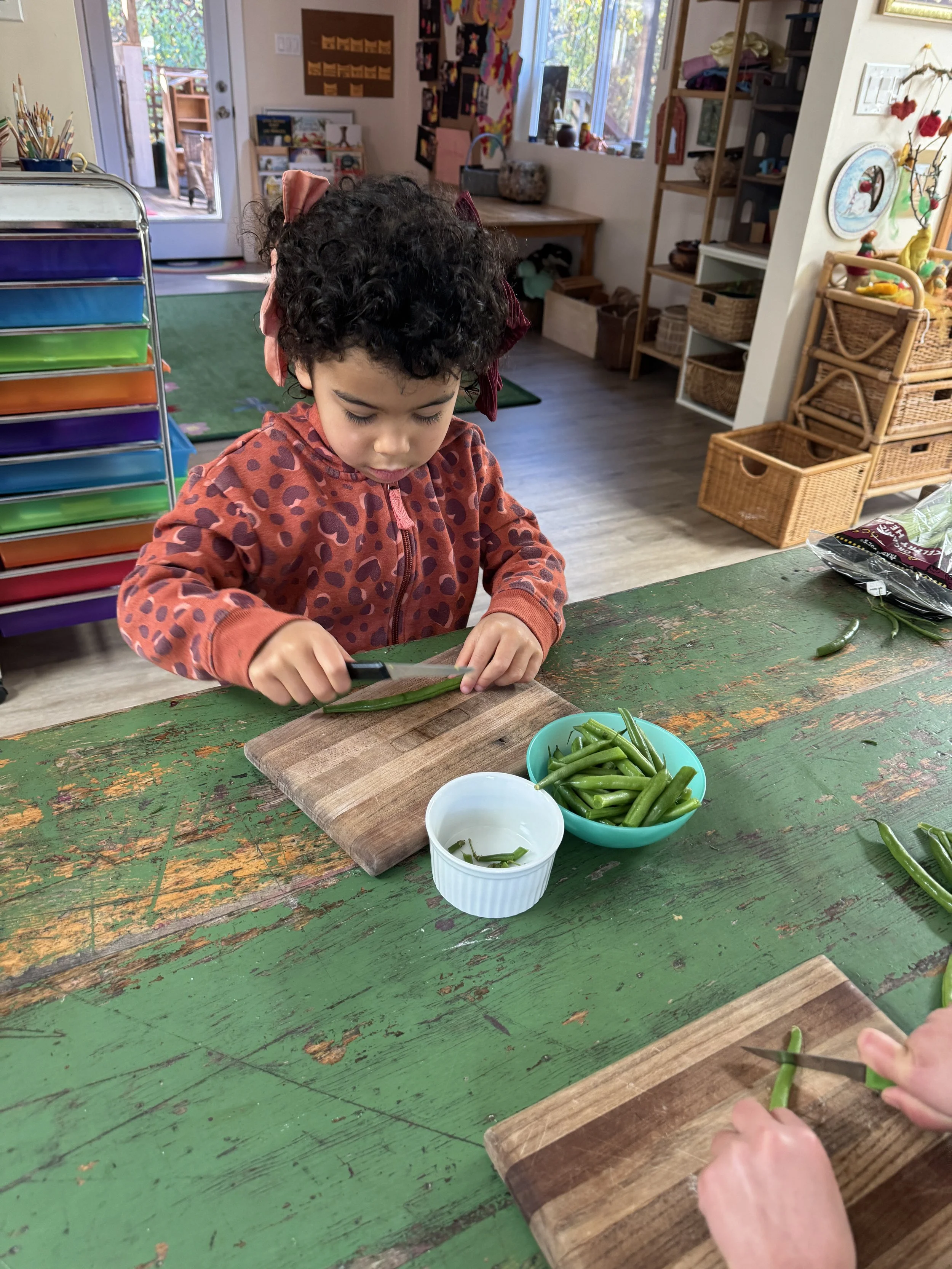
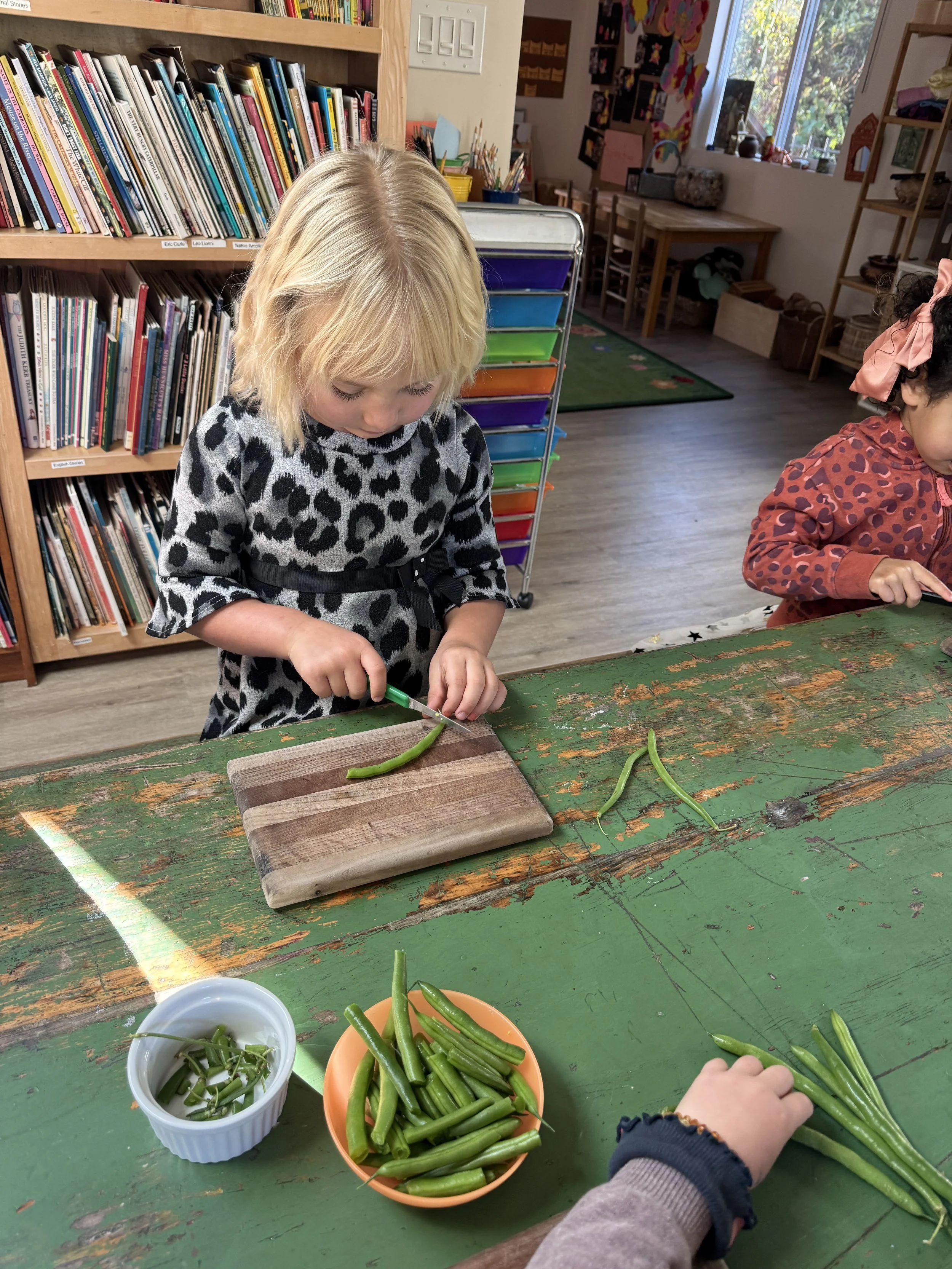
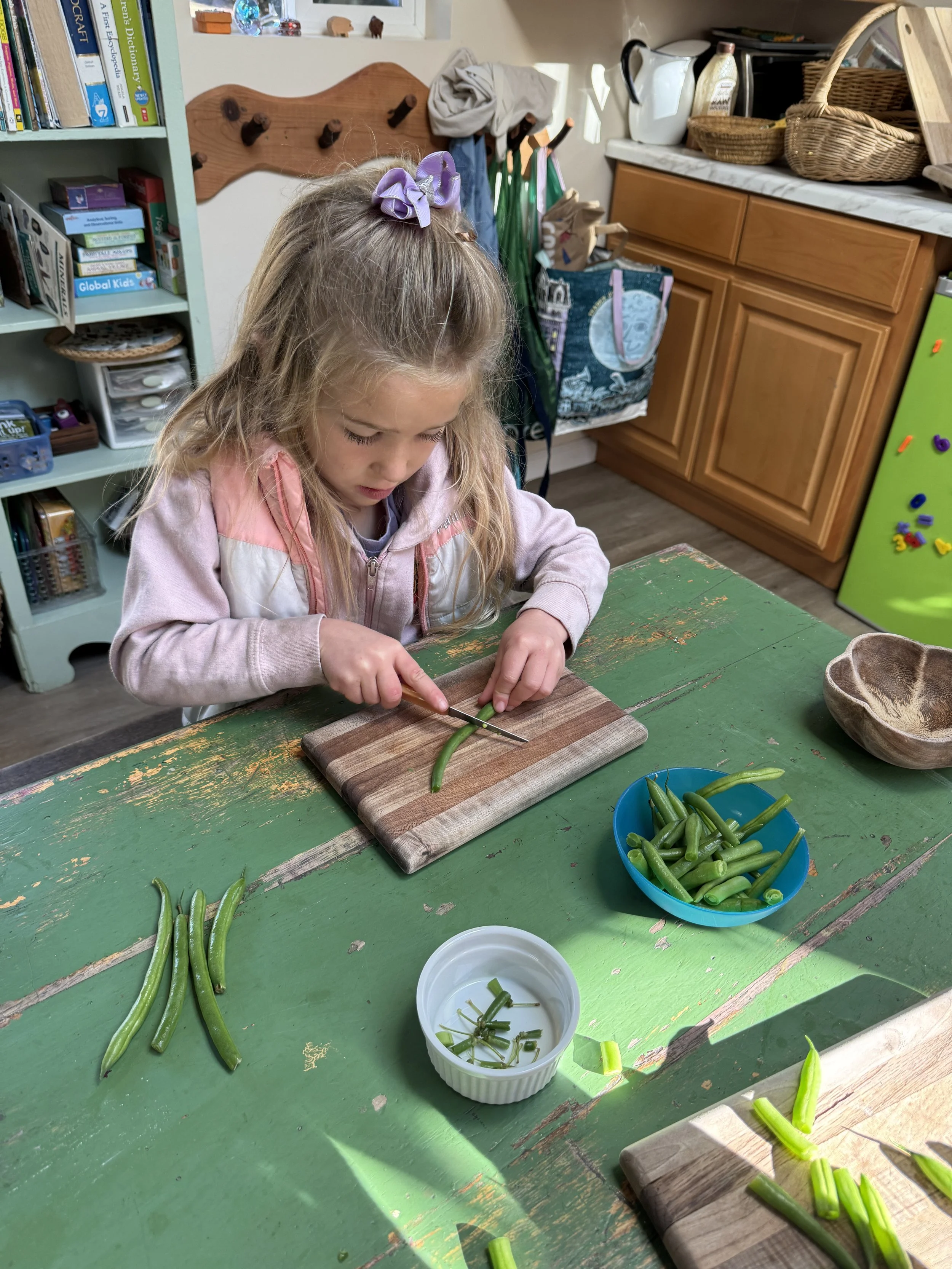
For the Stone Soup Feast, the kinders chopped green beans and celery using real knives, and also made three batches of banana muffins for the big lunch we all shared together. All the food was made by Orchard students. The fourth/fifth graders re-enacted the famous story (with help from the rest of the classes too) about travelers who make soup from stones because no-one will share their food with them. Eventually, everyone realizes sharing is caring and kindness grows.
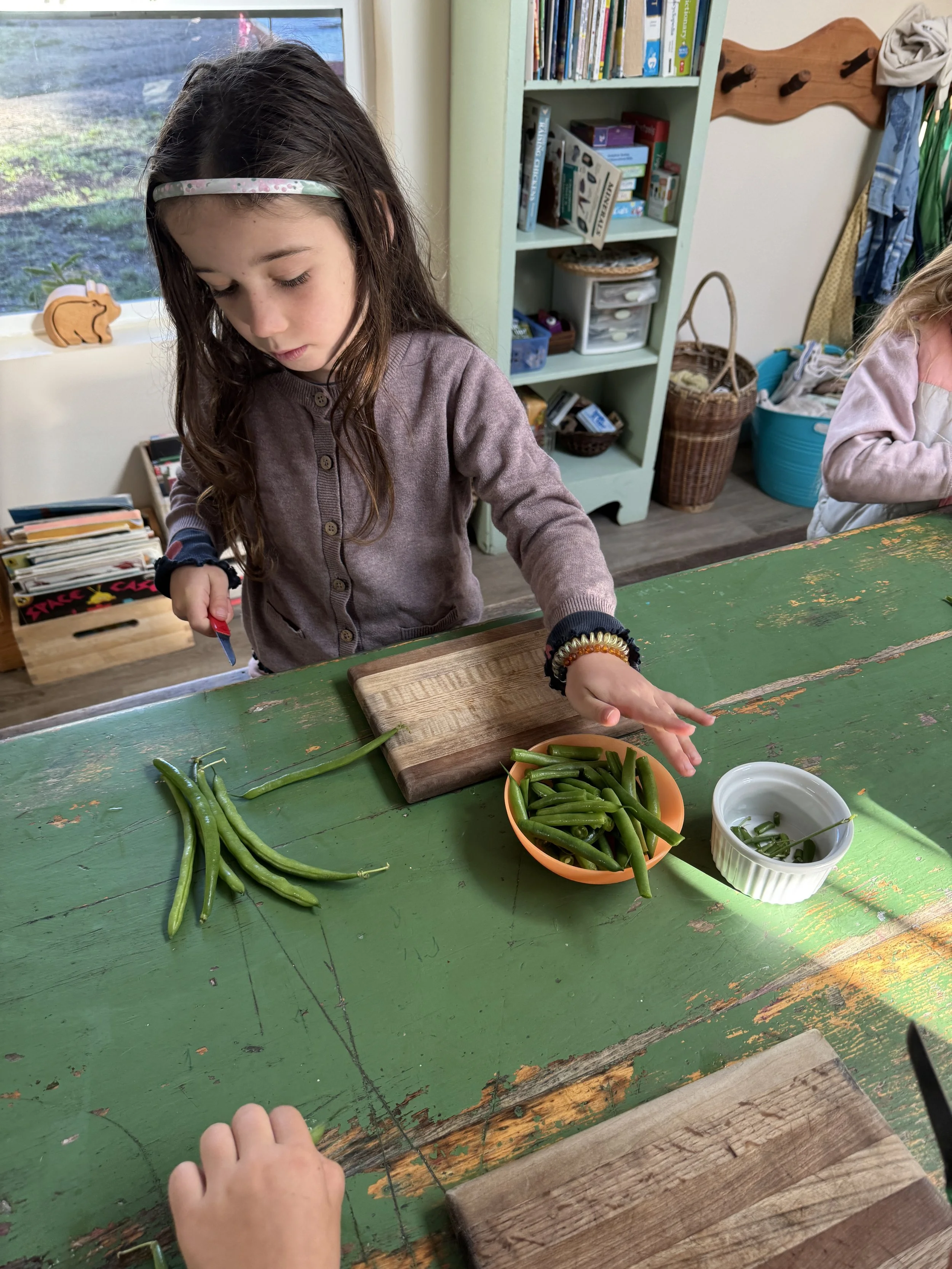
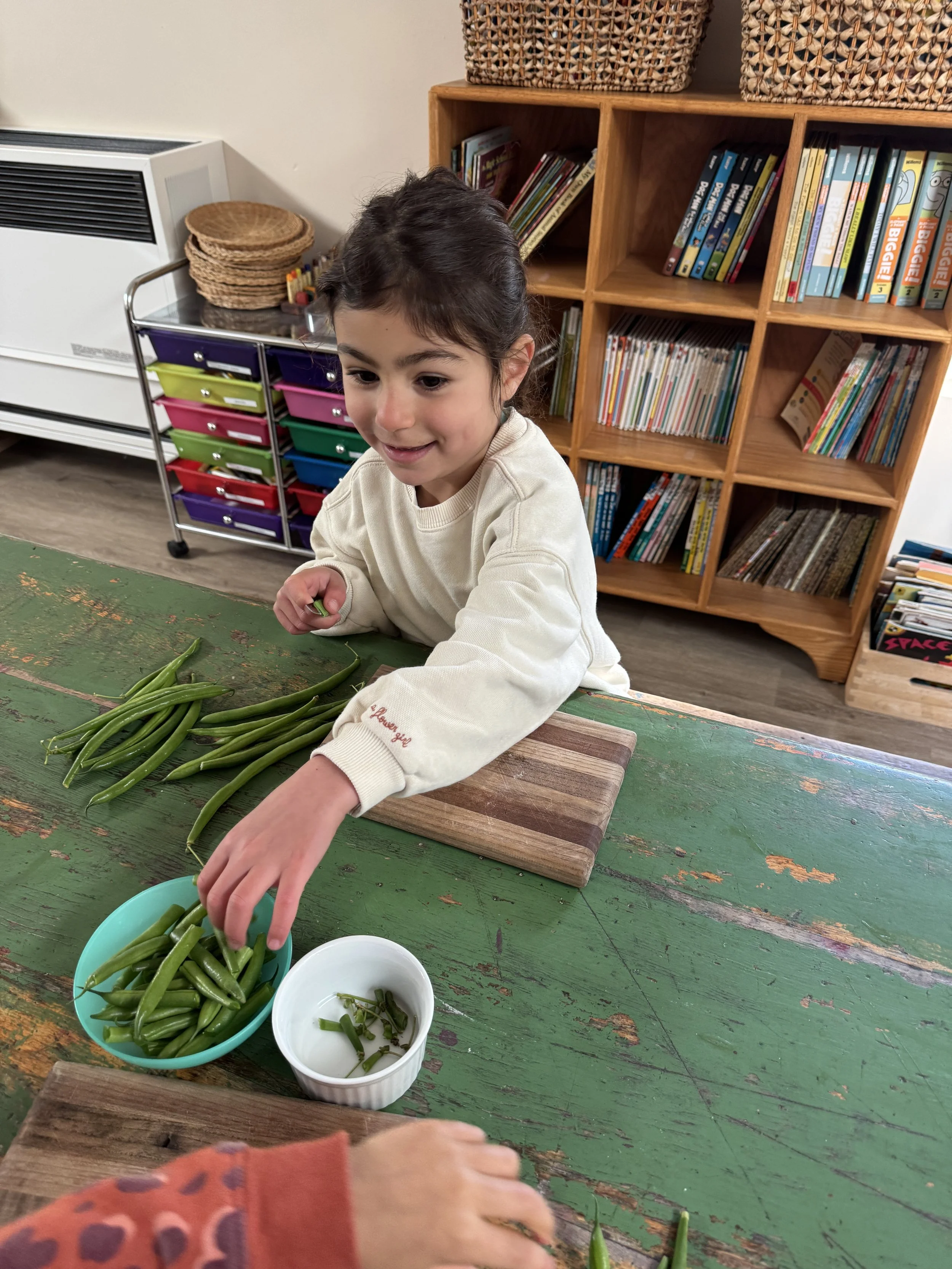
special events
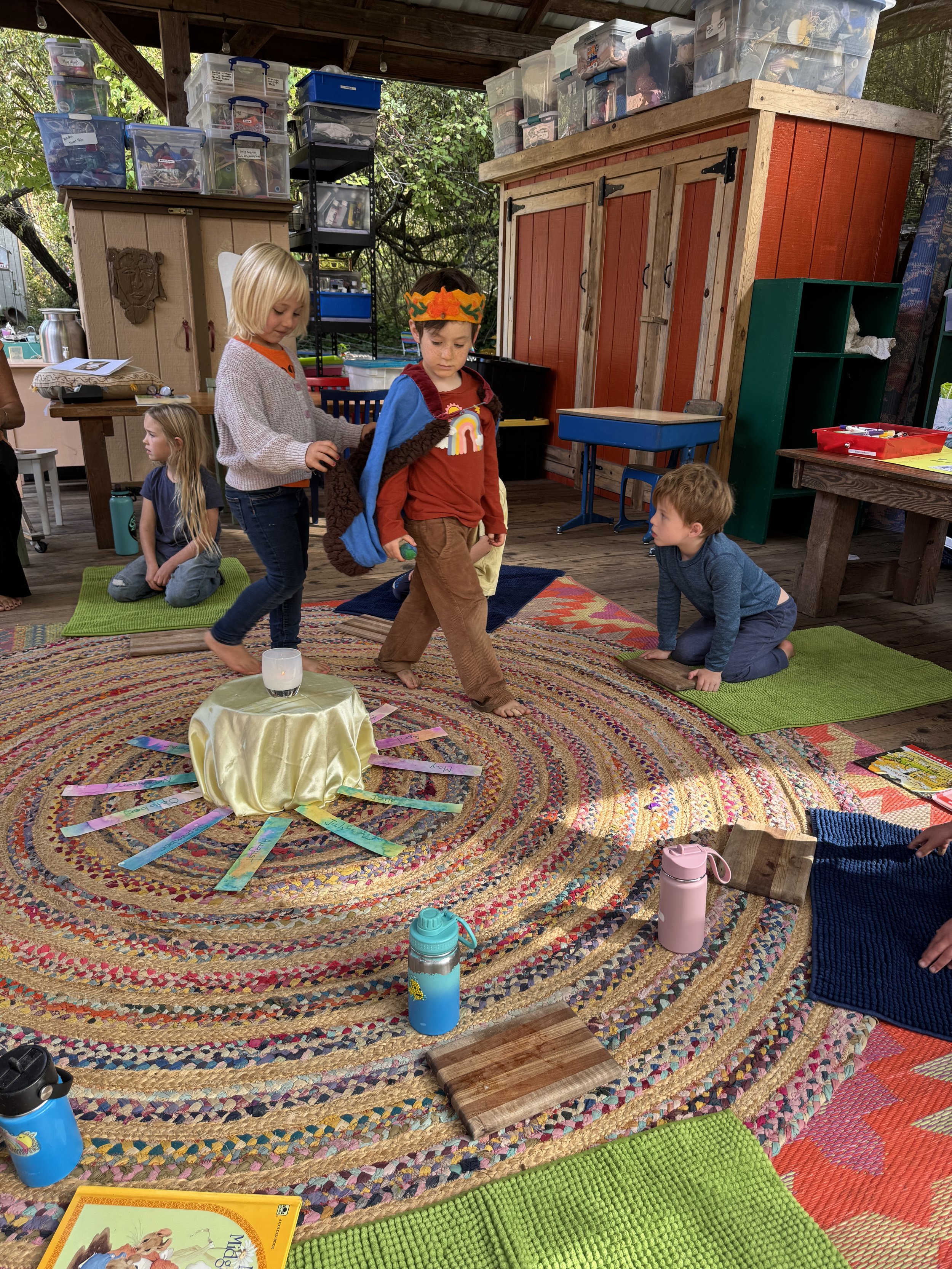
We celebrated Ezra and then Sage’s birthdays with our birthday circe. This is an honoring where we make the birthday child feel extremely special and all kids get to participate in the ceremony. Here is Ezra on his birthday, holding a felting Earth ball as he travels around the sun, passing each month of the year..
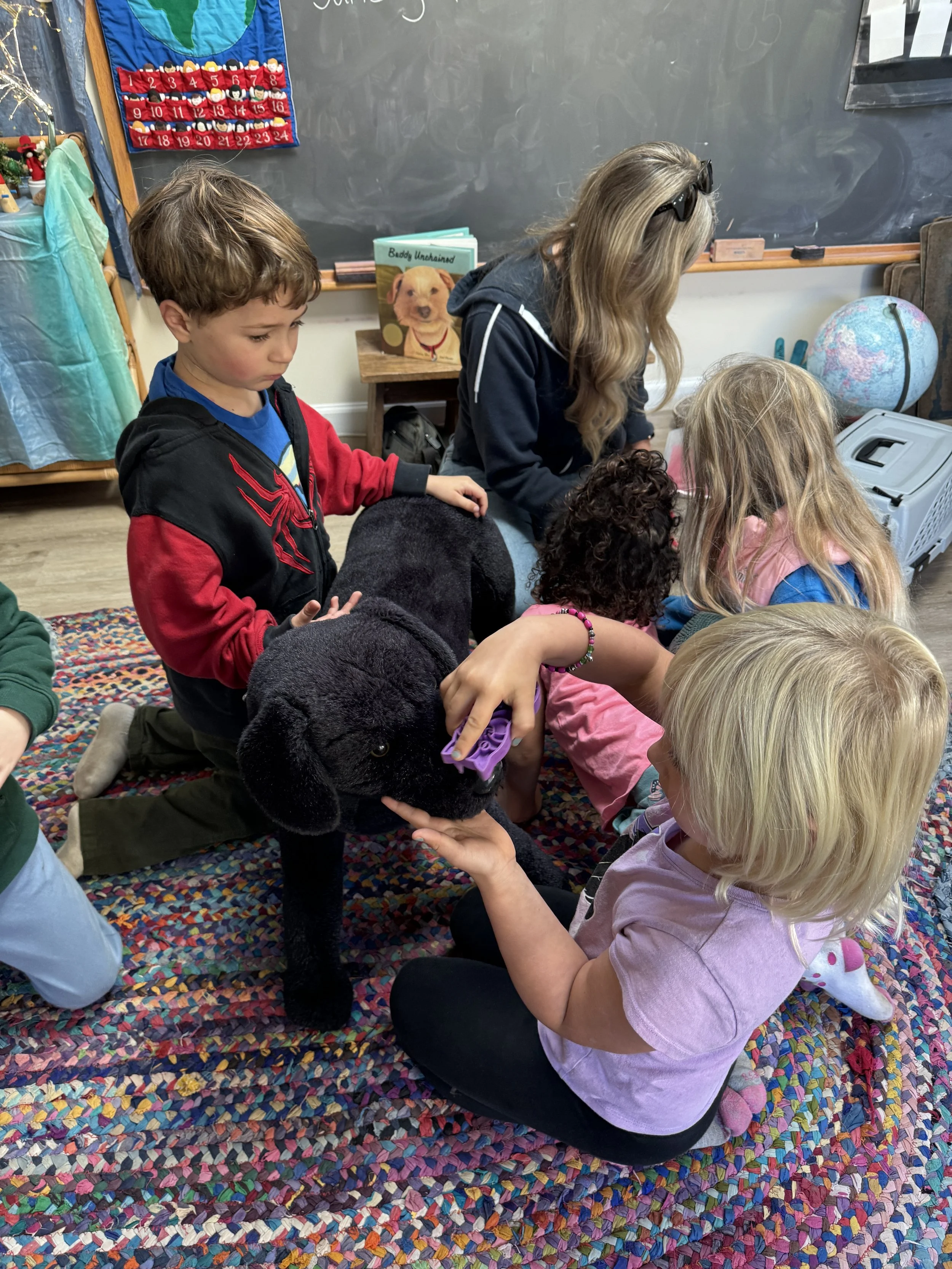
Kelsie, Amber’s mom, a dental hygienist by trade, came to give the kids a presentation on oral hygiene. It was engaging and informative and we hope it made a difference in encouraging your children to brush their teeth twice a day!
We also had two visits from educators with the SPCA: the first was a presentation about the wild animals in our midst and how to safely observe them and care for them. The second was called Pet Care 101 and was about how to care for pets and what to do if you see a pet in danger or mistreated. Again, the kids were great during these presentations — they asked on point questions, raised their hands, were friendly and polite and full of enthusiasm and stories to share. They made us proud to be their teachers.
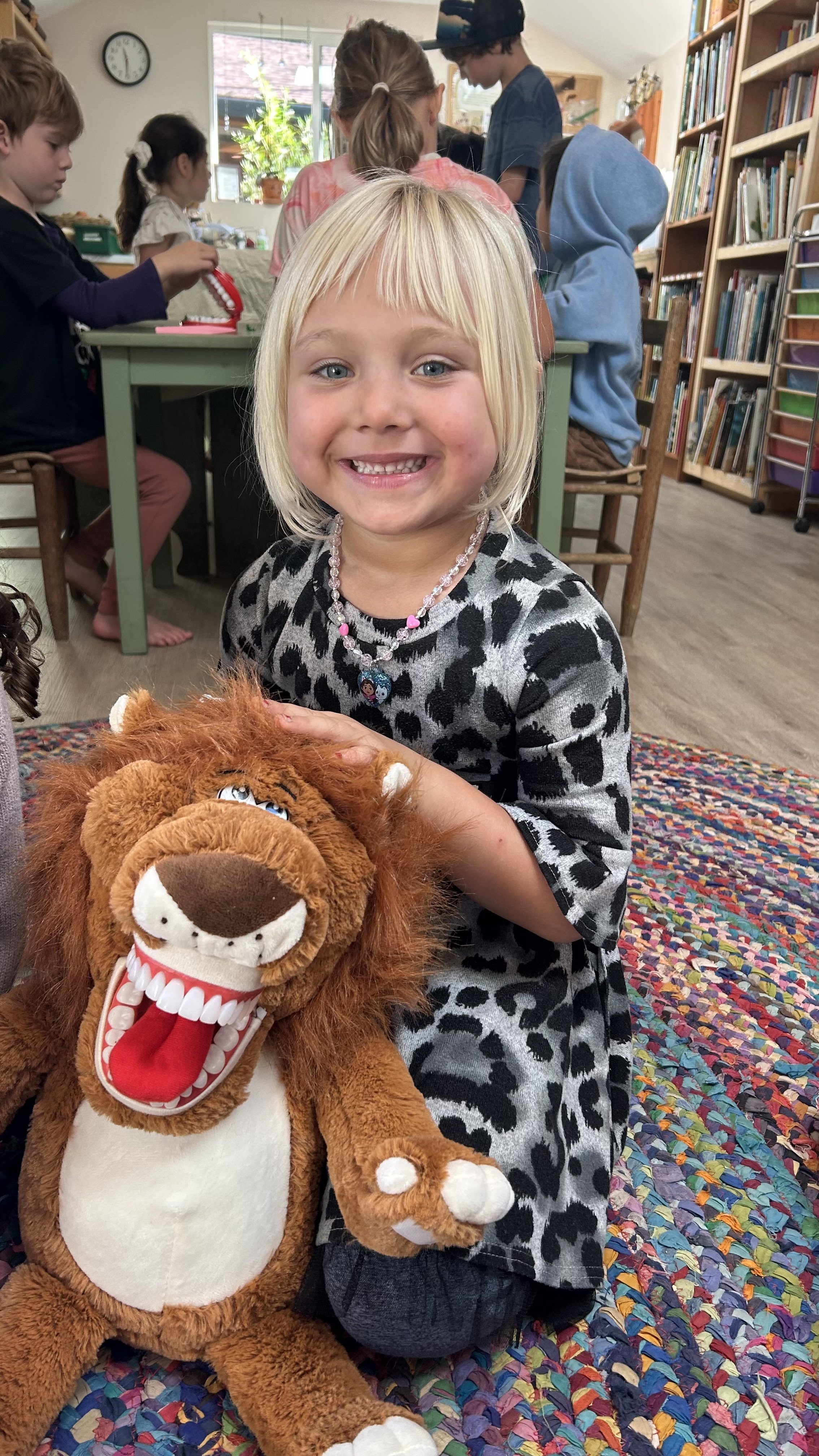
Alica on Toy Day
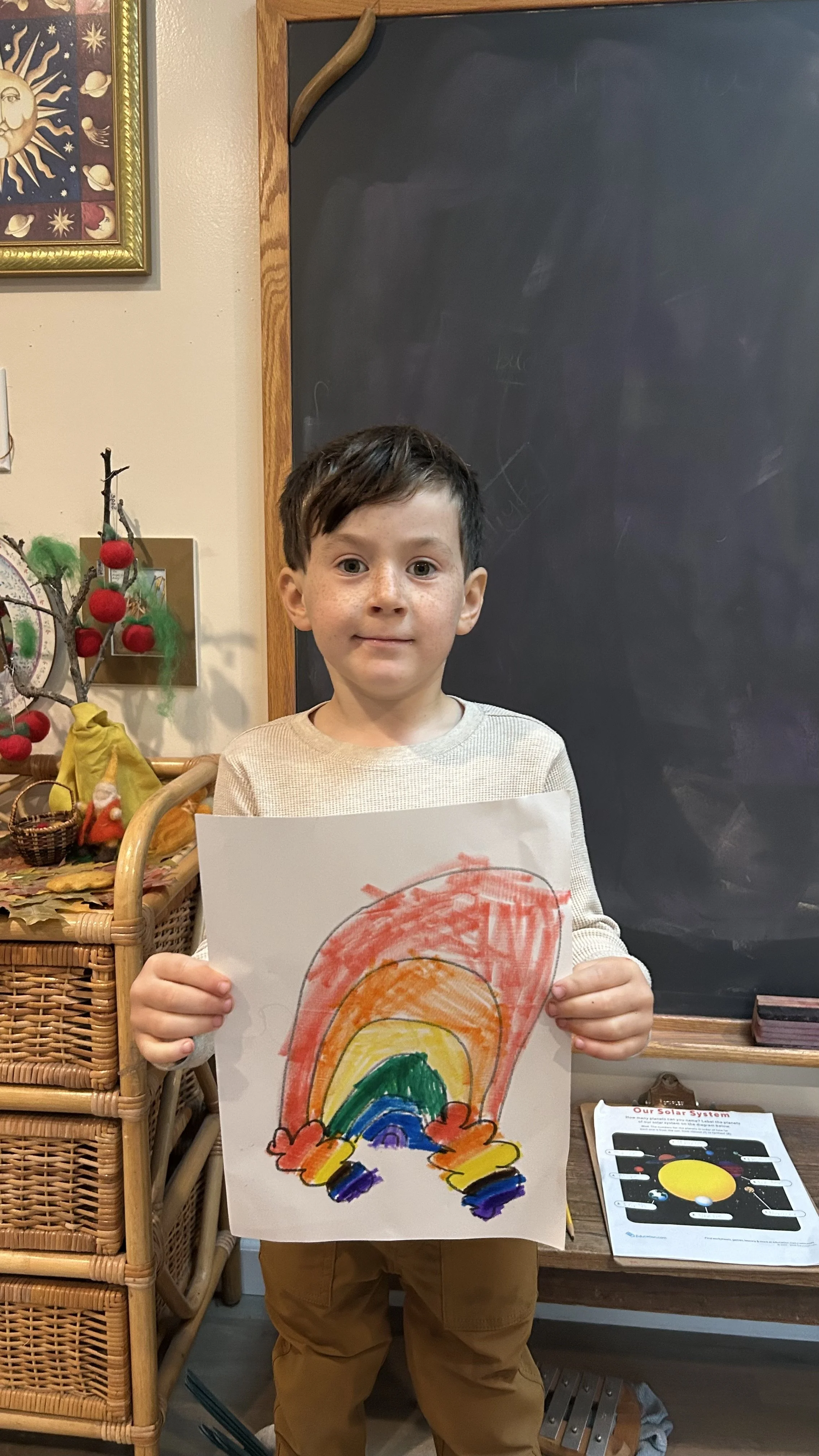
Proud Ezra
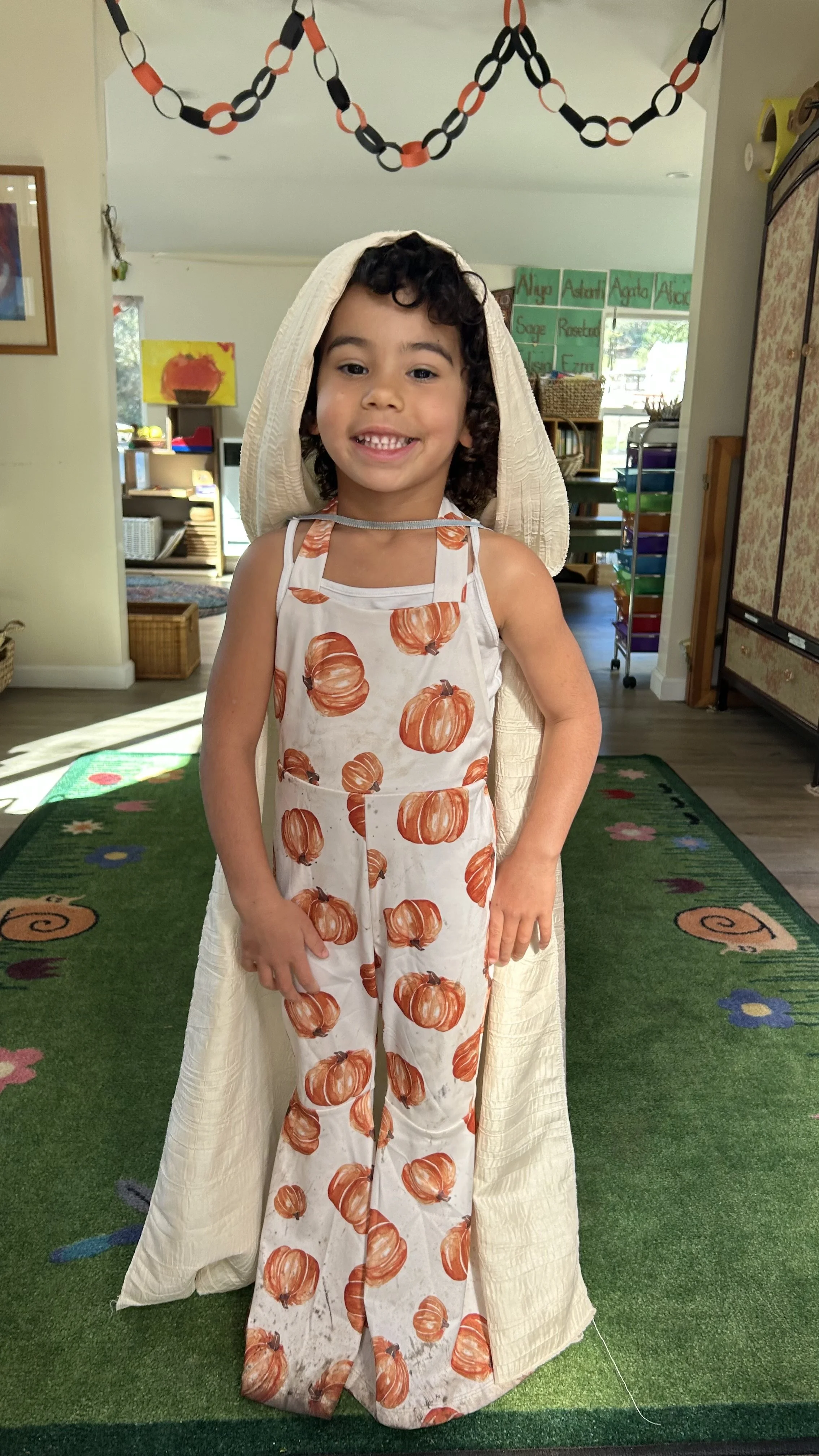
Lovely Ashanti
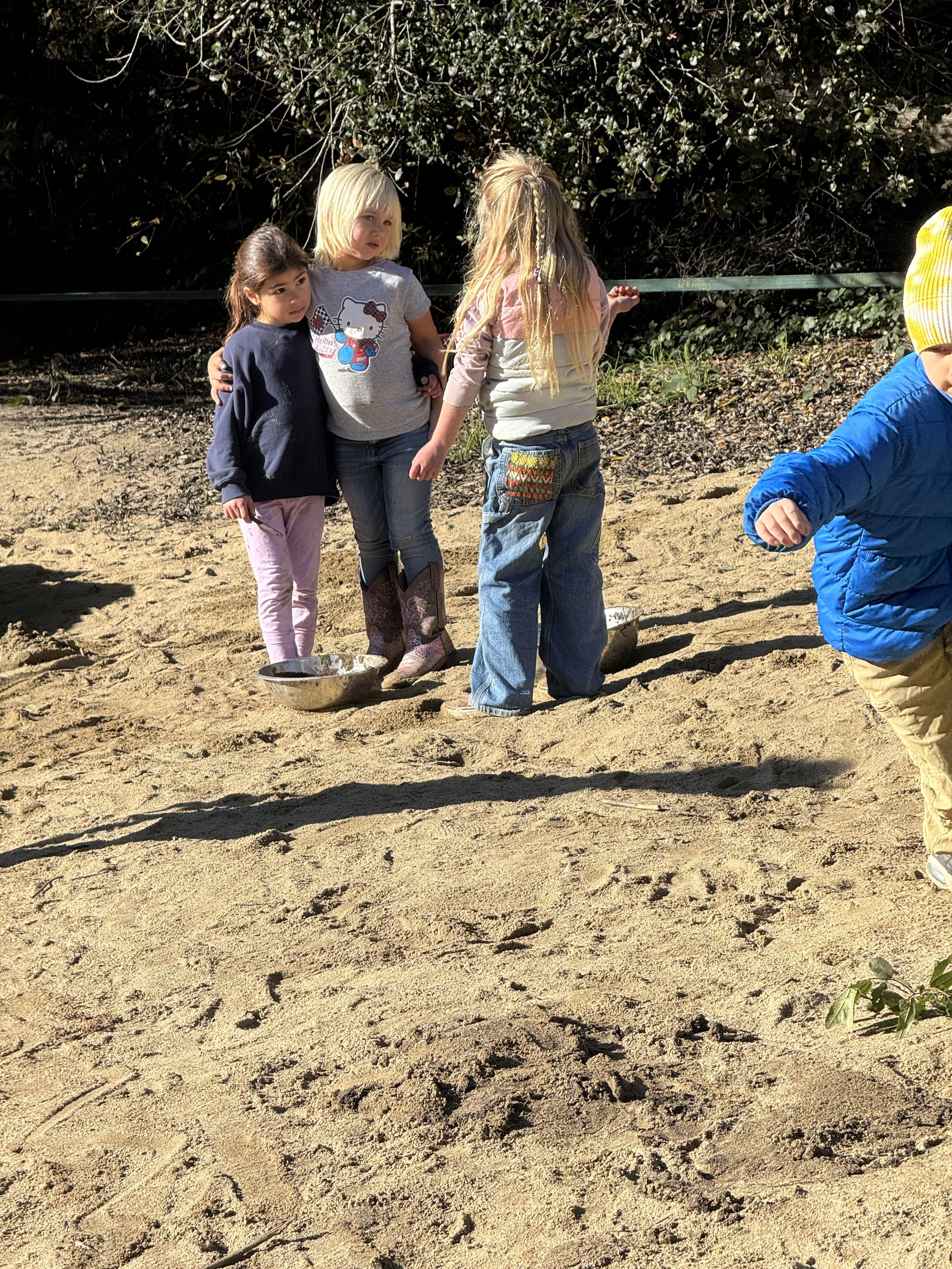
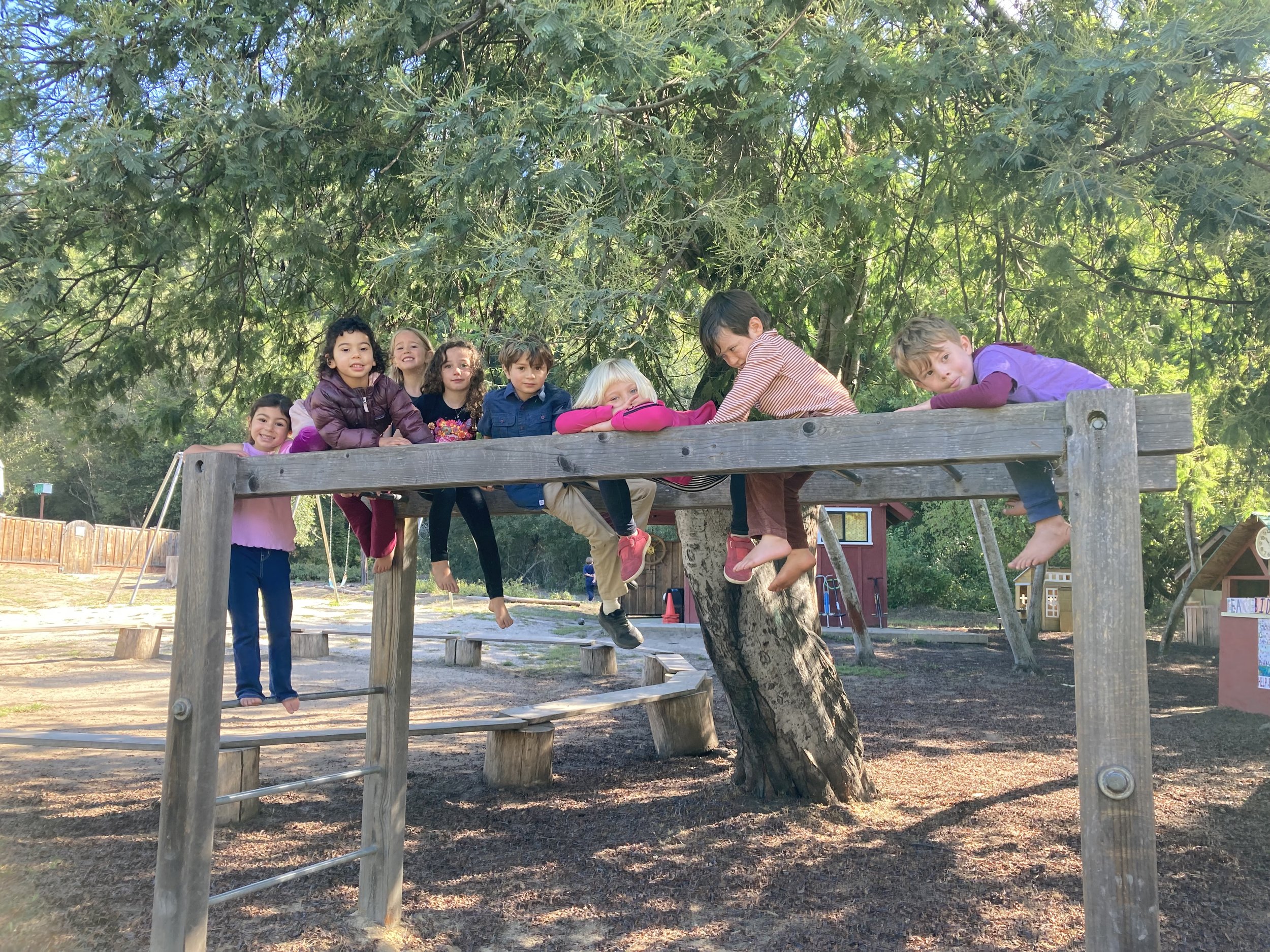
Friends
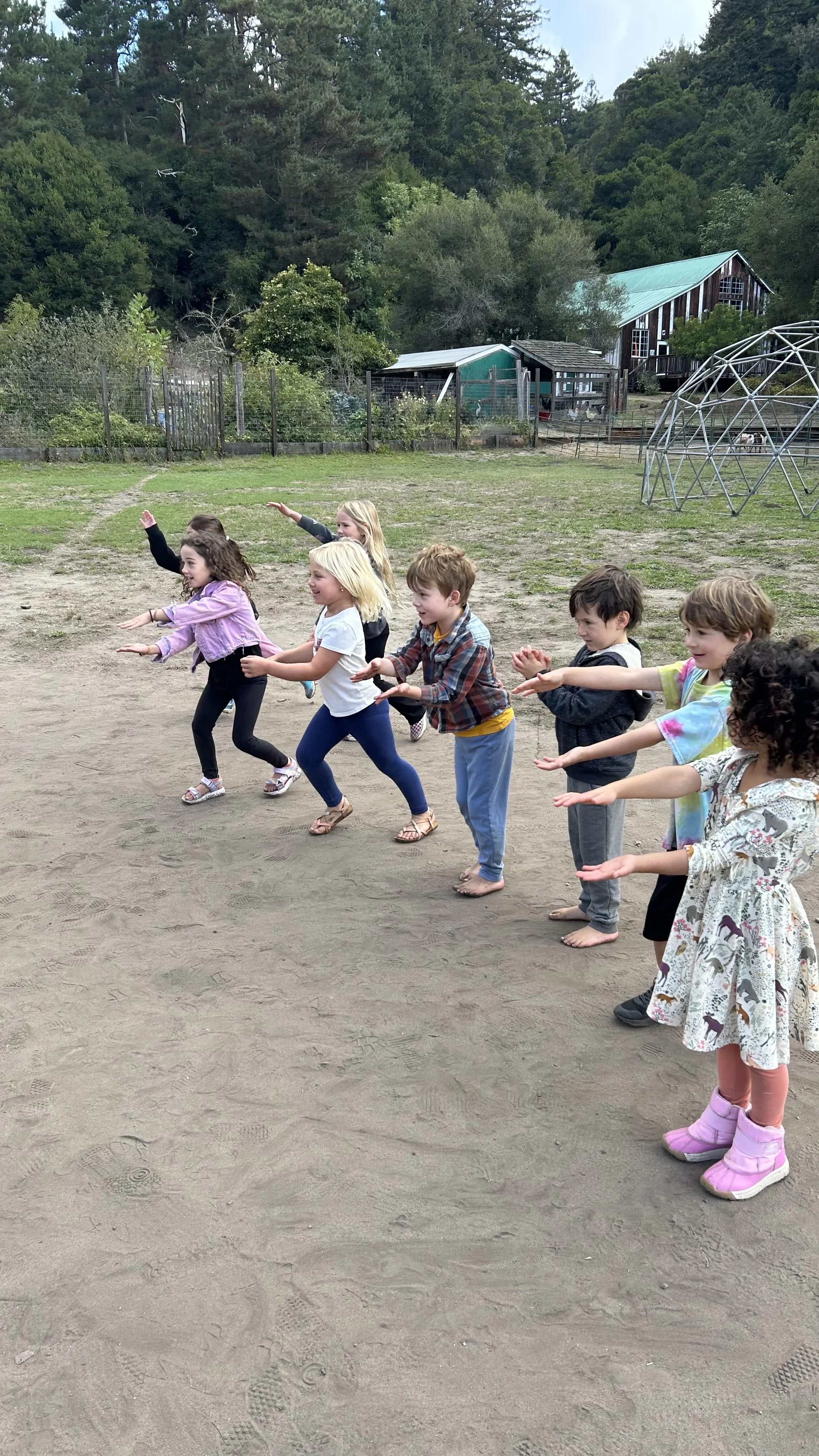
pE with tara
Parachute games
Four Square Run
Keeping the balloon up in the air
Yoga (Vinyasa flow, standard poses, kid-made poses)
Redwood hike
Sharks and Minnows
Red light, green light
Bean bag exercises
Ball exercises
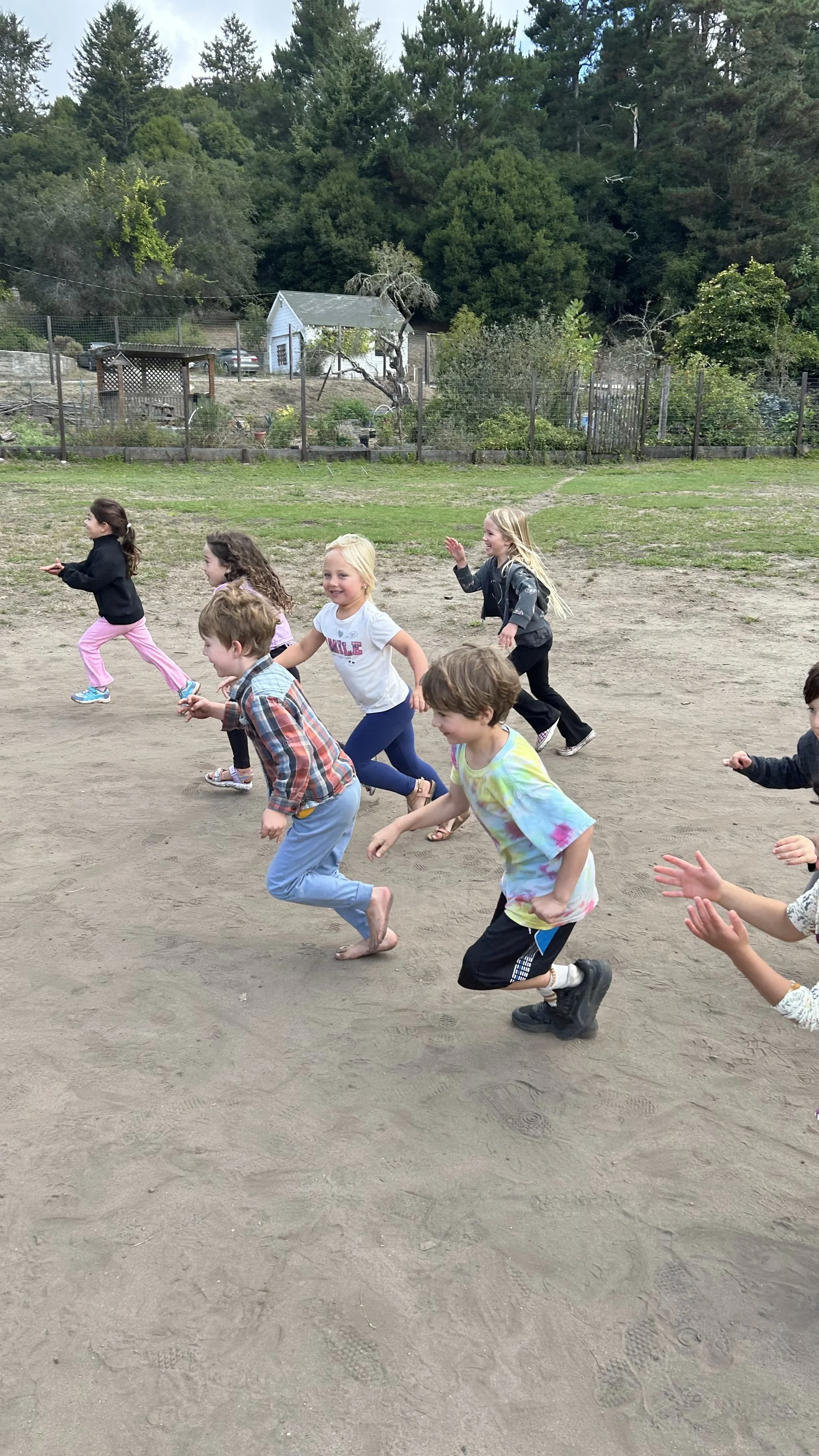
Ok, that’s a wrap. Please let us know if you enjoy these posts and we will keep writing them for you.
Love Rosy and Tara