
September in the Kinder Classroom
Hello Everyone,
I will be writing this blog (hopefully) each month. I hope you will find it useful. I’d like to start this post by sharing a quick video I took last week at snack time. We had been playing a letter recognition game with music and I kept the music running after the children sat down to eat. An impromptu dance party ensued and I was struck by how connected this group is already — comfortable, happy and uninhibited! I turned the video off too soon but several kids later came out to the center of the rug and performed solos. These guys make me smile!
Here a quick rundown of what we’ve been up to in class:
Math:
Children have been exploring various math manipulatives including snap blocks, pattern blocks and geoboards. These are useful materials to help learn concepts like patterns, measurement, fractions, geometry, adding and subtracting (and later in their school career, multiplication and division, ratio etc.)
Patterning is the theme of the month. The kids learned about the definition of a pattern and we’ve been making patterns with colors, shapes, sounds, our bodies, and even with food when we made fruit kebabs. Next week we’ll make beaded patterns and stamping patterns with letters.
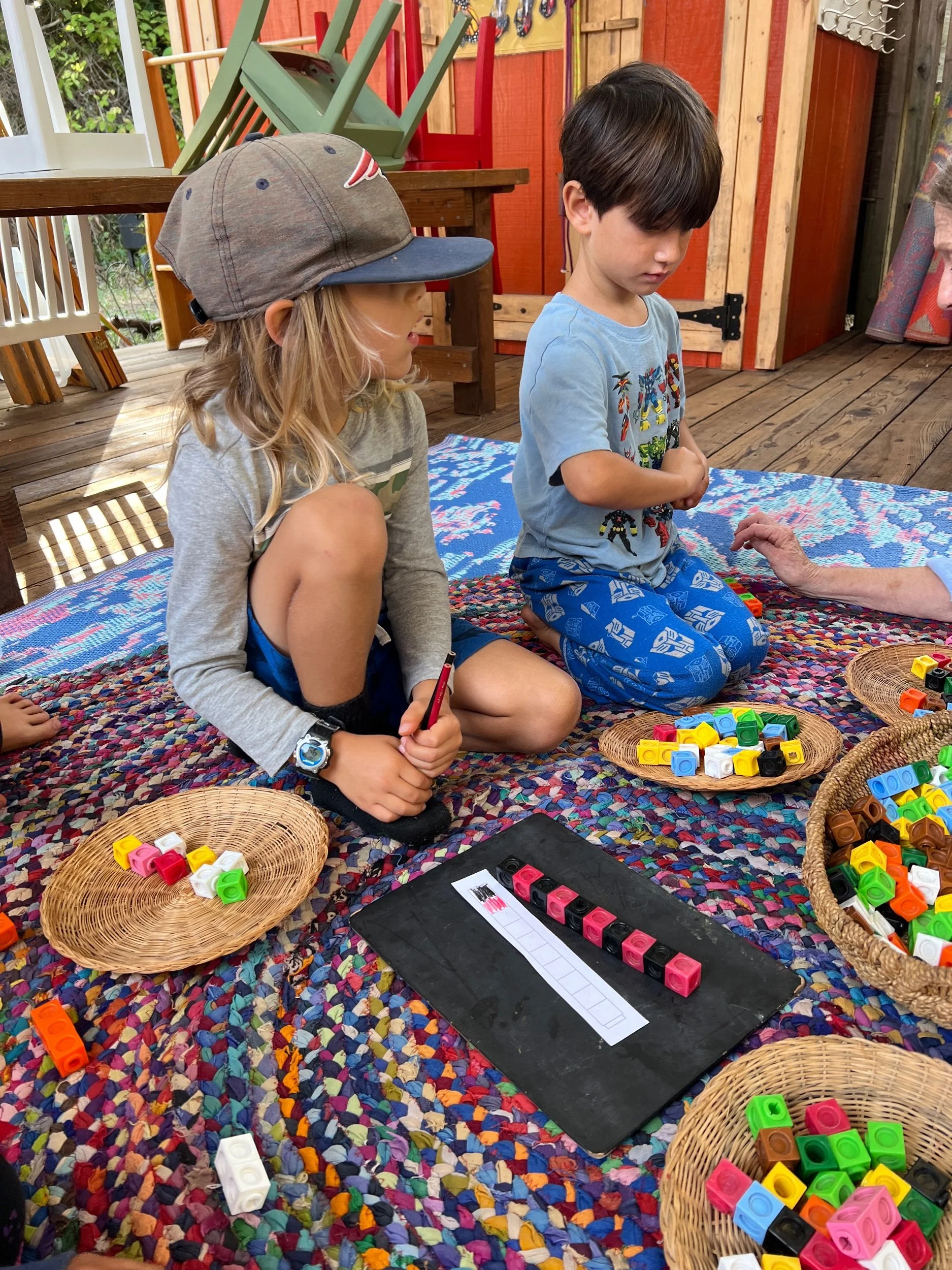
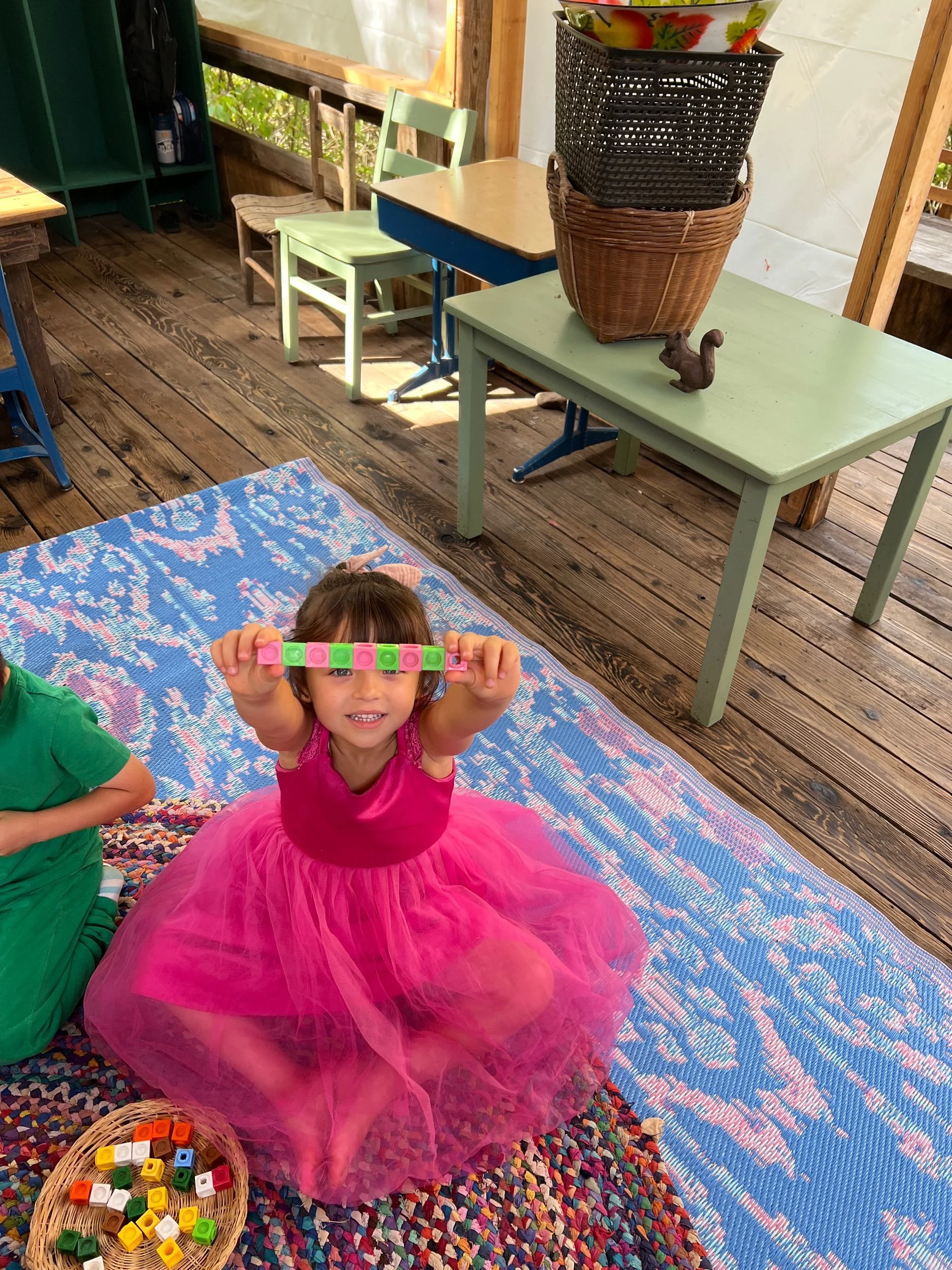
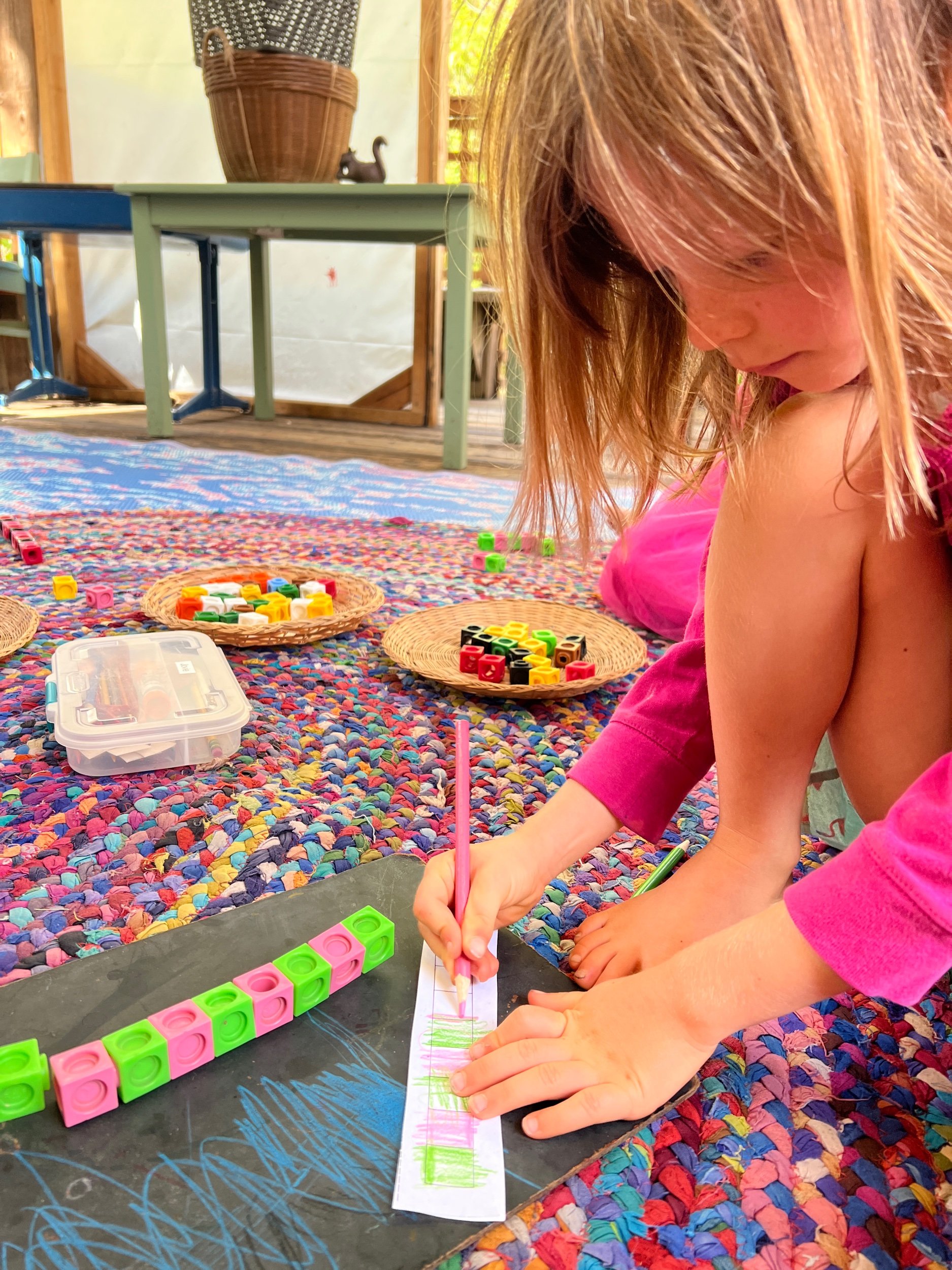
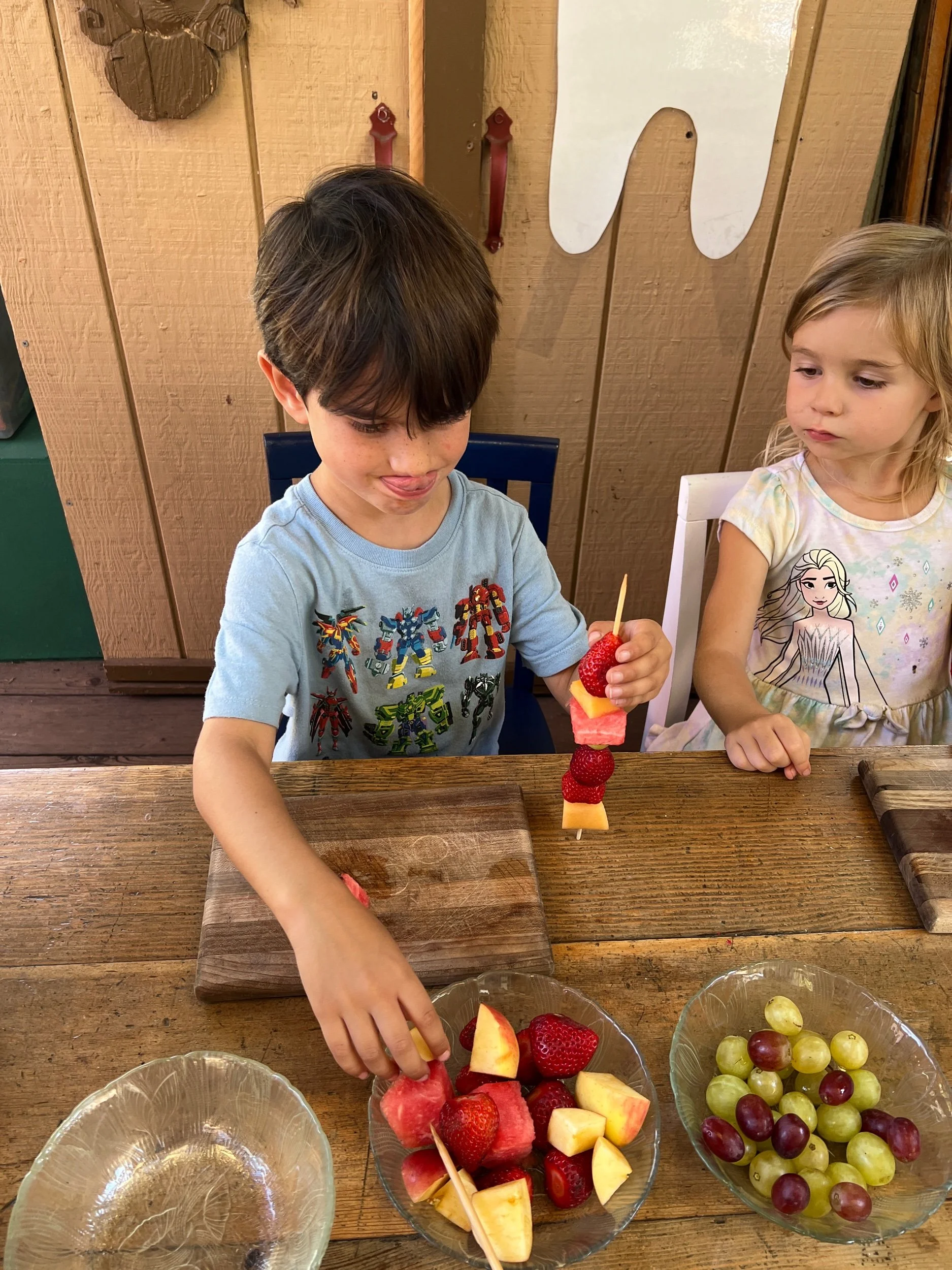
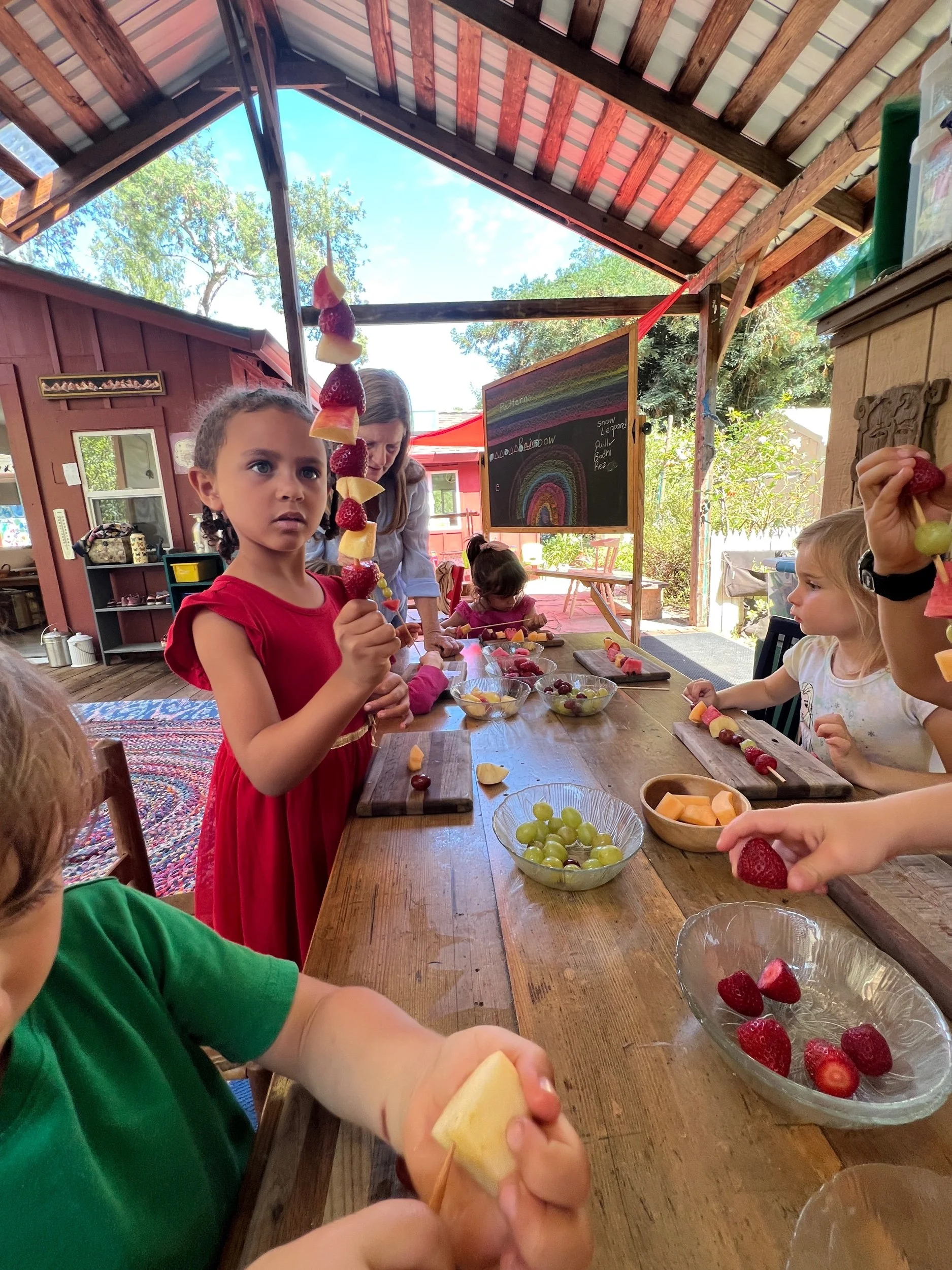
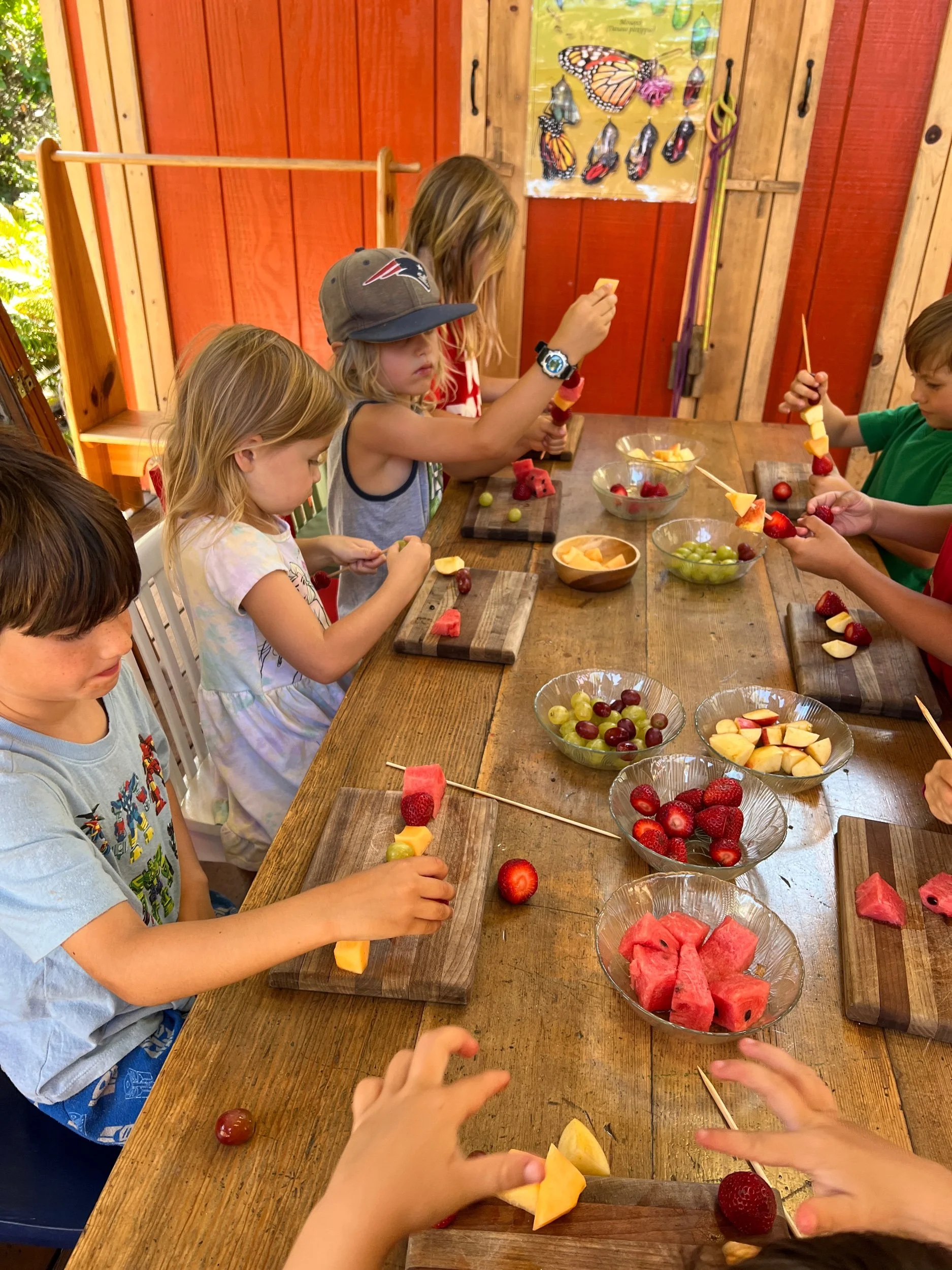
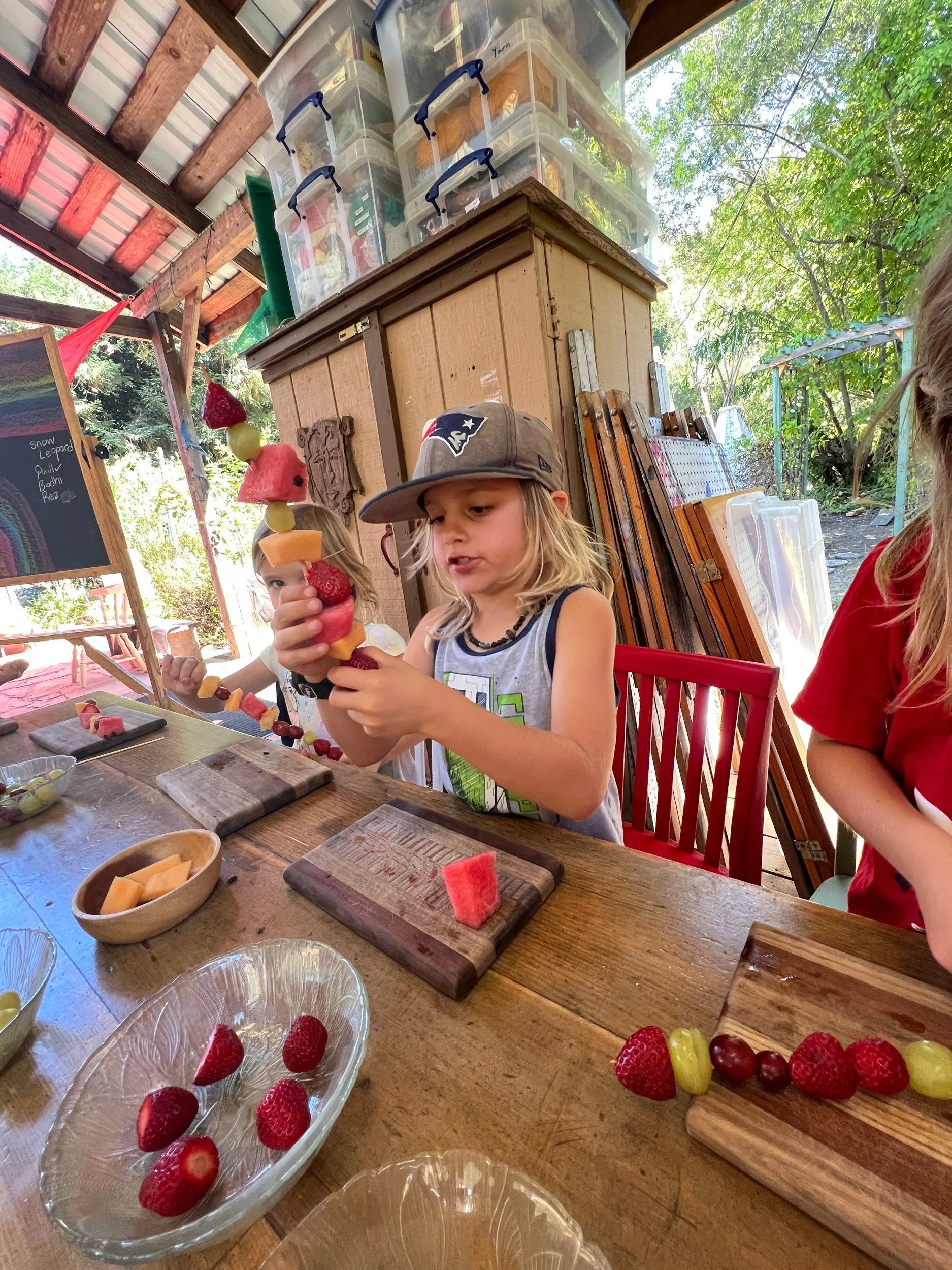
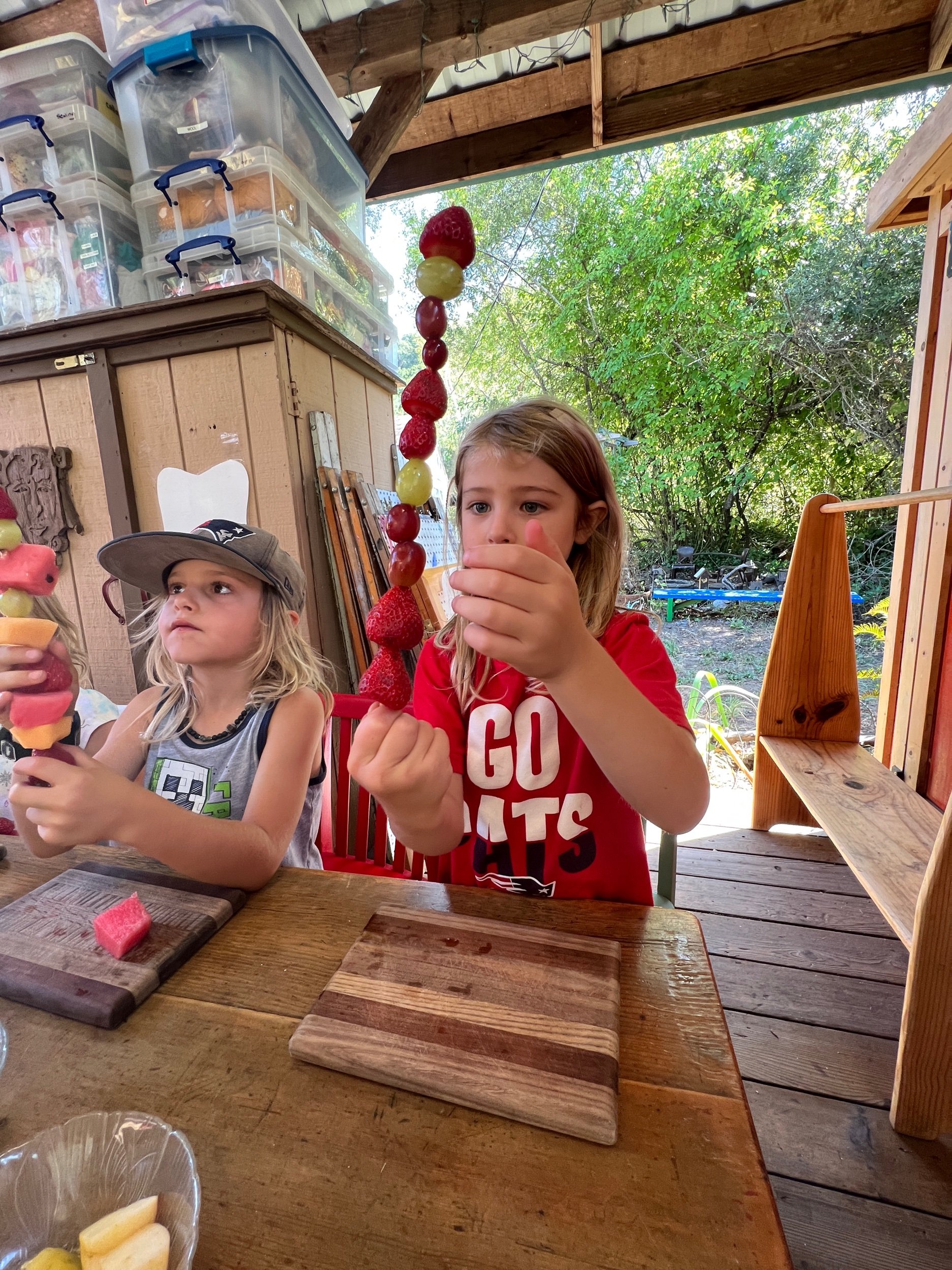
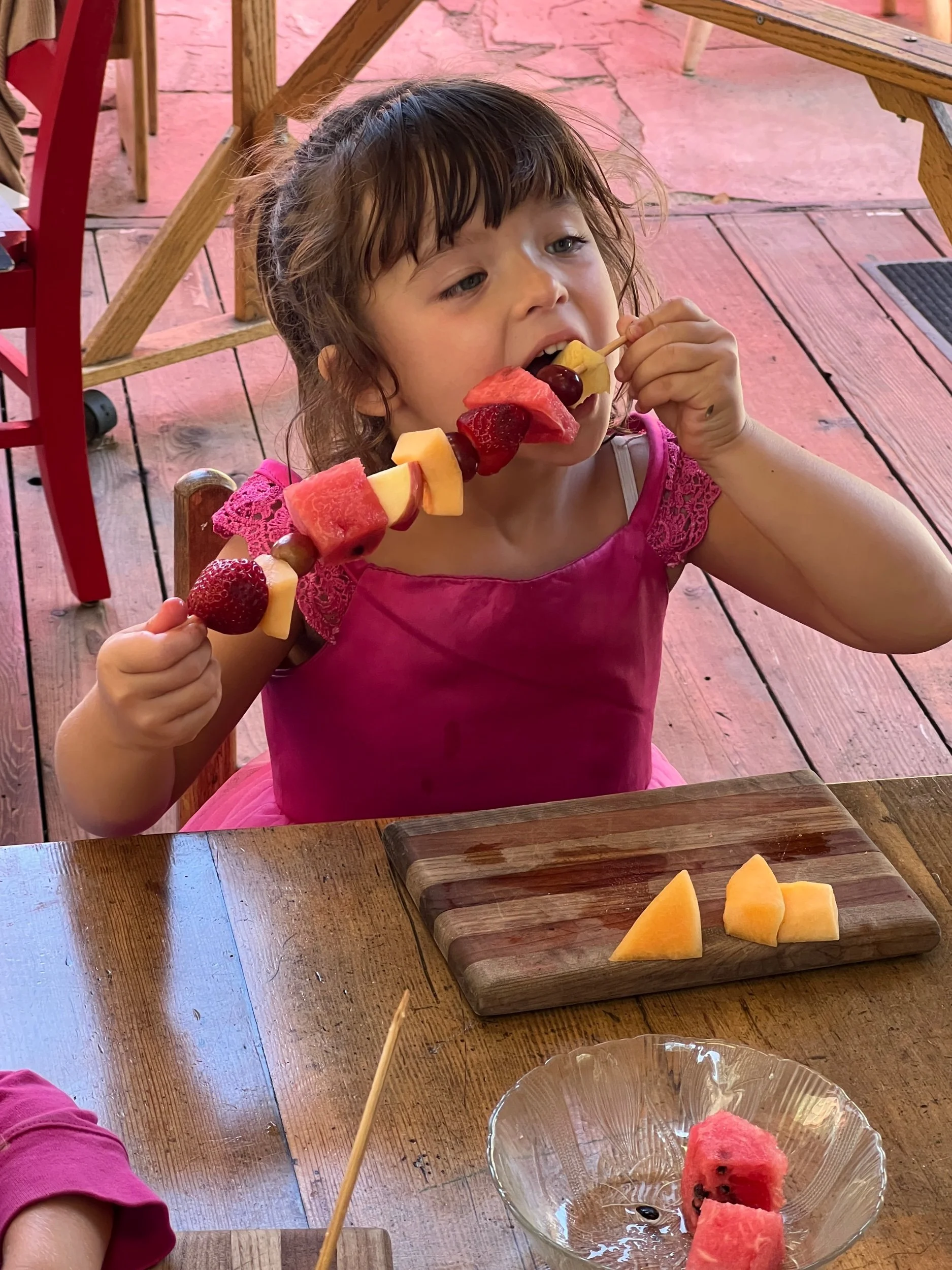
Here you see children making a pattern with snapblocks that they then copied onto paper and then replicated with a beat (red, green, red, green is the same pattern as snap, clap, snap, clap or 1,2,1,2, 1,2 and so on). Next they cut fruit and put it on kebab sticks in a similar pattern. Some were able to think of complex patters like AABAAB or ABCABC and others stuck with ABABAB.
We’ve also started a study of the “golden numbers” with number 1. The children practiced the number in their workbooks and drew a picture of things there are only one of: themselves, the sun, the Earth and the moon.
Language Arts:
Our focus has been correcting and perfecting pencil grips — there is a right way and a wrong way to hold a pencil for ultimate fine motor control and uniformity with handwriting. Most of these guys already have their grip down — working on this early makes it soon feel natural and second-nature. The kids have also been getting a lot of practice with scissors (thumbs up and in the little scissor hole) and have worked on “cutting lessons,” a series of line cuttings that get increasingly hard, culminating in a spiral “snake” that they will also create a pattern on. Kindergarten teachers love it when everything ties in to everything else!
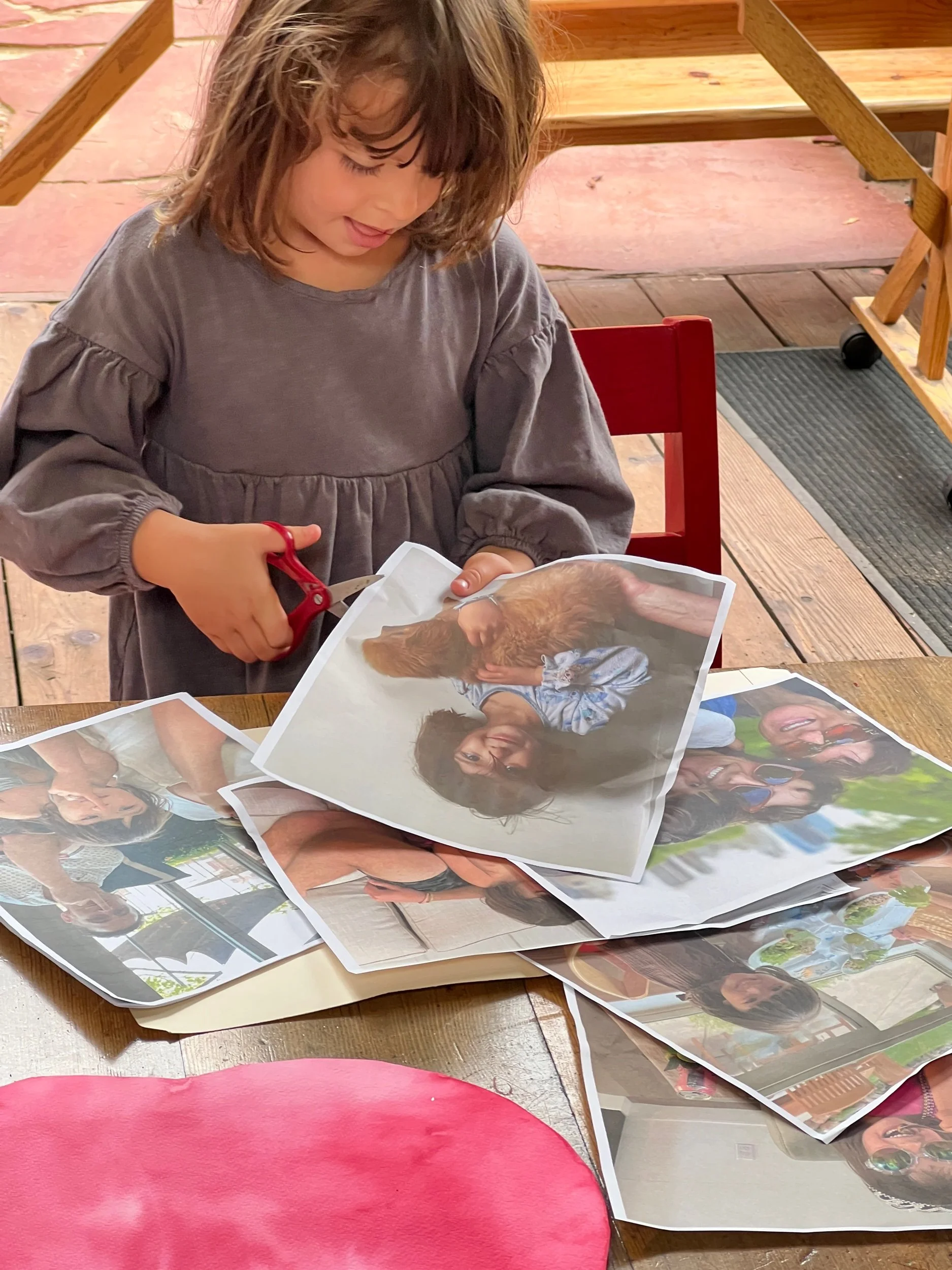
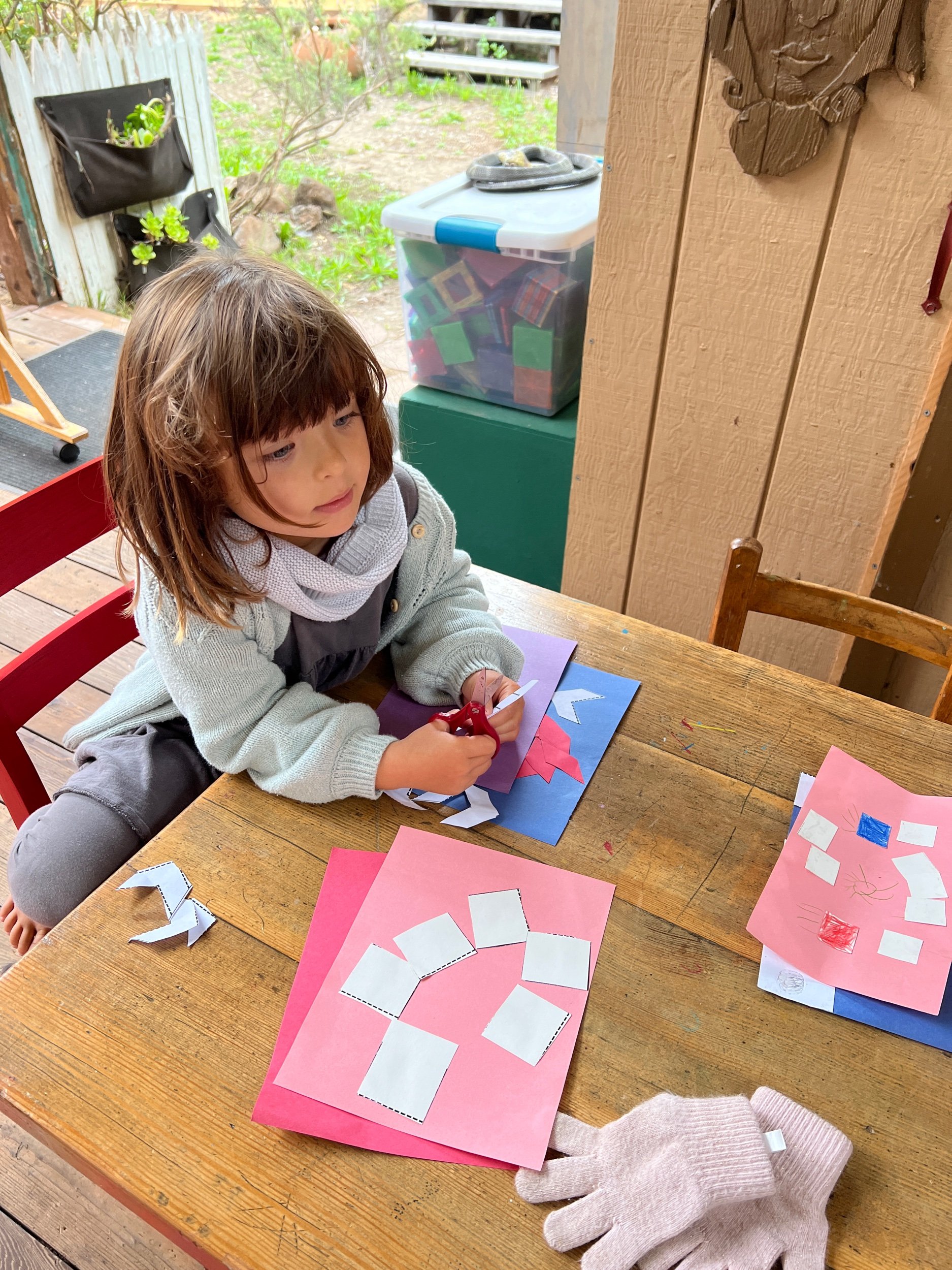
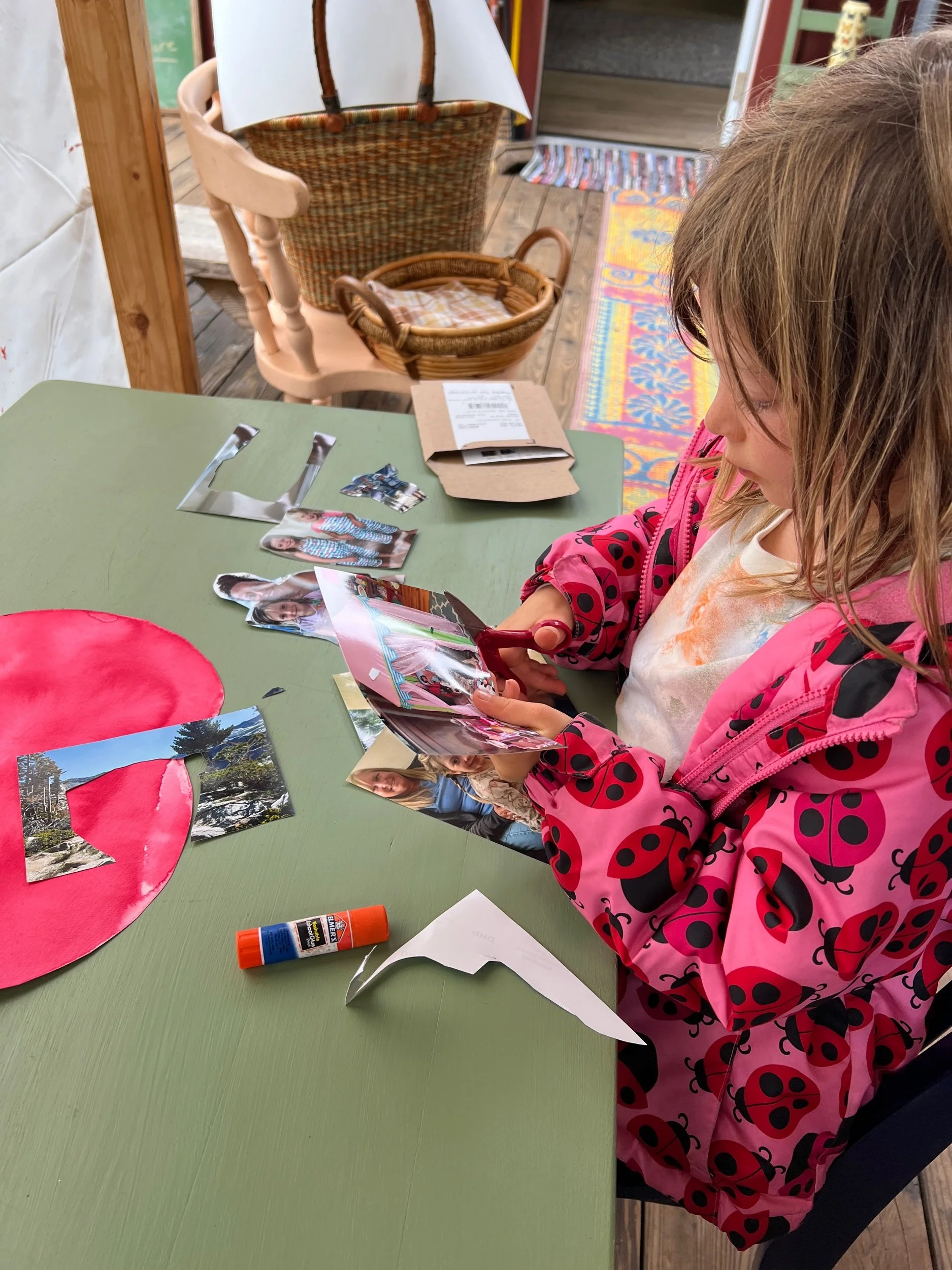
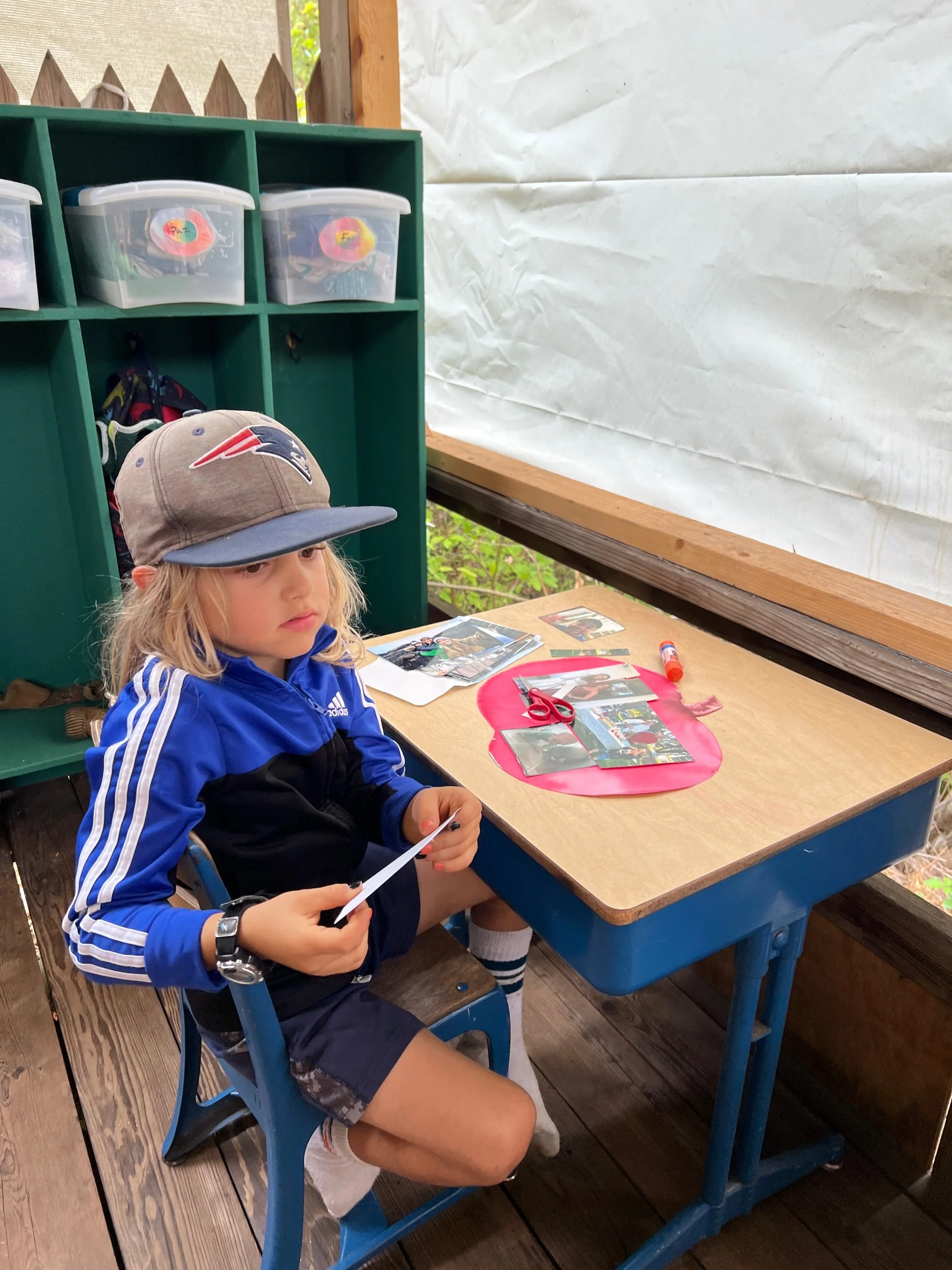
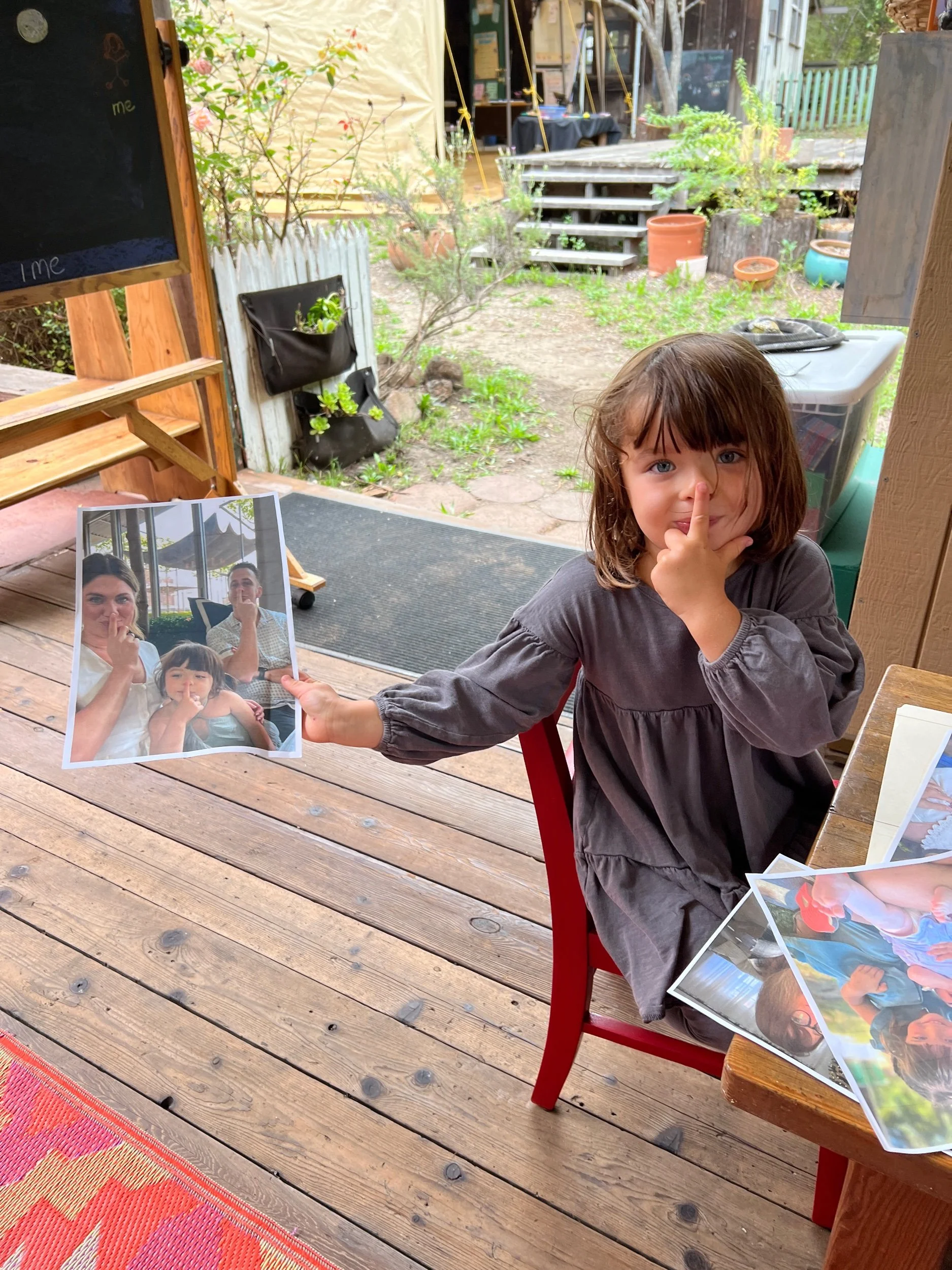
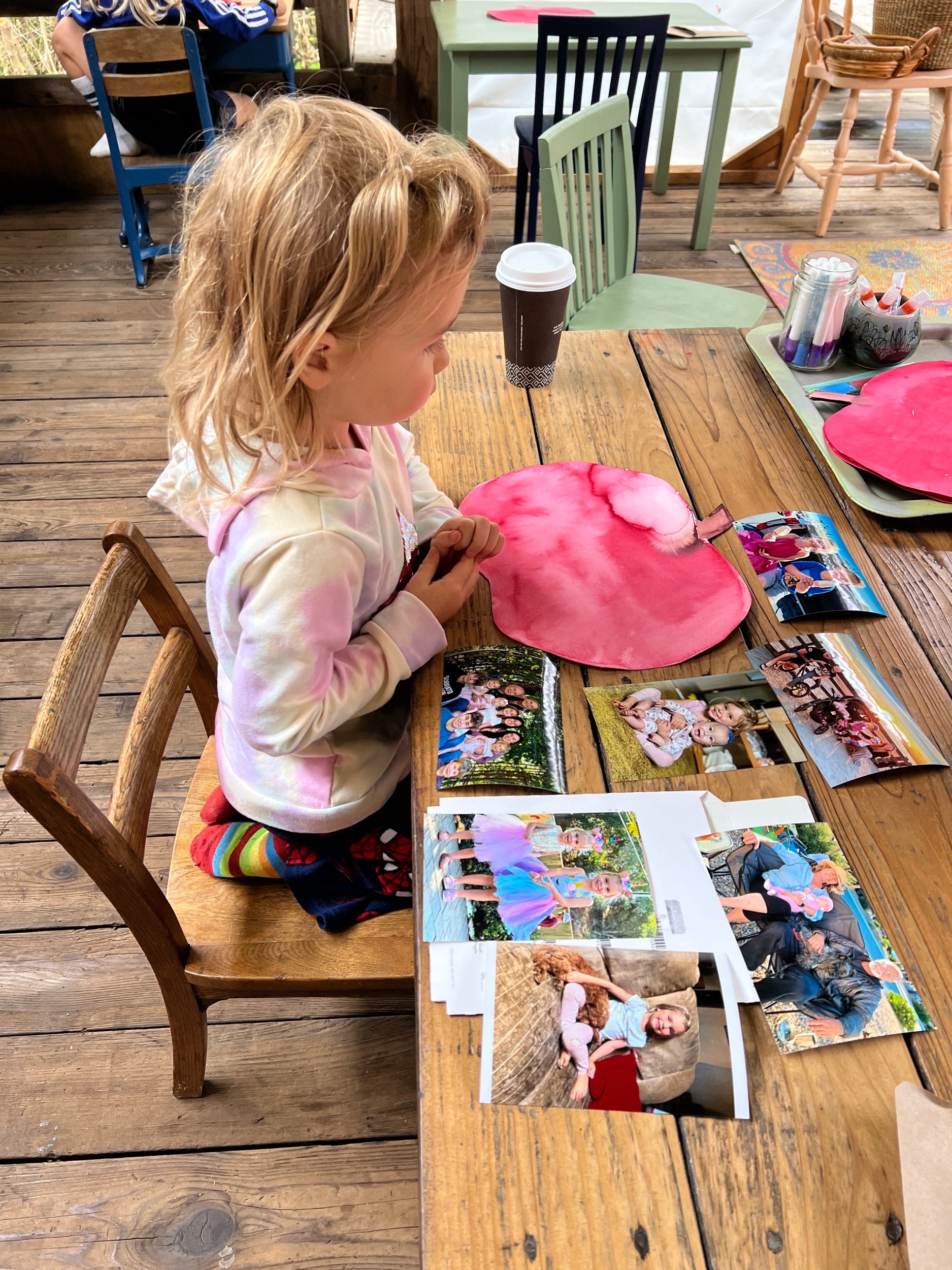
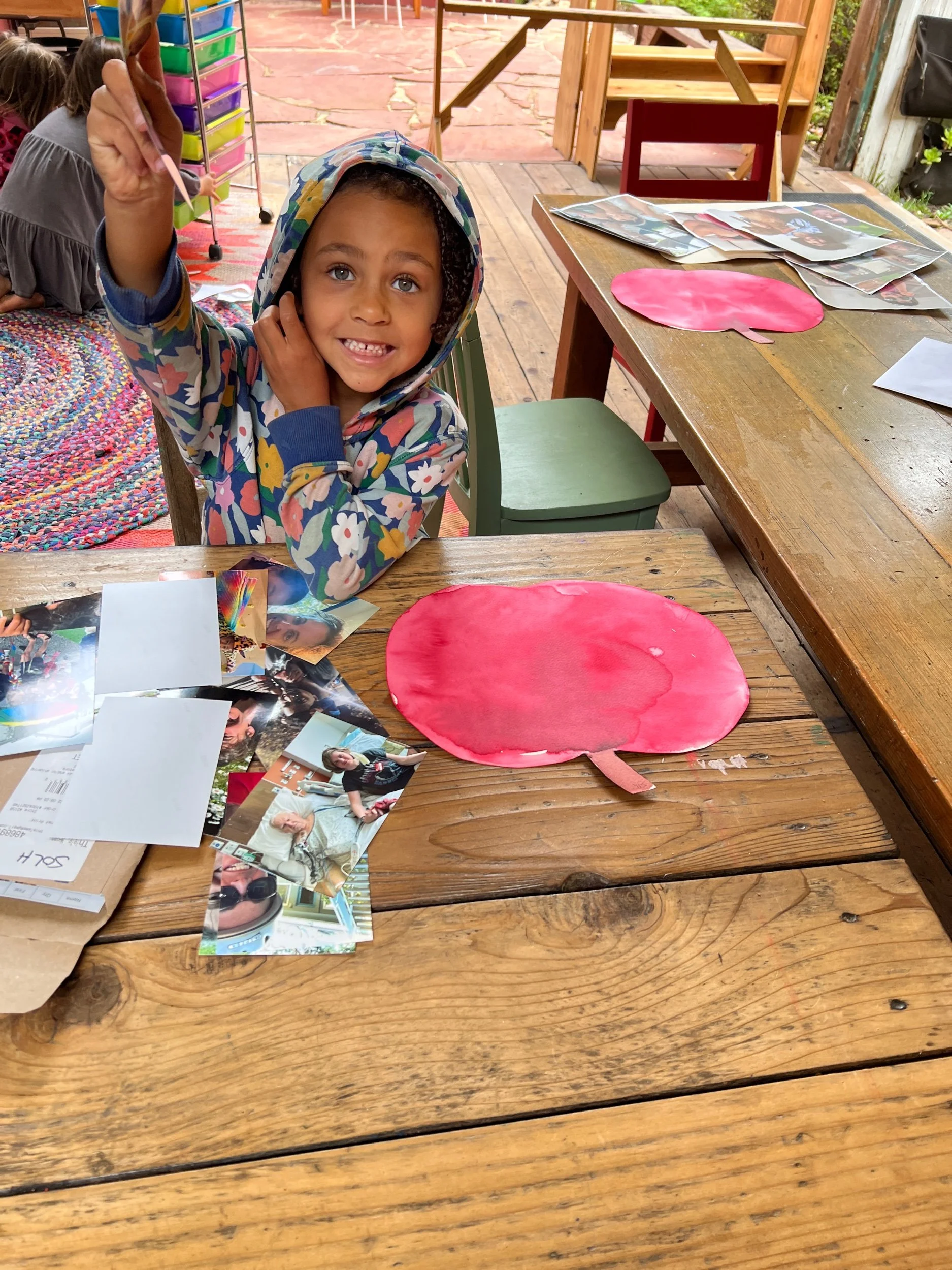
Come see the family collages, another cutting exercise — They’ll be up in the classroom shortly. Did you make it into their selections or maybe you had your head and body put in two separate places? It’s always interesting to see the collaging visions of a kindergartener.
Also in language arts, the children have been introduced to new language of lines, the lines that make up letters — these are: I, —, C, C backwards, /, / facing the other way, u, n. We refer to these as the standing line, sleeping line, cup handle lines, slide lines, jump rope line and rainbow line. Valerie C. also uses this language in first and second grade handwriting work. It helps to remember letter symbols when they are broken up into lines and curves. It is also an effective way to practice handwriting.
Another focus has been re-learning name writing with the first letter uppercase and the rest in lower case. This is how I would like them to always write their names and is the beginning of teaching the lower case letters which actually are used far more than uppercase letters in the English language. If you are an adult who writes all uppercase, you may be corrected by your kindergartener as they learn to write!
Science:
We did an experiment with hand washing as a way to talk about germs and good hygiene. I spread lotion (snot) on kids hands and then sprinkled them with glitter (germs) and kids touched each other after “sneezing” in their hands to see how germs transfer from person to person. Then they washed hands quickly in cold water and then counting to 20 in warm water with soap. The hands were so much cleaner with version 2 so the point was made.
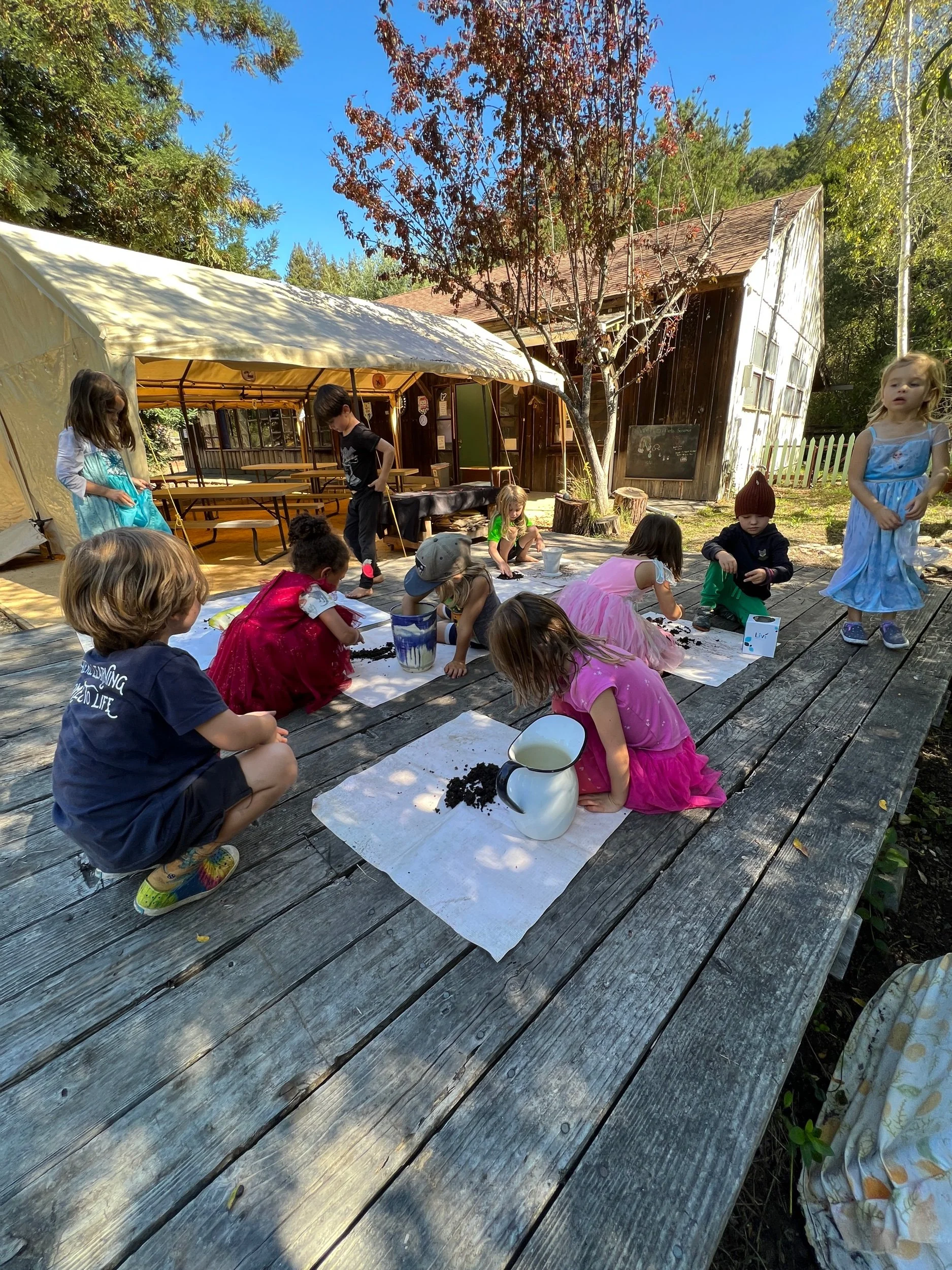
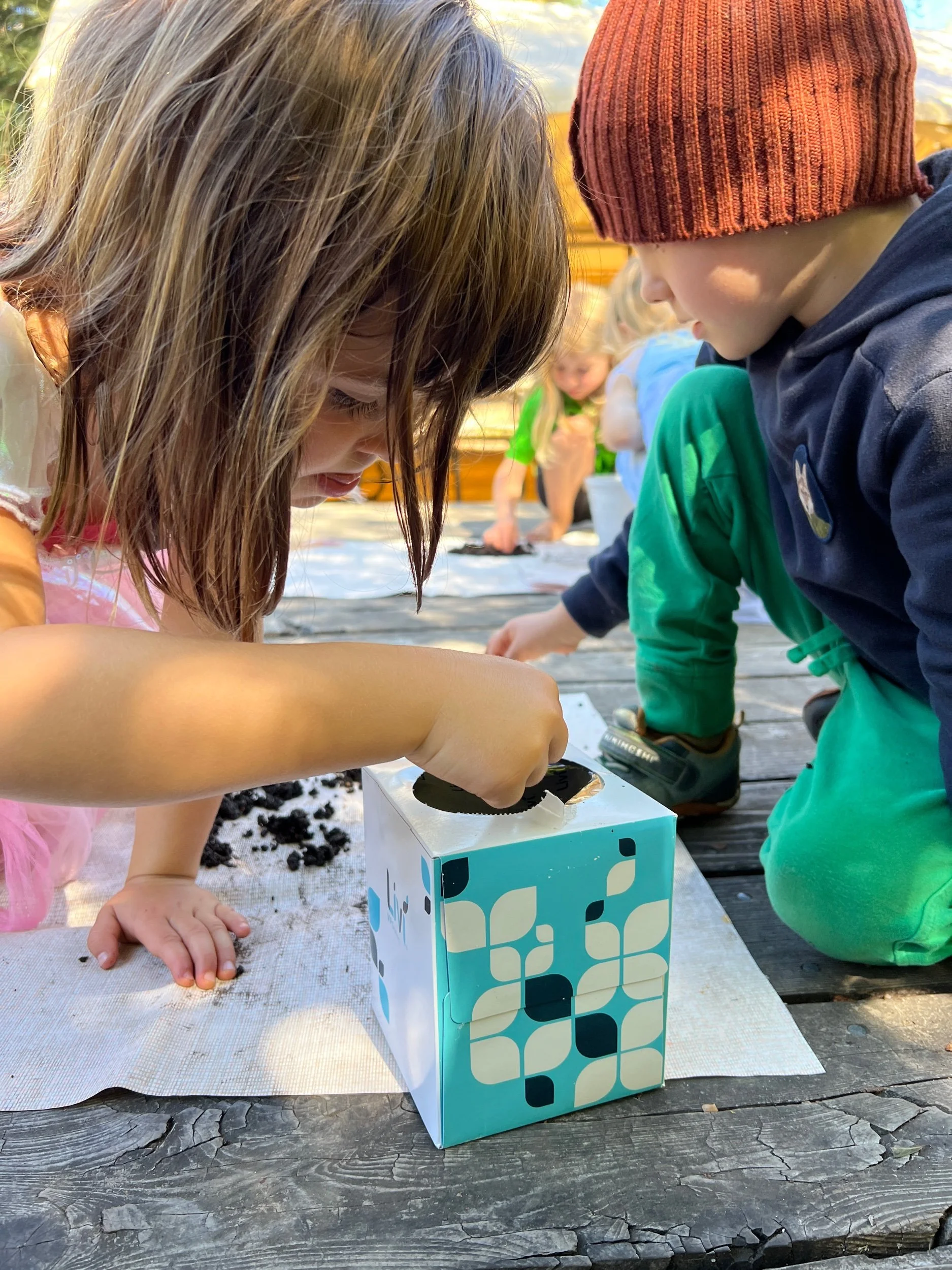
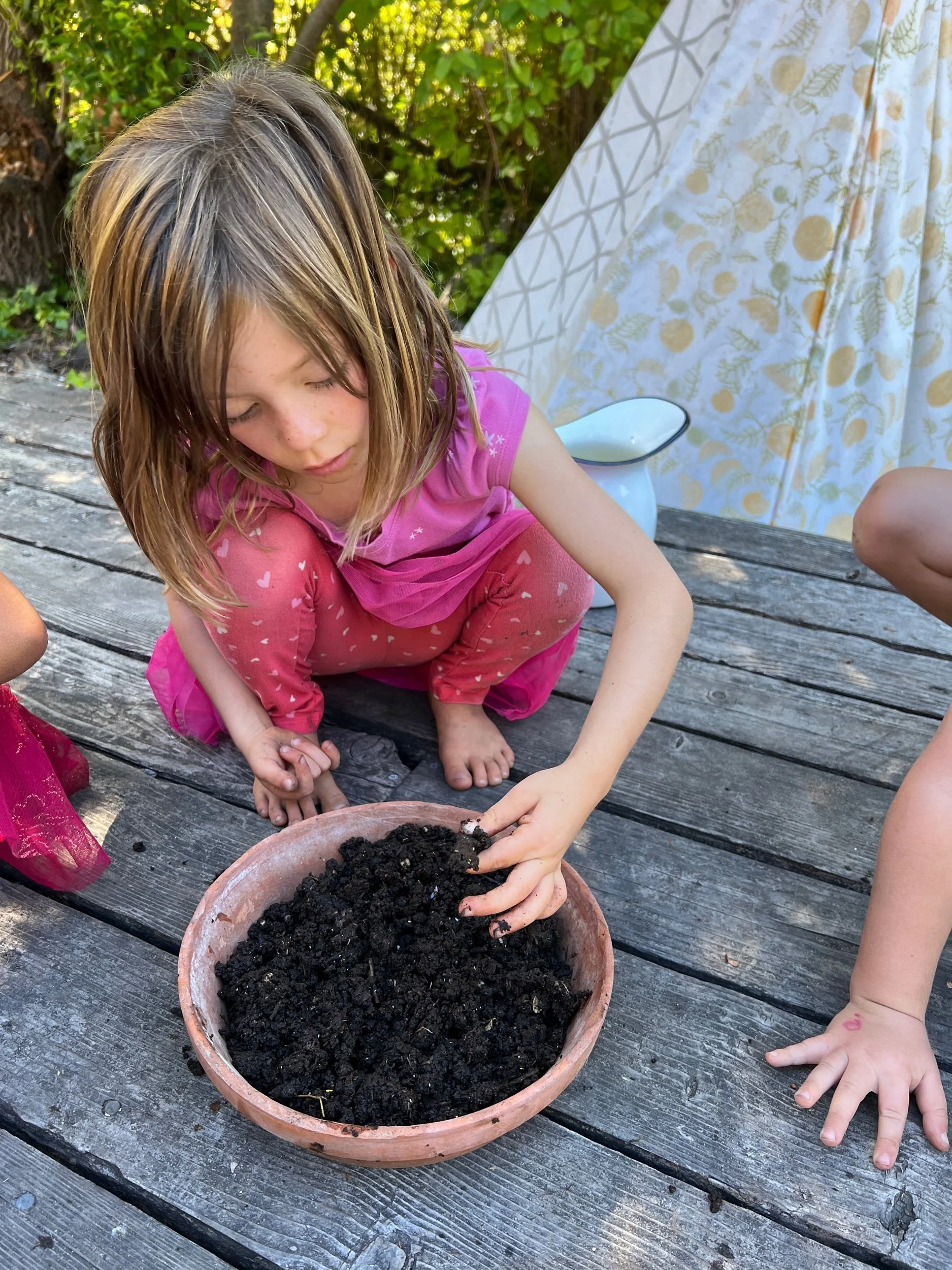
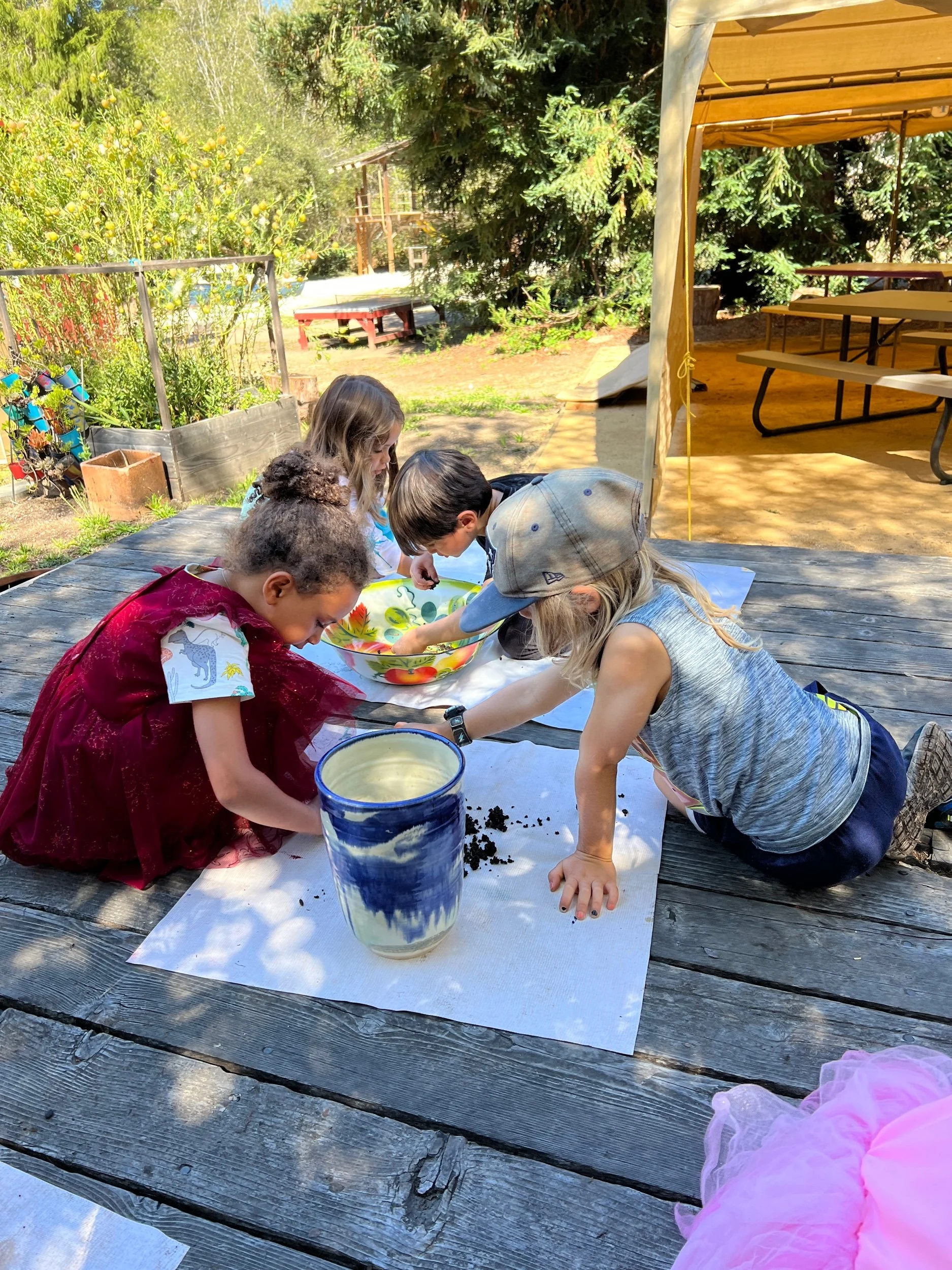
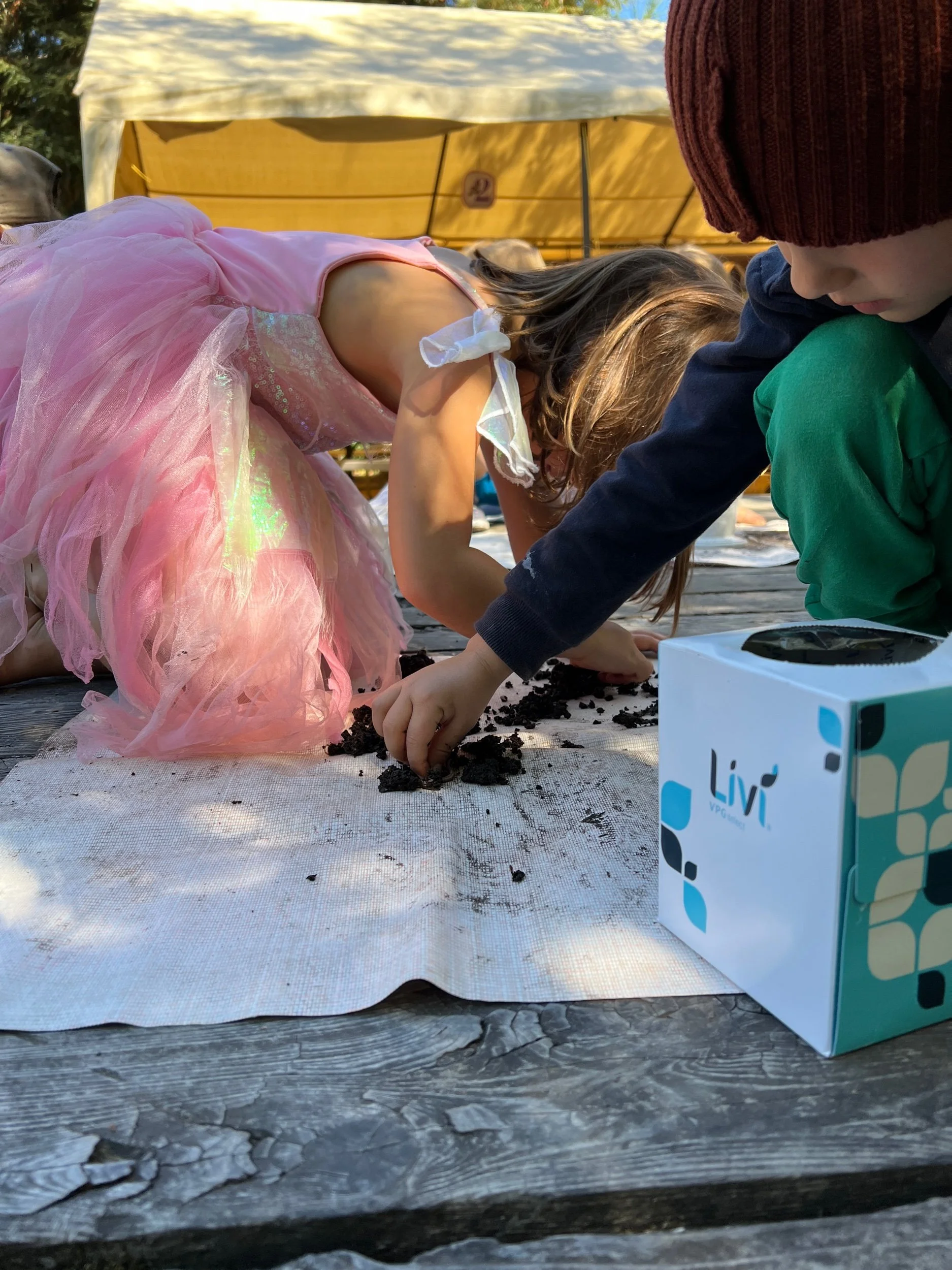
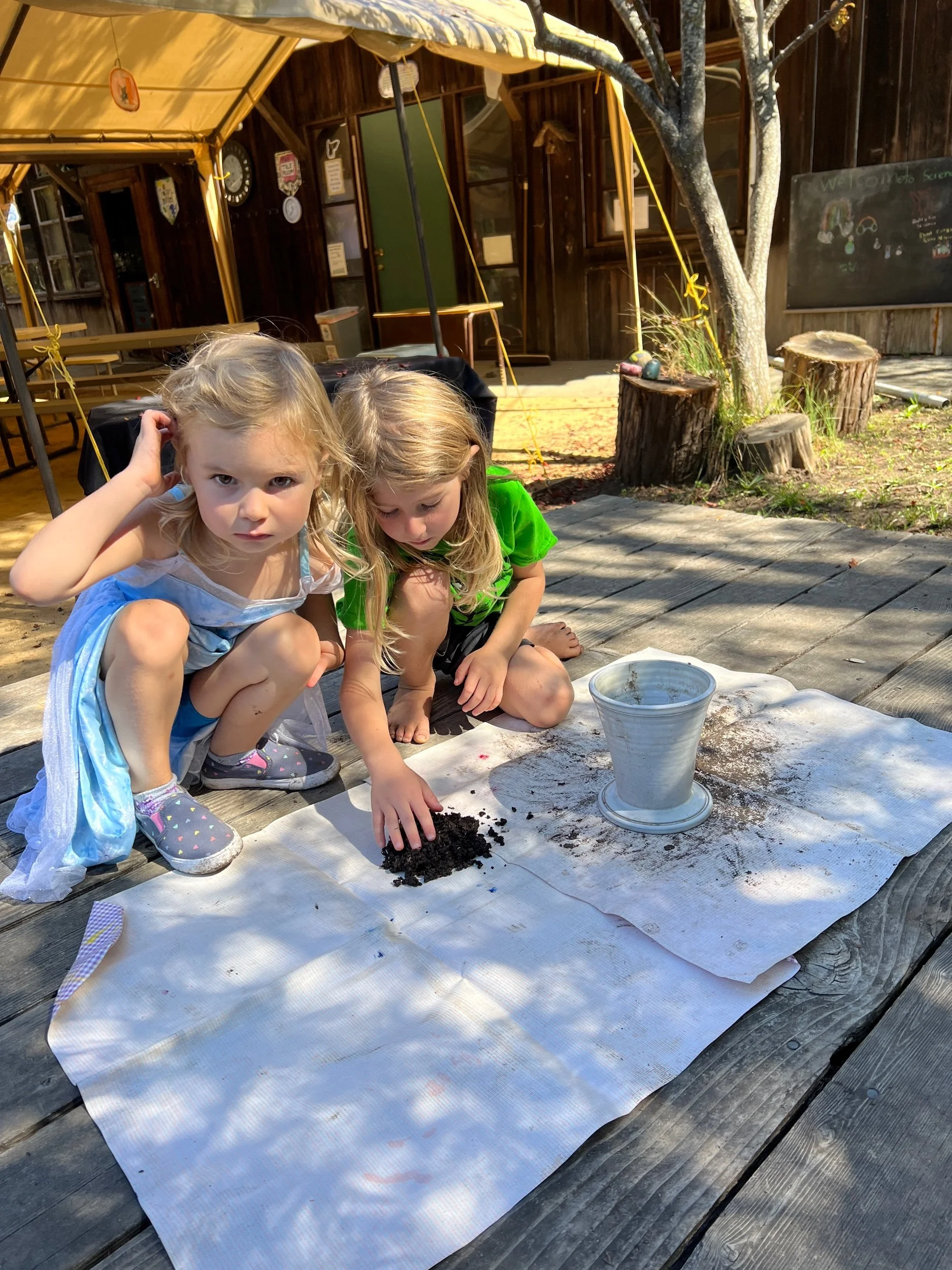
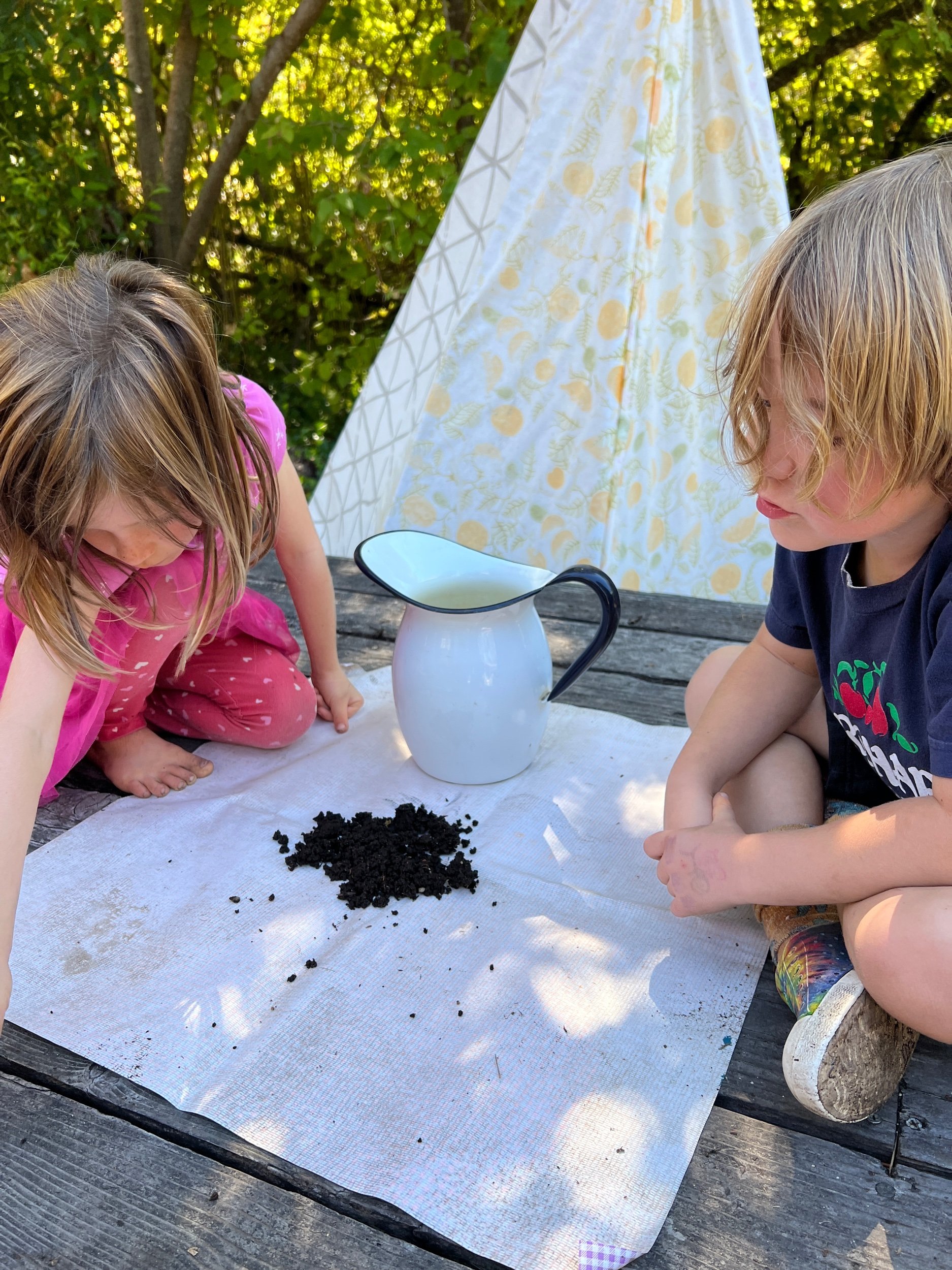
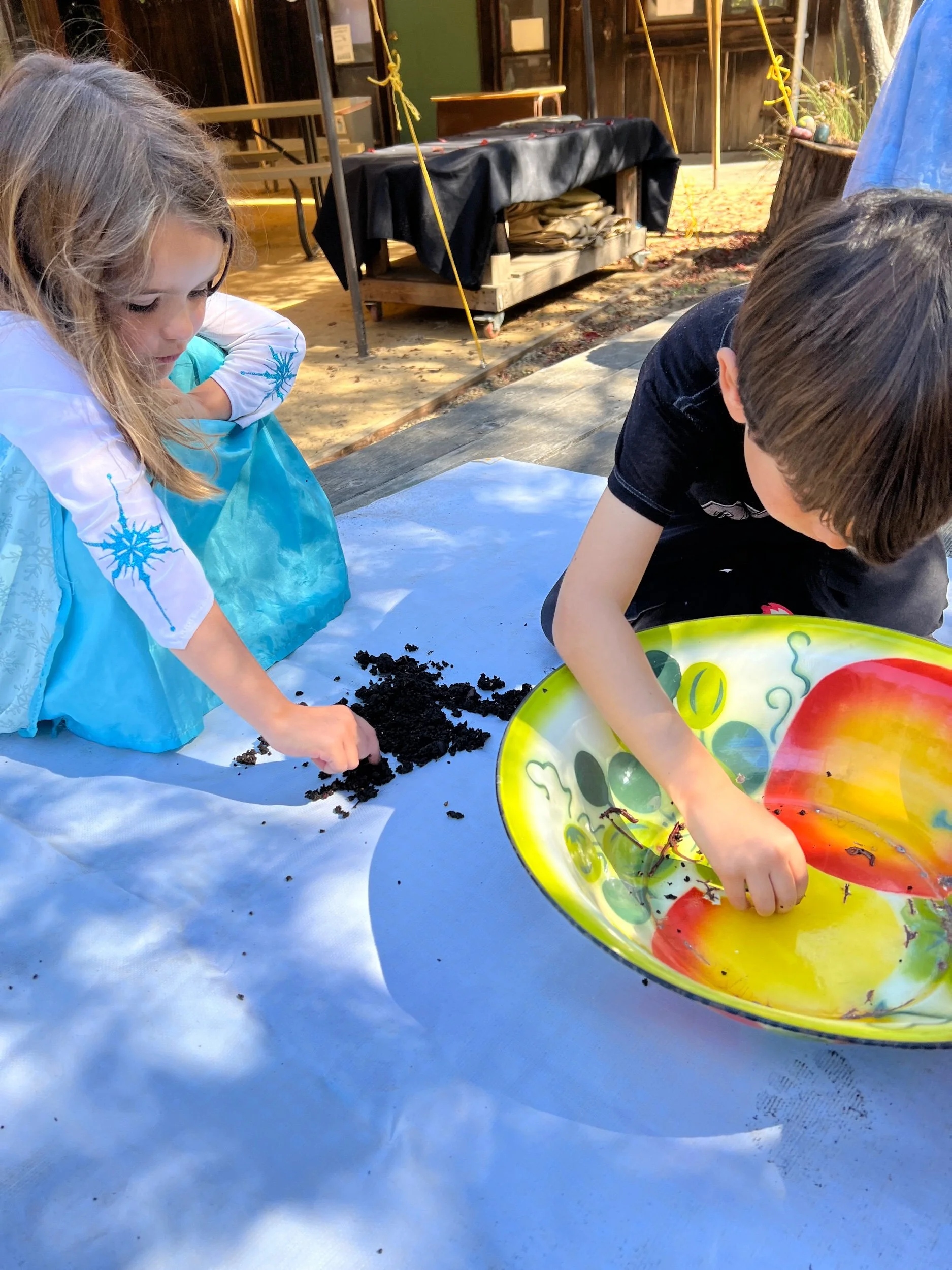
We began our study of worms by deconstructing our worm bin and separating the red wrigglers from the worm castings. Next we’ll amend our garden with this rich product and continue to a deeper study of worms and all of their amazingness. This is my first kindergarten group where everyone was ok with touching the worms — they are a get down and get dirty group, true Orchard kids already.
Arts, Crafts, Cooking and More
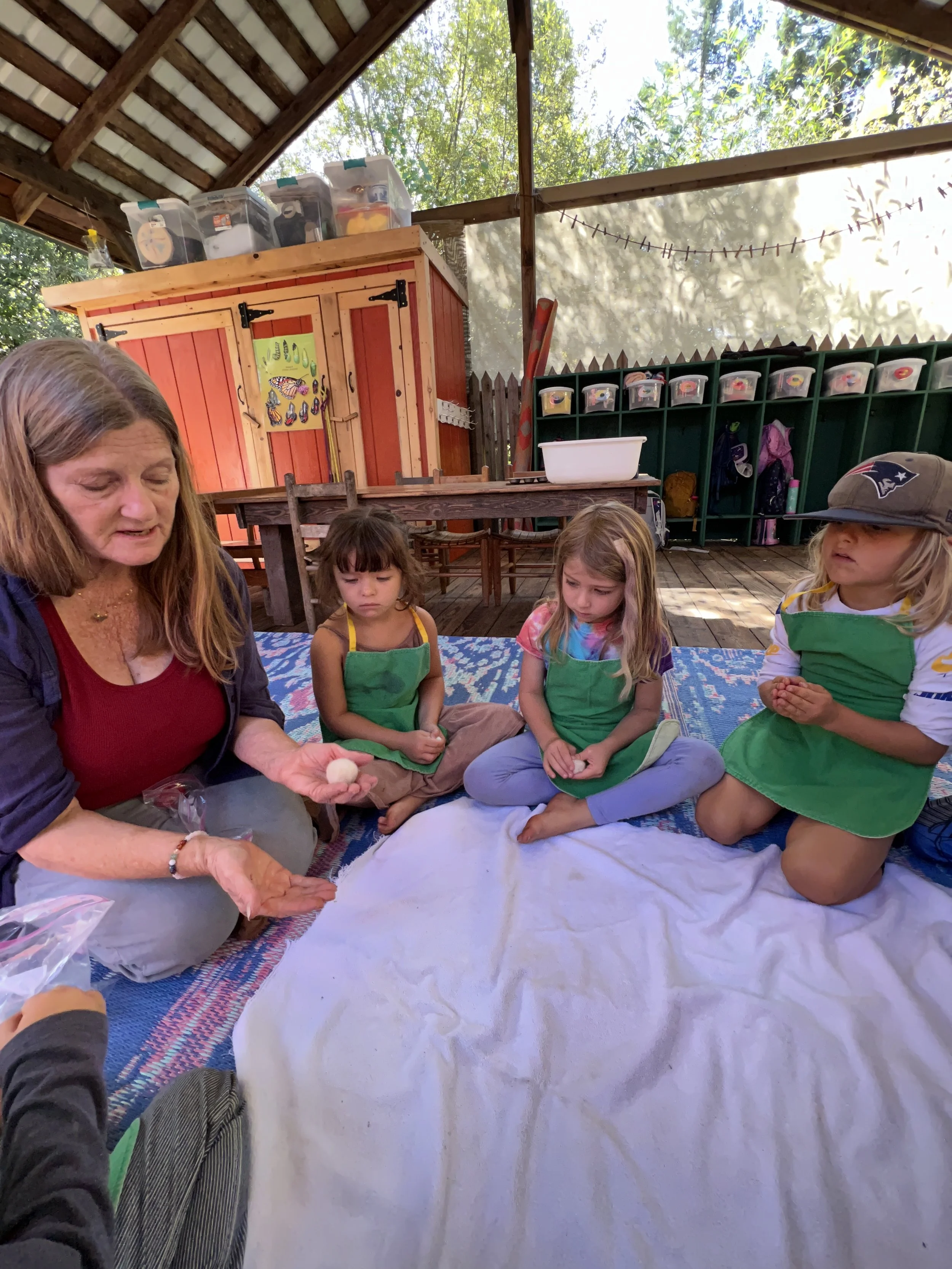
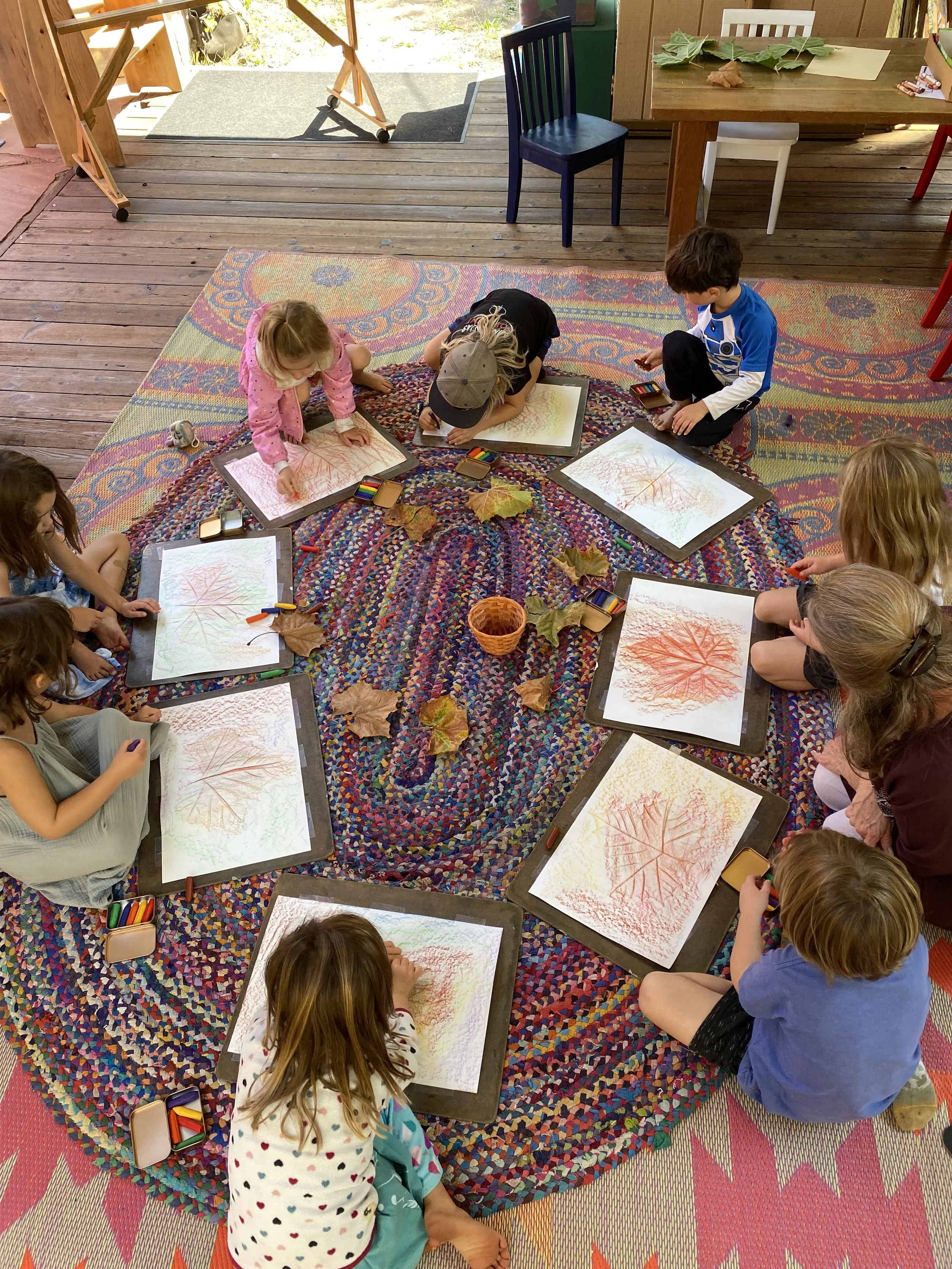
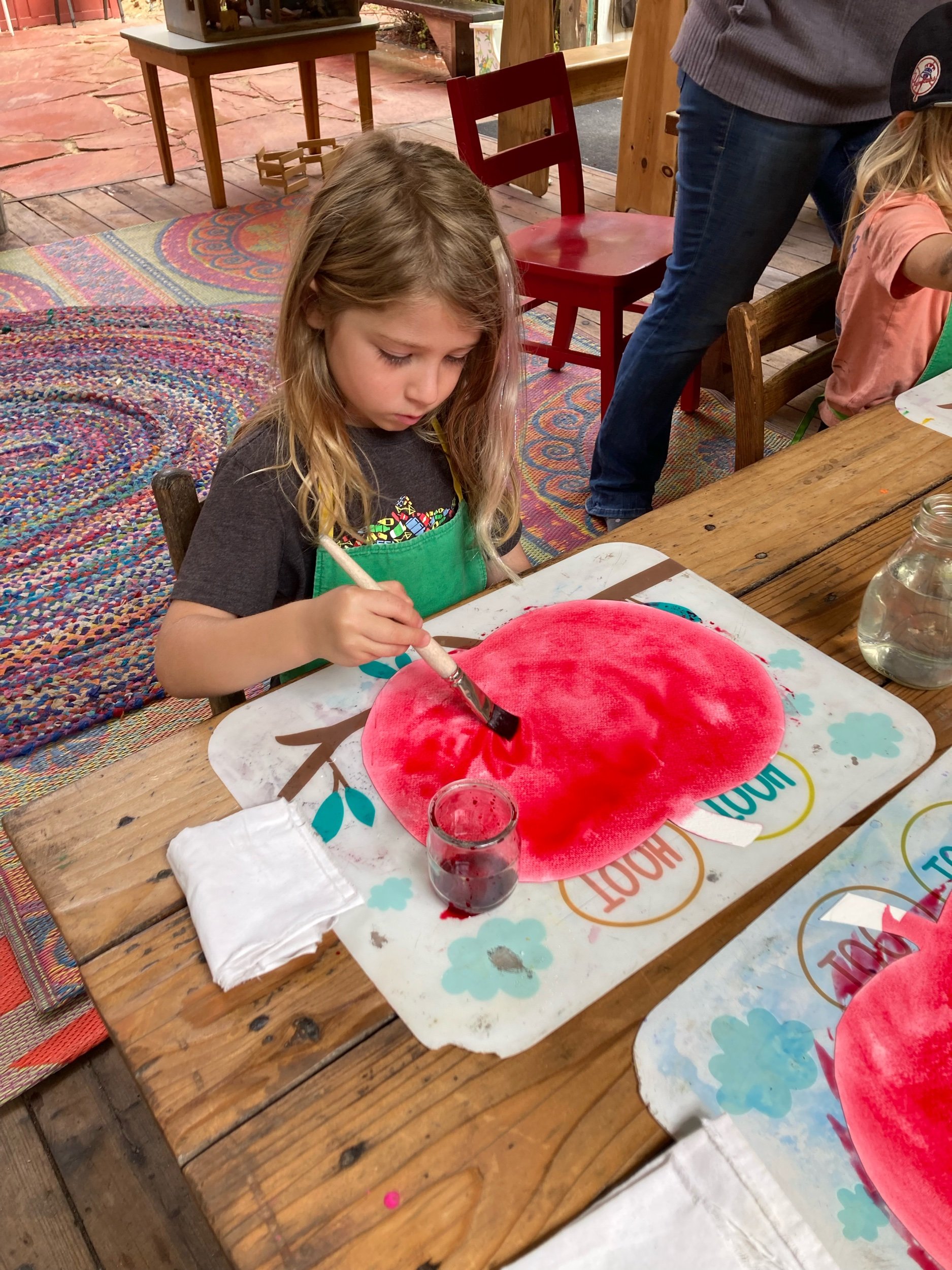
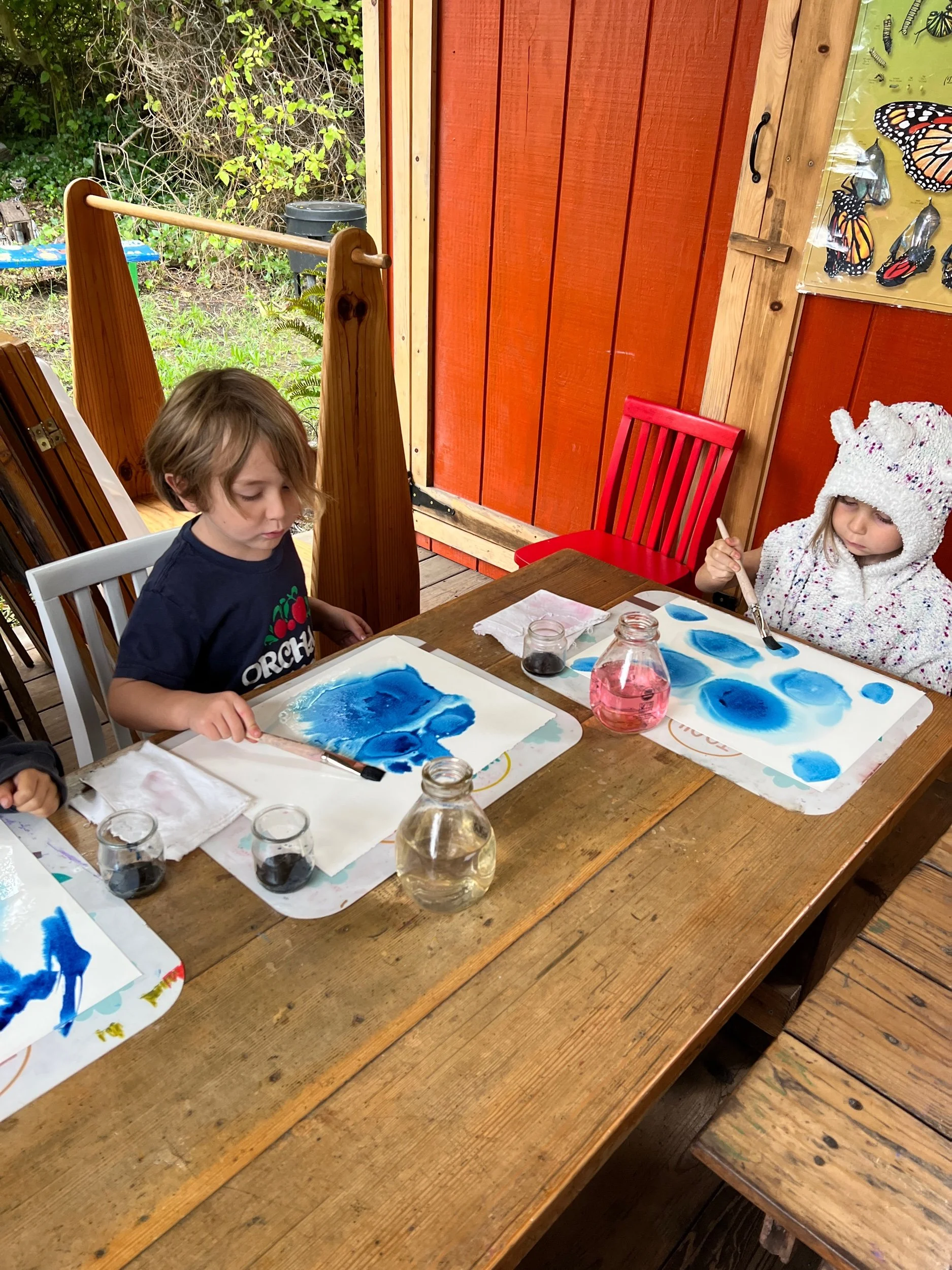
It’s really important to us to spend a lot of time encouraging and allowing children to use their bodies, as well as their minds, in intentional work and play. To this end, the children have been wet felting apples (after hearing various stories featuring apples in Kathleen’s beloved puppet shows), baking apple cake, wet on wet watercolor painting beginning with the three primary colors and later moving into color mixing and understanding how three colors make all of the colors of the rainbow, and learning to use the sides of their crayons for some art like leaf rubbings, as well as the pointed end of the crayons for other art projects.
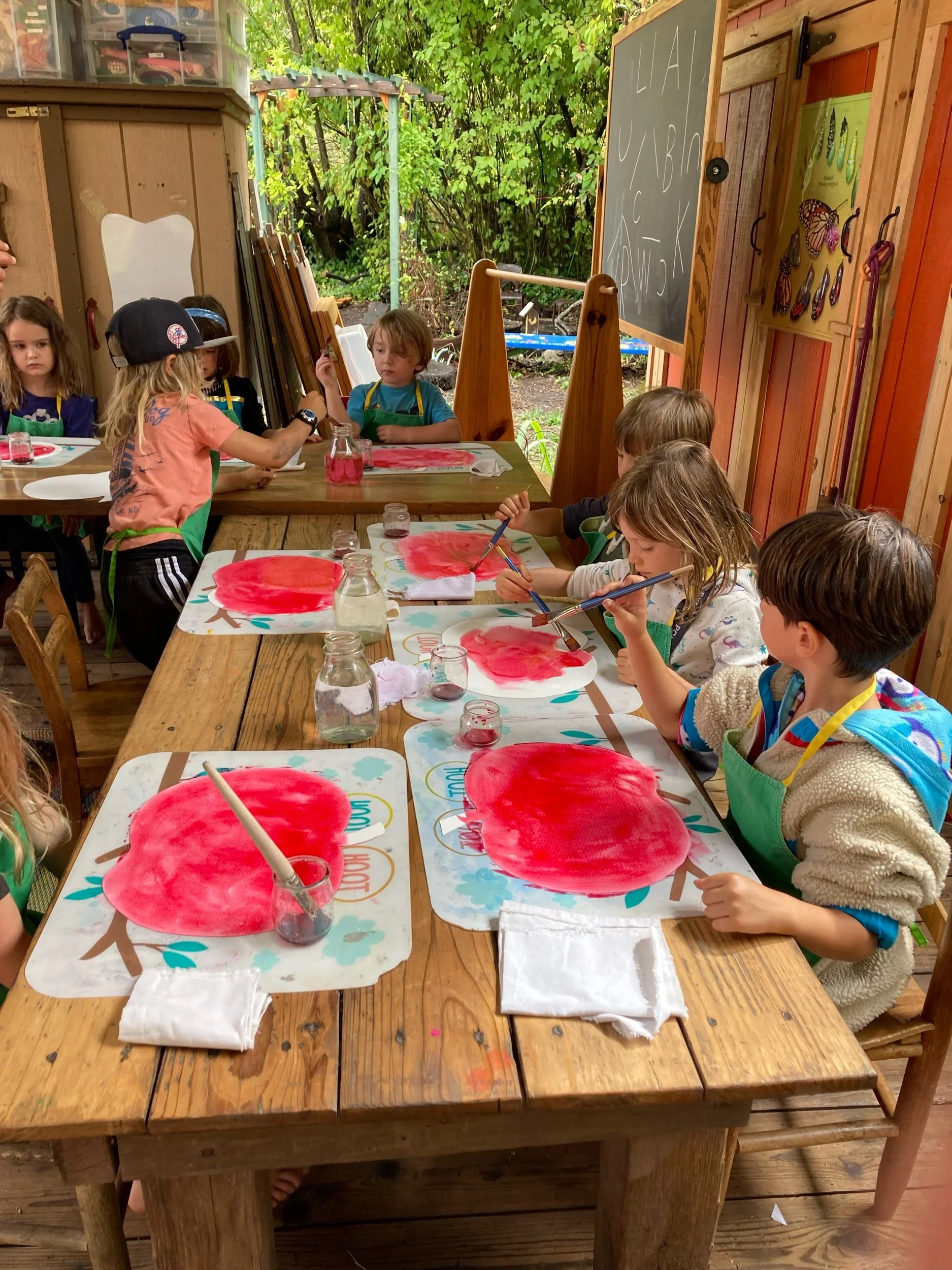
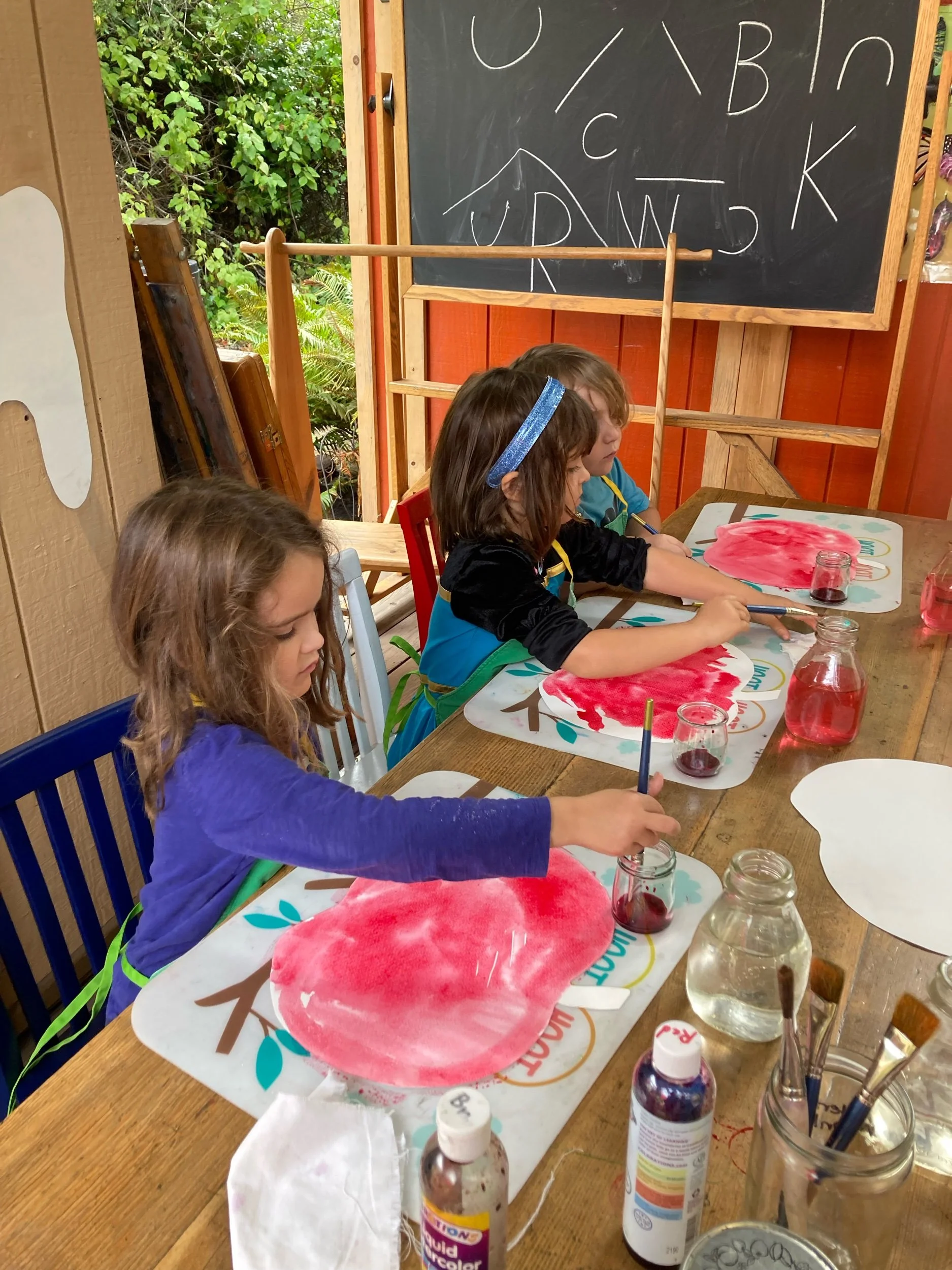
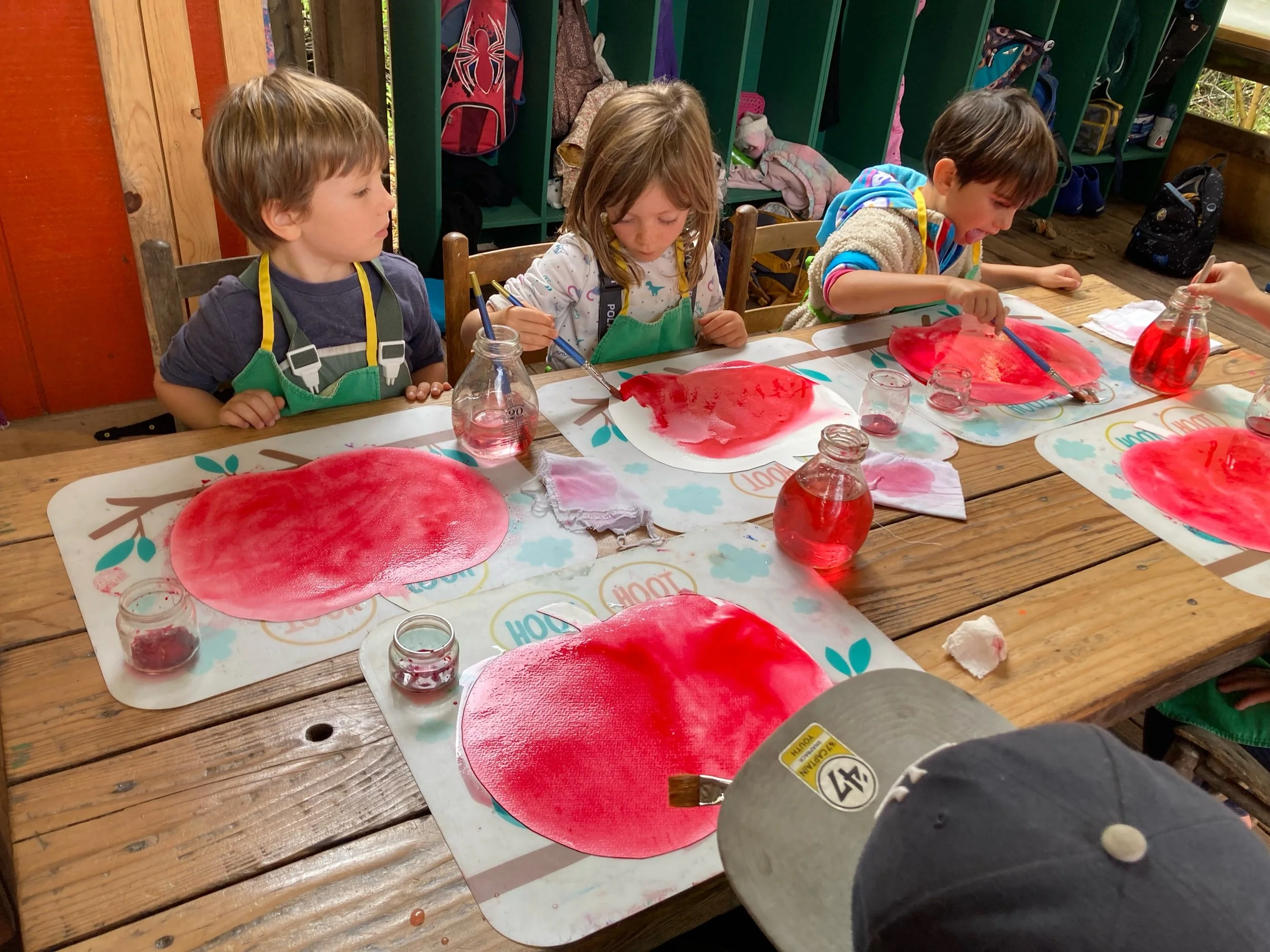
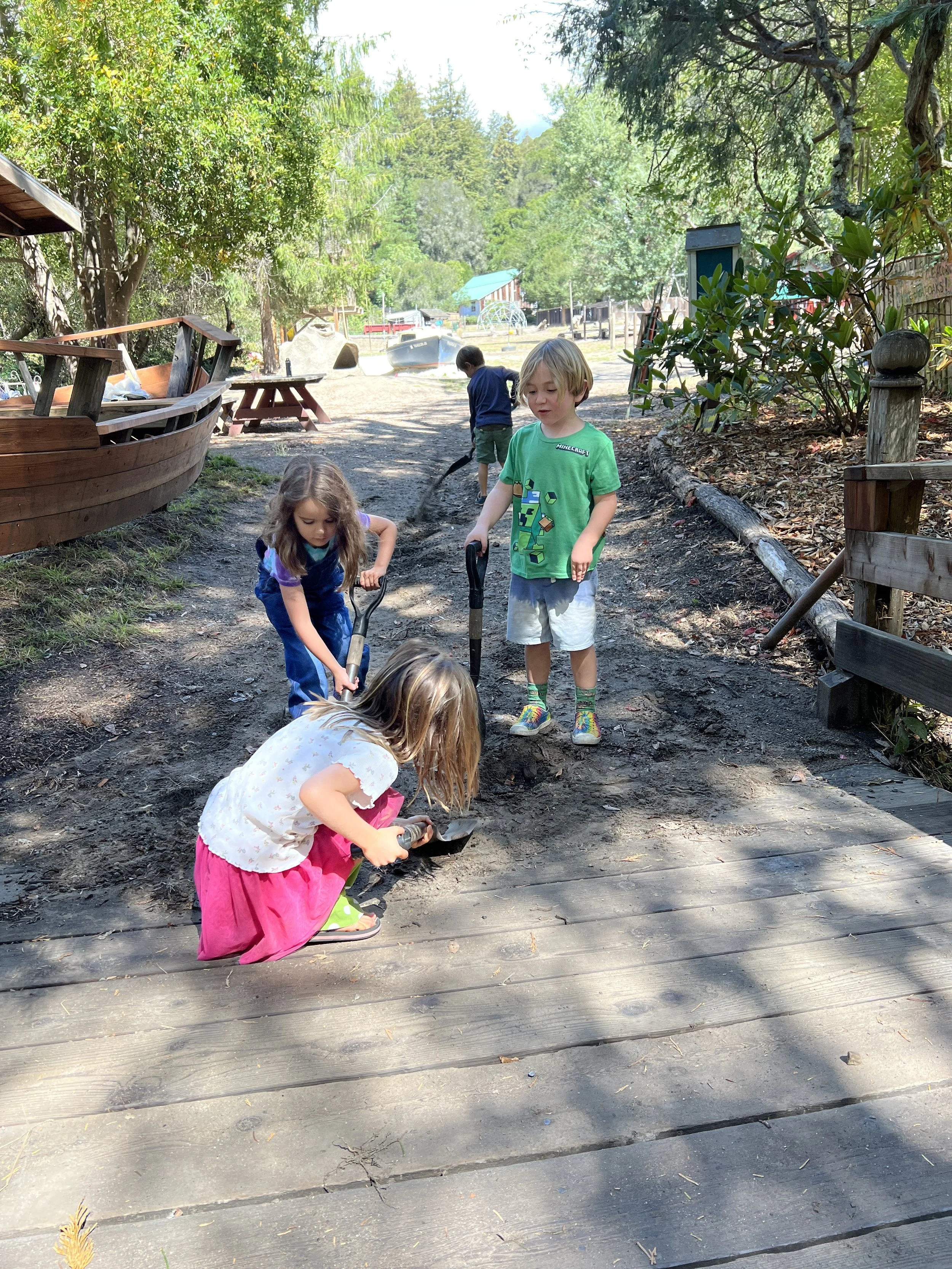
The kindergarteners helped me come up with a chore list and I assigned class jobs based on this. Kathleen and I hope to instill a sense of pride in keeping our classroom environment clean and organized by doing these chores weekly but also just generally in keeping shoes tucked on the shoe shelf, personal belongings in cubbies and so on. Here is a picture of the kids digging out the dirt that amassed on the bridge after the rain. They worked hard for a solid 20 minutes, digging, moving and packing down the dirt. Community service at it’s finest.
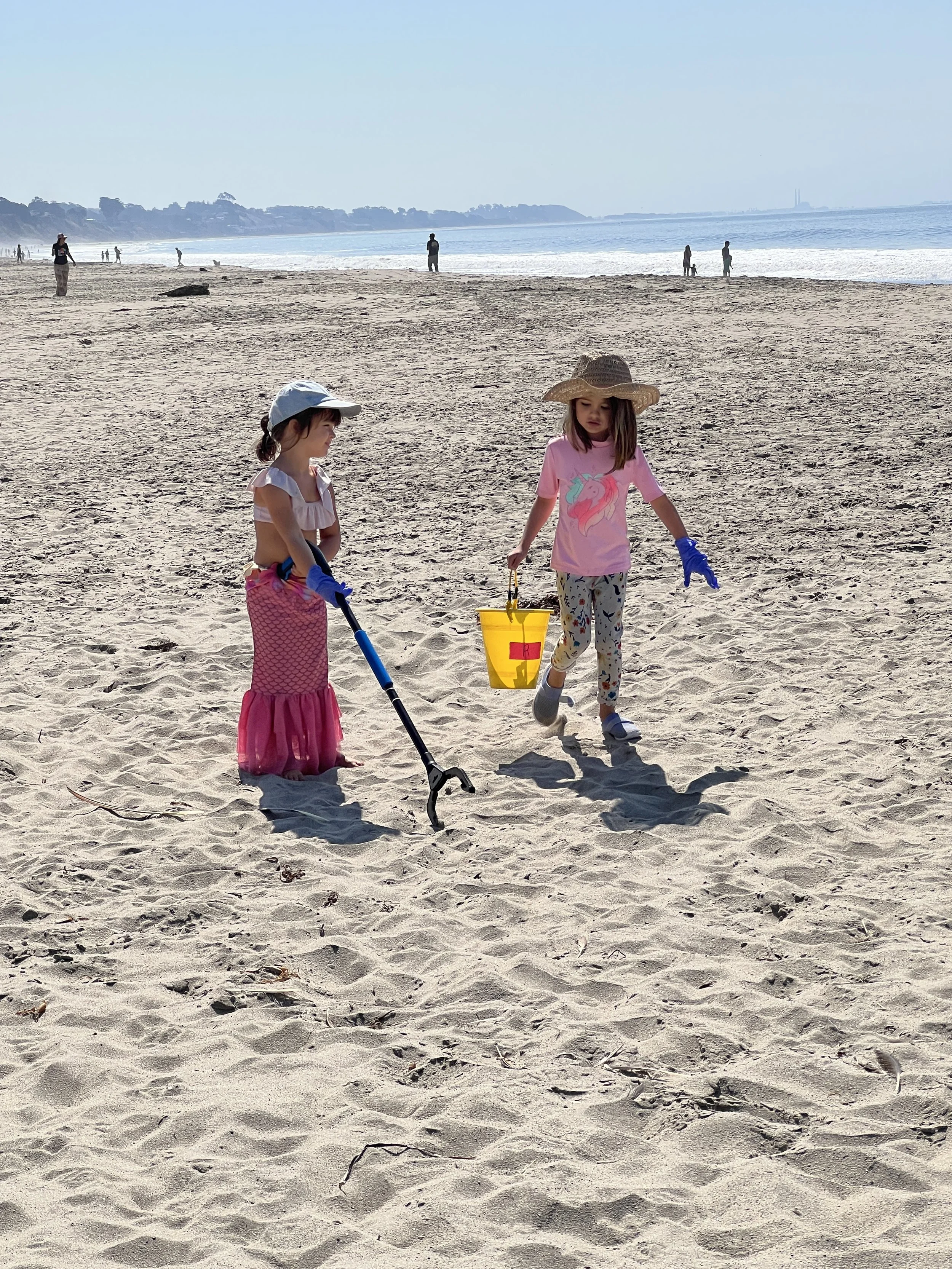
More community service: here’s an adorable shot of the beach clean up trip. More photos of this lovely outing will be in the yearbook coming your way at year’s end.
Spanish class on Thursdays:
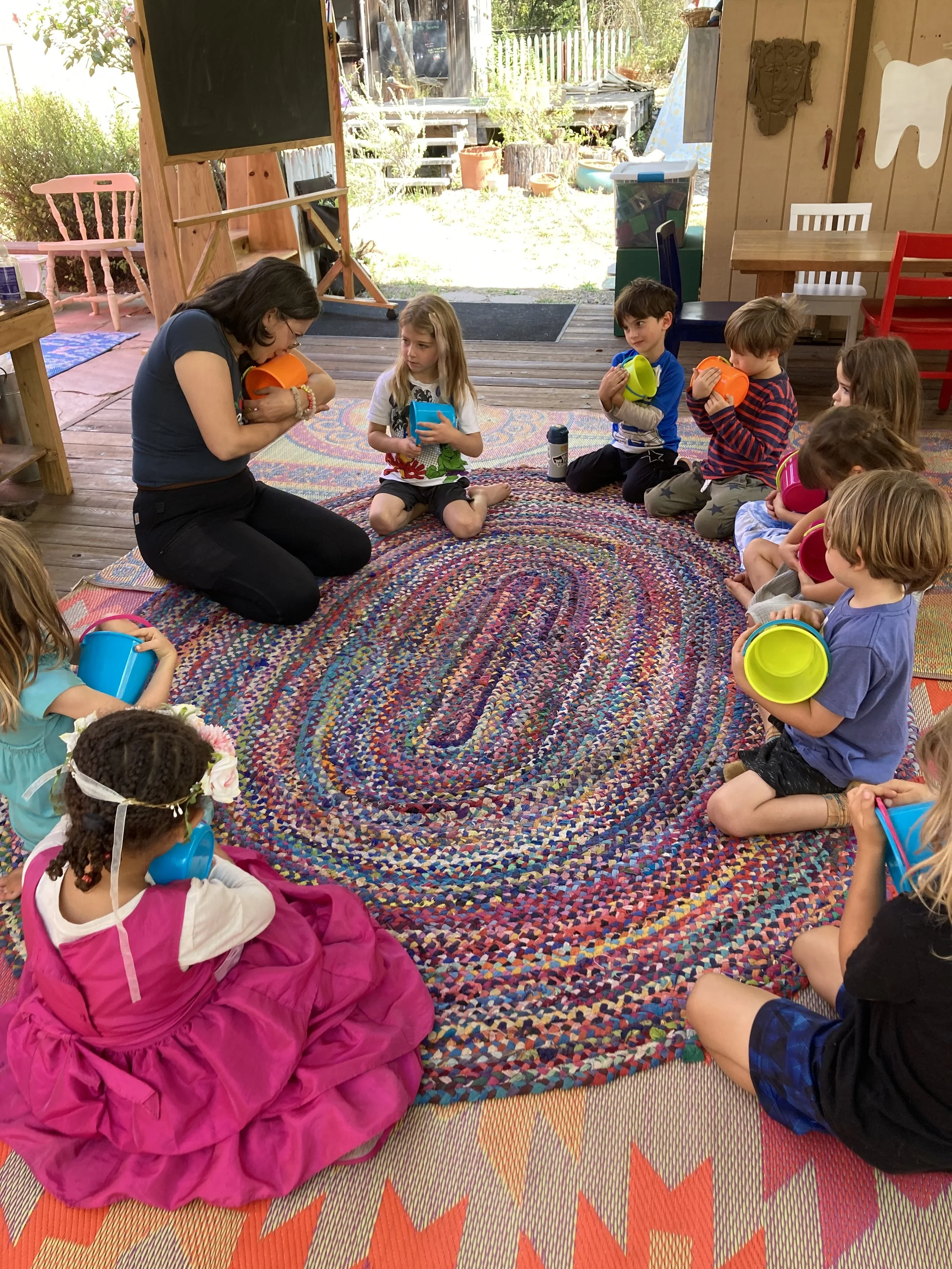
Mirna has been teaching the children colors, animals, counting and body parts through songs, art, movement using a language immersion approach. As I’m sure you know, tuning the ear to a foreign language as children (particularly before age 10) makes it so much easier to learn a language effectively.
PE with Ty on Mondays
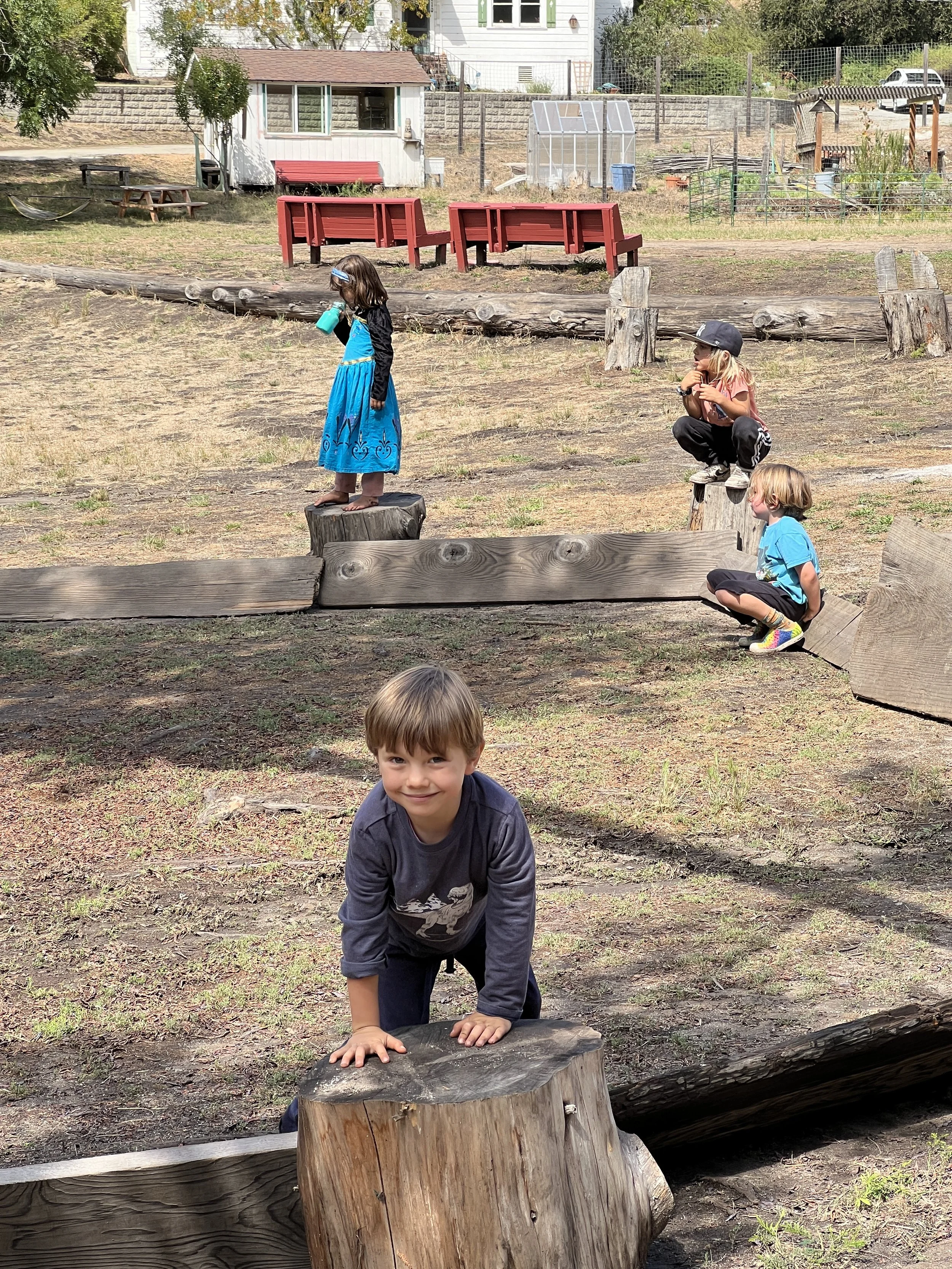
Ty has discussed the concept of how to be a good sport, how to win and lose gracefully. They’ve played a number of games that are school wide favorites like Ga,Ga, Ga and Squash Banana Tag.
I’ll work on getting an update on Linda’s pottery class and Rock’s circus class before the next blog. Valerie’s art blog is down below.
Social-Emotional Work
And last, but definitely not least, we’ve spent a good amount of time focusing on the importance of kindness. I told a story about 10 children who lead a couple of wayward kids to kindness, reminding them of their golden hearts and stopping them from destroying a bee hive.
We practiced hurling insults at a new kid in class (Alex, made of paper) who promptly crumpled into a little ball with each unkindness. Then we thought of supportive and welcoming words that might sooth feelings but noticed how even when Alex was unfurled, the wrinkles remained. This is a standard positive discipline activity that really hits home the power of words.
We made bug buddies to help emphasize and empower the children to practice kindness to all living creatures.
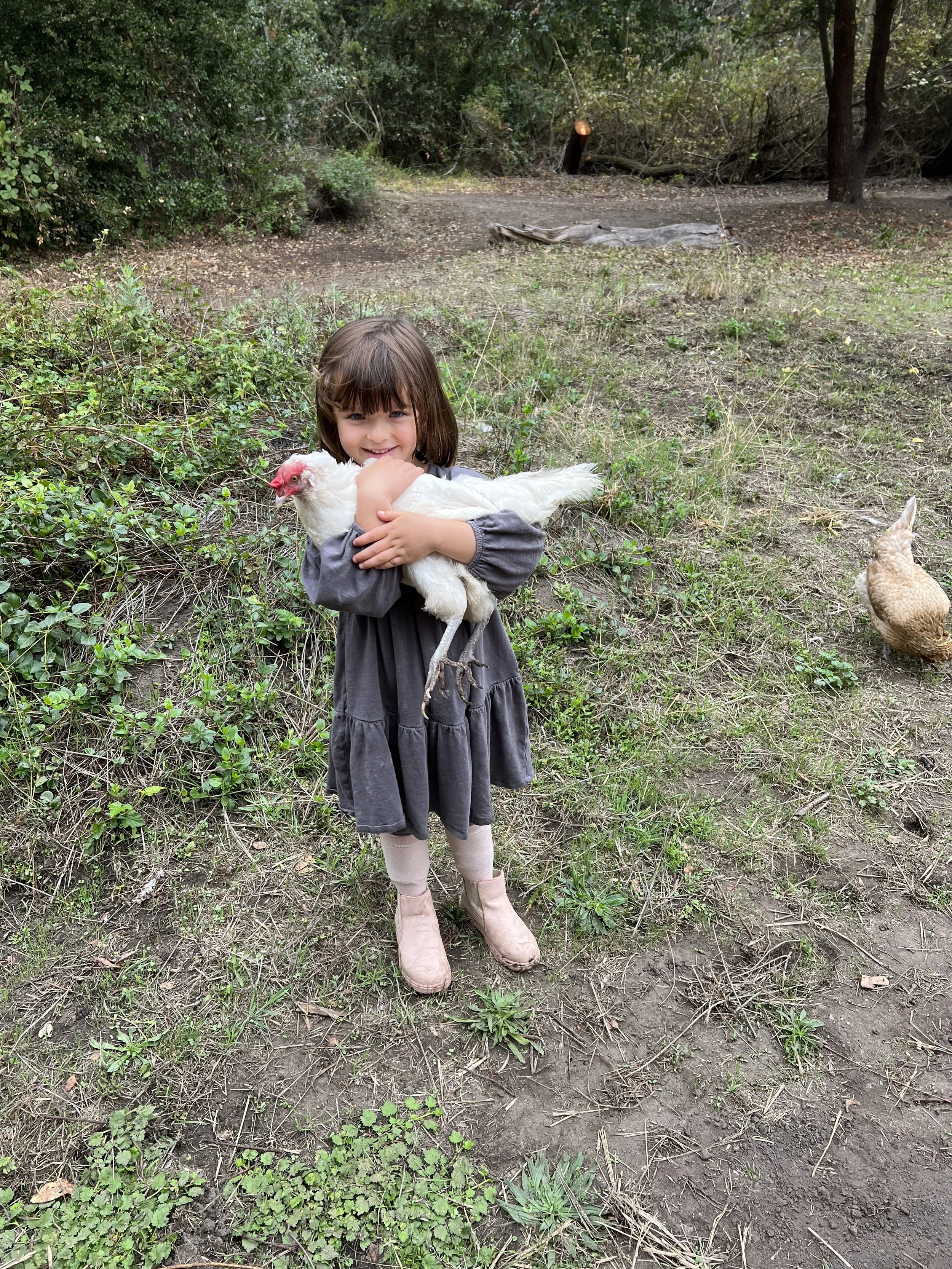
And animal care, scooping poop, feeding, holding chickens and feeling the whiskery muzzles of the alpacas as they eat from one’s hands — all valuable experiences to promote selflessness and attention to the needs of others.