
Science
April for the 5th/6th class was a busy month with some studies of global ocean currents and many preparations for our upcoming two night camping trip to Pinnacles National Park.
Just after spring break, we dove into ocean currents. Our first activity was creating a model of the earth (with balloons) that helped us explain the coriolis effect. In partners, the students took turns spinning the earth in the accurate direction (that takes some thinking!) and then tracing a dotted line from the equator to either pole. The model is a little tricky but with some practice it shows that air currents that are initiated by evaporation at the equator move in a clockwise direction in the northern hemisphere and a counter-clockwise direction in the southern hemisphere owing to inertia and the spinning of the earth. As the wind moves, so do the prevailing currents.
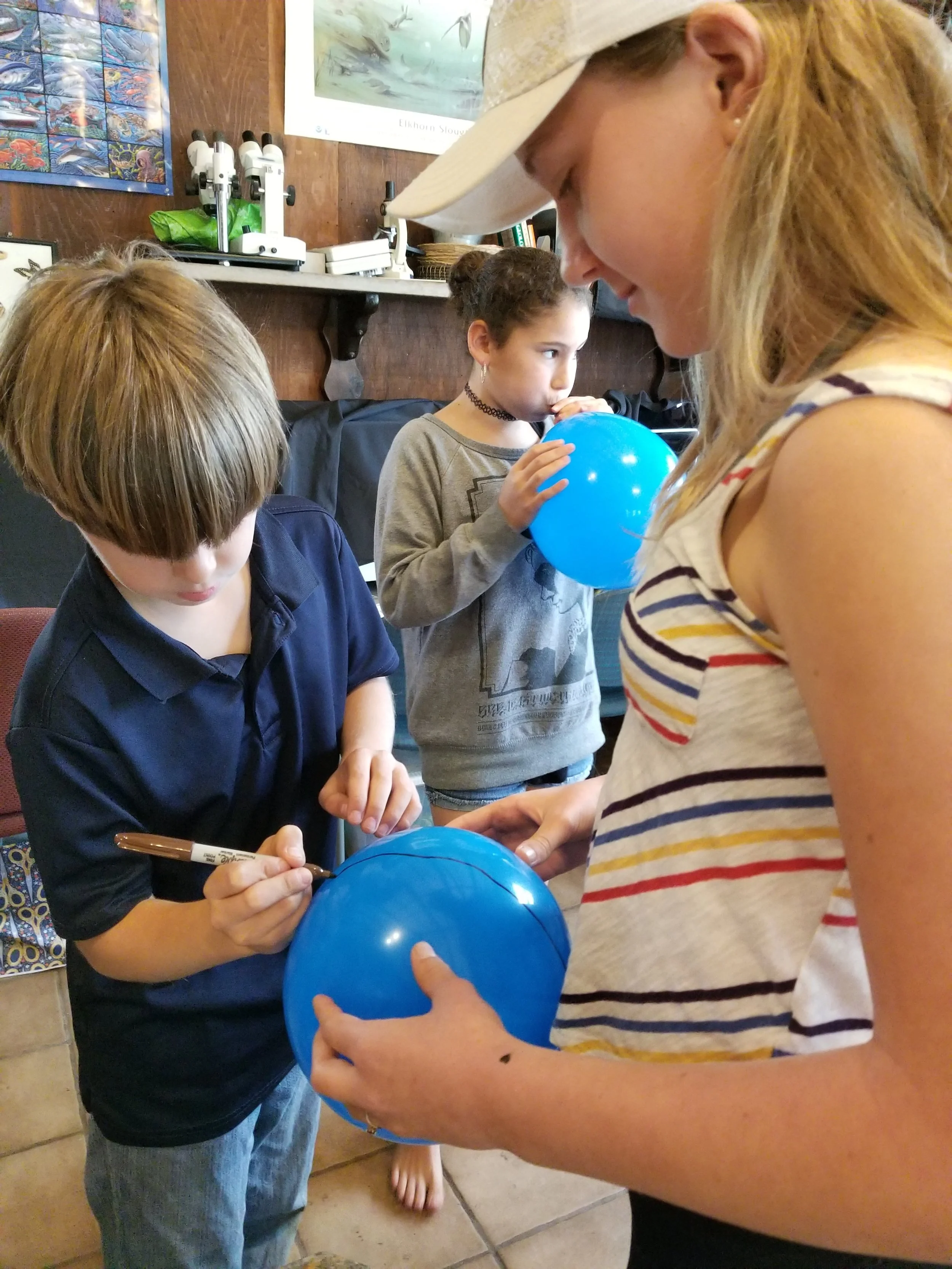
Drawing the equator on the earth models.
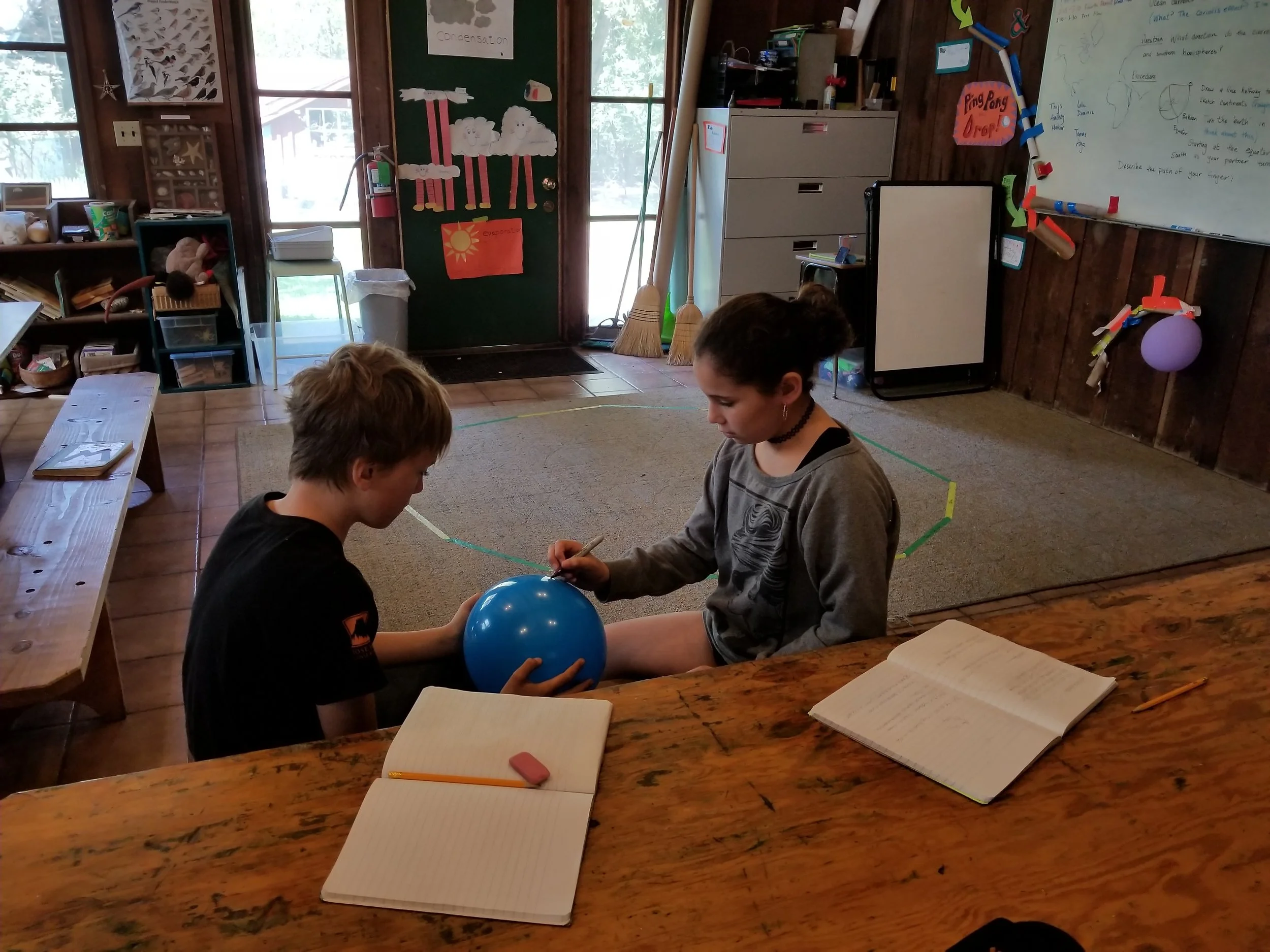
Attempting to stay in a straight line as the "earth" spins.
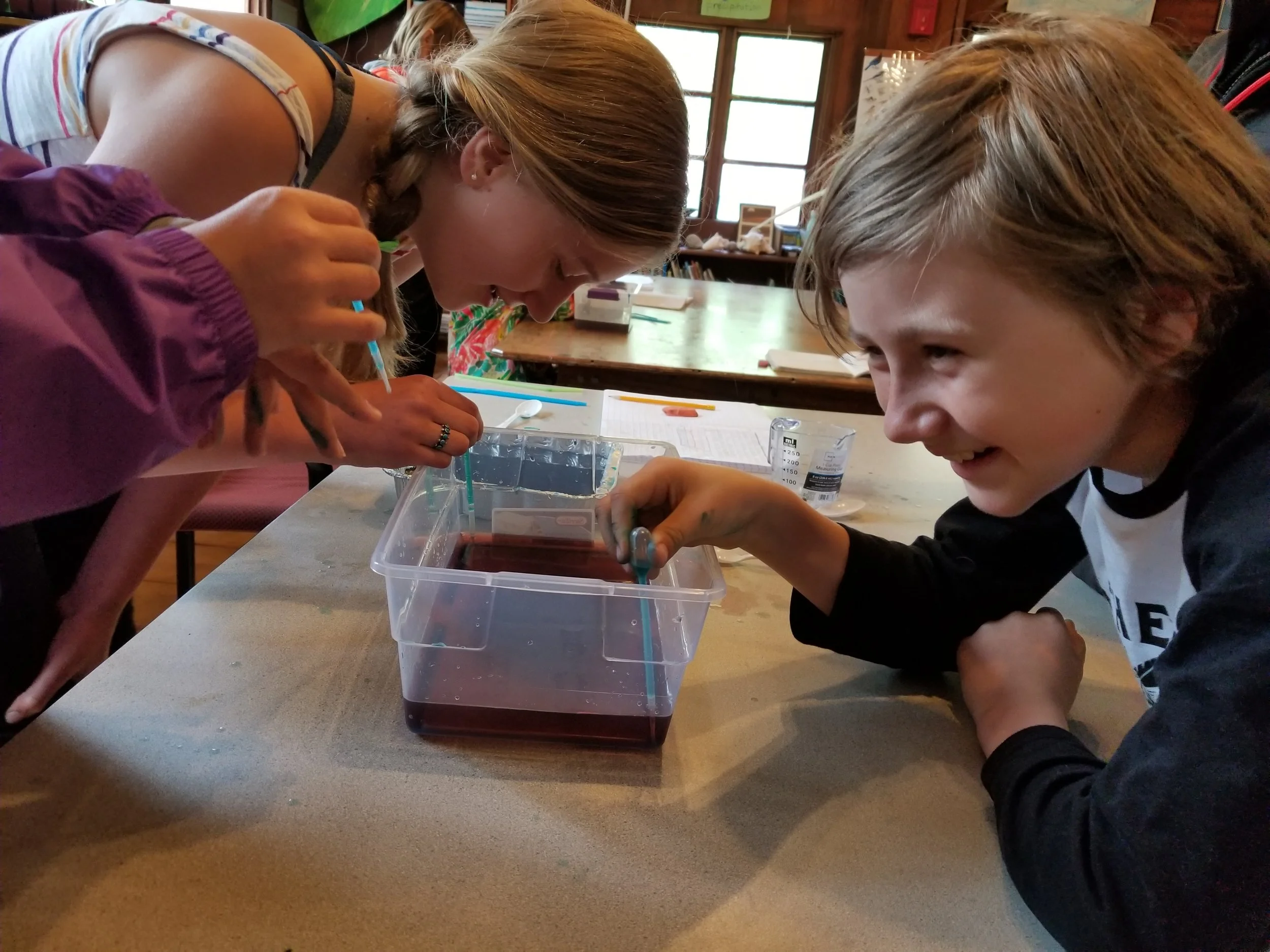
Next, we looked at different deep and surface level currents by first layering water of different densities and temperatures (cold, dense water is found on the ocean floor) and then providing wind via straws across the surface of the "ocean".
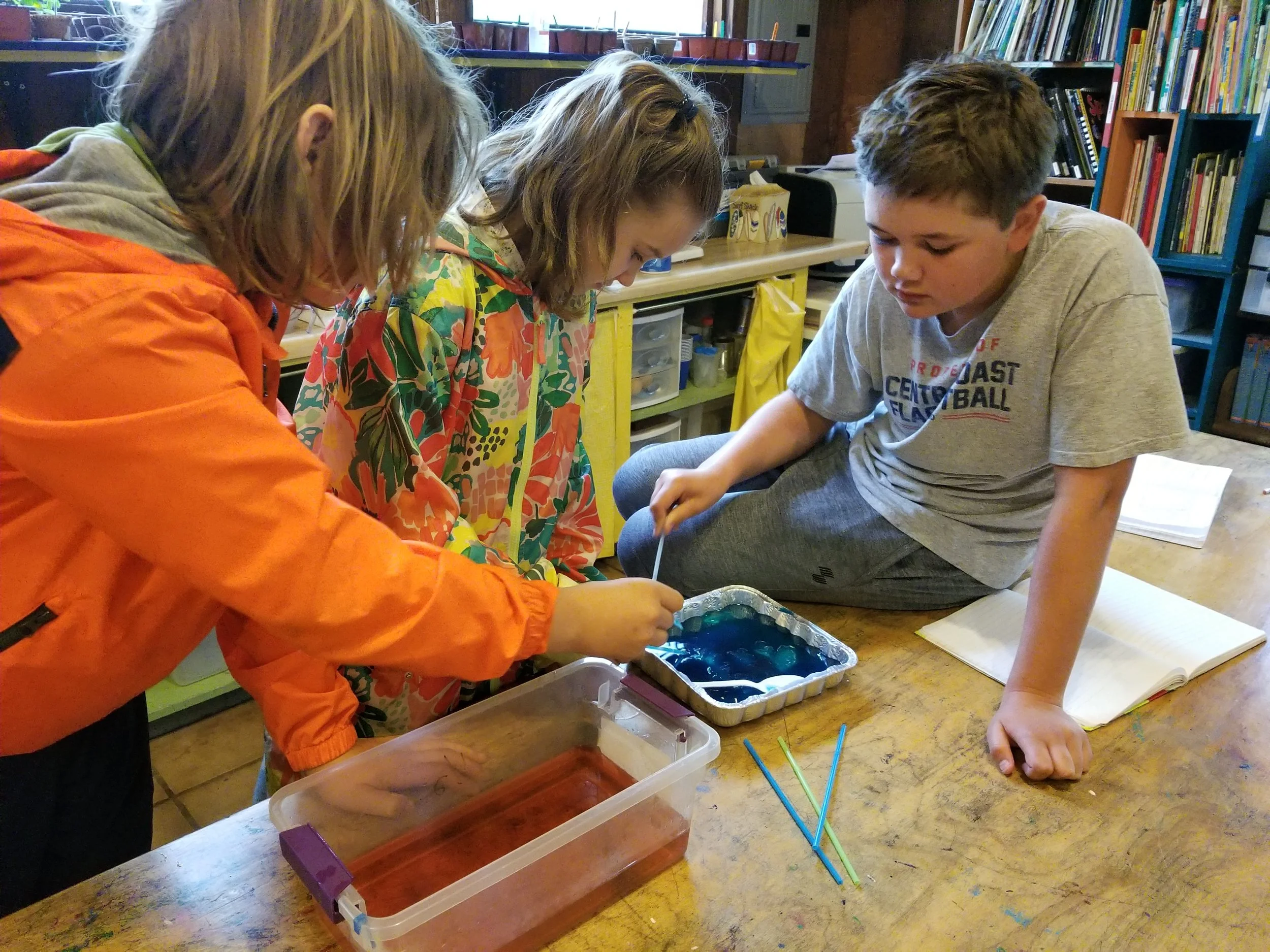
It was a delicate process.
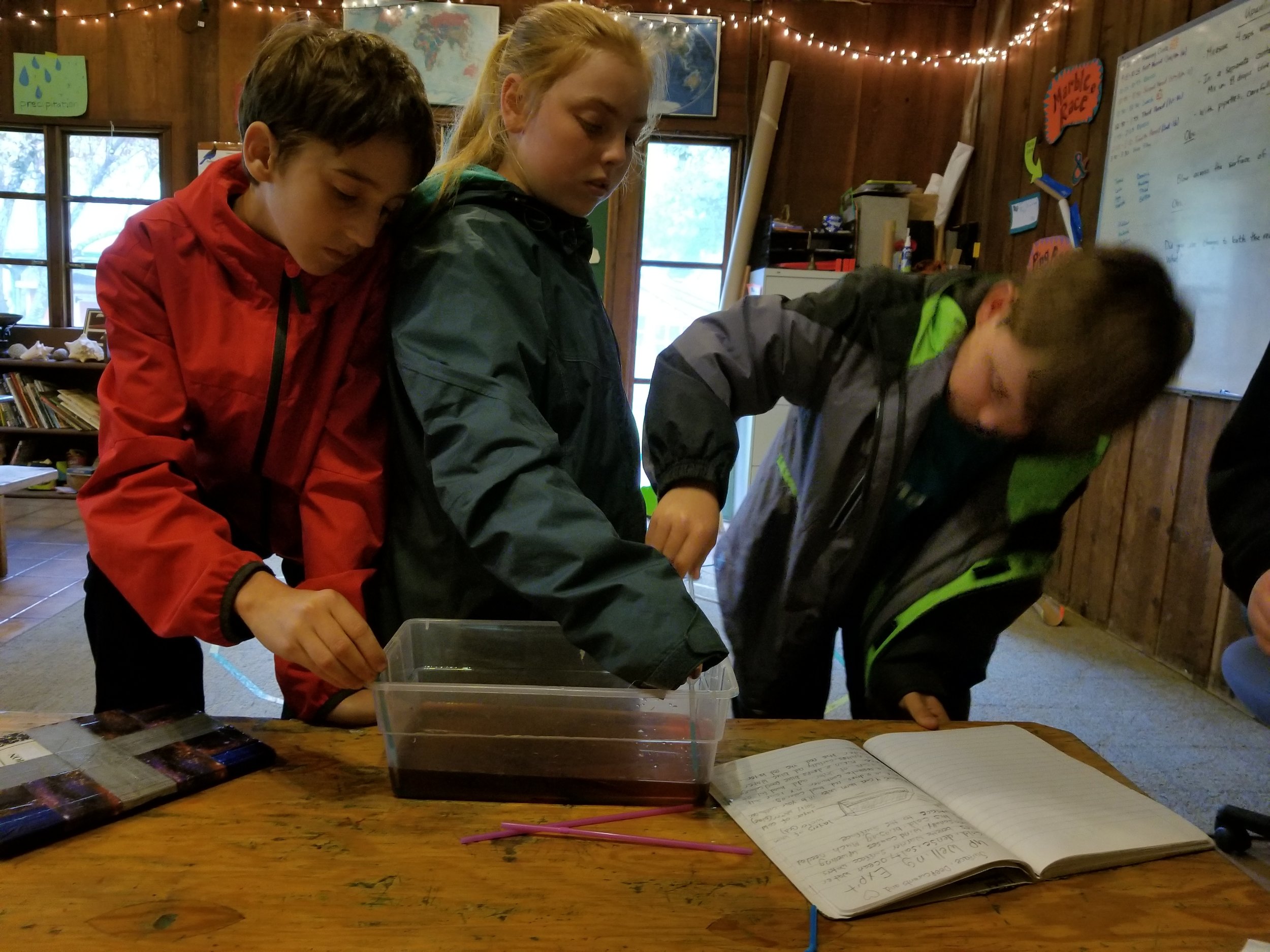
And took much patience to pipette water into layers.
Students mostly noticed that while the water in our small containers did mix (a natural process on a very different scale in the ocean called upwelling) there was less movement of the lower layer, and the water circulated in a distinct whirlpool like pattern. This was really informative for our last ocean currents exploration where we explored a case studies of a shipment of plastic bath toys that was washed overboard in a storm between China and Alaska. Using their knowledge of ocean currents and mapping known locations of ducks with longitude and latitude, the students (fairly accurately) predicted where the toys were likely to have traveled in the years since the incident. (This is a true story).
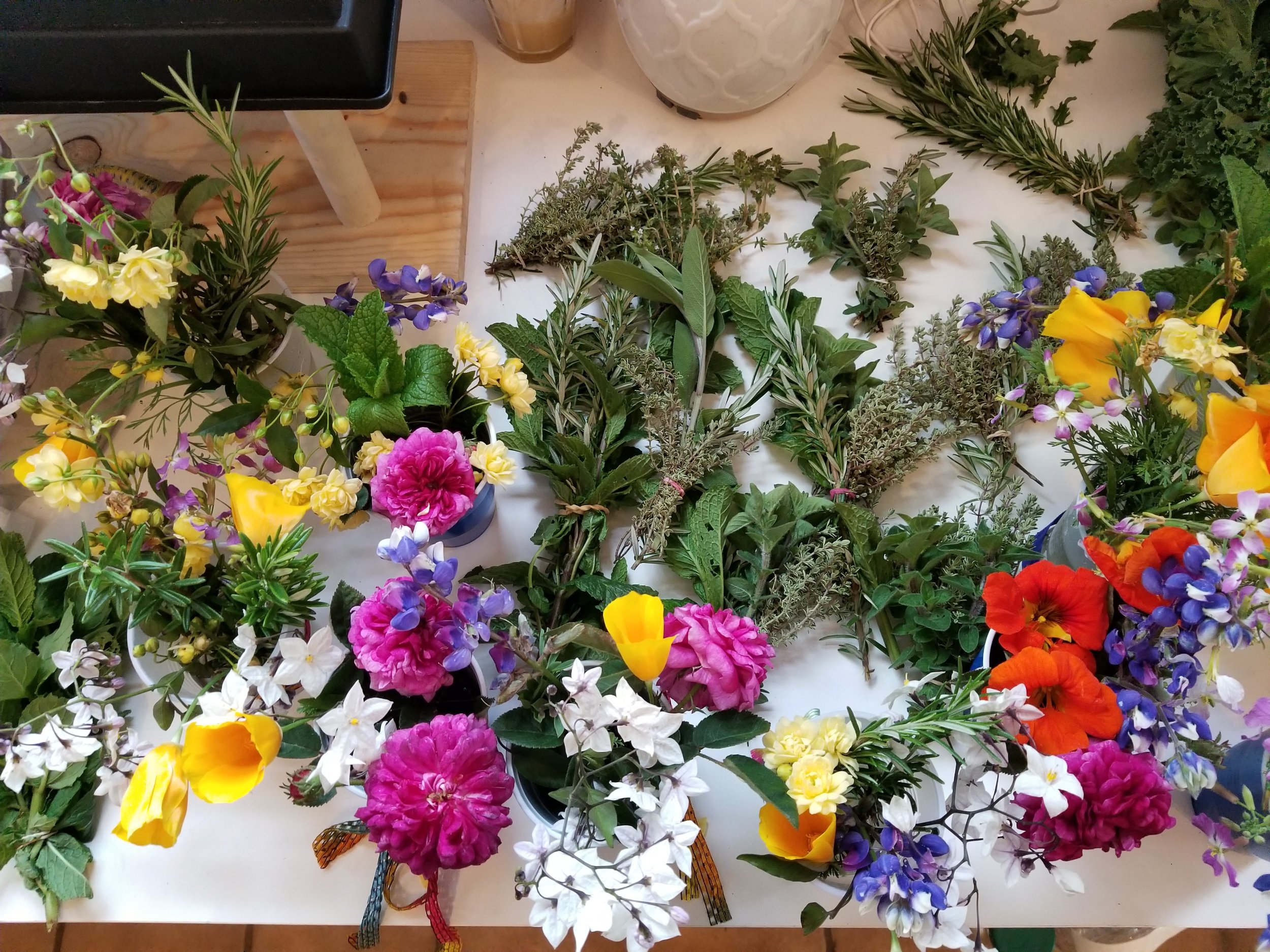
To start off our preparations for our Pinnacles trip, the class hosted a fresh sale and lemonade stand to fundraise for our expedition.
For the last two weeks we have been exploring many interesting science topics related to Pinnacles including an activity where we compared the Pinnacles formation to the Neenach Formation (over 100 miles away) to learn that they are two halves of an ancient volcano that has been split by the San Andreas Fault (cool!). We have also been learning about the rare California Condor that has a few nesting sites in Pinnacles and the conservation efforts extended to perserve this unique species.
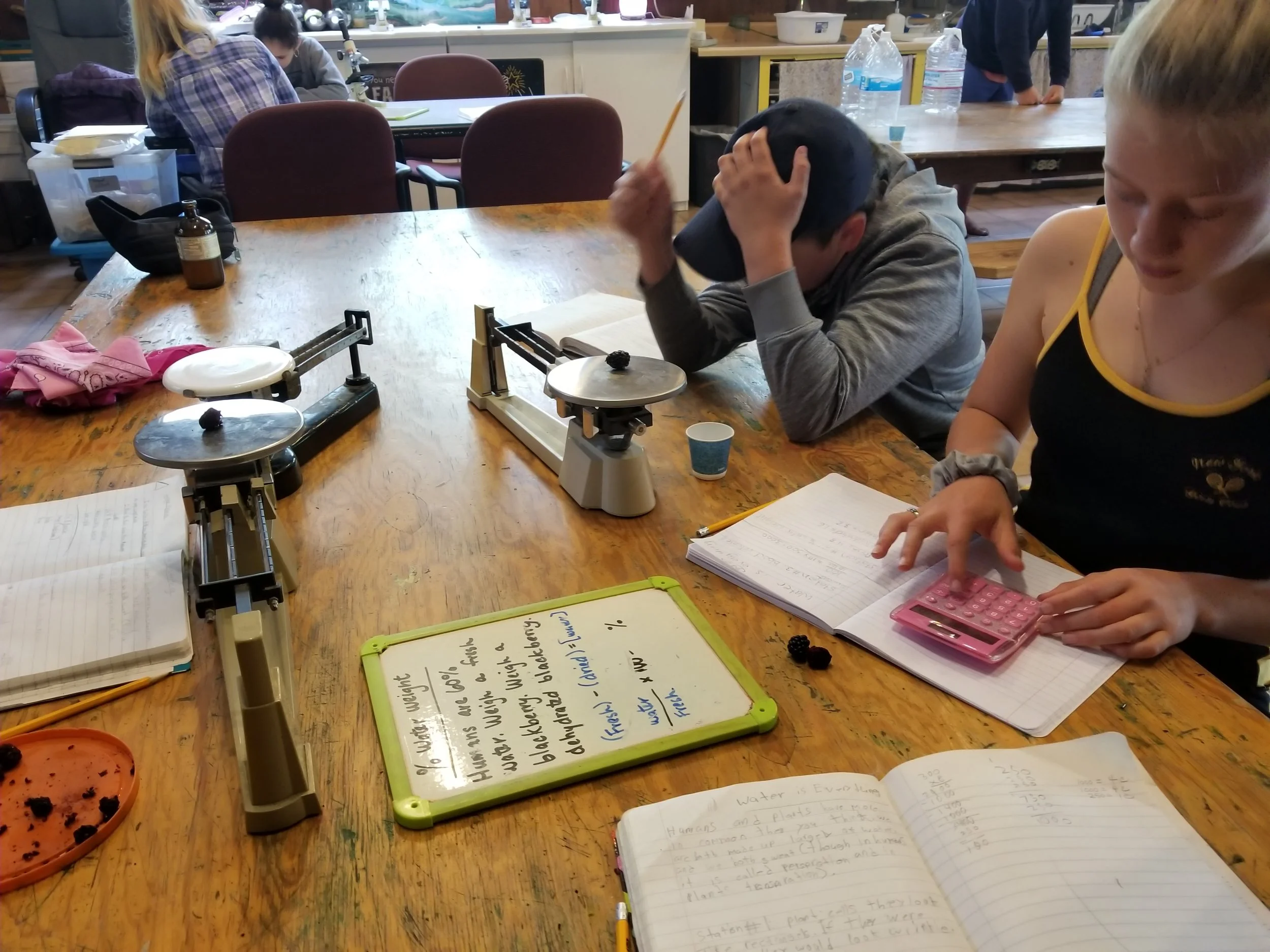
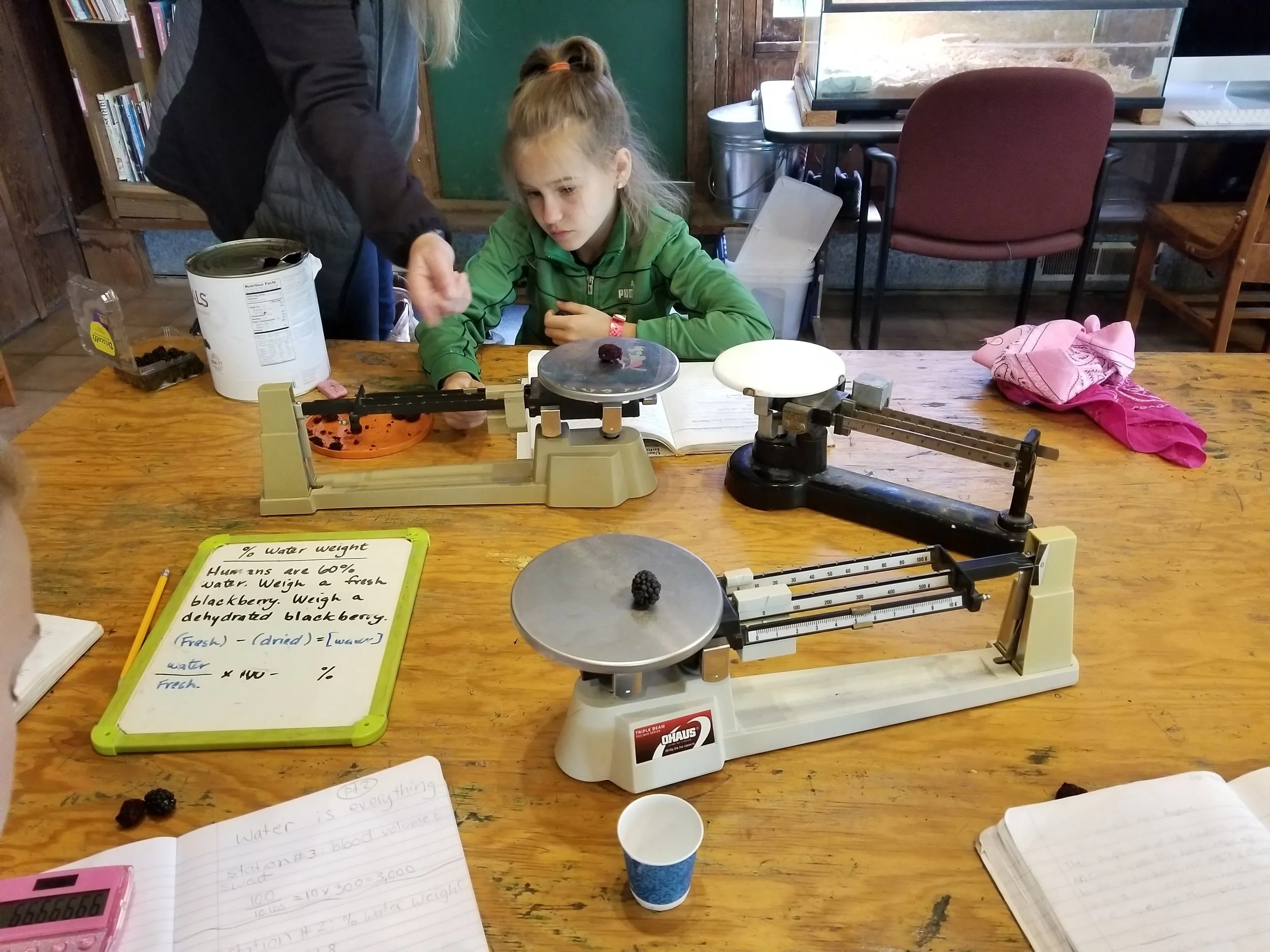
Finally, we did a series of activities that illustrated how important water is to life as we know it to help motivate us to drink water while we are out on the trail. These stations included calculating the percent water of a blackberry (and comparing it to humans), looking at plant cells, and calculating the approximate blood volume by weight of the individuals in the class.
We are super excited for our trip this week!