Science
The month of March for 5th and 6th graders was dedicated to preparations for Science Fair and Invention Convention, studying the life cycle of trout and salmon, and making connections between human impacts, water quality, and fish populations.
5th and 6th graders took detailed notes on the life cycle of trout in their notebooks and monitored the development of the trout eggs throughout the month.
To understand better the conditions that trout eggs are most viable they undertook a silt experiment. Students added more and more dirt to a test cup with beads (to represent fish eggs), rocks and gravel and attempted to exhale into a straw through the silt. The finer the silt, the more difficult it was to exhale and the students understood that a fish egg needs to be free of silt in order to breathe and exchange oxygen with the water around them.
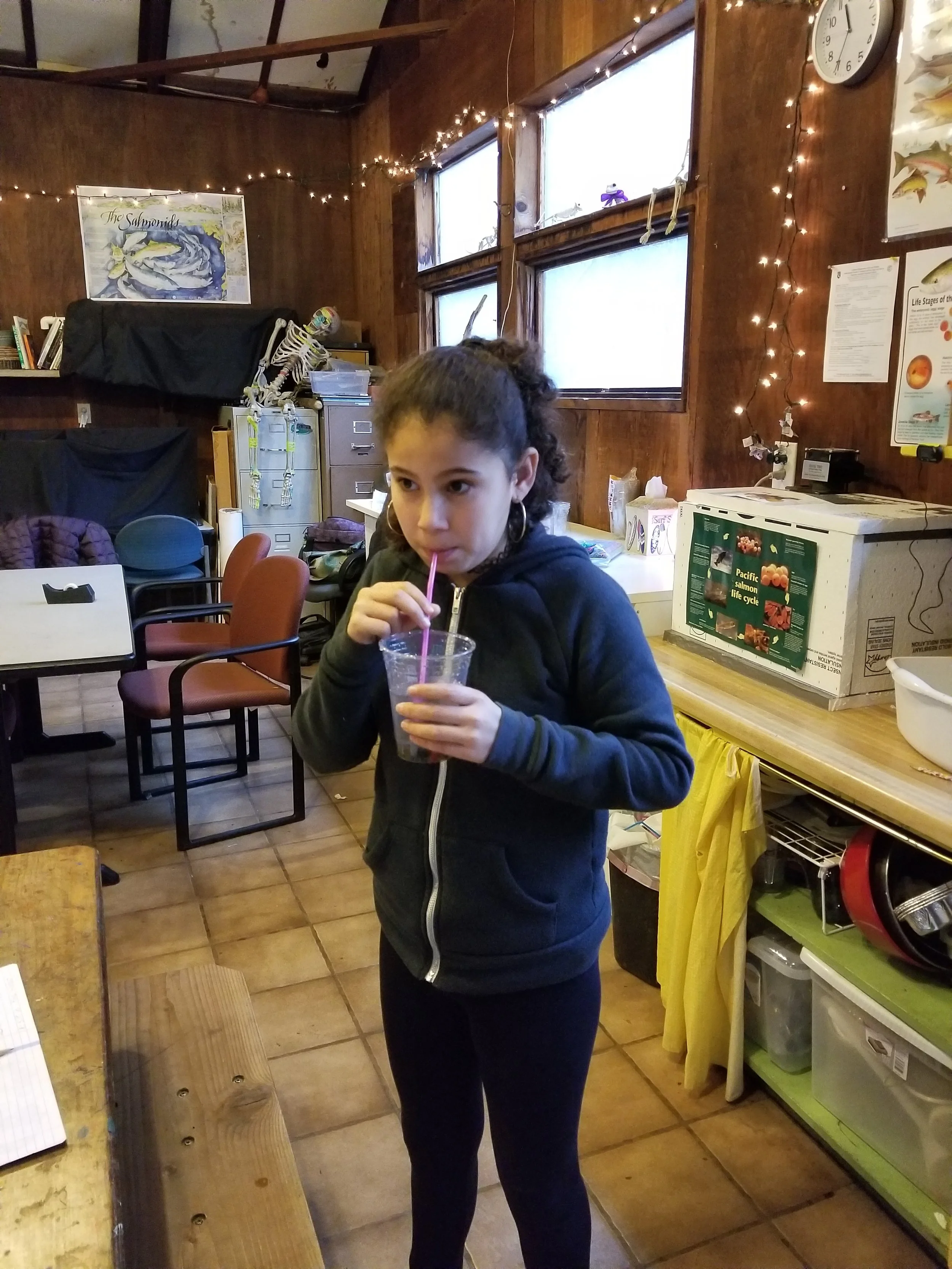
Aya doing the silt experiment.
We watched a brief documentary that highlighted the relationship between a healthy forest, a well-cared for waterway and the balance that humans have to strike between development and conservation.
Then of course, Science Fair and Invention Convention was a huge success this year! I was very proud of the caliber of projects created and number of unique, thought-provoking questions that this class in particular investigated.
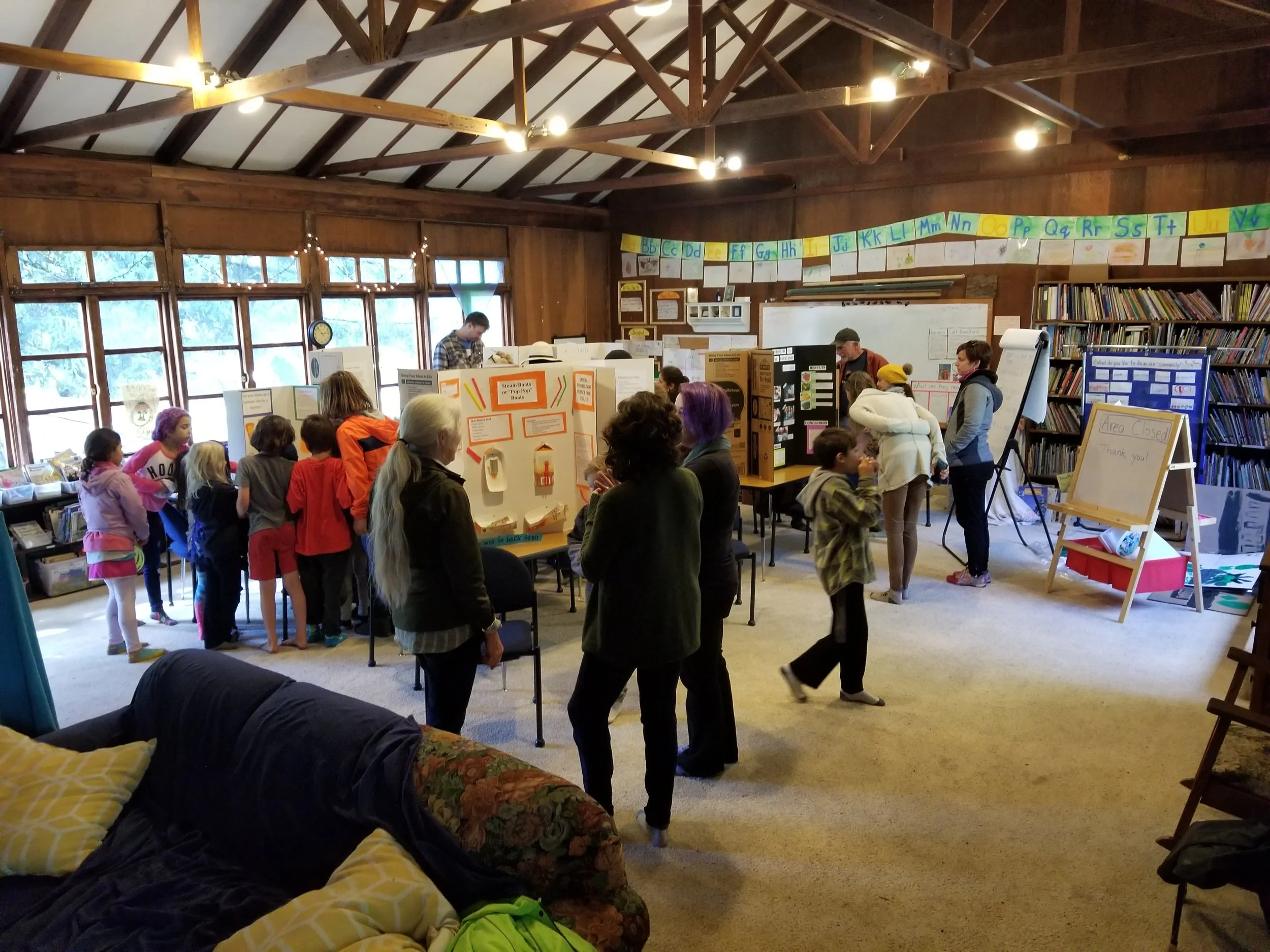
View of the rug room during Science Fair and Invention Convention.
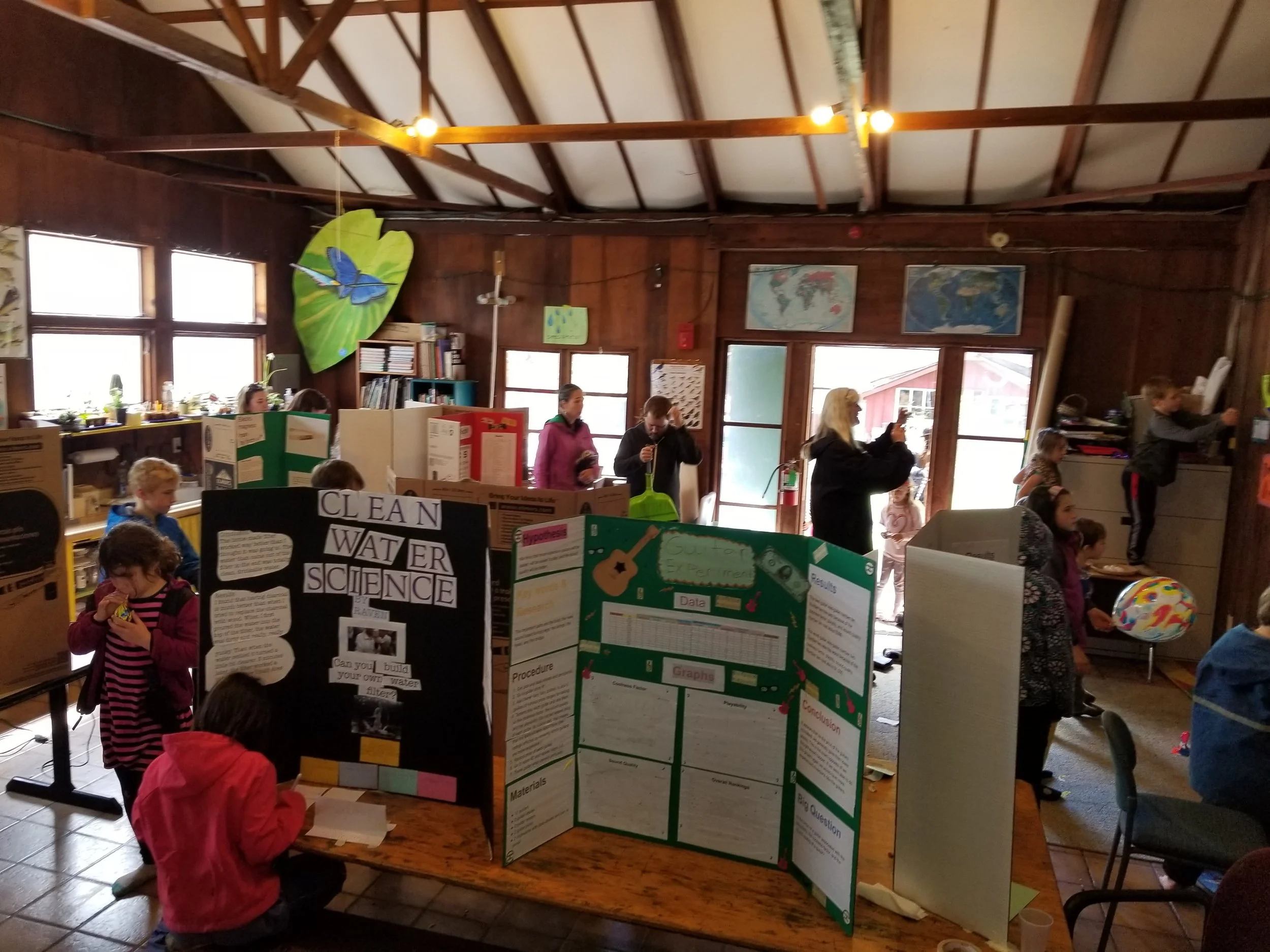
View of the tile room for Science Fair and Invention Convention.
We began discussing the criteria that we use for determining water quality, and also highlighted that "good" and "bad" water can be relative to its use - for example good for fish to live in, not something we want to drink untreated. We did an investigation where we diluted a known concentration of food coloring down to 1 part per million (which is the unit that oxygen dissolved in water is measured in). A healthy water source has 8 to 10 ppm oxygen which you cannot see, but parts per thousand food coloring are easily visible to the naked eye.
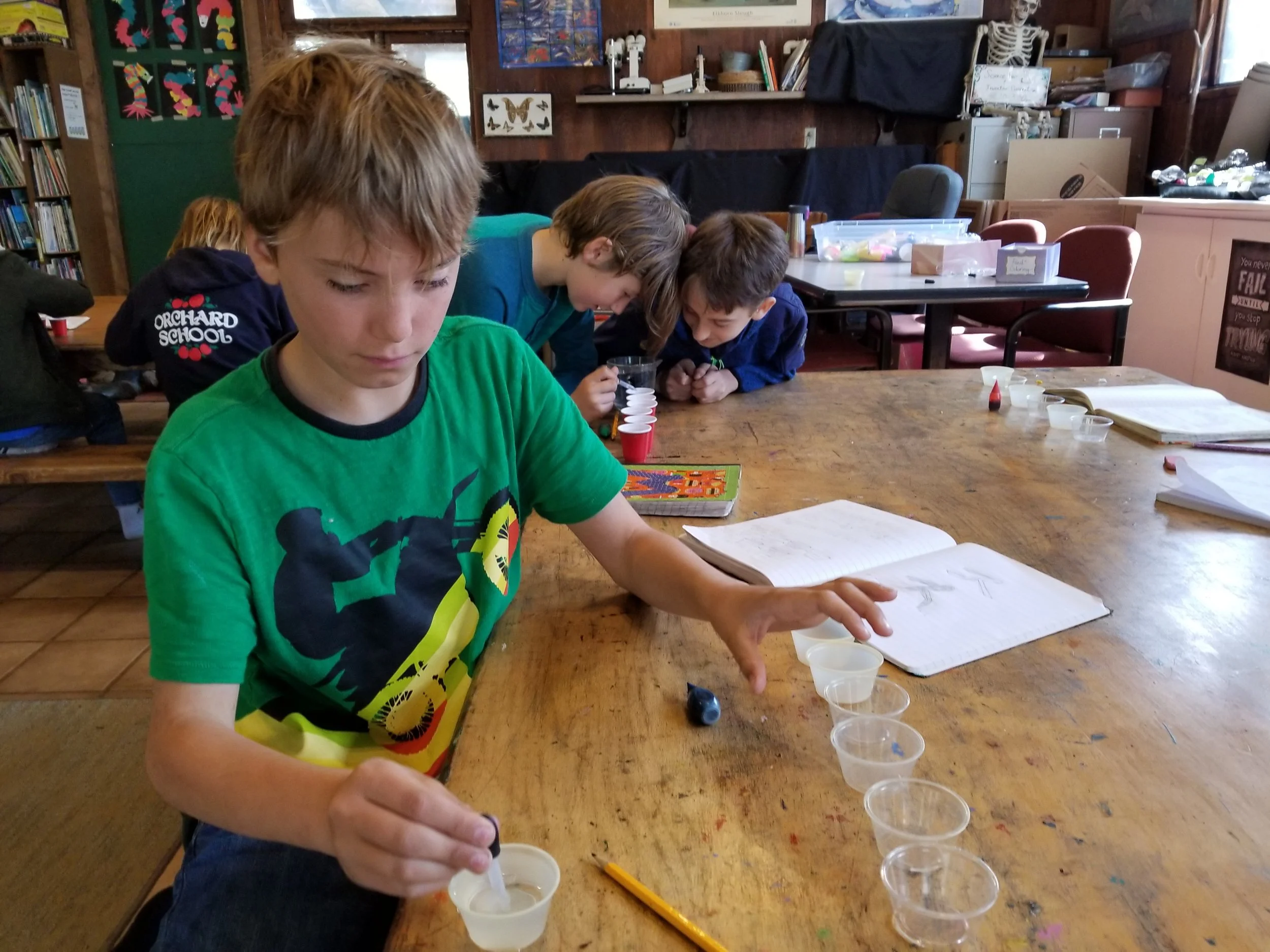
Dilutions of food coloring.
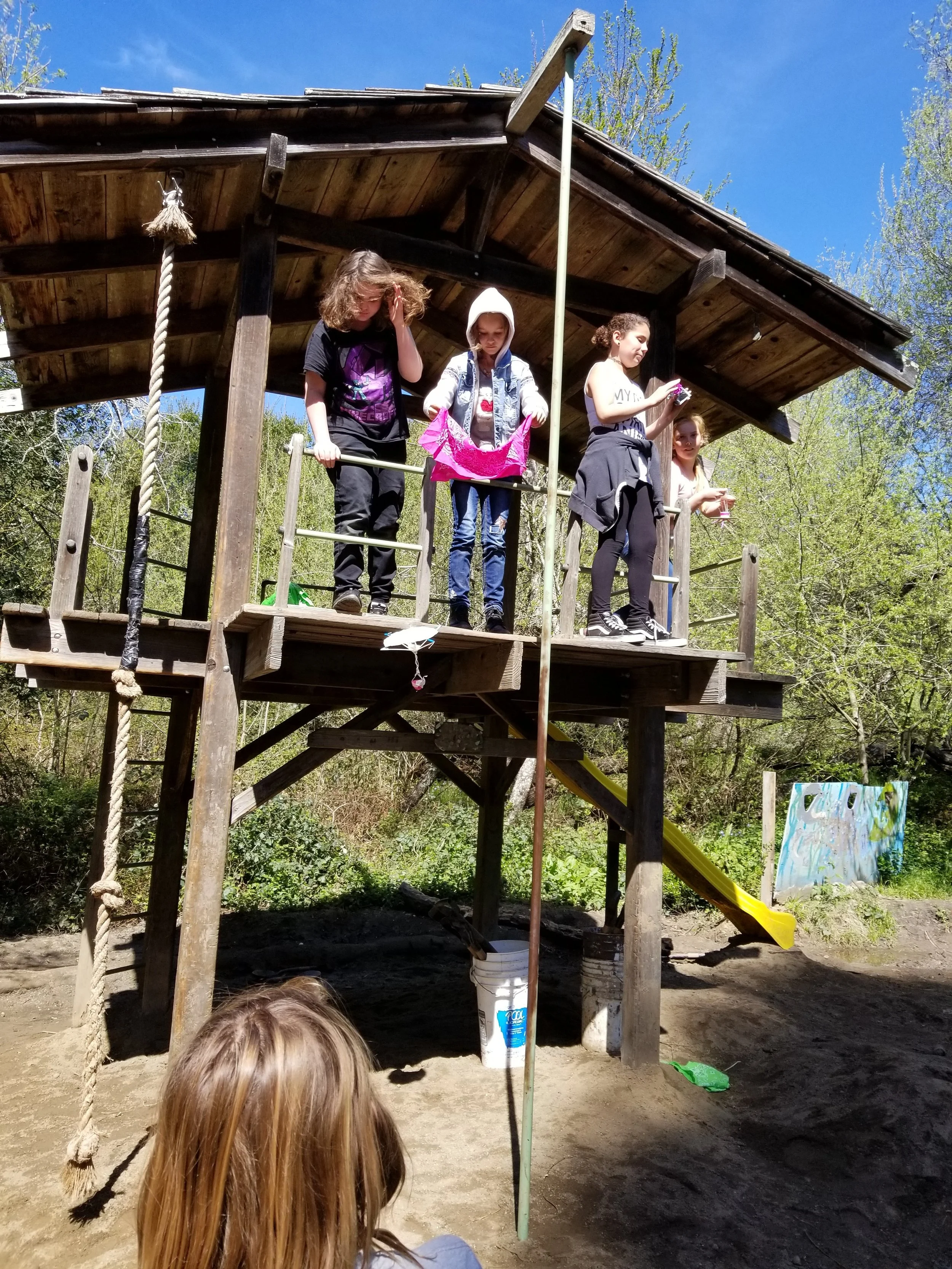
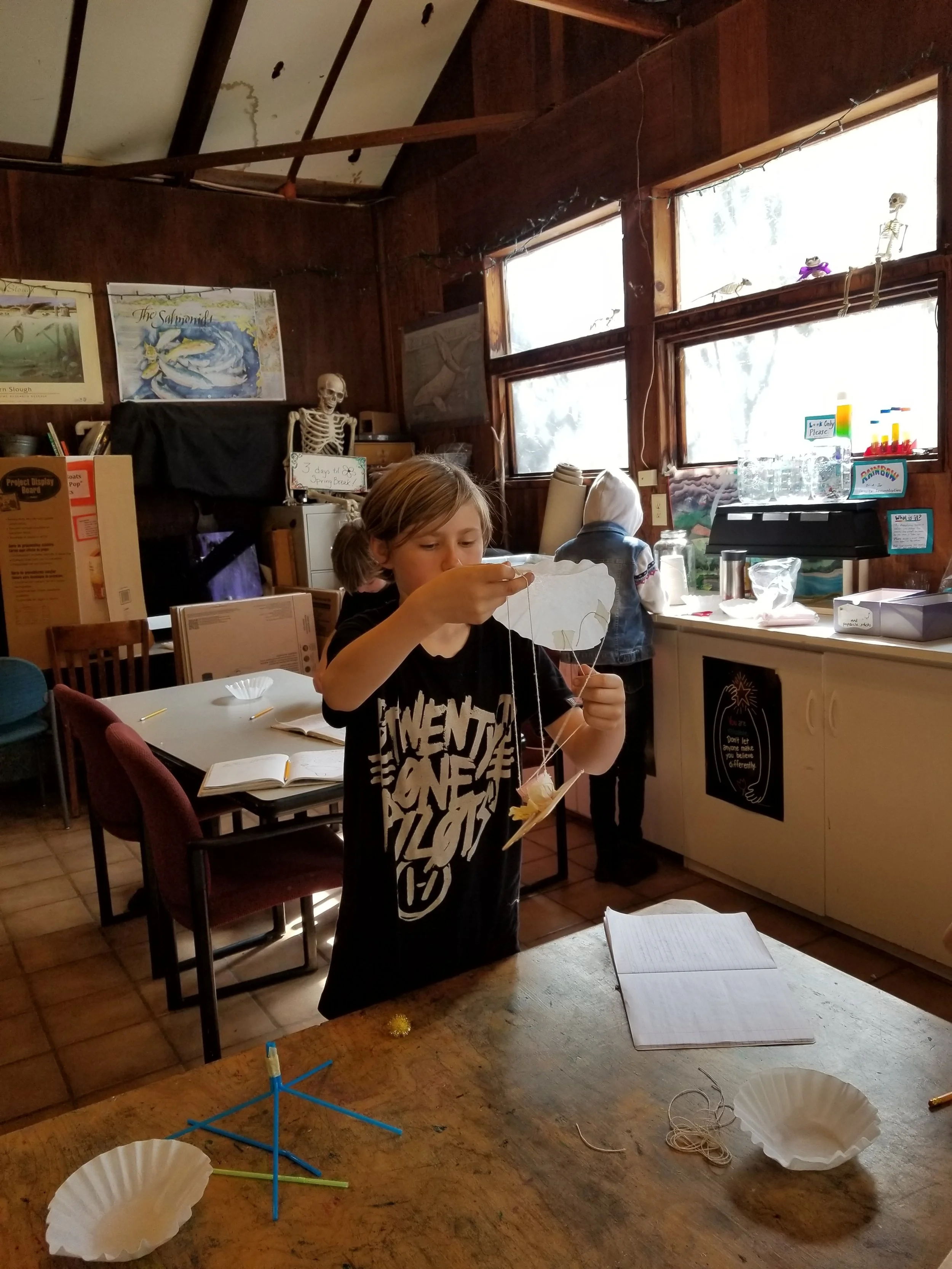
Finally, before break students engaged in another STEM challenge. This time to build a "warm fuzzy" (aka pom pom) lander out of half a plastic egg that could withstand a drop from the play structure and keep the unattached fuzzy upright and seated in the egg. This was one of my favorite challenges so far as it was so fun to see the different approaches and creativity.
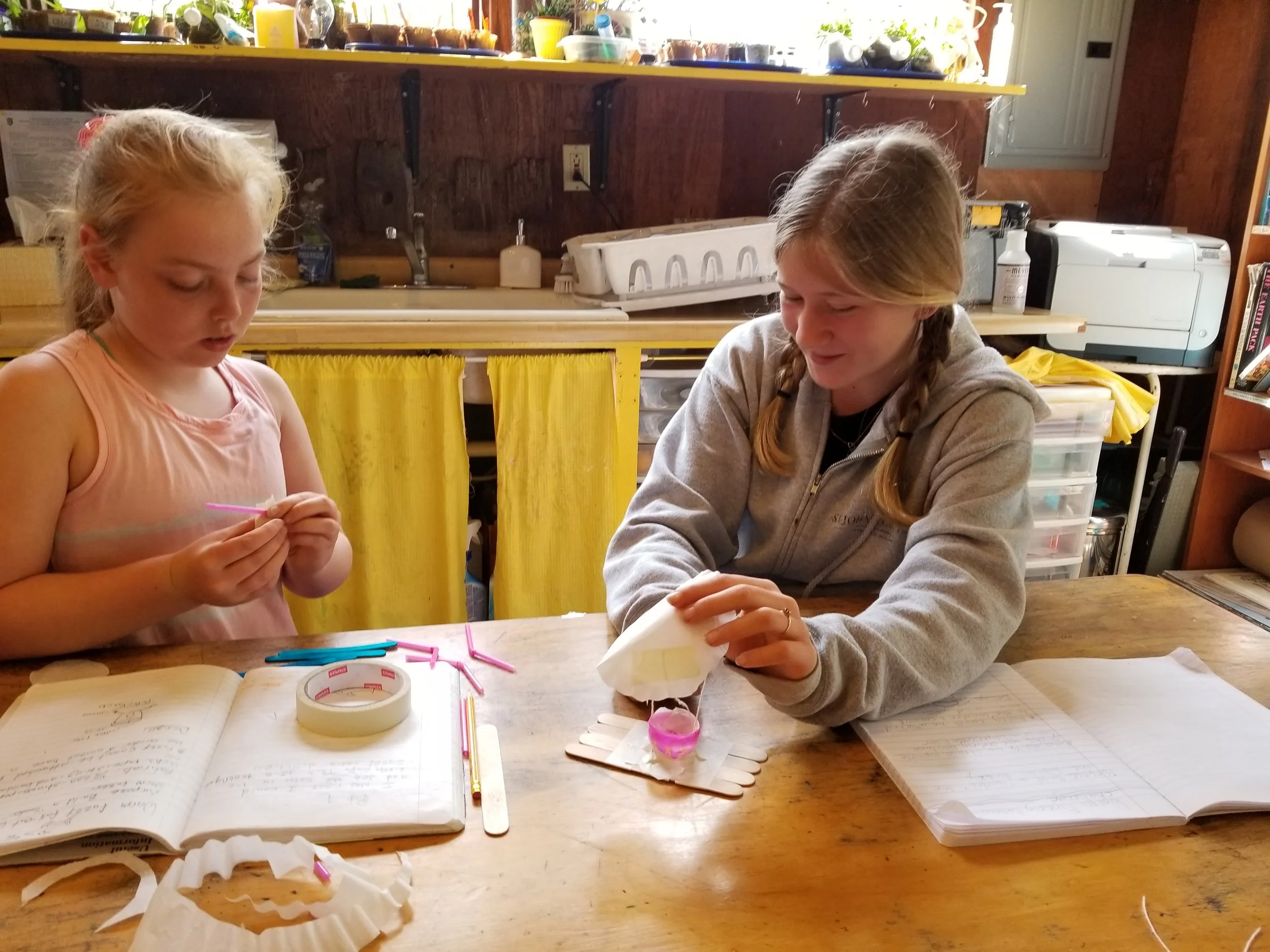
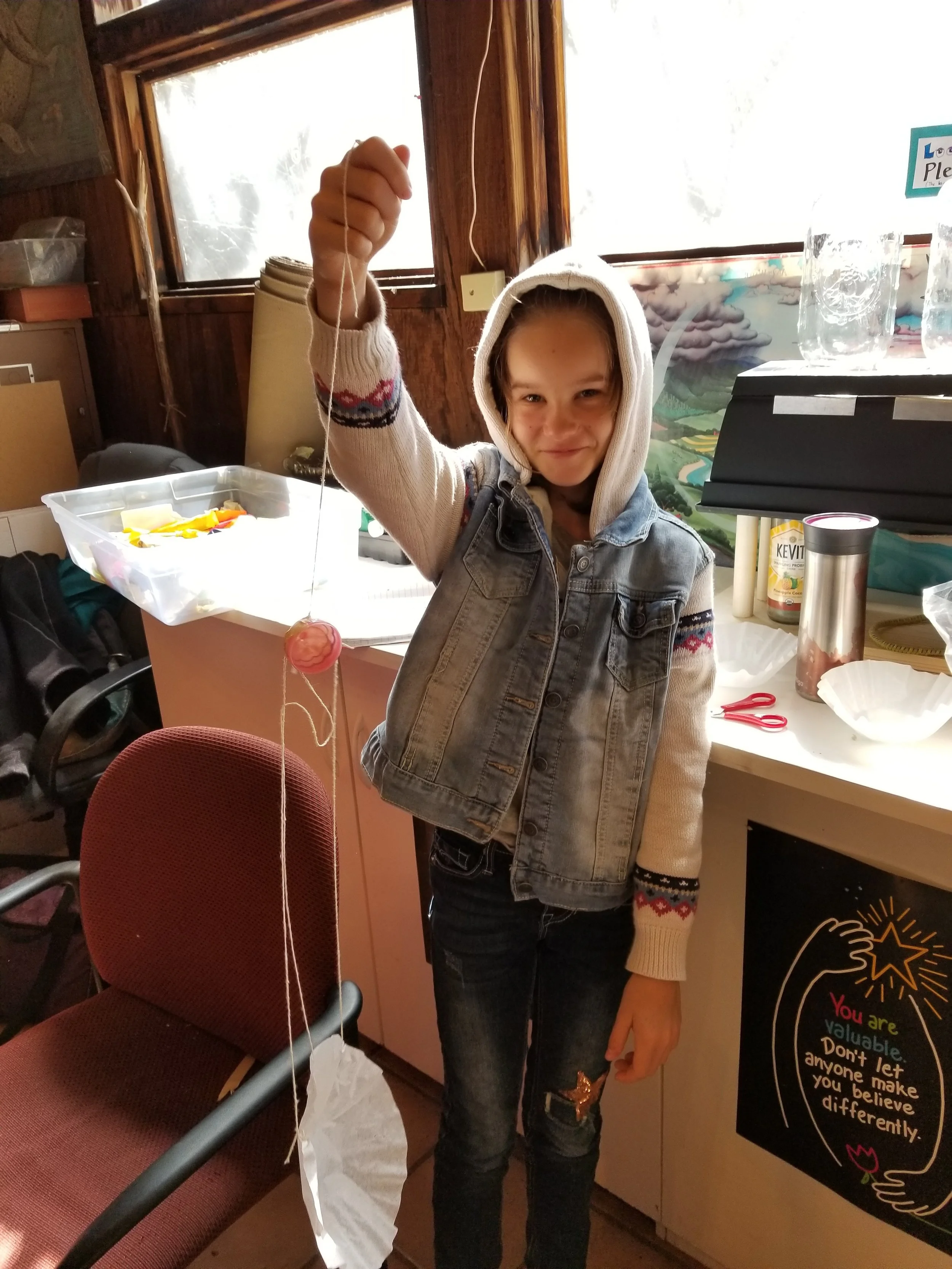
In progress.
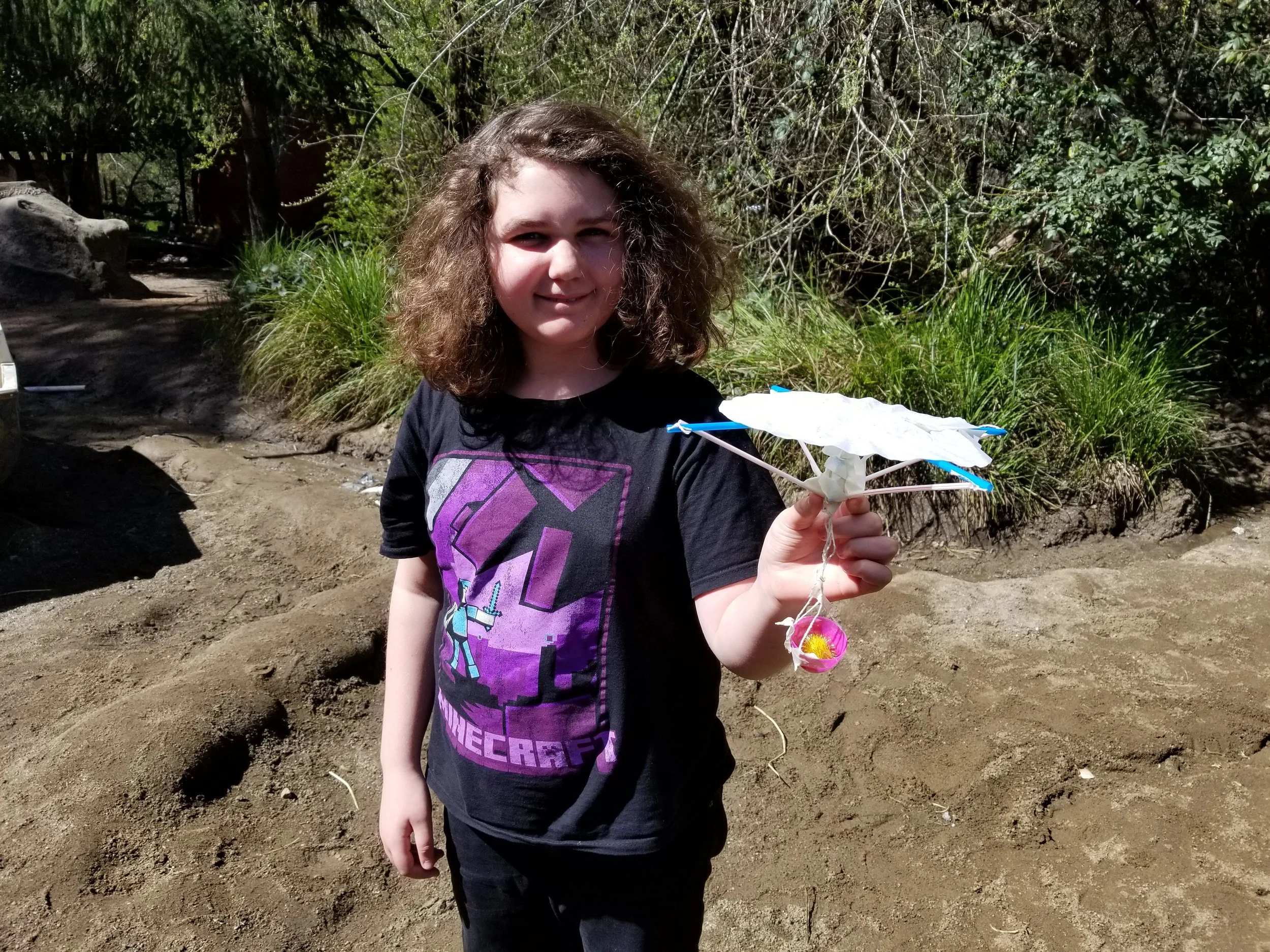
Bettie made a very structurally sound lander with intricate supports to hold the parachute open.
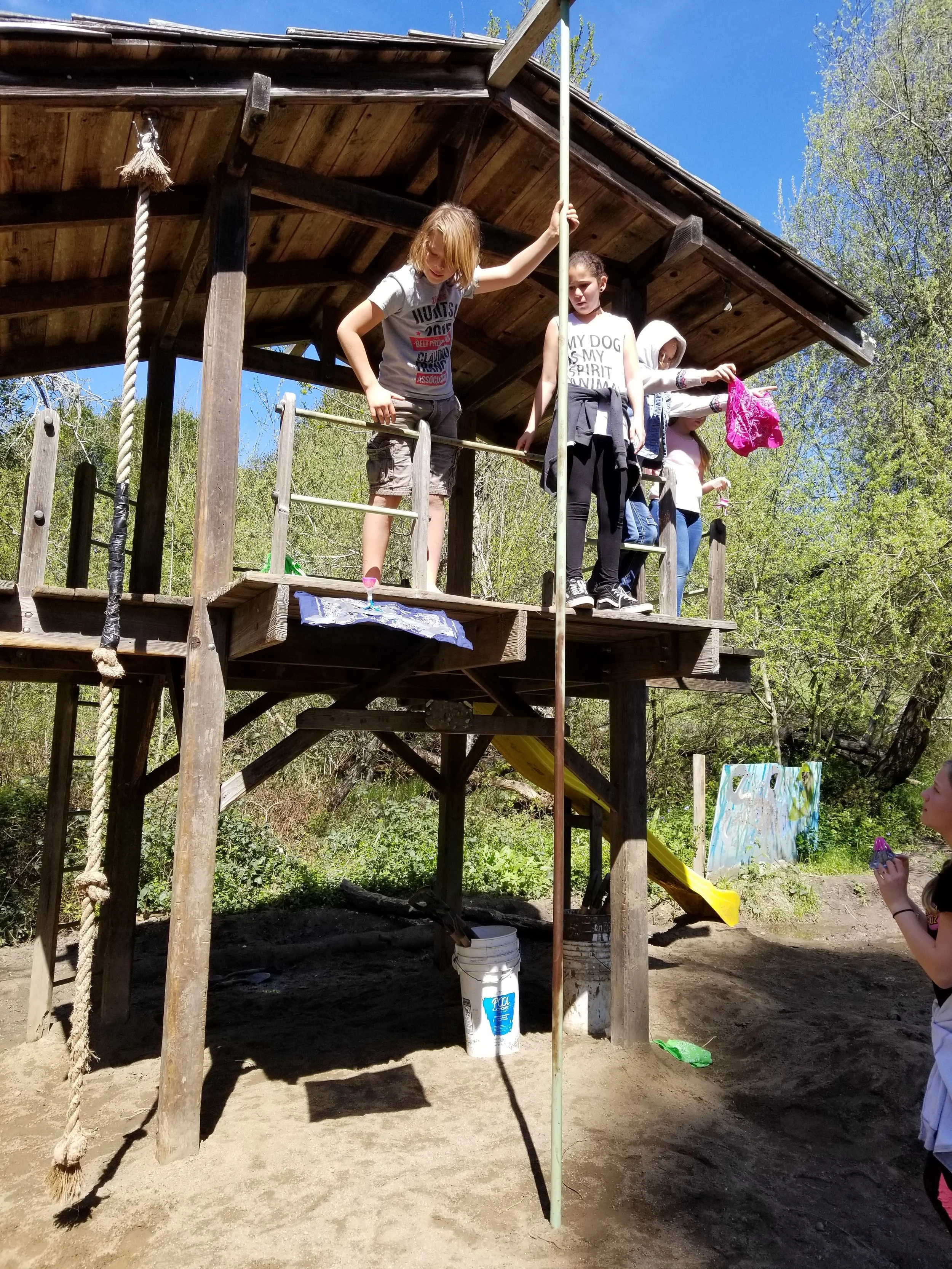
Makar's lander in flight.