Math
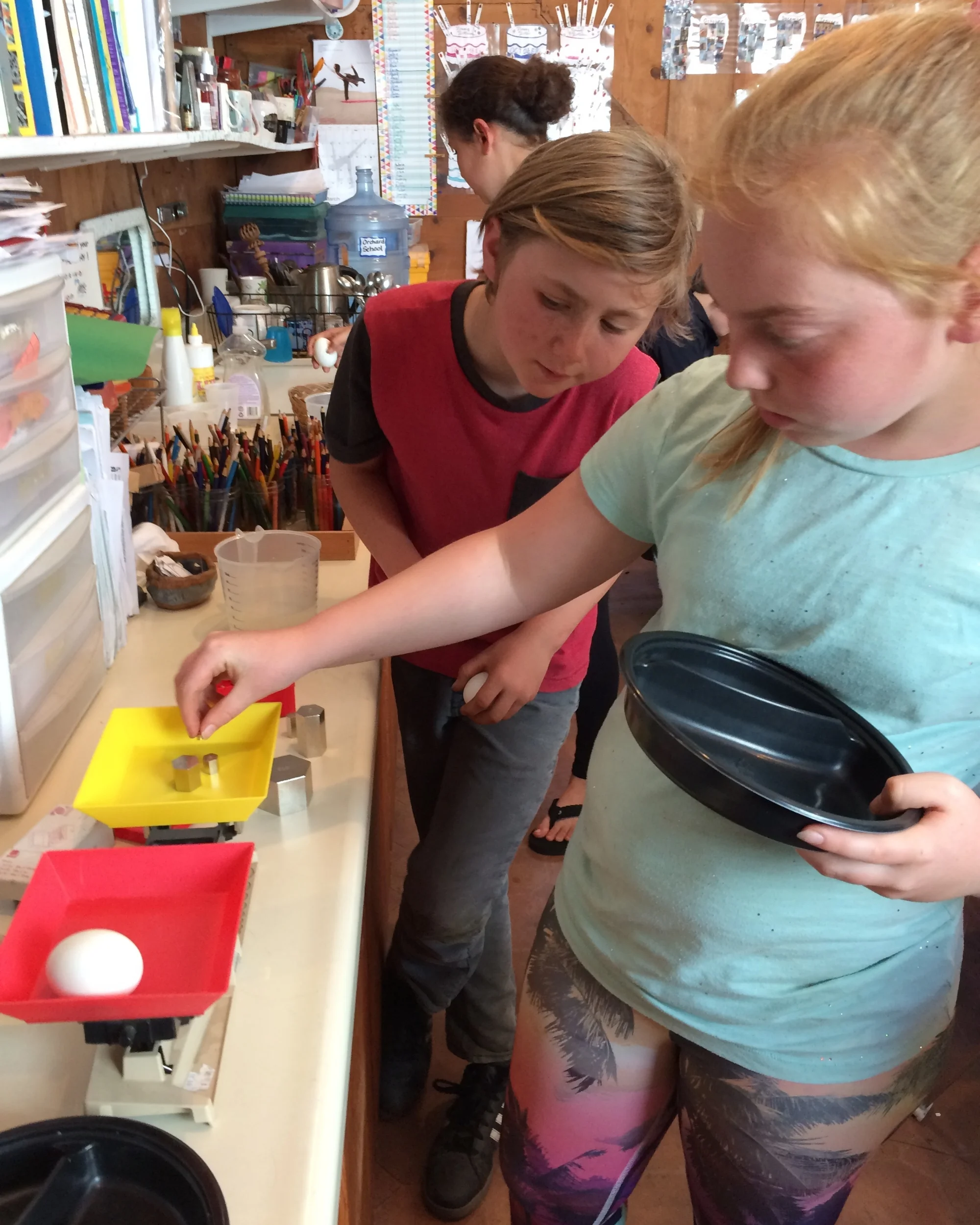
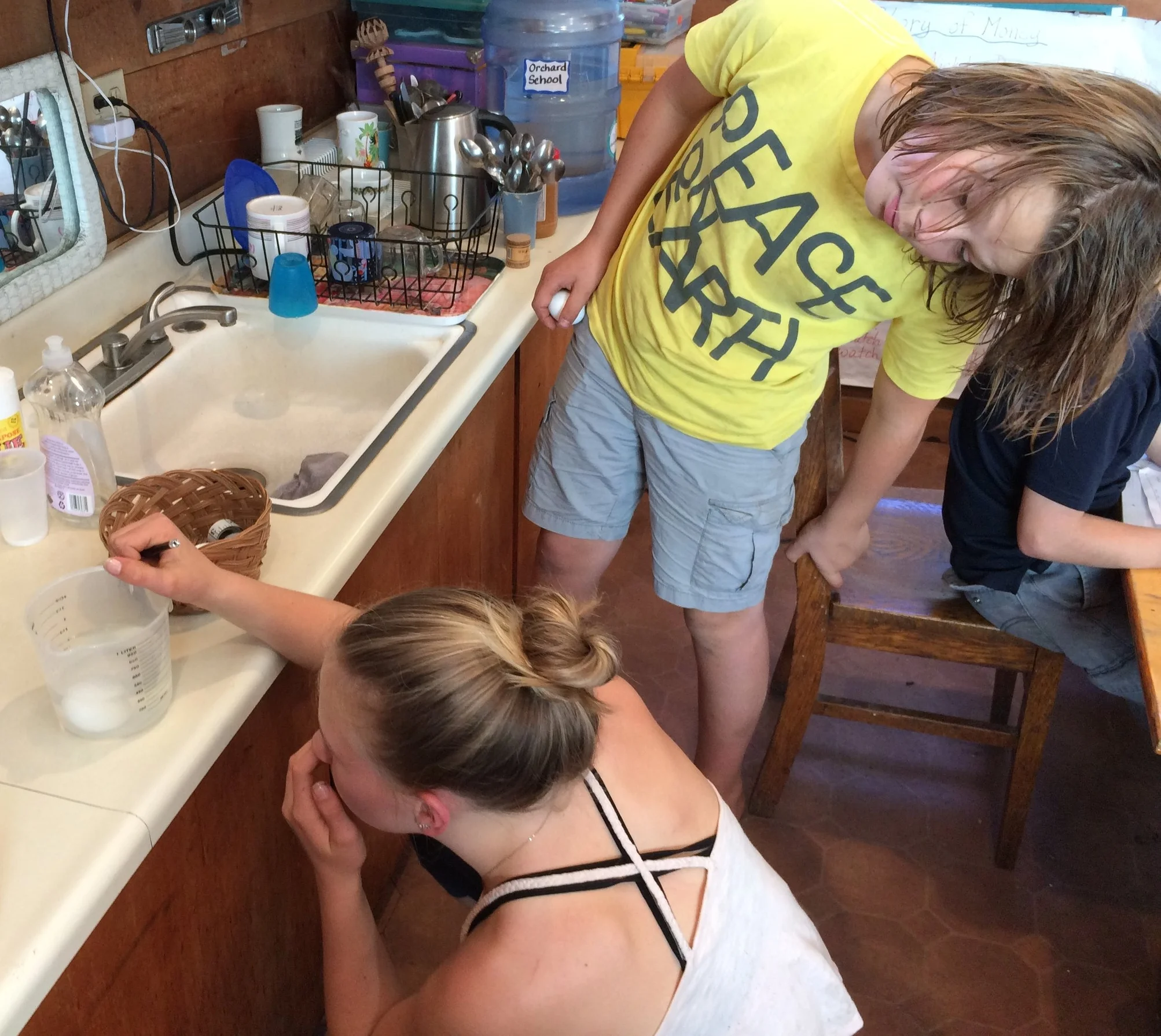
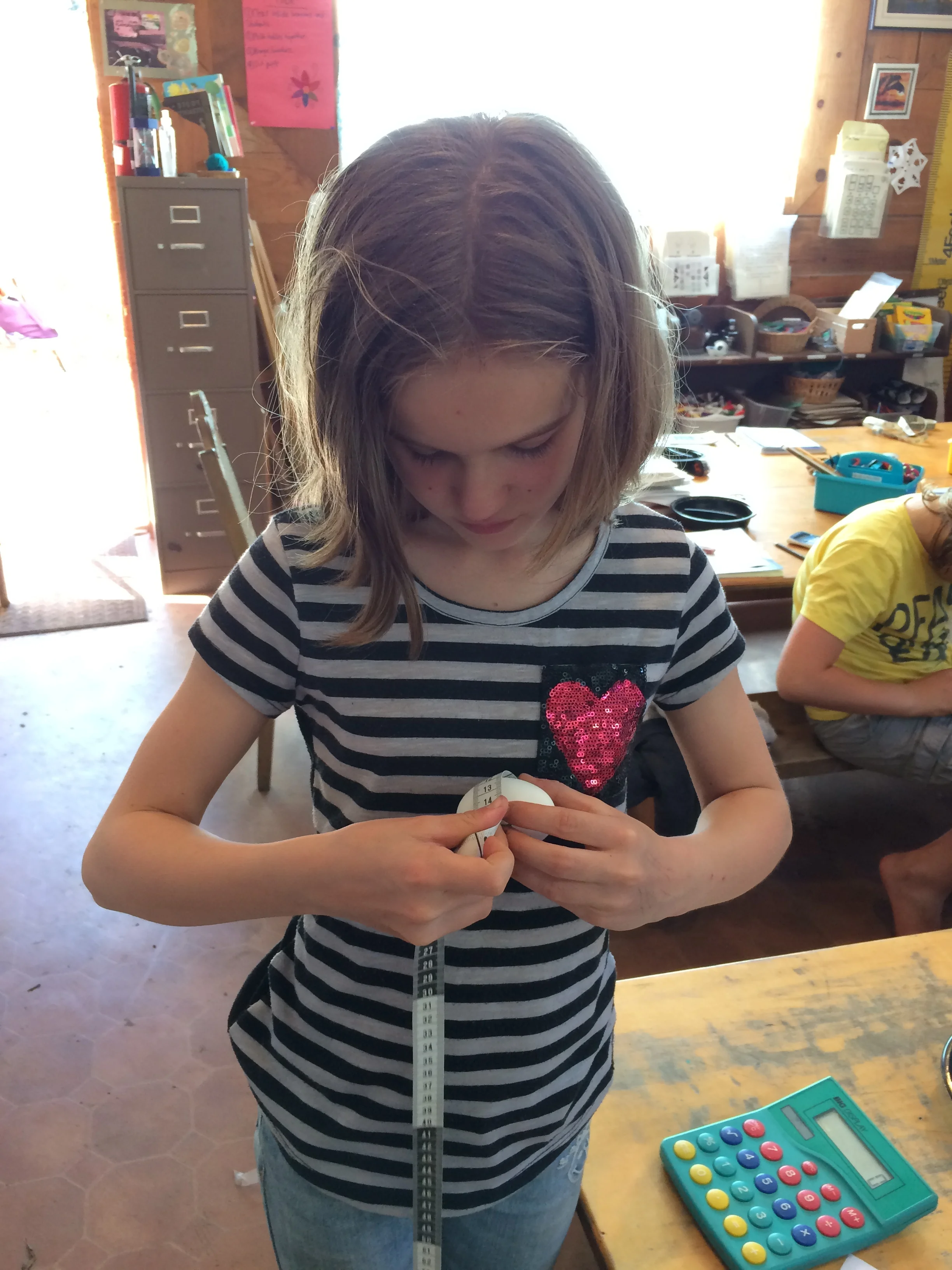
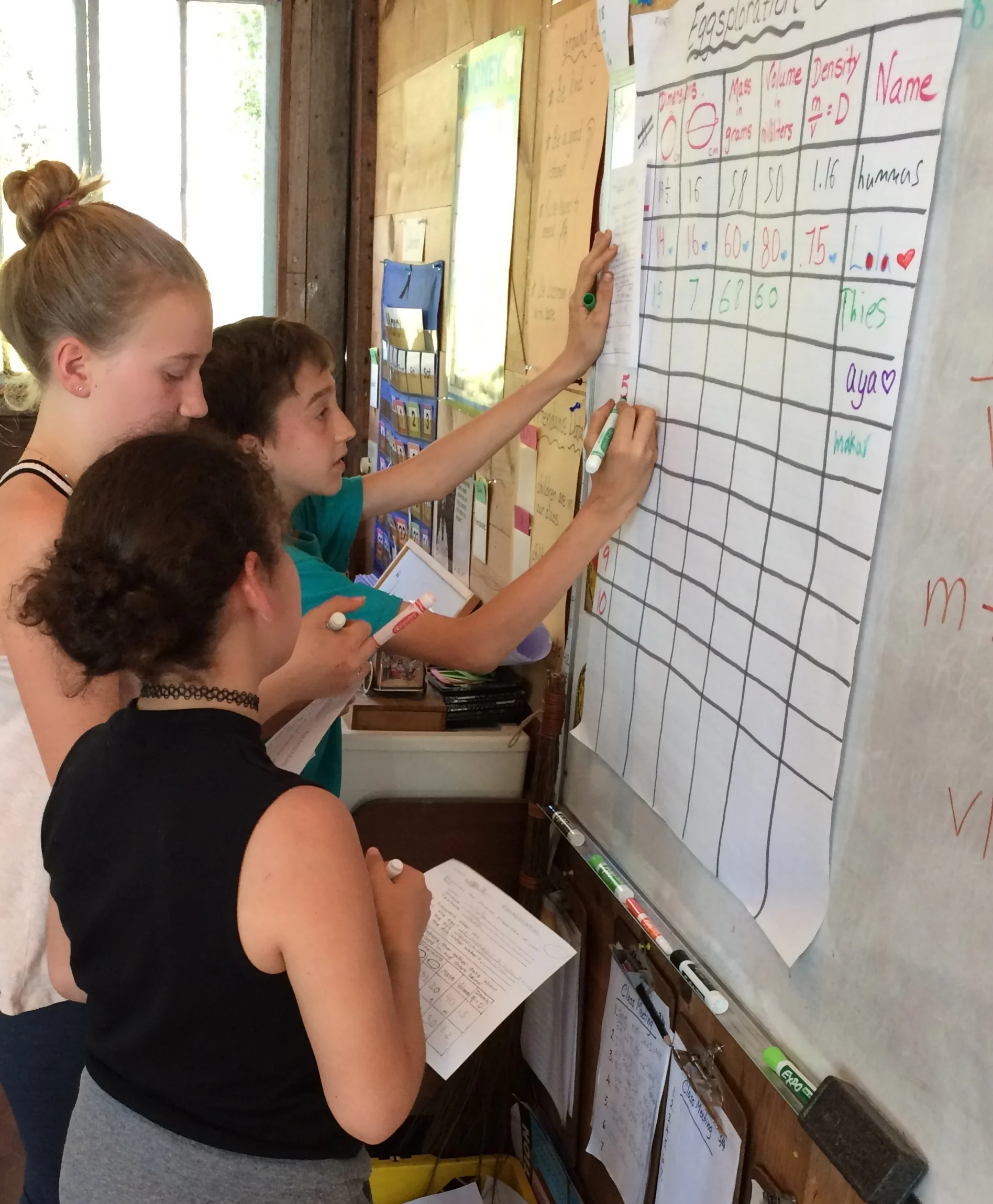
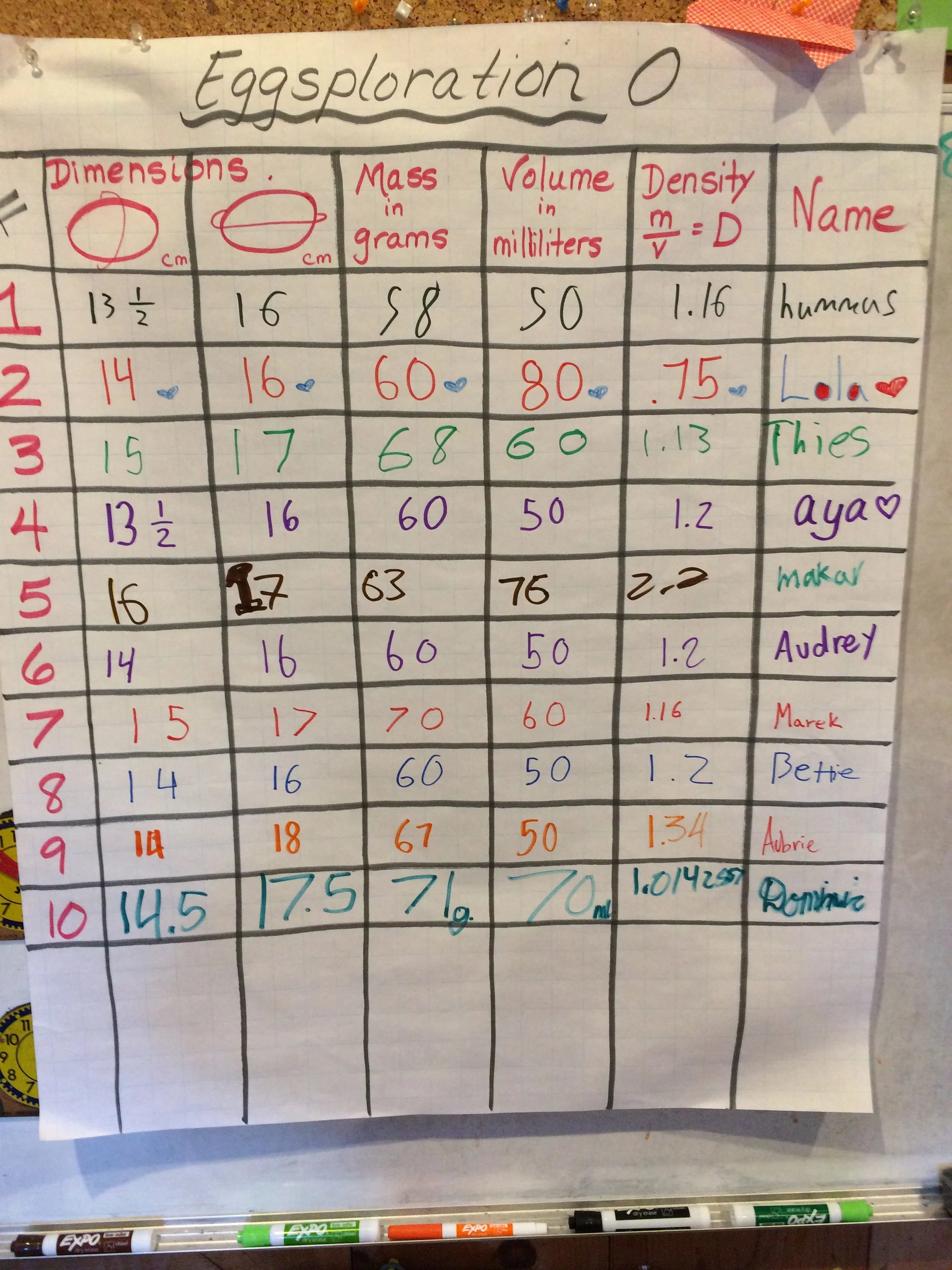
The students ended March with the Eggsploration investigation where they predicted, figured, and recorded the dimensions, mass, volume, and density of an egg. From the class chart, they made observations and then used the values to figure the mean, median, and range for each category. The students are becoming adept at figuring each, although they may need some reminding on the process.
We began our formal study of decimals as another notation for representing fractions. Students brainstormed everything they already knew about decimals and where they might have seen numbers such as .369, 1.75, and .5. The fifth/sixth graders have already had experiences with operations involving decimals; however, understanding the concept of the place value can be confusing. Therefore, it’s helpful to use the base 10 blocks as a concrete and visual reminder of the value of a decimal number when introducing decimal notation. The students experienced a decimal number by building it with the base 10 blocks, and writing it in words, as a fraction, and as a decimal number: Twenty-five-hundredths, 25/100, .25, two rods (2 tenths) and five units (5 hundredths). They solved and created riddles using the base 10 blocks as an optional tool. One riddle might be, “I have three-tenths and six-hundredths, what number am I?” The answer, “Thirty-six-hundredths, 36/100, .36.” The fifth/sixth graders then spent time comparing decimals by ordering a set of three decimals from smallest to largest, predicting the order, building it with the base 10 blocks, and then recording it as a fraction and as a decimal. They played Greatest Number Wins with a group to reinforce the place value and the comparing of decimal numbers. We began operations with decimals by reviewing the concept of division and the four different ways to write a division problem: words, standard, horizontal, and fraction. The students worked independently on dividing a decimal number by a whole number beginning with simple division problems to ones that required long division. They checked their answer using multiplication - a great way to review and practice both long division and multiplication using the standard algorithms.
In addition, the students continued their independent work in their algebra and geometry books and with the problem solving task cards. Also, they enhanced their mental math skills each week through Digits and Place, Find X, Place Value, Logic Pattern, and other problem solving activities.