
Science
April was full of preparations for our outdoor school trip to Pigeon Point and lots of activities following up that pivotal experience.
Before we left, the students built a last model of a watershed this time with a very key component - a sponge to stand in for a wetland similar to the Pescadero Marsh. Students added pollution in the form of powered cinnamon and water to wash the pollution down the watershed into the wetland. Then with a little finesse, the pollution was trapped in the wetand, but the water that left the other side of the sponge was clean. This was a big aha moment for students that wetlands act like filters for waterways (and they do!)
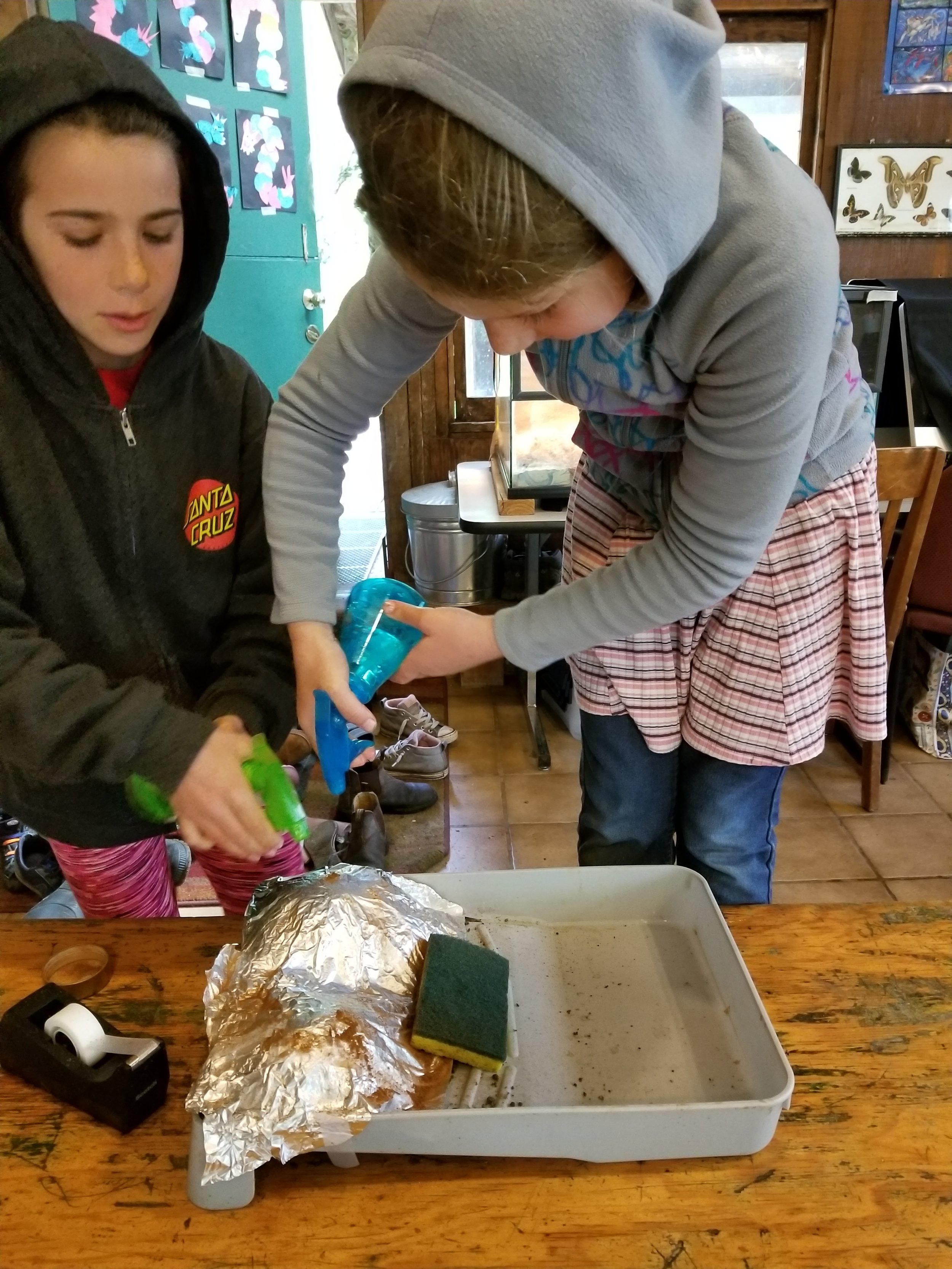
Adding water to the wetland model.
Of course, the highlight of the year was our overnight to Pigeon Point lighthouse. The students had a wonderful time exploring the different habitats and being guided by our awesome naturalists: Luna Moth and Seed.
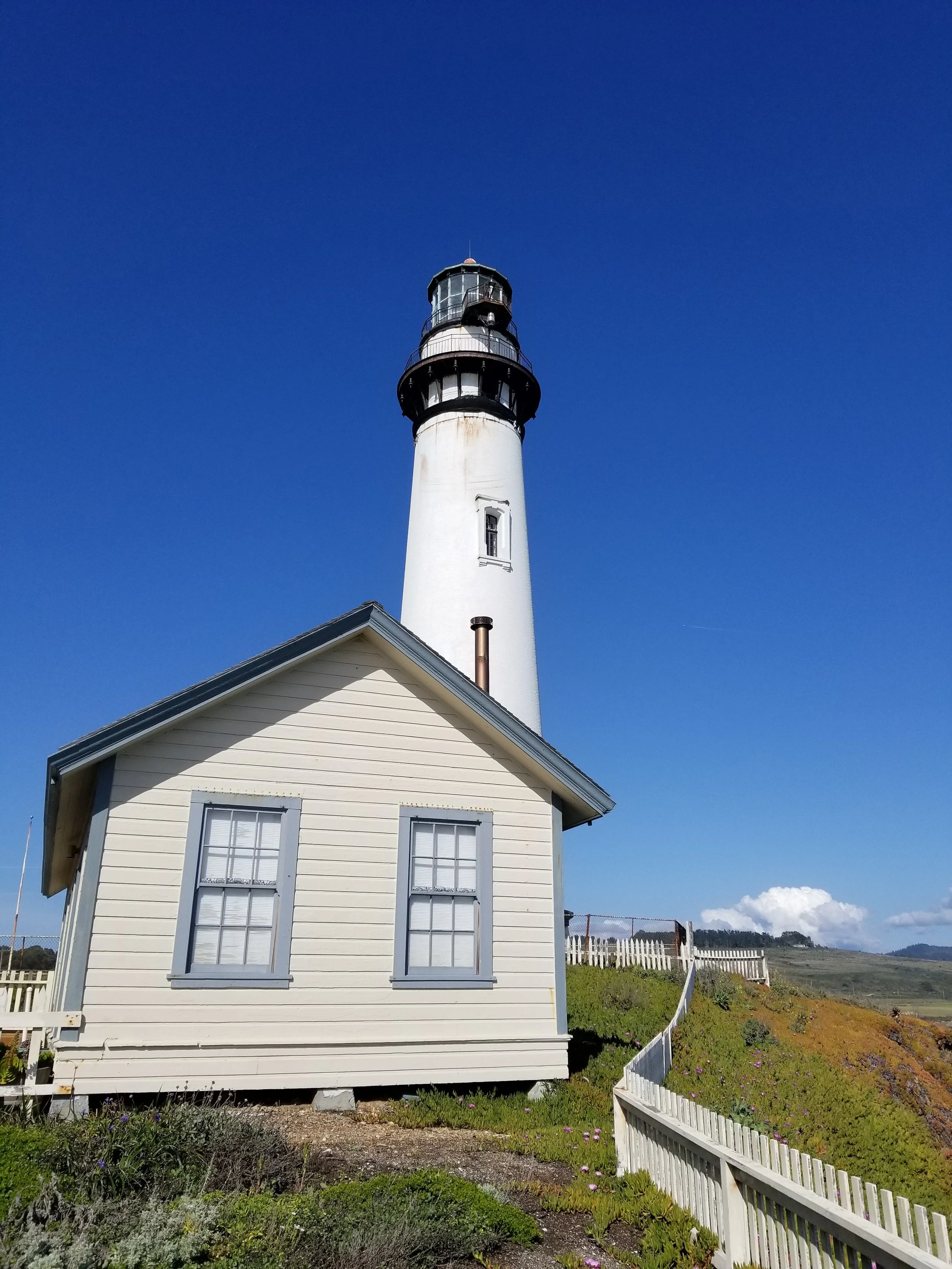
The lighthouse. We stayed in a nearby dorm building.
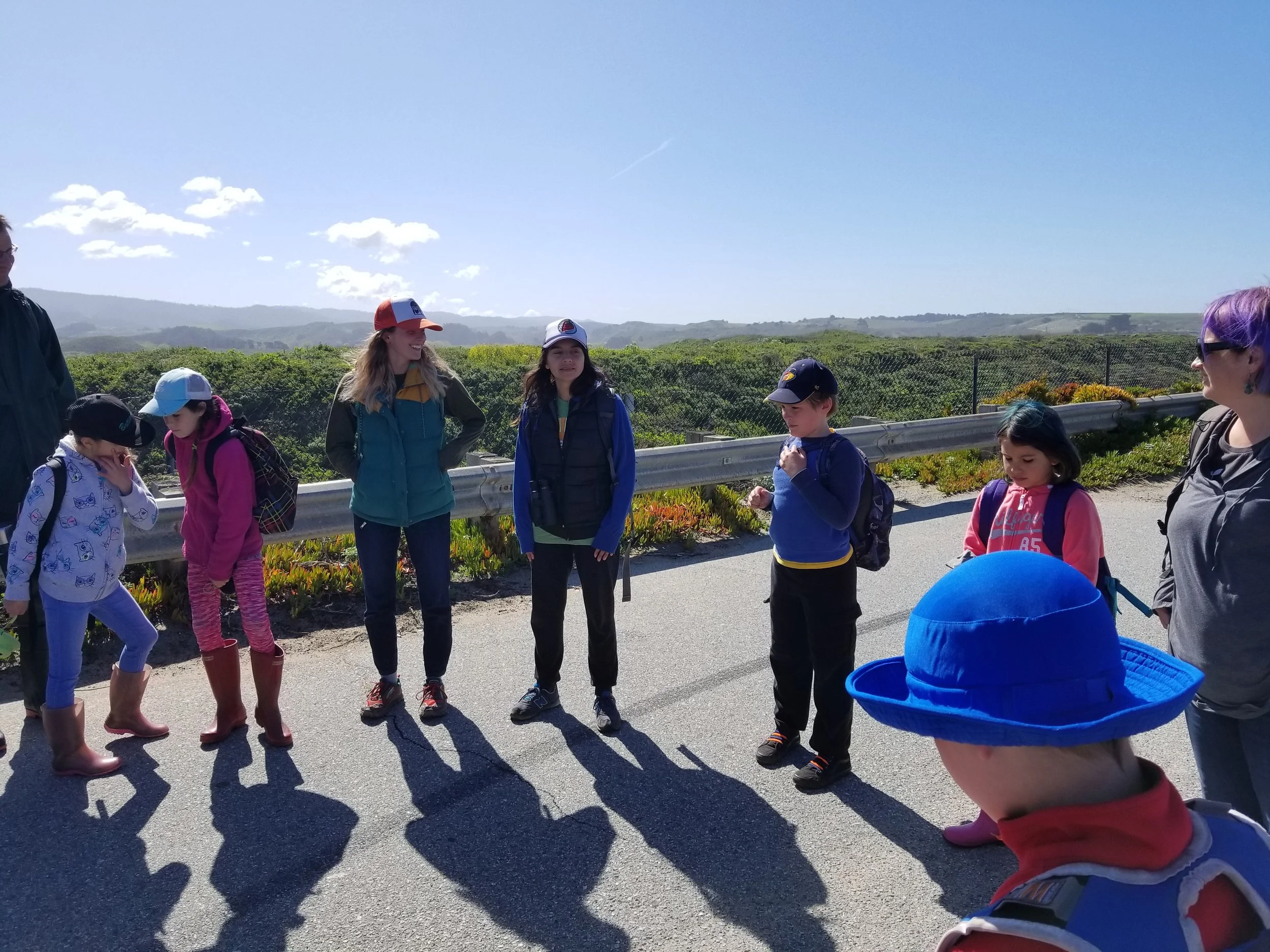
Meeting our naturalists at Pescadero Marsh.
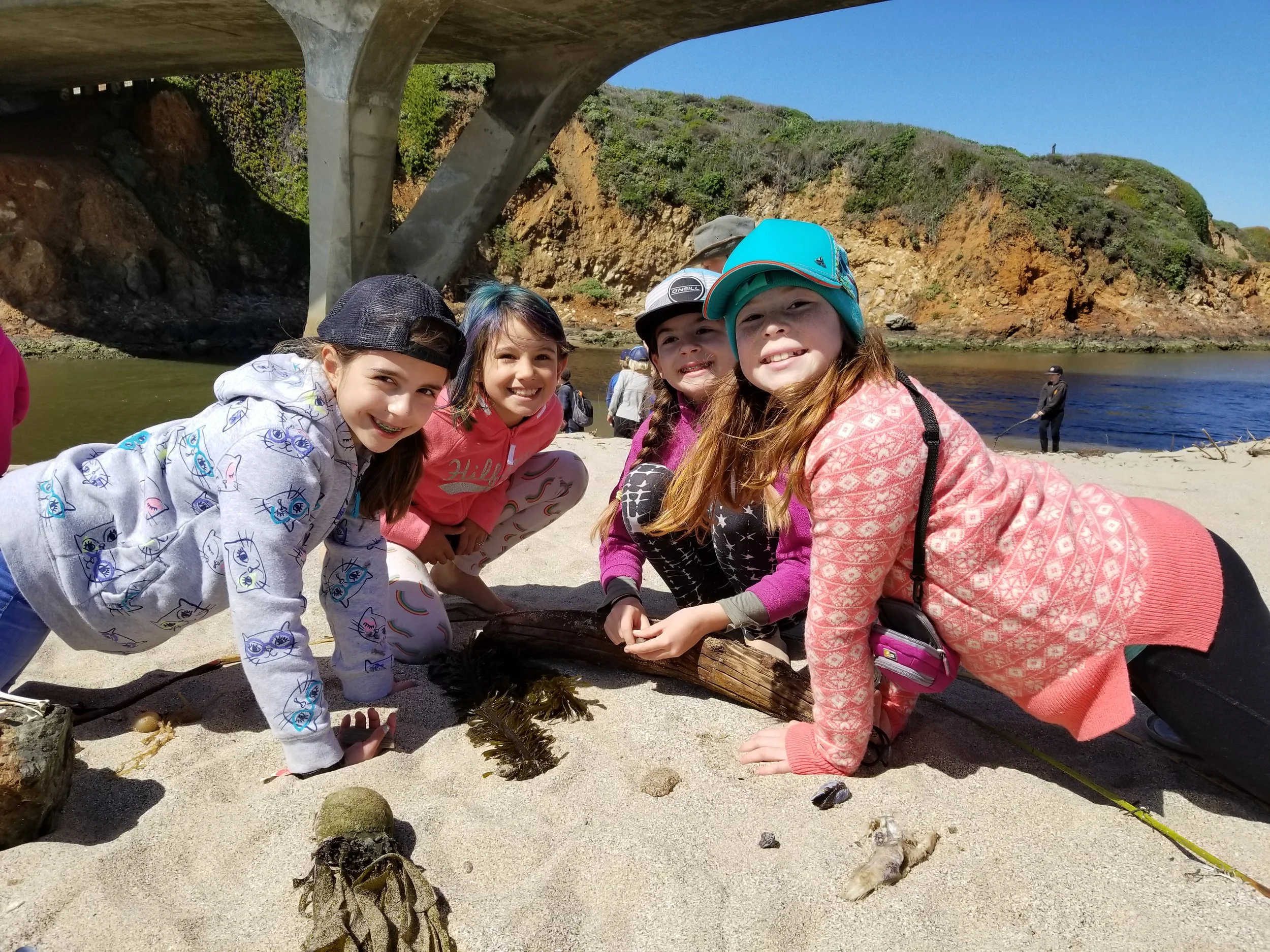
We spent an hour exploring the beach and investigating the incoming tide.
Our group walked through the marsh to a beautiful lunch location where we viewed many different species of birds.
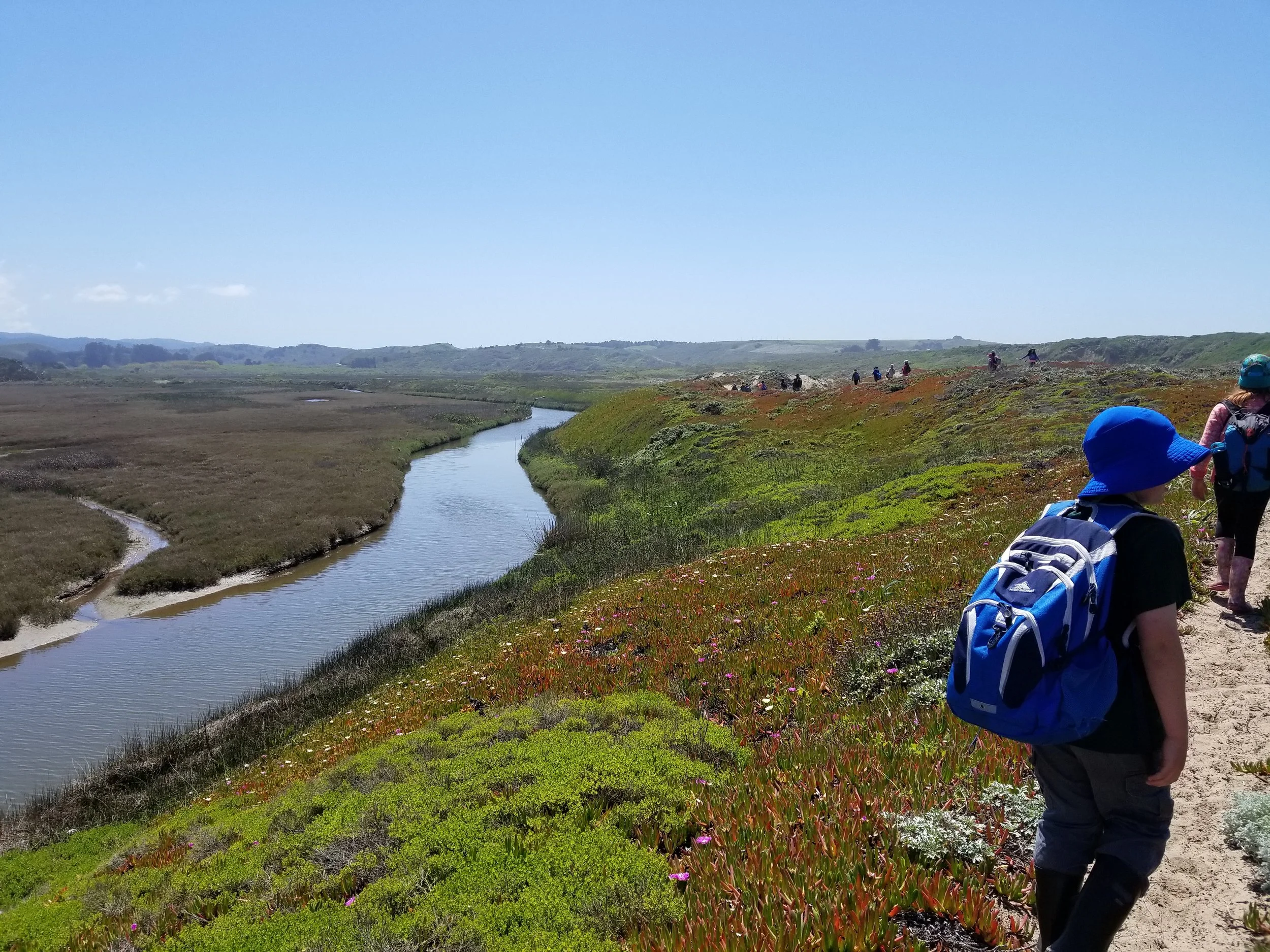
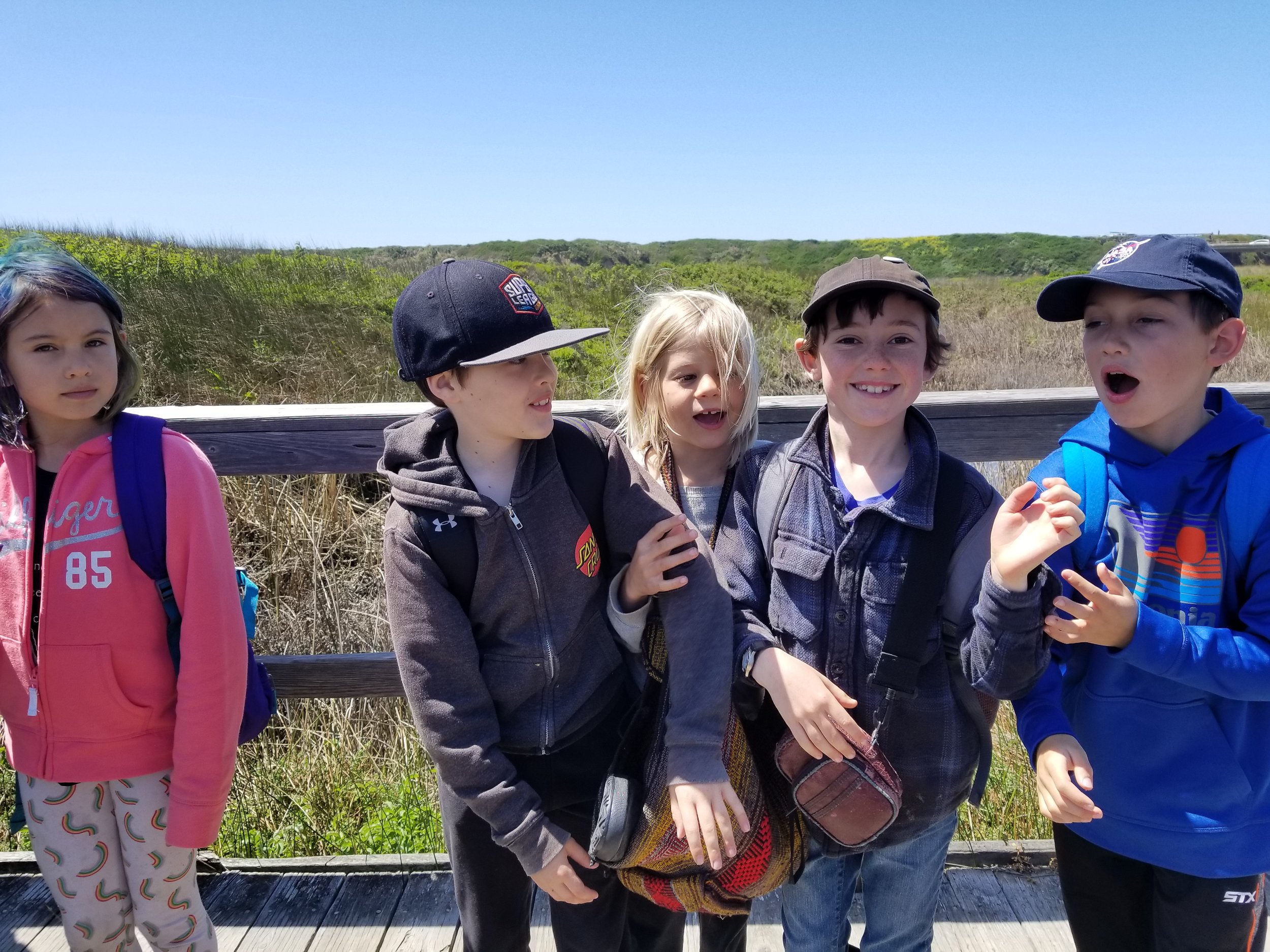
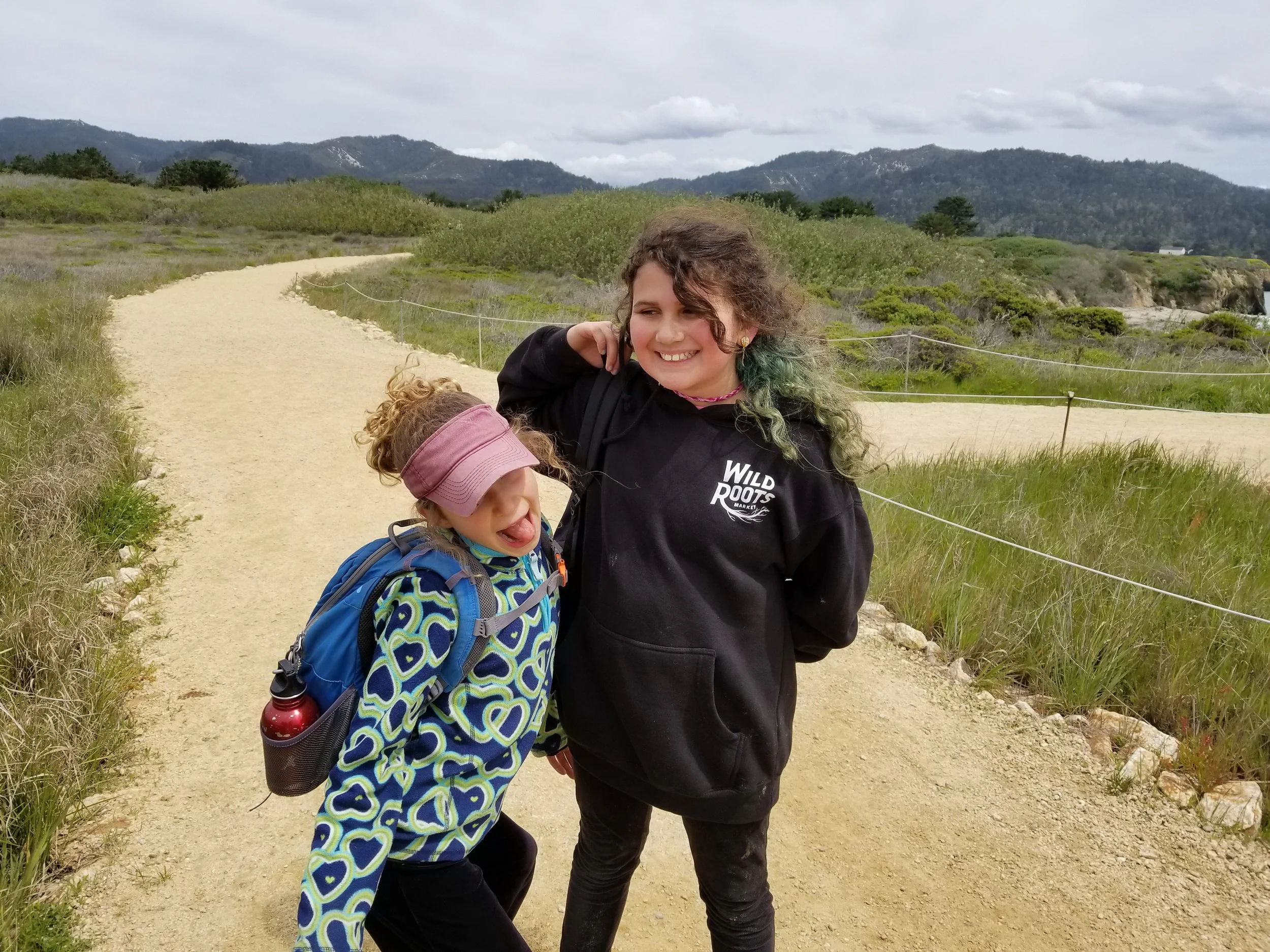
Having fun on the trail.
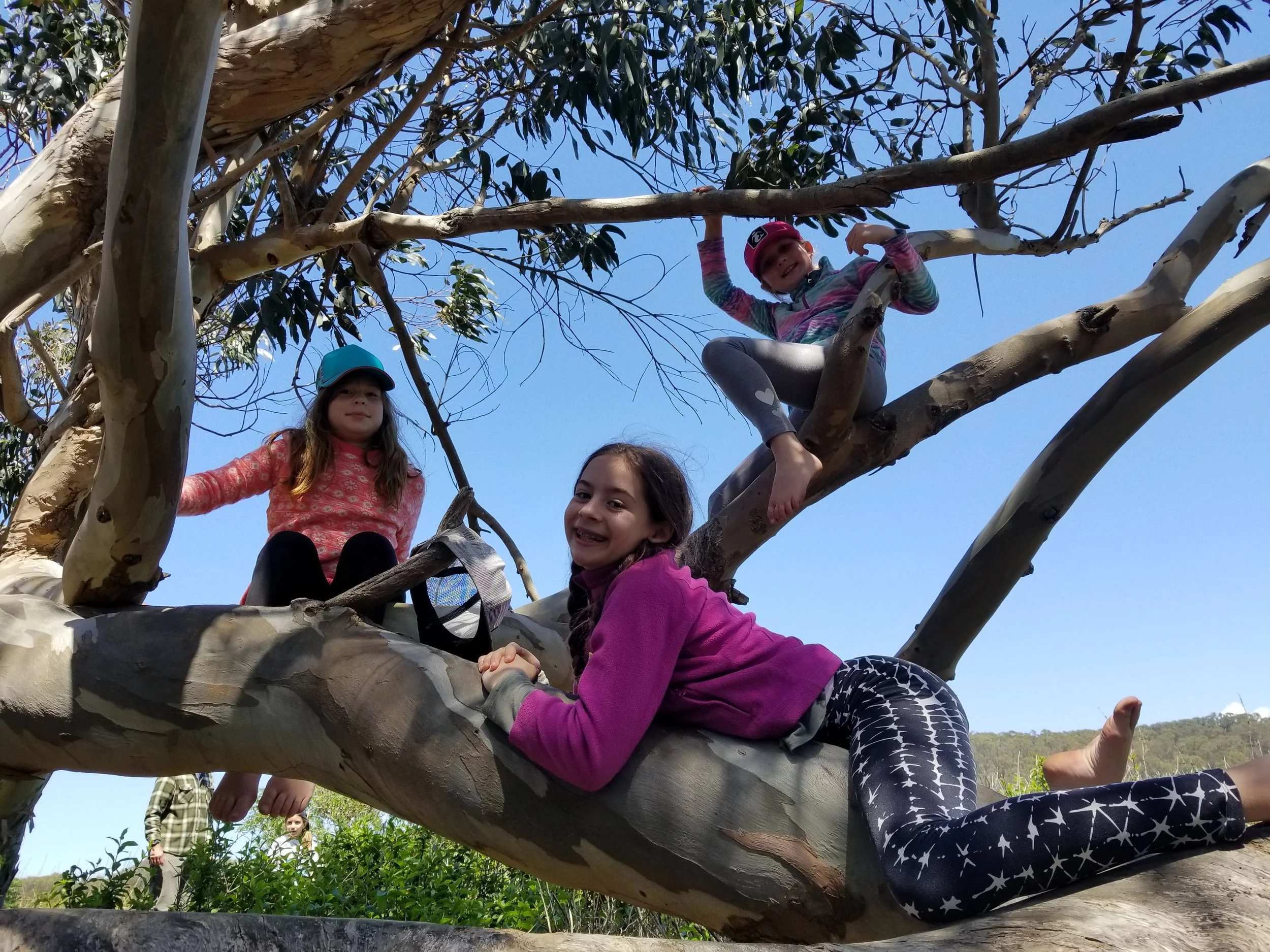
At the end of trail we arrived at Eudora, a magical eucalyptus tree, that was a blast to climb and explore.
Back at Pigeon Point Lighthouse, we settled into a community living routine, cooking meals and cleaning up after each other.
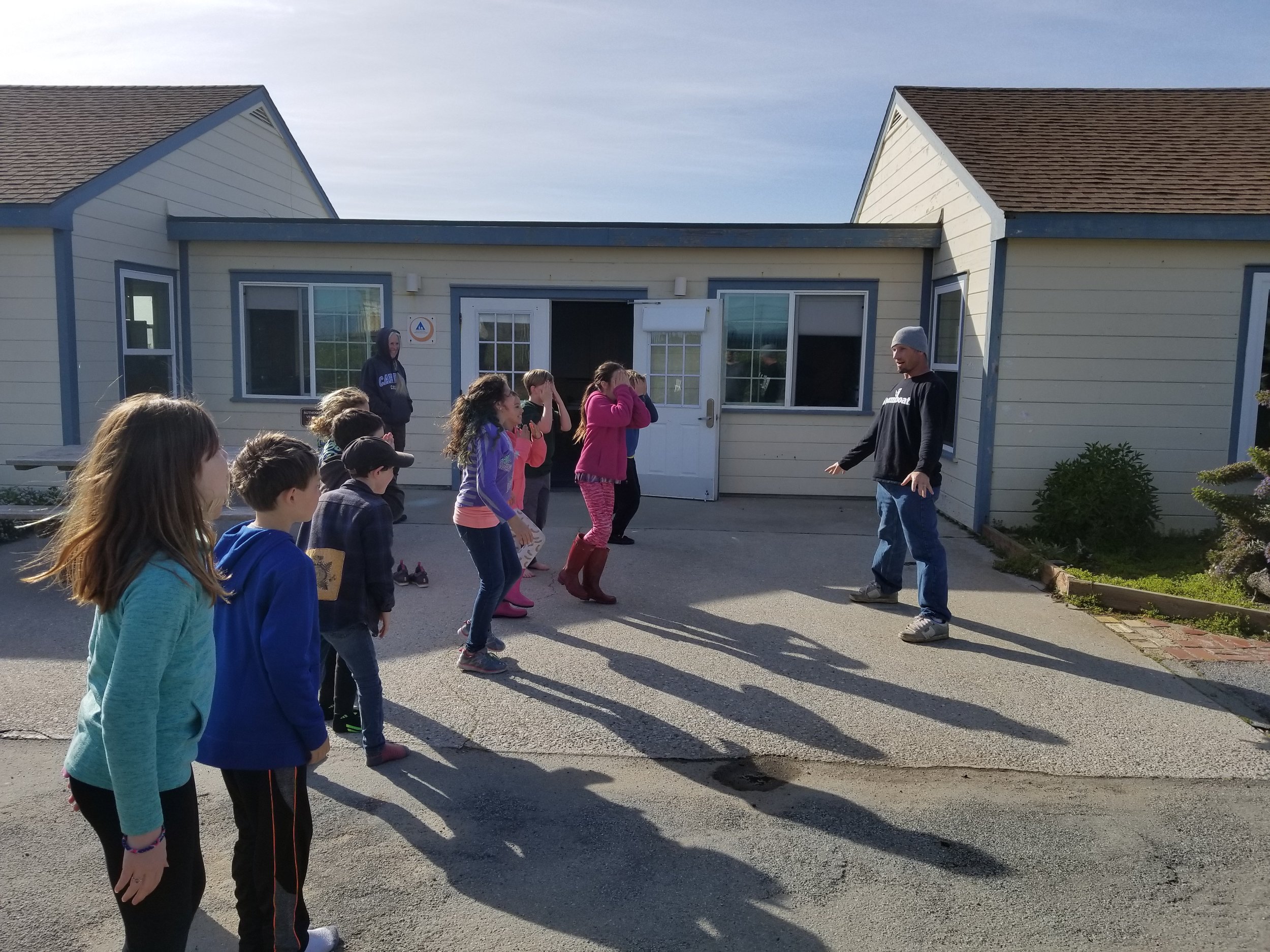
Jonathan entertains us before dinner outside our home away from home.
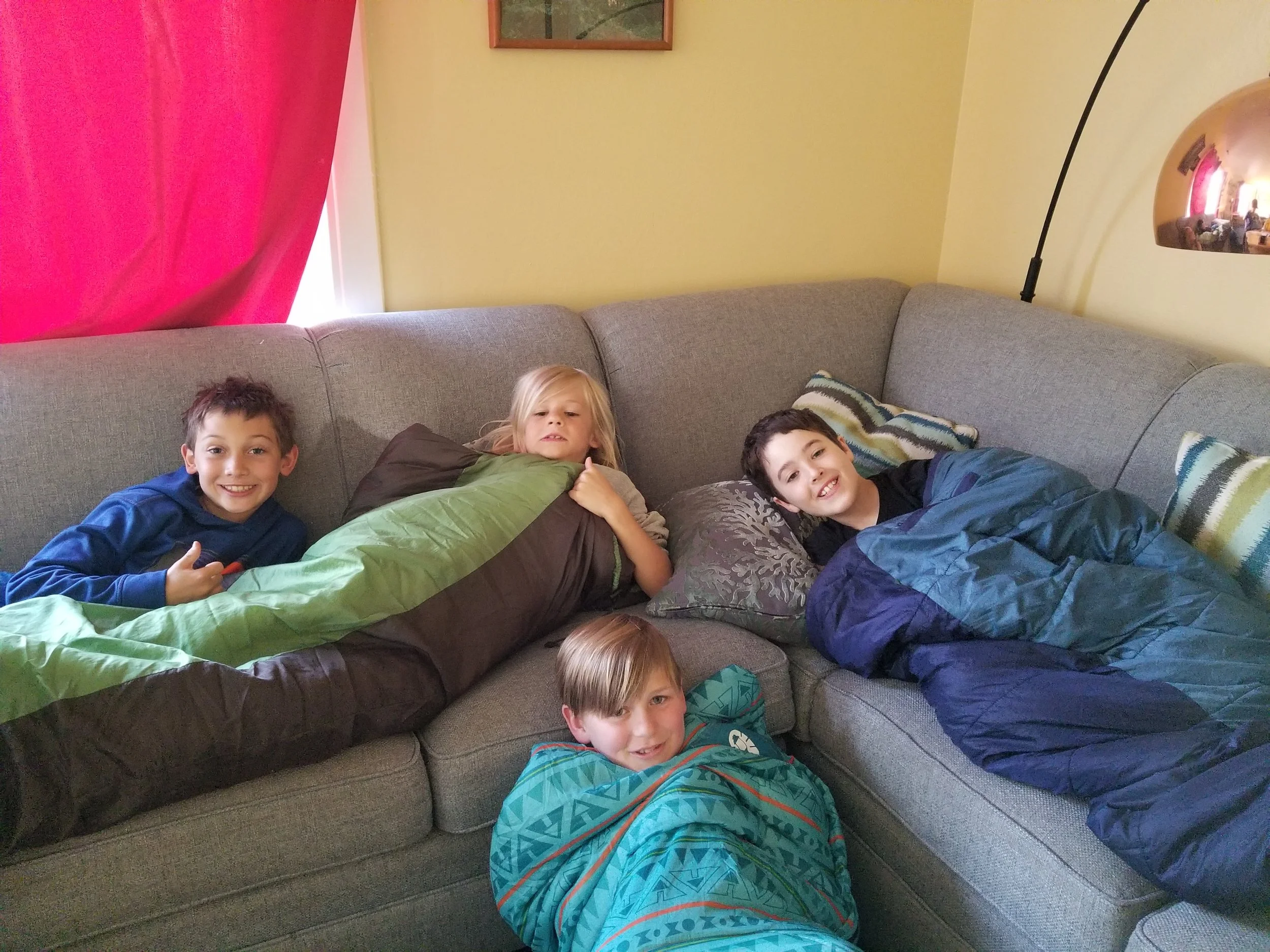
Enjoying free time.
One of the many highlights was the very informative, incredibly entertaining and musical puppet show performed by our talented naturalists. The students are not likely to forget that young elephant seals who are no longer nursing are called "weaners" - they were rolling in the aisles.
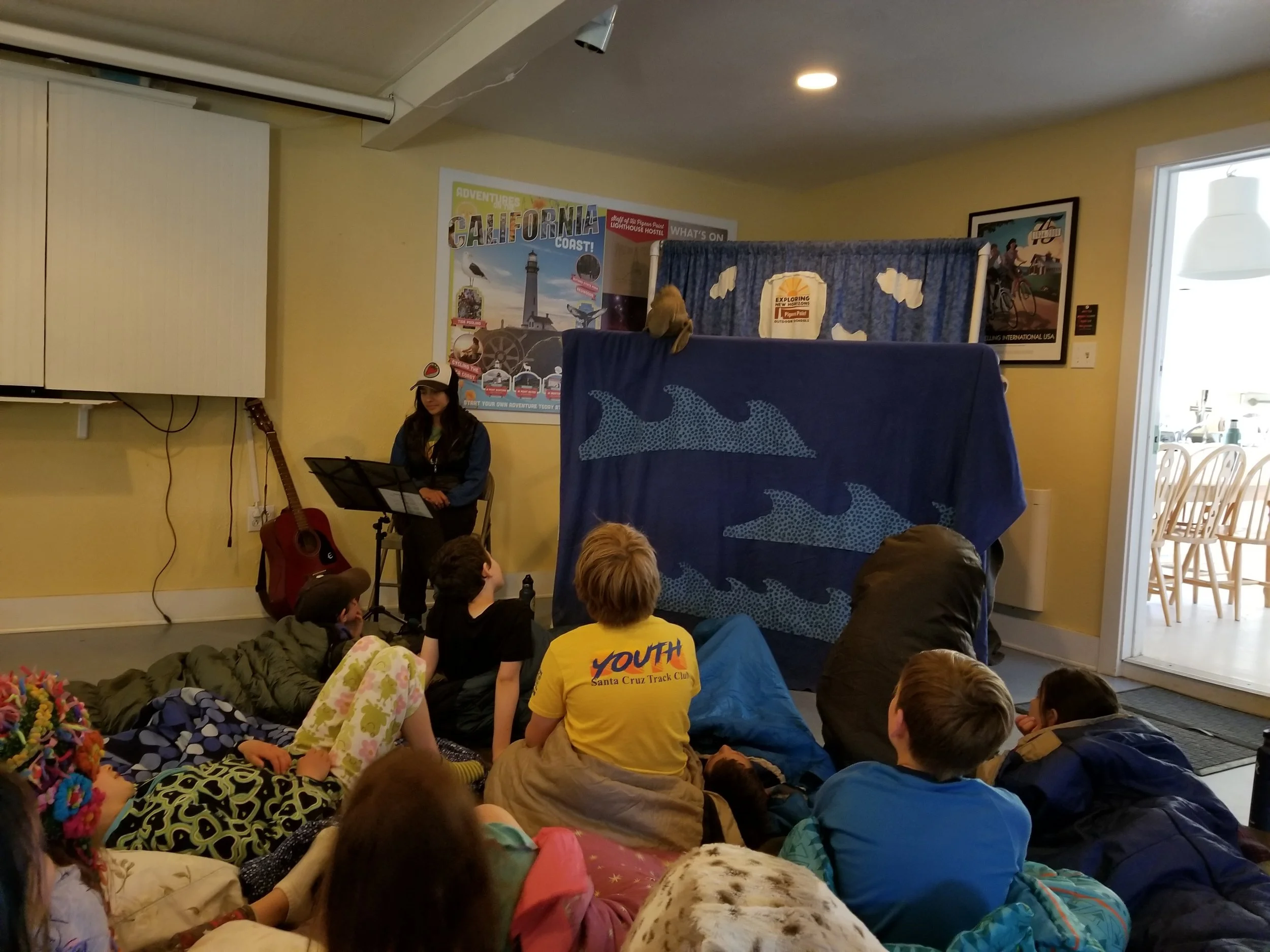
Here, Oscar the elephant seal educates the students through song about what brings him to Ano Nuevo.
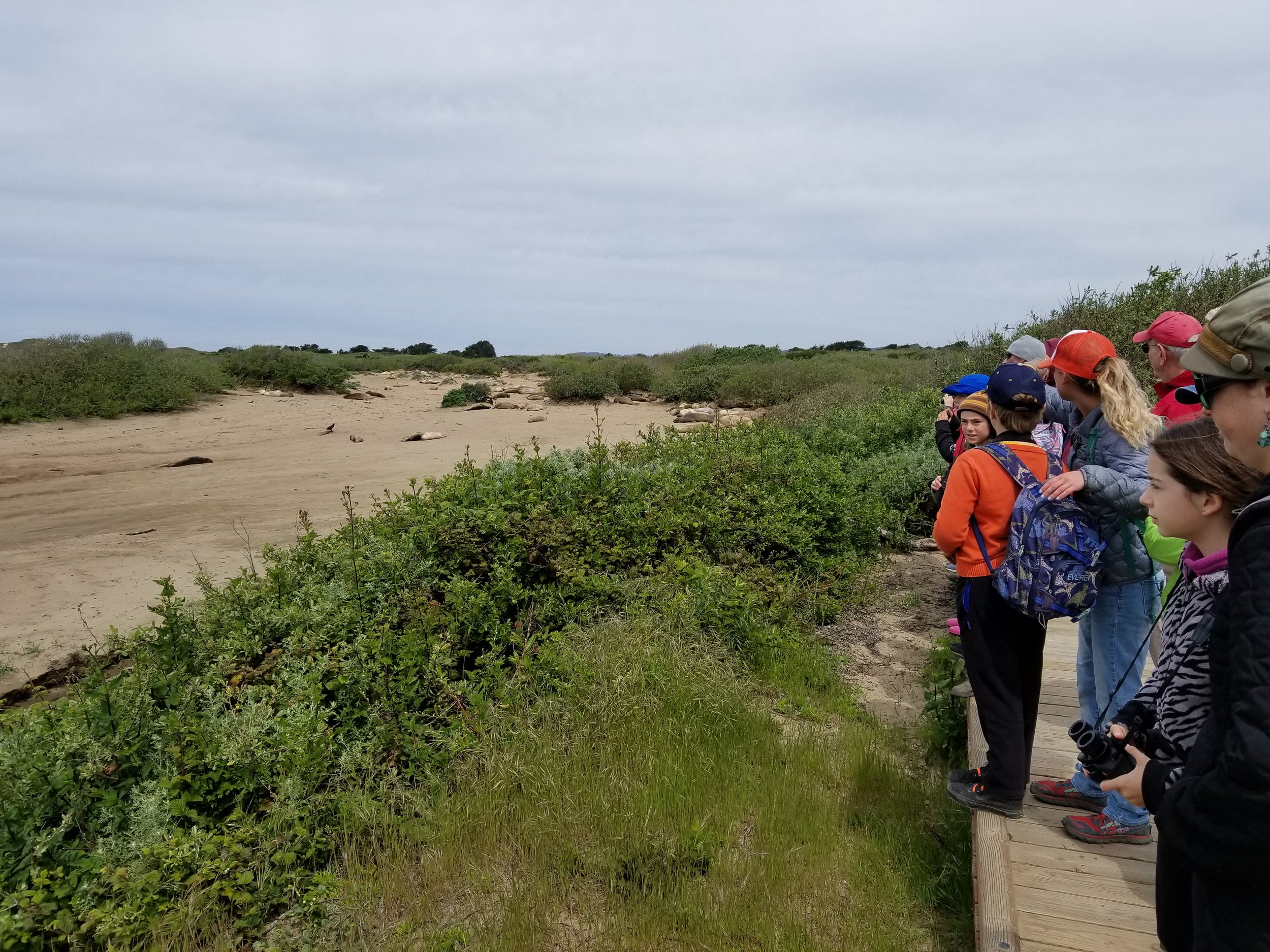
The following day we were able to view juvenile and female elephant seals at Ano Nuevo state park.
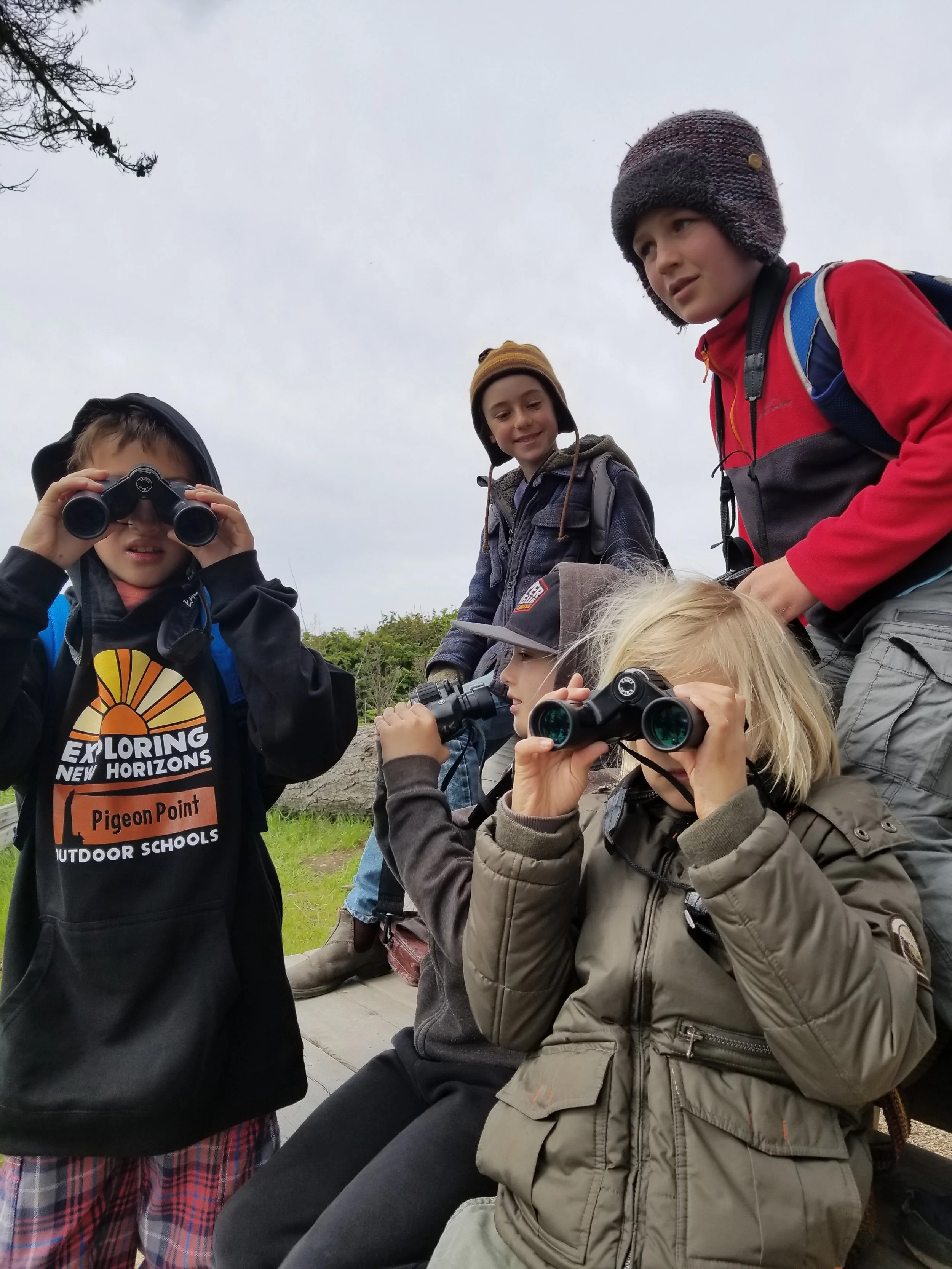
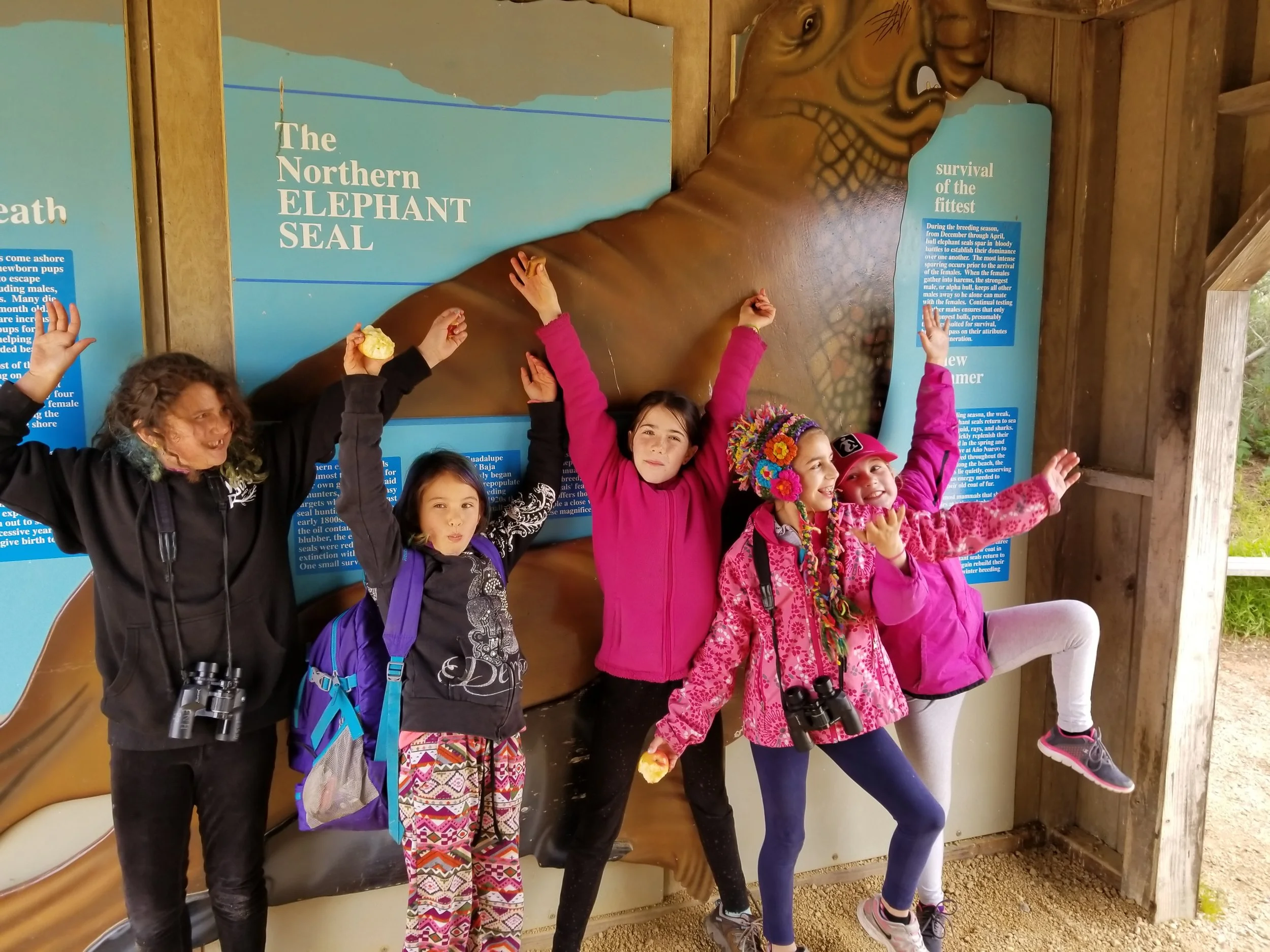
After our return back to campus we conducted a series of follow up activities including comparing the adaptations that elephant seals have to the equipment that a human would need to don to go scuba diving in our chilly coastal waters. We also have been talking quite a bit about migration (of elephant seals, and birds). We played a game where the students were migratory birds traveling between summer and wintering spots. They followed instructions on the game board (which was a circuit of the tile room) and kept track whether they successfully migrated or perished along the dangerous journey.
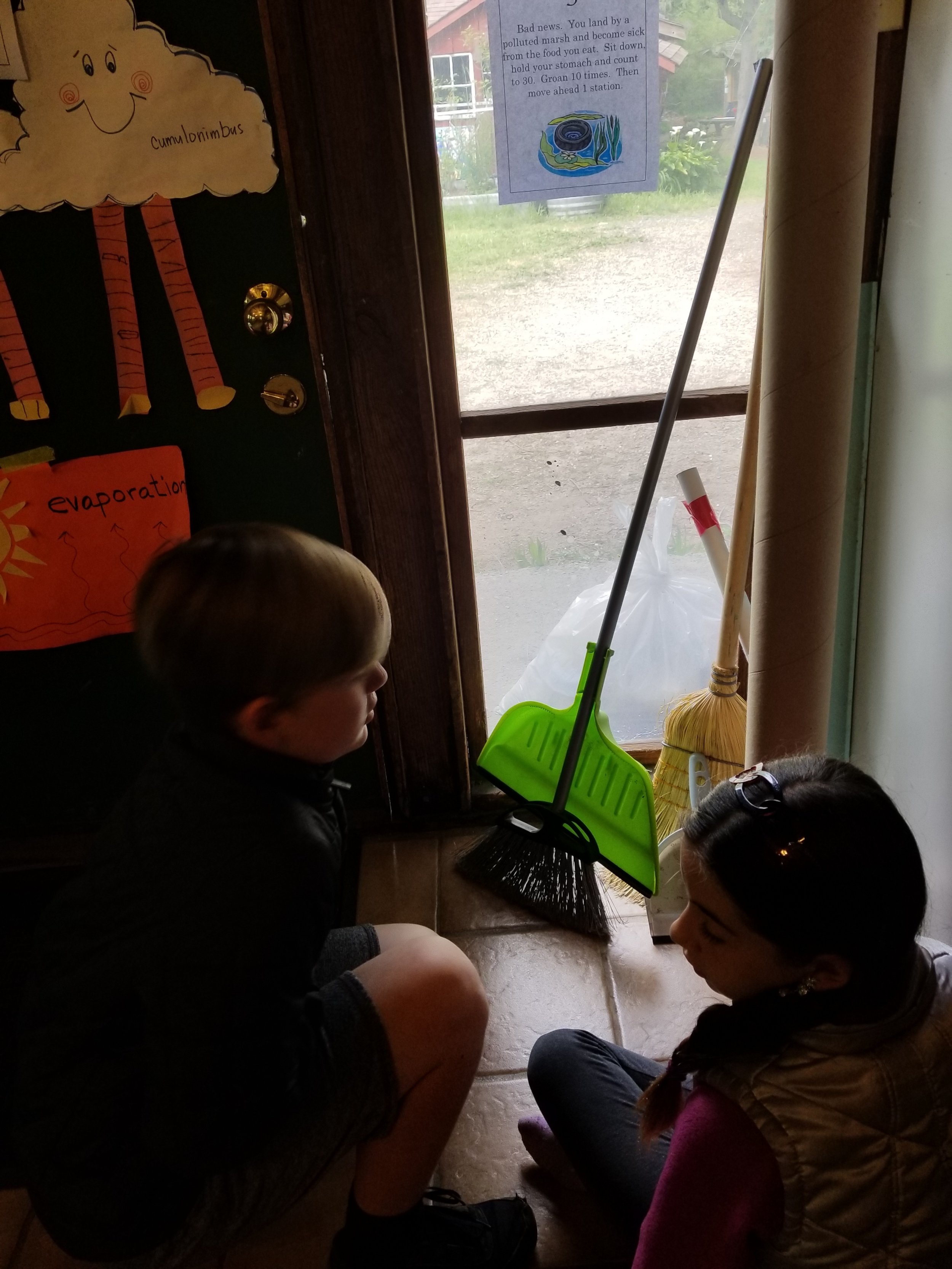
Jaxson and Nia read one of the first game board spots of the migratory bird game.
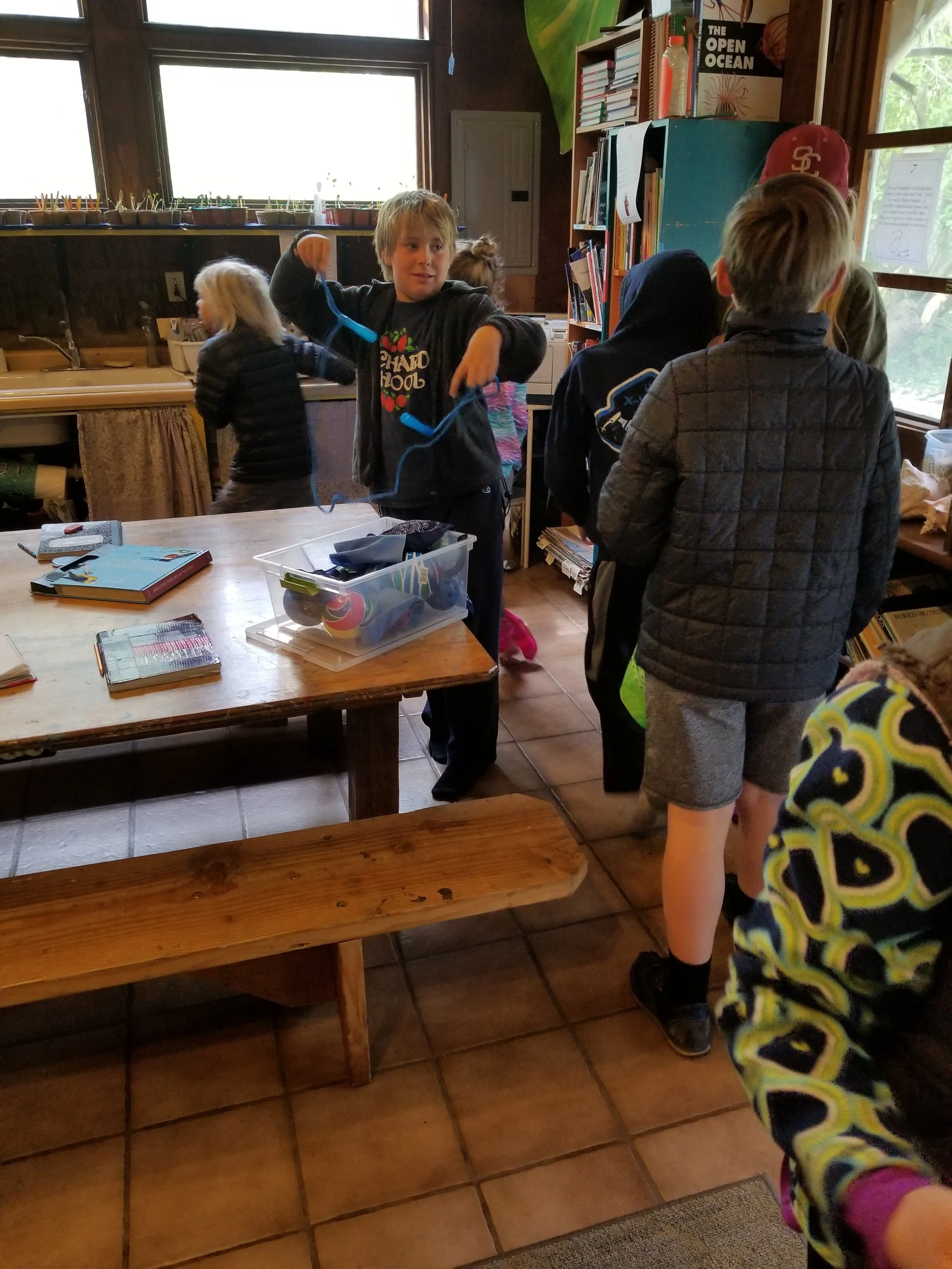
At one station, many "birds" were caught by researchers and banded (with bandanas).
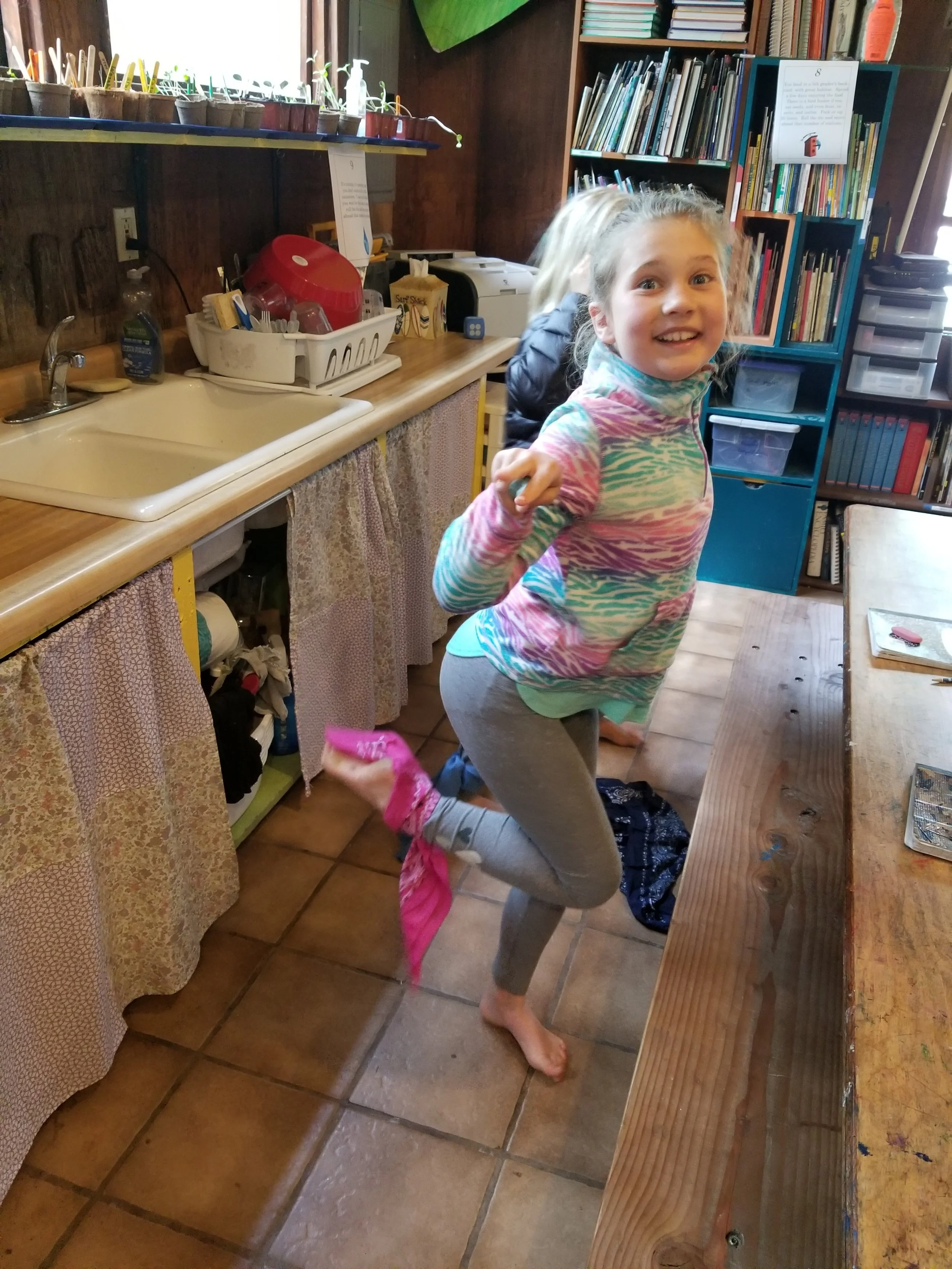
This bird clearly displays her ankle band.
Lately, we have been discussing the idea of animal navigation and how animals that migrate such great distances know where they are going. We did an activity where blindfolded students were led around the campus and tried to see if they could "feel" where they were without seeing (many animals have an internal compass that helps them use the earth's magnetic field to navigate). We just started into magnets and the magnetosphere which will continue in the coming weeks.