
Math
Where to begin?
Stand out moments: Rachael Hendrickson's visit to model art using the Golden Ratio, Fibonacci sequence of numbers in nature; Jack sharing videos on Fibonacci sequence; Camila leading our sharing circle and taking on her role with pride and joy; lattice multiplication; arrays; prime numbers and squares created by Finch, Camila, Henry, and Raven.
Ok, here I go:
Henry, Camila, Raven, and Finch finished up the Candy Box Research investigation by guessing the array for an unfamiliar box of chocolates and justifying their guesses. They then created arrays for the numbers 1-36 using graph paper and attached them above the number line in the math cabin with help from Liz Murphy. Students studied the arrays to determine the characteristics of prime and square numbers. Next, they used their own words to explain the meaning of 6X5 and 7X6, in order to illustrate their understanding of multiplication. Students played multiplication Top It and wrote three multiplication stories. The requirement for each story was that it end with a question that could be solved using multiplication. I then read the book "Anno's Mysterious Multiplying Jar", a book about factorials. Students were excited and fascinated and attempted to follow the story and multiply 10! (1x2x3x4x5x6x7x8x9x10).
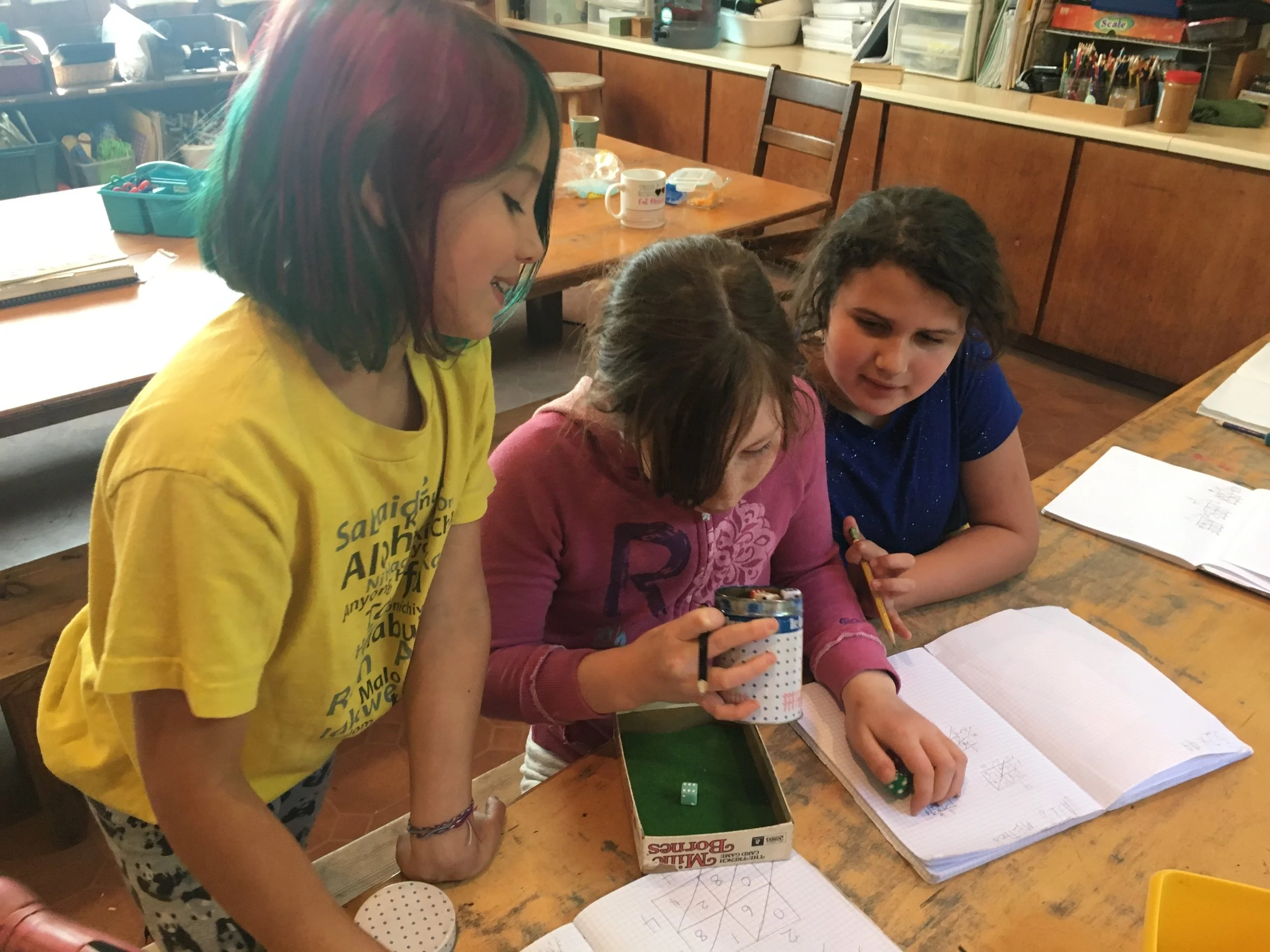
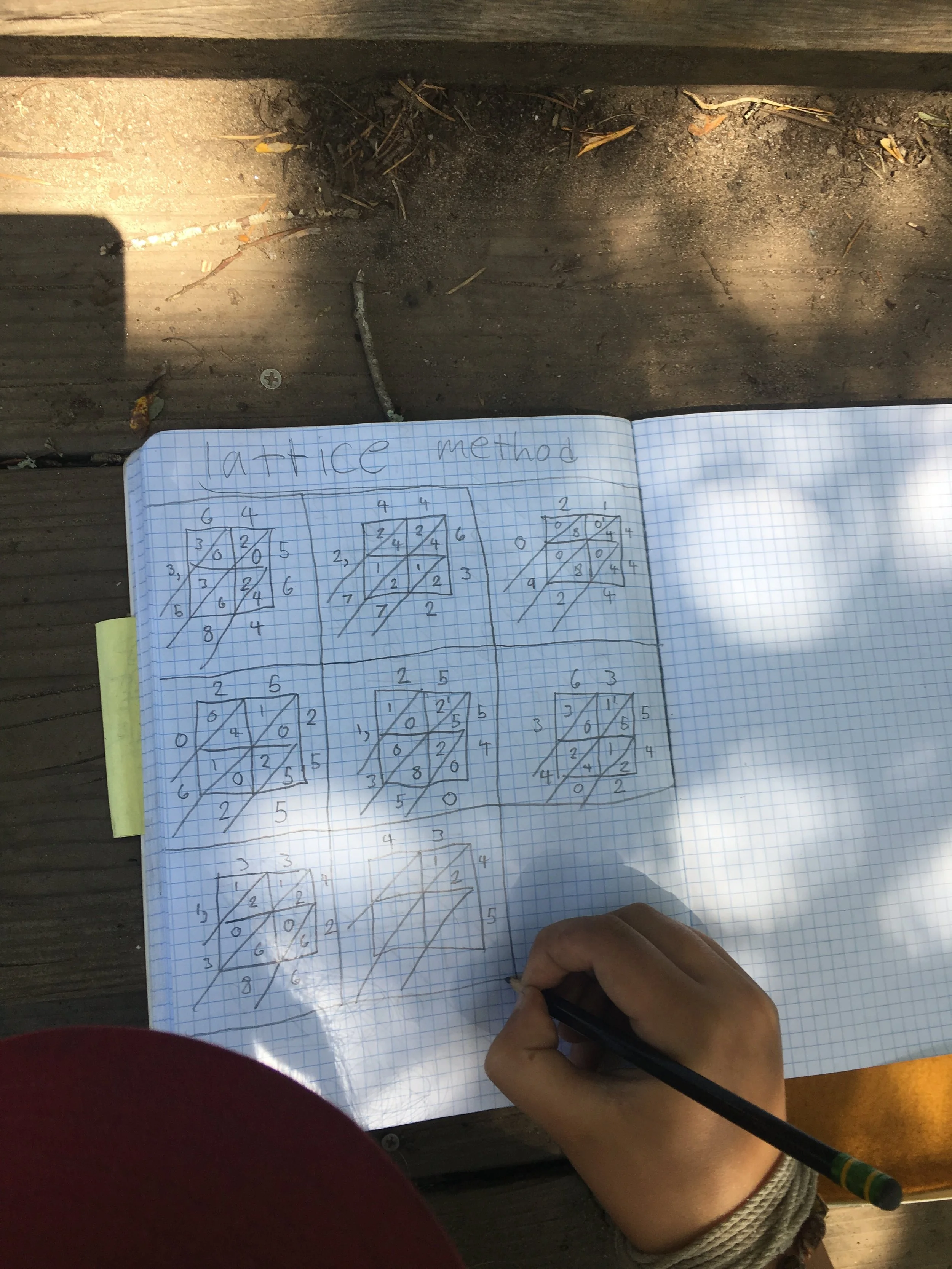
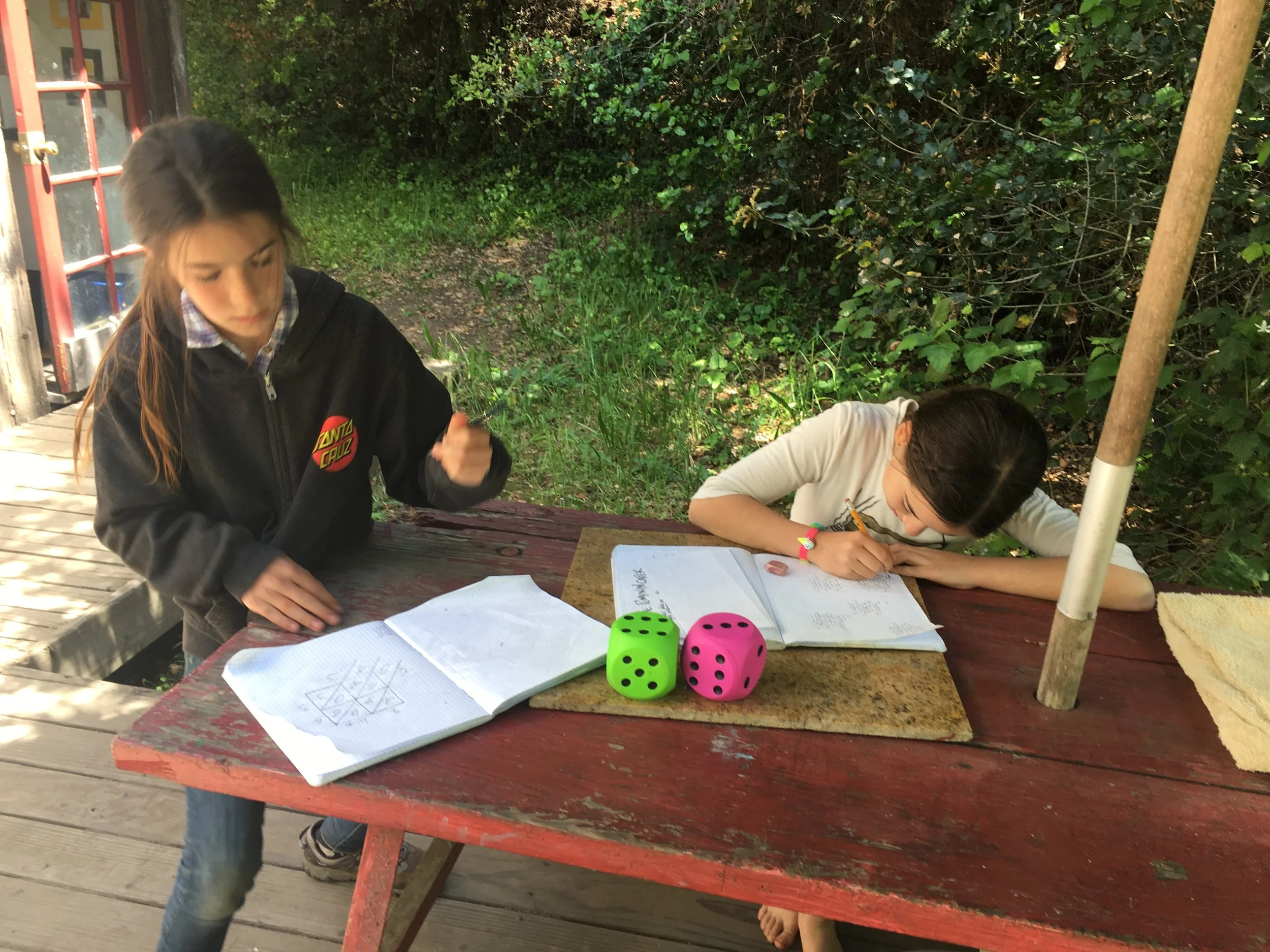
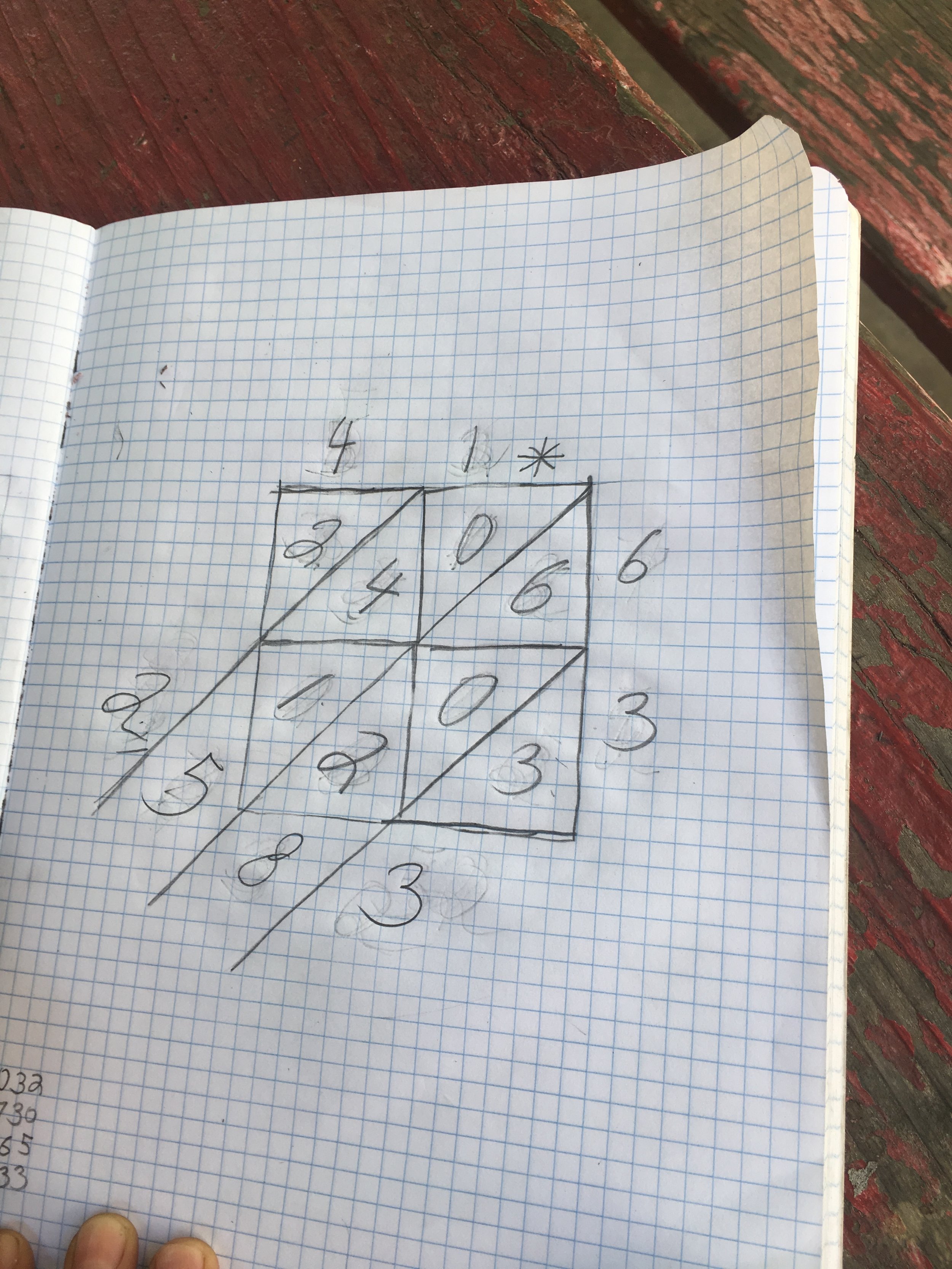
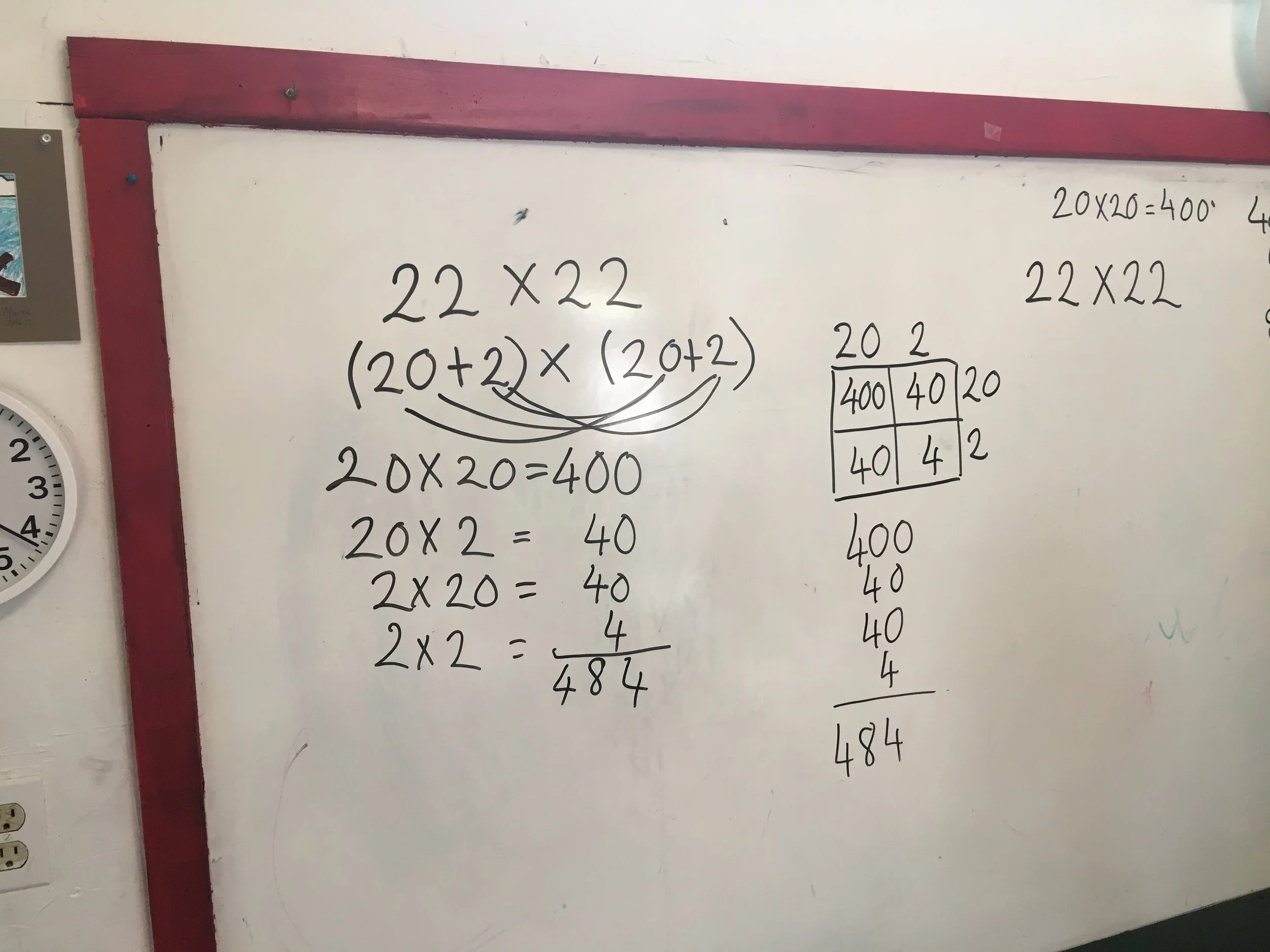
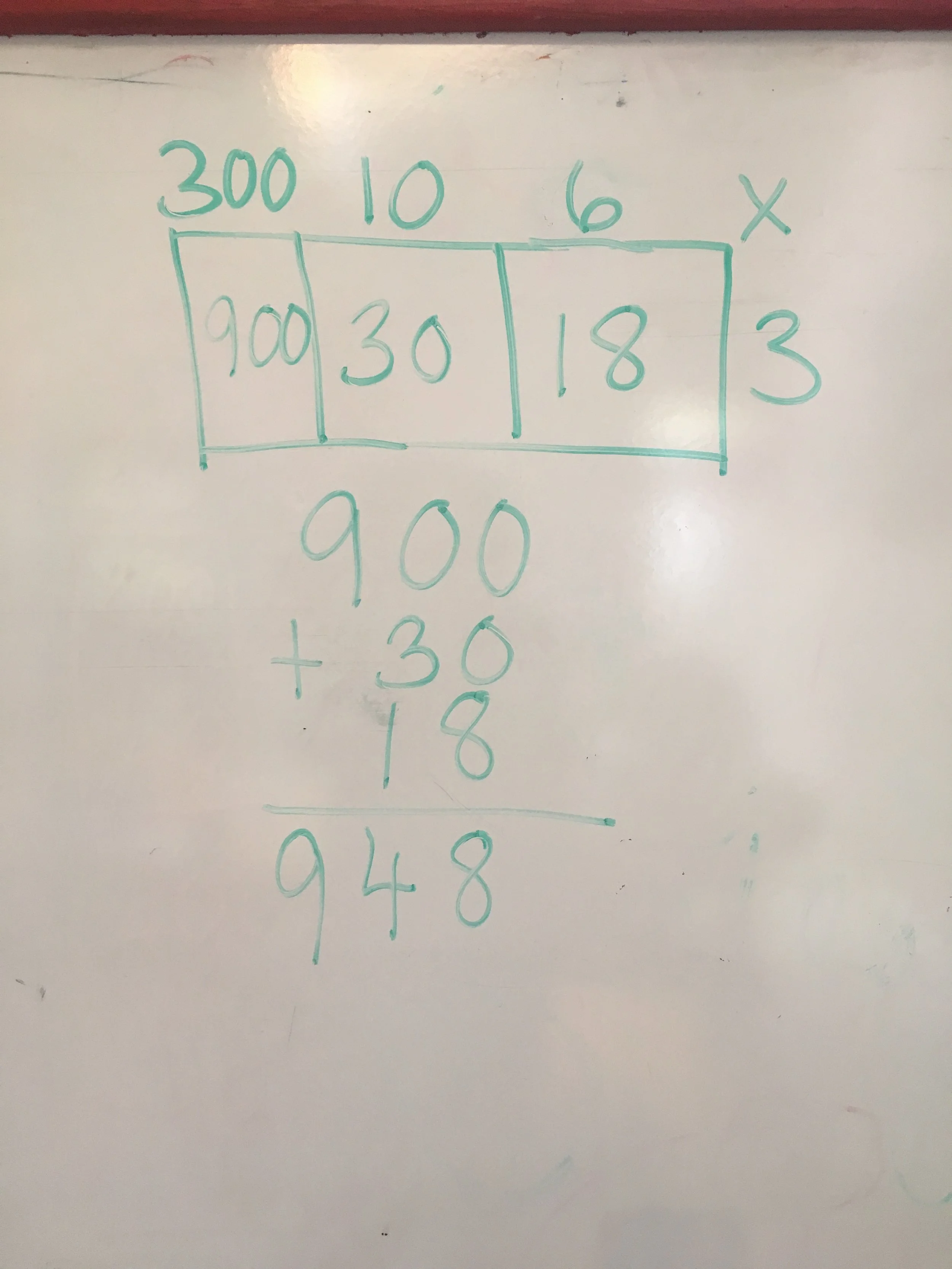
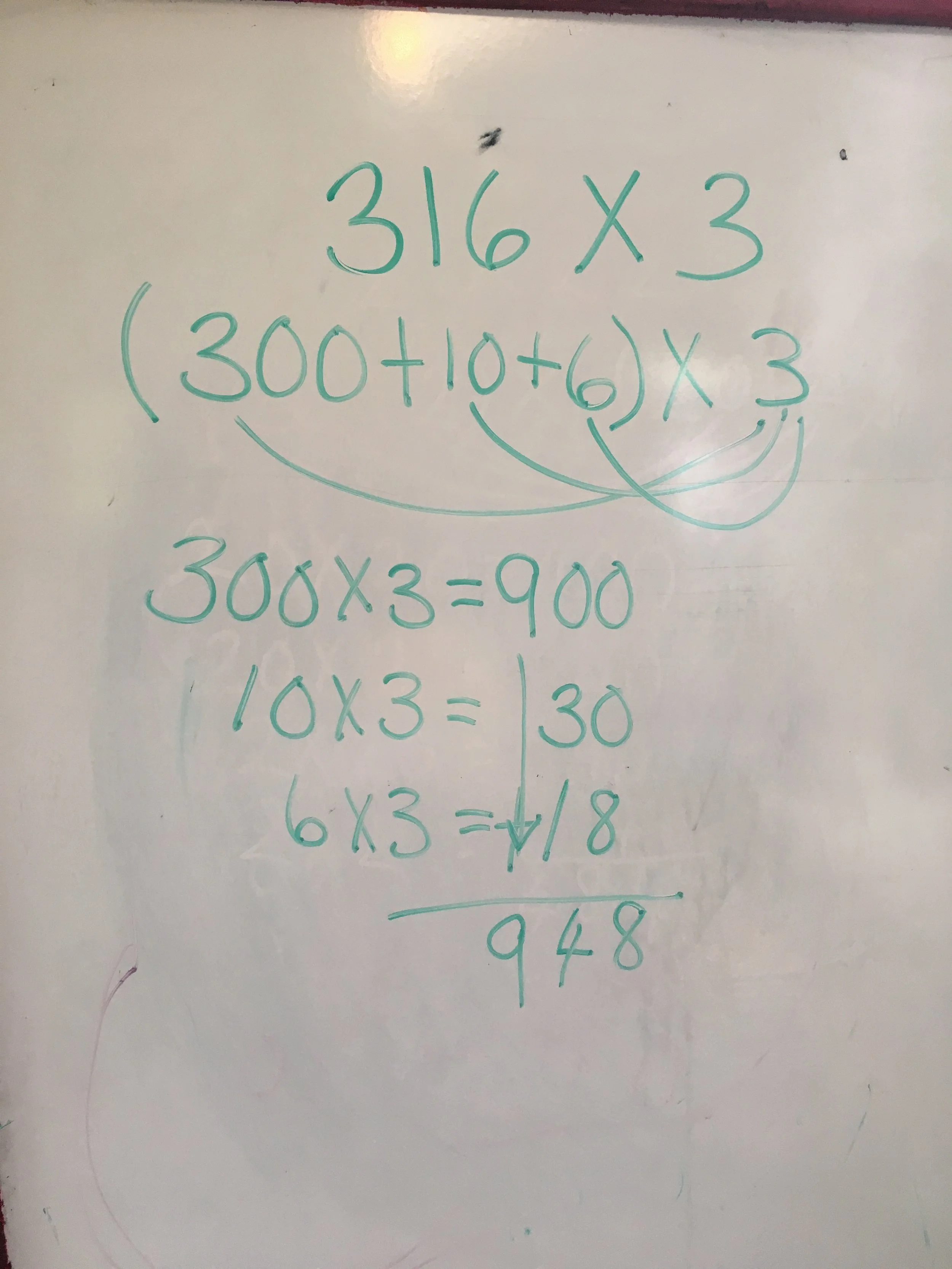
Nia, Zayden, Ella, Aoife, Ryin, Coral, Everett, Jack, Jaxson, Sascha, and Lucy practiced extended facts and used this review to multiply large numbers using the partial products method of multiplication. They played Beat the Calculator in groups of three using multiplication and created videos of each other explaining the partial products method or box method of multiplication on school iPads and my phone. This was a wonderful way to deepen and check their understanding. They loved it and were great supports for each other during this activity. Students played the Multiplication Wrestling game in partnerships or triads, again practicing the multiplication of large numbers. Students were free to use their method of choice when solving problems and large posters depicting each method were on classroom walls for reference. Next, I introduced the lattice method of multiplication, unfamiliar to most adults, however a mainstay of our Everyday Math curriculum and a great way for multiplying very large numbers. So now students have three methods to choose from in determining how they would like to solve these problems.
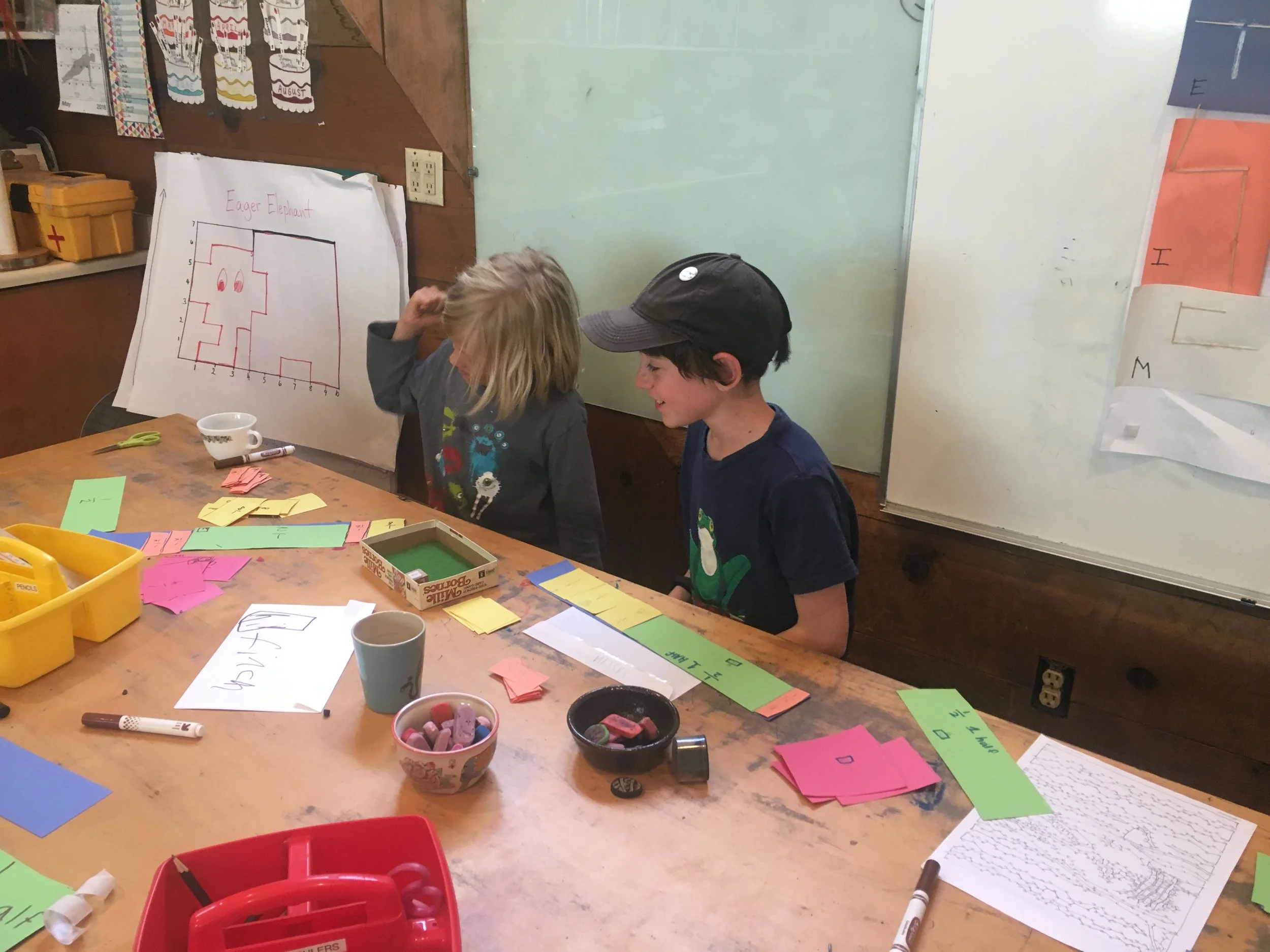
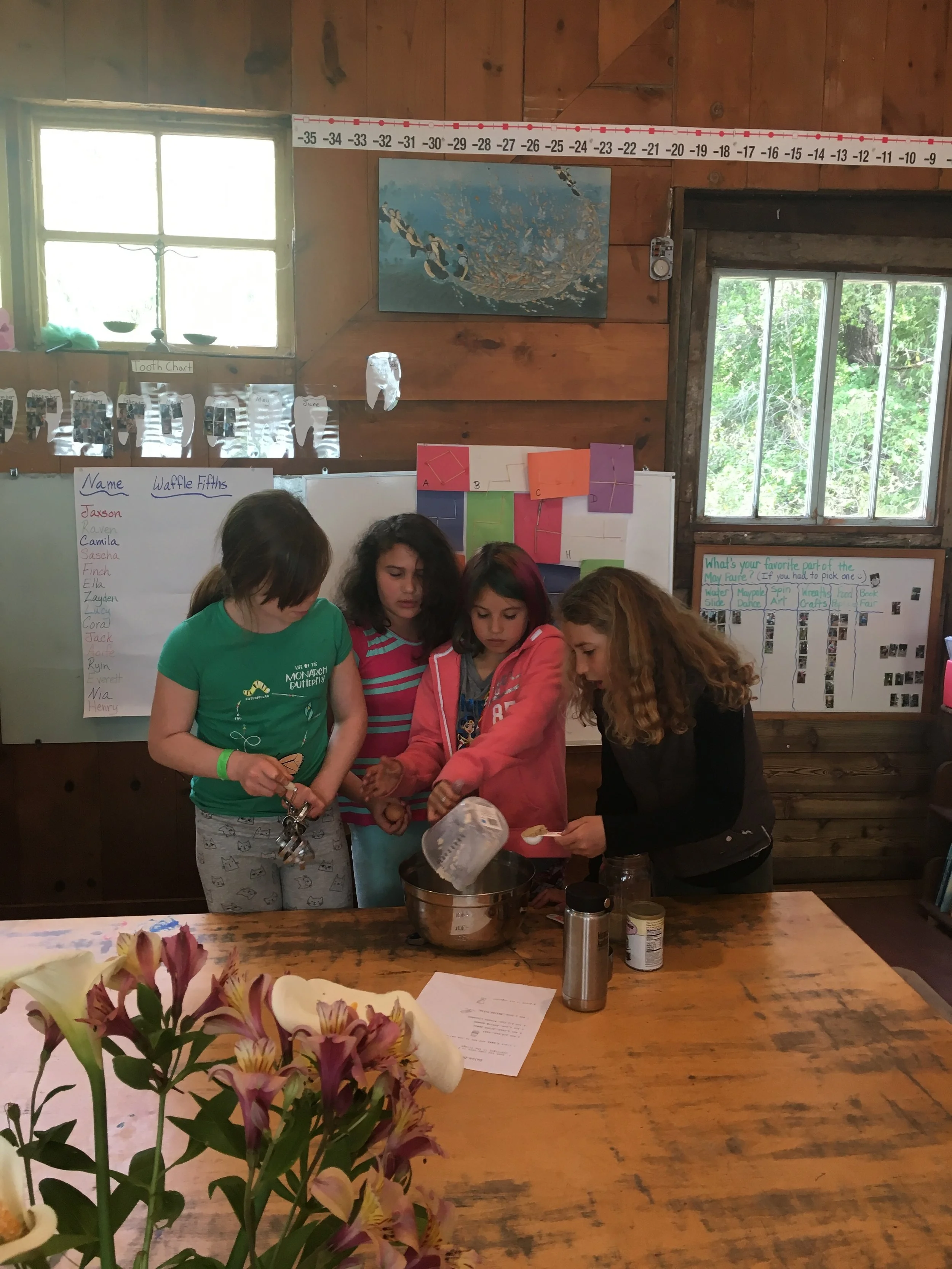
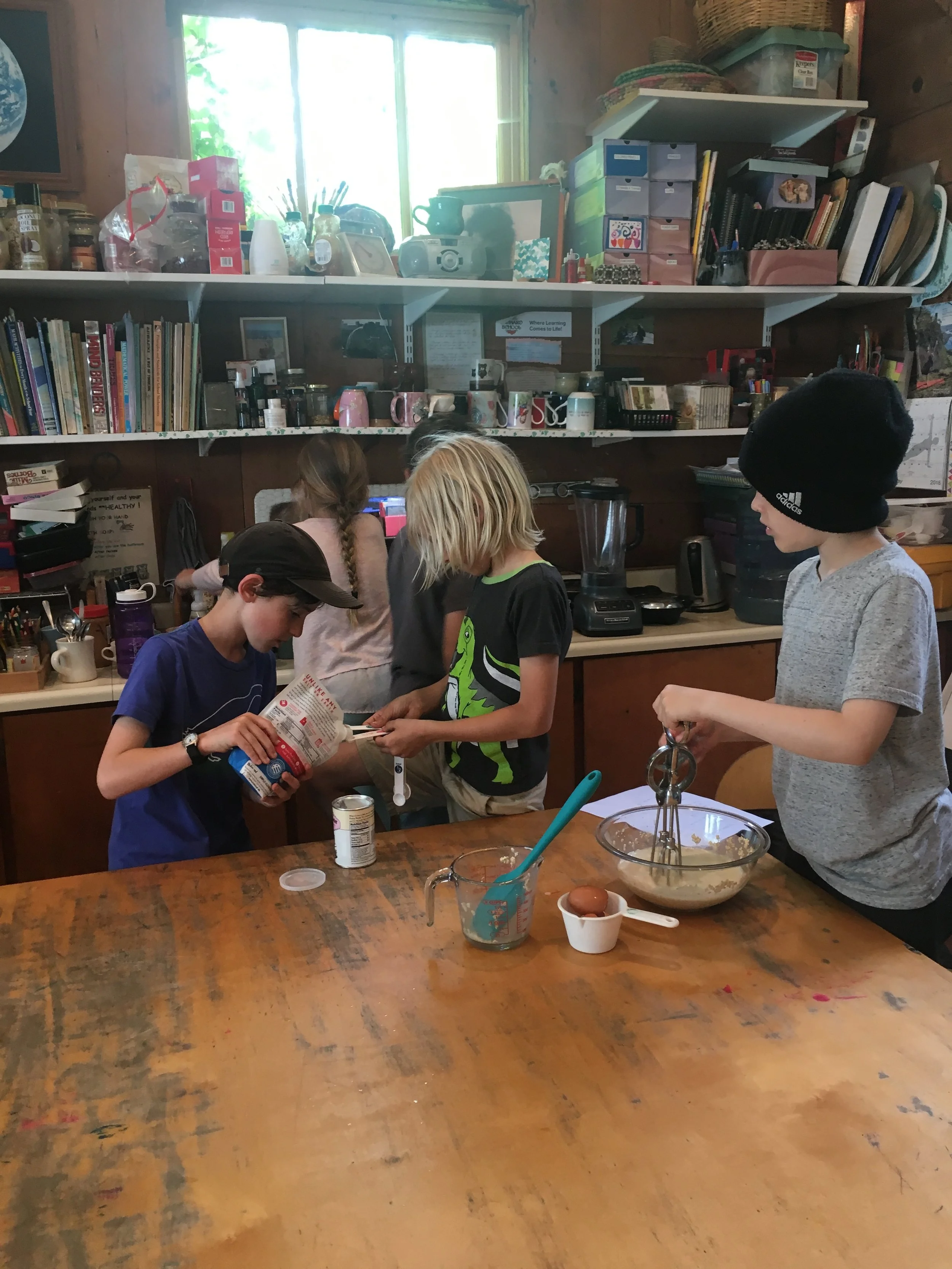
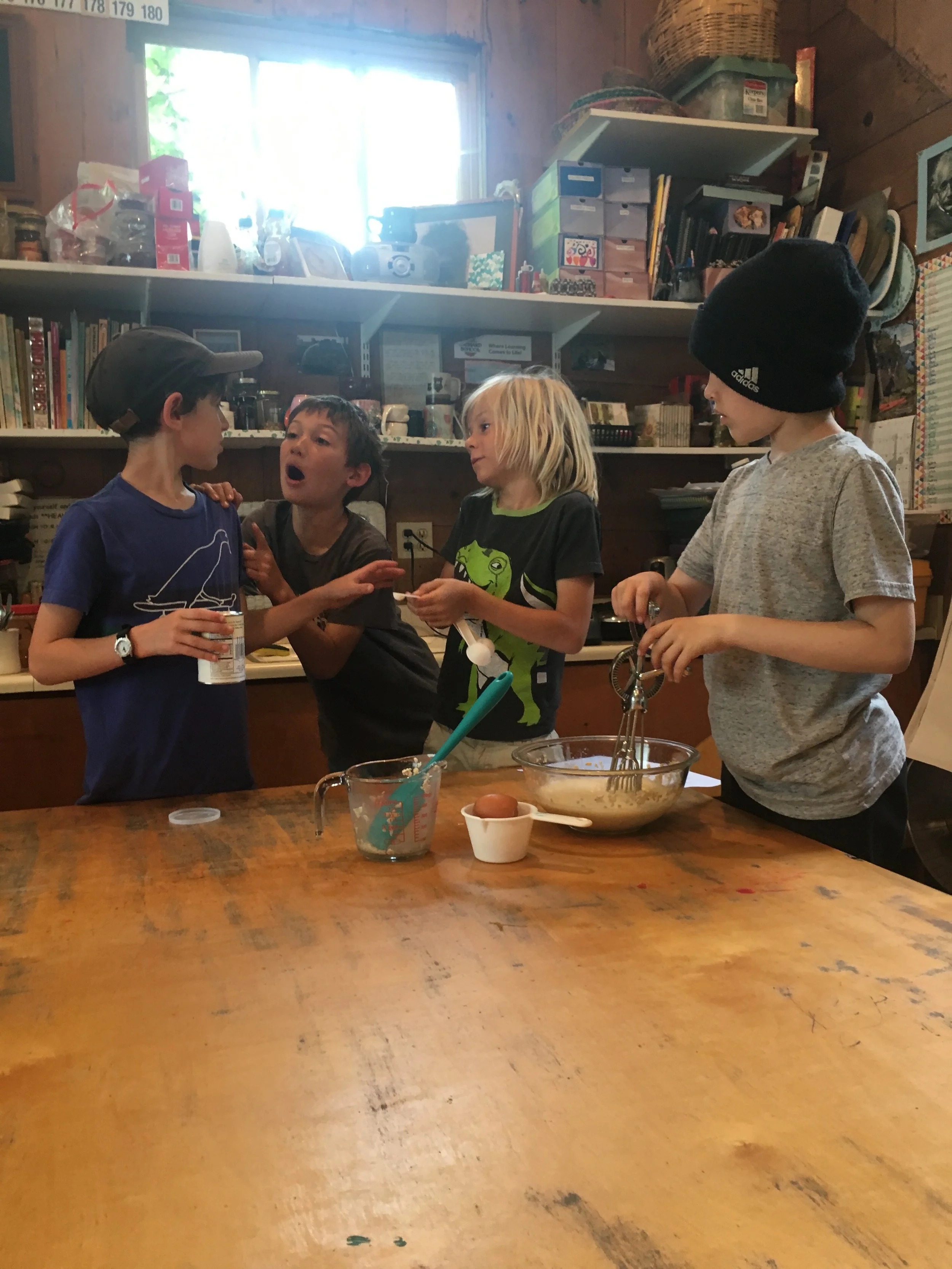
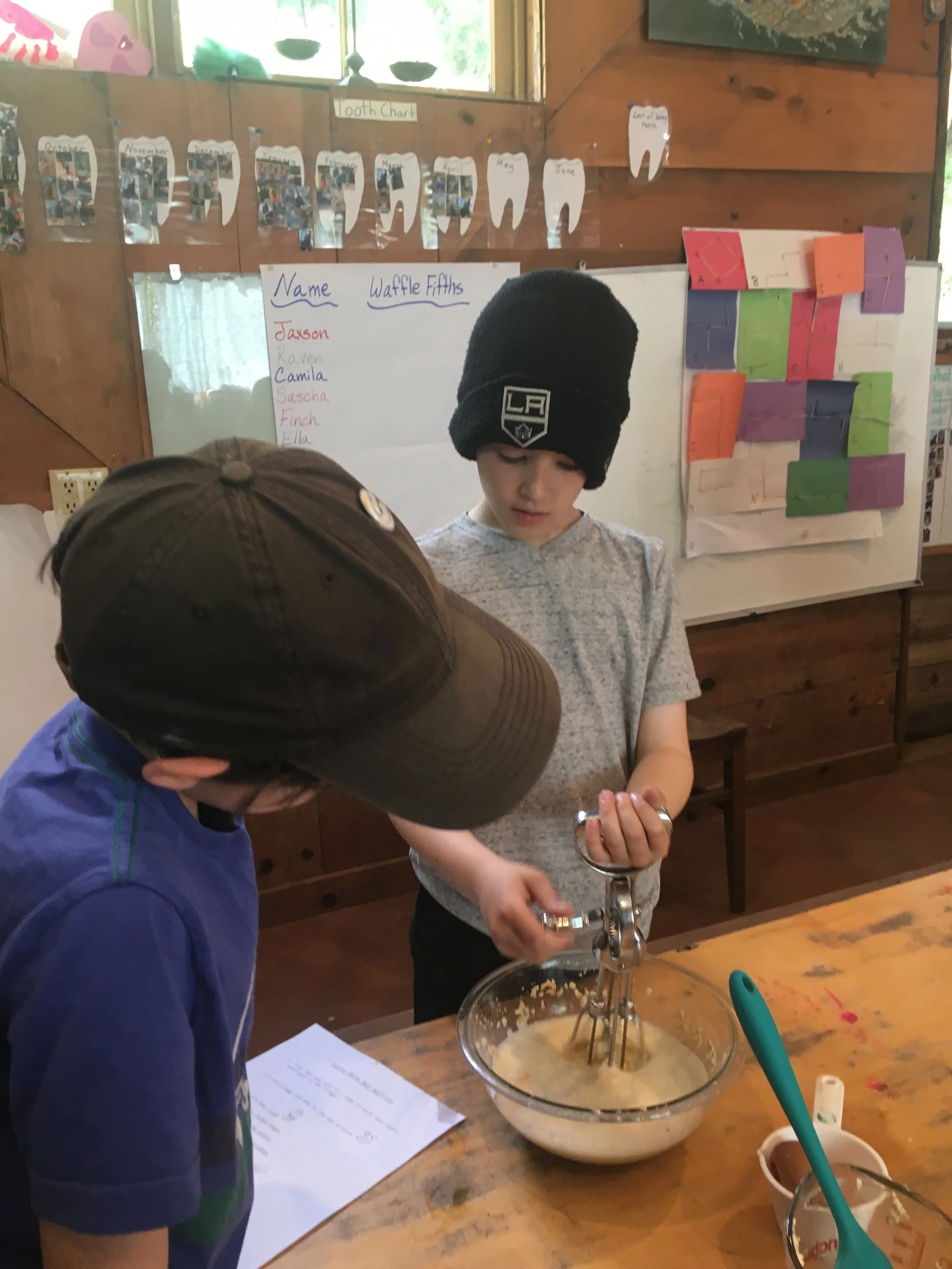
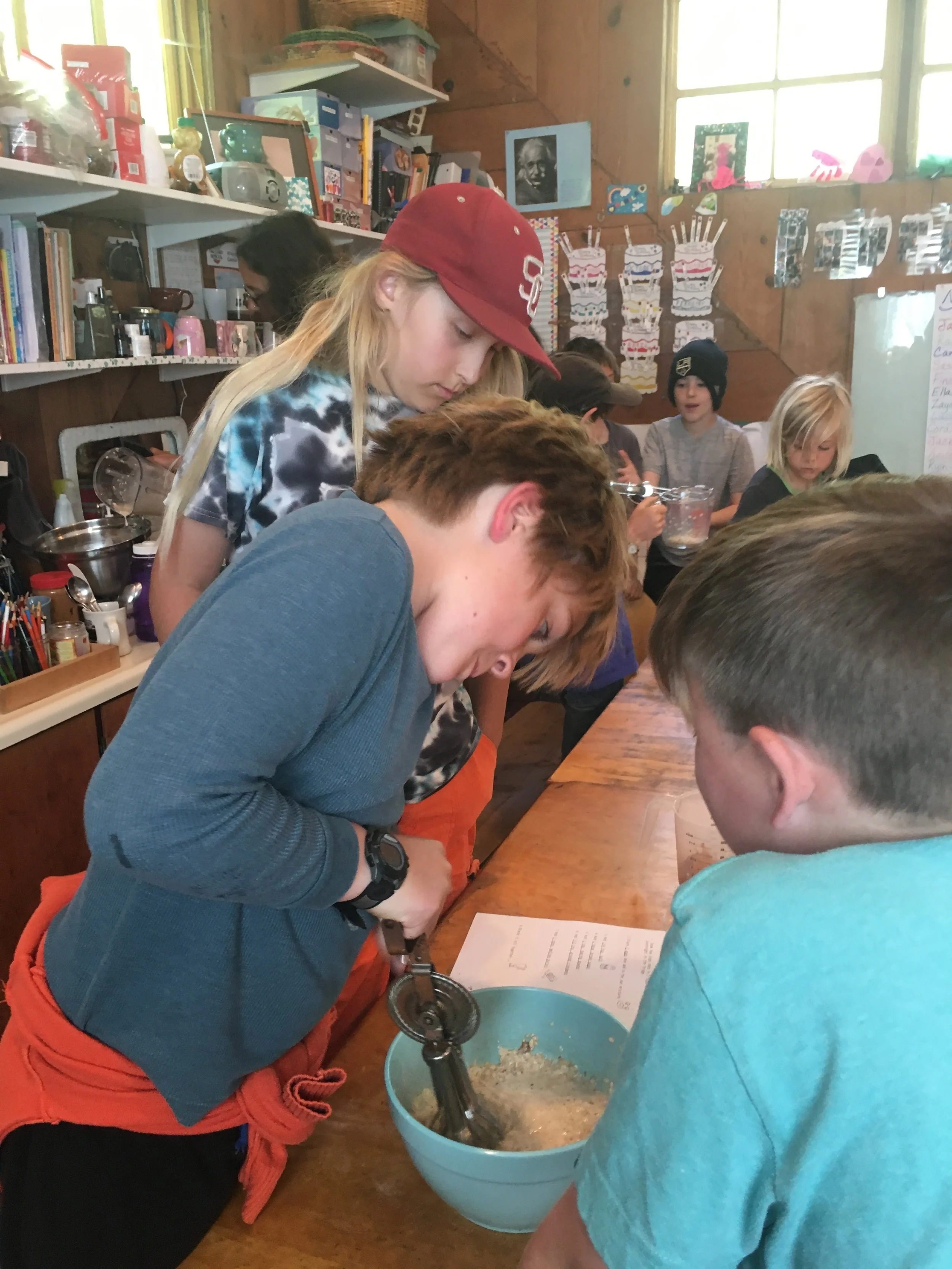
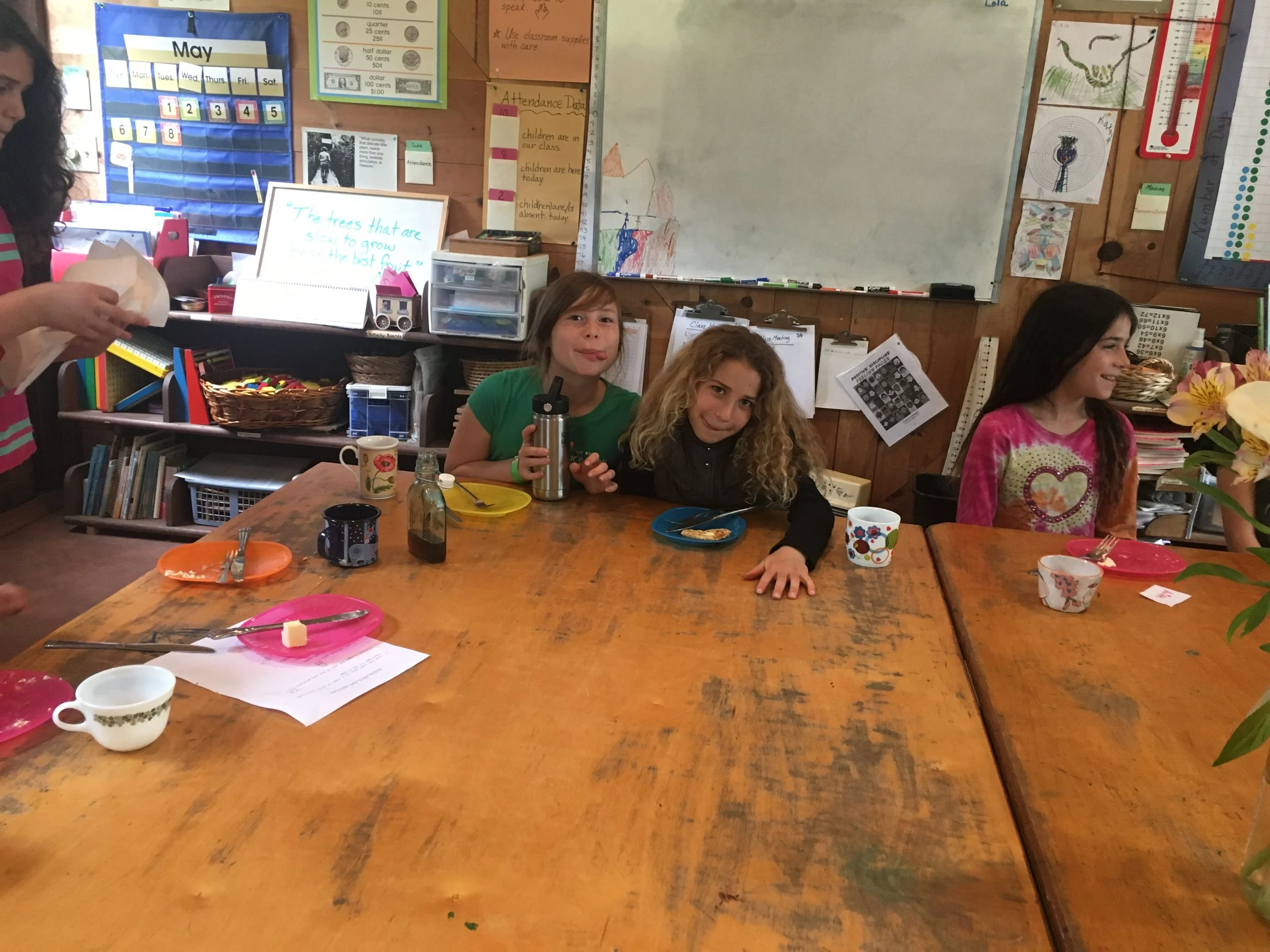
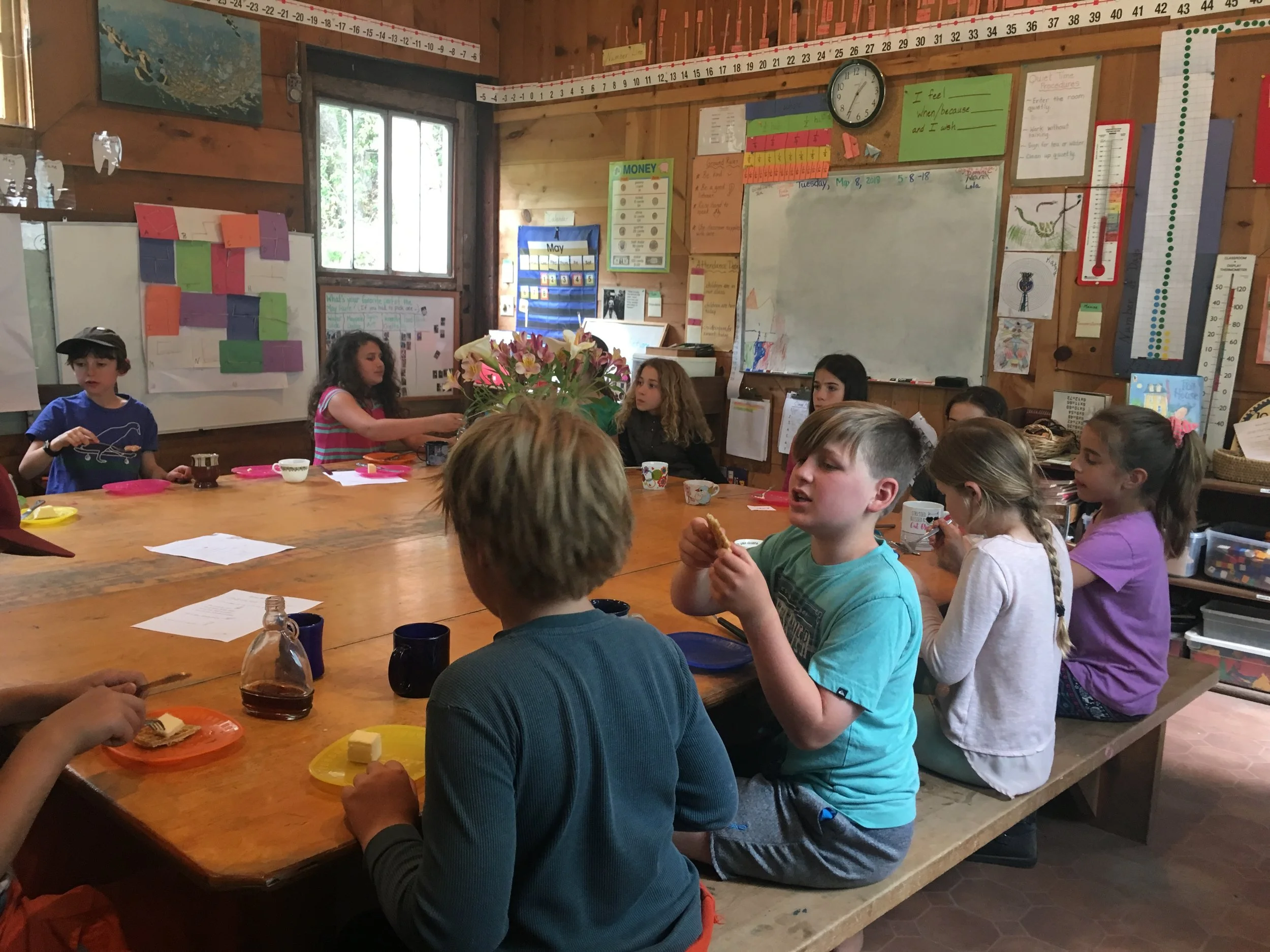
The whole class created and labeled their fraction kits: whole, halves, quarters, eighths, and sixteenths; and played a few games of Cover Up. We had the infamous Fraction Waffle Day and students created the gluten free waffle batter, ate, and recorded waffle fifths using tally marks. Next, we recorded how many waffles they ate in fractions. We will continue to work with fractions, playing games which help students to understand equivalent fractions and will speak of decimals as related to fractions, and use the base ten blocks to help illustrate.
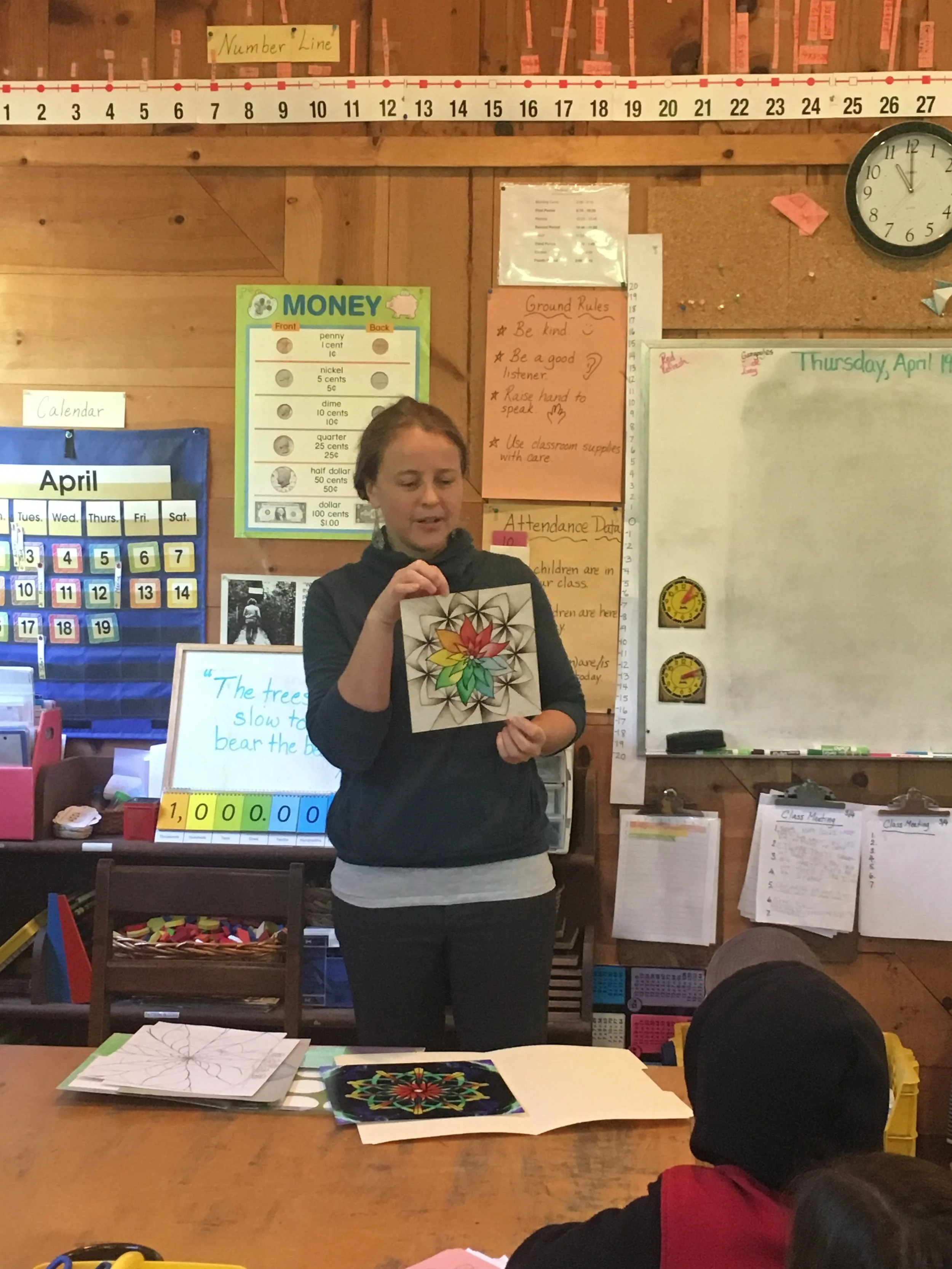
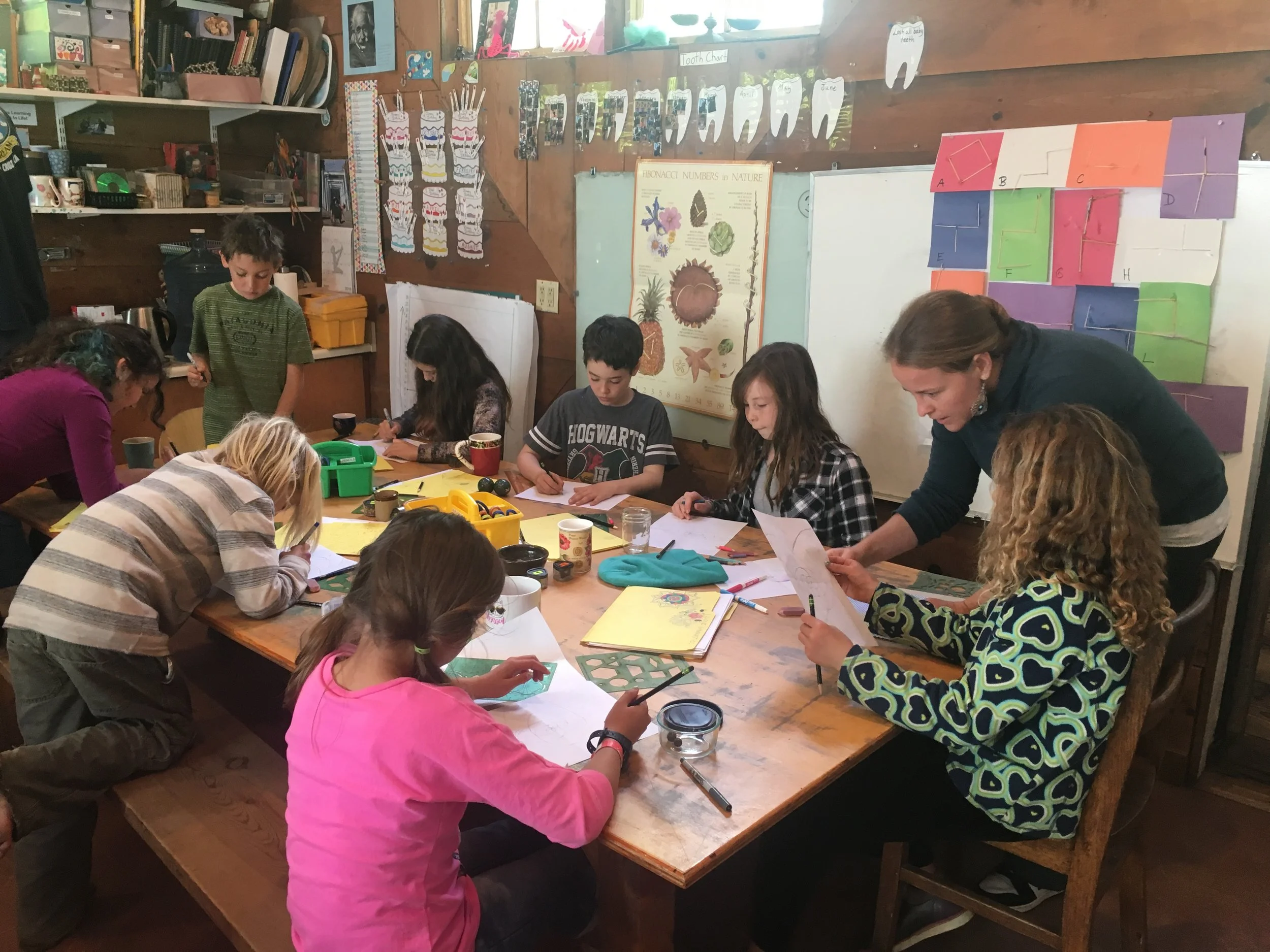
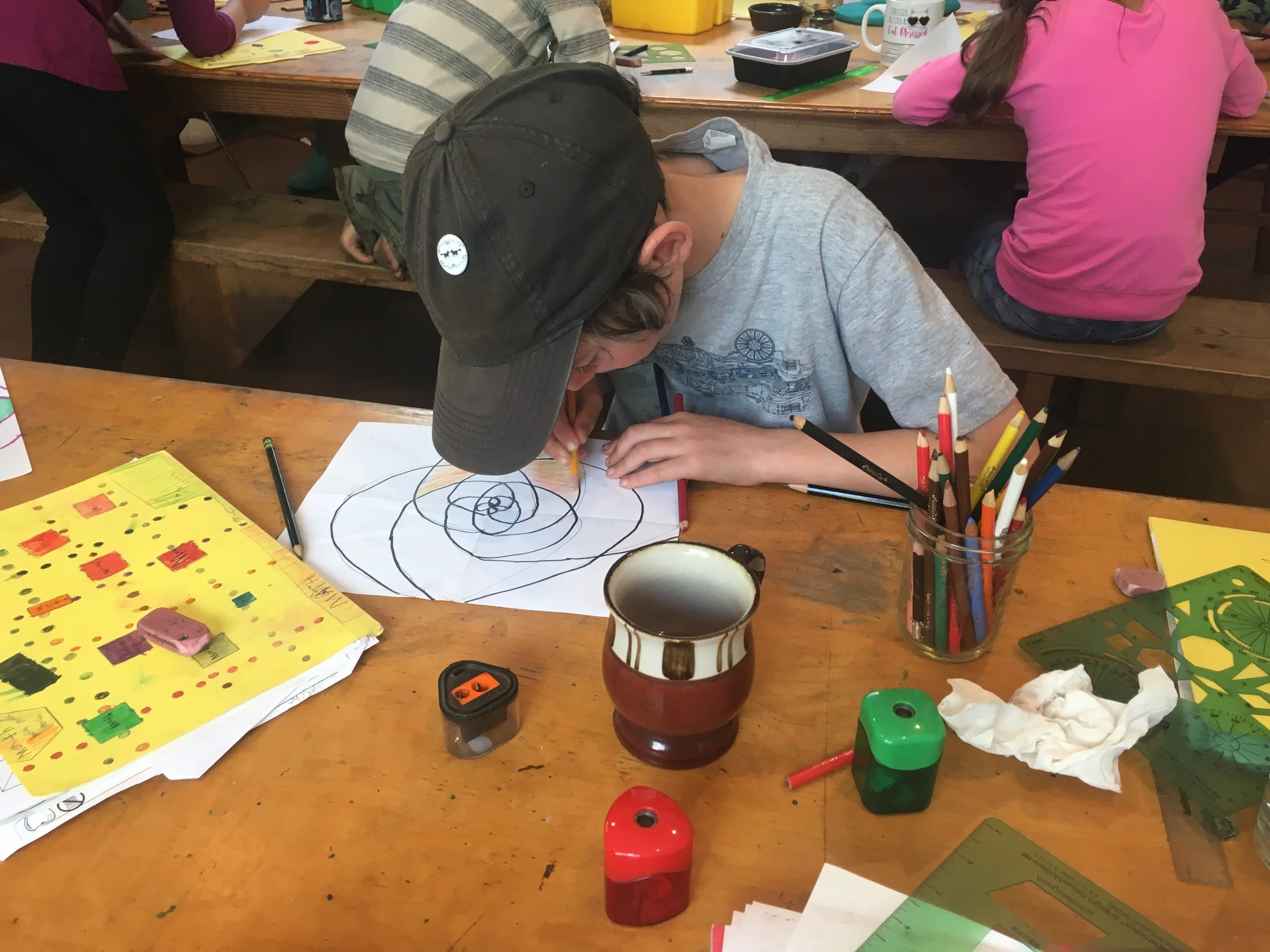
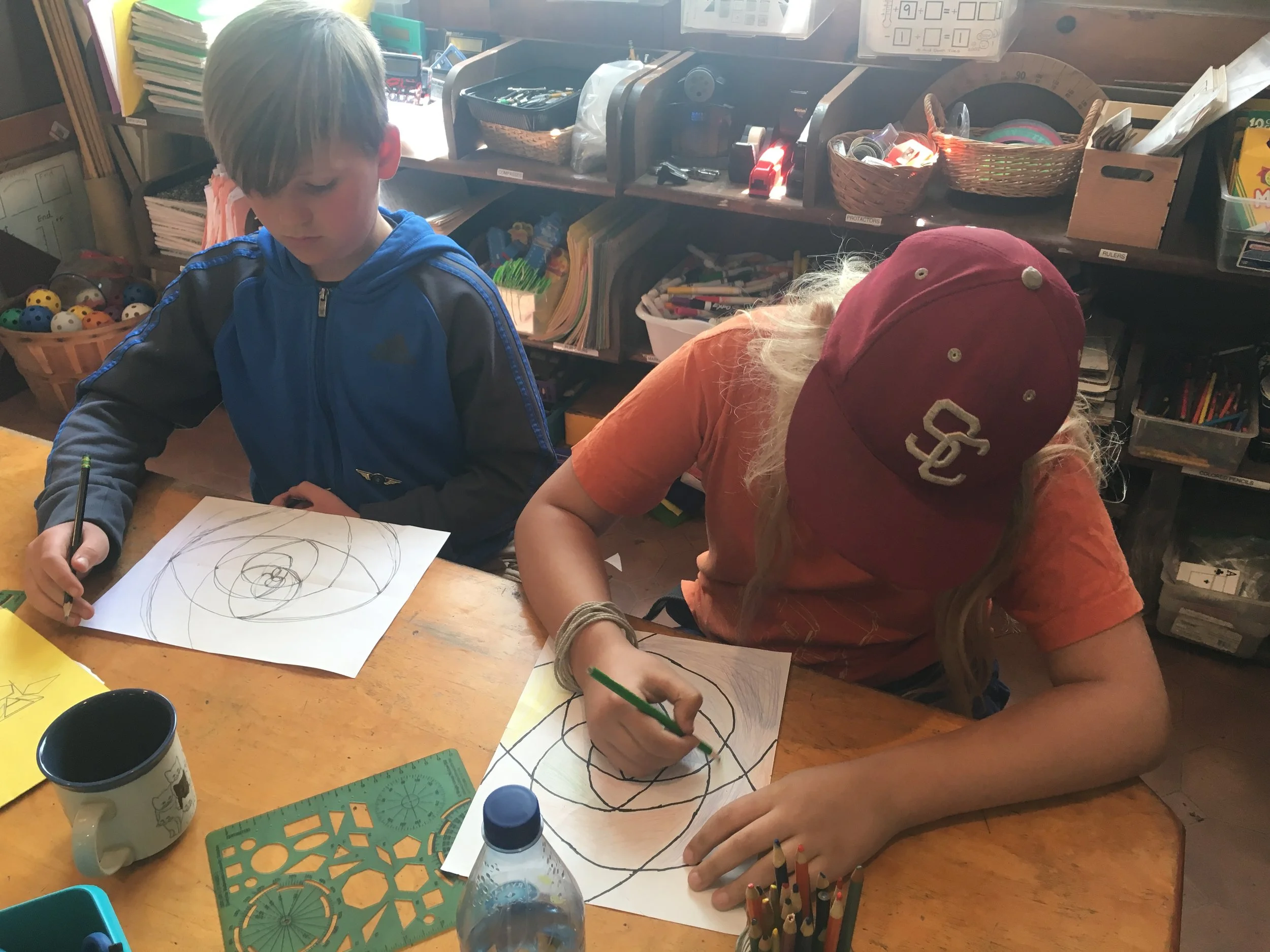
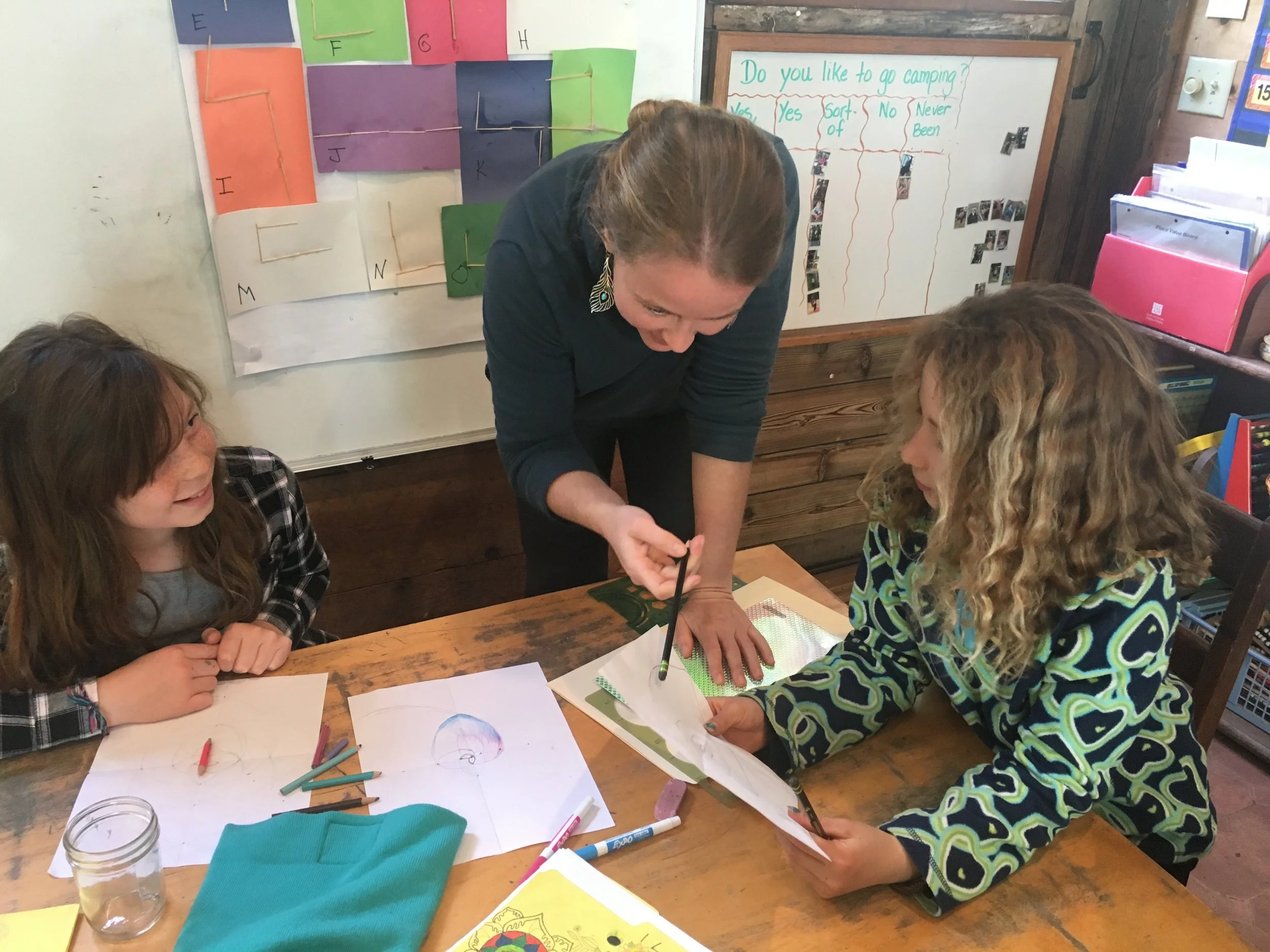
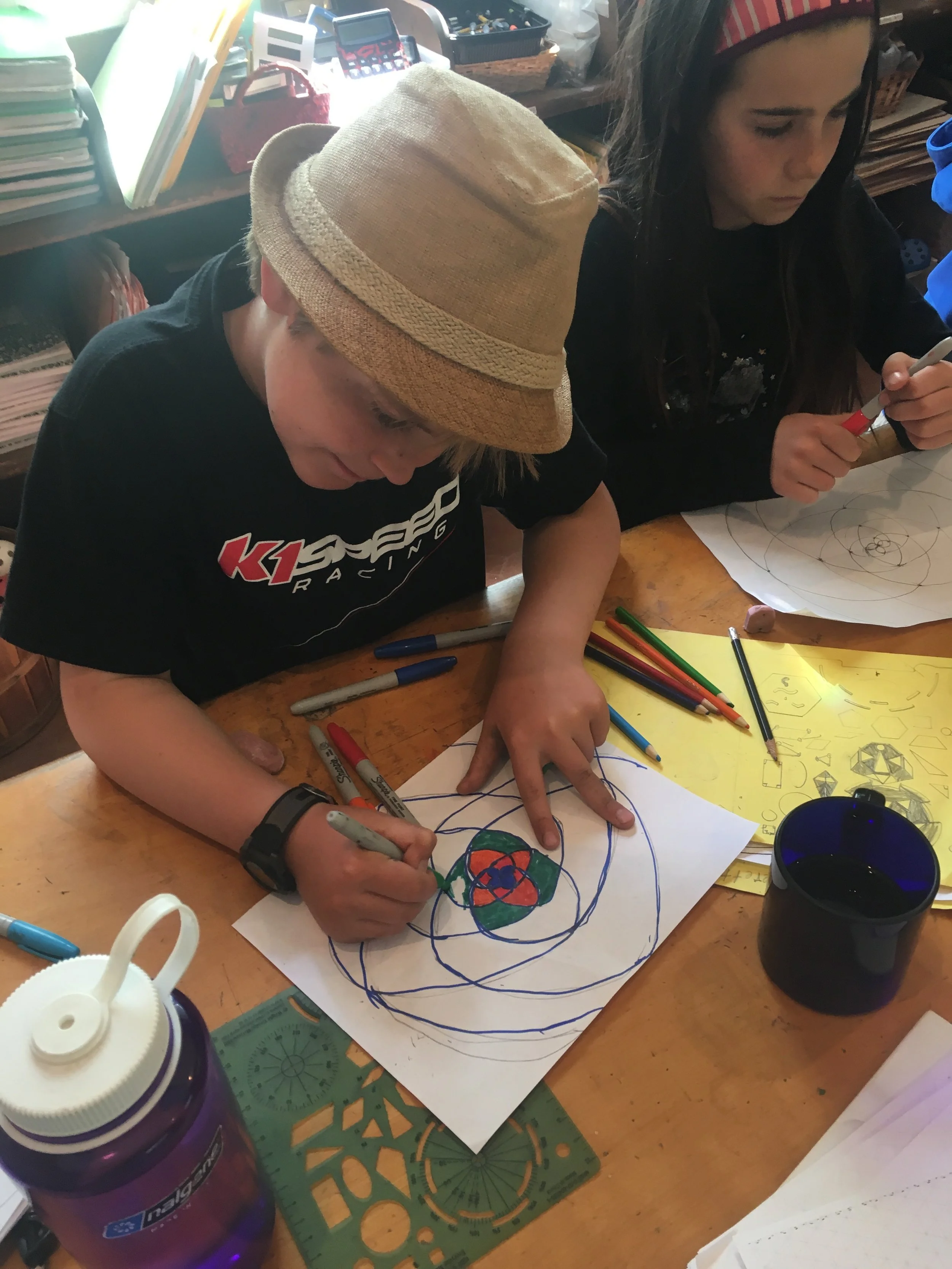
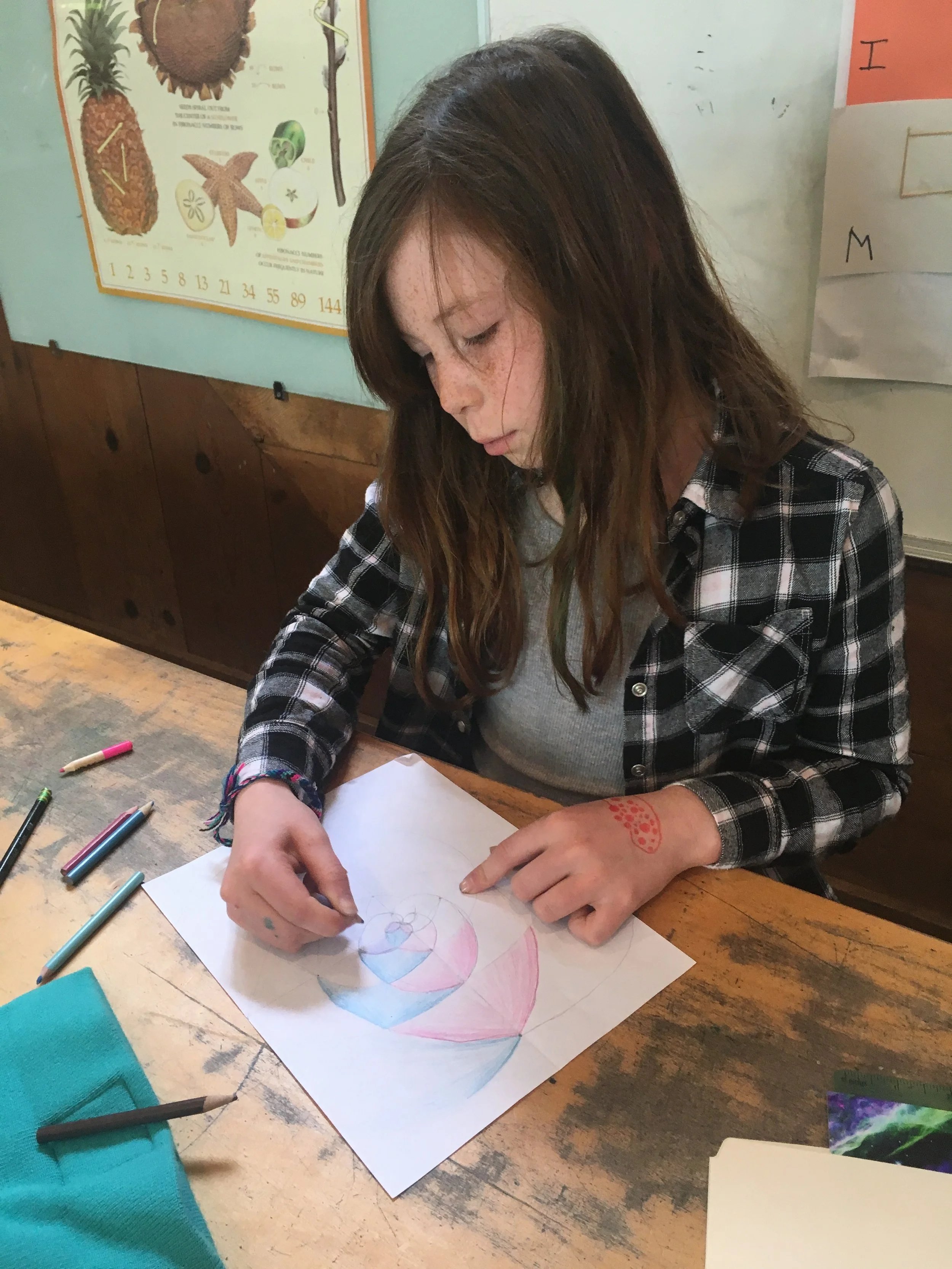
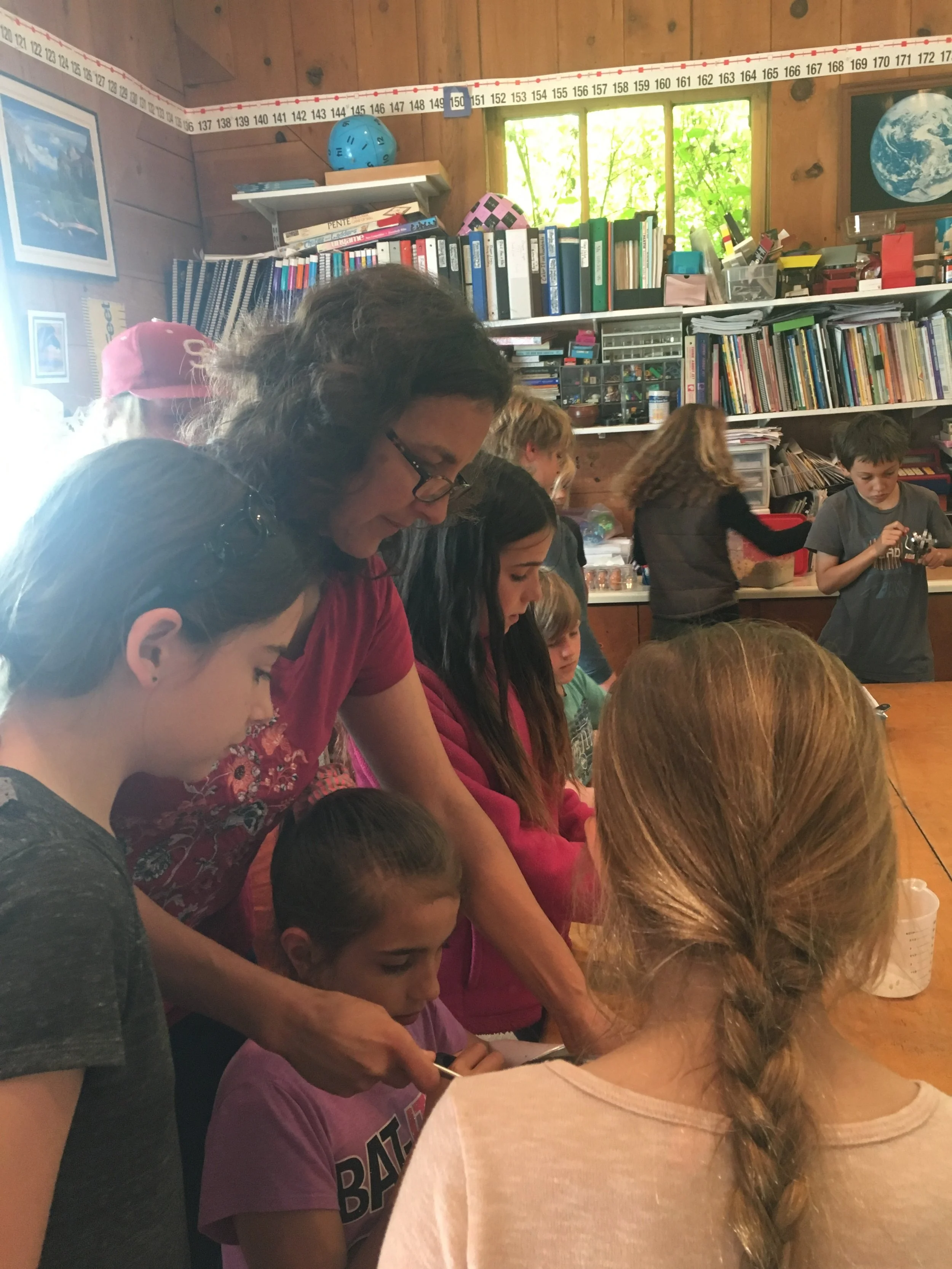
We had a visit from guest teacher Rachael 'Spatula' Hendrickson: artist, teacher, doctor of Chinese Medicine. I pre-taught the Fibonacci sequence and showed slides of Rachael's art on her website, and Jack shared a video he had watched on the Golden Ratio. Rachael spoke of her use of the golden ratio and taught a lesson on how to create an art piece using the numbers from the Fibonacci sequence.
FRACTION WAFFLES!
Throughout all of this time and all year, I am grateful to Shay and Liz for their weekly support in the math cabin.