
Science
Throughout December, first graders continued their studies on weather by focusing on properties of light. They first delved into this concept by exploring radiometers – a glass vacuum that looks like a light bulb with vanes that spin around an axis. The vanes are painted white on one side and black on the other which led us to our first question, does black or white absorb more heat from light?
Guesses were made, and we placed paper out in the sun with thermometers to find out that black paper absorbs more heat. This was important, because it explains how the radiometers work – the black sides of the vane heat up faster than the white sides and the difference in temperature helps propel the vanes around the axis (the key part being
that there are very few air molecules inside the glass). We explored radiometers with sunlight, LED flashlights, candescent light and a heat lamp (the heat lamp was the only source that did not cause the vanes to spin).
We next expanded our understanding of sunlight by briefly looking at shadows and by exploring prisms, rainbows and color. We made our own rainbows by spraying water into the air on a sunny day – discovering that to see a rainbow, your viewpoint should be between the sun and the rain. We made spinning discs of rainbow colors, learned the order of colored light (ROYGBIV) and dropped food coloring in almond milk to watch different colors swirl and emerge.
The highlight for the students was making oobleck and slime before the holiday break. Oobleck is a mixture of cornstarch and water that creates a smooth, sticky unusual substance. When force is applied to it (like a strike with a spoon) it acts like a solid, but it will quickly ooze out of your hands and drip everywhere if you try to pick it up.
Students that were in class after rollerskating enjoyed making their own slime from glue, shaving cream and a bit of borax solution.
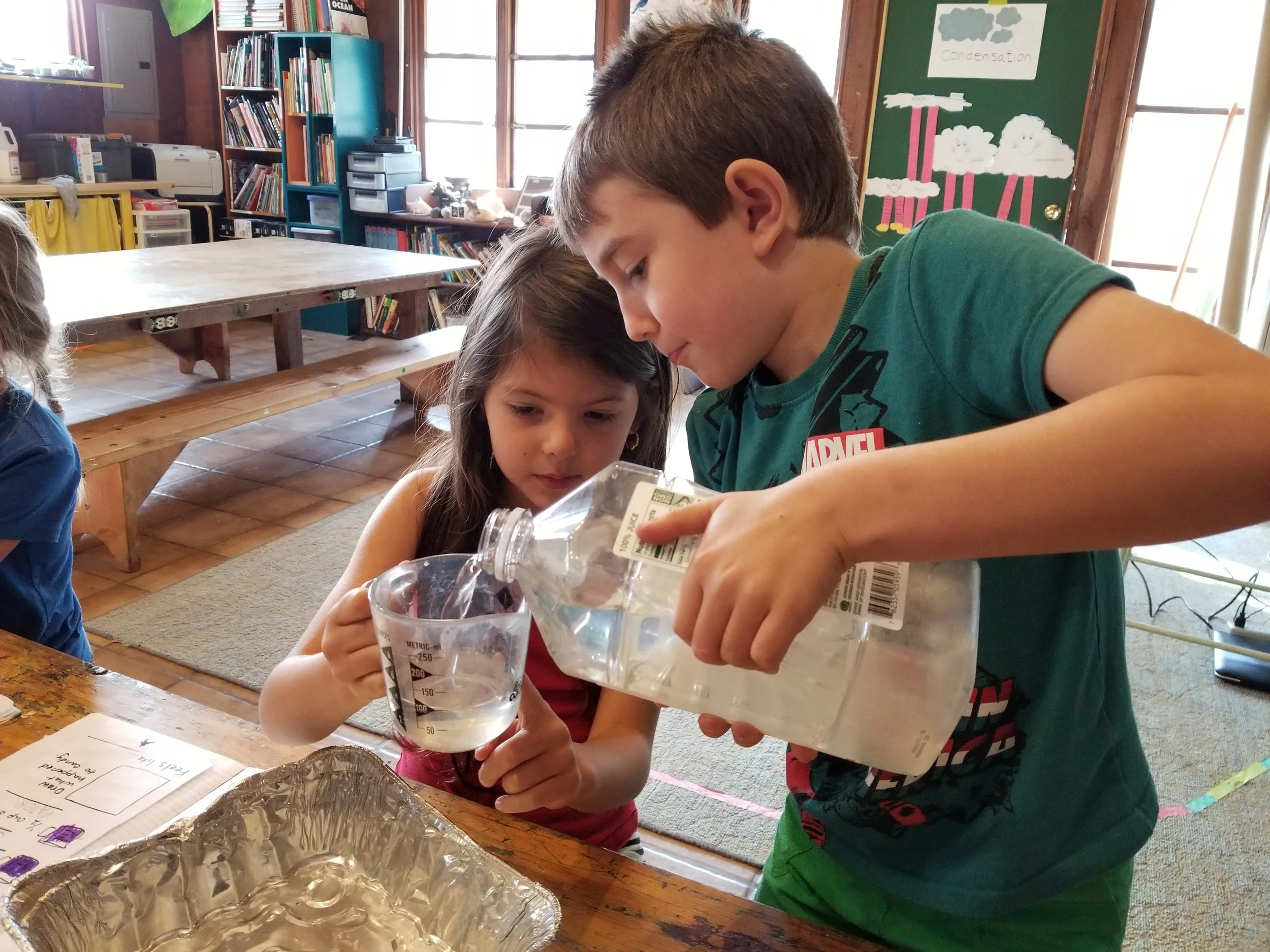
Measuring water for oobleck.
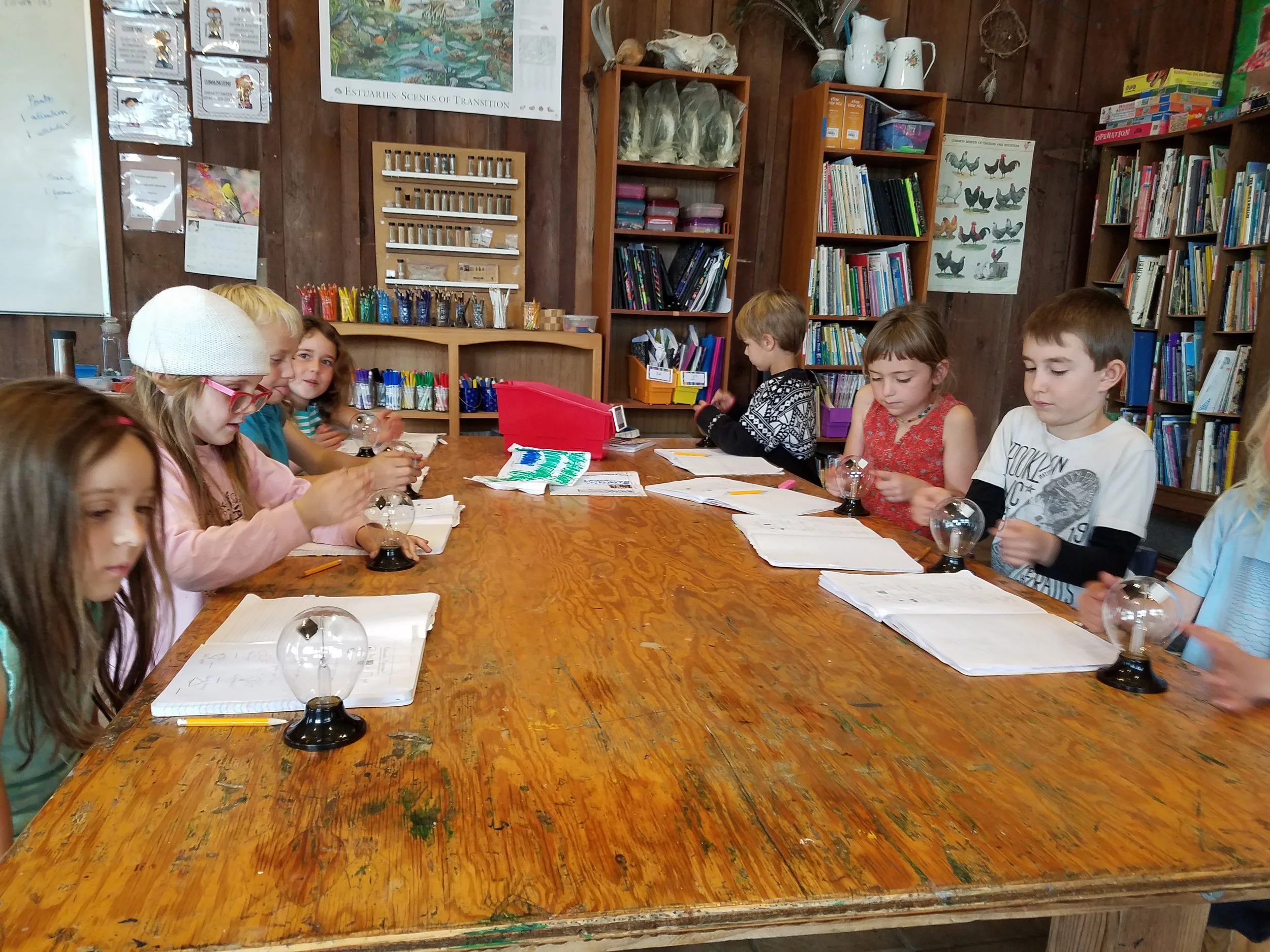
Radiometers.
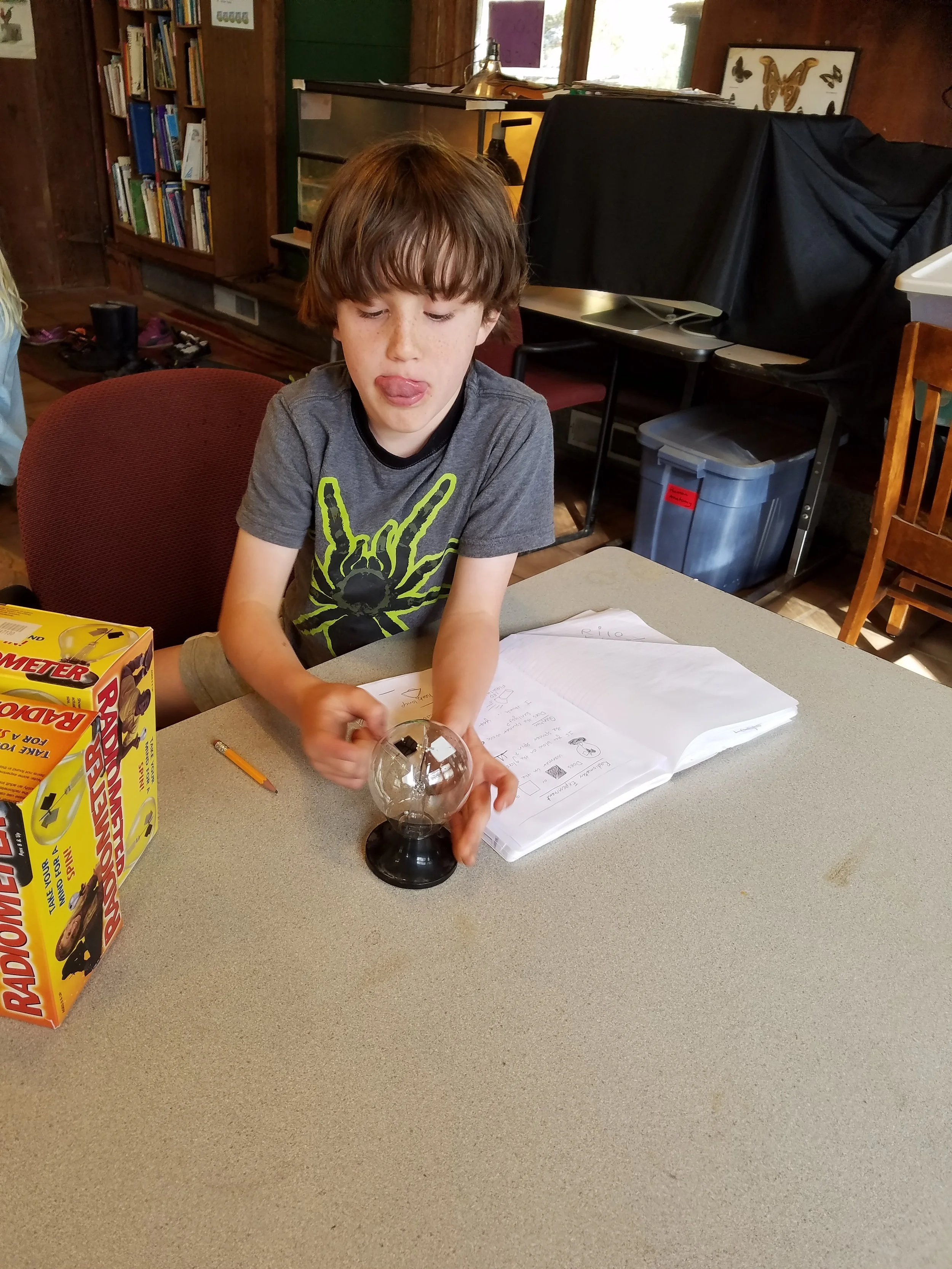
More radiometers.
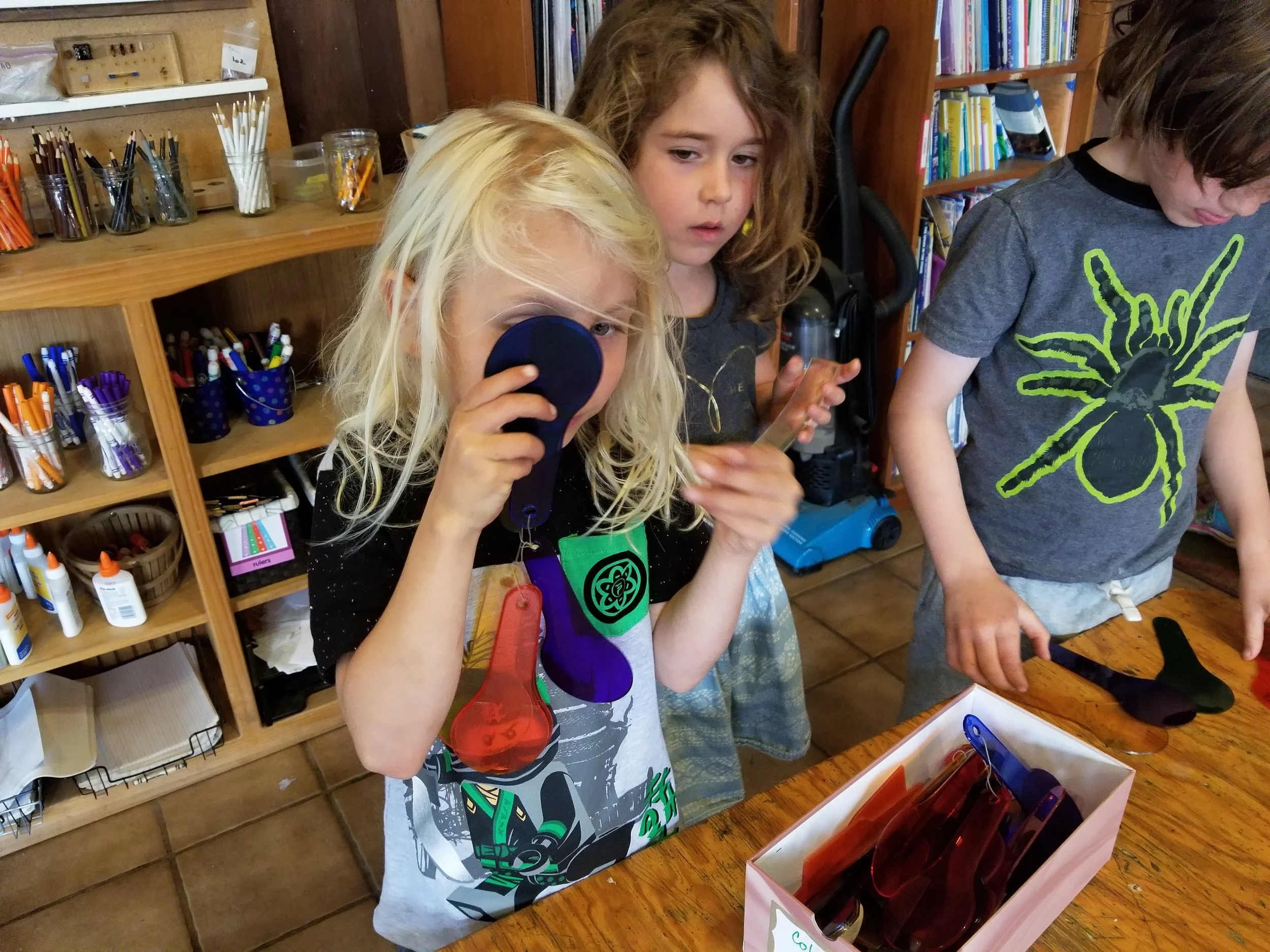
Color of light.
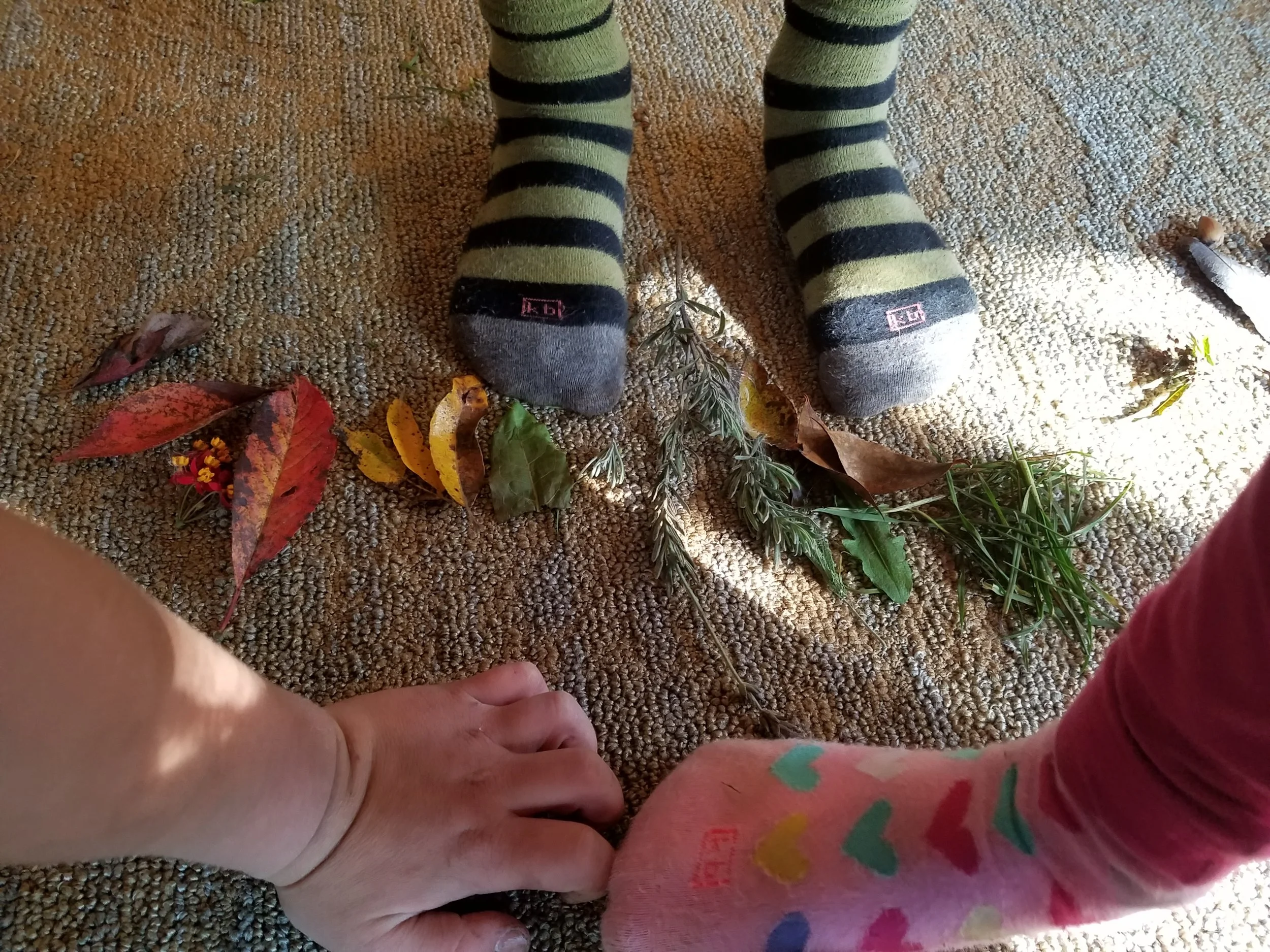
Natural fall rainbow.
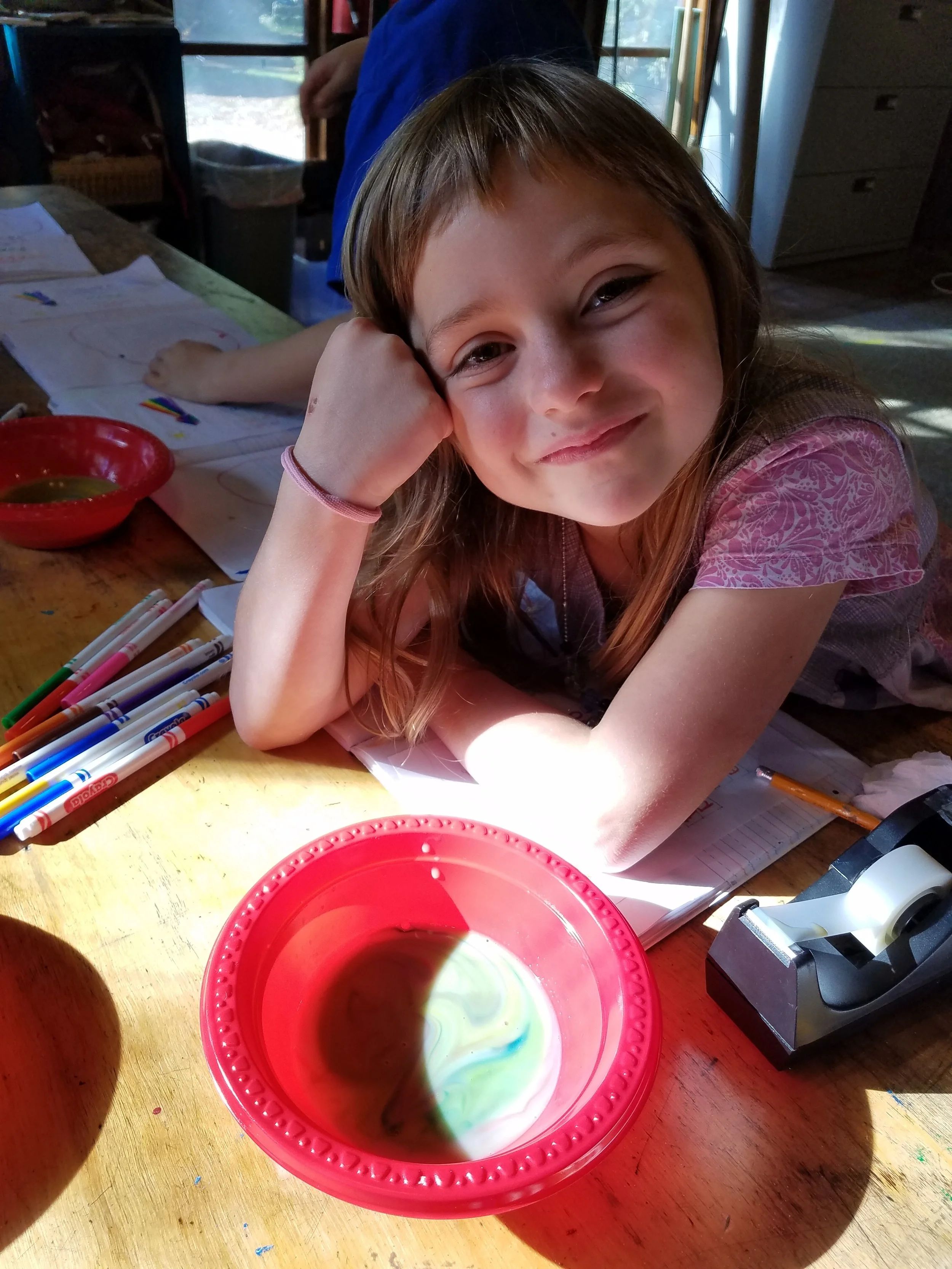
Rainbow milk.