
Math
Games! Games! Games! Children are born with a thirst for knowledge and who doesn’t get excited when a new concept clicks into place, or when one masters a new skill?
Our Everyday Math curriculum from the University of Chicago includes many games for teaching math concepts. I was also re-inspired by Dan Finkel, Math for Love, when I watched the movie Counted Out recently. He reminded me to teach the game of NIM and the game of PIG to the class. Both were big hits.
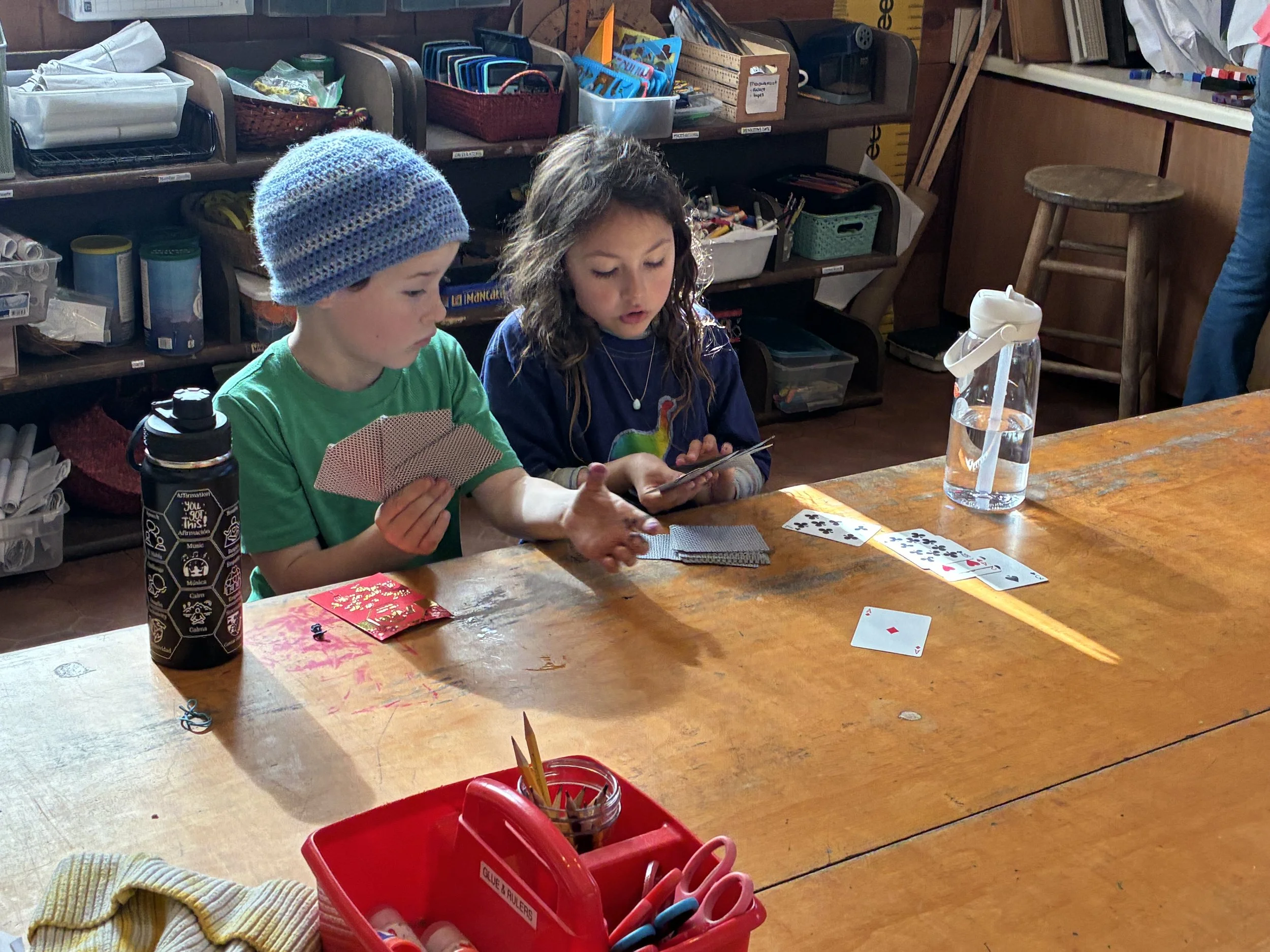
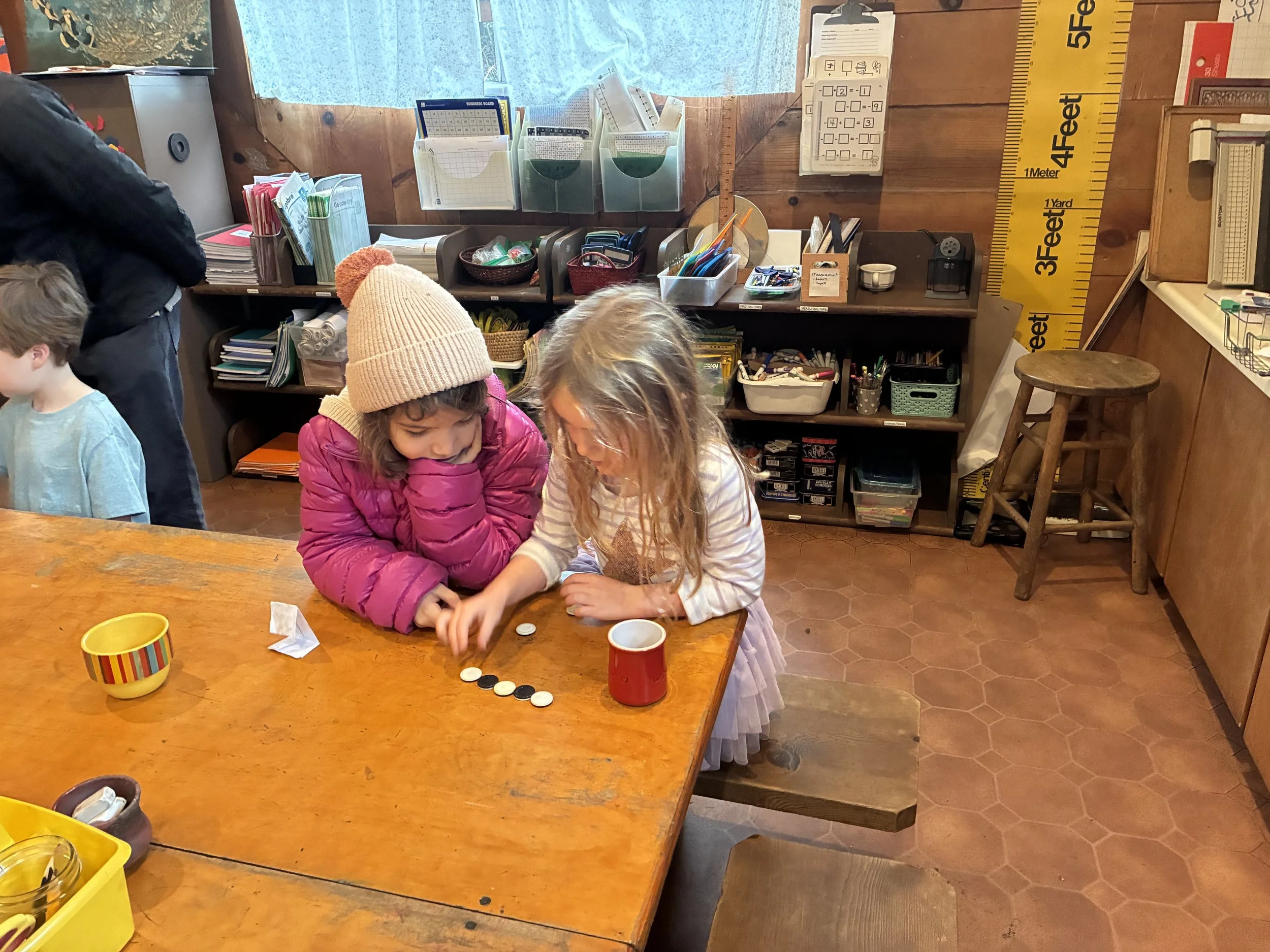
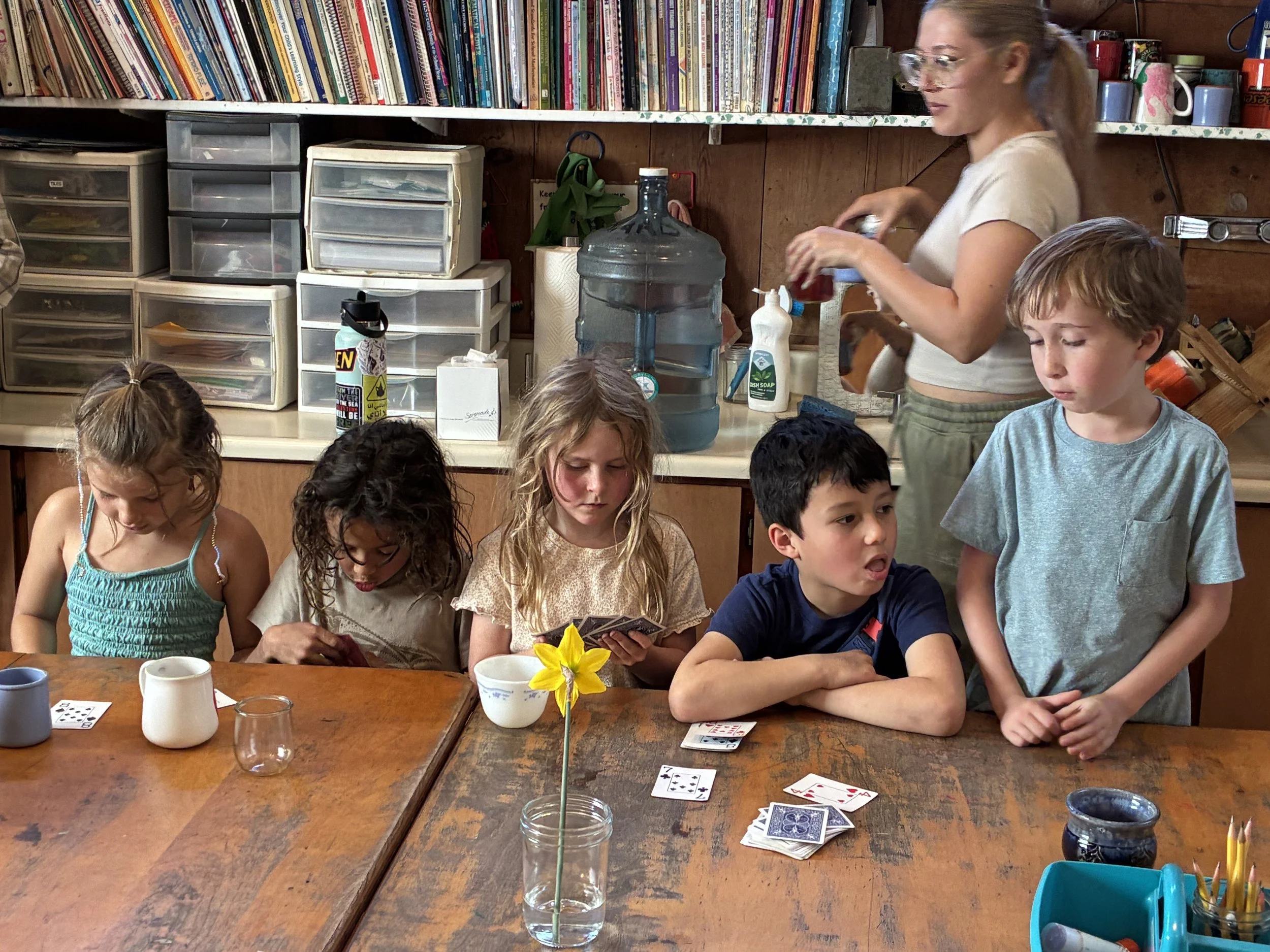
From the Everyday Math curriculum, students played Penny Plate Addition and Penny Nickel Exchange, Race to a Quarter, and the card game Before And After.

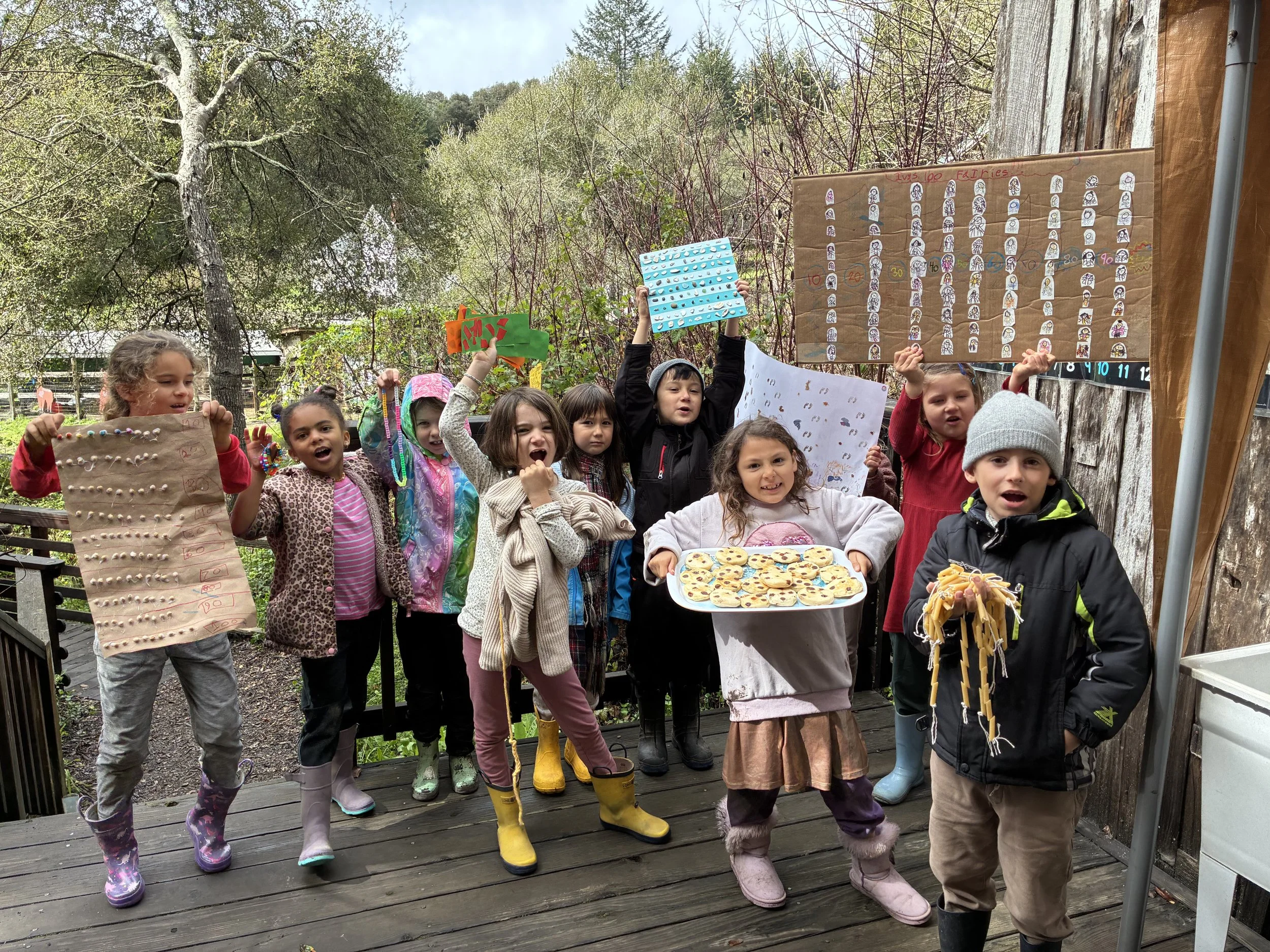
We had our Hundredth Day celebration and students brought in projects from home to share with the class.
Meanwhile, we have been discussing patterns and the concepts of Even and Odd numbers and doing mental math activities such as Geometry Logic and Money Logic, in which students follow oral clues to place shapes or coins in a specific order.
Will Dawson, Liam’s father, has begun helping in the classroom on Wednesdays and the students all benefit from more adult support. Thank you Will!



Why We Love 1-2 Nim
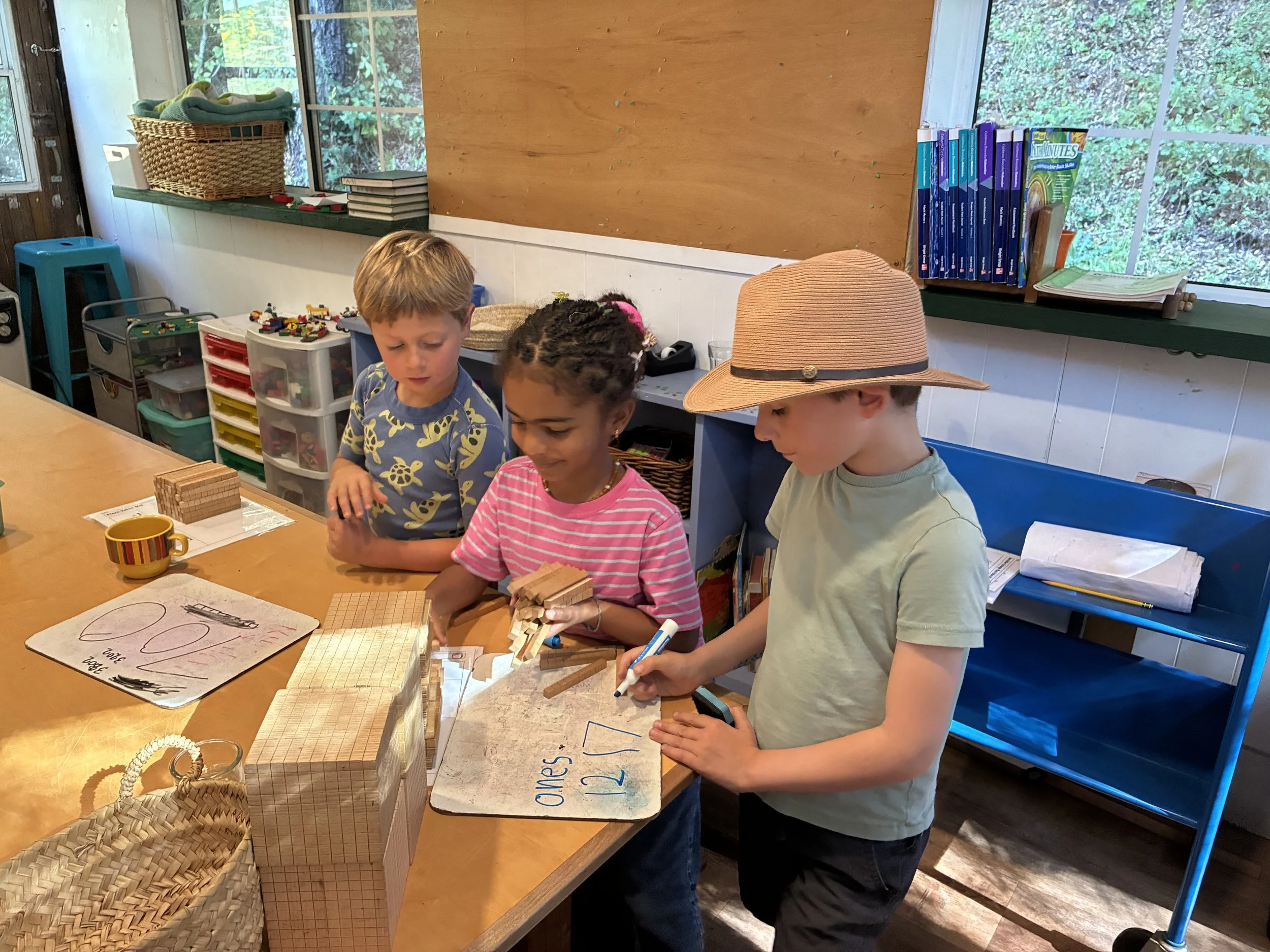
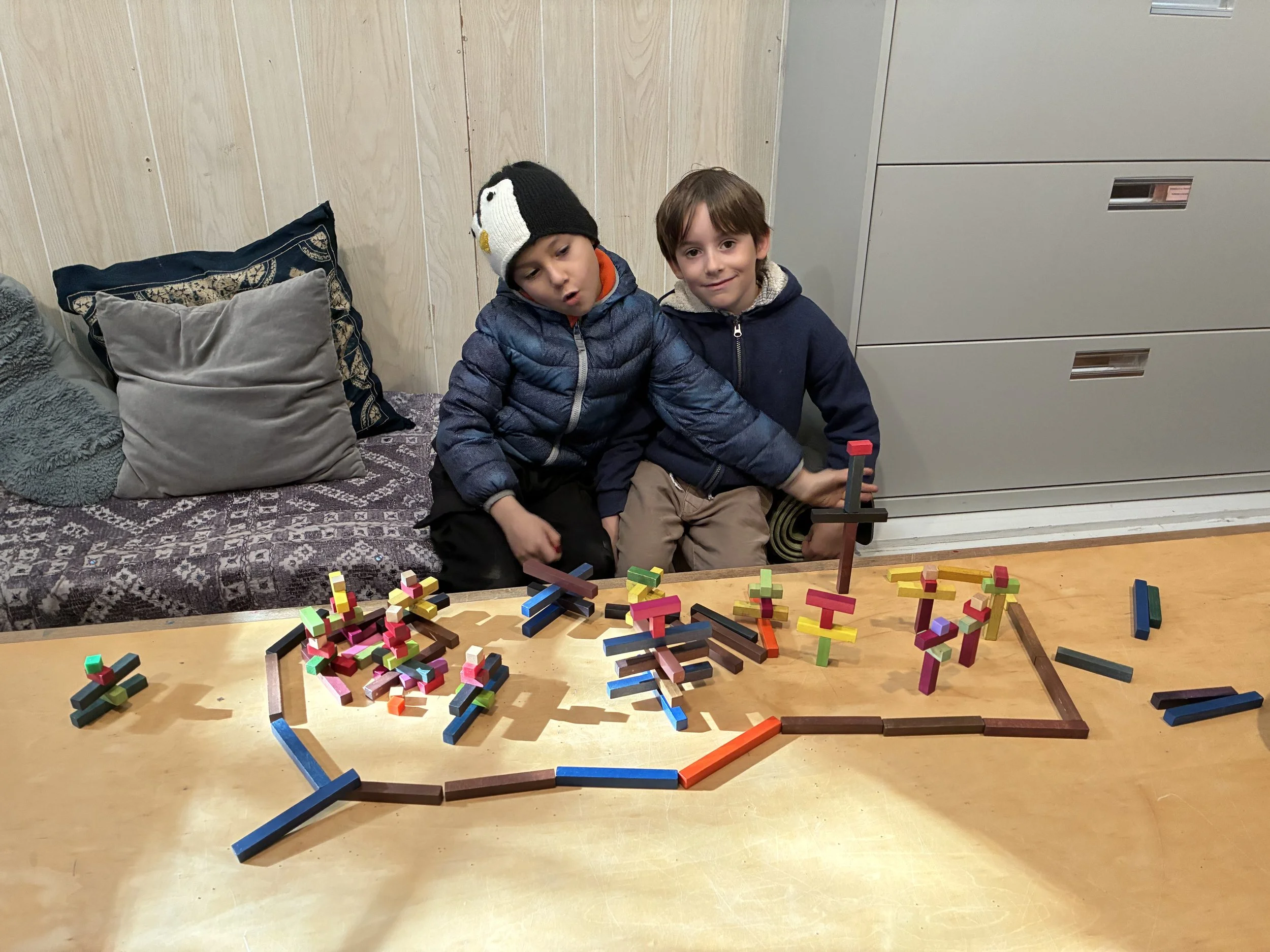
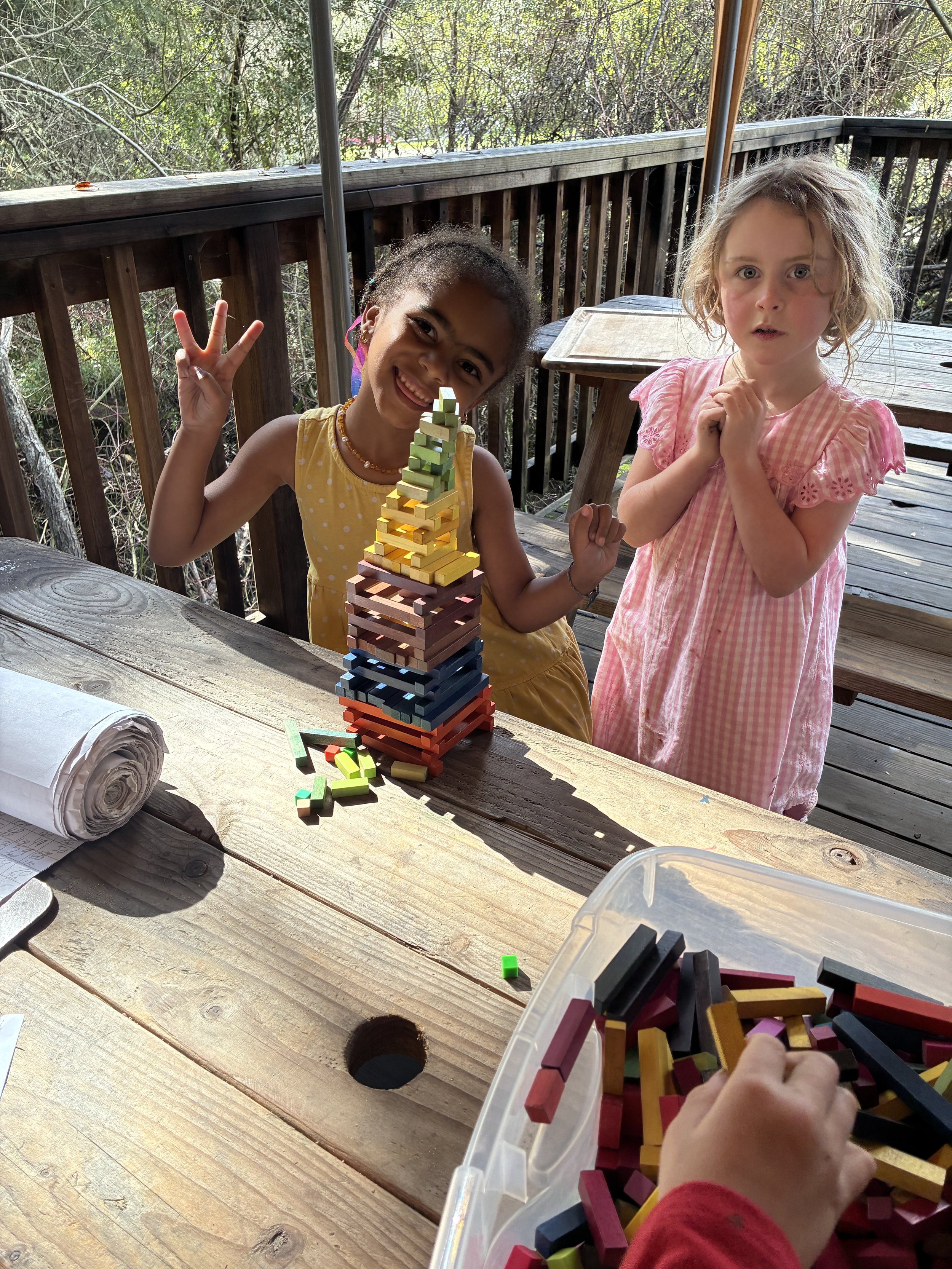
Nim is fun, challenging, and rewarding for a wide range of kids. Done right, it can engage everyone from Kindergarten to upper elementary kids, and connect to basic counting, and arithmetic up to division. Completely unlocking the game is an exciting and powerful achievement for a student.
How to Play
Nim is a two-player game. You start with a pile of counters. On your turn, remove one or two counters from the pile. You must take at least one token on your turn, but you may not take more than two. Whoever takes the last token is the winner.
Example Game
We start with 8 counters in the pile.
Player 1 takes one counter, leaving 7.
Player 2 takes two counters, leaving 5.
Player 1 takes one counter, leaving 4.
Player 2 takes one counter, leaving 3.
Player 1 takes one counter, leaving 2.
Player 2 takes two counters, leaving 0 and winning the game.
Variations
Change the size of the pile.
1-2-3 Nim: players may take one, two, or three counters per turn.
Poison: Whoever takes the last counter loses.
Questions
The Central Question: how can you win 1-2 Nim? What would a perfect strategy look like?
Good questions for the teacher to ask students:
What move should I (the teacher) make?
How did you/they/I win that game?
What do you think your/my opponent will do if you/I take two counters?
Would you like to take back your move?
What have you noticed about this game?
Possible student conjectures, true and false, that may arise:
Whoever goes first wins.
Whoever goes second wins.
Odd vs. Even determines your strategy.
It matters/doesn’t matter what you do until there are fewer than six counters in the pile.
Whoever can give their opponent four open spaces wins.
For students who have figured out the game, some challenge questions:
How would you win 1-2 Nim if you start with a pile of 20? 30? 100? 217?
These challenges can also apply to 1-2-3 Nim and Poison variations.