
September in the Kindergarten Classroom
Welcome Parents!
We hope you will check here whenever we have a new post for you. Feel free to share the password with close friends or family so they too can enjoy and understand the wonderful, rich education that your lucky children are immersed in. Both of us contribute to this blog and you might just notice our different writing voices as you read…Keep in mind, this is always just a fraction of all the things we do at school. It’s hard to pick up the camera sometimes and it also takes forever to upload the photos and write about everything. Nonetheless, we do love you to get a closer glimpse of how your kids are spending their days!
We have had a really pleasant start to the year. Your children are well-mannered, intelligent, friendly, funny, kind, and a lot of fun to be around. They have settled in quickly and fairly seamlessly and though they may be exhausted, whiny and full of meltdowns when they leave school, they have been attentive, even-keeled and cheerful most of the time at school.
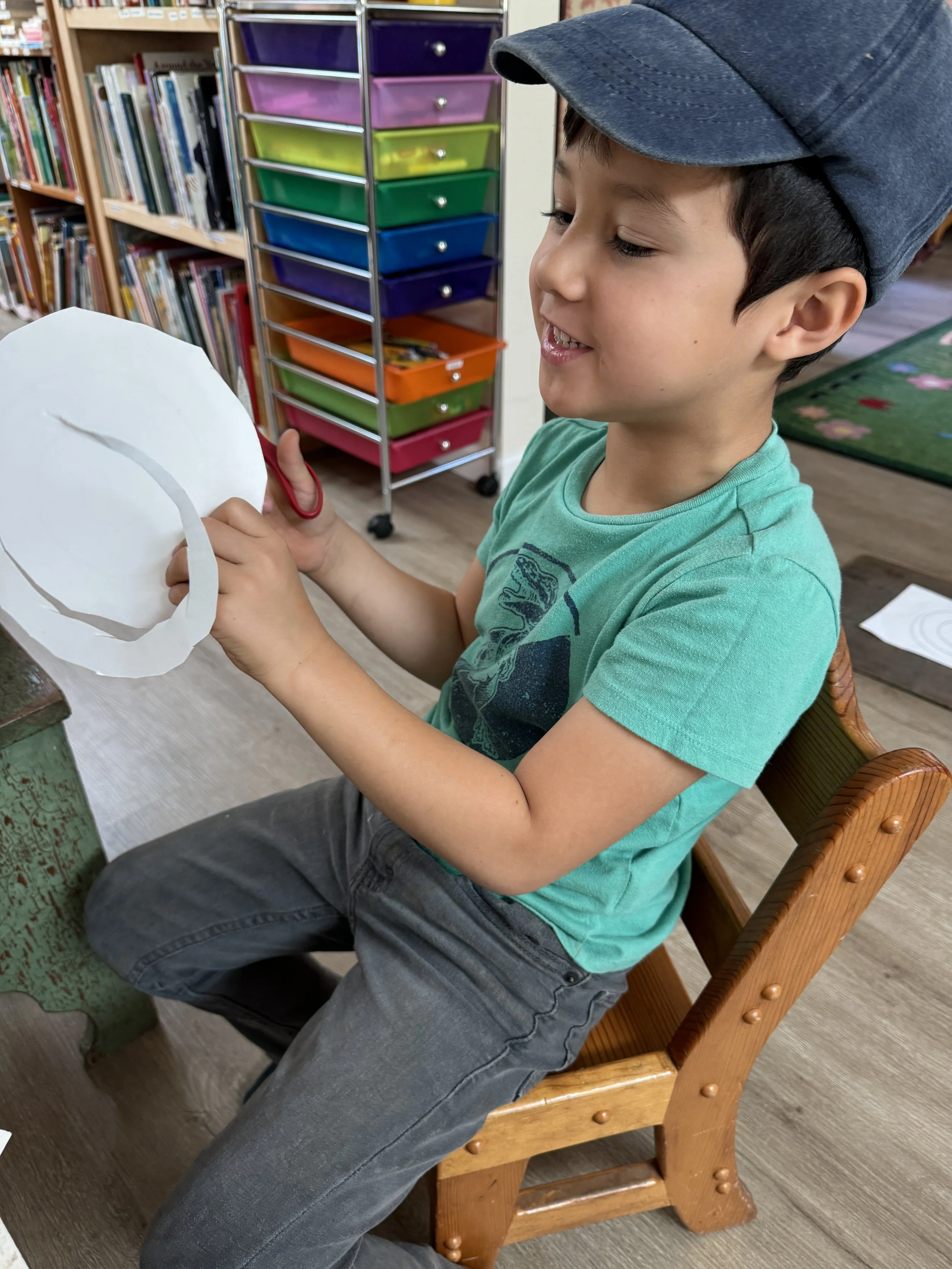
Mateo working on his final cutting lesson, a spiral snake that he decorated with the pattern of his choice after looking through books about snakes.
We’ve spent a good deal of time setting expectations and creating routines these first weeks. We scaffold these rules and procedures bit by bit and we try to handle social issues in context — it feels much more valuable to discuss friendship dynamics once these start to materialize; we explore ideas about how to share once we see children in conflict over materials; we talk about our rule of including everyone who wants to play once we notice someone being left out. Kindergarten is a dynamic place and one of the joys for us teachers is getting to set a pace that reflects and honors what is happening with our students. If recess needs to go 15 minutes longer because the kids are forming beautiful bonds and involved in a really great game, then this is likely more important than getting all they way through a preplanned lesson we have.
After getting to know the classroom and each other, we are just now getting more involved in curriculum. We’ve spent time working on fine motor skills through a series of systematic “cutting lessons” just to be sure everyone is holding scissors correctly and can maneuver them effectively. The kids also got practice using glue sticks and erasers, along with keeping their inside cubbies organized, and we’ve been able to make adjustments to pencil grips too.
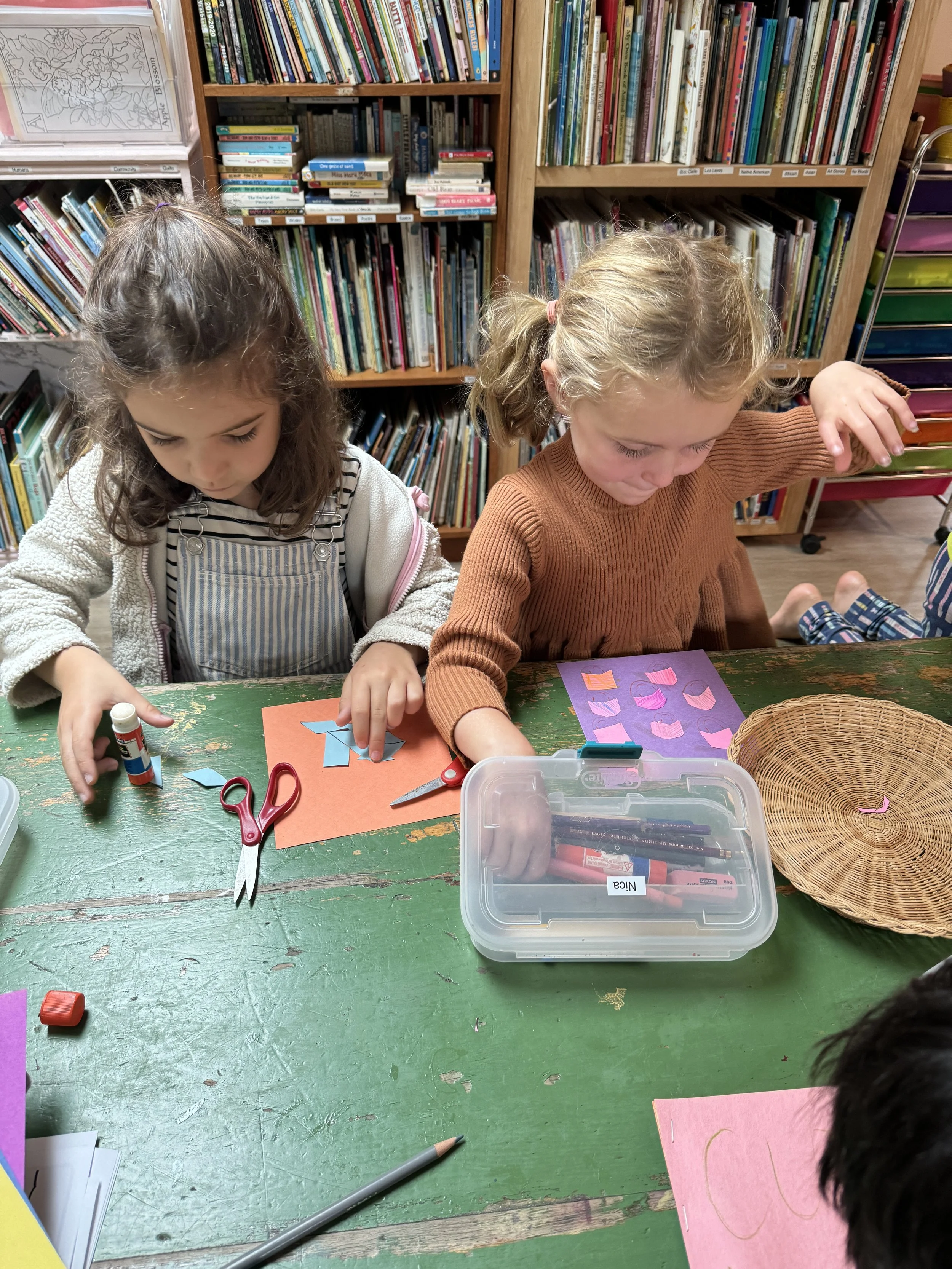
Cutting lessons, i.e. scissor and gluing work. Fine motor control is so important for controlled and neat handwriting. We try to build from the ground up, step by step.
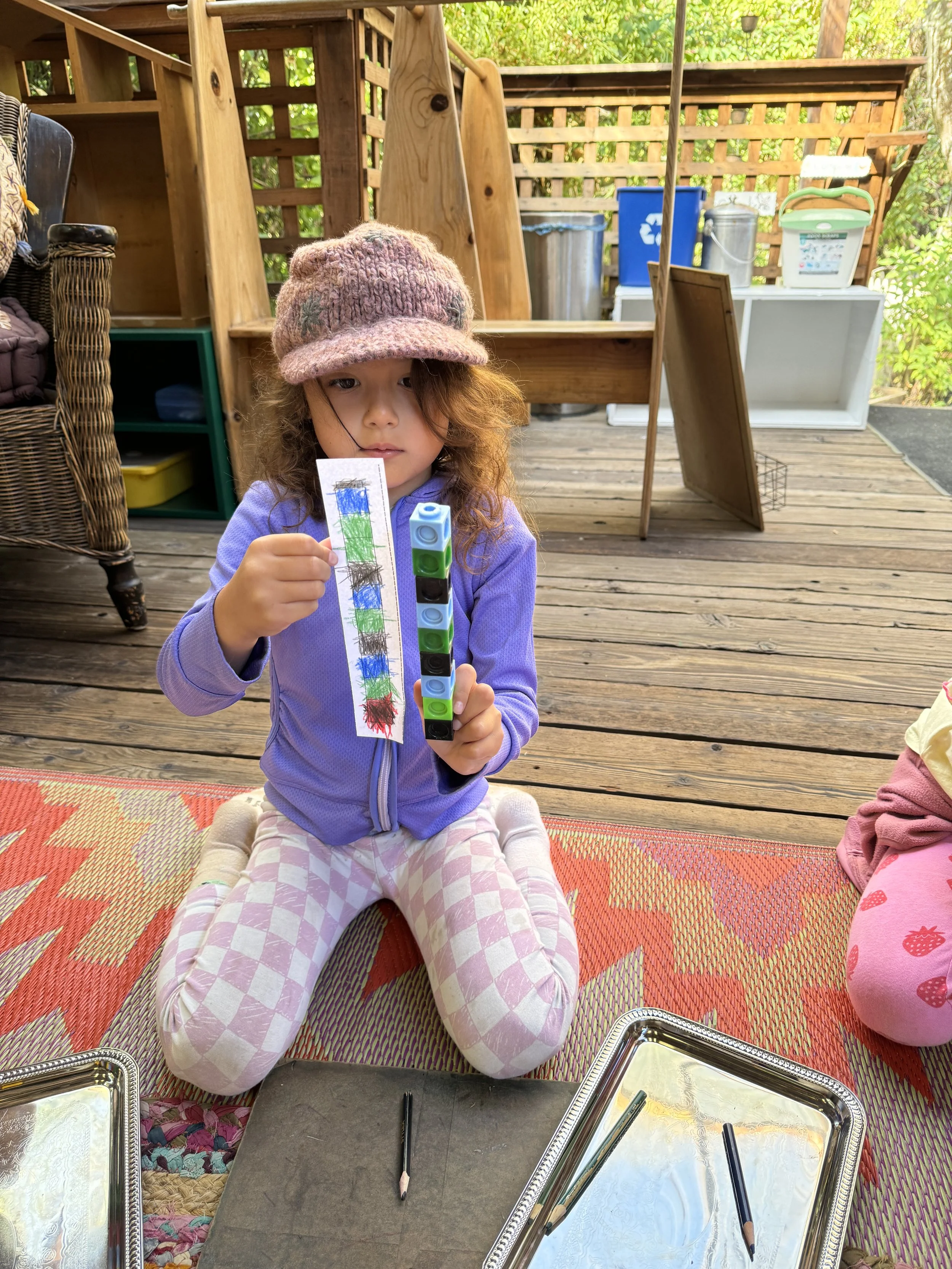
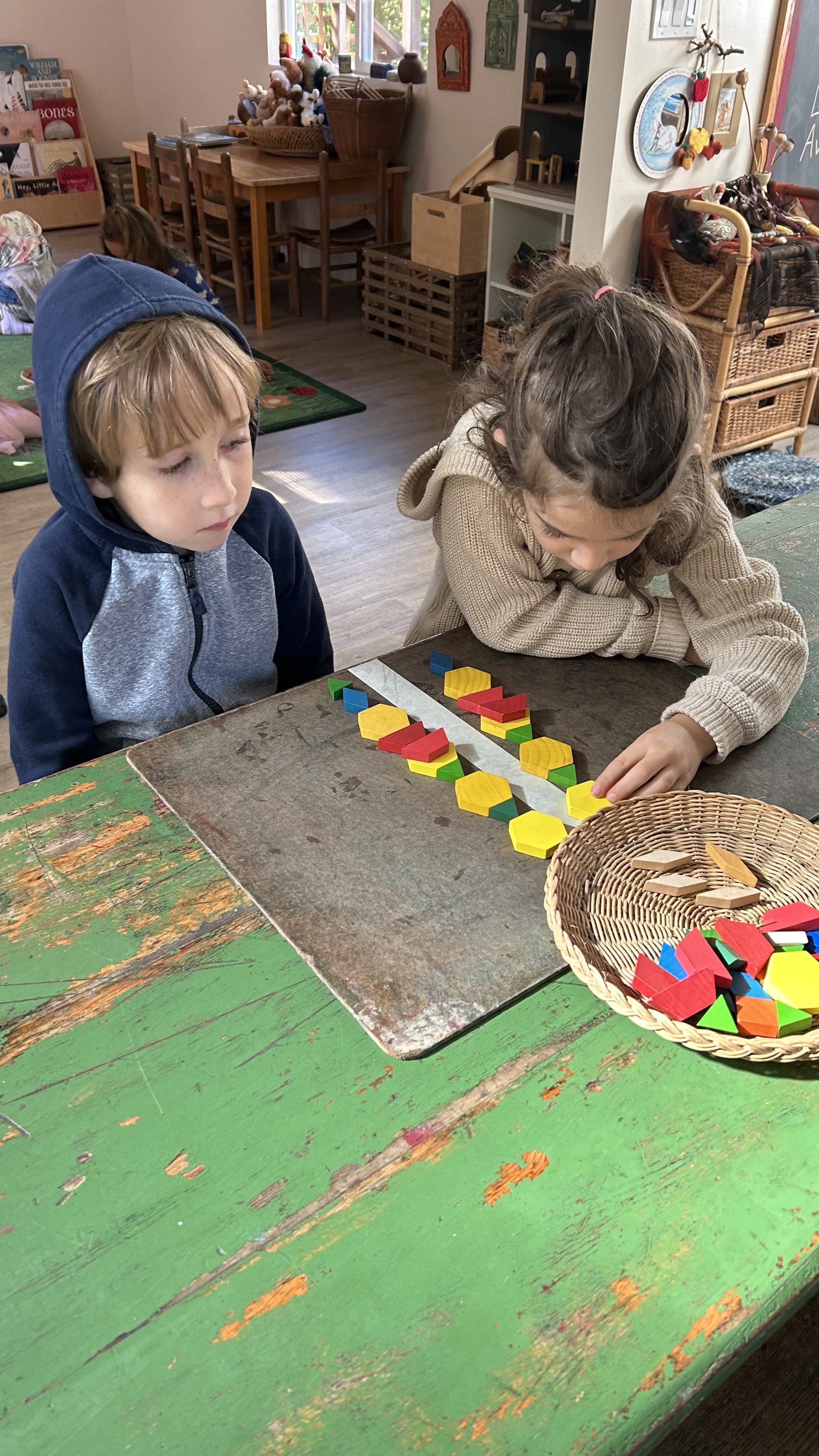
Luna built her pattern, read it to the class (black, green, blue, black, green, blue...) and then replicated it on a coloring sheet.
Math and Science:
We start the year in math with lots of counting and an exploration of a couple of foundational concepts: patterns and symmetry.
patterns:
We talked about shape and color patterns on clothing and around the classroom, we’ve made sound patterns (music!) and patterns with our bodies (sit, stand, sit, stand). The children have built patterns with snapblocks, from the simple (ABABAB) to the more complicated, depending on individual abilities, like ABCABC or AABCCAABCC and so on. They even made patterns with fruit skewered on kebabs!
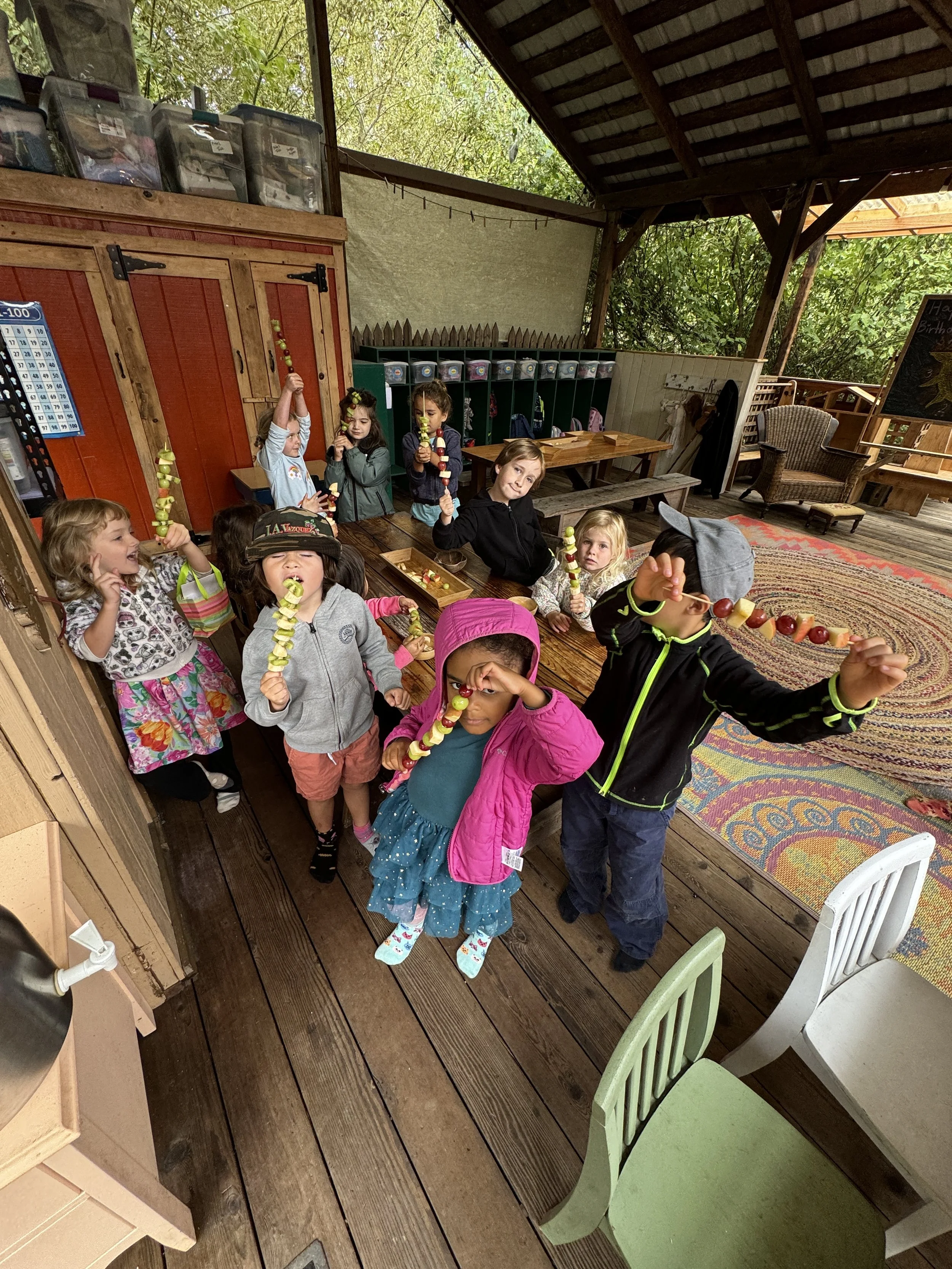
Edible patterns!
exploring 3D structures:
The children teamed up to see what imaginative structures they could create using marshmallows and toothpicks. Together, they built towering apartment buildings, cozy houses, whimsical tents, and even tiny campfires. Some crafted adorable marshmallow people, while others took it a step further, designing a bustling garbage dump complete with a miniature garbage truck.
Five senses:
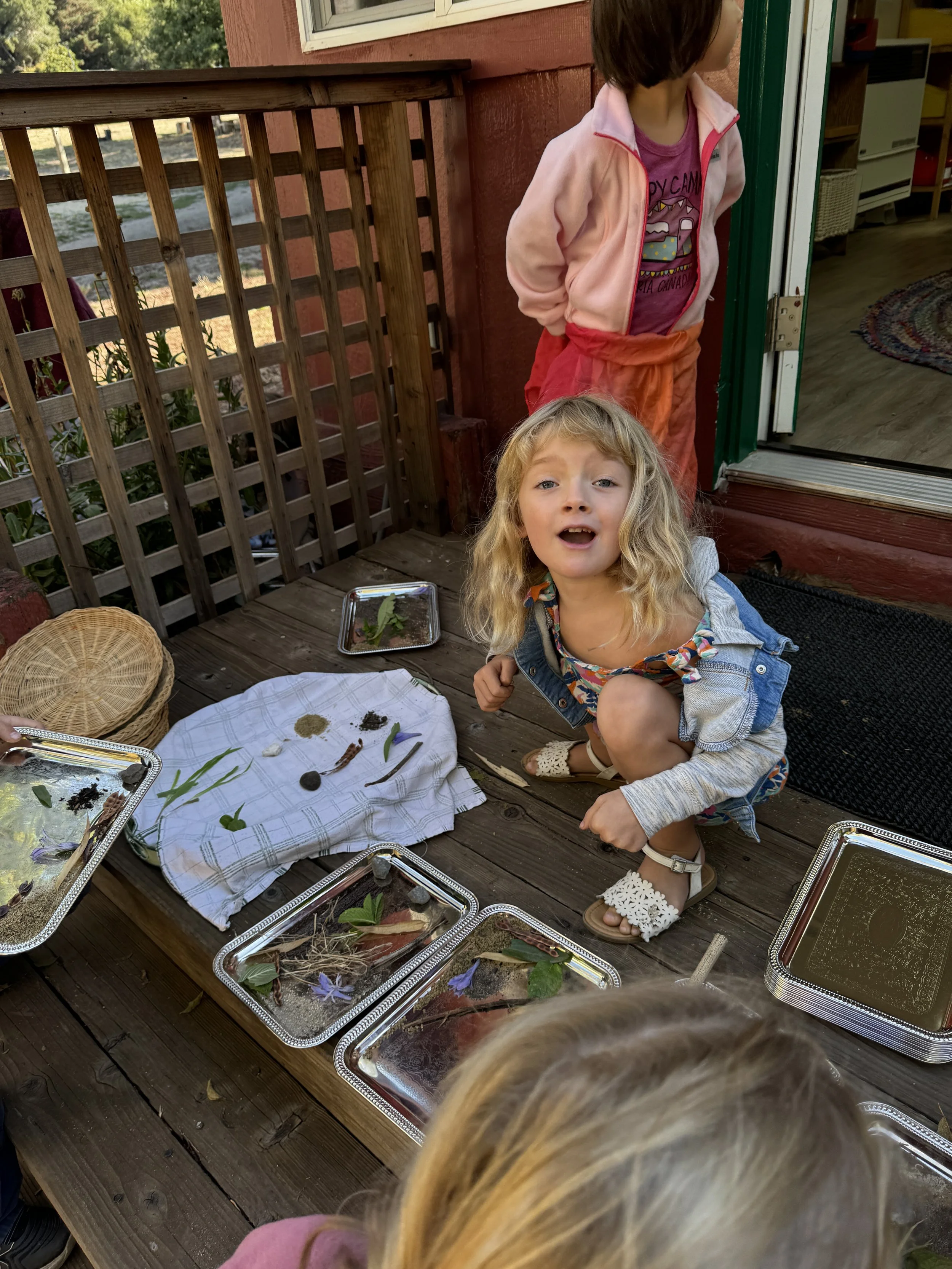
Working on memory with a garden scavenger hunt. Most were quite skilled at finding all 11 items.
Explorations included a matching activity for smell where the kids had to find who had the jar with the matching scent. Smells included cinnamon, mint, lemon, almond butter, vanilla and maple syrup. For taste, the children blind sampled foods and then had to identify if they tasted sweet, sour, salty or bitter. For touch, they used their hands to feel textures hidden in a bag and for hearing they played a game where they listened to locate sound. They sharpened their observation skills to spot what was missing in another game that focused on the sense of sight.
Math and science came together, as it so often does, when the children got to do an apple taste test, sampling crisp Fuji, sweet Honeycrisp, and tart Granny Smith apples. After savoring the apple morsels, they enthusiastically voted on their favorites, and we graphed the results. The outcome was a surprising tie between the Fuji and Granny Smith.
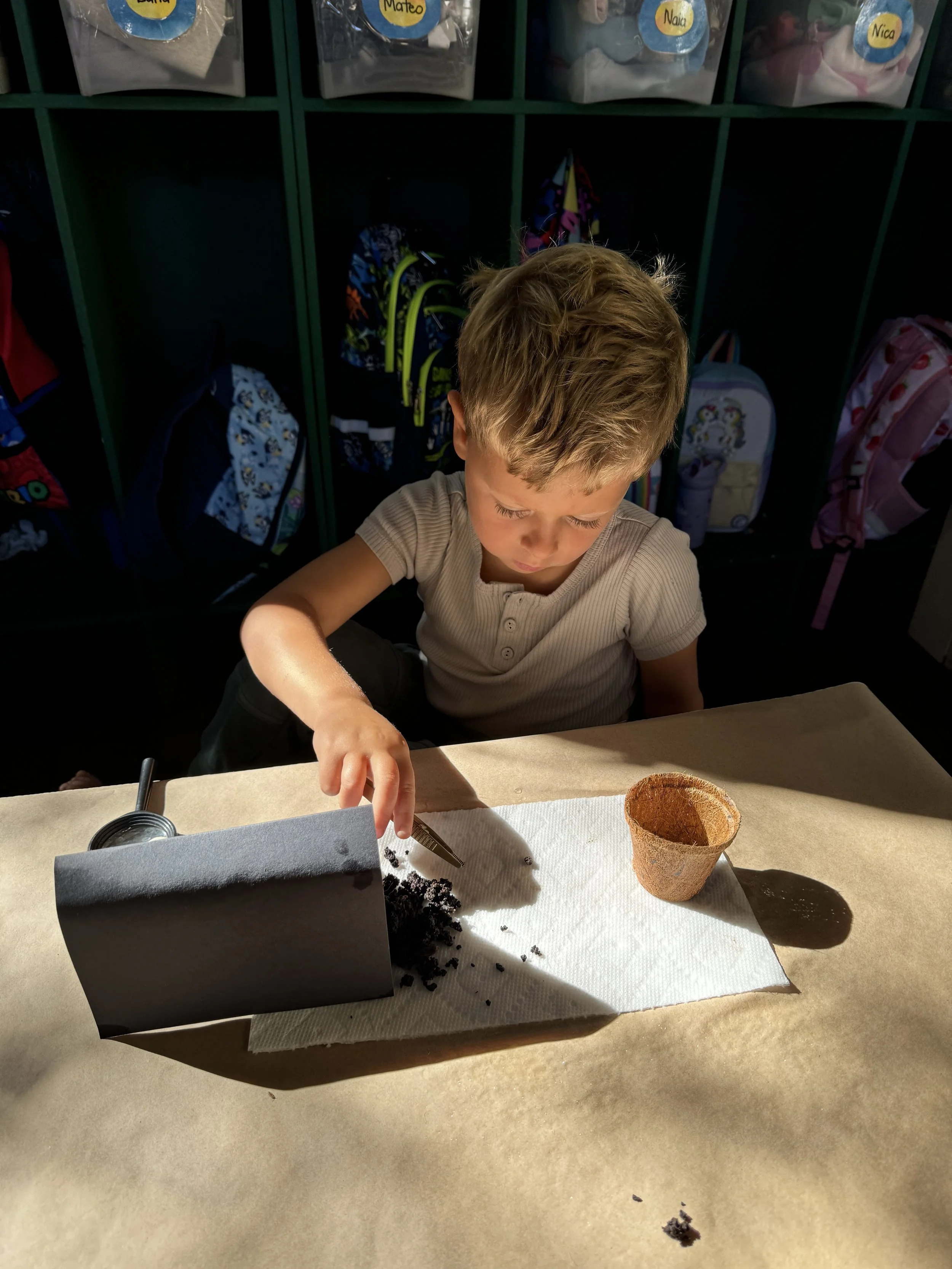
Did the worm like the dark tunnel or the bright sunny patch on the paper towel? Ask Calder.
Worms:
We started our garden work with a dive into our worm bin. Students separated worm castings from the red wrigglers, noticing which end was which by shining flashlights on the worms. We discussed these amazing blind, 5 hearted creatures that can turn pencil shavings, leaves, and old food into gold for the garden. Later in the week, we used the castings to add to seed starter mix and plant some nasturtium, parsley and calendula seeds. We hope they’ll sprout. Inconsistent watering may be their downfall, although Avalyn appears to have a green thumb as one of hers has popped up already.
lifecycles:
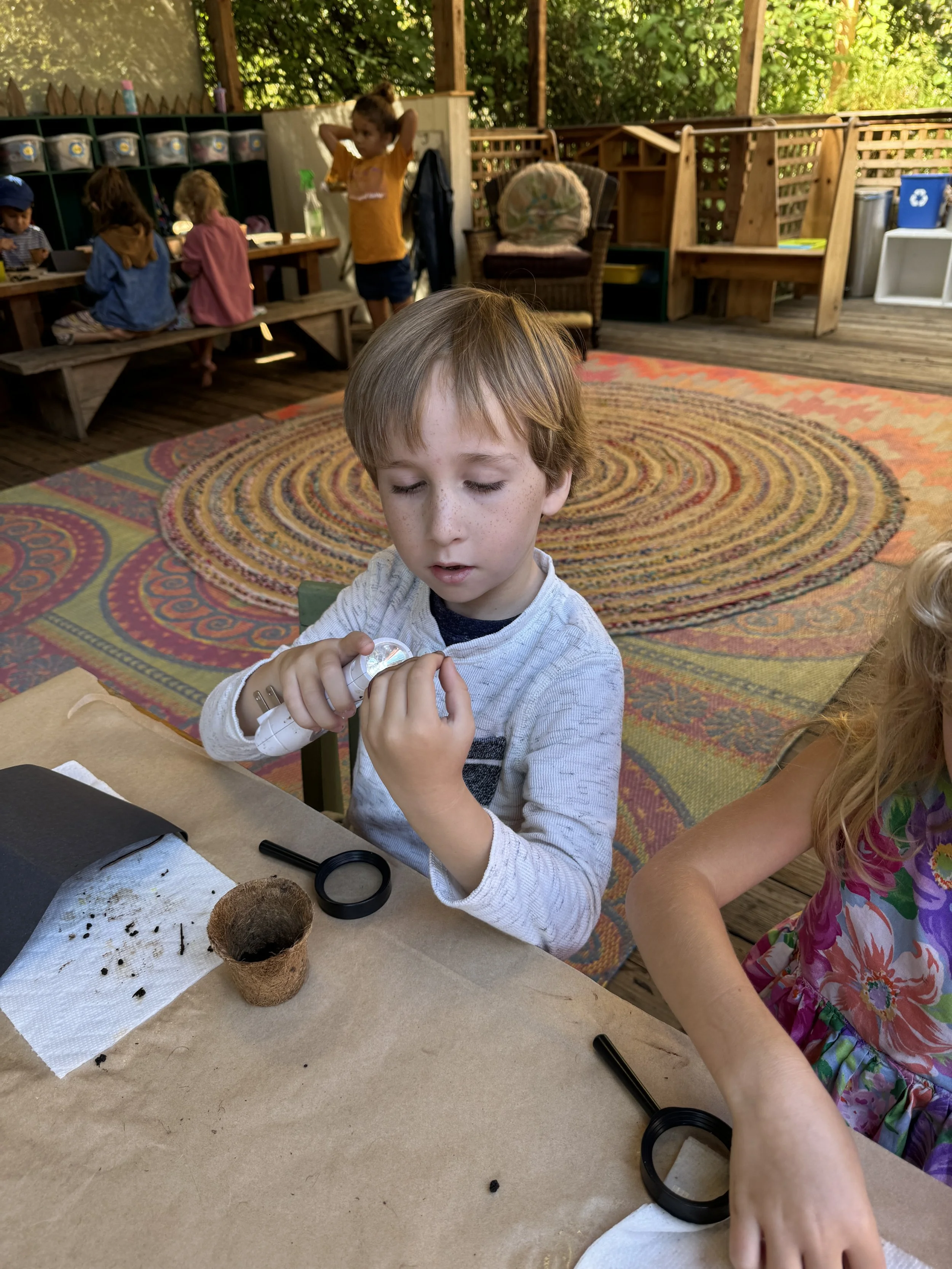
Liam shines a flashlight to figure out which end of the worm is which.
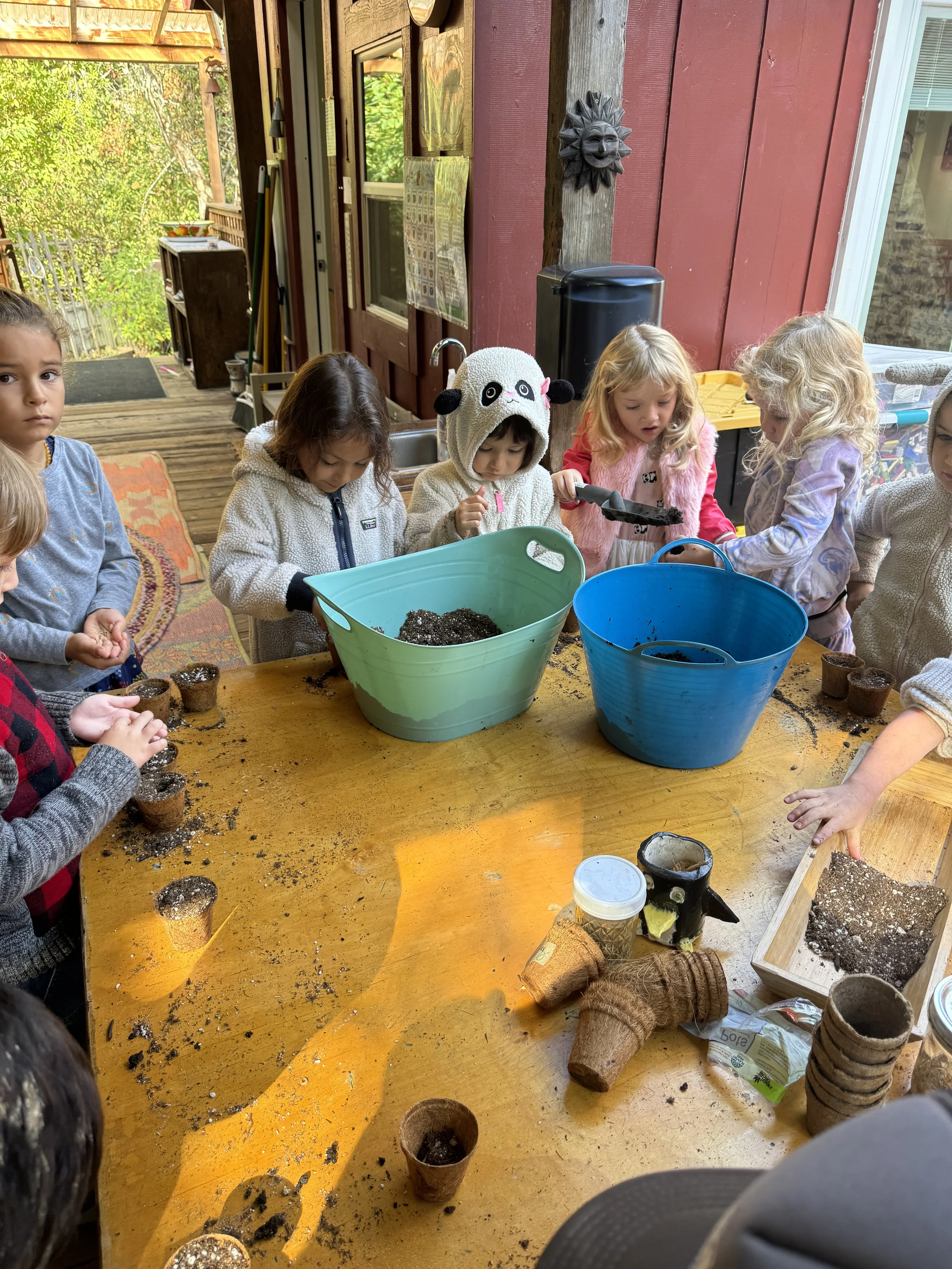
Planting seeds
The kids are getting to witness the lifecycle of the monarch butterfly in our garden where caterpillars of all different sizes are munching on leaves and then climbing away to find a secure spot to form a chrysalis. Hopefully, we’ll also see the butterflies begin to emerge. The children will be documenting this process in their workbooks soon. They’ve also explored the fascinating life cycle of apple trees, learning about their appearance through the changing seasons, how they grow from tiny seeds, and the different parts of an apple. And in a few weeks, we’ll take one of four visits to the persimmon tree up the hilll so they can practice scientific drawings of this tree as it goes from fall to summer over the course of this year.
symmetry:
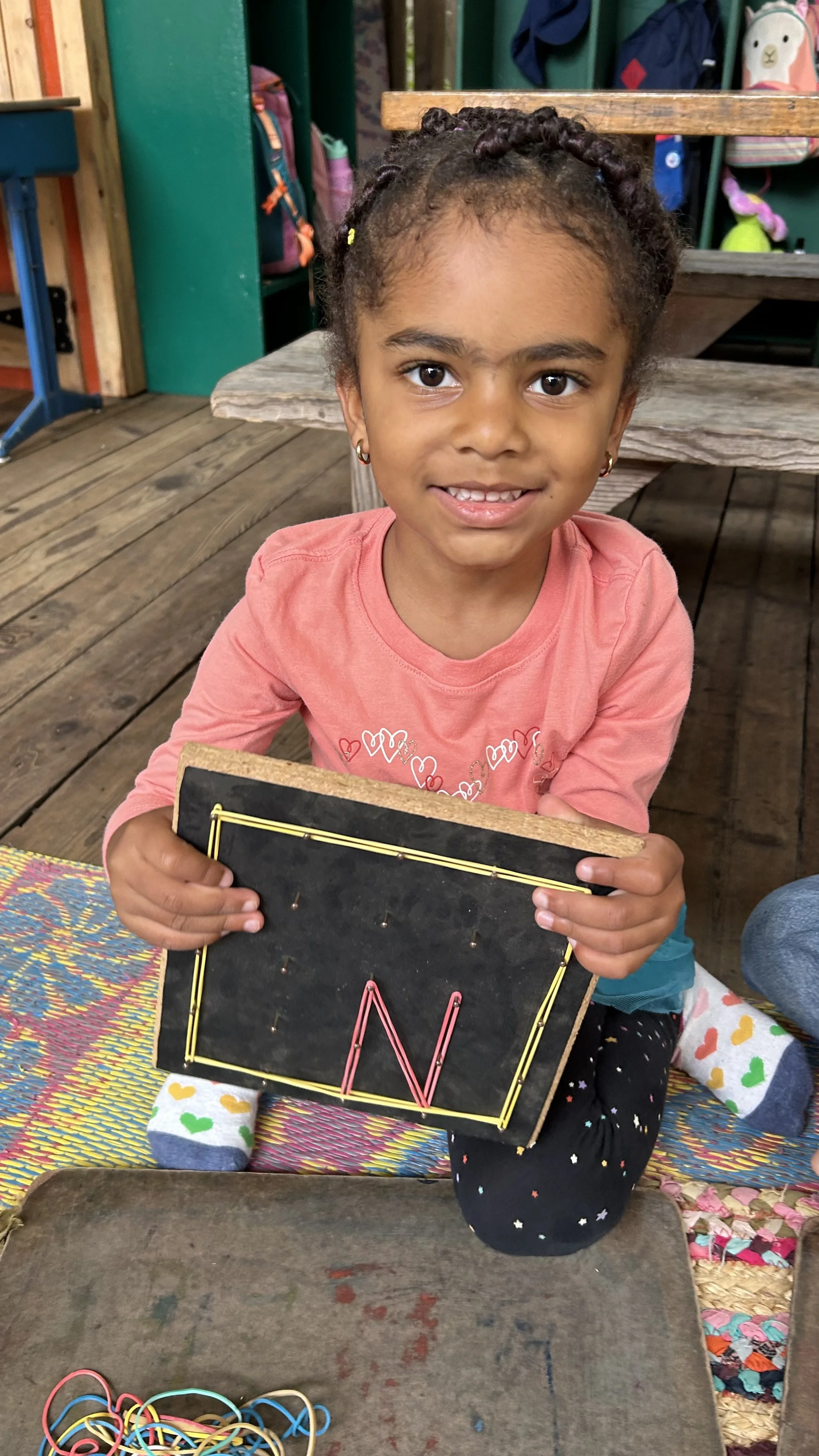
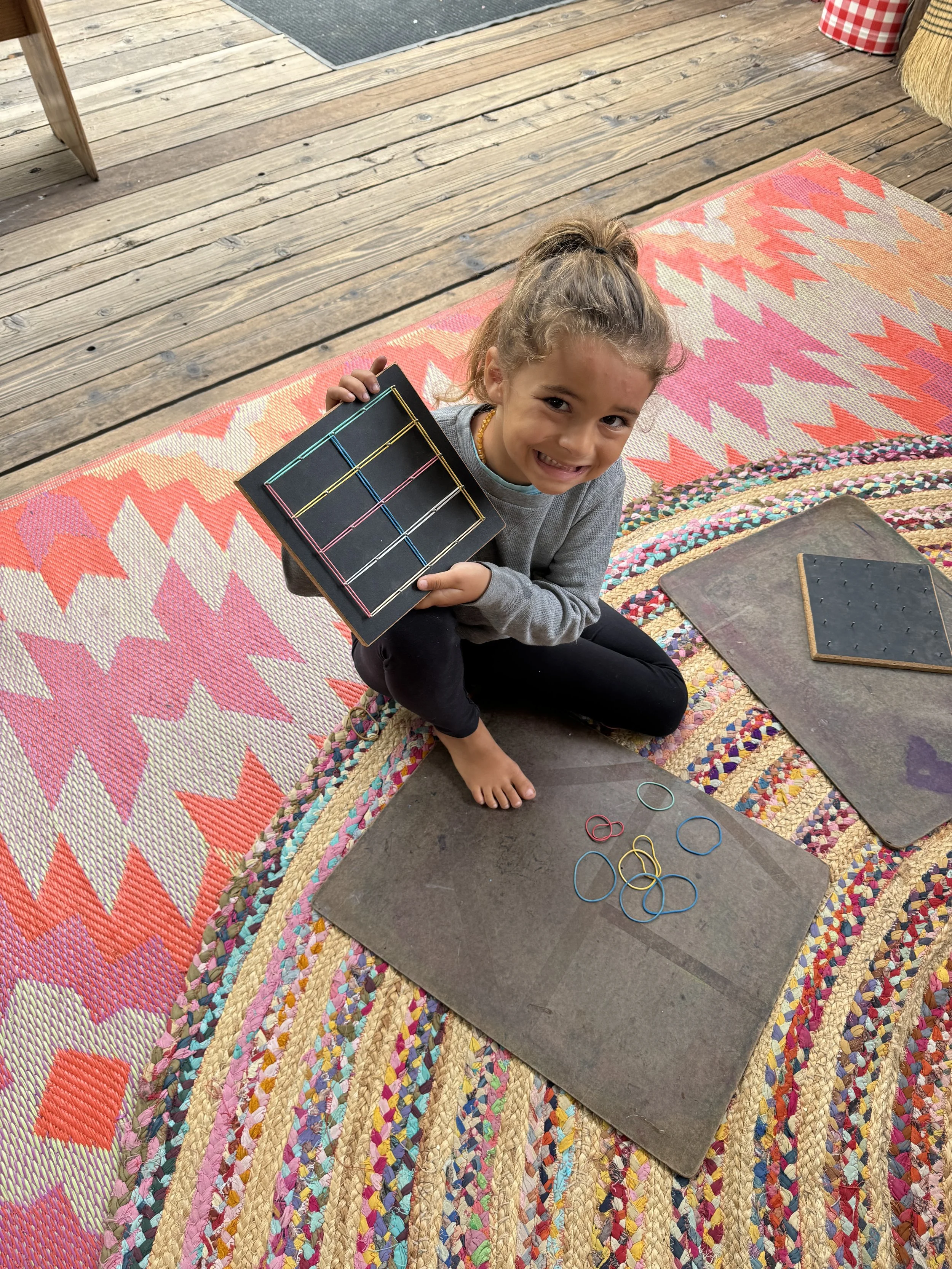
Watching caterpillars and thinking about butterflies, set us up perfectly for a mathematical investigation of symmetry. After discussing the term, students were paired up taking turns to lead and follow as they created symmetrical drawings along a line of symmetry using pattern blocks. They also had a chance to explore geo boards and making symmetrical or asymmetrical designs with rubber bands. Next week, they’ll be replicating 3D designs with flat shapes on paper and practice tracking, organizing, counting and other important work.
This is one of the great things about kindergarten: Everything involves so many opportunities to learn, figure things out, marvel at the interconnectedness of life, and share joy with other enthusiastic friends and teachers!
language arts:
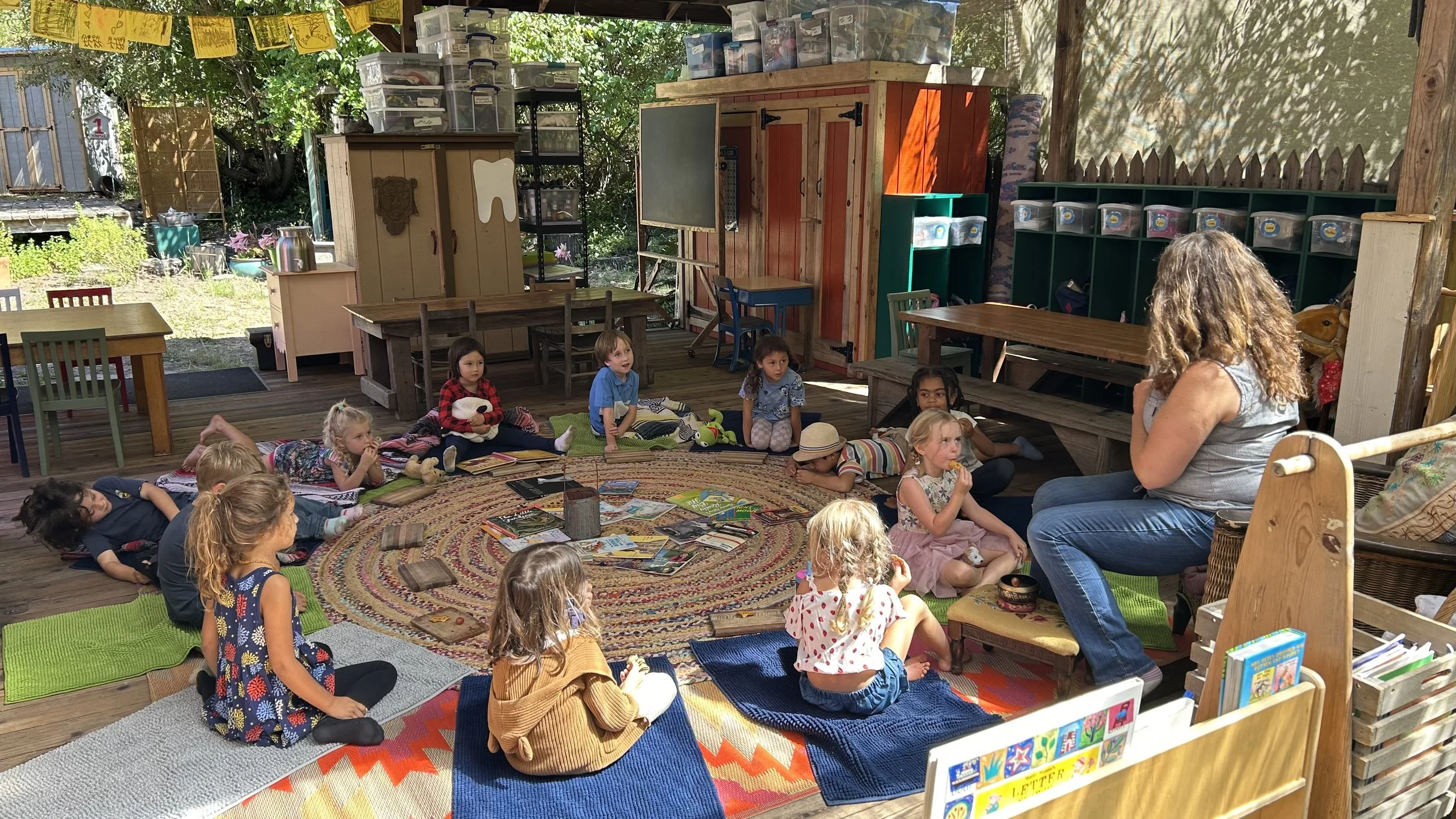
Storytime with Rosy
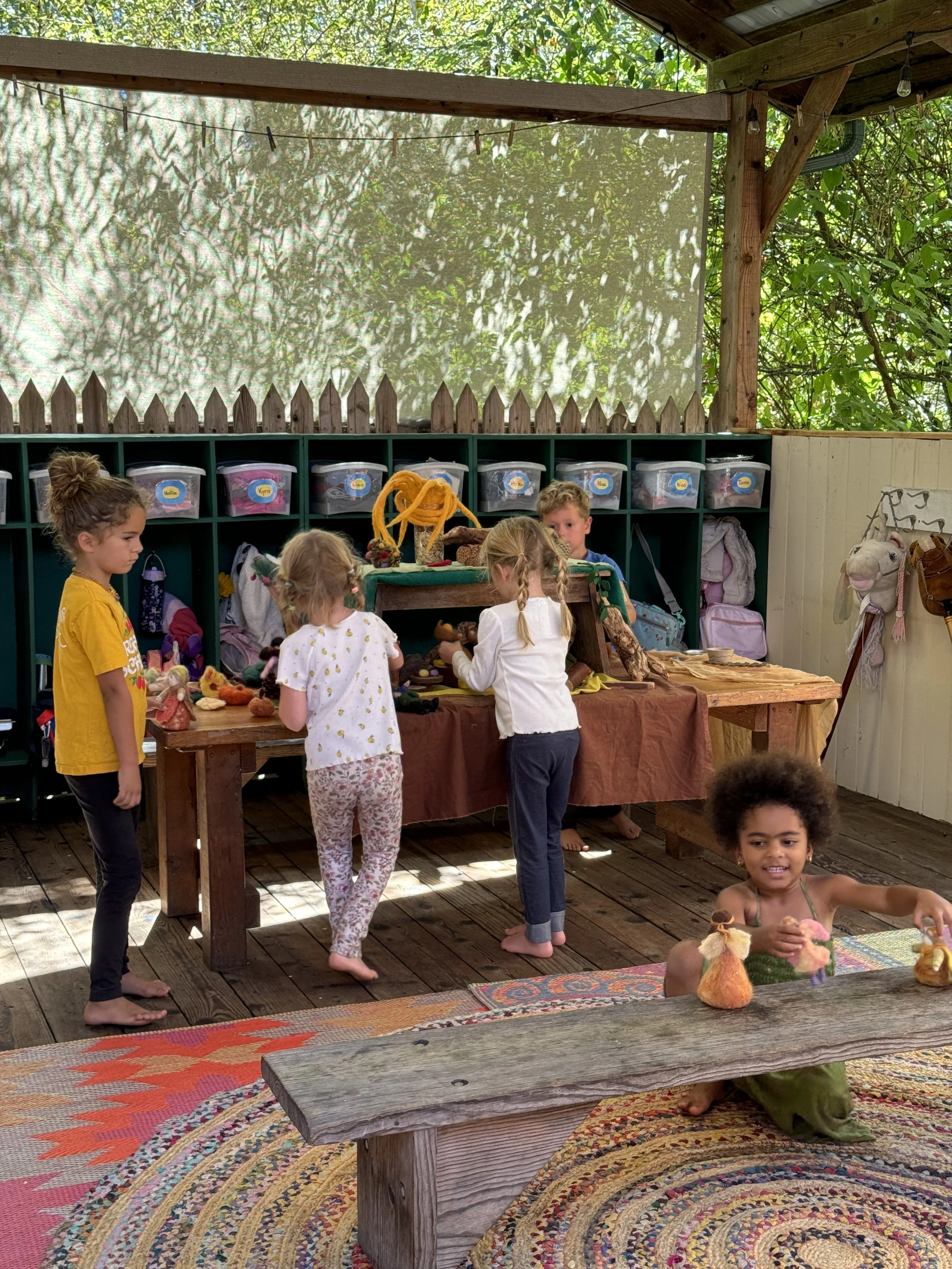
Our language arts program is multi-pronged, as all good LA programs should be. Immersing kids in stories, both oral and written, is one facet. We discuss stories as we read them or tell them. The kids draw pictures of them, for further reflection. Sometimes we make mini-plays of our stories. And with Kathleen, who brings her beautiful puppet shows to the children, they get to re-create stories using handmade woolen dolls and props, and even create their own story worlds. This is essential for reading comprehension and being able to make pictures in your mind as you learn to read later on.
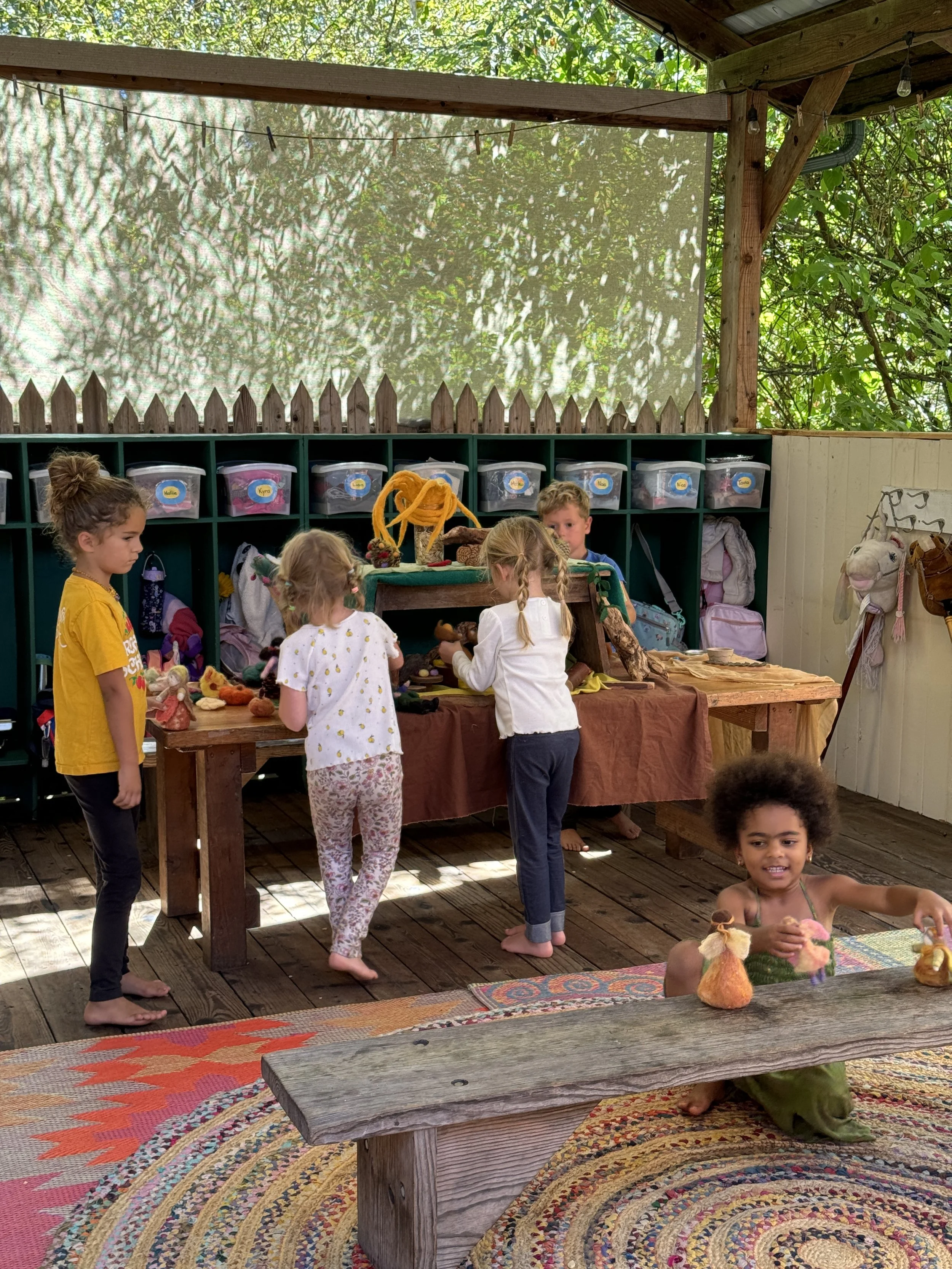
Playing with dolls after Kathleen's puppet show
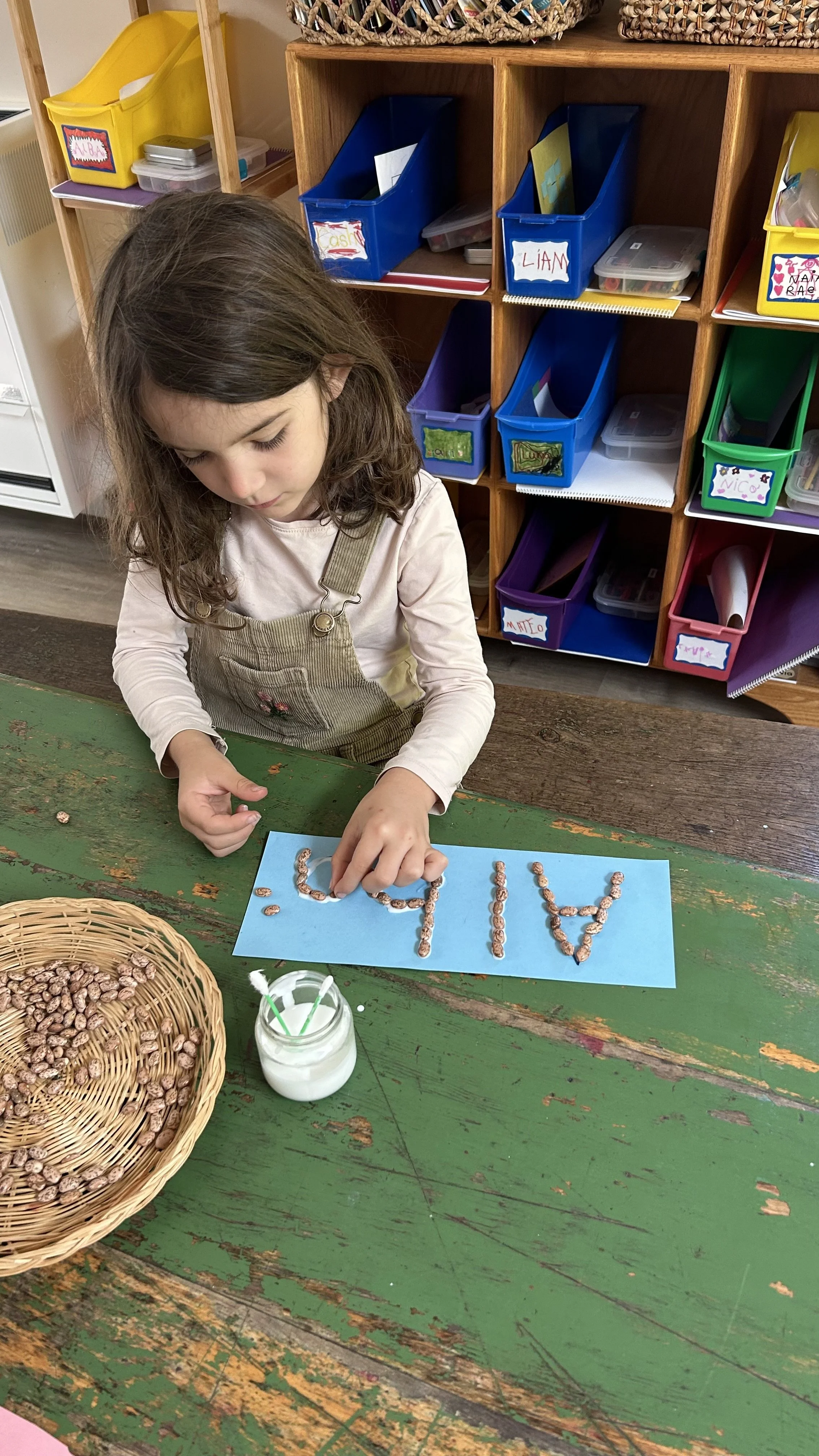
Phonics is another part of our program. We practice phonemic awareness through rhyme, verse and song, daily and we go through the letter names and letter sounds slowly and deliberately. So far, we’ve explored the hard sound of “c” and the short vowel sound “a”. Everything is taught in lowercase as preschool seems to focus on the capitals, possibly because they are easier to replicate. But, lowercase letters represent most of what we see on the written page so it’s crucial for learning to read. To this end, we’ve also presented the kids with the chance to practice writing their names correctly, the "school way," ensuring the first letter is a capital and the rest are written in lowercase. To make this fun, each child crafted their name using pinto beans, carefully arranging the beans to form each letter. These are displayed in the classroom as a handy reference as well as a lovely decoration.
It would be helpful if you can also write the children’s names this way as they get used to it. It’s a hard transition for some and it can meet with resistance. As with everything, we encourage, never force. People need to come to things on their own and without stress.
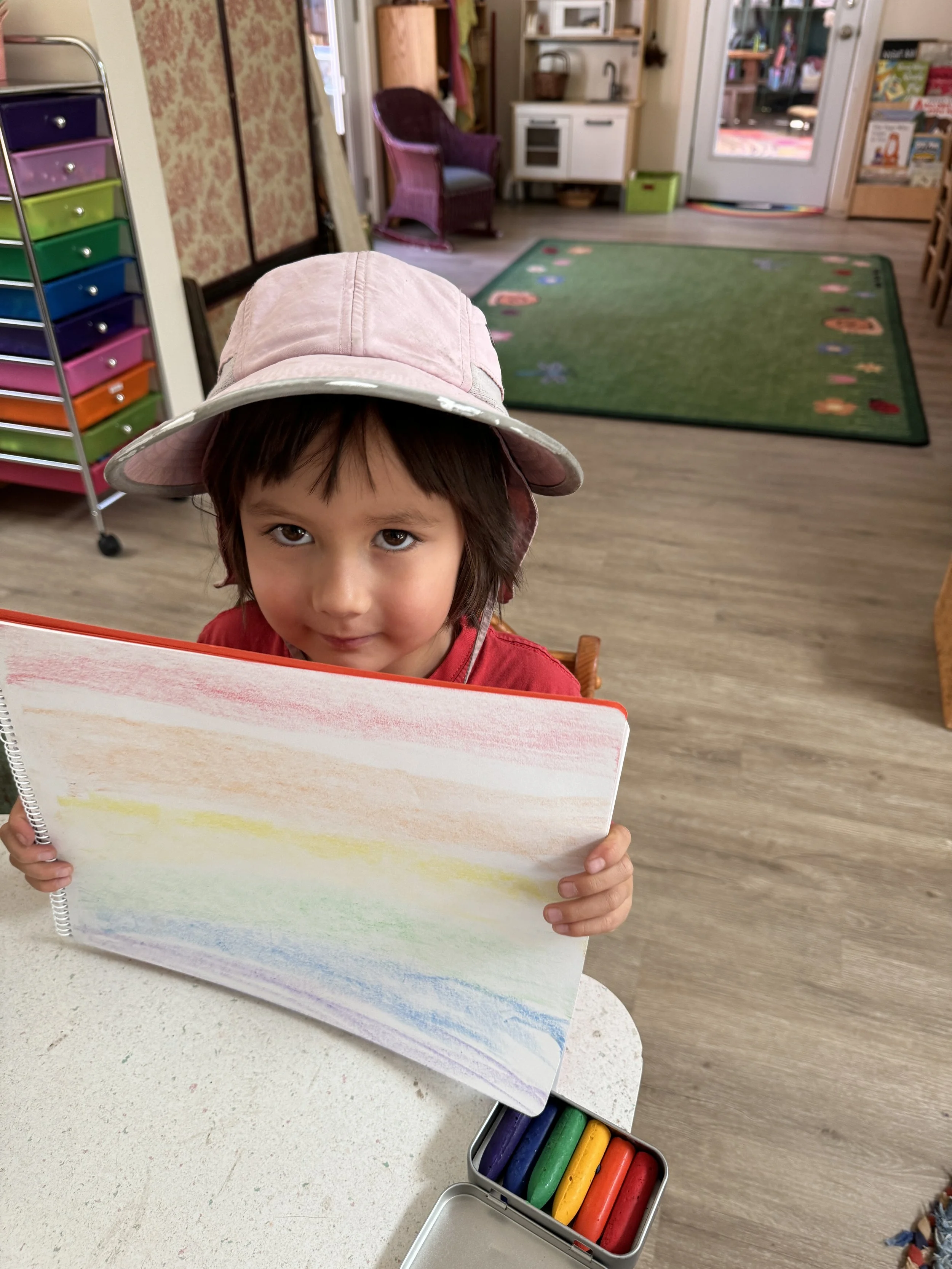
Kyra decorating the first page in her workbook using the beeswax crayon tin that each child received, reportedly from "the old woman" in a story Rosy told about kindness, and to remember the golden heart within each one of us by using the rainbow crayons to spread beauty and magic.
Language arts also includes a focus on handwriting and we are working with the kids on letter uniformity, how to write from top to bottom, what letters are tall, what letters are short and what letter hang down. All of this takes a lot of practice and that’s what we are doing, practicing, learning from mistakes, feeling pride from successes.
PE:
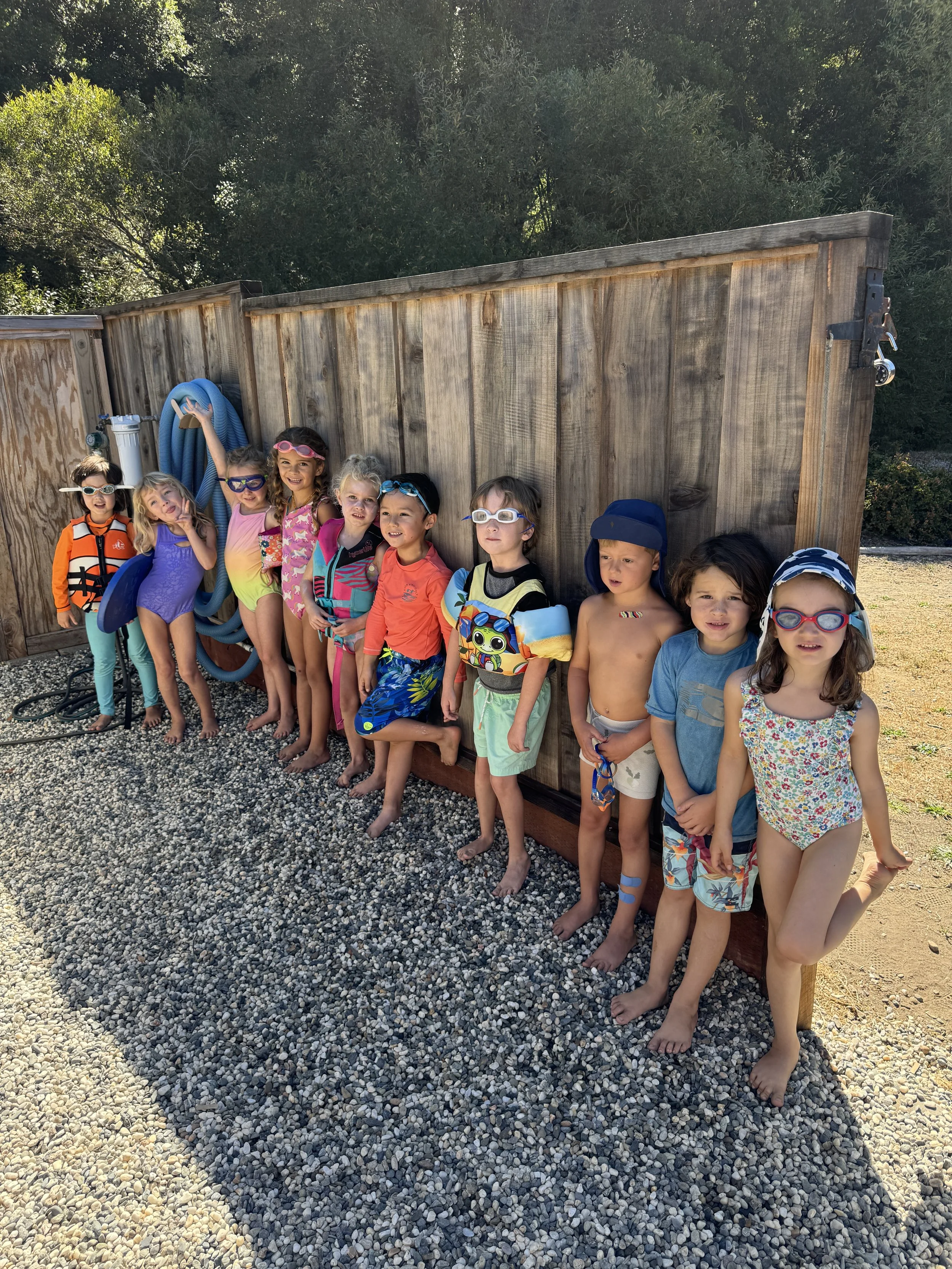
We played the tag game Sharks and Minnows. There are some incredibly fast runners in the class—so quick that we couldn’t catch them no matter how hard we tried! They made the game thrilling and full of laughter. Swim day was also fun.
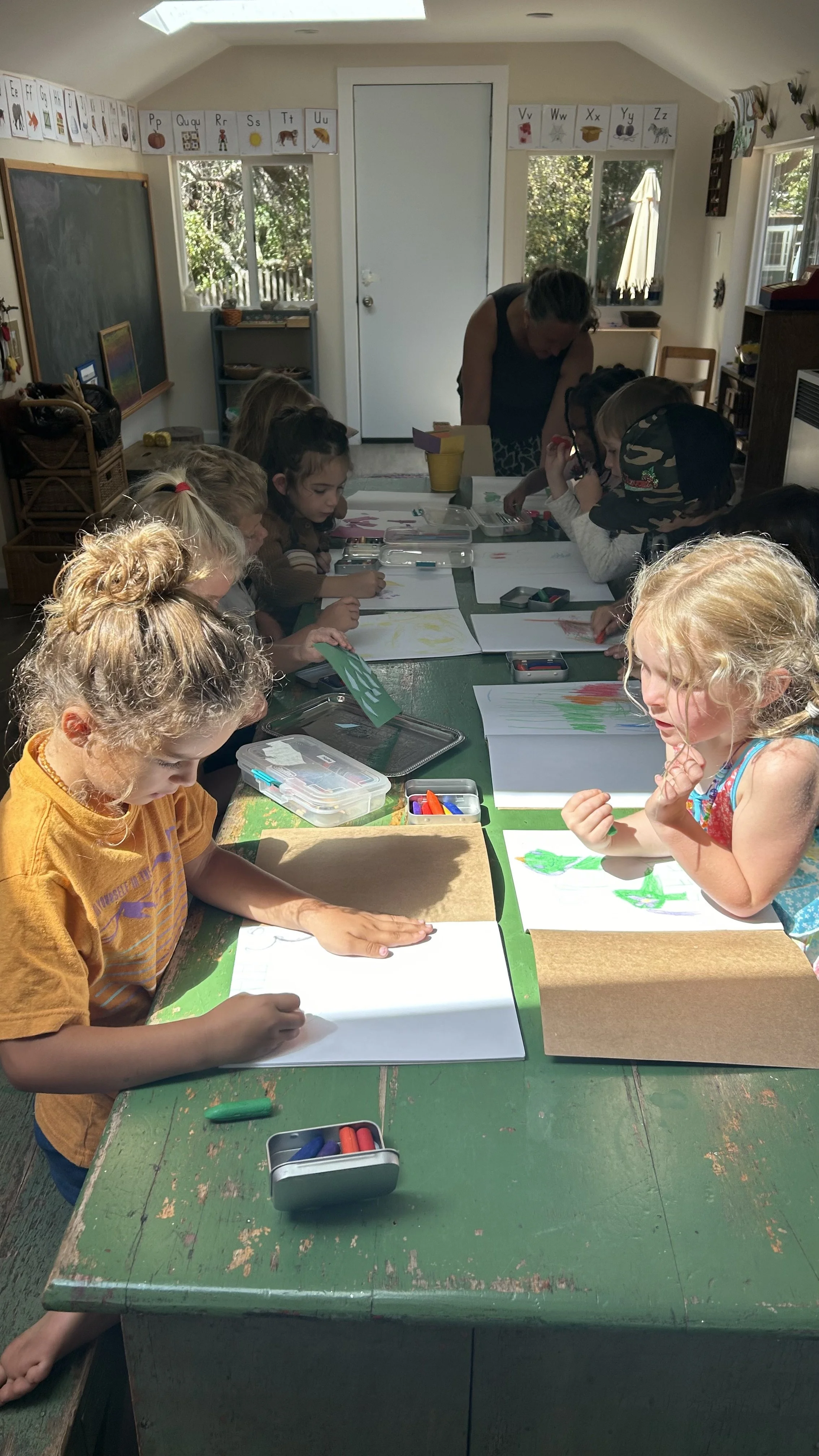
We weren't sure all 12 kids could fit at the green table but they do! It's a testament to how well mannered they are -- the fact they can sit together with very little jostling or elbowing or arguing about who is where. This was not the case with the 8 kiddos last year!
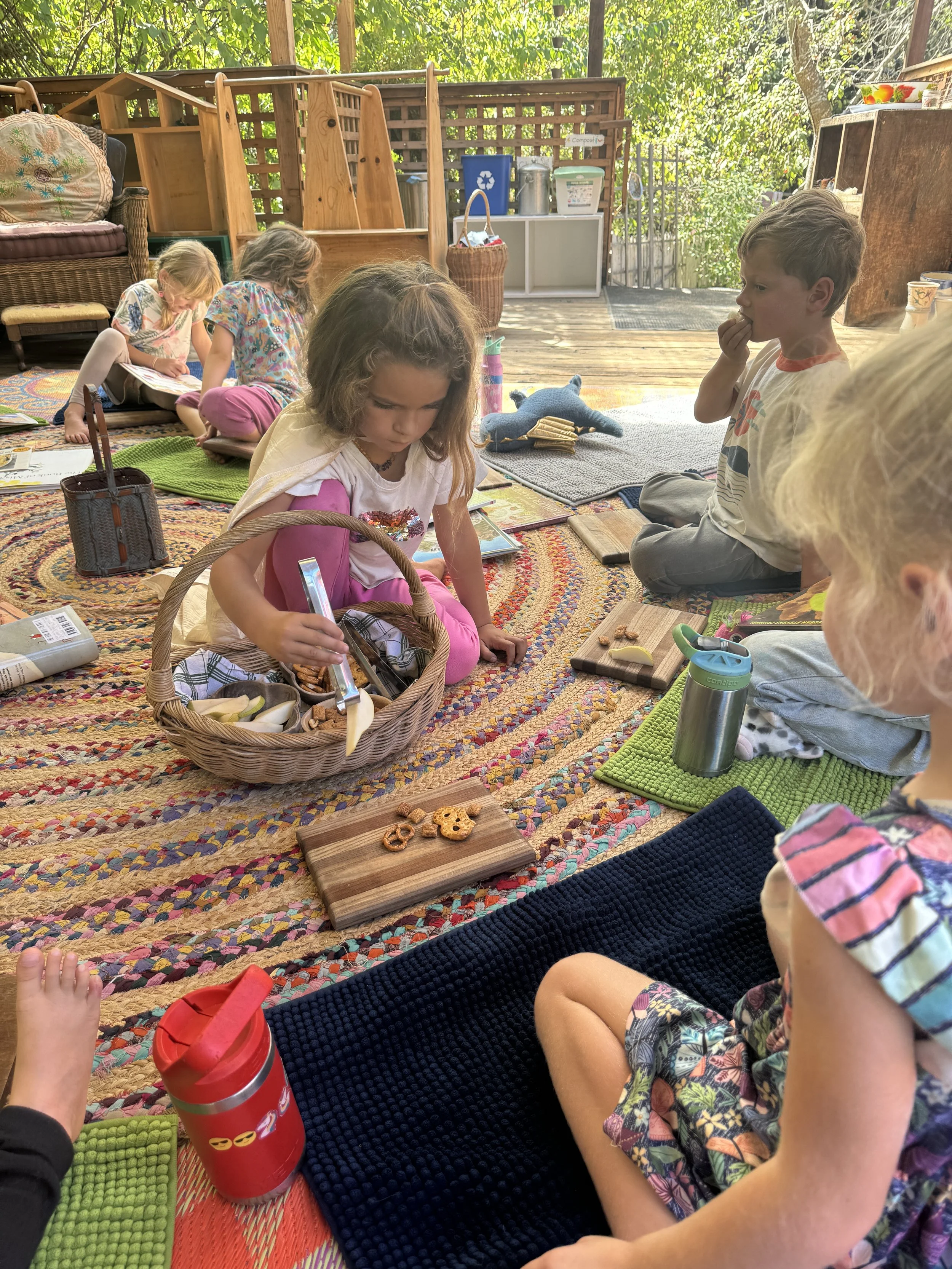
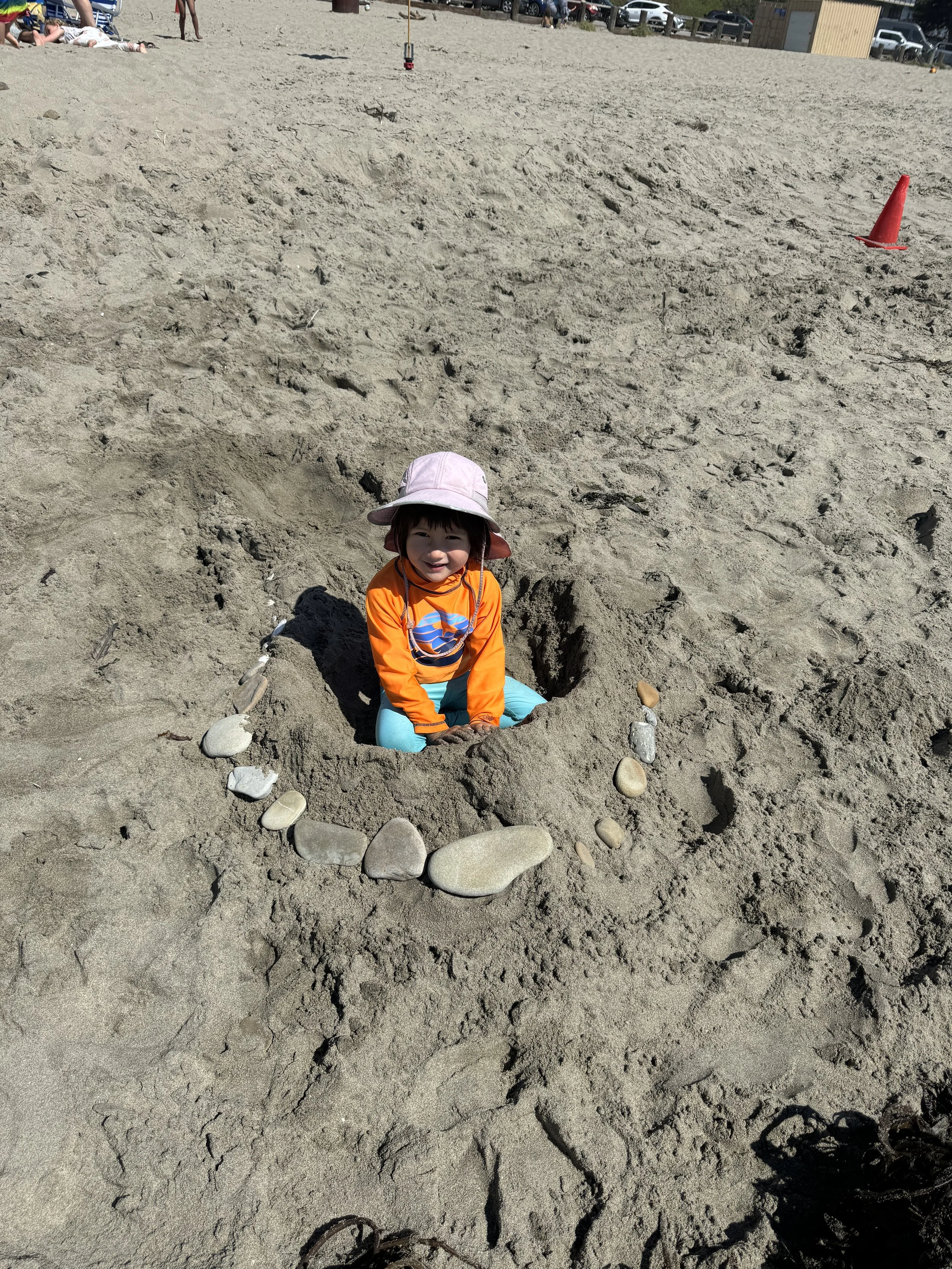
This is what sandwoman/sandman time looks like. We're sure you've heard about it!
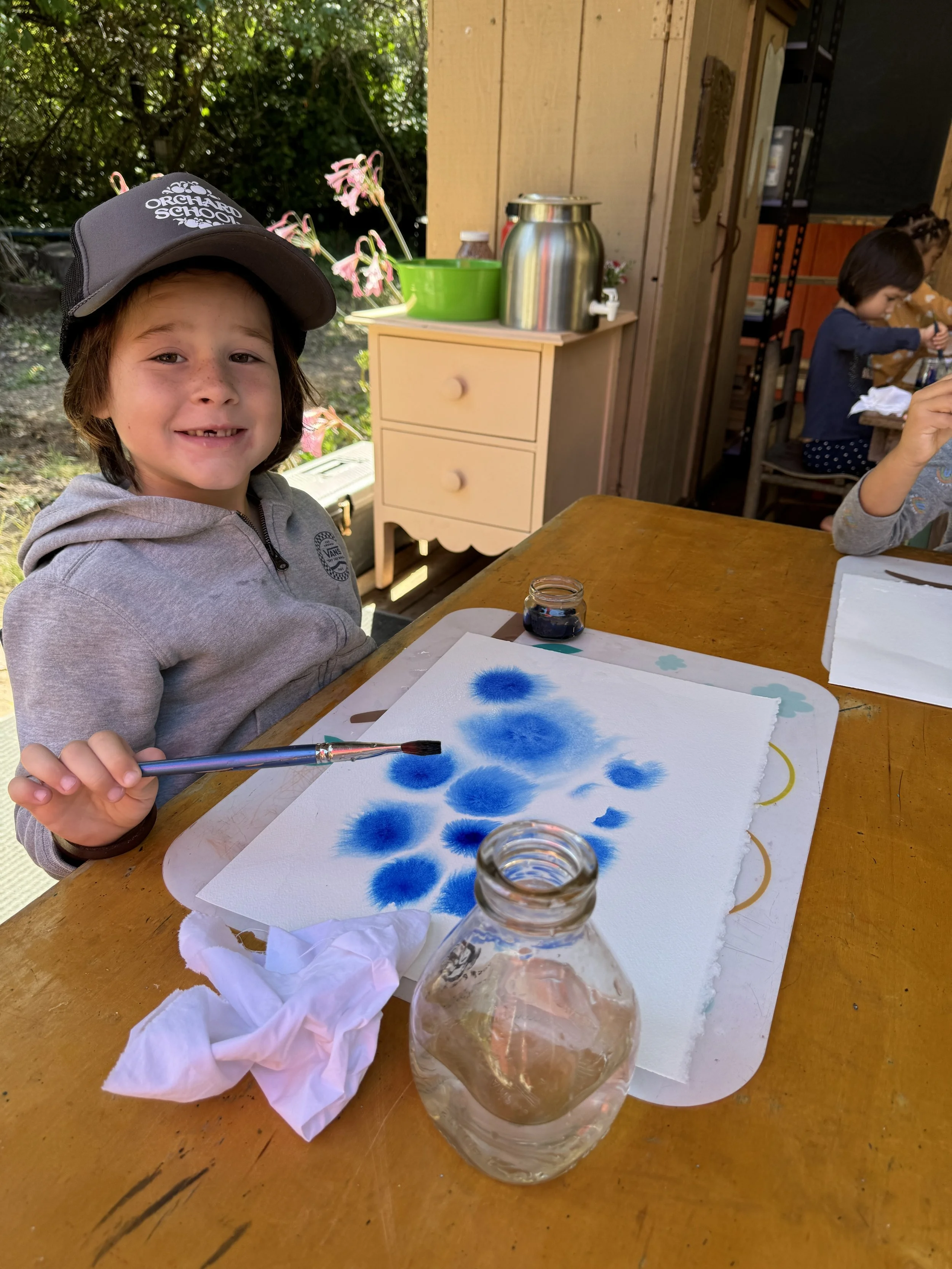
Wet on wet watercolor. We begin our color exploration with blue and move on to the rest of the primary colors and then to the secondary colors.
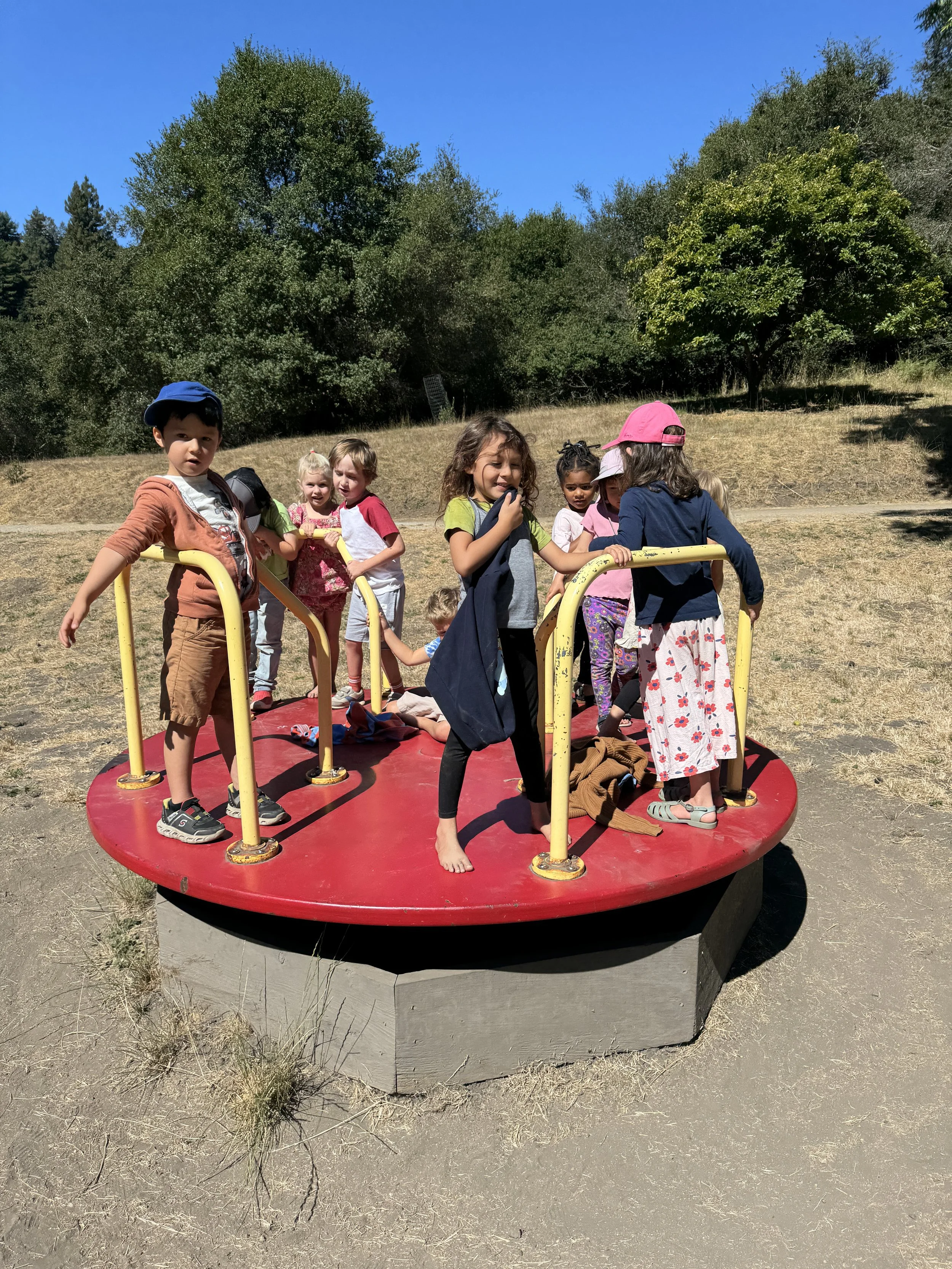
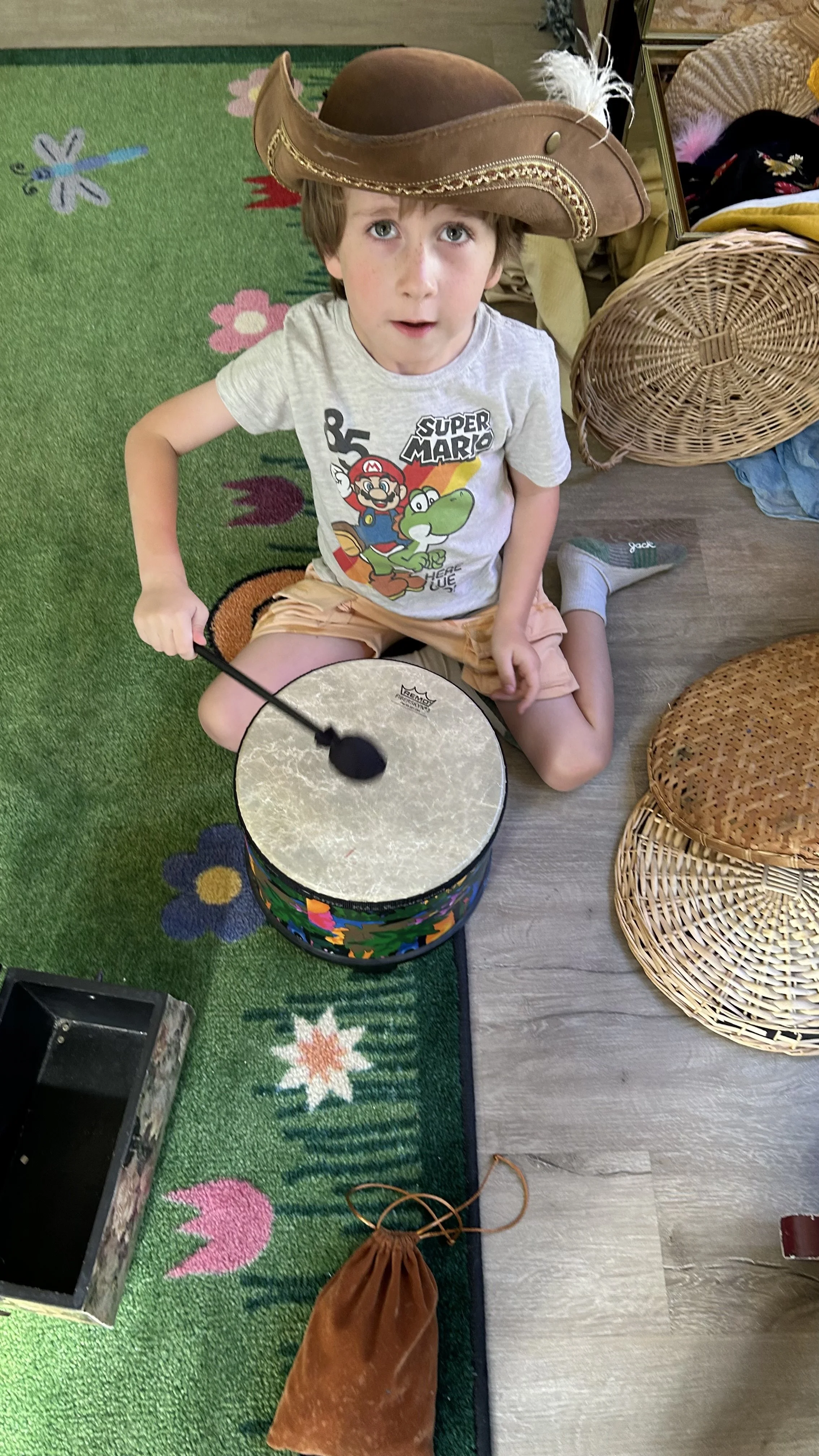
Here’s a slide show of random photos that were too good to leave out of the blog. Enjoy!
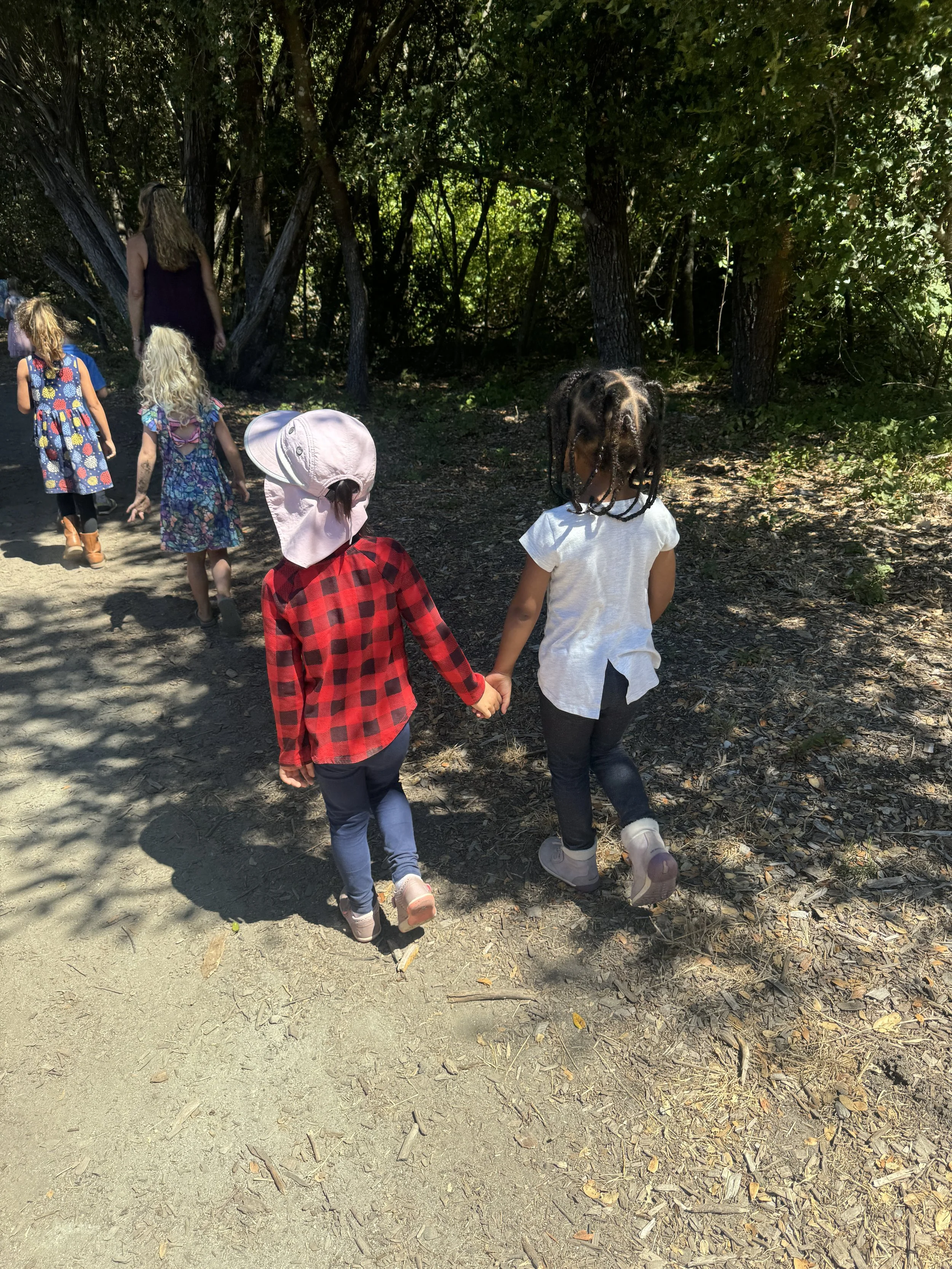
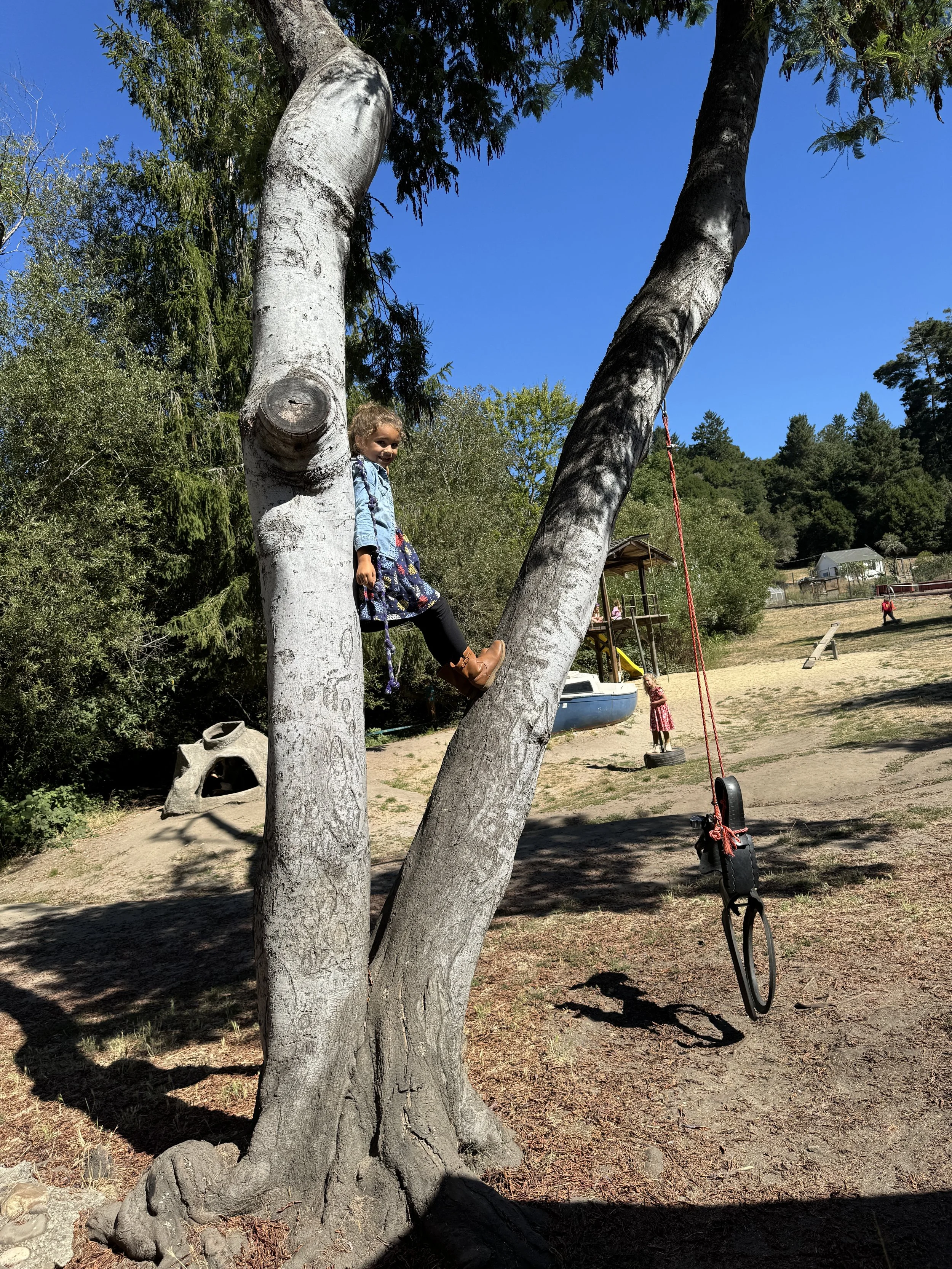
Let us know when you’ve read this and congratulations if you made it all the way to the bottom. Excuse any typos. We may find time to edit at some point in the future. See you soon.
XX
Rosy and Tara