
November/December in the Kindergarten Classroom
Hello,
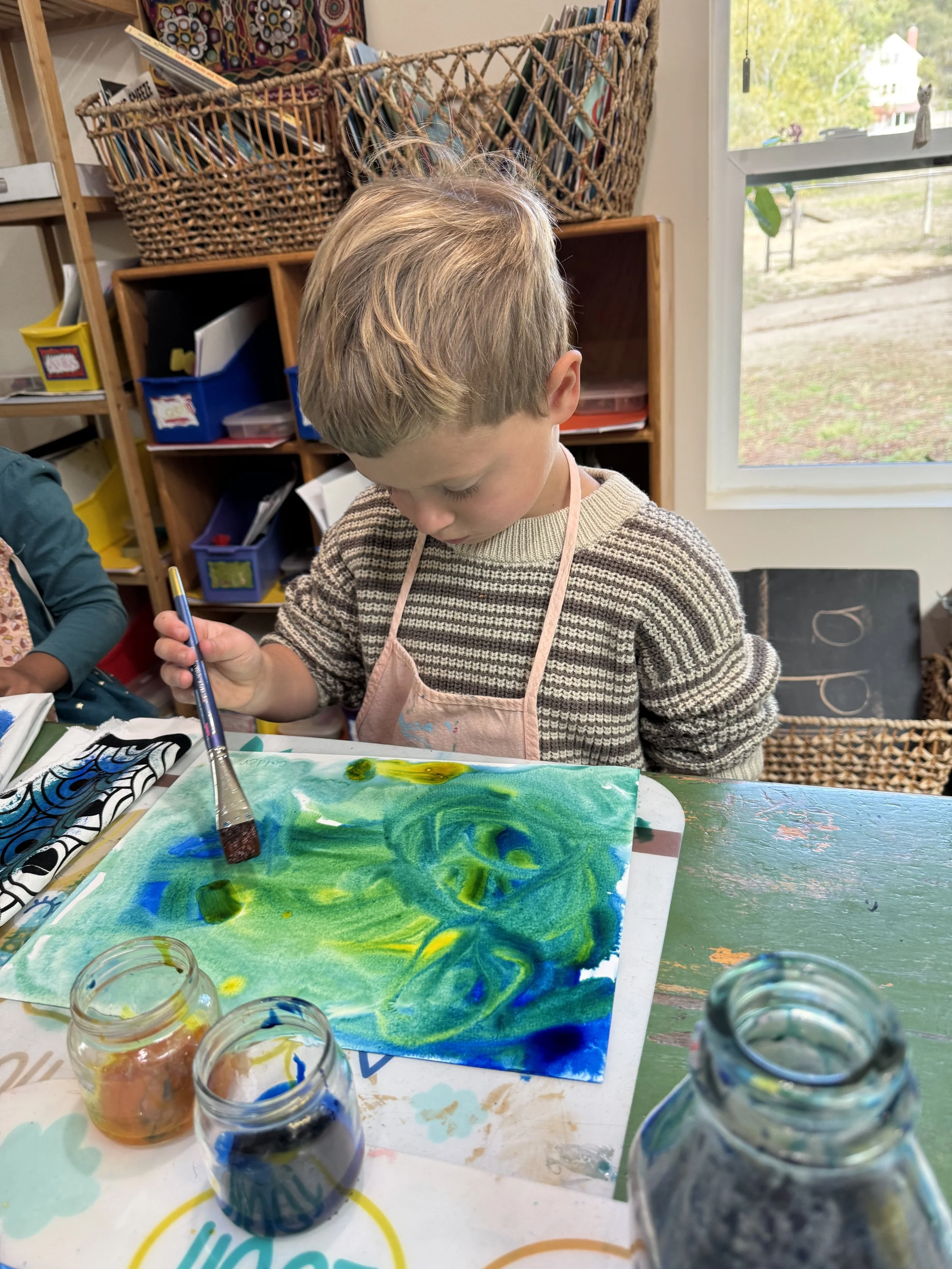
I’ve always been one to meet a deadline, even a self-imposed one, so in these last hours of winter break, here is my blog post for the past two months. You’ll see lots and lots of photos and when I have little time, I write a novel rather than being discriminate and careful with my words. In any case, it’s a useful and engaging glimpse into our classroom (I hope).
We are coming up on our mid point of the school year and it’s quite remarkable to see the growth of the kids, physically, emotionally, and mostly in the cohesion of the group and the growing independence of each child. It is clear they feel comfortable in our setting, have become used to all the new adults in their lives, and they are enjoying each other very much.
Social Studies
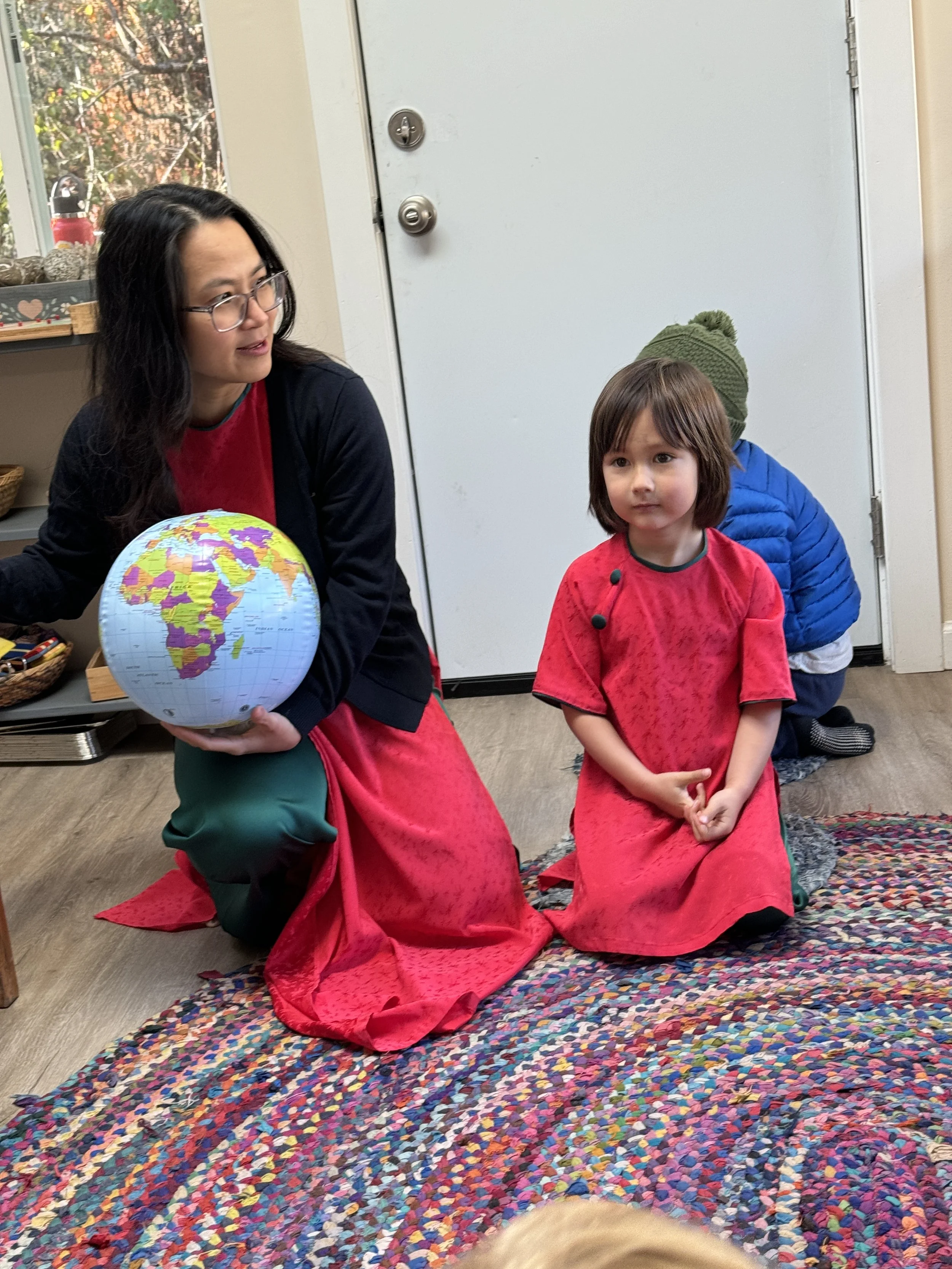
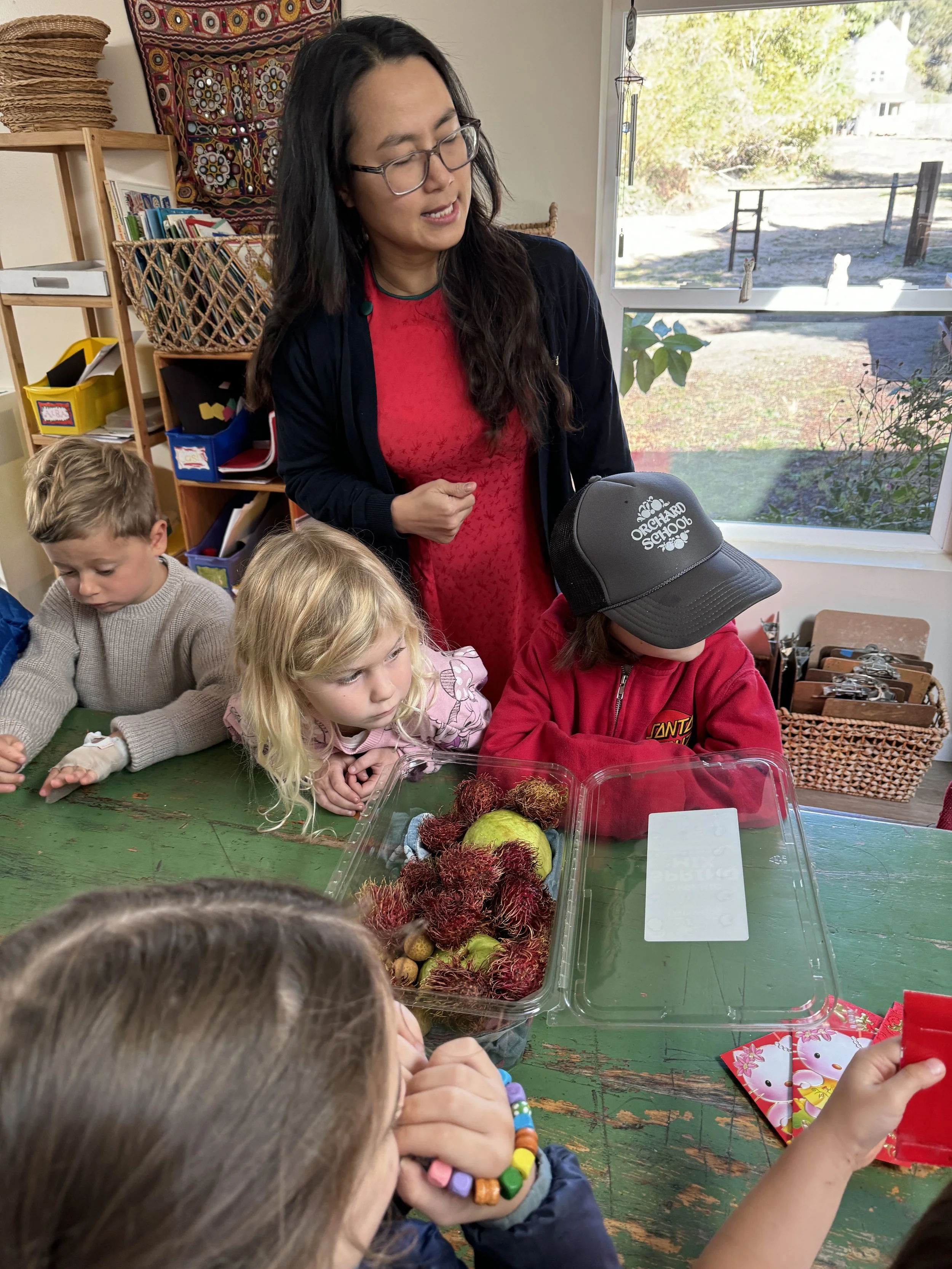
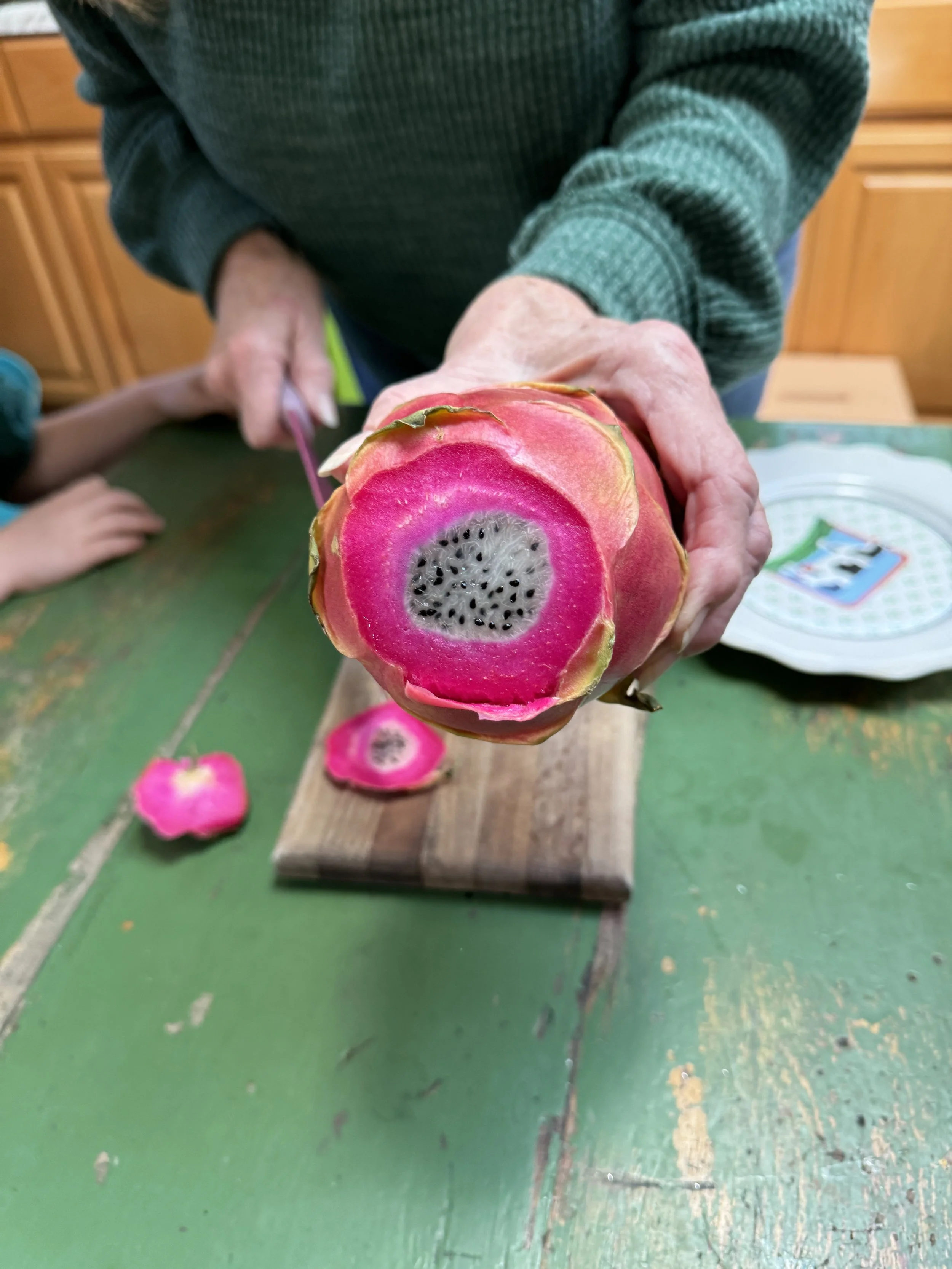
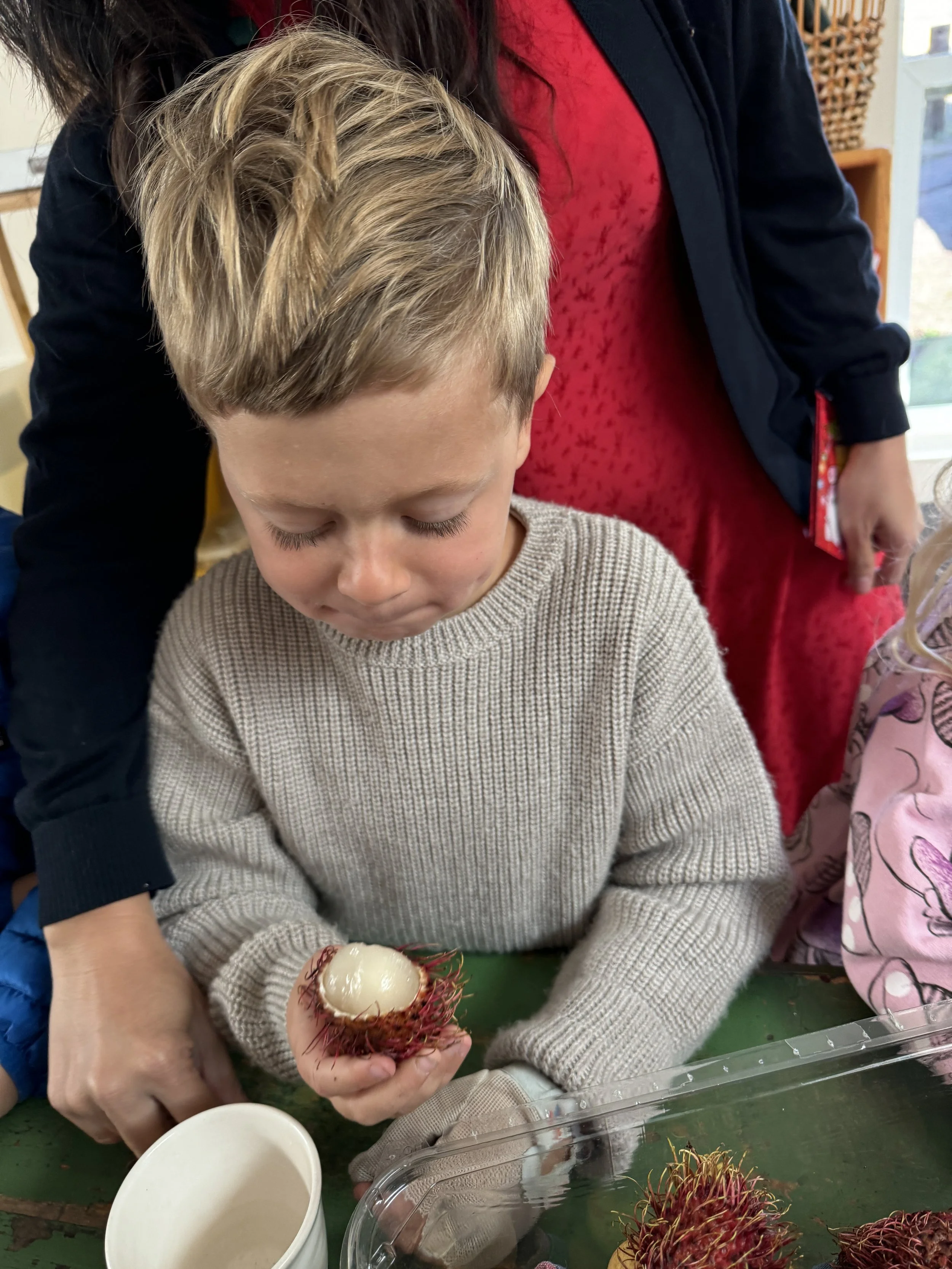
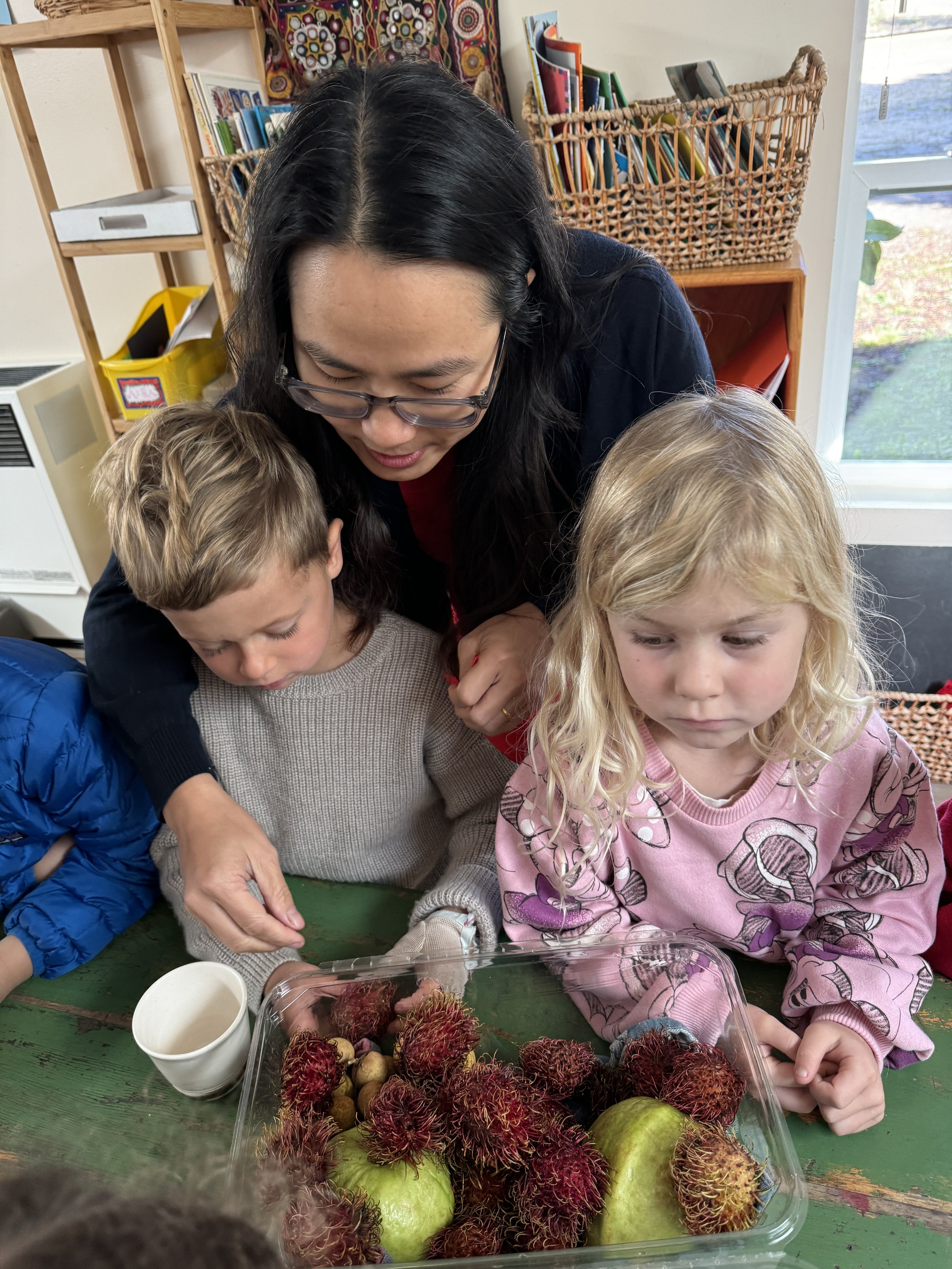
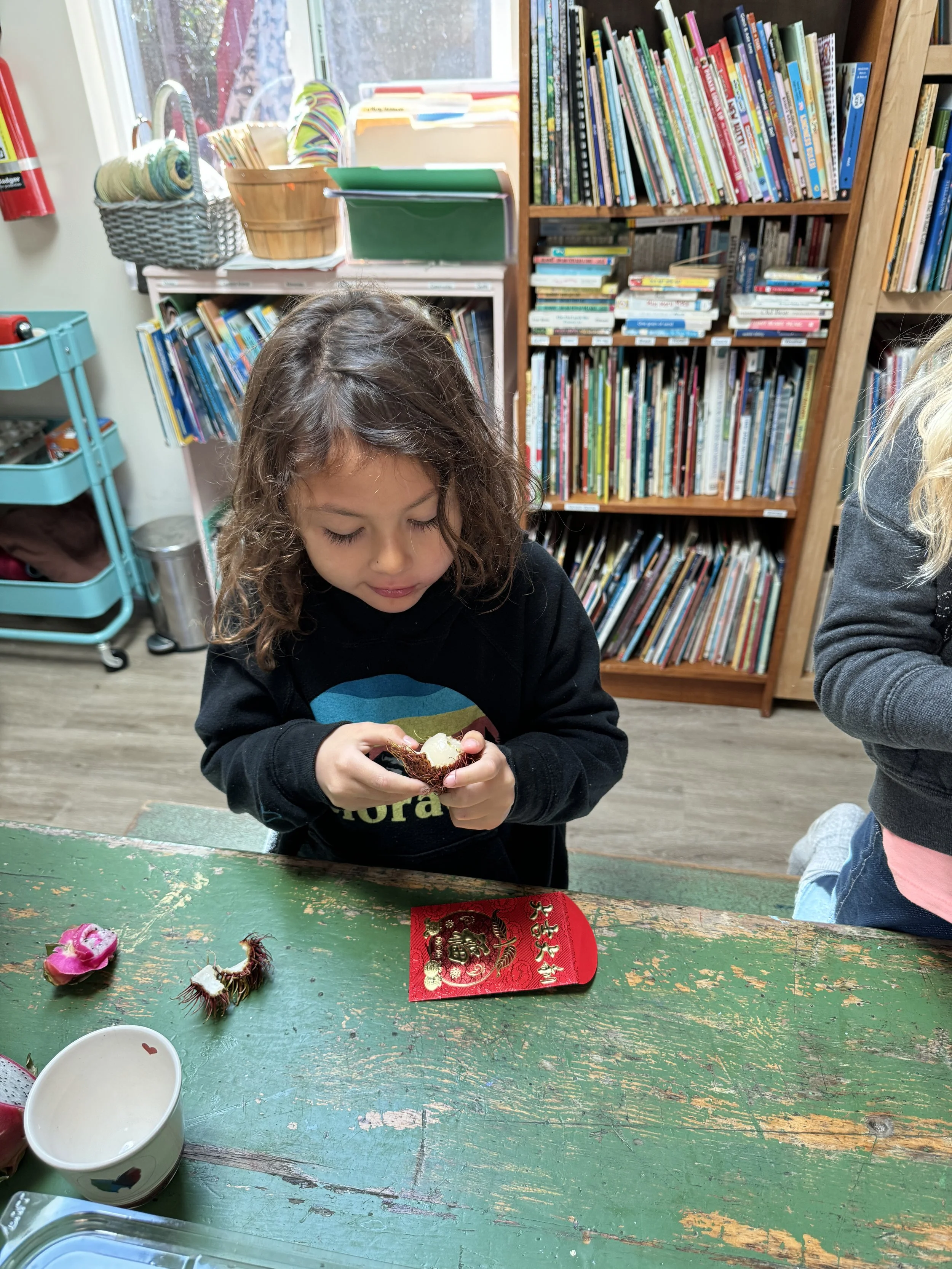
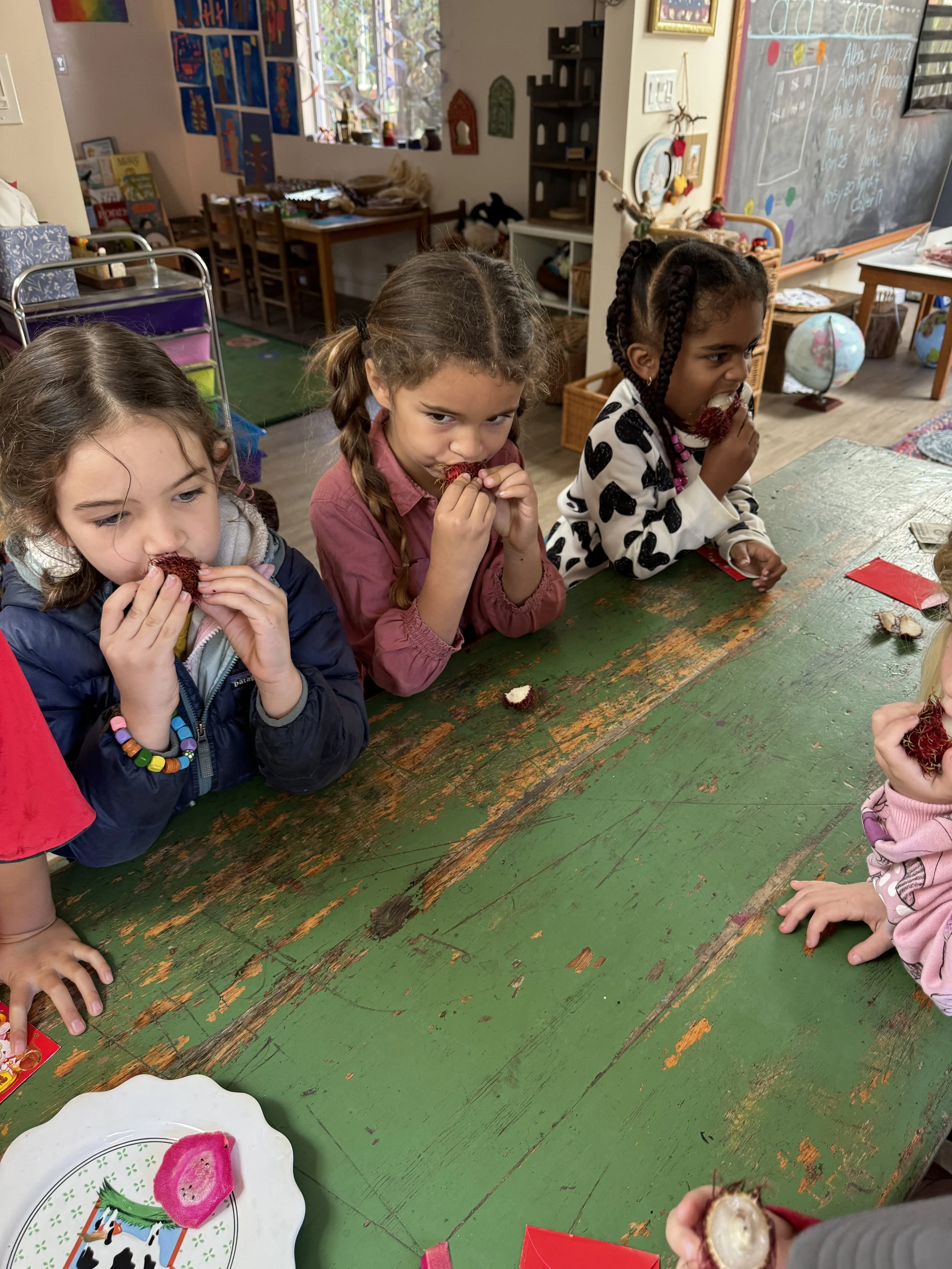
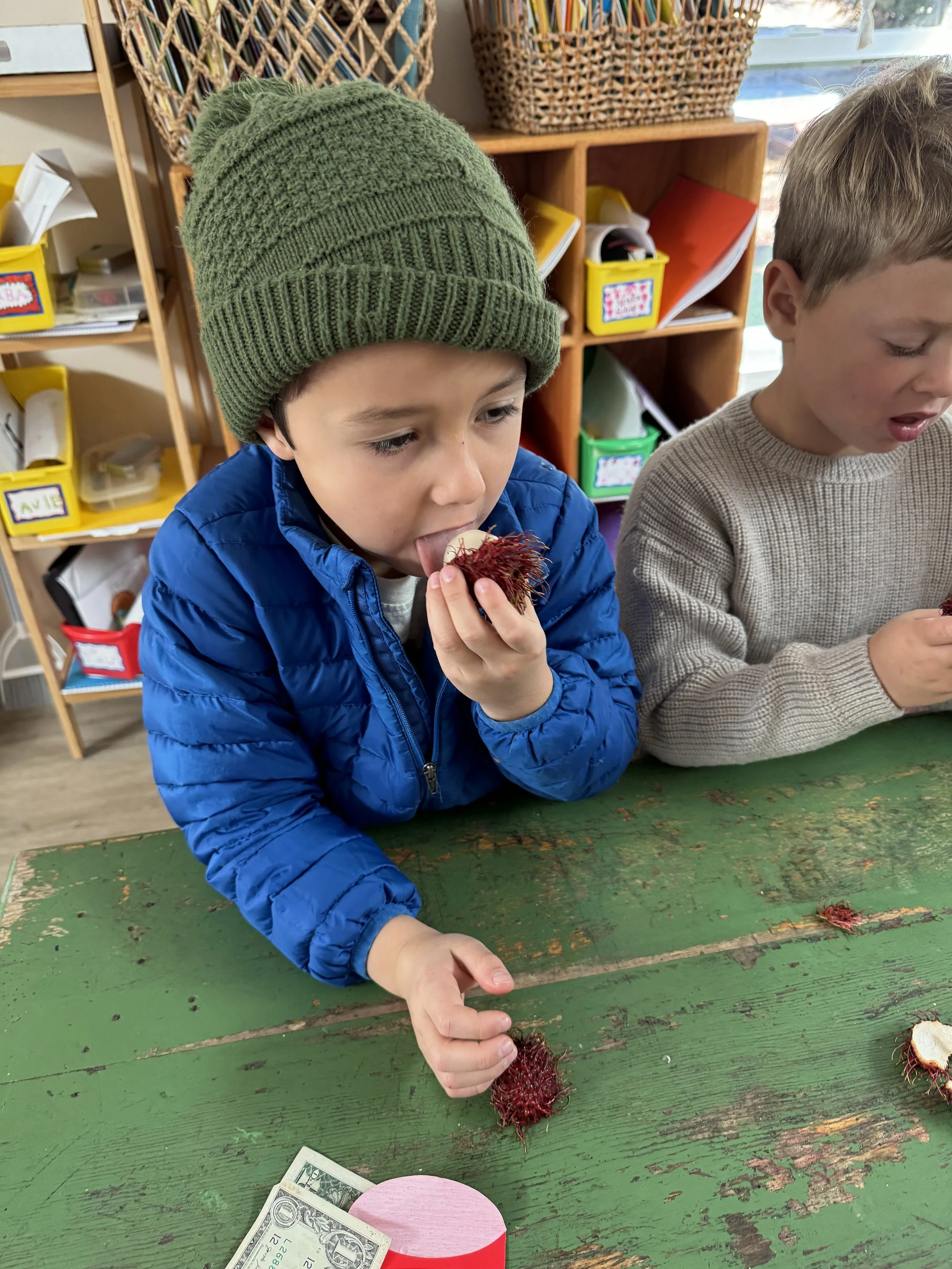
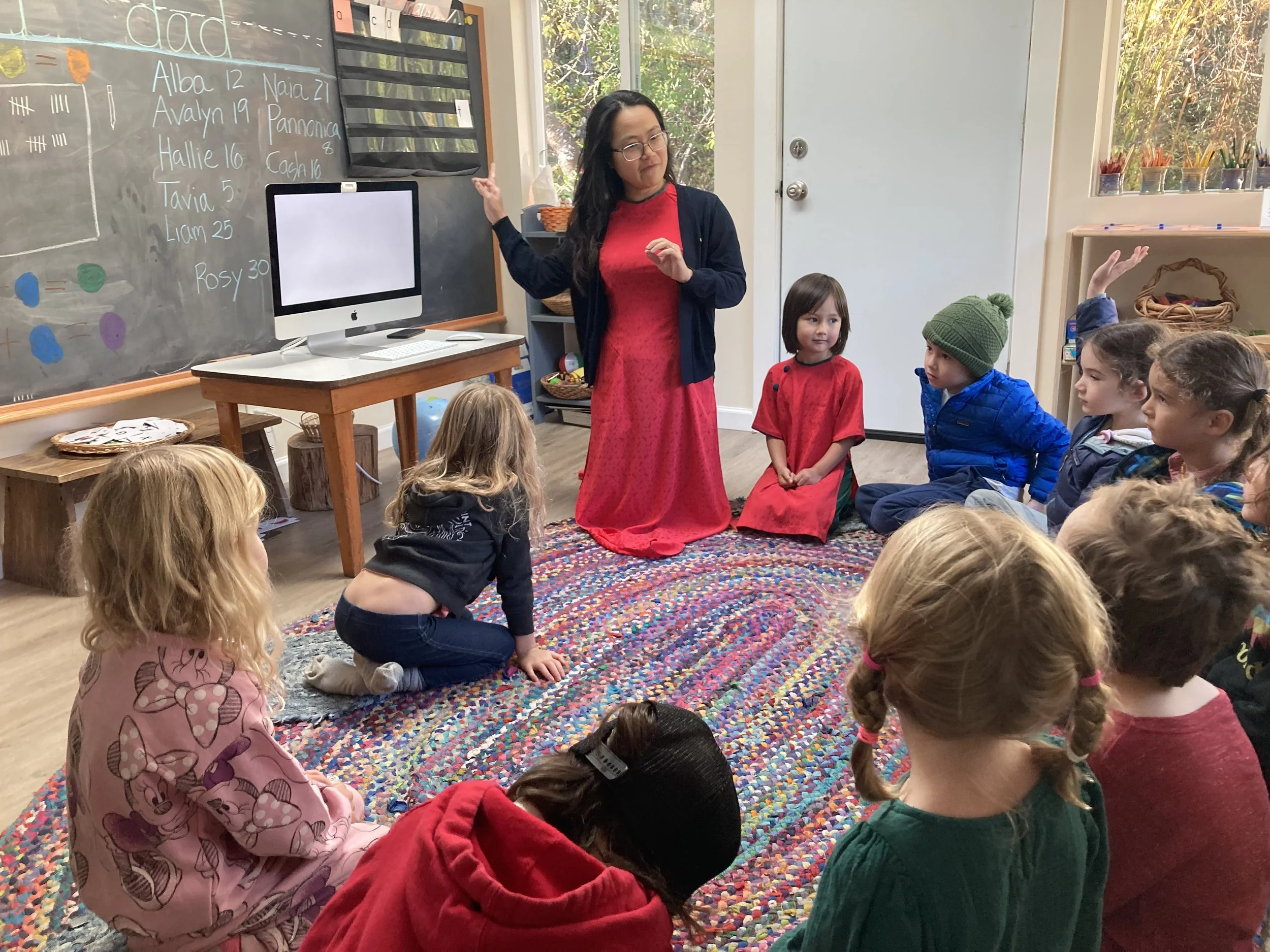
My (Kyra’s mom) presented a lesson on Vietnam. This included some slides from the family’s previous visits, a bit of geography, some language instruction, and we all got to sample interesting fruits, namely longan, durian, rambutan and dragon fruit. The children were excited to listen and to share and were adventurous — everyone tried everything. The best thing about it was Kyra’s obvious pride to have her mom share and it’s always a treat to share the teaching stage with family members. If any of you have something you’d like to offer the class, a mini-lesson in any subject, please let me know and we can support you to make it happen.
In this same vein, Maureen, Cash’s grandma, comes to us every other Monday for math class. It has been so helpful to sometimes be able to split the kids into three groups to work on projects, instead of just two when it’s just teacher/aide. Both of Calder’s grandparents came one morning, visiting from the East Coast. I think maybe Fiona and Brianna were also there? It was a Tara day so I’m not sure.
We went on our first field trip and the children were perfectly behaved, engaged and a pleasure to take off campus. The natural history museum guides gave presentations about the Ama-Mutsen people (Ohlones) who first lived in our region. The kids learned about the way of life for the first peoples including the various uses of tulle reeds, about the hunter/gatherer pastimes, and the importance of storytelling. They also got to explore the scientific artifacts and animals at the museum.
reading
Our focus in language arts continues to be phonics and a slow introduction to lowercase letters and letter names, as well as handwriting. As I mentioned in my last post, half the class is reading or reading ready, and half the class is really not. For the half that is not, a lot of repetition is the way forward and for the half that is, repetition is tedious and unnecessary. So, we are finding creative ways to differentiate, trying to work in small groups whenever possible, and not worry too much about gaps.
As long as kids are happy, they are learning, even if sometimes the lesson is in stamina (as it is for the students who have to work really hard to stay engaged with rote learning, a necessary albeit sometimes painful part of learning to read) and patience (as it is for the kids who already know a lot of the material and struggle to put up with the pace). The fact that the day is full of rich opportunity, the language drills are short, and that Orchard teachers (and parents) are not in a rush or interested in a pressure environment where everyone needs to excel in the same measurable way, makes it all ok how it is. With all of the special events (field trip, play, stone soup feast), we have had fewer times than normal to practice reading and writing.
All of this said, it would be great for you parents to get involved in the reading journey at home because this extends the chances for repetition that is spread out over time rather than crammed into the school day at the expense of other fun things like cooking, gardening, circus and so on.
For those of you who know your child is not retaining the names of letters and the sounds of letters, please focus on these letters/sounds with your children: a,c (cat not ceiling),d,g (goat not giraffe), s, t, l, m. Once they really know these sounds, then you can write words for them that they can actually read (sat, cat, mad, tag, sad etc.) It can be frustrating and confusing to have them read words that are not phonetic or don’t follow these initial simple phonetic rules (short an and only one sound for each consonant). They really do need to learn these sounds because we will continue to build. Yet, it should be done in the spirit of fun, 5 minutes here and there, in the context of what’s already happening (pointing out the s sound on a stop sign you walk by, playing a game where you write a word from the list above and they read it, or they write it and you draw something to do with the word).
For those of you who know your child is a beginning reader, really take the time to sit with them and read every day. It could be a list of words (I can provide these), a Bob book at the right level, a sentence or words from a book you are reading to them, a simple story that you write for them. This practice is helpful for getting over the hump and into reading fluency. I can provide you with the exact level you should be working at — which sounds, blends, vowels etc. And again, this should never be painstaking. If it’s not fun for them, just sneak it in and stop before it is tiring. It is really hard work and it’s normal for enthusiasm to wane quickly at this stage.
Questions? Please ask me or Tara. We will be offering to conference with you after student evaluations come out if you are interested in more connection about this or anything.
story
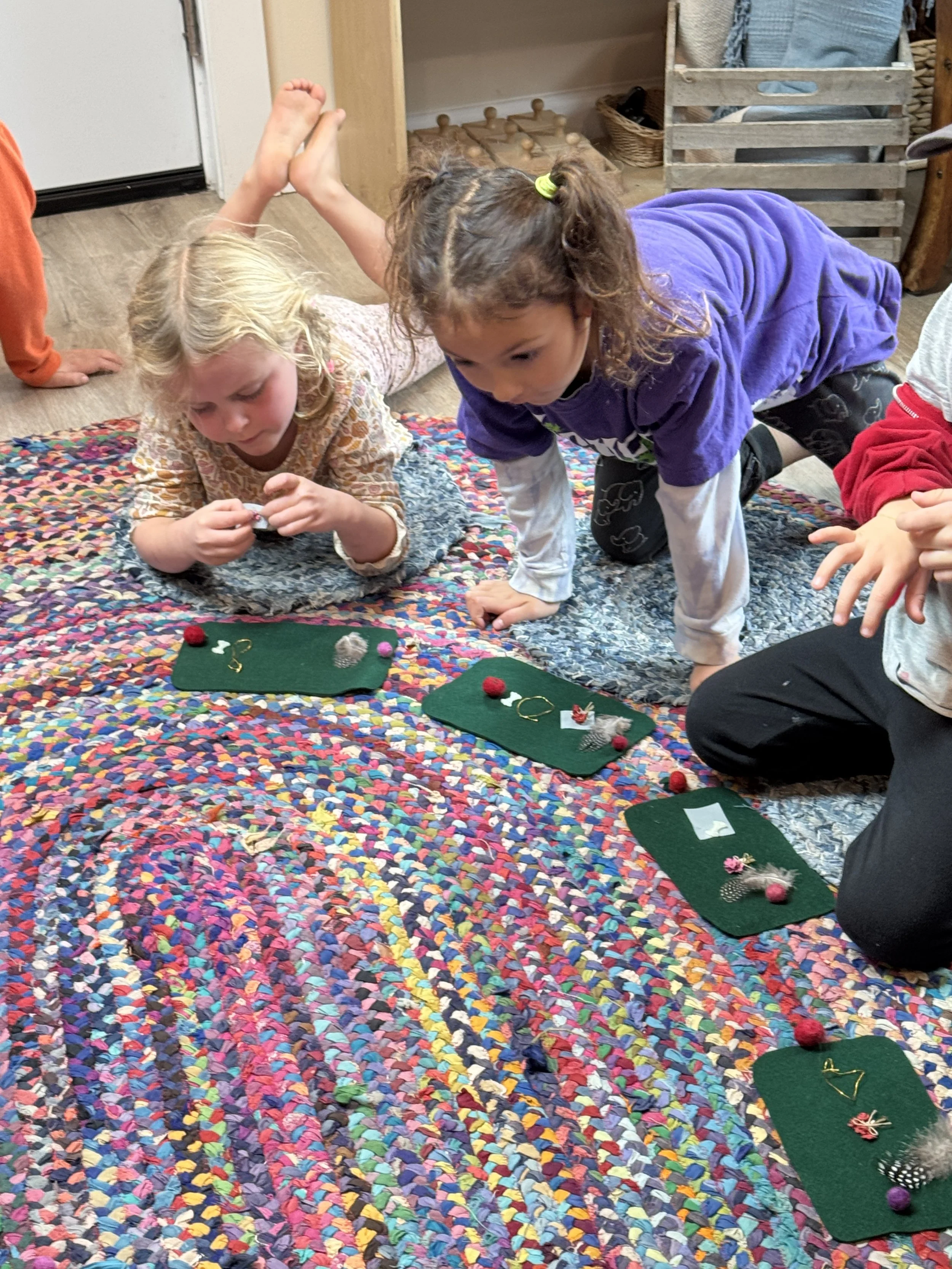
Practicing the Apple Cake story in a round, each child taking turns to tell one part of the tale, using a set of objects as a guide for what comes next.
We’ve been working with the children on a couple of stories that they can re-tell to you, using story props to help them with remembering the plot and sequencing the plot events. We’ve also been exposing them to multiple versions of the same story (Stone Soup, the Mitten) so they can see that an oral story is one that you can own, change, elaborate, re-invent, improvise. The cardboard mittens the kids brought home (decorated using concepts of pattern and symmetry, laced with yarn as a further development towards hand-sewing which starts next week), are full of animals featured in Jan Brett’s retelling of the classic story, The Mitten. I hope the kids presented these at home, but if they have not, and they are still lying around your house (and not in the recycling bin :0) then have them tell you the story using their cutouts as visual cues. Kathleen will also be sending home a kit for telling you one of her puppet show stories (The Apple Cake) so look out for this and be sure to ask your kids for the retell.
Slide show for the mitten project:
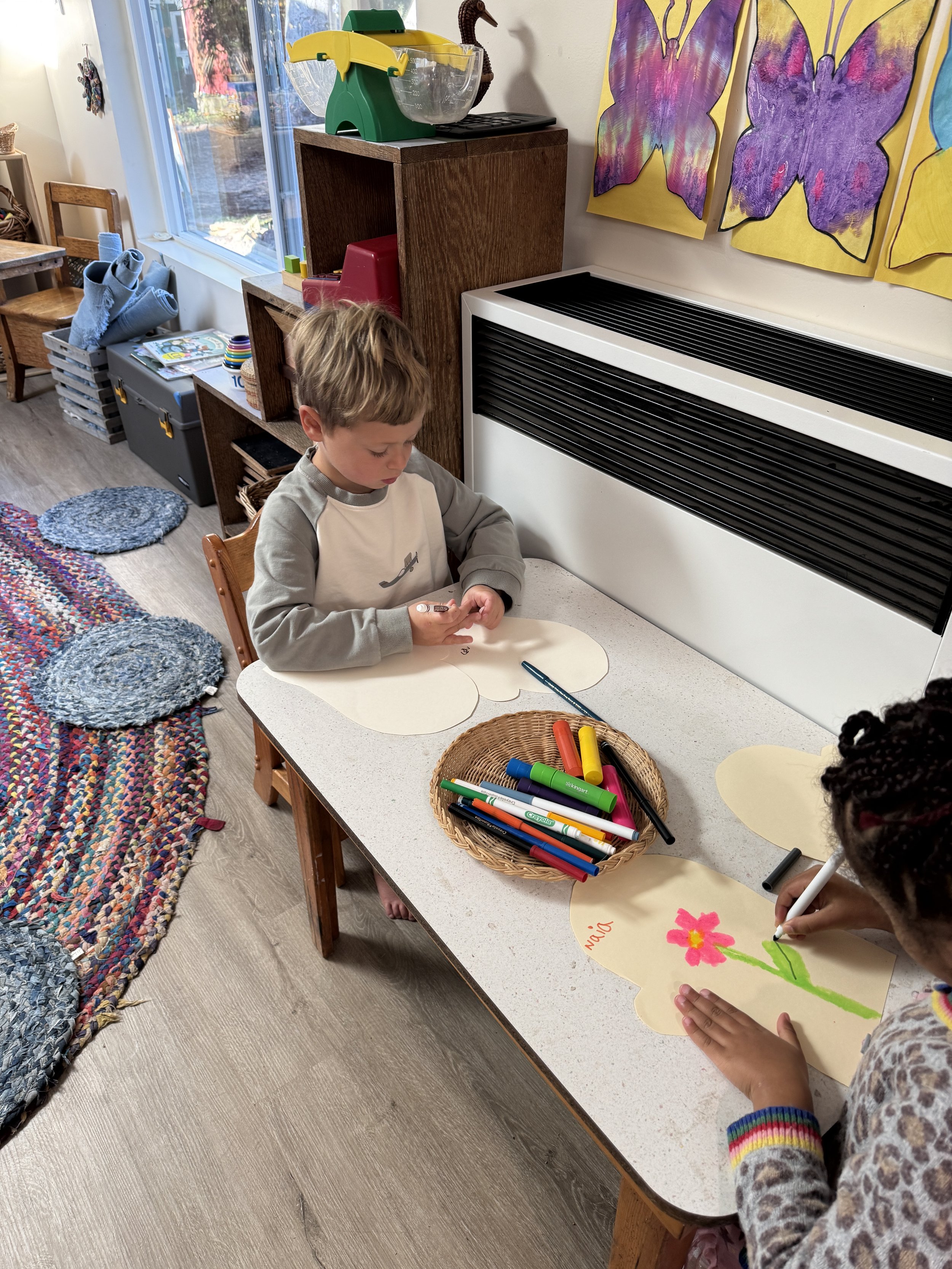
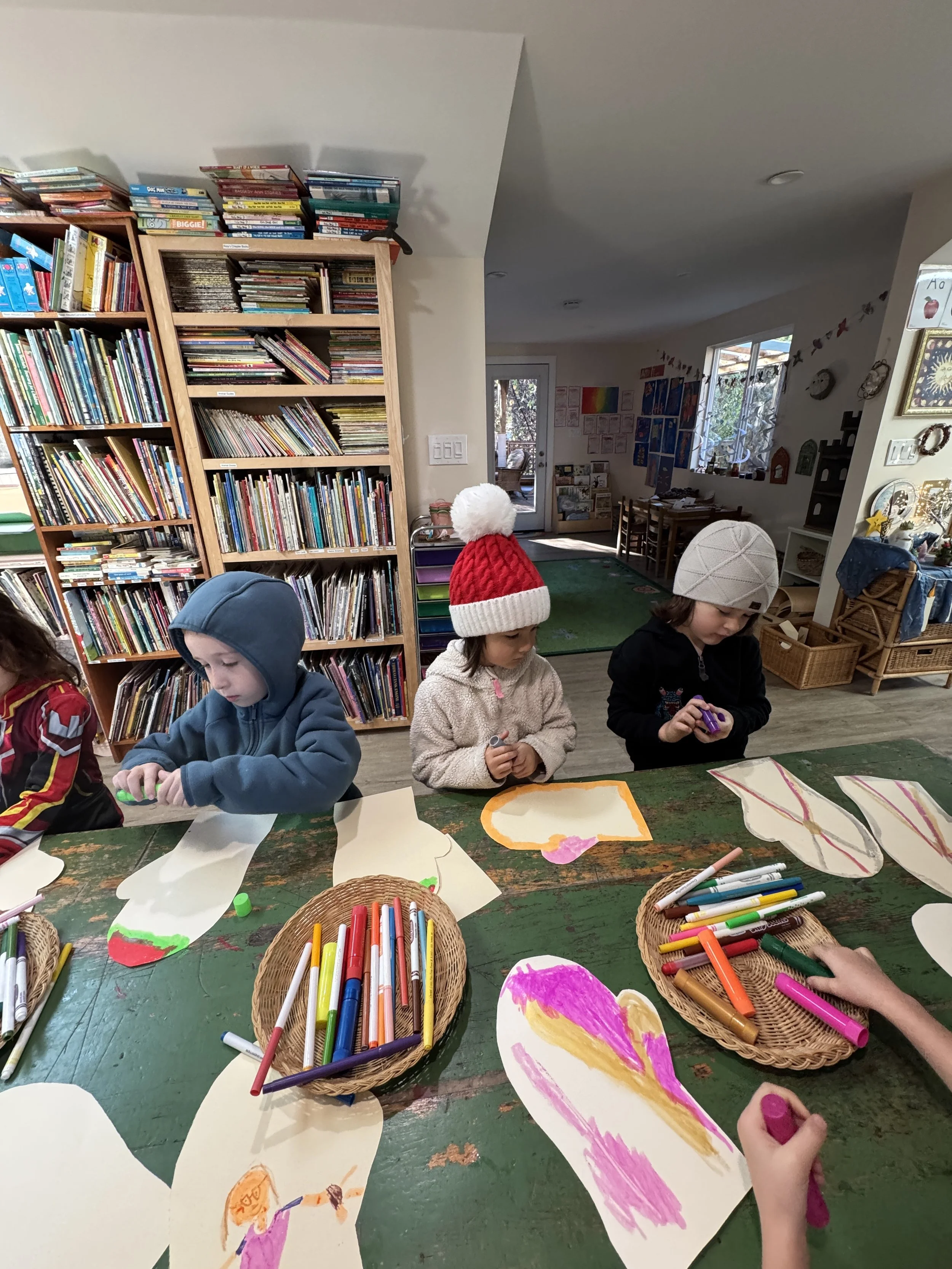
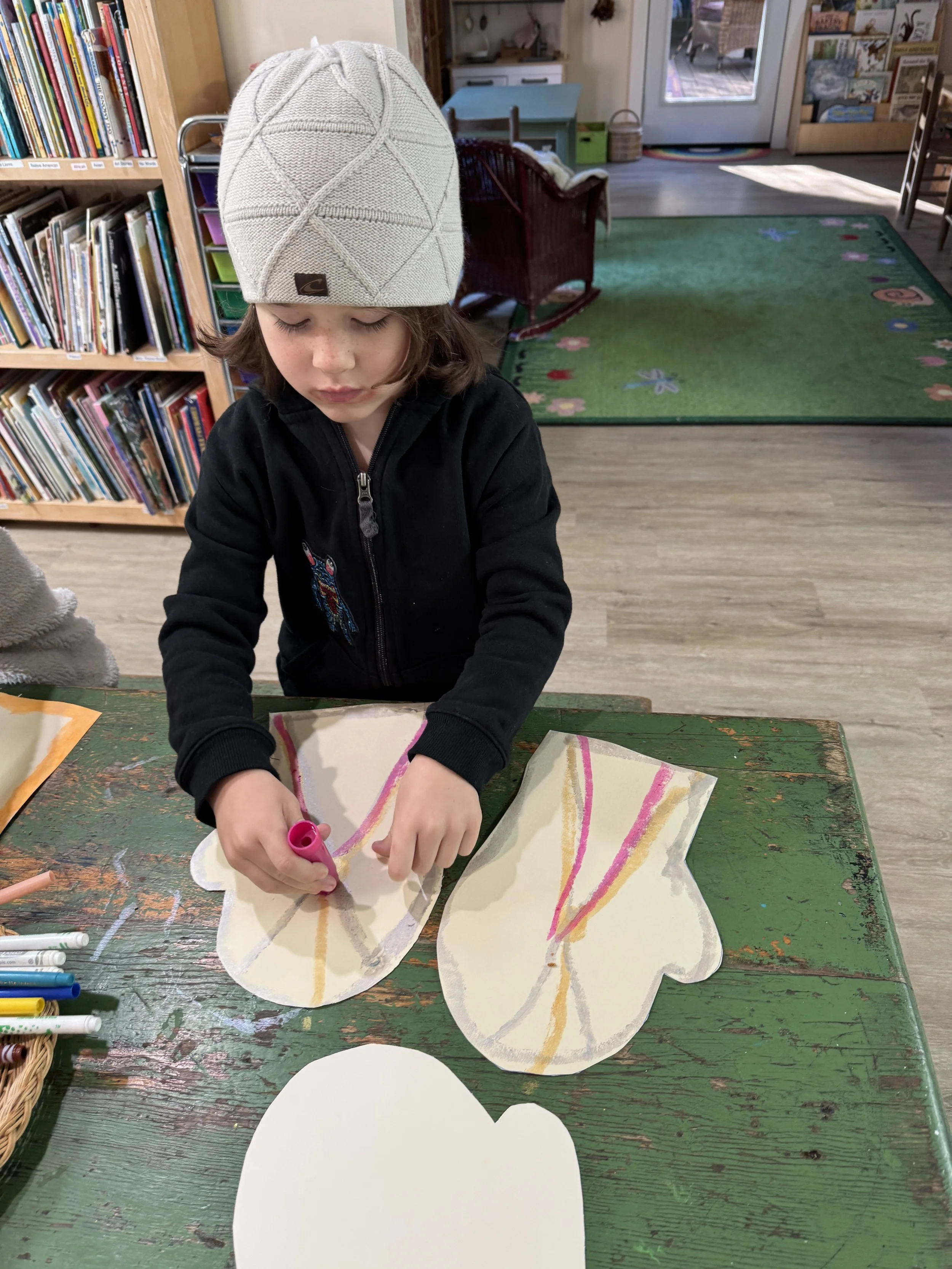
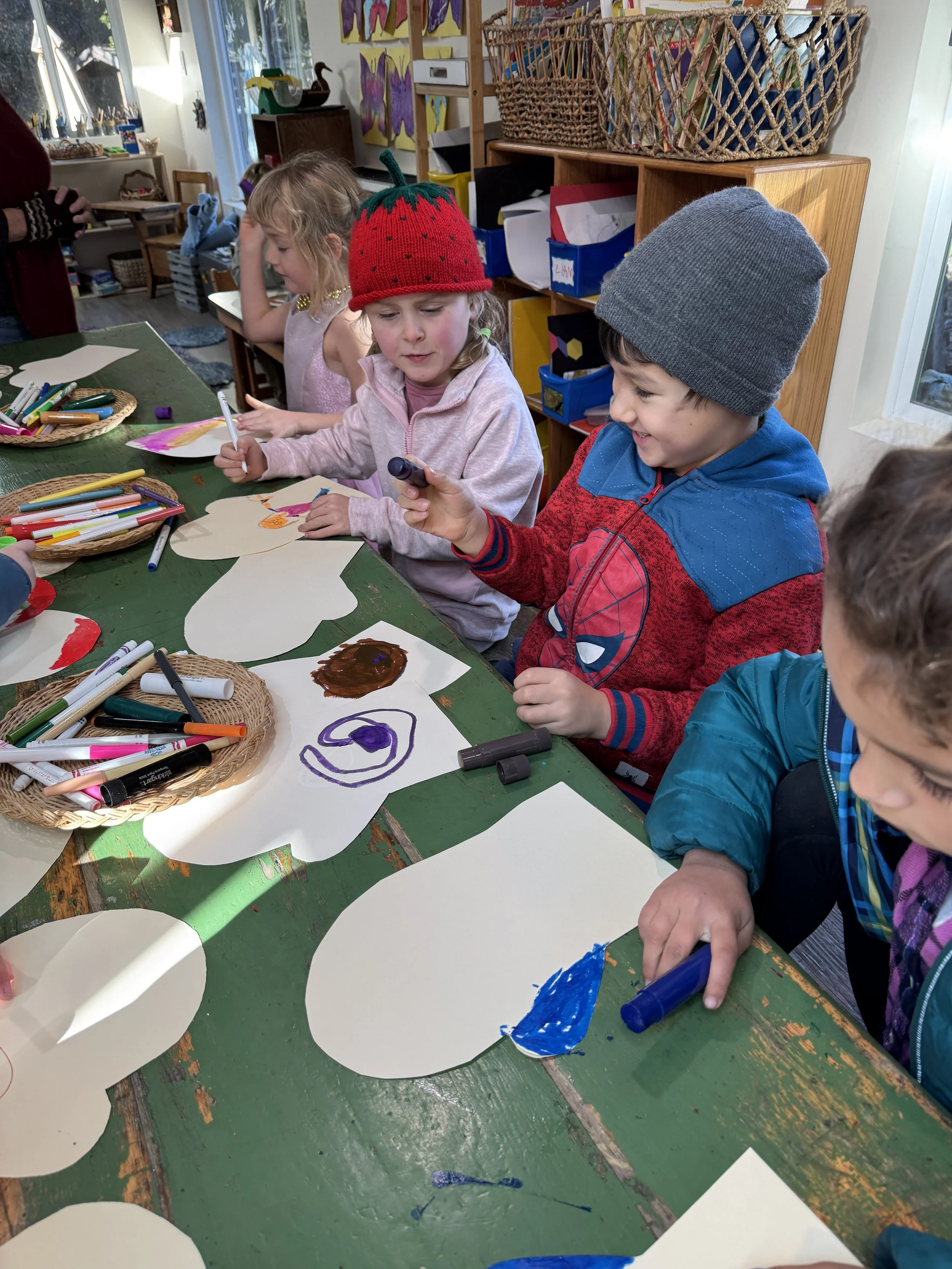
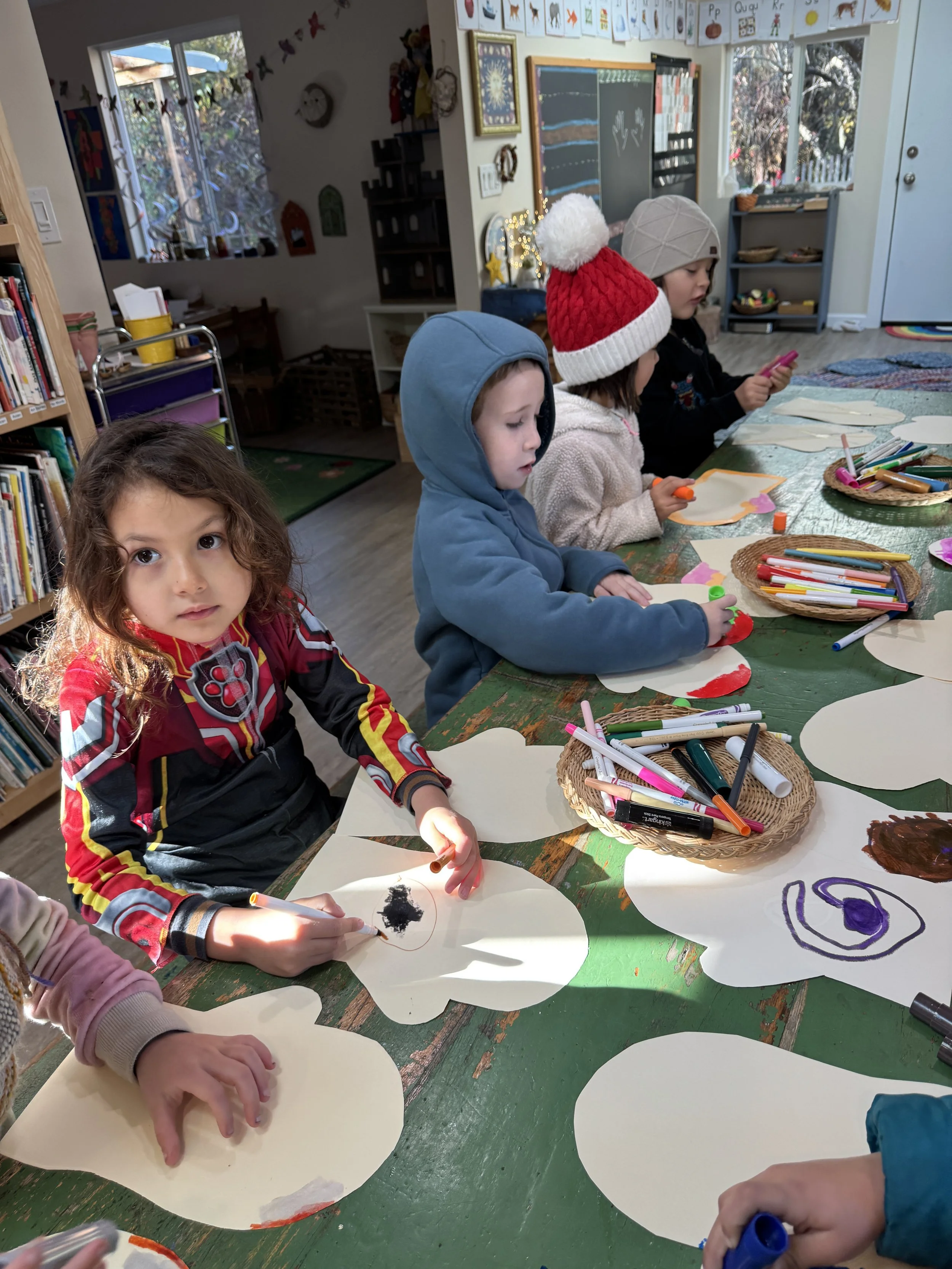
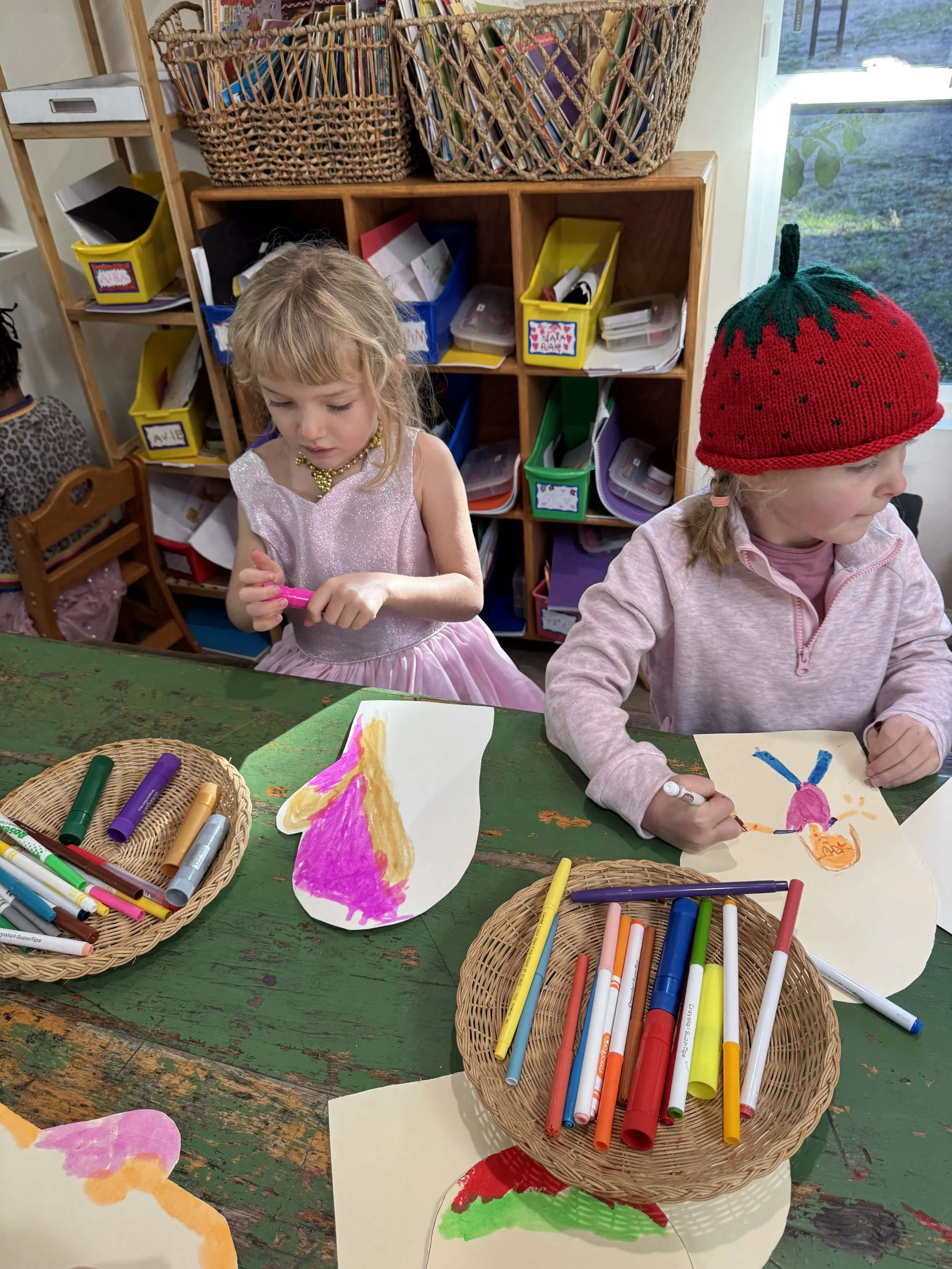
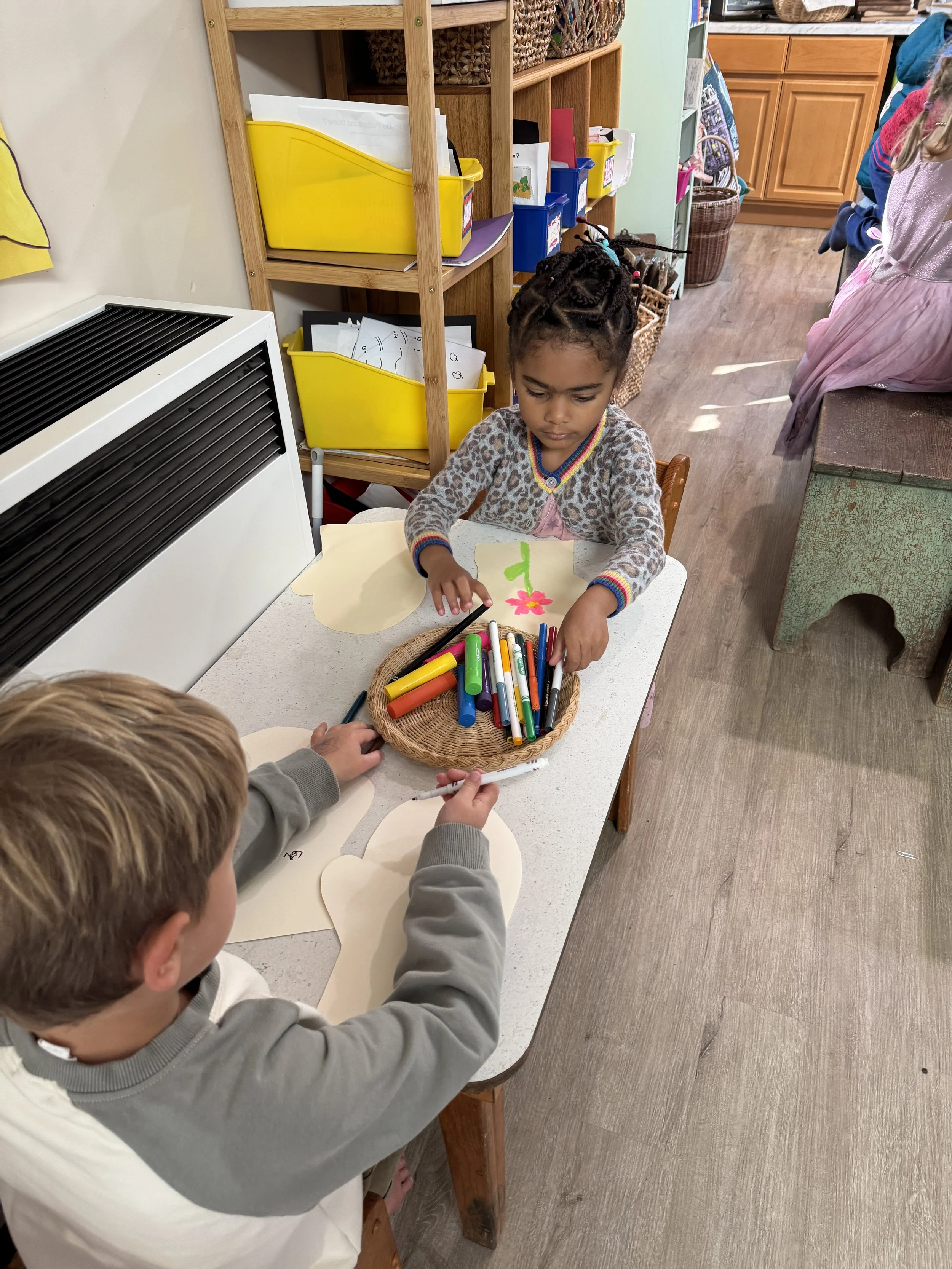
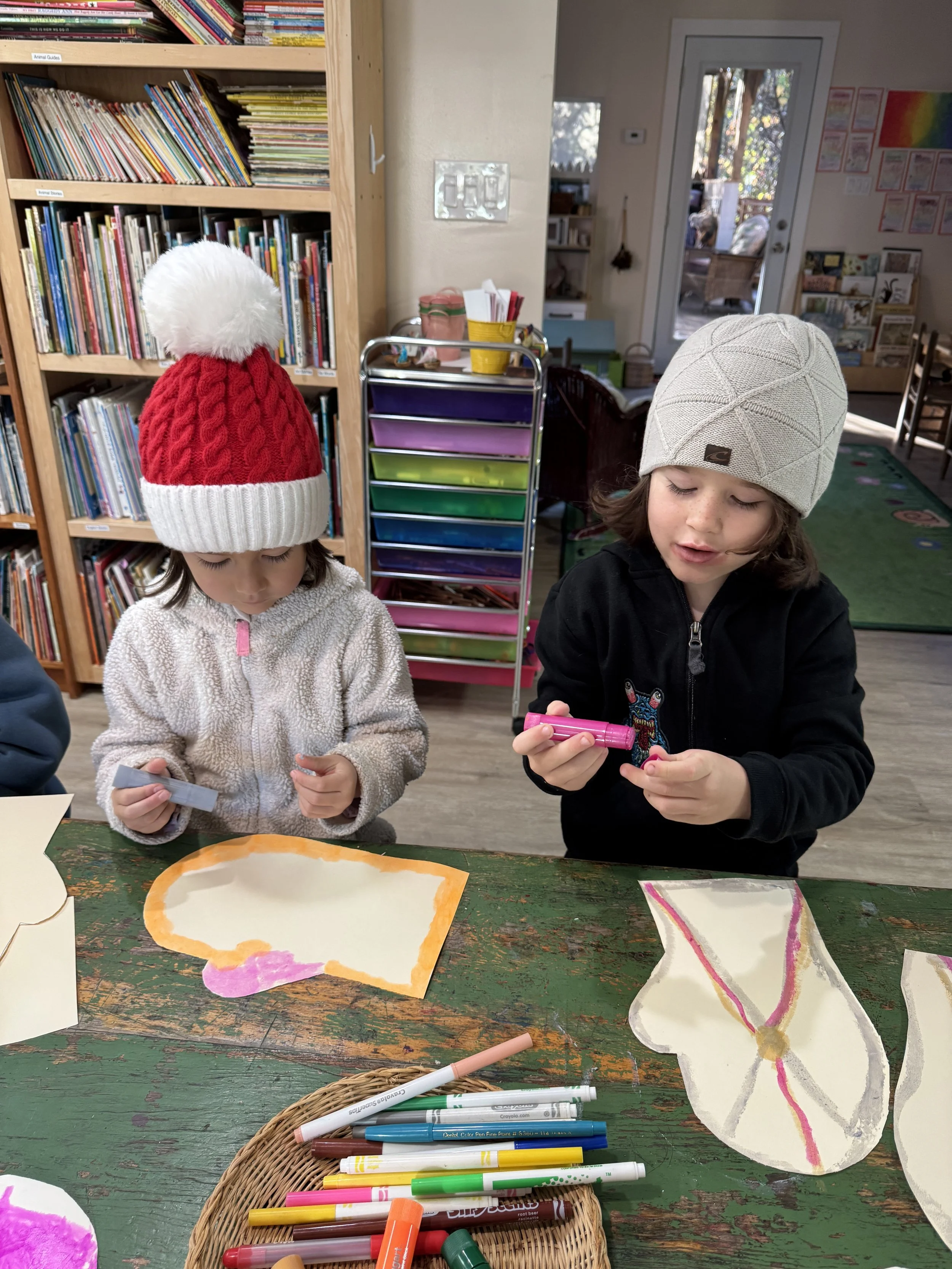
We continue with our winter time songs and verses, building memory, sequencing, creating pictures in the mind, body coordination and the unity of group work.
more Language arts with Tara:
As well as working together on much of the material listed above, Tara has also been focusing on some other themes in language arts class like: gratitude, families (alike and different), kindness/making friends, handwriting pracitice (specifically getting numbers and letters facing the right way), beginning sound bingo, and focused work on first names written correctly.
Math
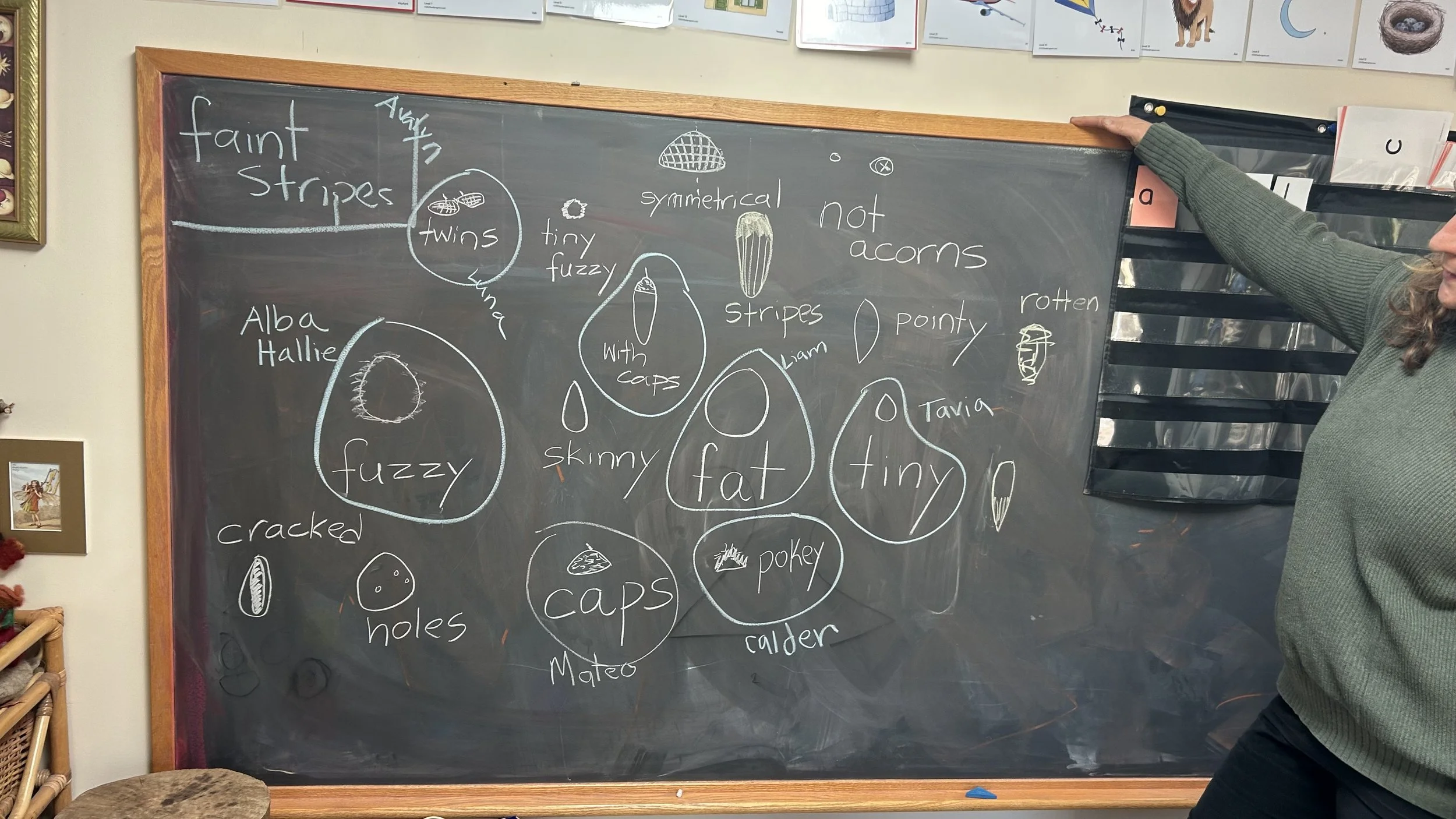
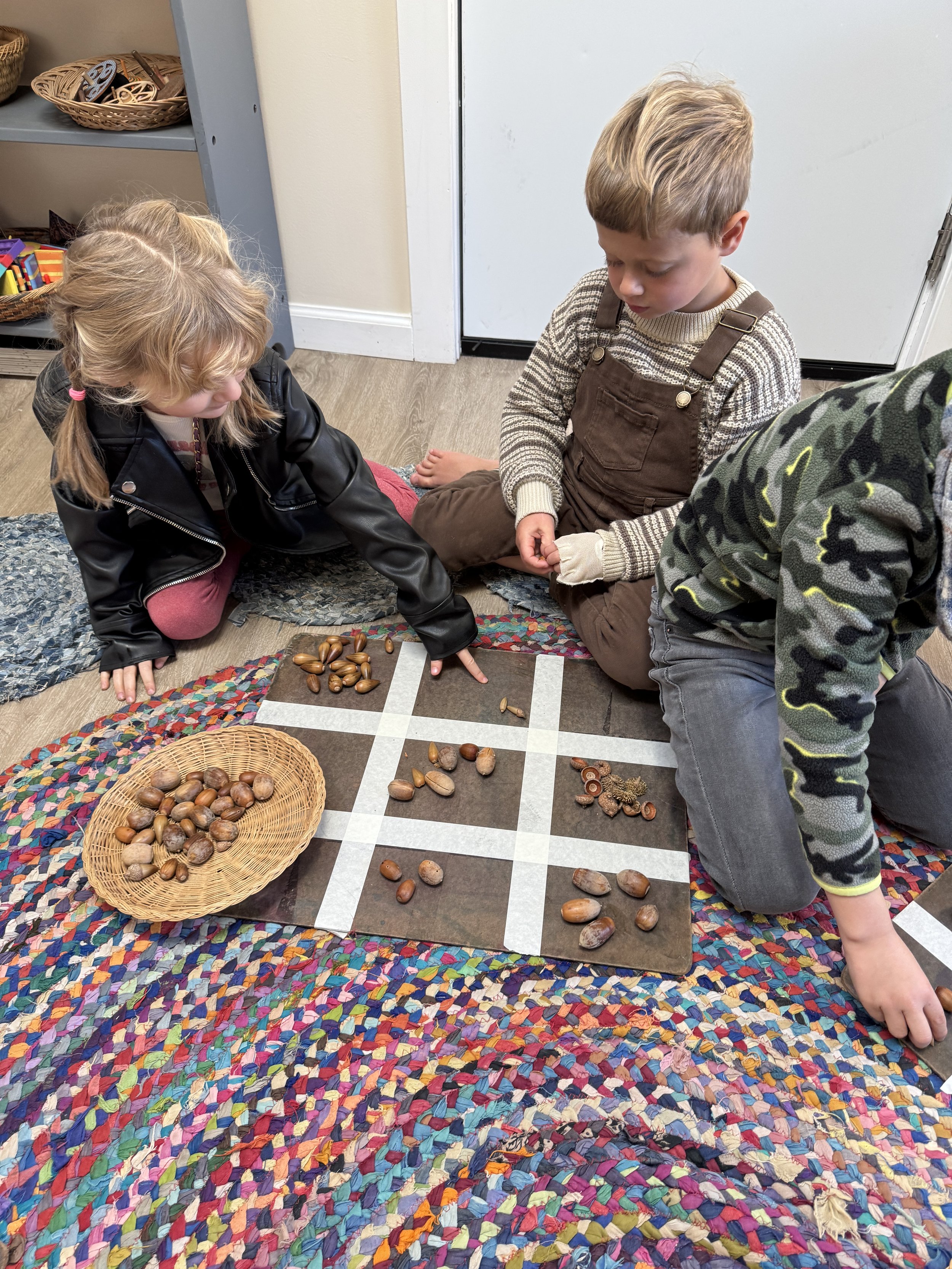
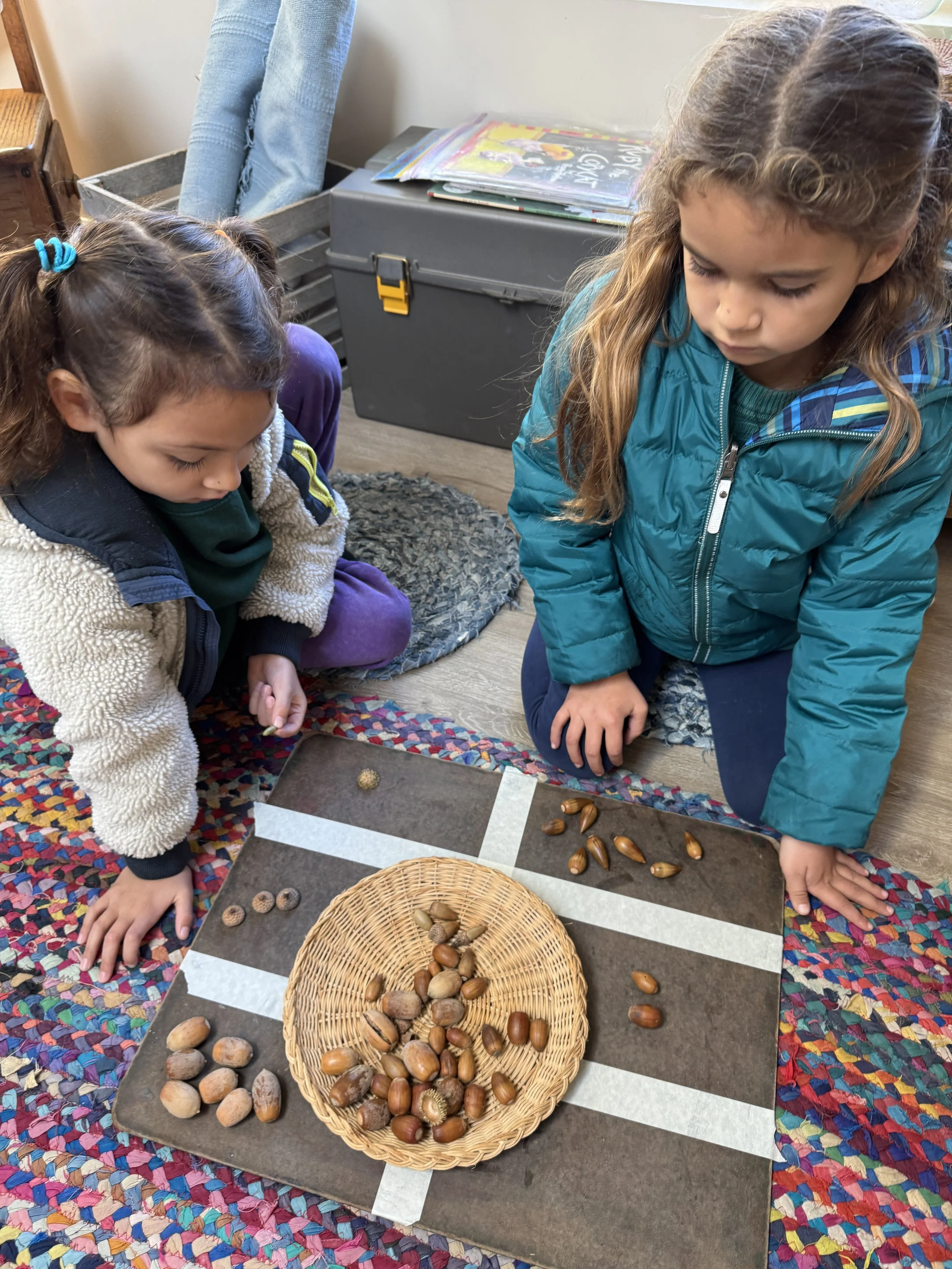
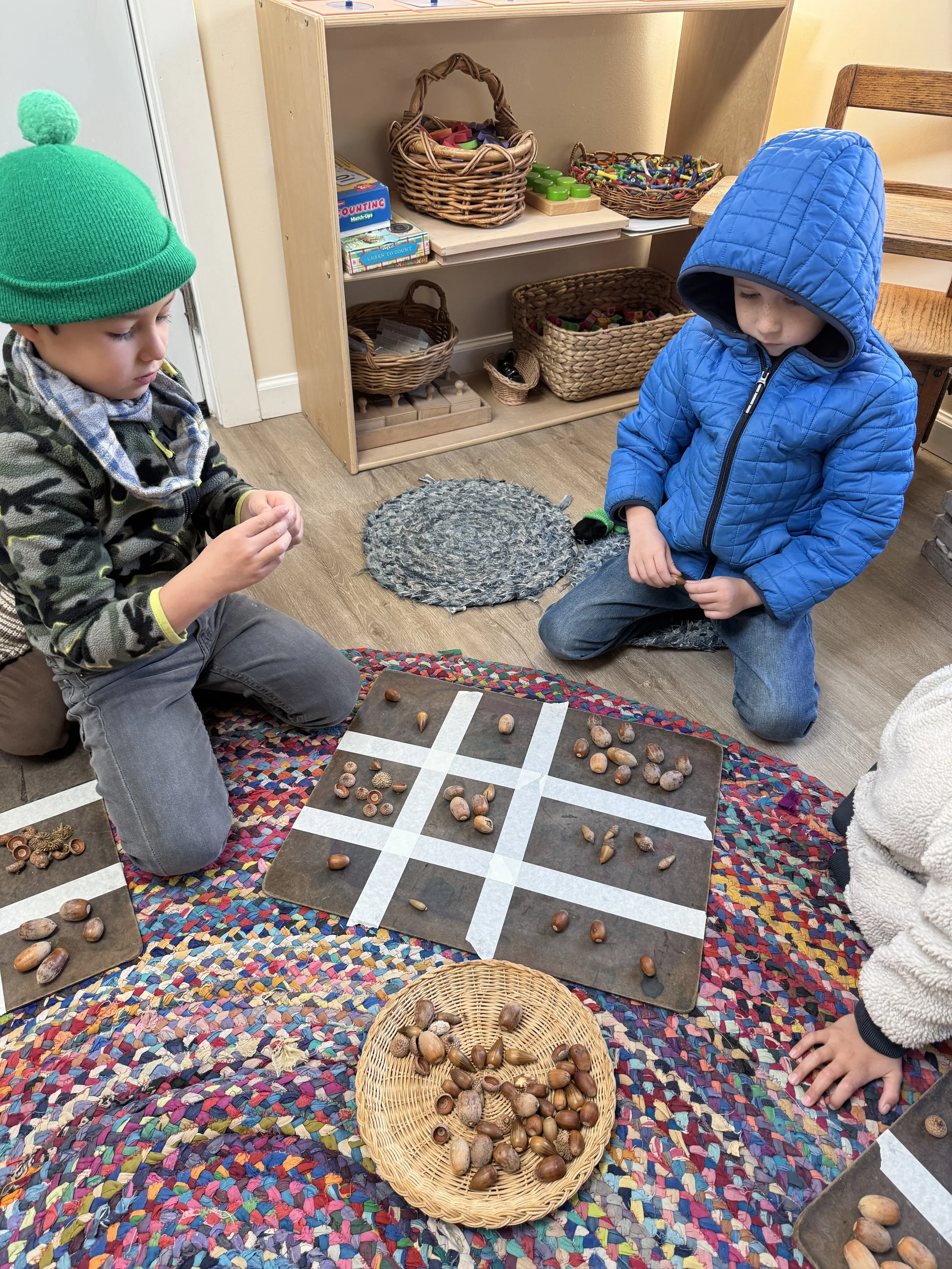
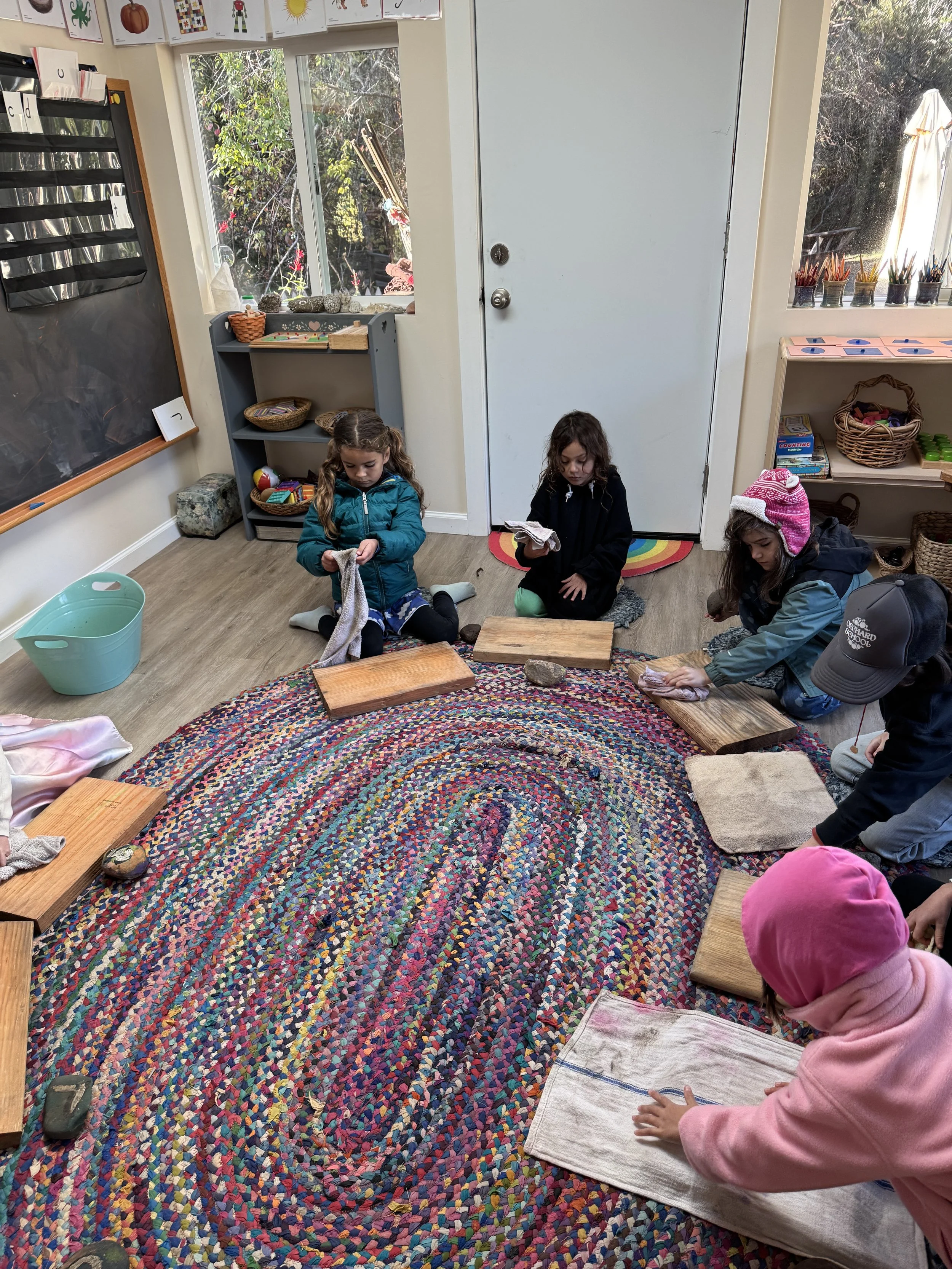
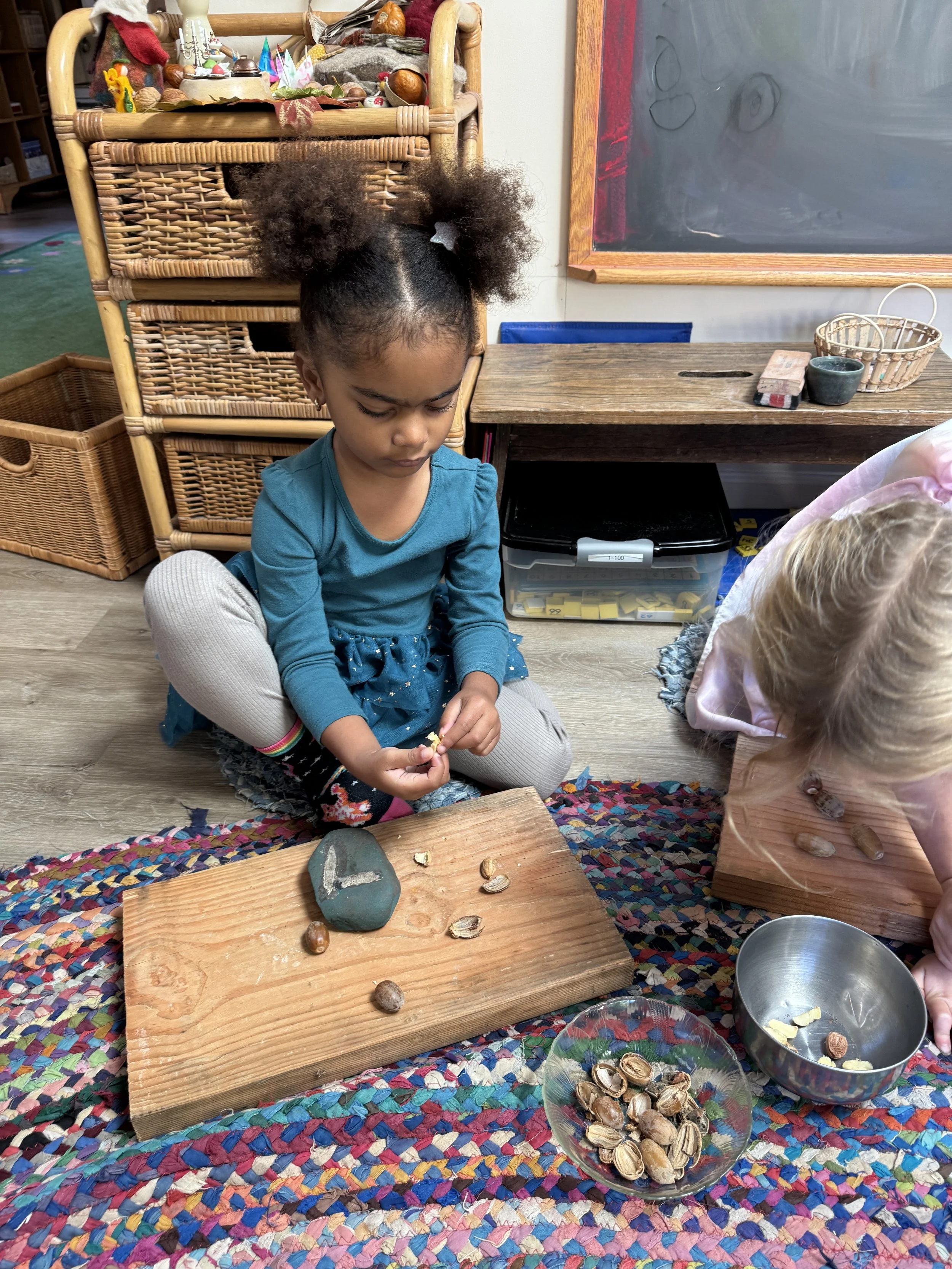
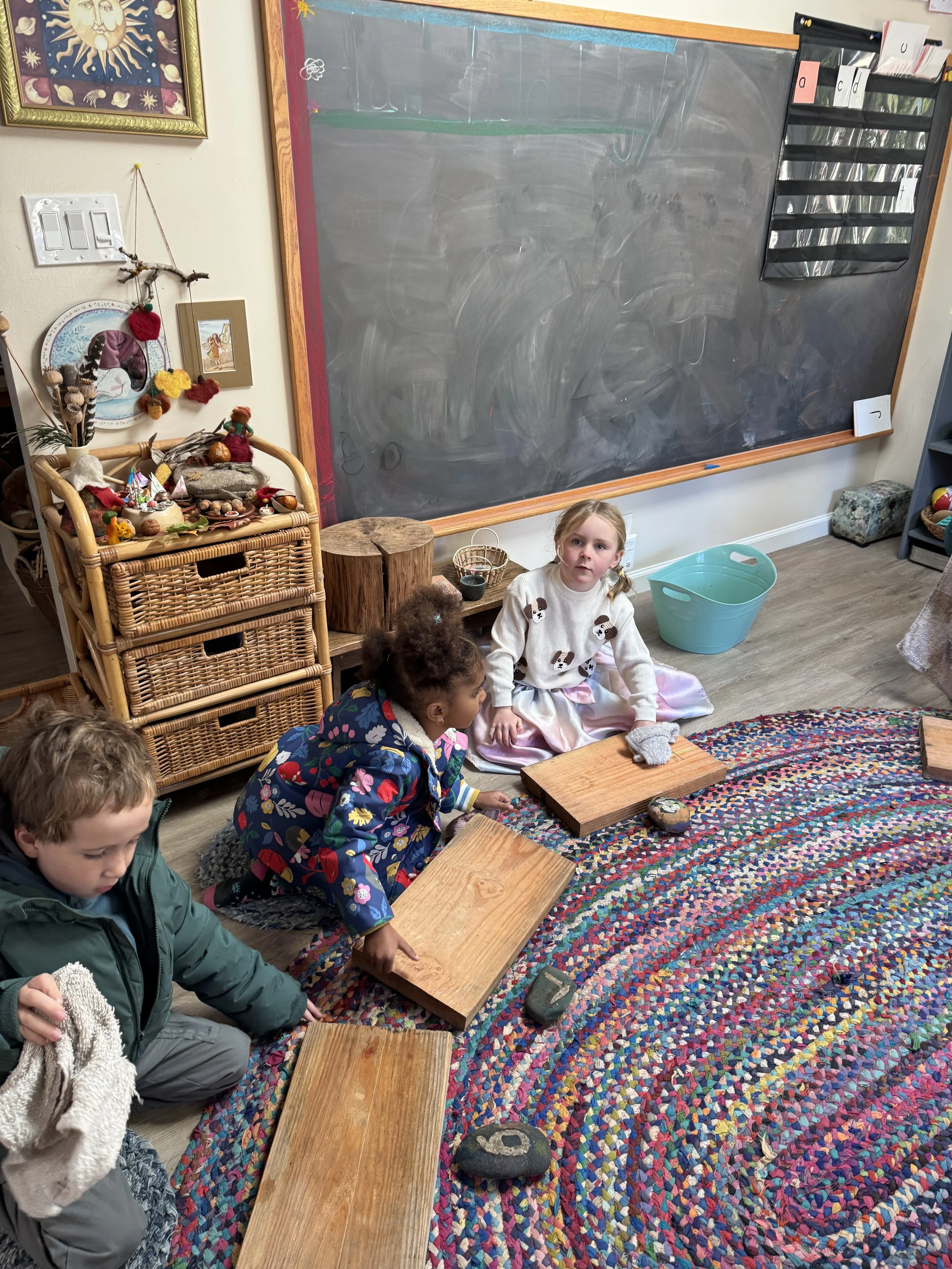
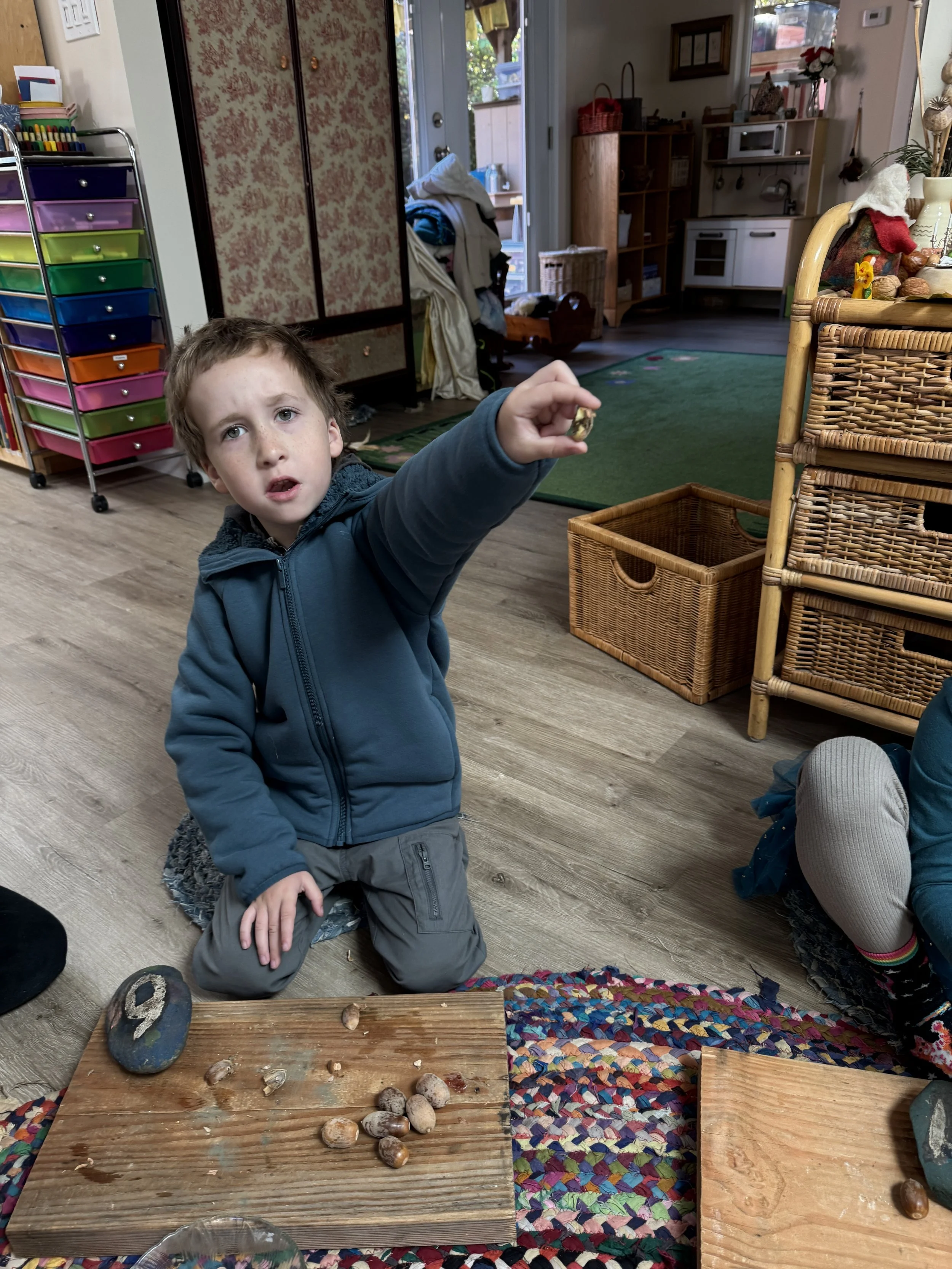
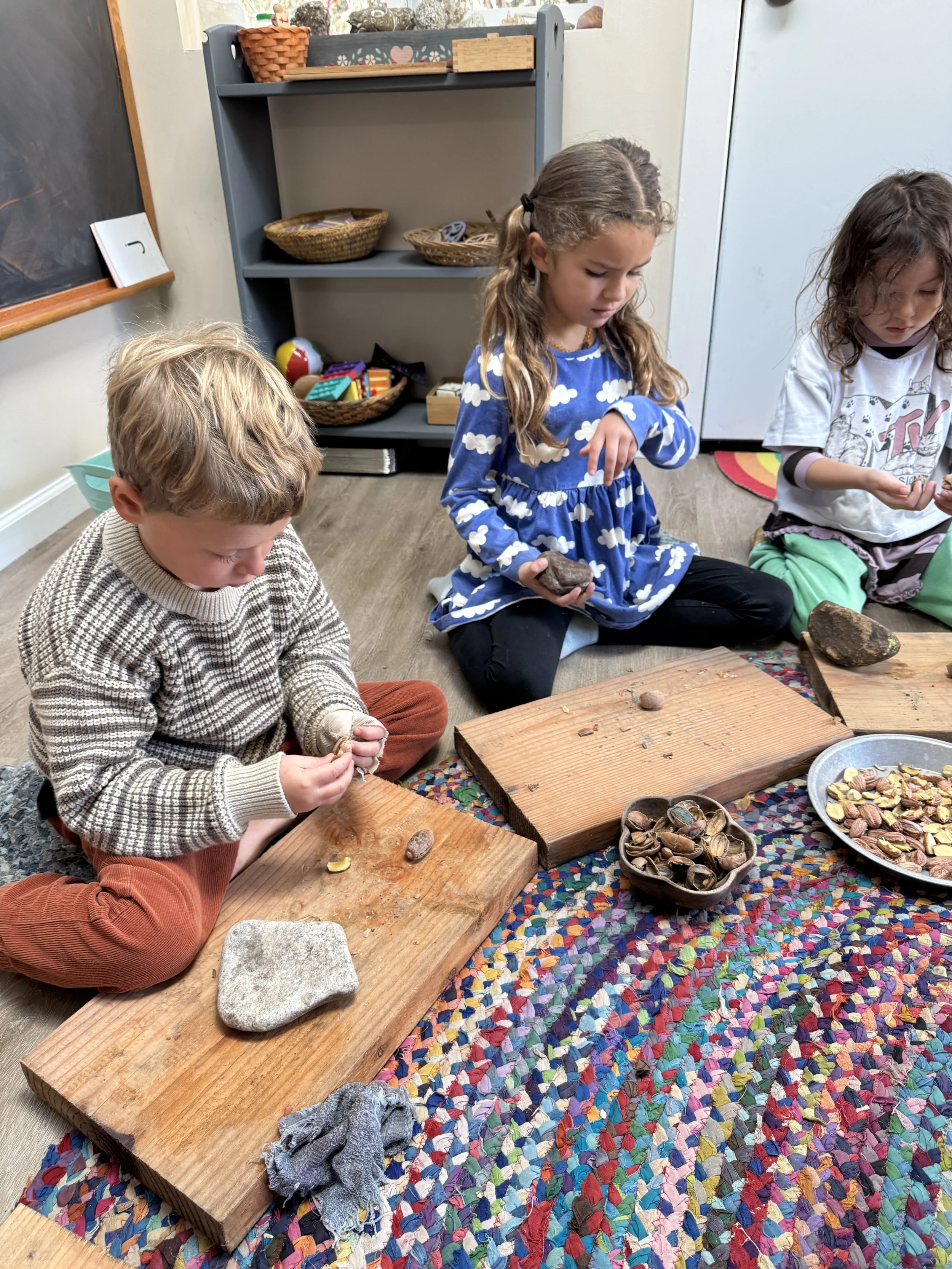
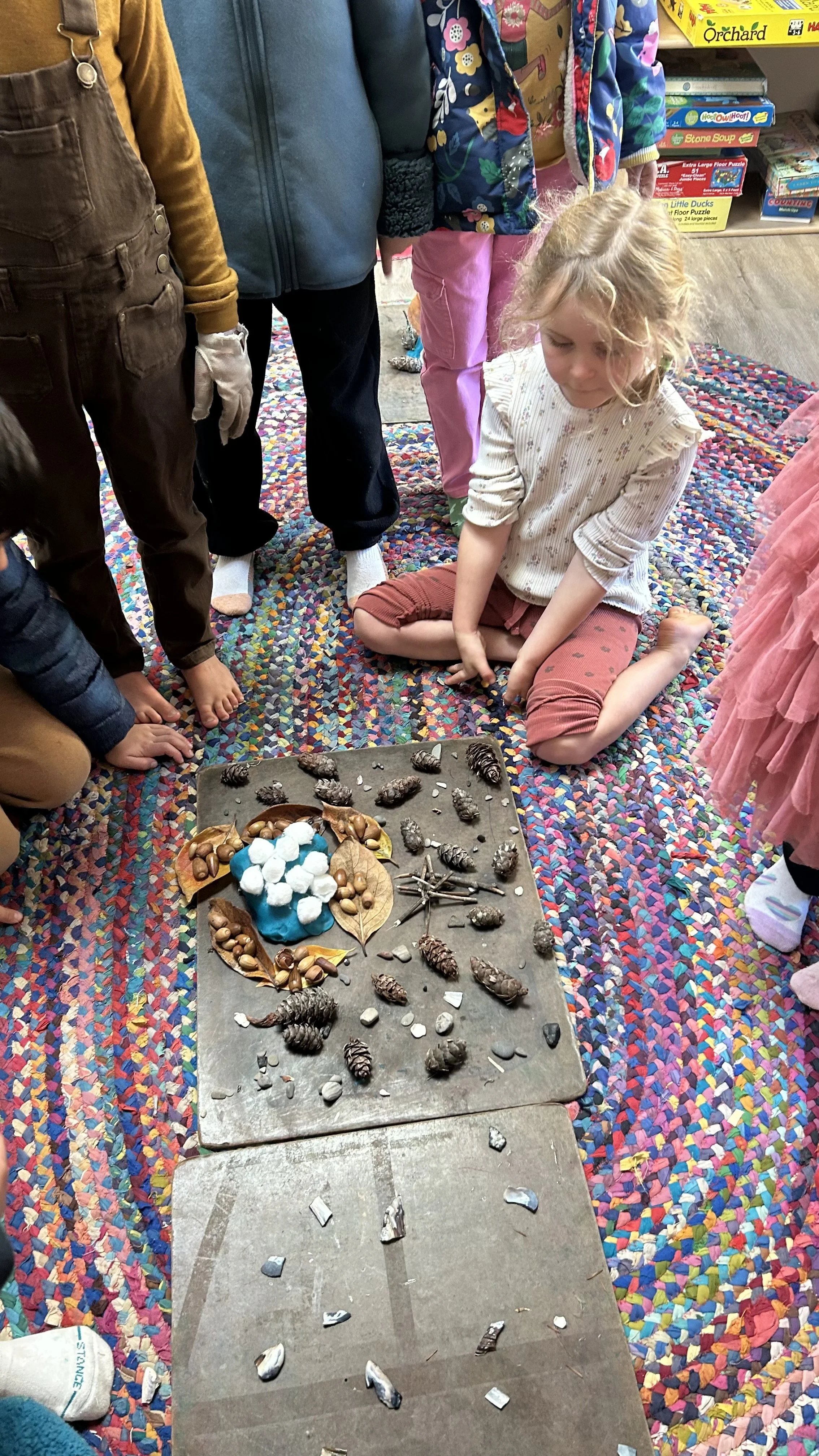
In math, we also have quite a divide in the class from kids who only know how to write a few of their numbers 1-10 and struggle to count into the teens, and those who can add two or even three digit numbers in their head. Most of our work to date in math has been looking at broad concepts. While we’ve moved away from explicit instruction to do with symmetry and patterns, these concepts come up all the time and are being re-inforced regularly. We’ve continued working with sorting and classifying this month, working mostly with acorns. Kids decided in pairs how to sort a basket of acorns into groups and then consolidated groupings and labelled them according to the shared attributes ( fuzzy, pointy, with/without caps, rotten — see photo below.)
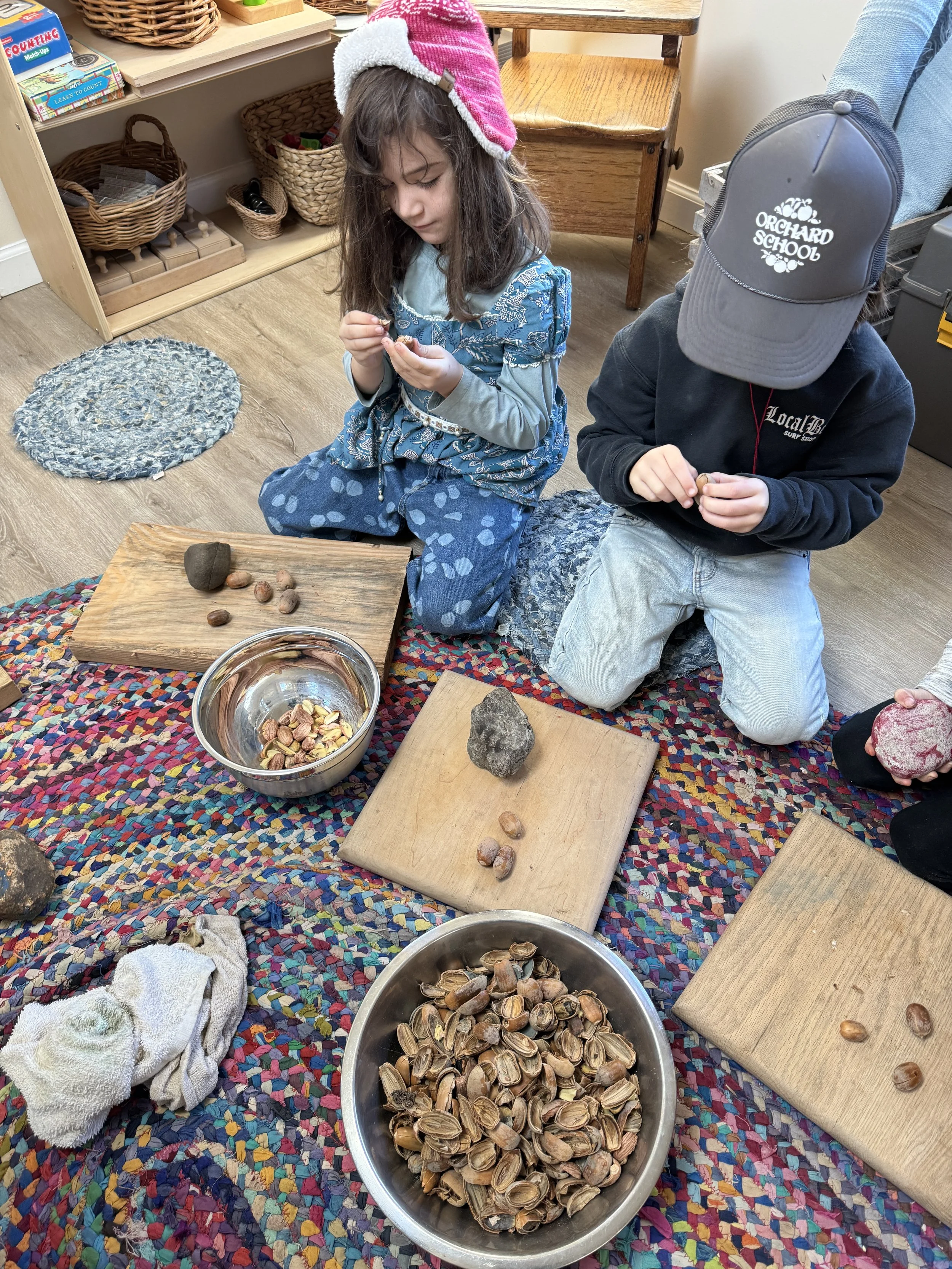
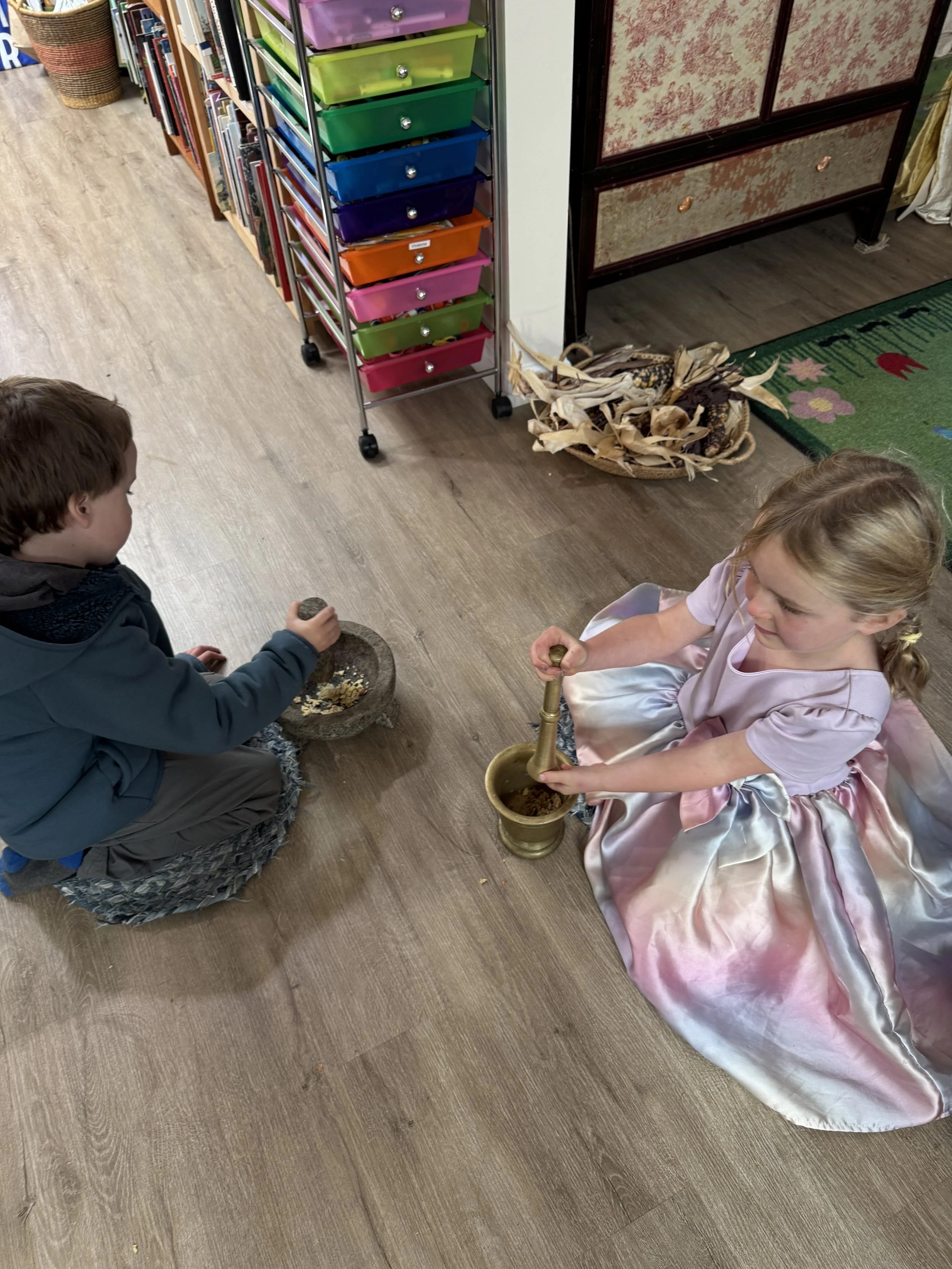
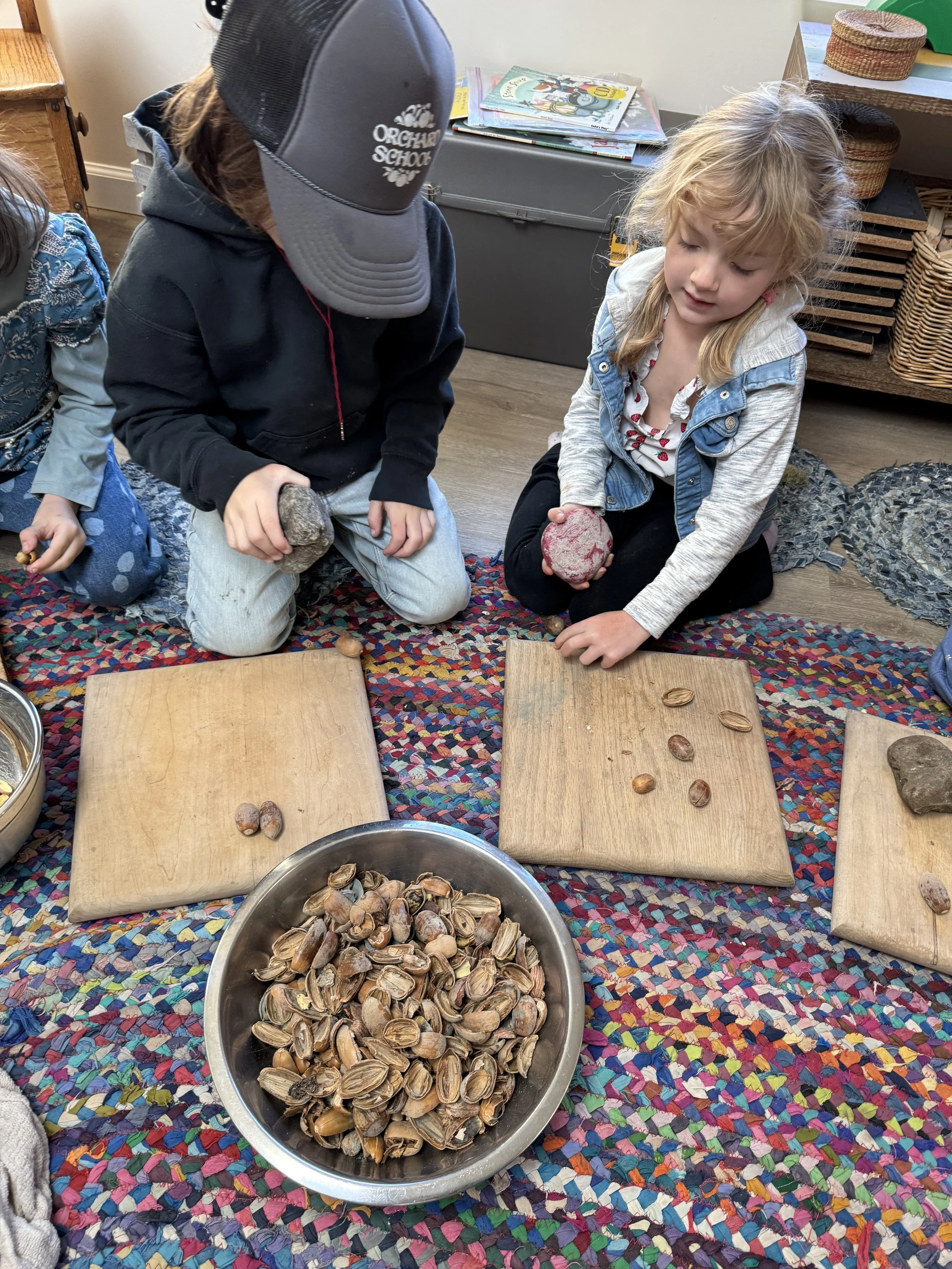
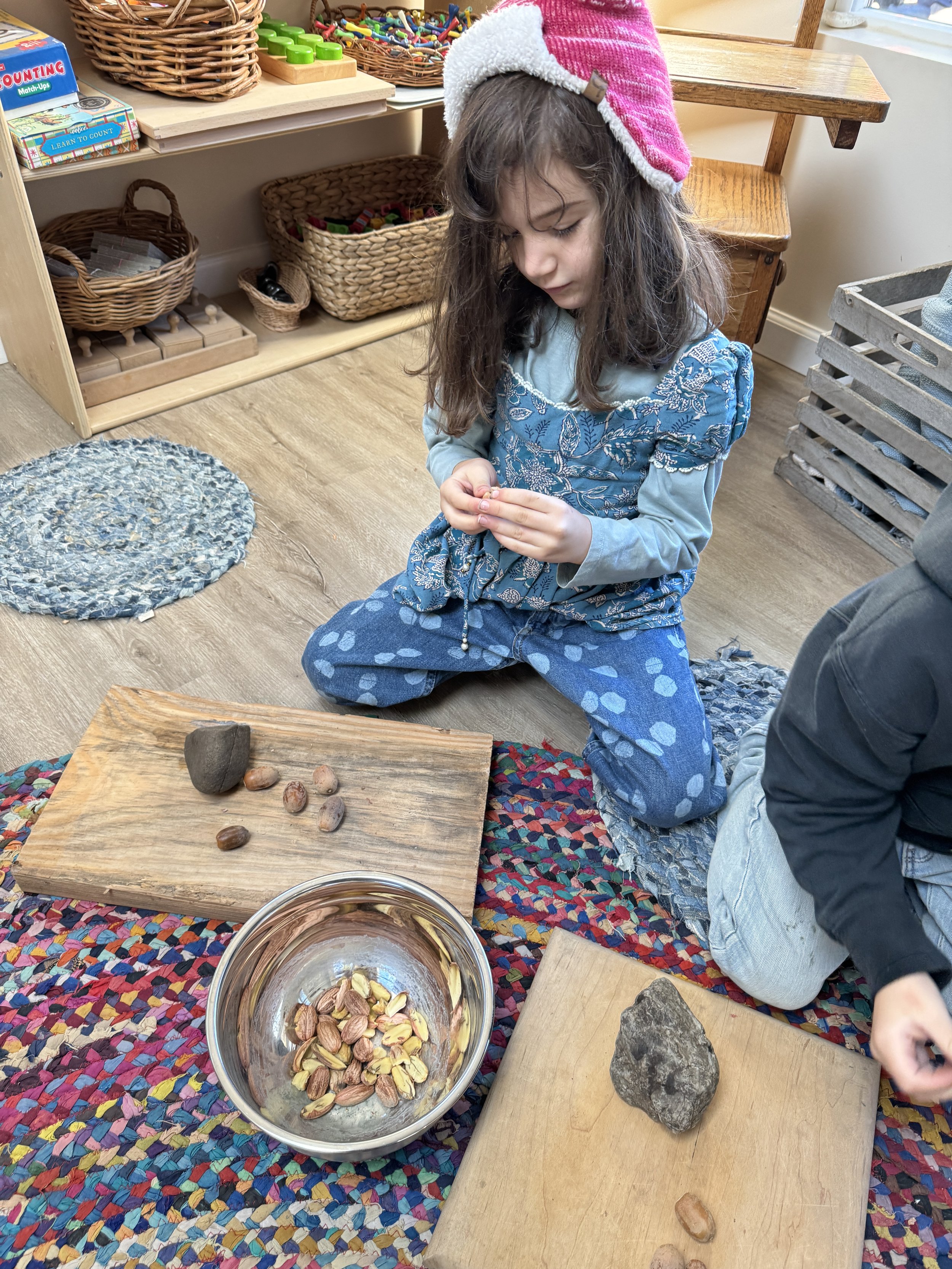
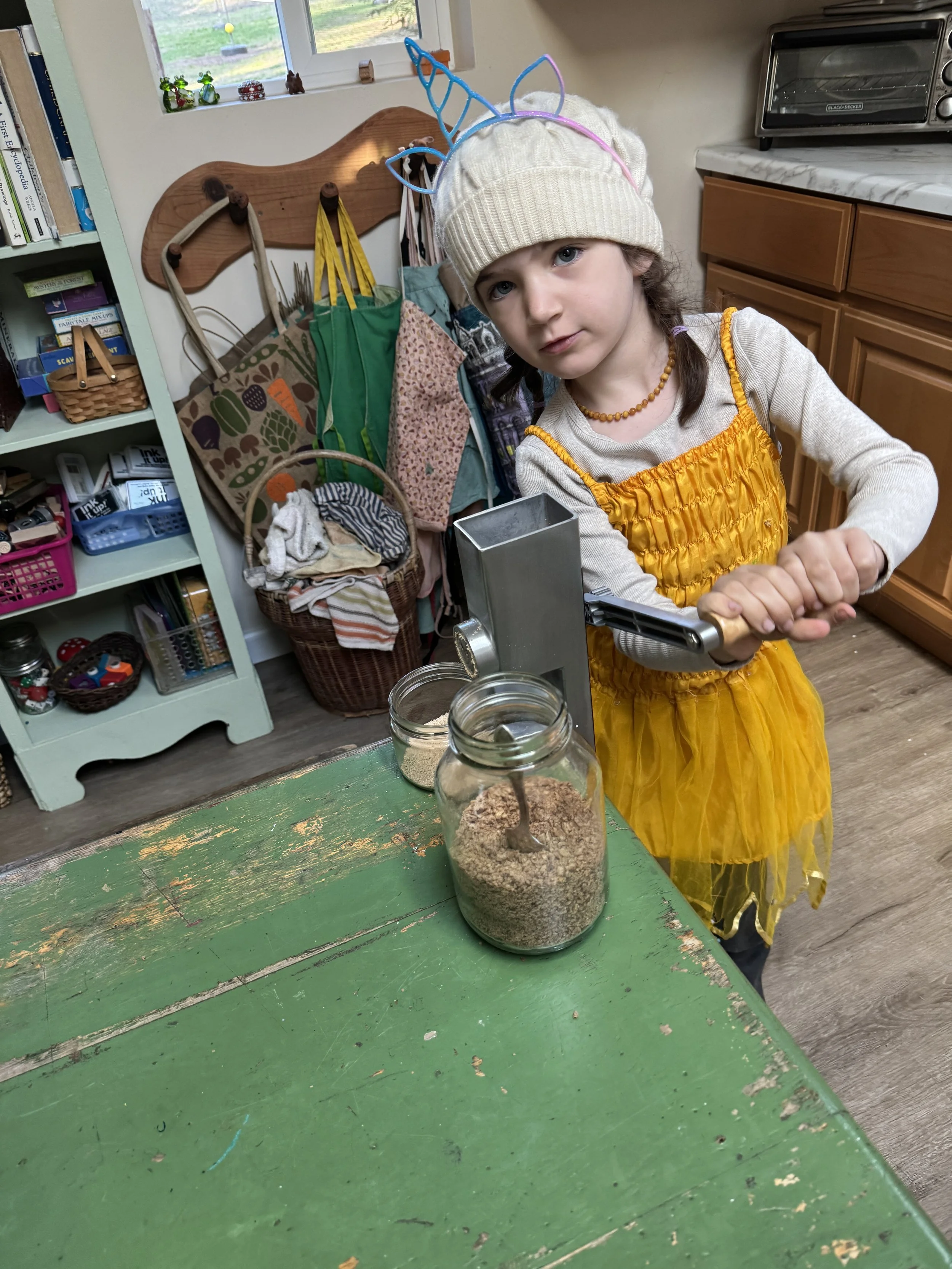
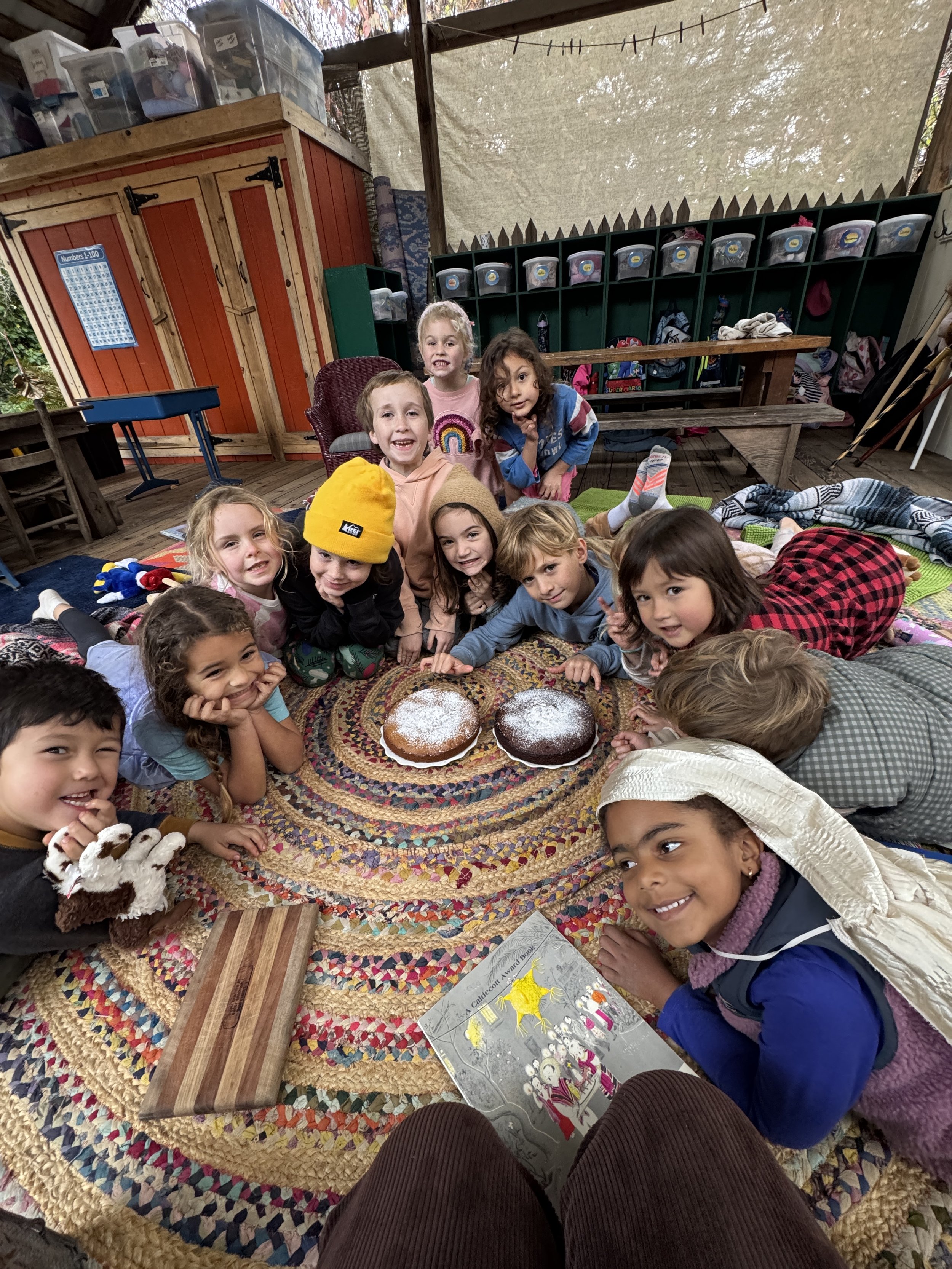
The acorn project then became a cooking/science project where we actually milled our own acorn flour (we cracked, smashed, leached and heated the acorns before we did the final step of finely grinding the flour, see photo of Alba working the grain mill). We do have some extra flour if you are interested in baking with some. It’s incredibly nutritious and no gluten of course. The very last photo in the slide show is of all the kids gathered around our finished product — two delicious acorn cakes.
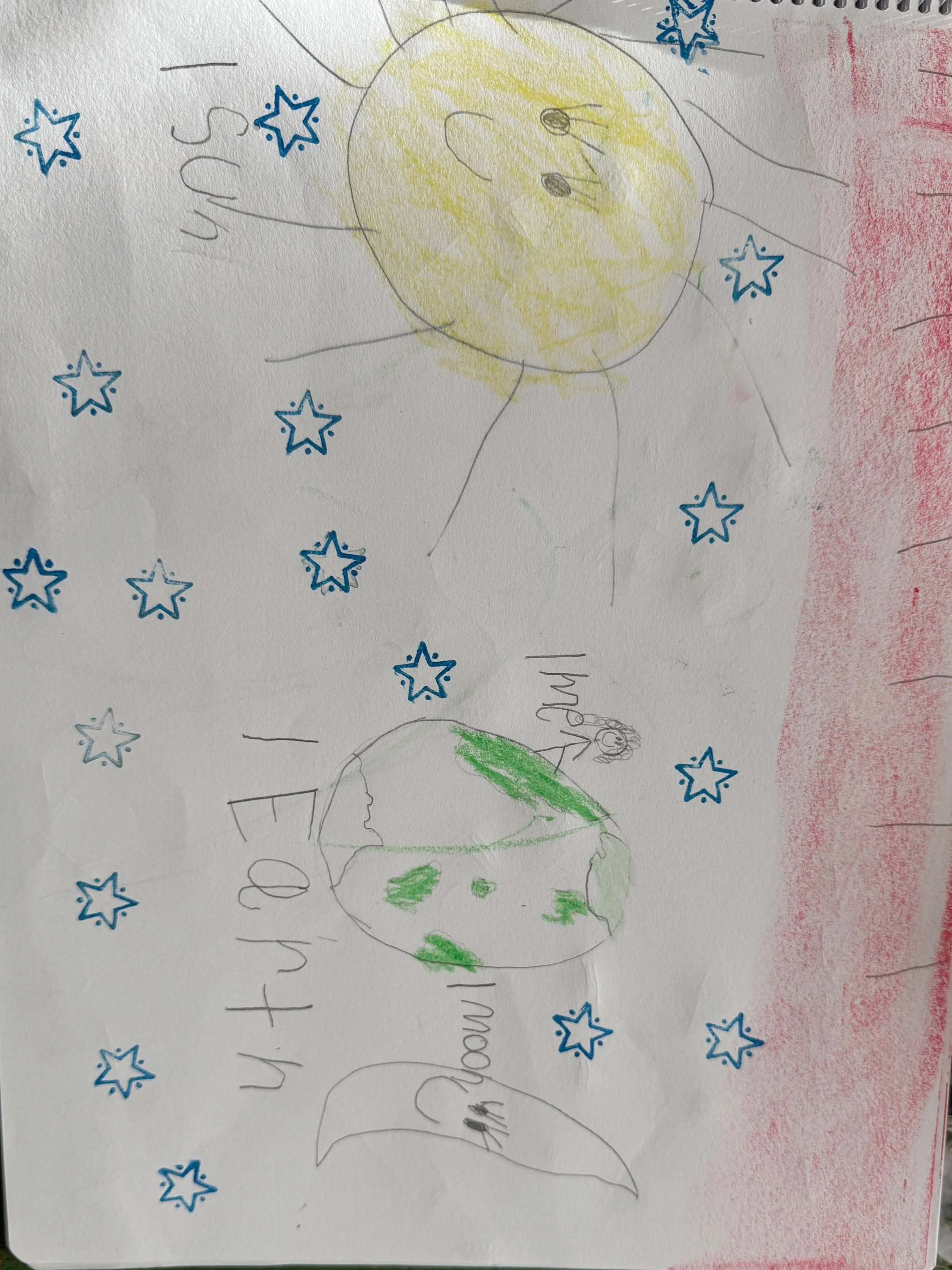
Naia’s workbook
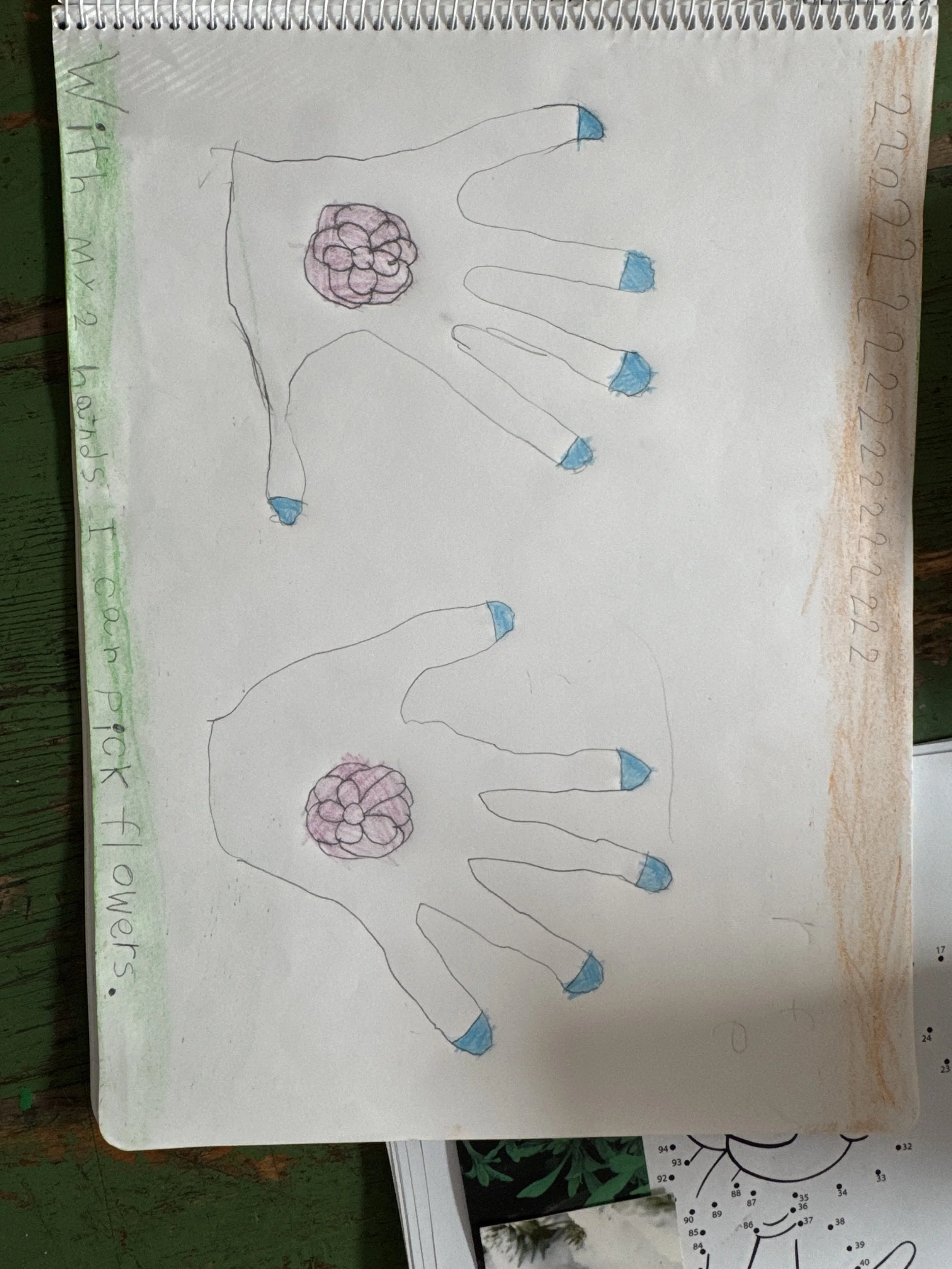
Pannonica’s workbook
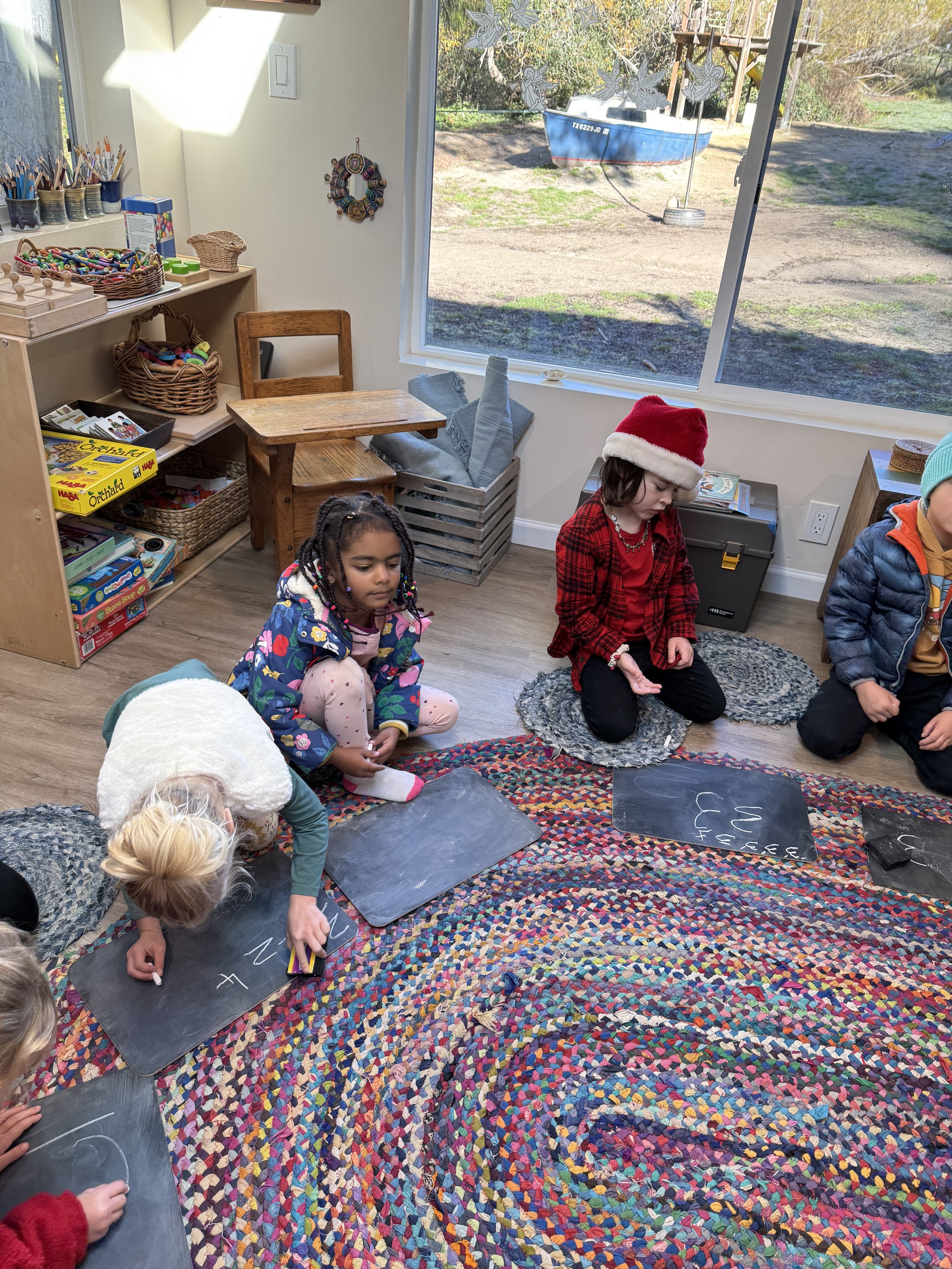
It’s so much easier to use a chalkboard for number practice if you get frustrated with erasing backwards numbers!
Tara has taught the kids several games during math class like dominoes, Uno, and memory. They’ve been practicing the numbers 1,2, 3 and 4 specifically. See above for Naia’s beautiful work for number 1 and Pannonica’s for number 2 in their school lesson books. For number 3 we explored the idea that three dots placed anywhere on a line (except in a line) make a triangle. We’ve been exploring triangles and various other shapes and will do this more in the spring as we move into 3D shapes.
Just before the break, we played dreidel, another good game for counting practice, beginning adding/subtracting and working with the concept of half/evens and odds. And with every game, being gracious winner and losers is always a focus, something that doesn’t come easily to every 5 and 6 year old. Because this challenge sometimes stretches into adulthood, we do put an emphasis on being able to have competition, being able to accept defeat, the difference between luck and skill games, and how to make everyone who plays (winners, losers and runners up) feel happy, accepting and empathetic.
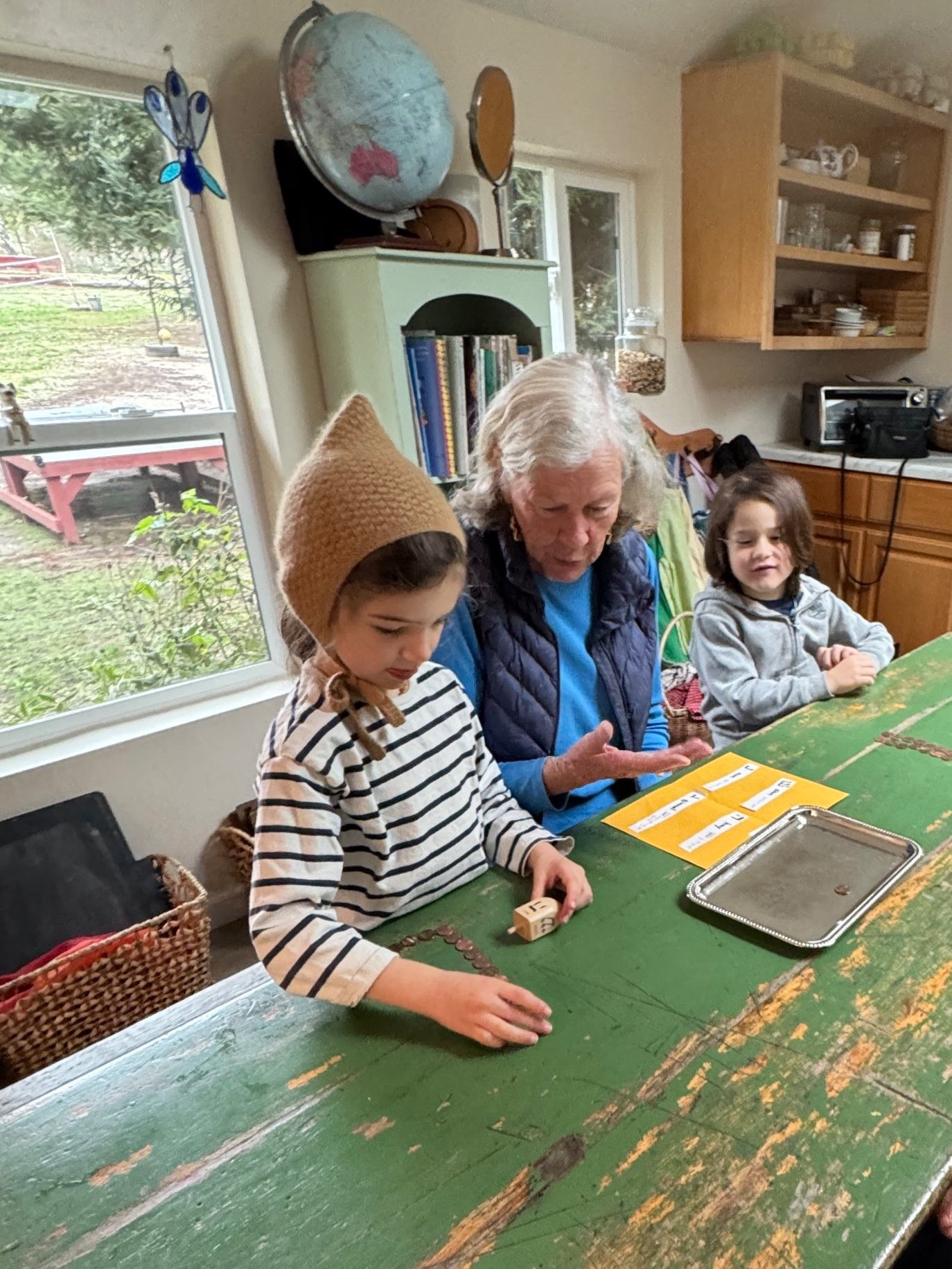
Dreidel with Maureen, Cash’s grandma, a former teacher.
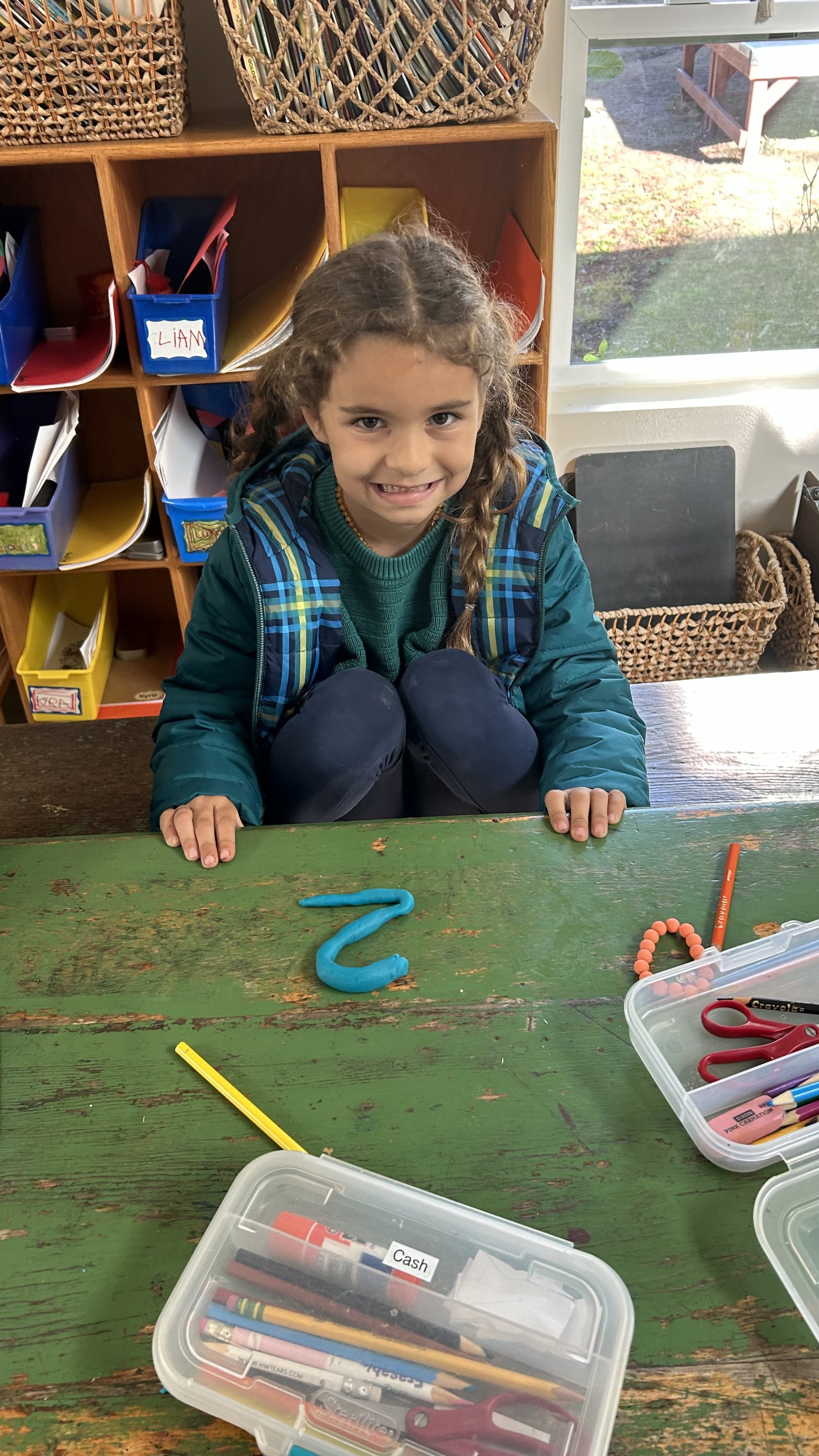
And what better way to practice that pesky number 2 than with play dough!
We are working on counting throughout the day and we’ve been having the kids pull out their homemade dice to practice adding.
Science
Science themes have included many fall/harvest activities, and now moving into winter. Some of our recent pursuits:
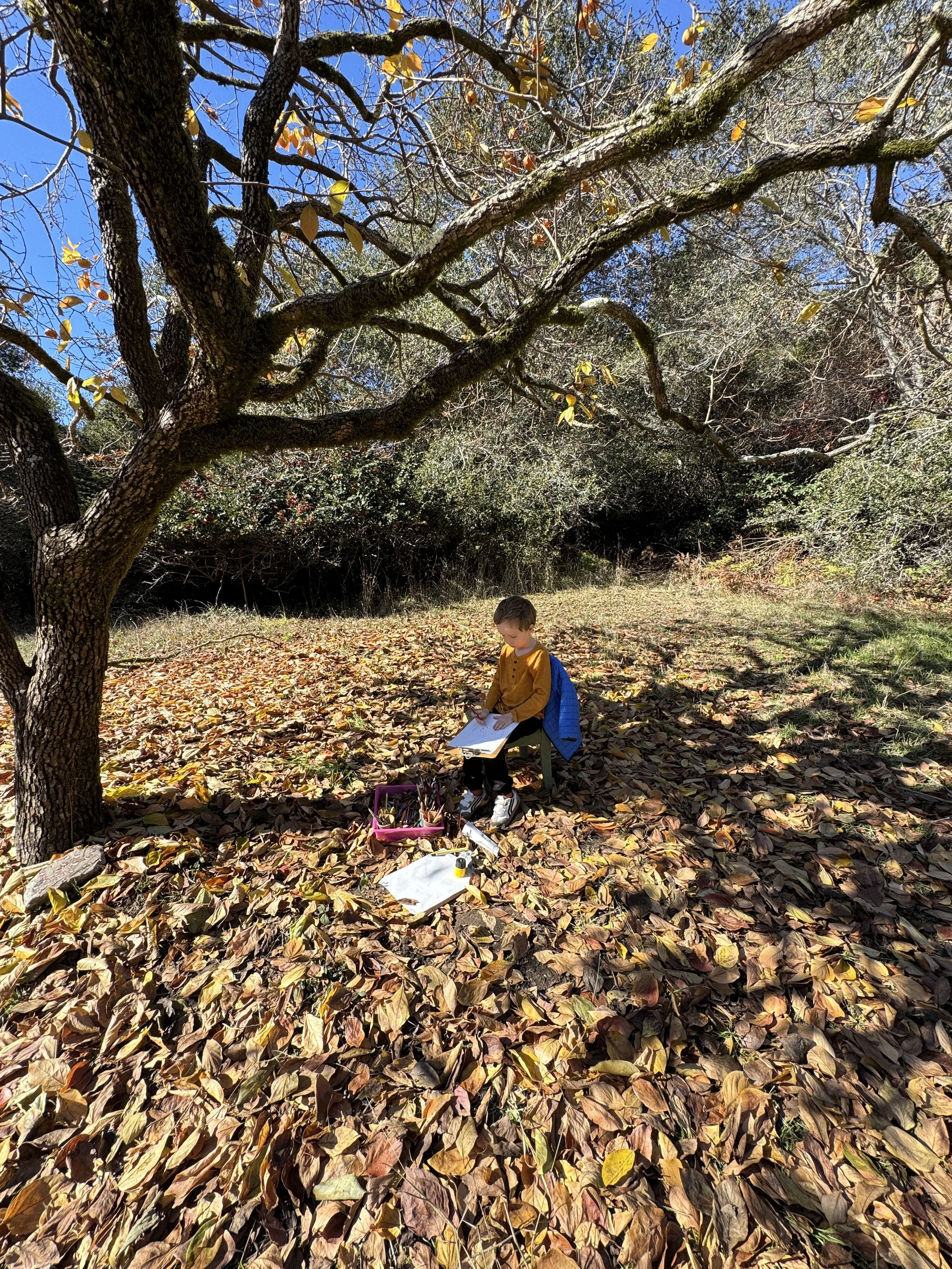
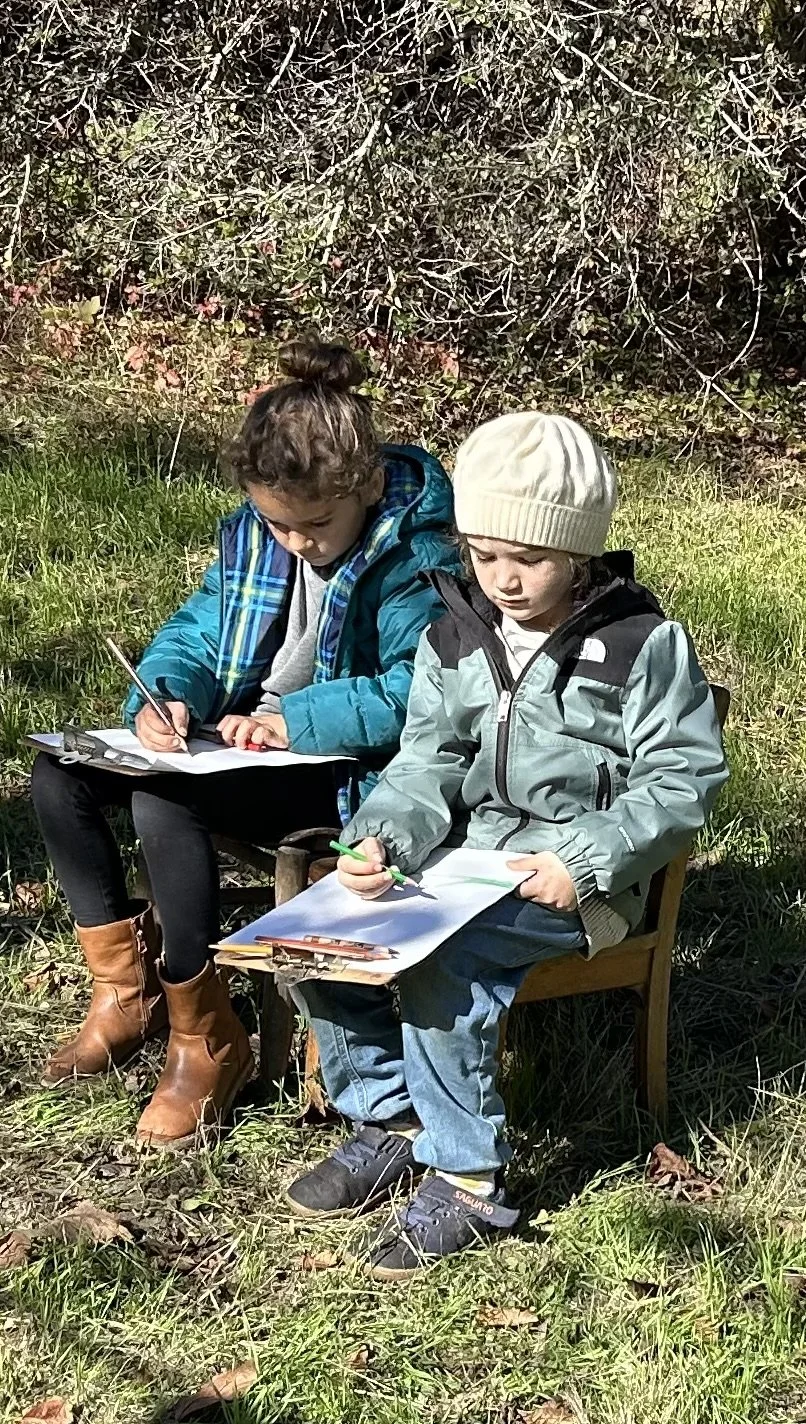
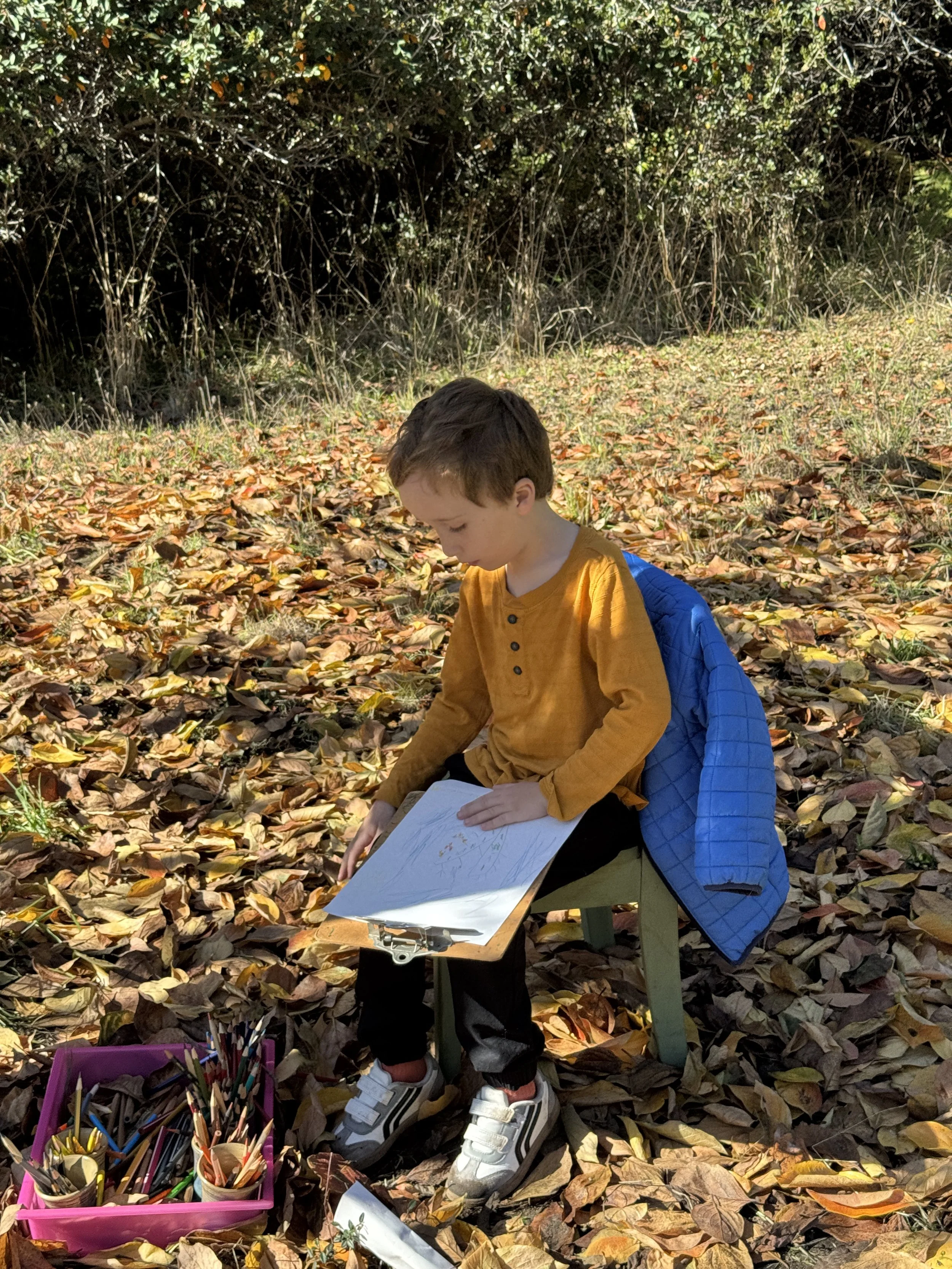
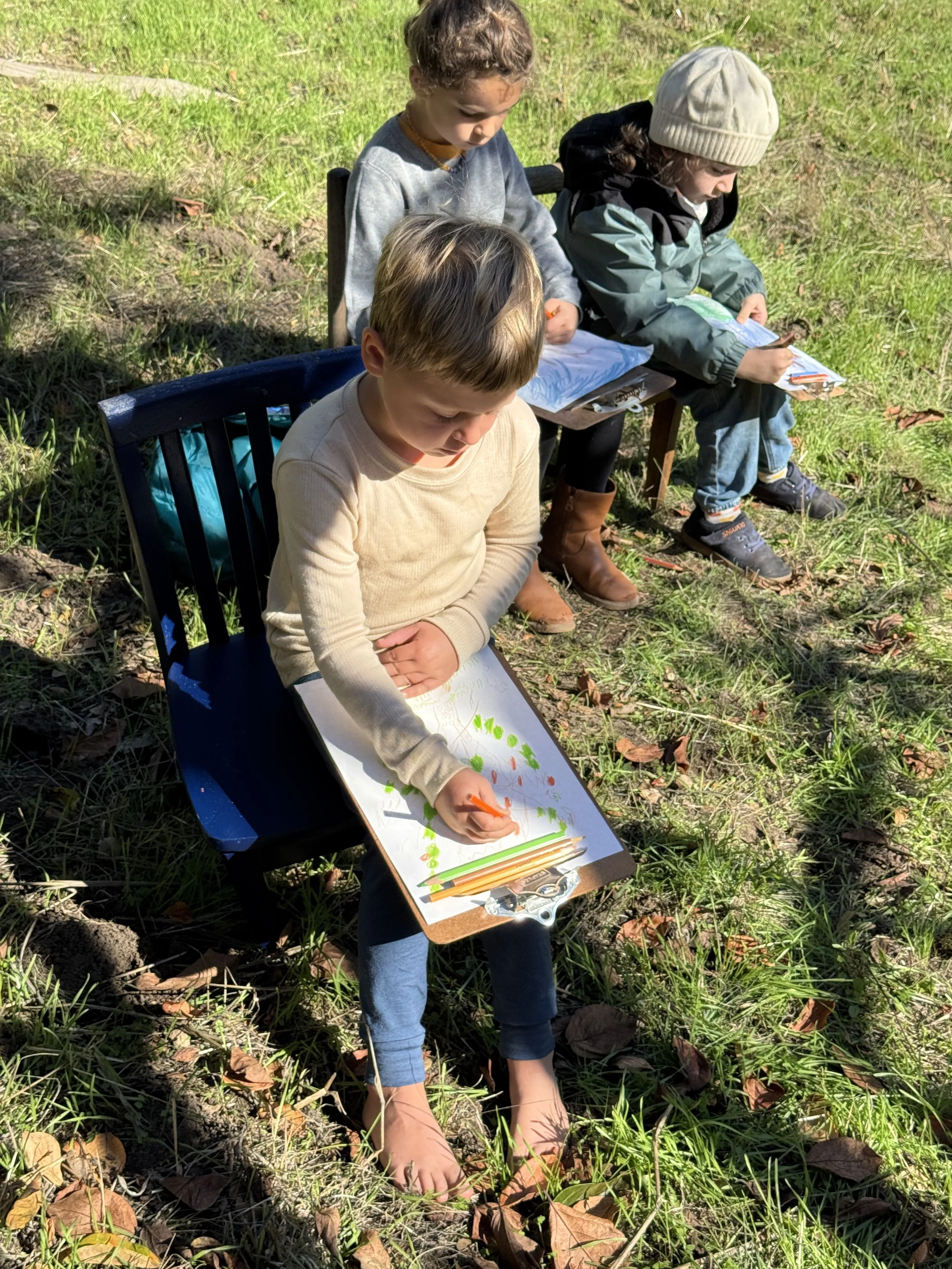
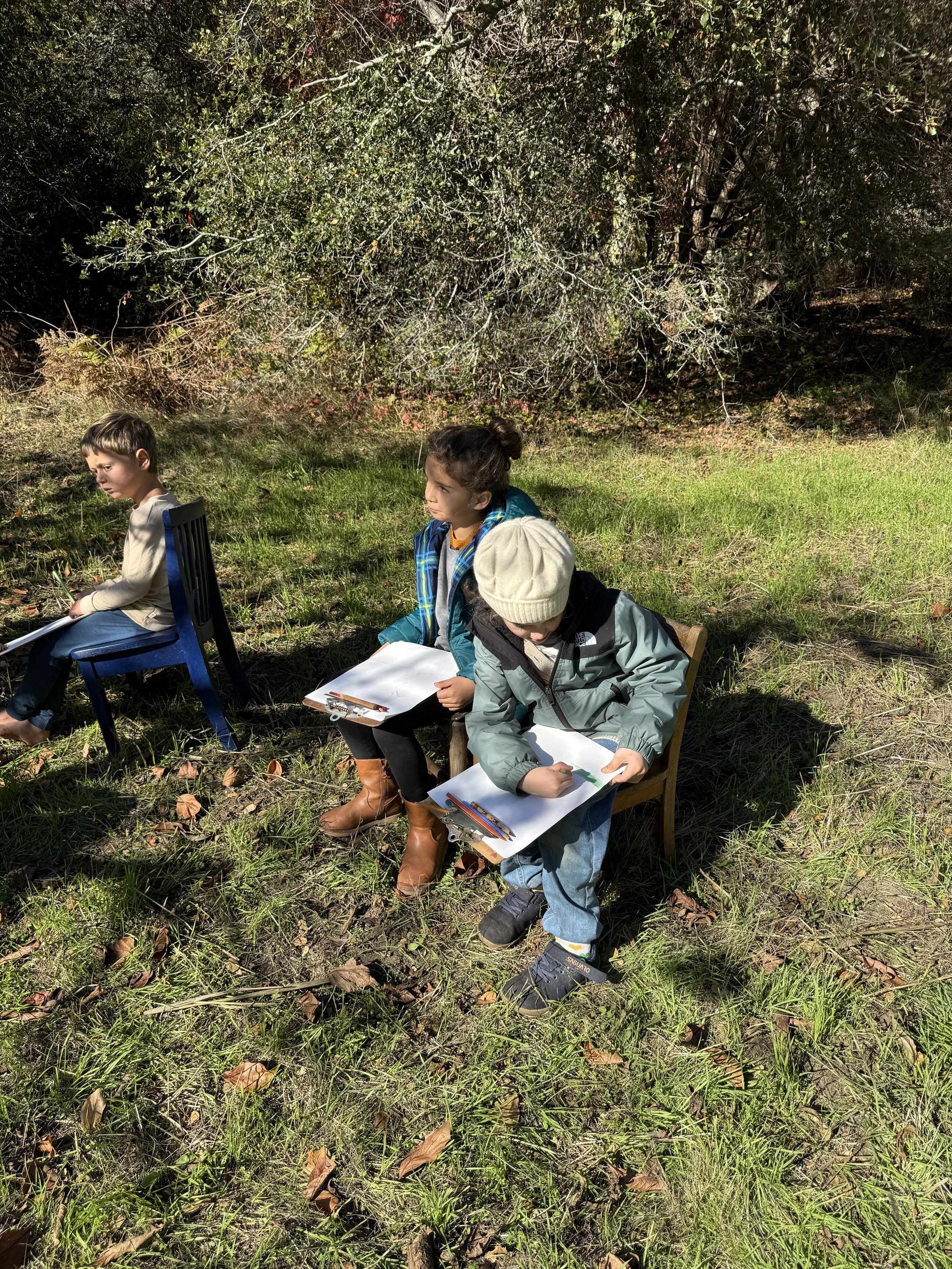
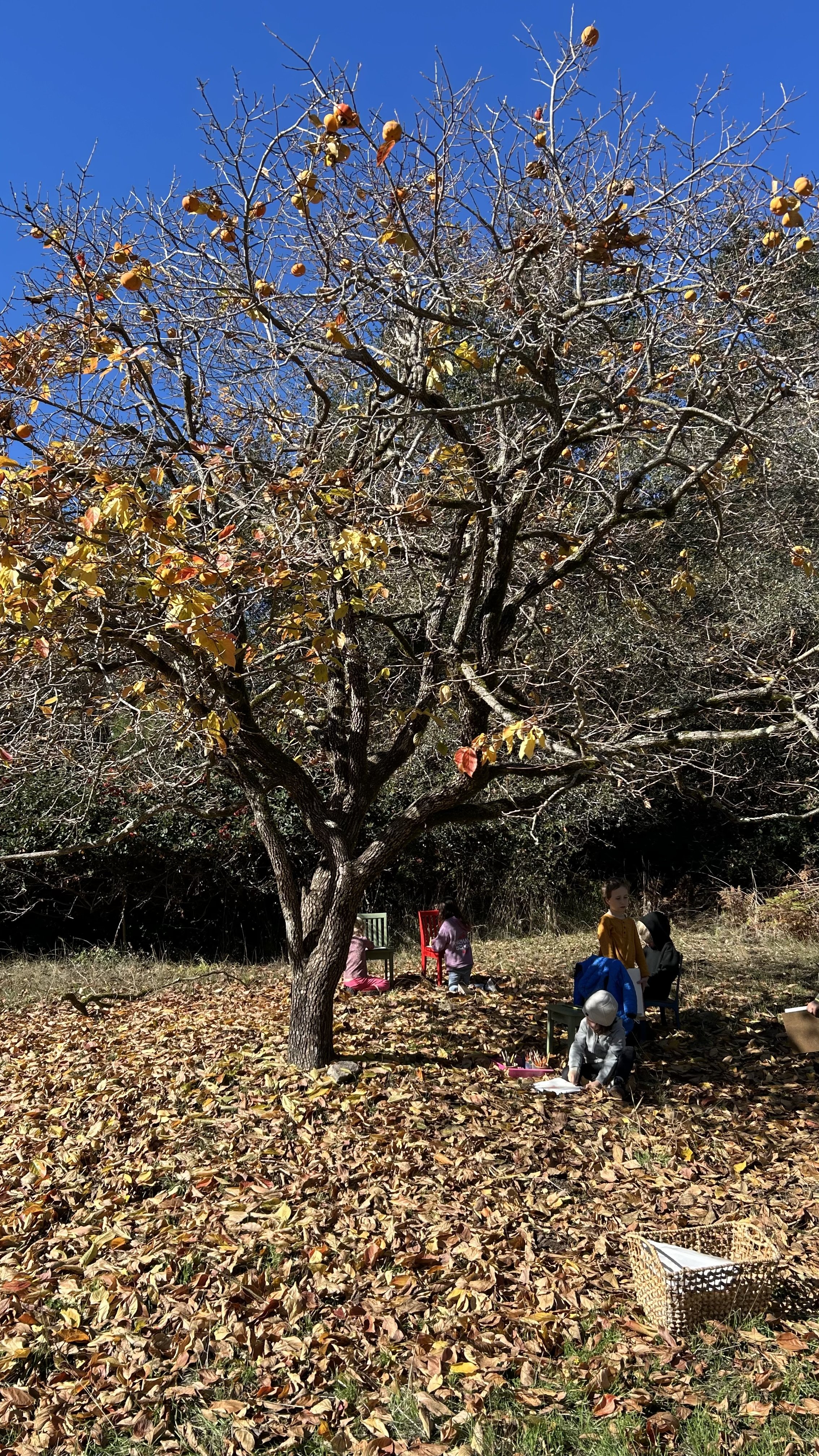
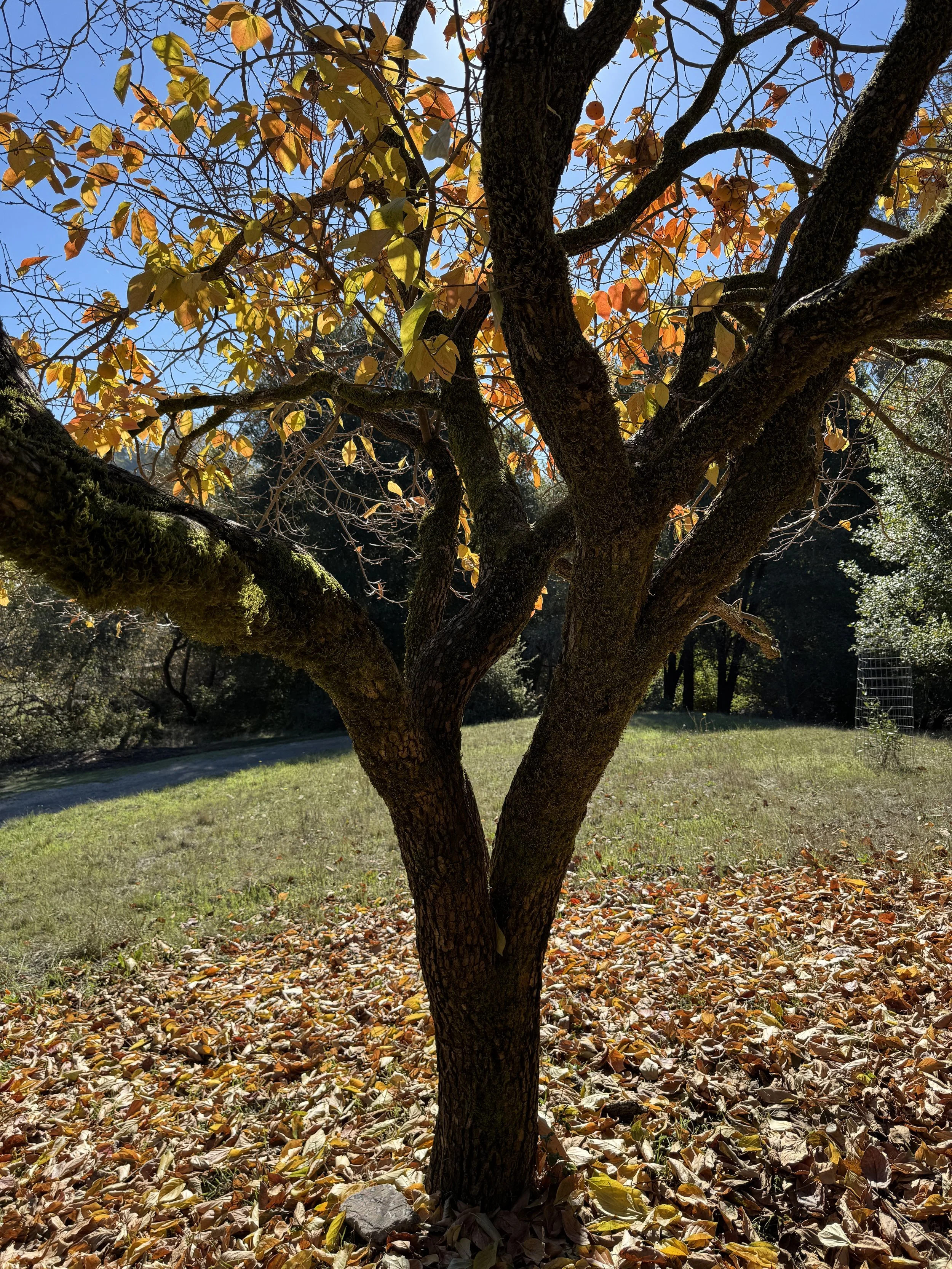
drawing and exploring trees through the seasons
observing rotting pumpkins
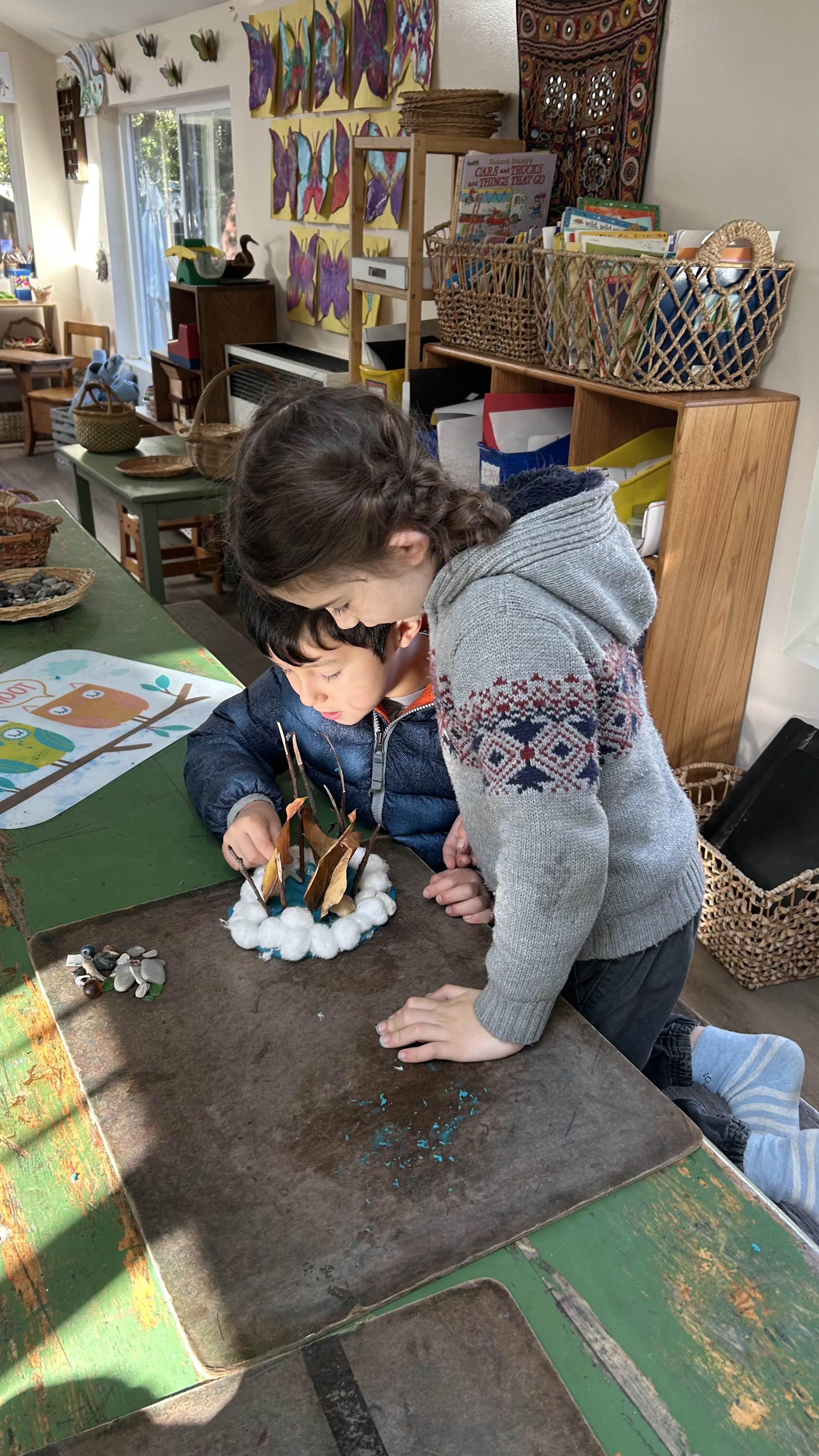
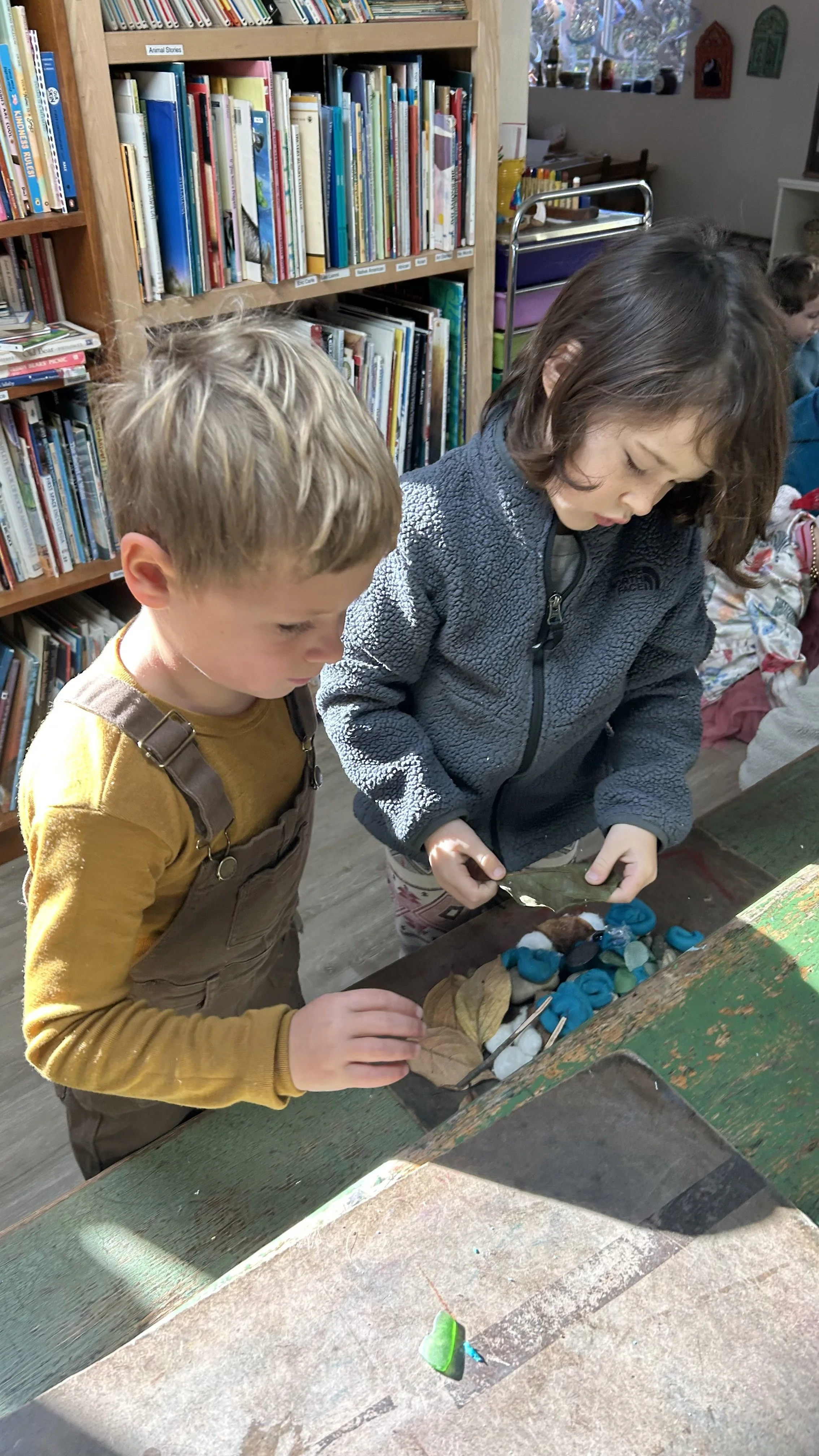
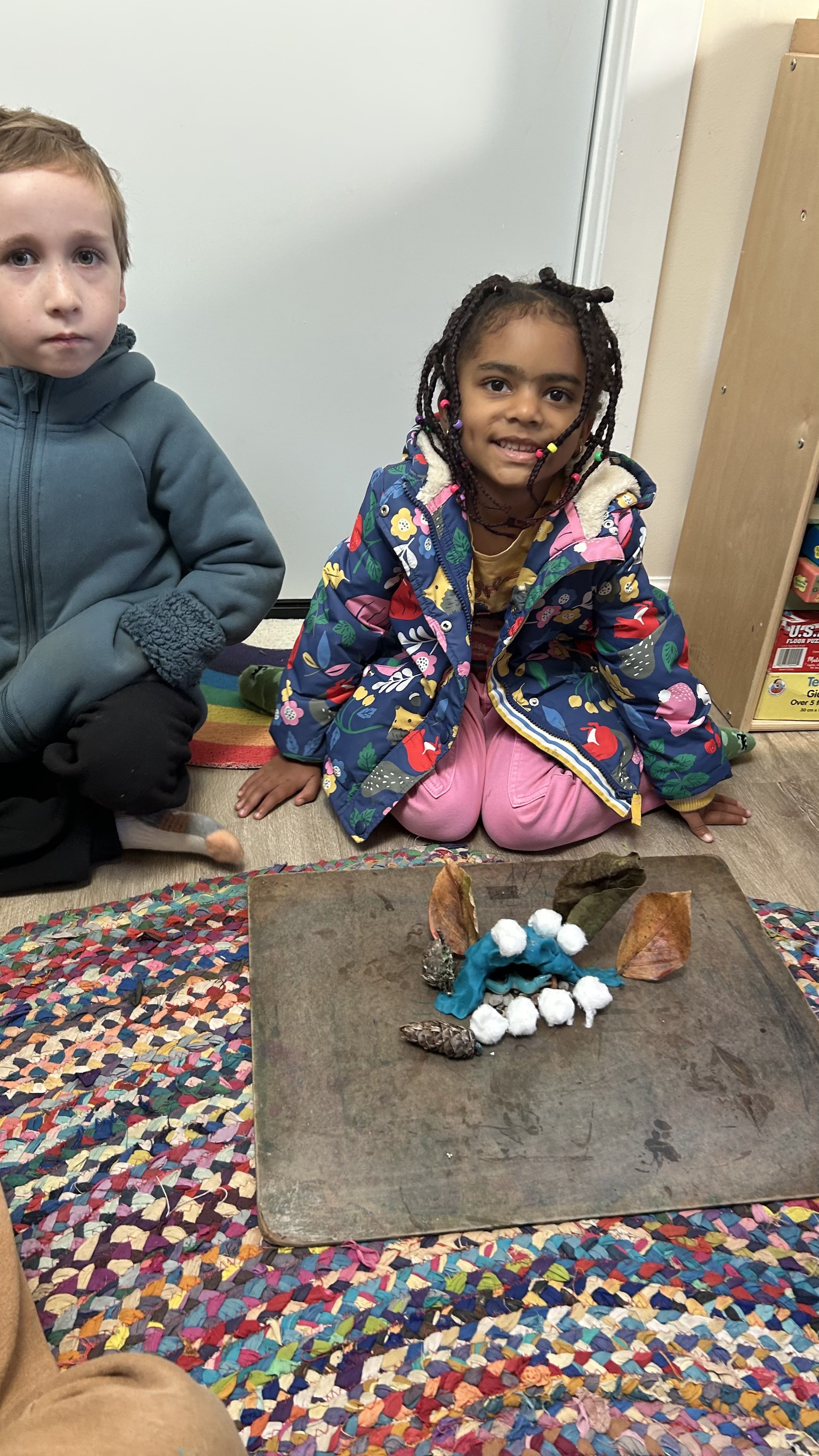
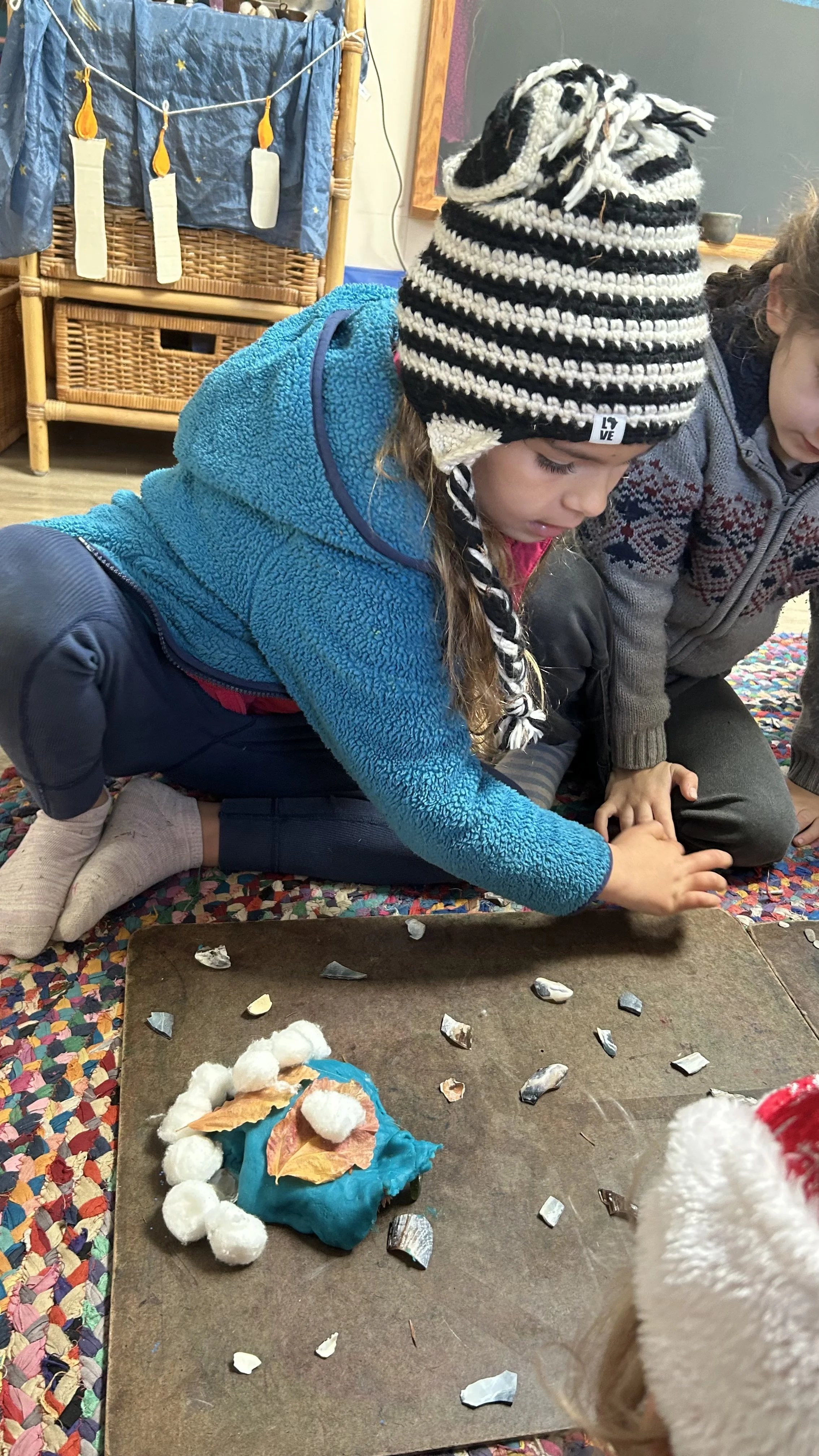
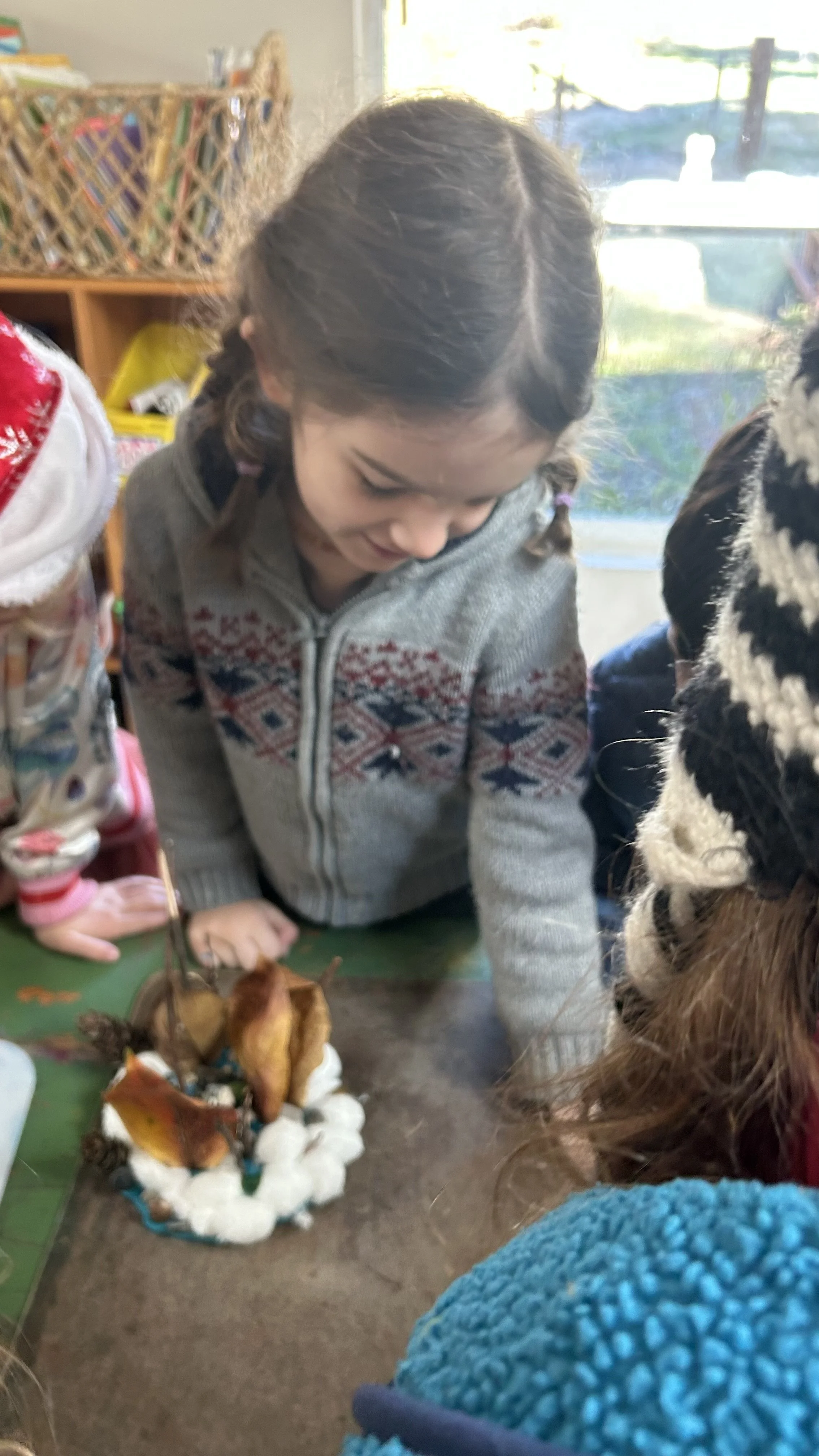
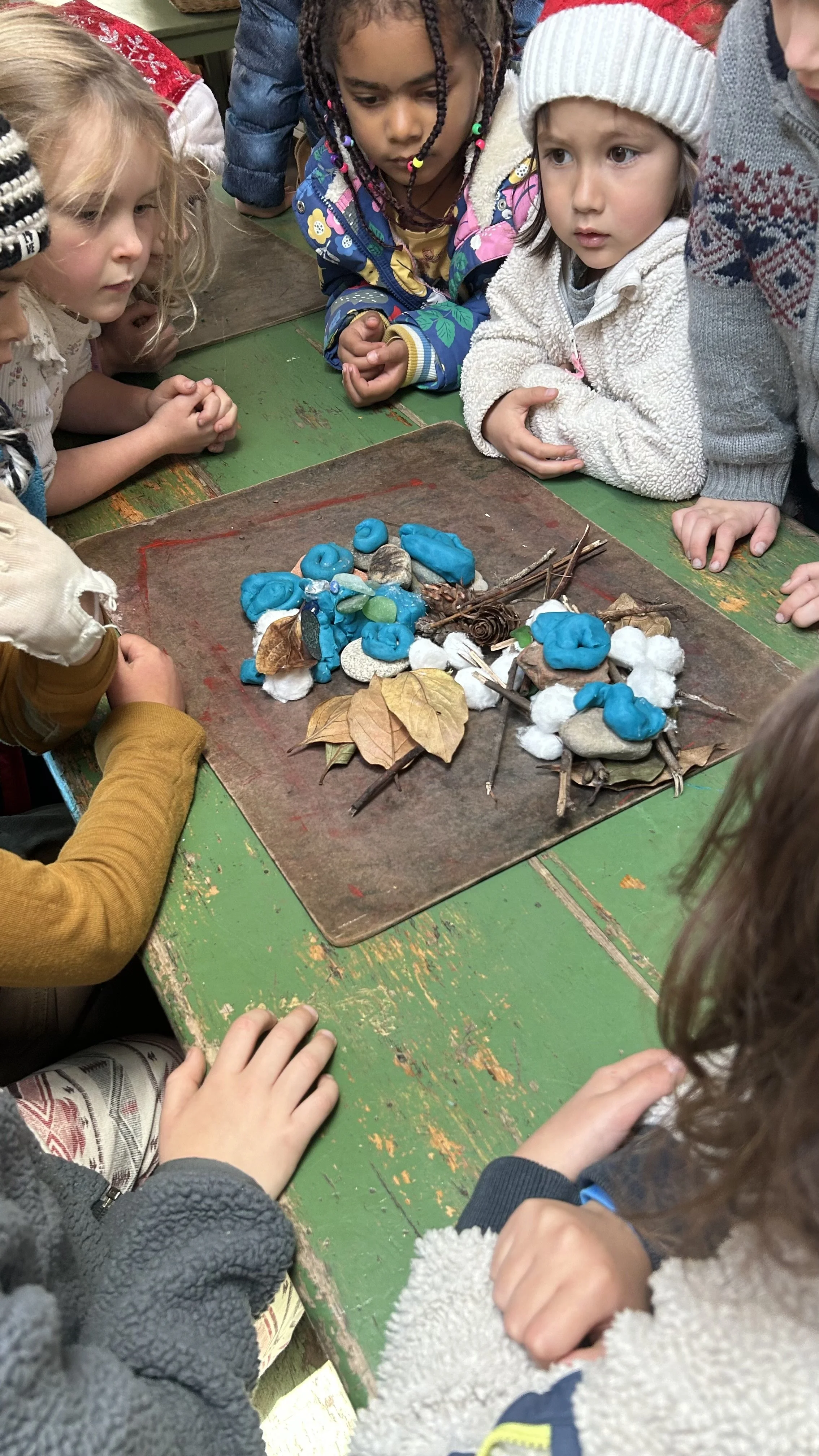
learning about hibernating animals and making burrows and caves just like they do
making slime
practicing using droppers and seeing how many drops can fit on a penny
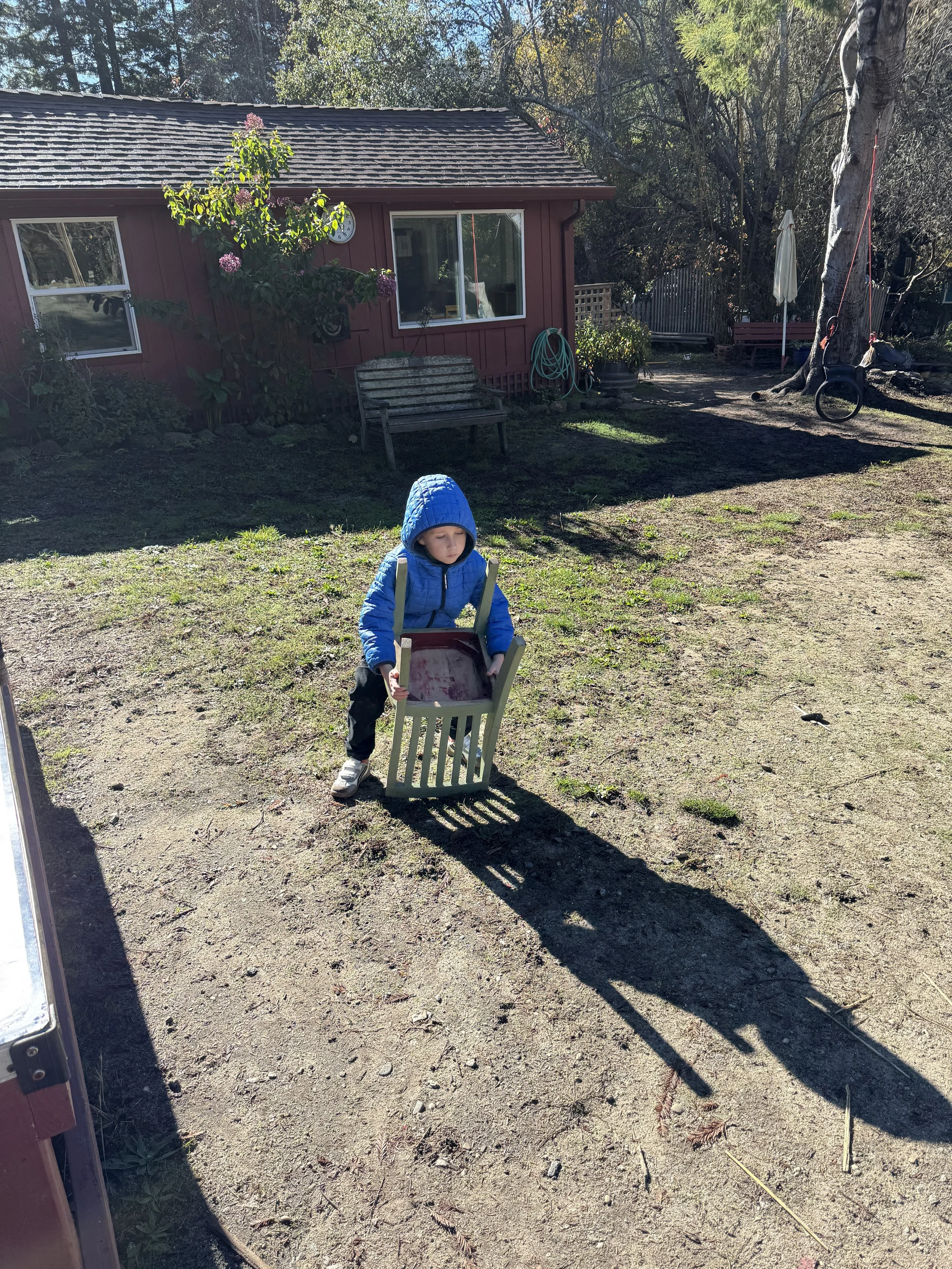
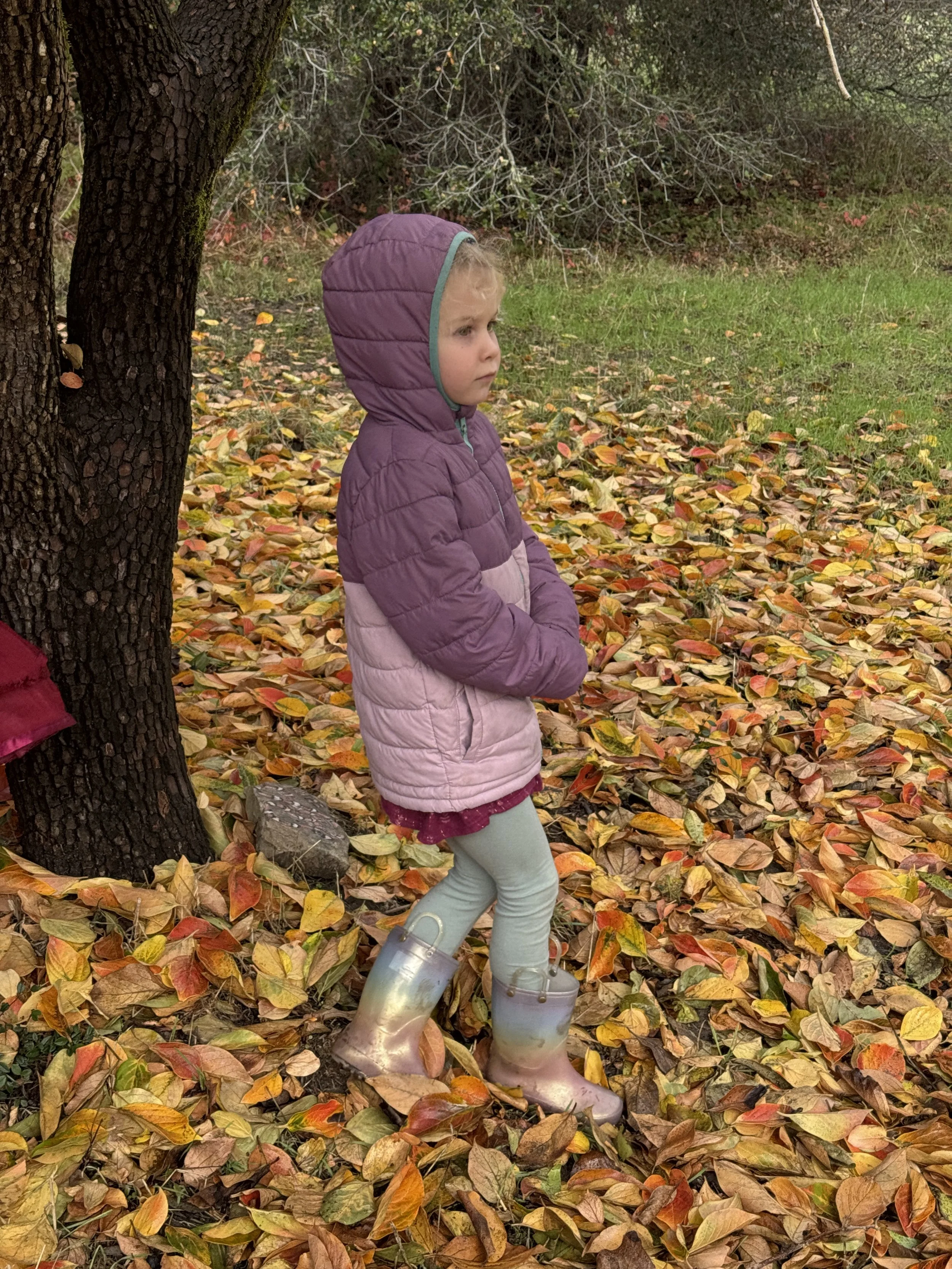
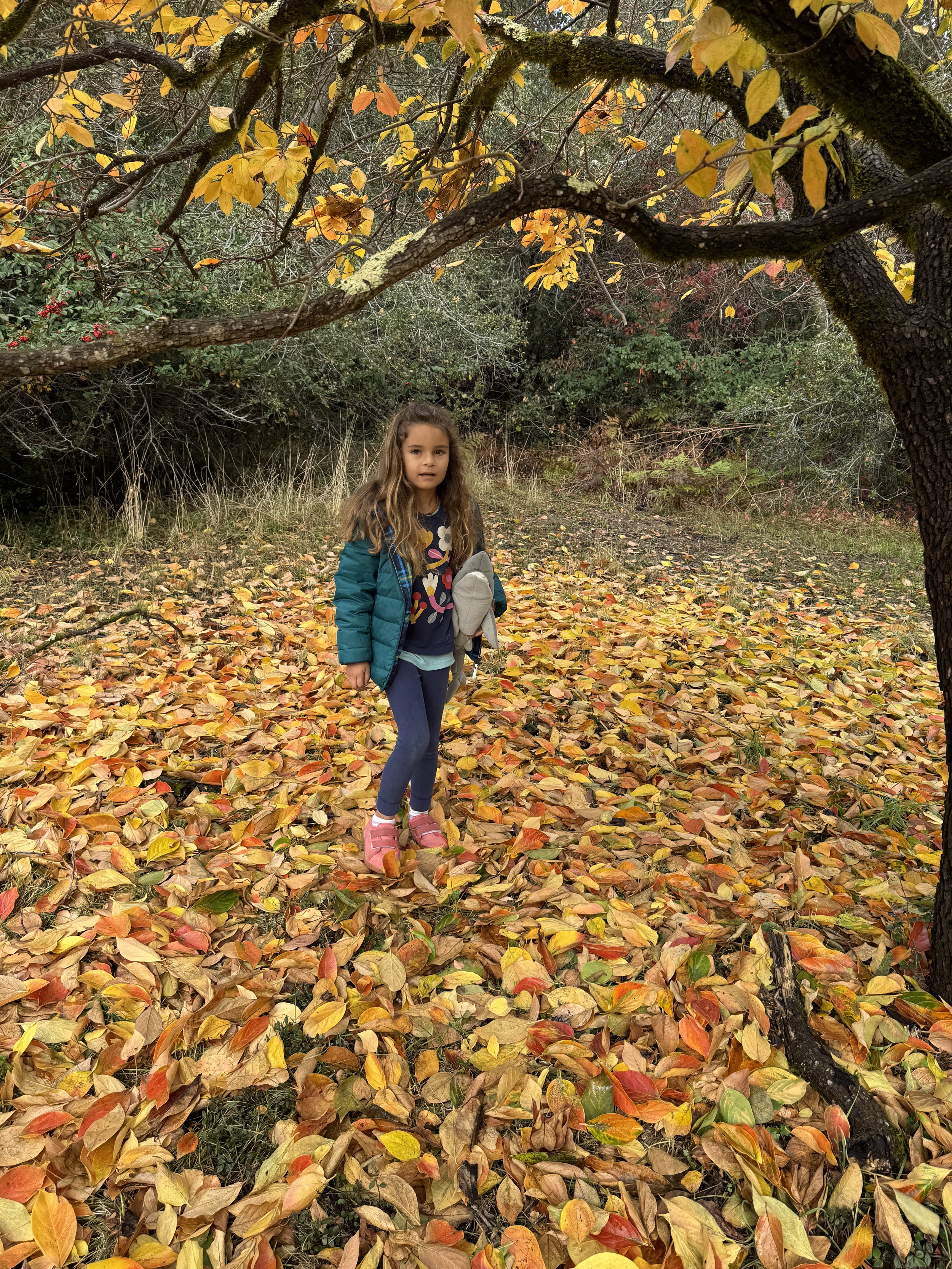
This slide shows is over the course of two visits to the persimmon tree. Kids carried chairs up there and spent time examining how the tree had changed since late summer. It is such a good tree for this because the difference is so striking. They drew what they saw. Another visit was to collect persimmons for the stone soup feast.
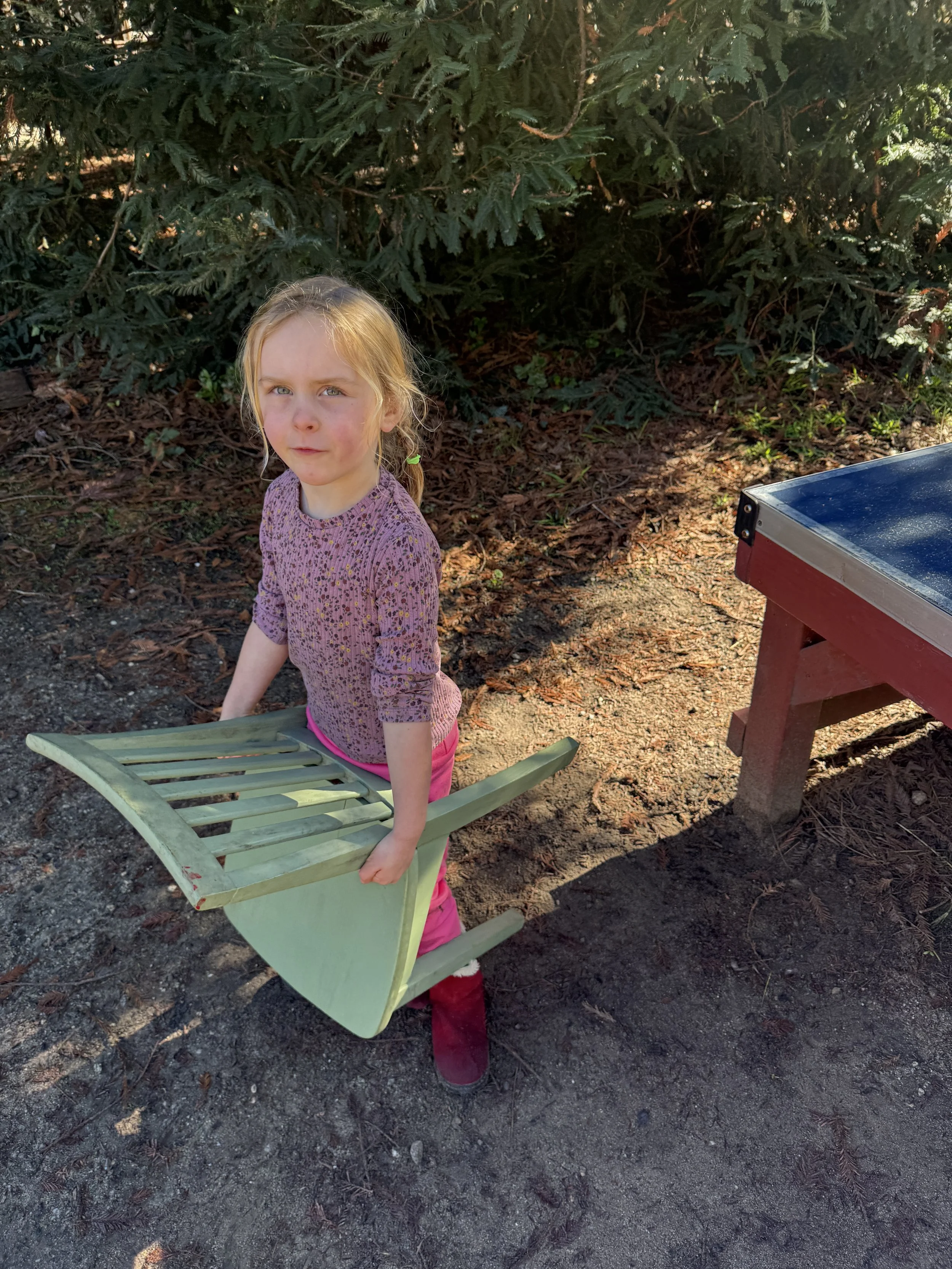
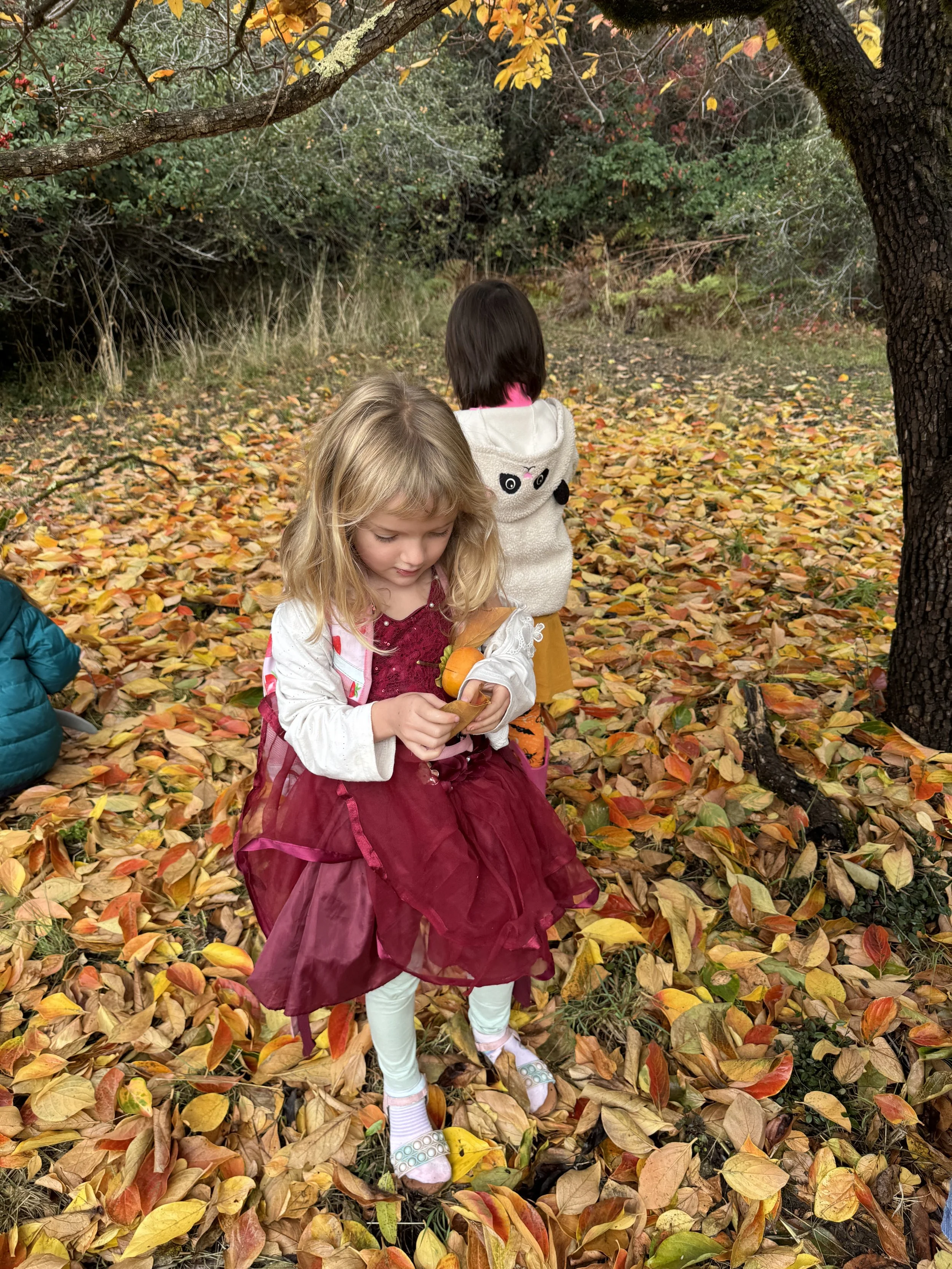
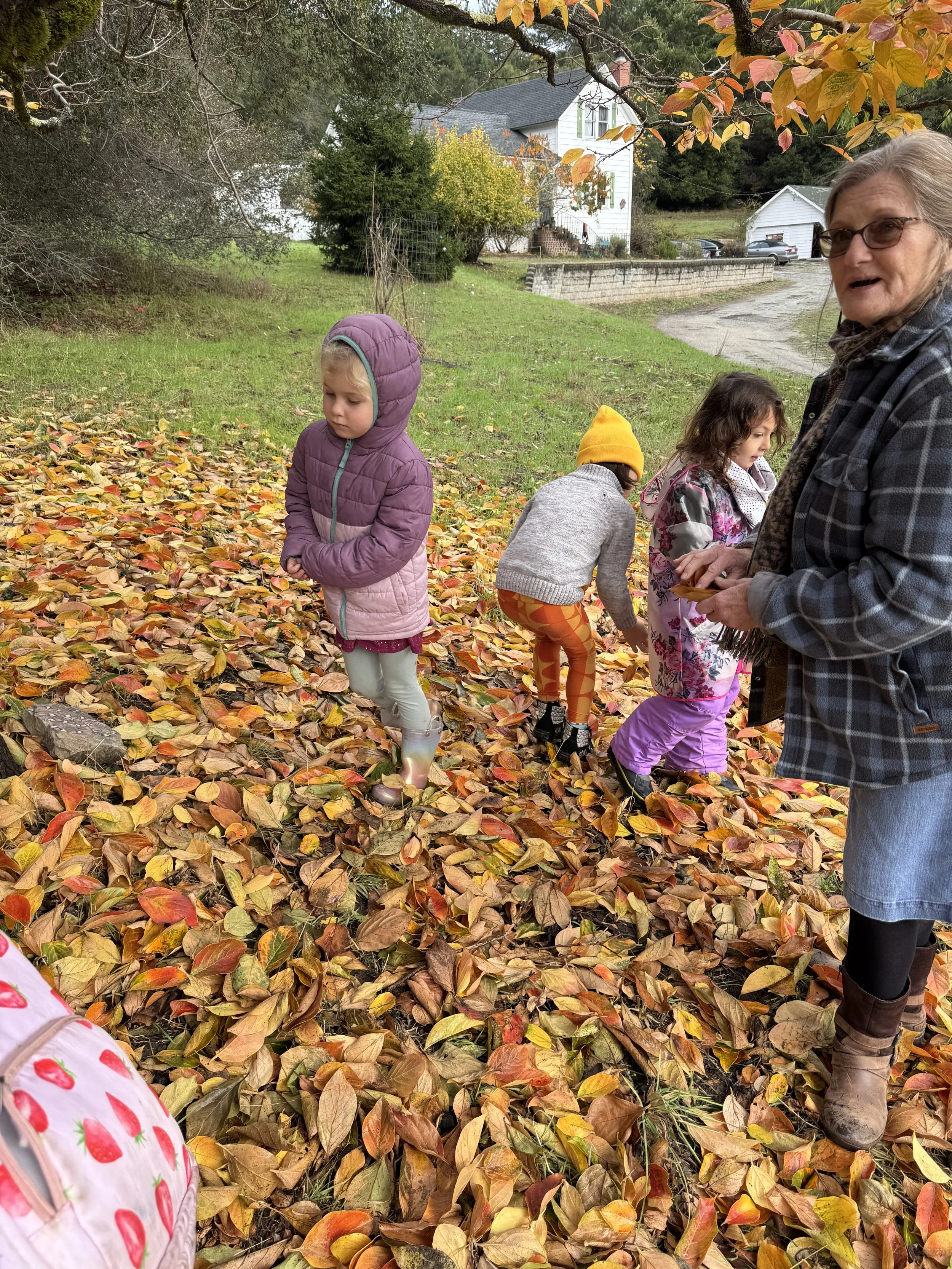
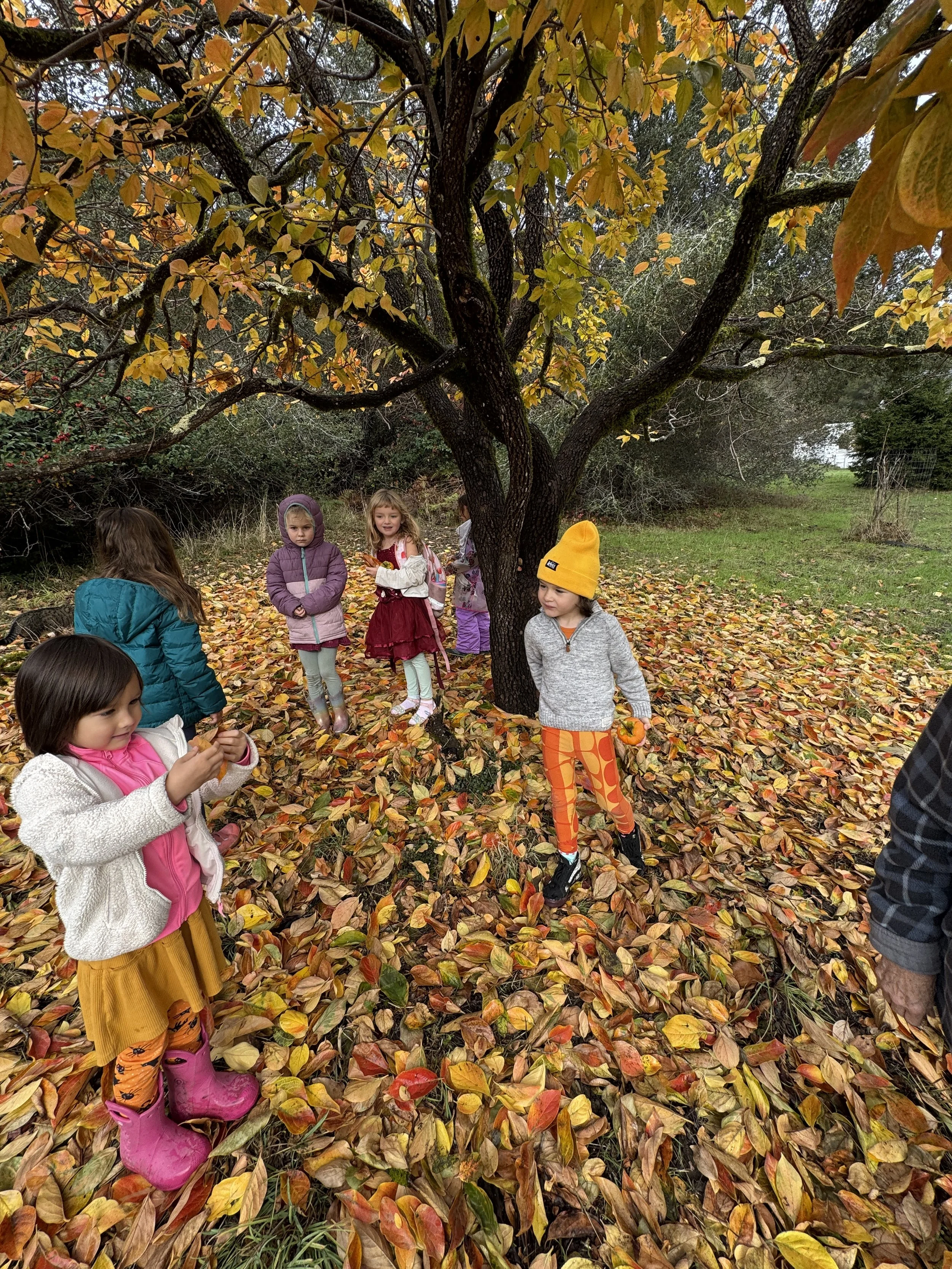
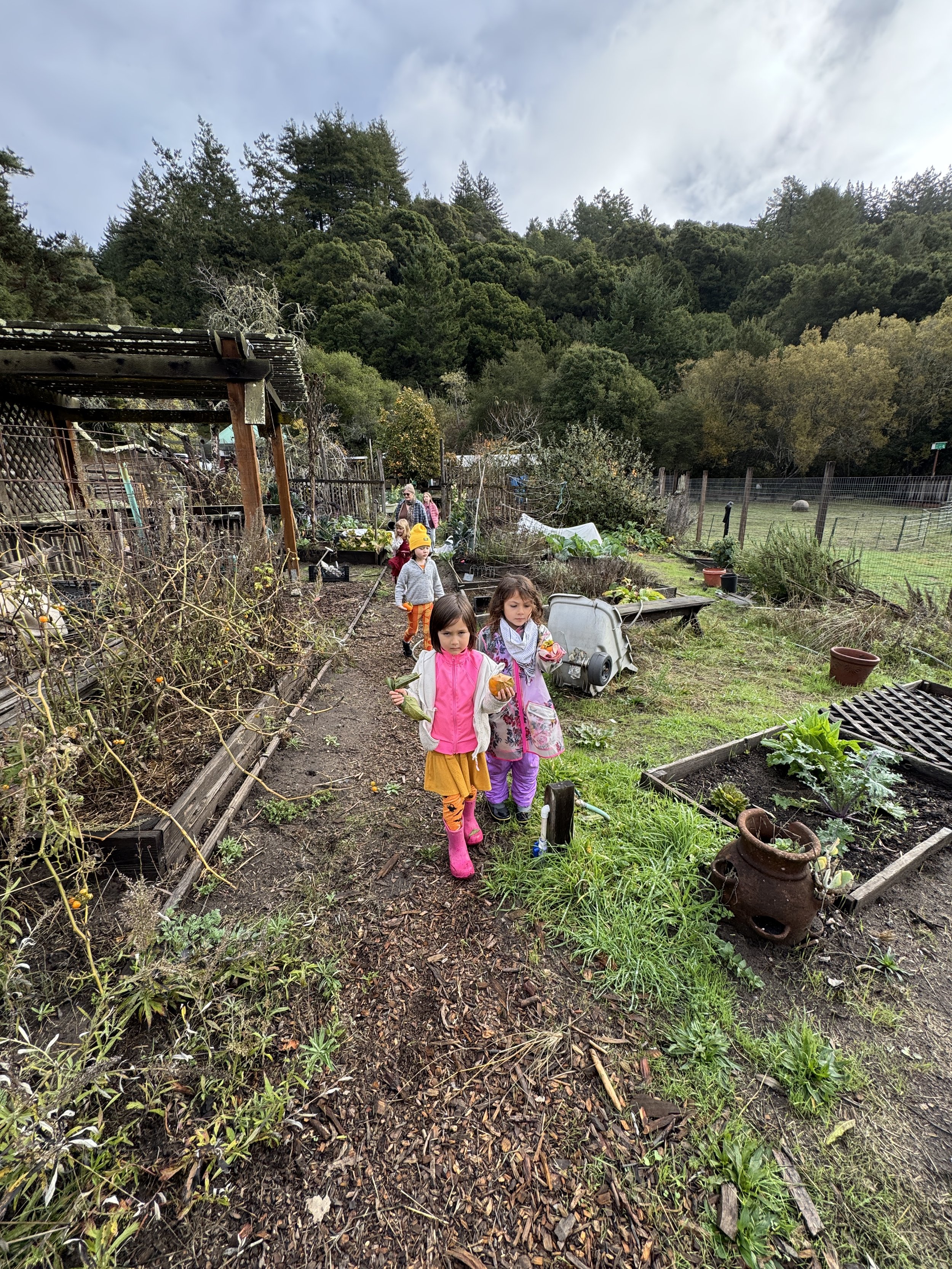
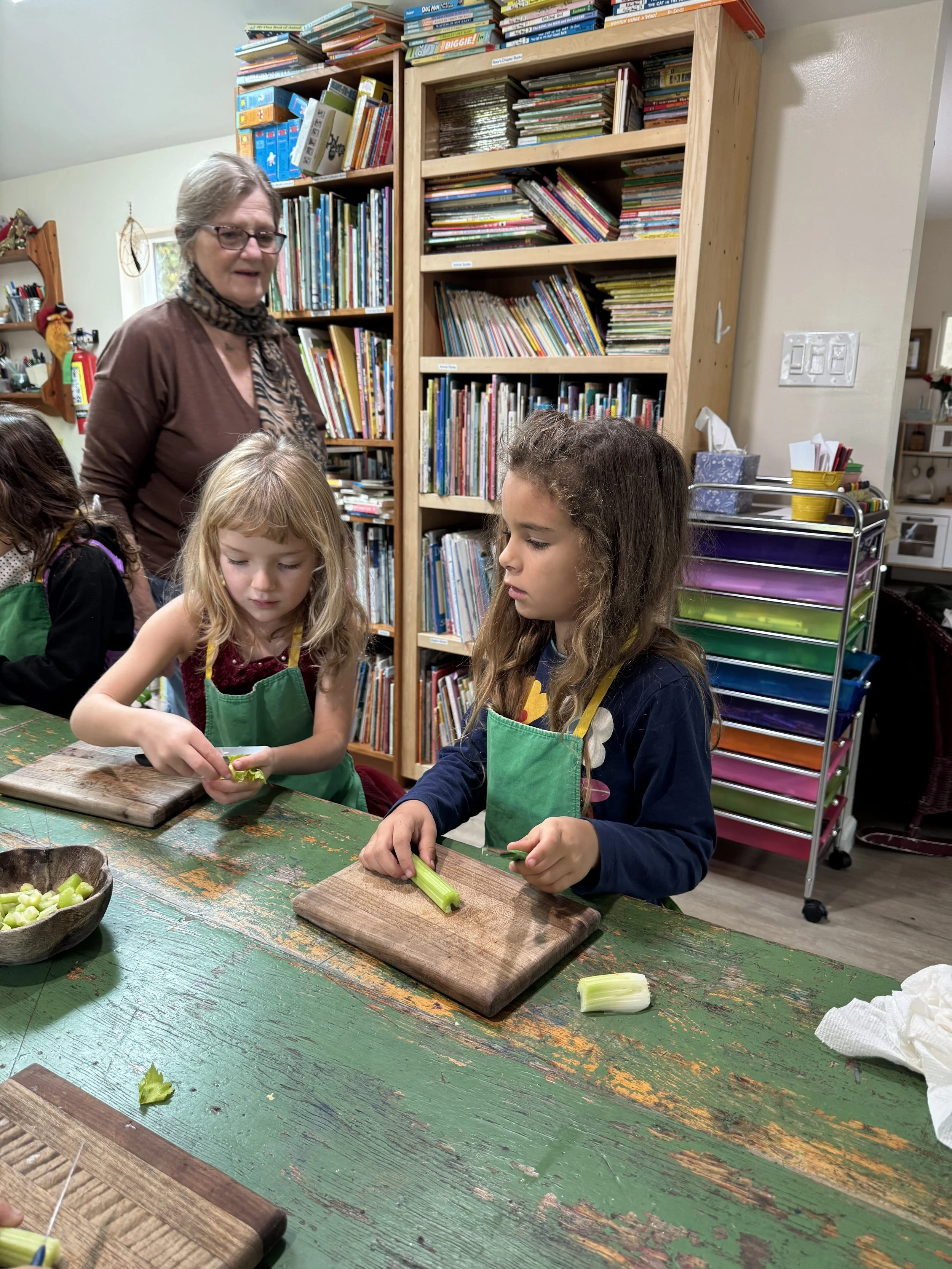
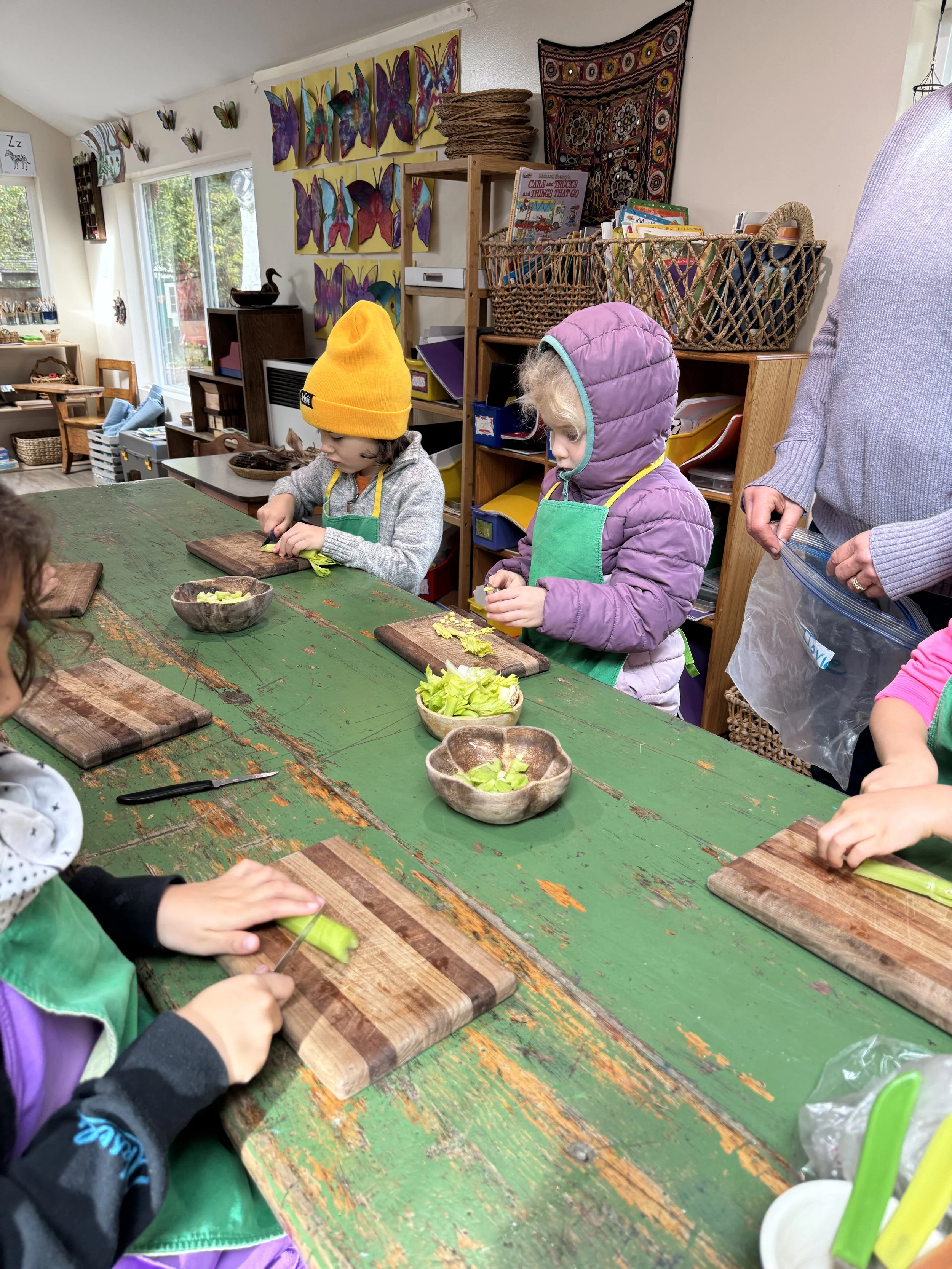
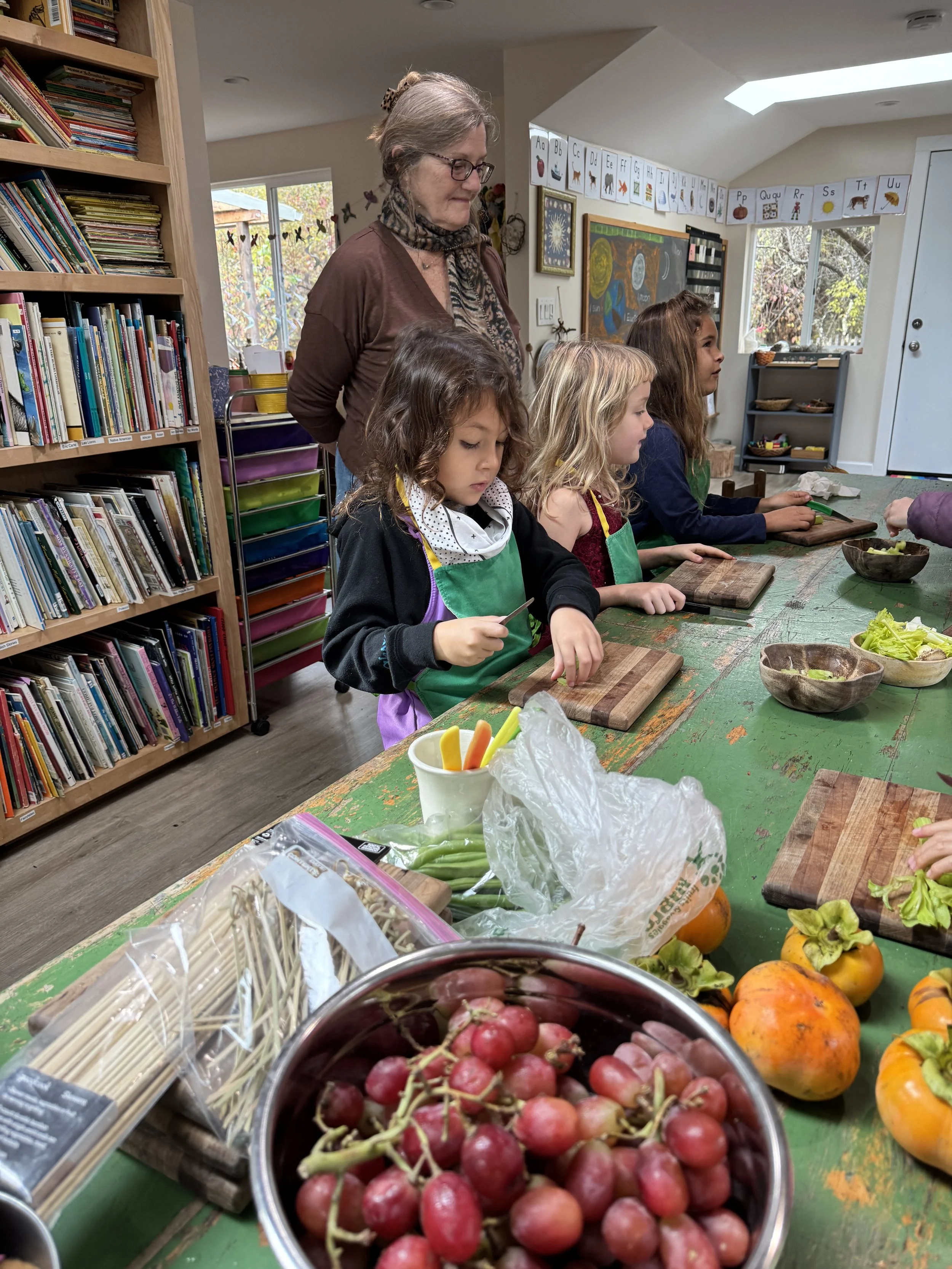
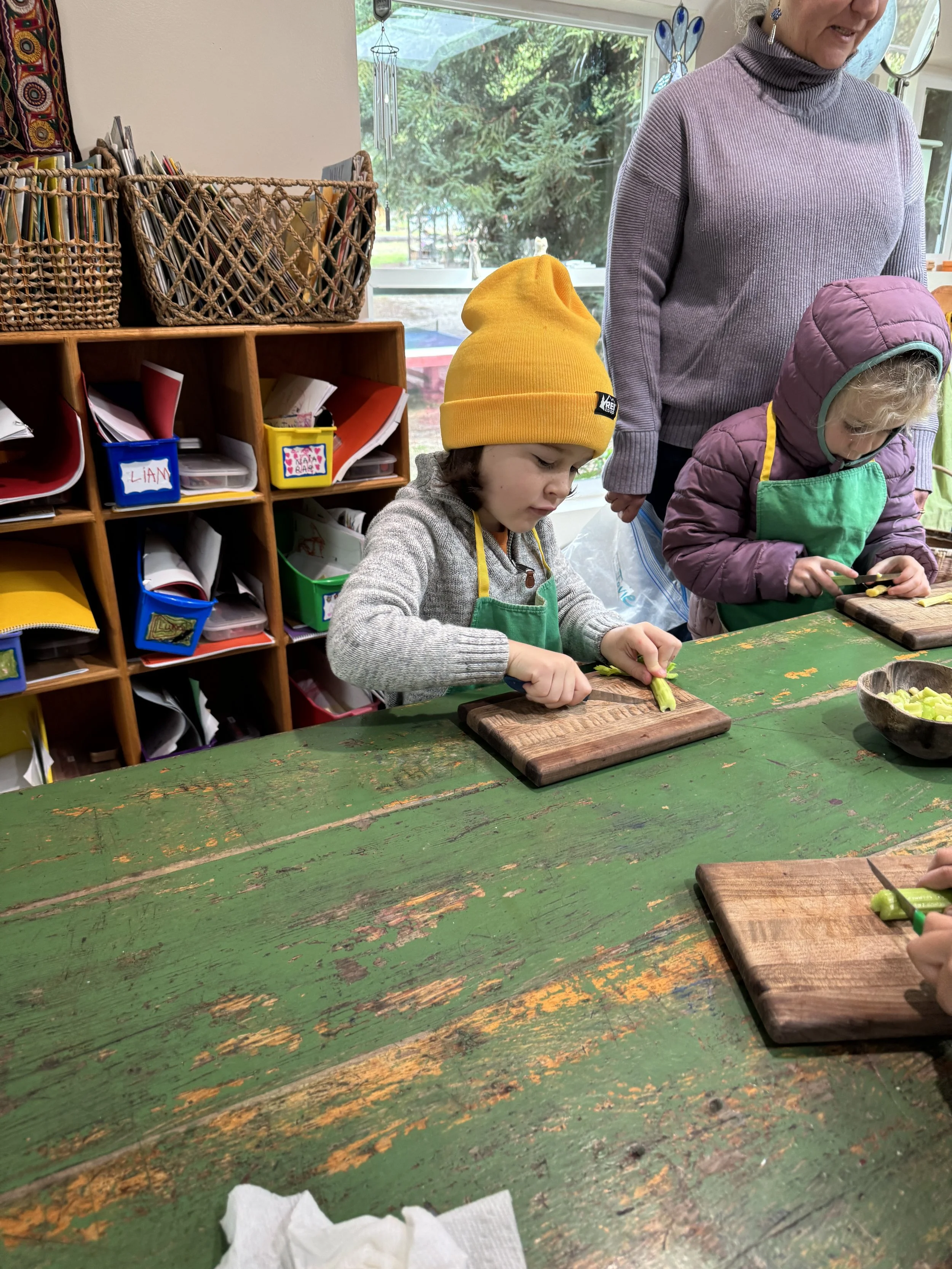
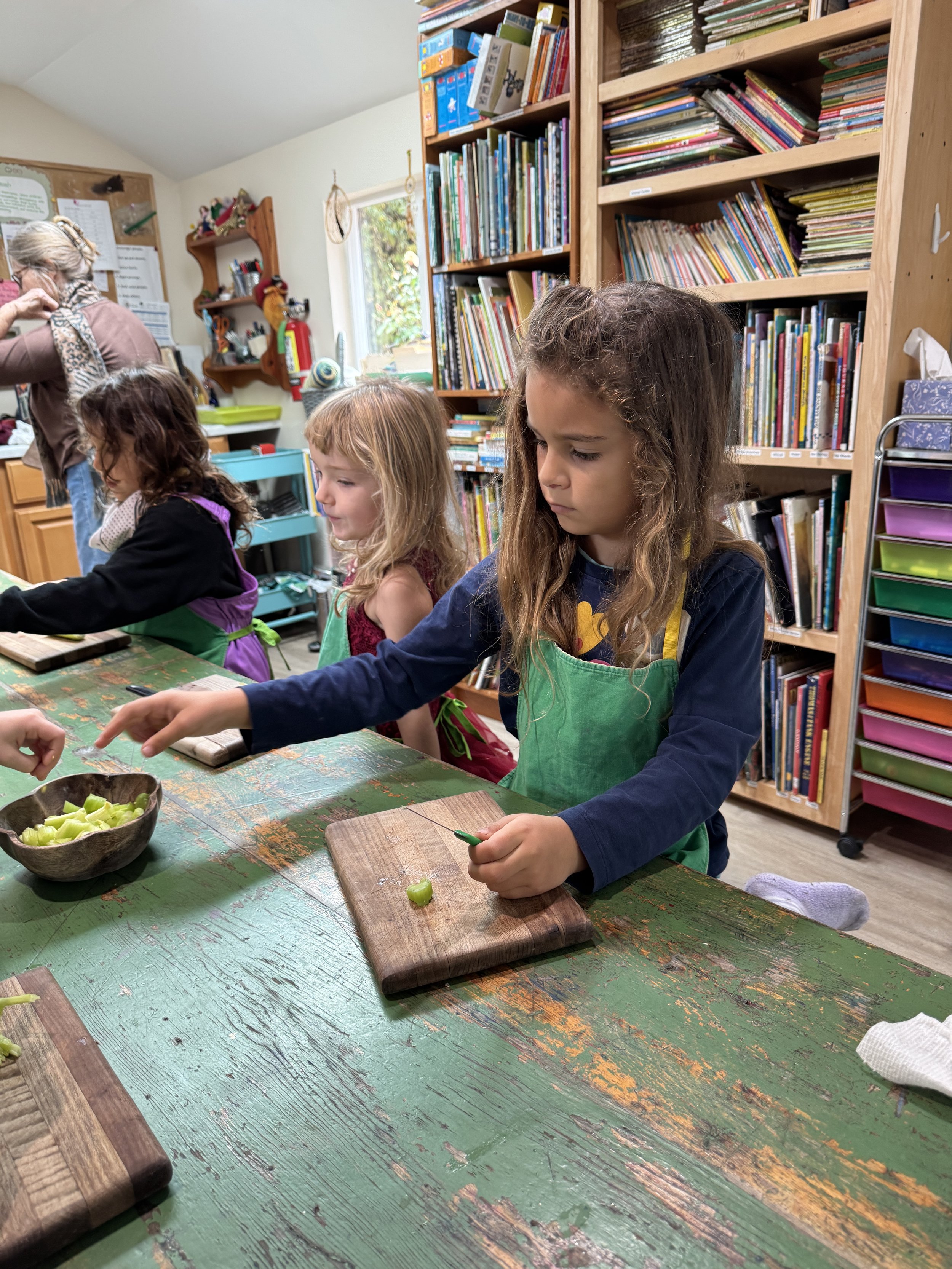
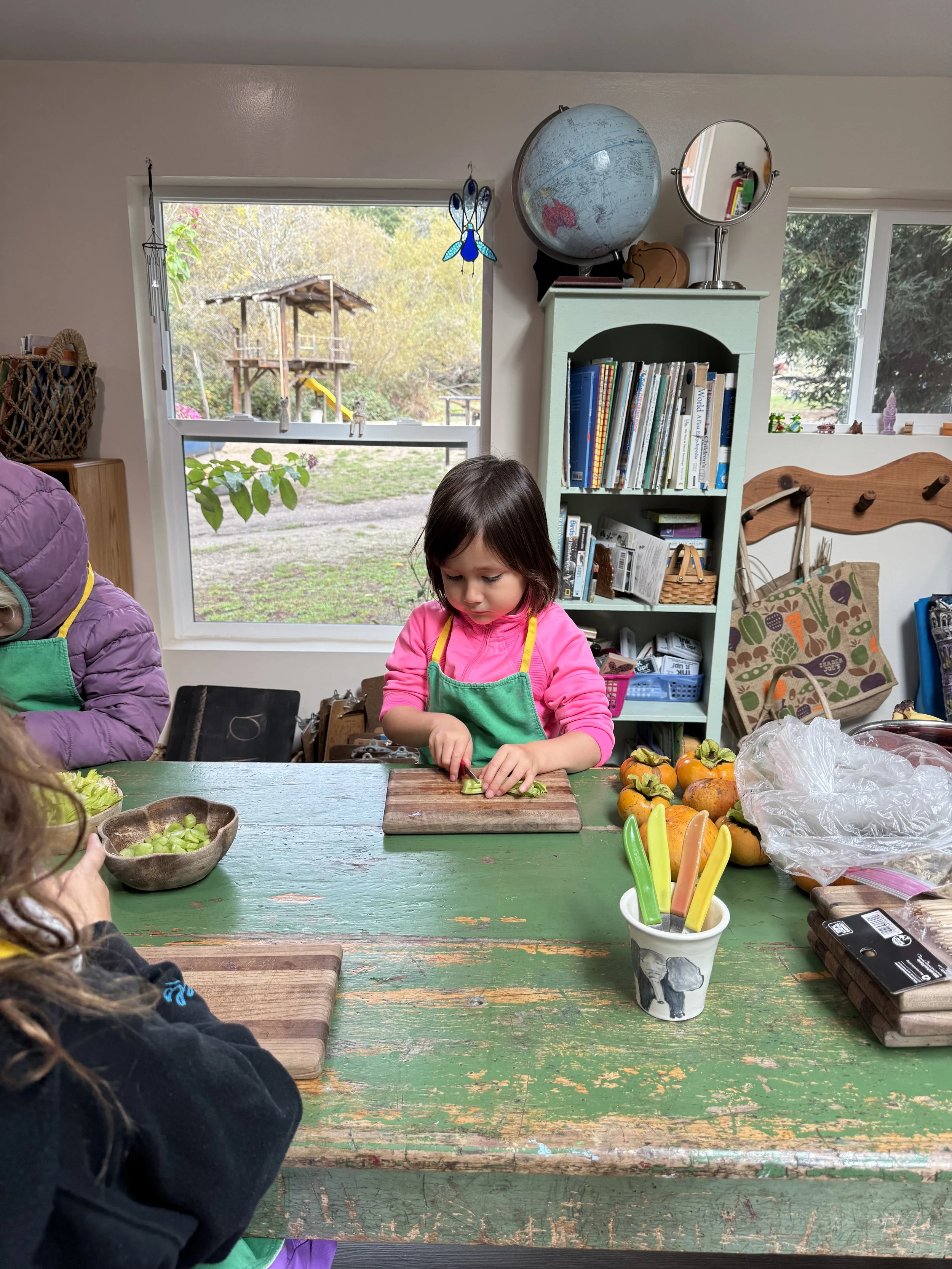
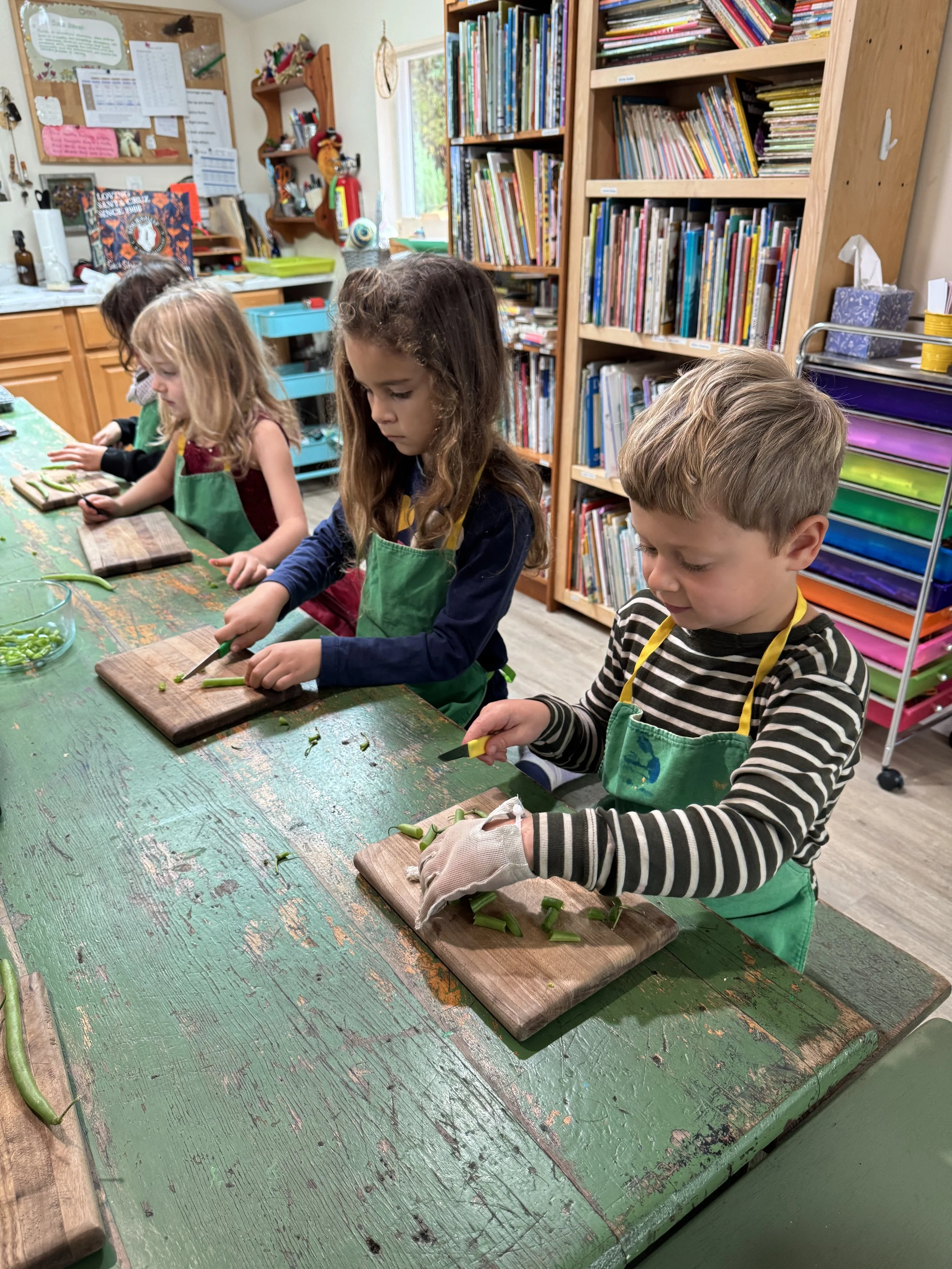
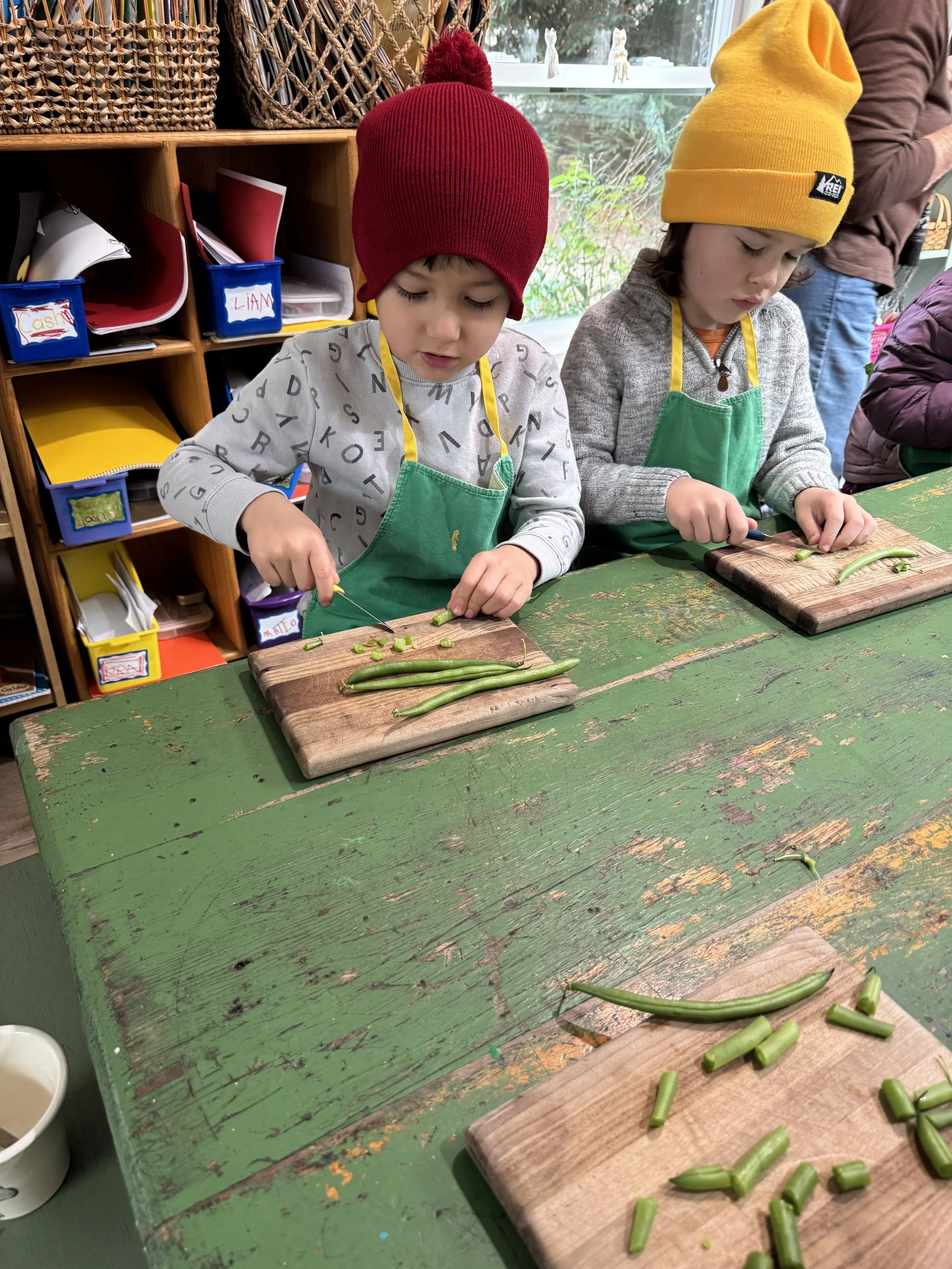
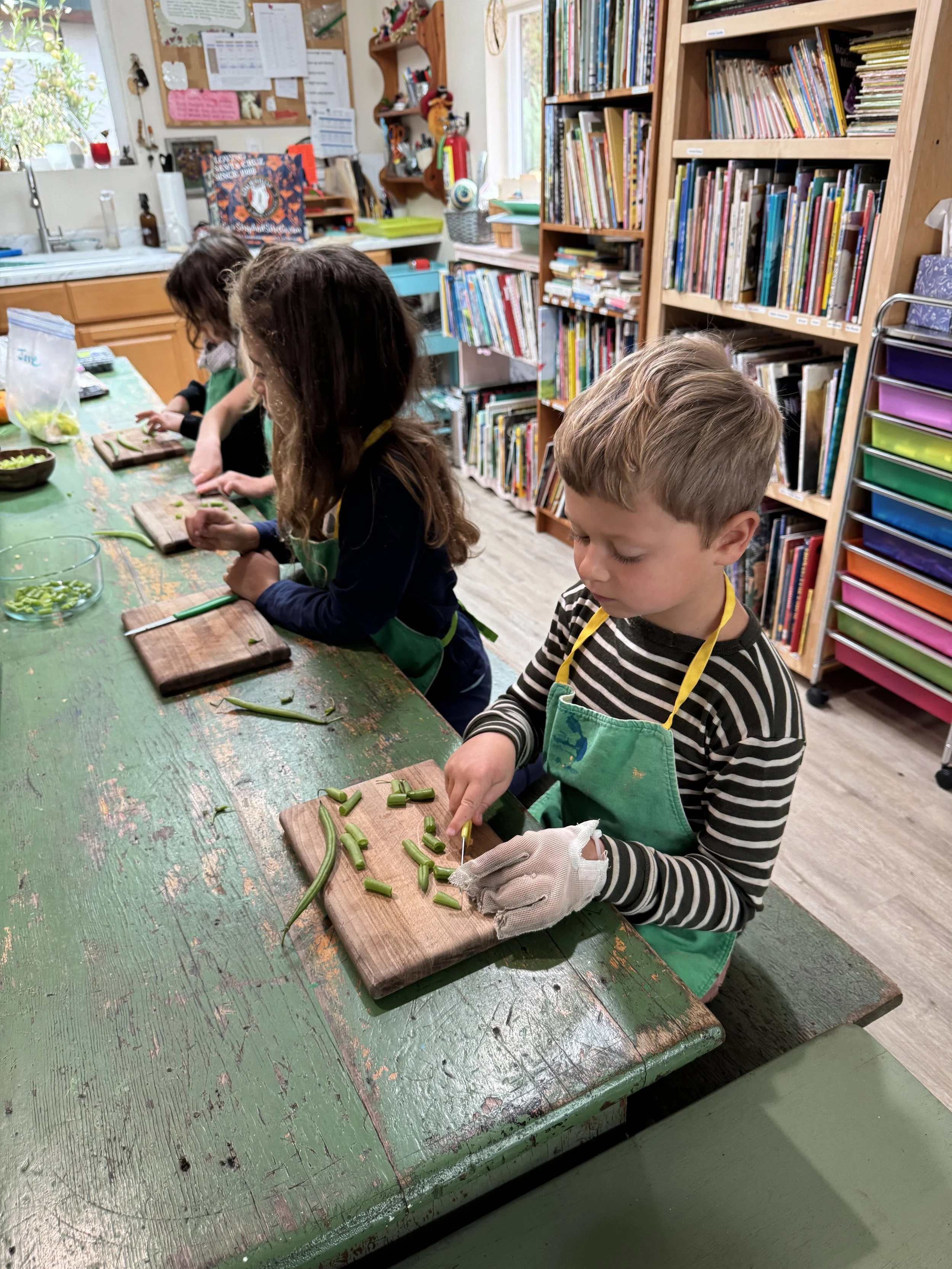
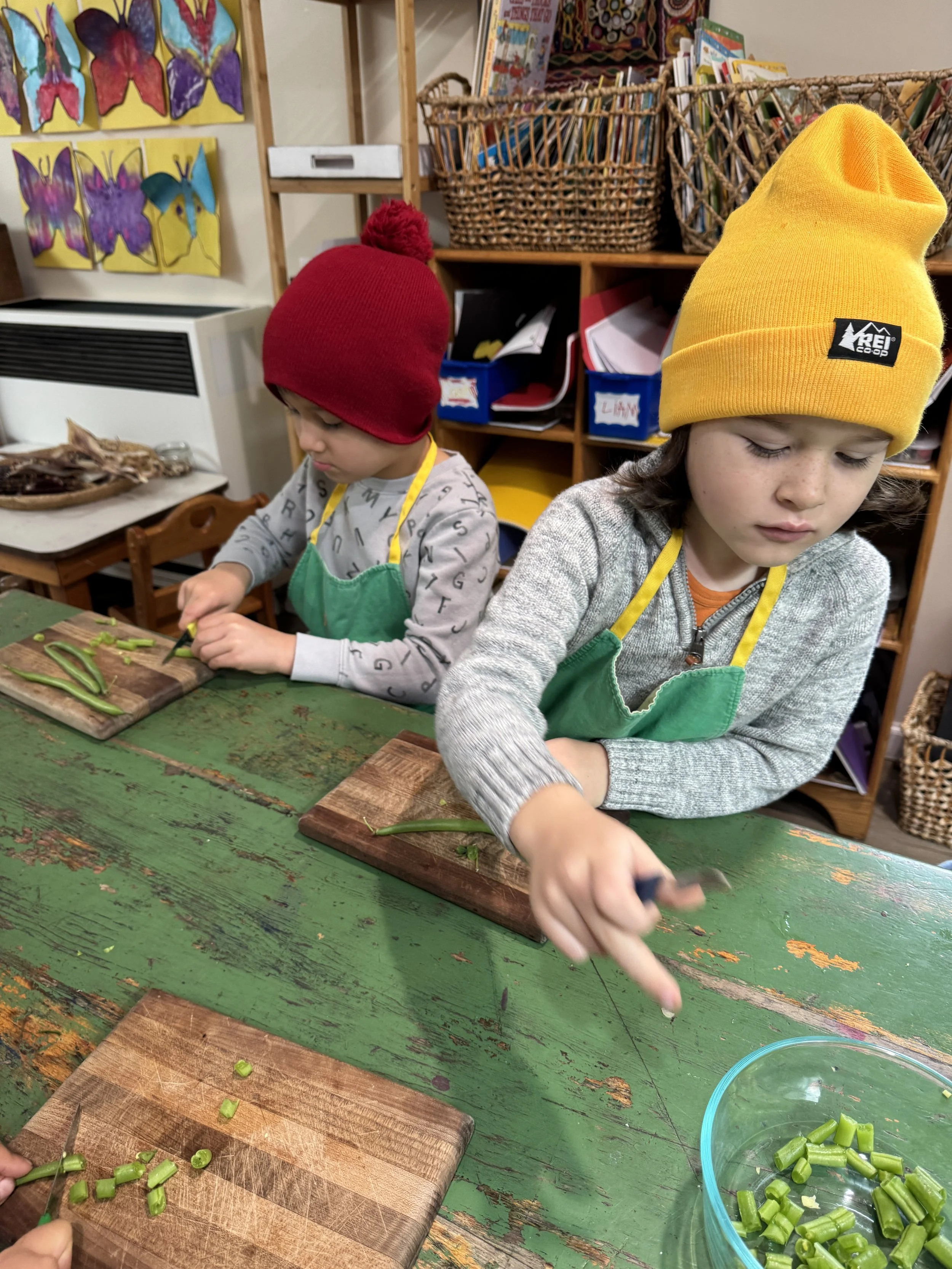
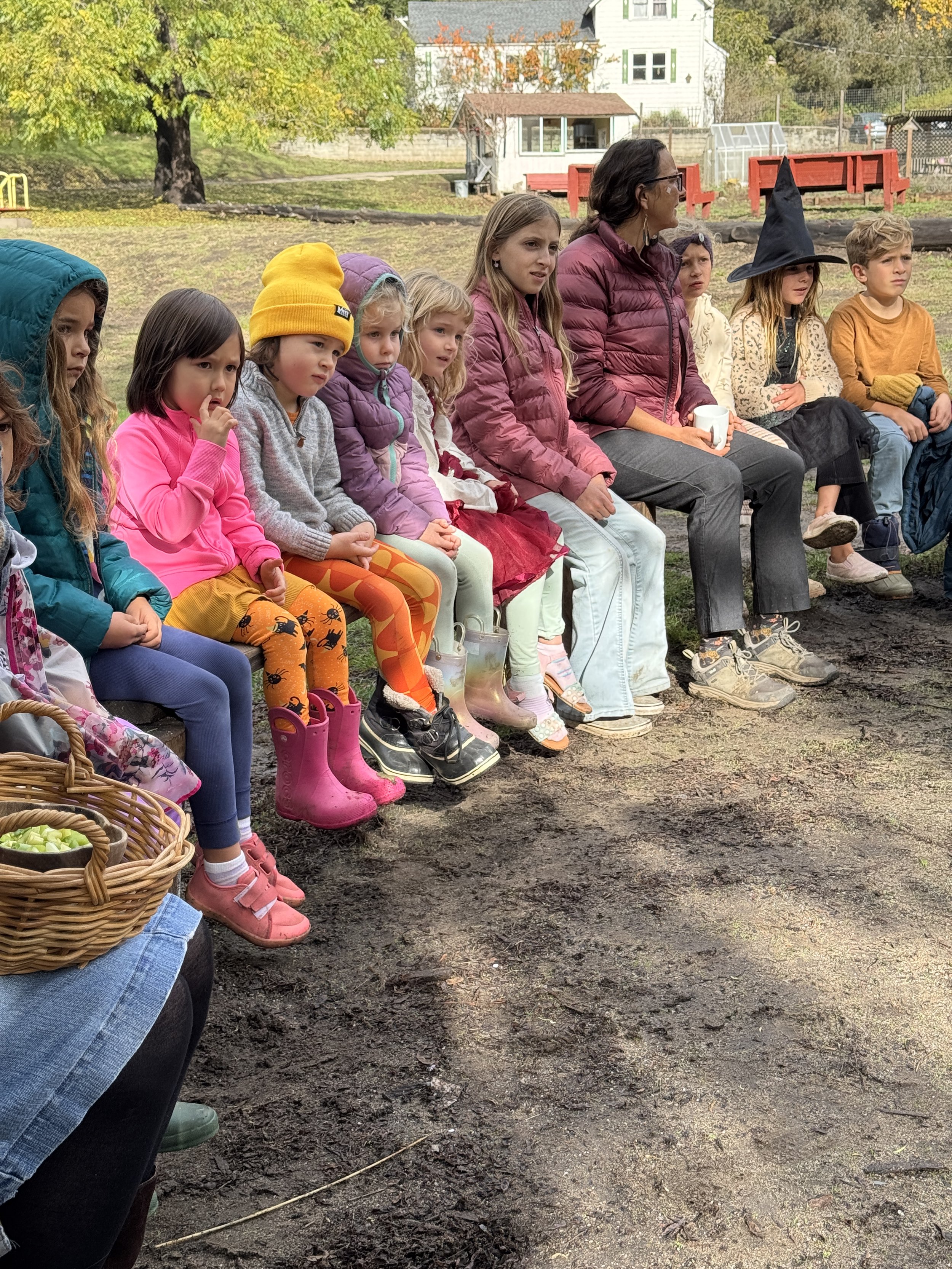
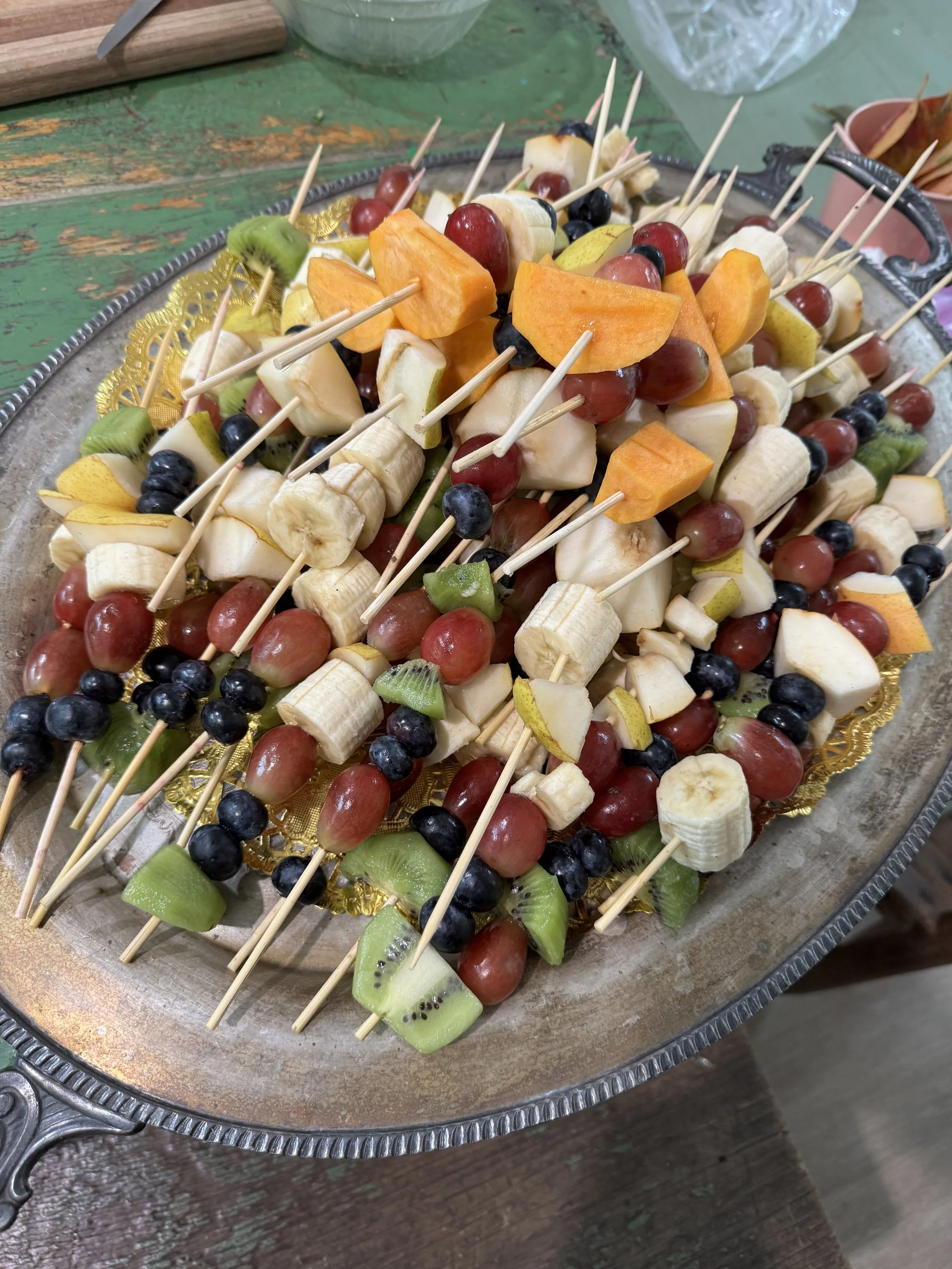
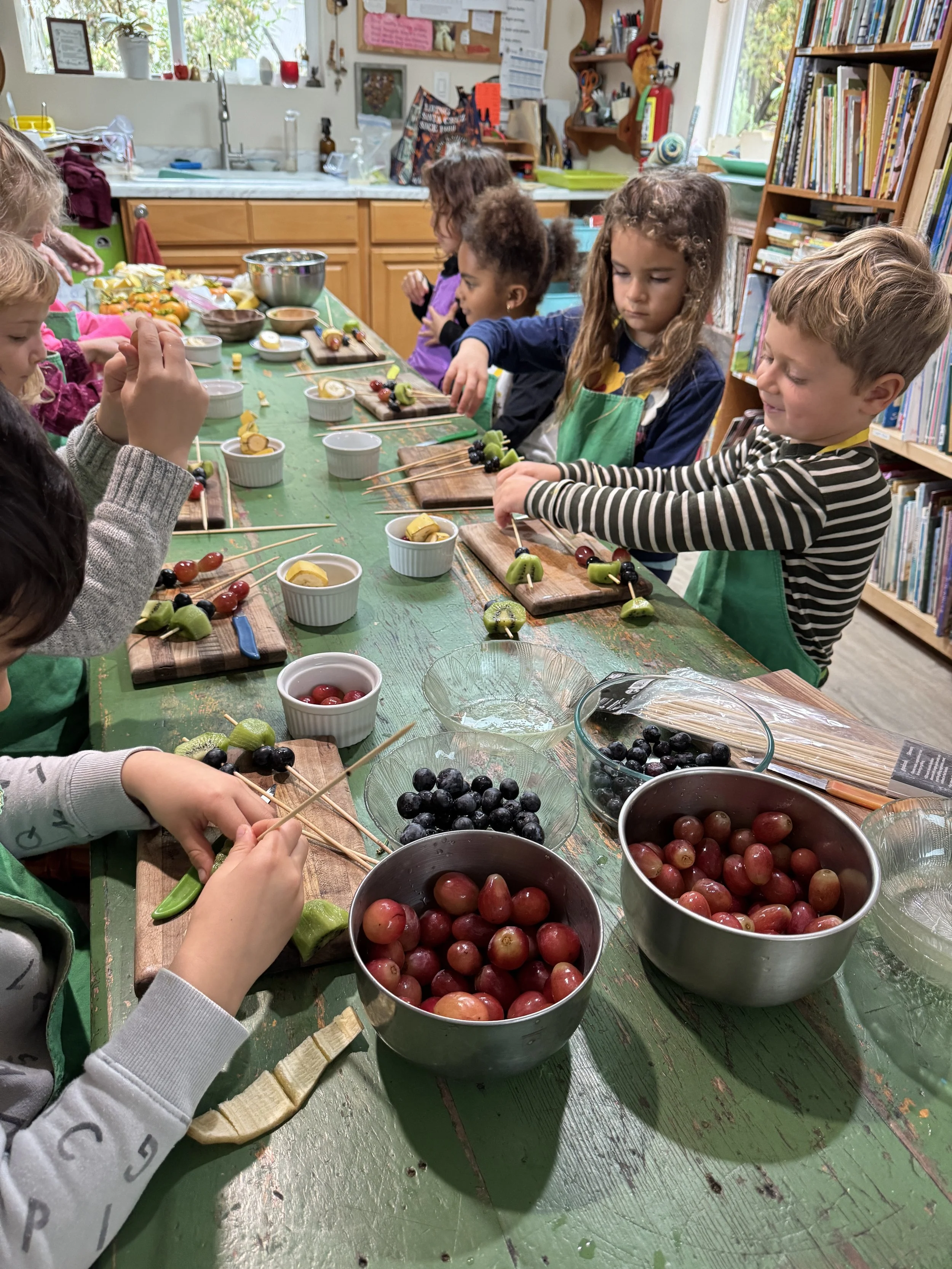
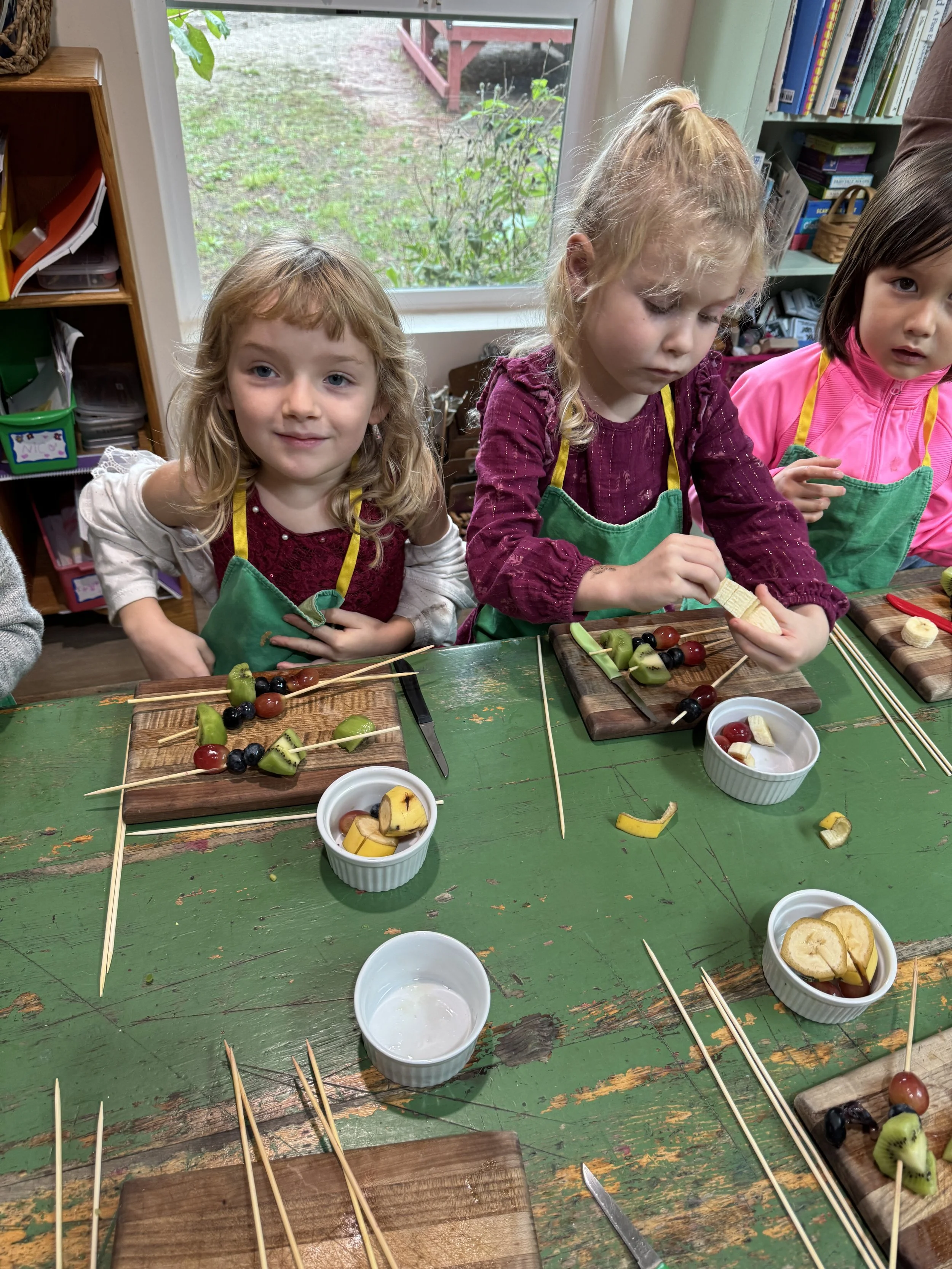
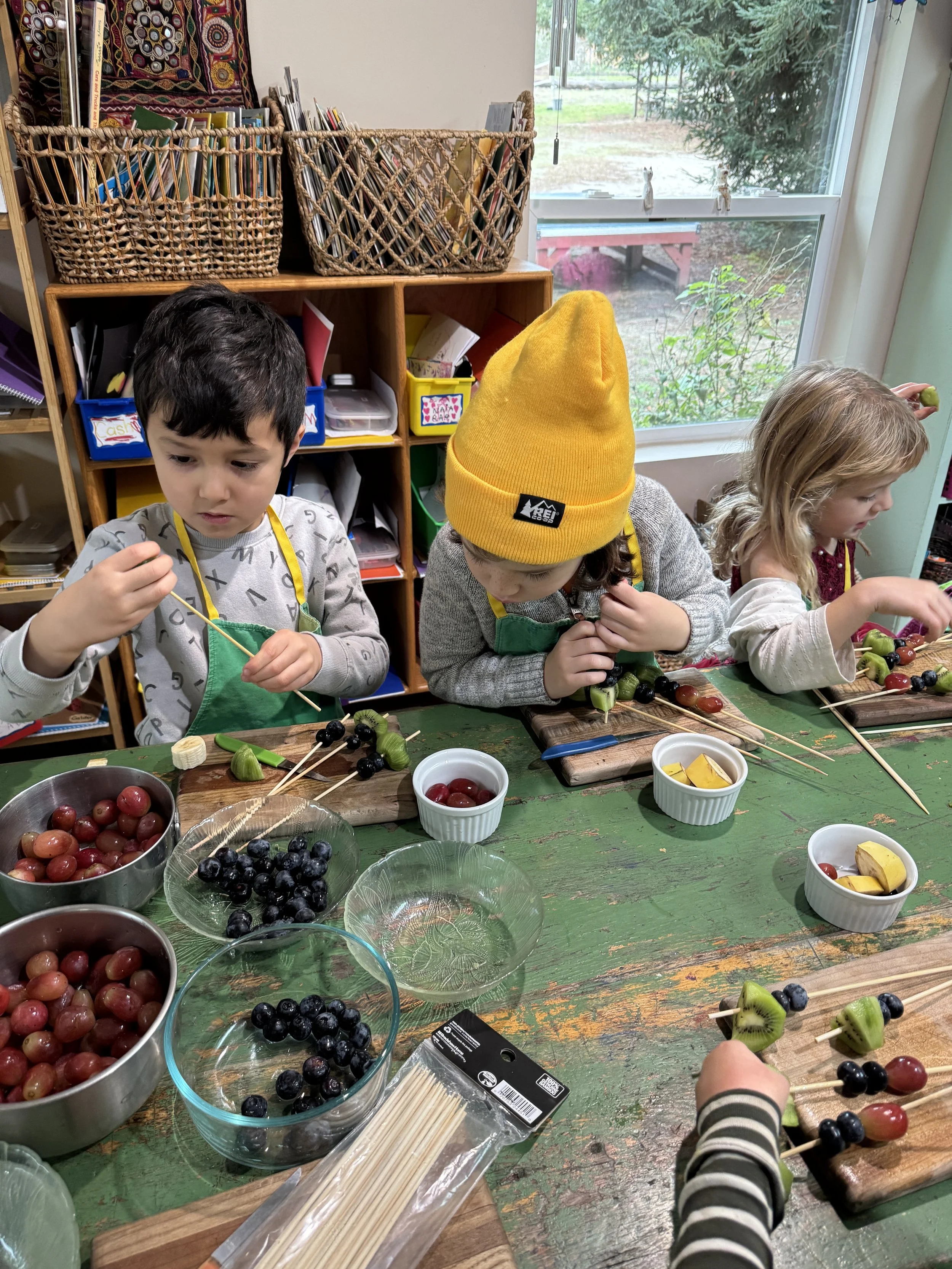
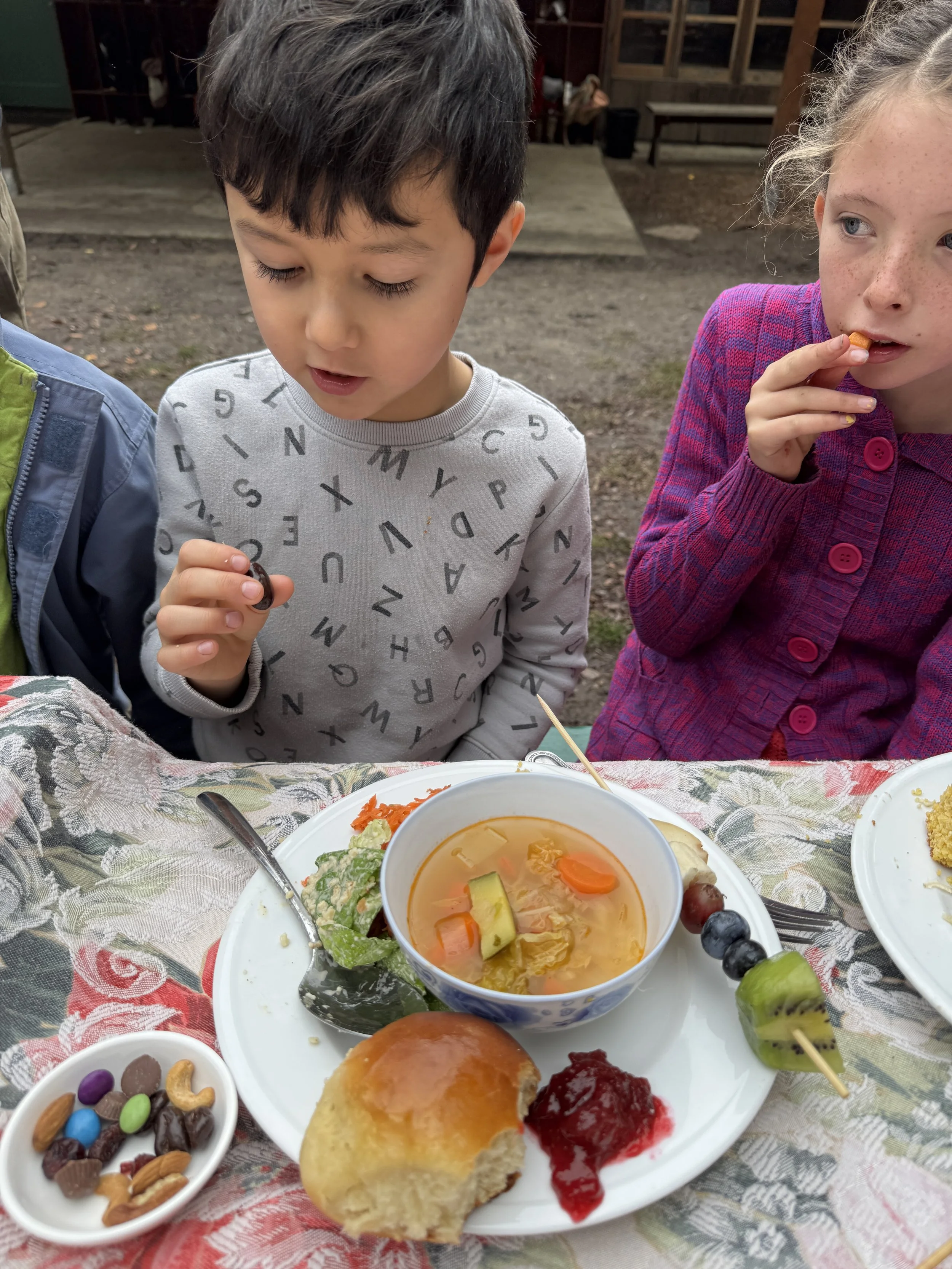
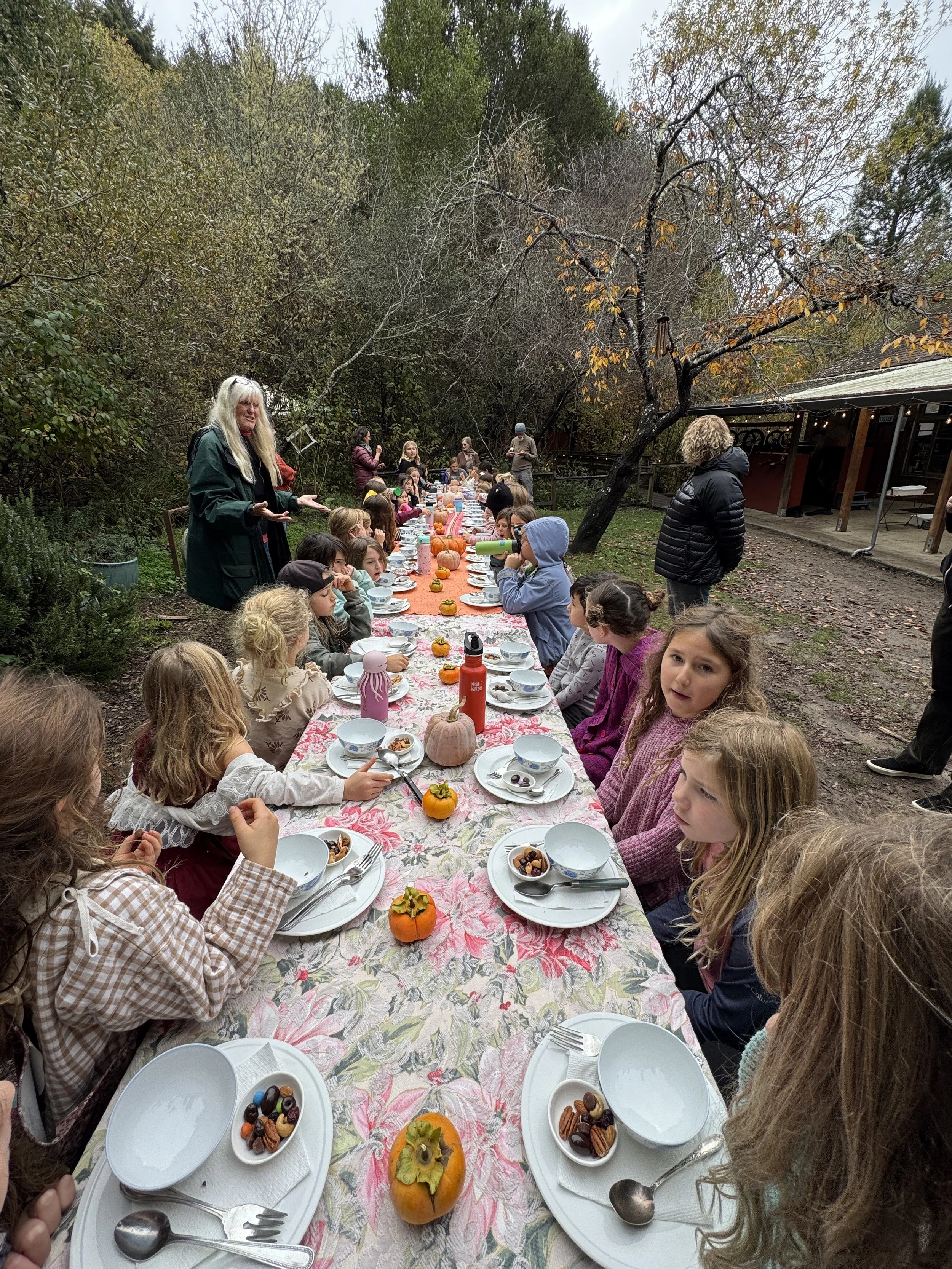
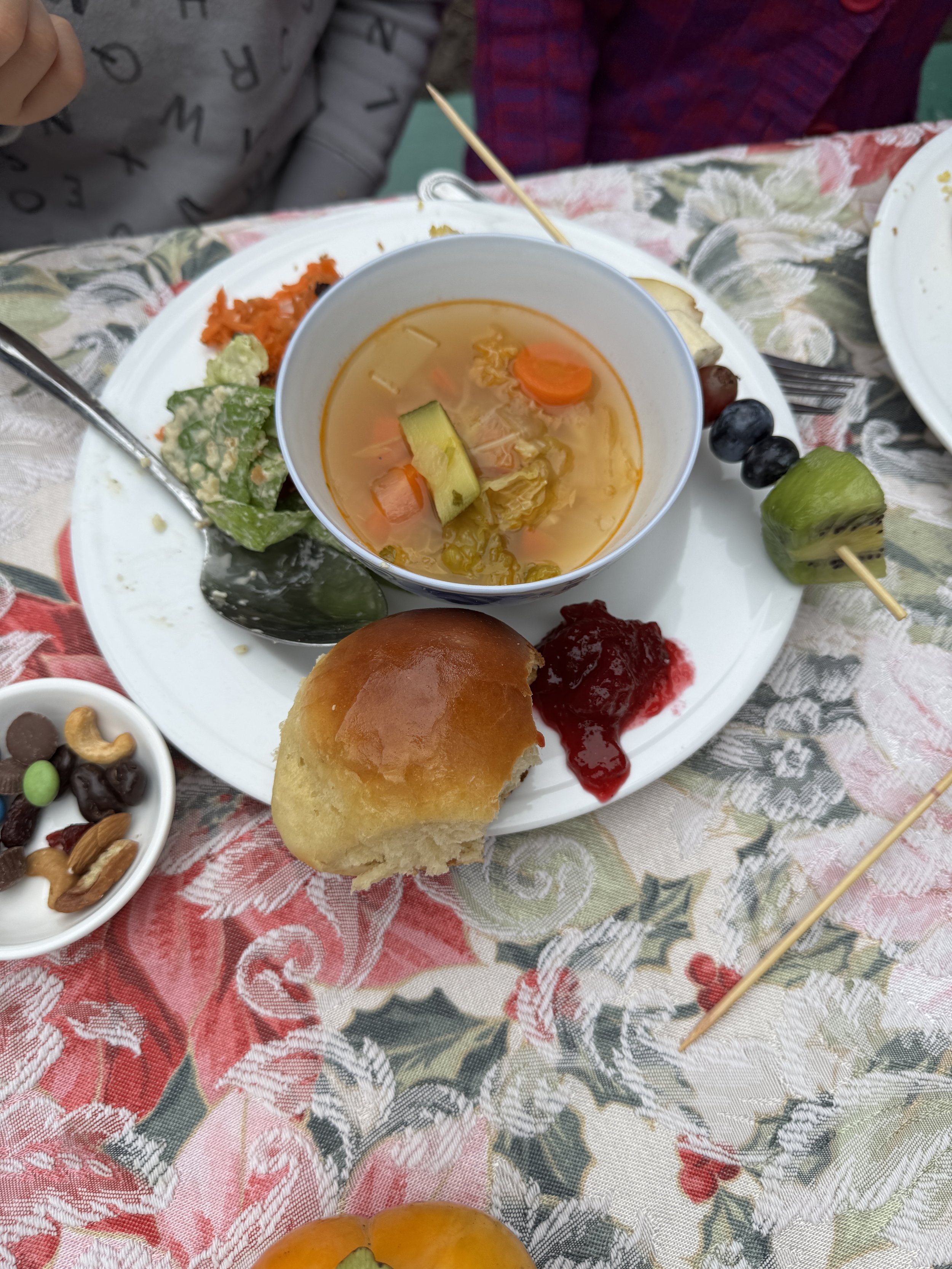
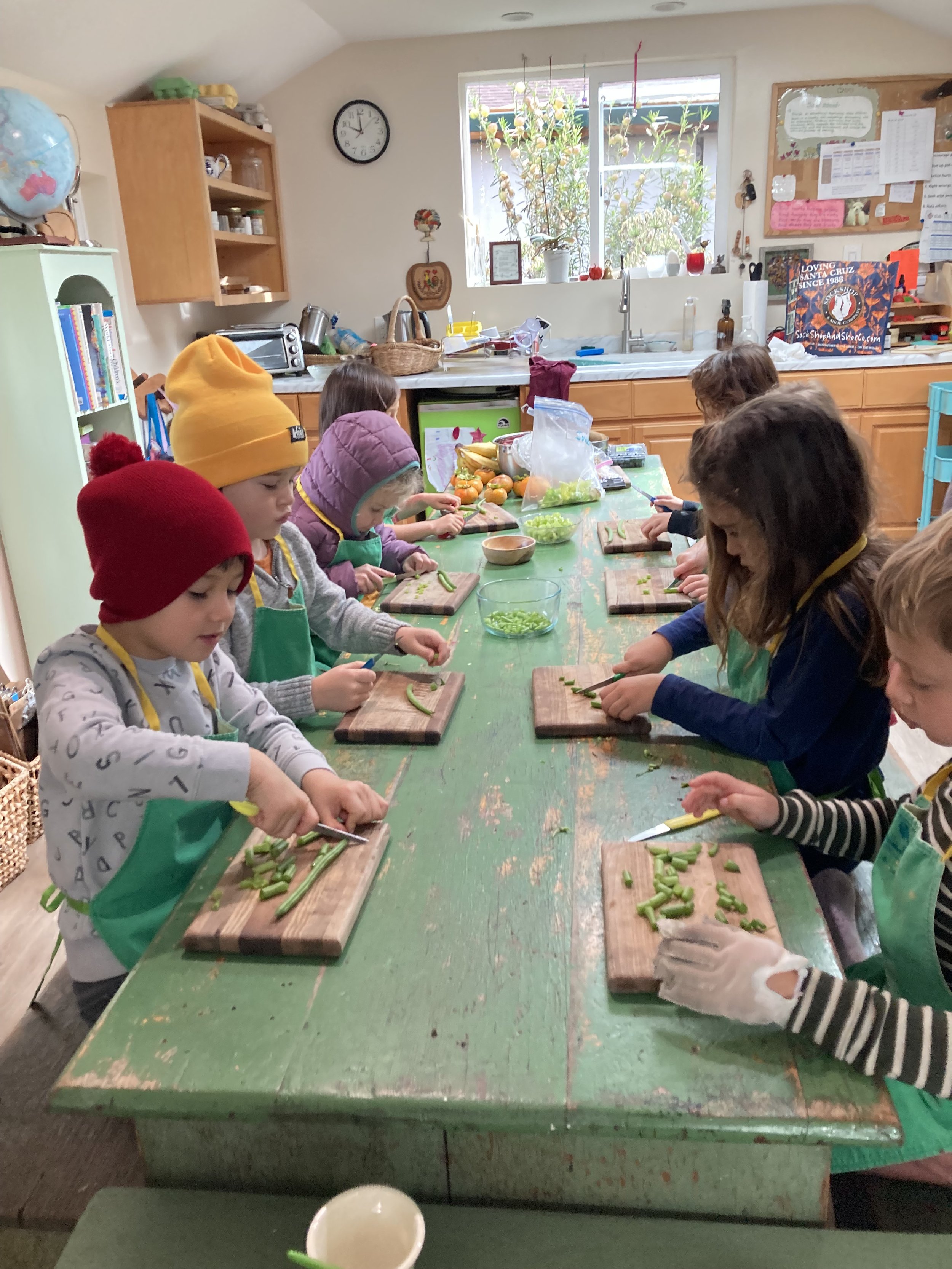
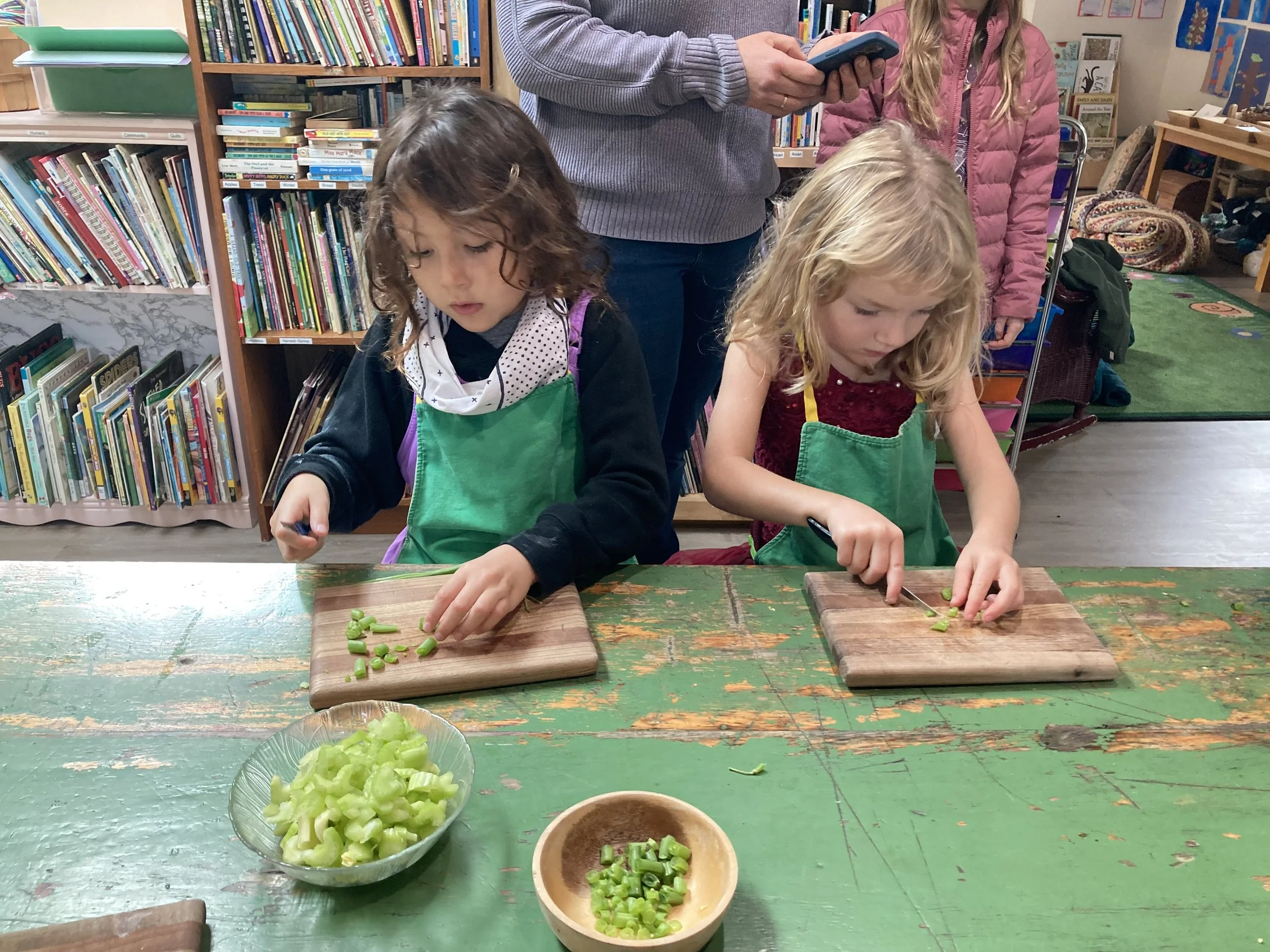
Preparing celery and green beans for the stone soup feast, celebrated with the whole school, and also we made fruit kebabs. Kinders watched the older kids re-enact the story of stone soup and got to participate as townsfolk who learned the joy of sharing ingredients for the soup after initially being reluctant to give.
P.E. time with Tara
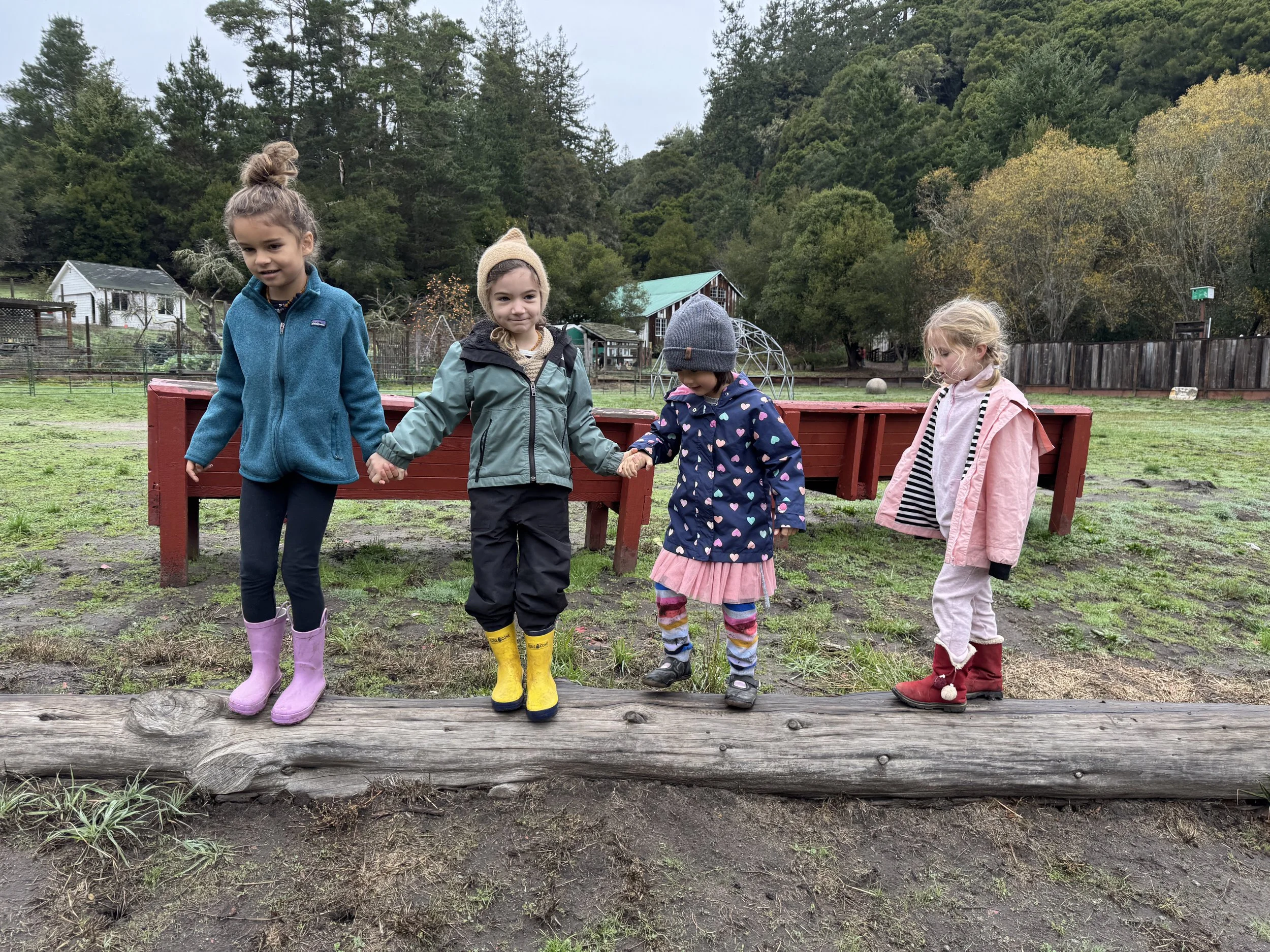
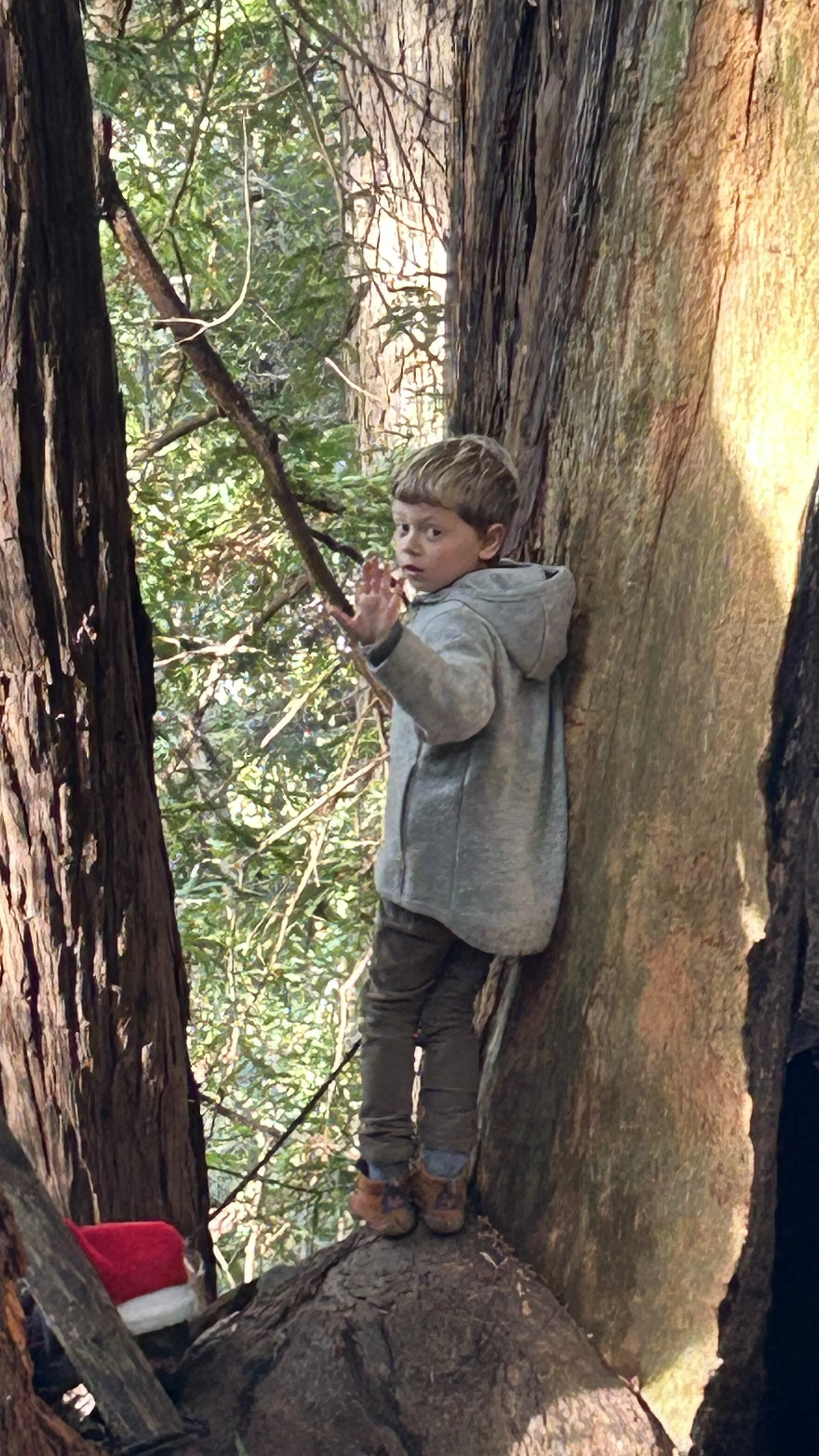
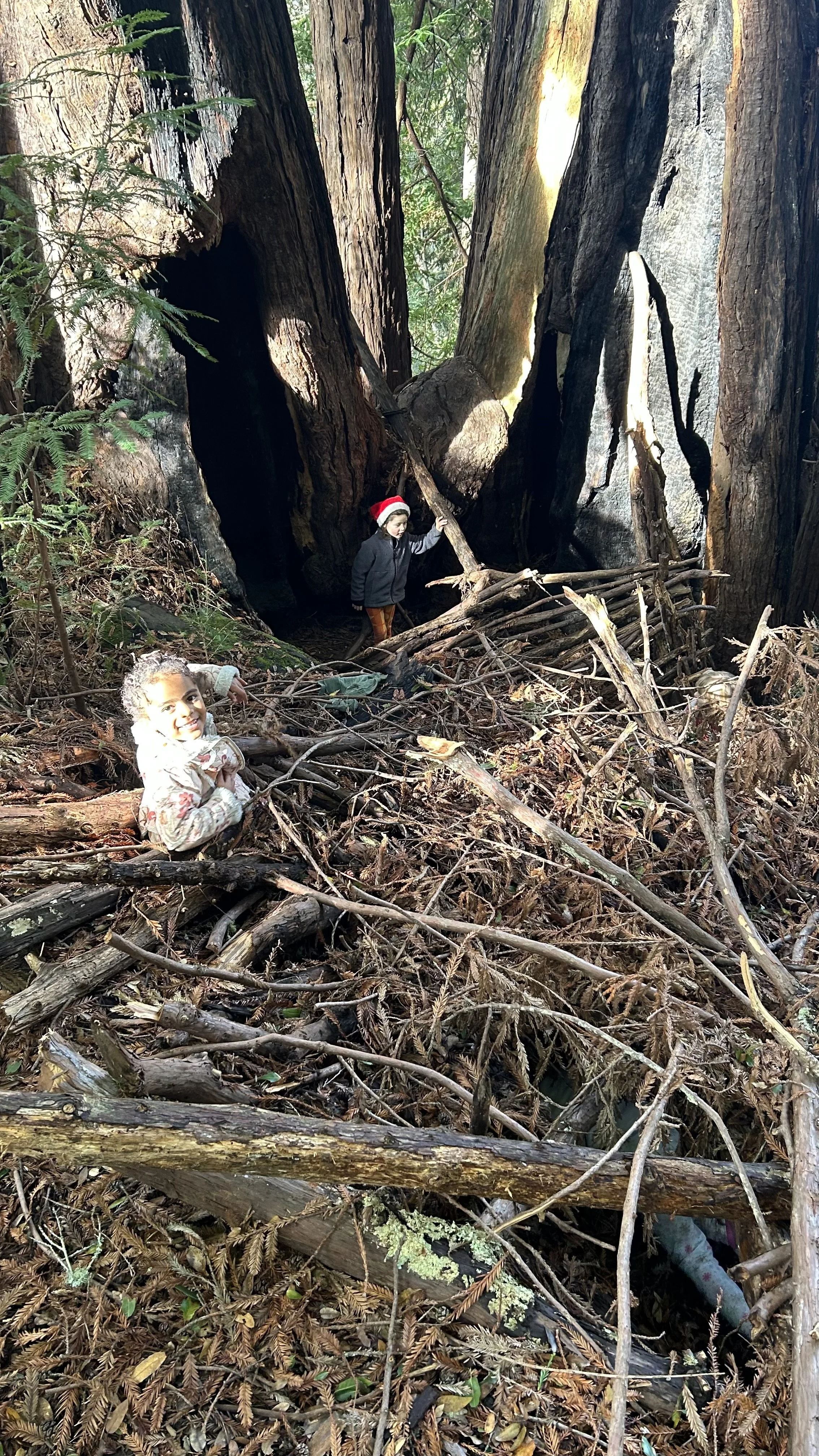
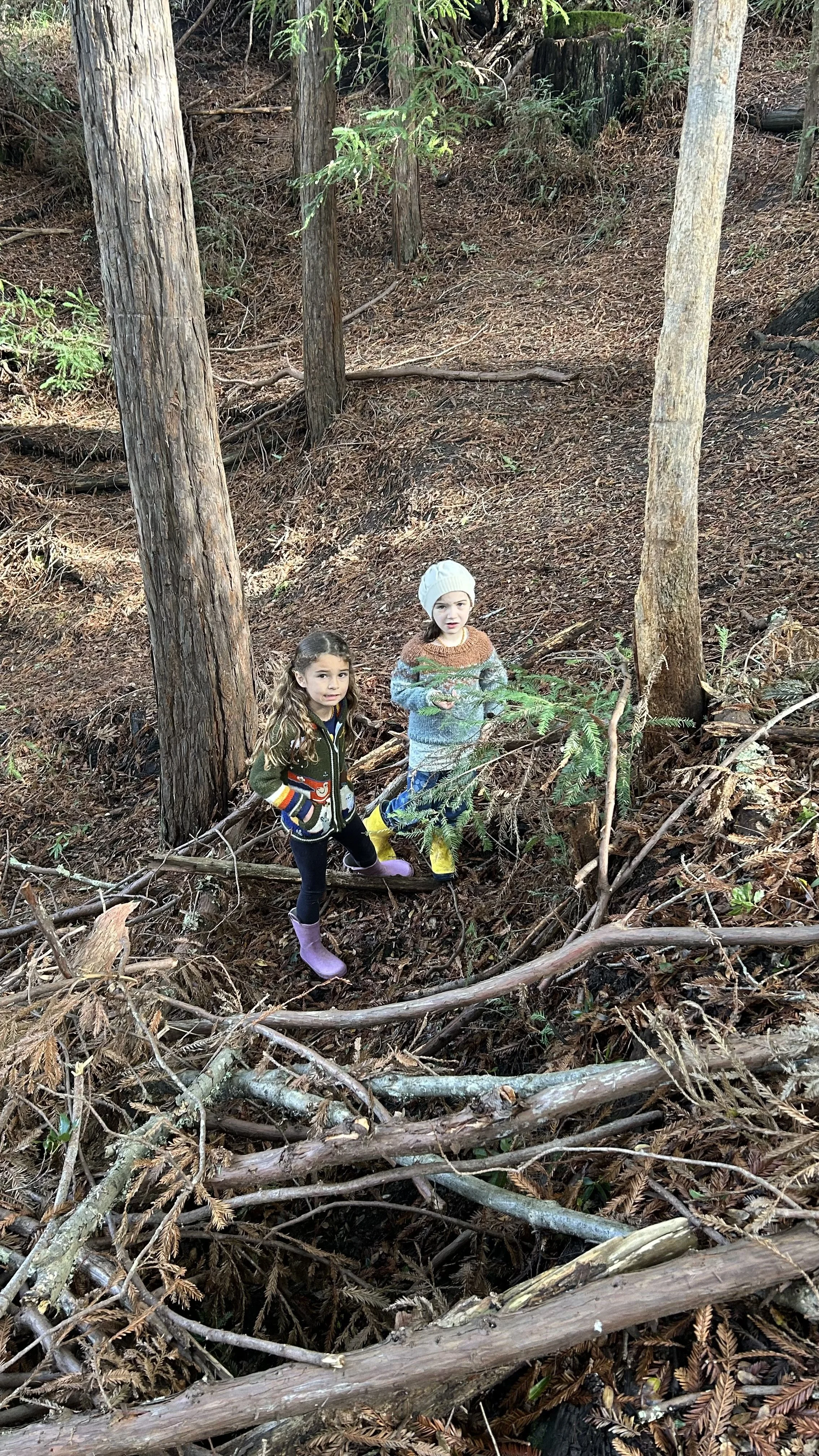
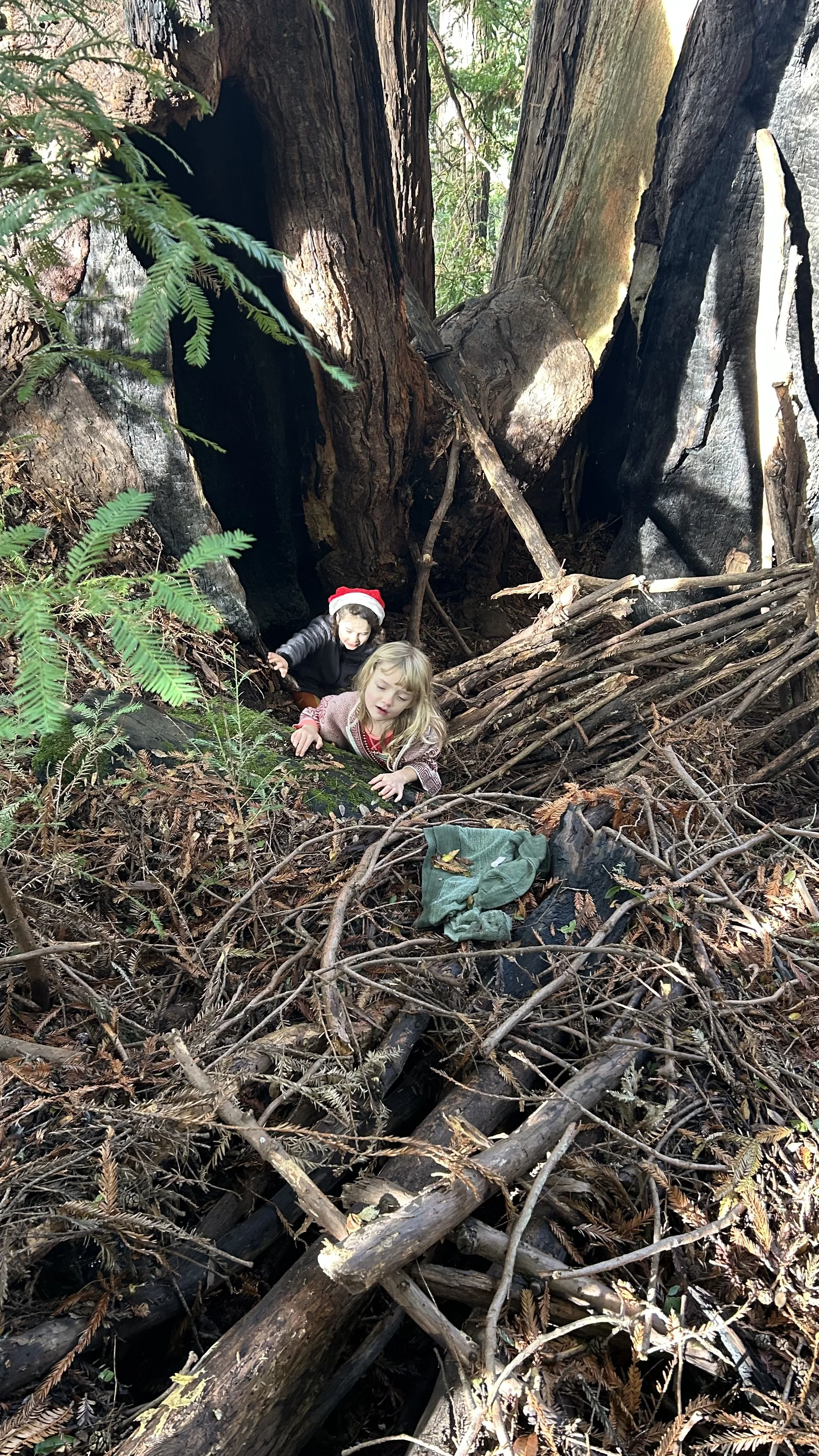
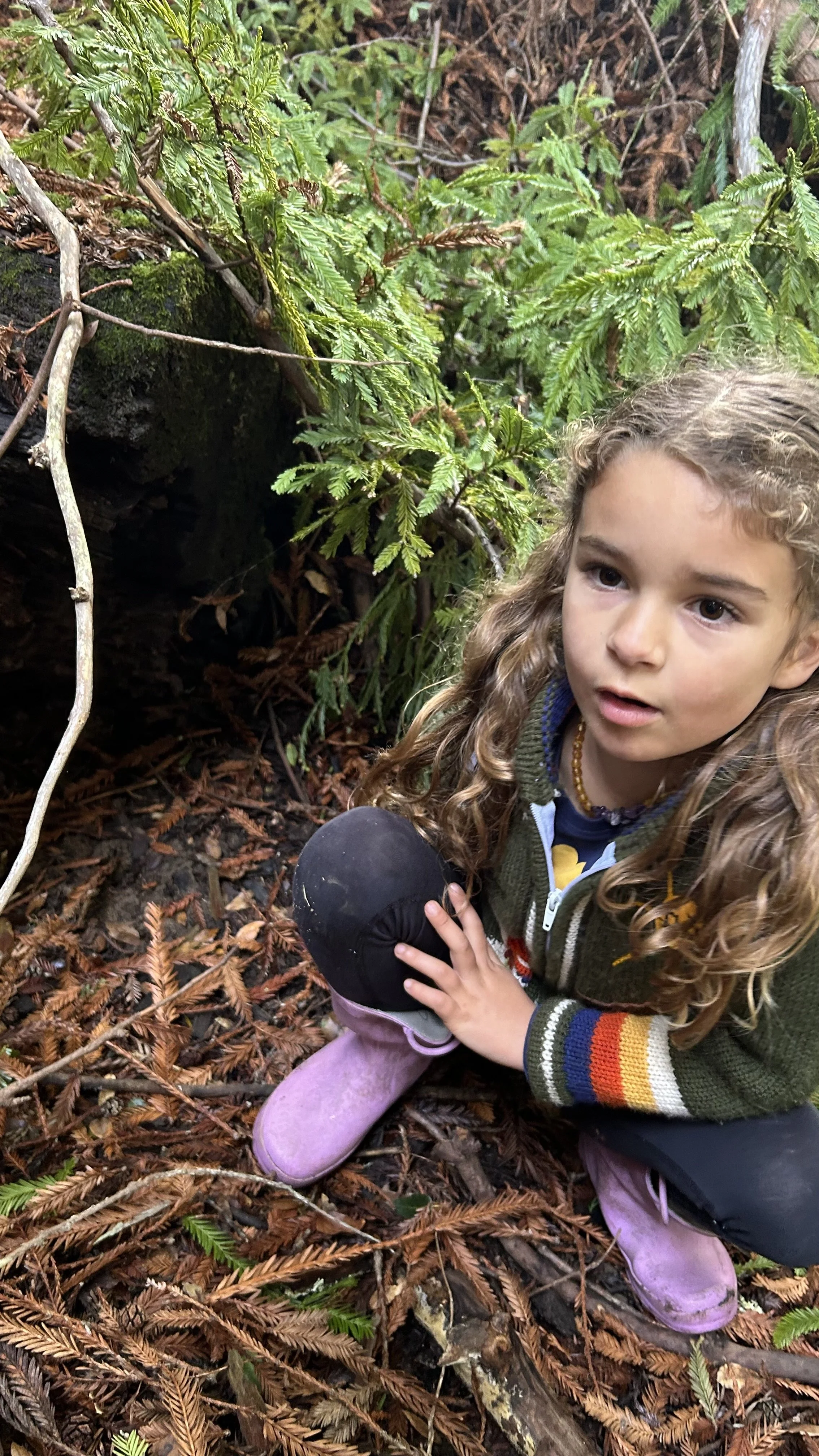
Several hikes to the redwoods
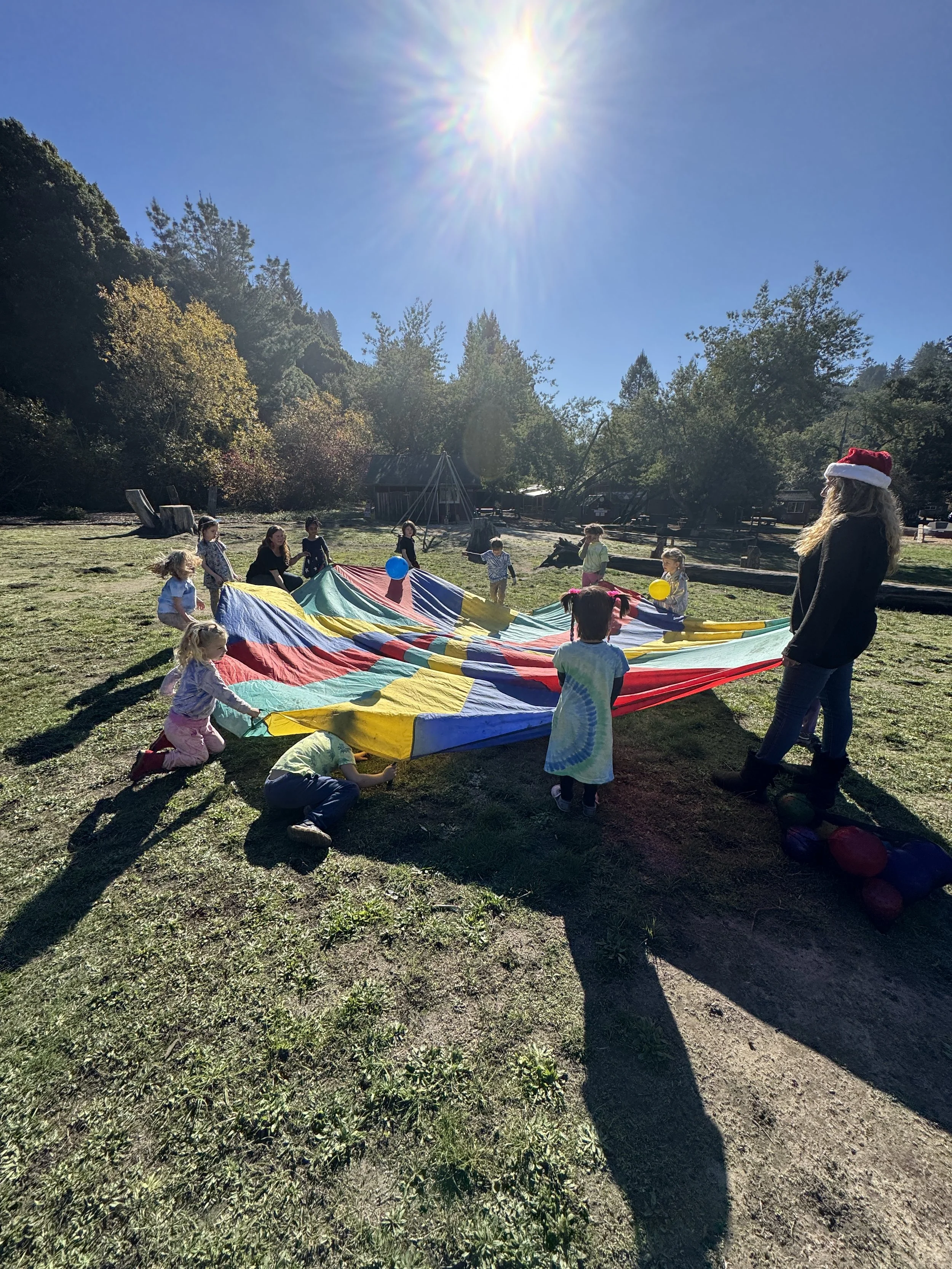
Parachute games
Balloon games
Yoga, vinyasa flow, yoga card poses and kids made up their own poses
A game of 4 square run
Bean bag tricks and relay races on the day I subbed PE
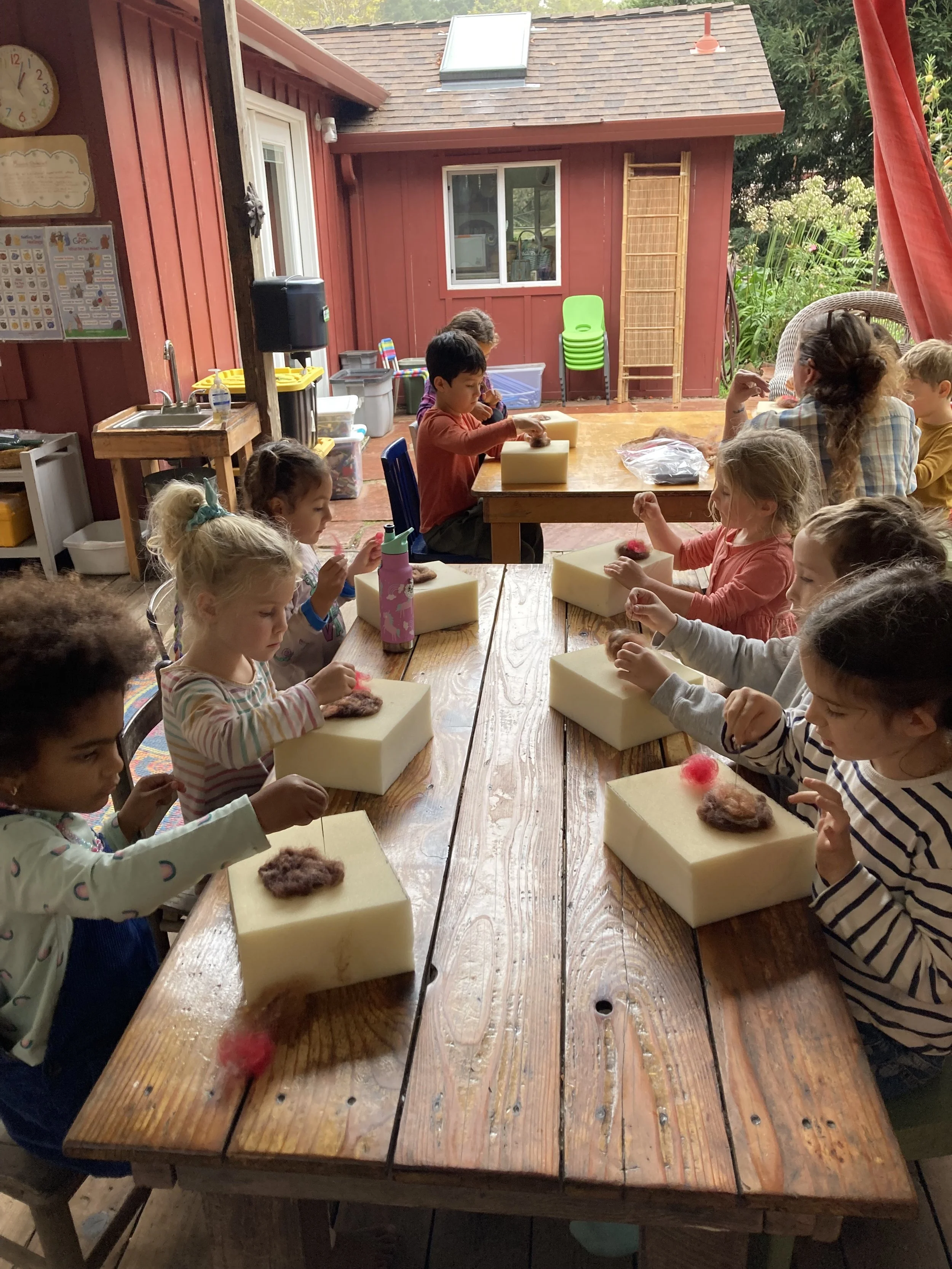
Felting Class with Kathleen. Yes in kindergarten we work with knives and needles because kids learn to navigate dangerous things by gradual, supervised, and careful exposure to dangerous things.
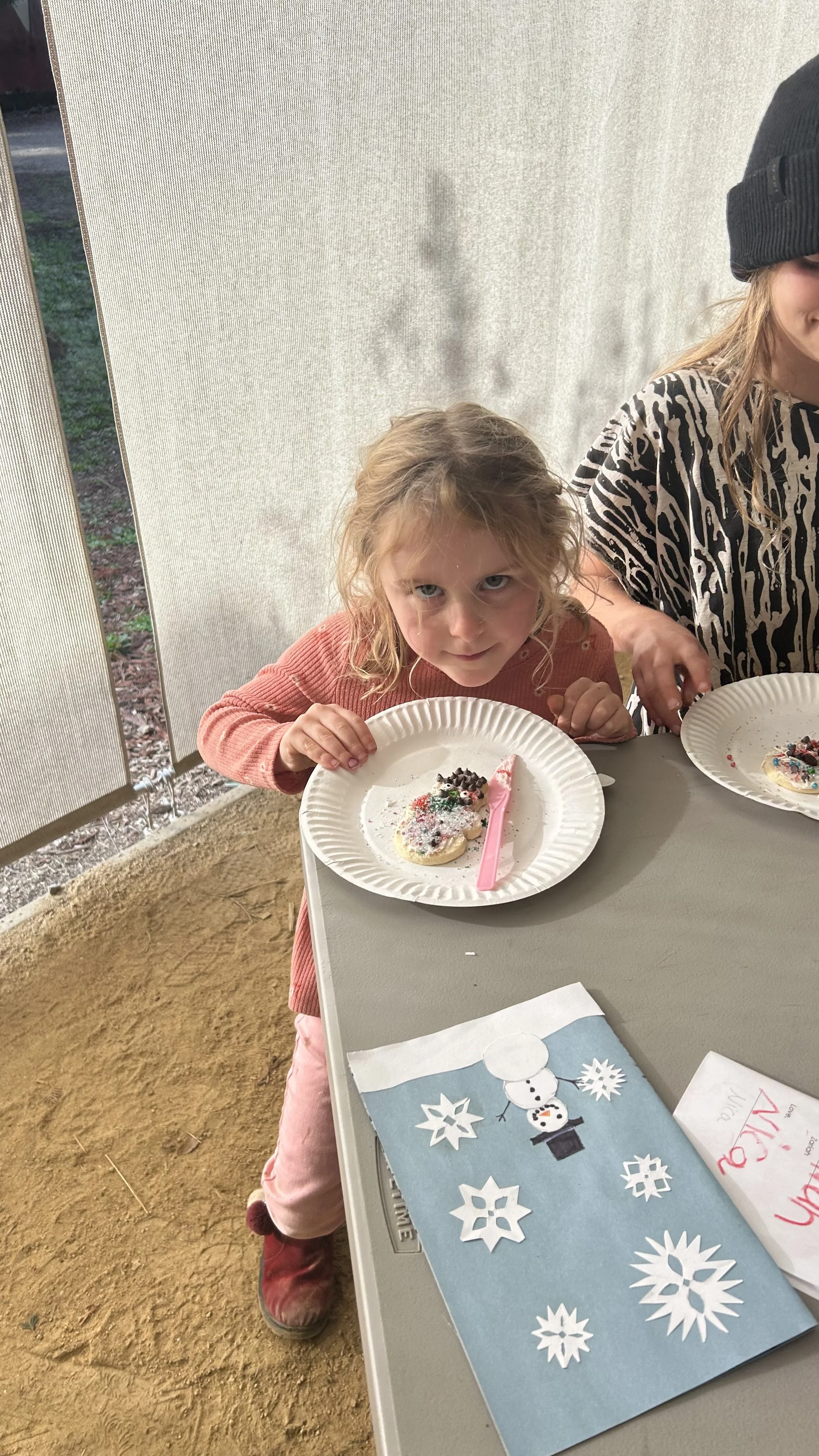
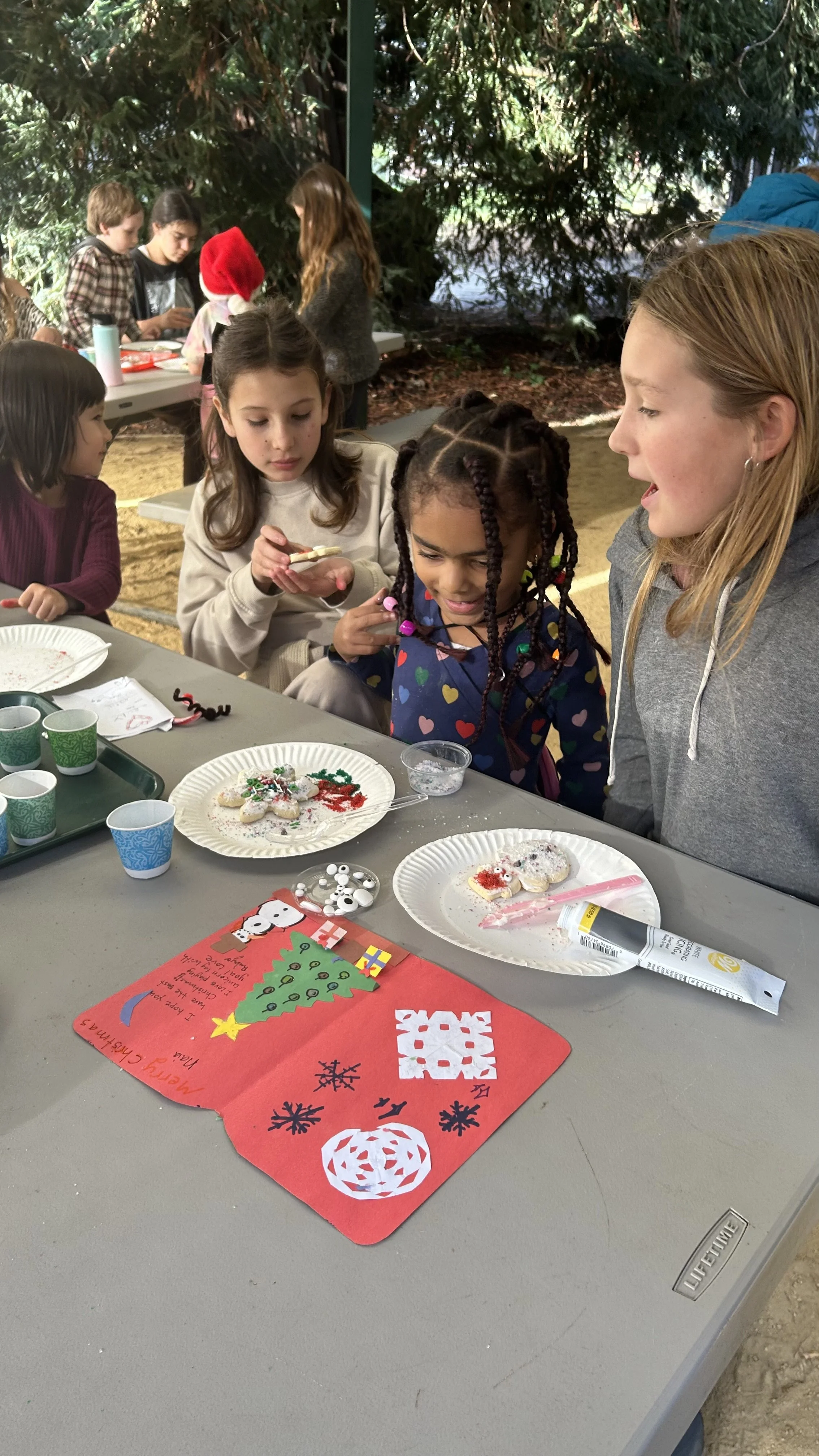
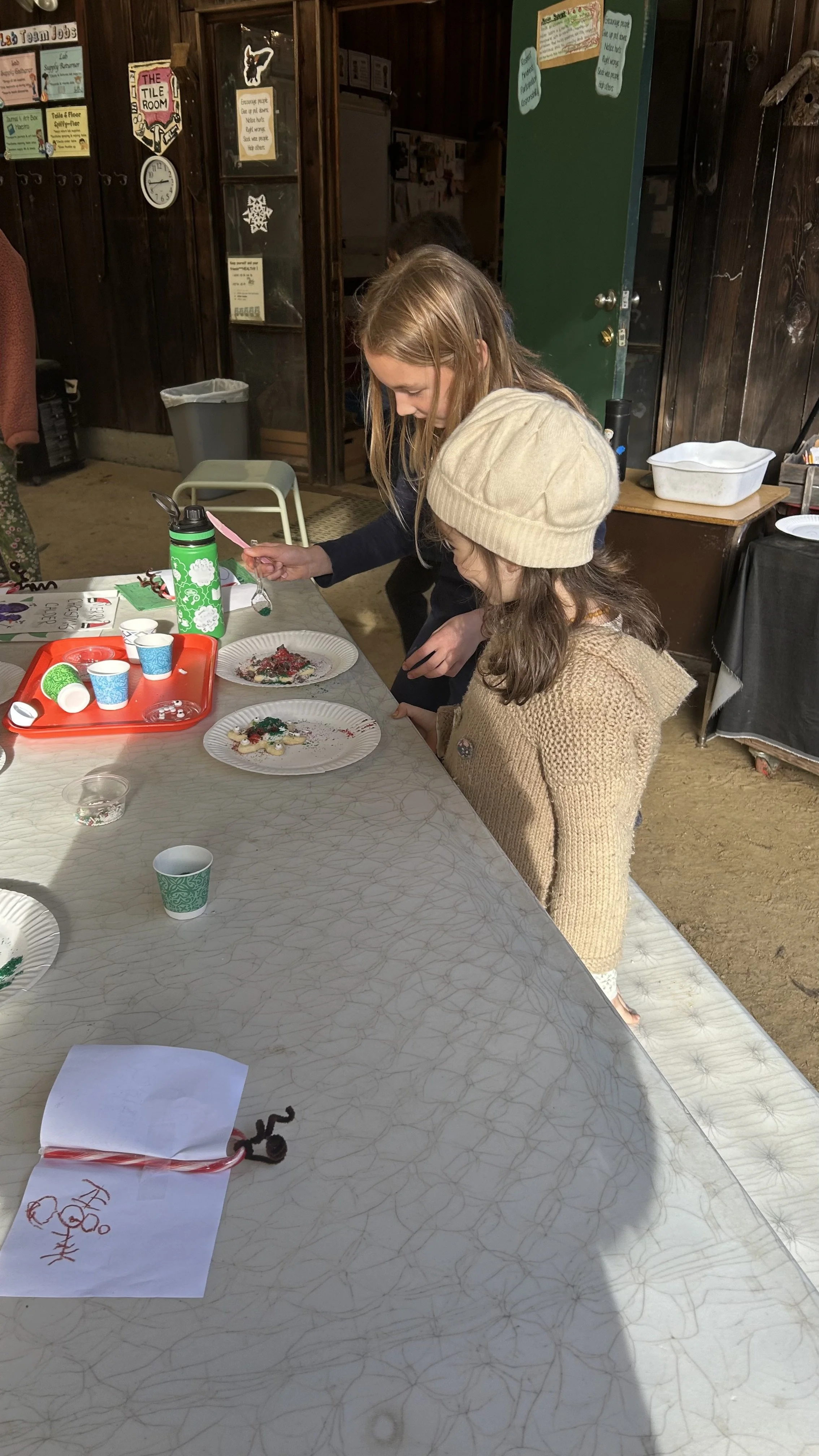
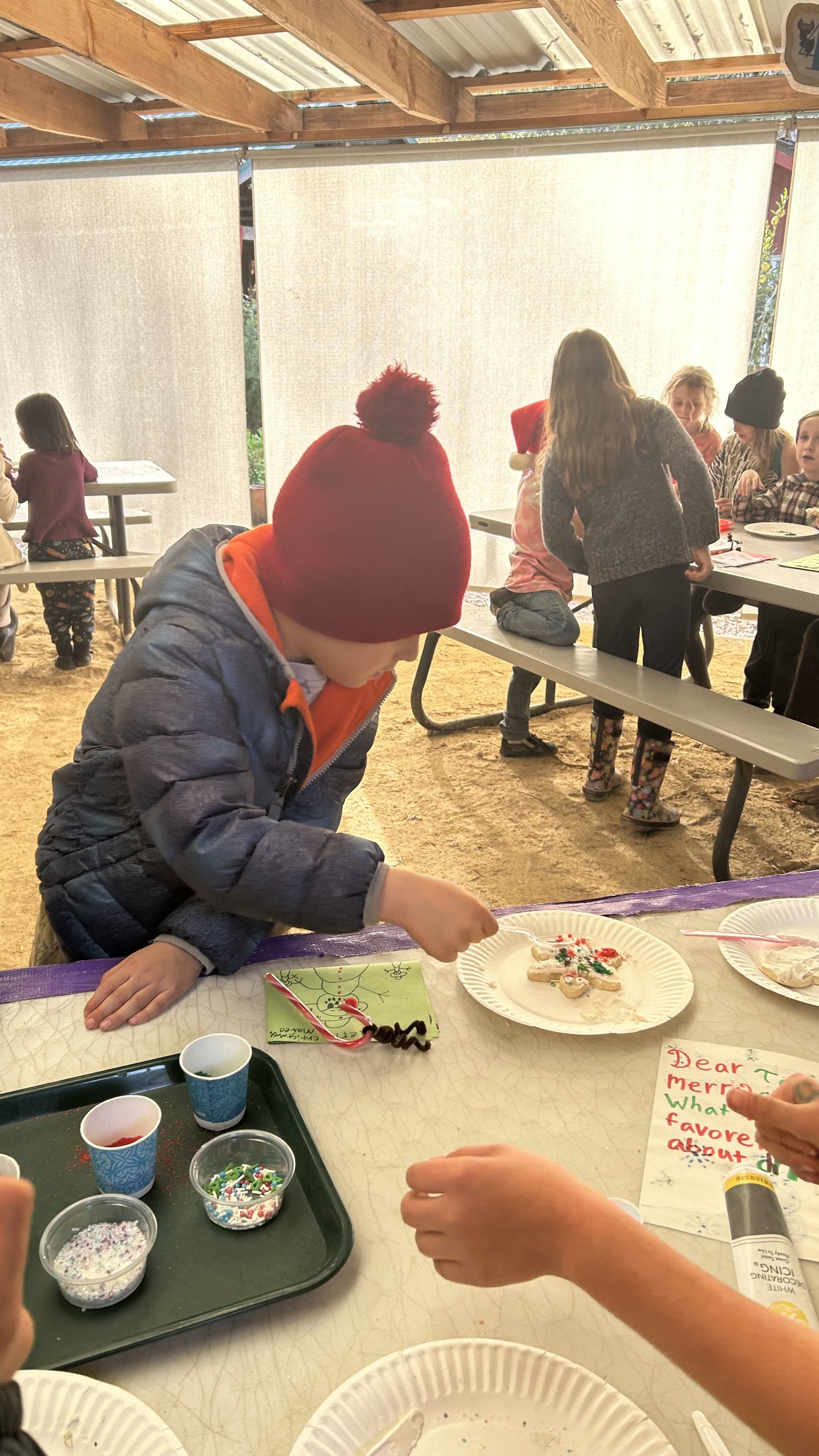
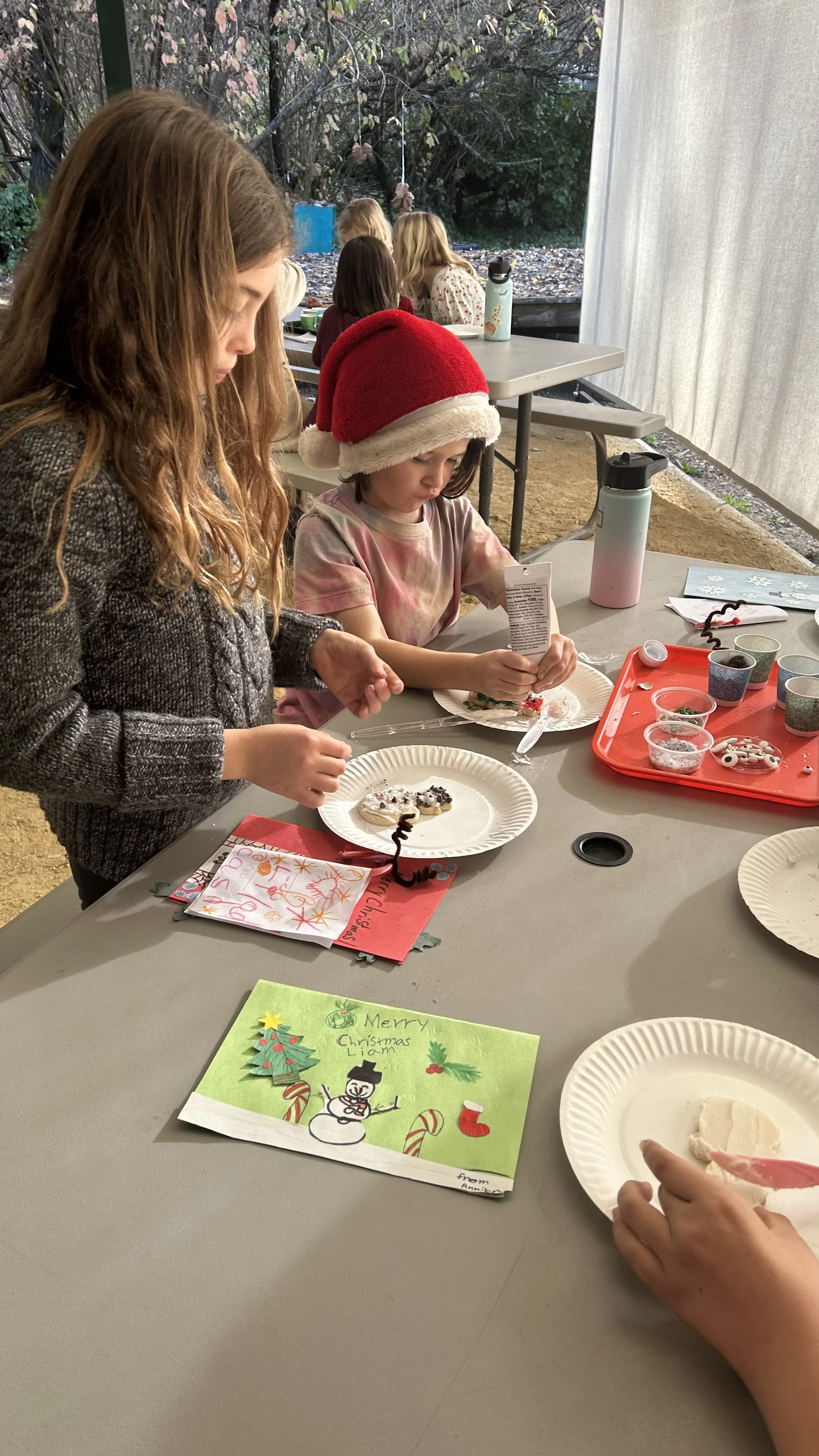
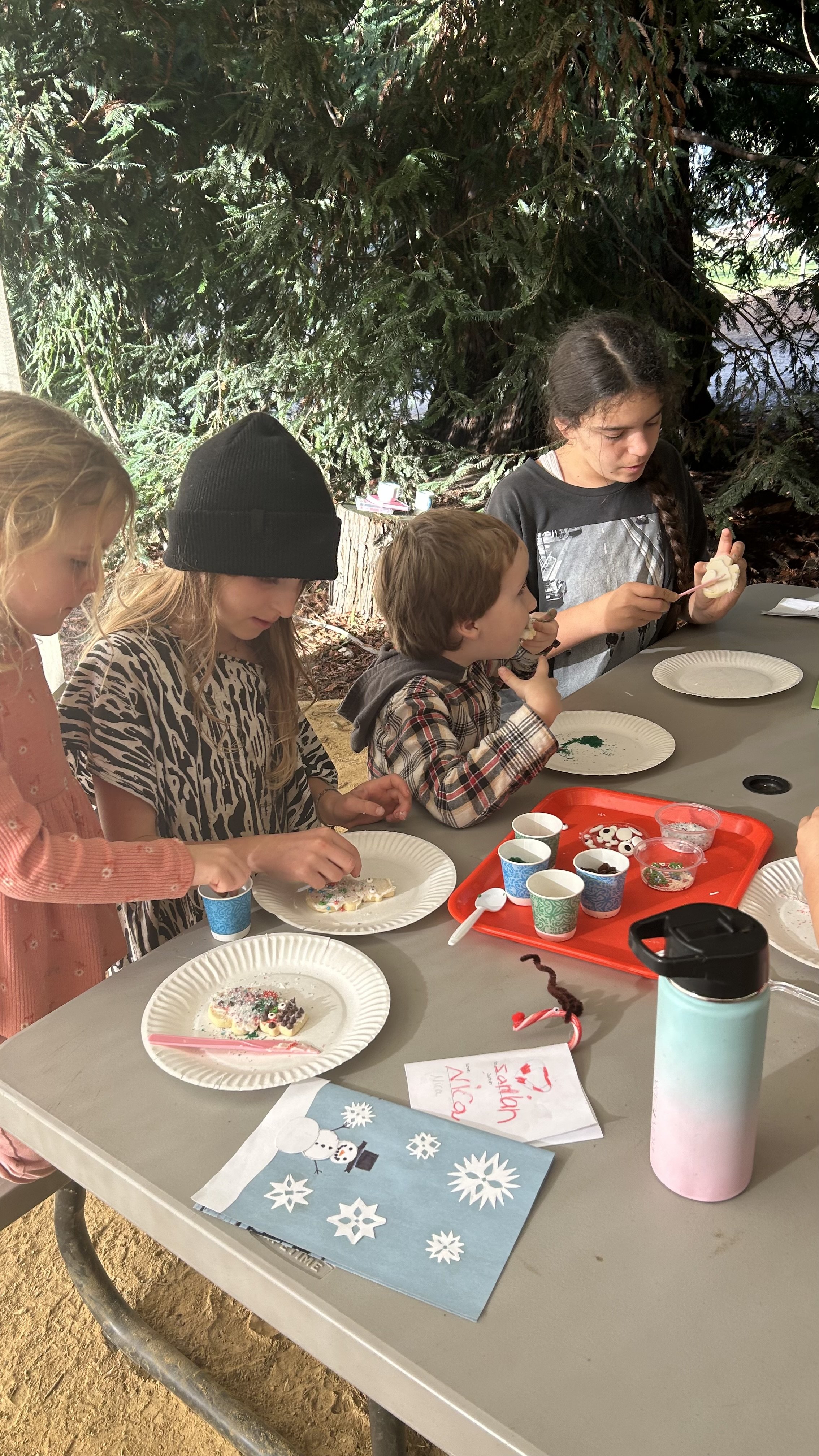
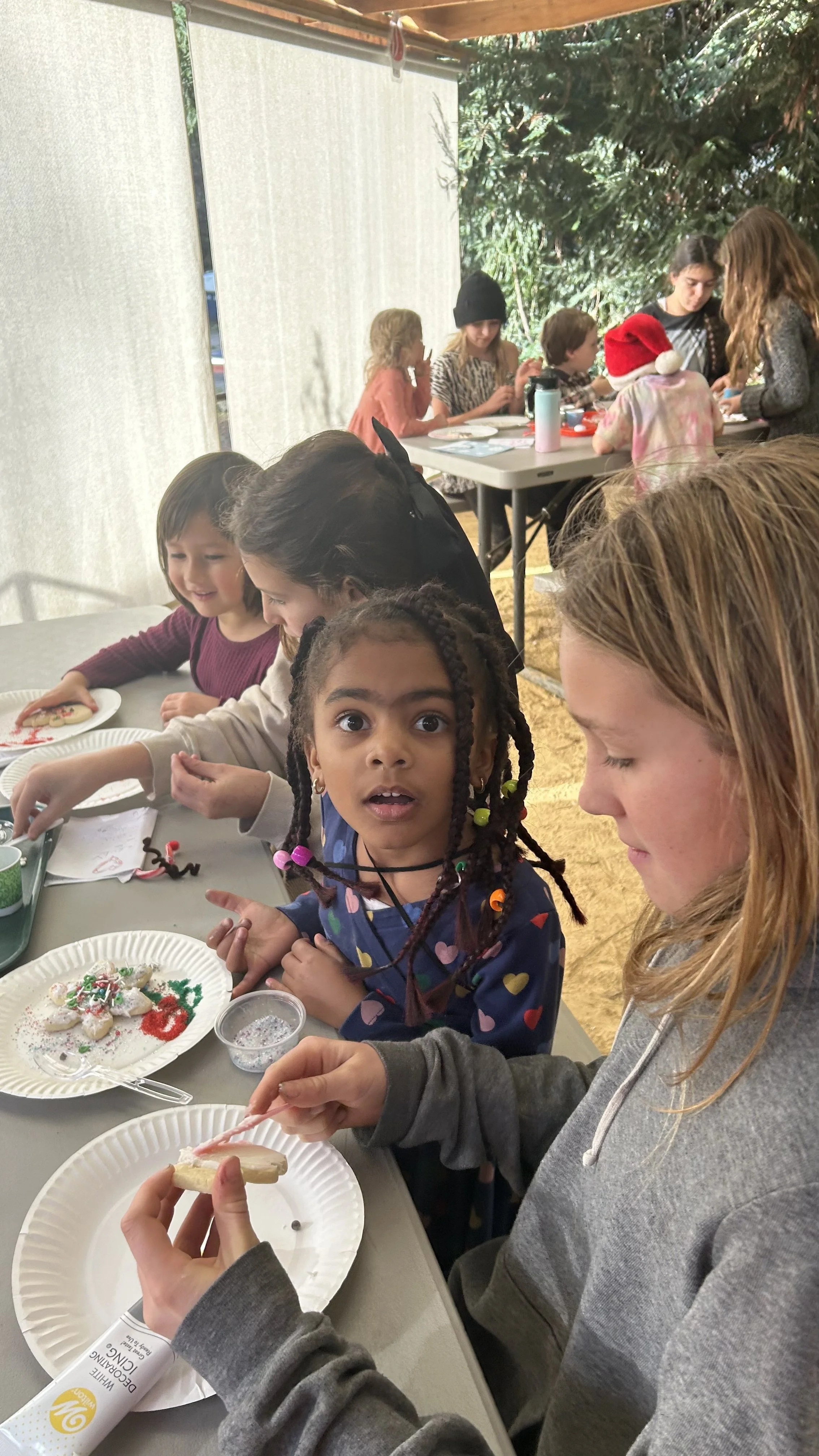
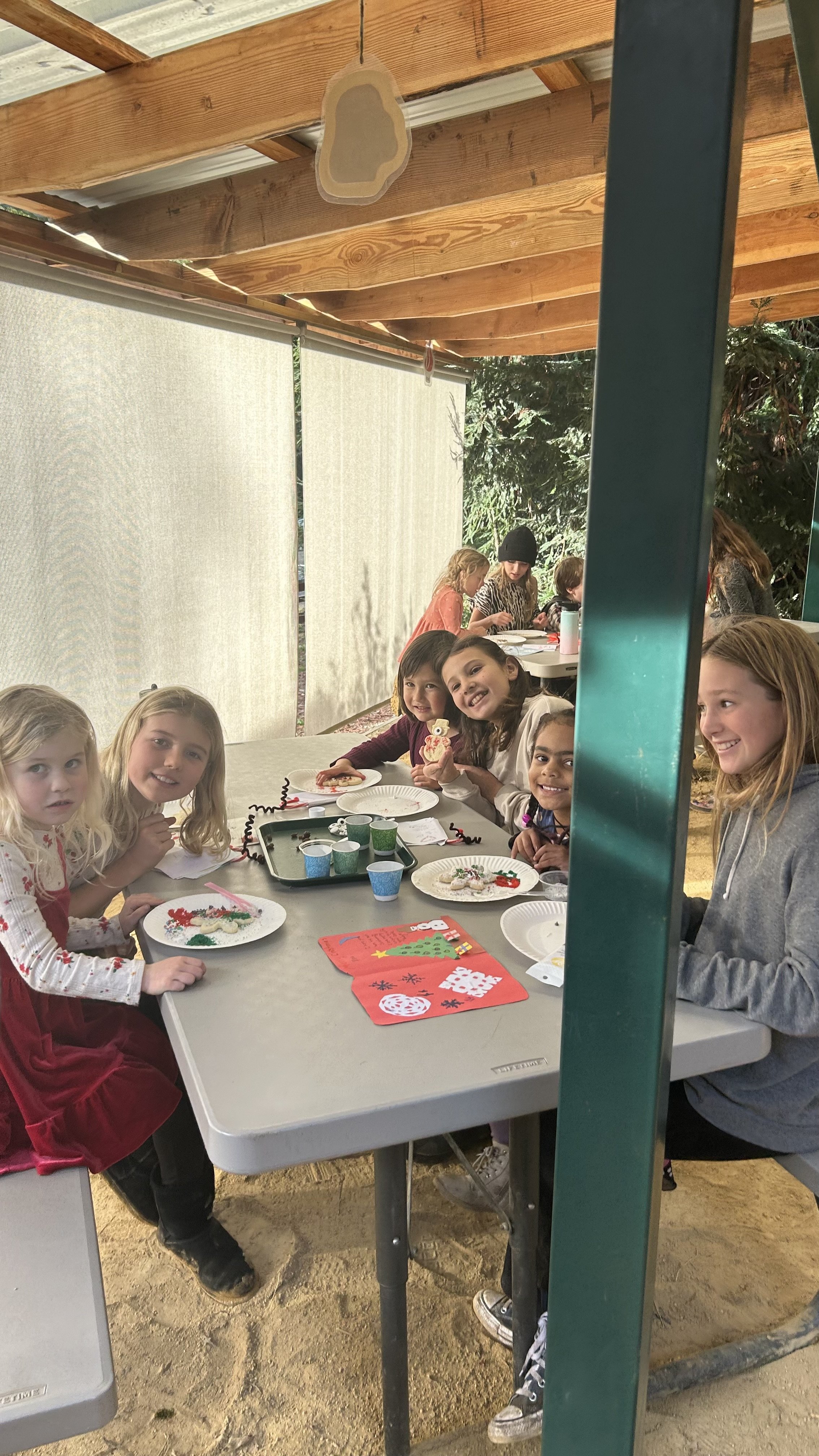
More time with the big buddies, making gingerbread people
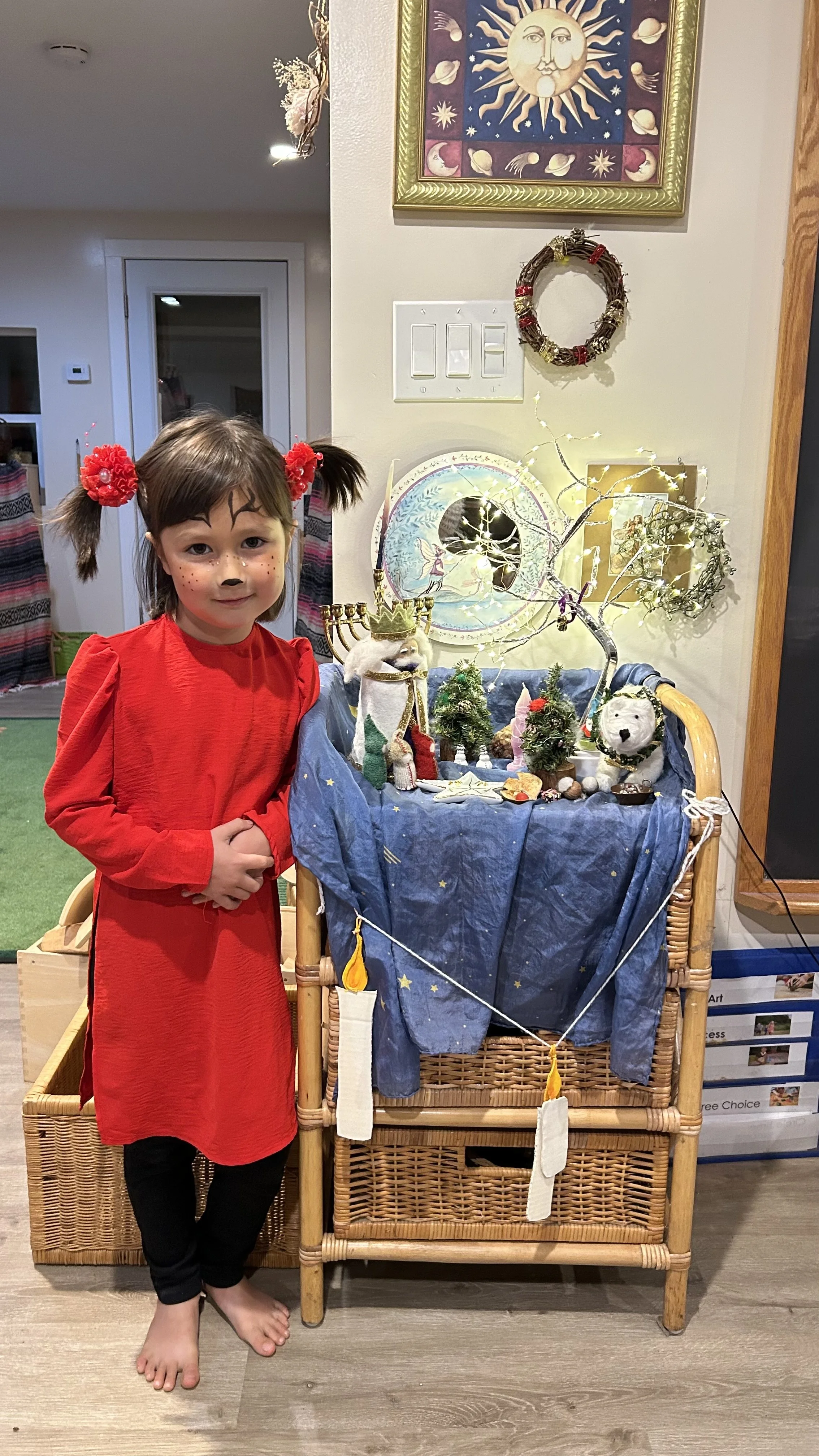
Kyra ready for Alice in Wonderland
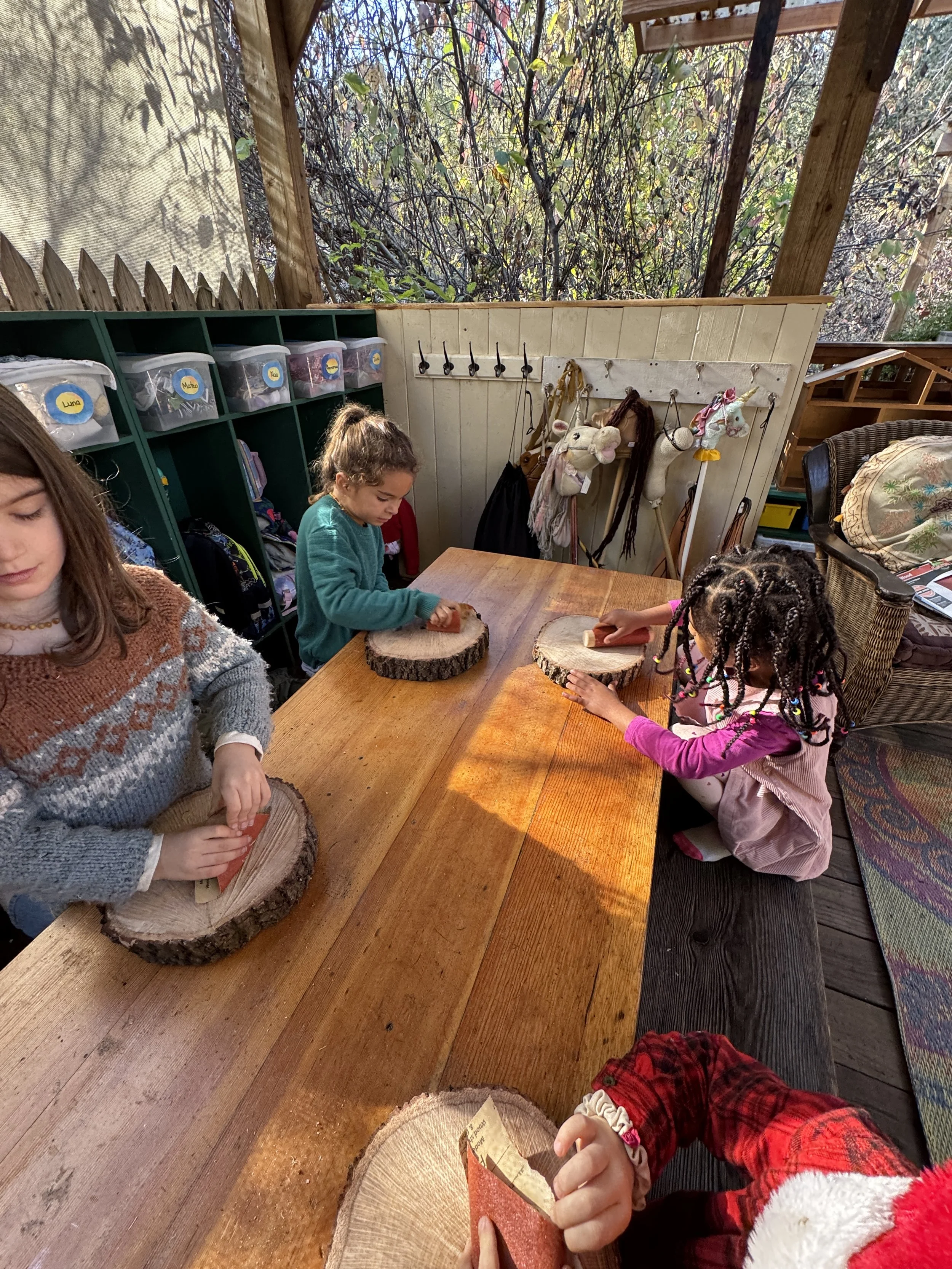
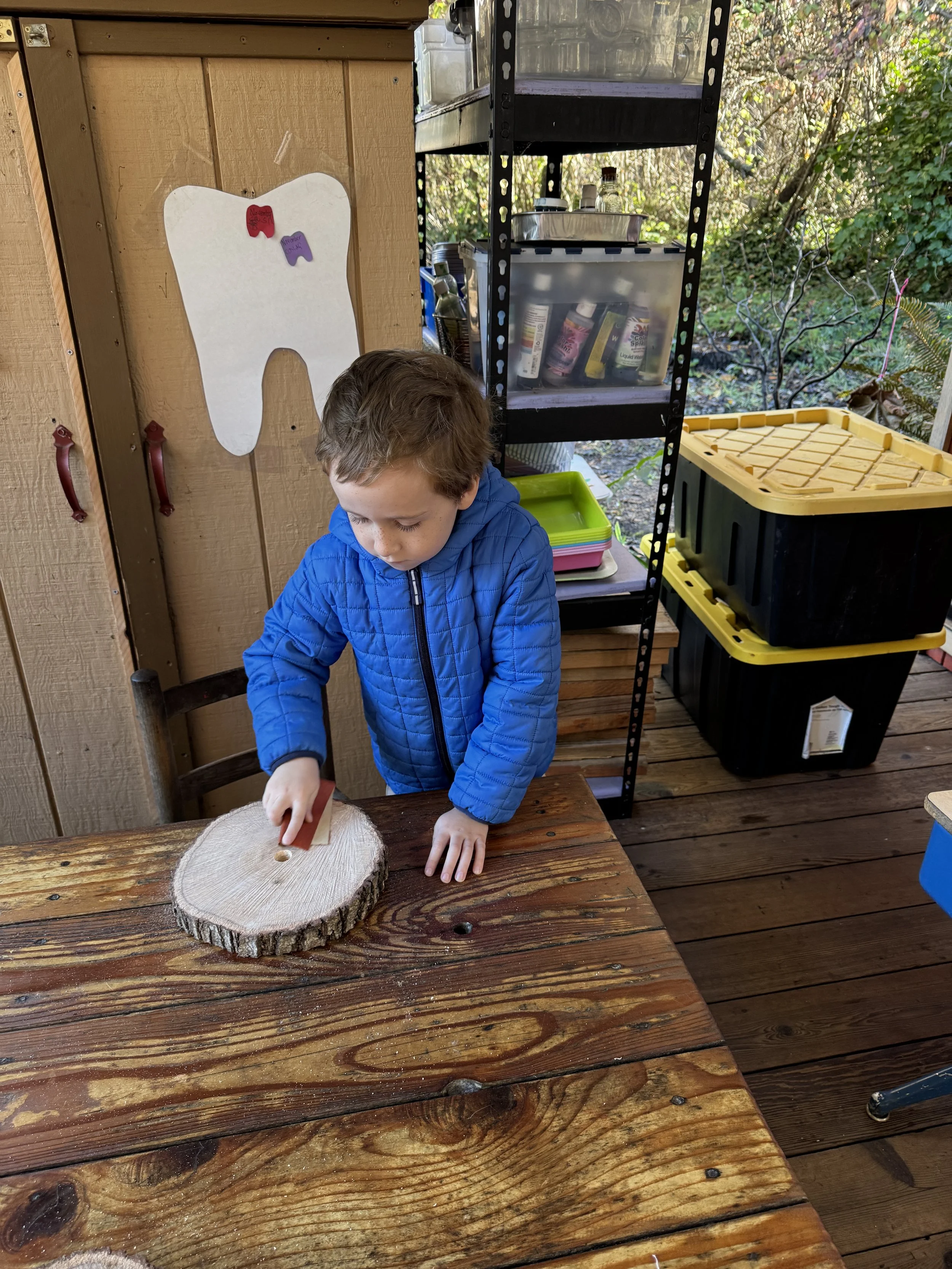
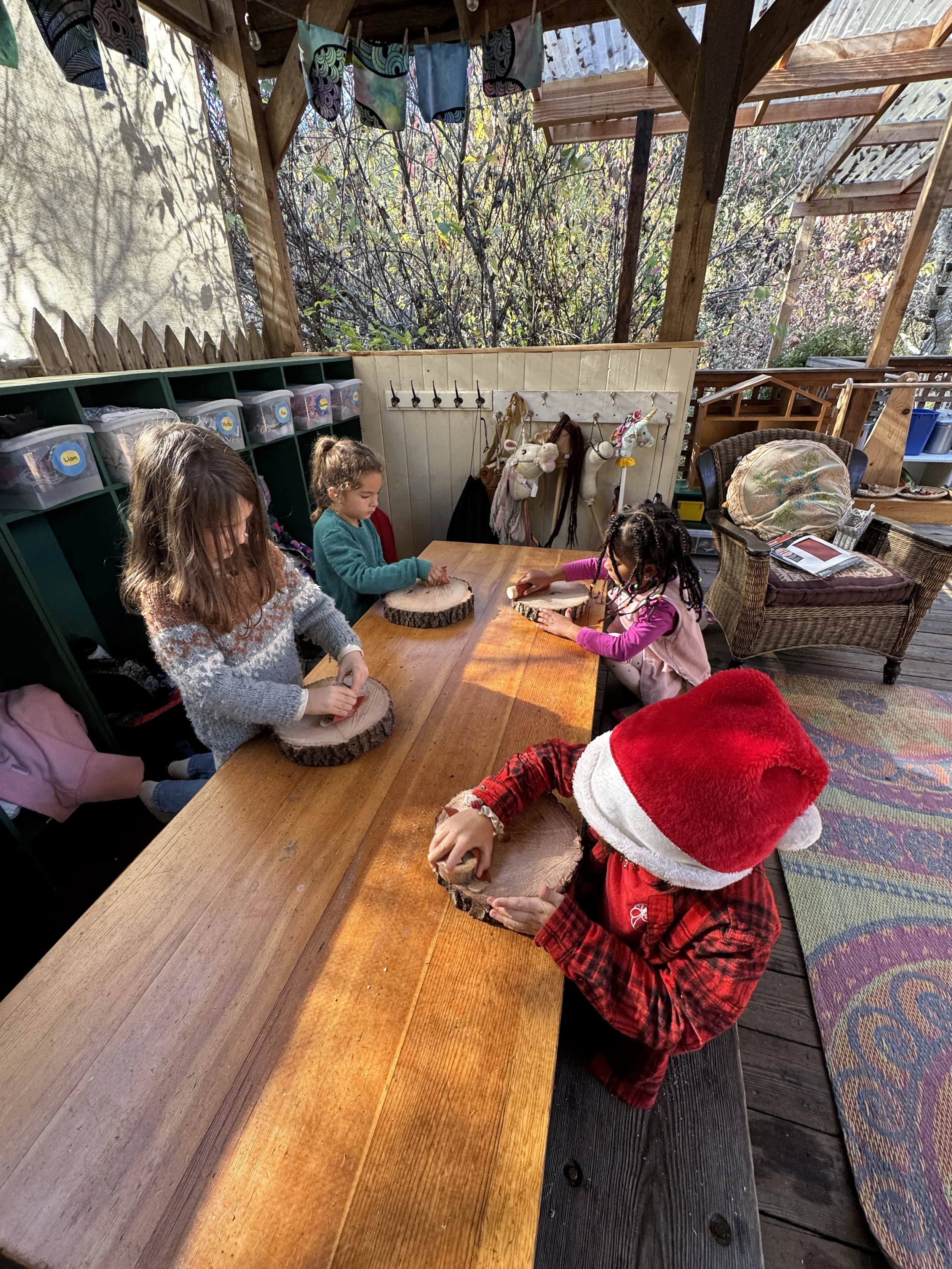
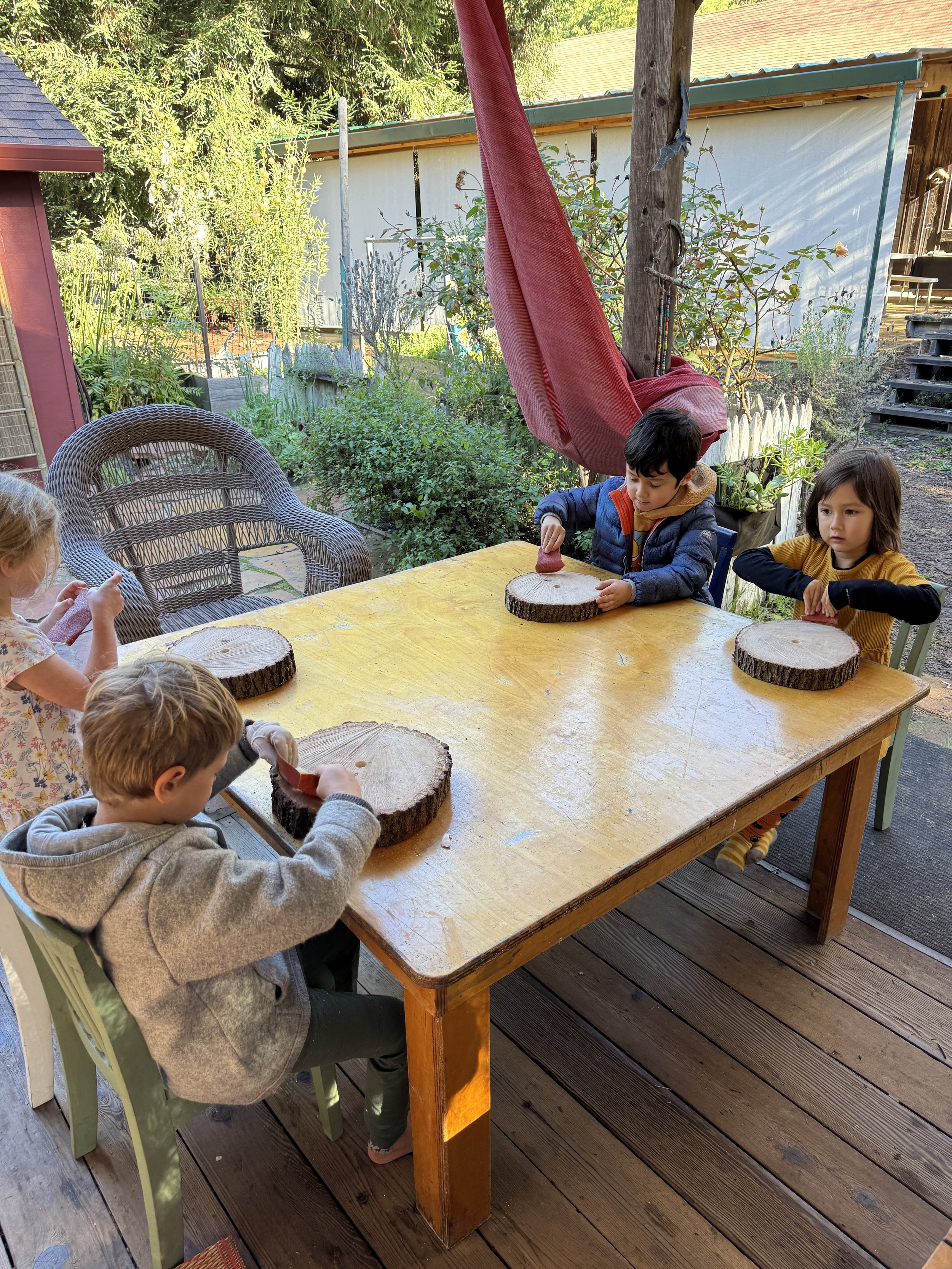
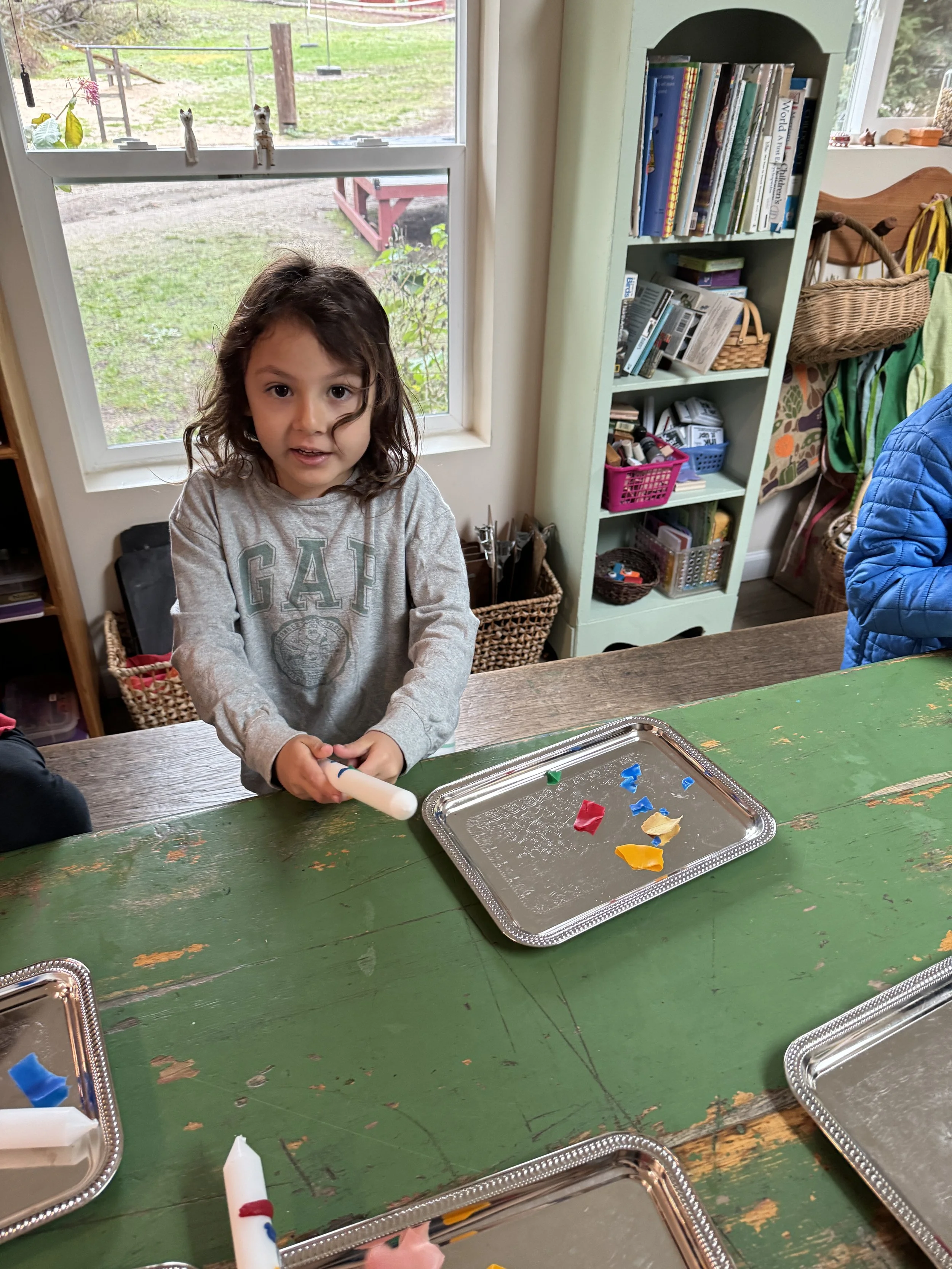
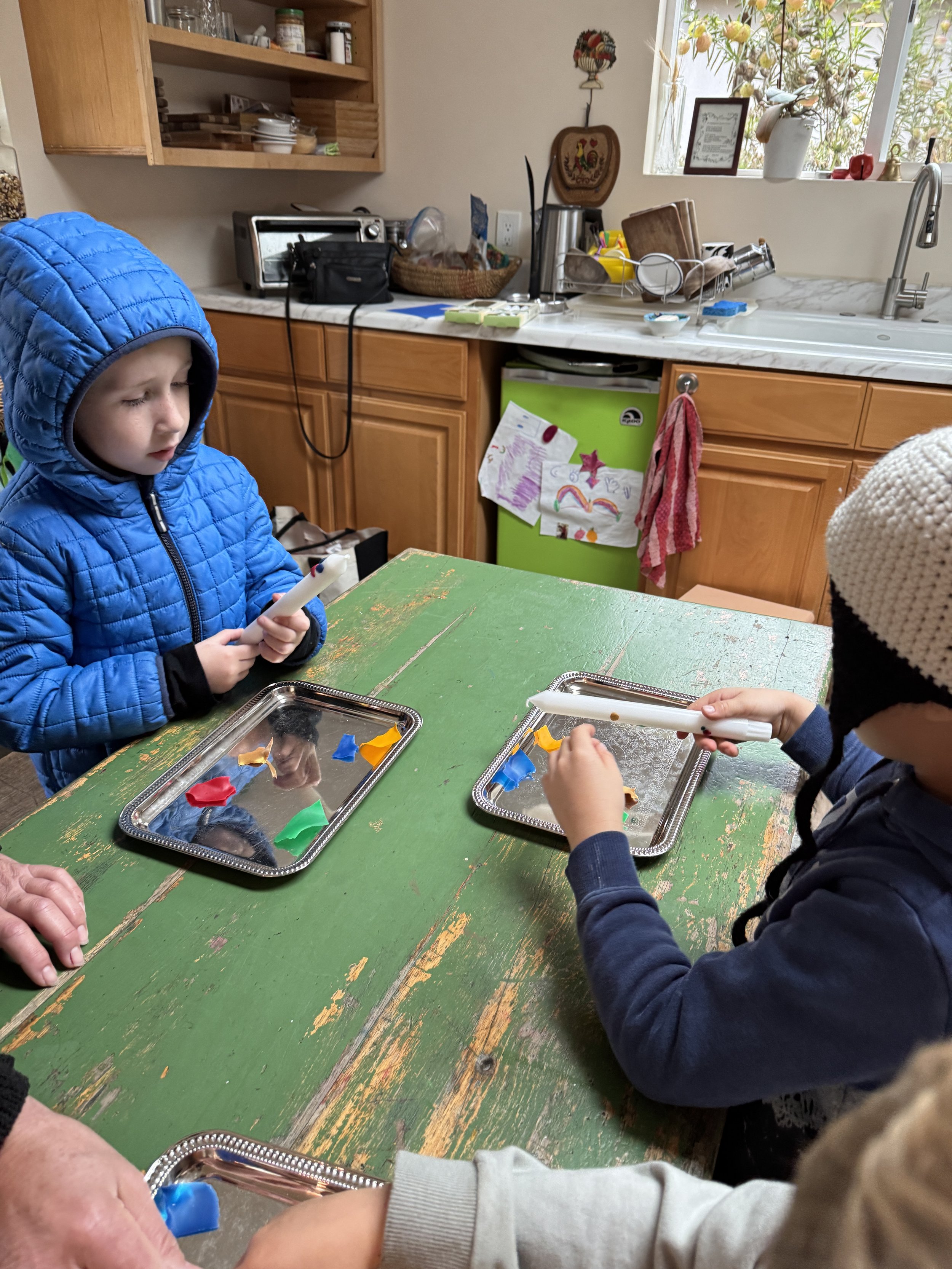
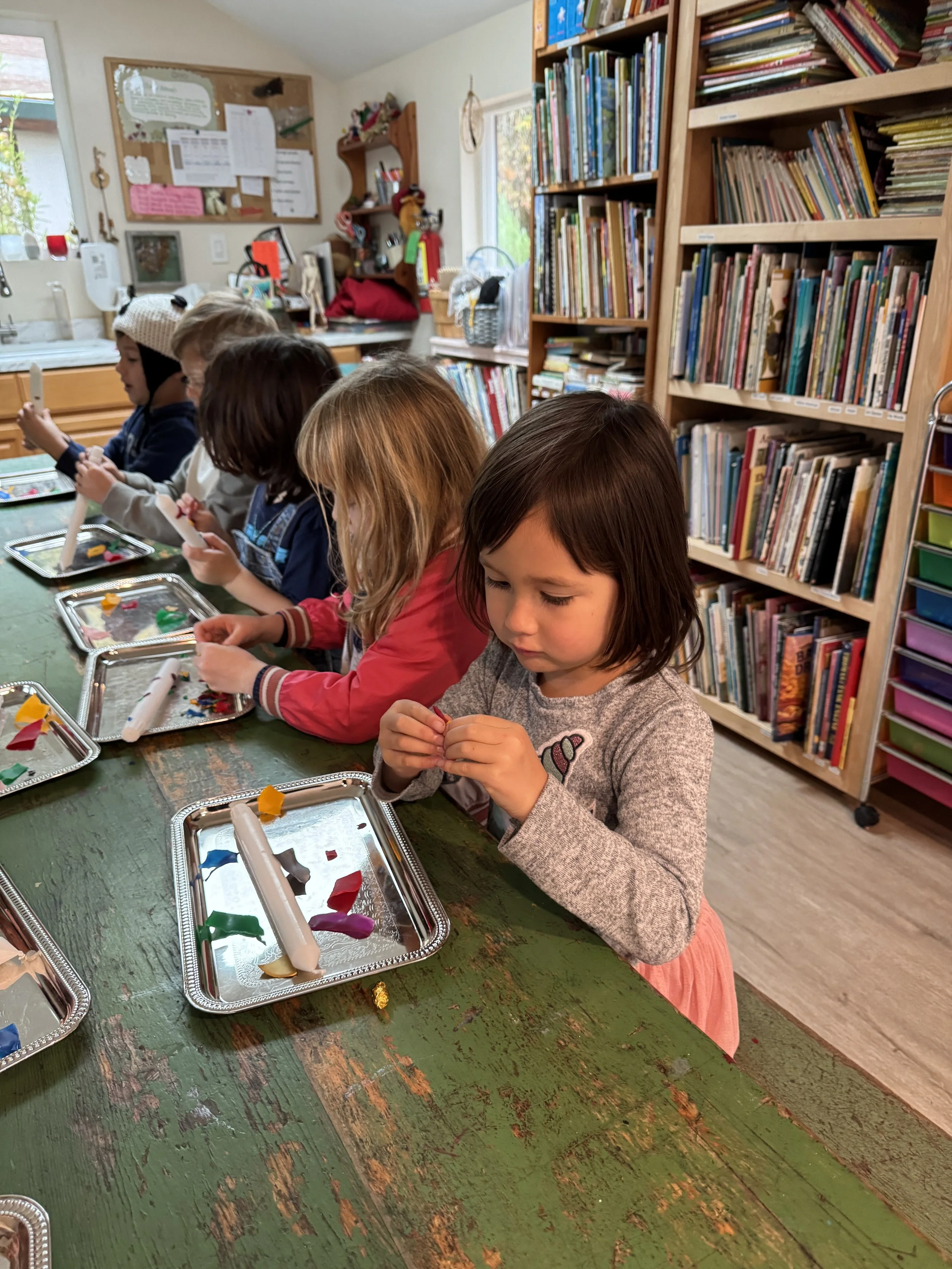
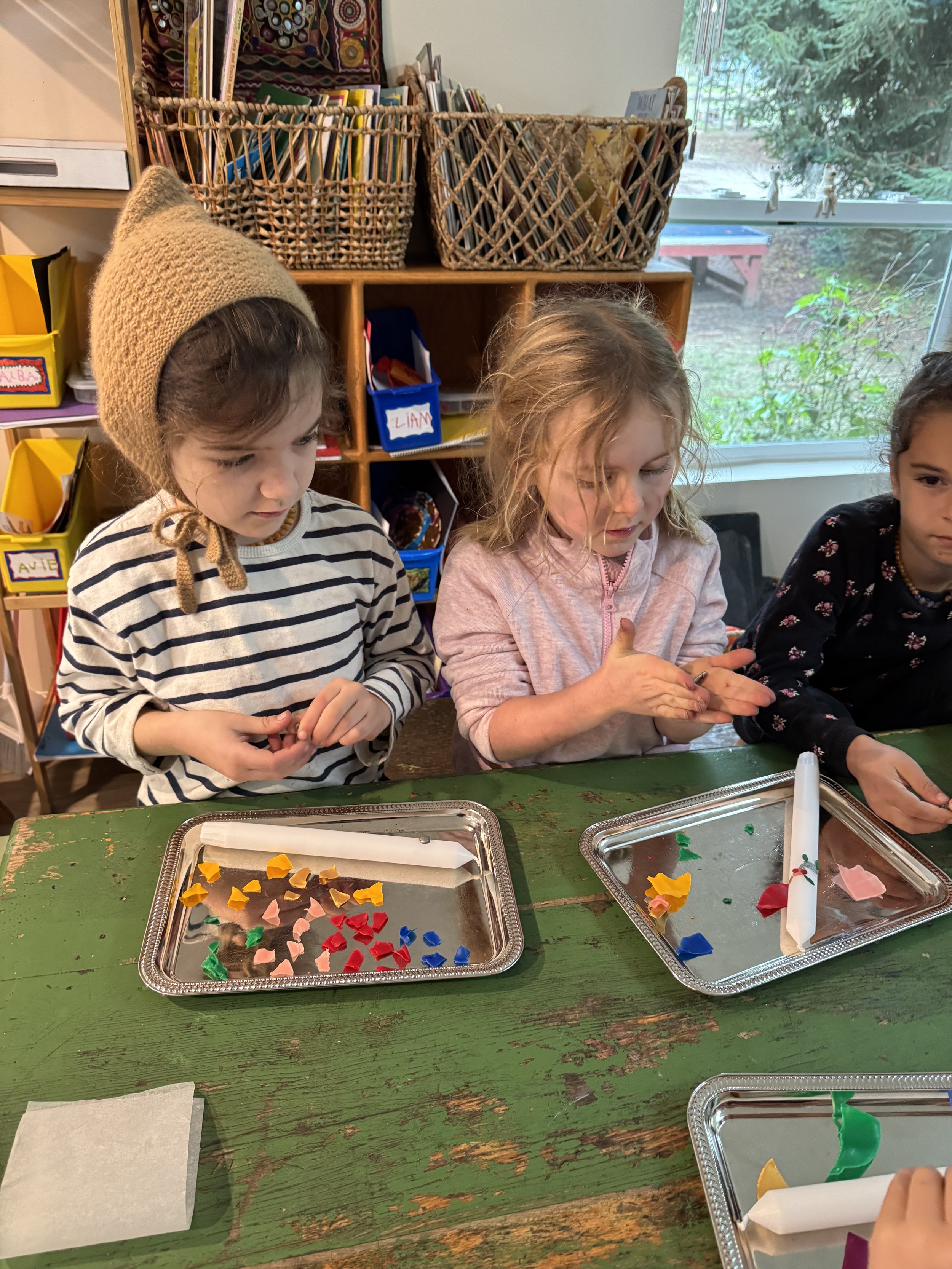
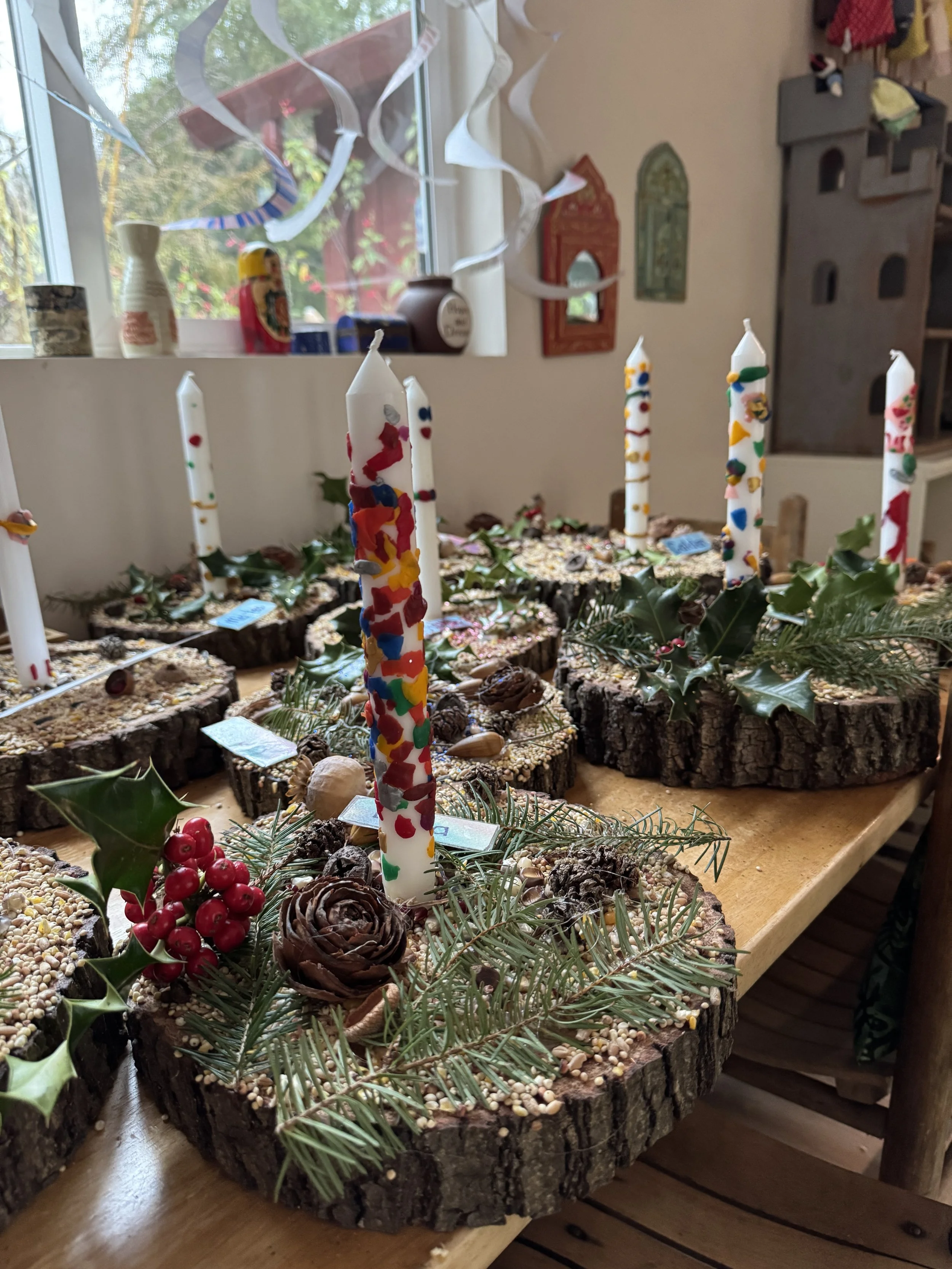
Making the centerpiece holiday gifts for families
Thank for reading. Expect your next blog by the end of February at the latest. As always, feel free to share with family and friends.