
Kindergarten Class September/October
Hello Everyone!
Welcome to the kindergarten classroom blog! My goal is to write every two months at minimum, keep you up to date on curriculum and share a ton of photos so you get a closer look at your children’s experiences at Orchard. Kathleen and I try to strike a balance between documenting with pictures and being more fully in the moment with the children so you will really be seeing just a glimpse. I write long, so please excuse that. You are welcome to skim or just jump to the photos — it’s harder and more time consuming to choose words carefully so it ends up being quite a ramble…
I couldn’t find a photo of all 9 children. Here’s one with everyone except Elio but you’ll see him in many other photos coming up.
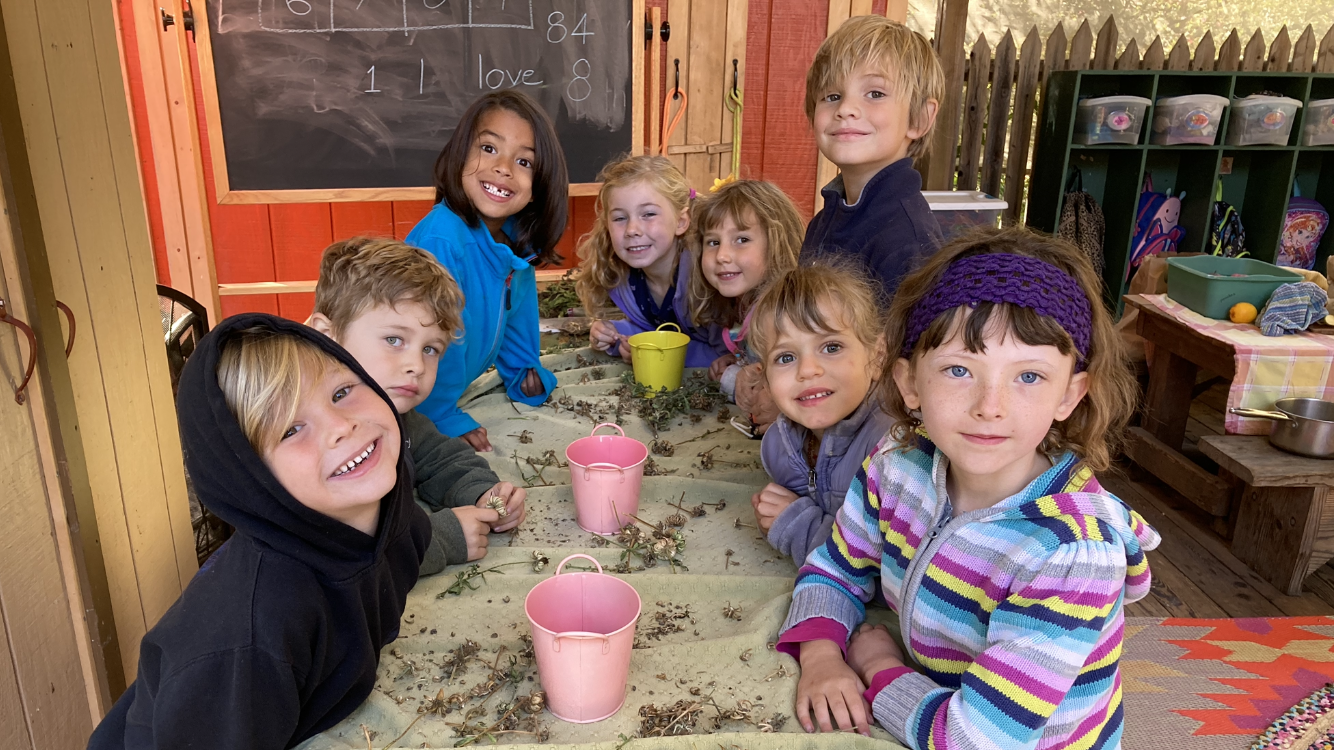
Processing calendula seeds. The kids gathered these with Kathleen up in the big garden. Later they planted them and once they’d sprouted, they transferred some into pots to take home and planted others around and about to hopefully watch grow and bloom next year.
Language Arts:
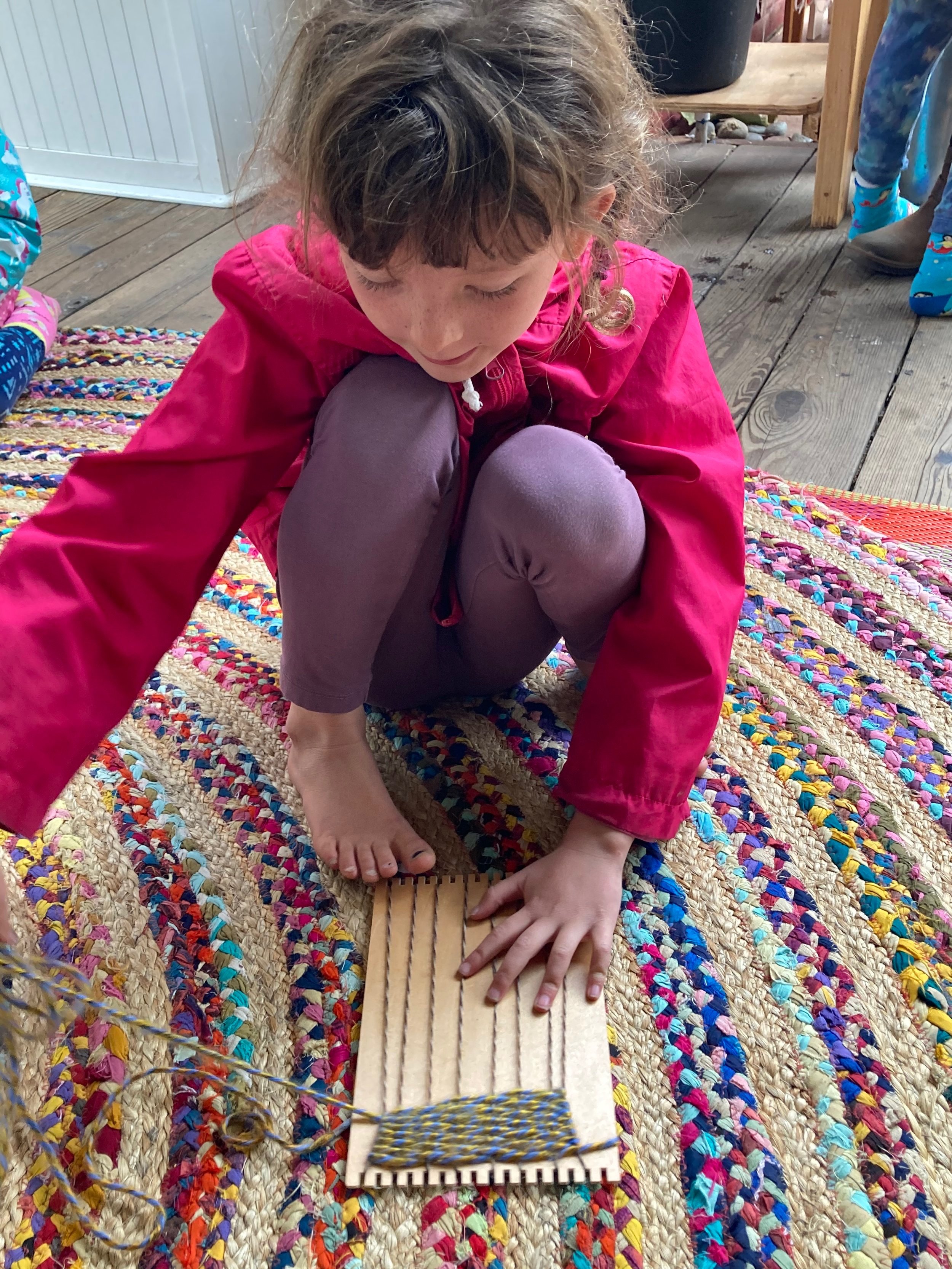
Luna weaving a little rug on our big, beautiful, hand woven circle rug.
This is a huge subject area and while we do have two dedicated periods per week focused specifically on small group work with reading and writing, language instruction is peppered throughout every day. A prime example is the long story song we performed for you at our Back To School Meeting. This was language arts too and was not just for fun. Through verse and song, the kids have been developing their capacity to remember and order long sequences of events, learning how to match movement to words, working on coordination and control, inner-picturing and their imaginations and crossing the midline to encourage the right and left brains to work together; these are foundational developments necessary for skills like effective reading, that pair phonetics and comprehension to the maximum degree.
Similarly, when we teach artistic endeavors like how to weave and finger knit, the tracking involved is very similar to tracking words across a page when one reads, and the finger movements are building the finer muscle control needed to write neatly and uniformly.
In more traditional language arts instruction:
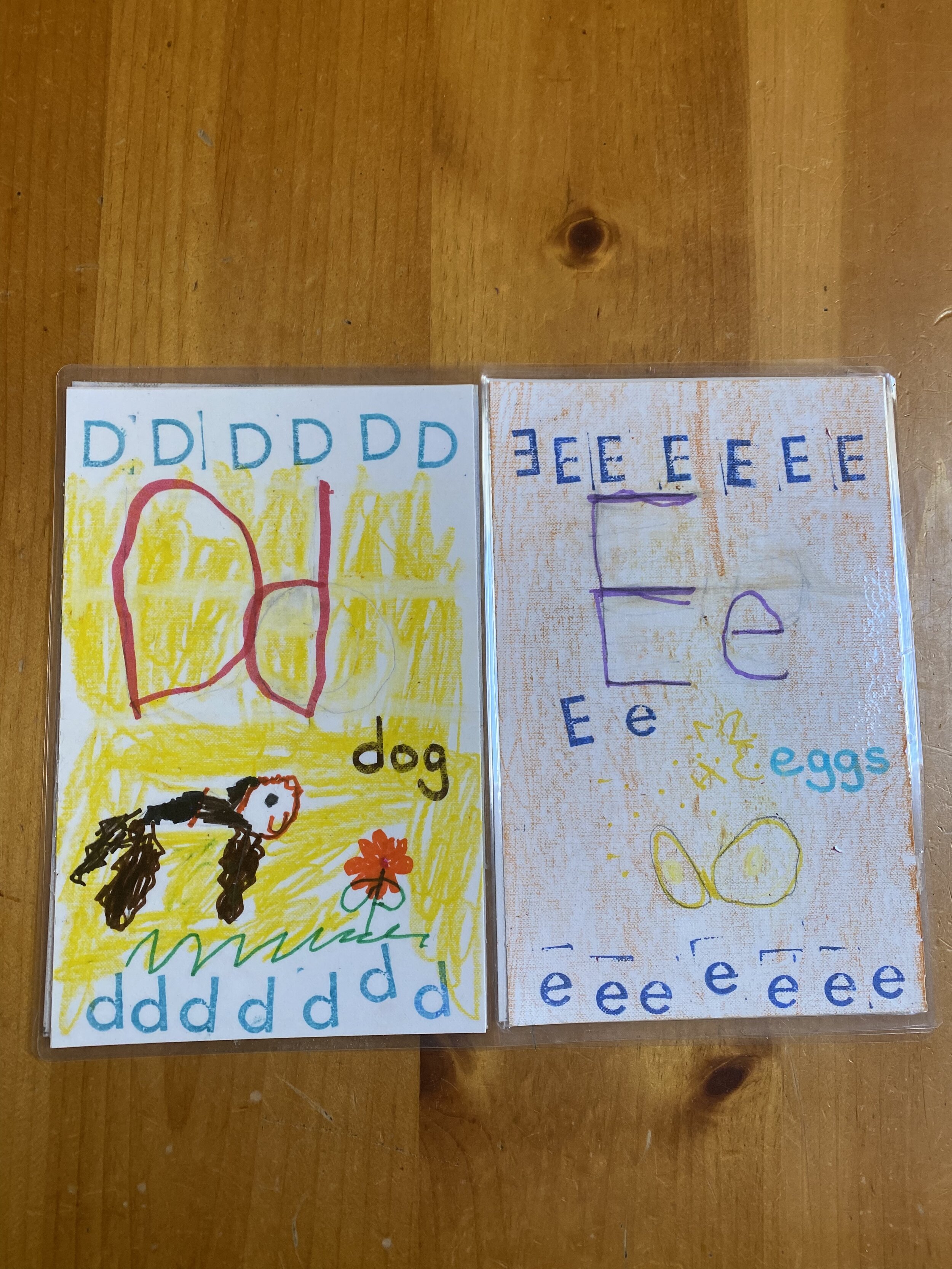
Letter cards: Genevieve’s d is for dog and Ananya’s e is for eggs.
We’ve reviewed the alphabet, including the correct letter formation (top to bottom, otherwise known as “sky to earth”) for these letters.
Students have made alphabet cards (these are hanging above the cubbies) where each child completed a study of two to three letters
We’ve played various games to match upper case and lower case letters
They spent some time practicing writing their names with the first letter uppercase and the rest in lower case. If you write with them at home, please encourage this as much as possible. Uppercase letters are often taught first, in preschool; lowercase takes more time and are the letters we use almost exclusively, except for the first letter in a sentence or proper names.
While working with letters, the children have begun a focus on handwriting using the Handwriting without Tears curriculum and the wet, dry, try method of writing letters with water, drying the water with a little sponge following the correct writing method and then finally replicating the letter with chalk. This way, hopefully, the letters take on a physical component and are more likely to become part of the kids’ knowledge base.
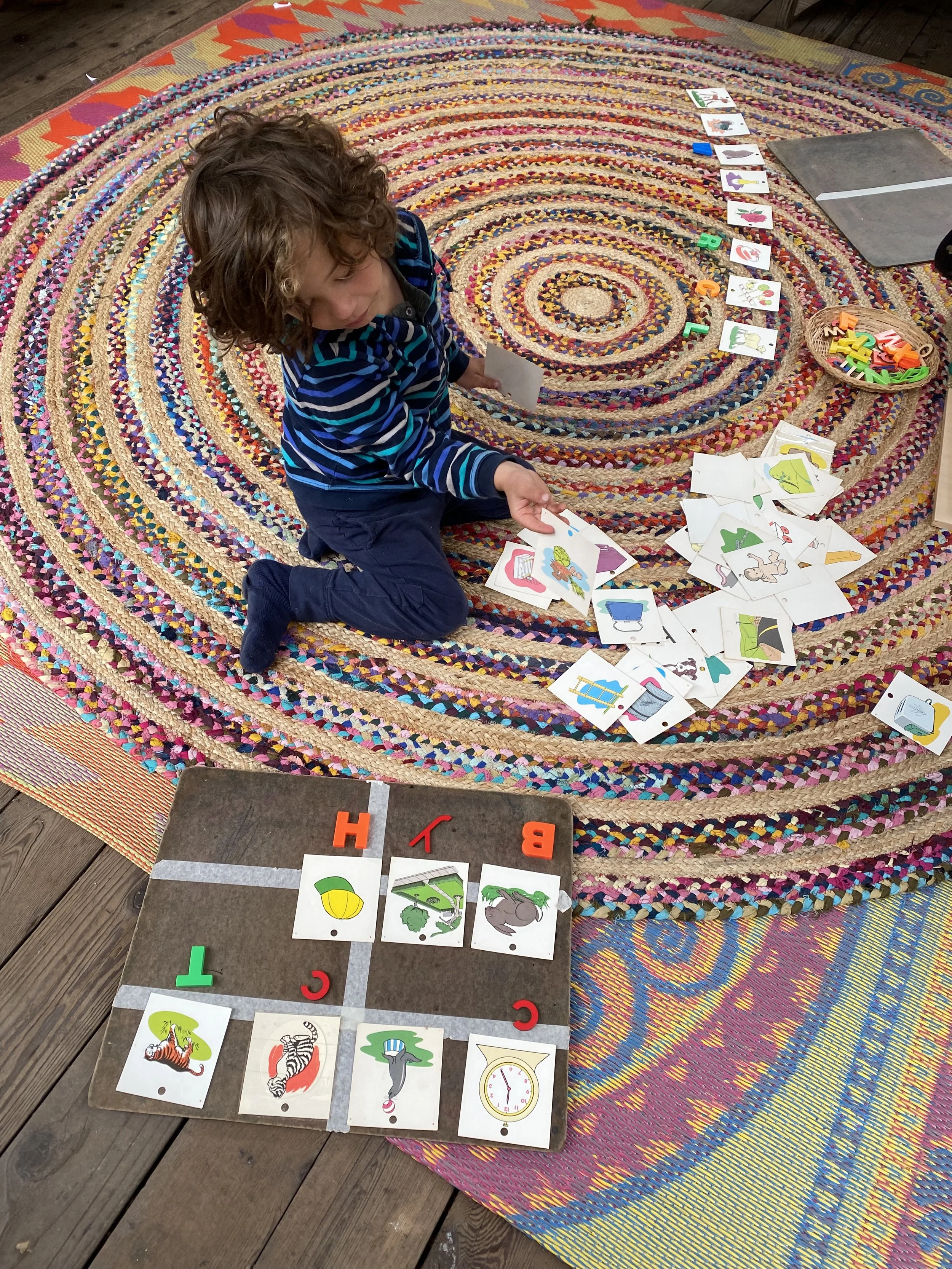
Below, you see Elio and Axel working on identifying beginning letter sounds for various pictures. Our school cat (Olive’s cat) Butter came along and knocked over the cards and letters but then the kids figured out that Cat begins with C and it turned into an appropriate spot for her to sit! Scroll, there are four photos.
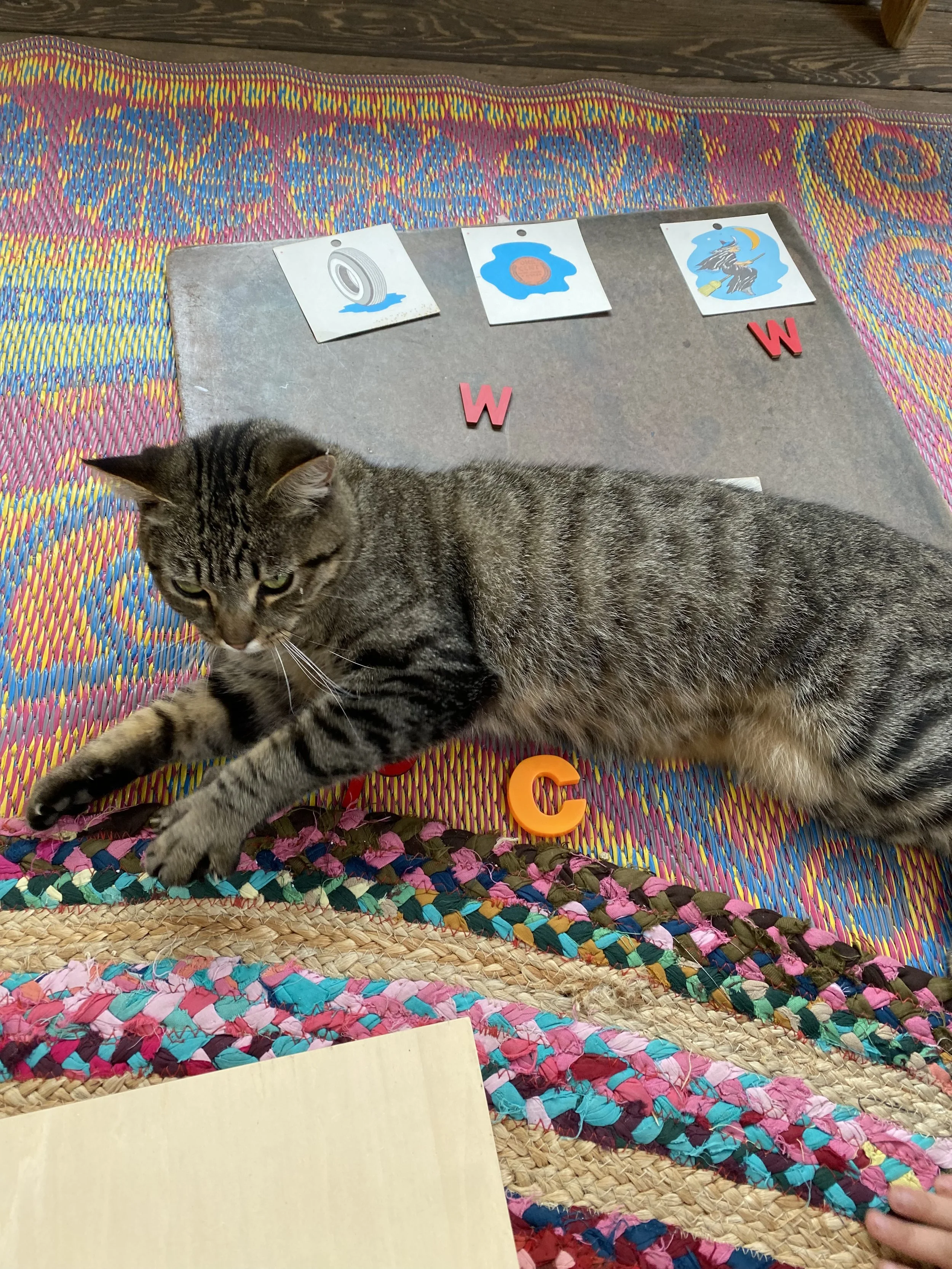
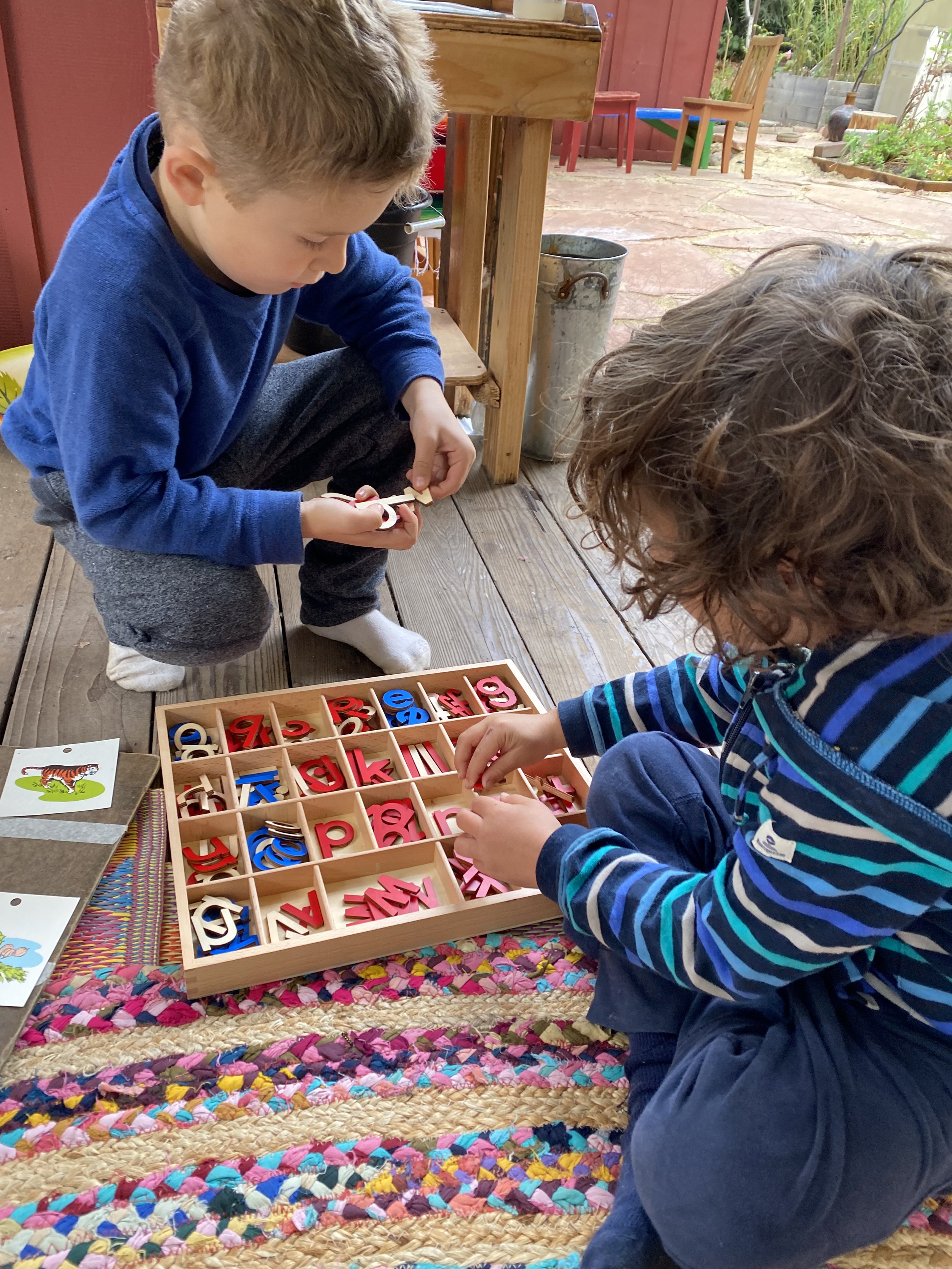
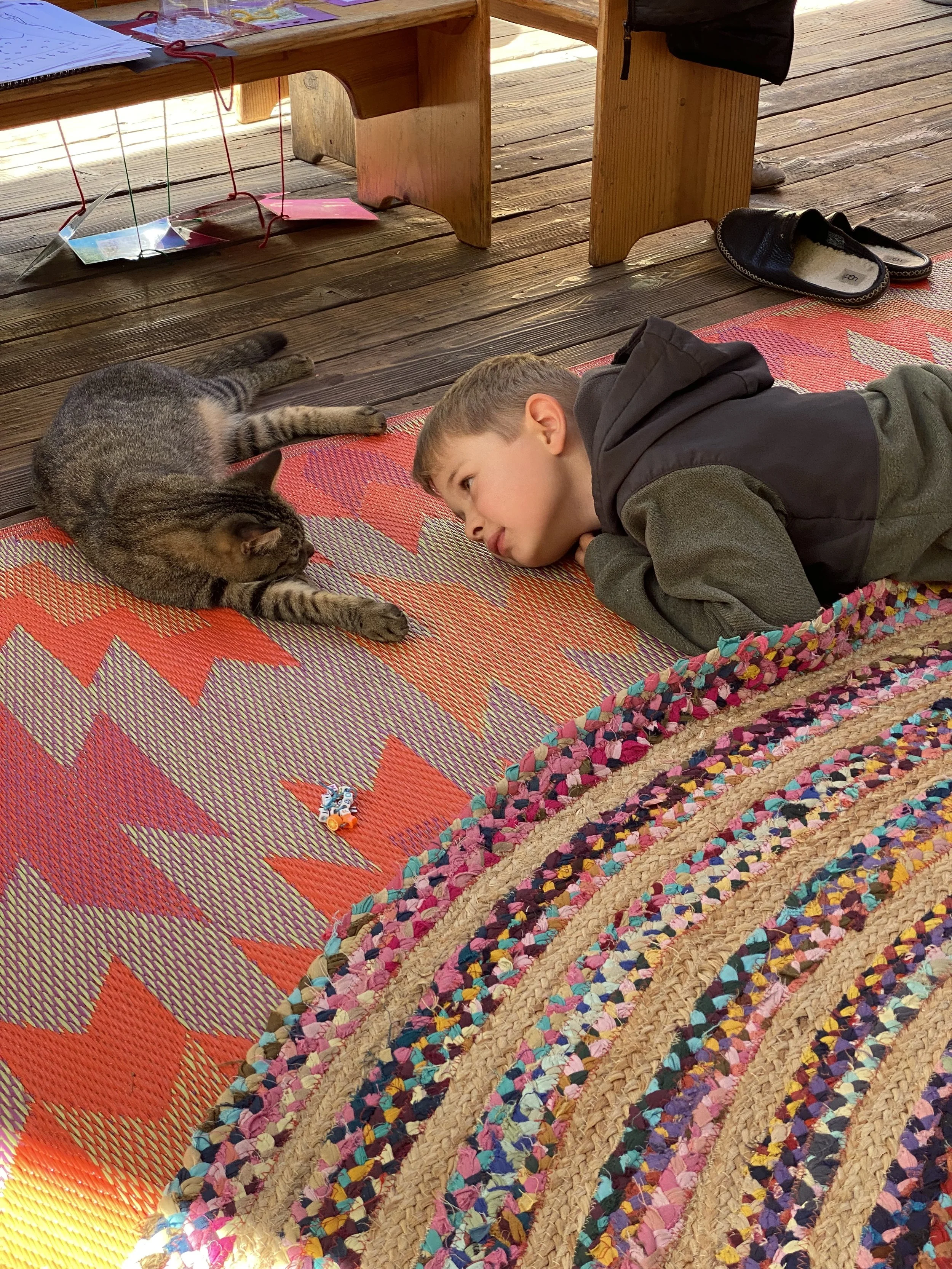
We surround the kindergarteners with stories, not only reading books but also telling stories. Bony Legs was one such tale. Through telling and re-telling and then acting it out at the Halloween performance, it now lives within each child. They know it so well and can conjure up the images that make it come alive in their minds. This is what inspires children to love reading. Bringing stories to life is the foundation for developing this love.
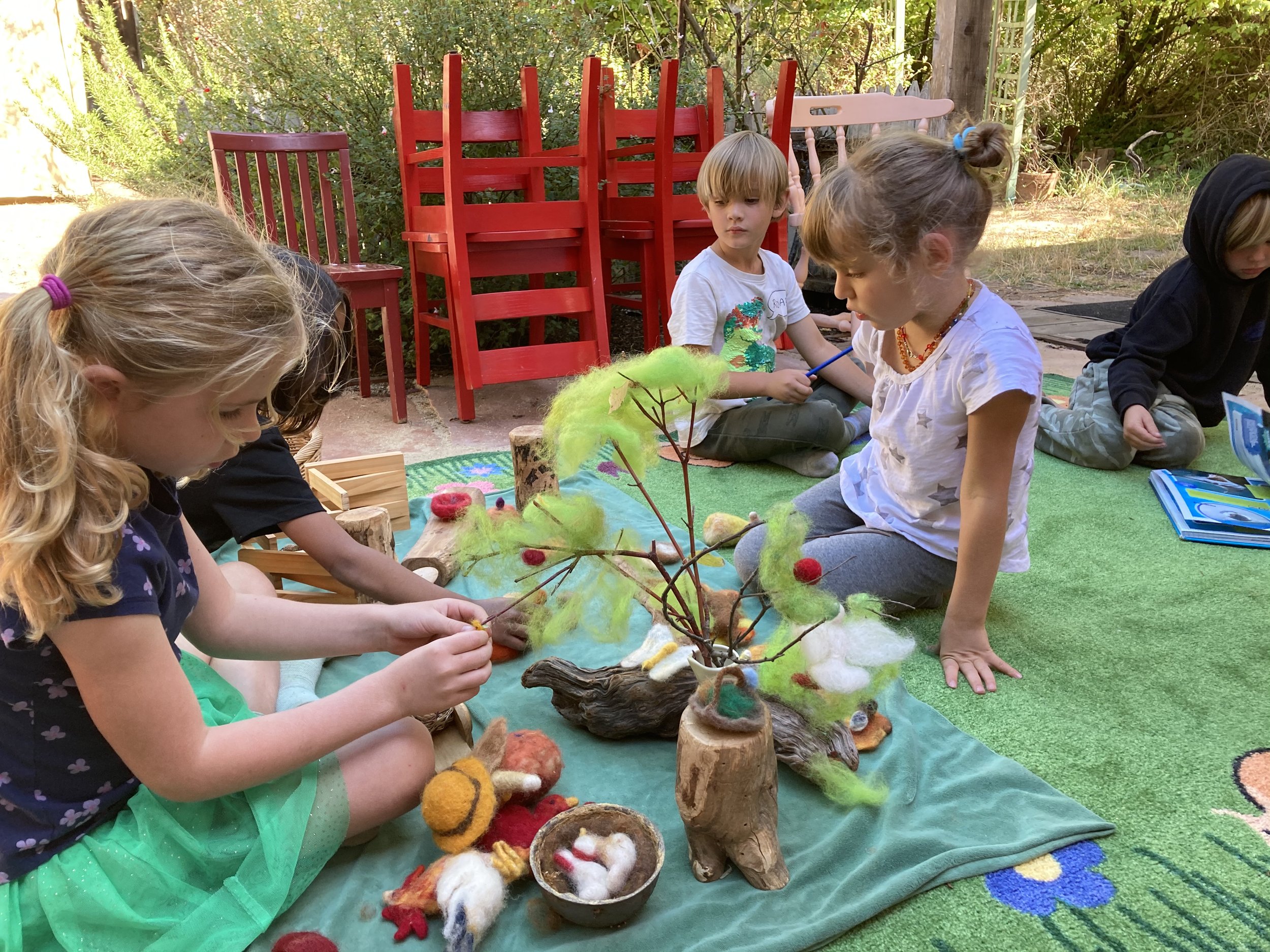
And this is precisely why Kathleen’s puppet shows are so moving and so important for the children. She has presented many stories so far: The Little Red Hen, The Apple Tree Elves, and Little Boy Knight. She hand makes all of the dolls and props featured in her shows herself, using wool. Amazing. Later, she lets them play with the dolls and create their own story worlds as in the photo on the right.
I have told them a cautionary tale about kindness found through the destructive act of destroying a beehive and a story about the little red house with no door and no windows and a star inside. The kids were to bring this home to you as a riddle. Did you solve it? Answer: an apple.
Math:
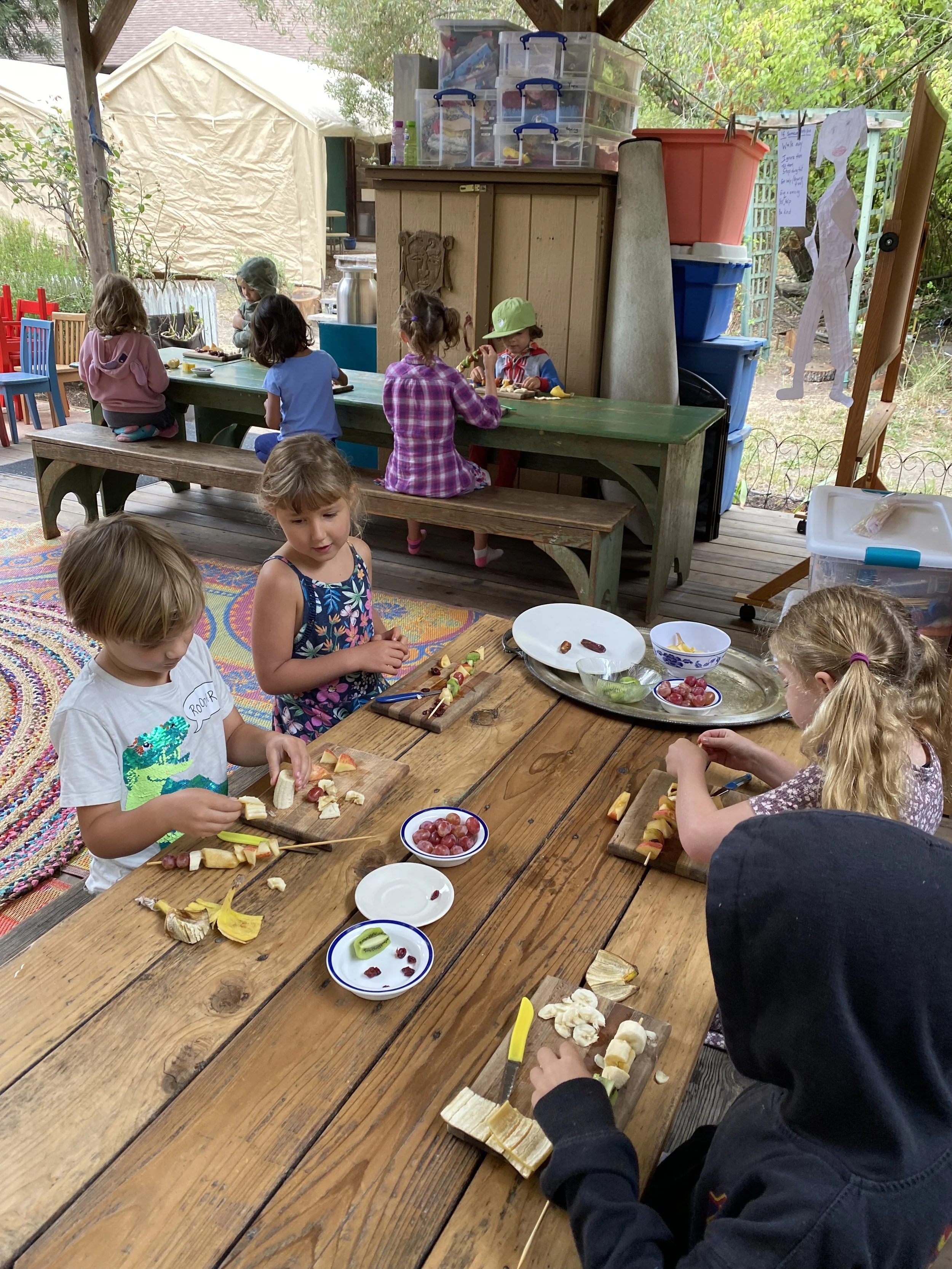
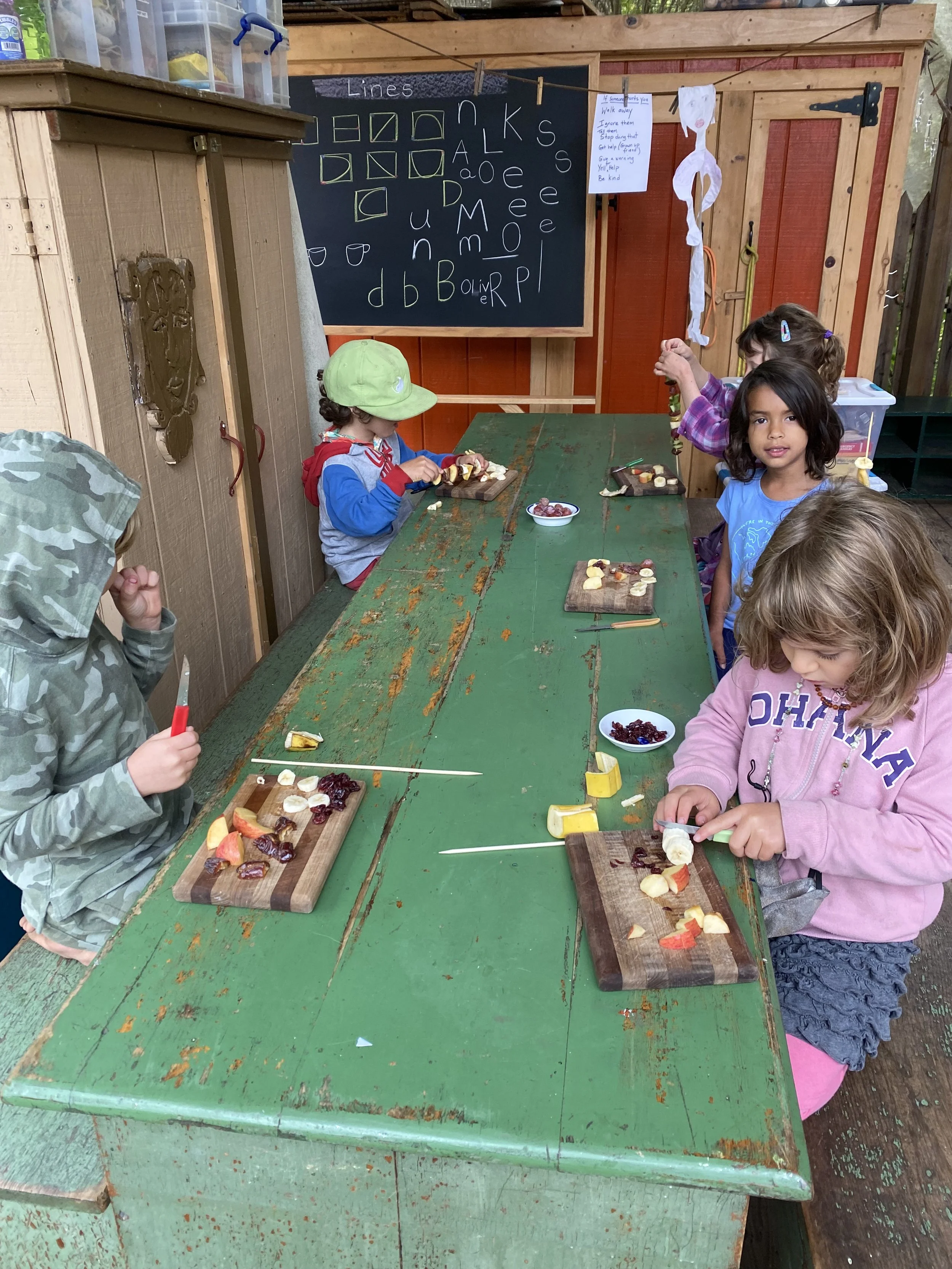
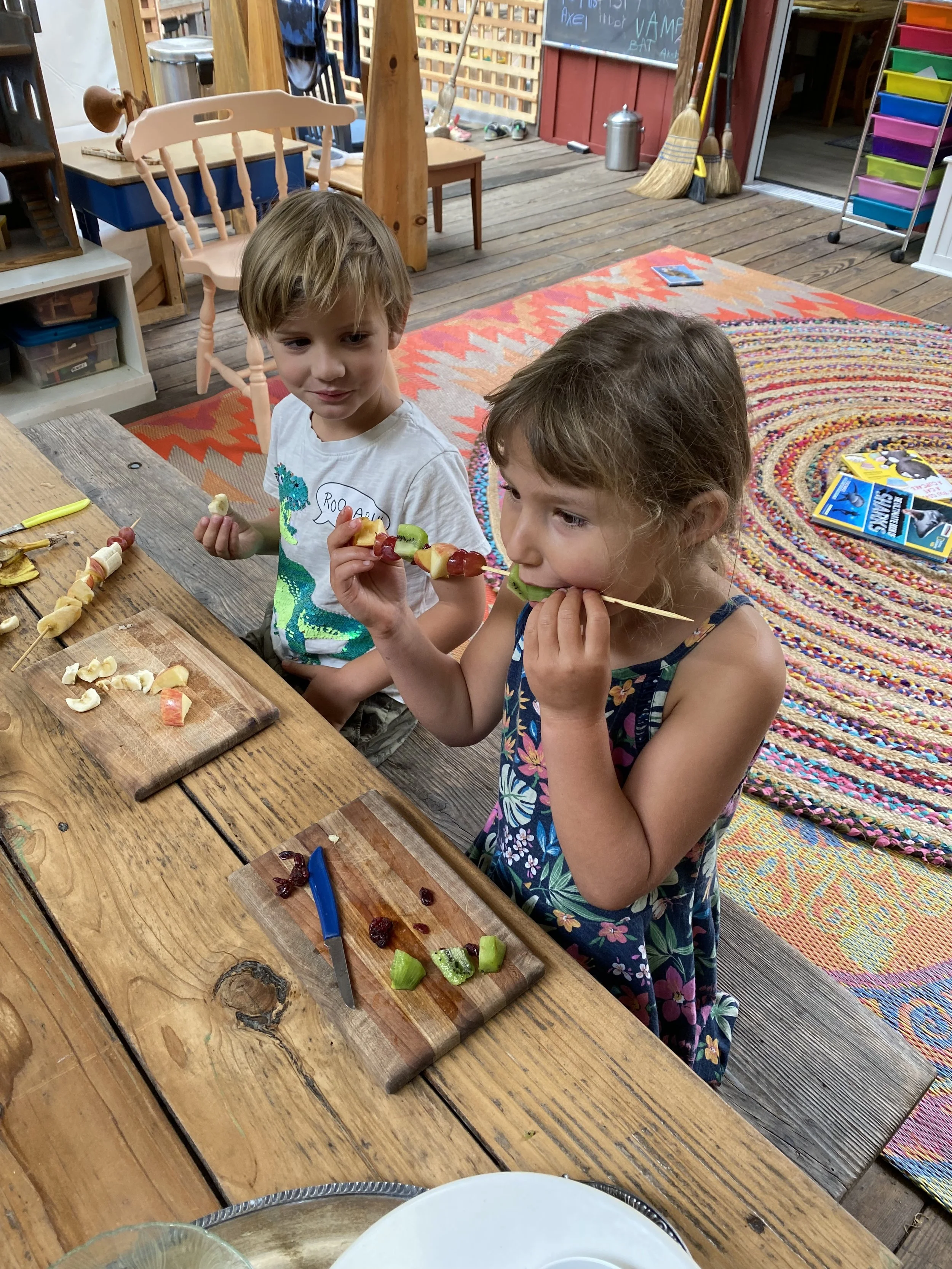
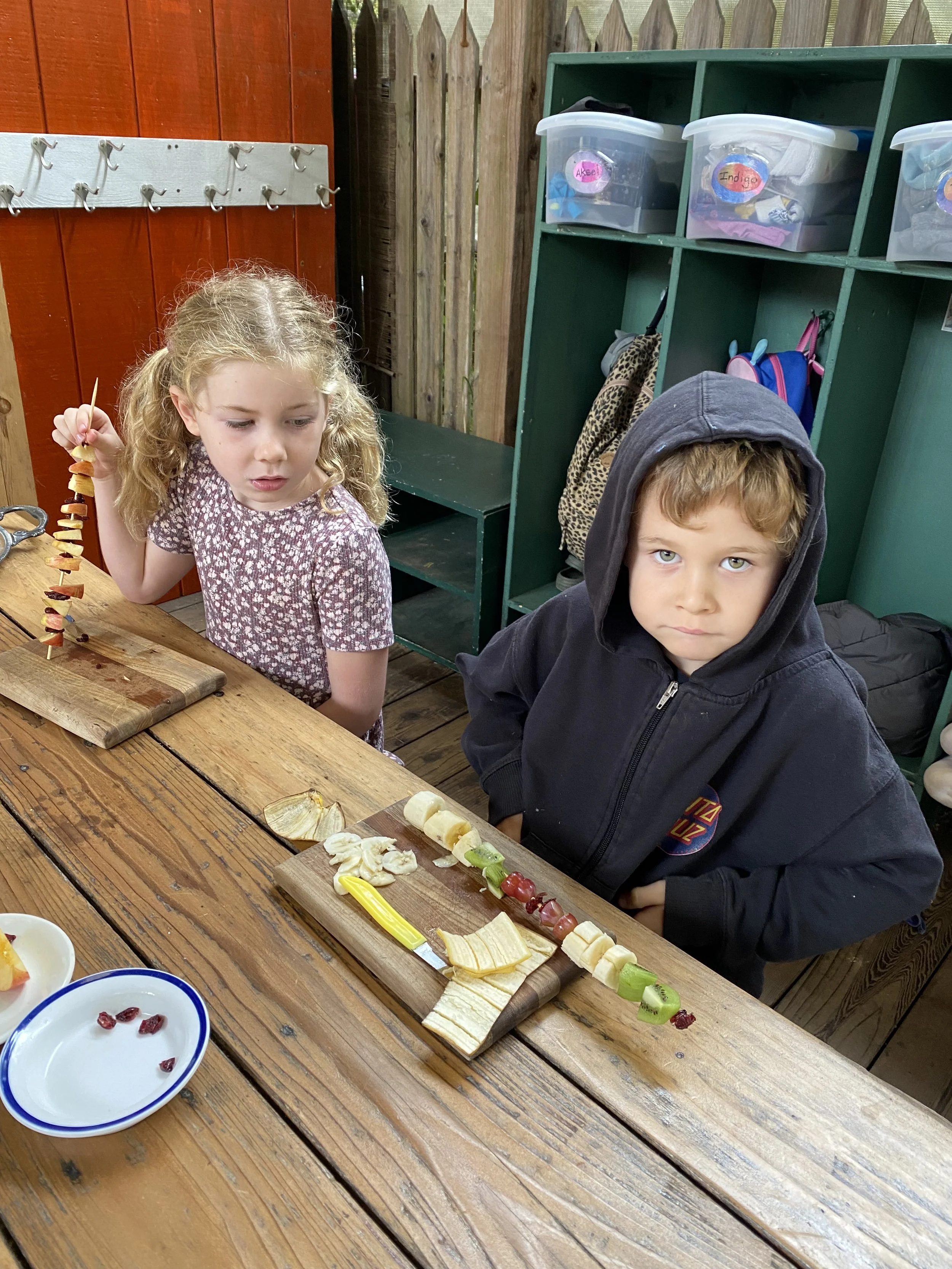
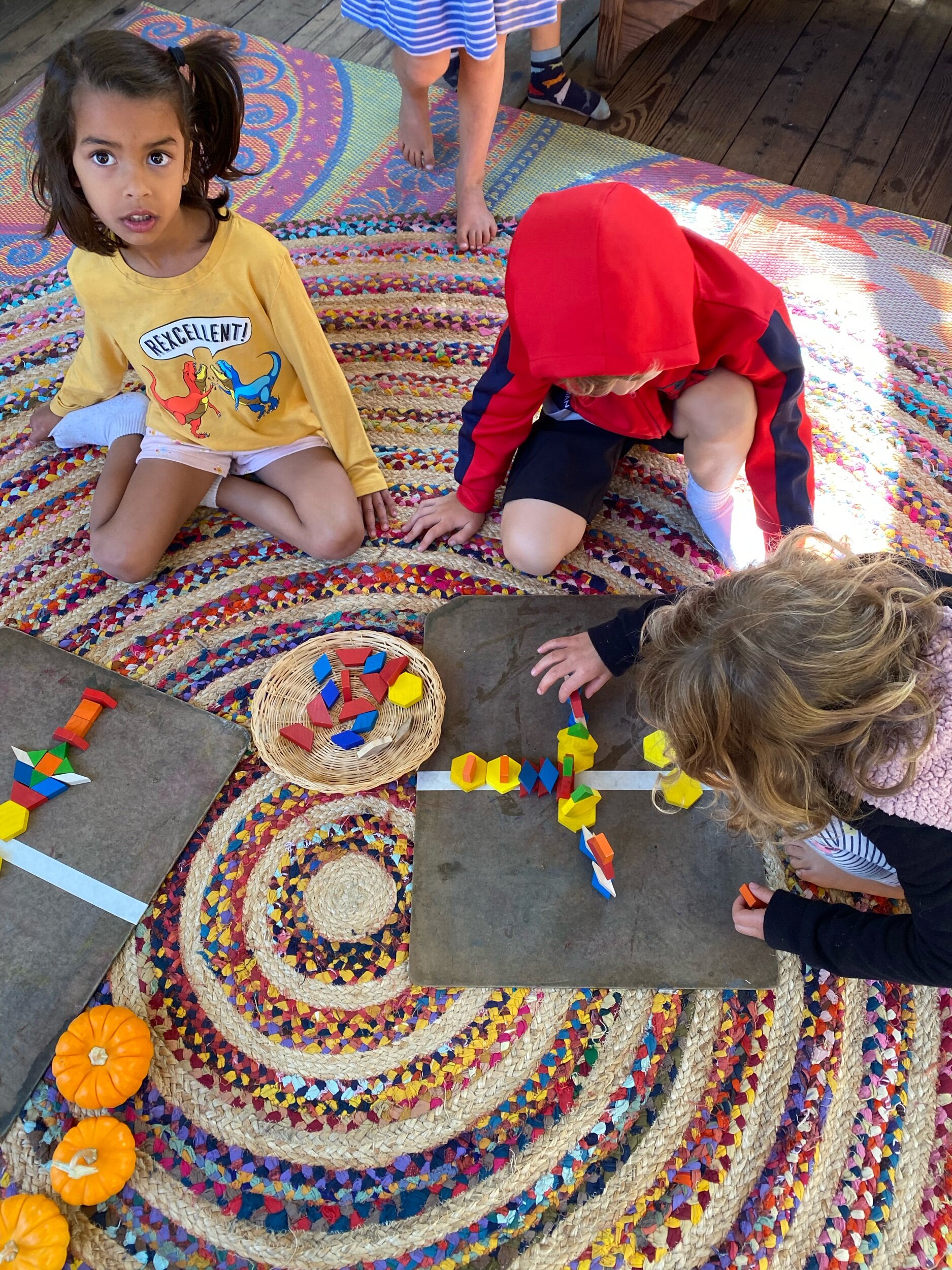
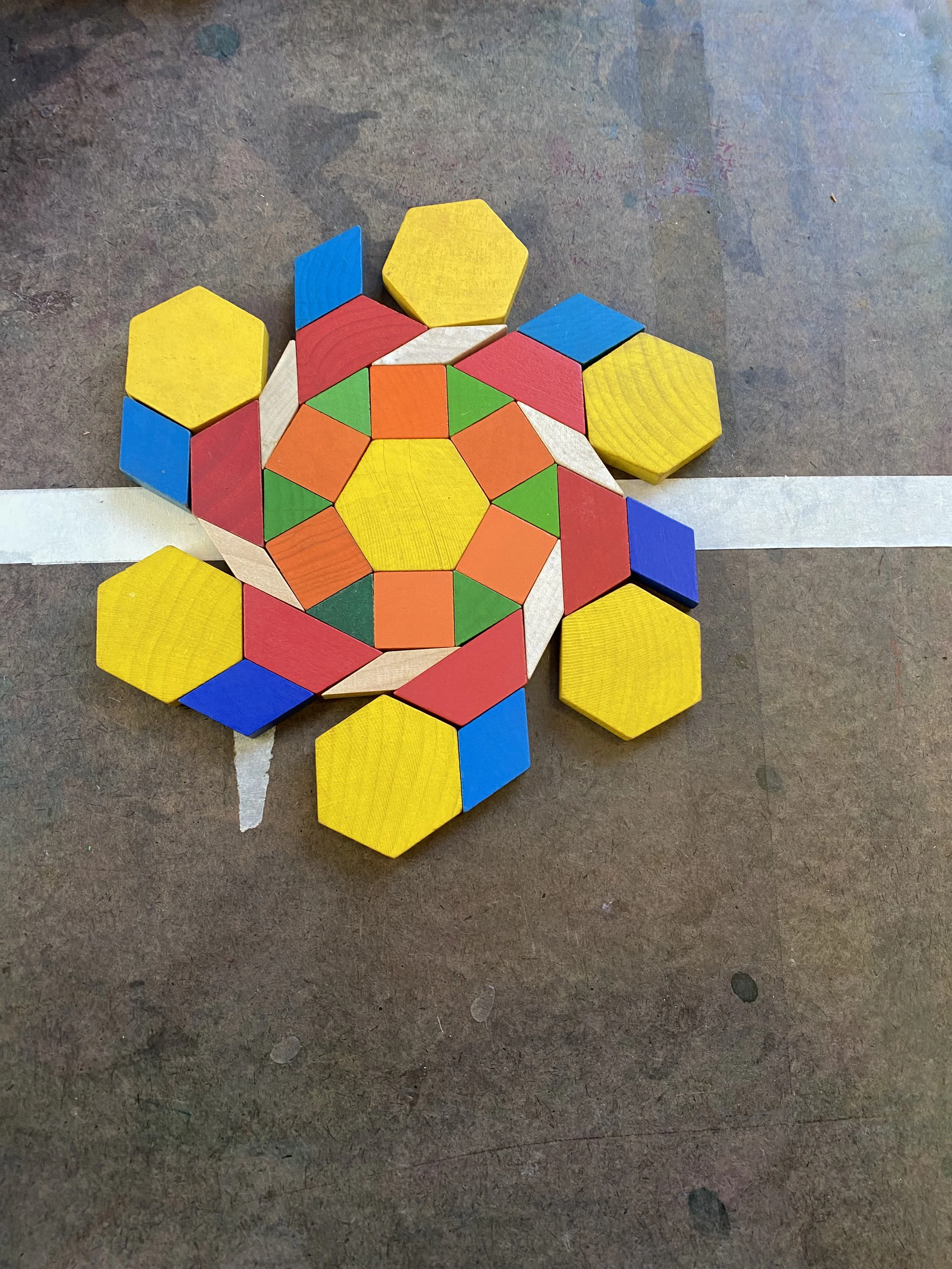
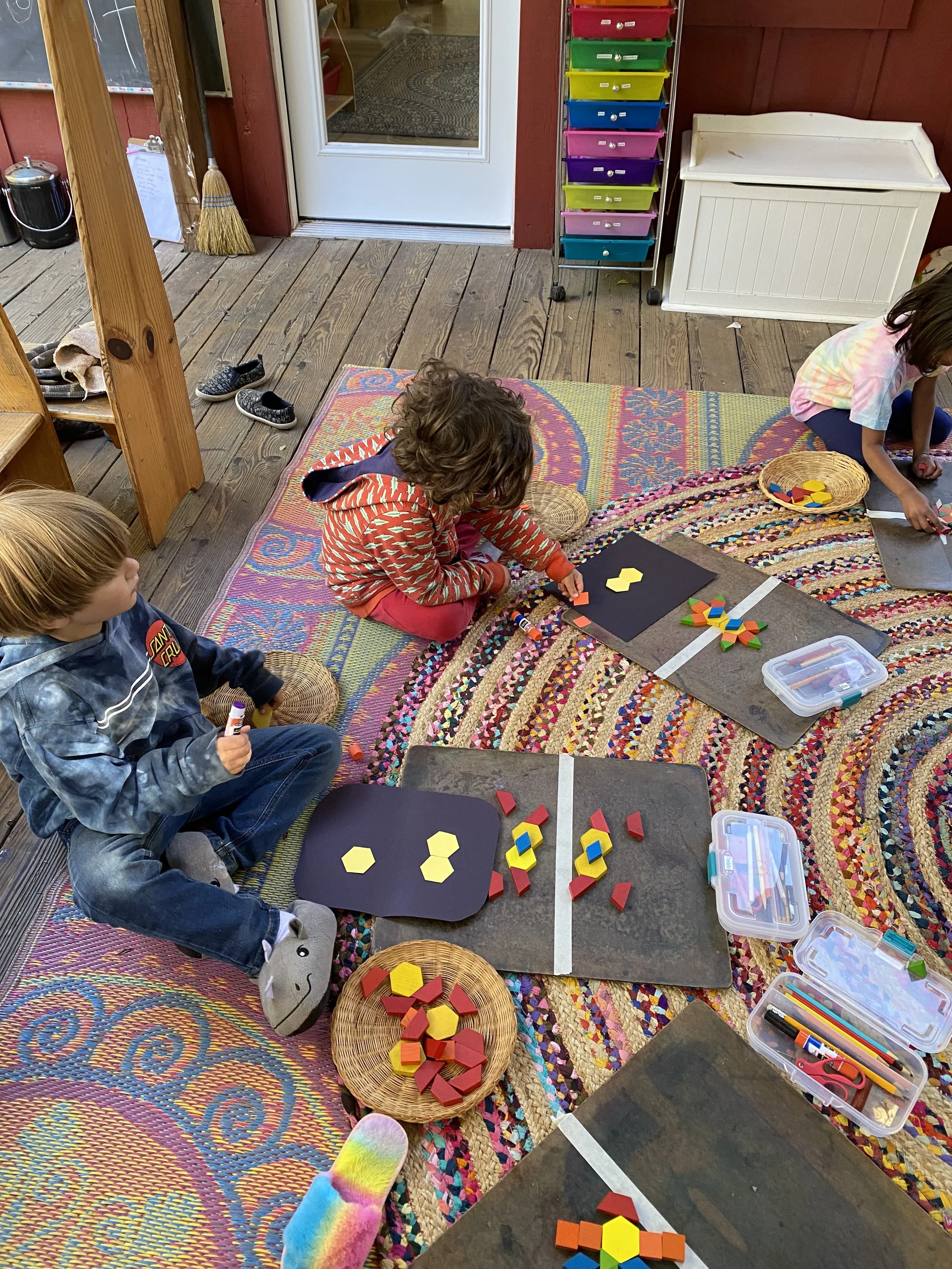
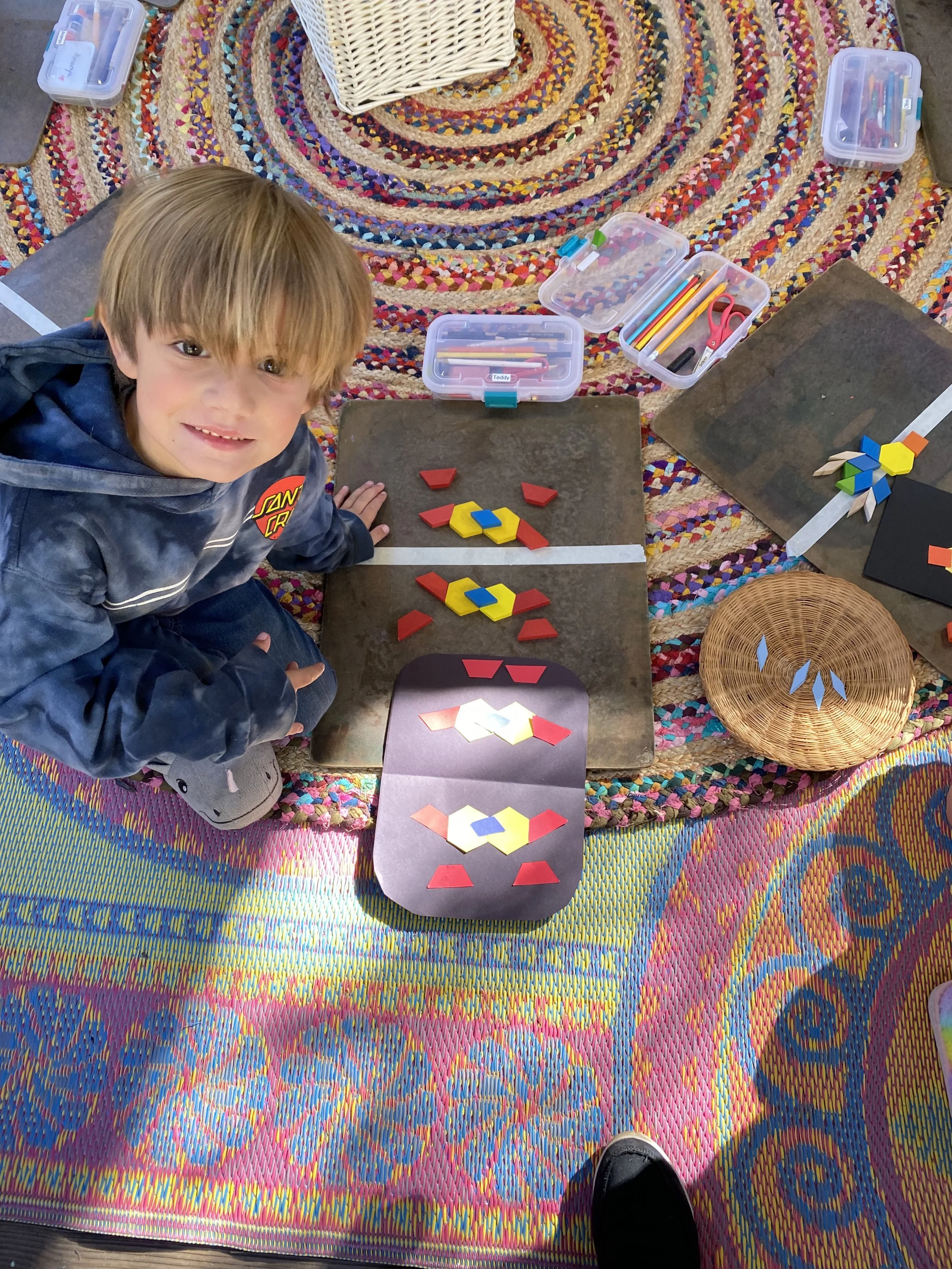
We start the year with an exploration of patterns. The children have learned about visual patterns involving shapes and colors, and have stamped and painted patterns. Together we’ve made 3D patterns using our bodies and various seating configurations, we’ve made sound patterns, and they’ve even made edible patterns using cubes of fruits skewered onto kebab sticks. The idea here has been to relay the idea that a pattern is something that repeats and to be able to take, say, a sound pattern (like clap, clap, snap, clap, clap, snap) and replicate it into a visual pattern (so, red, red, blue, red, red, blue) or to have me clap a pattern and have them build that pattern with the snapblocks and then duplicate that 3D pattern into a colored grid in their books. Most got the concept of an ABABAB pattern down; some were coming up with quite complex arrangements like AABCCAABCC. See this gallery of photos to see some of the pattern fun the kids had. Patterns are math — think number patterns, think algebra equations.
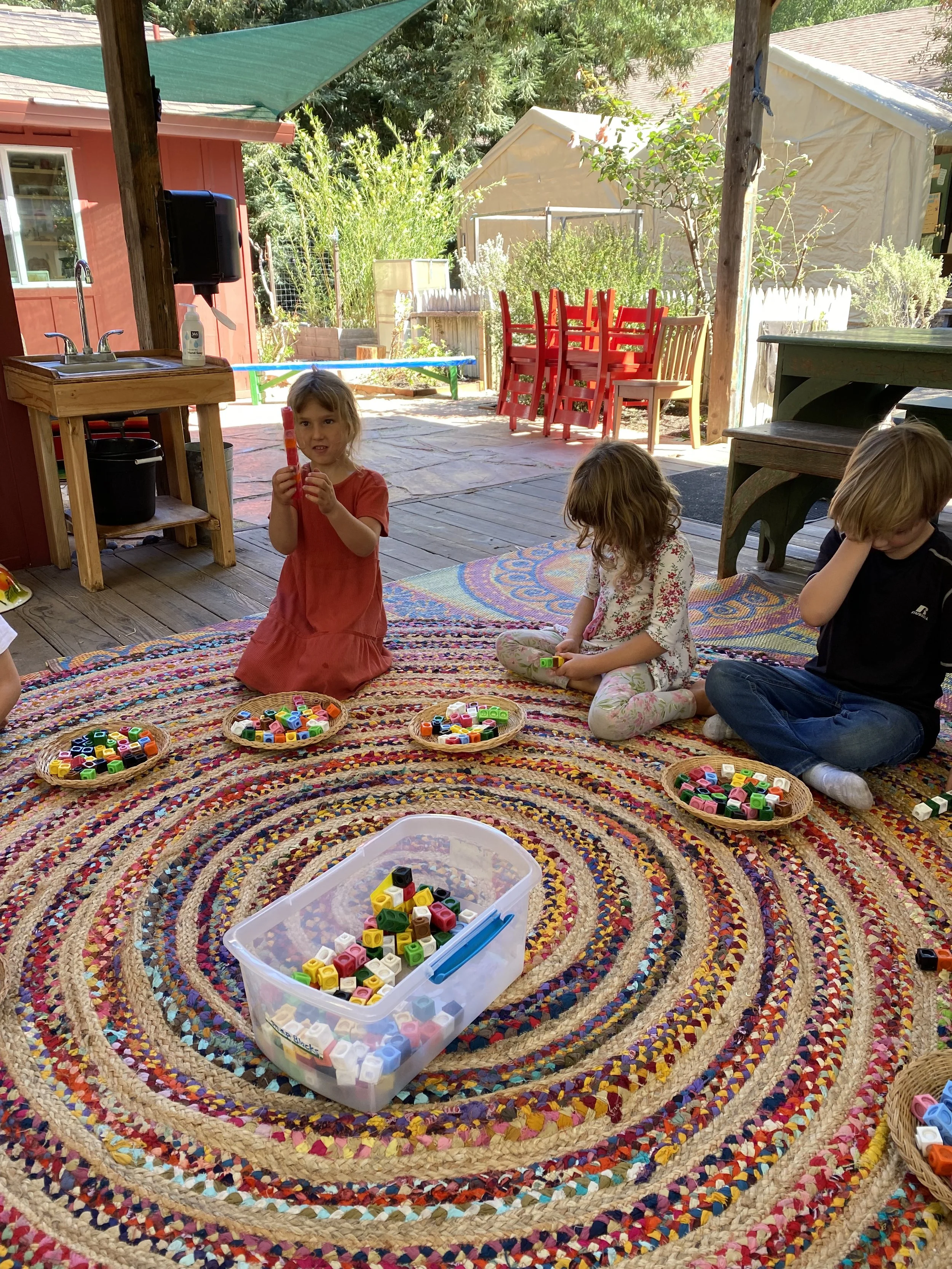
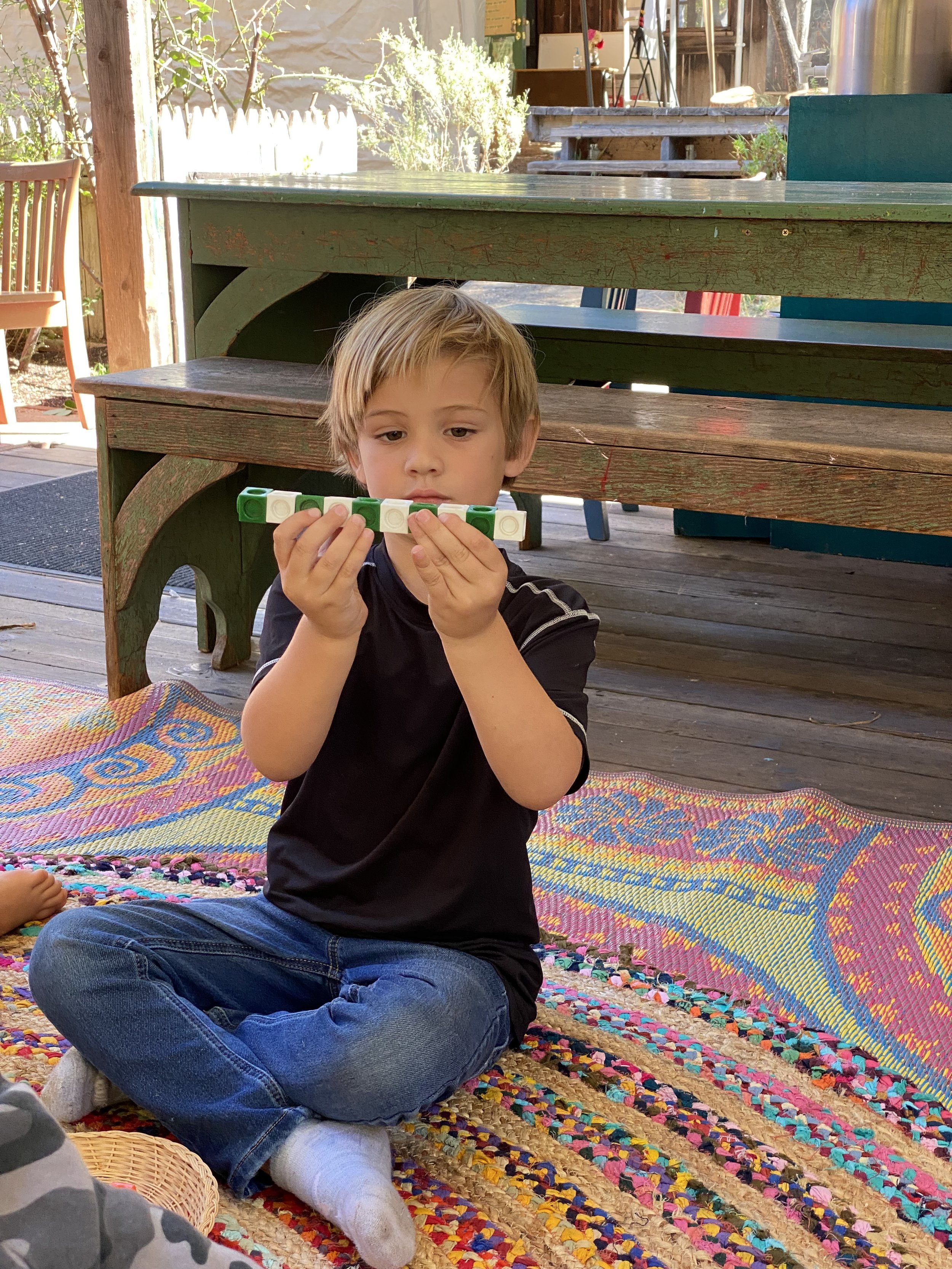
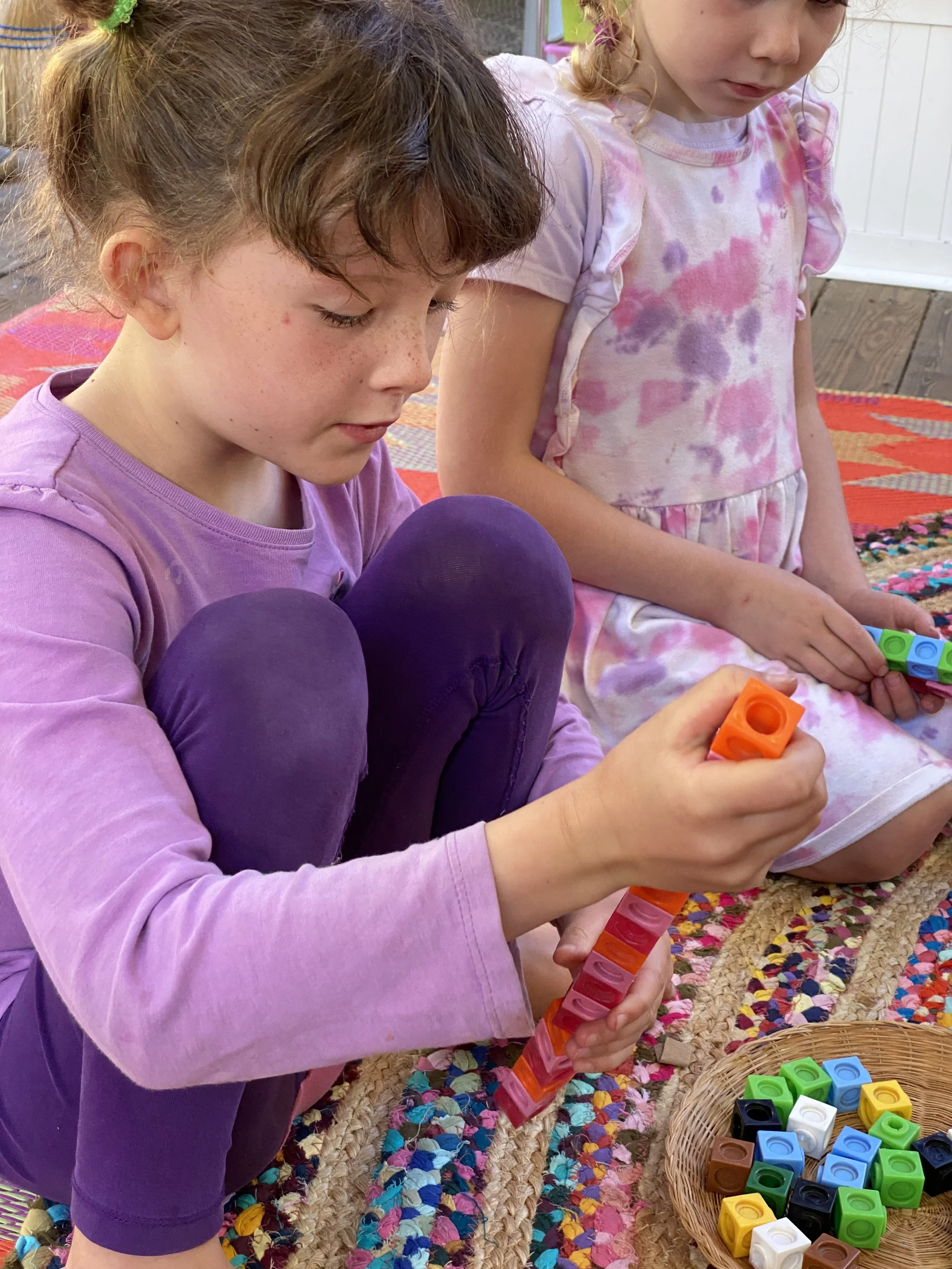
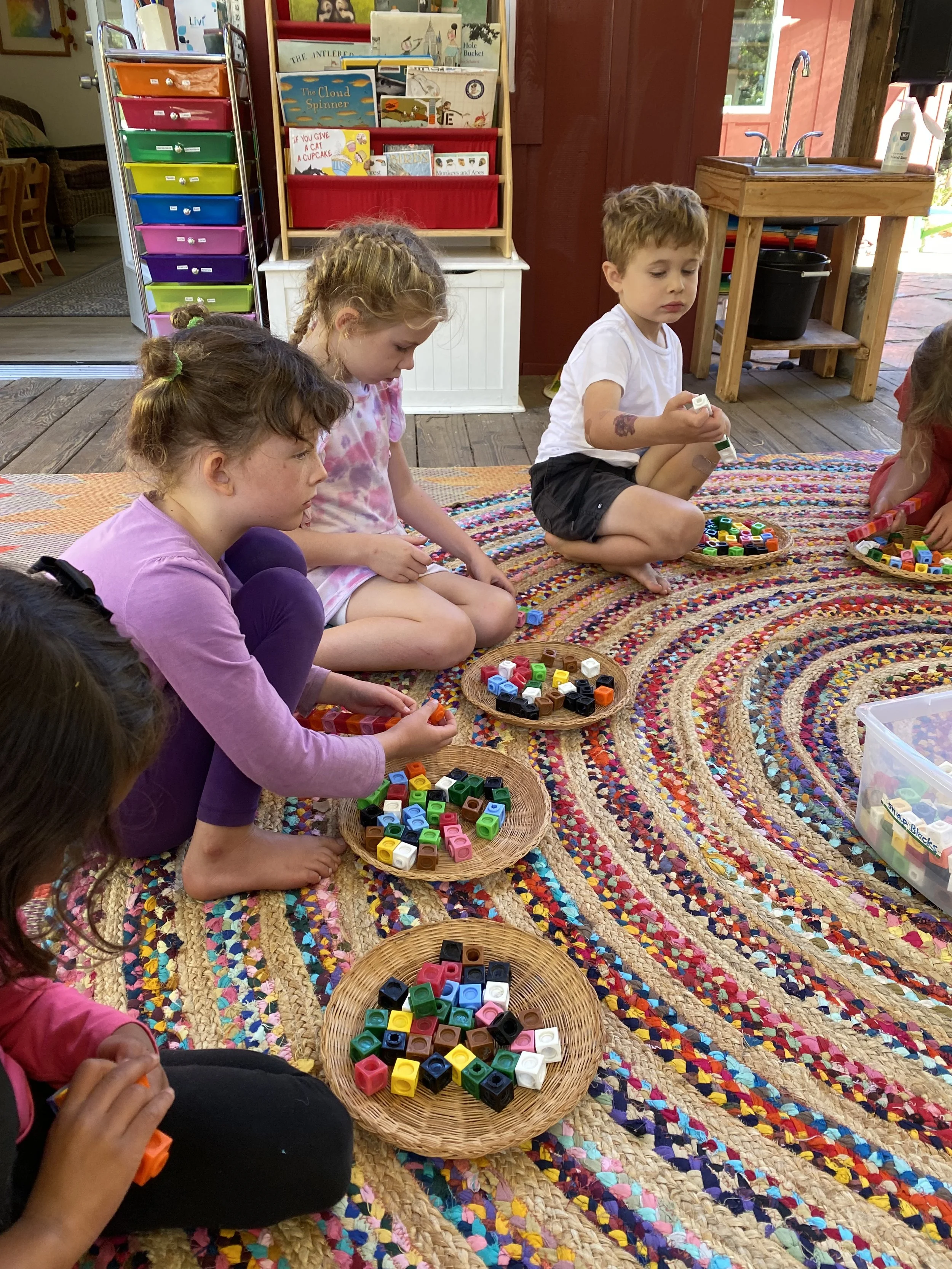
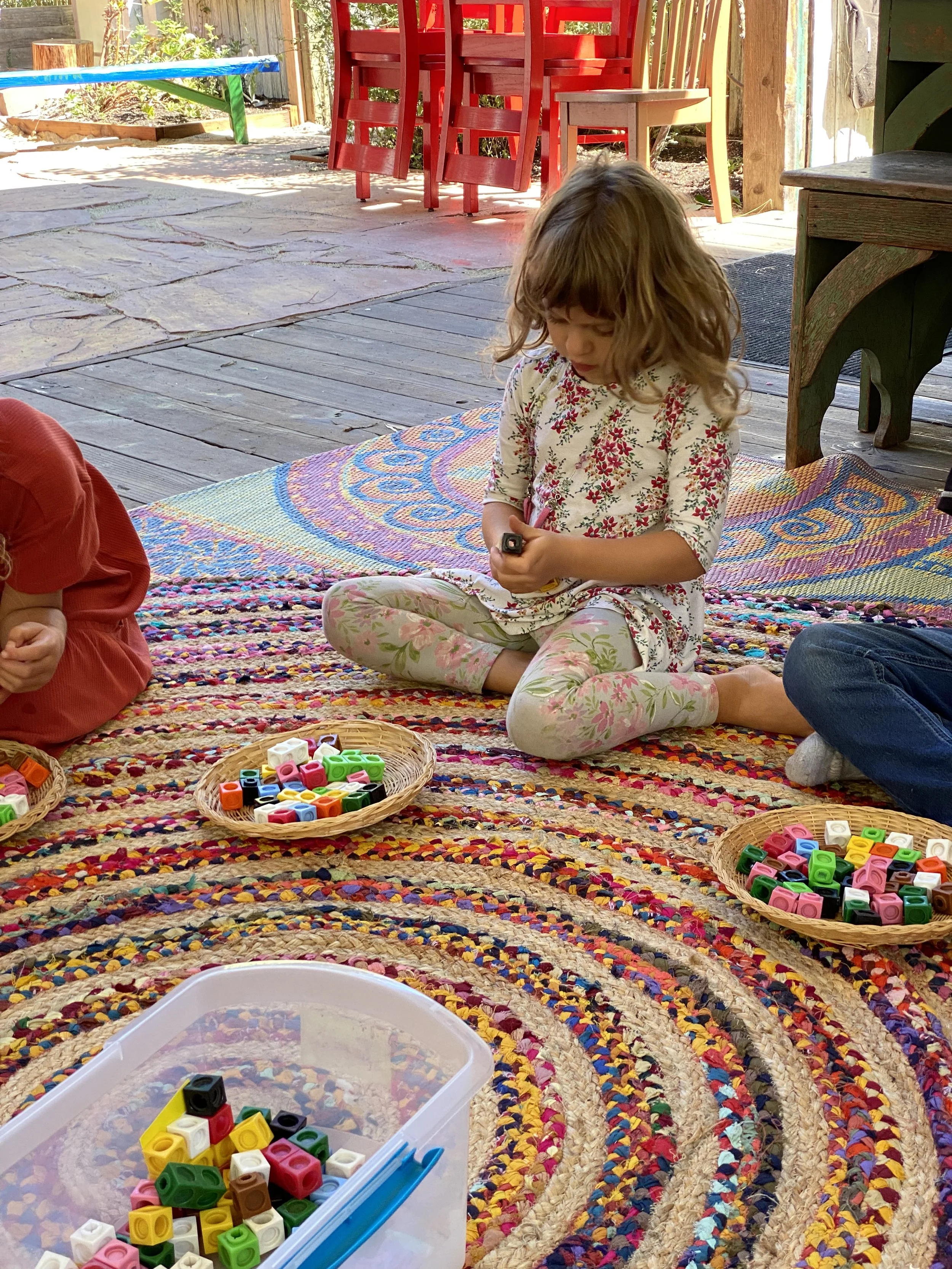
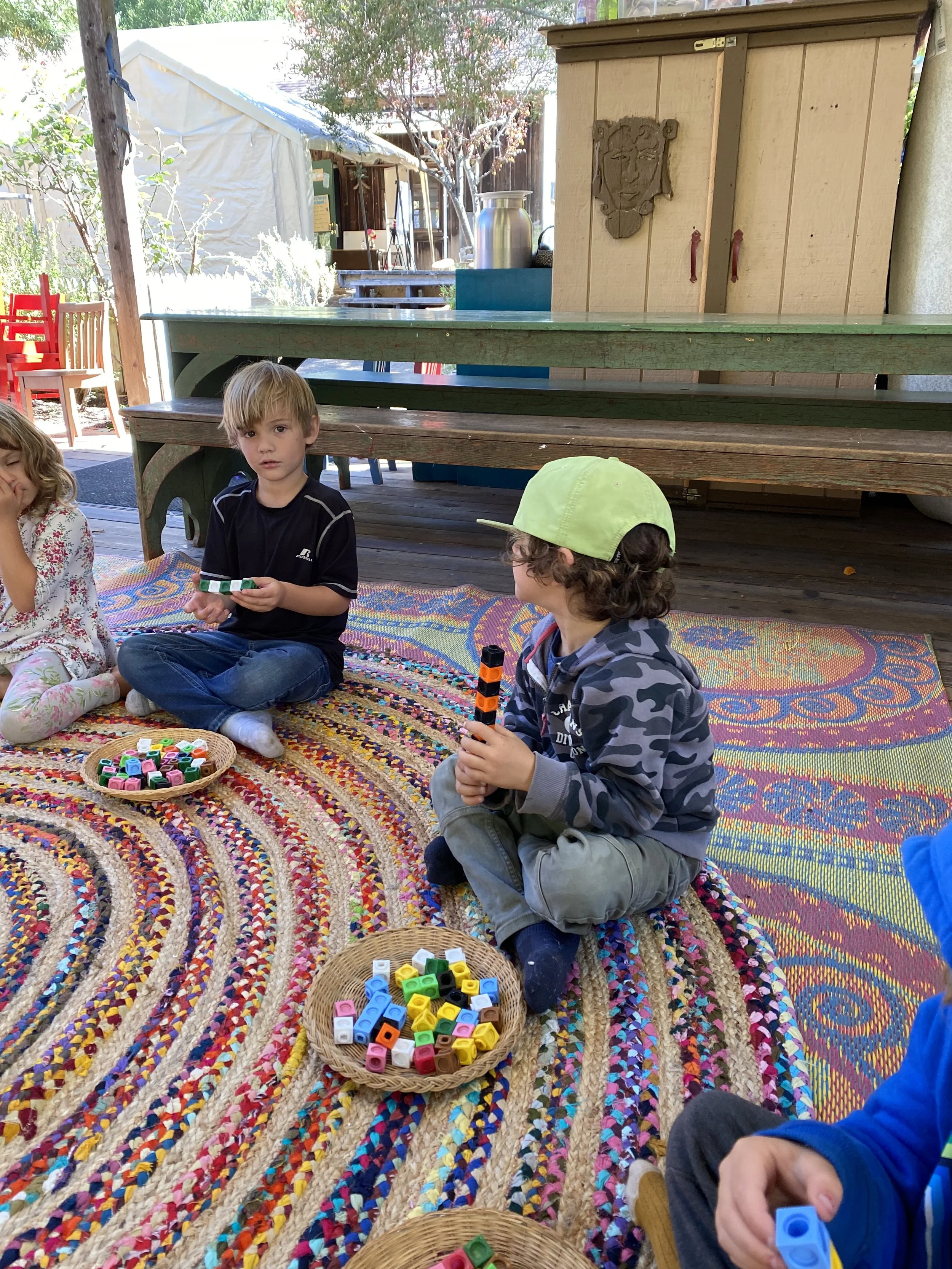
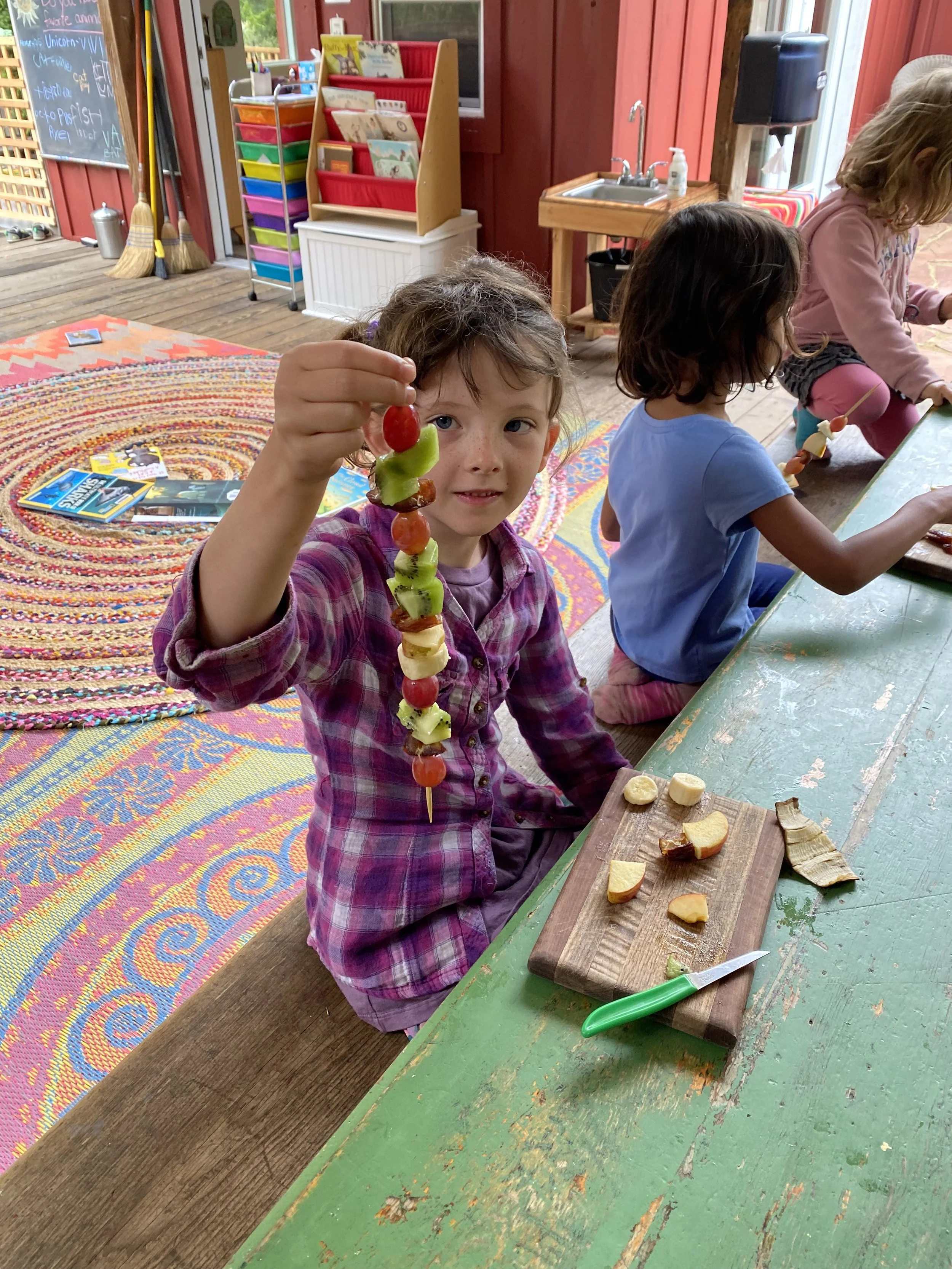
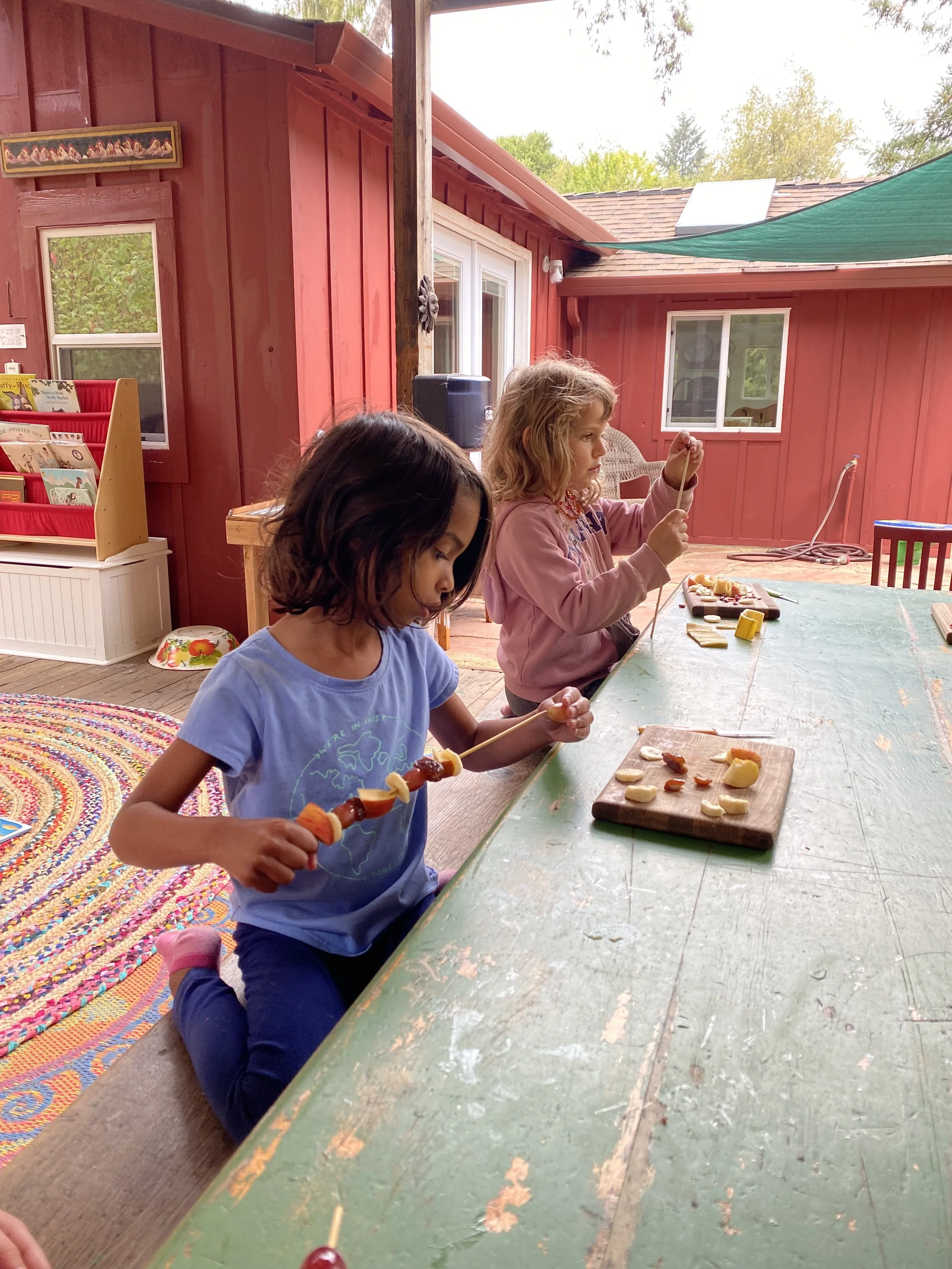
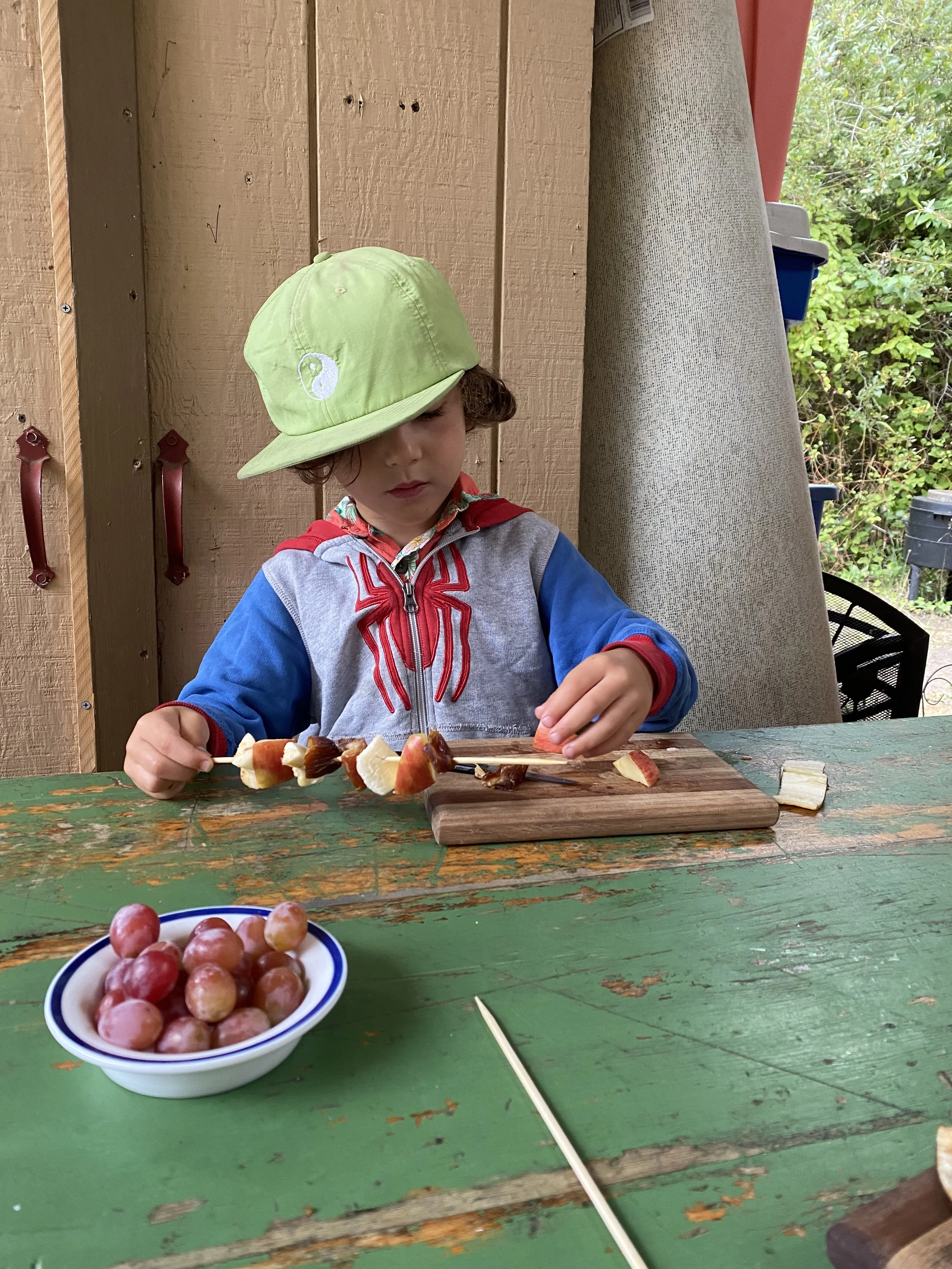
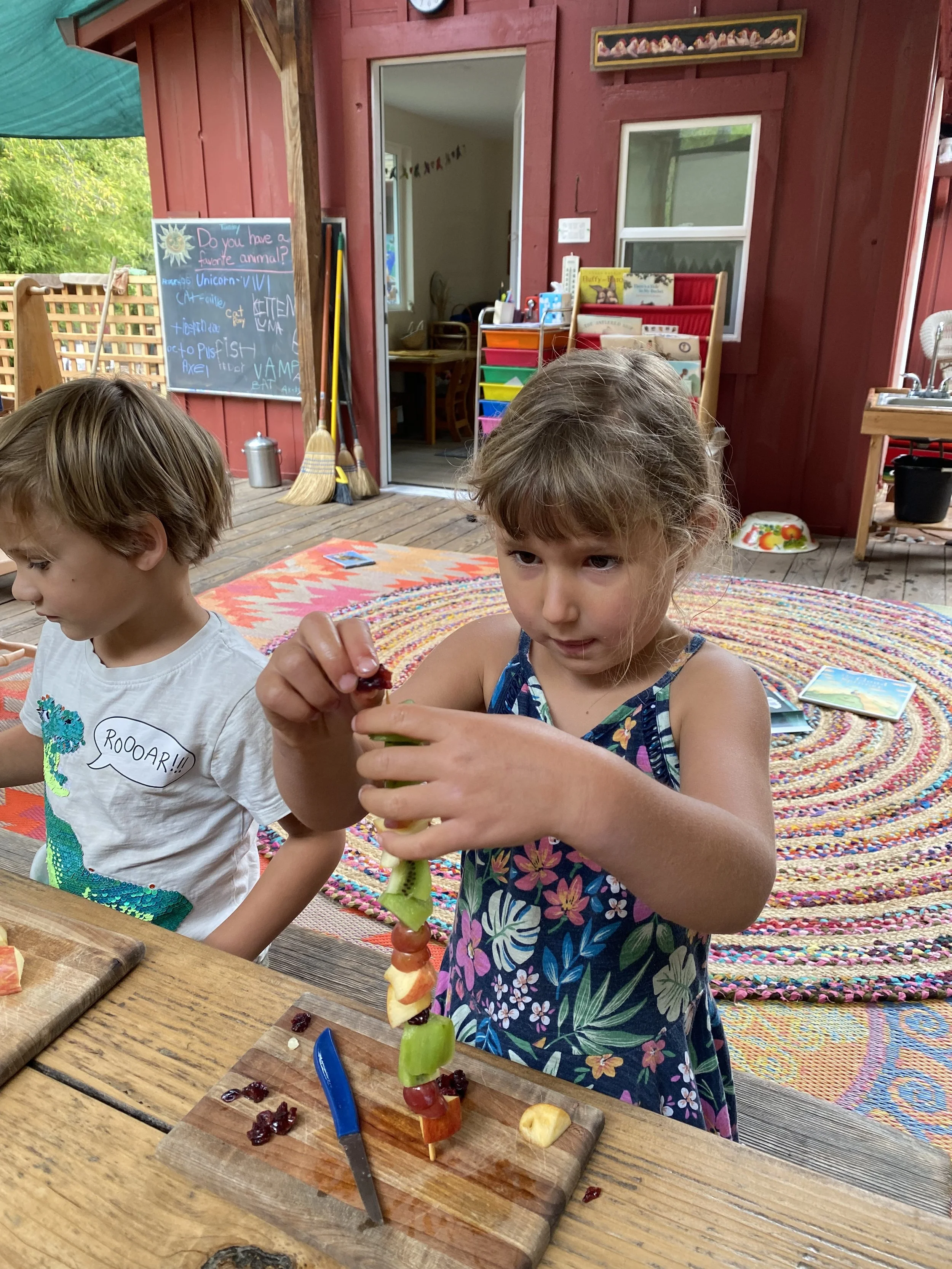
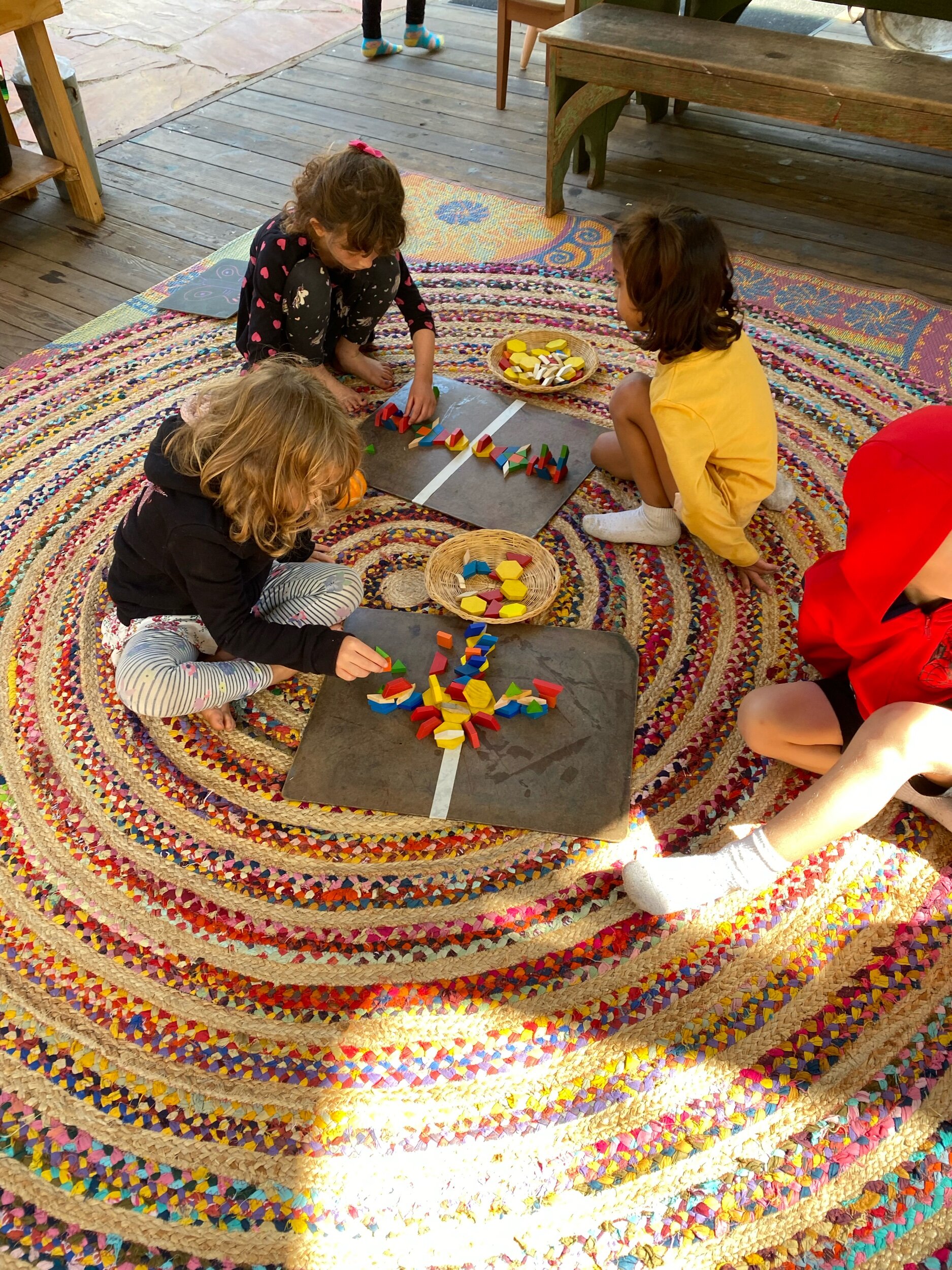
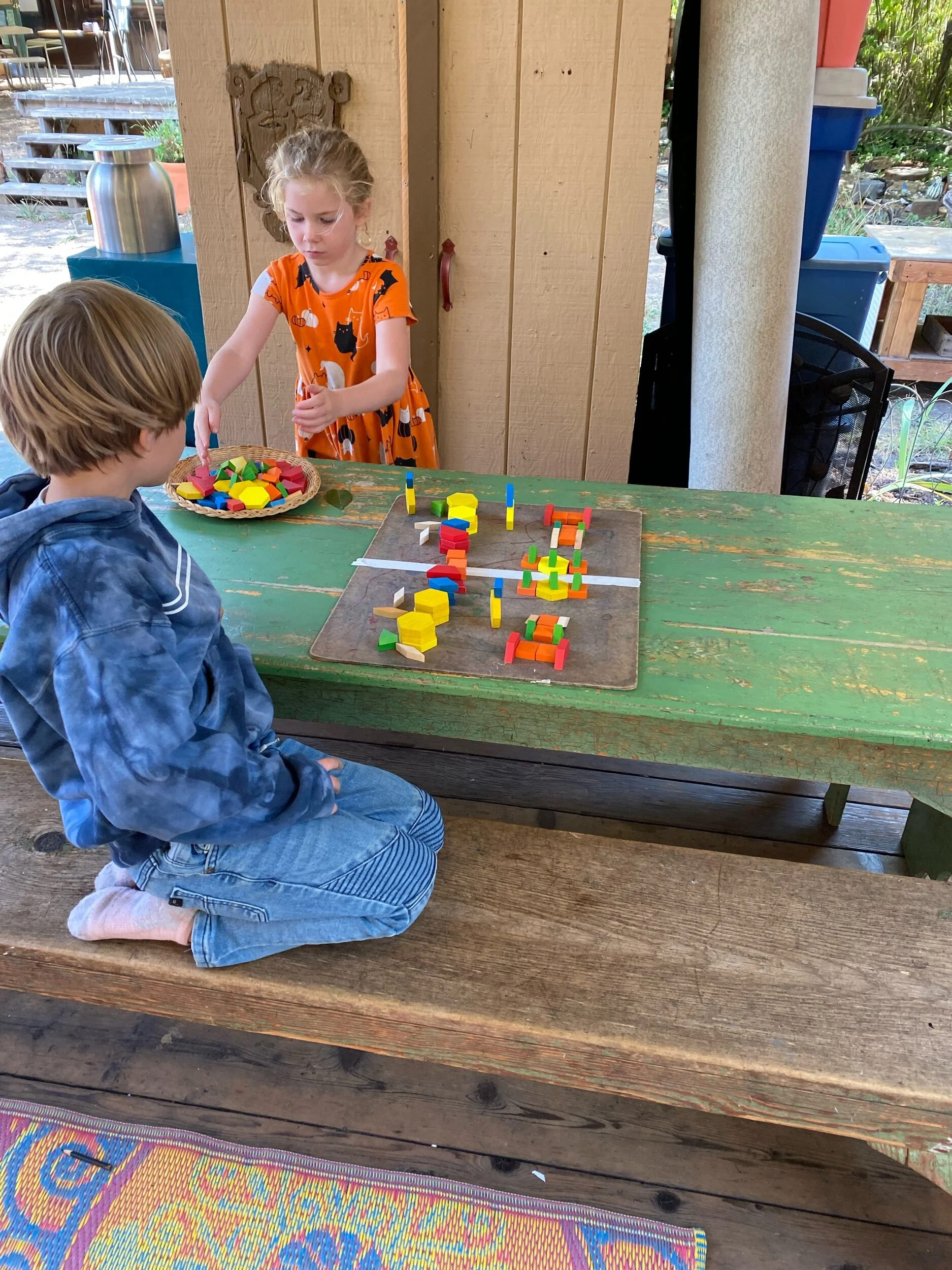
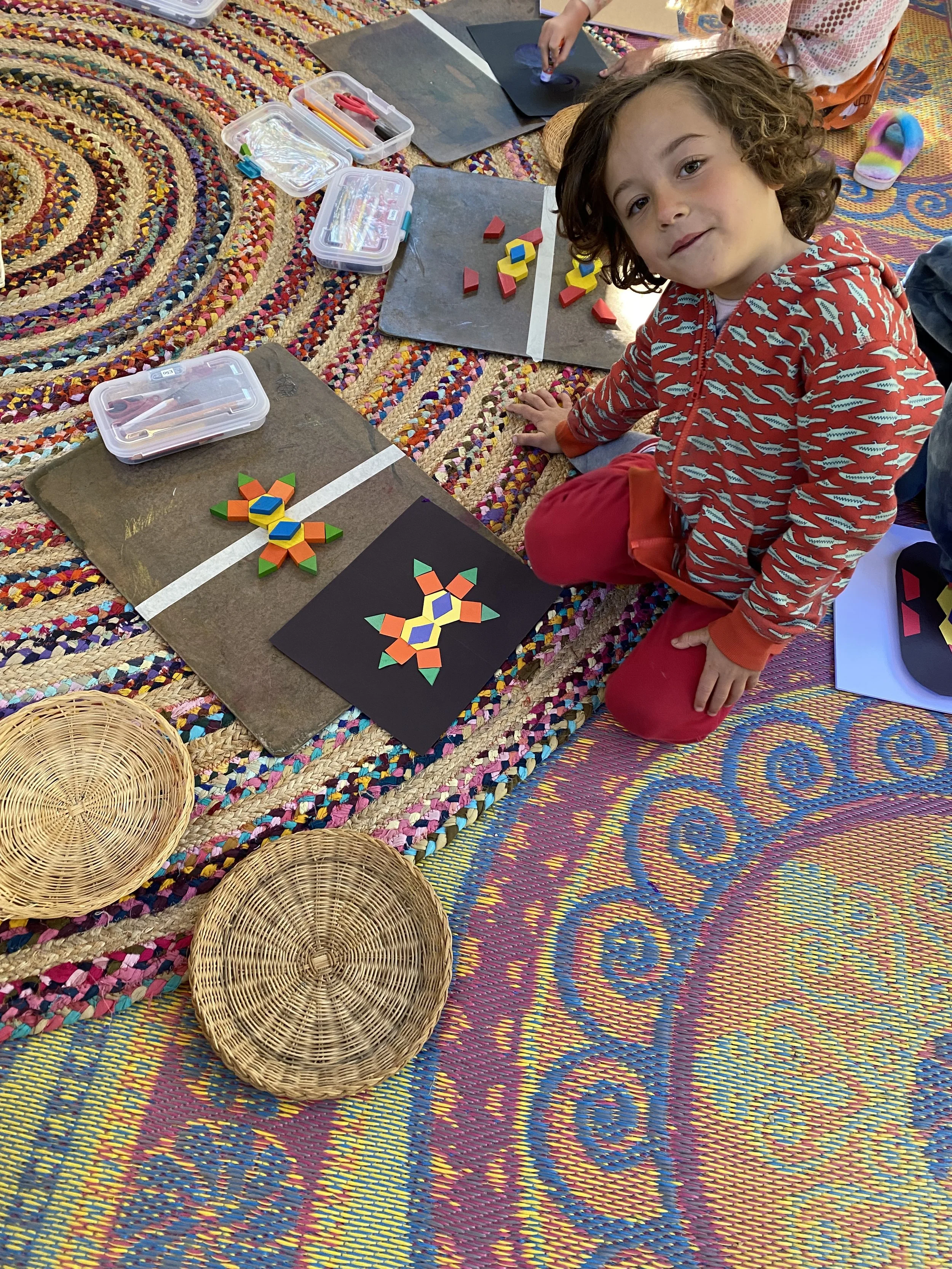
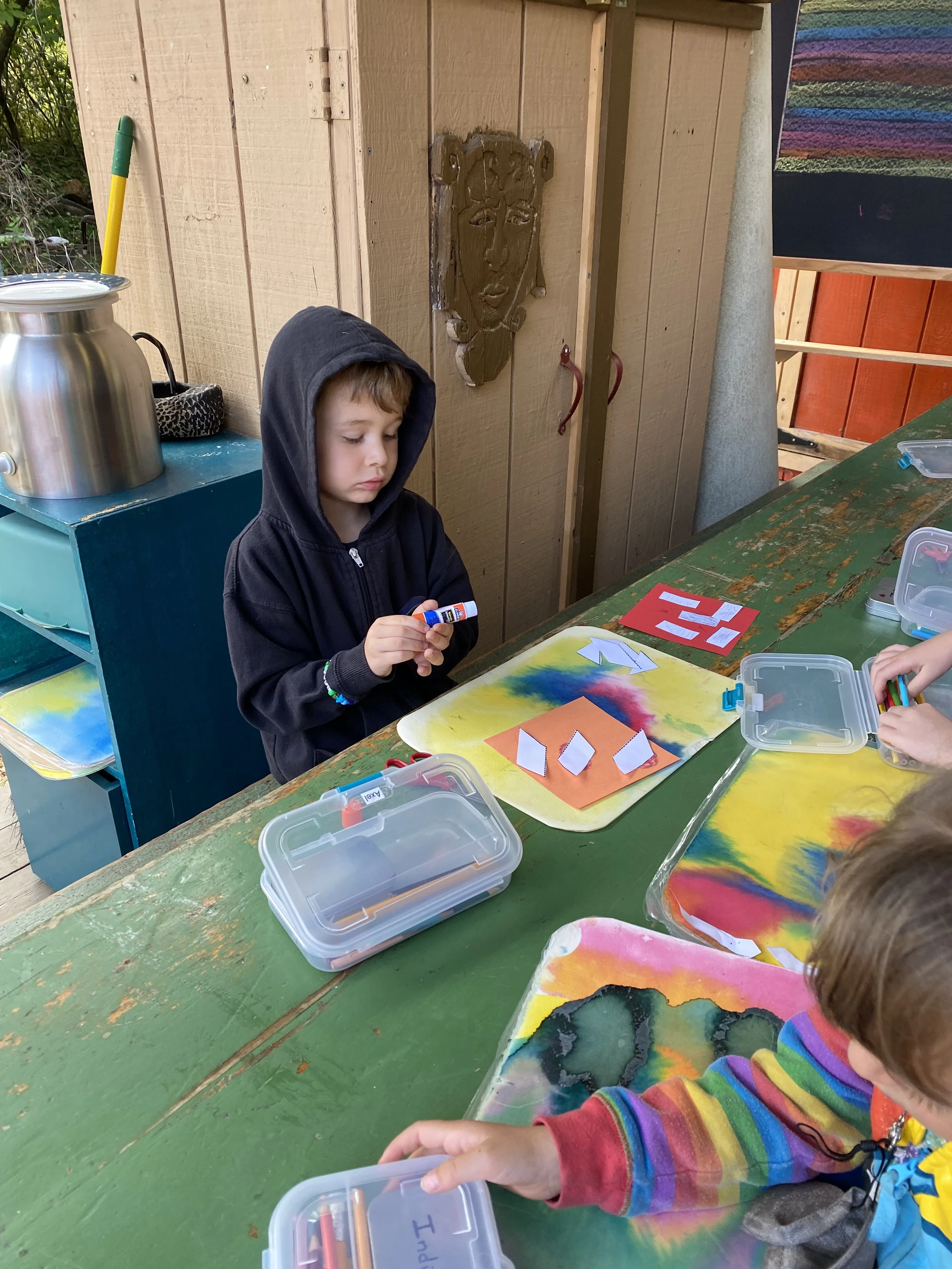
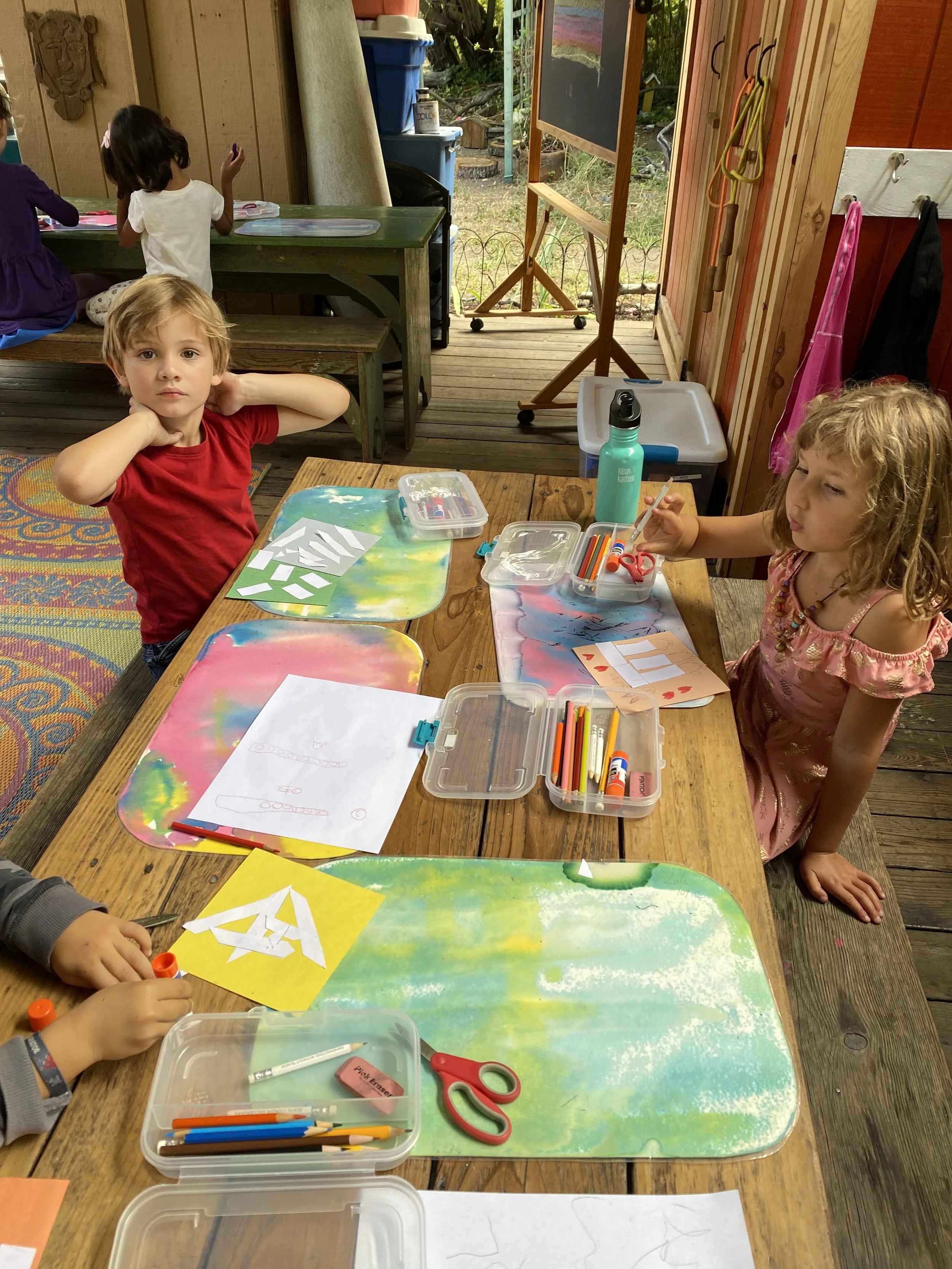
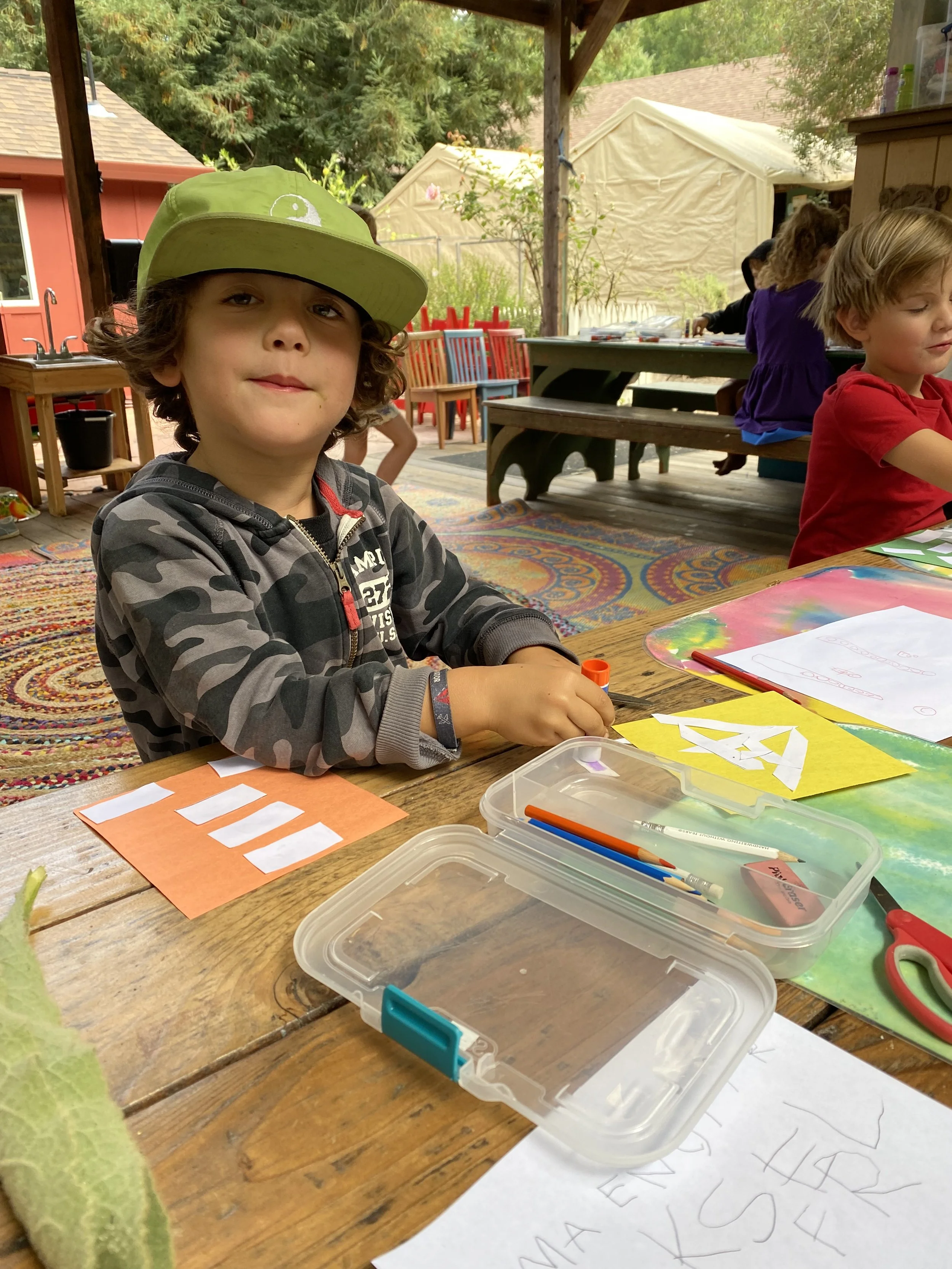
Next, we moved to symmetry. We discussed the concept of symmetrical and asymmetrical in the context of things we see around us. This ties in nicely with our study of butterflies in science and further discussion of examples of symmetry in nature. The children used the pattern blocks to build symmetrical patterns with a partner and practiced who is leader and who is follower. Then they were given the challenging task of creating a symmetrical design and replicating it using paper cutouts stuck onto a sheet of paper. See the last three photos in the gallery below for that.
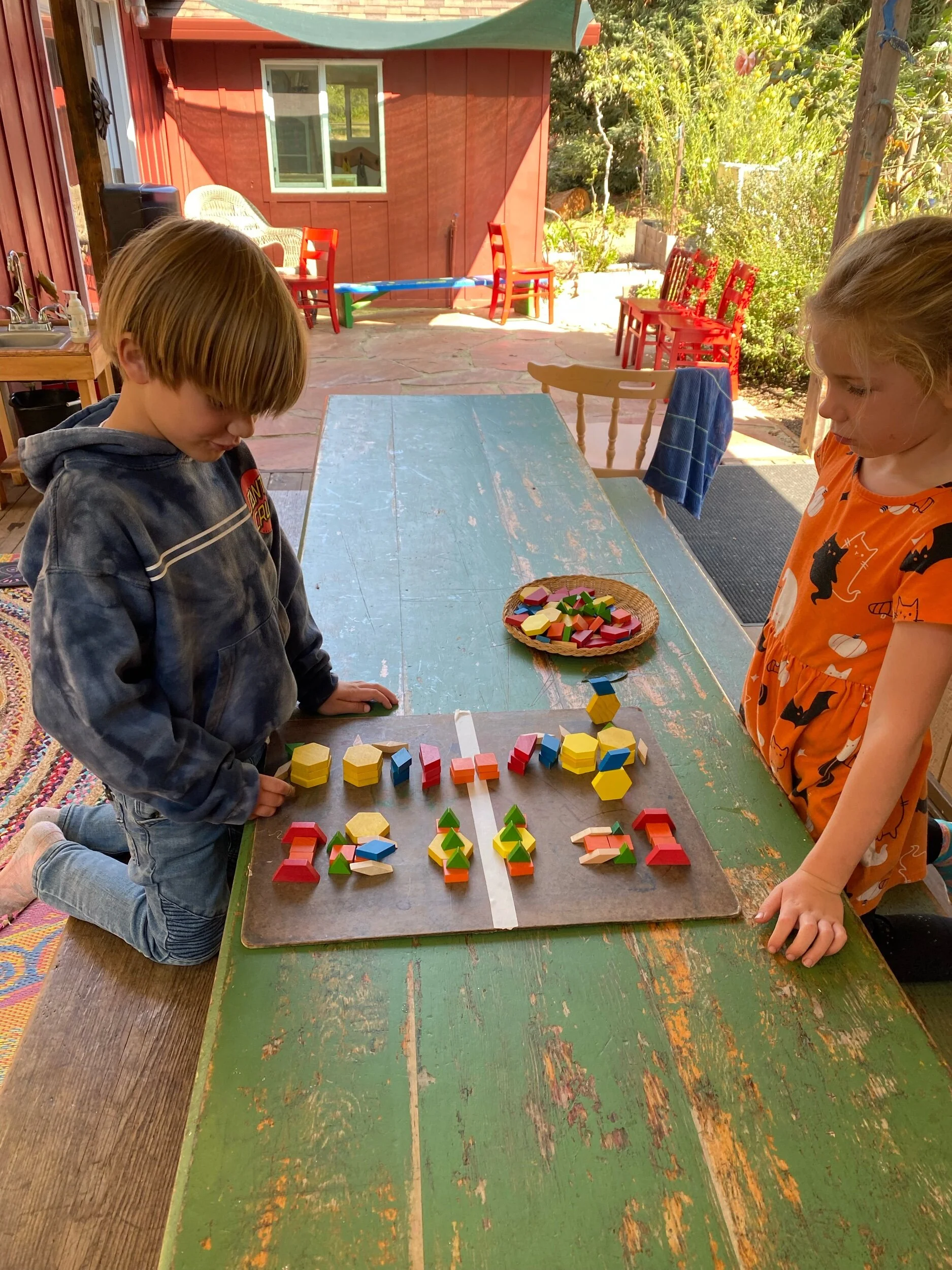
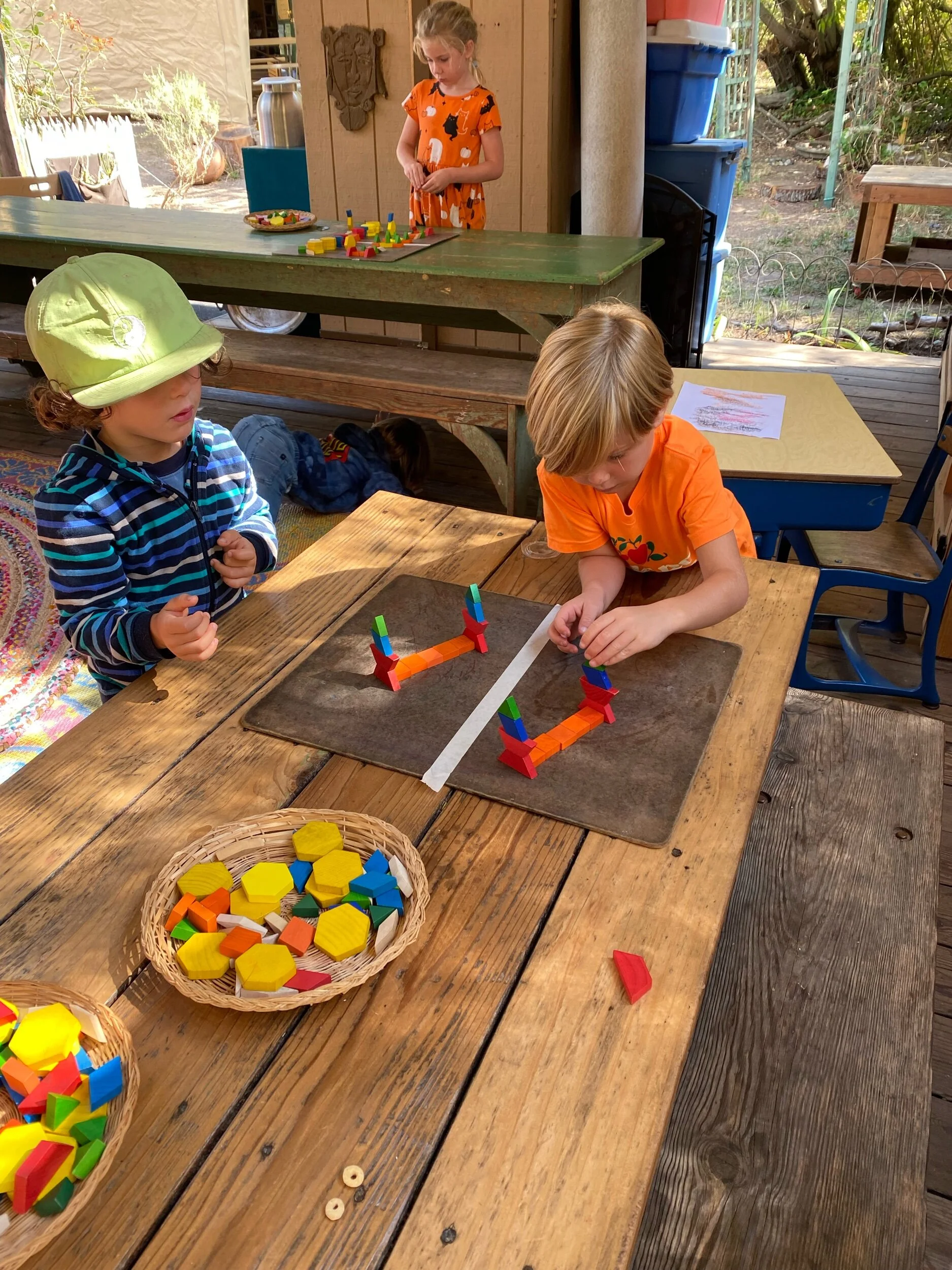
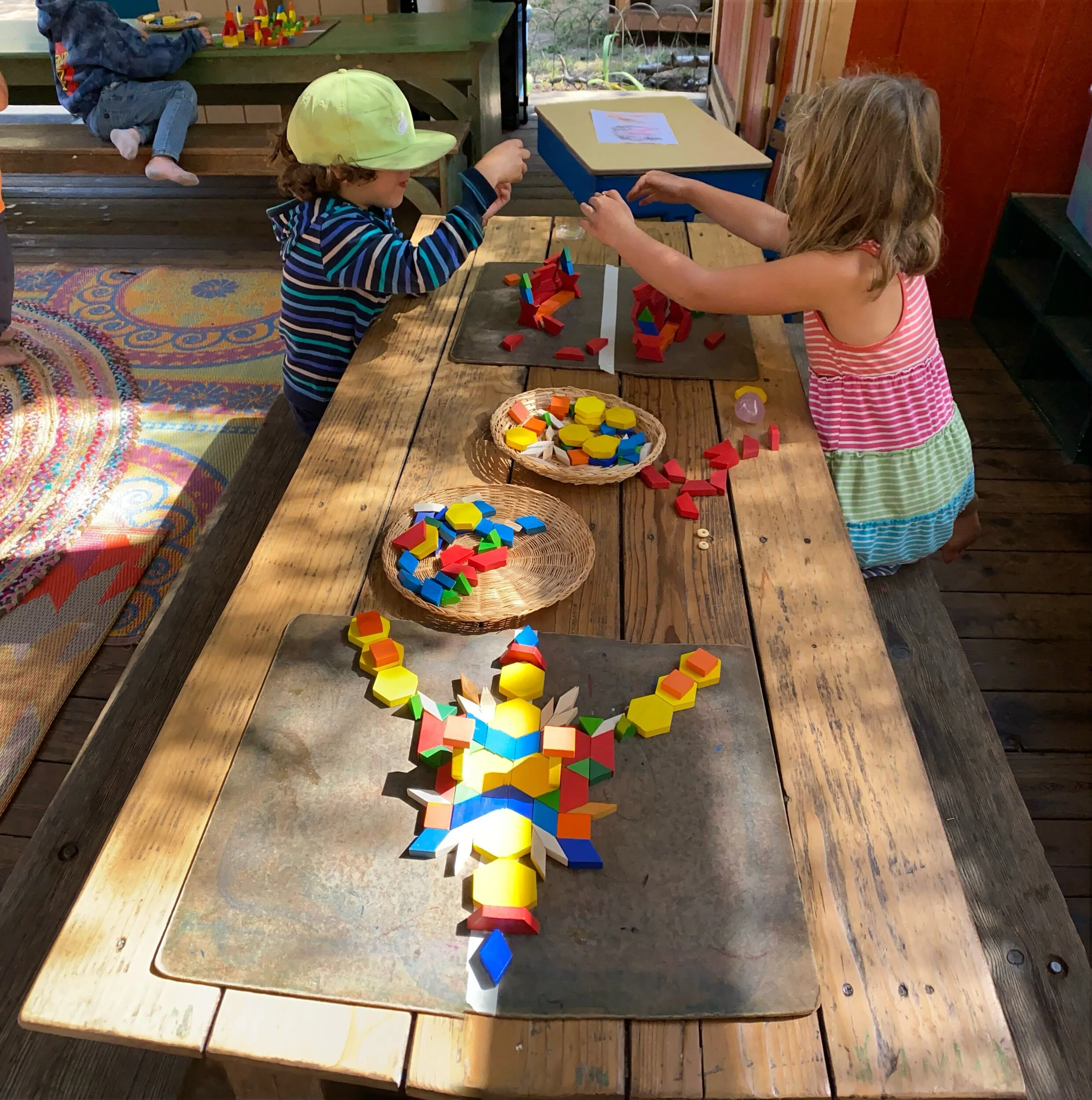
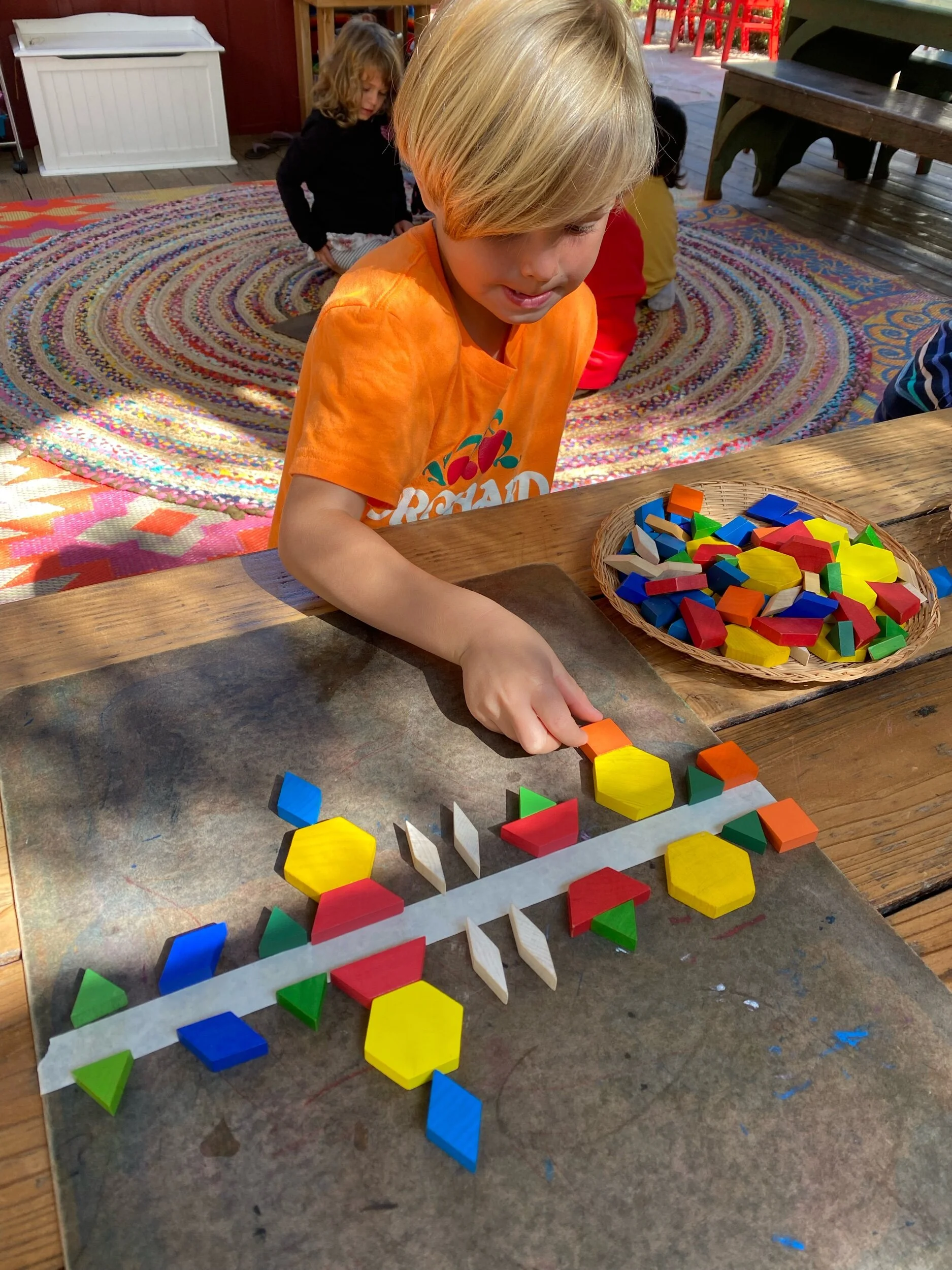
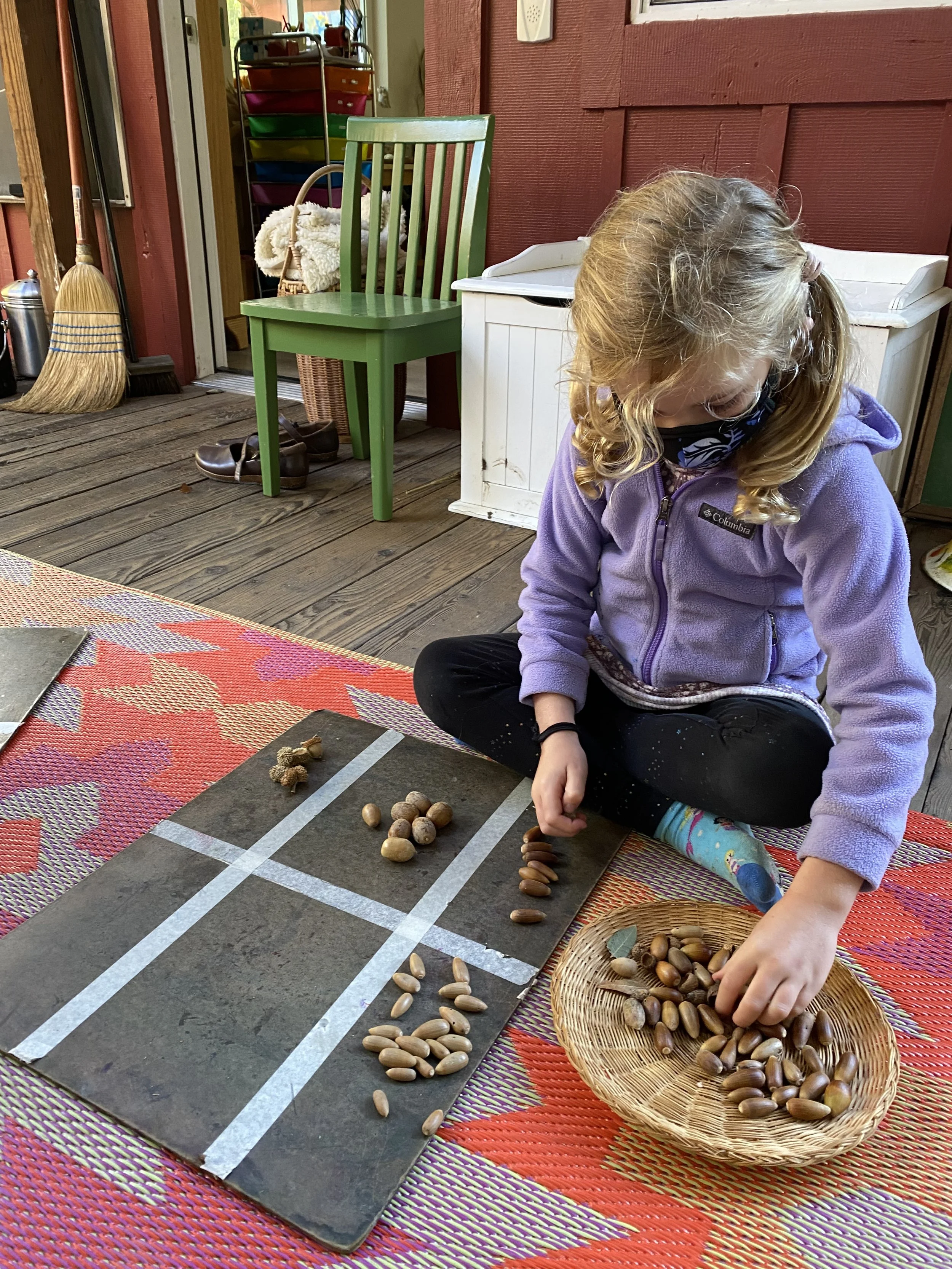
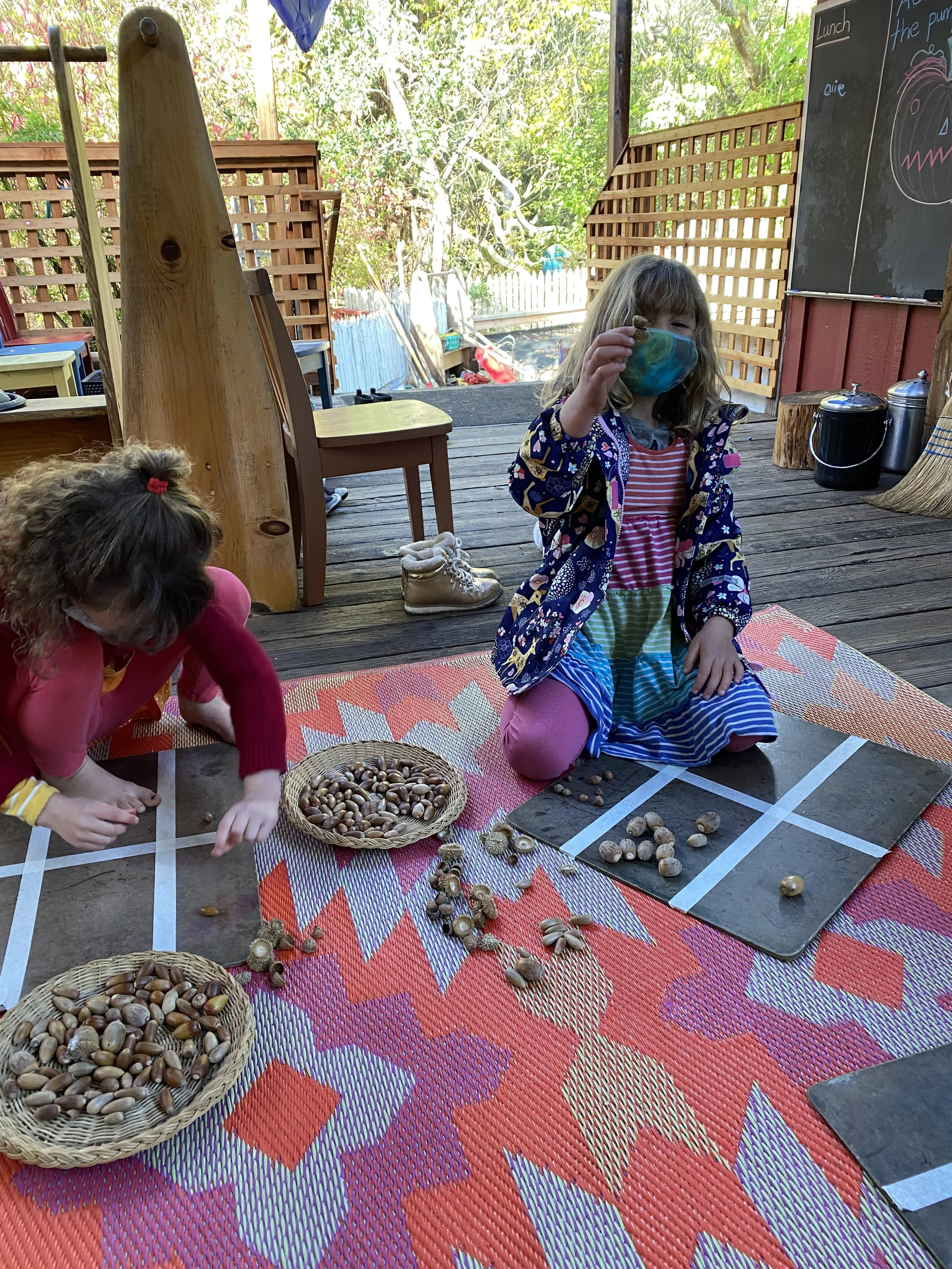
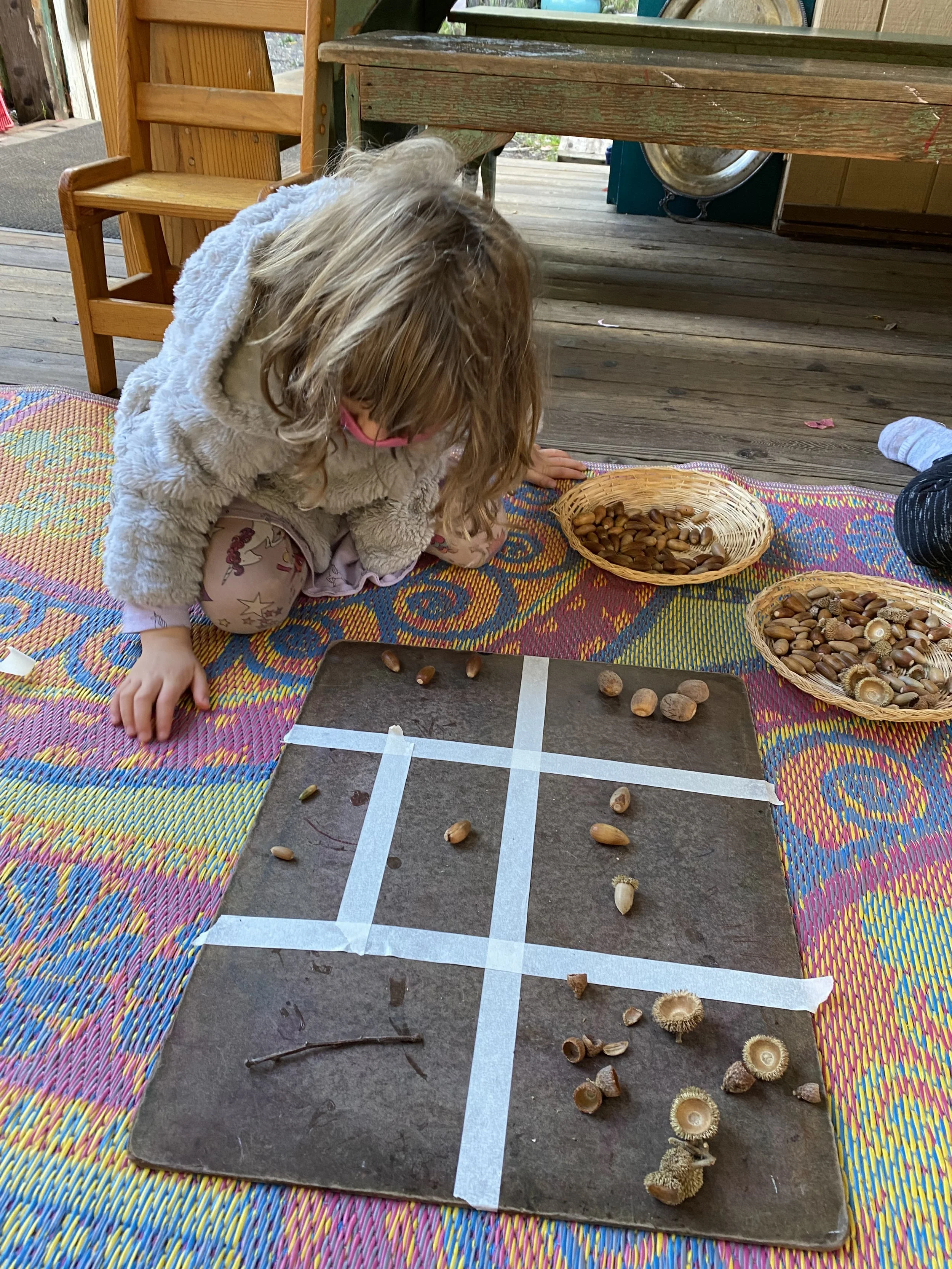
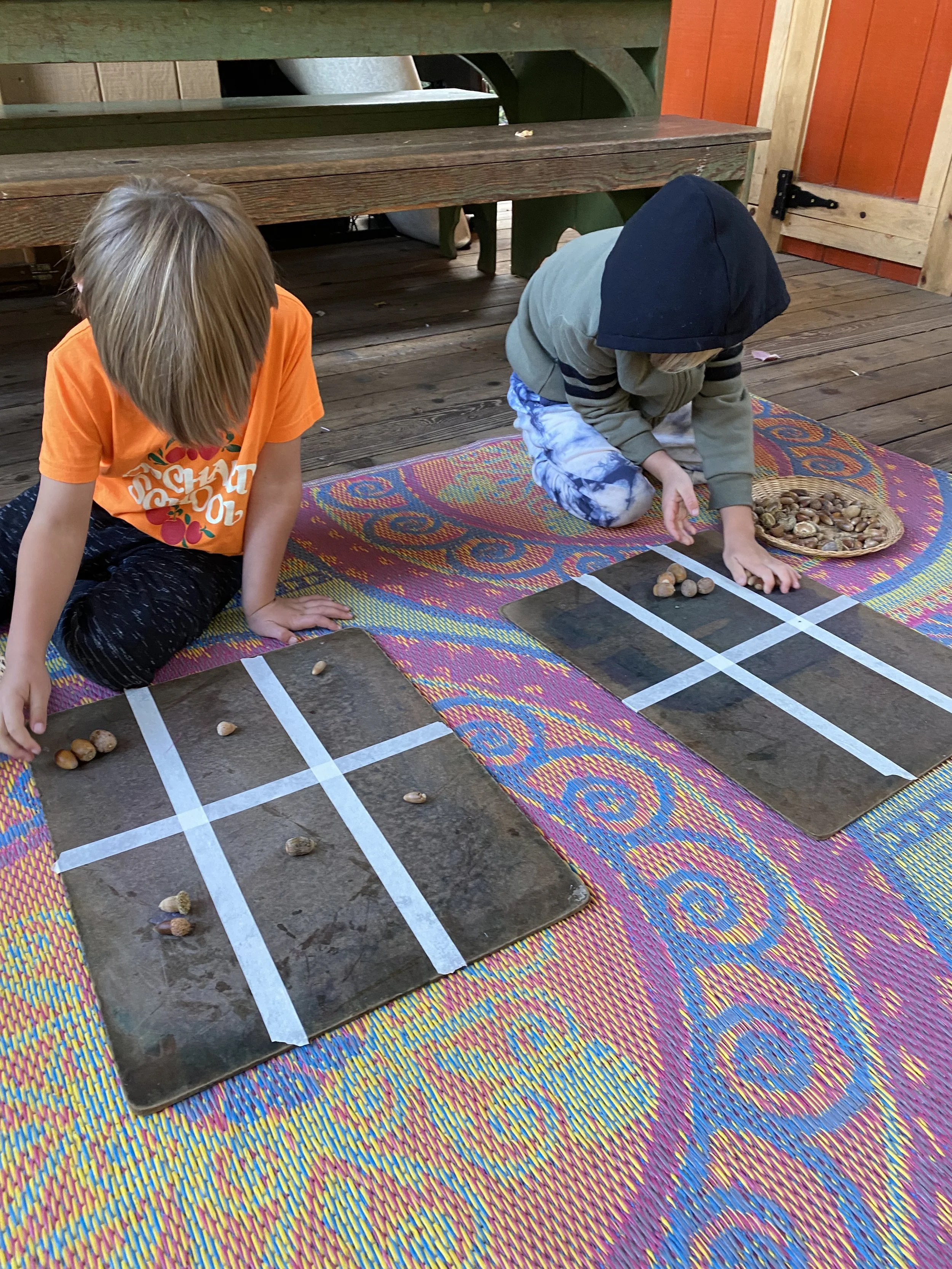
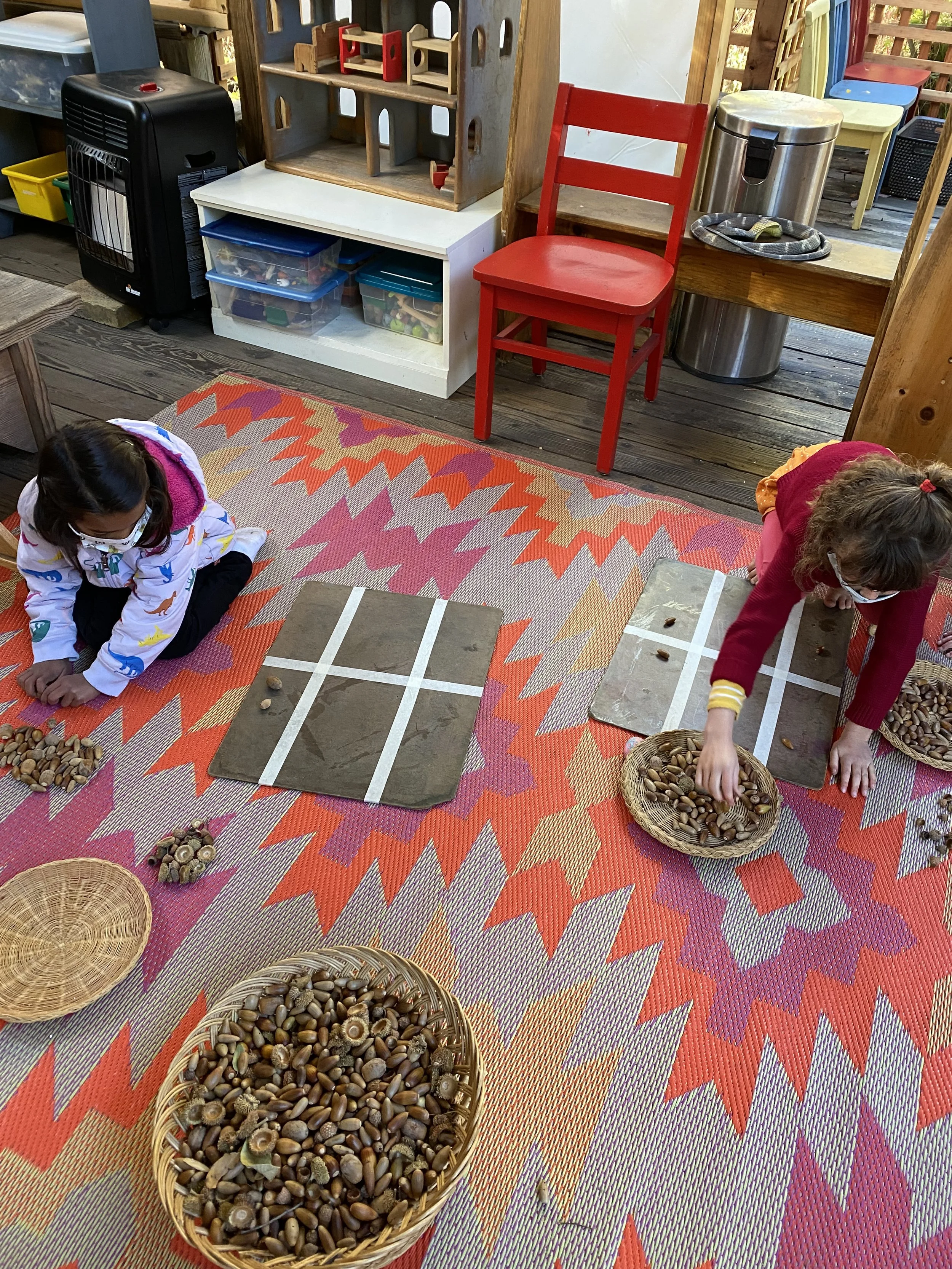
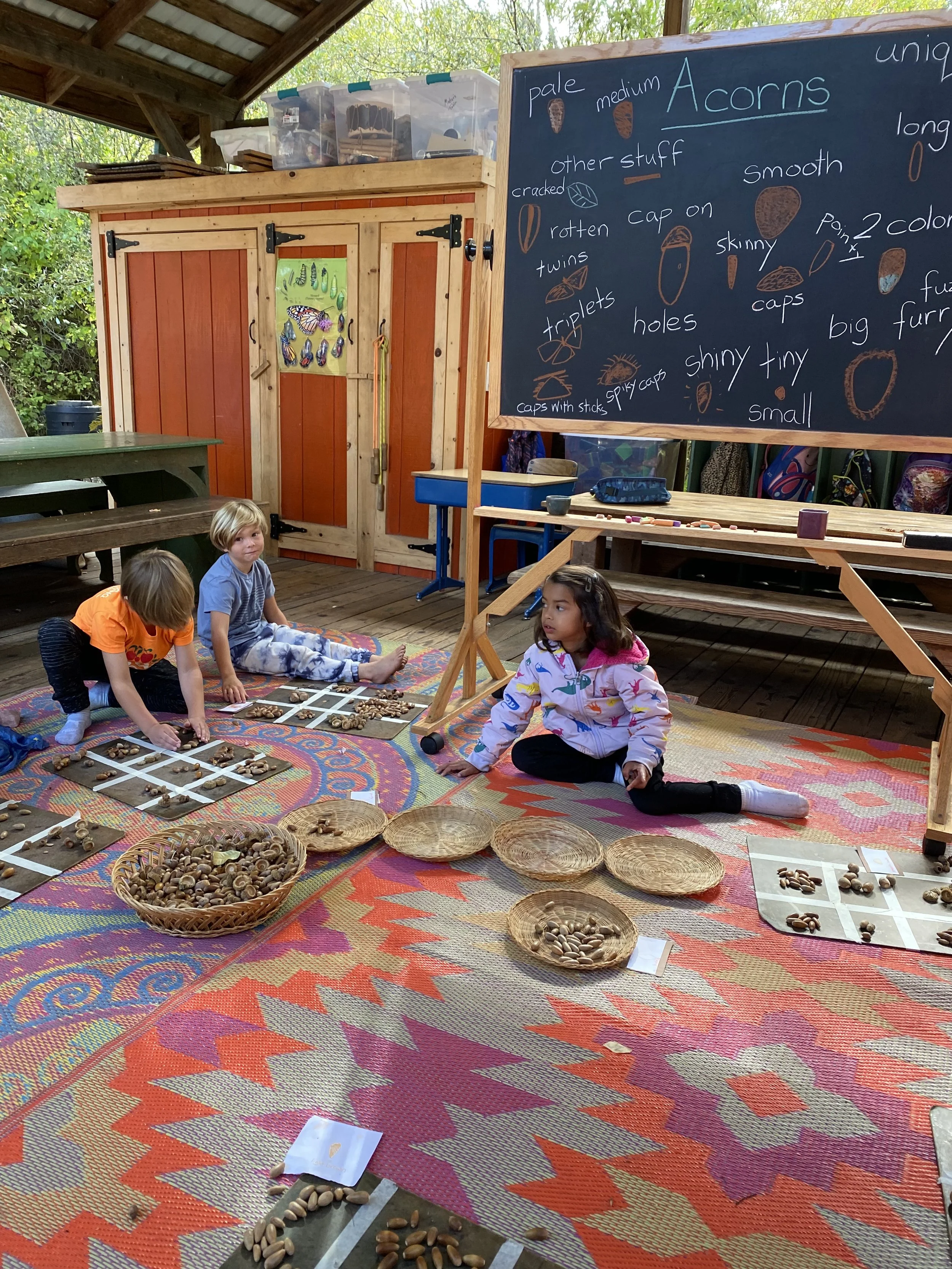
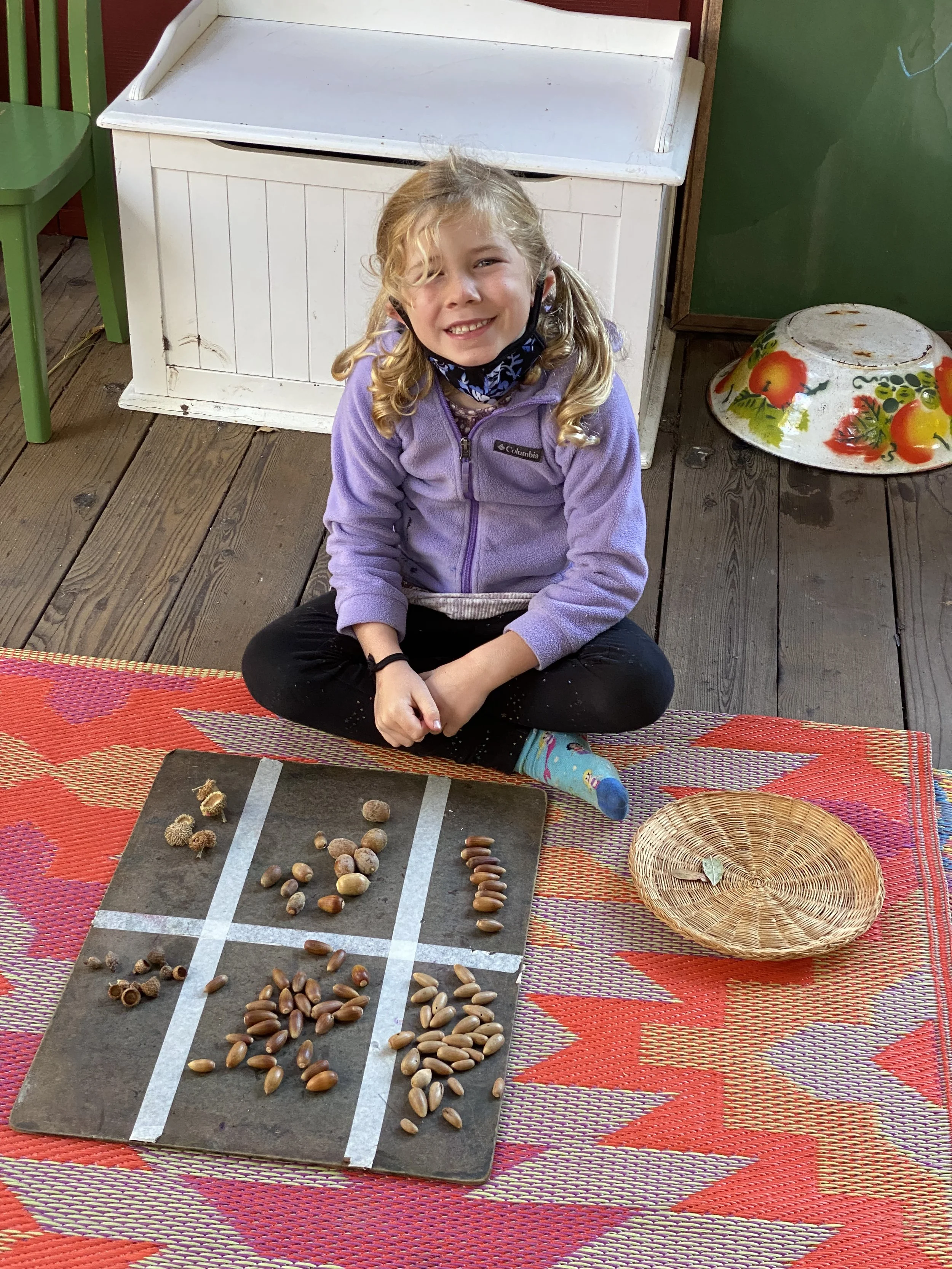
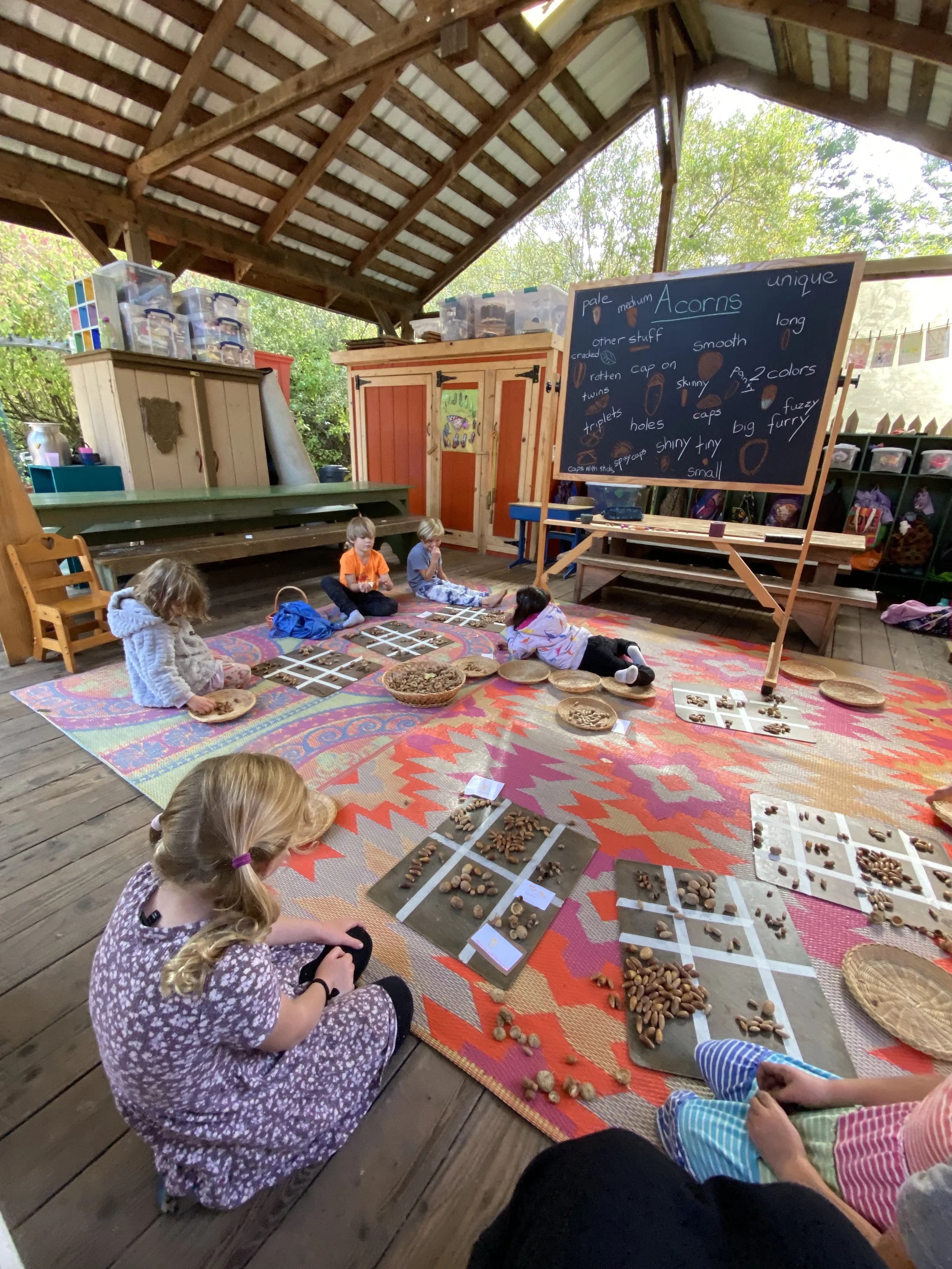
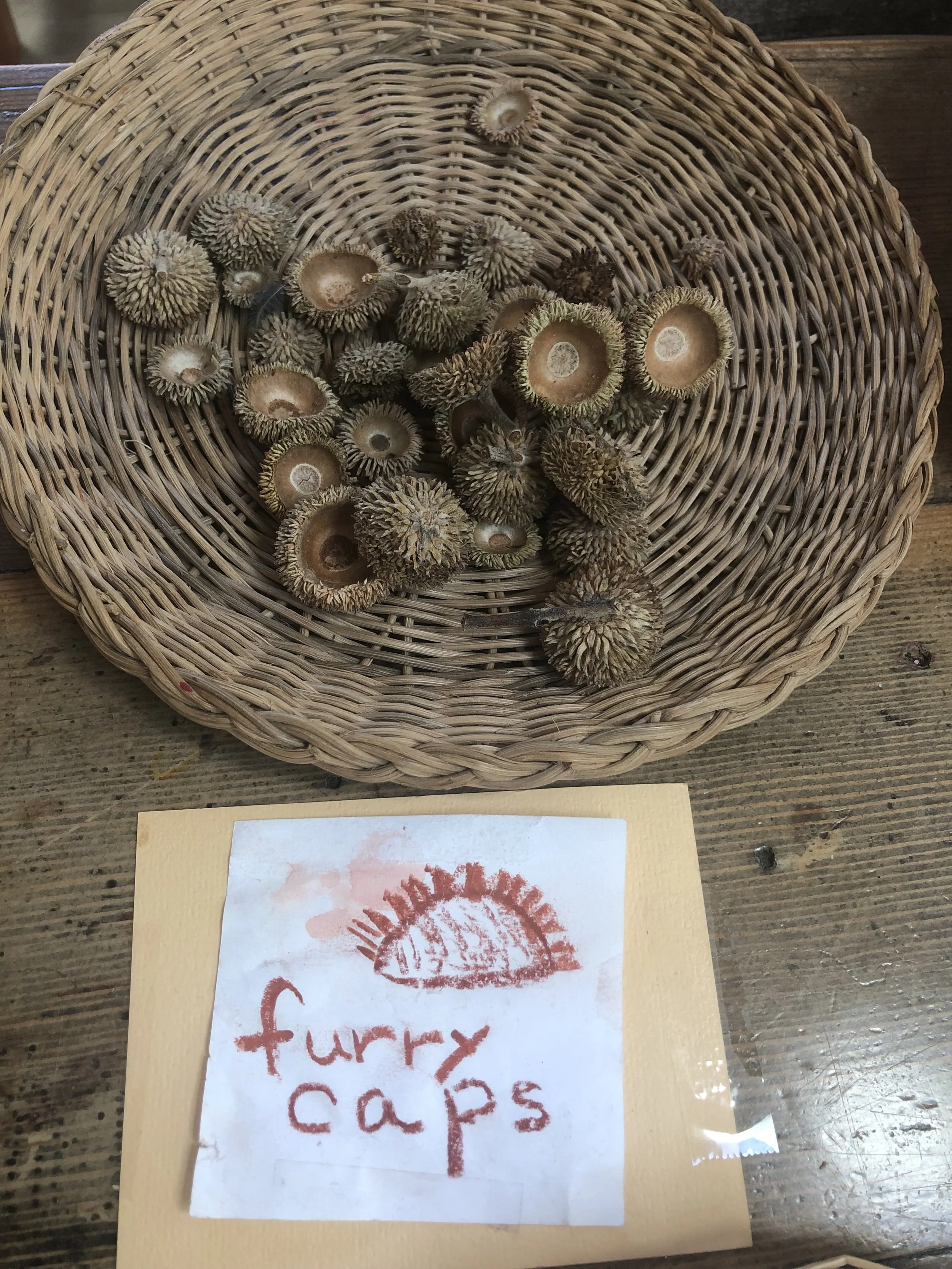
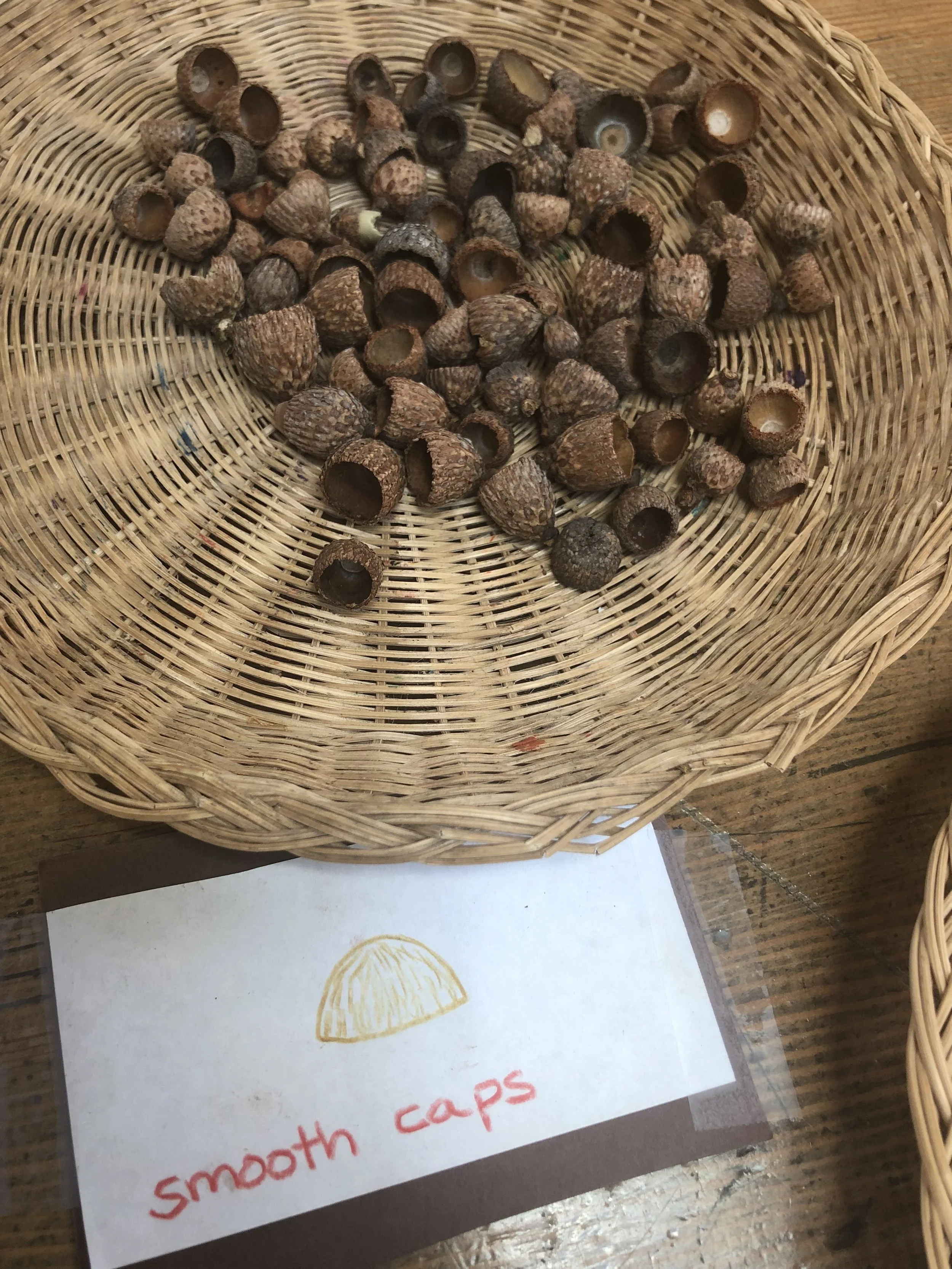
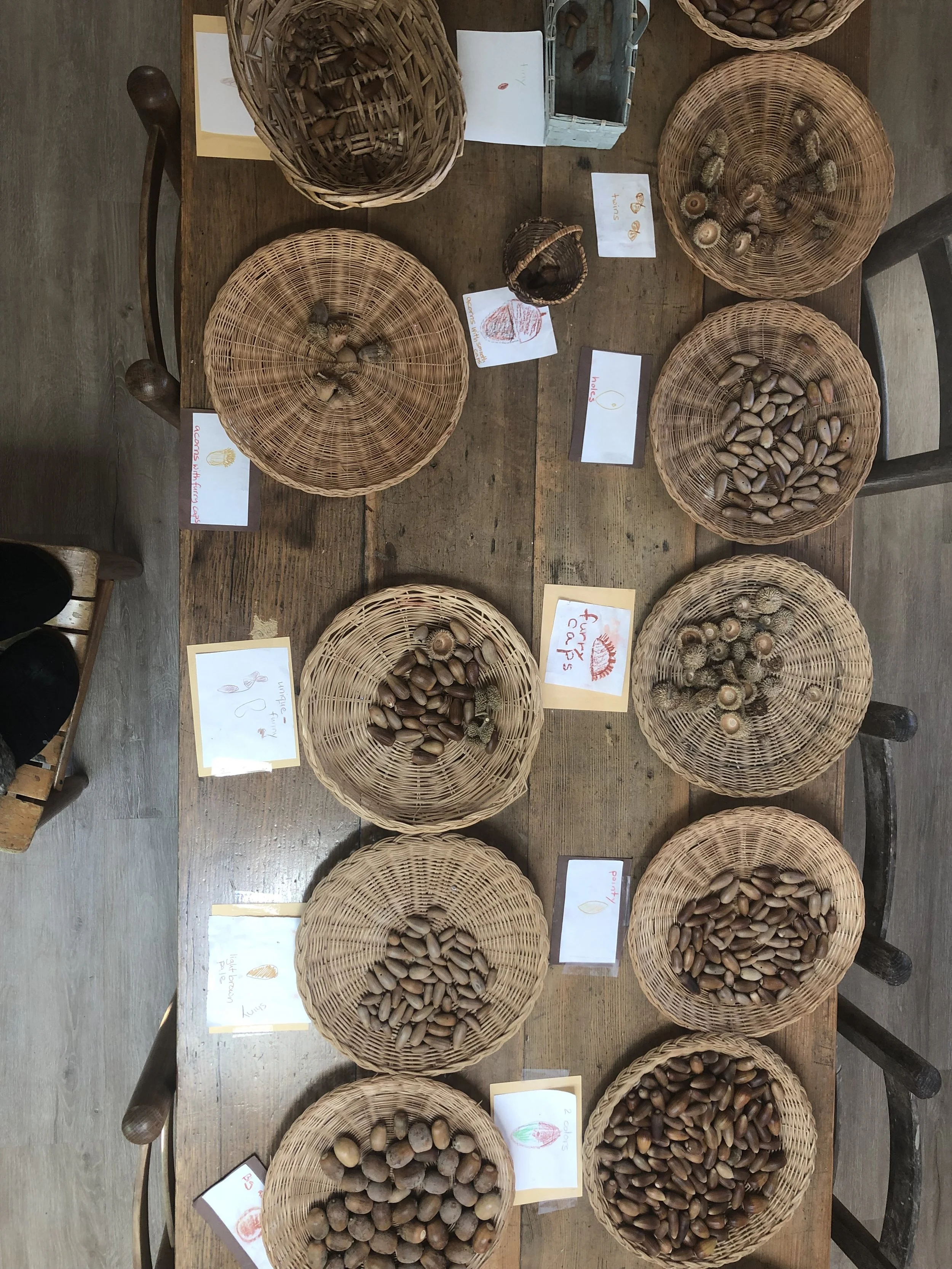
Last week, we moved into a math unit on sorting and classifying, using the acorns brought in by the children as a first study. They sorted the acorns according to categories they identified like acorns with caps, green acorns, fat acorns, pointy acorns etc. Organizing by attributes is another important foundational mathematical concept.
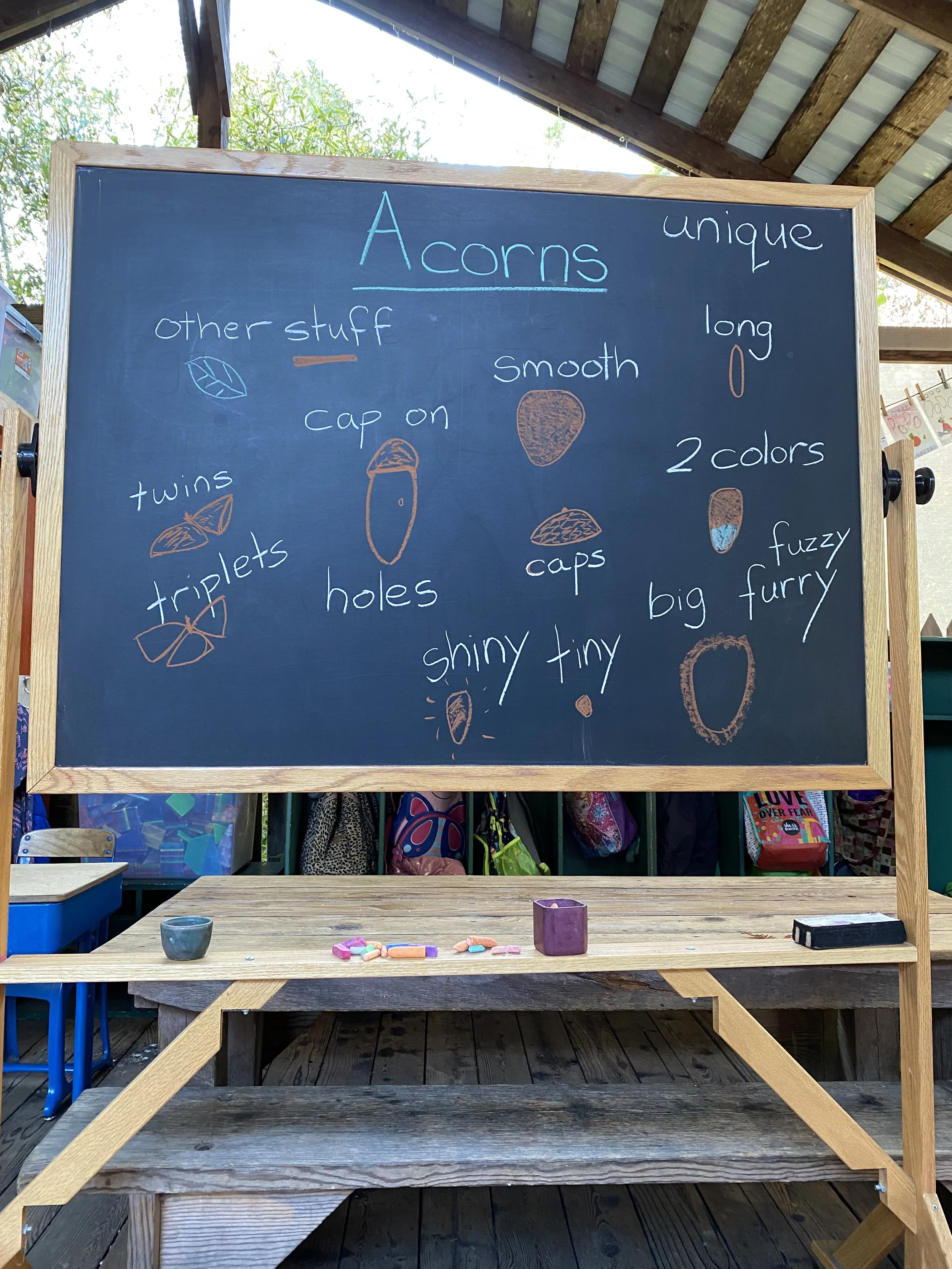
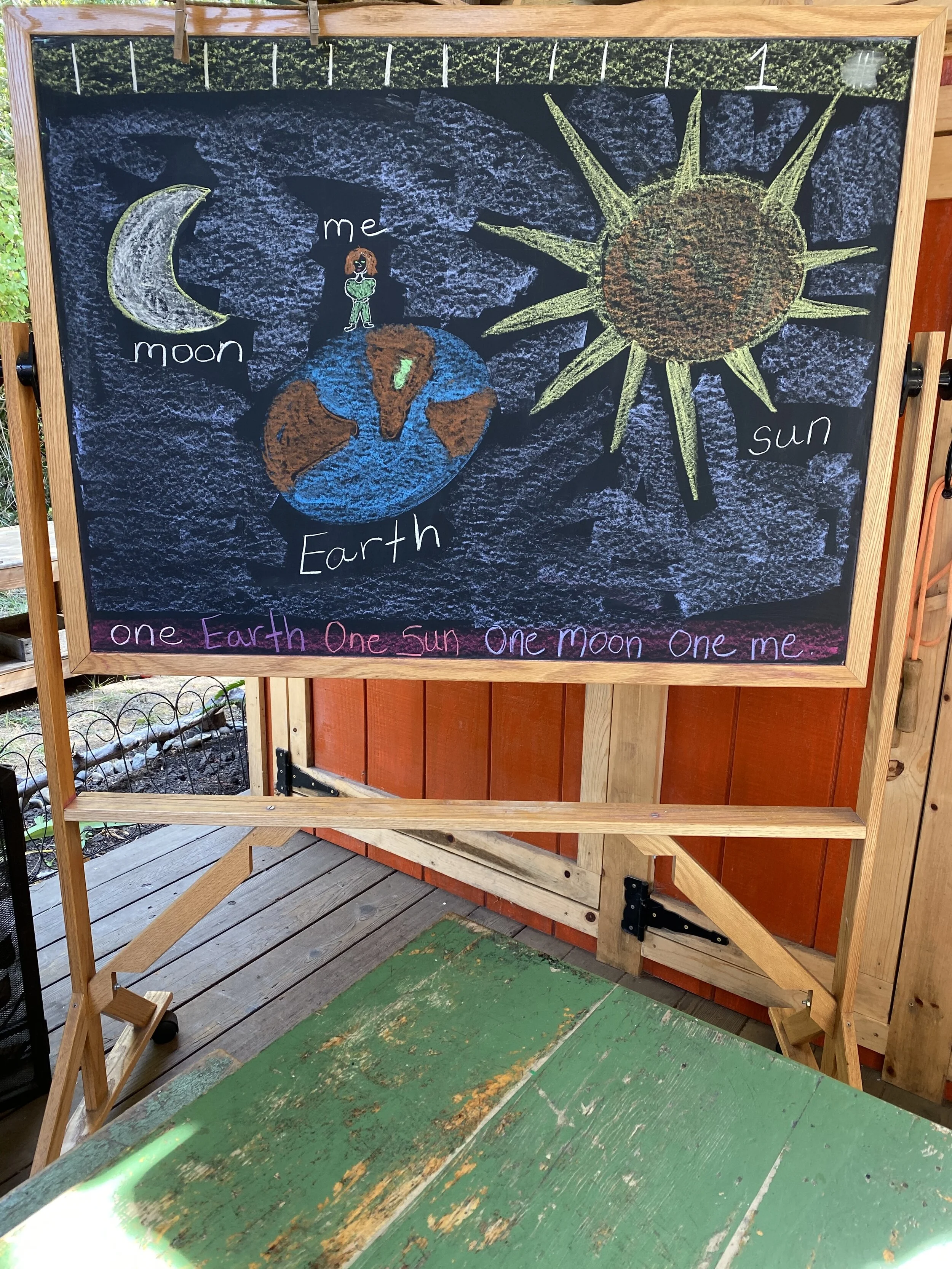
I drew this as we explored the number one and they drew their own versions in their math books.
Lastly, we are slowly investigating each number, one by one, and the kids are writing/drawing about these in their “golden number books.” We will be following a step-by-step approach to thoroughly examine each number in a way that hopefully has lasting relevance, laying an amazing foundation for more complex number work in the subsequent grades. We will be looking at the numbers both from a mathematical standpoint — how to write each number and recognize it and know what it means, but also we will look at some of the deeper significances of each number. For number one, we talked about things there are only one of: the Earth, the sun, the moon, and of course, each of them. For two, we talked about the symmetry in the body, and marveled at all of the body parts of which we had two, and then they drew bodies and labeled symmetrical features. For three, we plotted three dots on a page to create triangles.
Science:
We began the year with a fun experiment that shows how germs spread (we used lotion as snot and glitter as the germs) and teaches the importance of proper hand washing. I tried not to lay too fine a point on it all with these Covid weary children but it’s an activity that does nicely review hygiene etiquette.
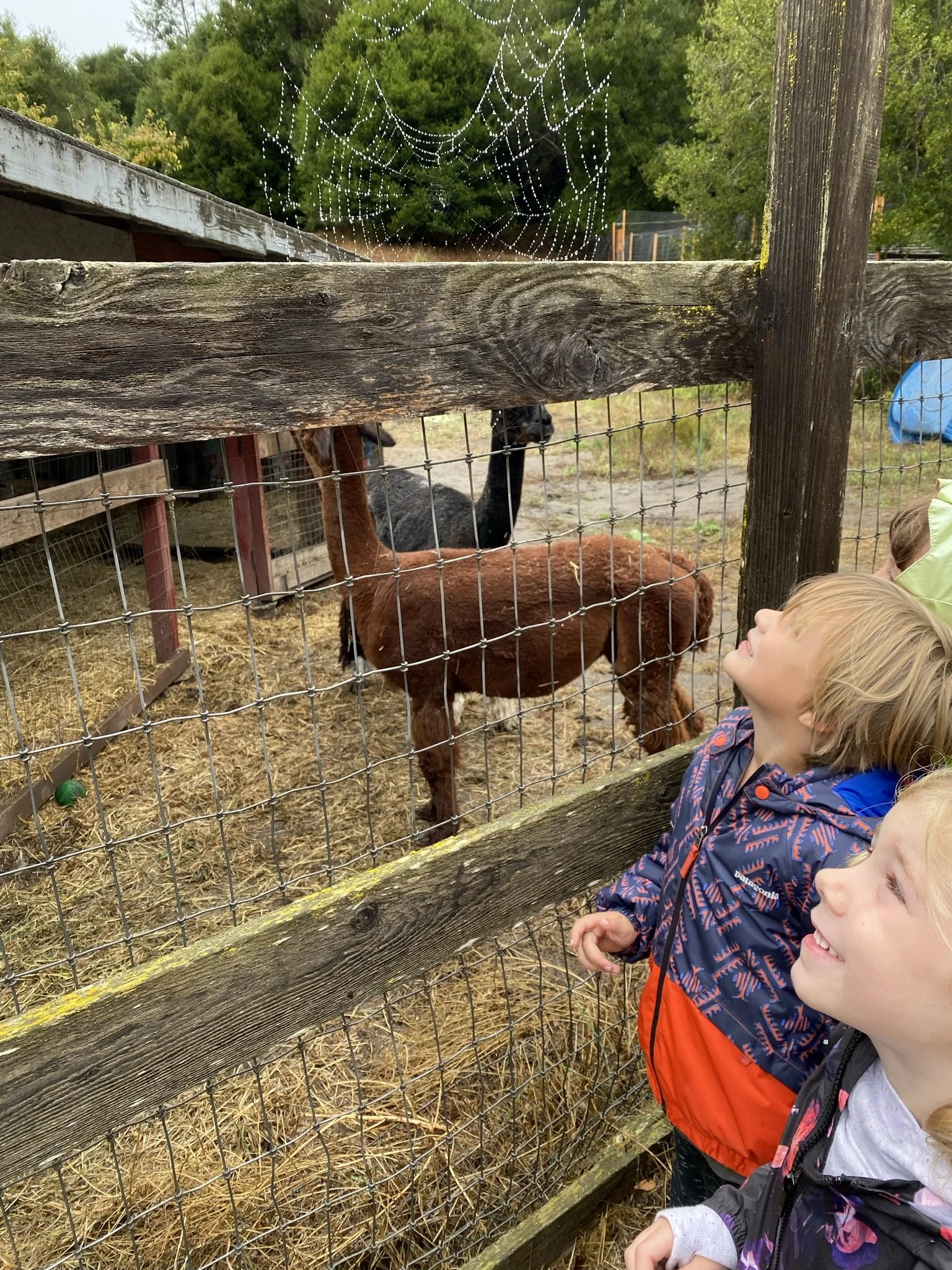
We made bug buddies which I hope you’ve put to use at home. A kindergartener once gave me one as a gift and I have it to this day, using it to gently relocate spiders, Yellowjackets, moths and butterflies. I hope to impart my love of the animal kingdom to my kindergartners and help them grow into empaths who care about nature and all of its wonders. I read them stories about the lives of bees and ants and worms so the inclination isn’t to kill but to observe and explore.
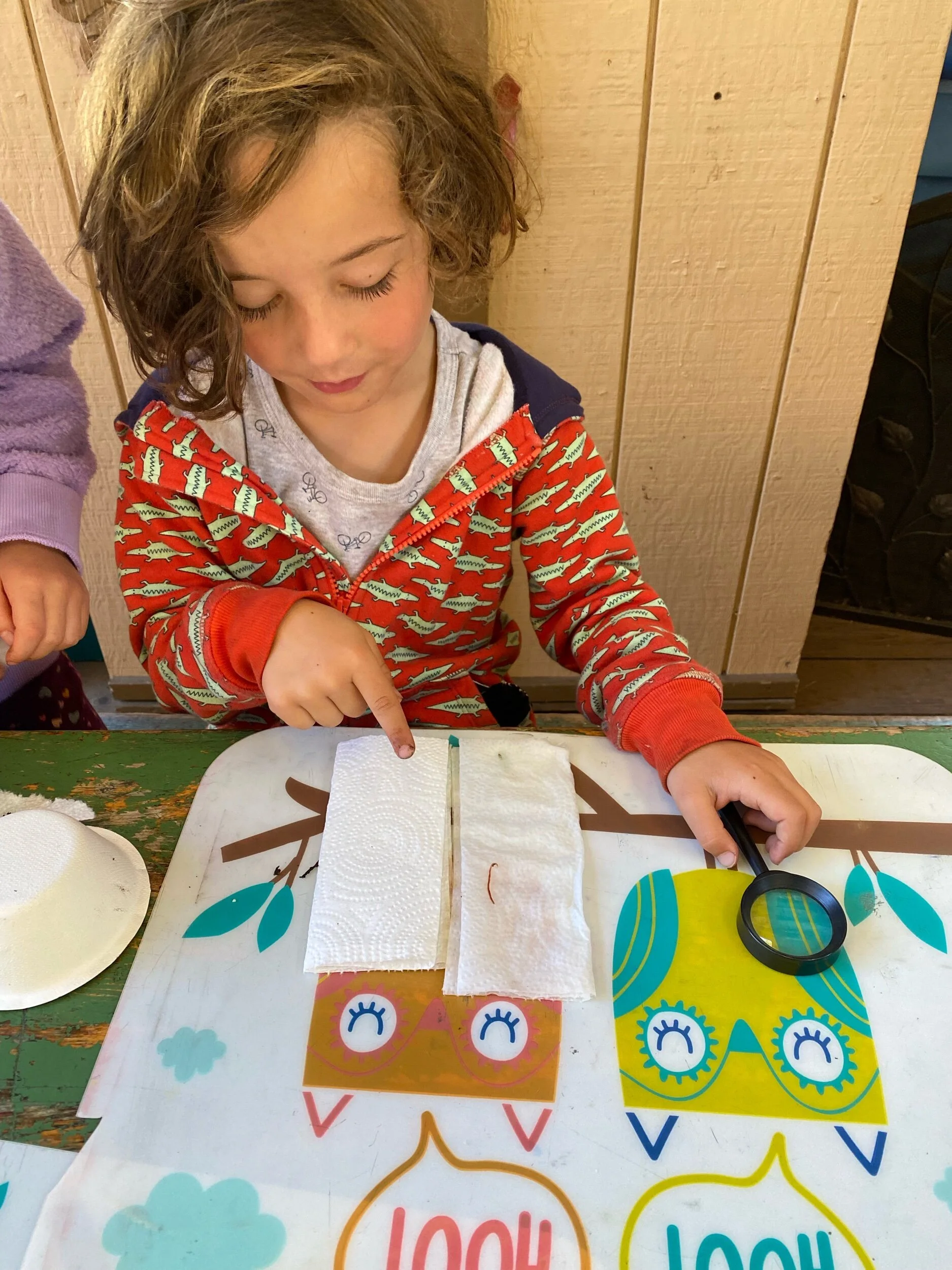
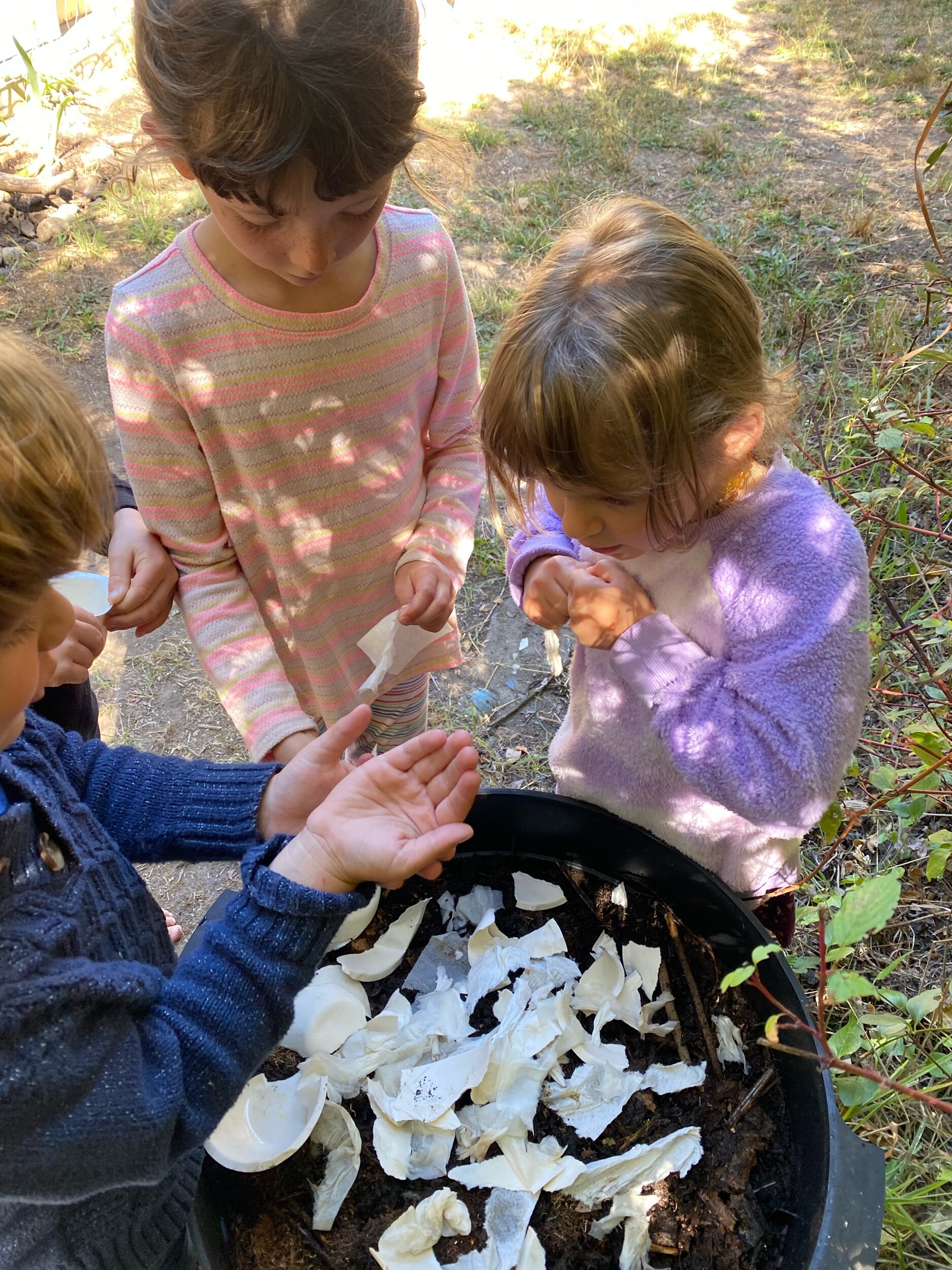
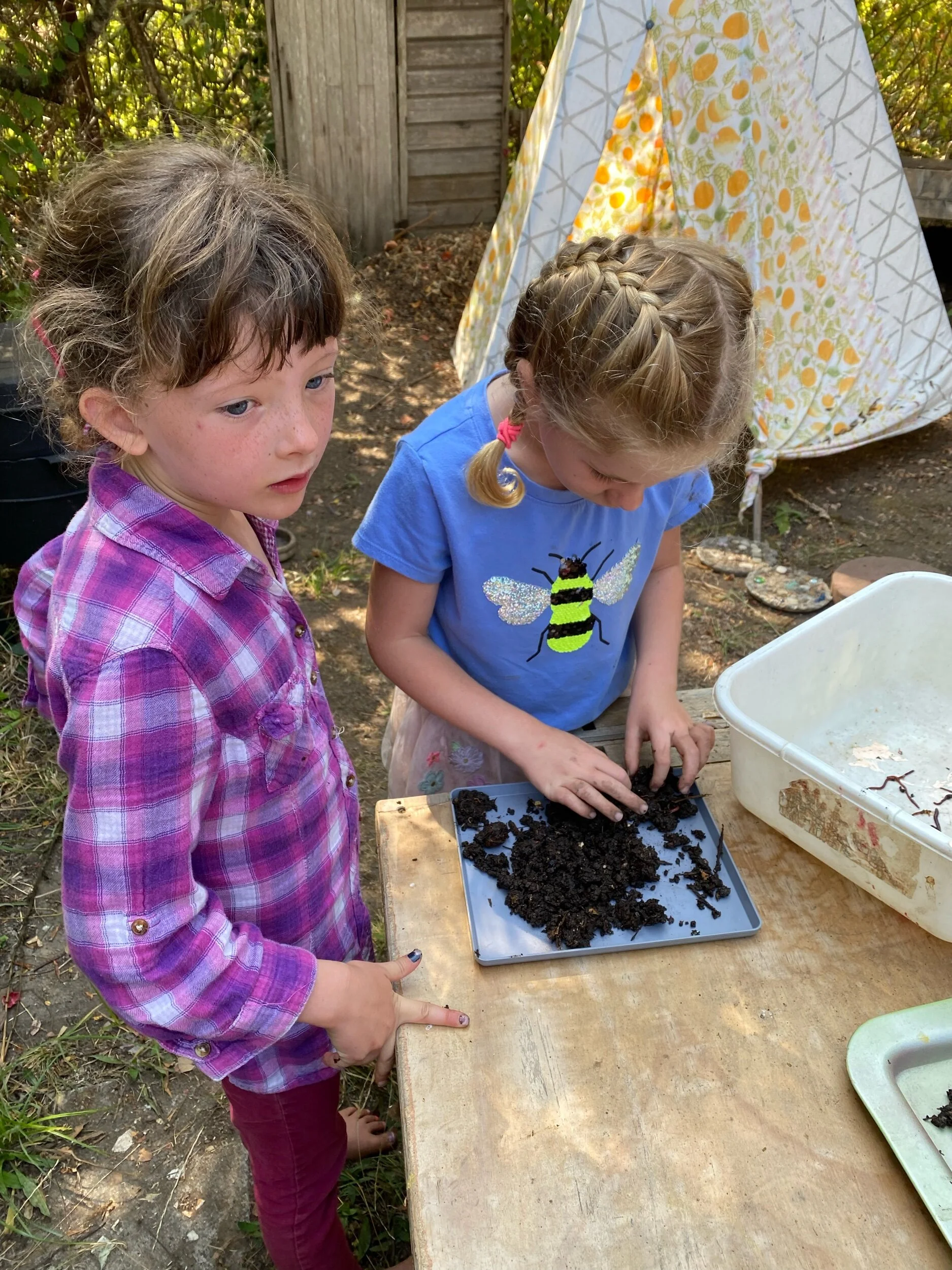
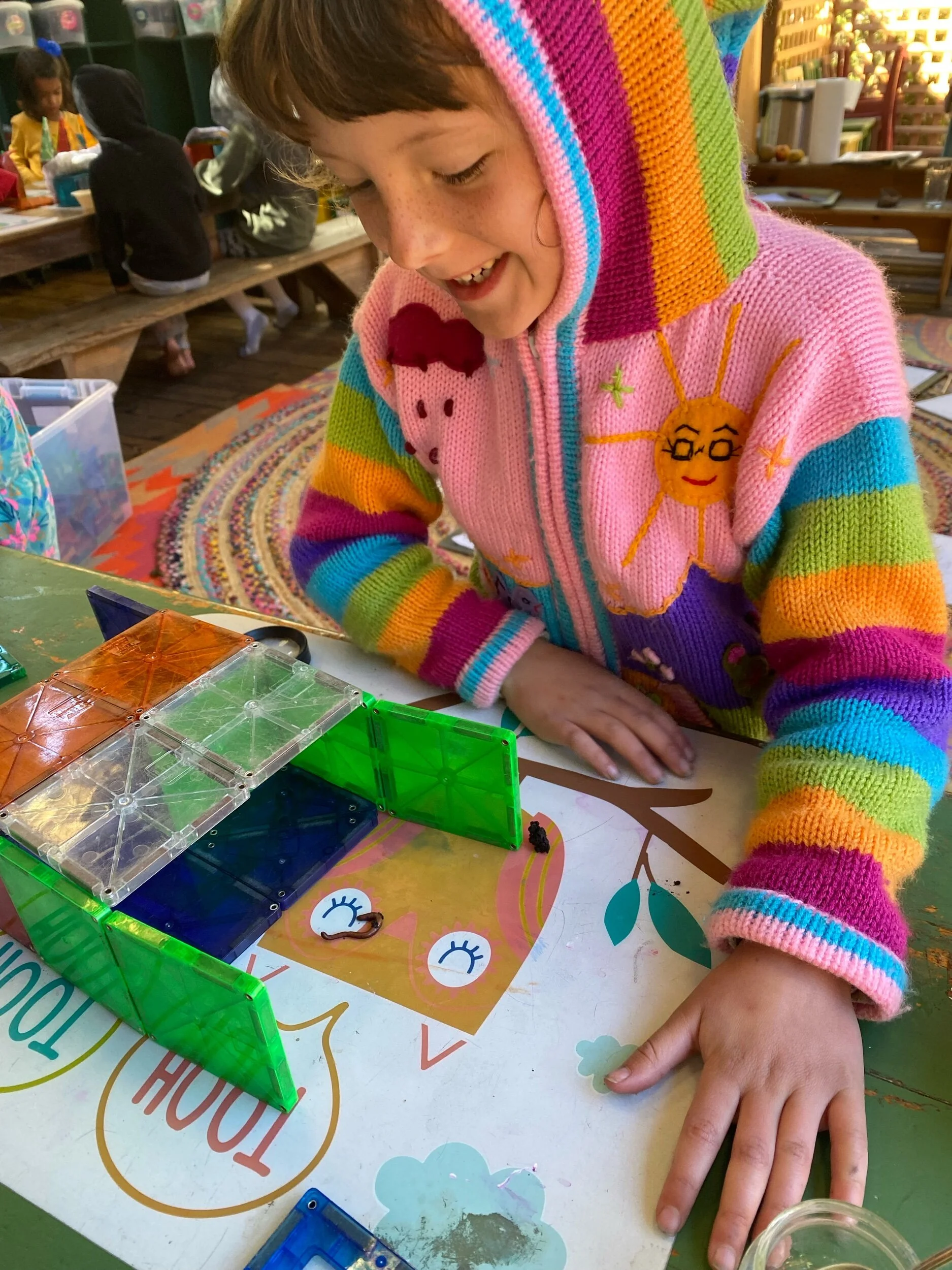
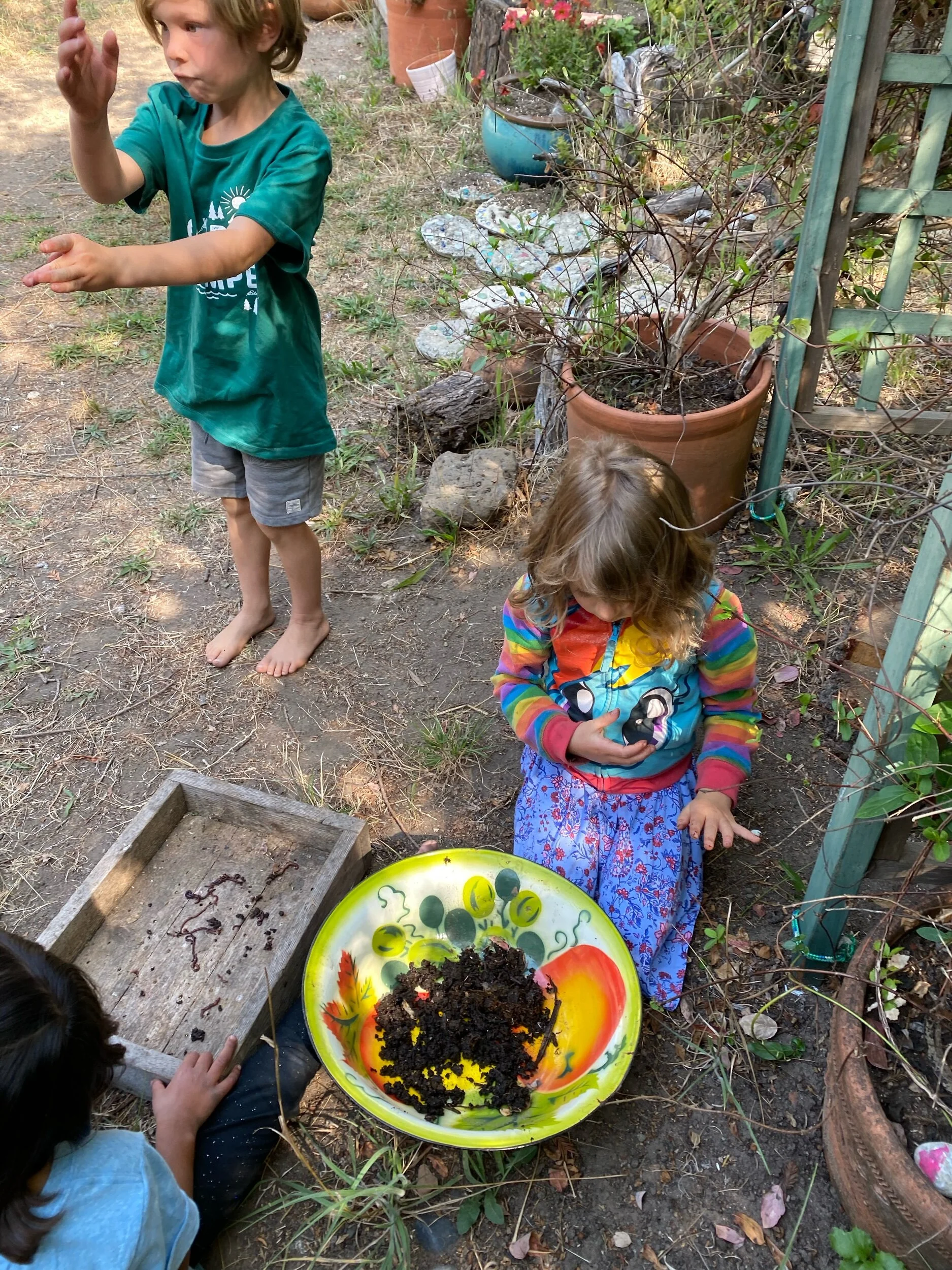
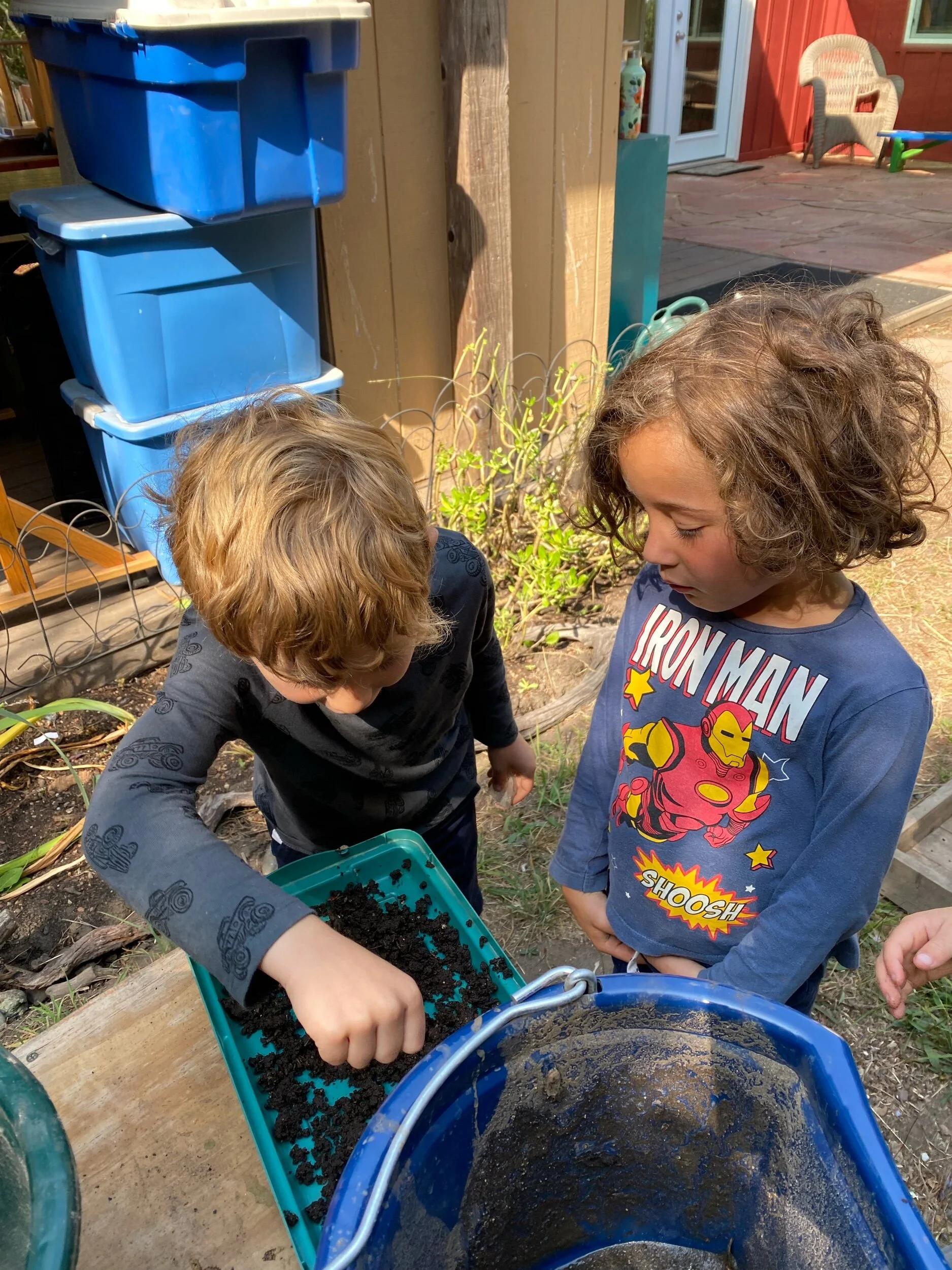
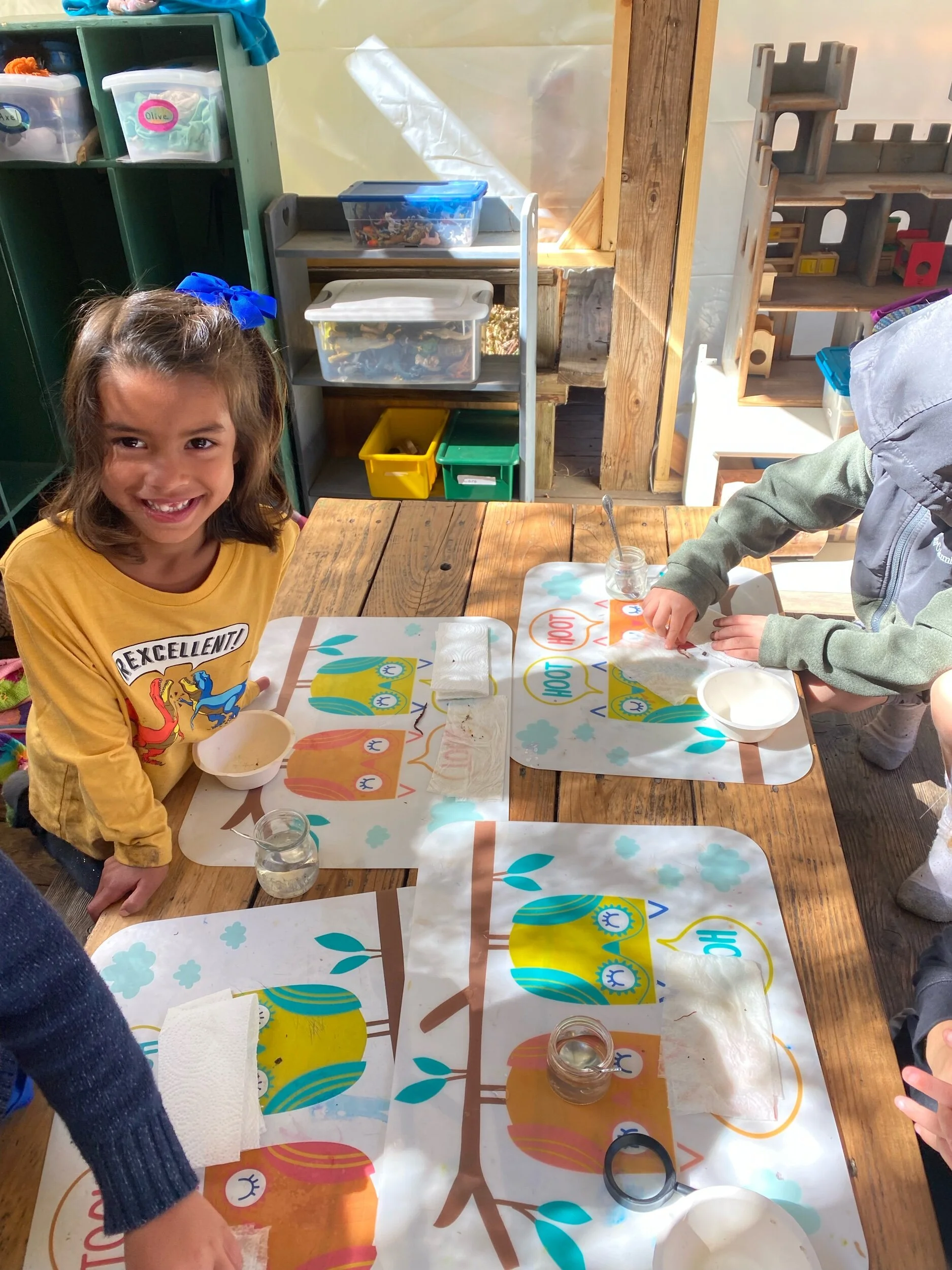
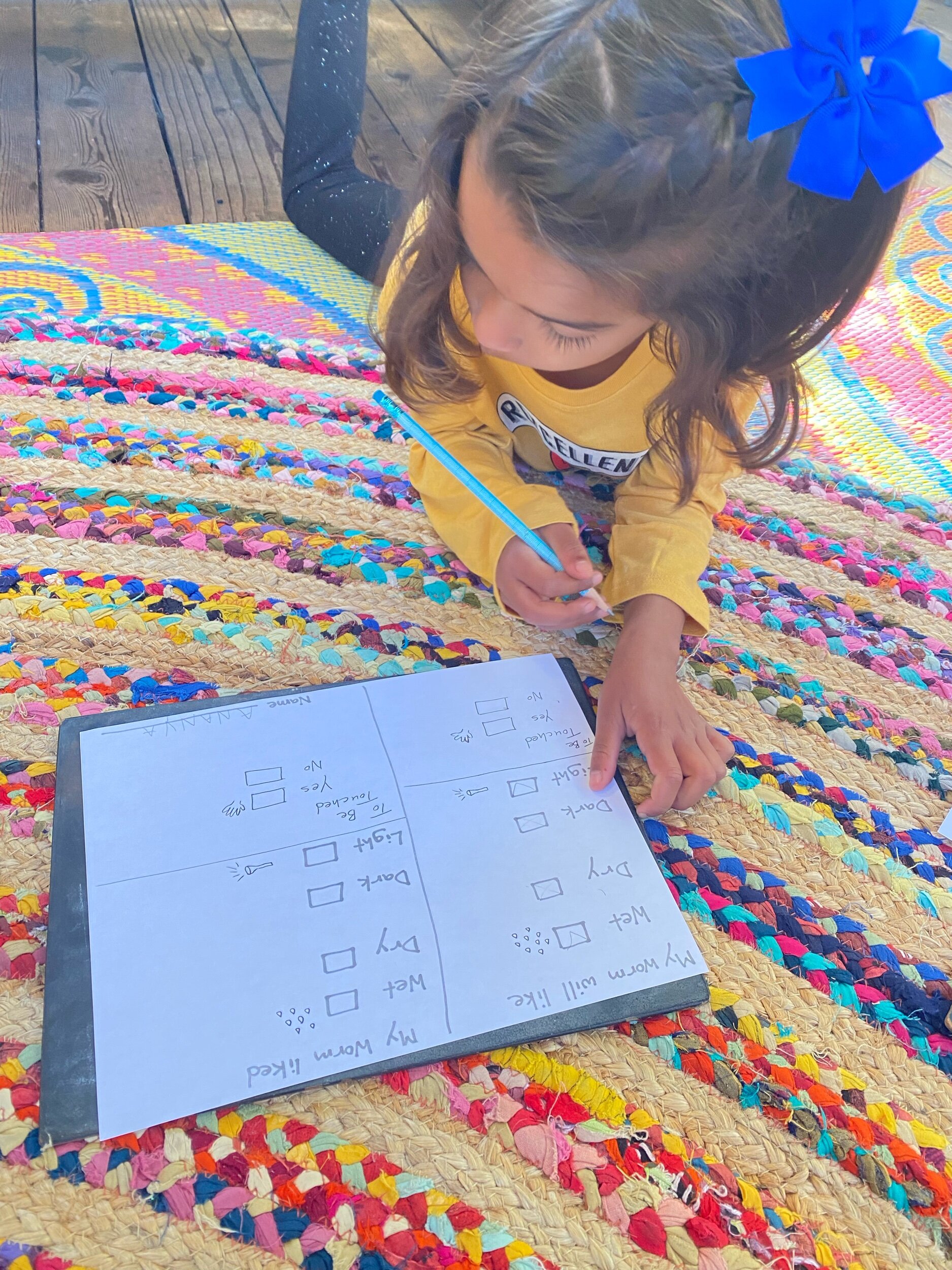
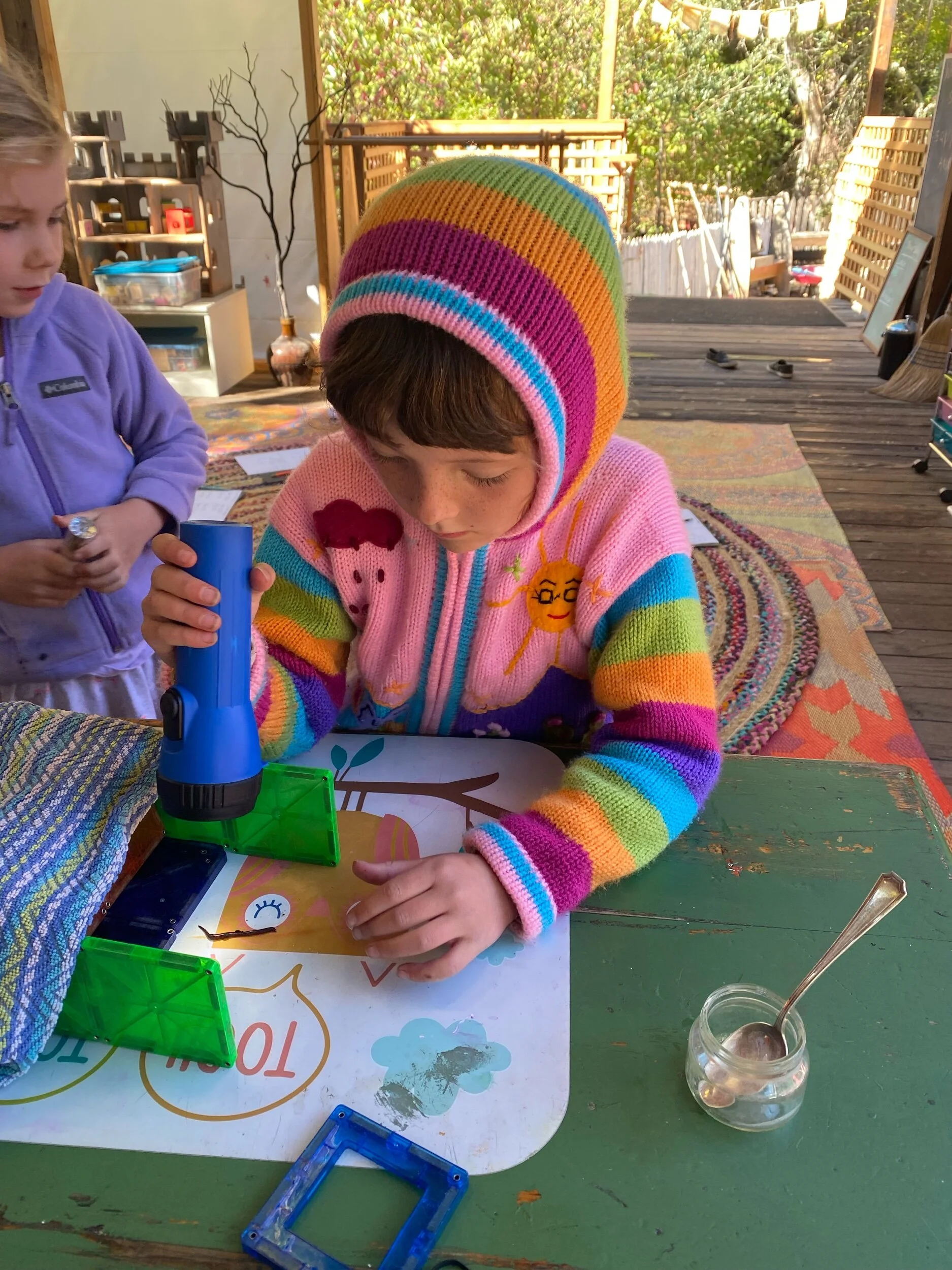
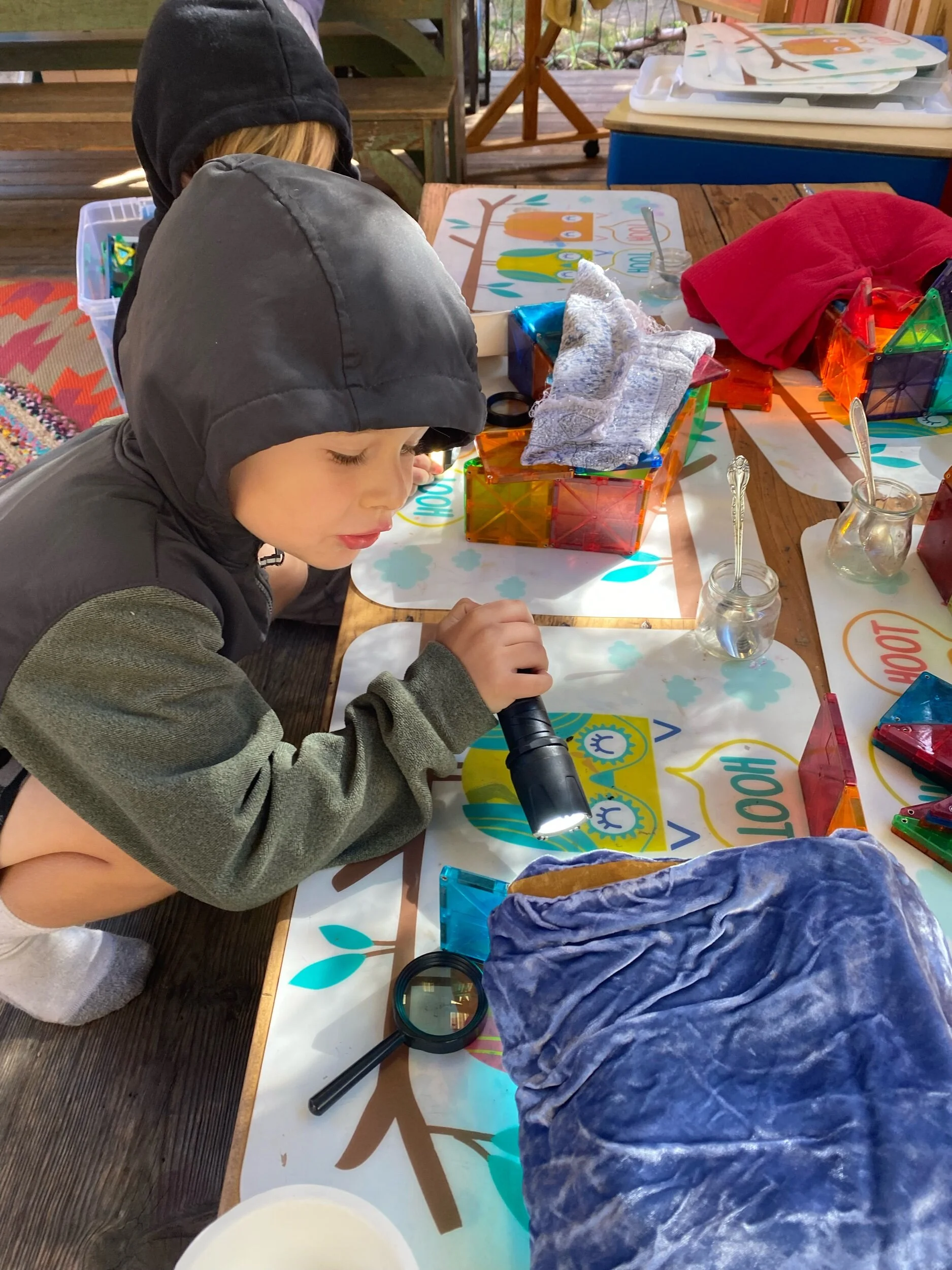
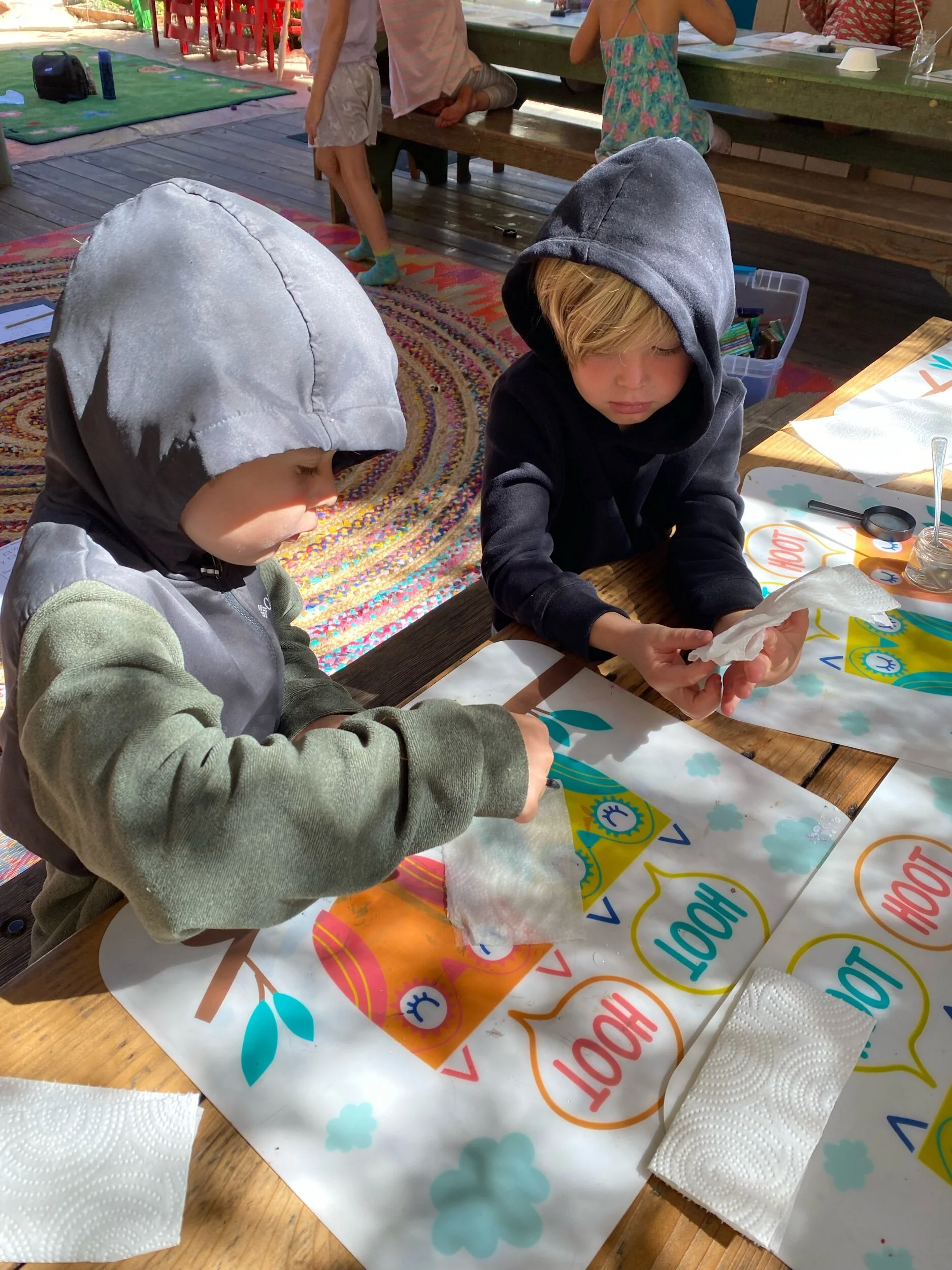
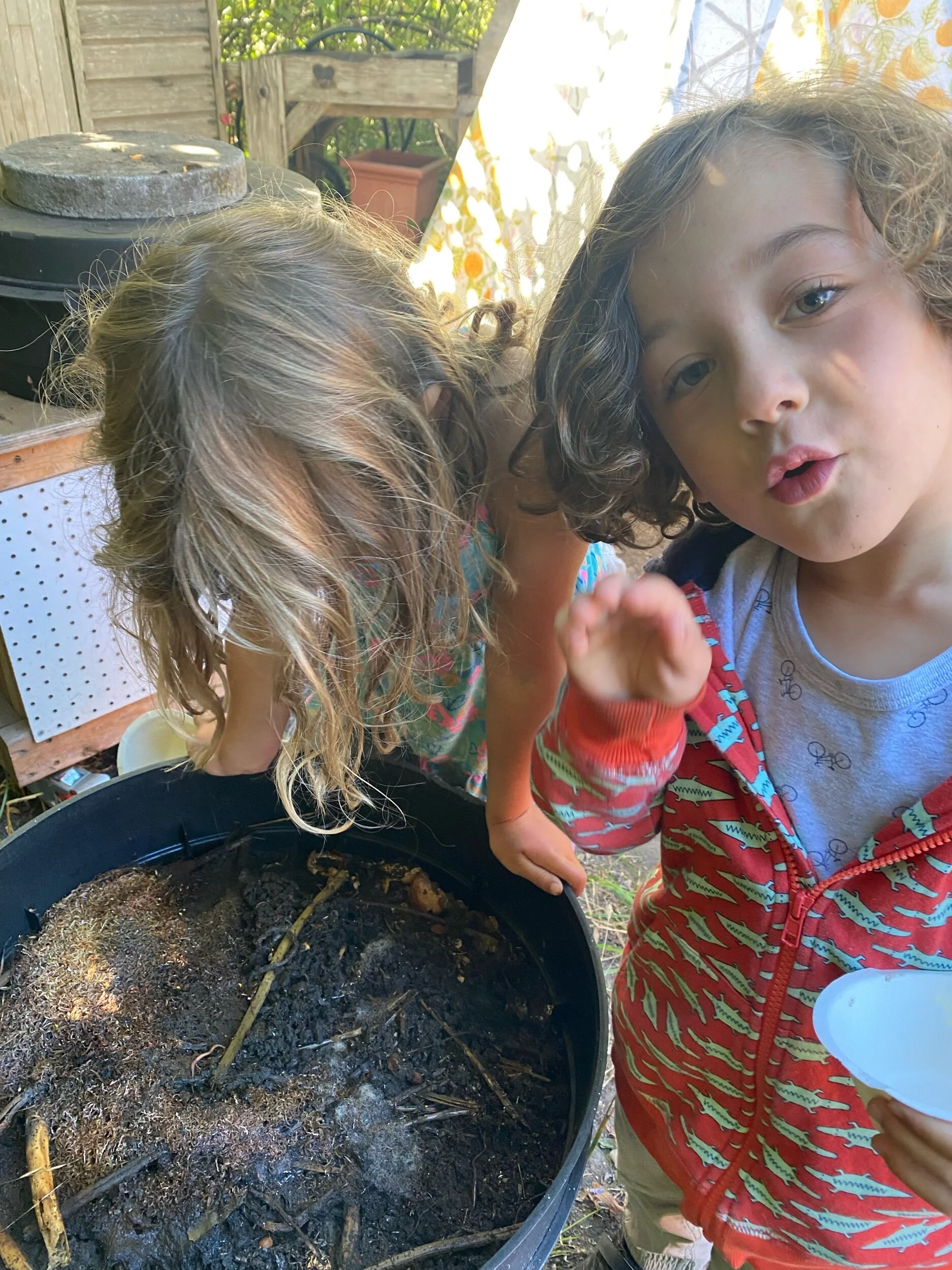
This month we focused on worms for our earth science unit. We shared cool worm knowledge and then studied the worms living in our worm house/composter. Several students gained new insights and appreciation for these little soil factories and while some were initially a bit squeamish, learning that worms have no teeth, have 5 hearts and are both boys and girls at the same time endeared these wrigglers to everyone. The kids made quite a few discoveries while examining worms with magnifying glasses, including which end is the head and that worms have tiny hairs that help them with traction. With their flashlights, and some impromptu shelters built out of Magnatiles, the children did an experiment to see if their worms, red wrigglers borrowed from the worm bin, preferred light to dark, and then if they liked the wet paper towel they were placed near or the dry surface.We also revamped the worm bin, giving fresh food, fresh bedding and water and removing the exploding population of roly-polys. Enjoy the photos below.
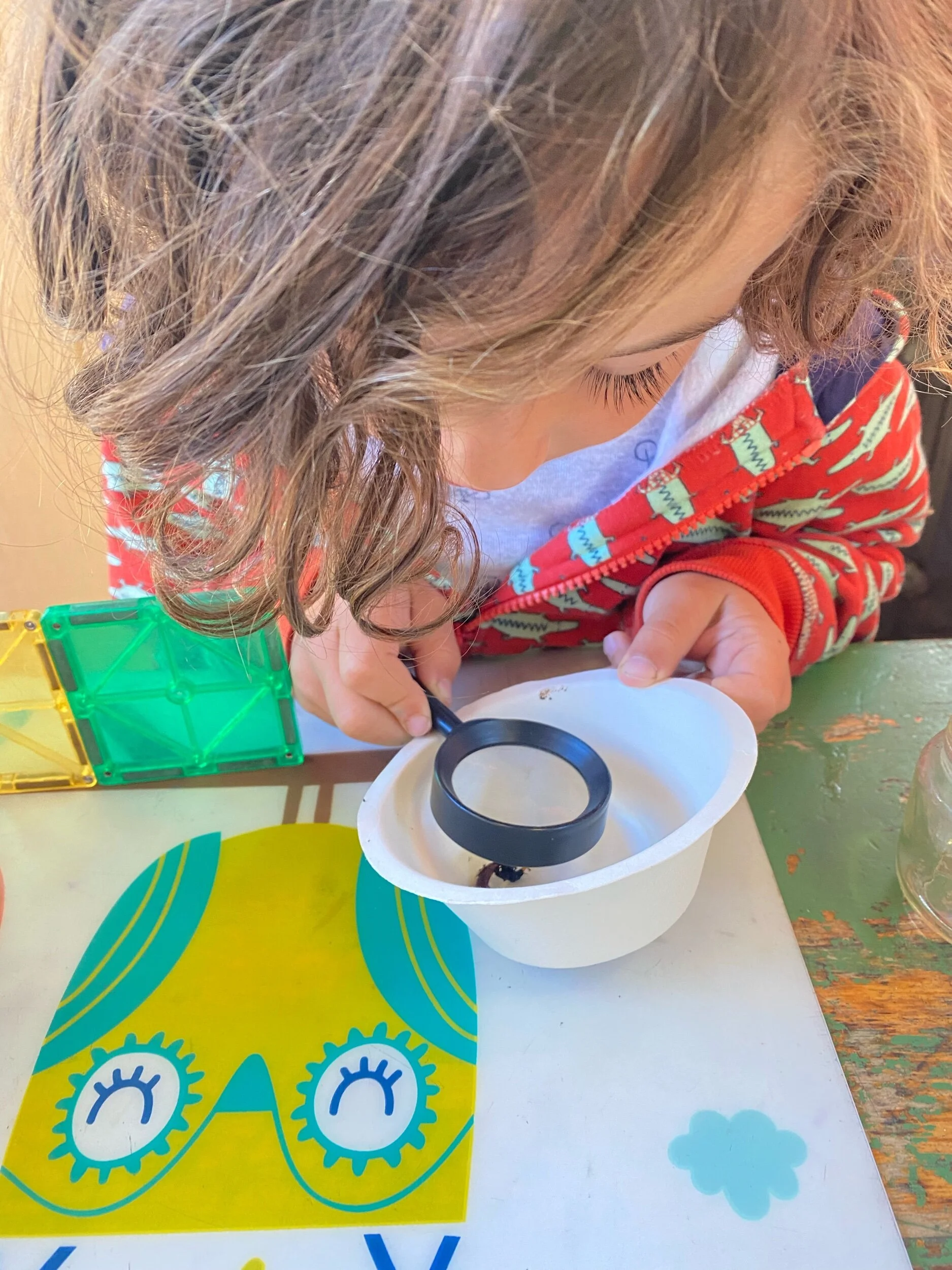
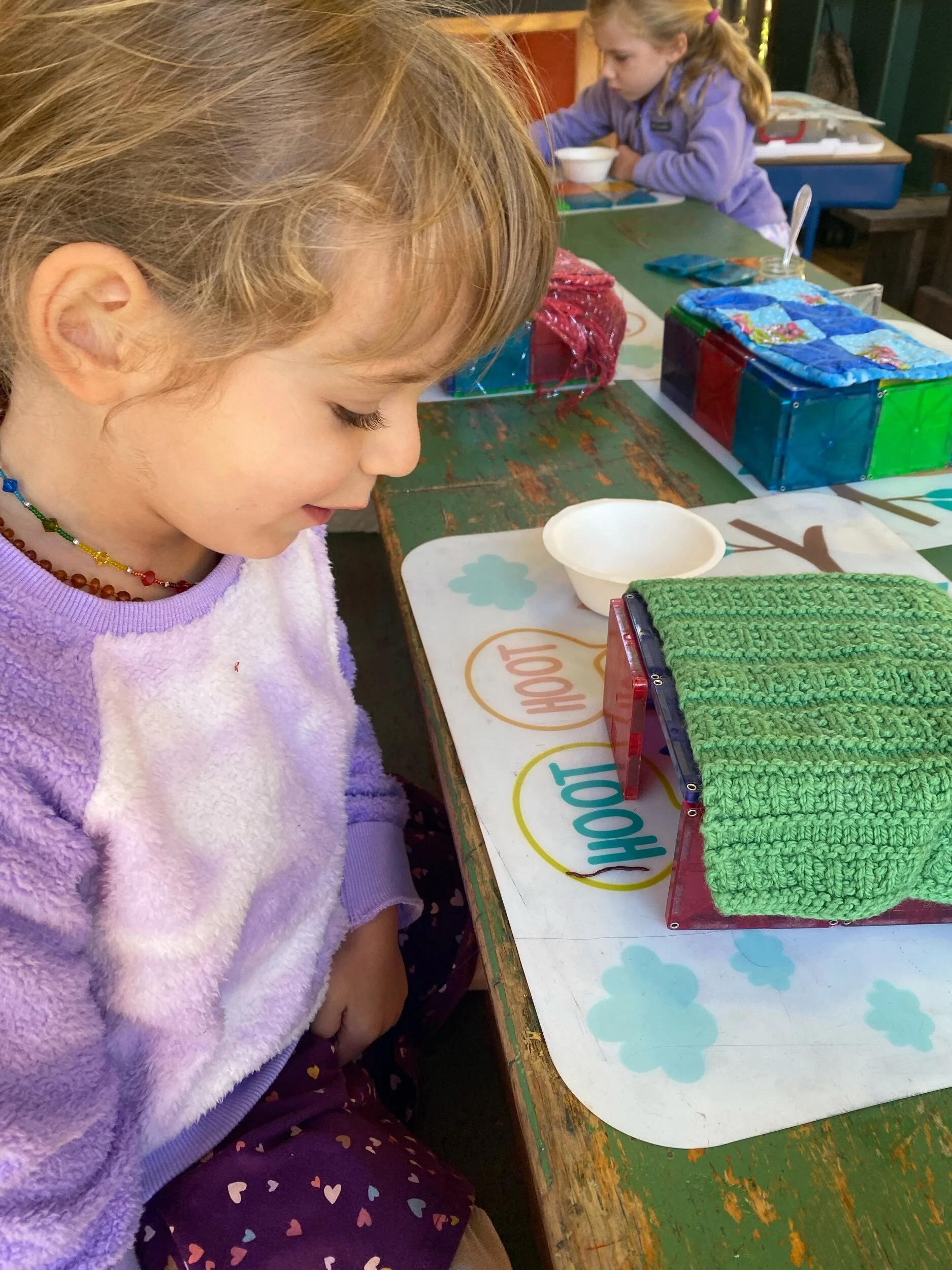
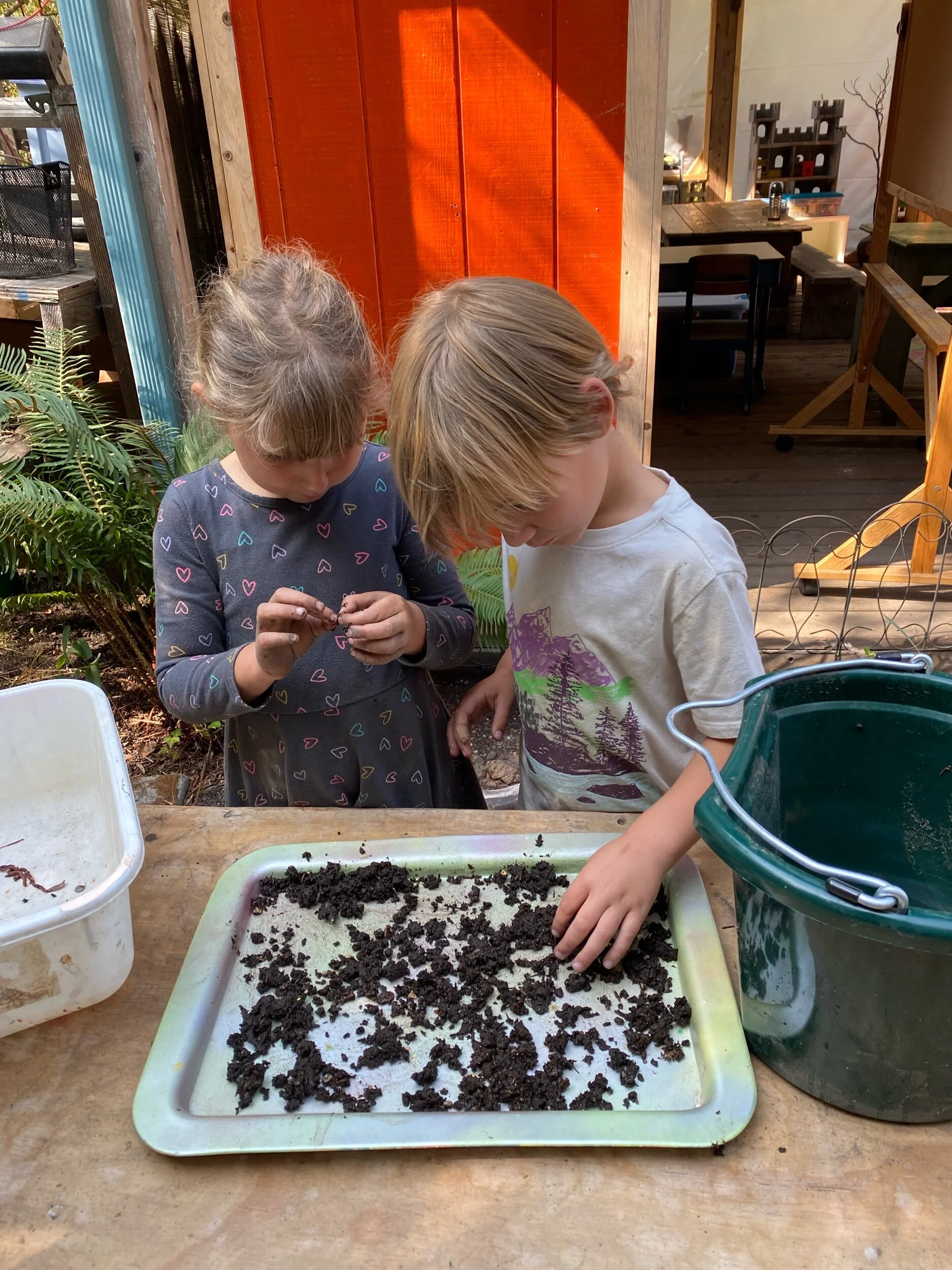
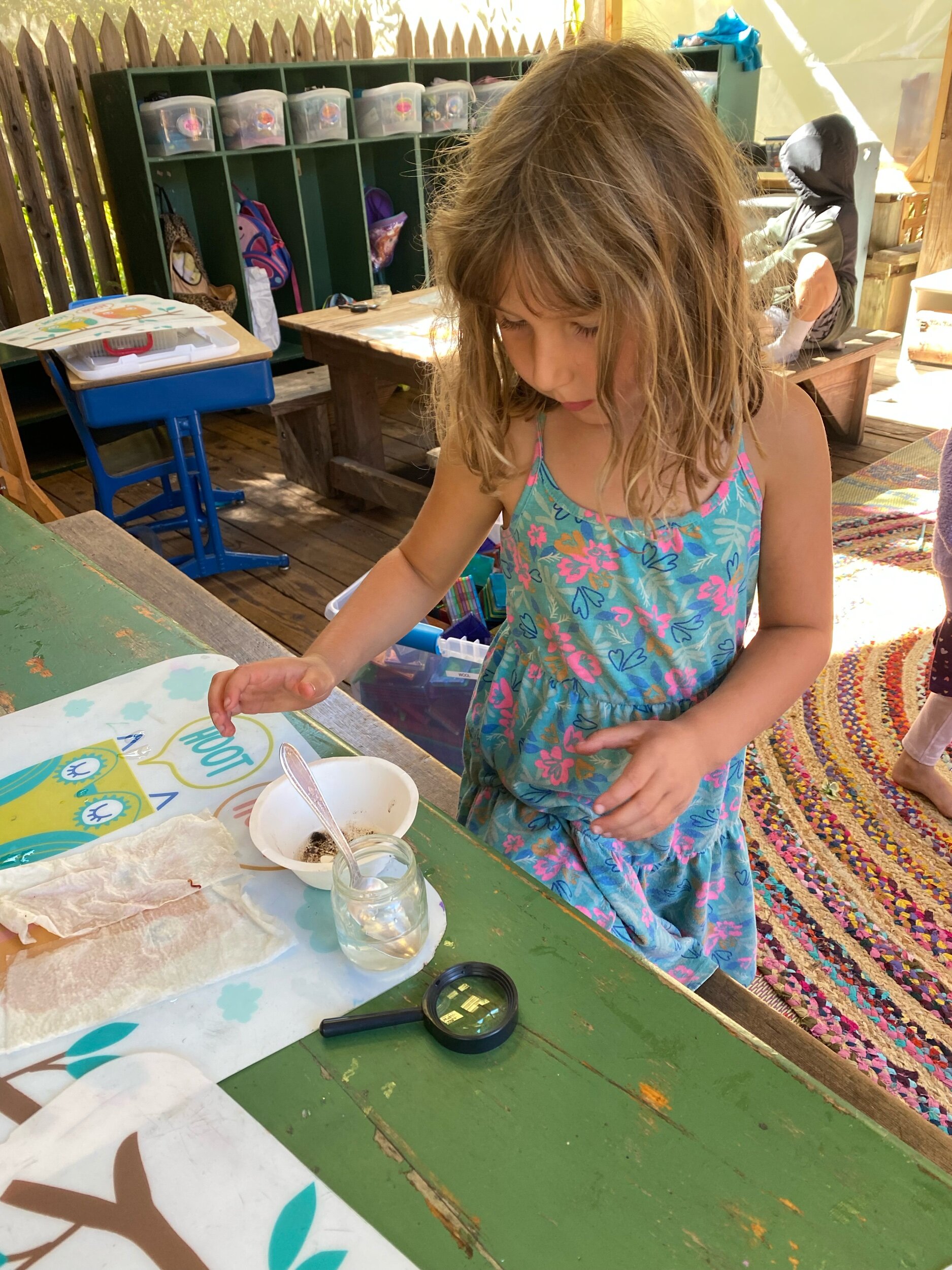
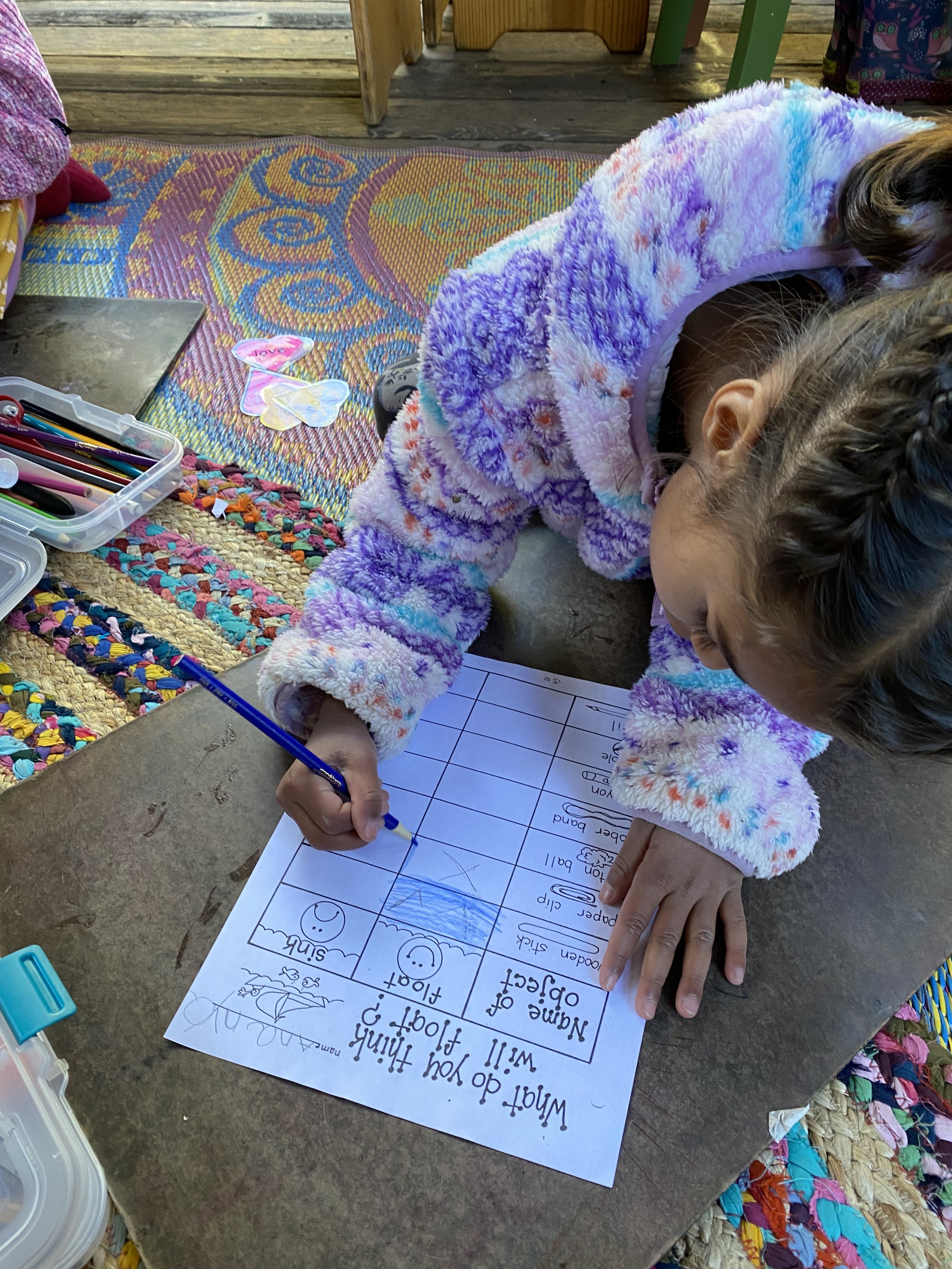
We did a sink/float experiment where the children guessed and tallied the guesses on whether a variety of items would sink or float, the grand finale being a pumpkin that everyone guessed would sink because it was so heavy but which actually floated. We talked about density and molecules and the children came up with a number of intelligent theories on what determines why things float or sink. The children then made little boats out of walnut halves and floated them in a tub of water.
Scissor work:
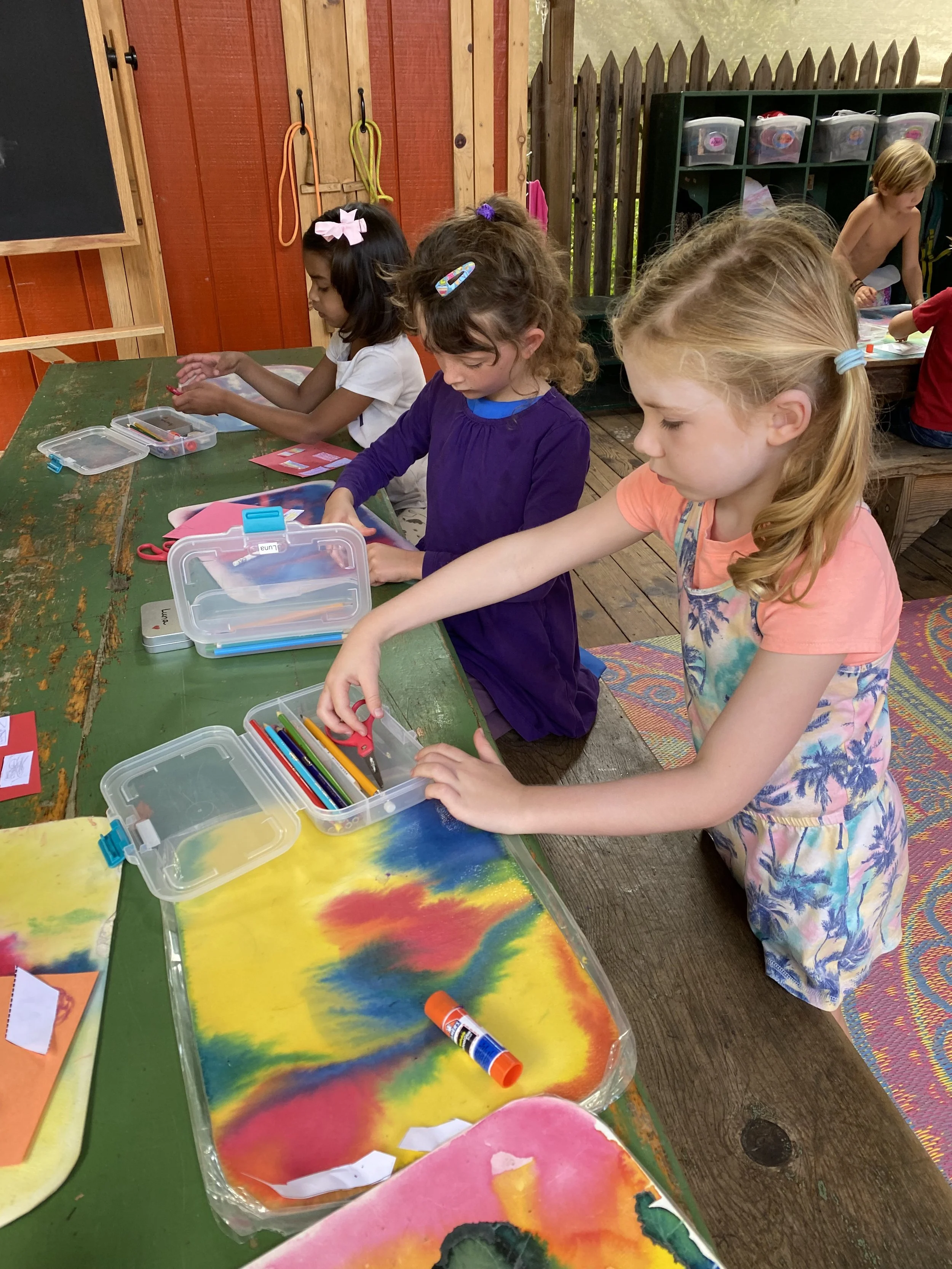
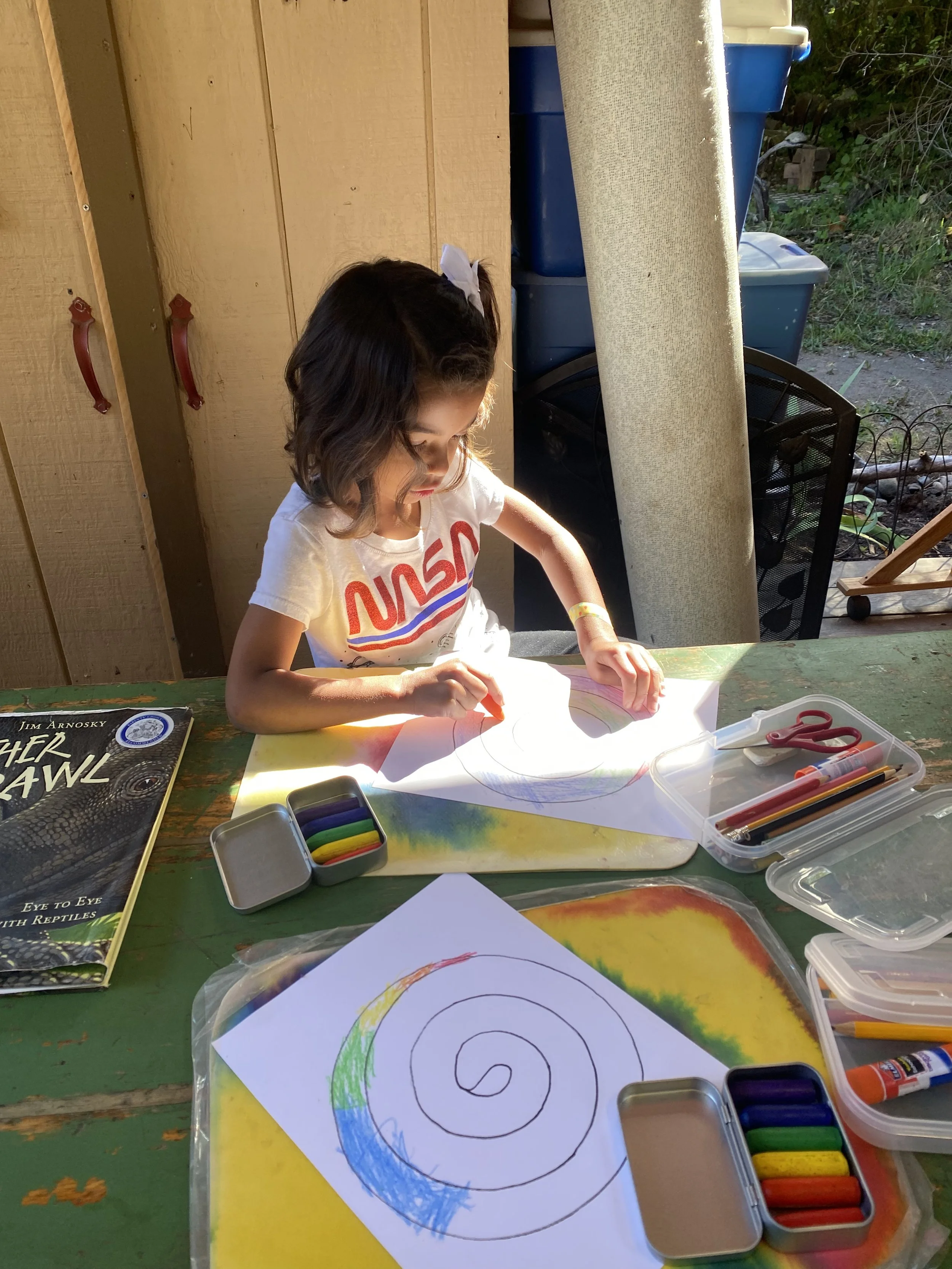
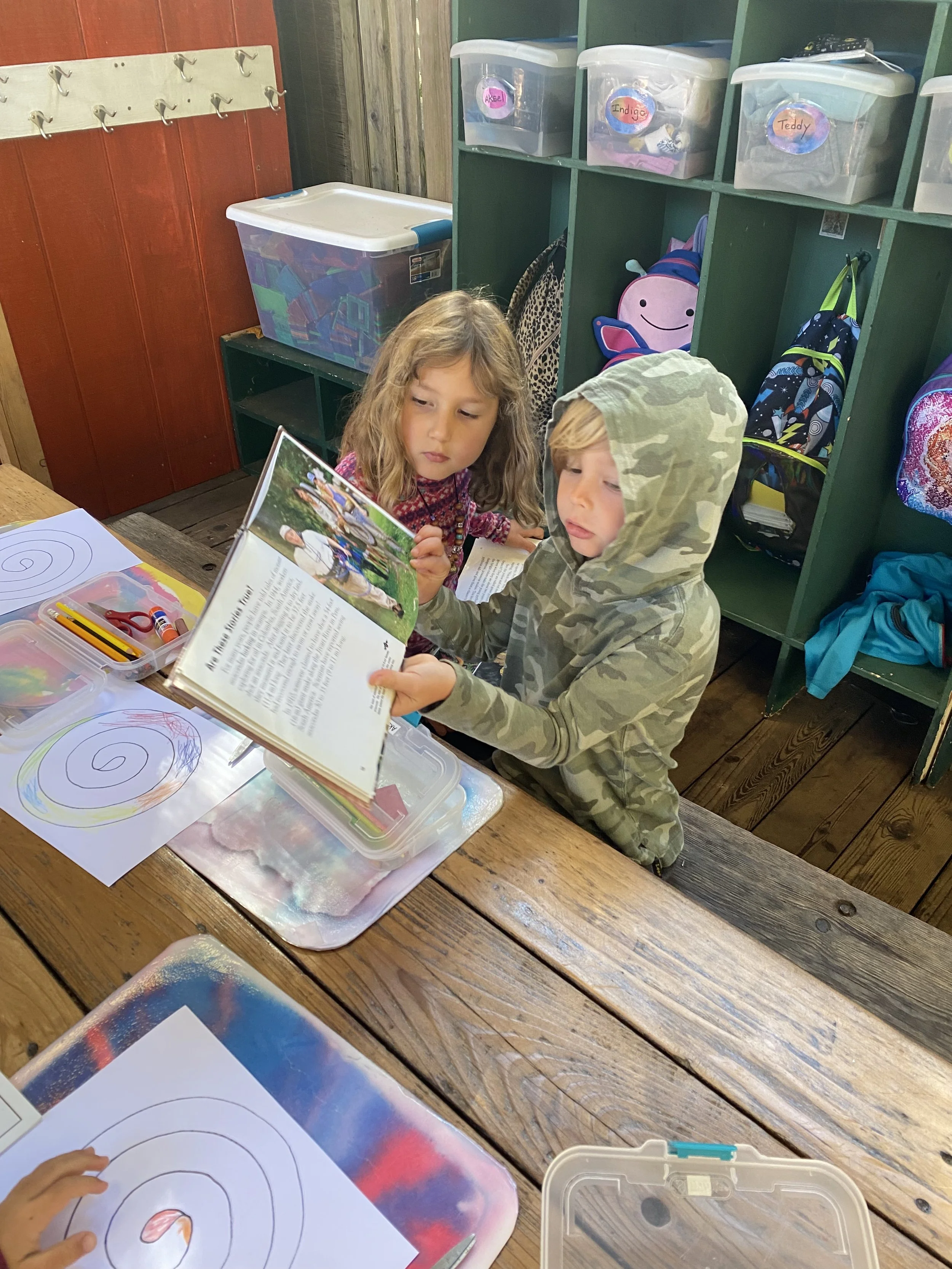
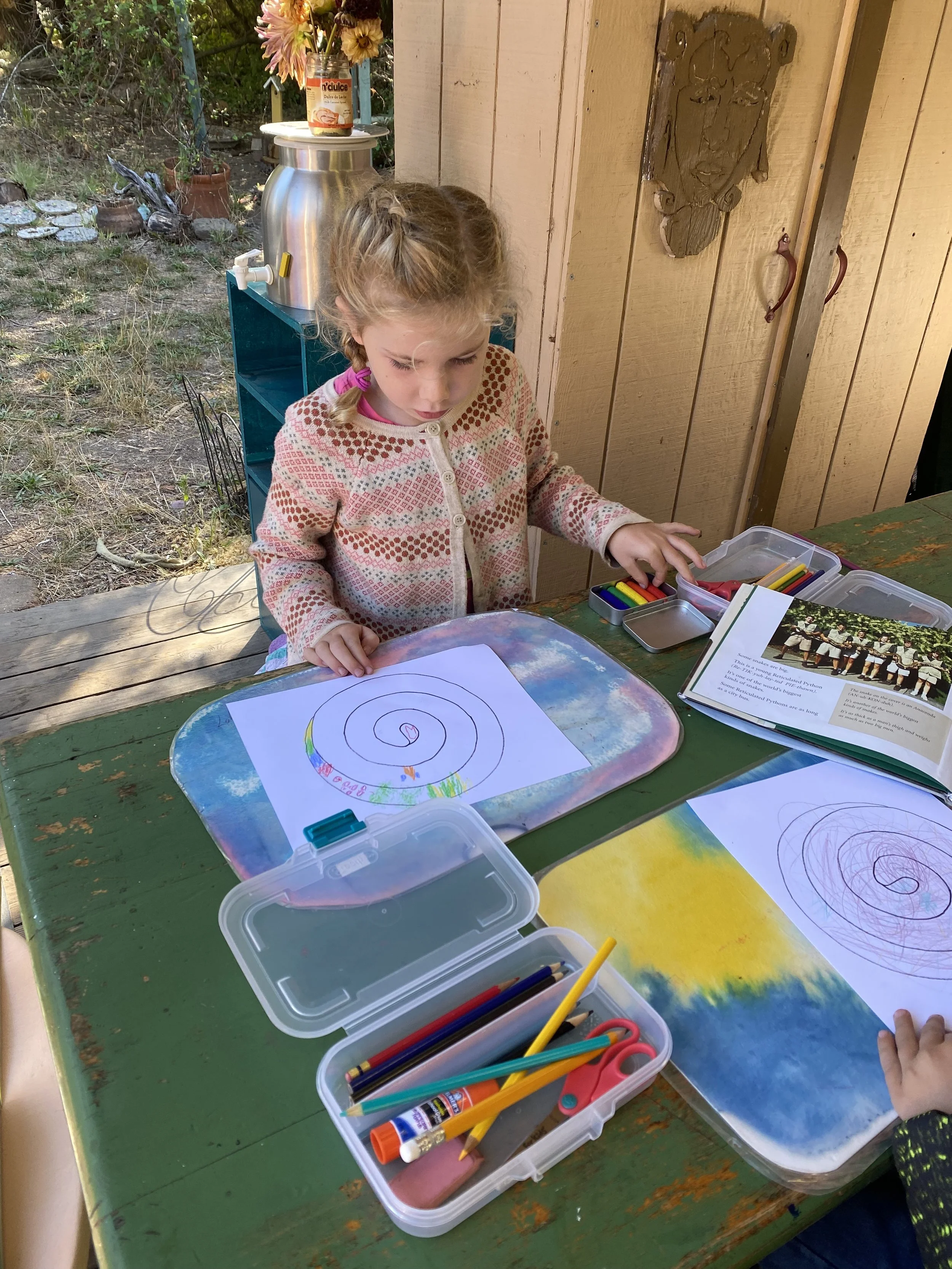
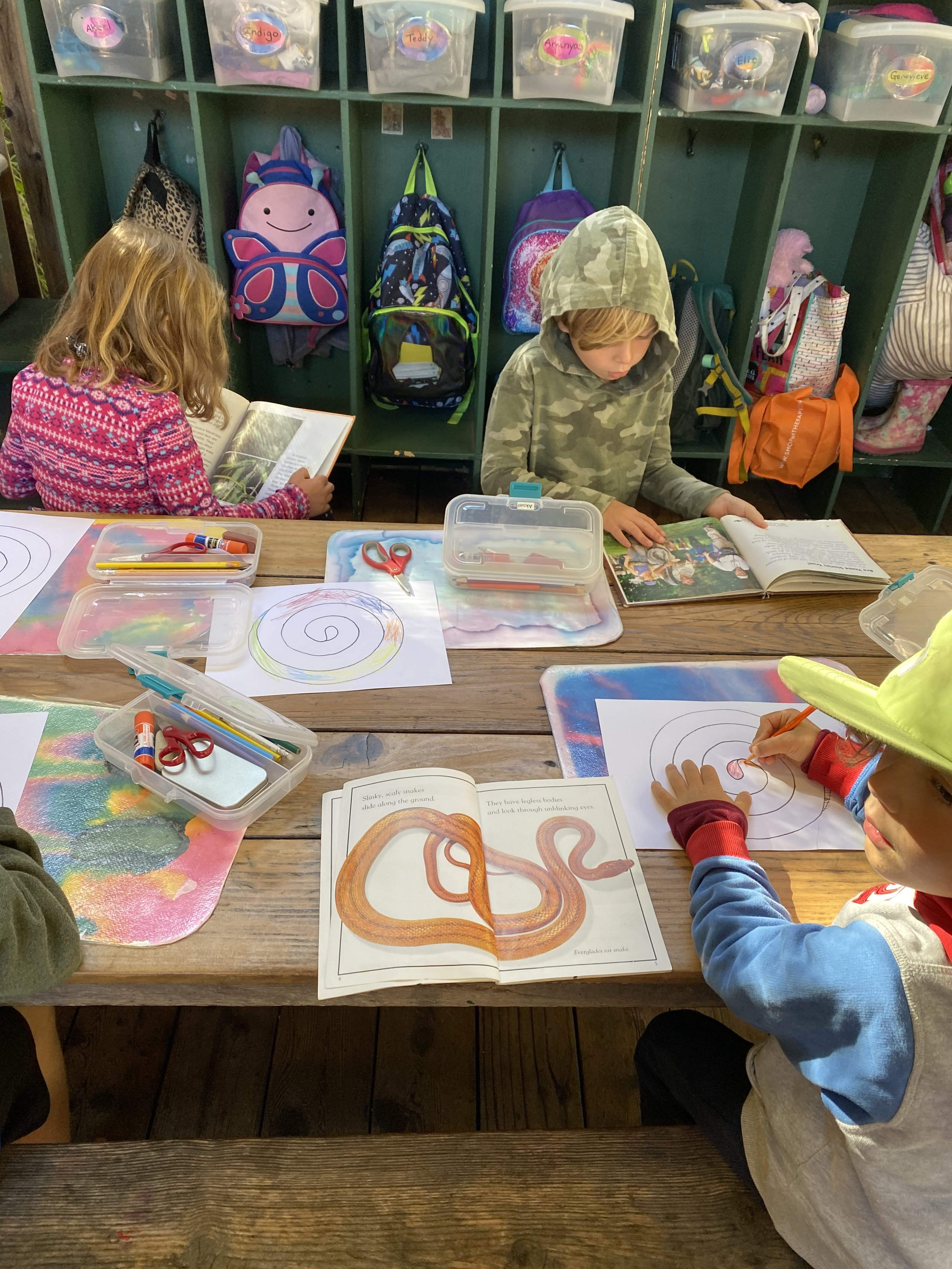
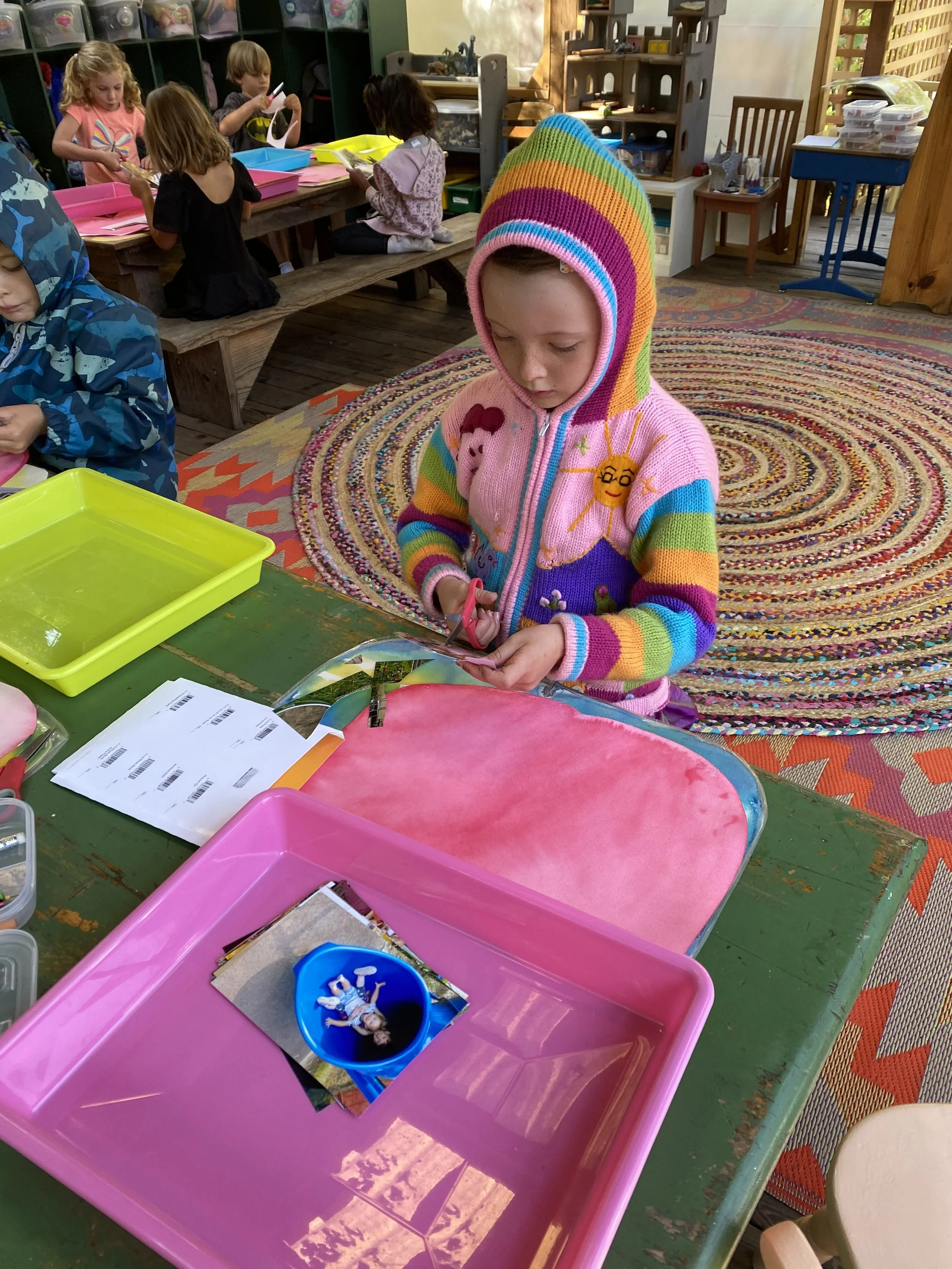
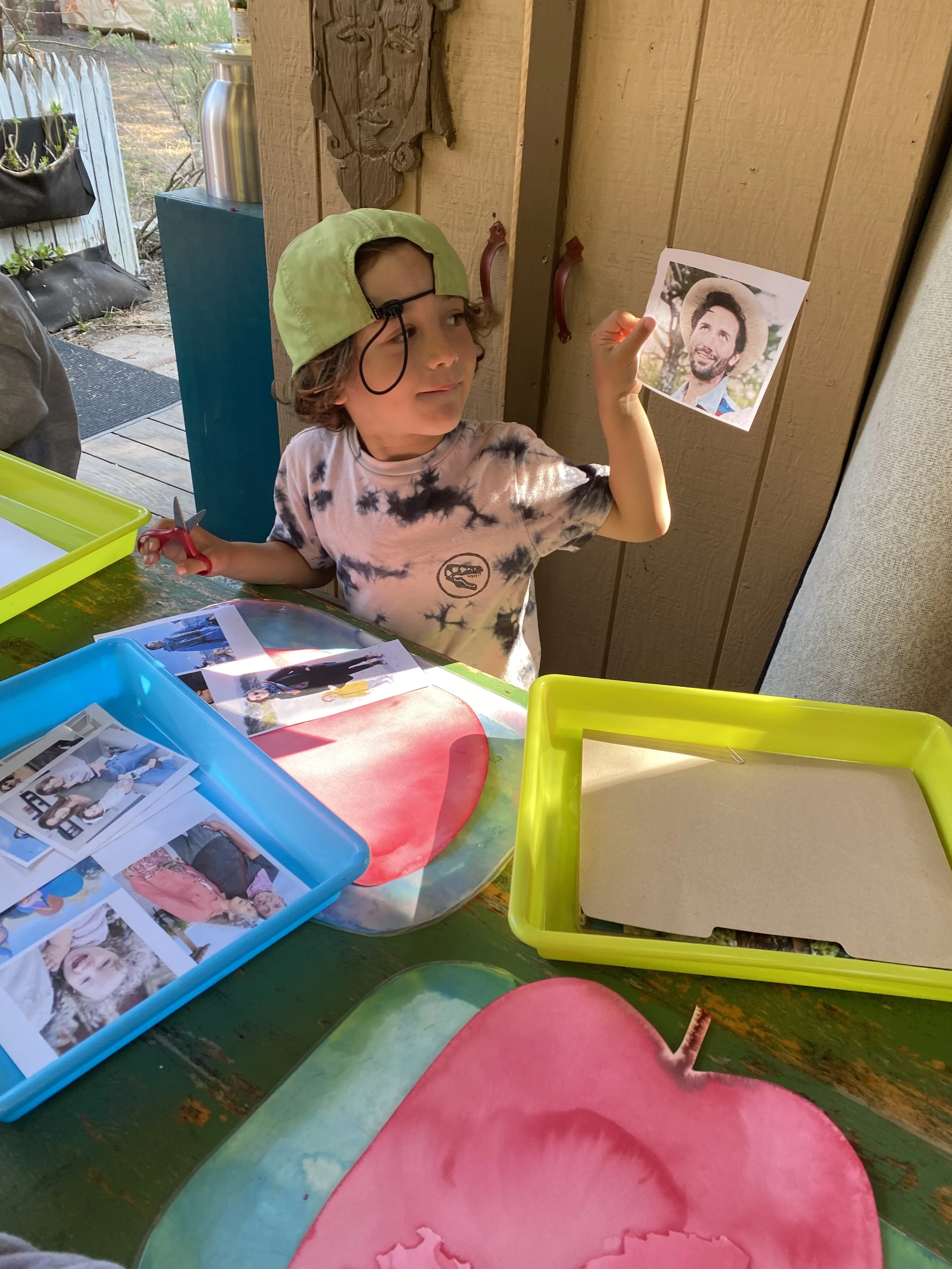
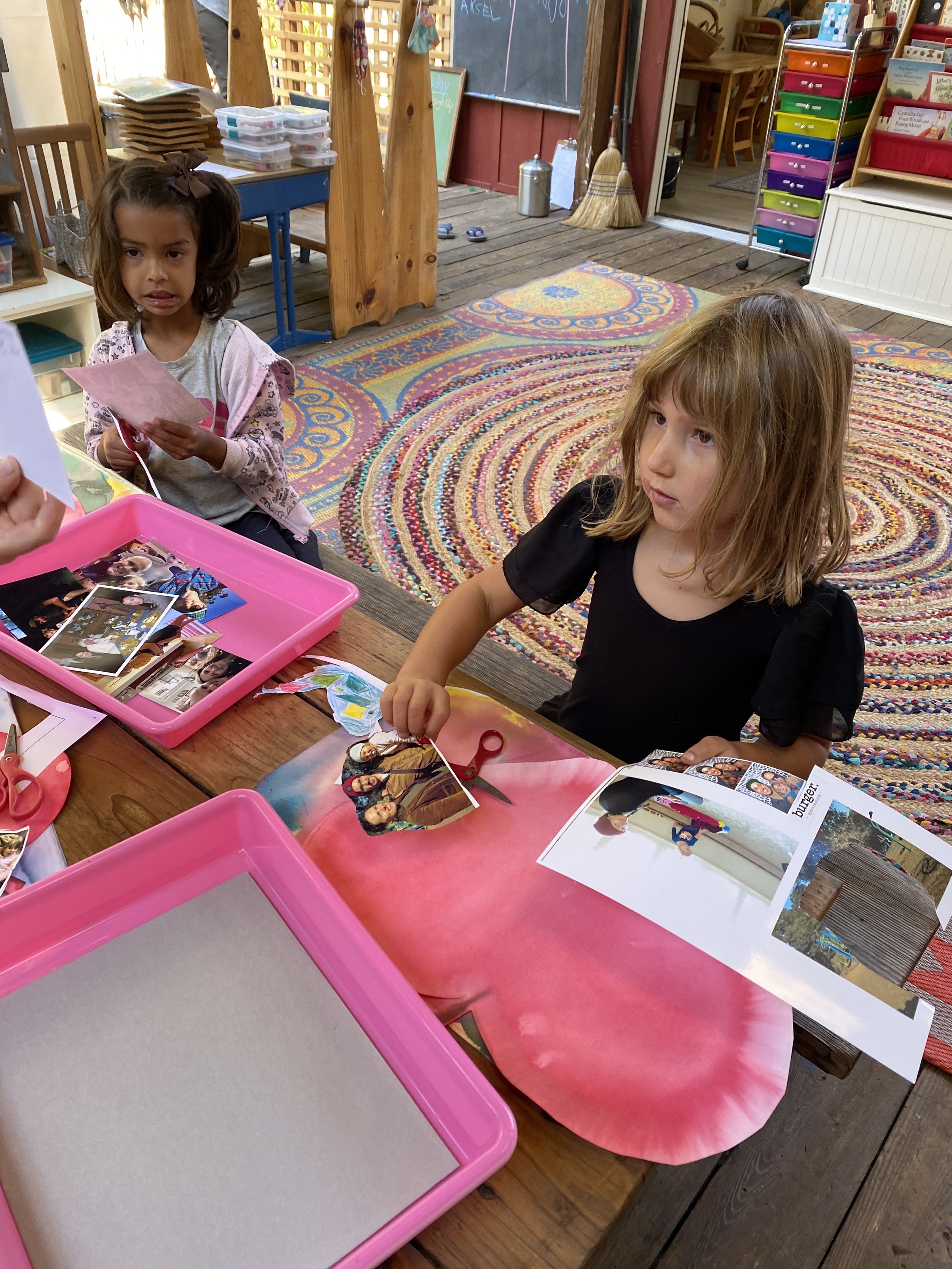
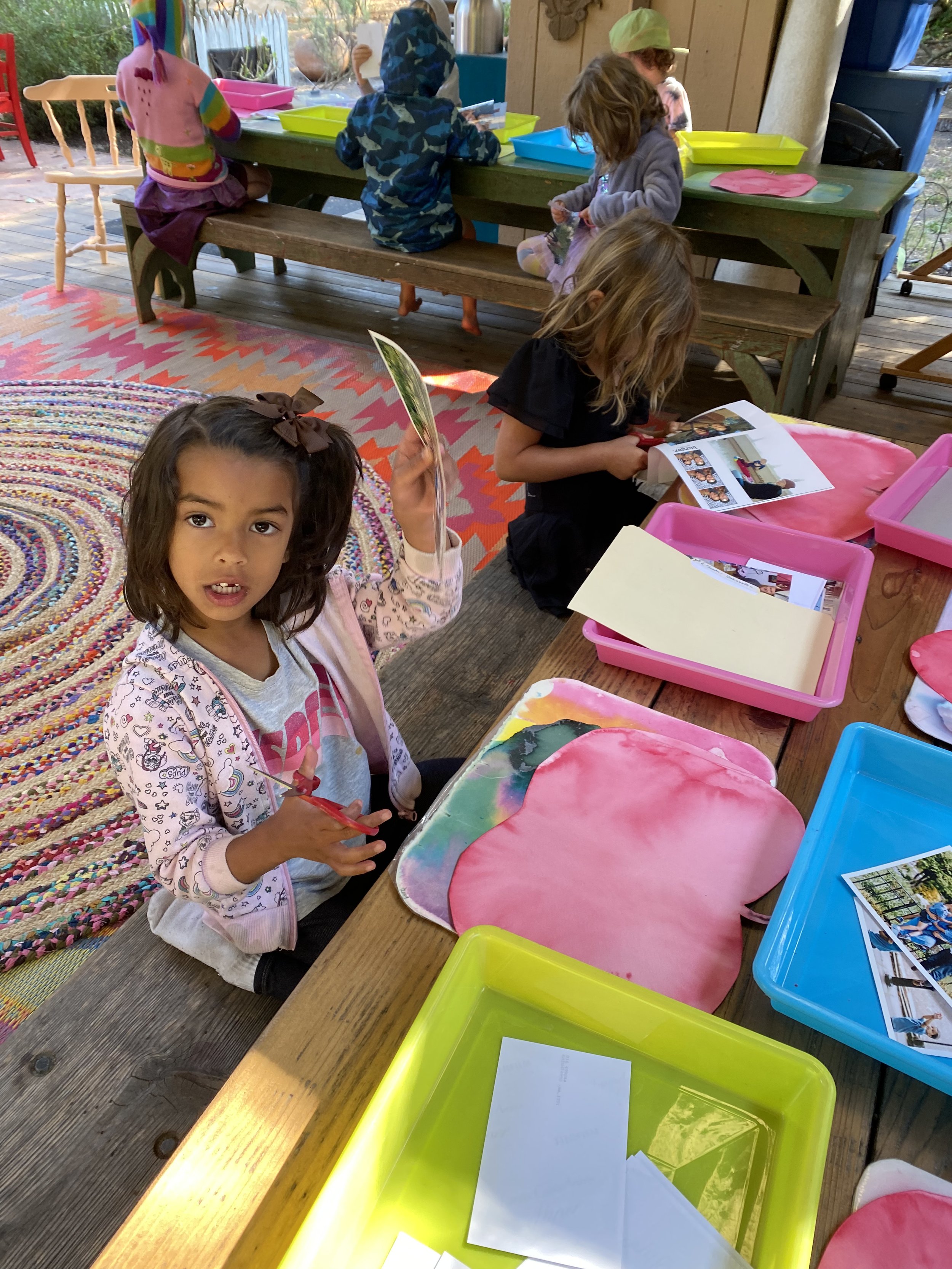
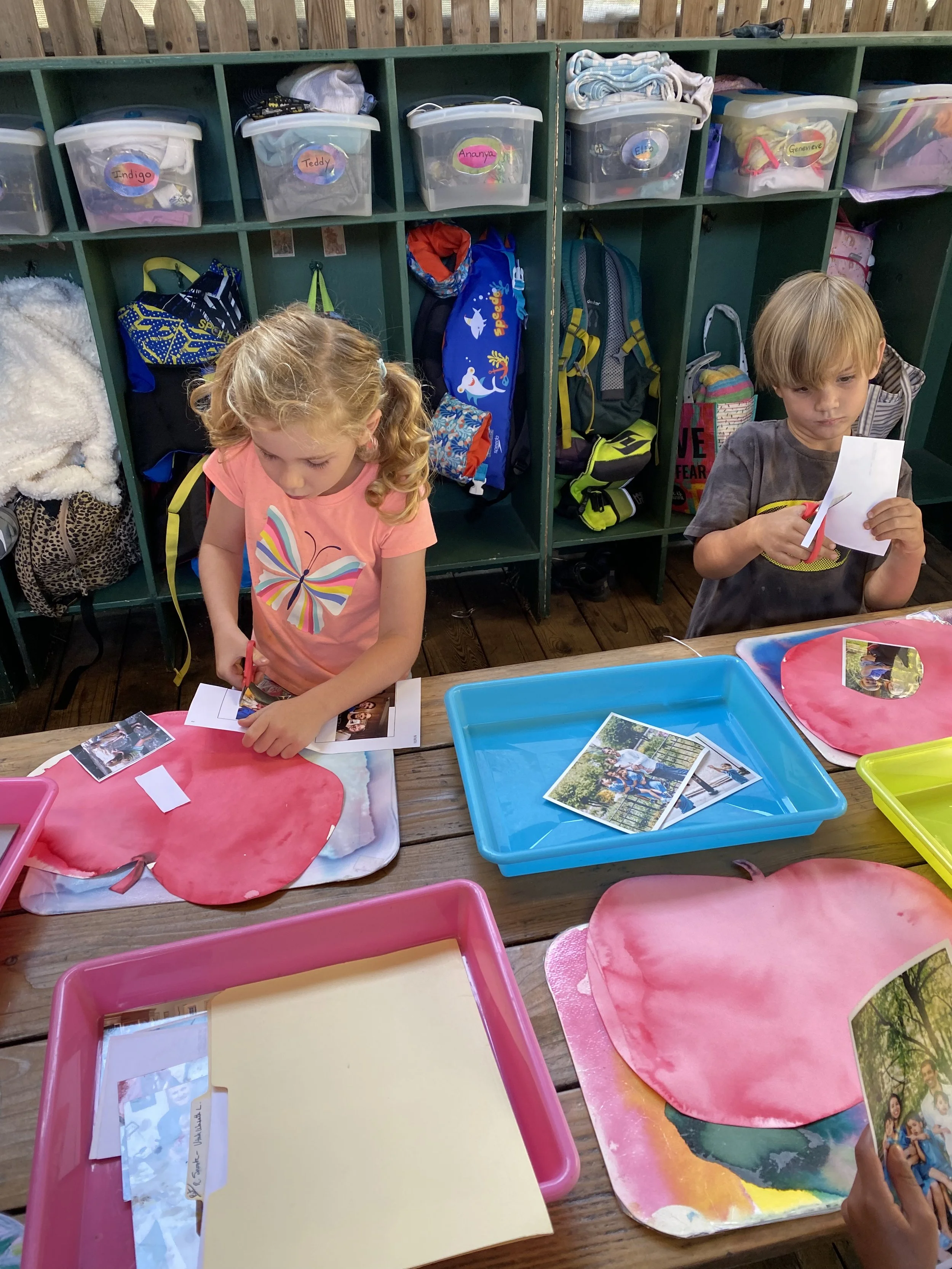
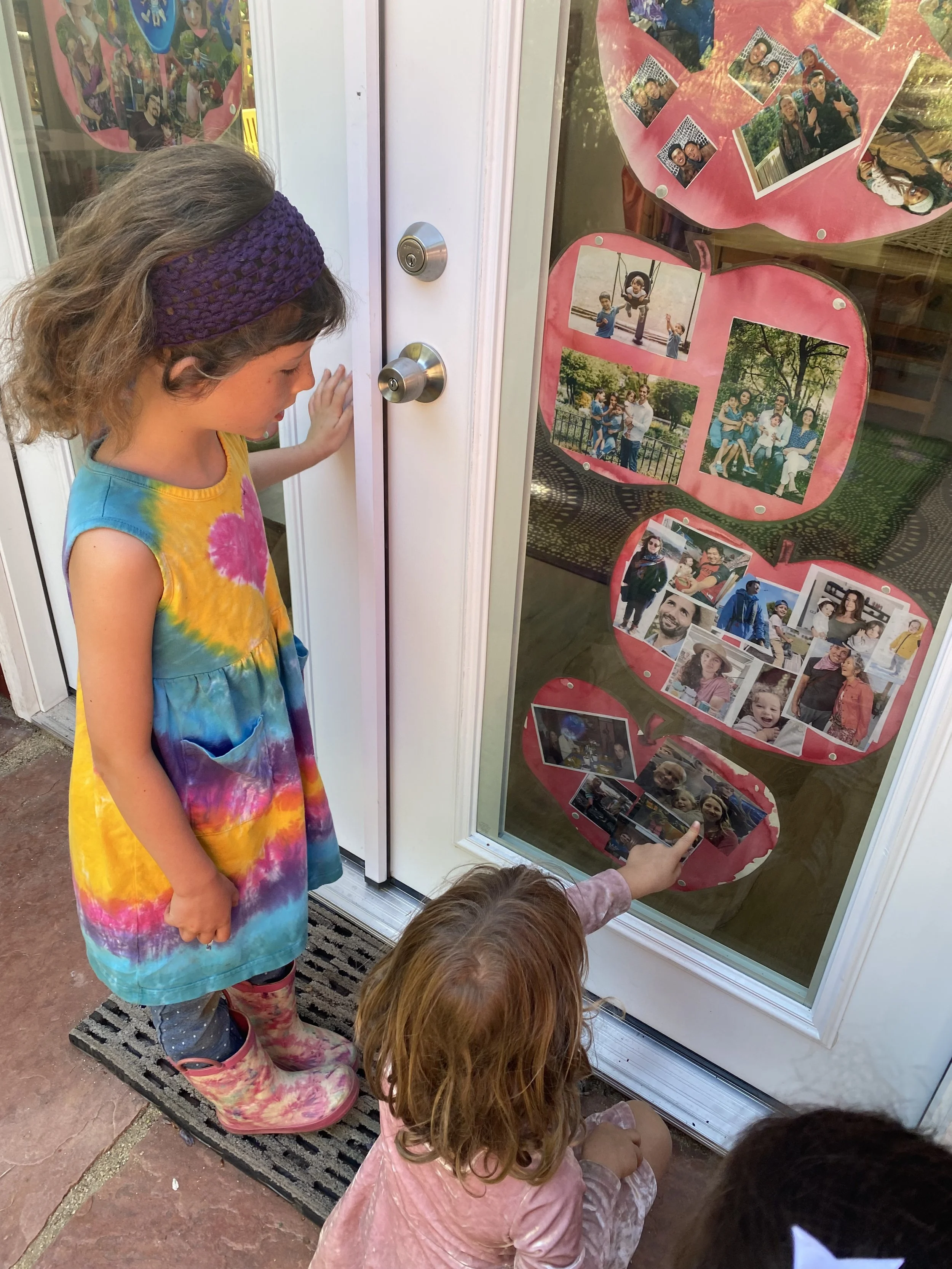
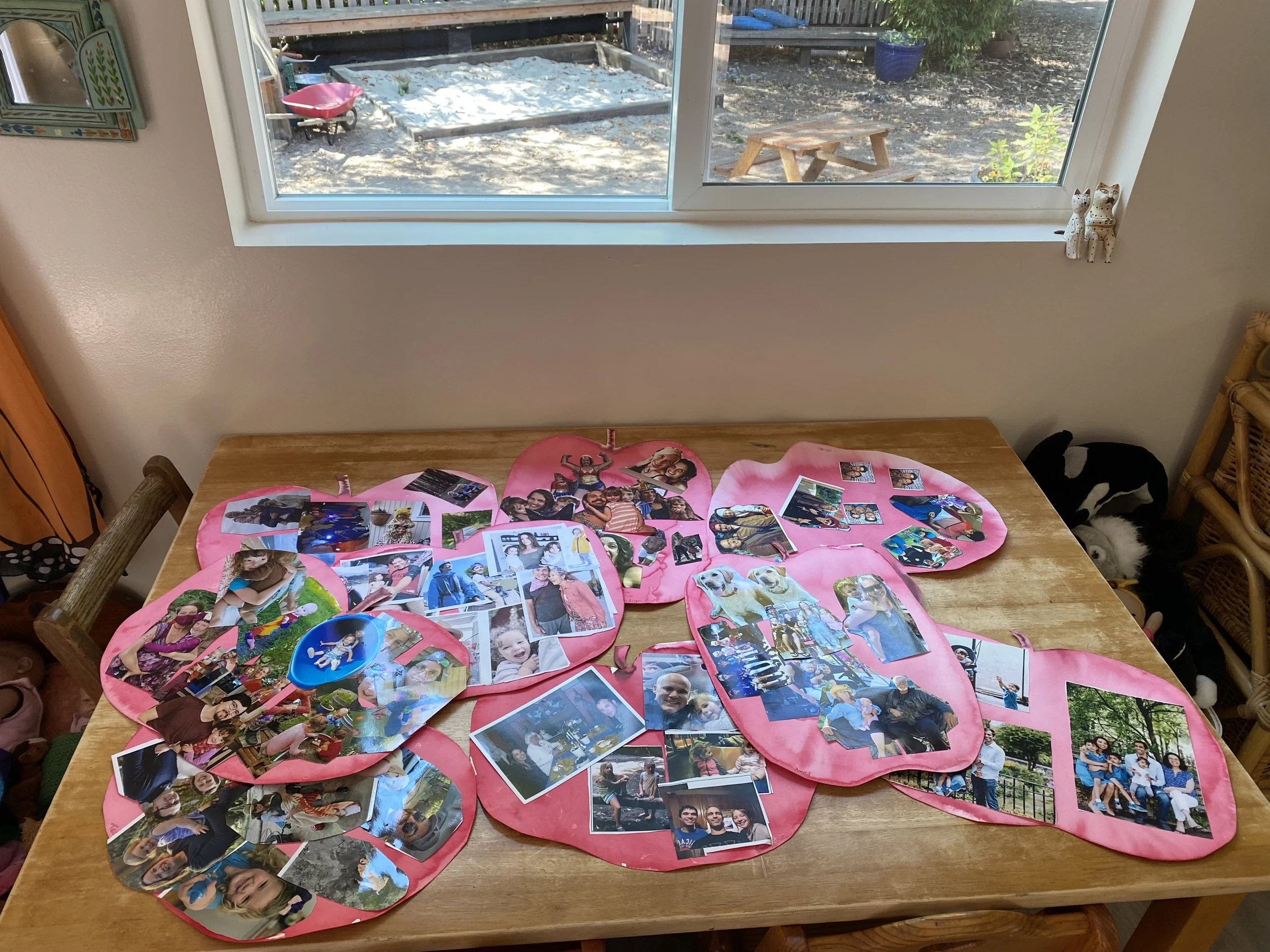
We spent a lot of time working on a series of cutting lessons, starting with how to hold scissors correctly and then cutting lines that progressively increased in difficulty starting with simple straight lines onto curves and zig zags and culminating in cutting out spiral snakes. This group of kindergarteners is particularly adept with scissors both before and after all of this practice. They then used their honed skills to cut out the family collages mounted on their apple watercolors. Here’s a photo gallery of the entire process.
Wet on Wet Watercolors:
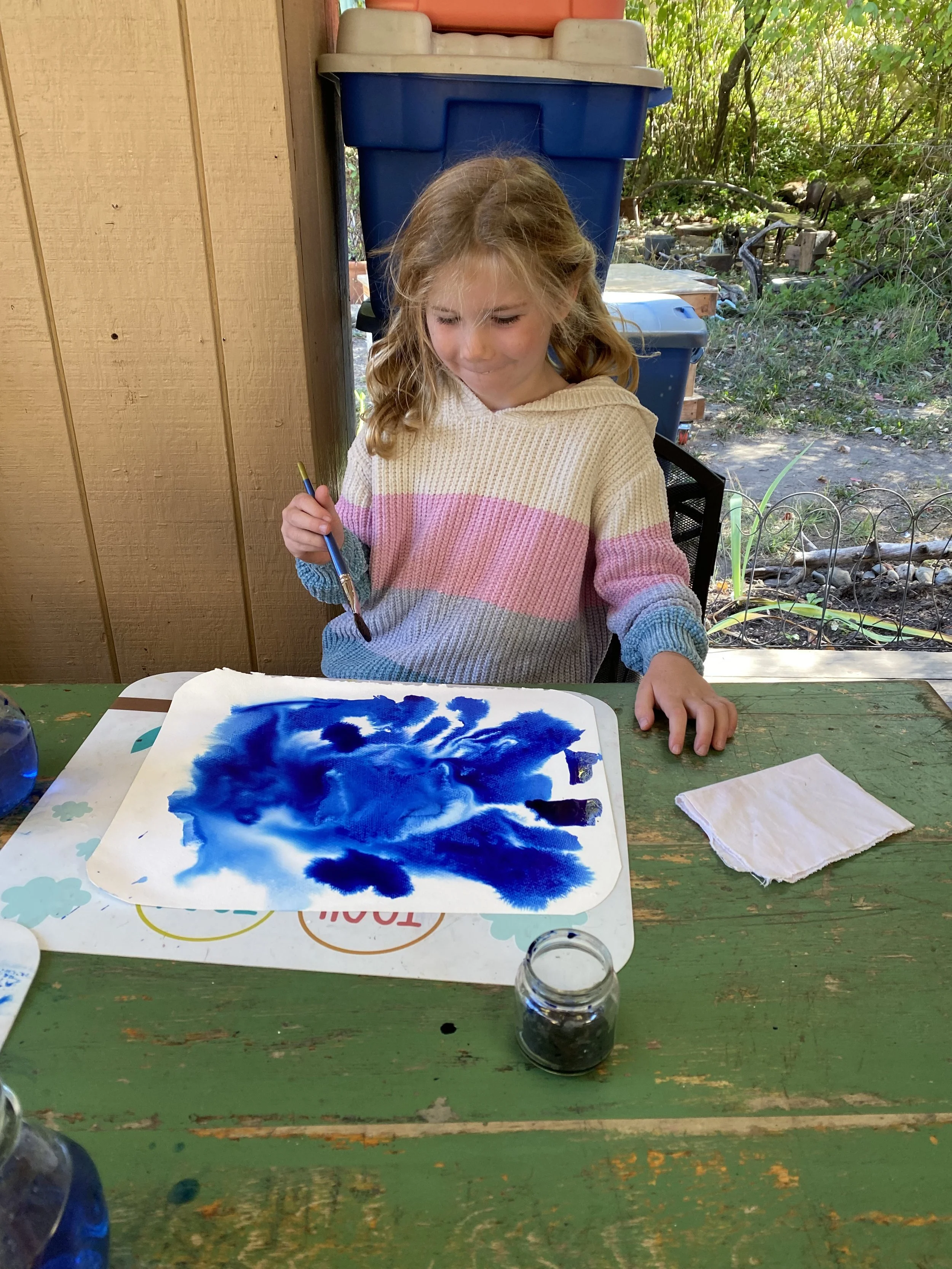
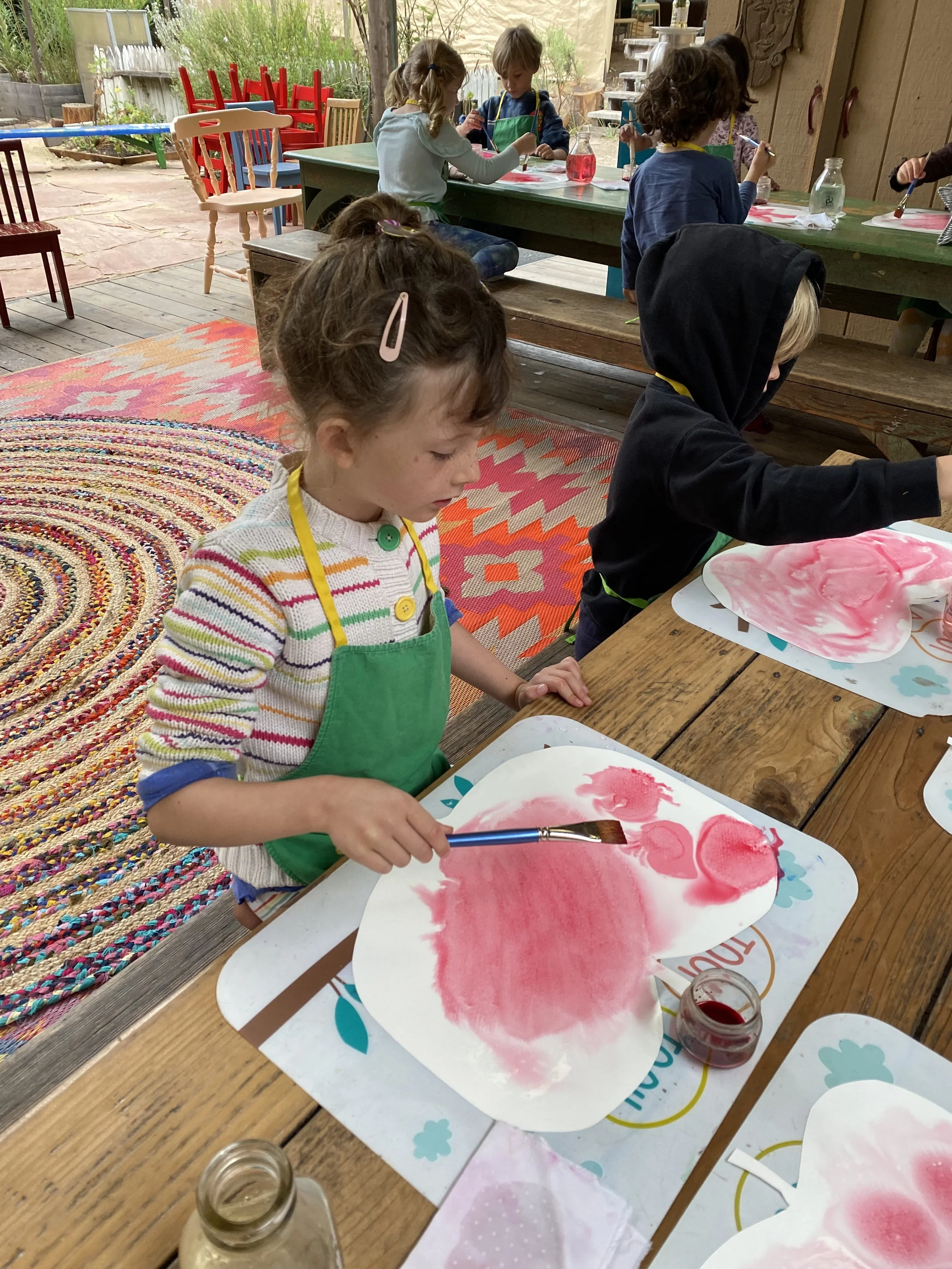
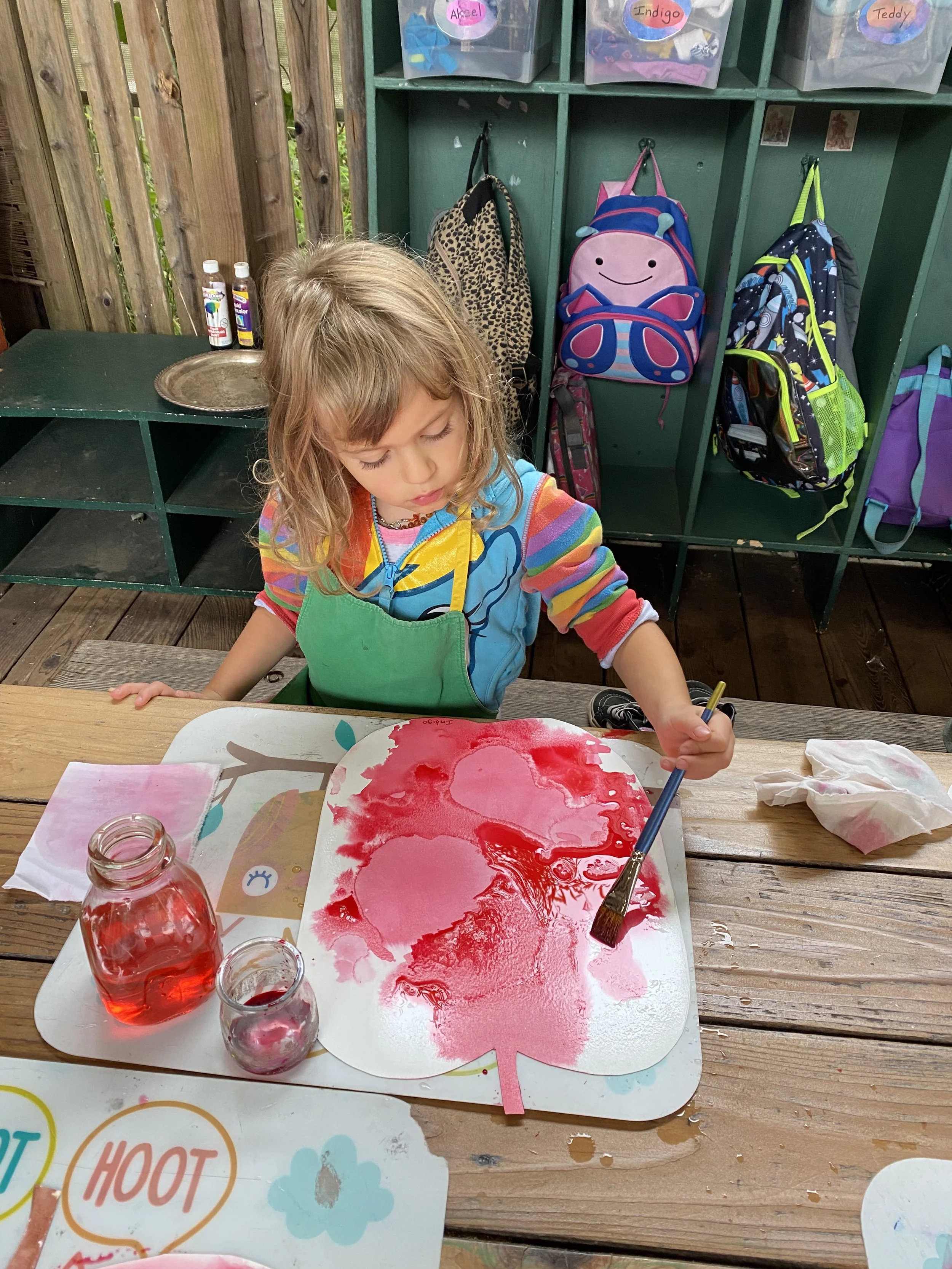
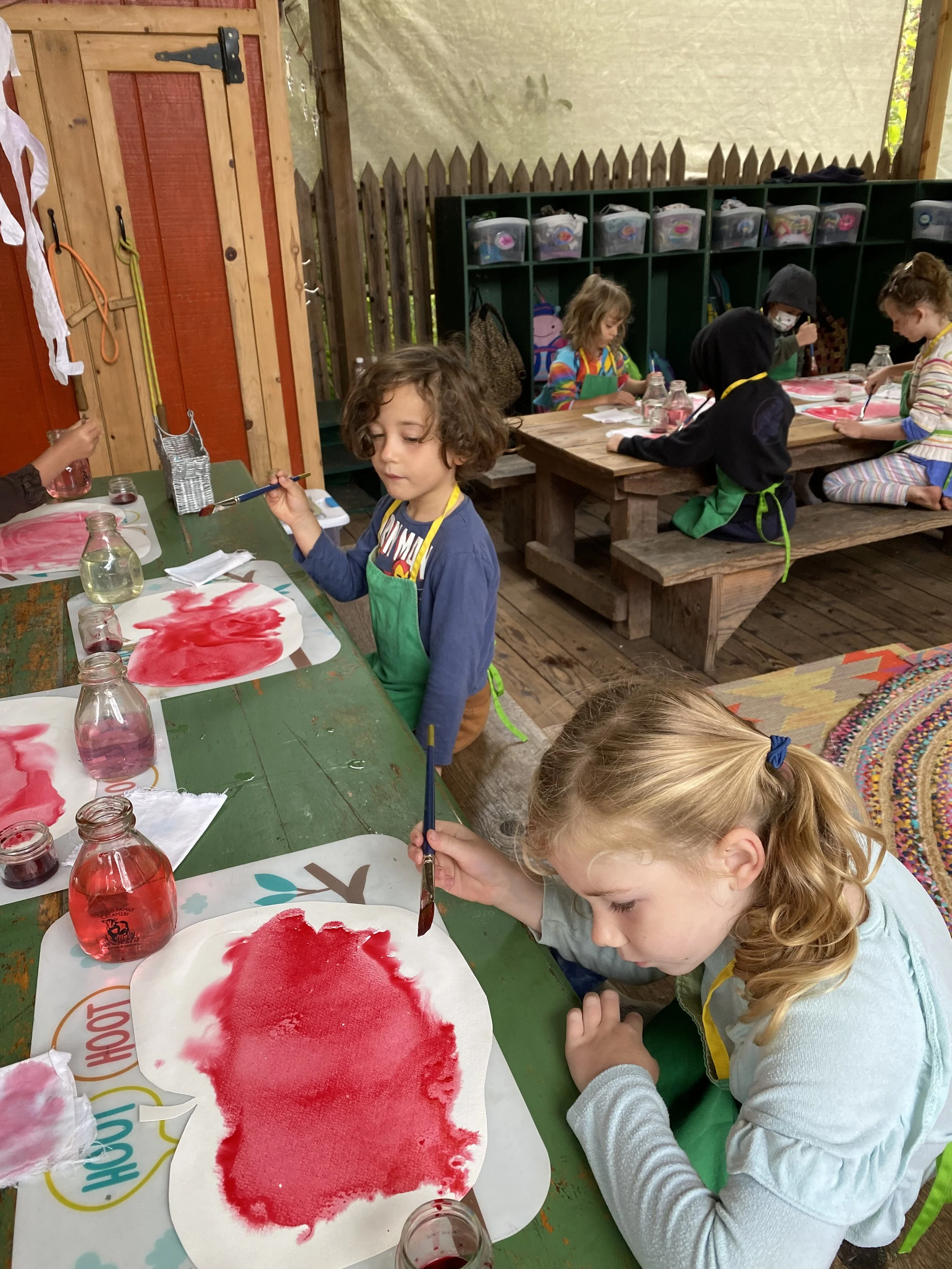
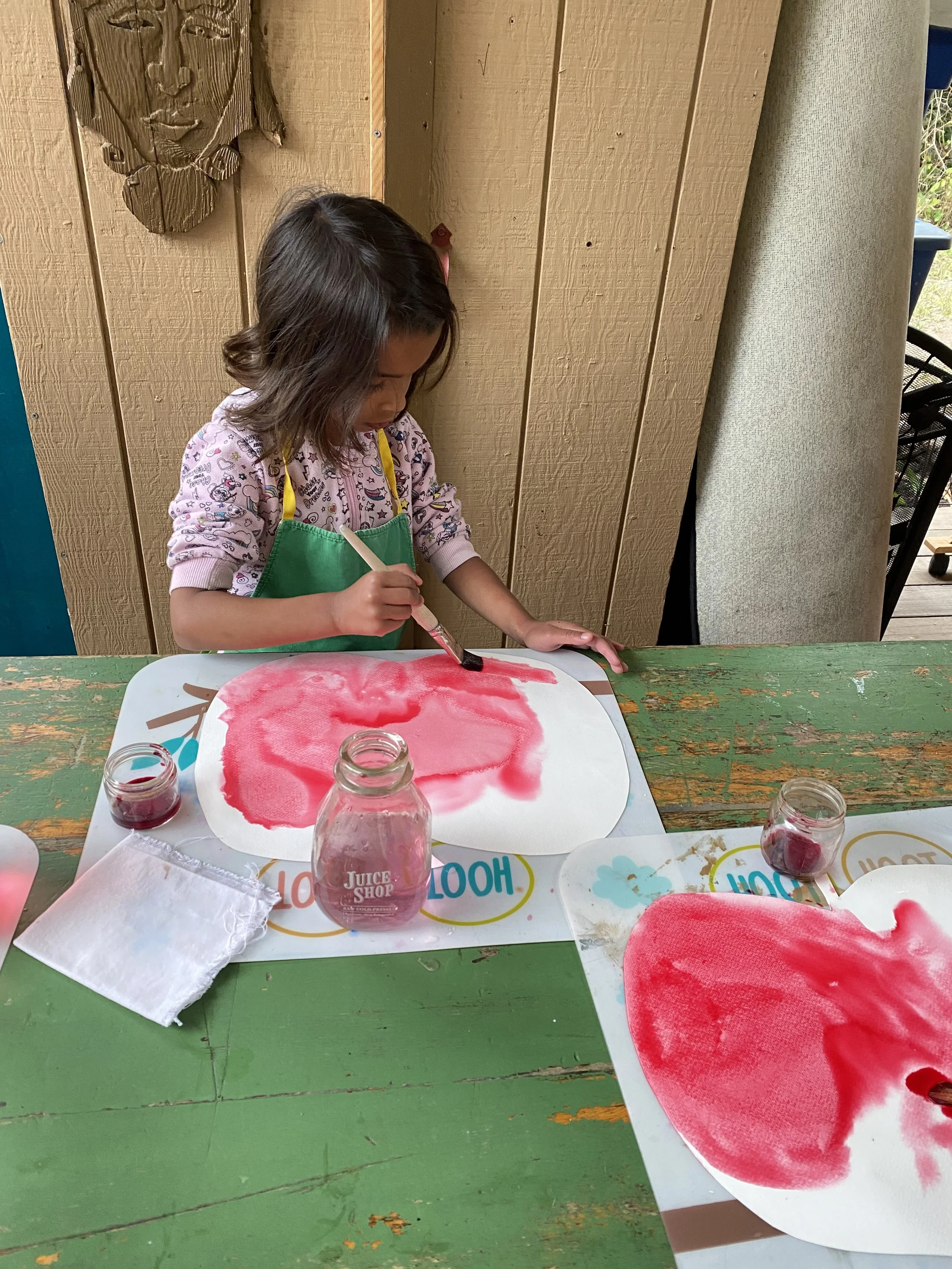
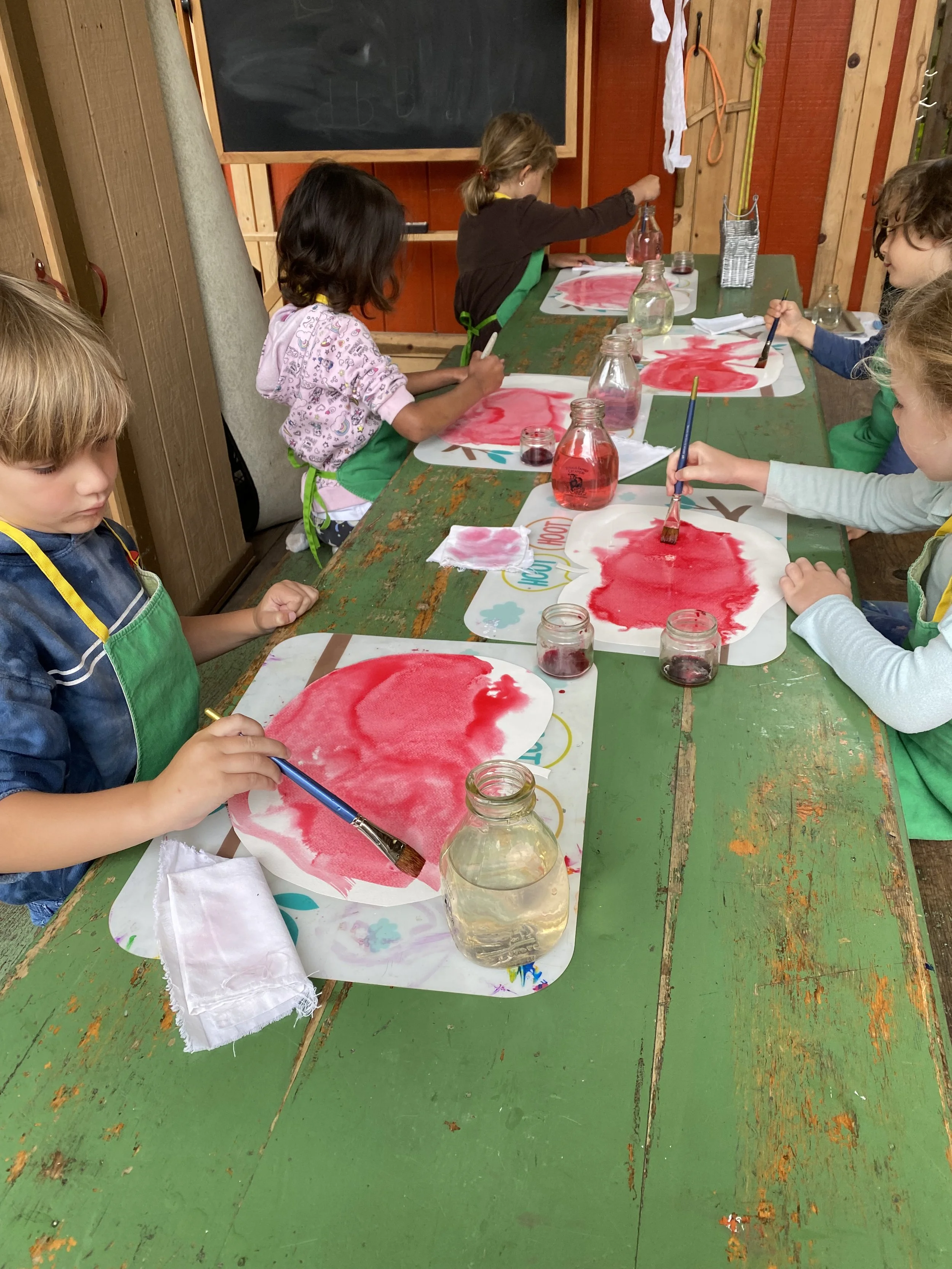
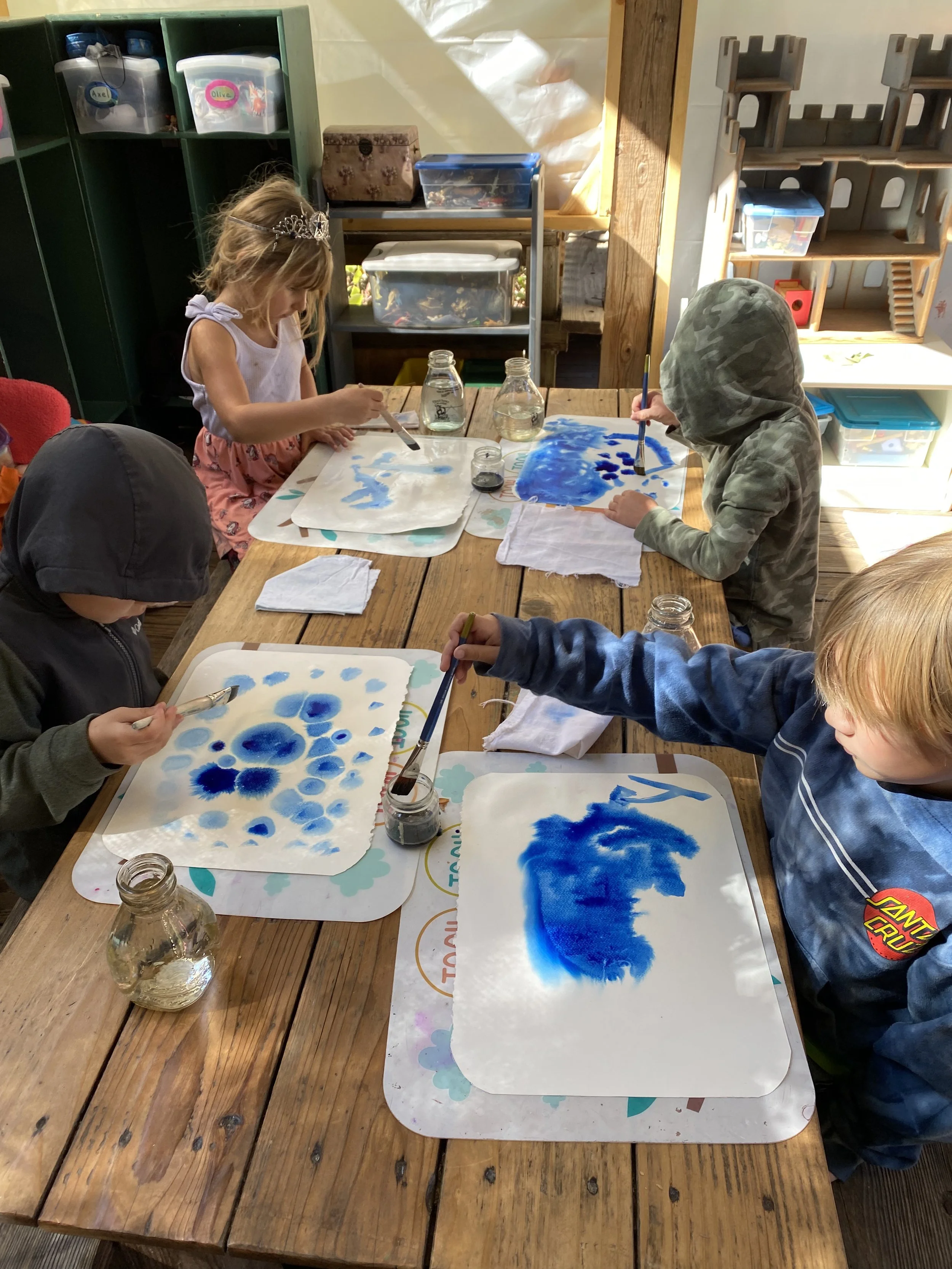
This medium is wonderful, especially for the young child who is not confident with traditional drawing. This is the child that says “but I can’t draw” or “I don’t know how to draw that”. It can be frustrating when the image on paper doesn’t accurately represent the richness of real life or the imagination. With wet-on-wet, there is a freeing quality as the child can watch the paint move, almost with a life of it’s own, and can really focus on the amorphousness of their creations, as well as simply the color and gradations of color, rather than representational art, for a change. It’s a chance to discover what colors you get when you mix the primary colors. A chance to create something stunningly abstract without feeling hung up on not yet having the tools to produce representational art that matches your complex imaginings. They have so far painted red (apples), blue (sky backdrops for their torn paper tree art), and yellow pumpkins that they turned into orange pumpkins by adding red. Soon, we’ll be mixing up a storm and they’ll see first hand how the primary colors can make all of the colors of the rainbow.
Cooking:
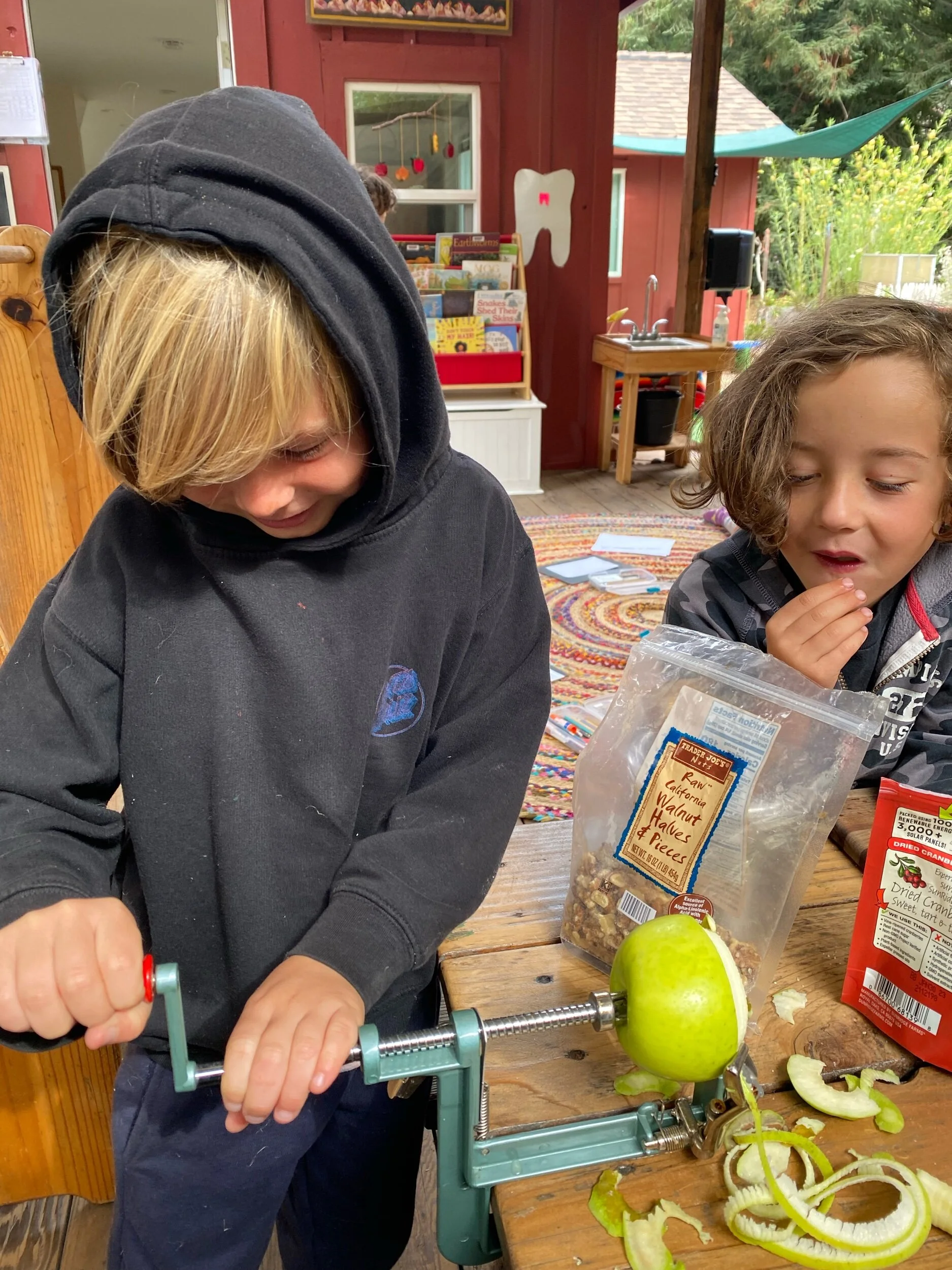
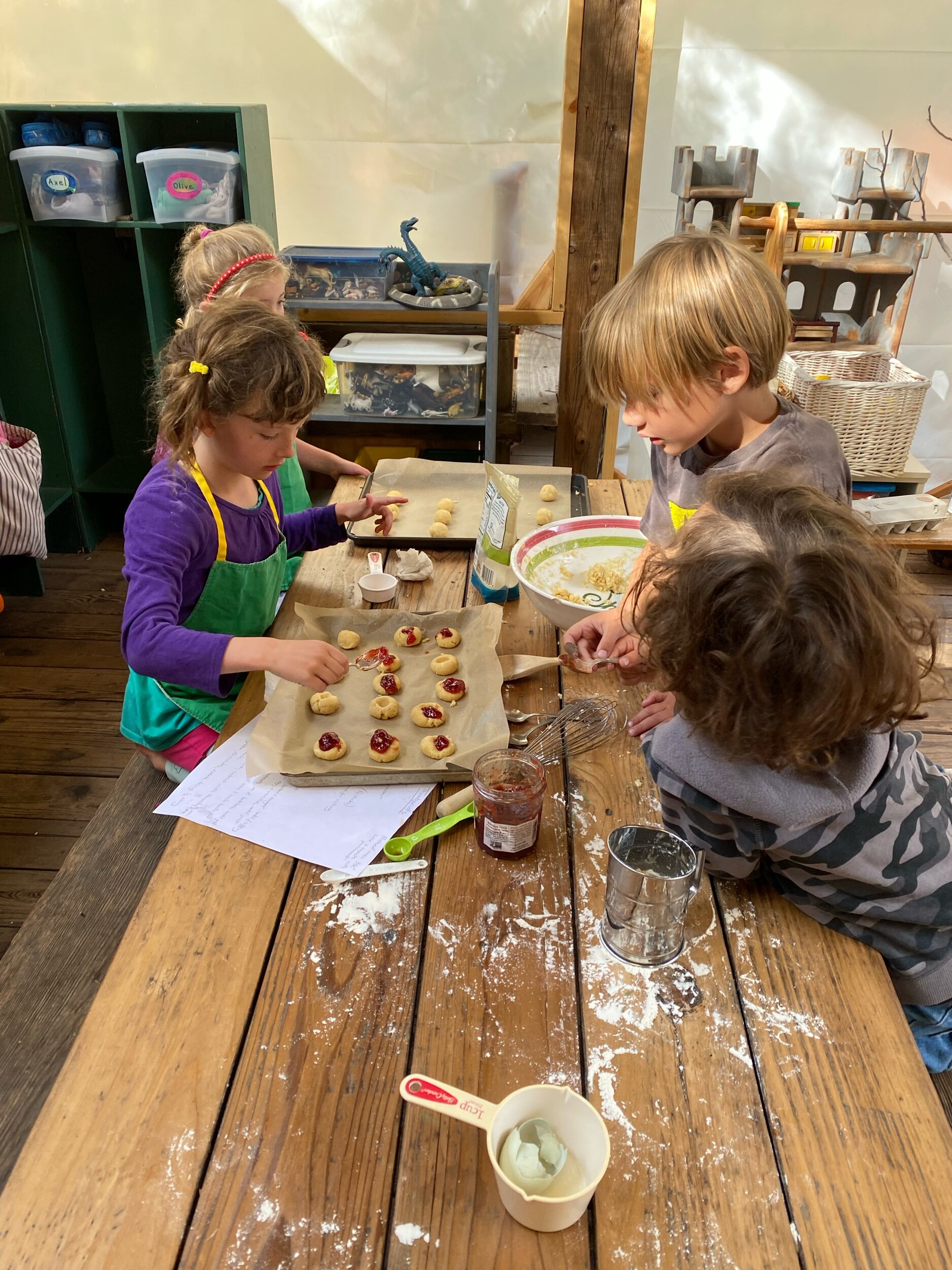
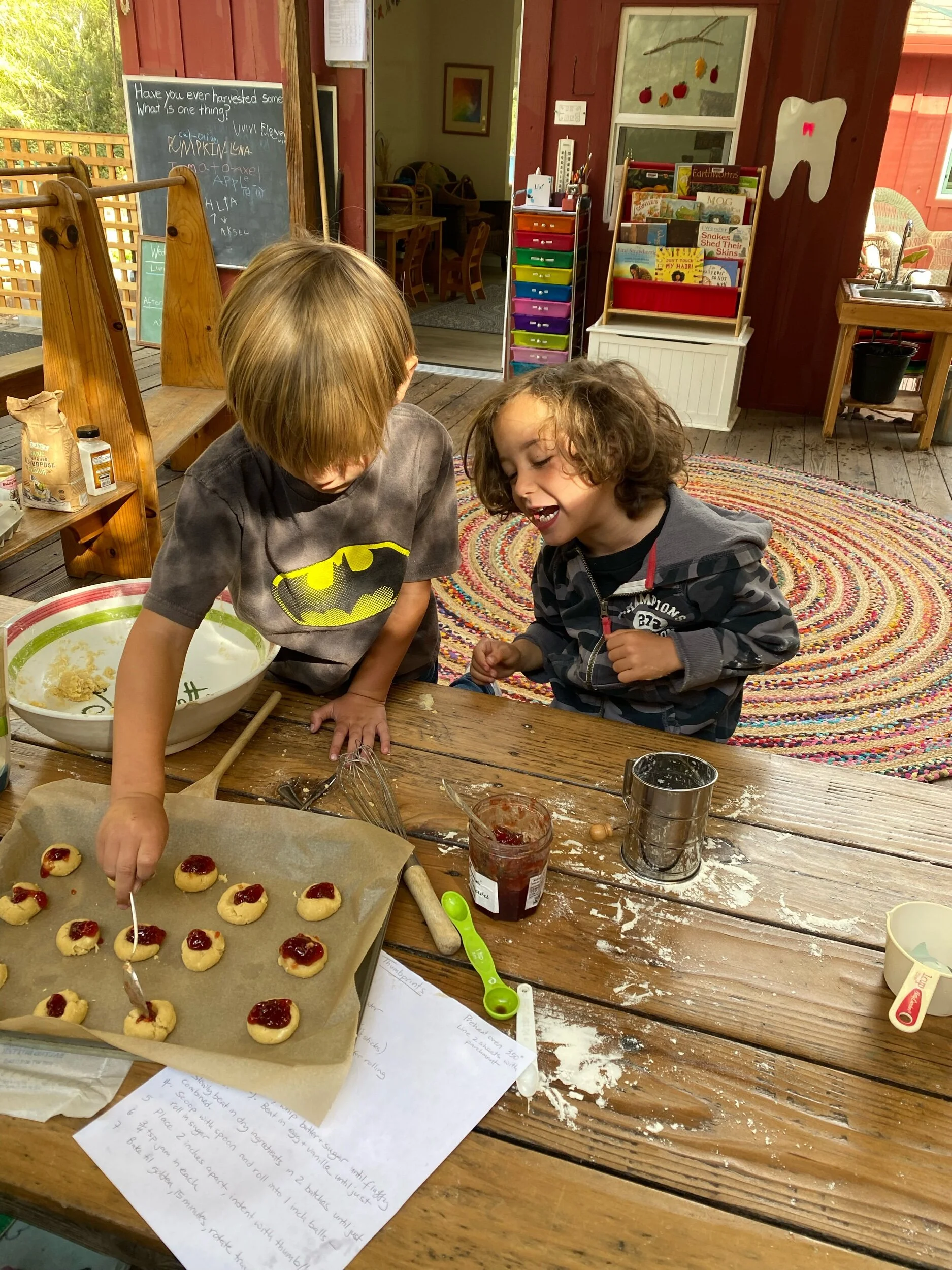
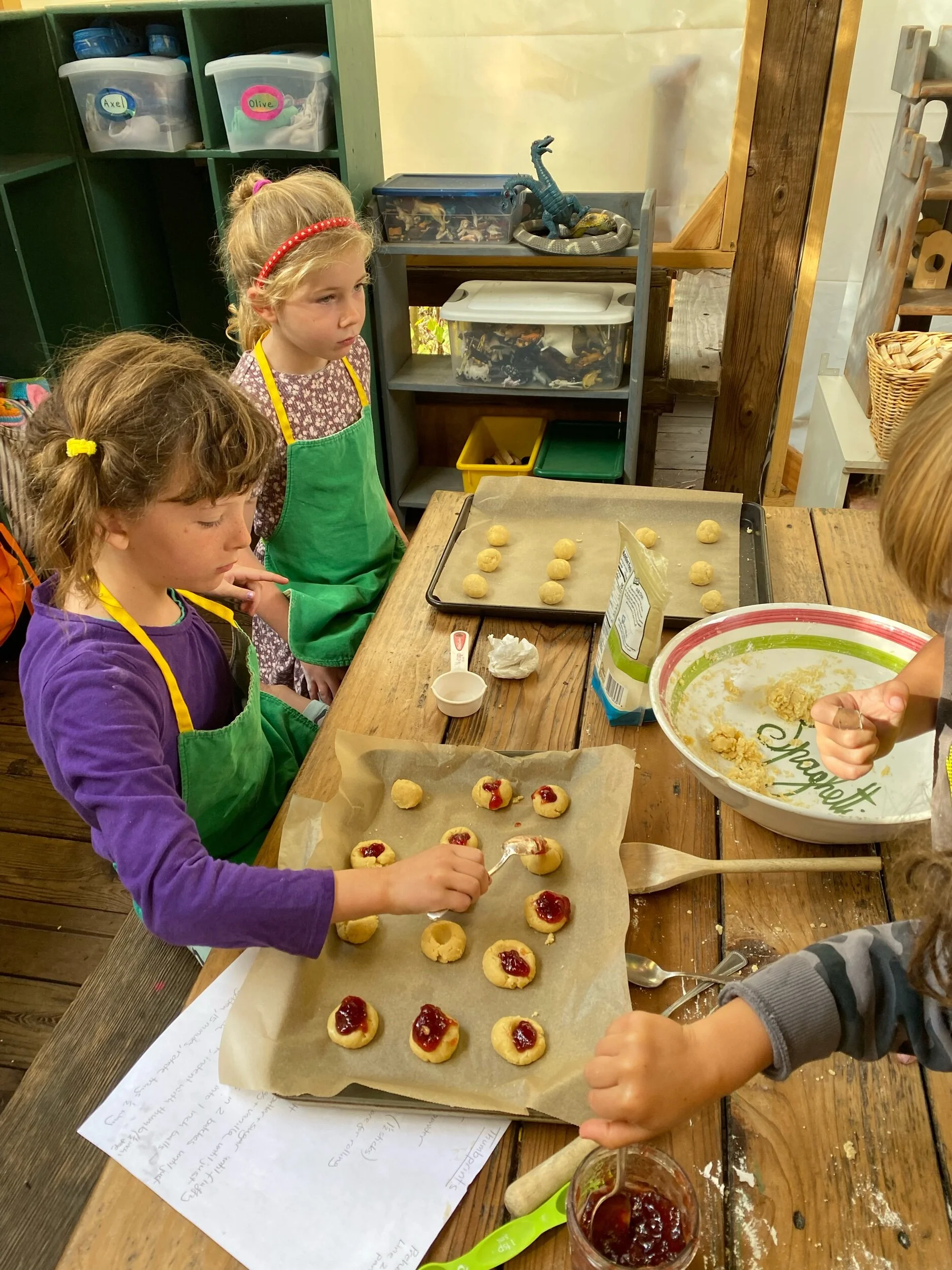
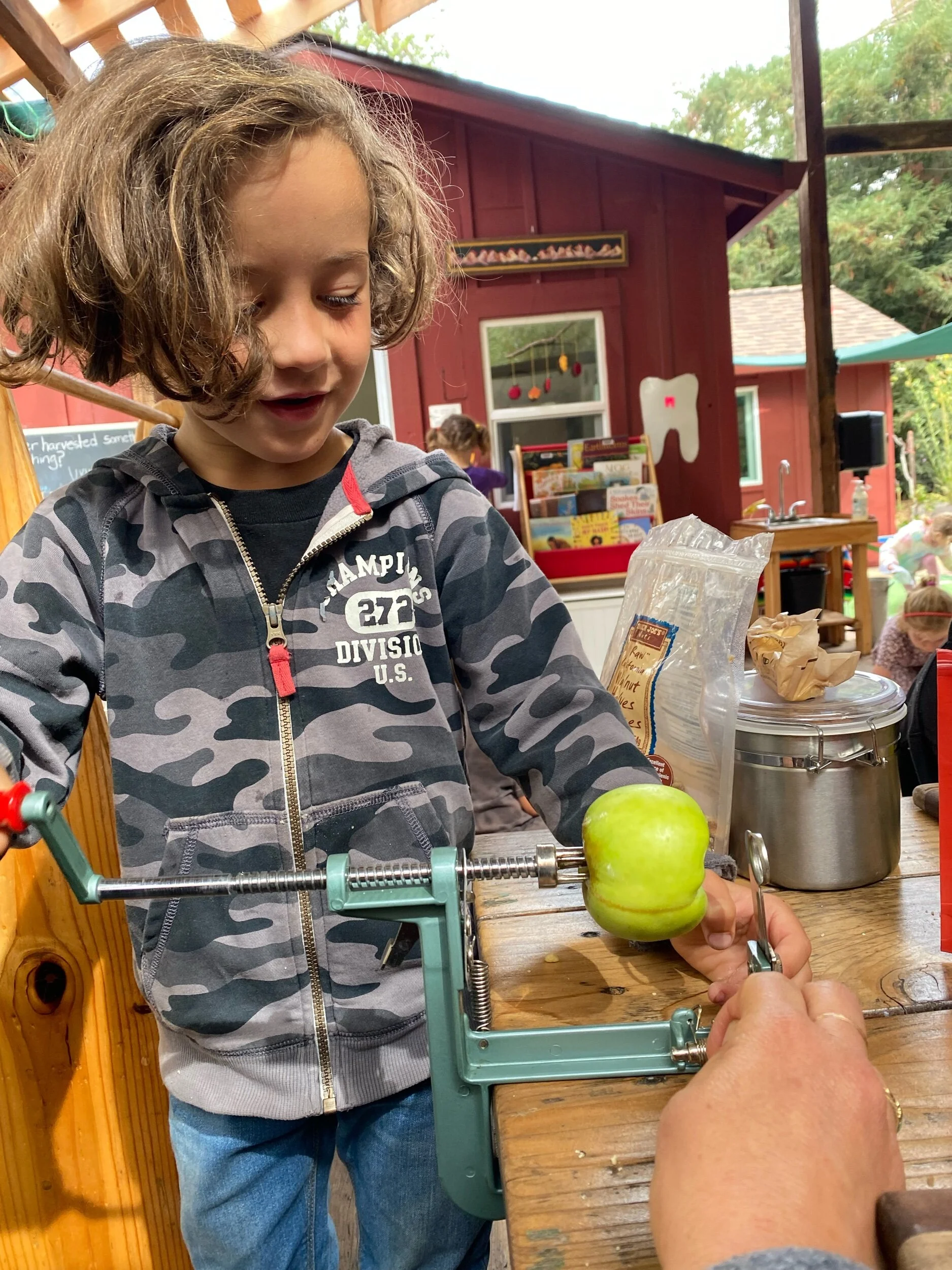
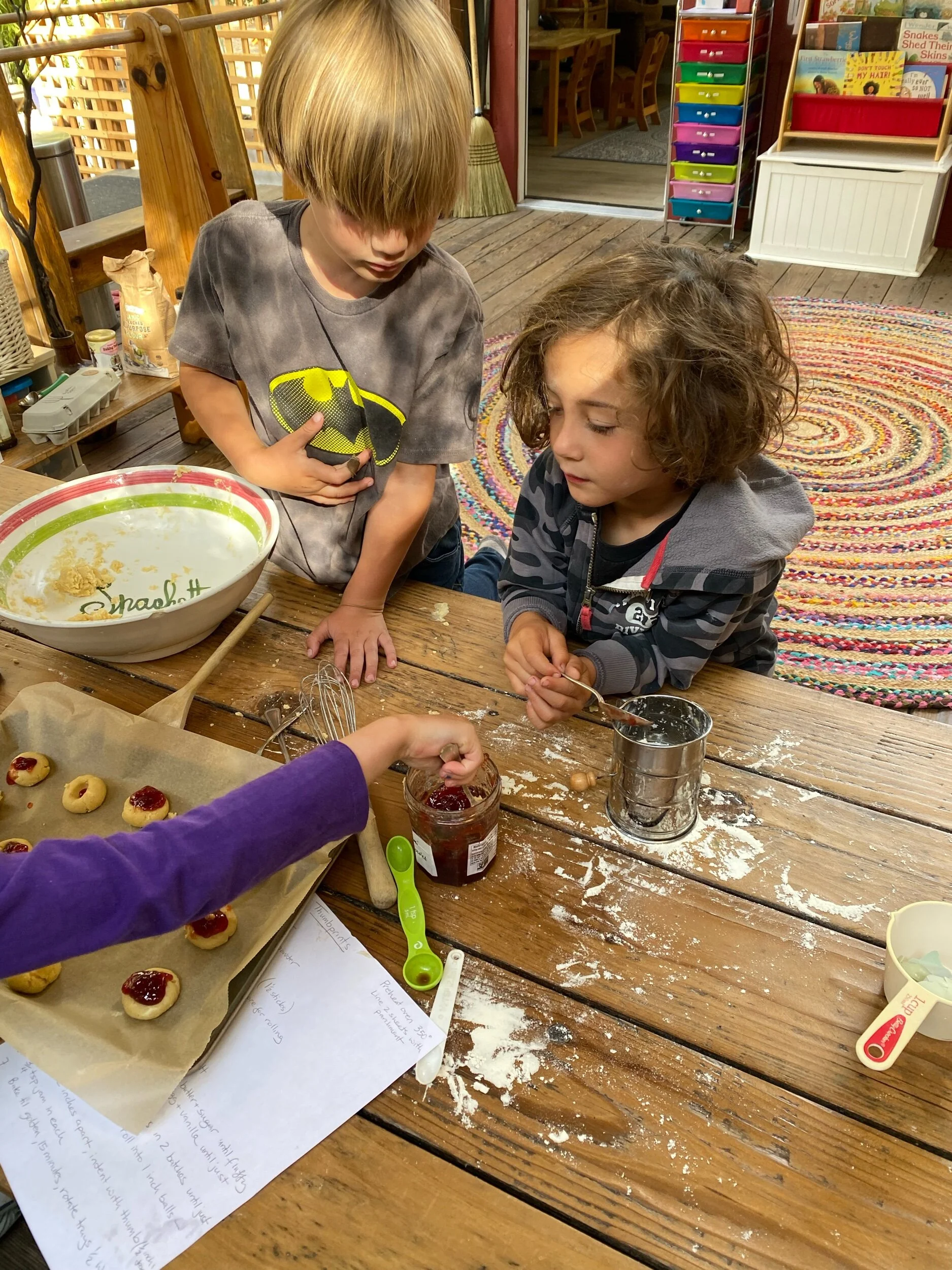
We’ve done quite a bit of chopping and mixing and measuring this month. We made the fruit kebab pattern skewers (all of the children learned knife etiquette and used real knifes to chop fruit). We made harvest thumbprint cookies and then the kids filled in key words on recipe sheets for writing practice. Kathleen made pink apple sauce with the kinders (thank you to Teddy’s family and Luna’s for all of the apple donations). We also made baked apples. And enjoyed a school wide feast for the Harvest Festival.
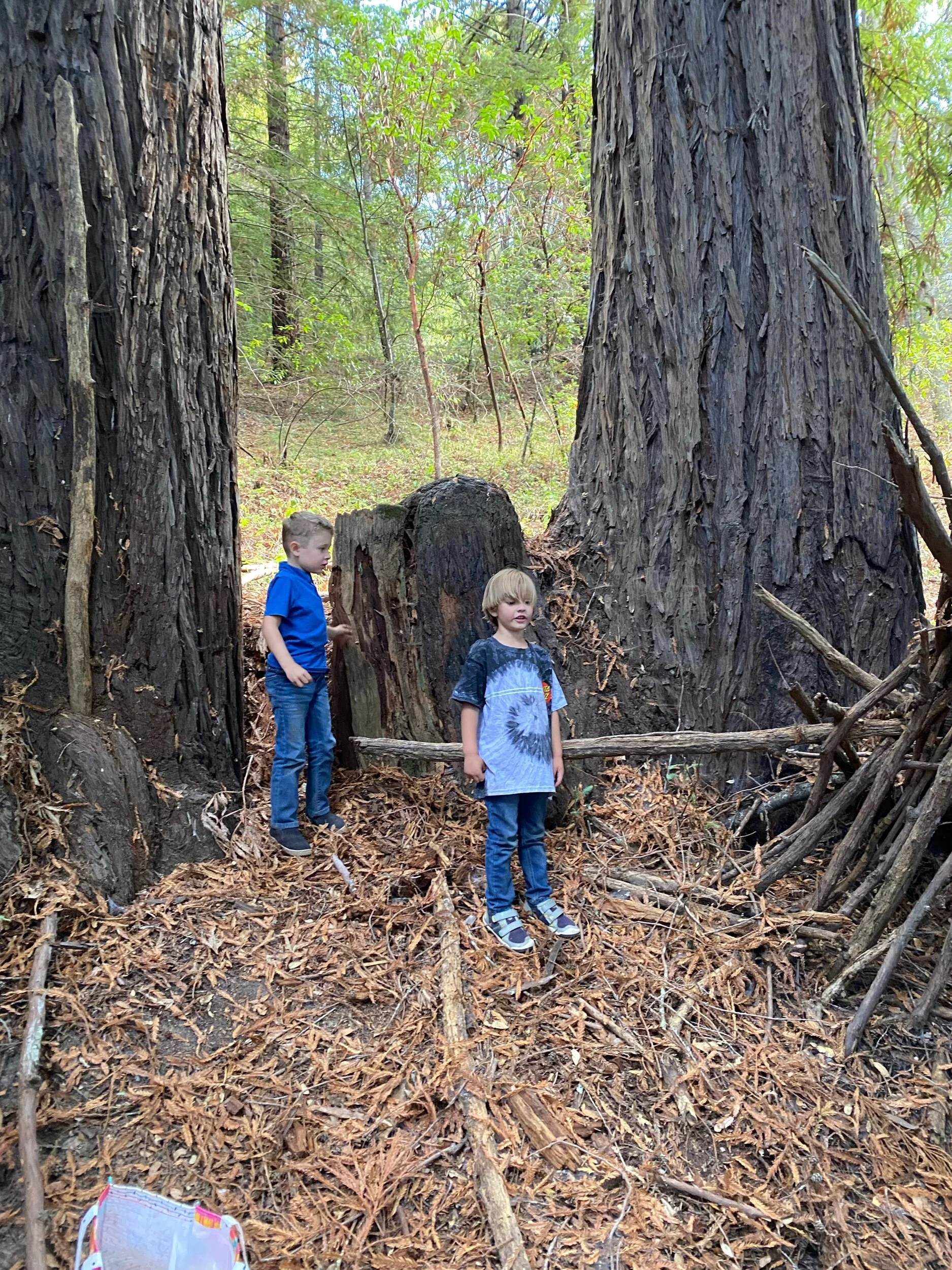
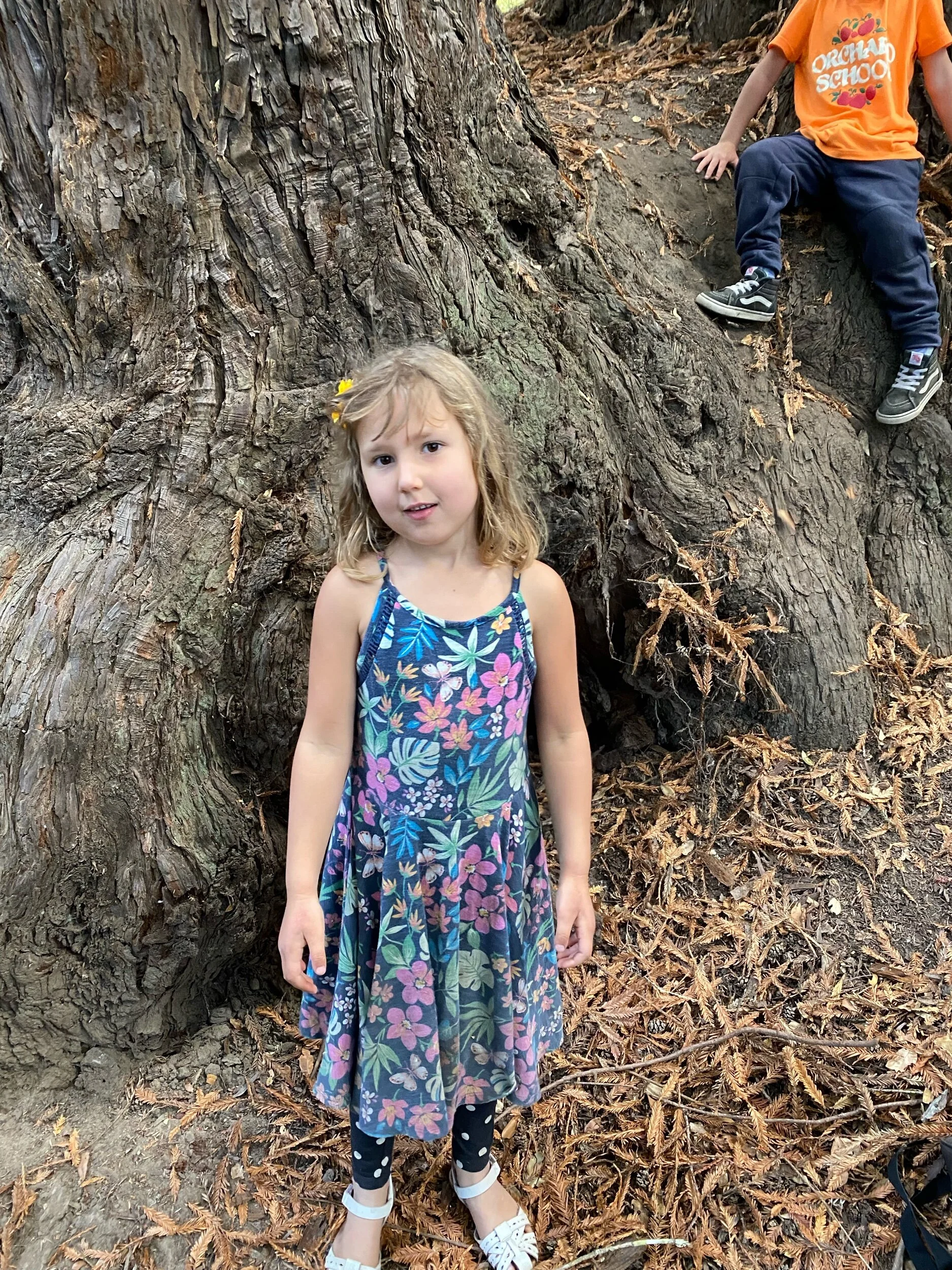
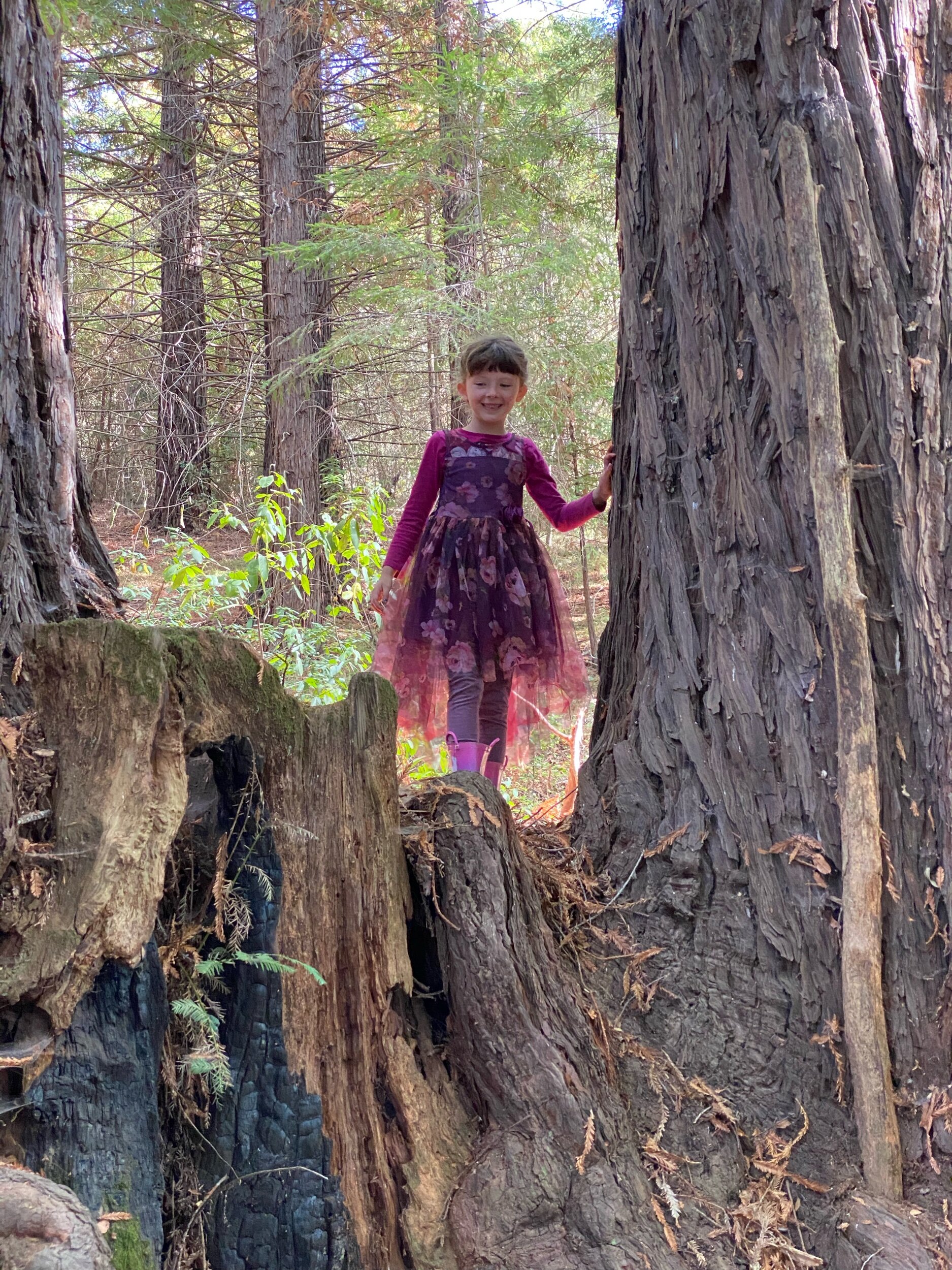
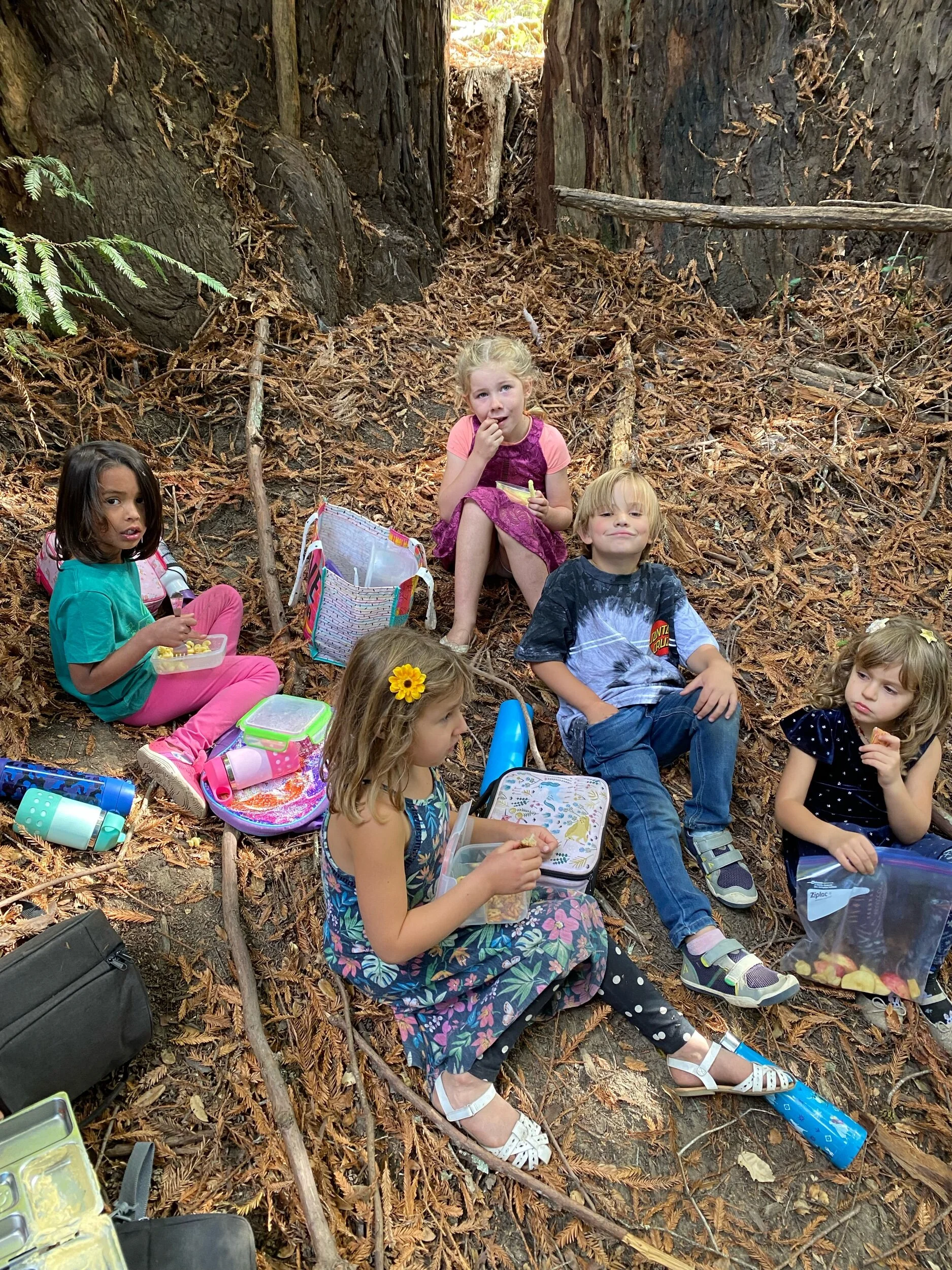
The Redwood Grove:
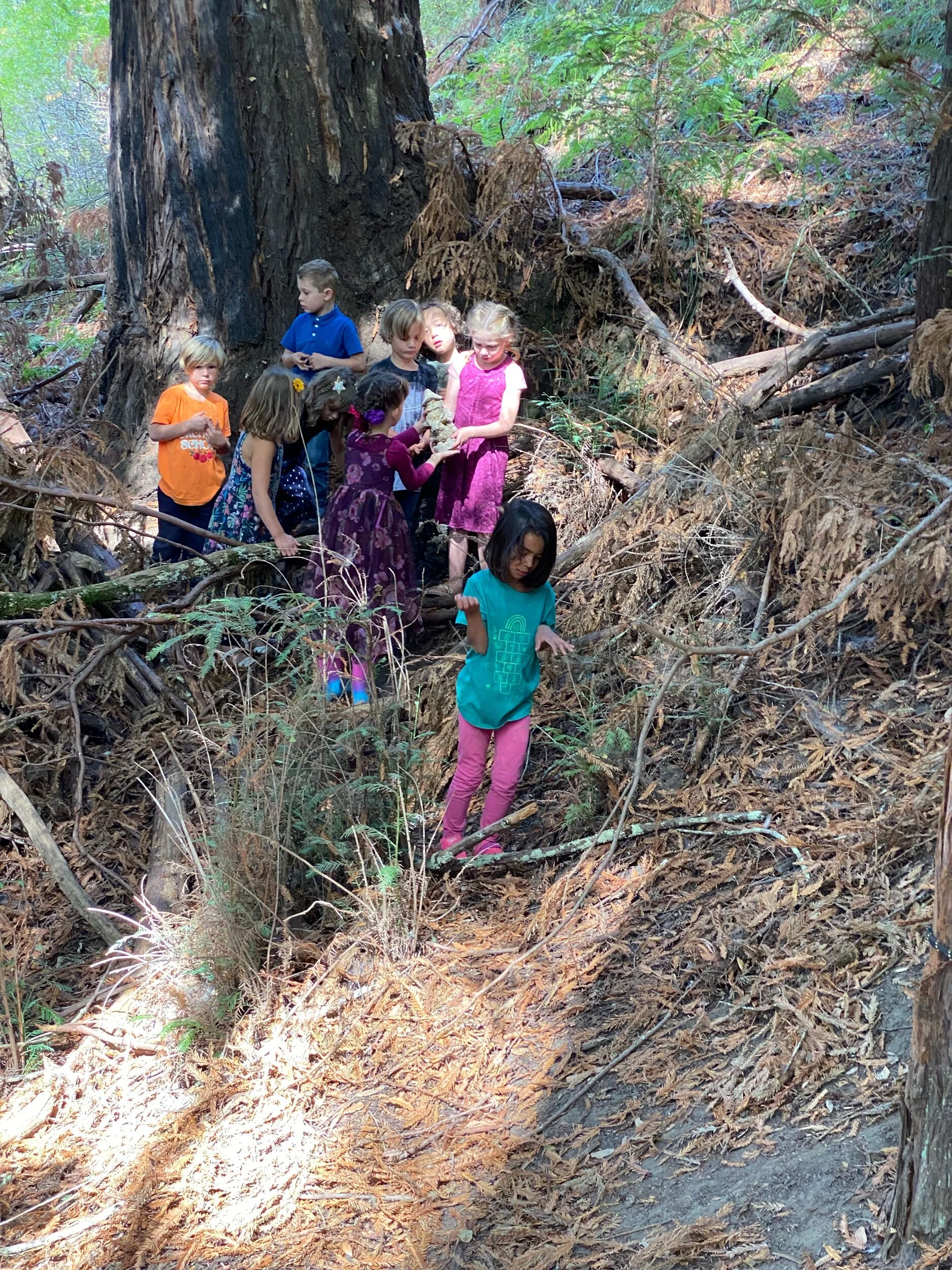
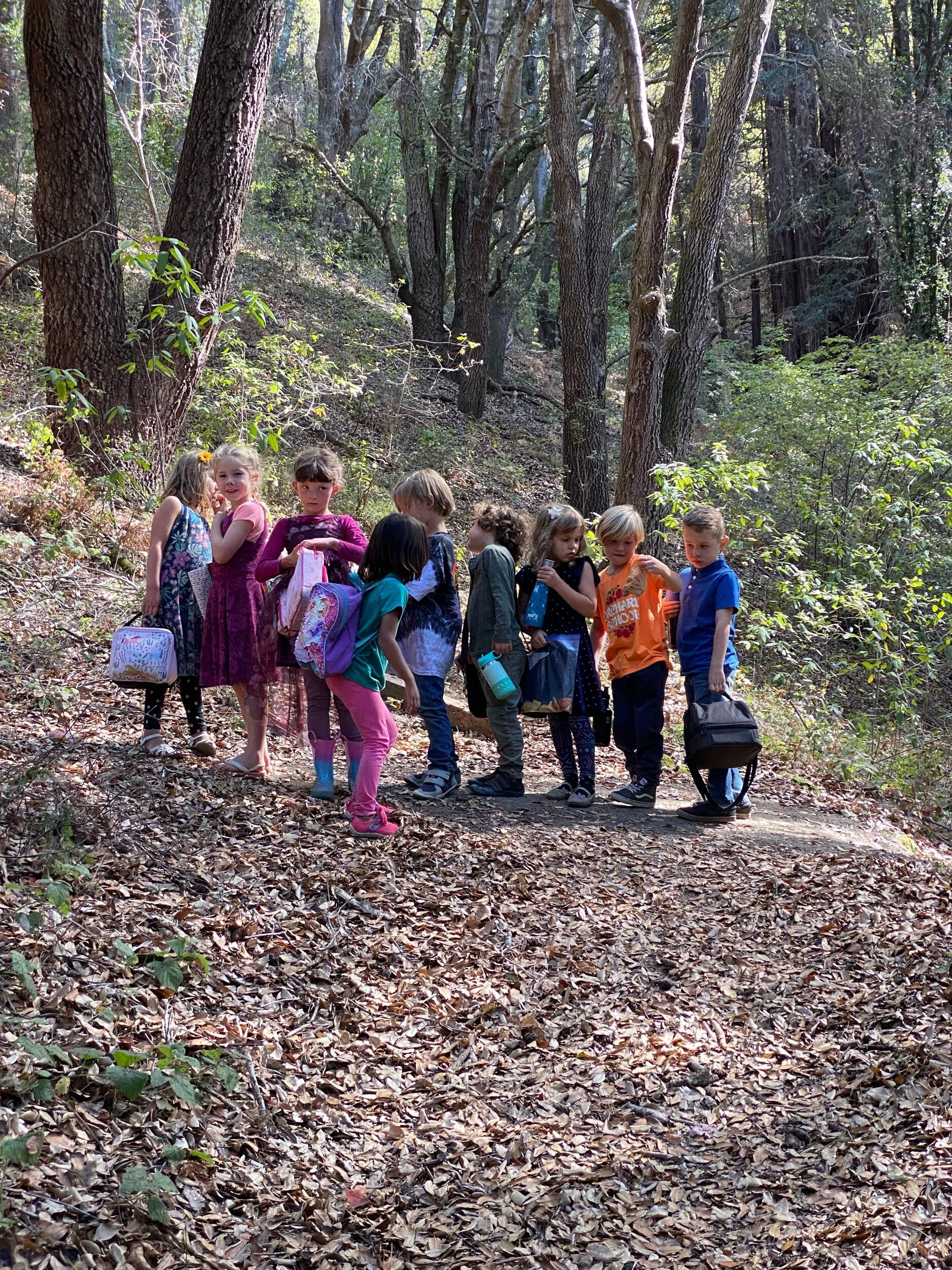
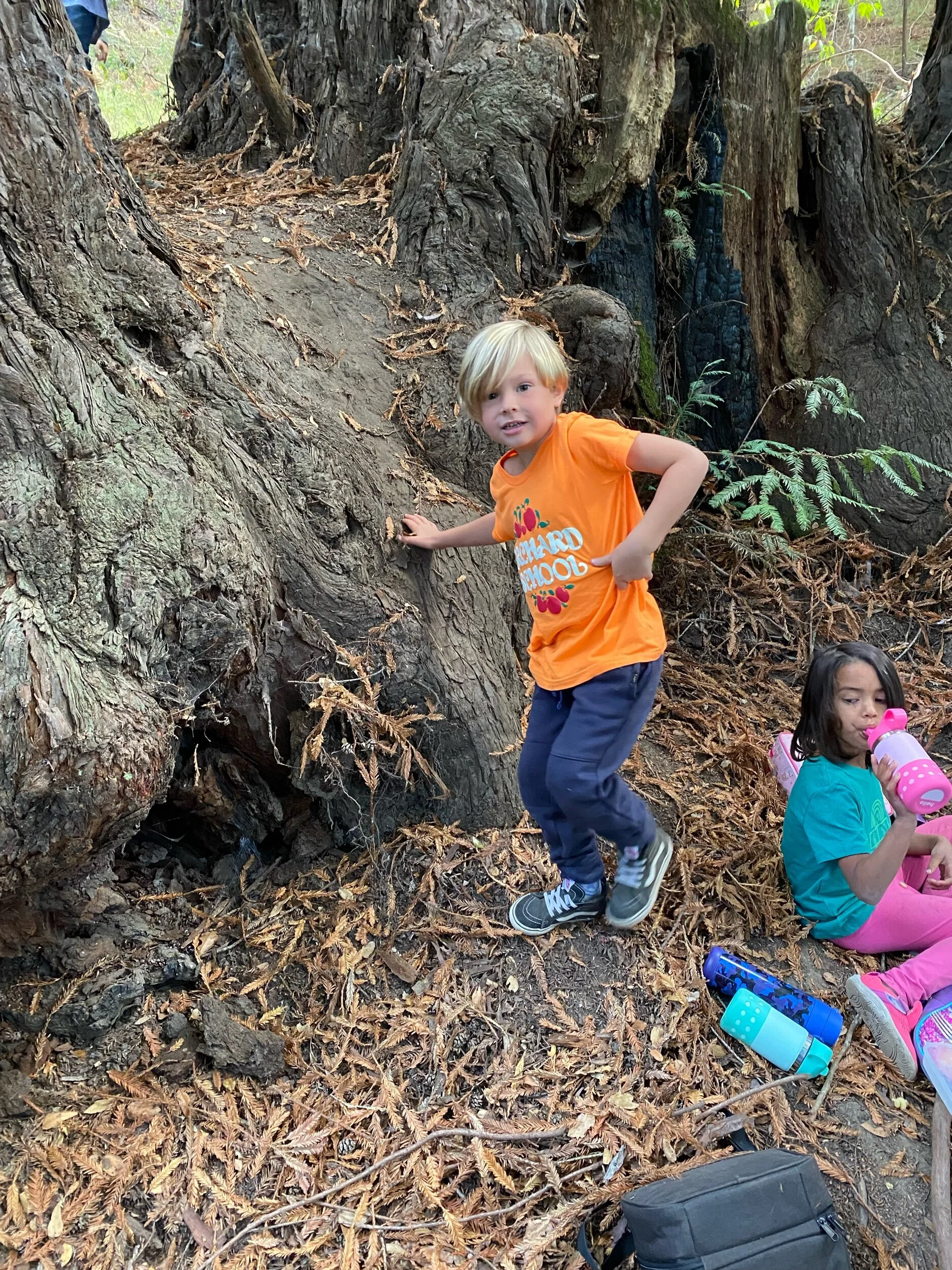
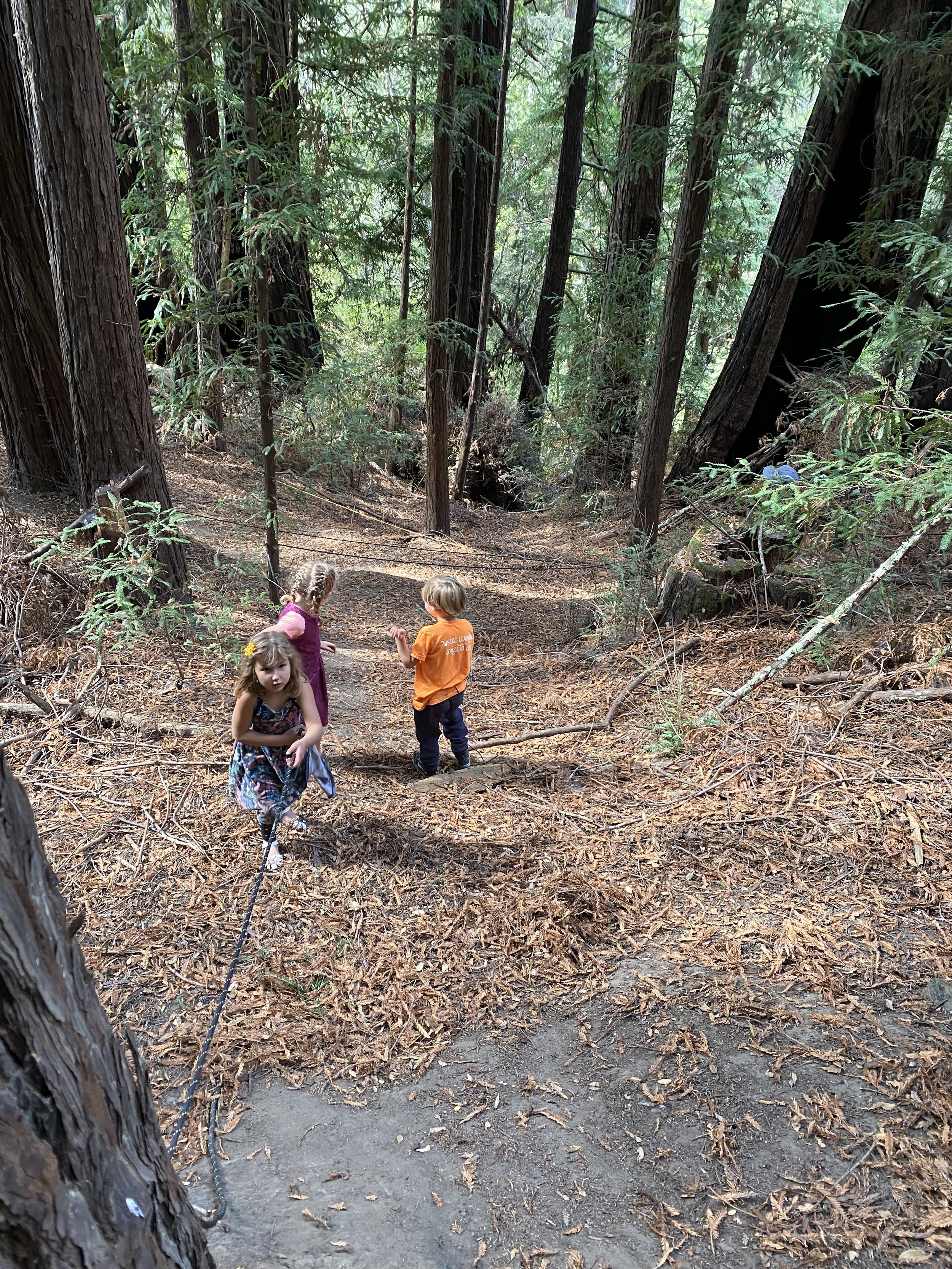
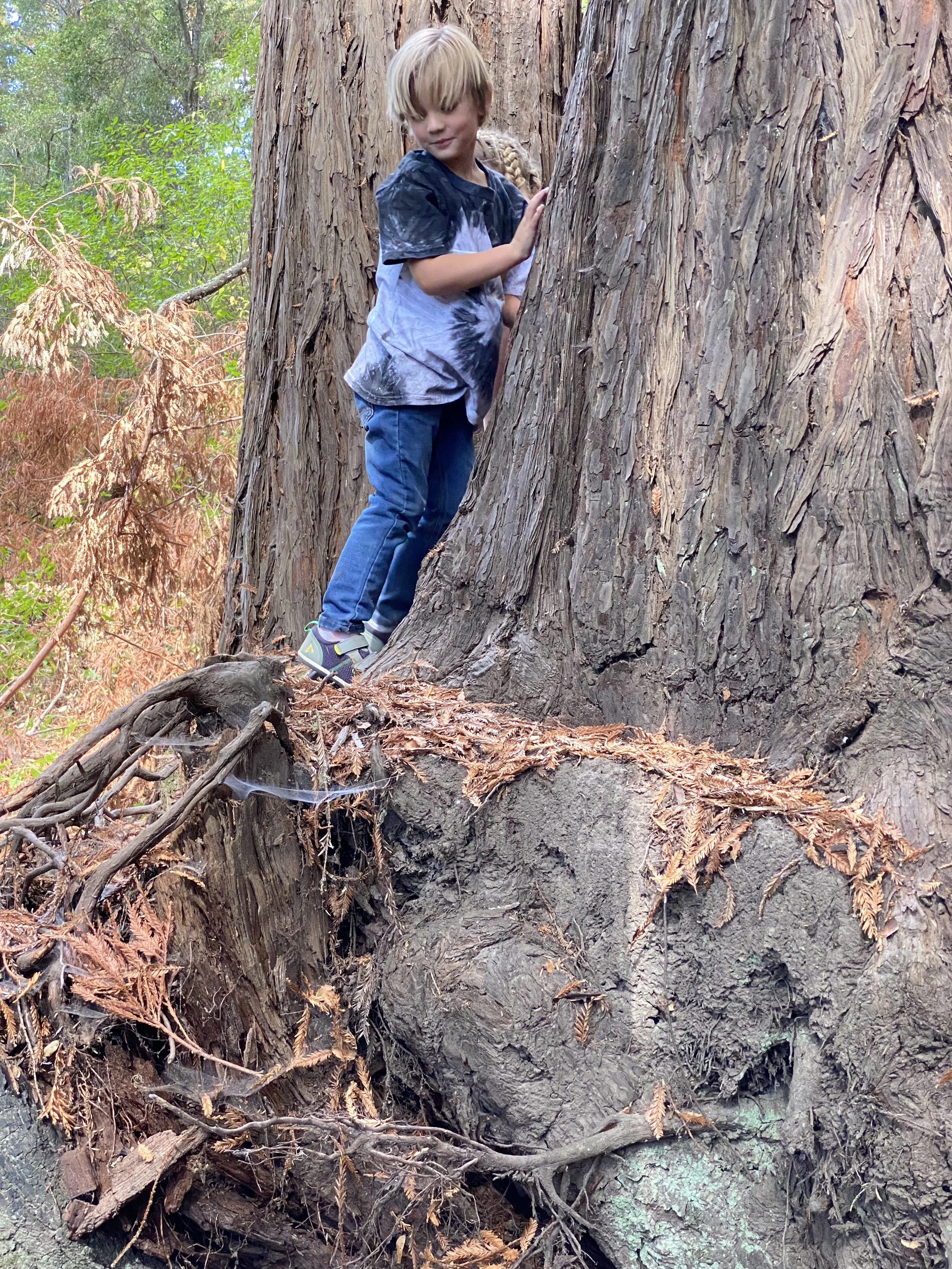
We took our first hike up to the grove and the kids got to let their imaginations run wild up here. They enjoyed the hollowed out tree stumps, the piles of sticks, and searching for the little gnome rumored to turn to stone when anyone comes along but otherwise lives a life of adventure with the banana slugs in his woodland home.
Social/Emotional Work:
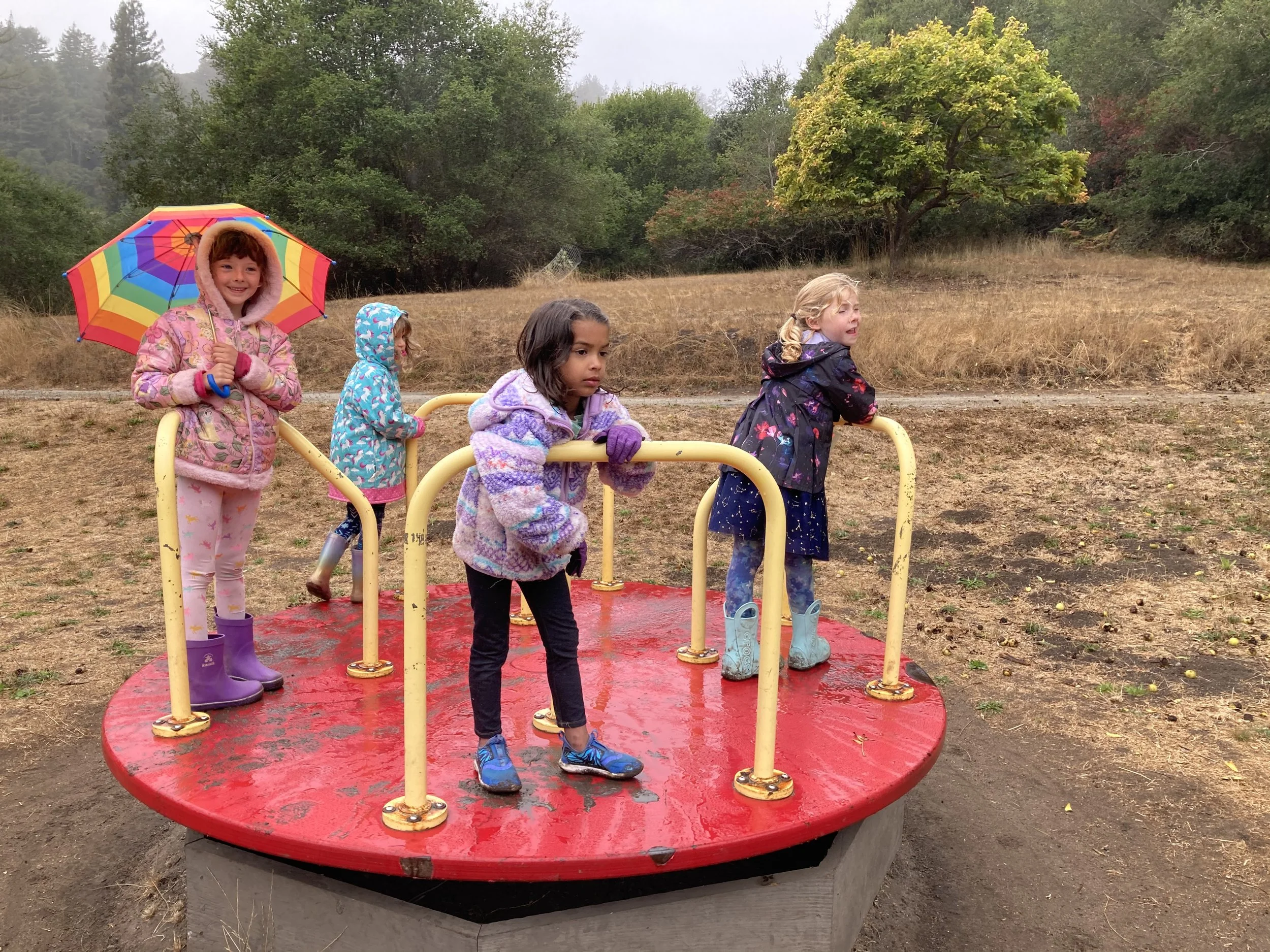
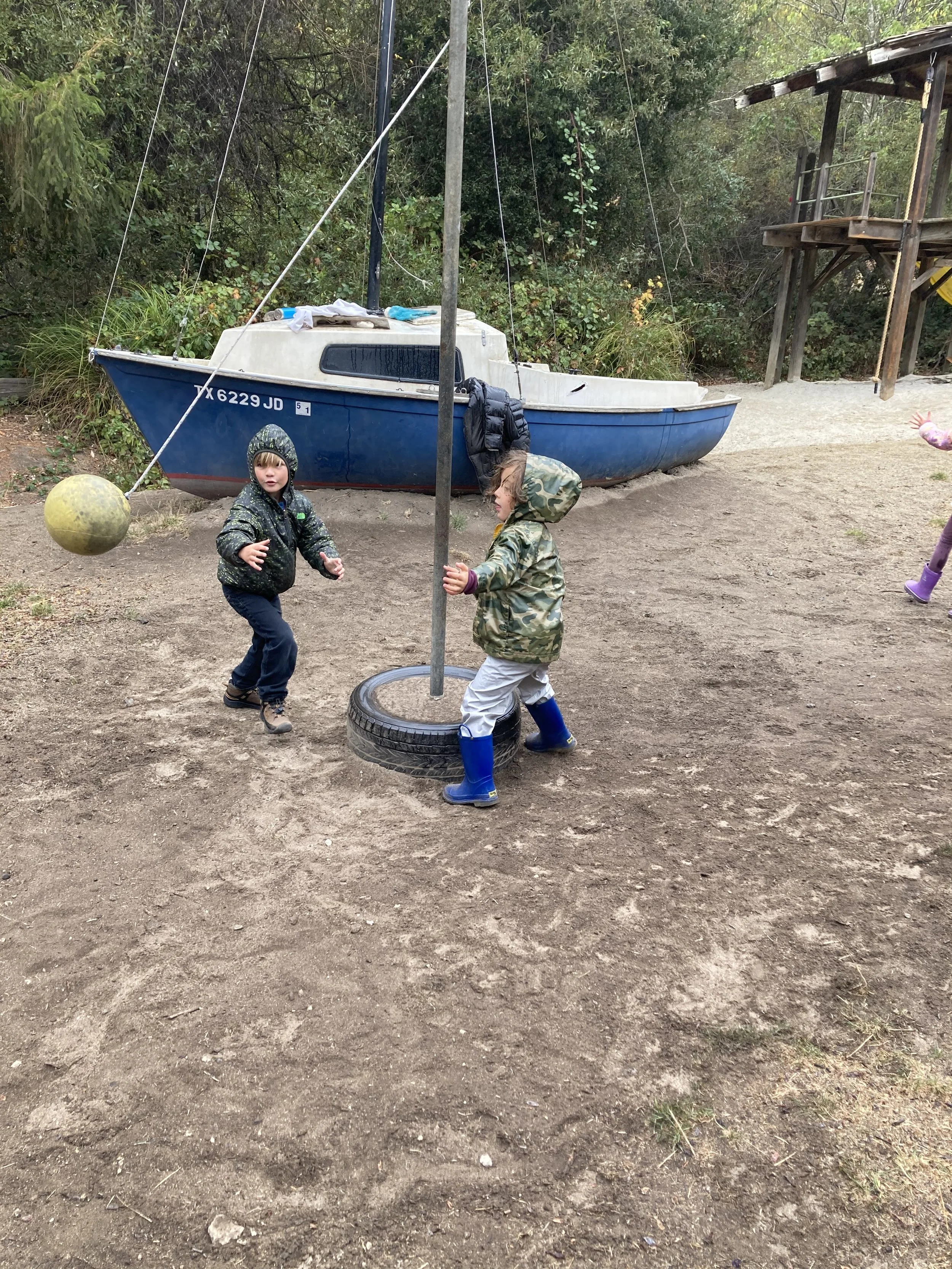
As I said at our Back to School Meeting, the group so far seems very cohesive and harmonious. Of course, things come up. We’ve had many conversations together to problem-solve situations and discuss how words can be hurtful. We’ve practiced using a talking stick to take turns, we’ve had a couple of class meetings (one about tether ball rules and one about the Orchard rule that children must not be excluded from games.
I made a “paper” student named Charlie and had the children think of possible hurtful things people might say to each other such as “you can’t play” or name-calling. With each insult, I wrinkled up parts of the paper until Charlie was a small wad of paper. Next, we thought of kind words and actions. Then Charlie began to unfold. The children noticed that there were wrinkles left behind on Charlie that can never be entirely smoothed out which opened up the idea that hurtful words and actions have a lasting impact.
We’ll be practicing giving compliments and appreciations, and graciously receiving such compliments at our next meeting. This is following the Positive Discipline format, a model we use to great effect at Orchard.
Rest time
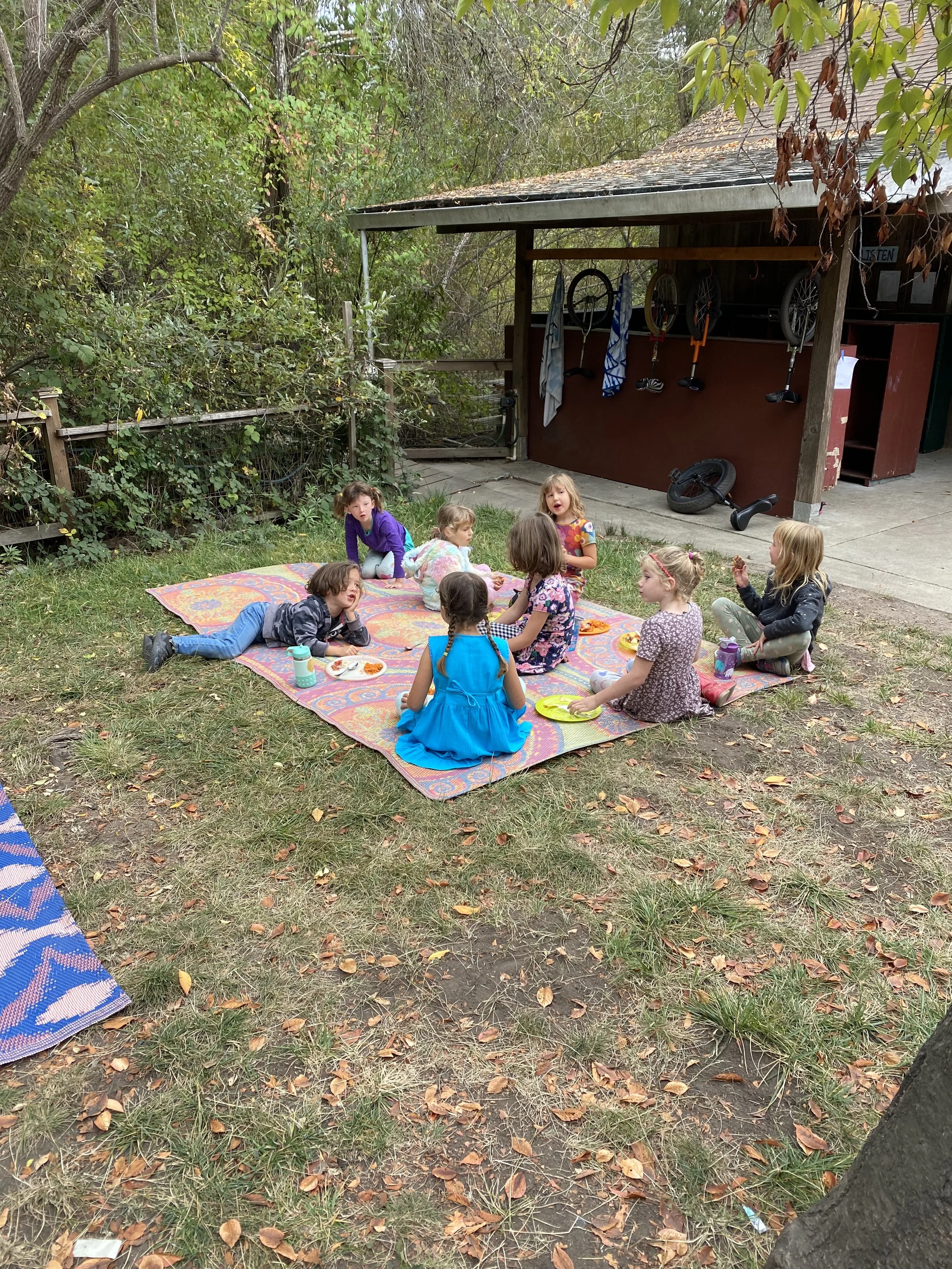
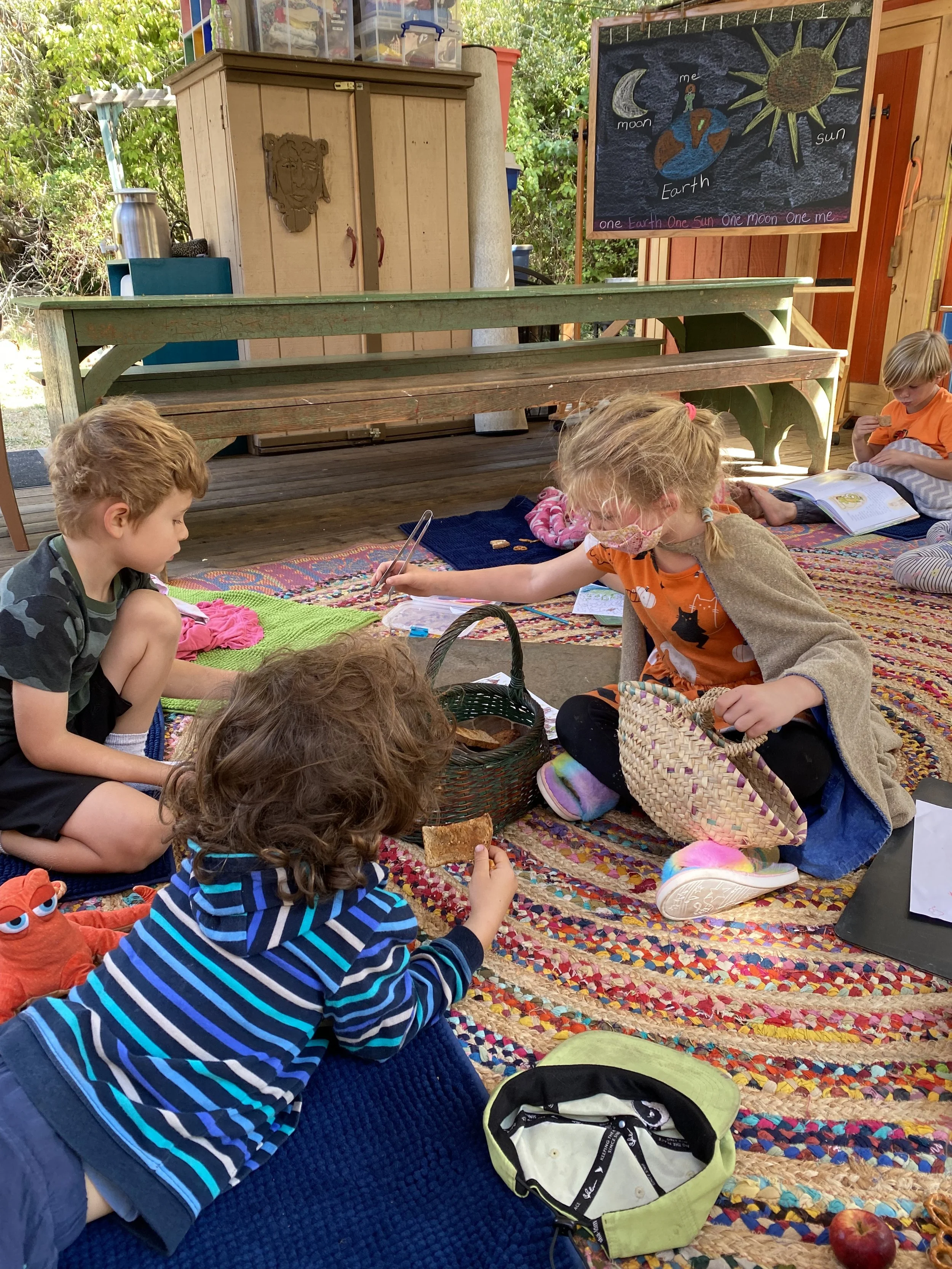
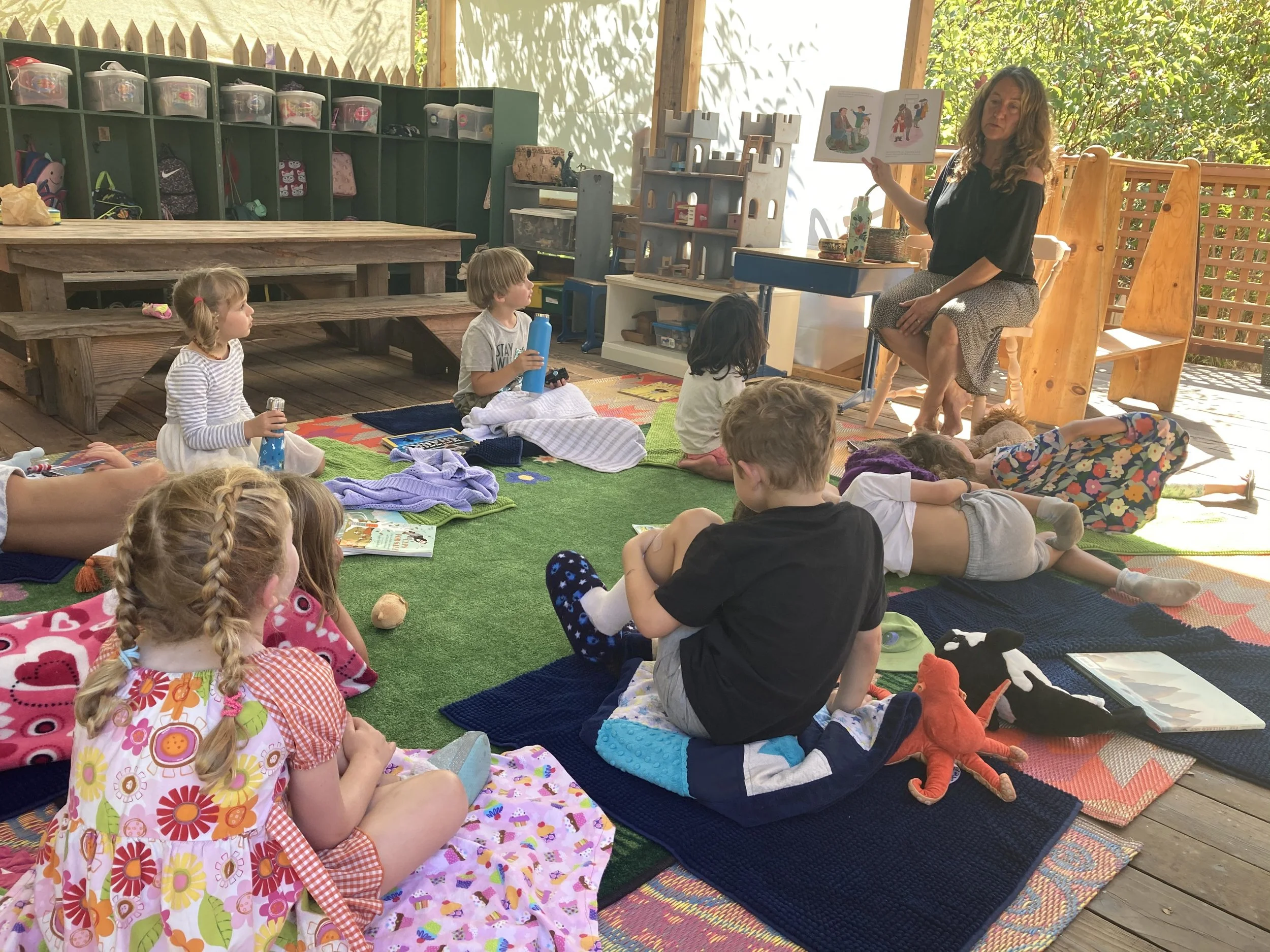
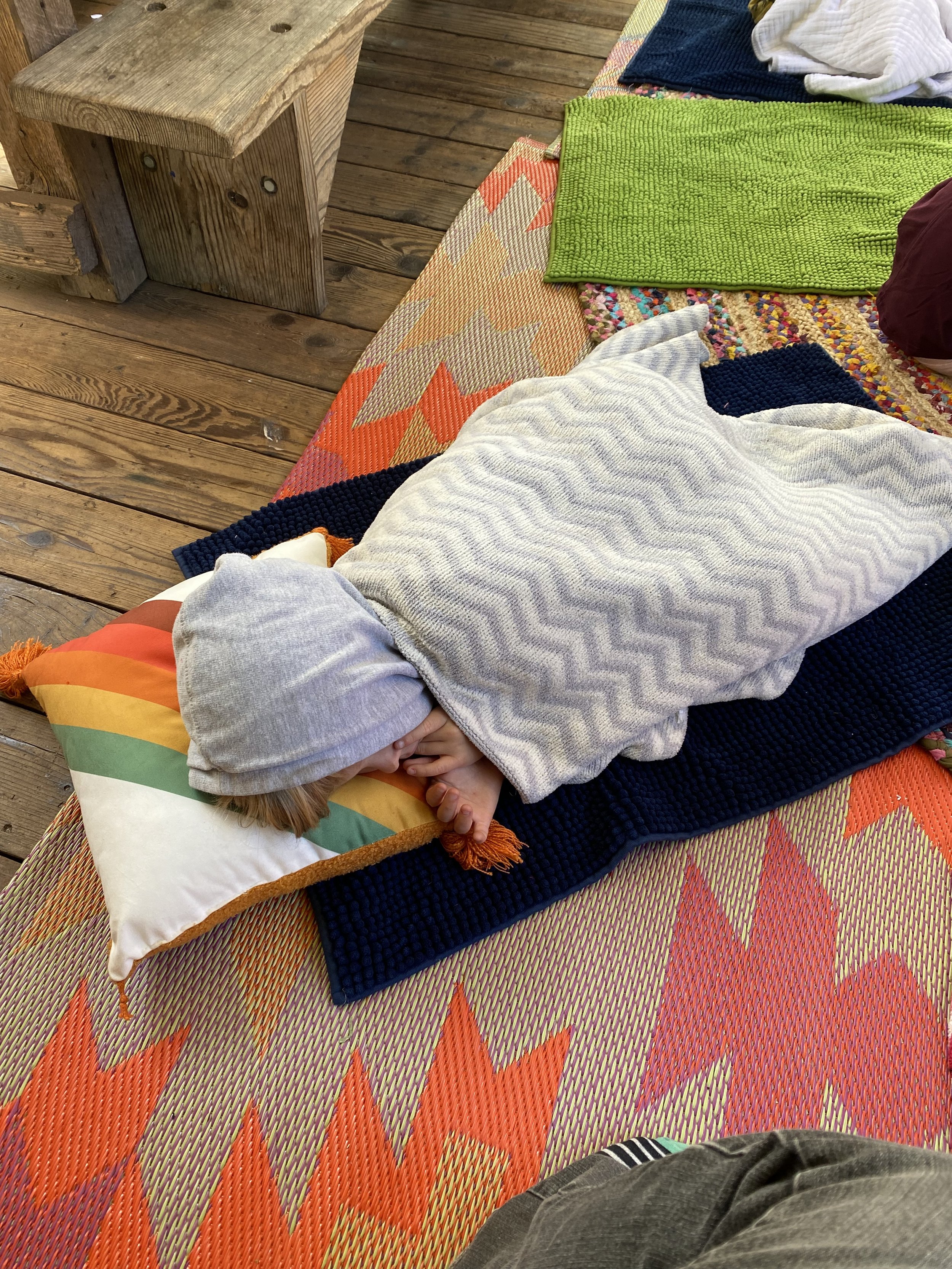
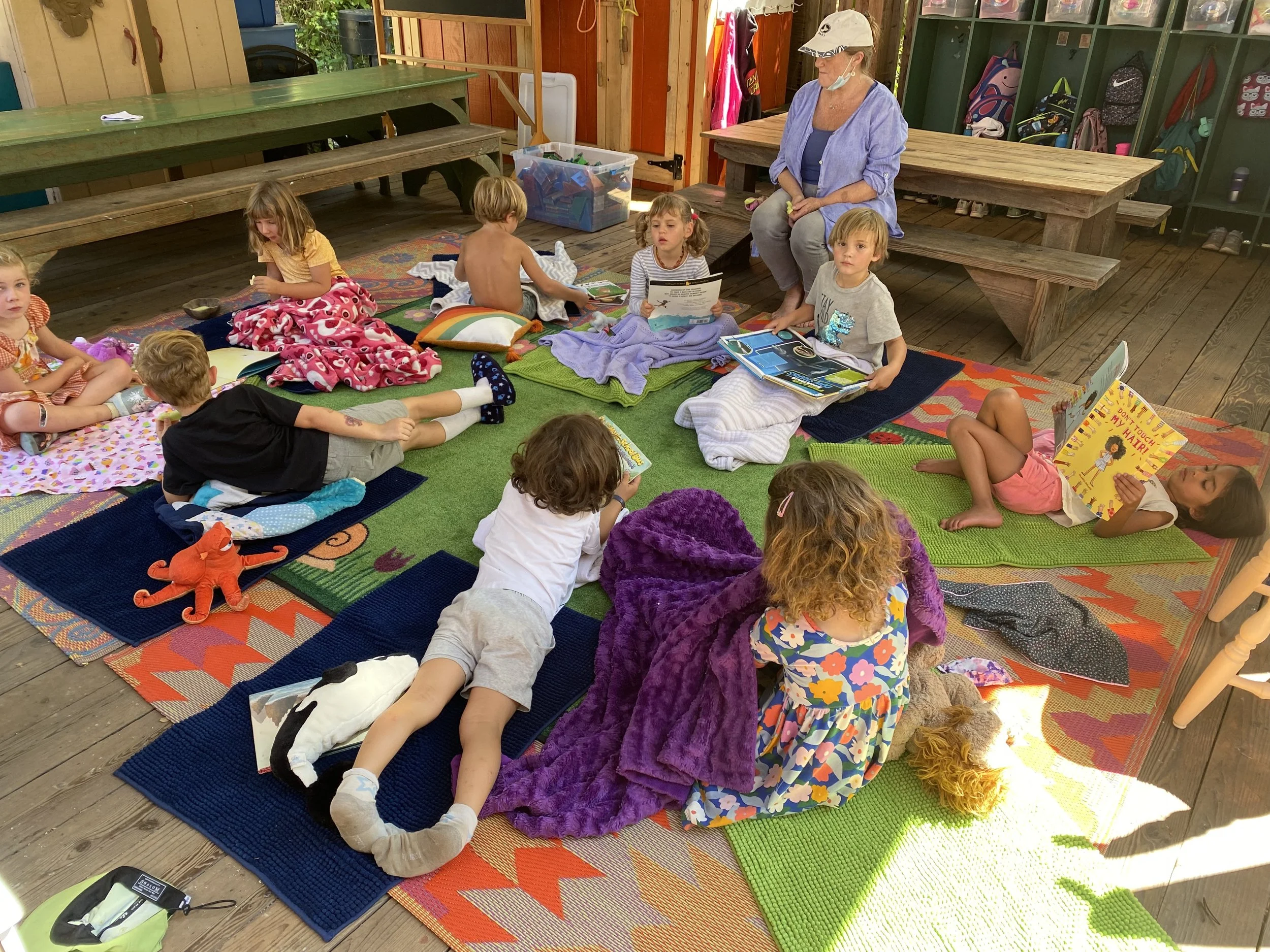
The children quietly look through books, the sandman or sandwoman (Genevieve on this day) hands out a small snack, the teacher reads a story, we share news, announcements, and feelings sometimes, and then the kids have play time on the deck or continue resting and reading if they prefer.
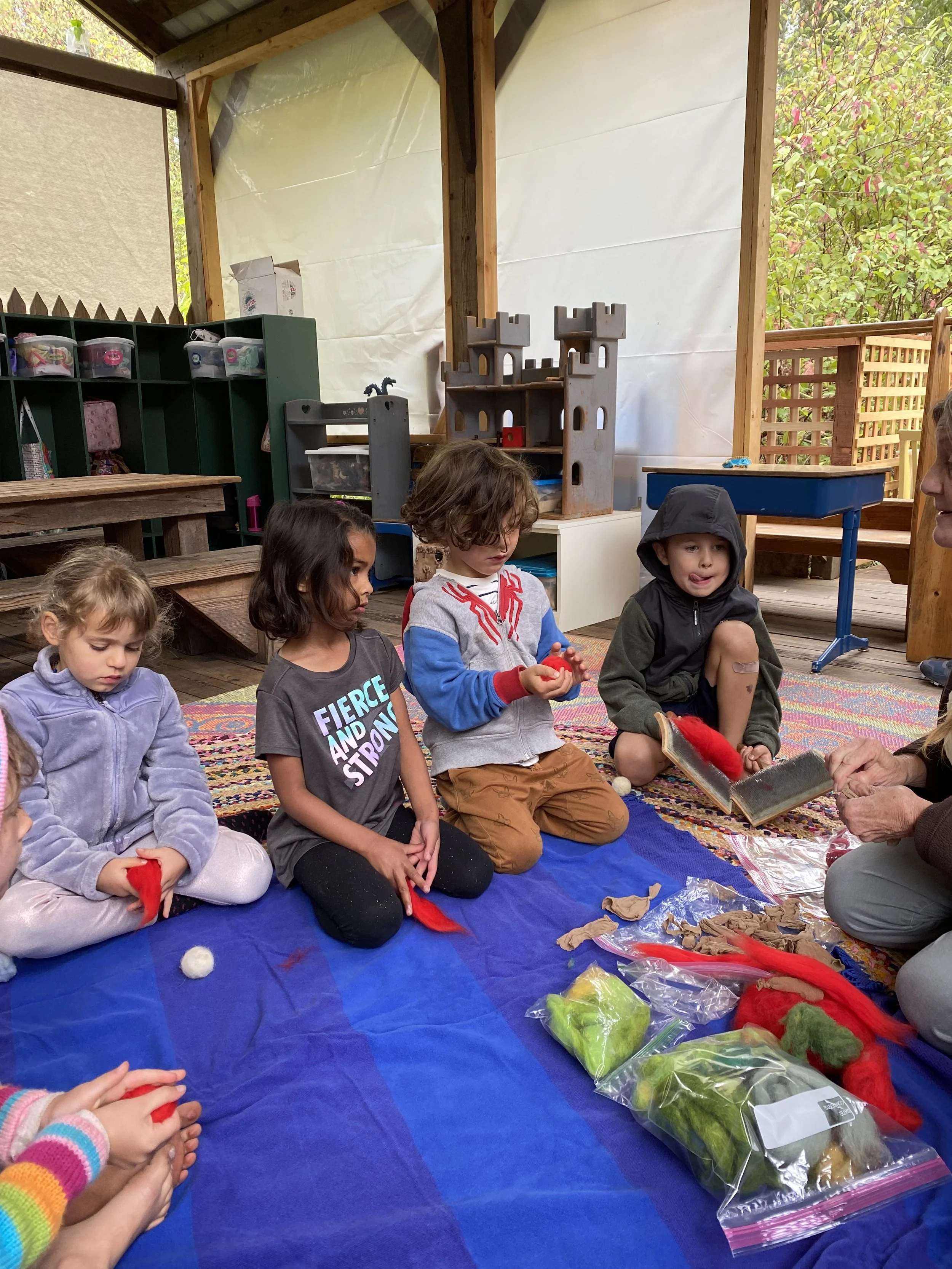
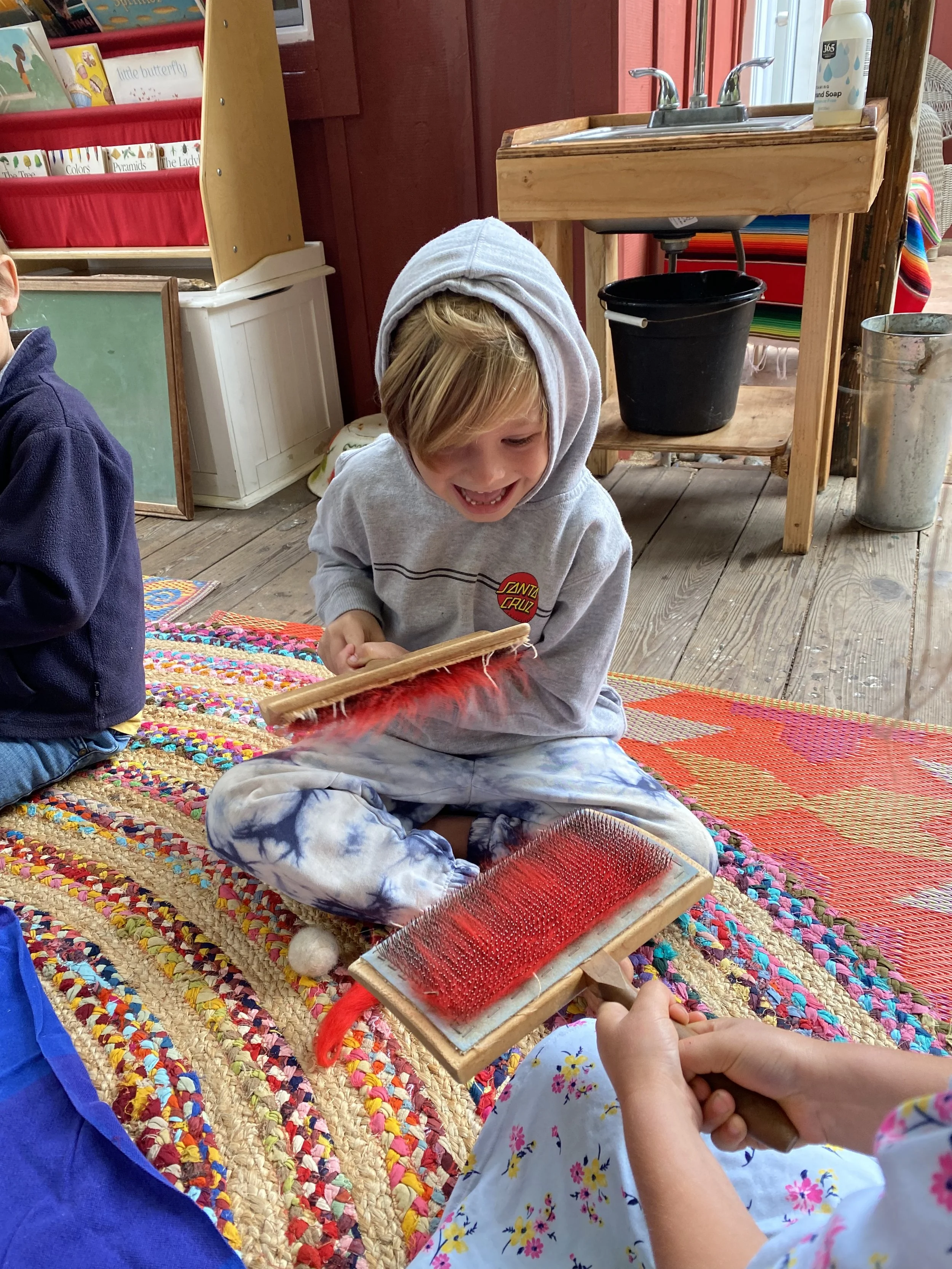
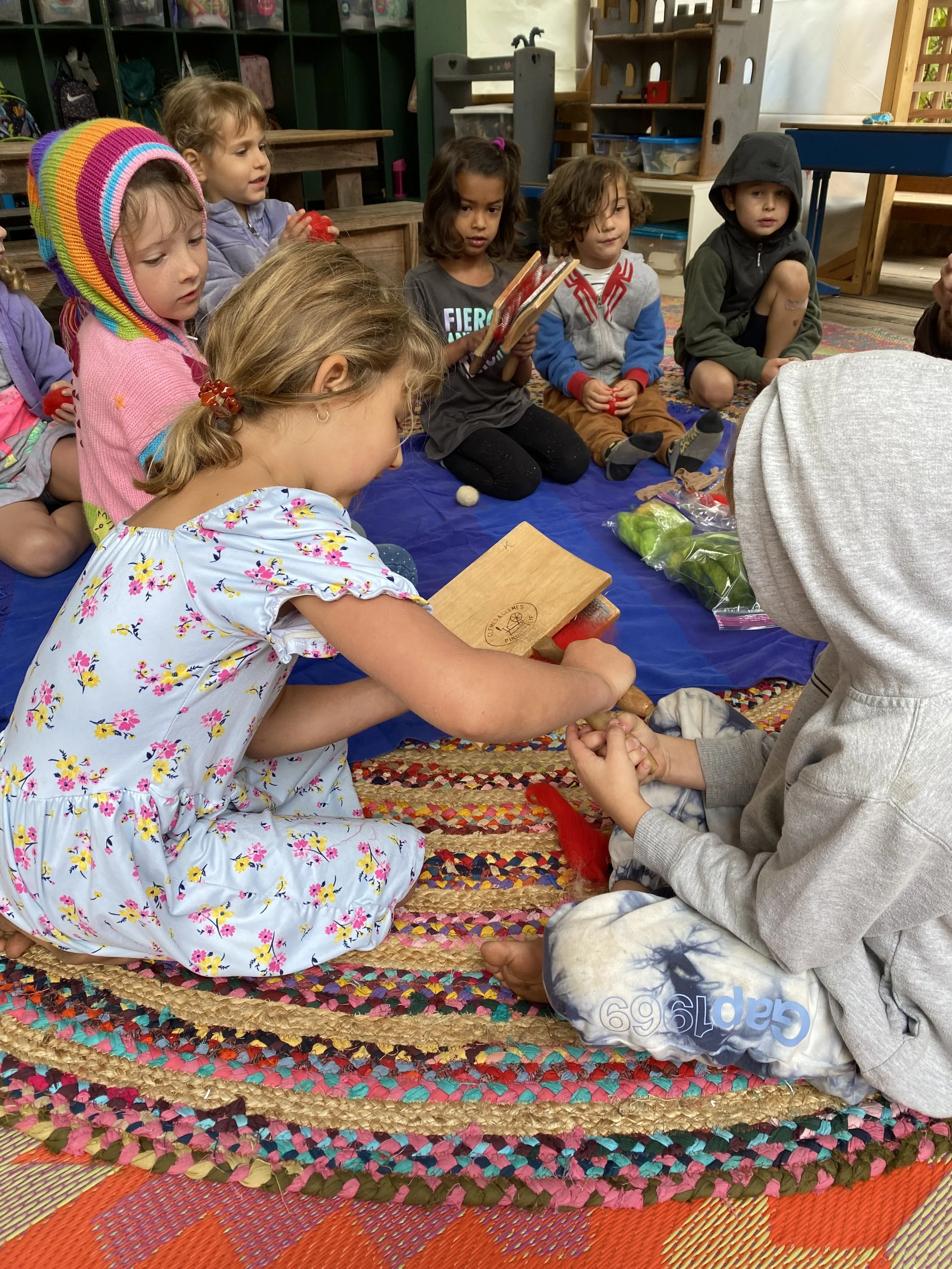
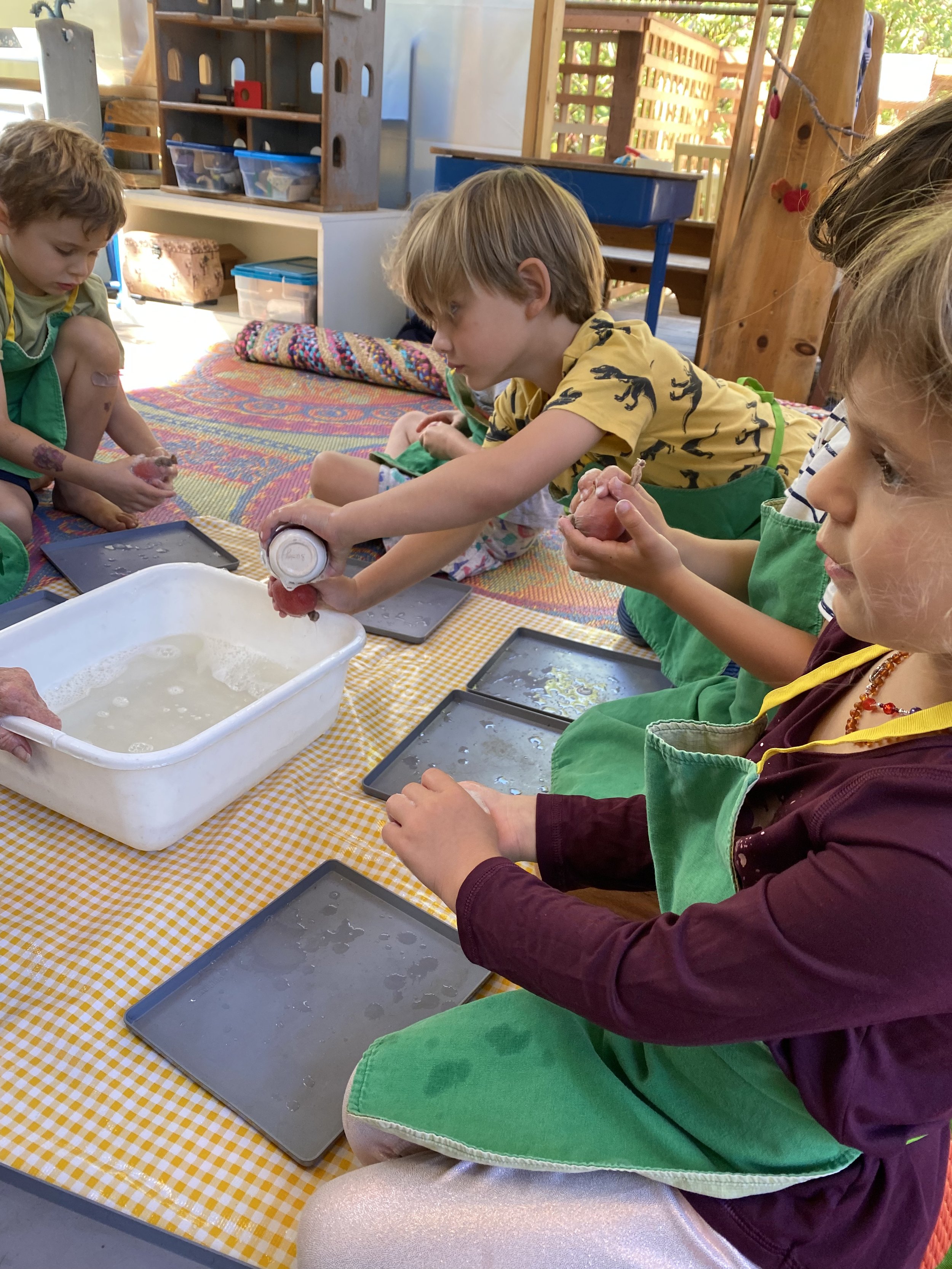
Felting:
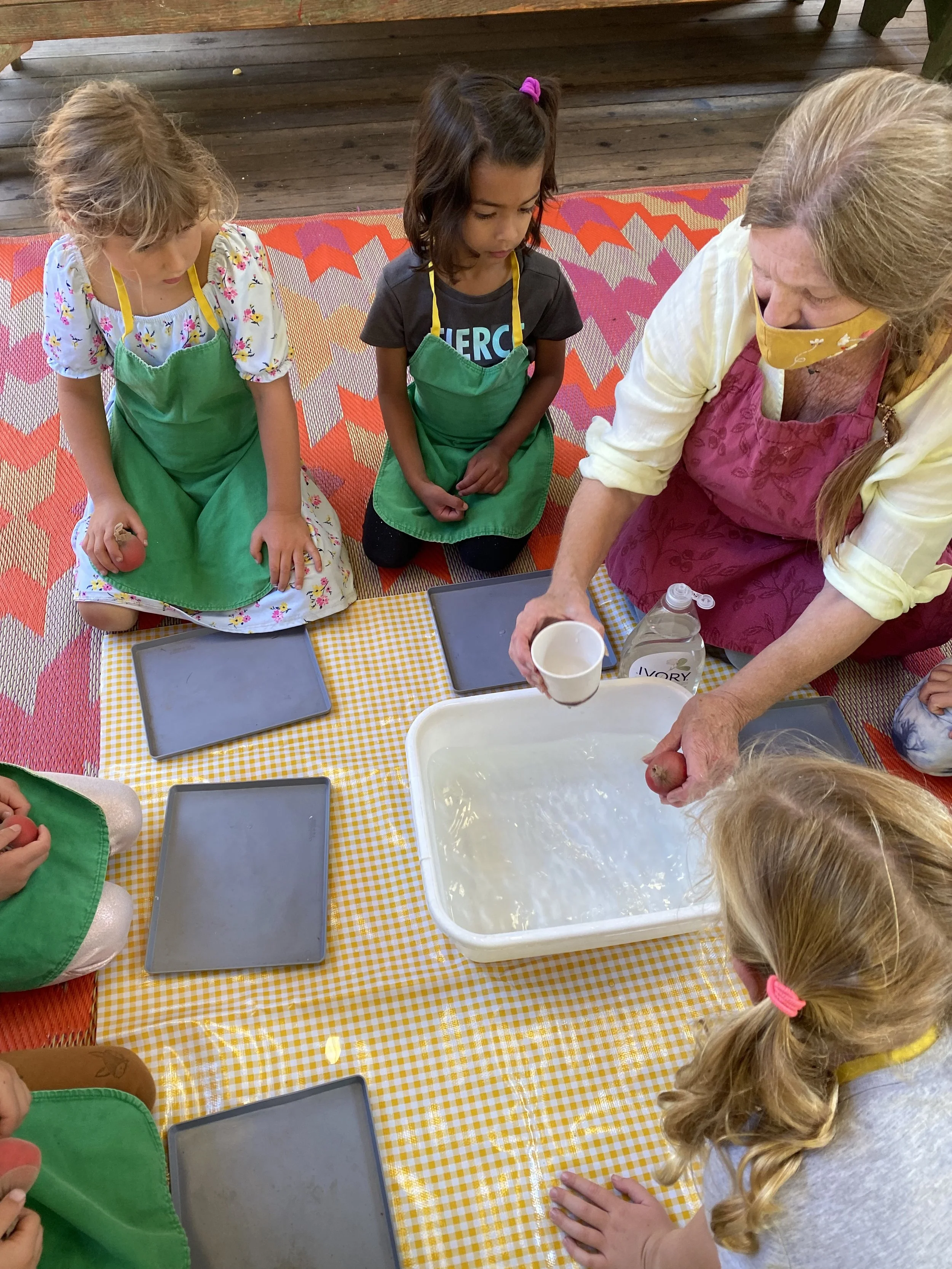
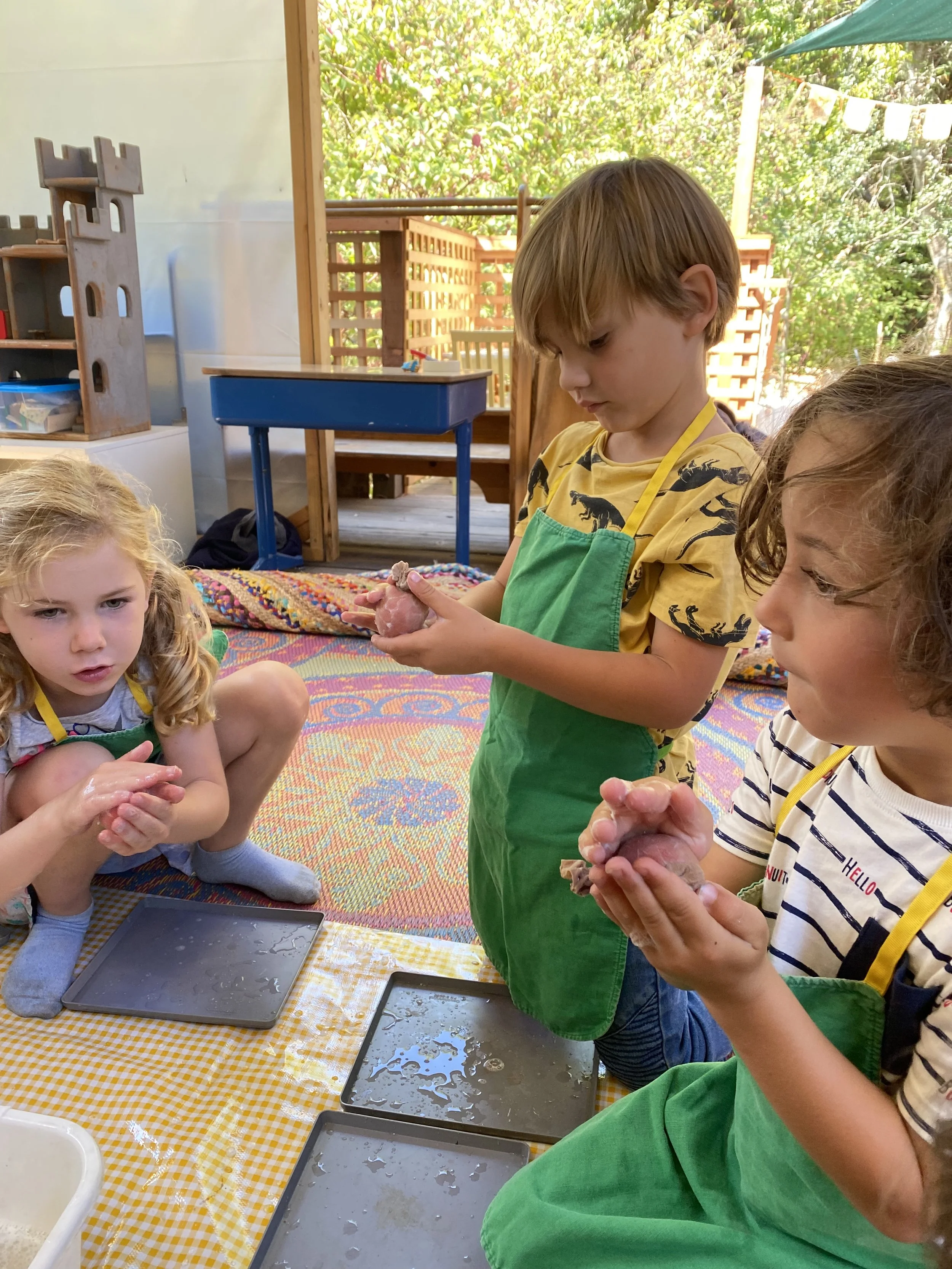
Kathleen taught the children how to card wool to make the fibers all lie in the same direction and then they made wet felted apples which hooks the fibers together.
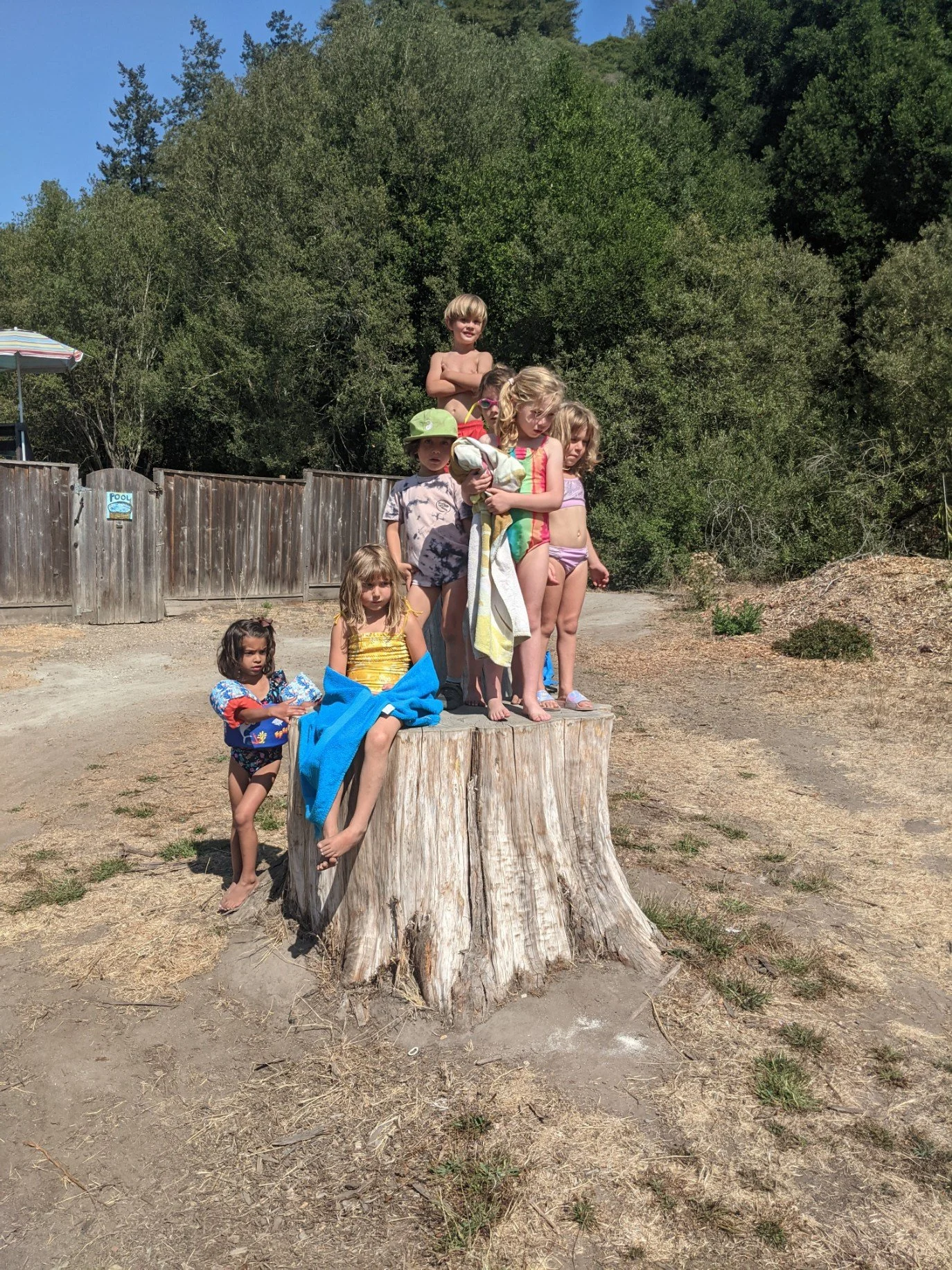
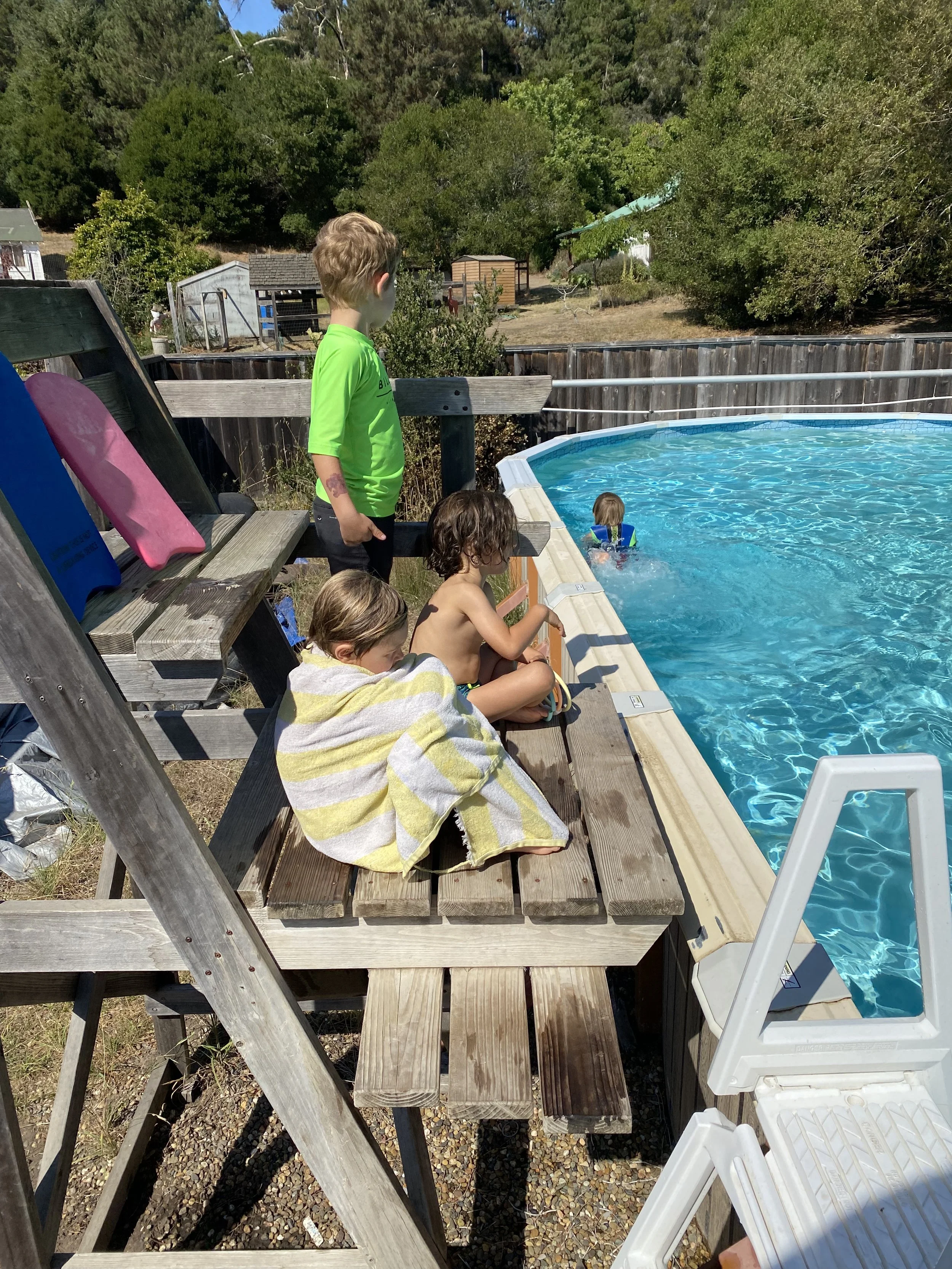
Pool Time!
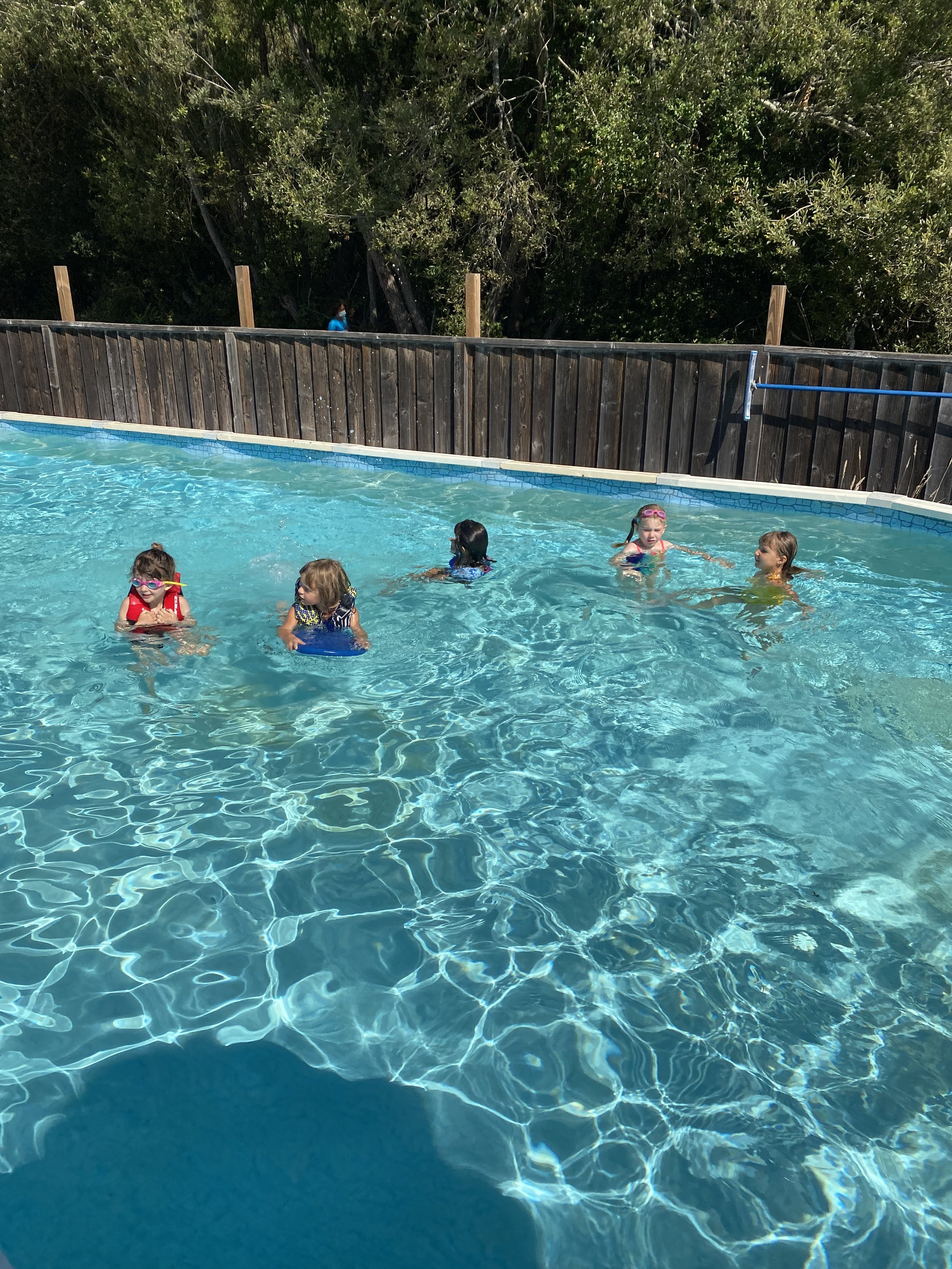
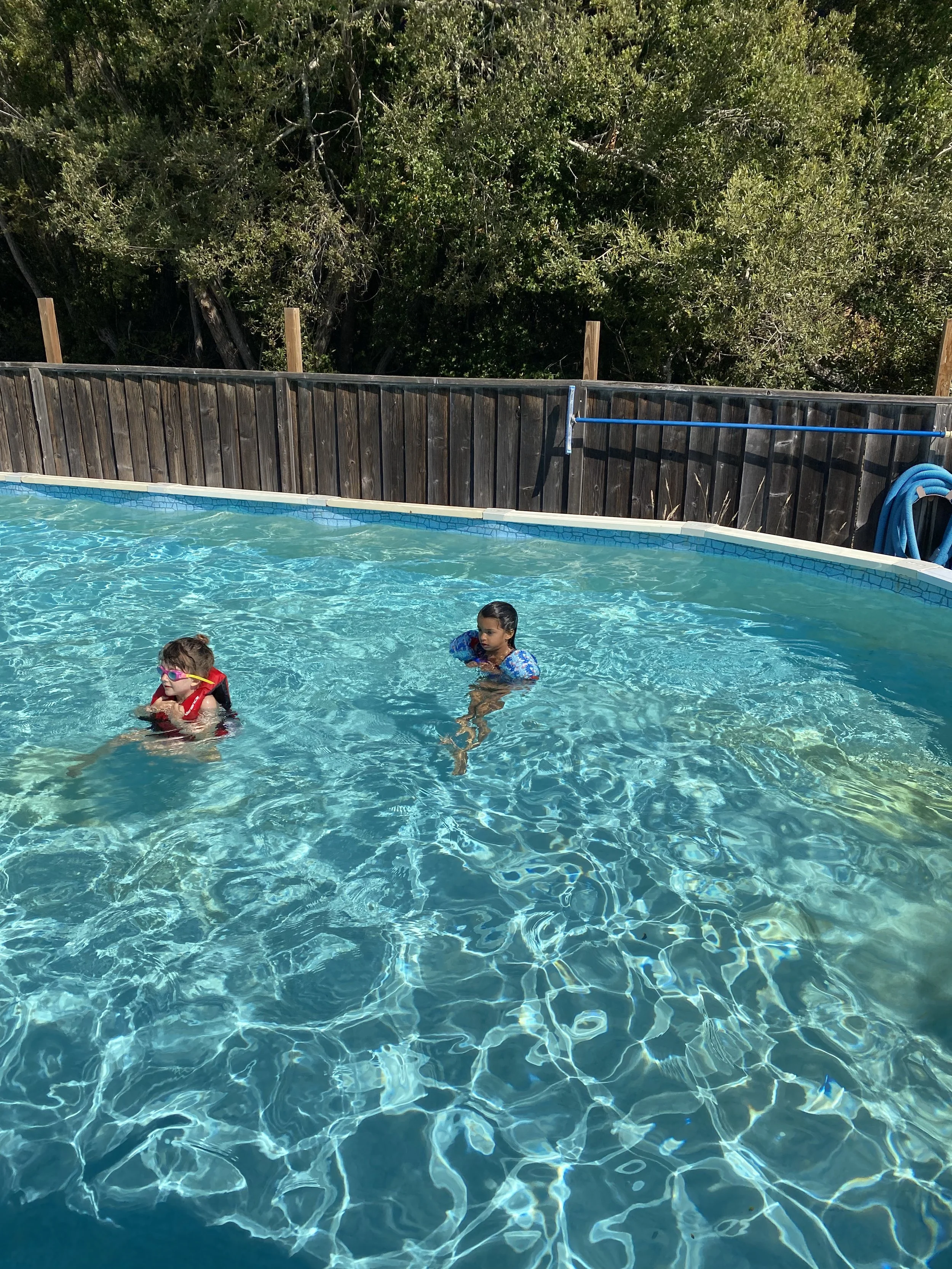
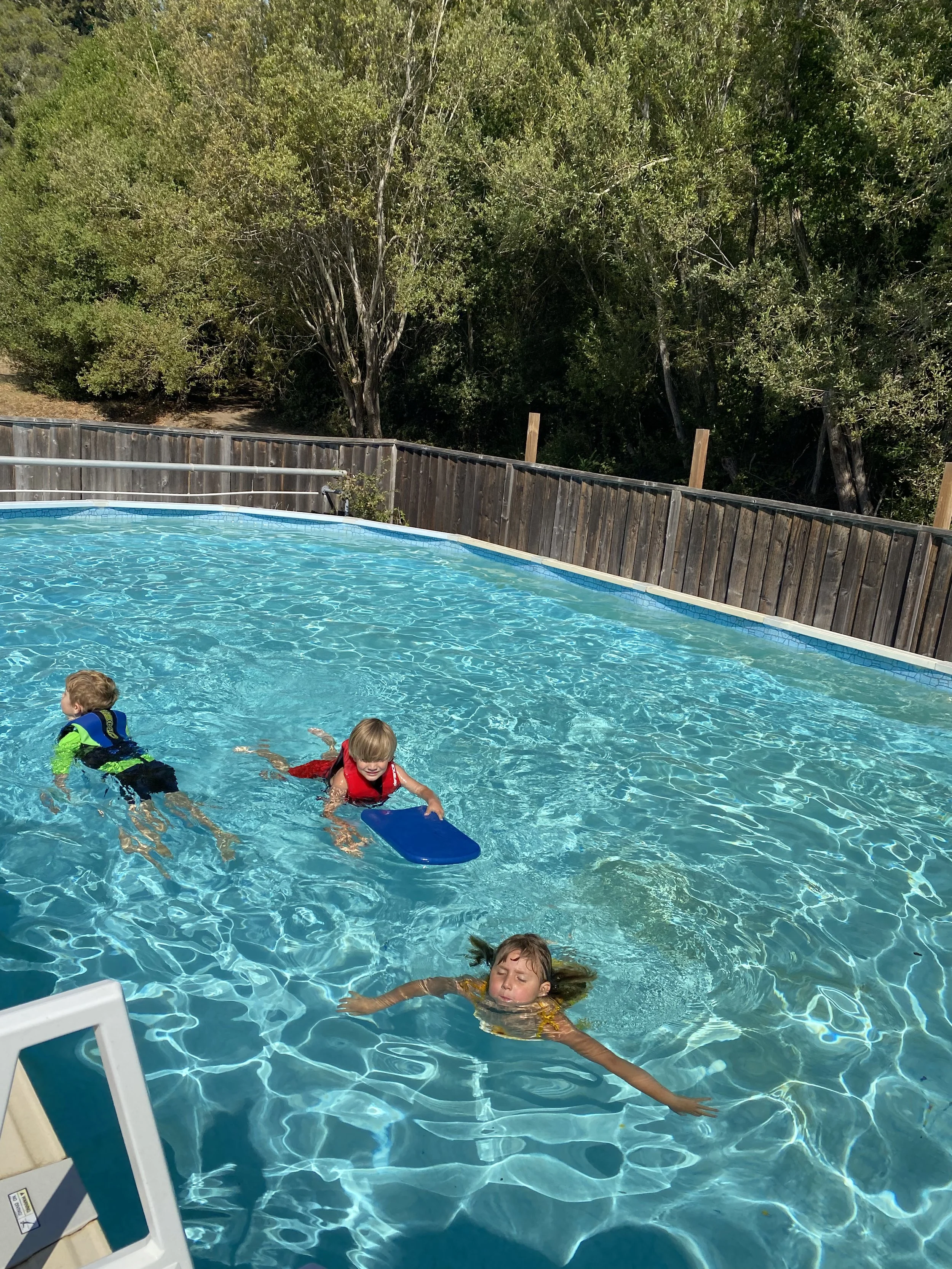
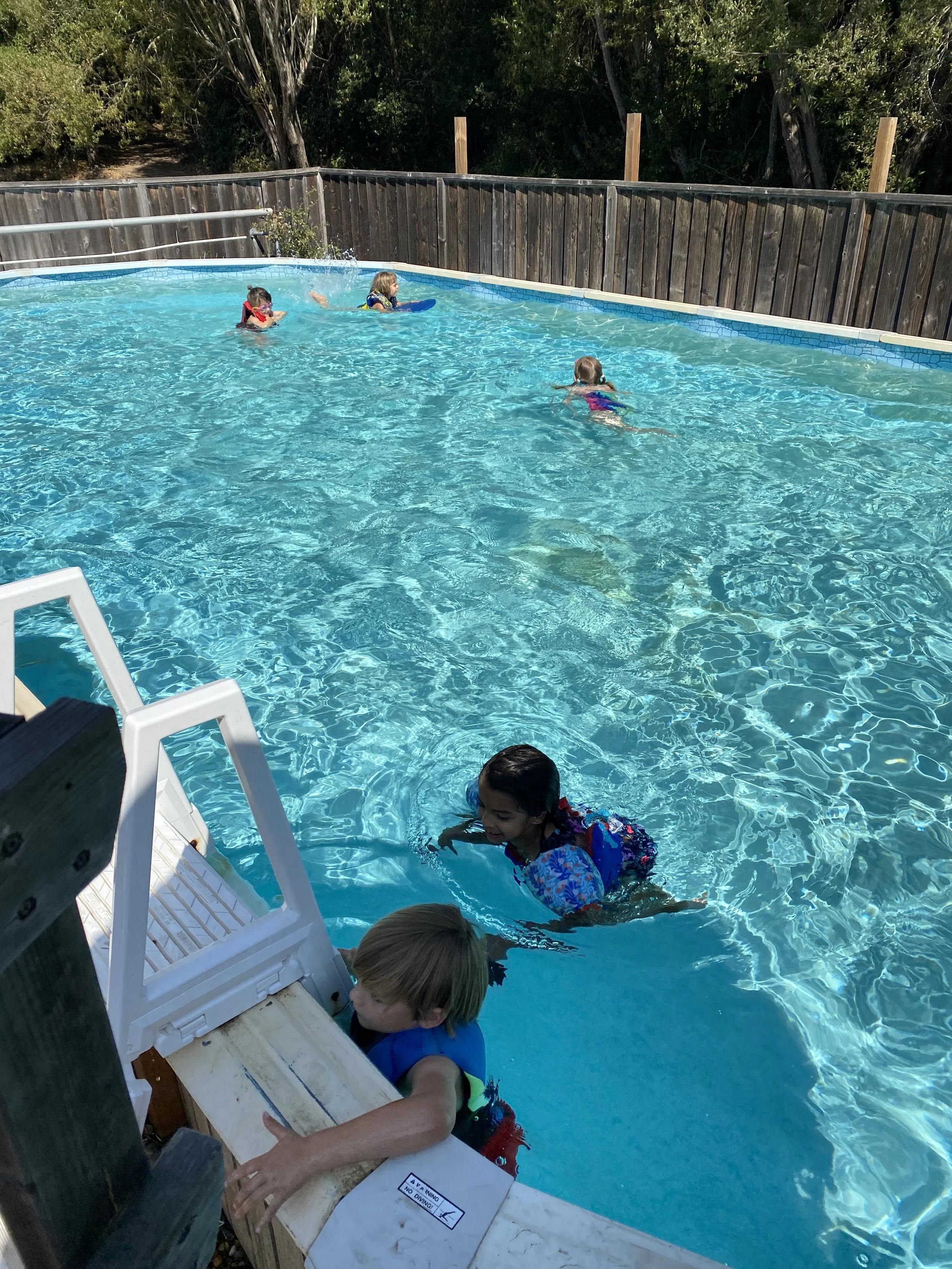
Okay, that’s the end of this novel of a blog. I had a lot to cover. Well done if you made it this far! Thanks for reading.
Love Rosy