Math
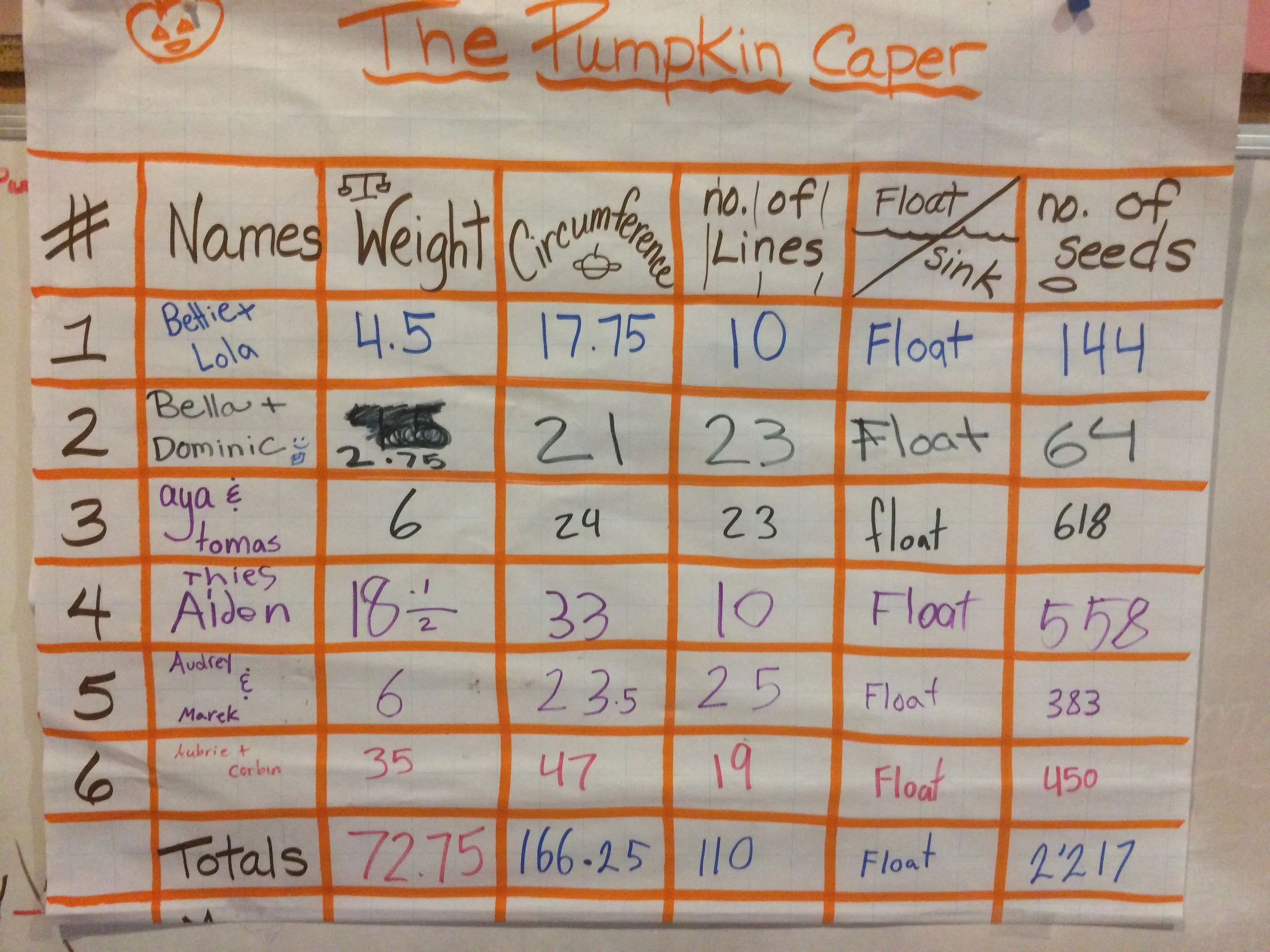
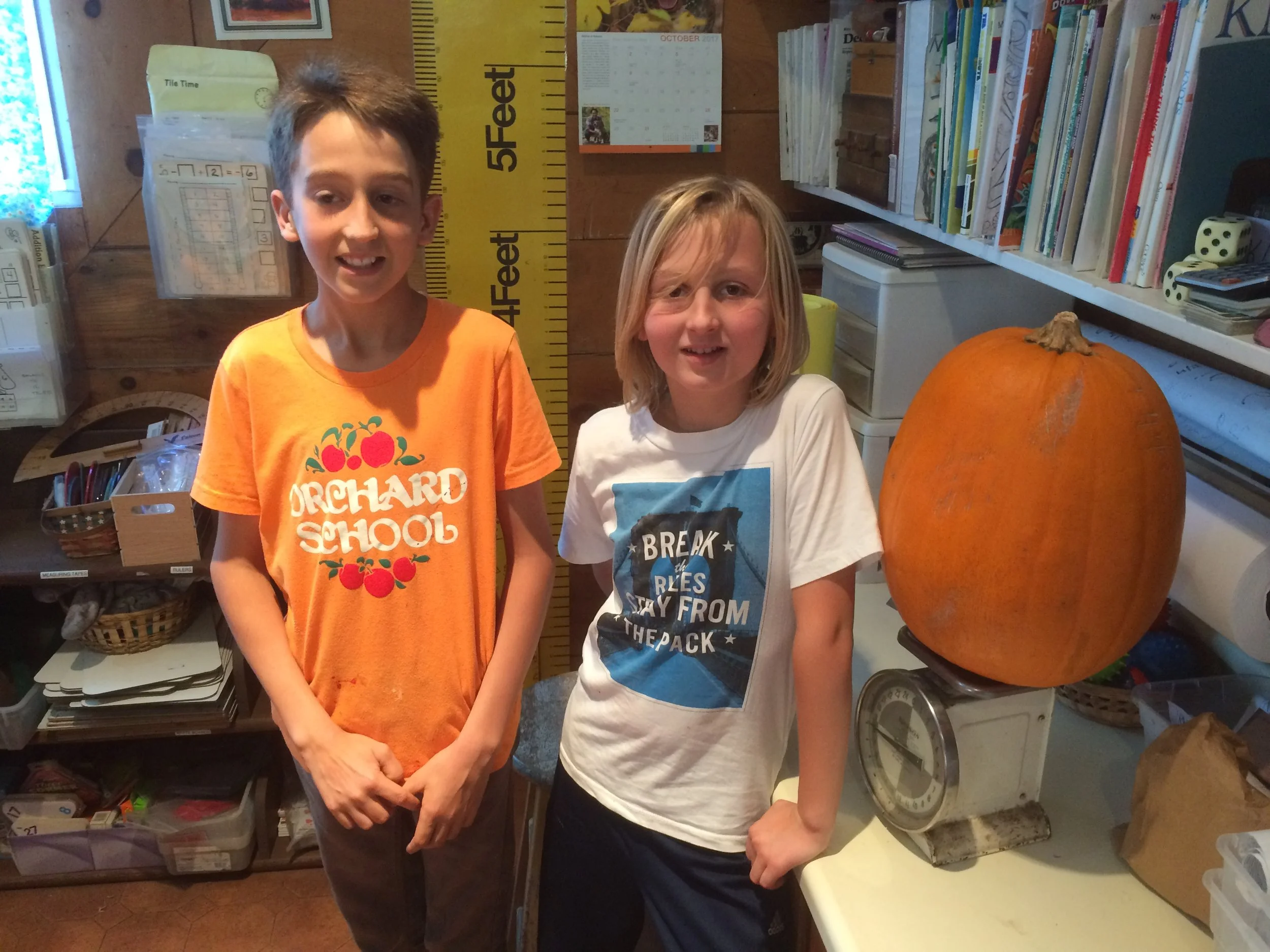
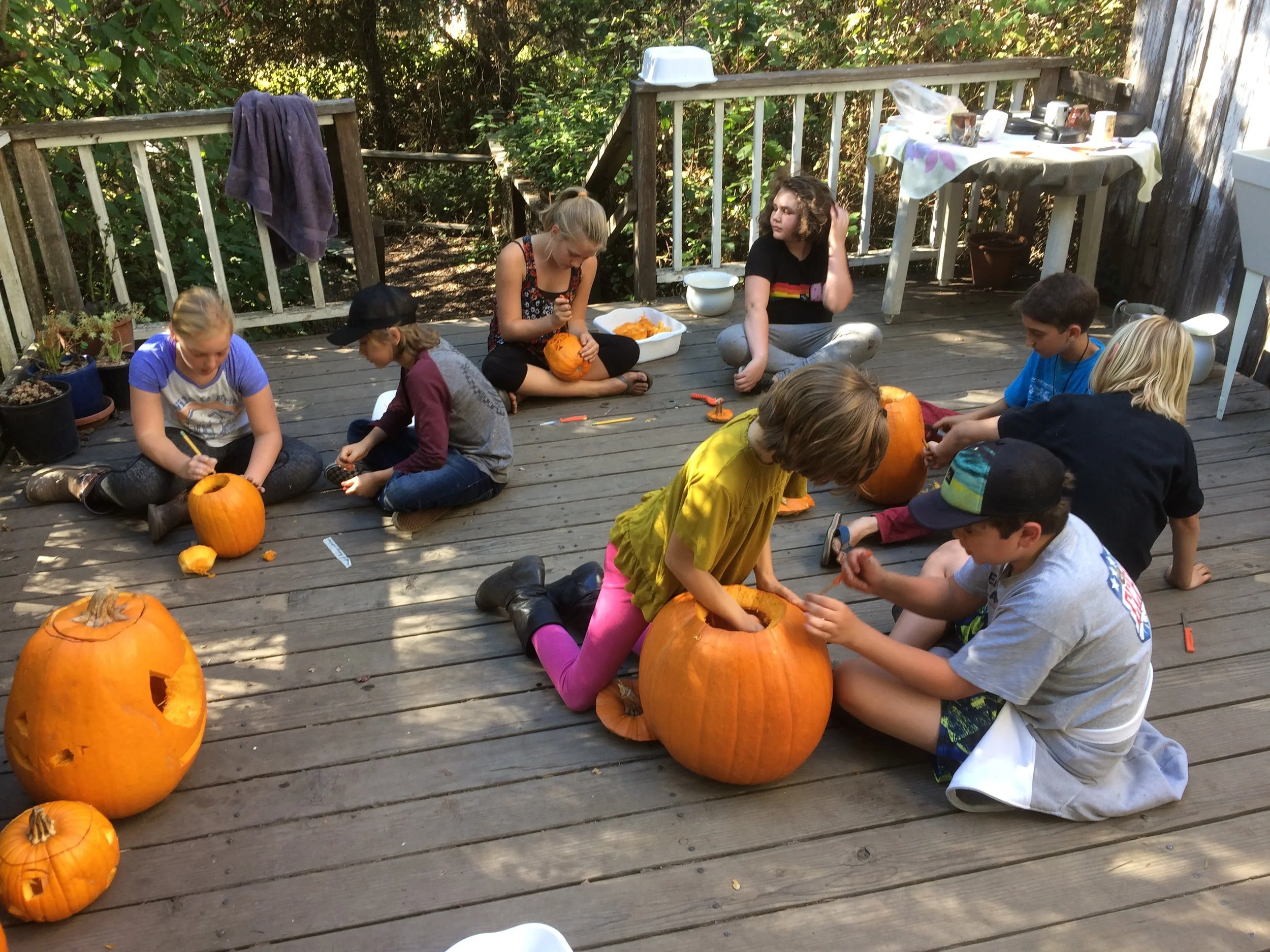
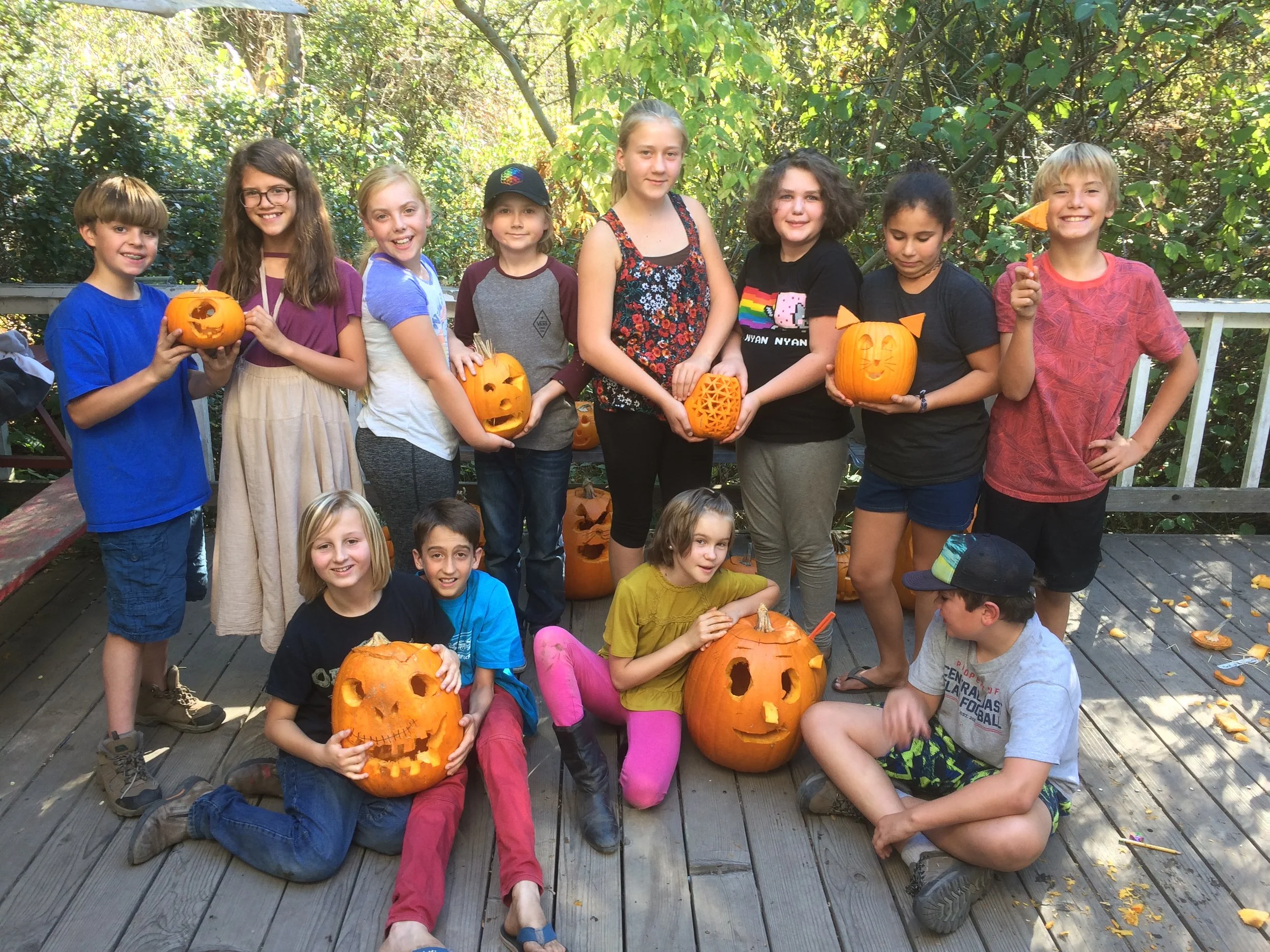
In the last week of October, the fifth/sixth graders practiced their measurement skills with the Pumpkin Caper. A pair of students investigated a pumpkin by making predictions and figuring the weight, circumference, number of lines and seeds, and whether or not their pumpkin would sink or float. Measurements were taken to the nearest quarter inch and recorded in decimal form. The data collected was recorded in their math activity books and on a class chart. We then figured the summary statistics of our data: mean (average), median, mode, and range. The students studied the data looking for correlations such as the greater the circumference, the greater the weight. In addition, the students cooperated on carving the shared pumpkin, creating the jack-o-lanterns for our Halloween party!
Throughout the month of November, the students continued to work independently in their geometry and algebra books and on the Up and Down task cards (adding negative and positive numbers). The students reviewed long division through story problems and will continue to practice the 5-step algorithm as we move into decimals.
We played the game of Factor Captor whole class and with partners. It’s a game that relies on knowing the factors of 2-digit numbers and is great practice for the basic multiplication facts. We spent time reading about the history of Eratosthenes, a great mathematician from over 2,000 years ago, and figured out the prime numbers through 100 using the Sieve of Eratosthenes.
The fifth graders reviewed square numbers by cutting out a square representation from grid paper and labeling it in exponential form and as a multiplication fact. The sixth graders worked on the Border and Edges investigation as an exercise to add meaning to algebraic formulas.