Math
We continued subtraction by playing Largest Difference Wins, solving subtraction number stories created by a long ago class, and creating our own subtraction number stories. Again, please incorporate addition and subtraction in daily life any time the opportunity presents itself.
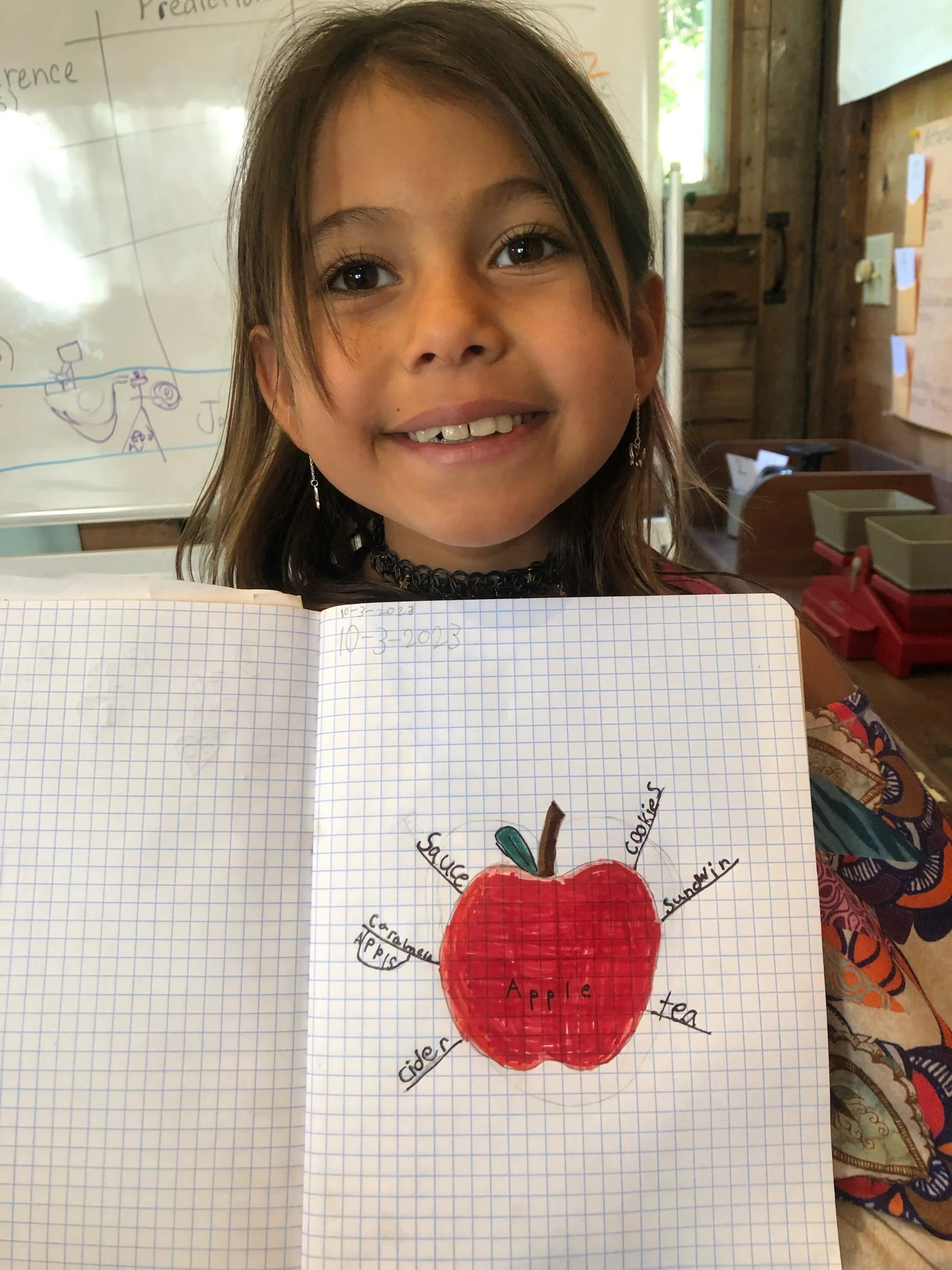
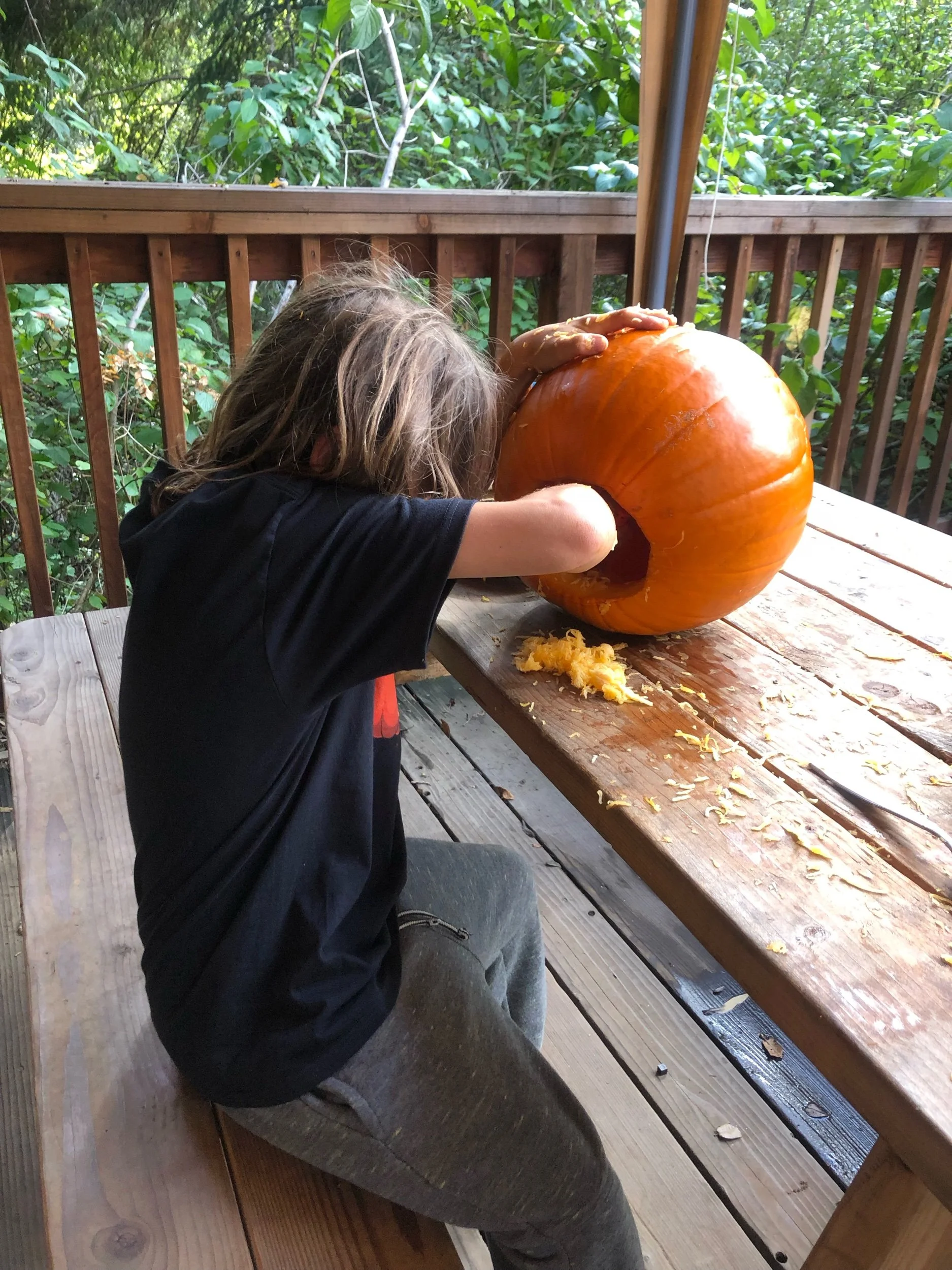
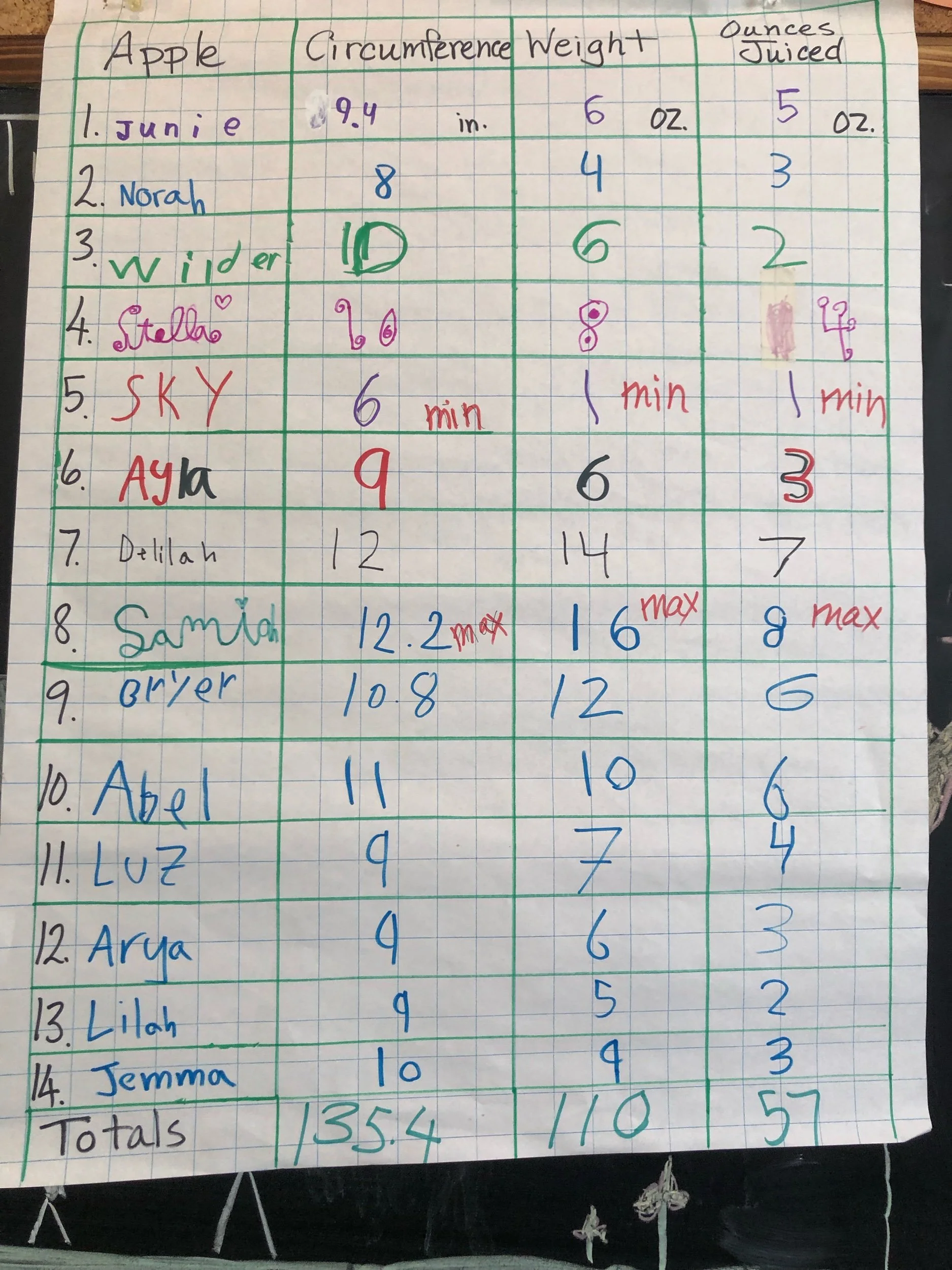
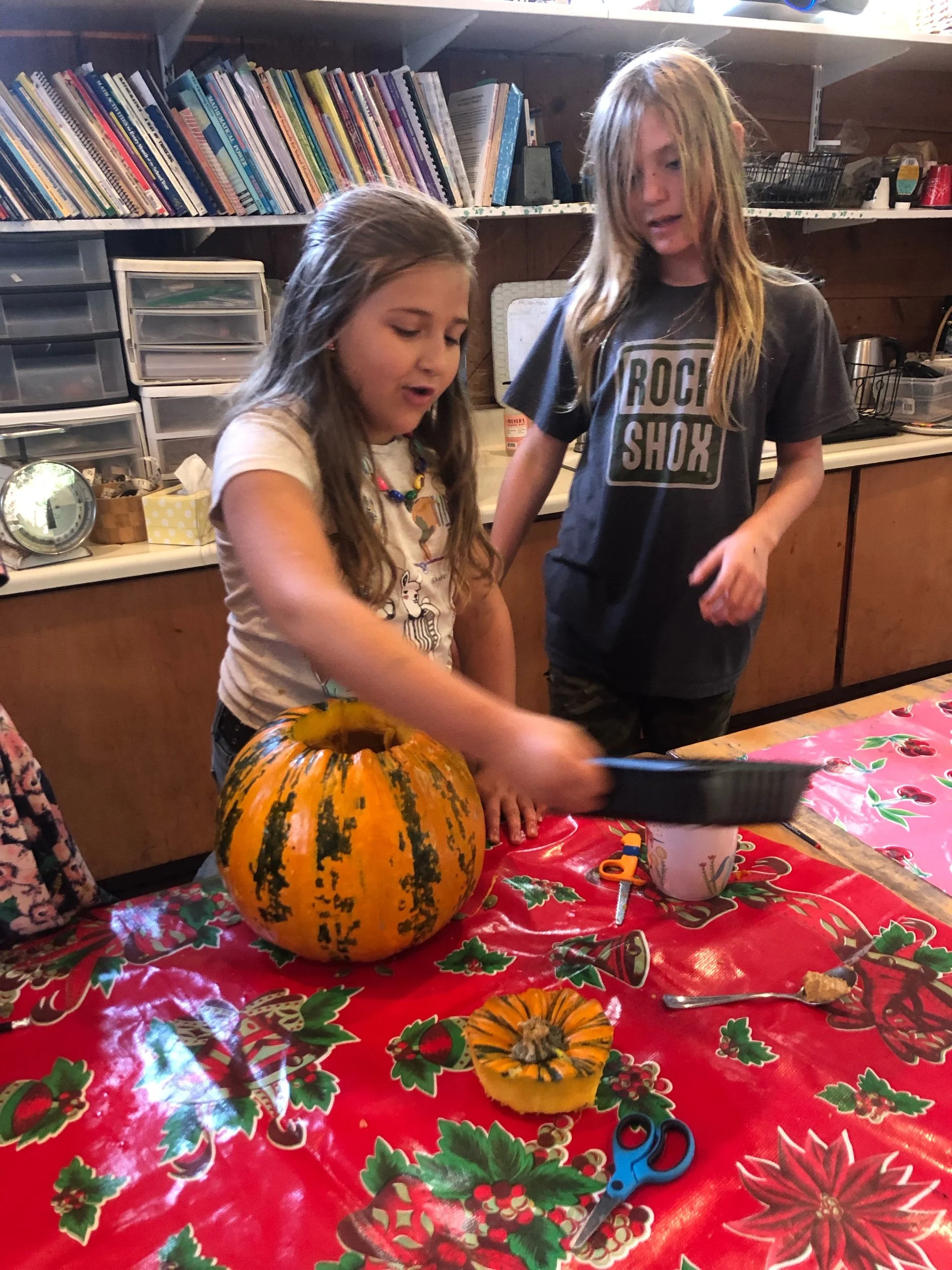
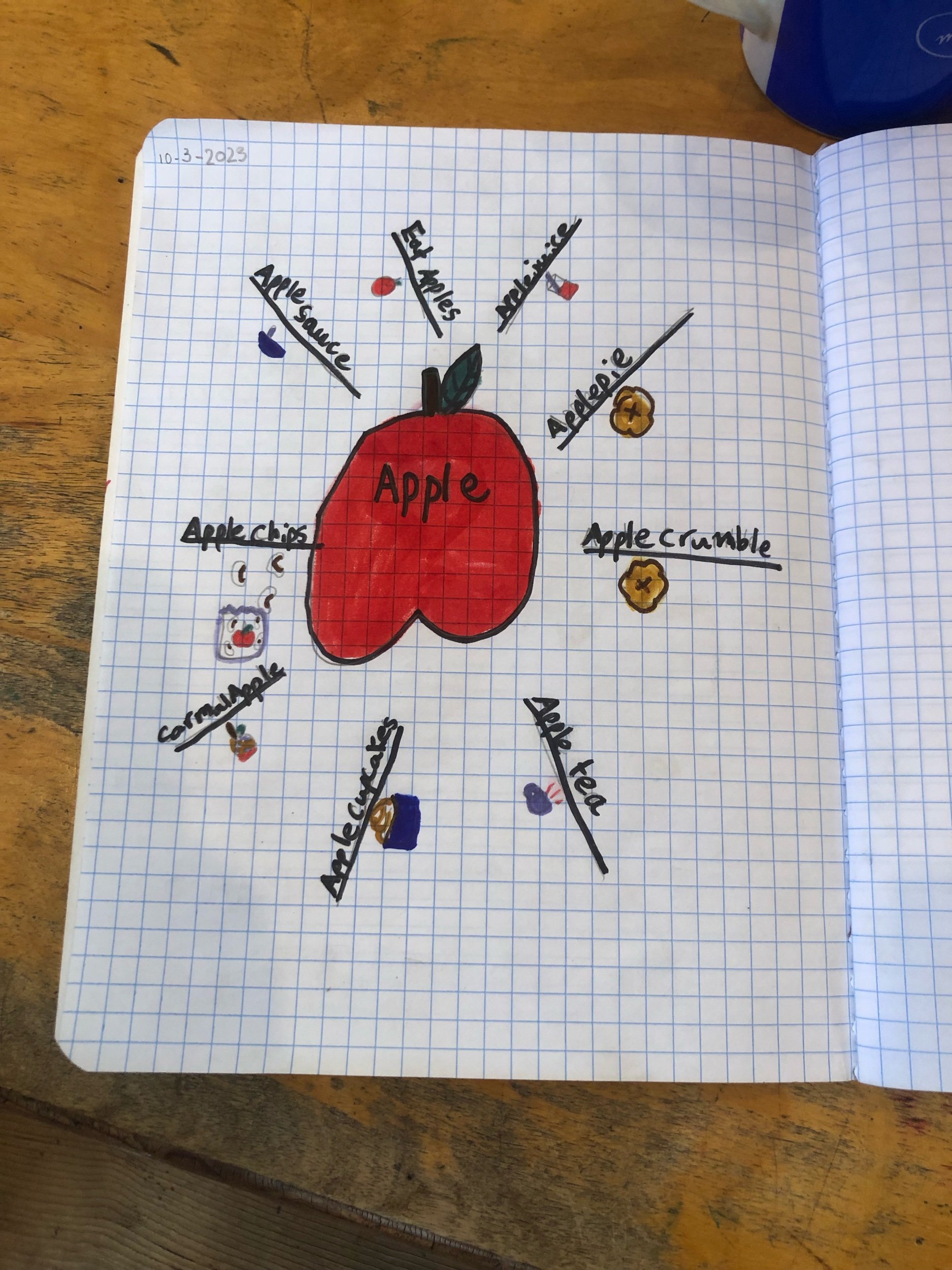
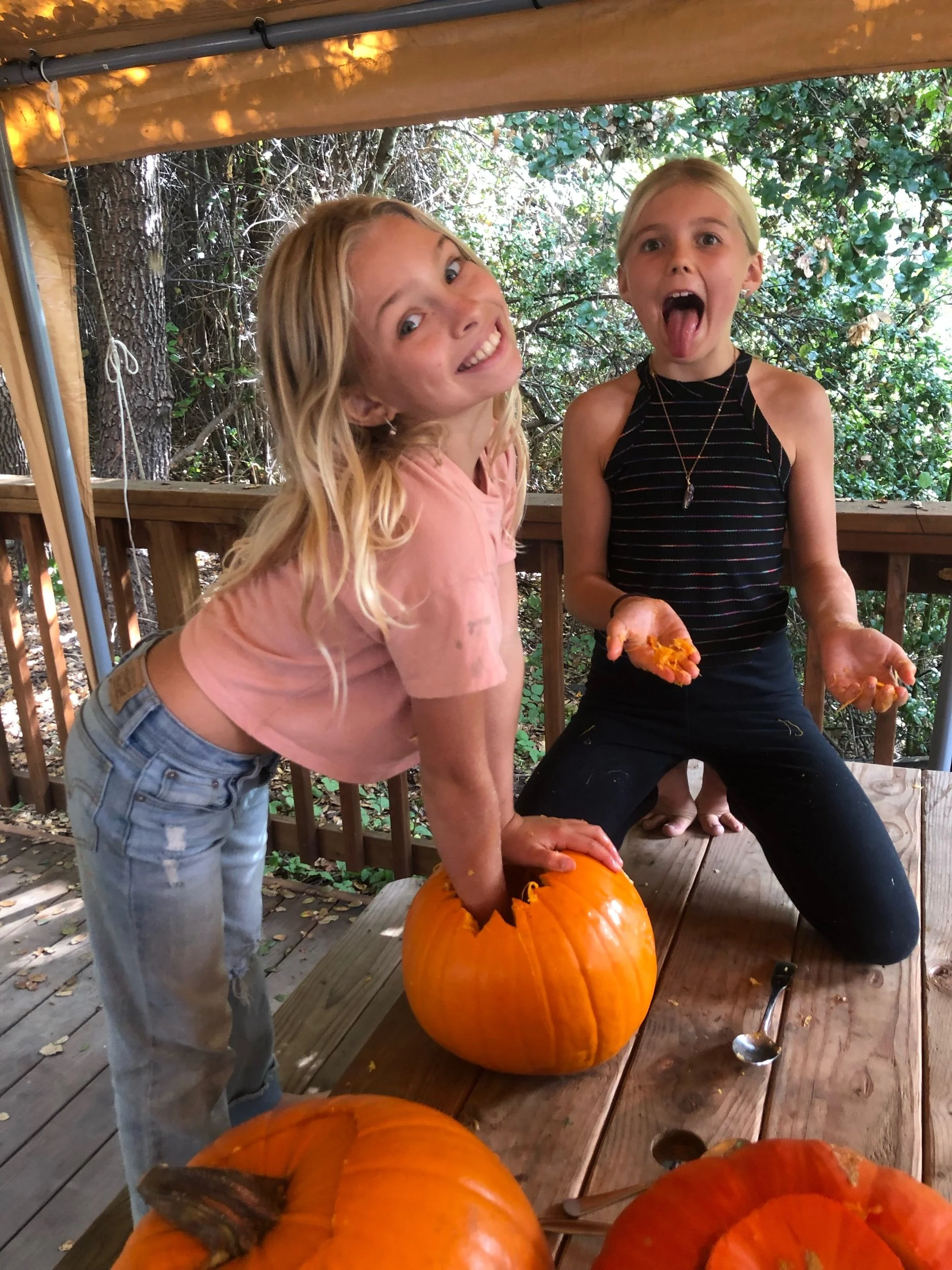
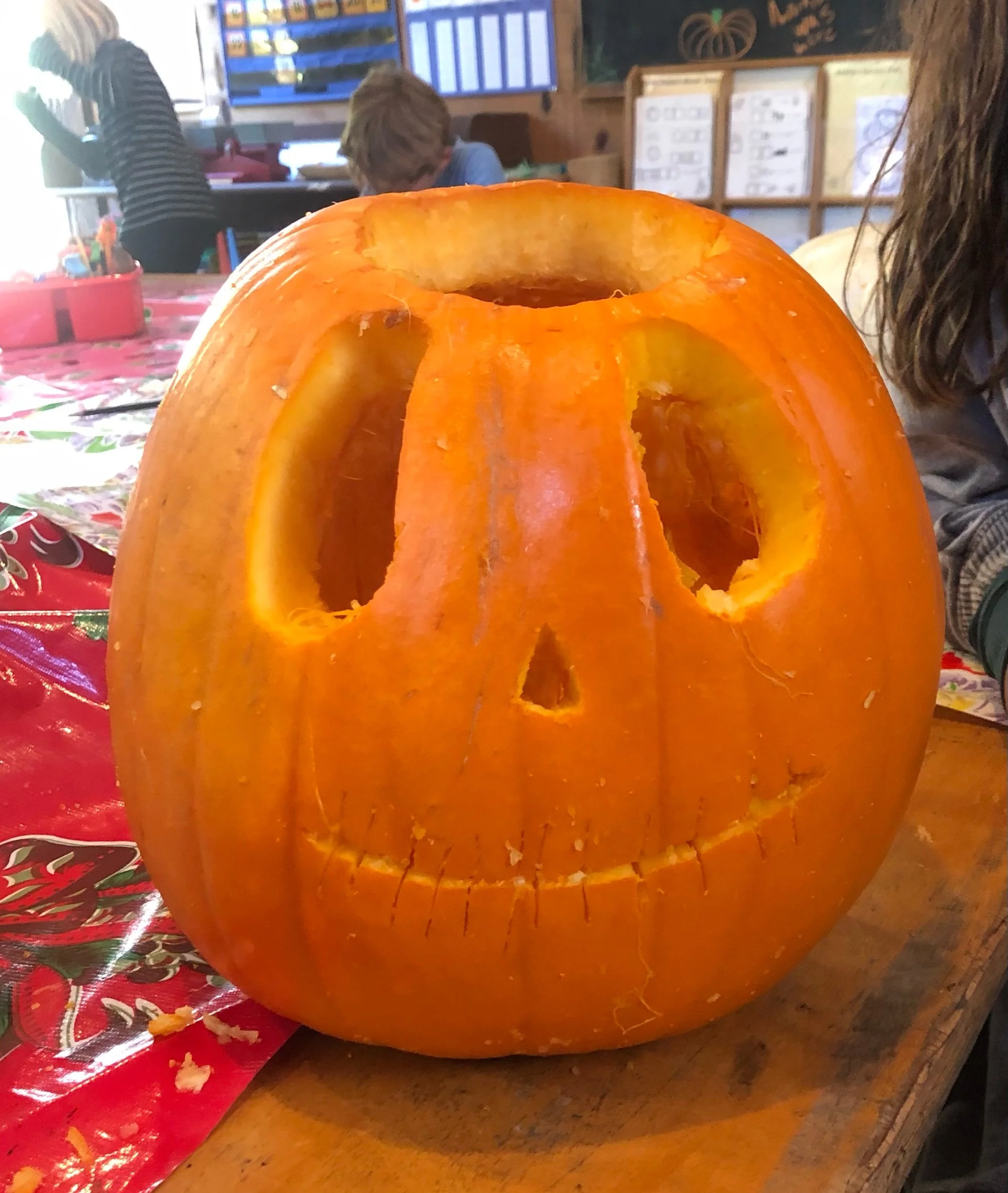
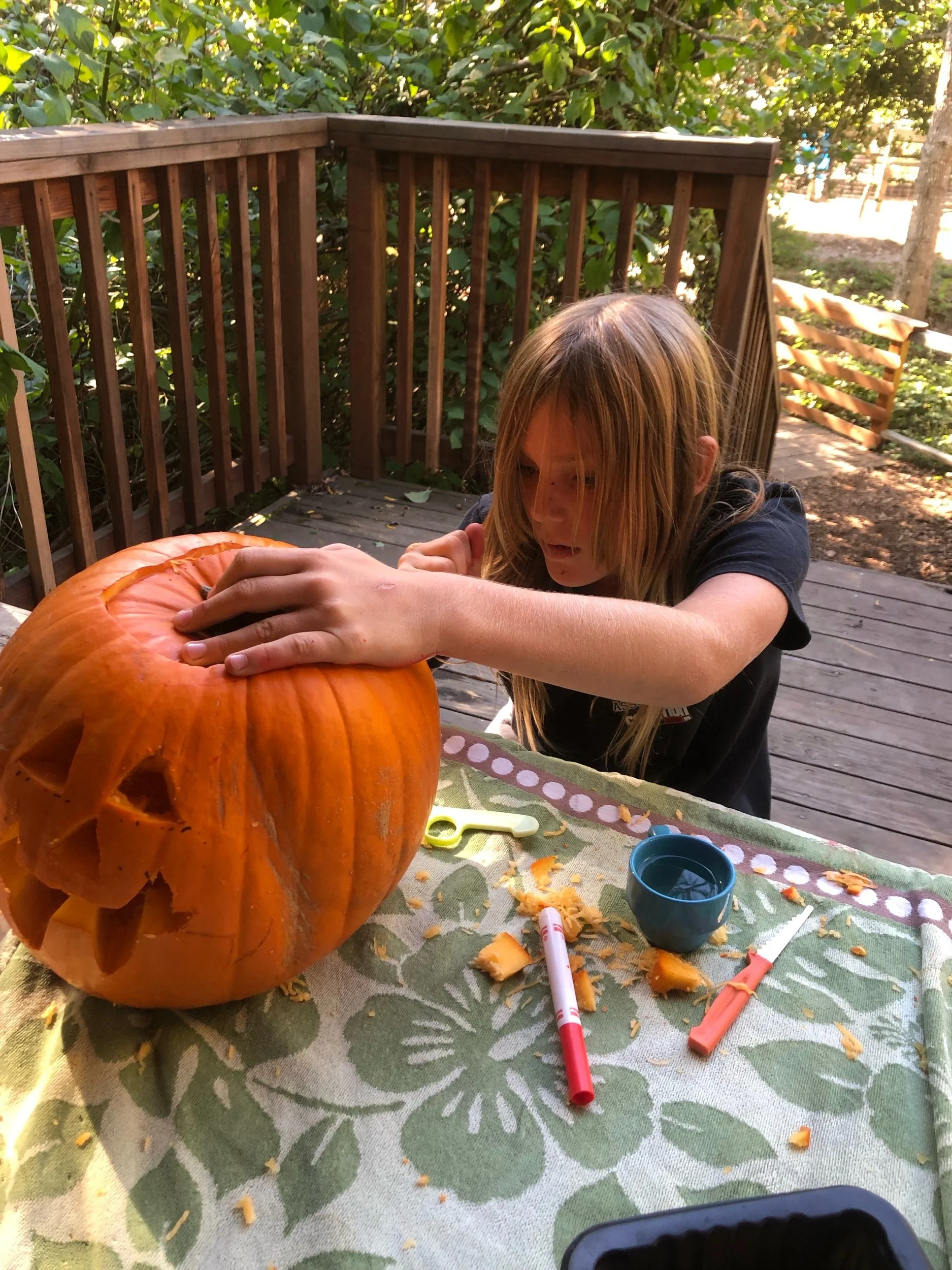
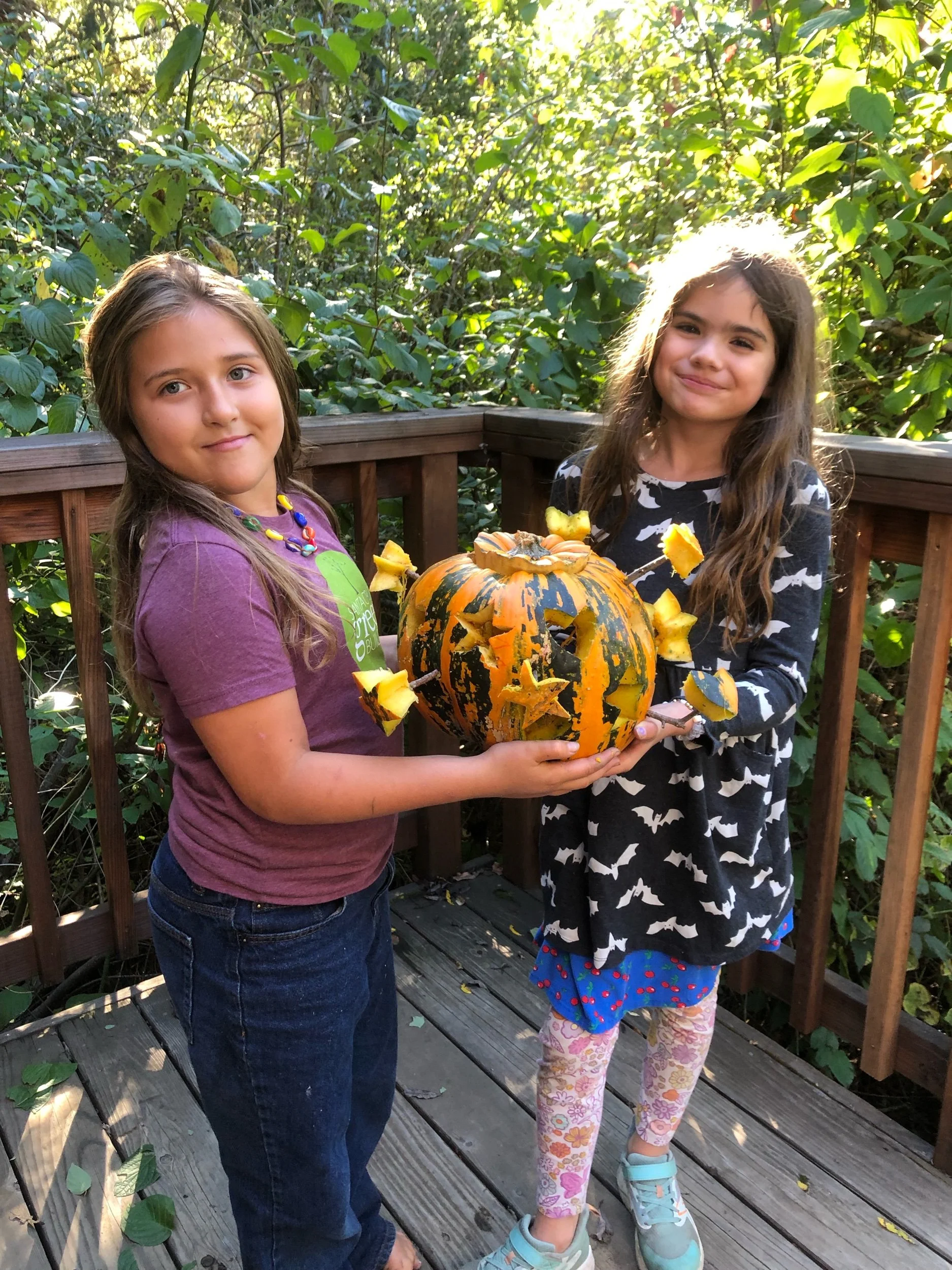
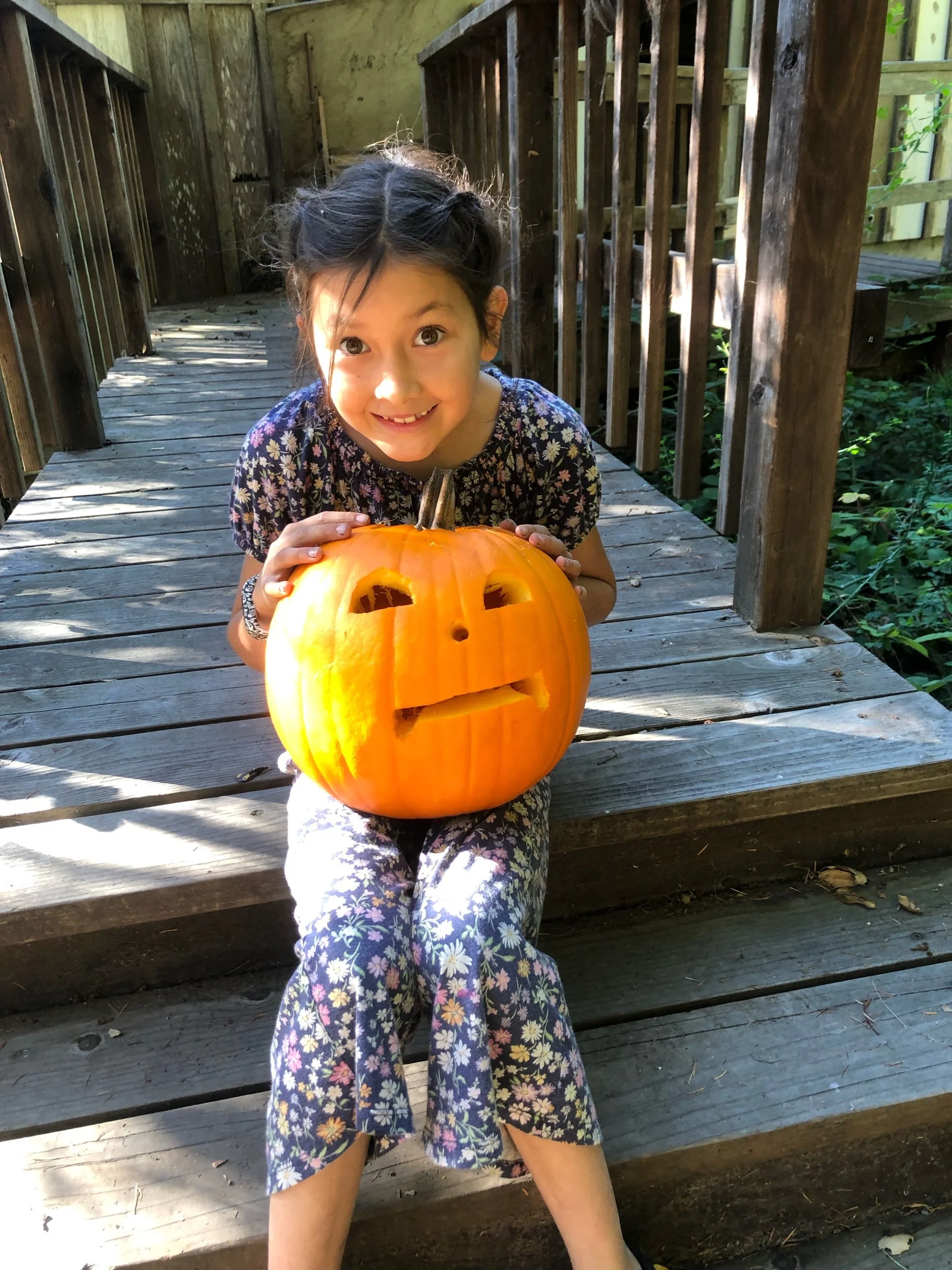
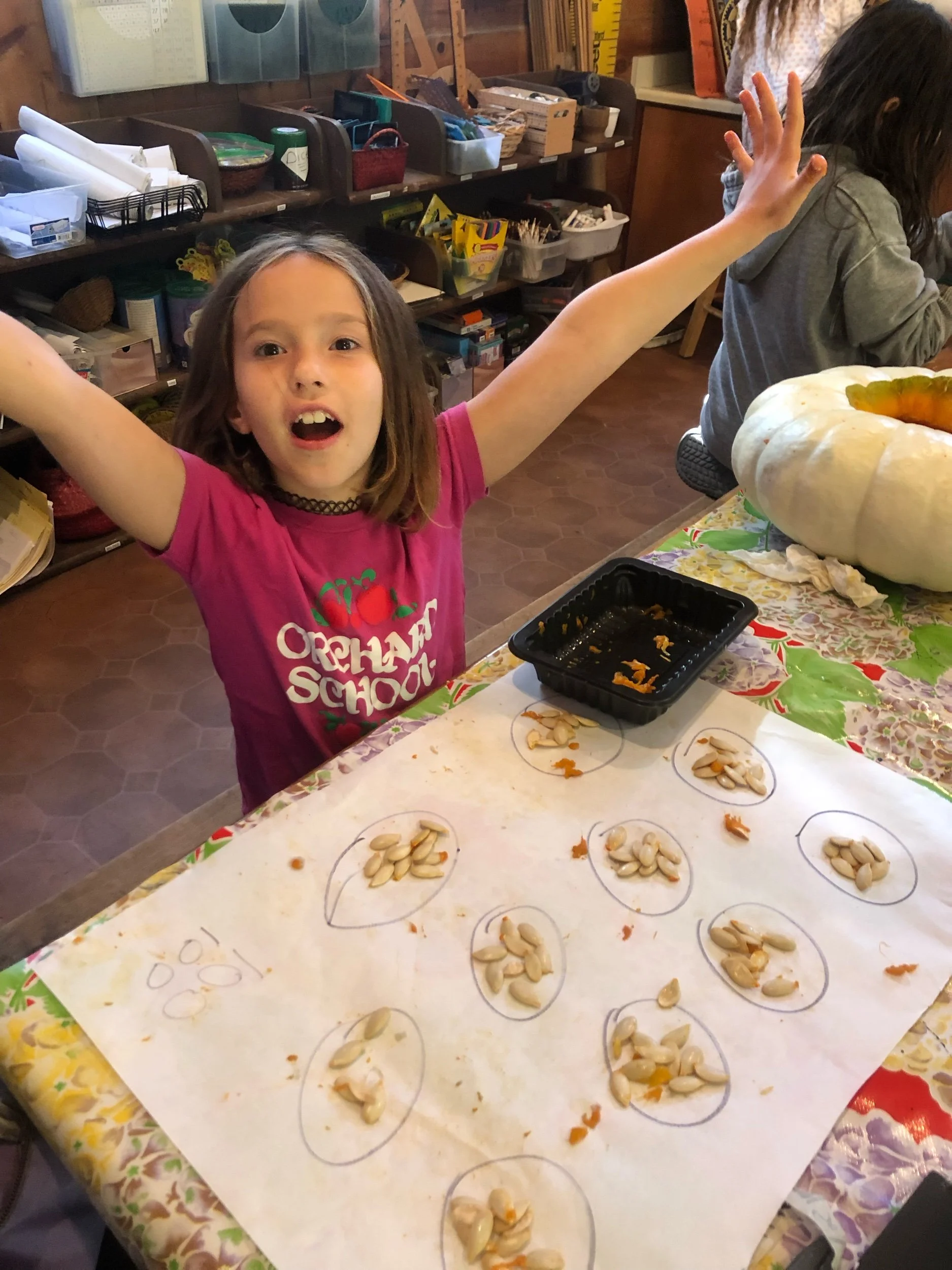
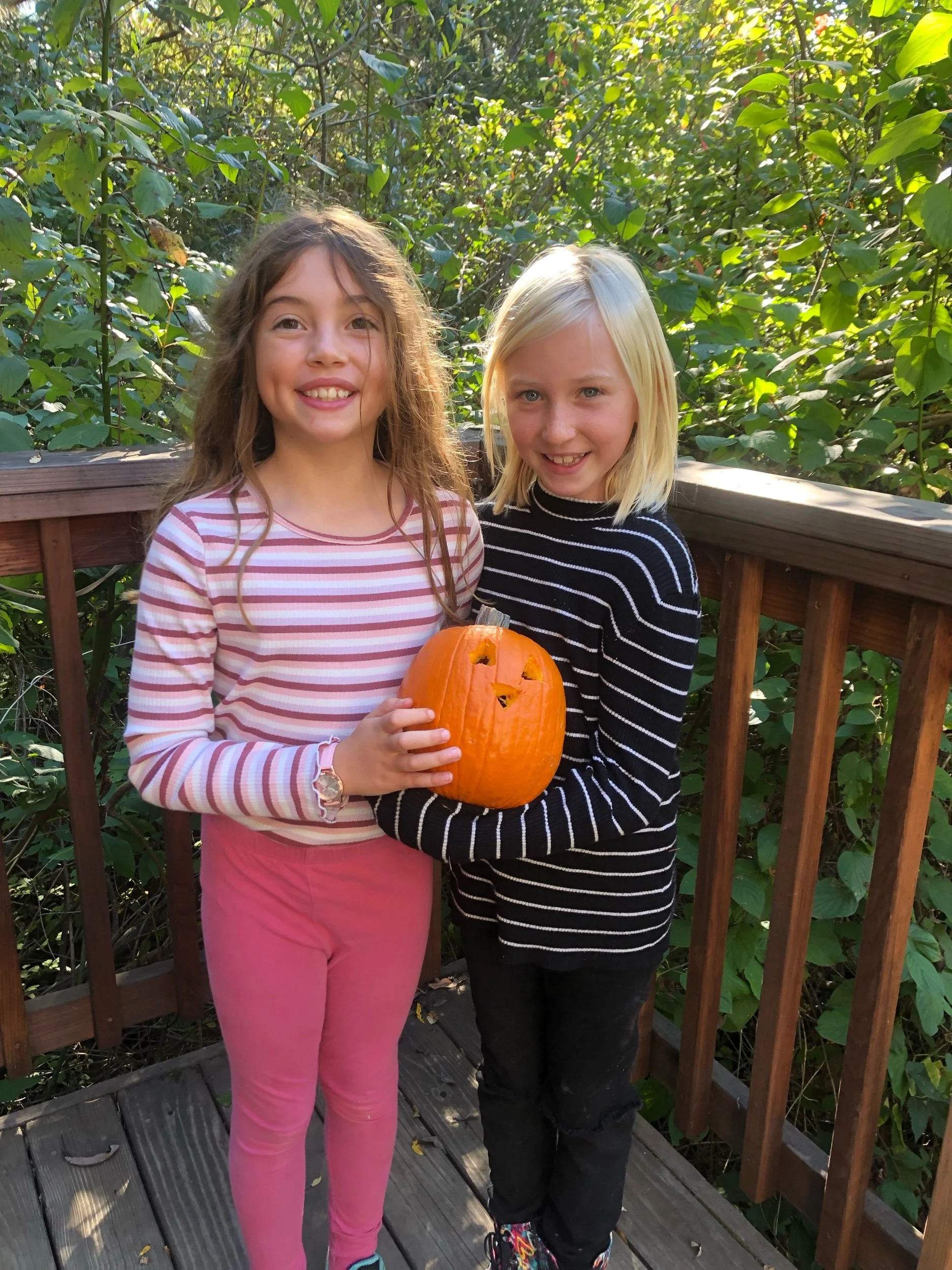
The fall festivities presented us with The Apple Investigation and The Pumpkin Caper. Every year students choose an apple and make predictions as to its weight, circumference and ounces juiced; and then measure, weigh and juice to determine the actual data. As a class, we create a chart that incorporates everyone’s data and then use this data to learn about the terms maximum, minimum, range and mean (average). For the Pumpkin Caper, students formed partnerships and picked one of the pumpkins grown by a second grade family and made predictions as to their pumpkins’ weight, circumference, number of seeds, and whether or not the pumpkin would sink or float. Once again, they measured, weighed, counted and placed their pumpkins in water. They created a class chart of the data and together we discussed the maximum, minimum, range and mean. This week, the fourth grade homework is to discuss these terms with you and report back to the group.
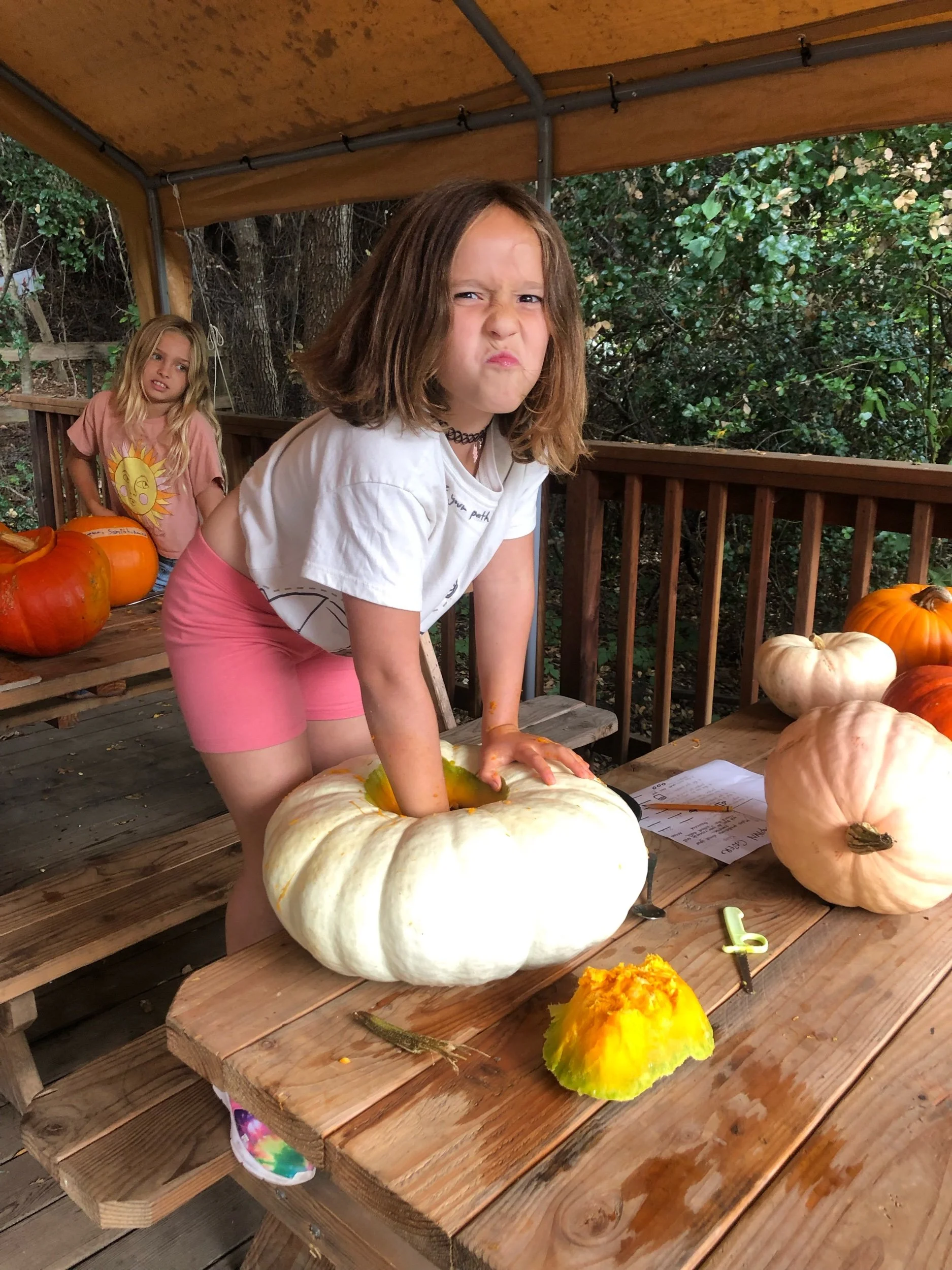
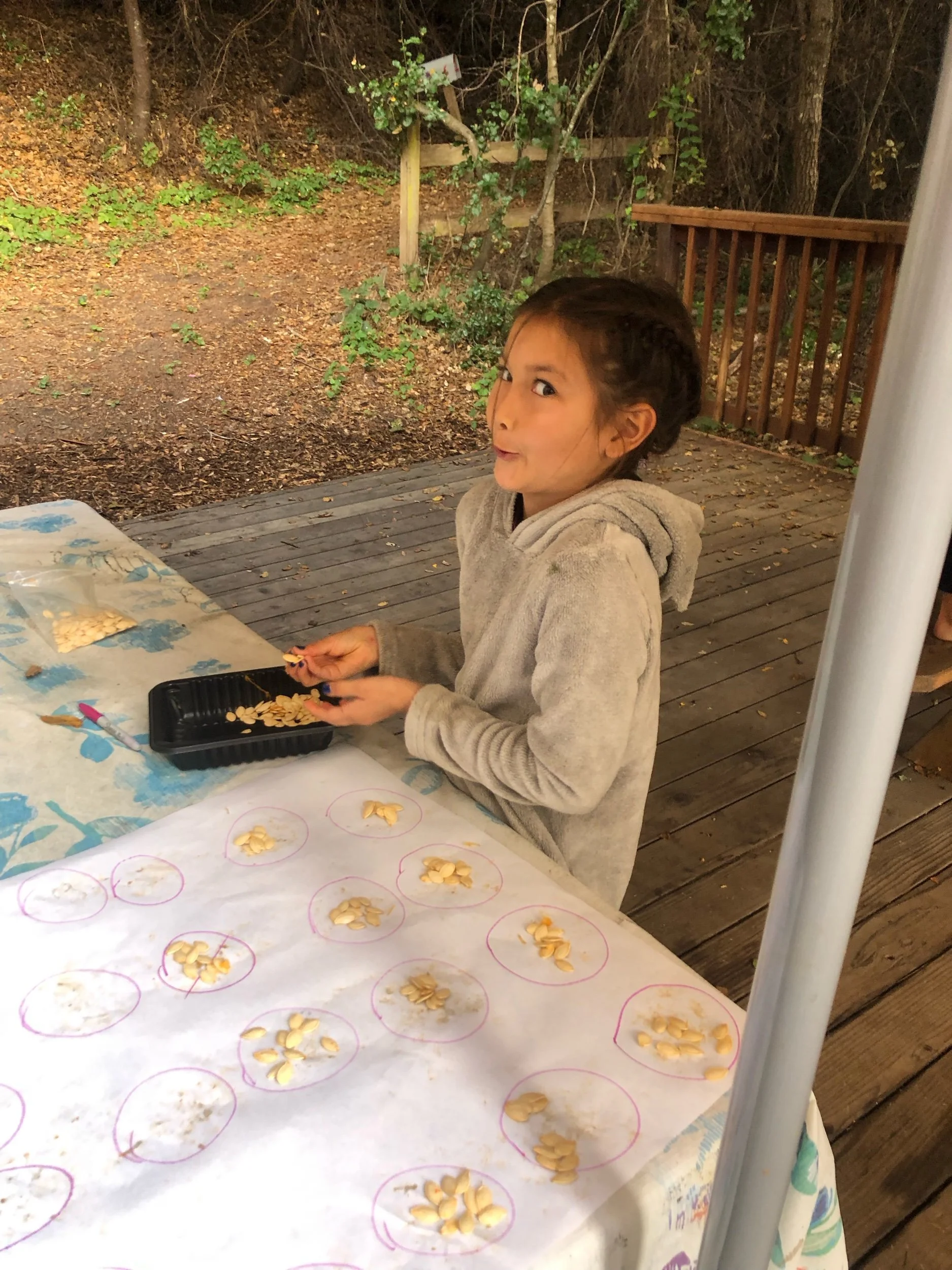
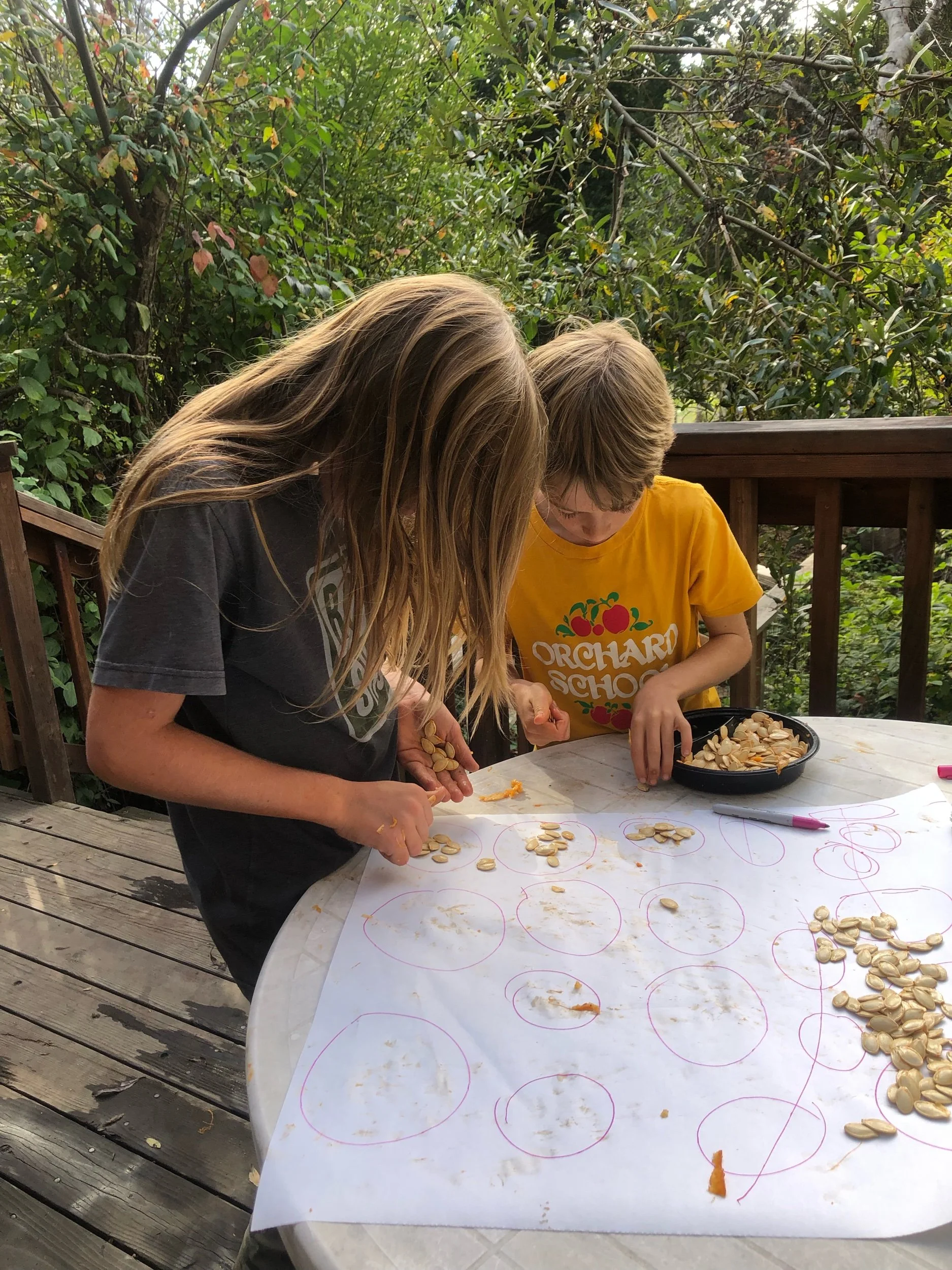
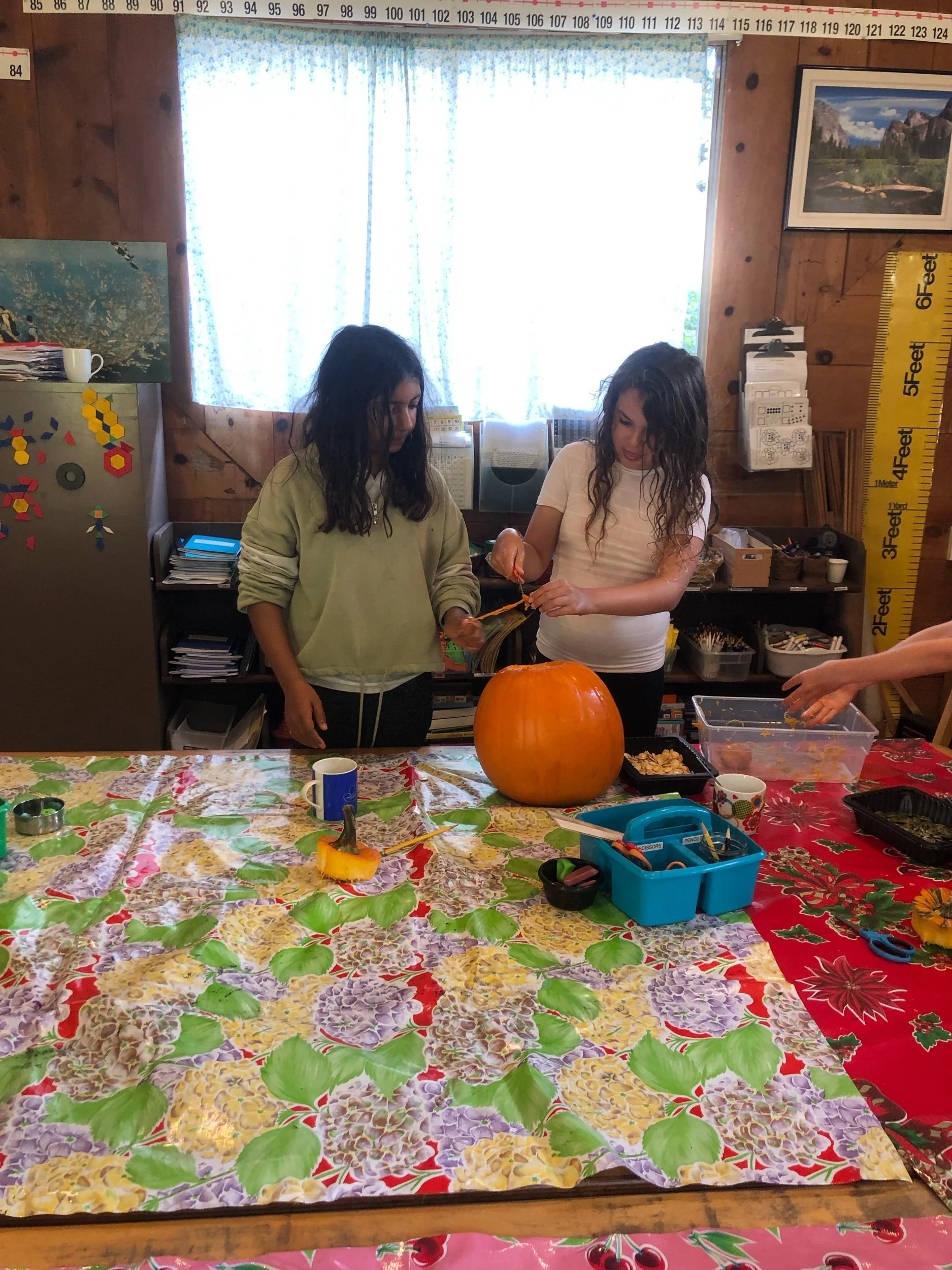
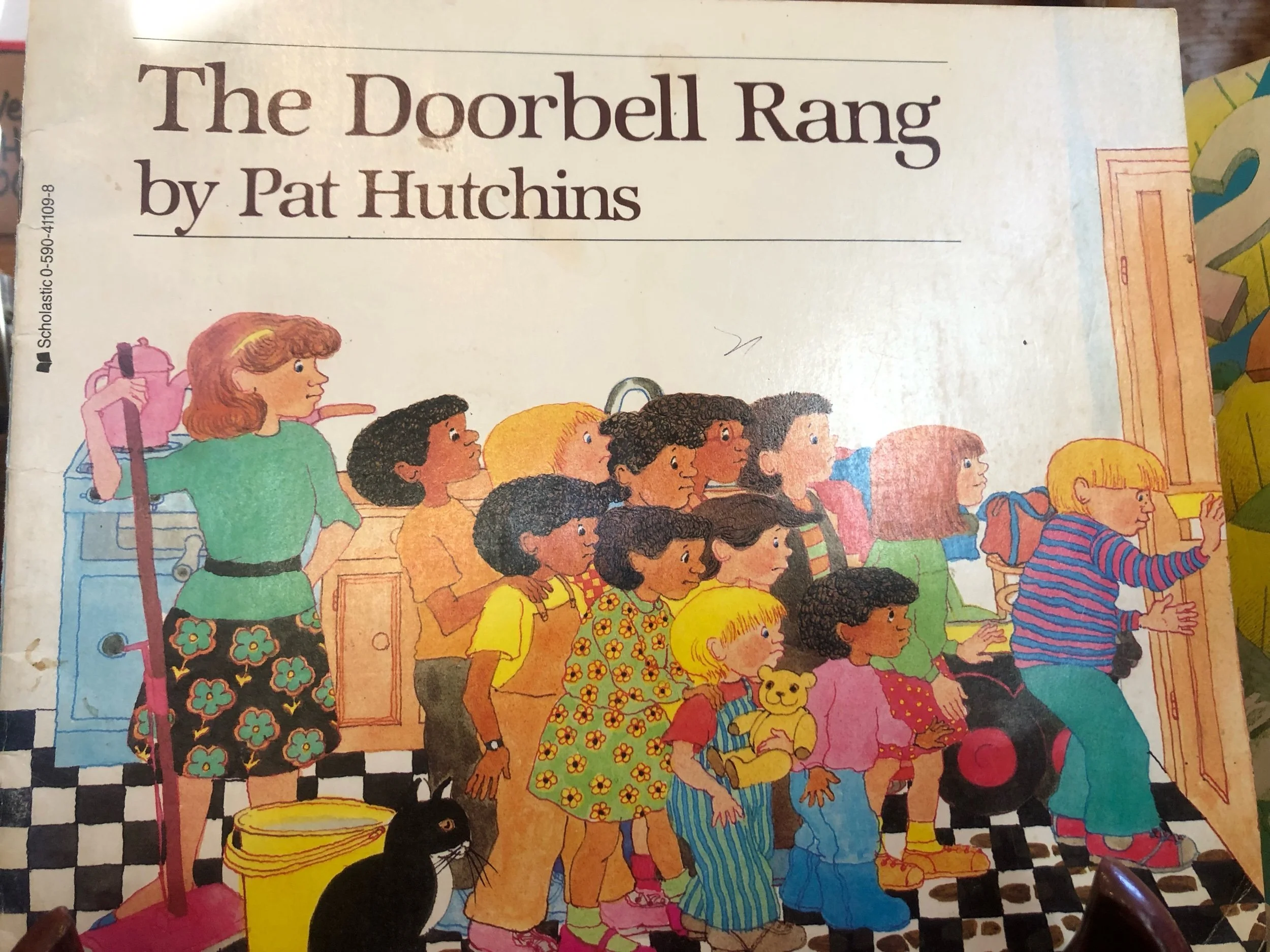
Once the Pumpkin Caper was done, the group was divided in two, with one group working on division and another on multiplication. The division group discussed their understanding of division and the different symbols used to demonstrate a division problem. They solved division problems on how to share money. We read a book called The Doorbell Rang, in which ever larger numbers of children have to share cookies. The students drew an illustration of the book which included the division problems for each group of children and cookies and extended the activity by imagining who rang the doorbell at the end of the book.
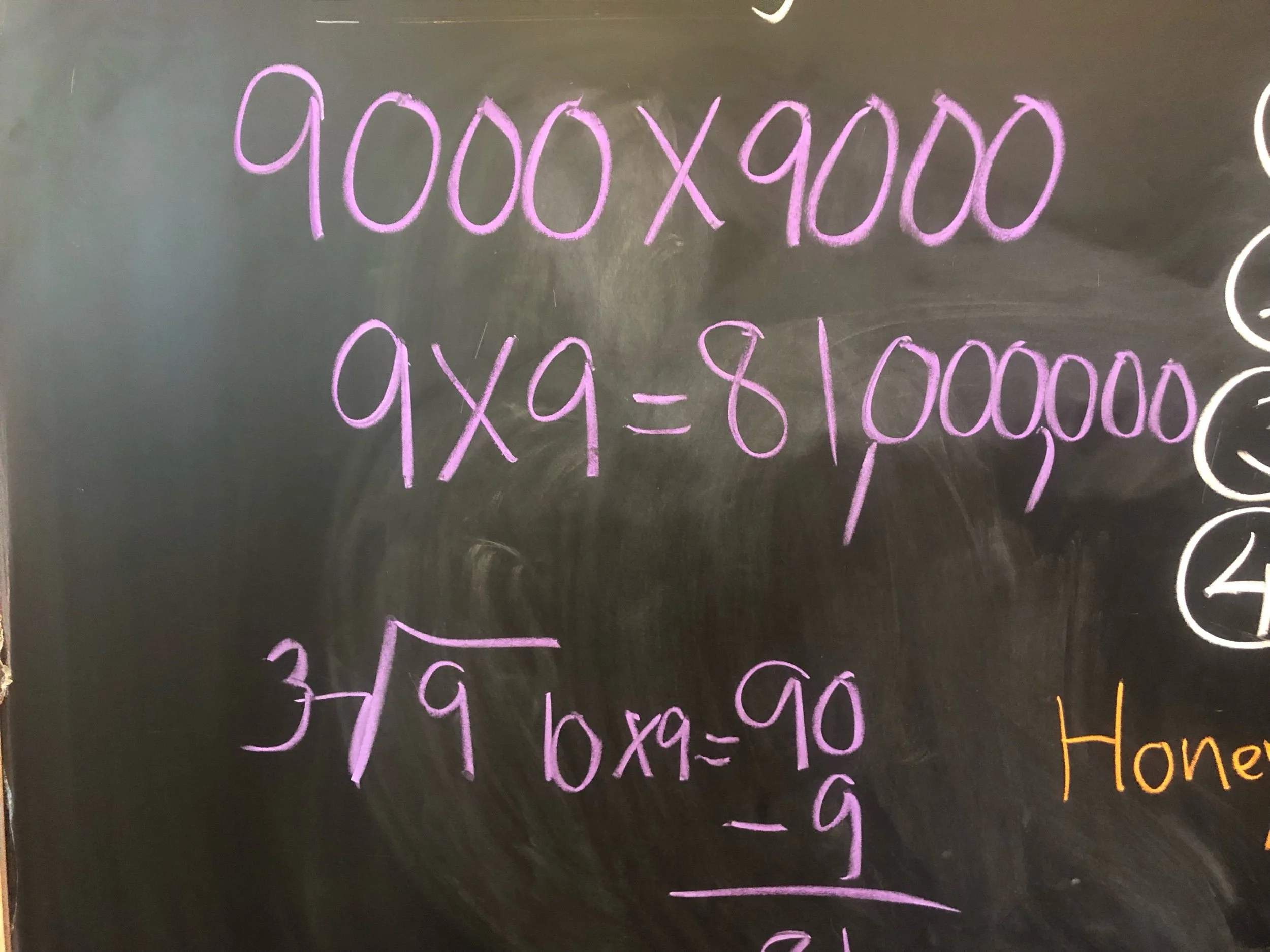
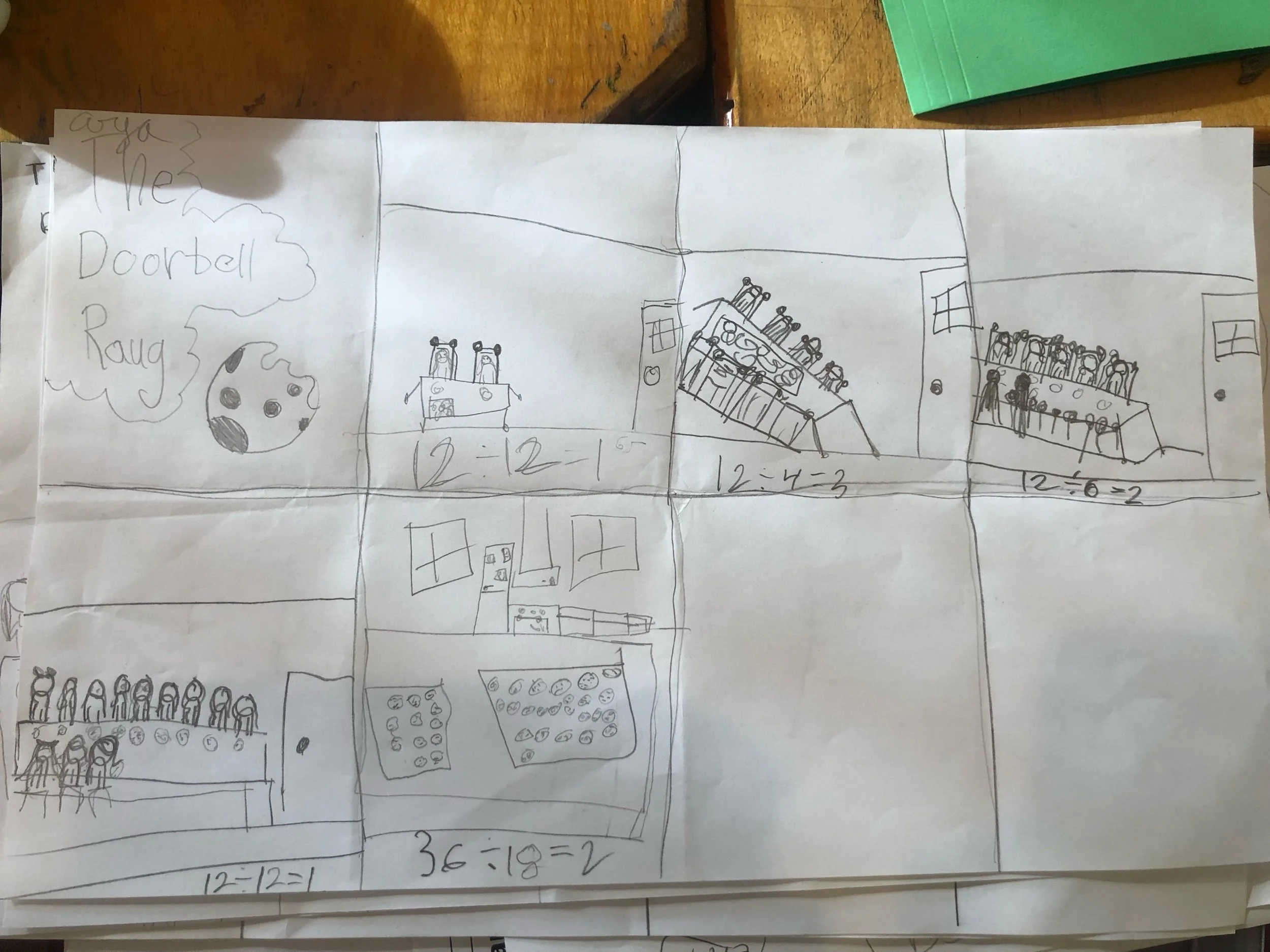
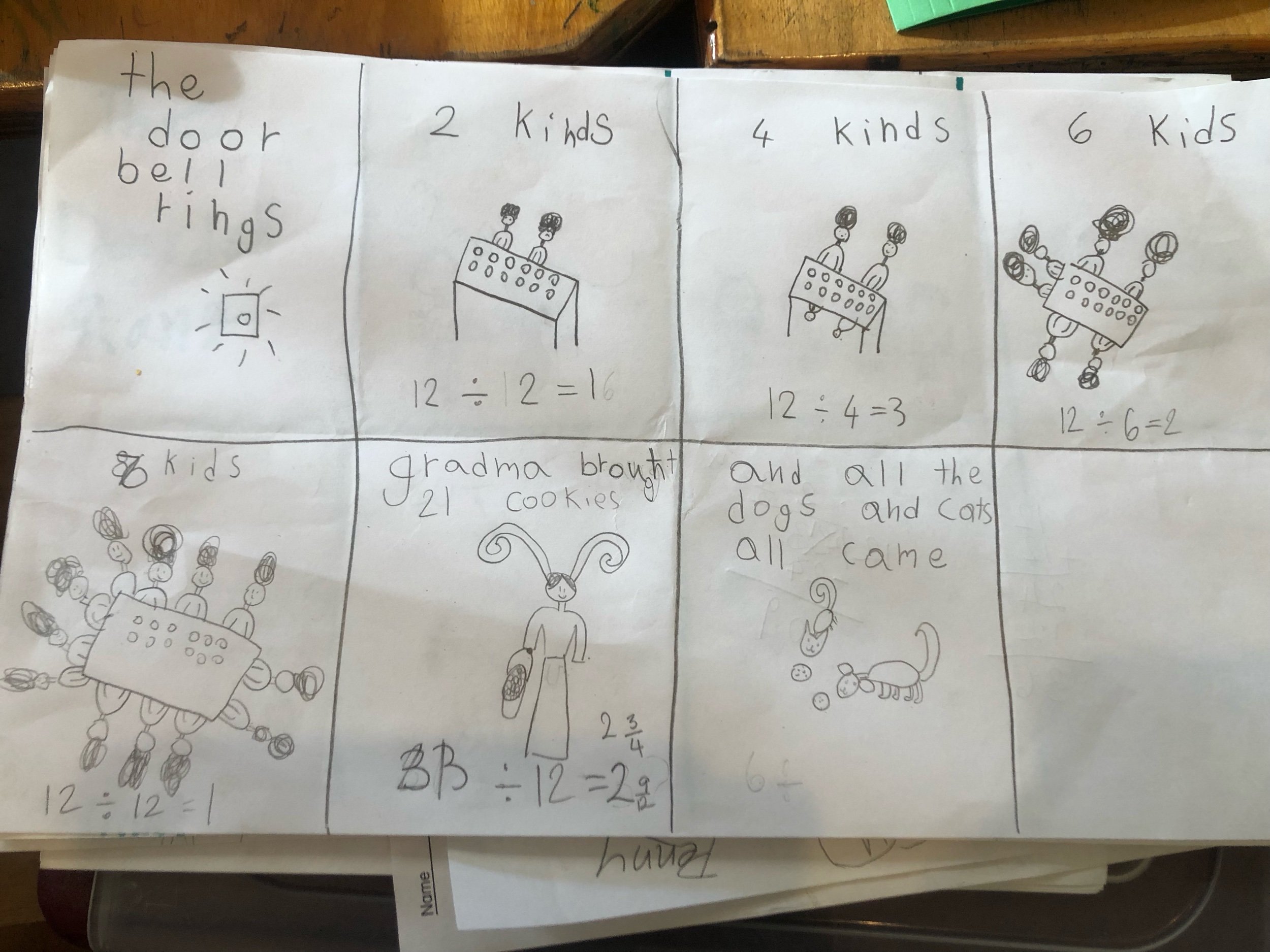
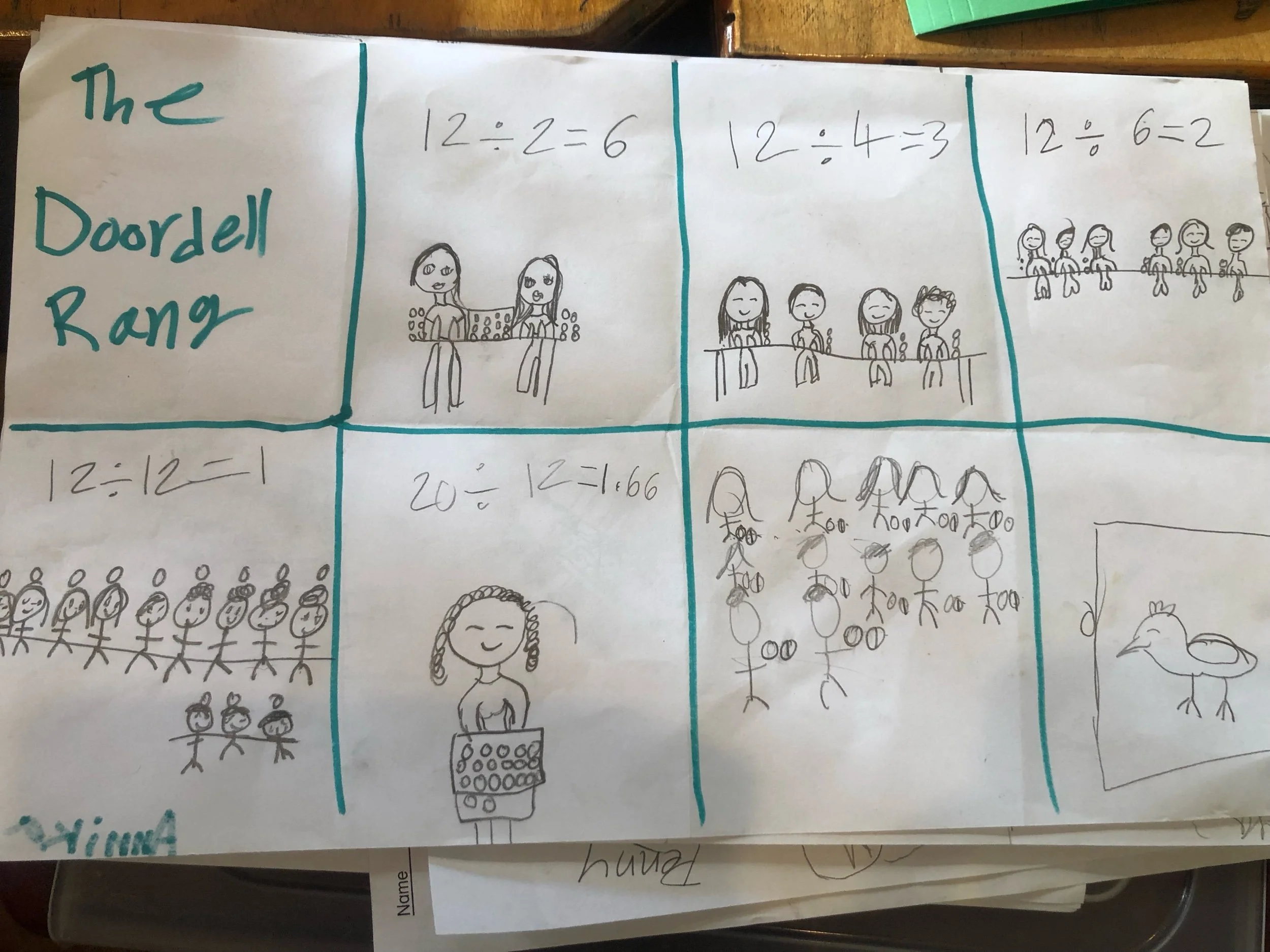
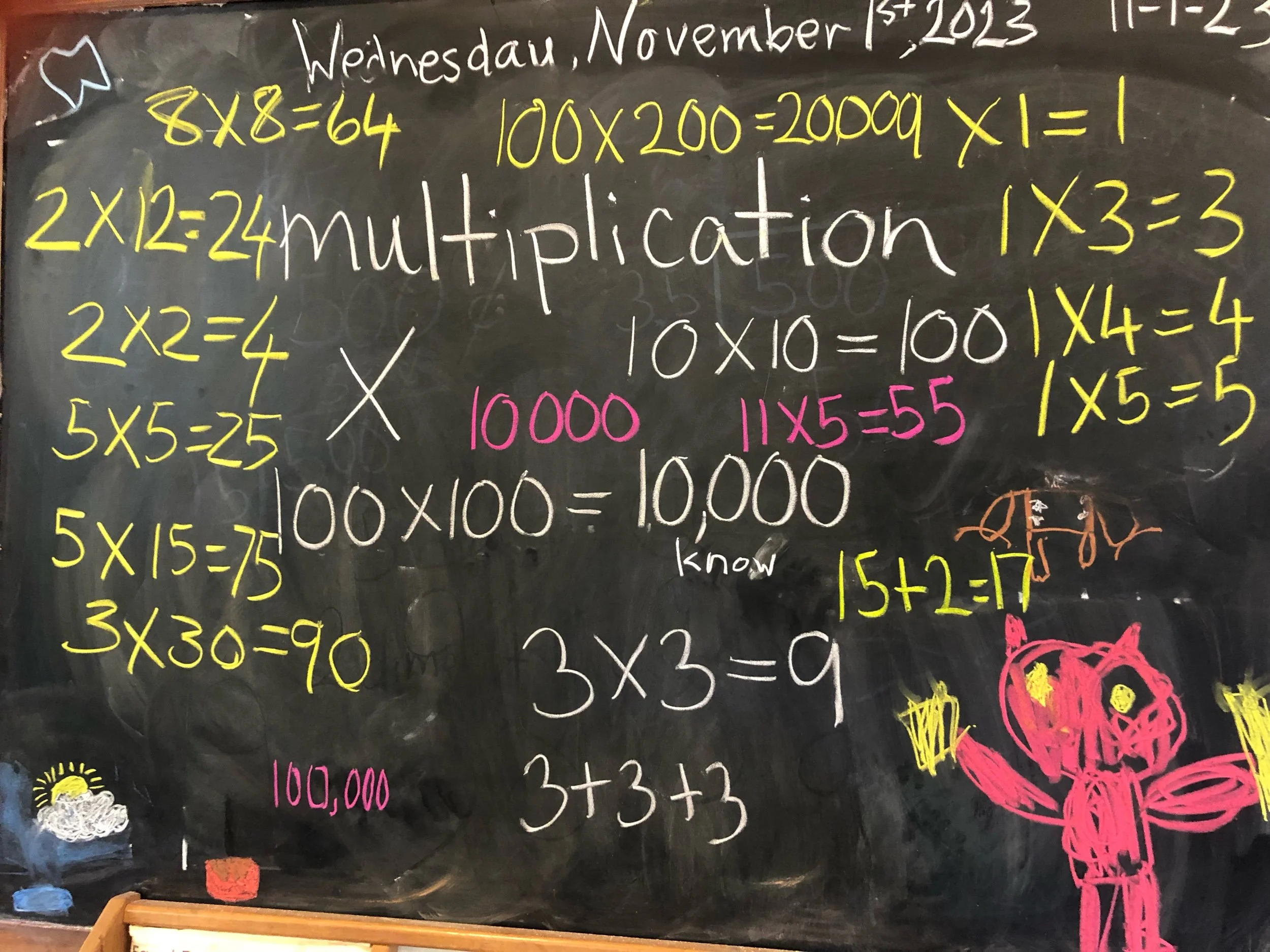
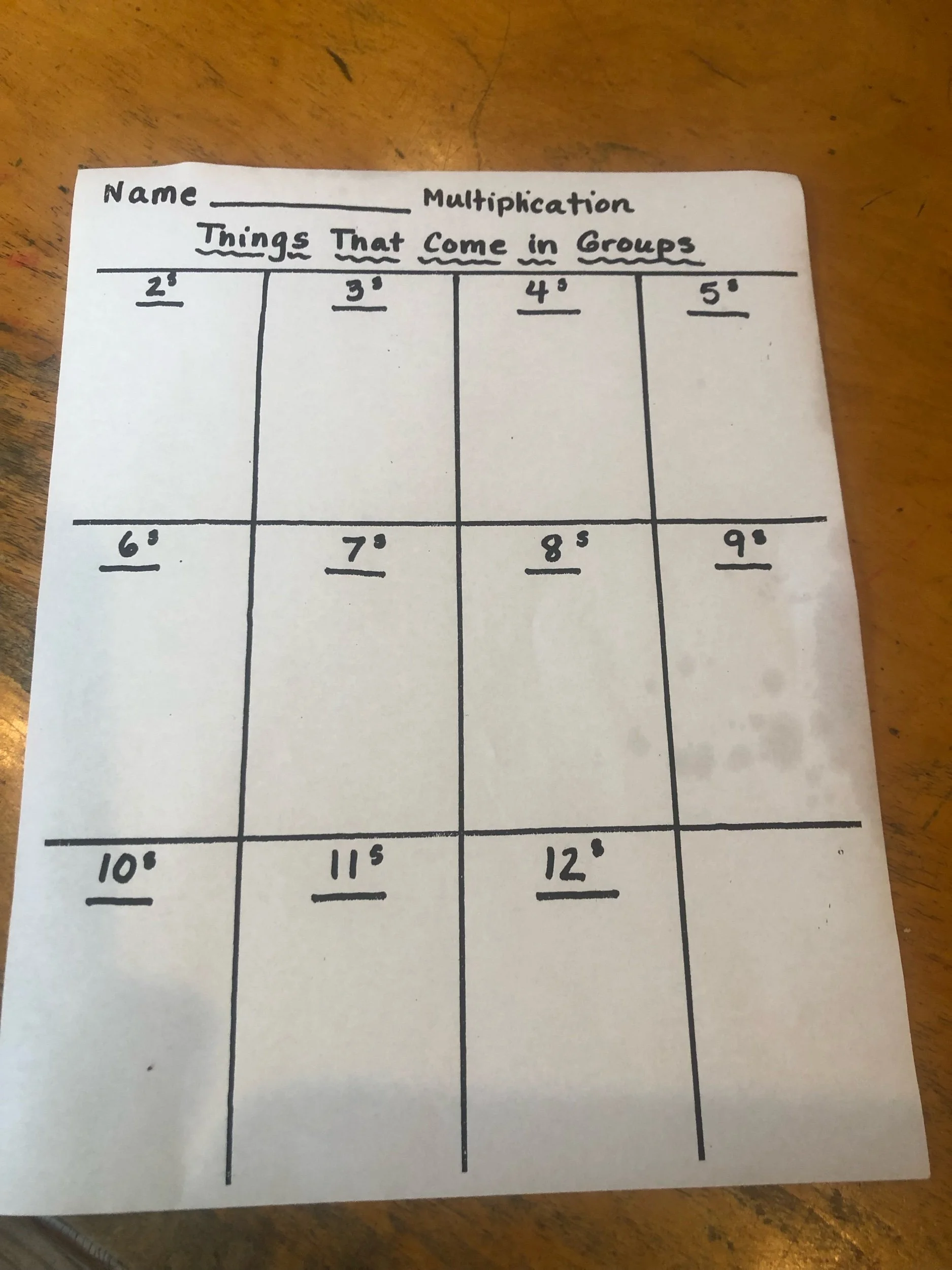
The group of students who are working on multiplication began by discussing what multiplication means to them and what they know about multiplication. They continued by solving the chopstick problem, a problem which requires understanding how to double, or multiply by 2. They then began creating a class poster of Things That Come in Groups, and brought a sheet titled Things That Come In Groups home for homework. We will be using this chart for them to work on multiplication tables through 12. Students practiced multiplication by playing a game called Circles and Stars; their homework for this week is to play with a friend or family member.
At Back to School night I mentioned that I would begin to assign homework as I feel that is an important connection between home and school and gives families an insight into what we are working on in class and your child’s understanding of these concepts. Homework will usually be assigned on Monday and due on Thursday.
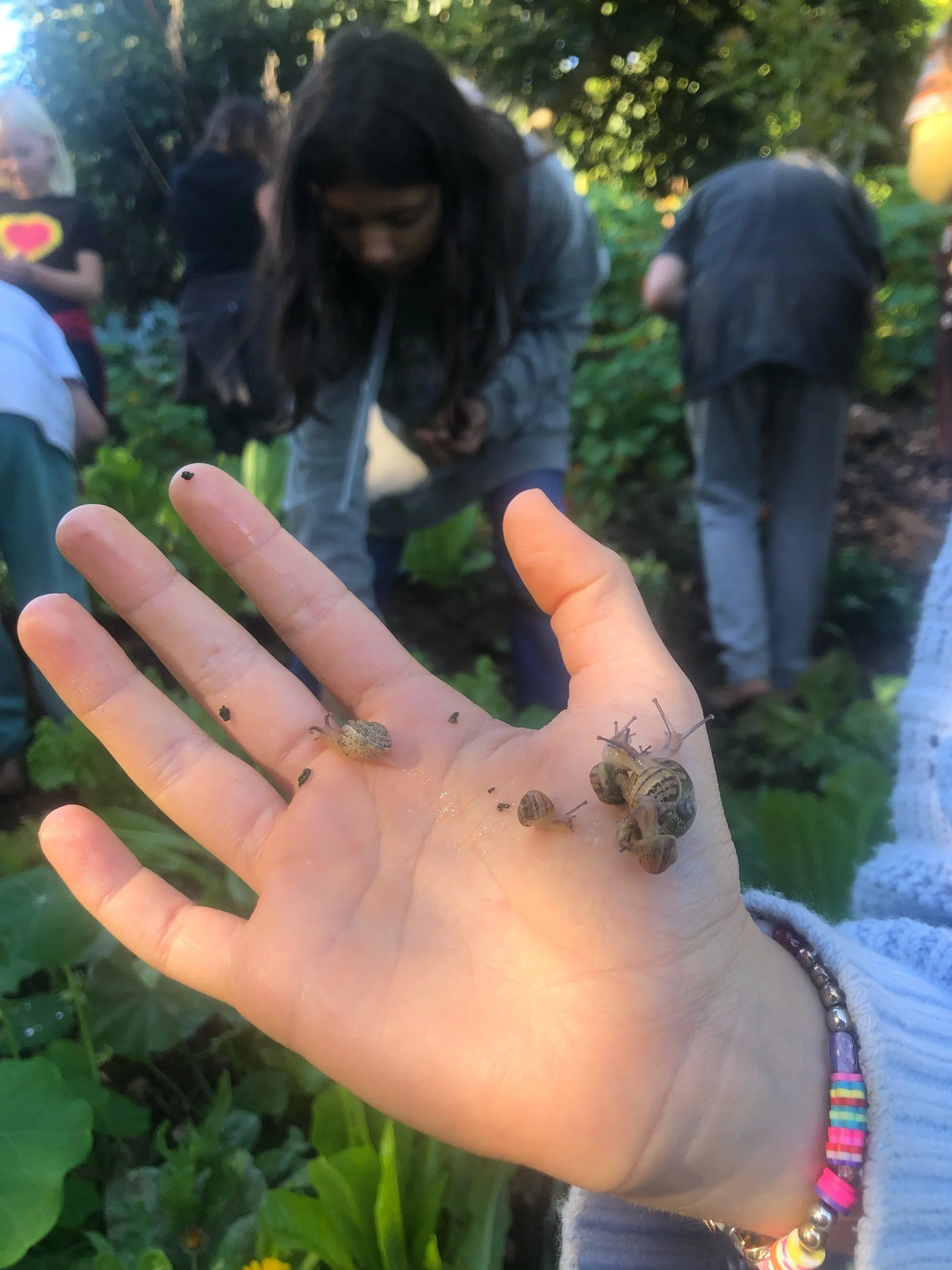
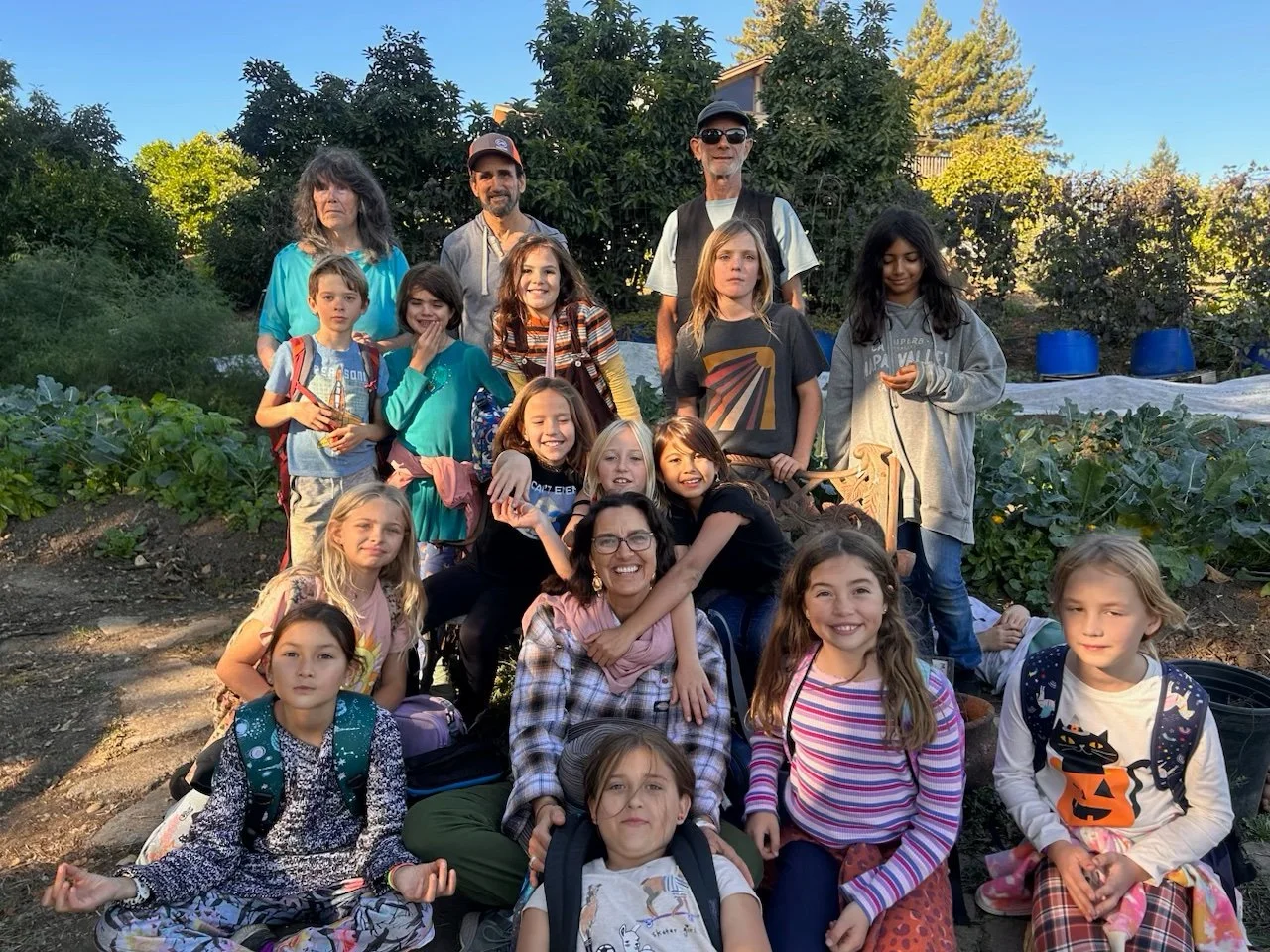
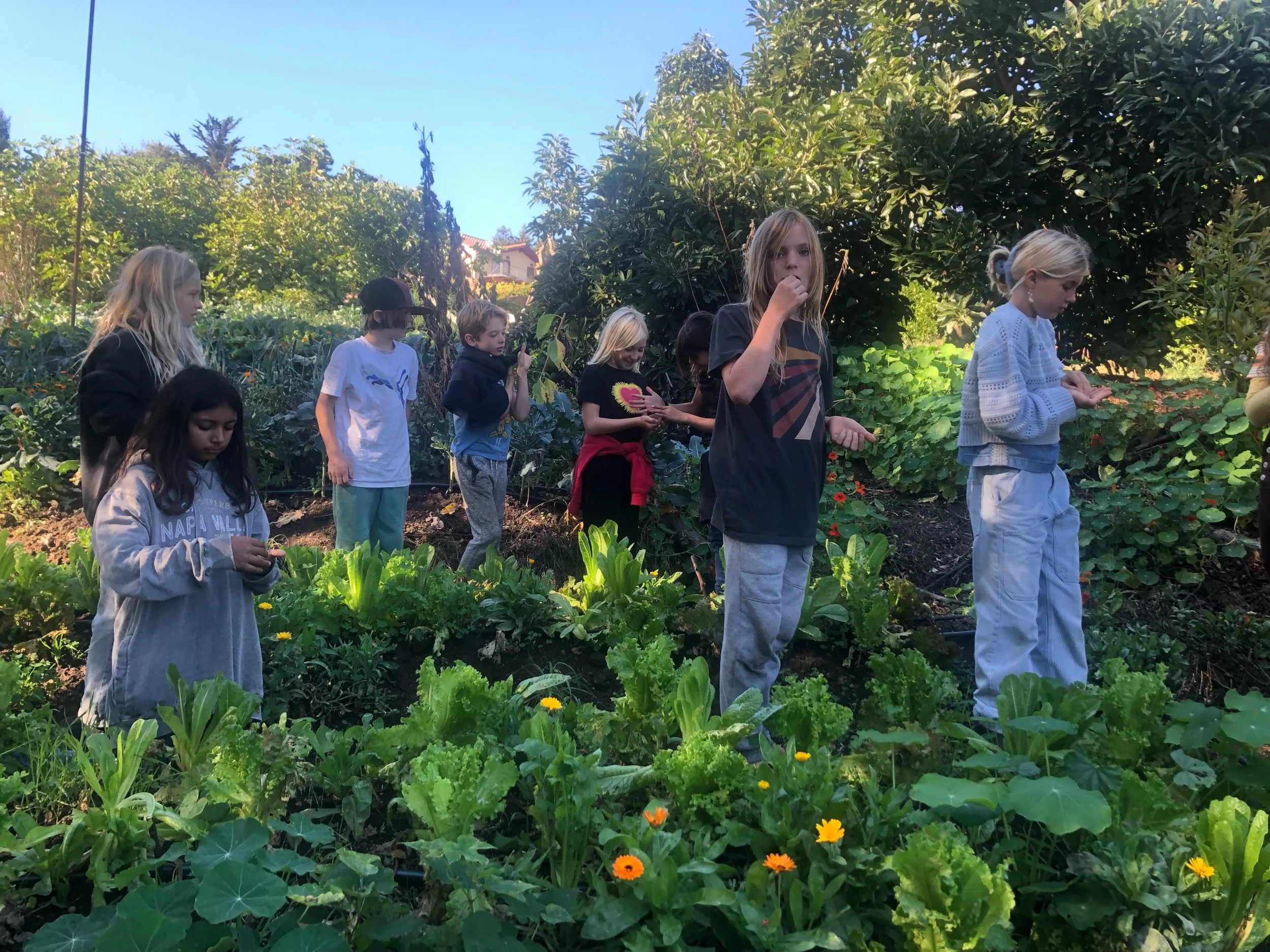
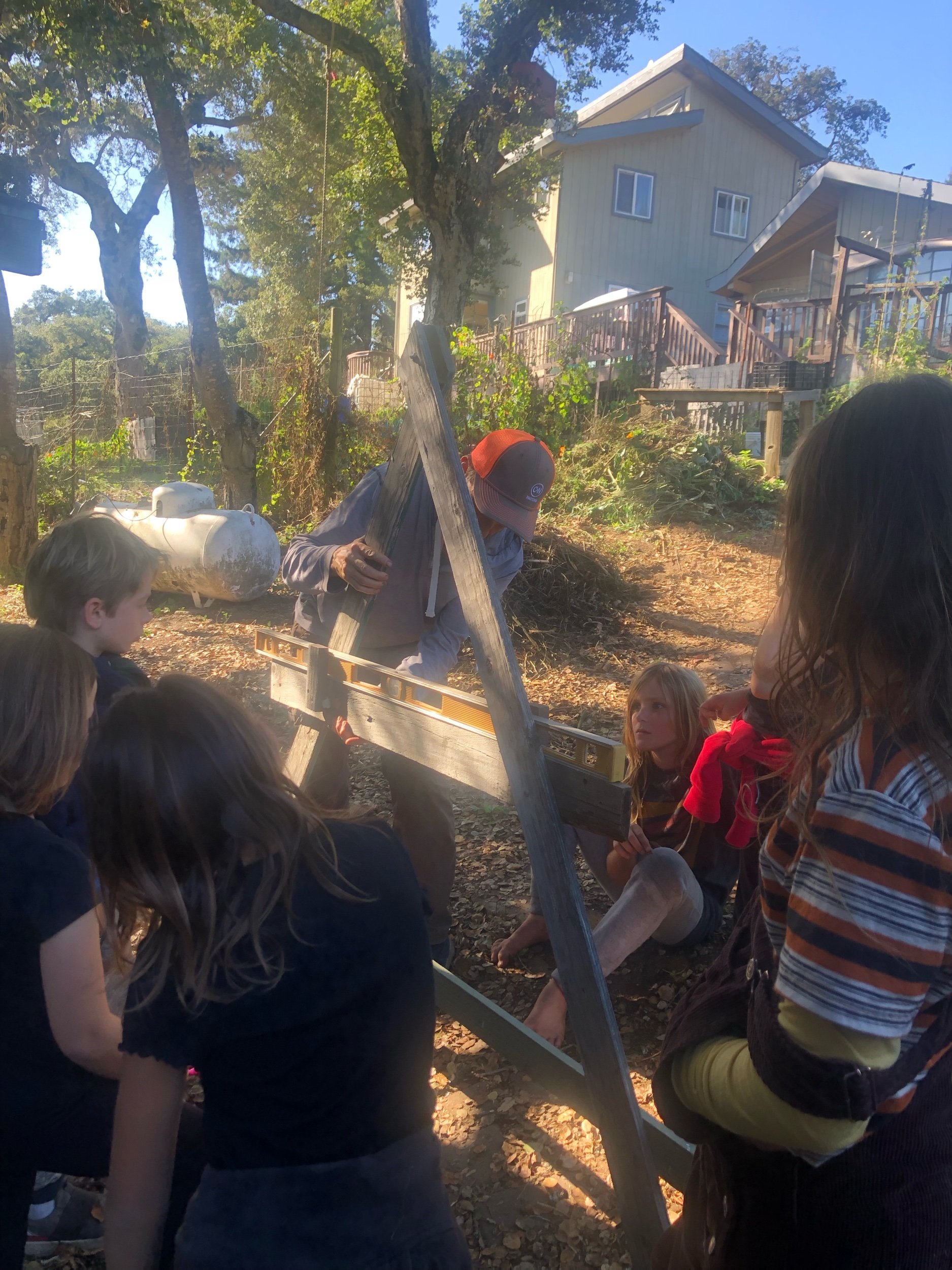
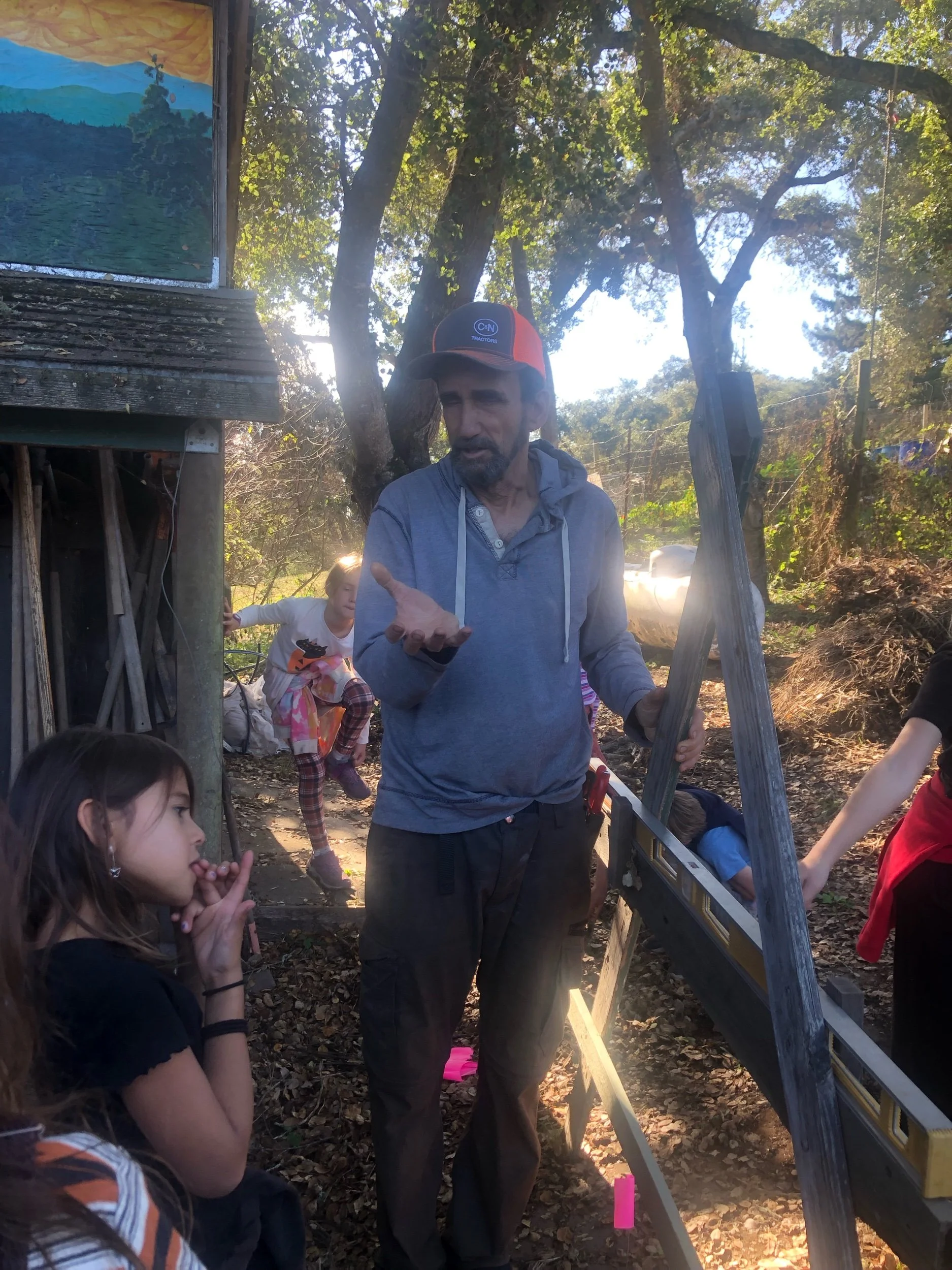
And…I almost forgot. We had our field trip to Ken’s farm, Bobcatridge Avocadoes, and it went really well. Huge thanks to Rock, Linda and Shannon for helping to drive and manage and Vanessa for walking over and joining us. We explored the property, picked slugs and snails off the lettuce (a bit controversial as a few students wished to save the slugs), discussed compost, avocado trees, unusual fruit, tasted mandarinquots and lettuce, and had a demonstration on how to use an A frame to either create a level line on one’s land or to create a slope. Thank you Ken!