
Science
In science this month, November was dedicated to studying how different types of fossils are formed and some of the methods paleontologists use to discover information about dinosaurs.
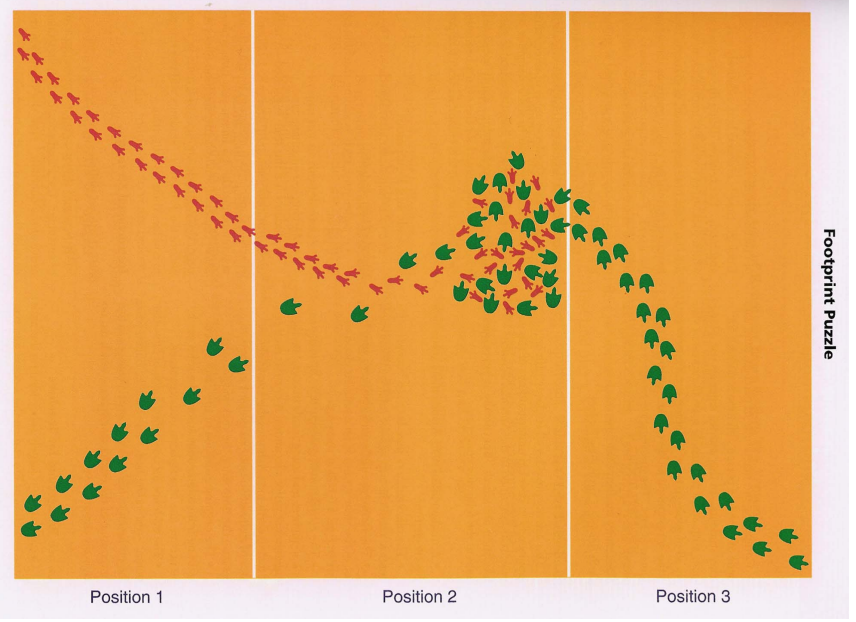
Students studied a map of dinosaur footprint trace fossils and made group predictions about dinosaur behaviors as more and more tracks were discovered.
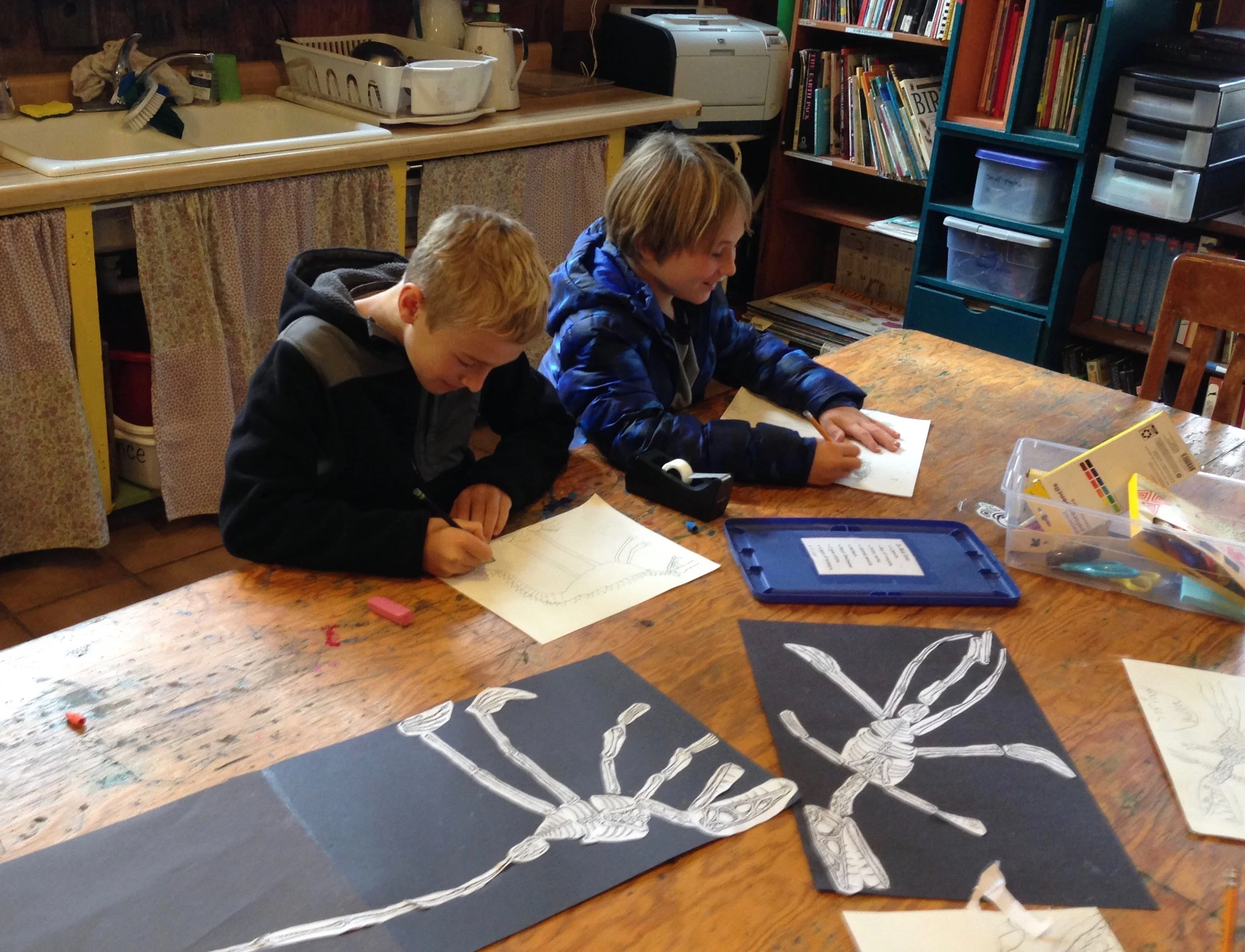
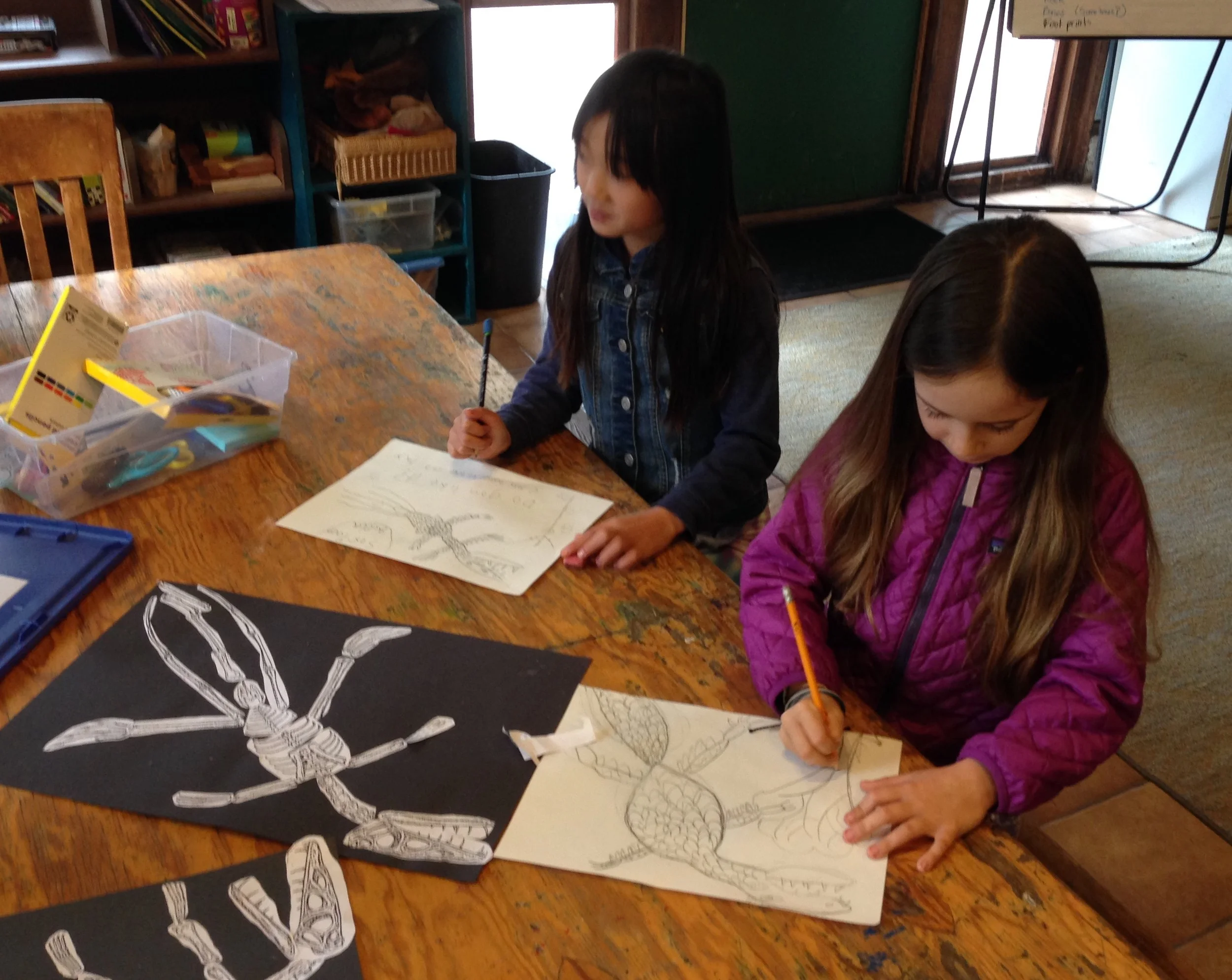
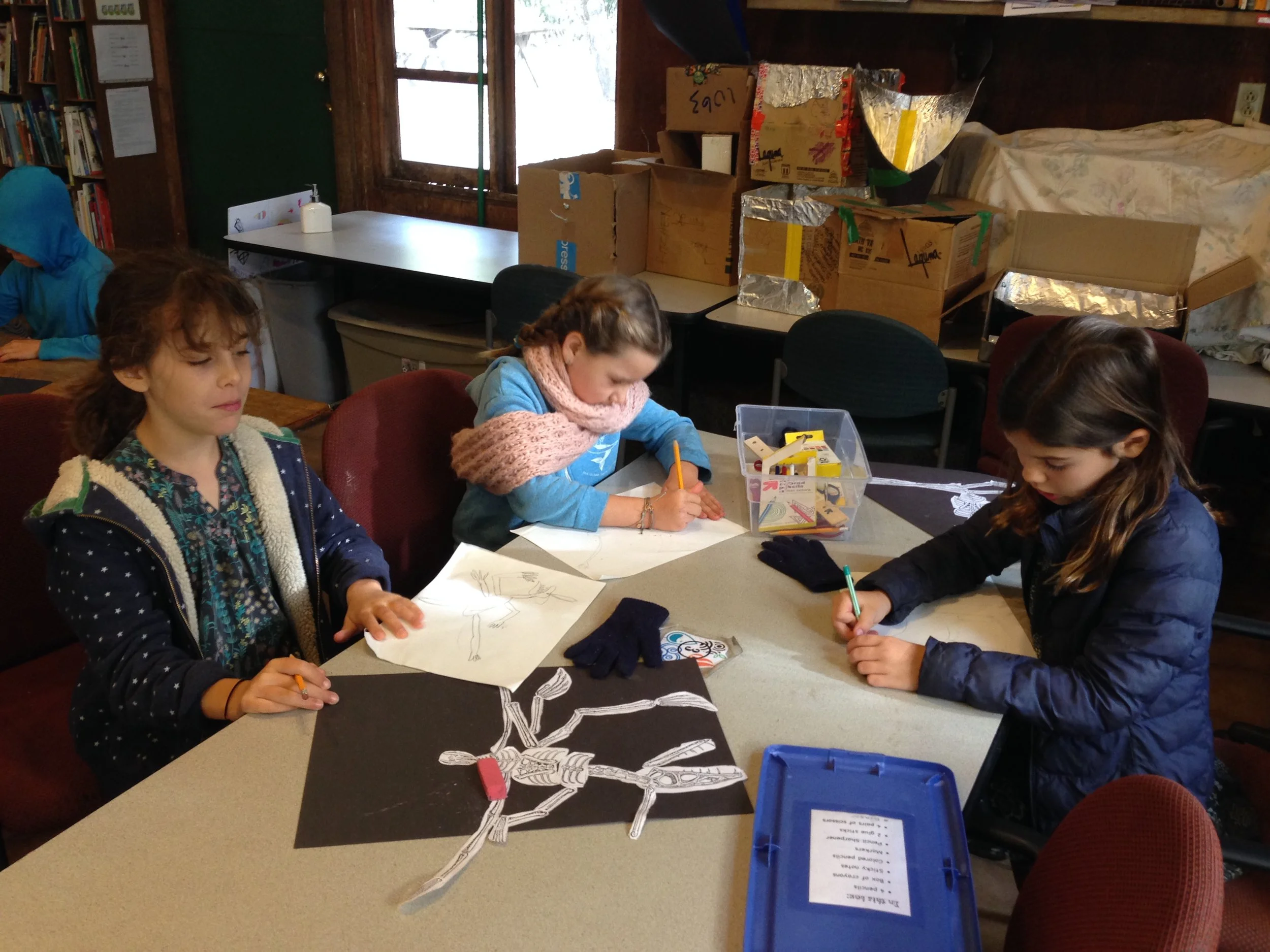
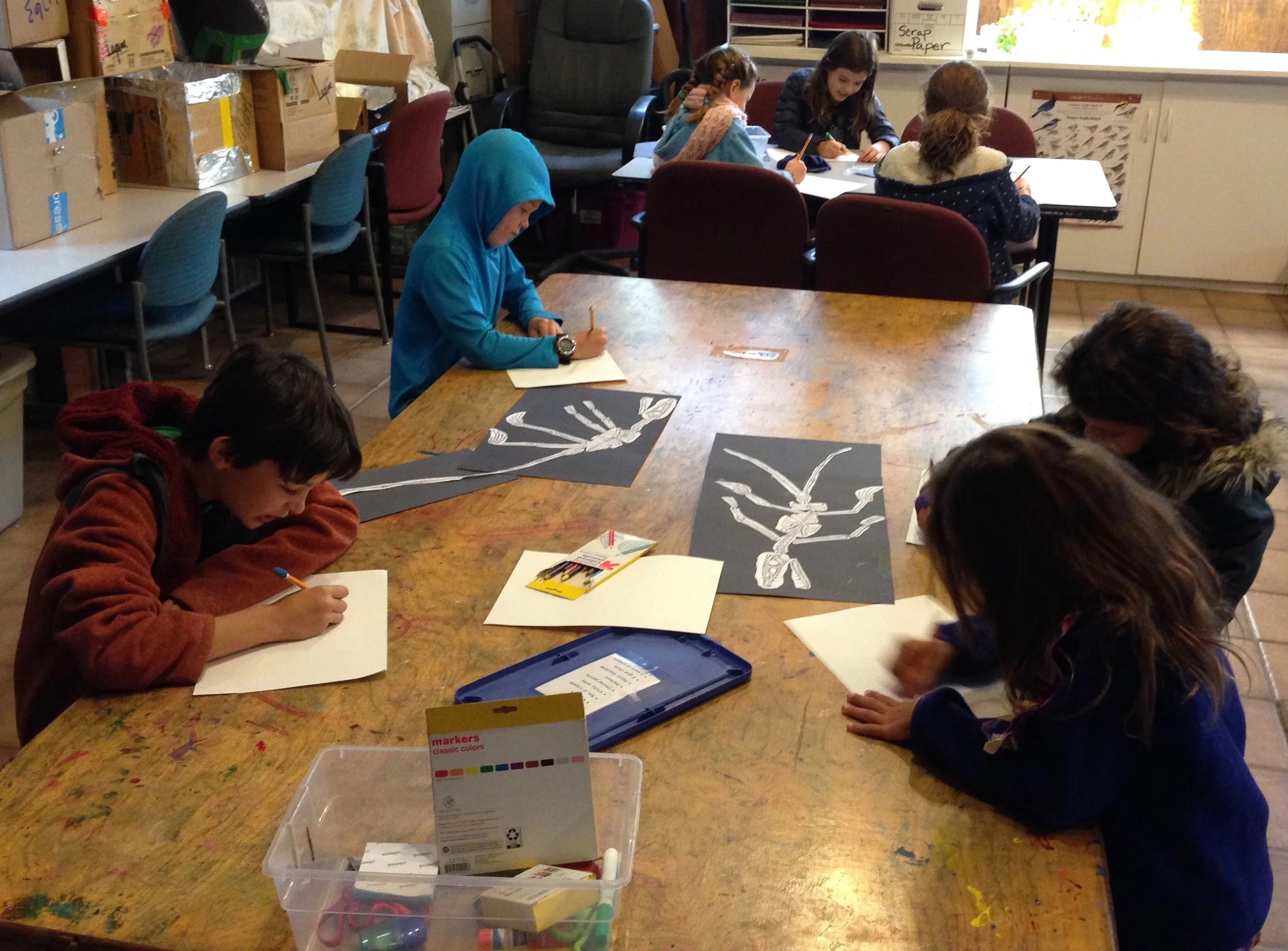
Partner teams were given a mixed up set of dinosaur bones and asked to rearrange them to create a complete dinosaur skeleton. Once teams agreed on their arrangement, students then drew a picture of what the dinosaur may have looked like and its habitat.
Students discovered how cast and mold fossils are formed, and used clay and plaster to recreate the process.
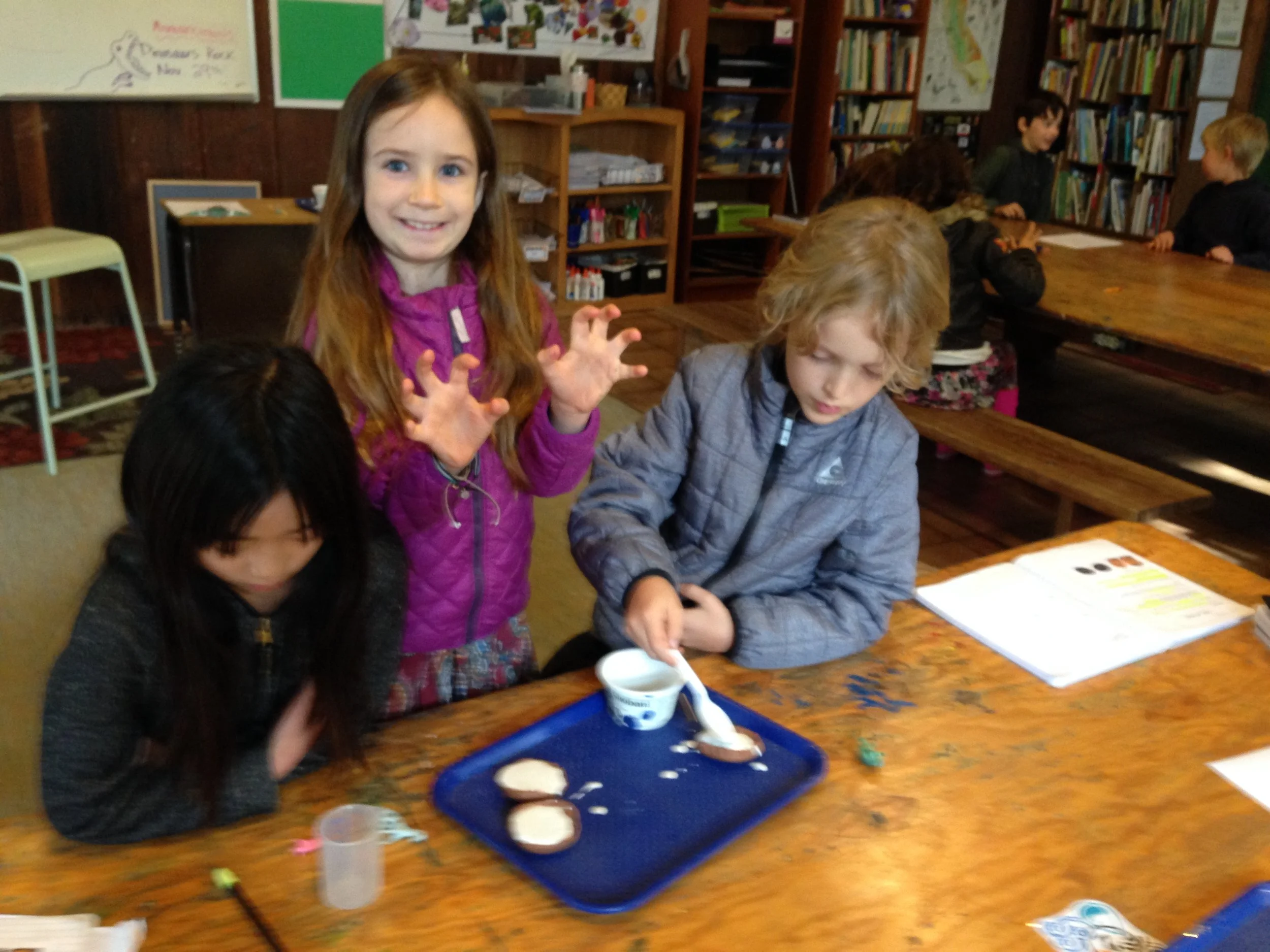
Using clay as our mold and plaster to create the cast.
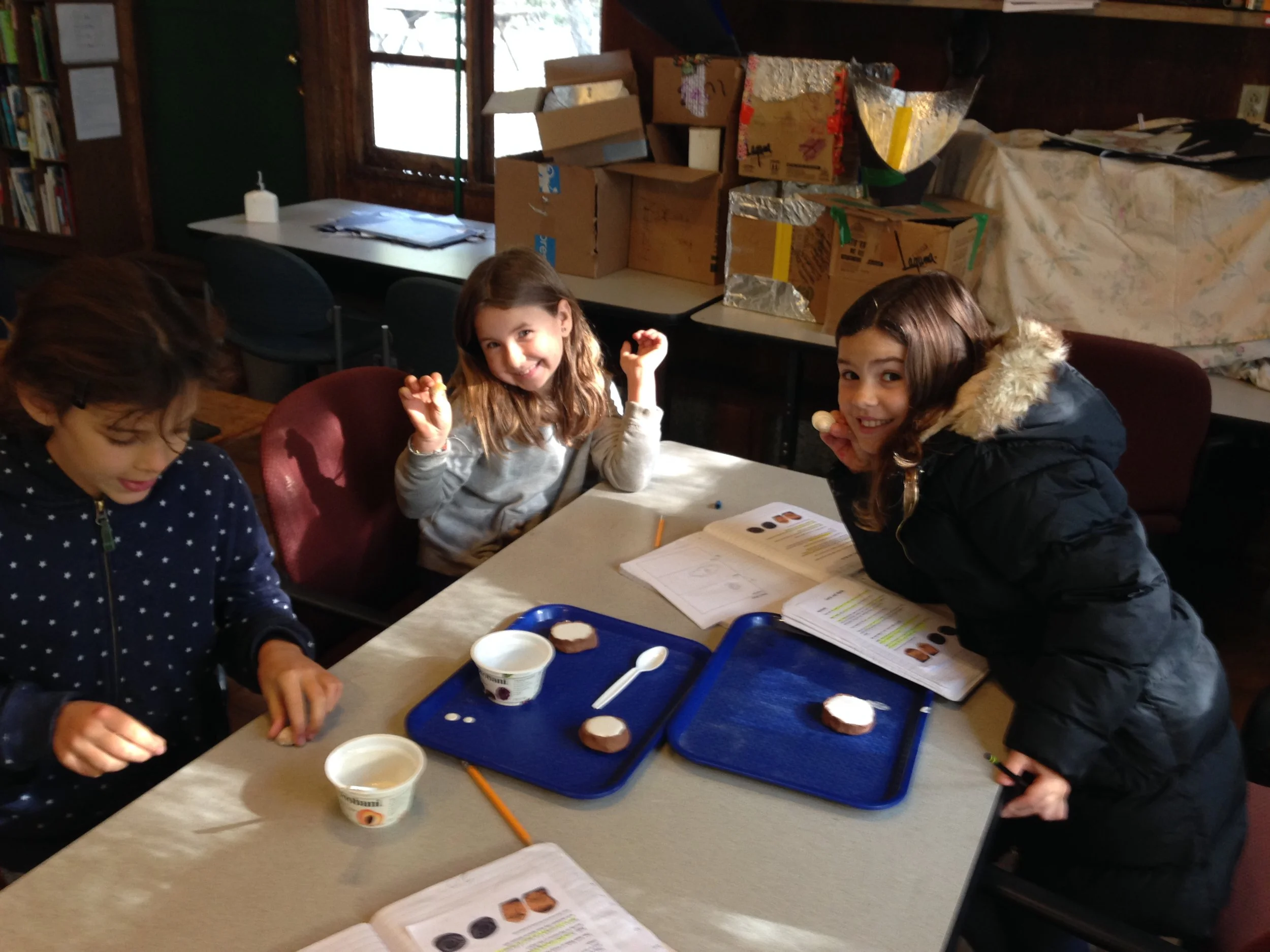
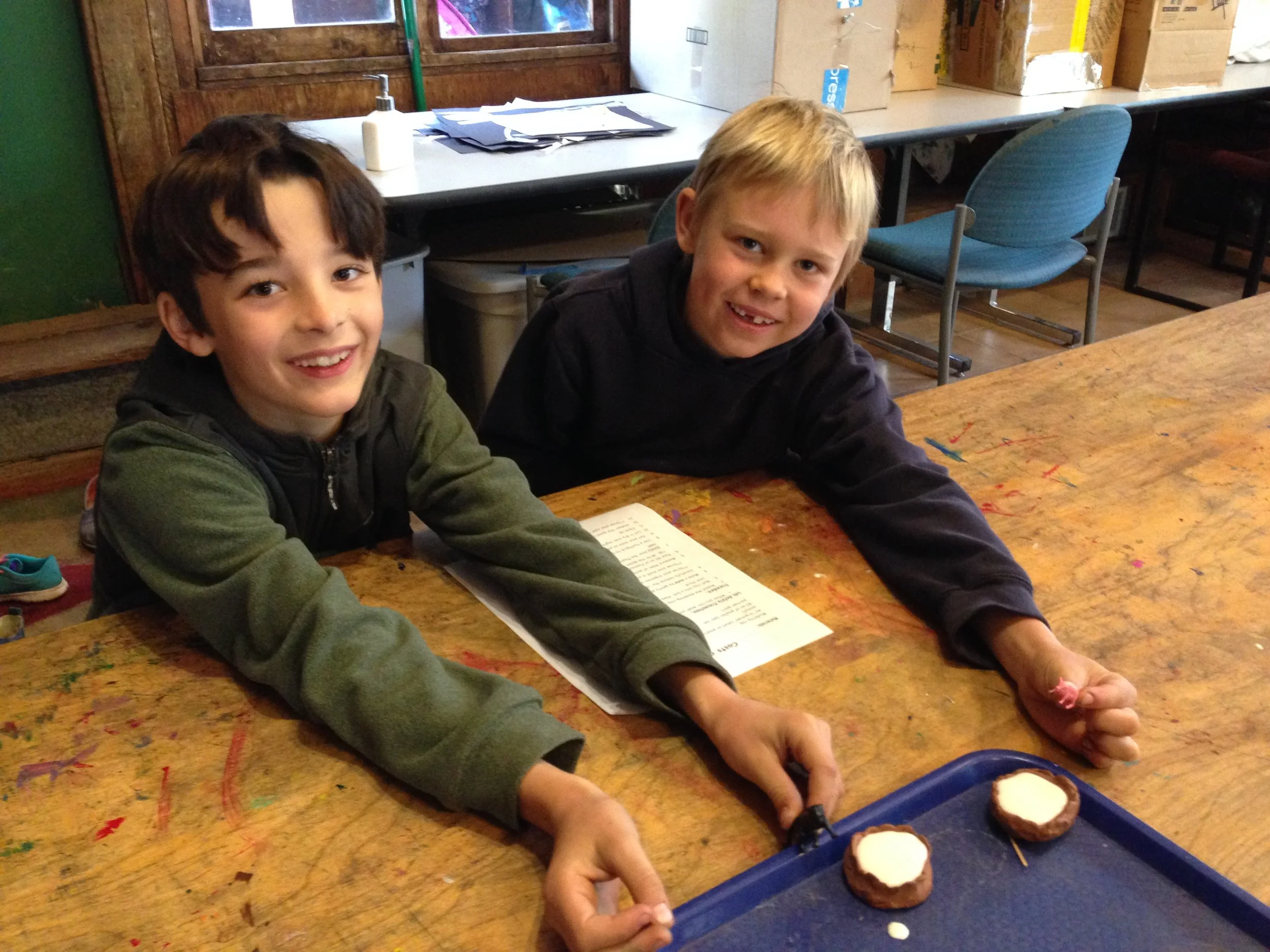
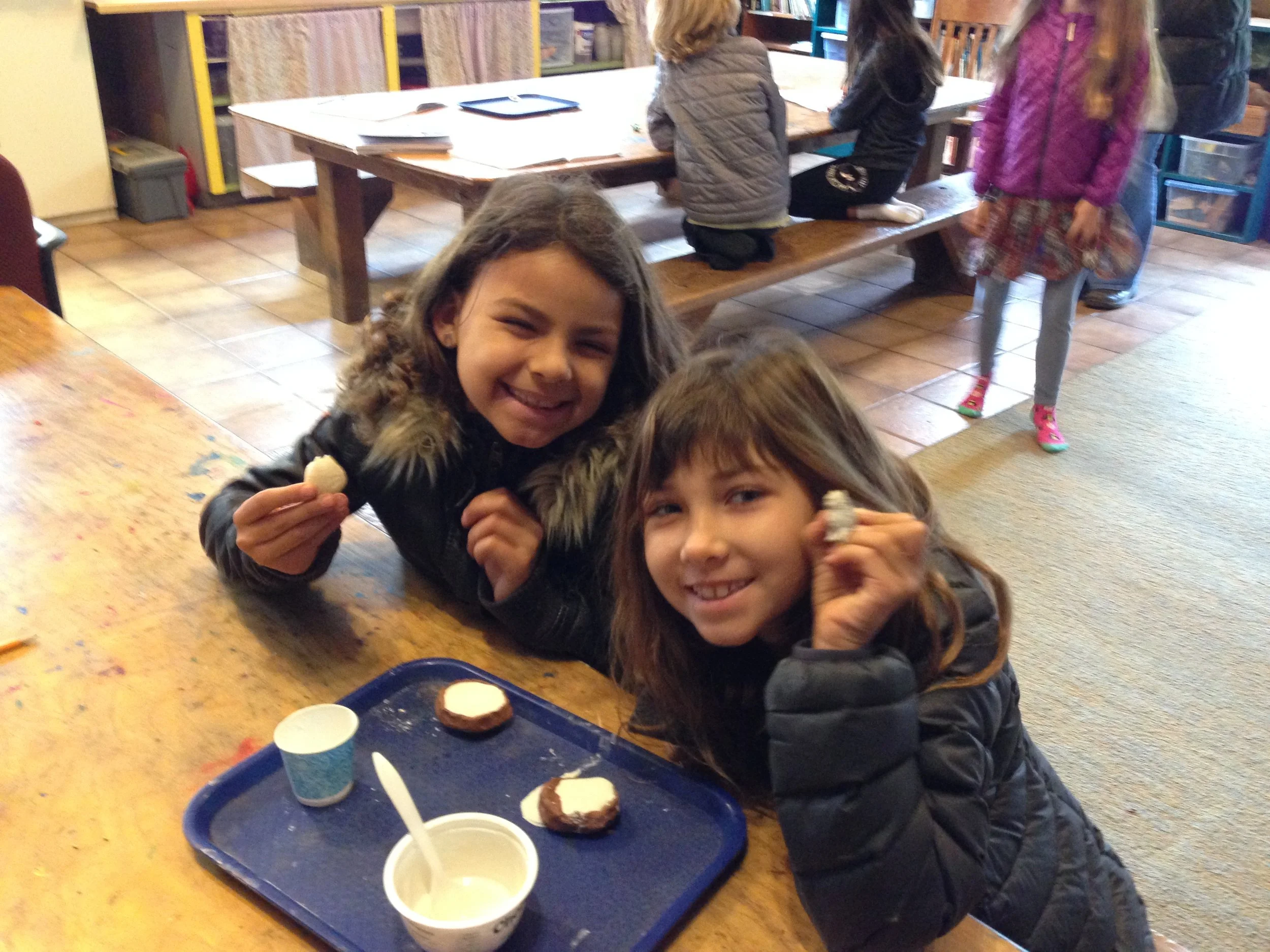
Sophie and Jane are displaying their “organisms”.
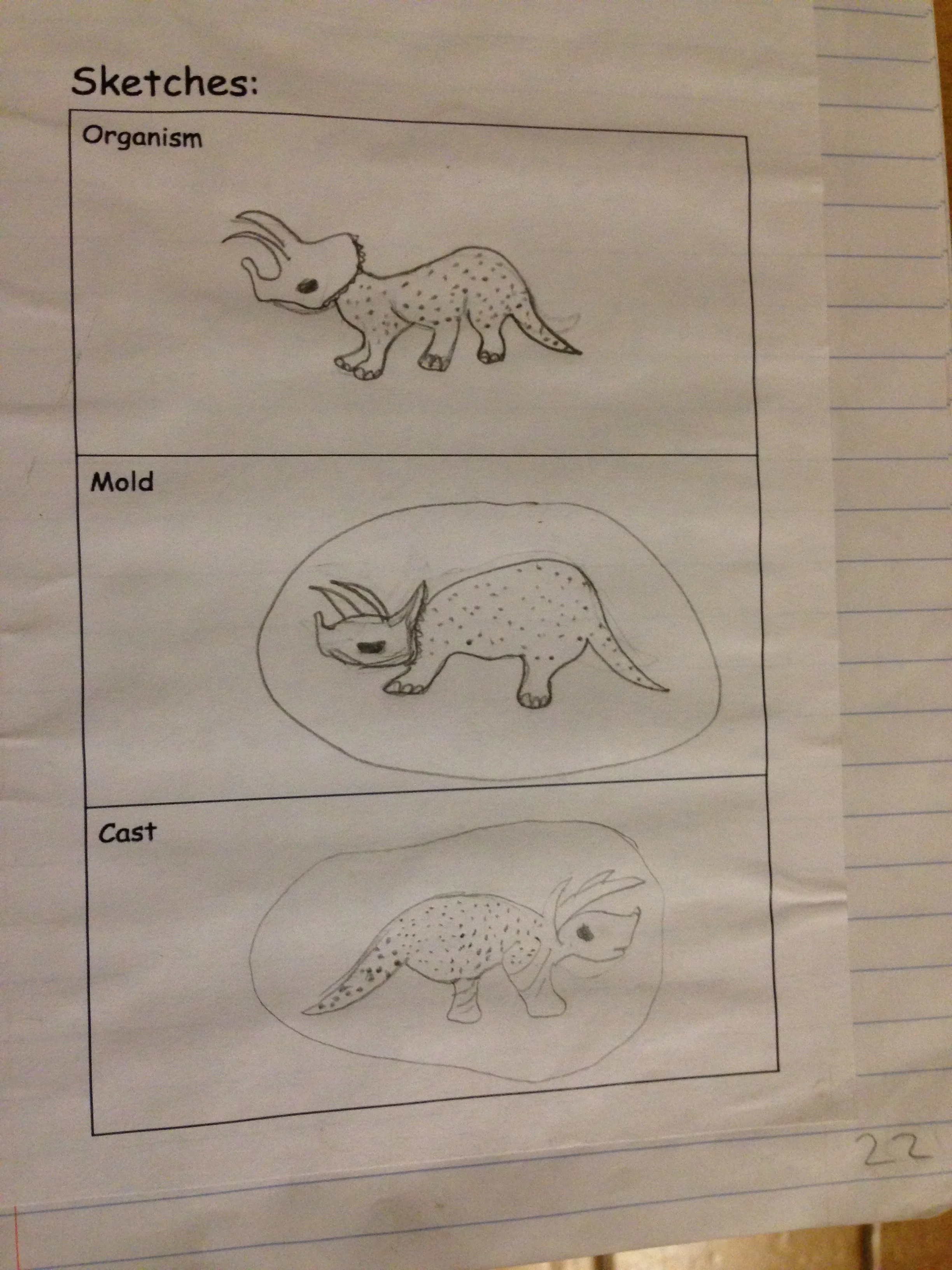
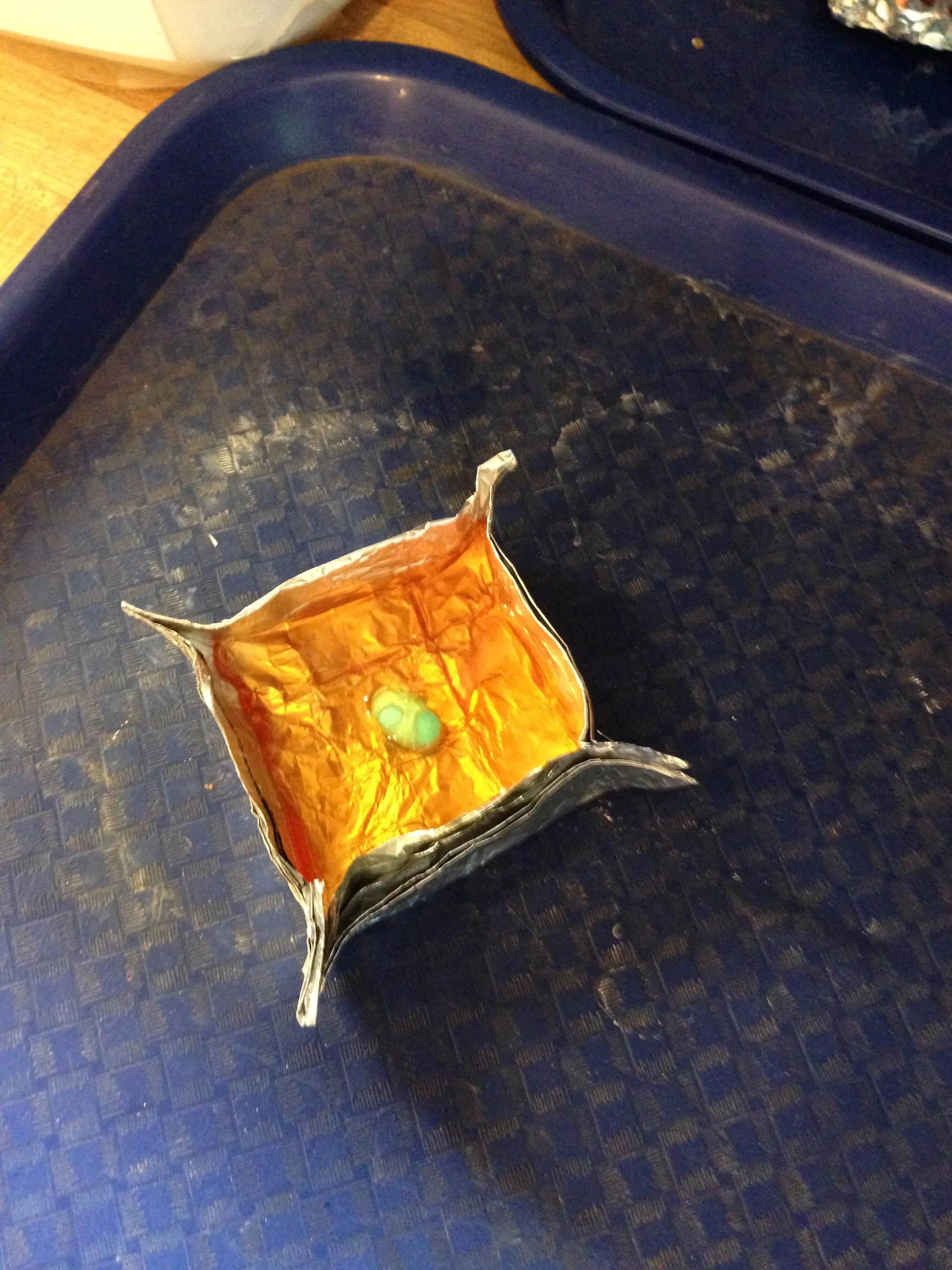
Our class also made amber fossils (many of which got eaten) complete with an “insect” trapped inside. Each student drew a comic strip depicting the process of how these fossils are created and discovered.
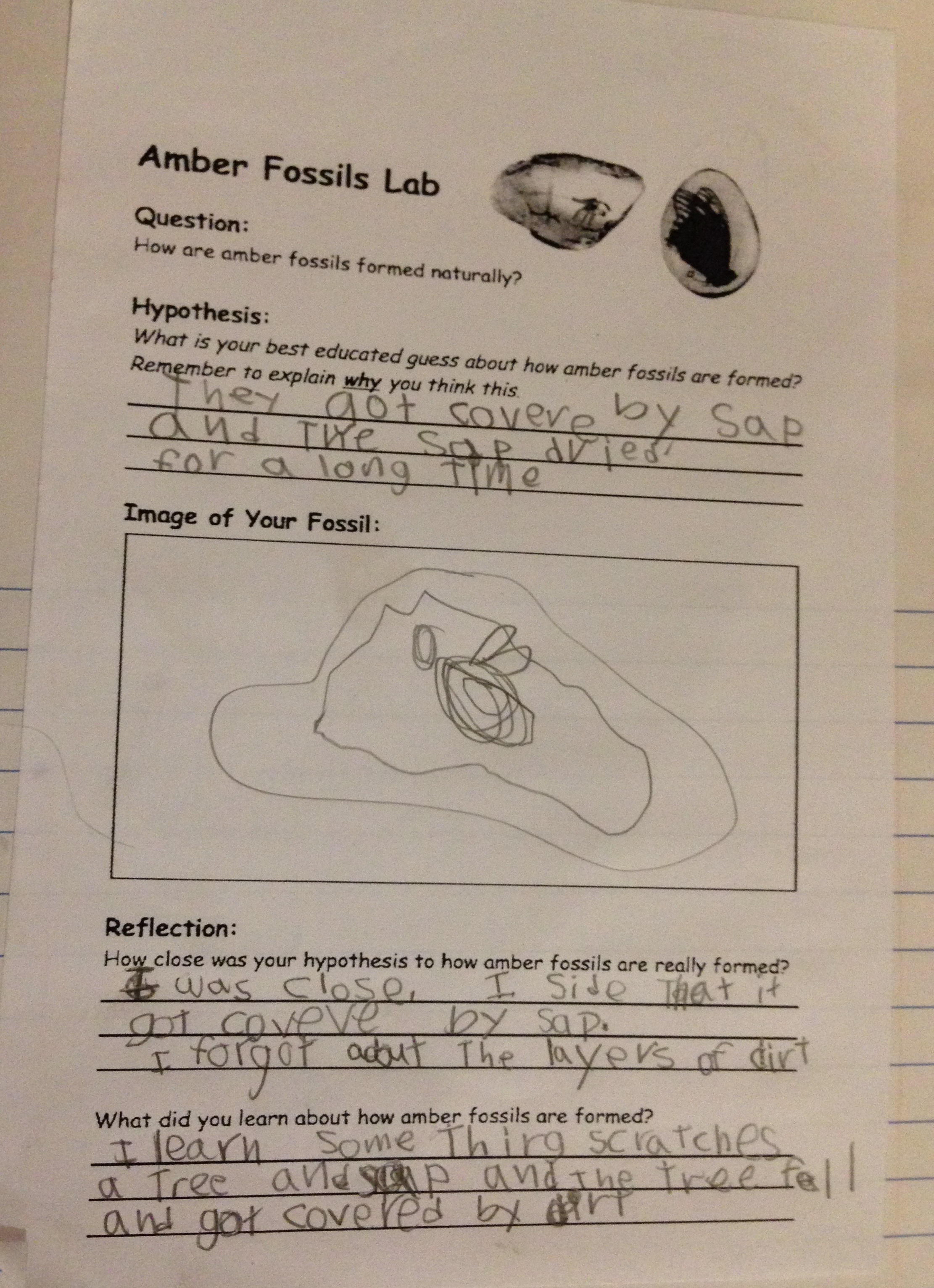
A student data sheet from the Amber Fossil Lab.
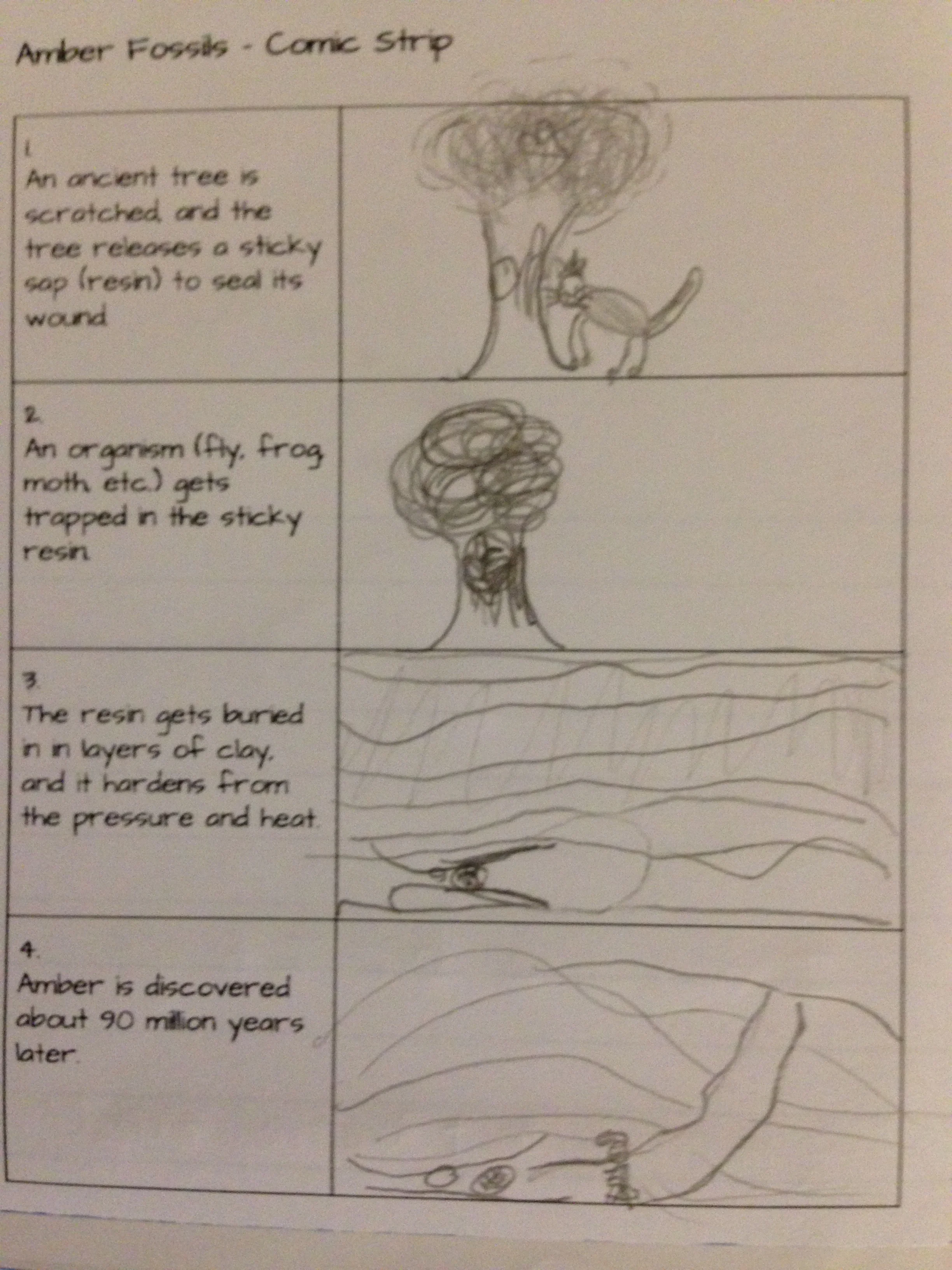
Comic illustrating the formation and discovery of amber fossils.
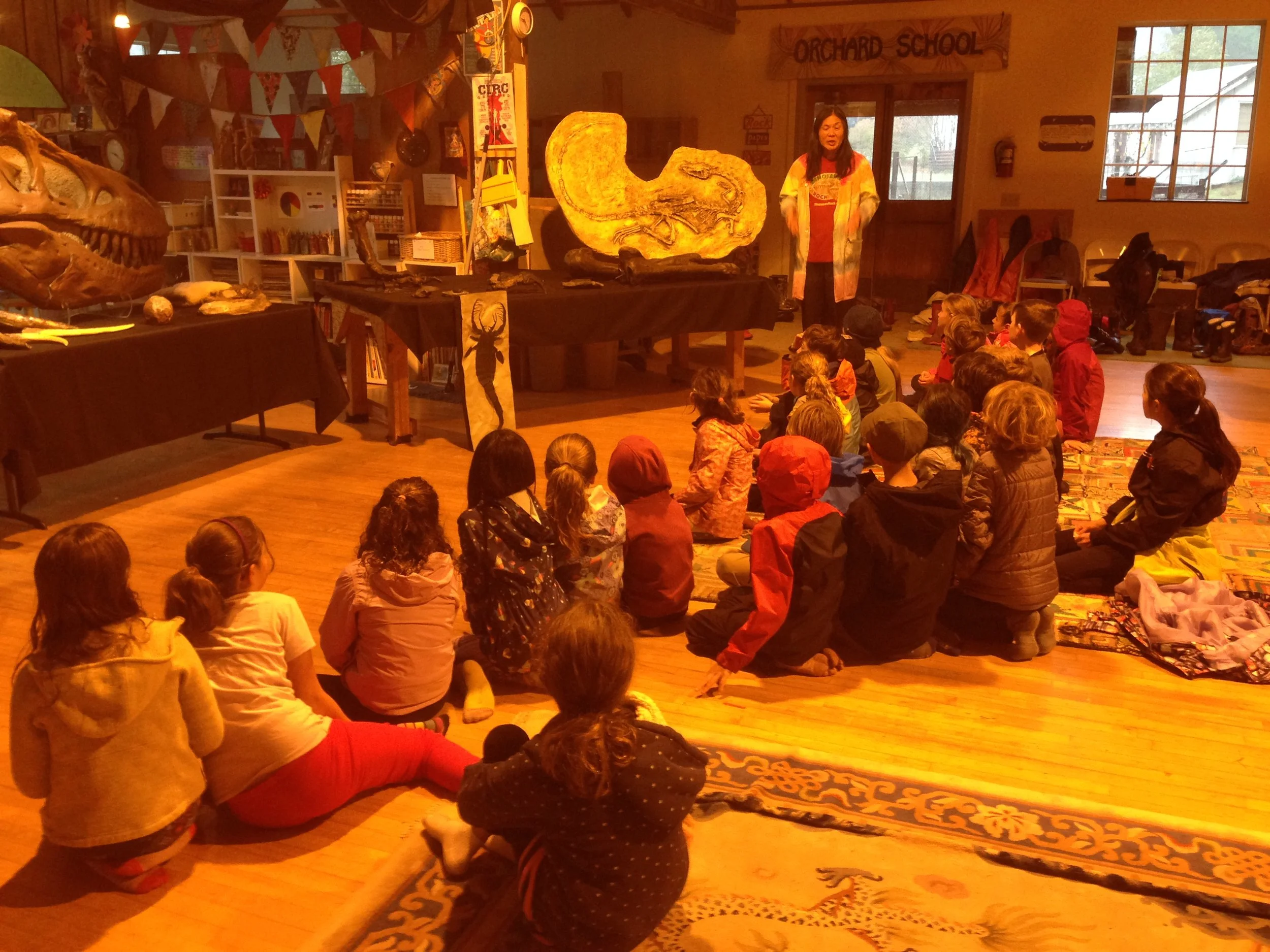
At the end of the month, Orchard got a visit from Dinosaurs Rock. We had a very enthusiastic presenter who called on students to act out dinosaur scenarios, interact with dinosaur fossils (some real and some copies), and even touch fossilized dino poo! Students also had the opportunity to be paleontologists and dig for some fossils of their own.
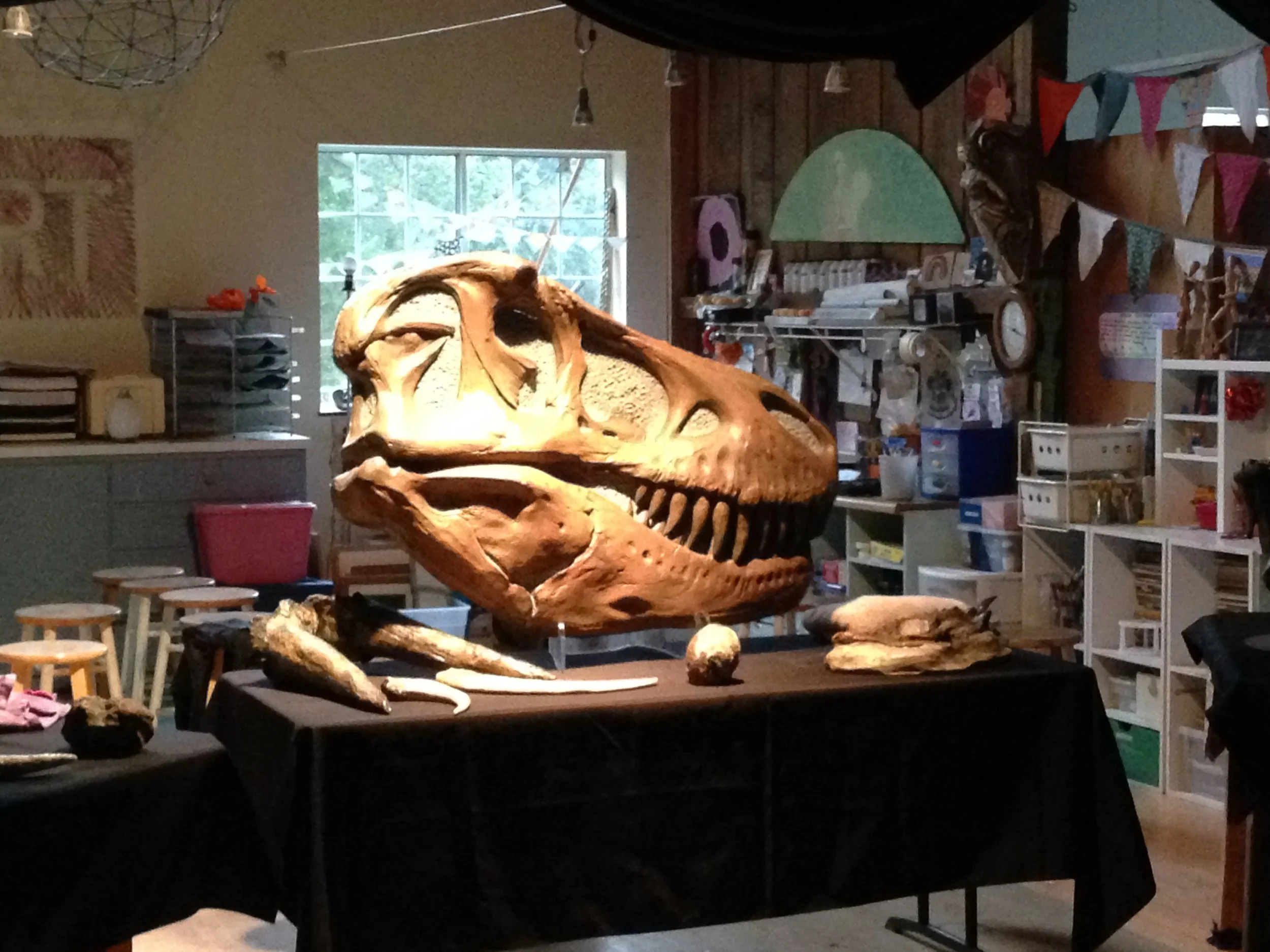
A T-Rex skull.
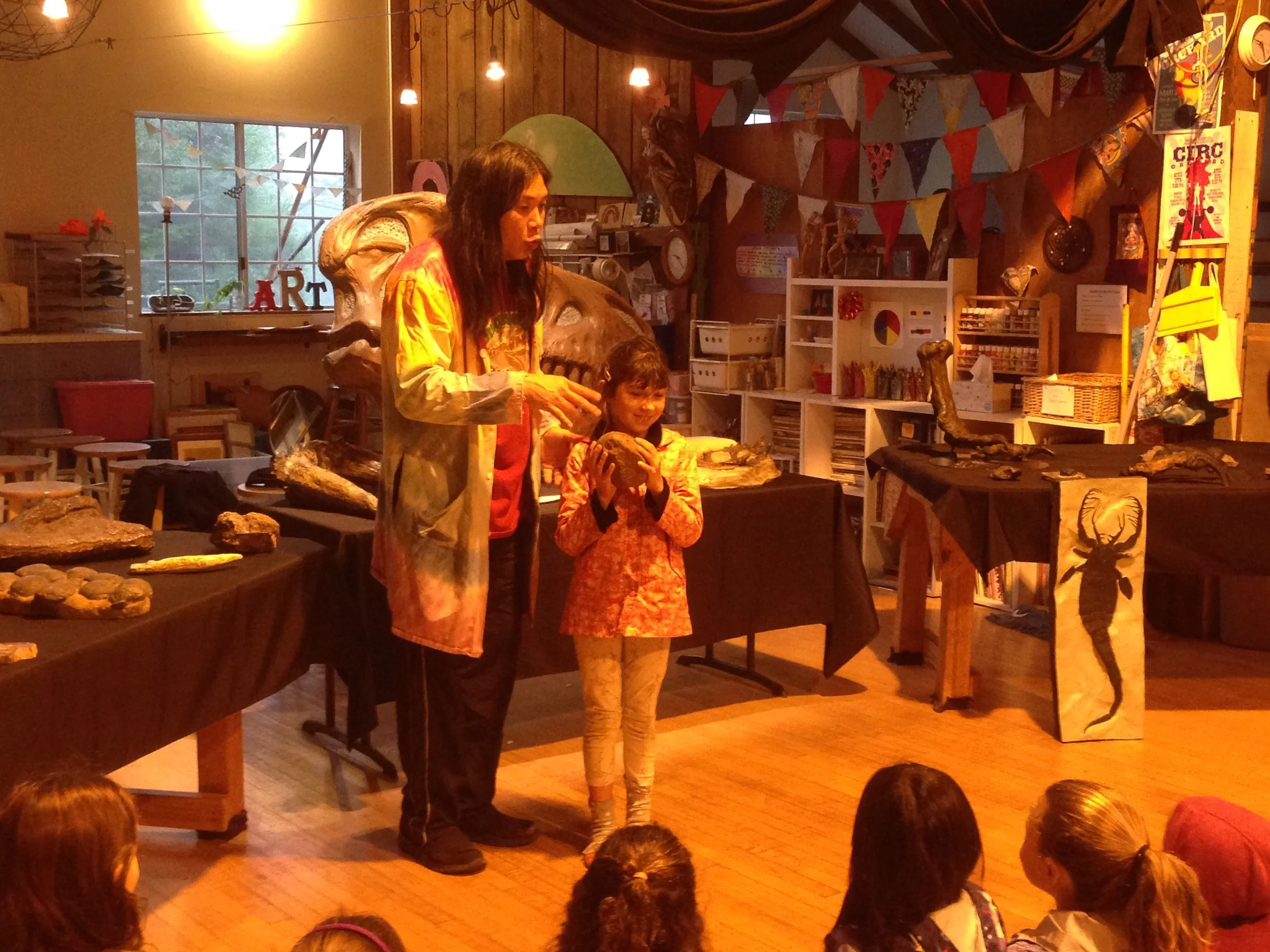
Jane holding a fossilized dinosaur egg.
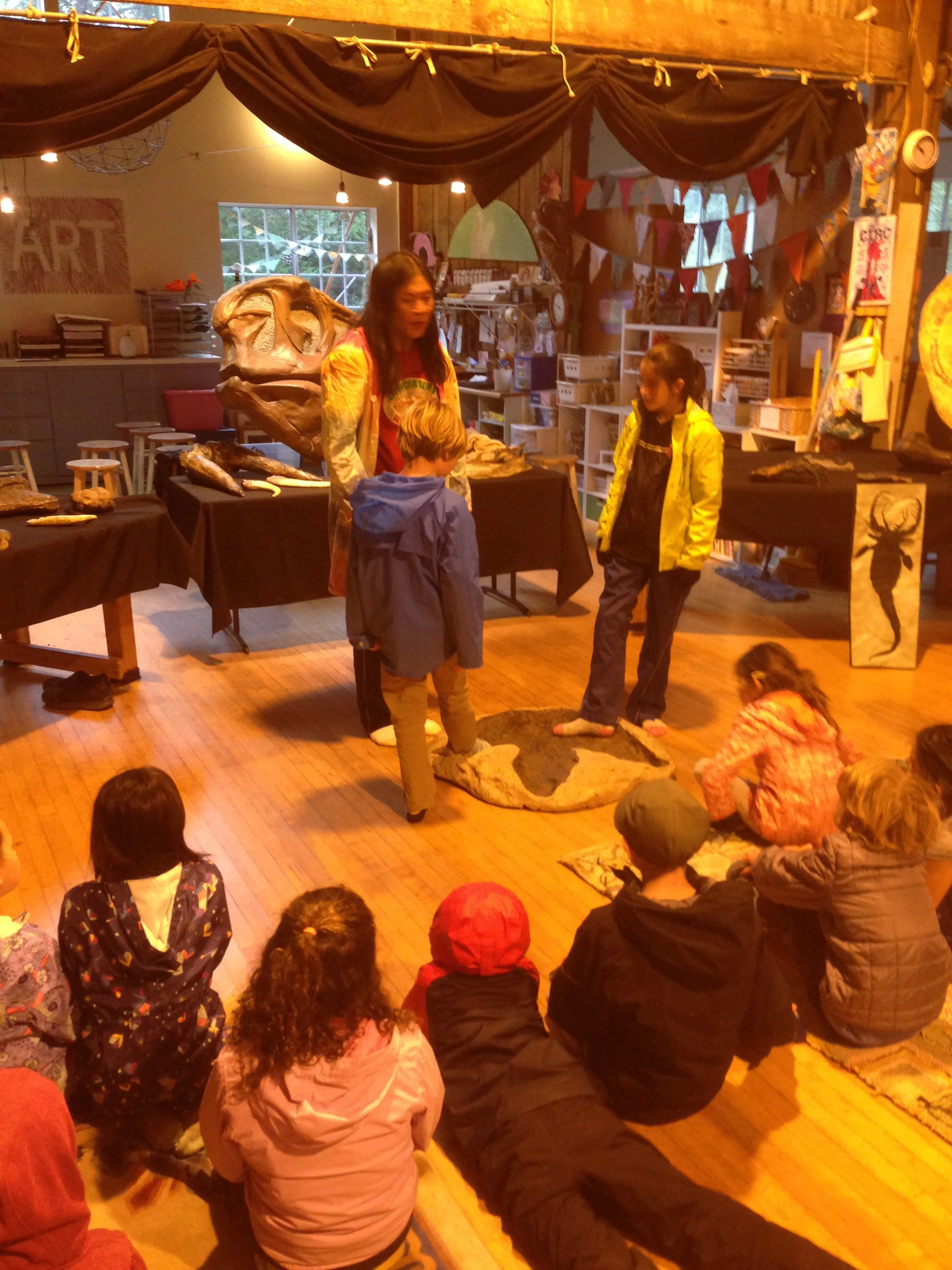
Displaying the size of a T-Rex’s footprint.
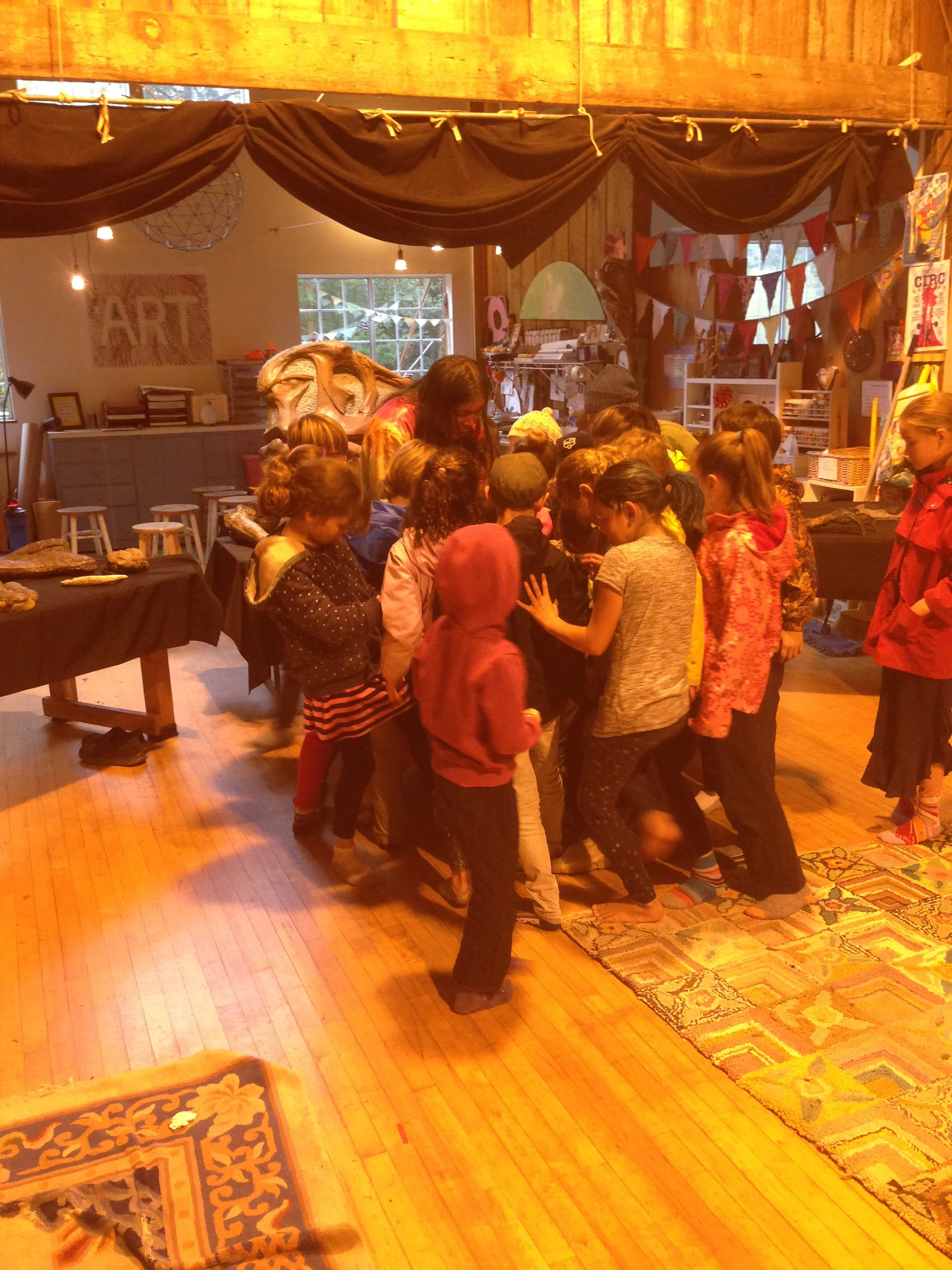
How many students’ feet will fit inside a T-Rex footprint?
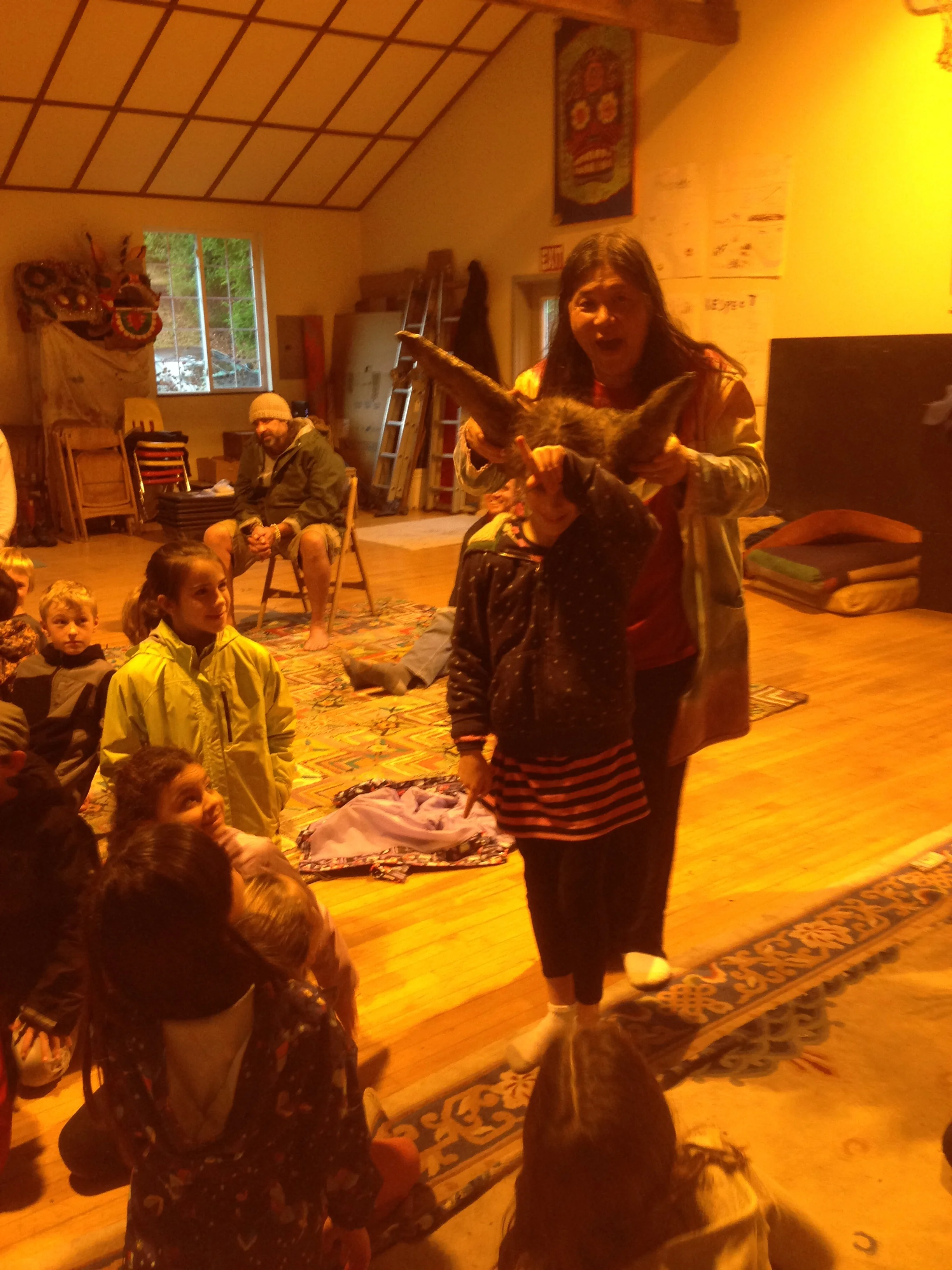
Trying on triceratops horns.
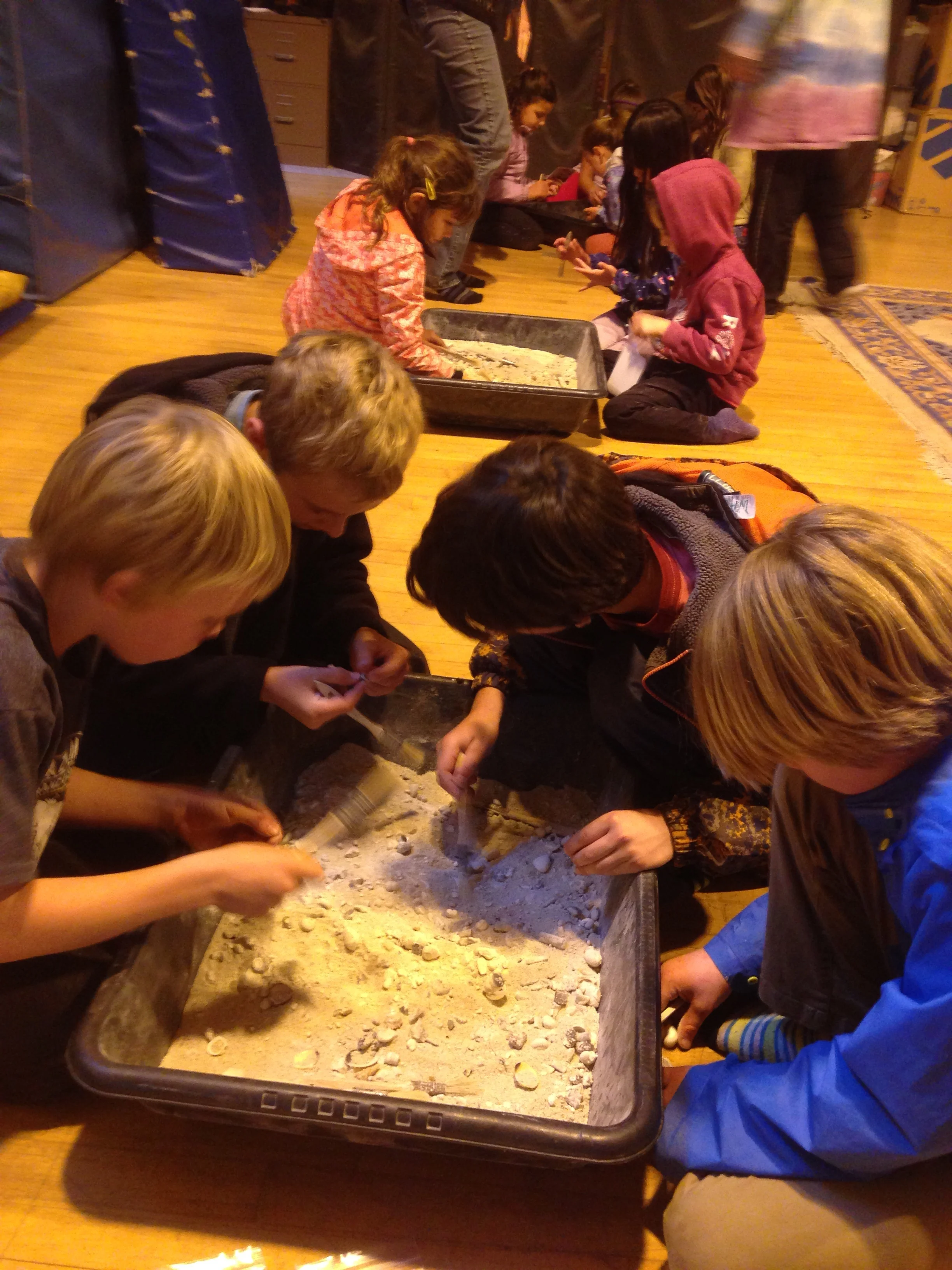
Digging for fossils.
Currently, our class is learning about continental drift, and creating puzzle posters of Pangea. This is paving the way for future discoveries related to tectonic plate boundaries, volcanoes, and earthquakes. In January our class will also be doing many activities related to the scientific process of inquiry and begin discussions related to the science fair.