
Science
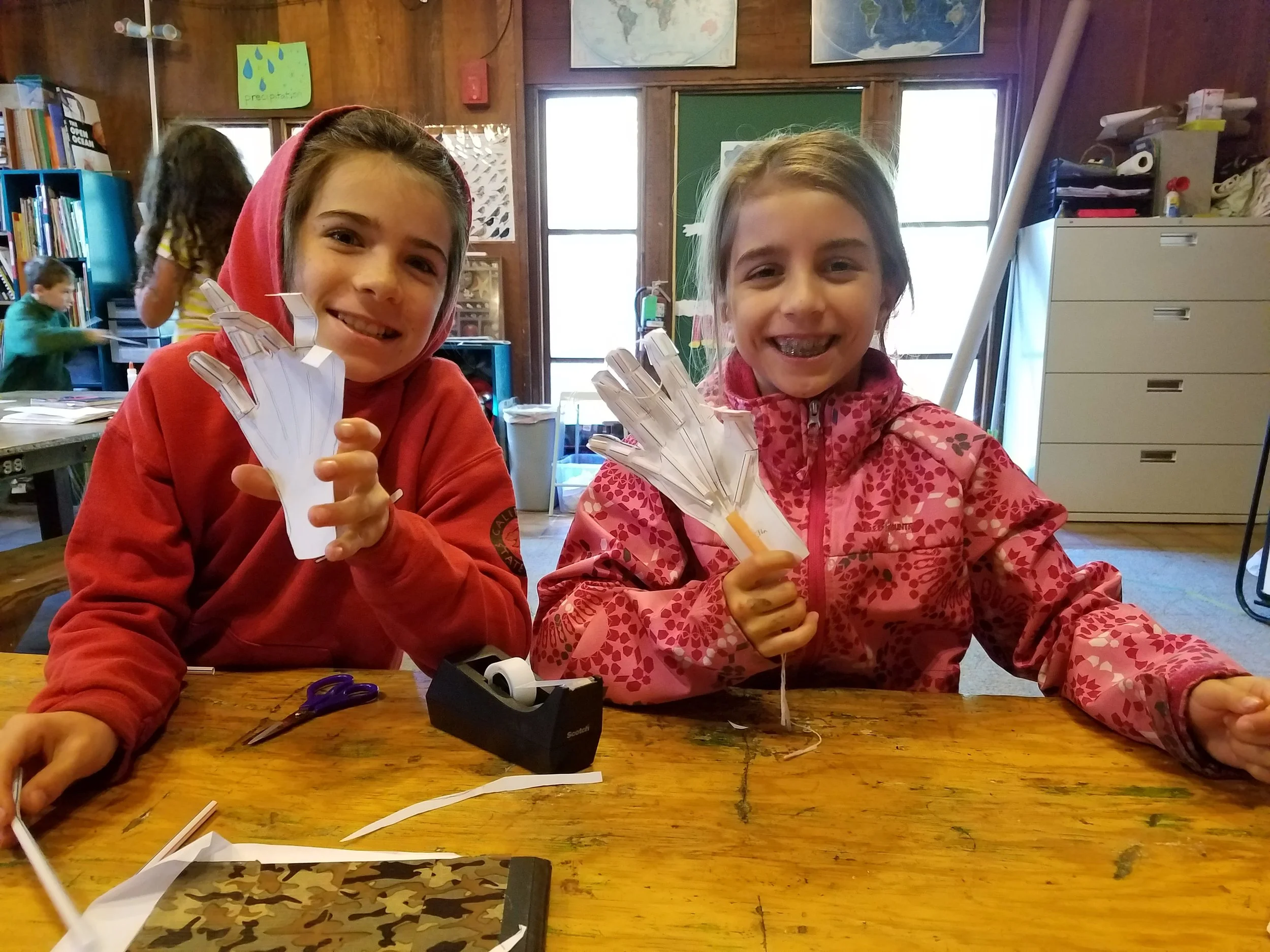
December was a continuation of the body systems studies third and fourth graders started in November. Students explored the idea of bones, tendons, ligaments and joints first through learning about the different types of connections and joints in the body and then launching into building a mechanical or “robotic” hand from cardstock, straws, tape and string. It was a wonderful project that helped to reinforce all the concepts as well as involved a great deal of patience and focus to complete an articulated hand with joints that
can be manipulated with strings. Some students took this project to the next level by putting opposing strings on the back of the hand
(like opposing muscles) to not only close the hand, but be able to open it as well.
We next focused on the nervous system. We discussed the idea of intelligence and debated whether other animals are intelligent (as we
assume humans are intelligent). Students were really engaged and thoughtful when we watched a video of an octopus learning to open a trap by watching another octopus doing the same task.
During the play students worked independently to label the different parts of the brain, and draw a sketch illustrated what general function each part provides. It was interesting to see that many parts
of the brain have specialized functions, but also work in tandem. For instance, different parts of the brain control speech and language comprehension but obviously must both work together for you to
communicate effectively. Thinking about the brain, we enjoyed exploring ways that the brain can be tricked with optical illusions and created our own optical illusion tops.
Additionally, we explored how the brain makes conscious decisions as well as controls body systems unconsciously by discussing reflexes and testing our reaction times. Students attempted to catch a dropping ruler based on various cues (visual, verbal, touch) and compared how far the ruler fell to determine their reaction time for a conscious decision. It was very interesting!
In honor of the cold weather, students did an experiment where they investigated how well different types of insulating material will keep a film canister full of unset jell-o aka a “jell-o buddy” warm when wet or dry. Students constructed “sweaters” for their buddies out of cotton socks and cotton padding as well as wool socks. They monitored the solidity of their jell-o comparing wet and dry cotton and wet and dry wool. Not too surprisingly, the wet cotton was the least effective, the wet wool barely seemed wet at all and the dry wool and cotton worked well – though many of the cotton “sweaters” were massive compared to the canisters.
Students on campus the day of the roller skating party had a grand time making their own slime to take home.
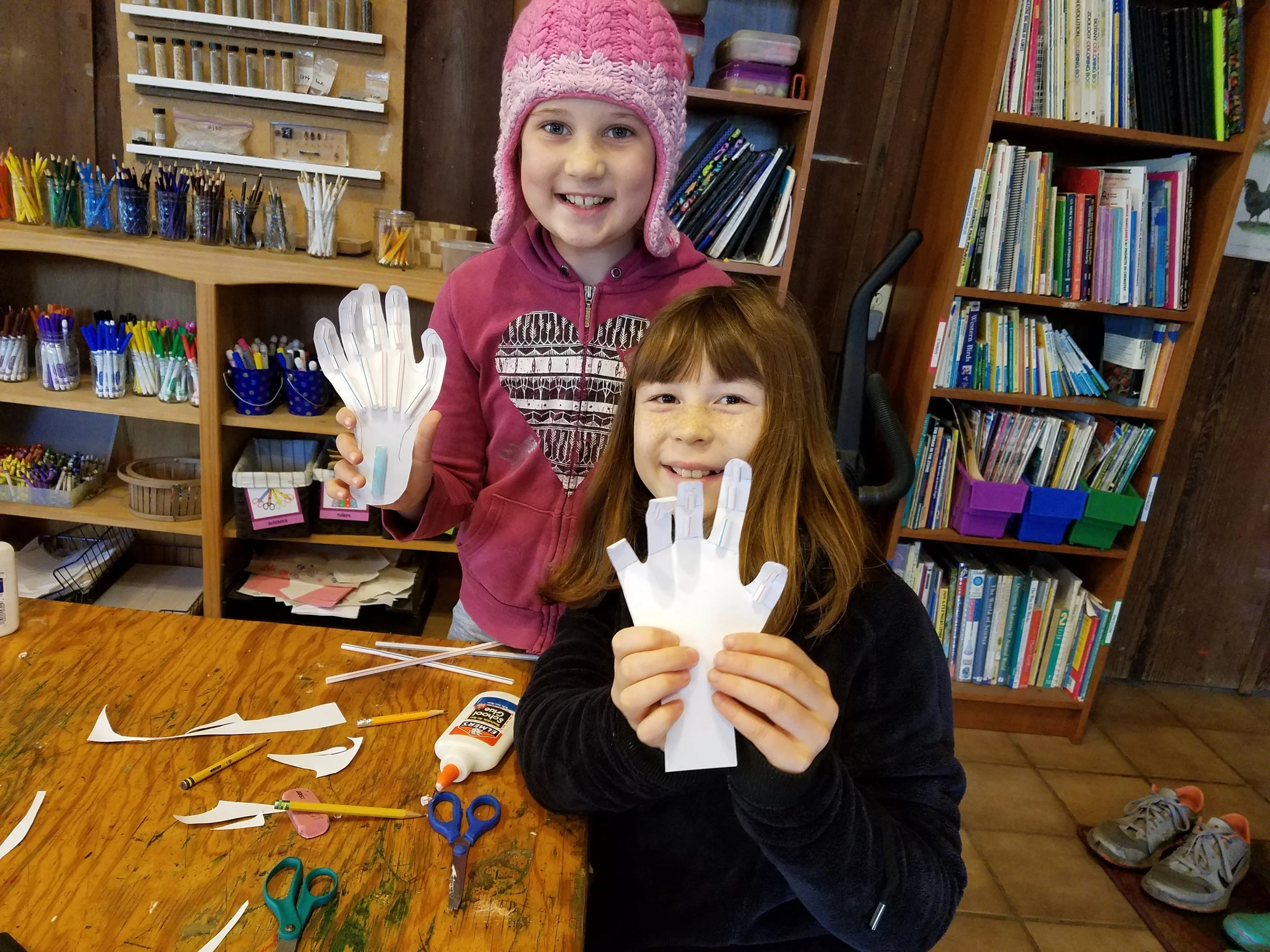
Robotic hands.
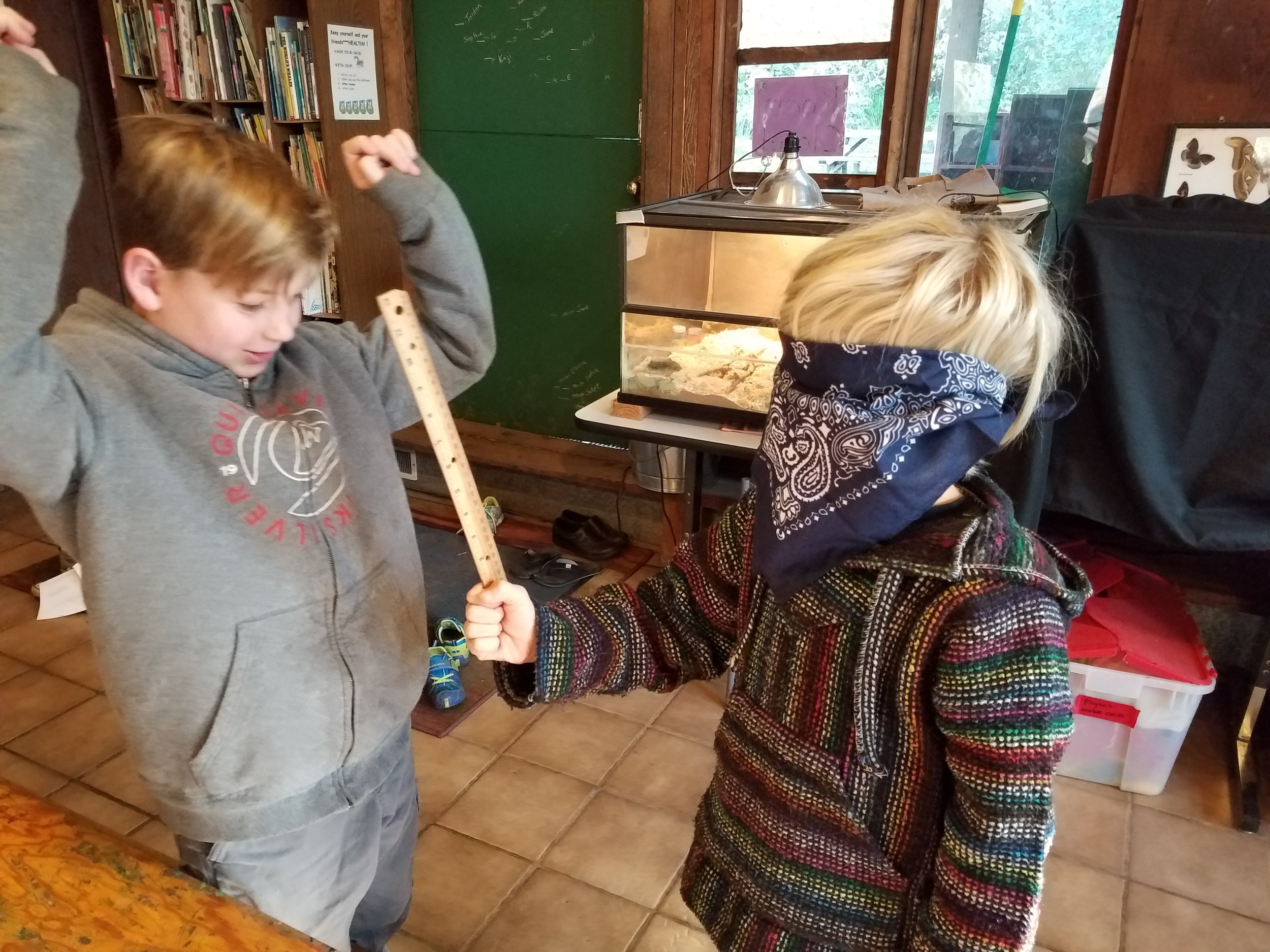
This is not a hold up :)
The object is to catch the dropping ruler on a verbal cue rather than visual and compare reaction times.
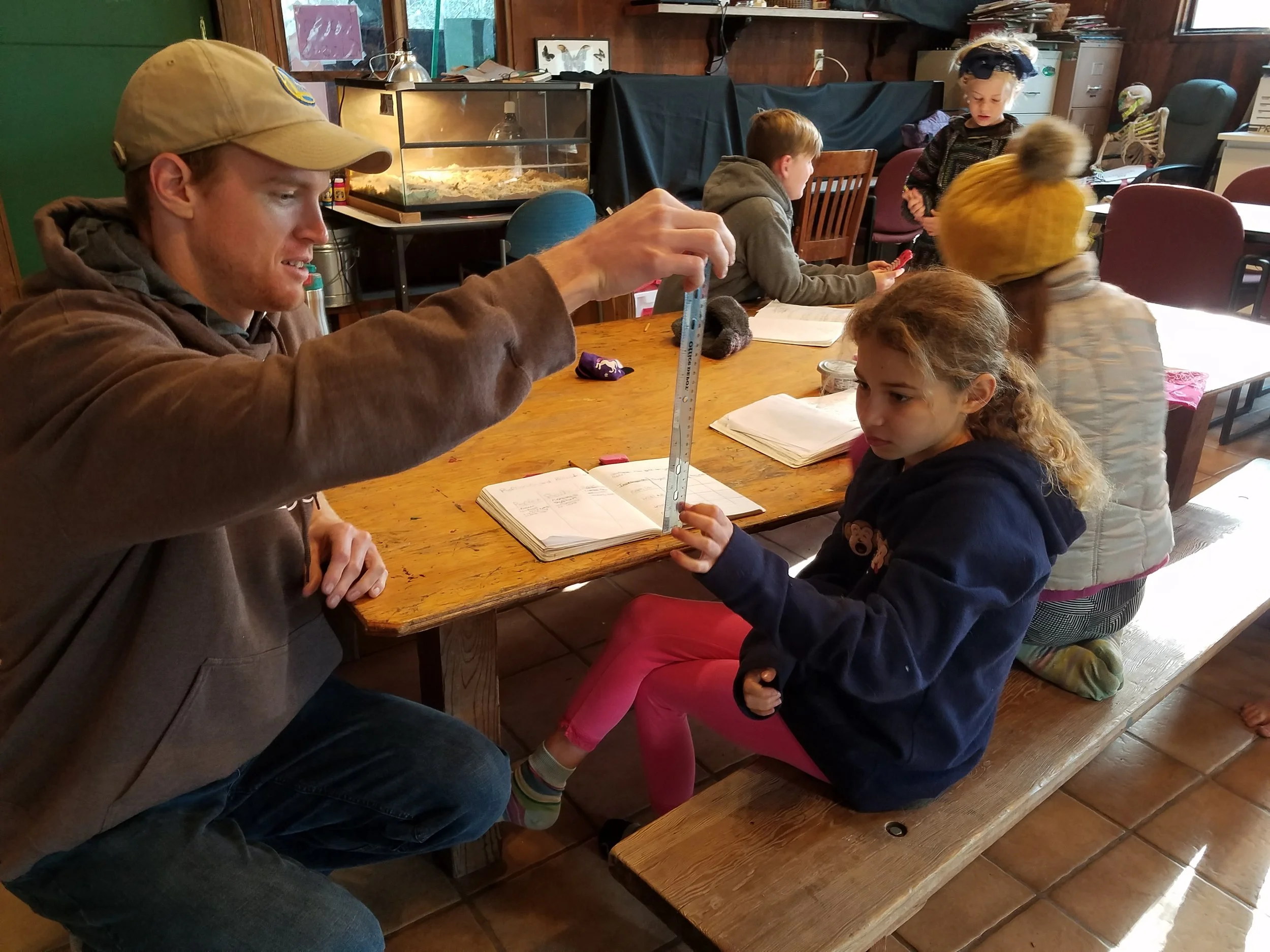
Matt tests Camila's visual reaction time.
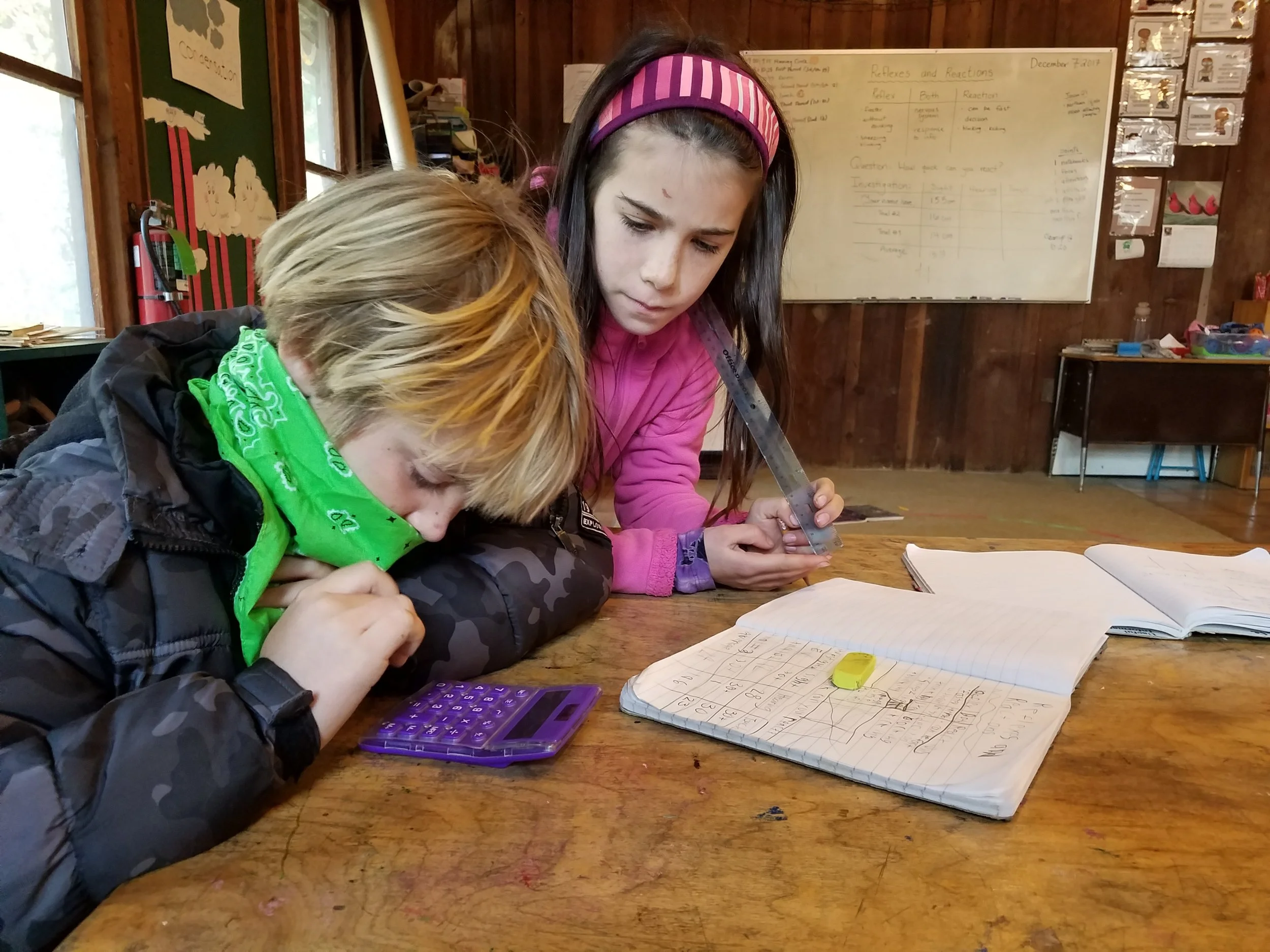
Doing the calculations.
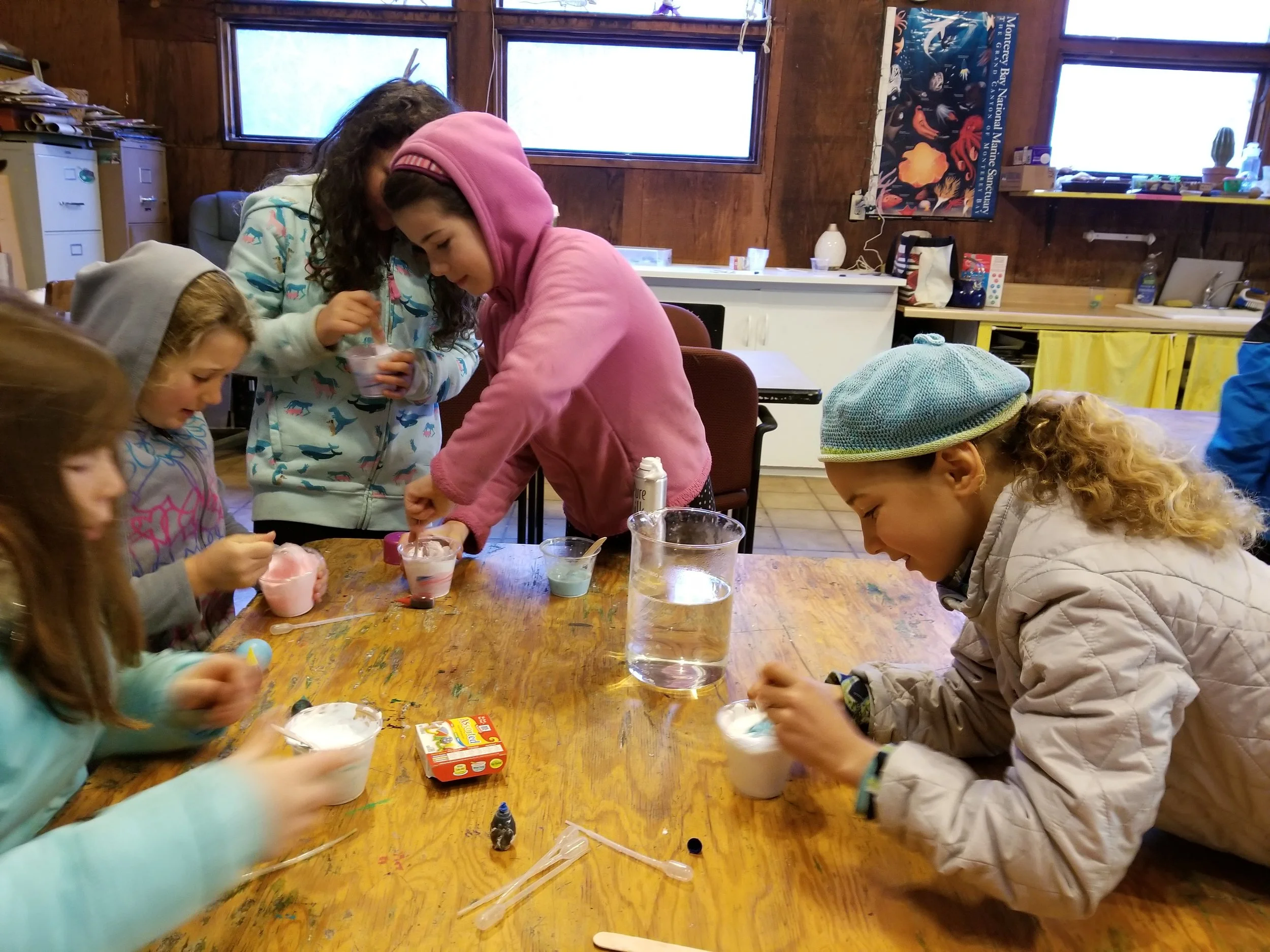
Slime making.