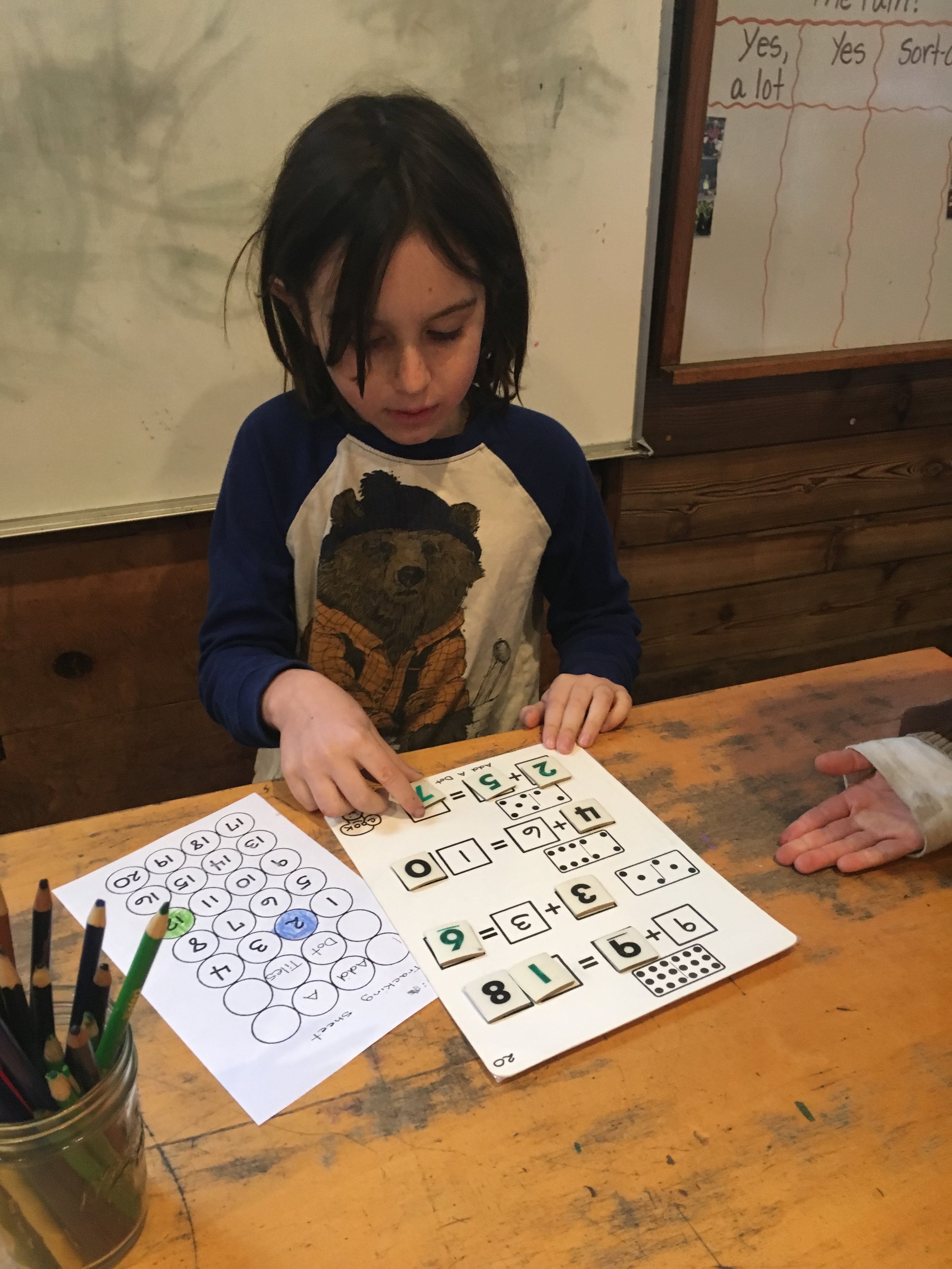
Math
Right now, I am pretty excited about two activities which incorporate complements of 10. The first is Mouse Count, a lesson by educator Marilyn Burns, in which we read the book Mouse Count and then re-enact it using 10 unifix cubes to represent mice on the grass or mice in the jar. Students are asked to figure out how many different ways there can be mice in the jar and mice on the grass. Students show their findings on paper and then share them to create a class chart.
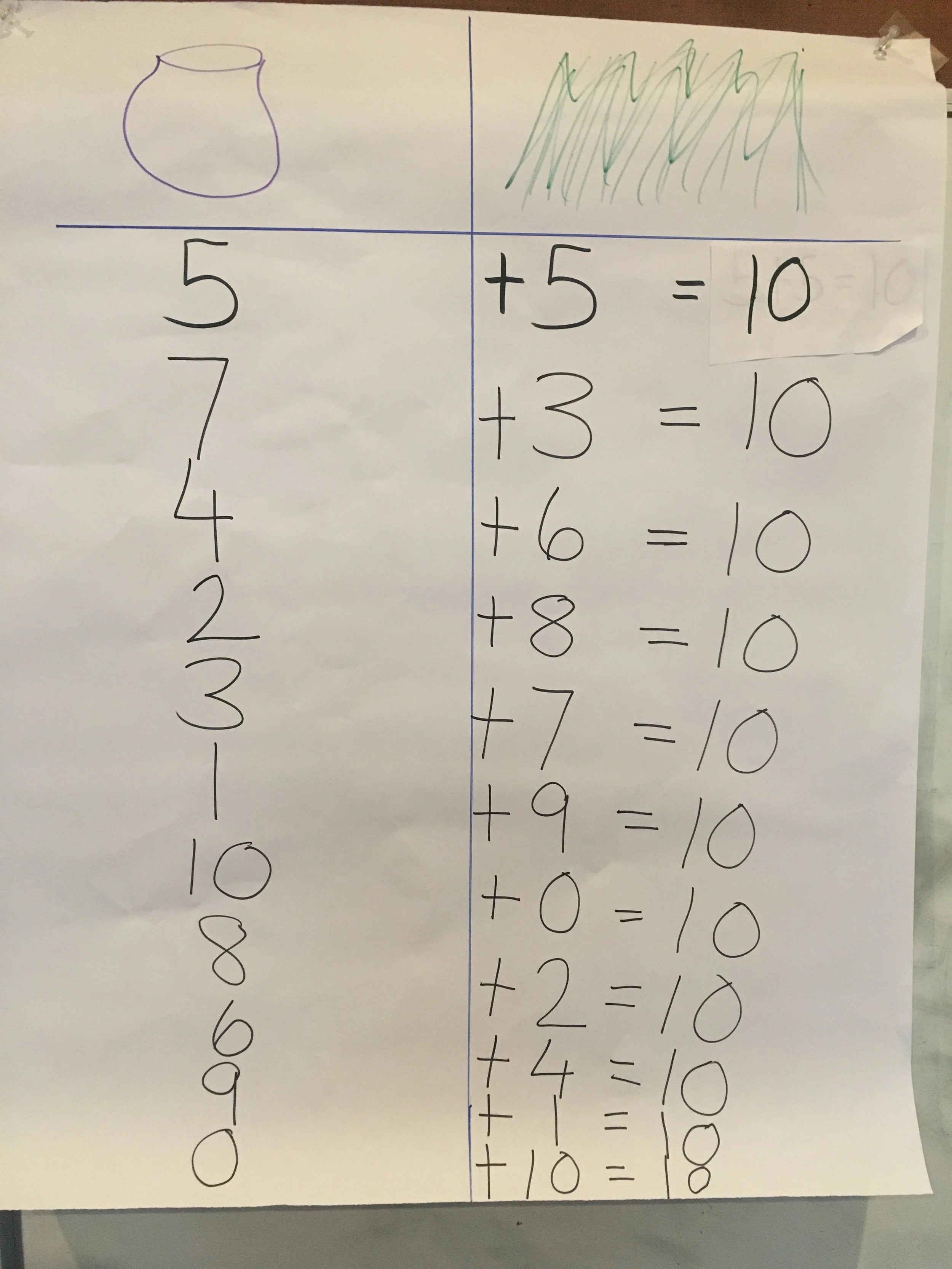
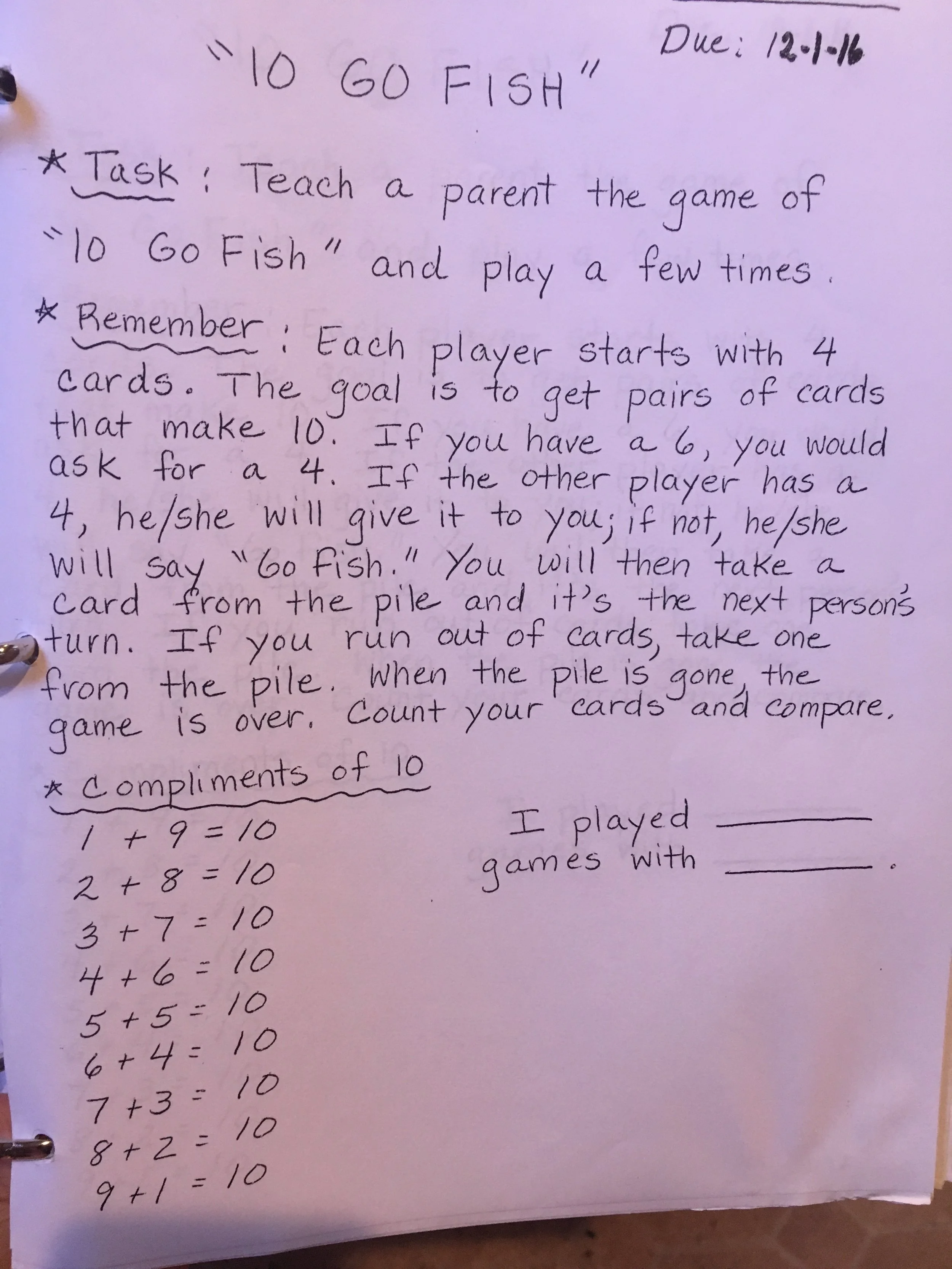
Then, we used this chart and our understanding of complements of 10 to play 10 Go Fish. Please play at home. You must remove all cards that are higher than 9, so 10, Jack, Queen, King. You can keep a list that you brainstorm with your child handy for reference.
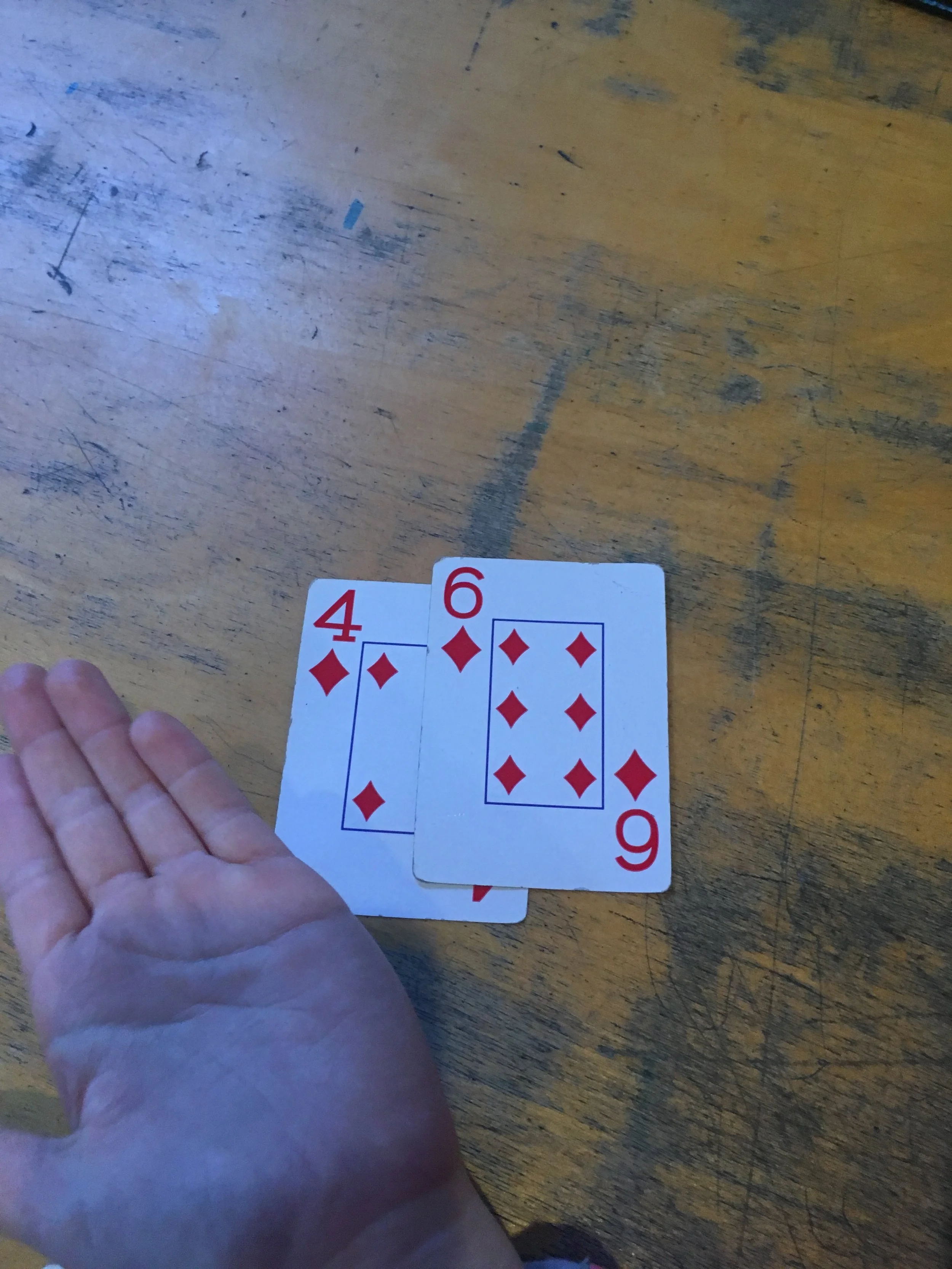
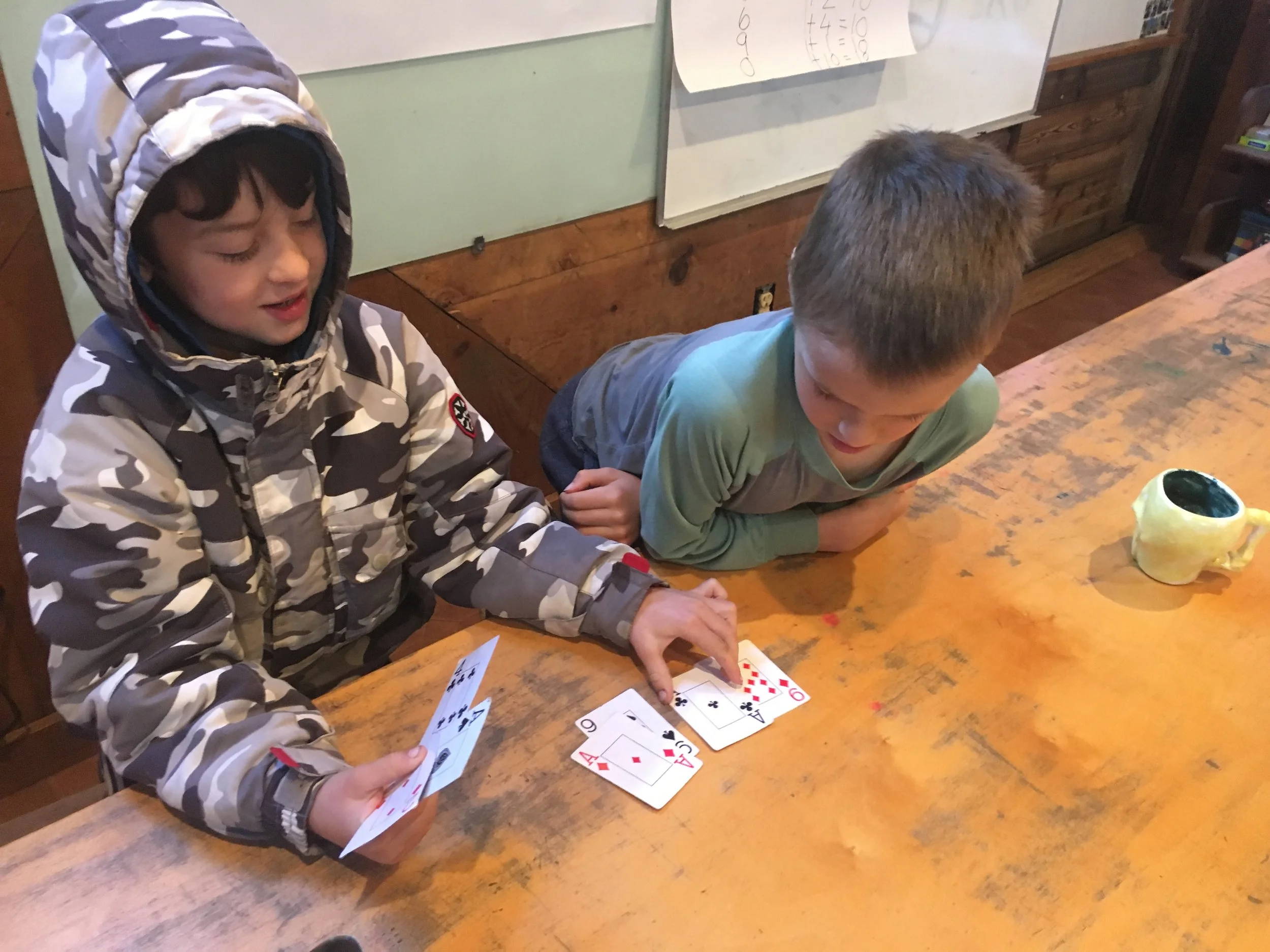
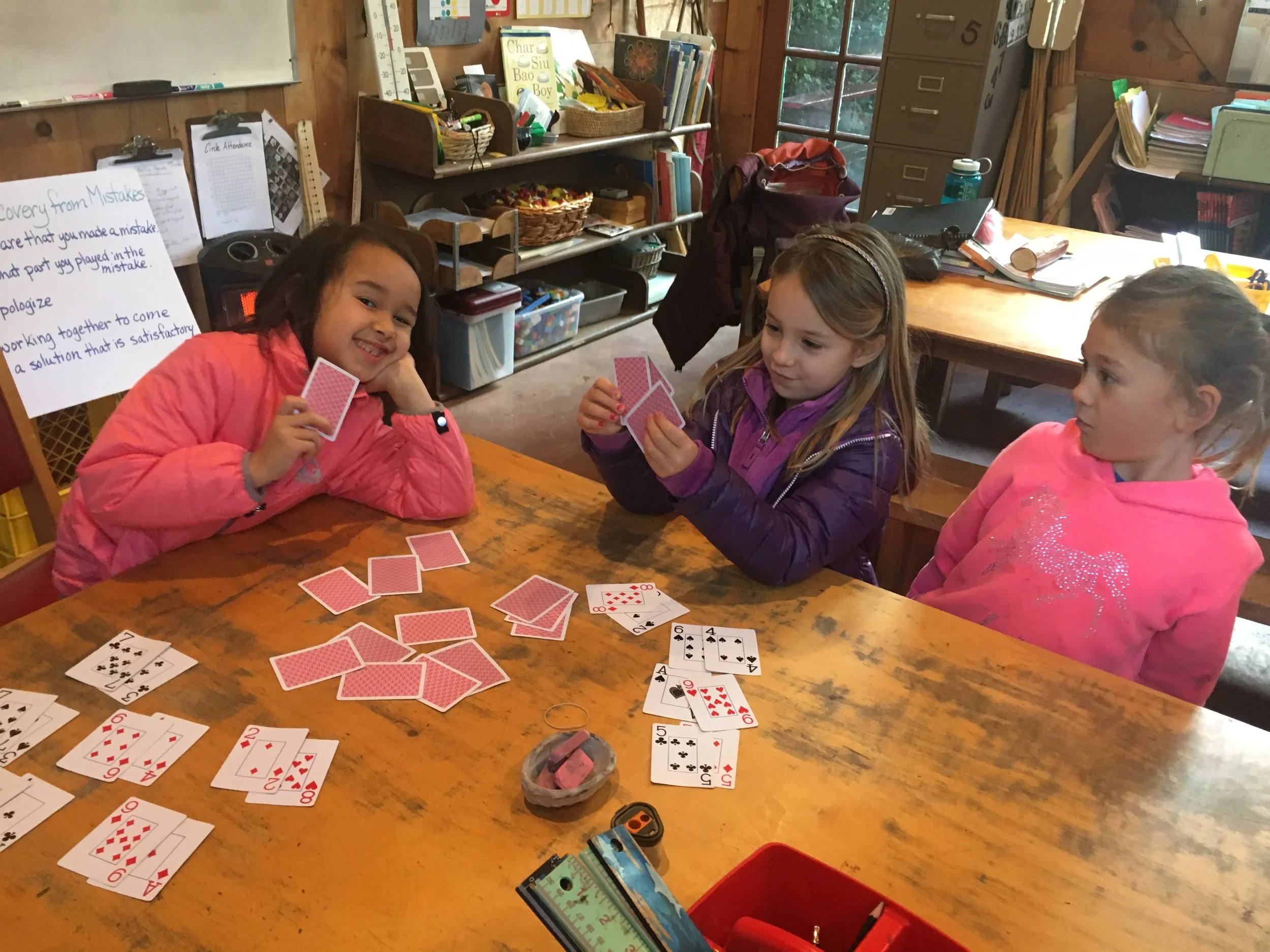
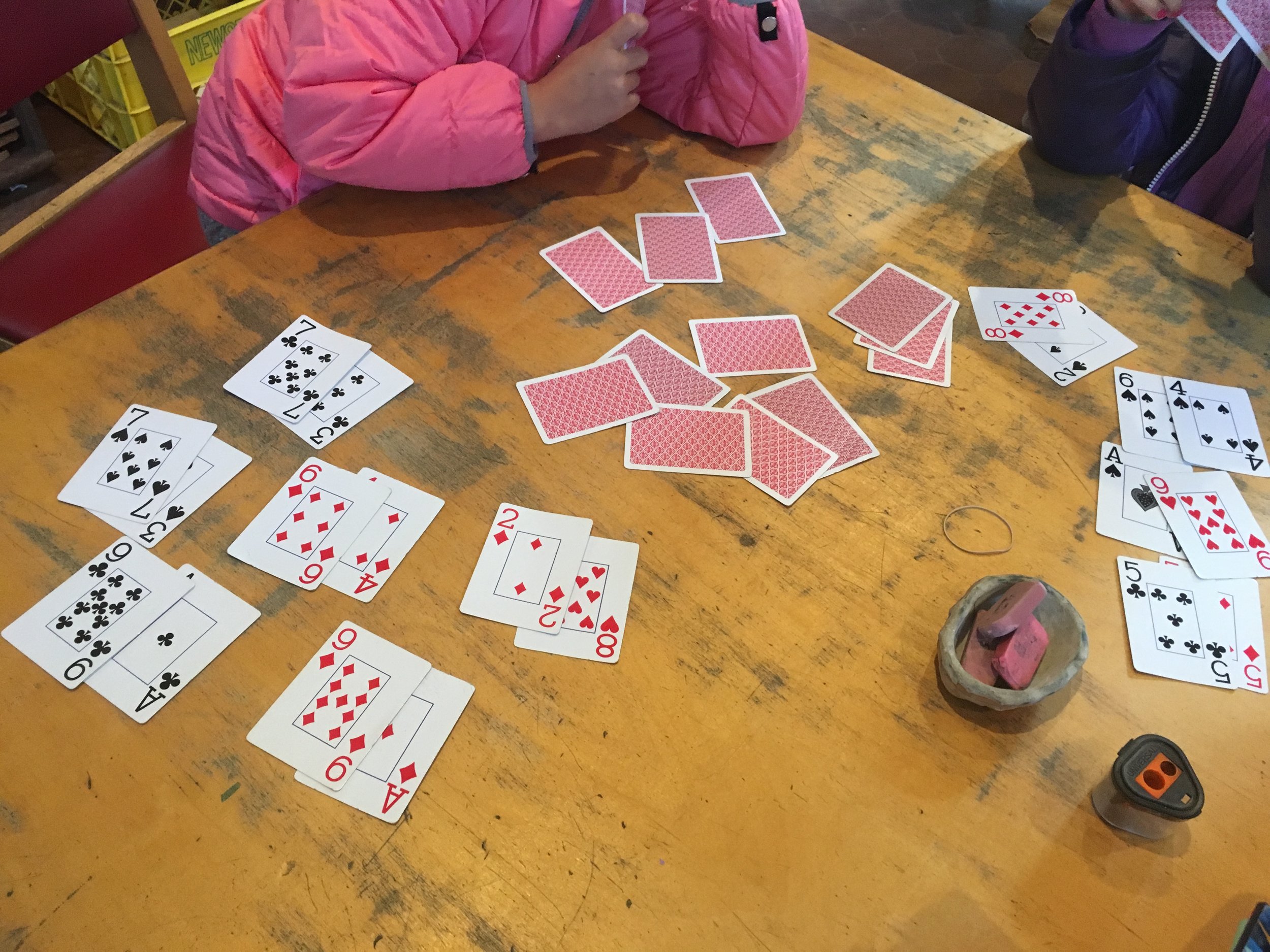
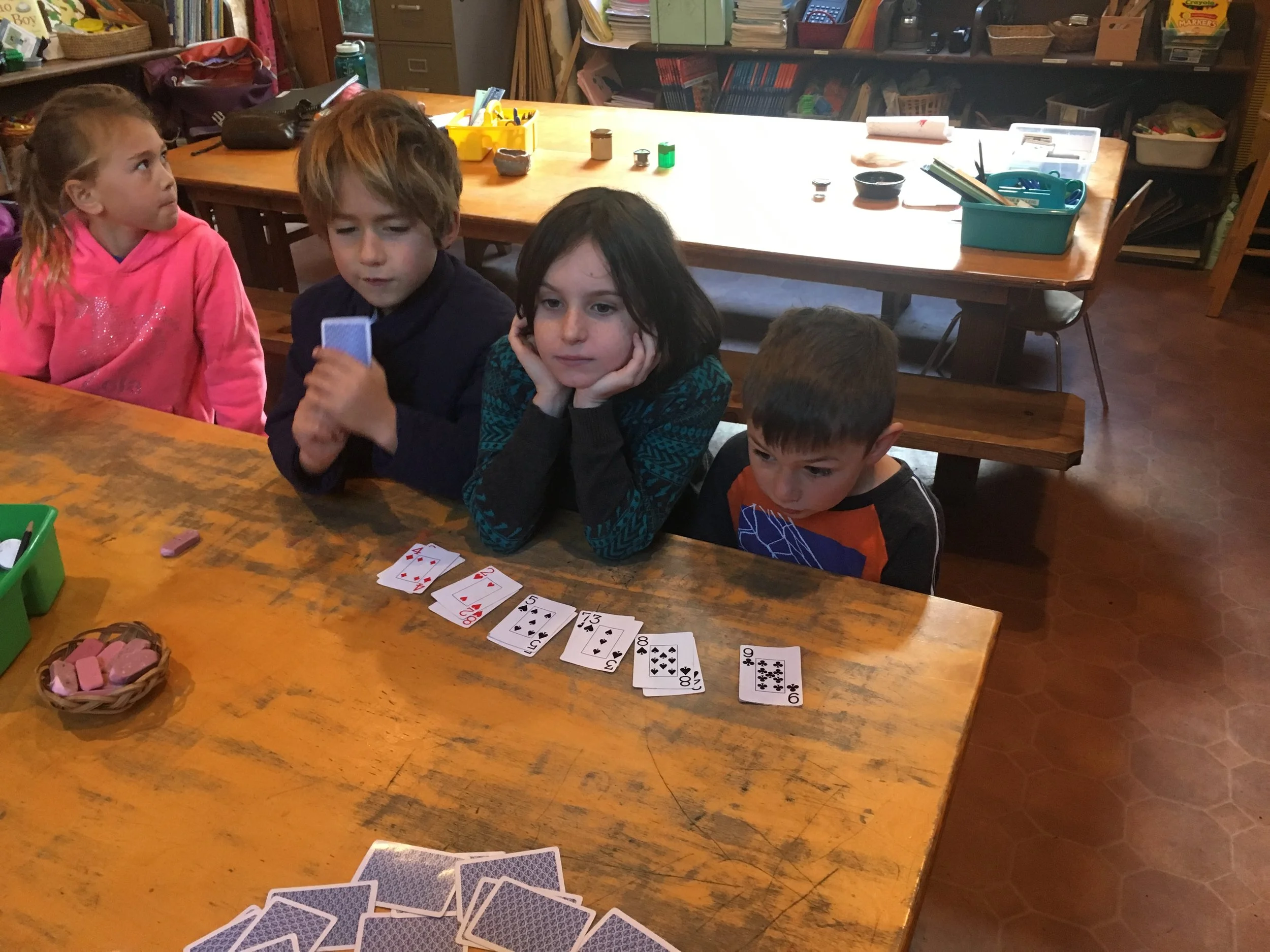
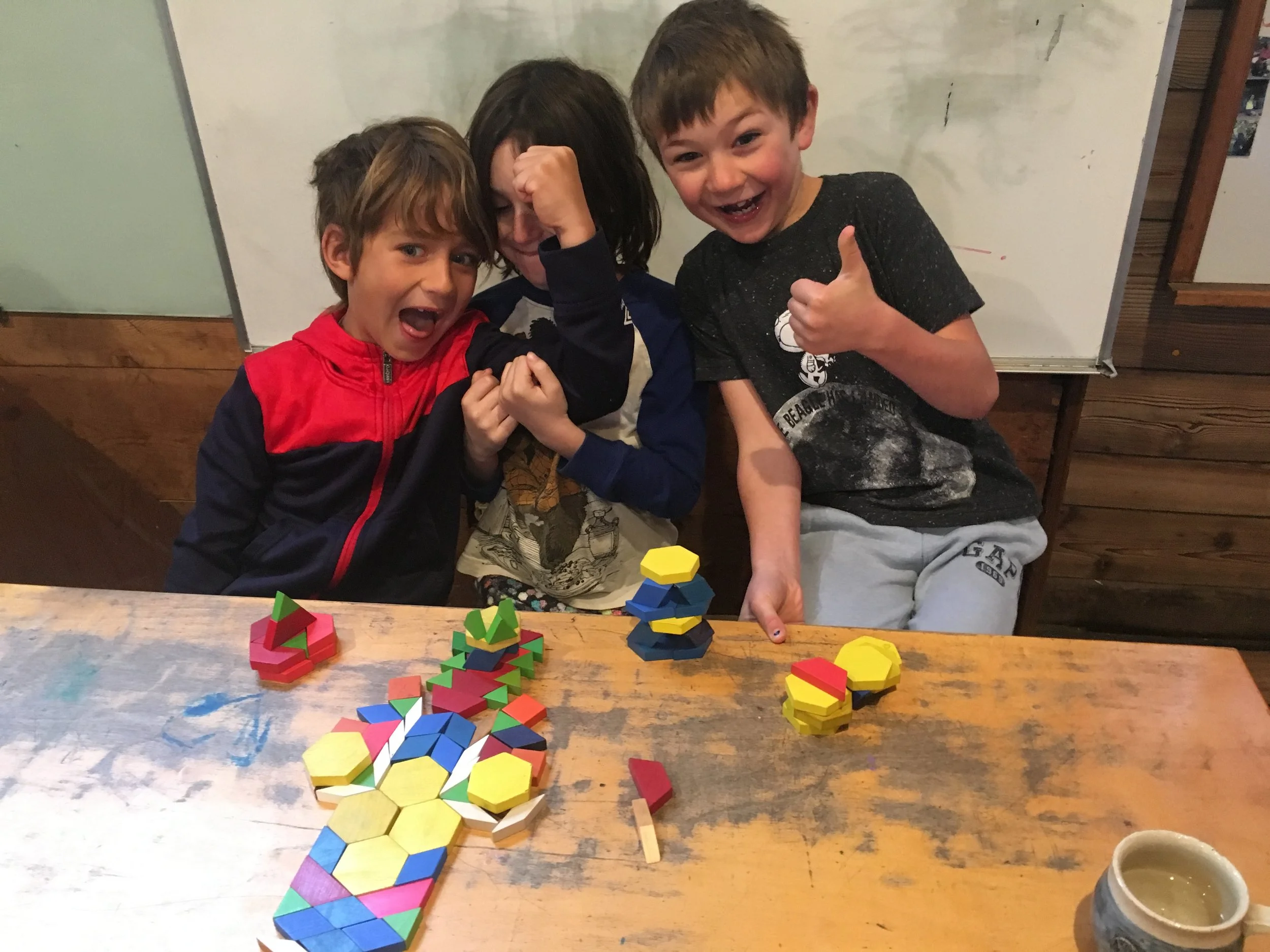
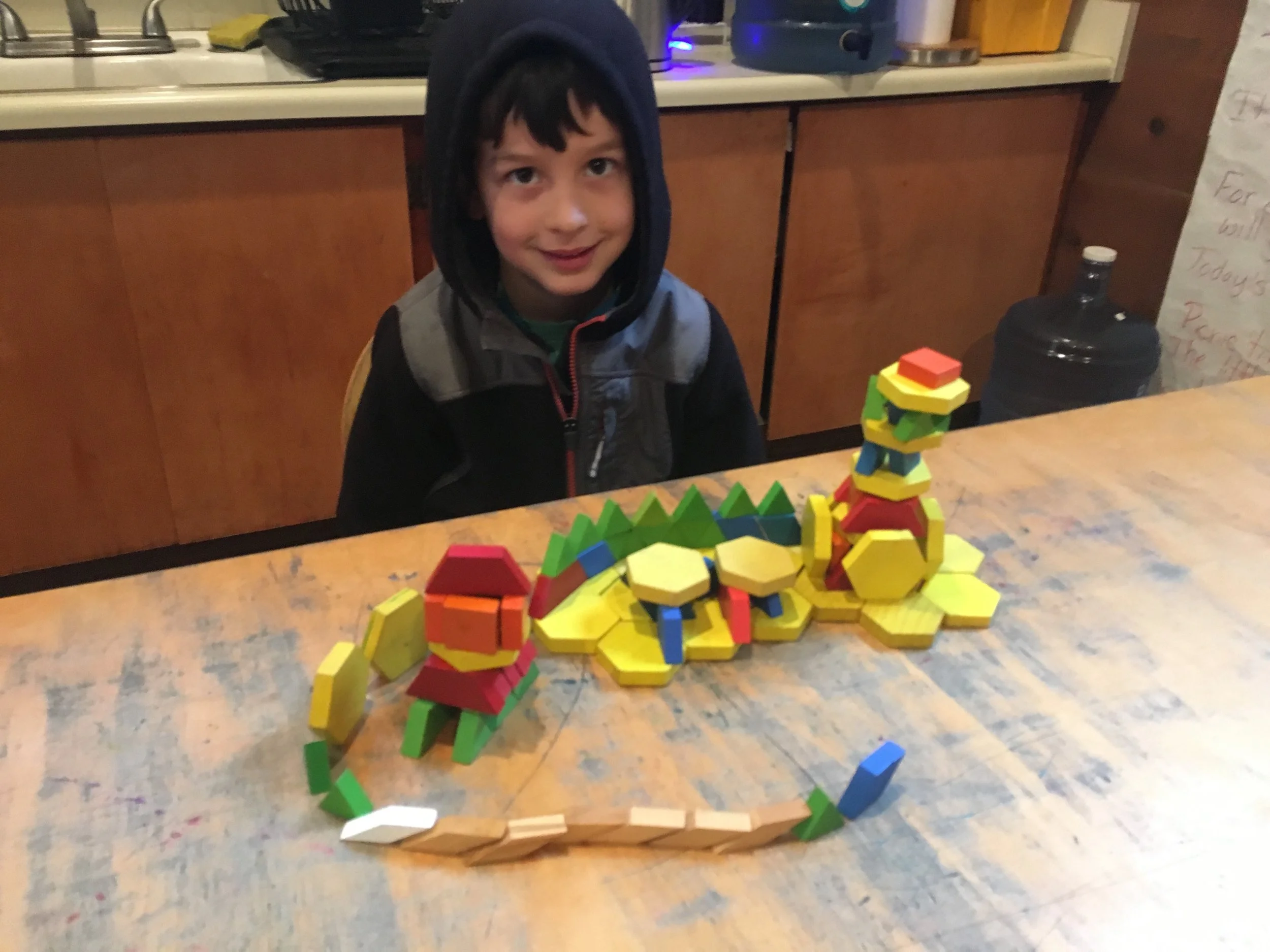
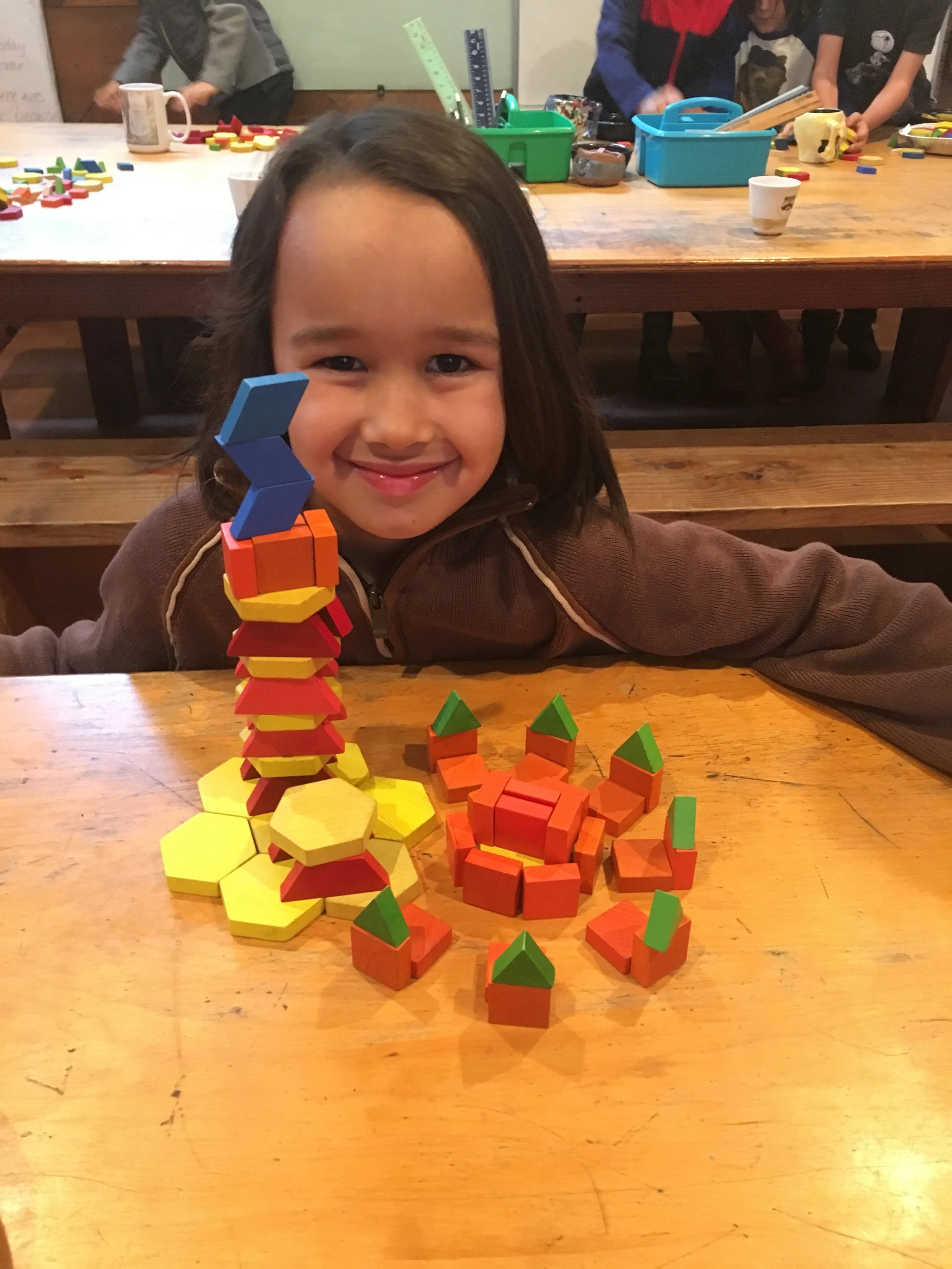
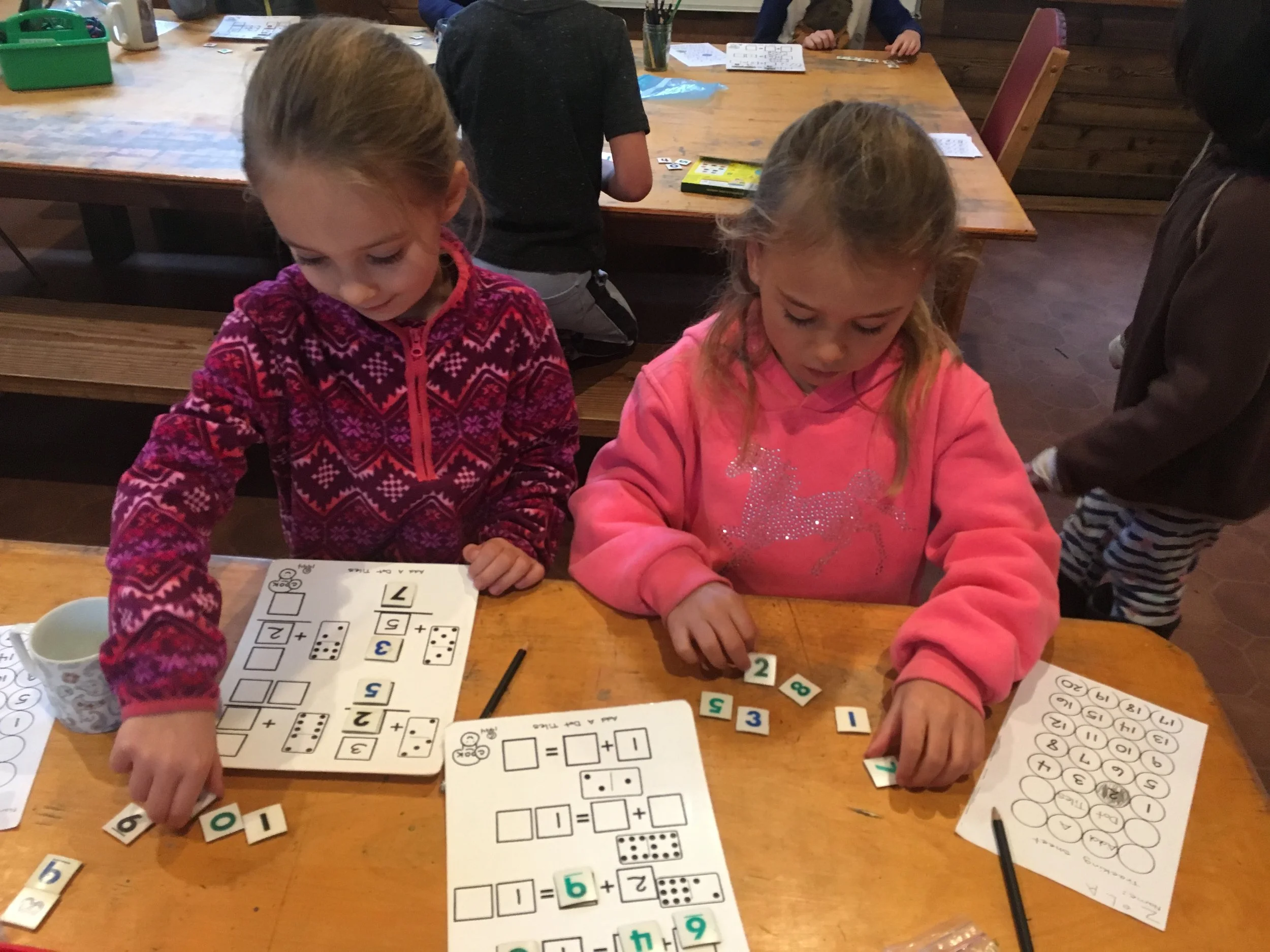
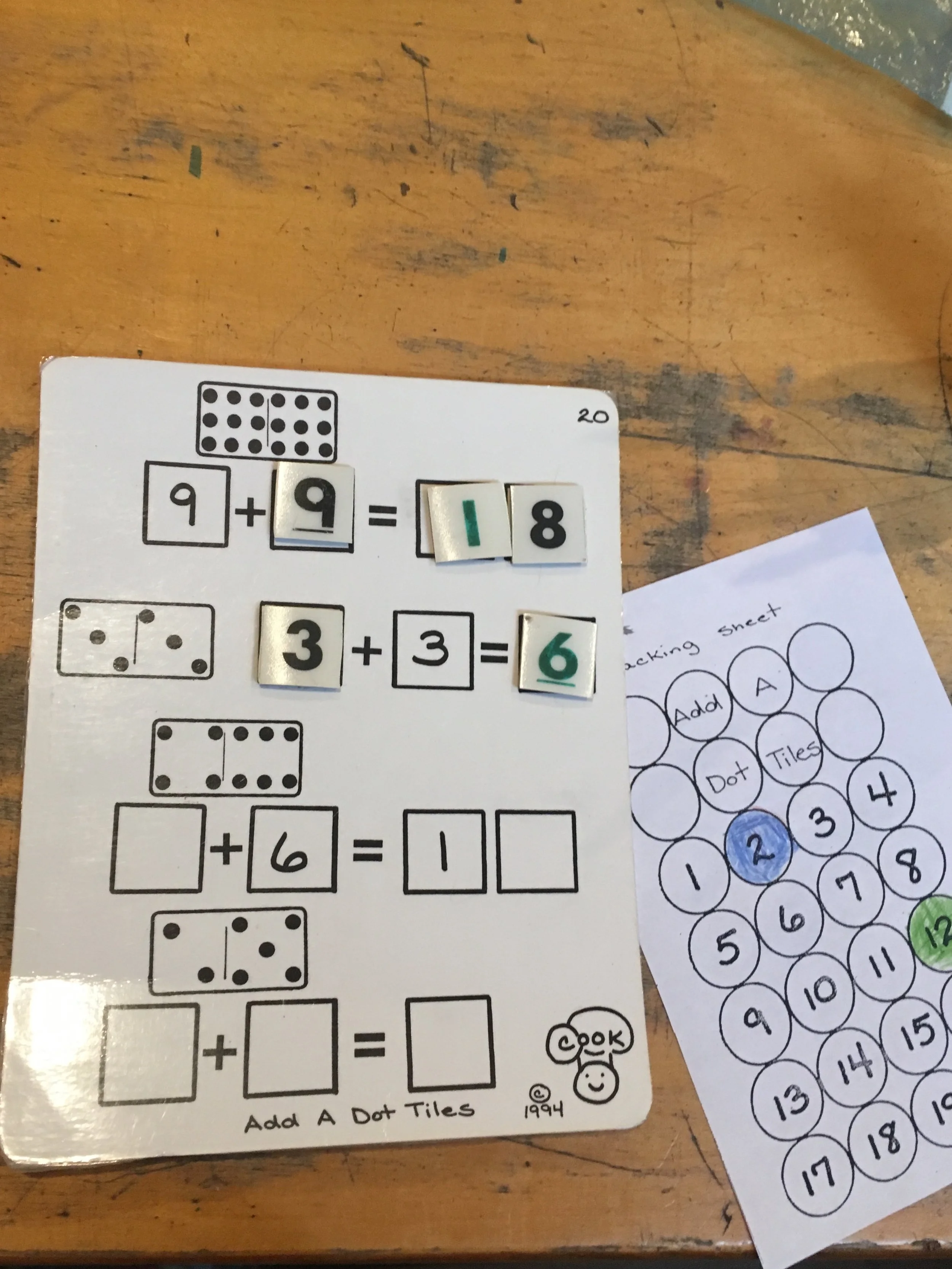
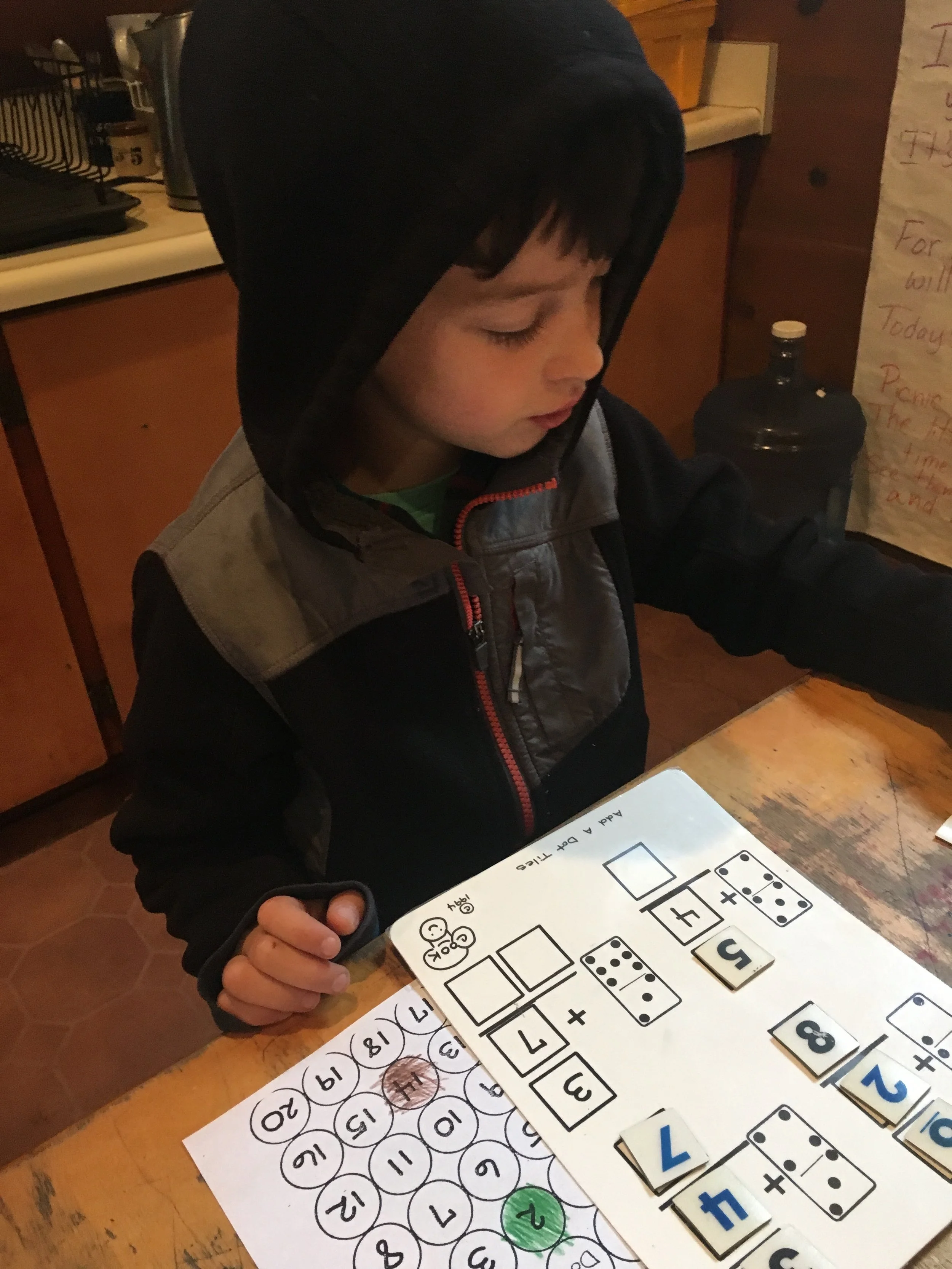
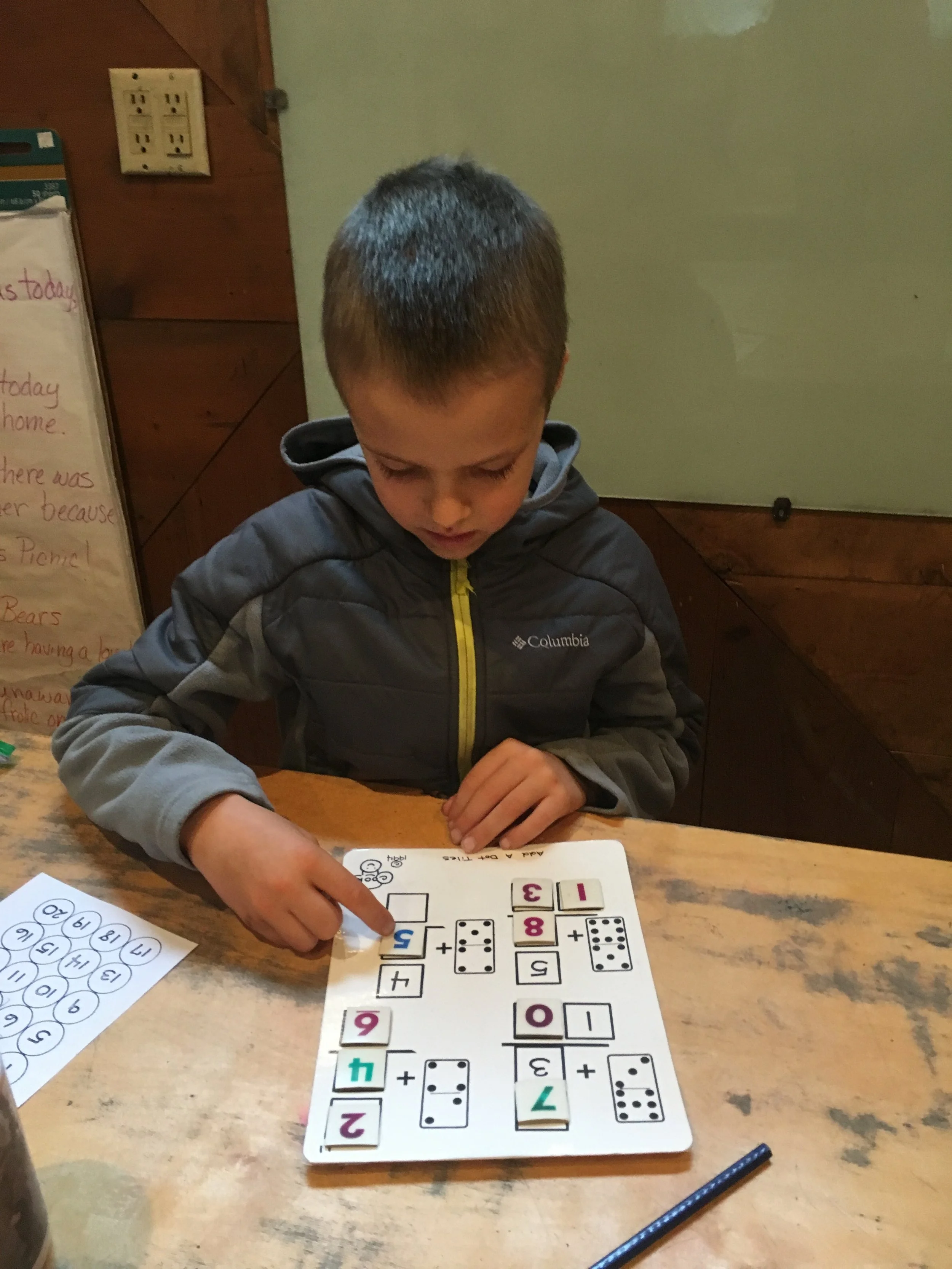
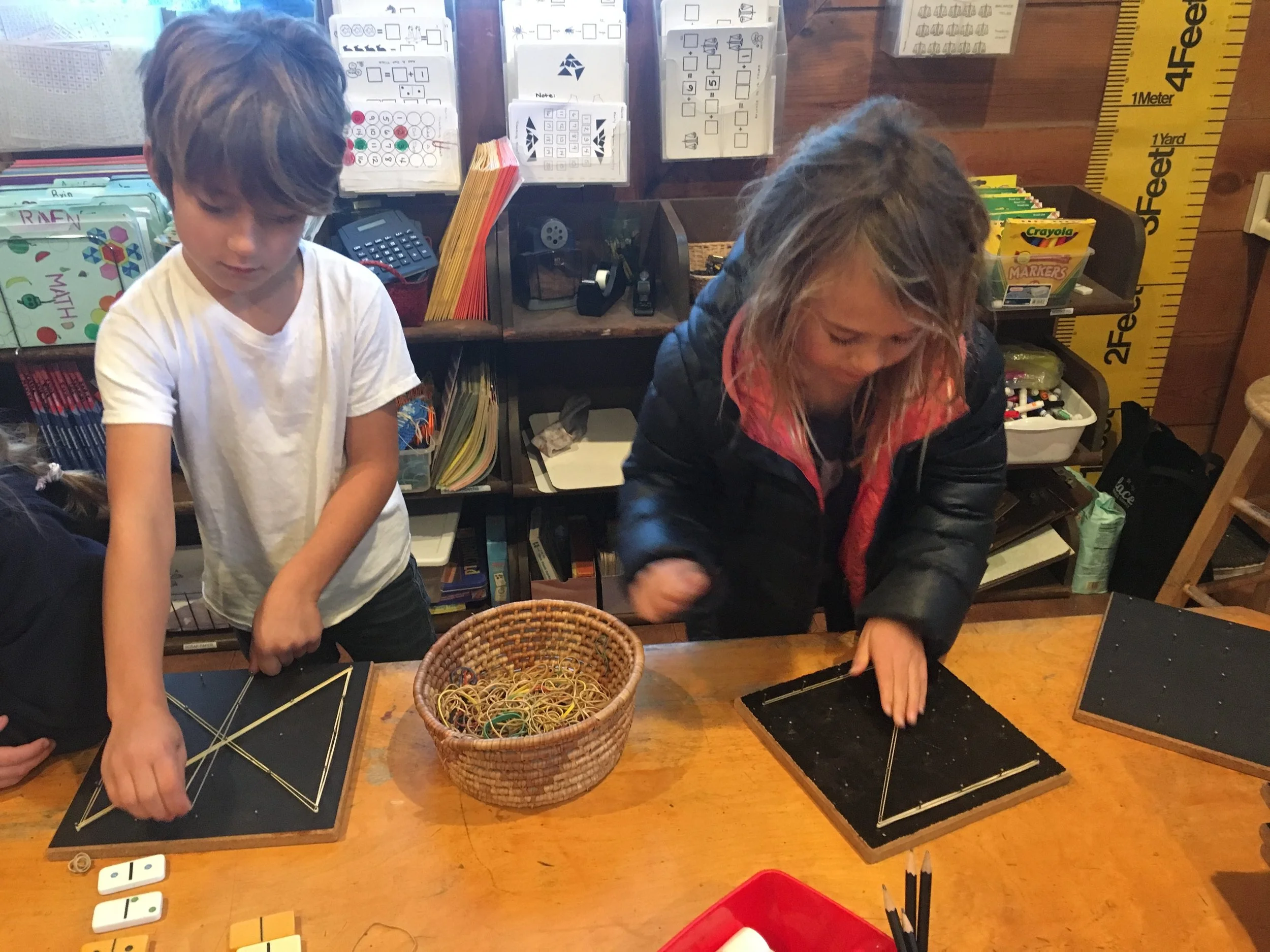
These students are learning so much. We have several who have reached 1,000 on their number scrolls, a lot of interest in task cards, creativity with pattern blocks, template drawing, and geo board designs.
We did a lesson from the Everyday Math curriculum in which one student created a pattern using rubber bands on a geo board and hid it from her or his partner. The student then gave the partner verbal directions so that the partner could recreate the design on a second geo board. This was a great way for them to practice communication using mathematical terminology.