Math
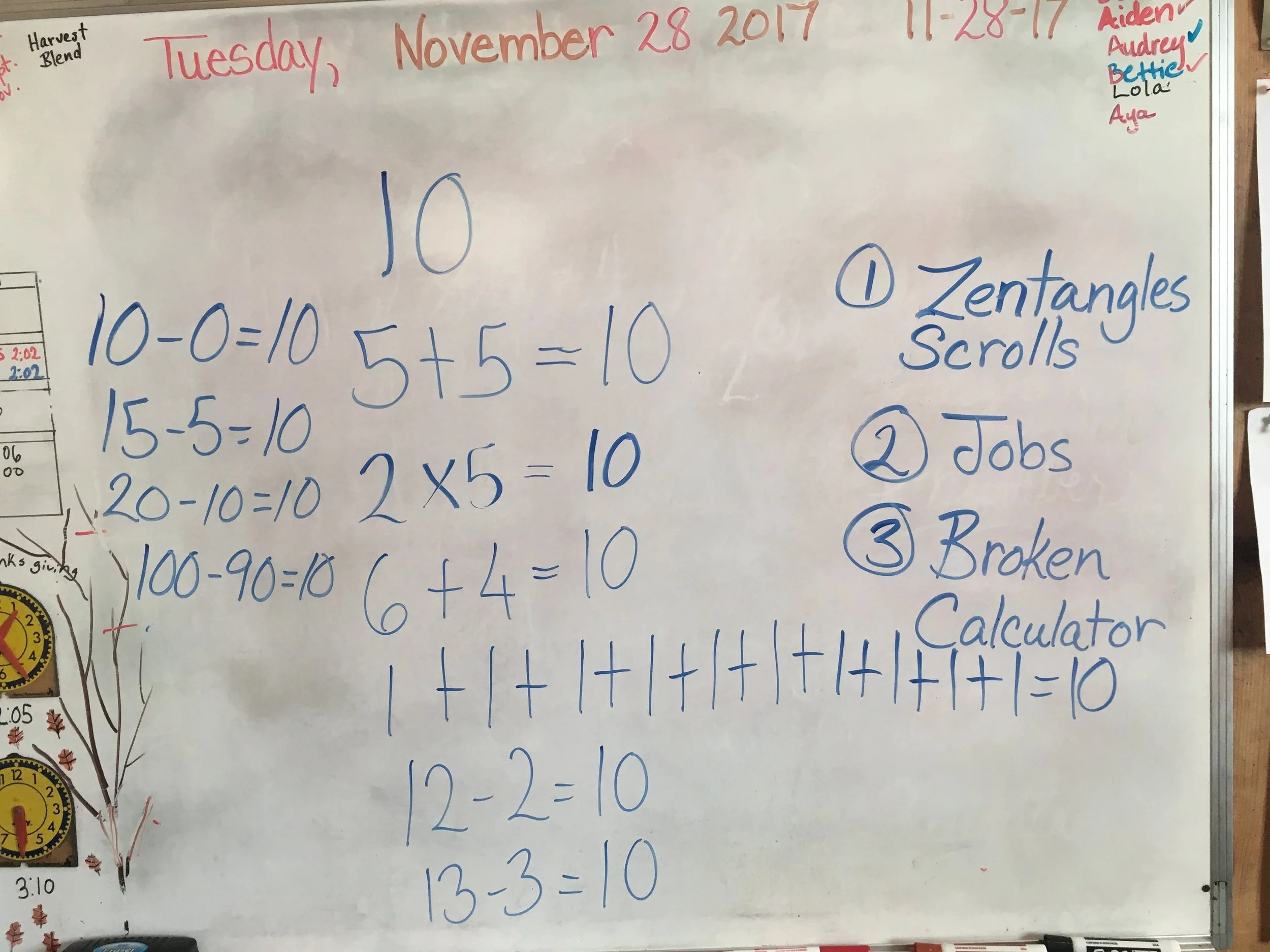
Introduction of lesson, beginning with an example from Equivalent Names for Numbers
I extended the concept of Equivalent Names for Numbers by going into a lesson called Broken Calculator from our Everyday Math curriculum. In this lesson, students pretend that a key on the calculator is broken and cannot be used to create the target number. Students have to find three ways to obtain the target number using the calculator. This was a challenging concept and students were grouped by ability and understanding so that I could help those who needed more support. Everyone solved problems using the Broken Calculator concept and then I encouraged some students to use a more concrete model of creating drawings to represent the number.
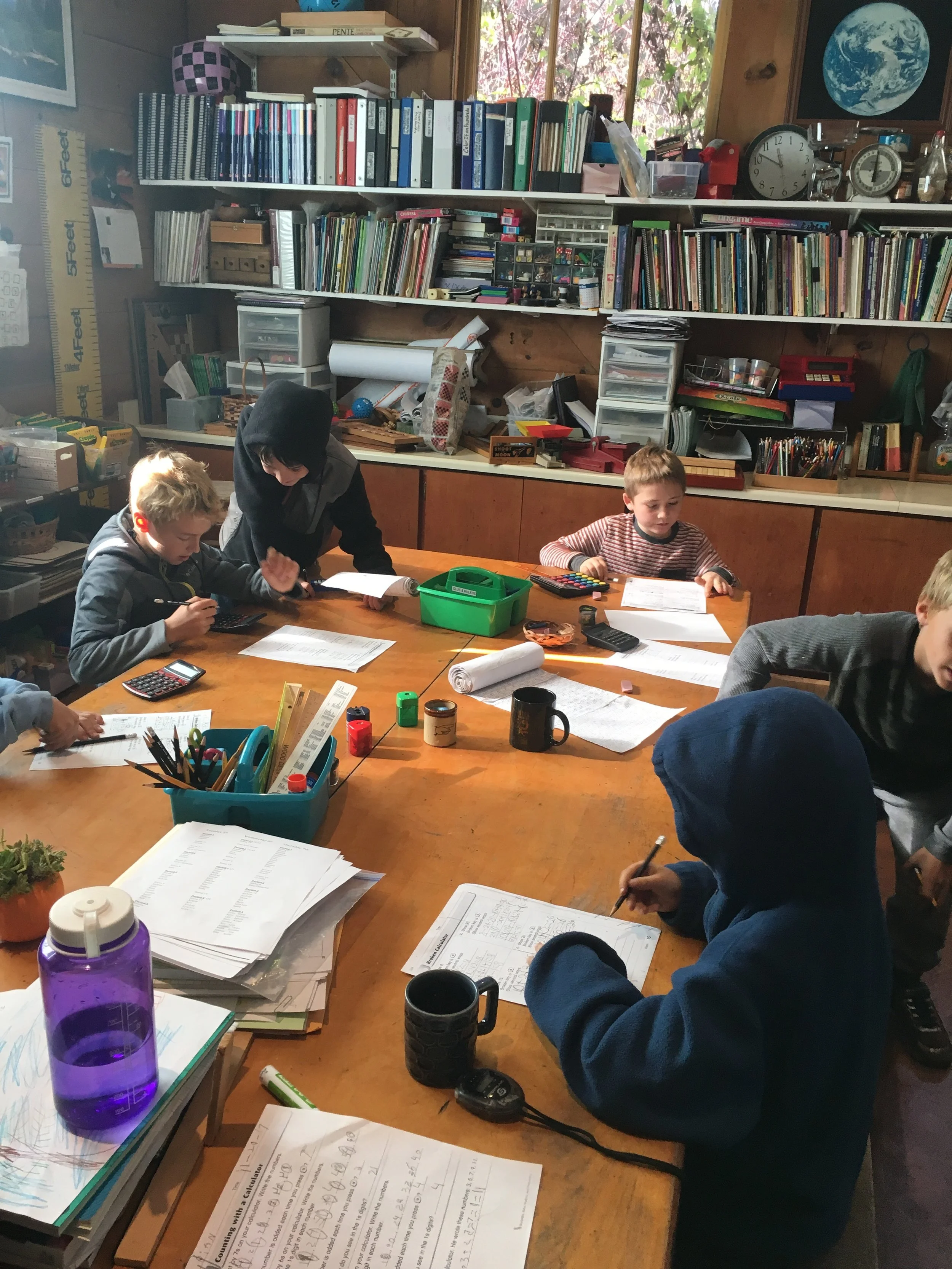
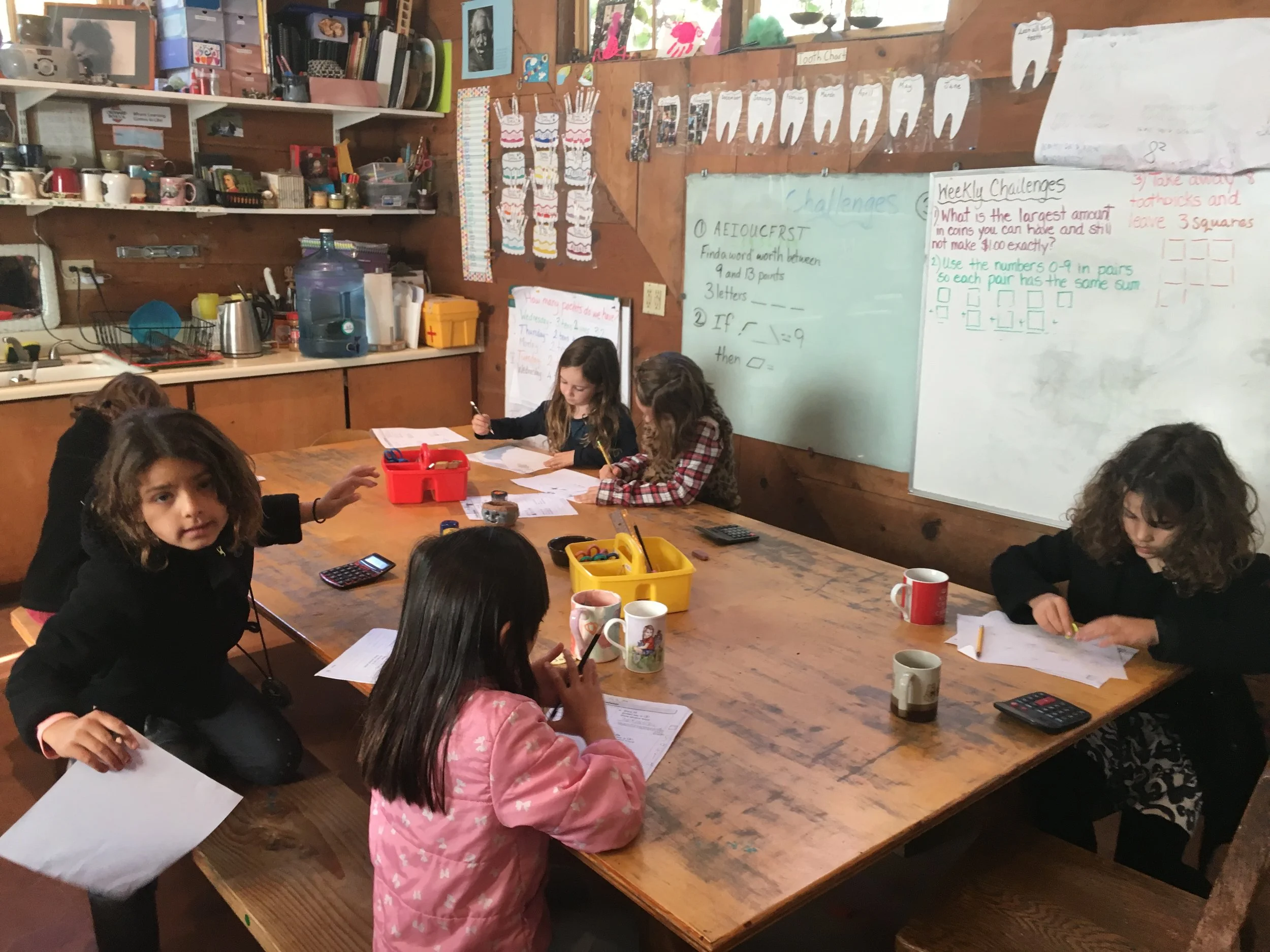
It is important to honor and encourage all ways of learning: visual, auditory, and kinesthetic. '"Approximately 20 to 30 percent of the school-aged population remembers what is heard; 40 percent recalls well visually the things that are seen or read; many must write or use their fingers in some manipulative way to help them remember basic facts; other people cannot internalize information or skills unless they use them in real-life activities such as actually writing a letter to learn the correct format." (Teaching Students to Read Through Their Individual Learning Styles, Marie Carbo, Rita Dunn, and Kenneth Dunn; Prentice-Hall, 1986, p.13.)
For some, auditory input is most valuable; others rely upon a visual style. Still others learn through kinesthetic means, or a combination of the three. Every person has one primary learning mode. Once you identify that mode, you can learn to maximize it and enhance your child's education.' (Learning Styles: Visual, Auditory, Kinesthetic by Terry Farwell, Family Education).
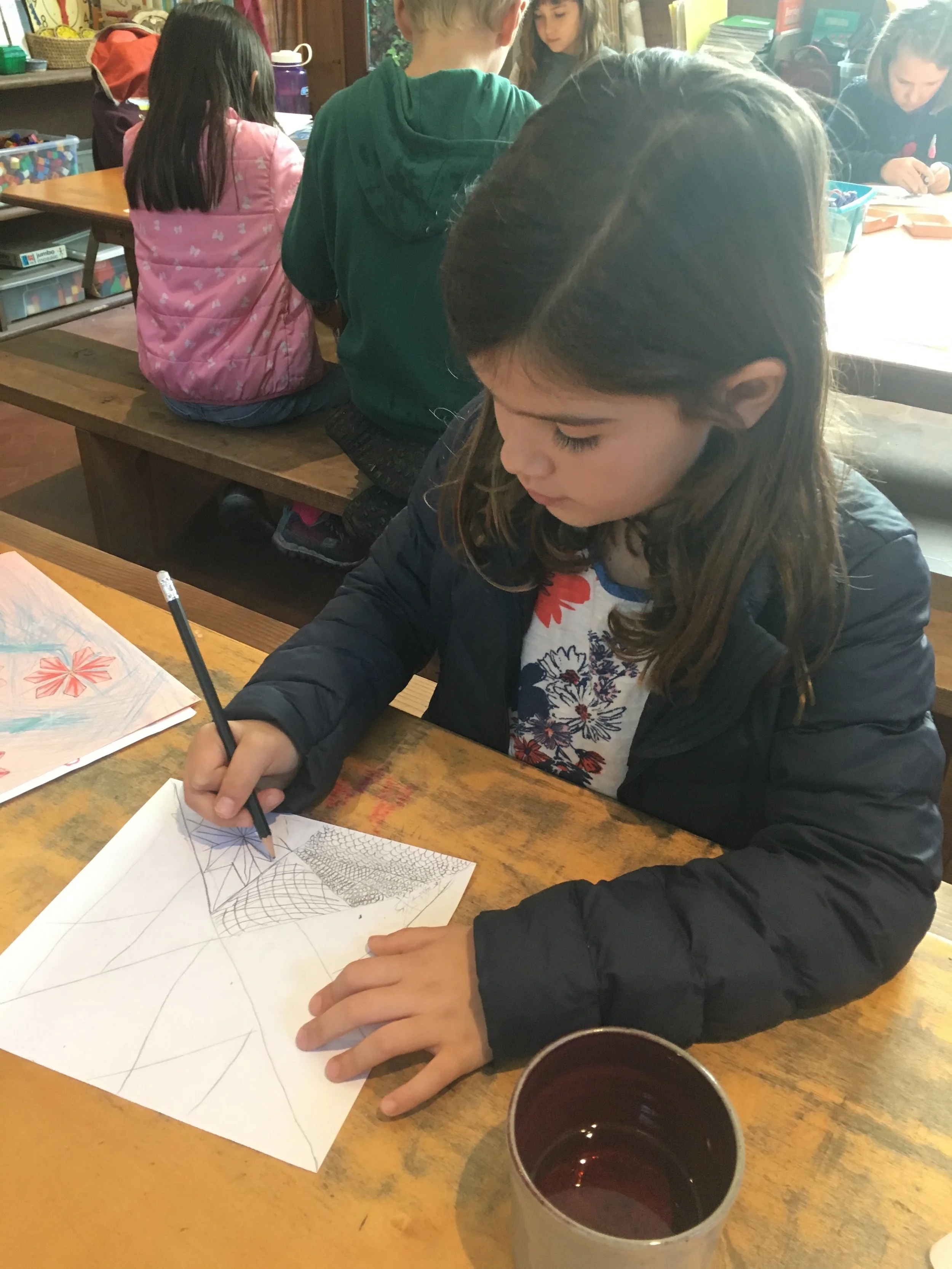
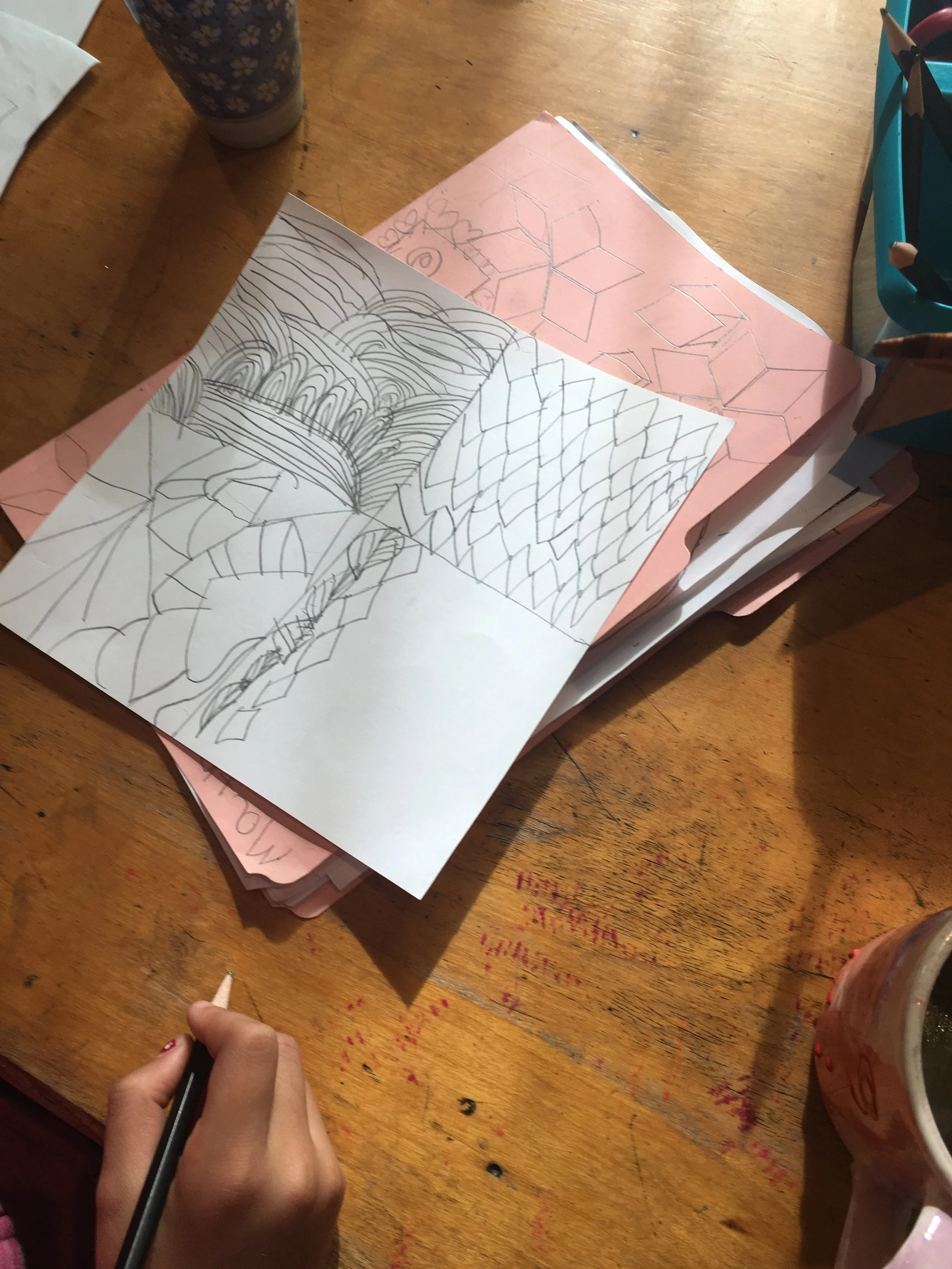
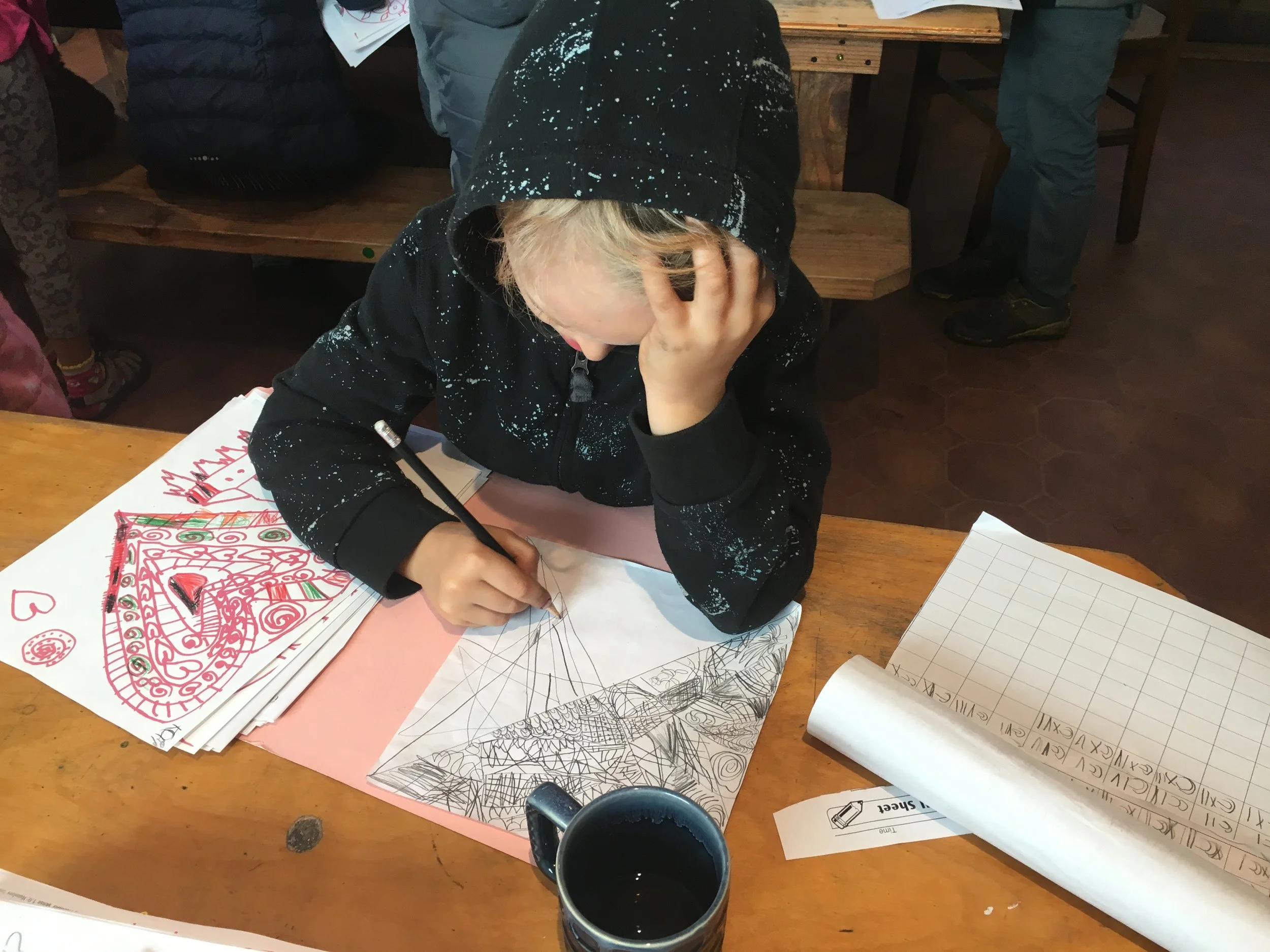
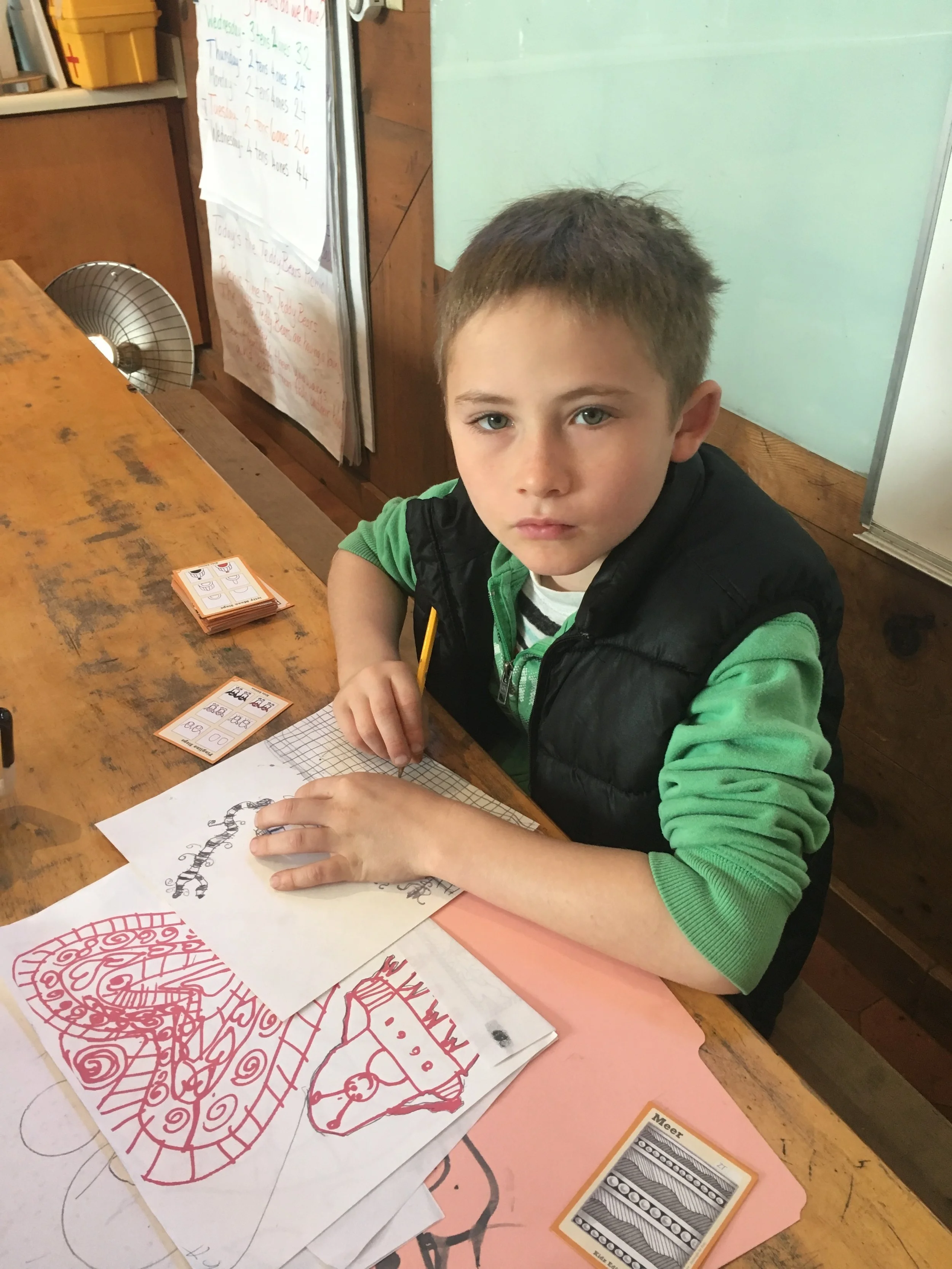
Especially at this age and grade level, using manipulatives or drawings to understand concepts is very valuable. It is fine to use the dots on the dice for adding, or fingers, or the diamonds on the cards. In the Common Core, problems often ask children to show their work, so drawings, tally marks, any illustration of one's thinking is wonderful! And having the opportunity to work with pattern blocks, tangrams and zentangles enhances students' understanding of geometry.
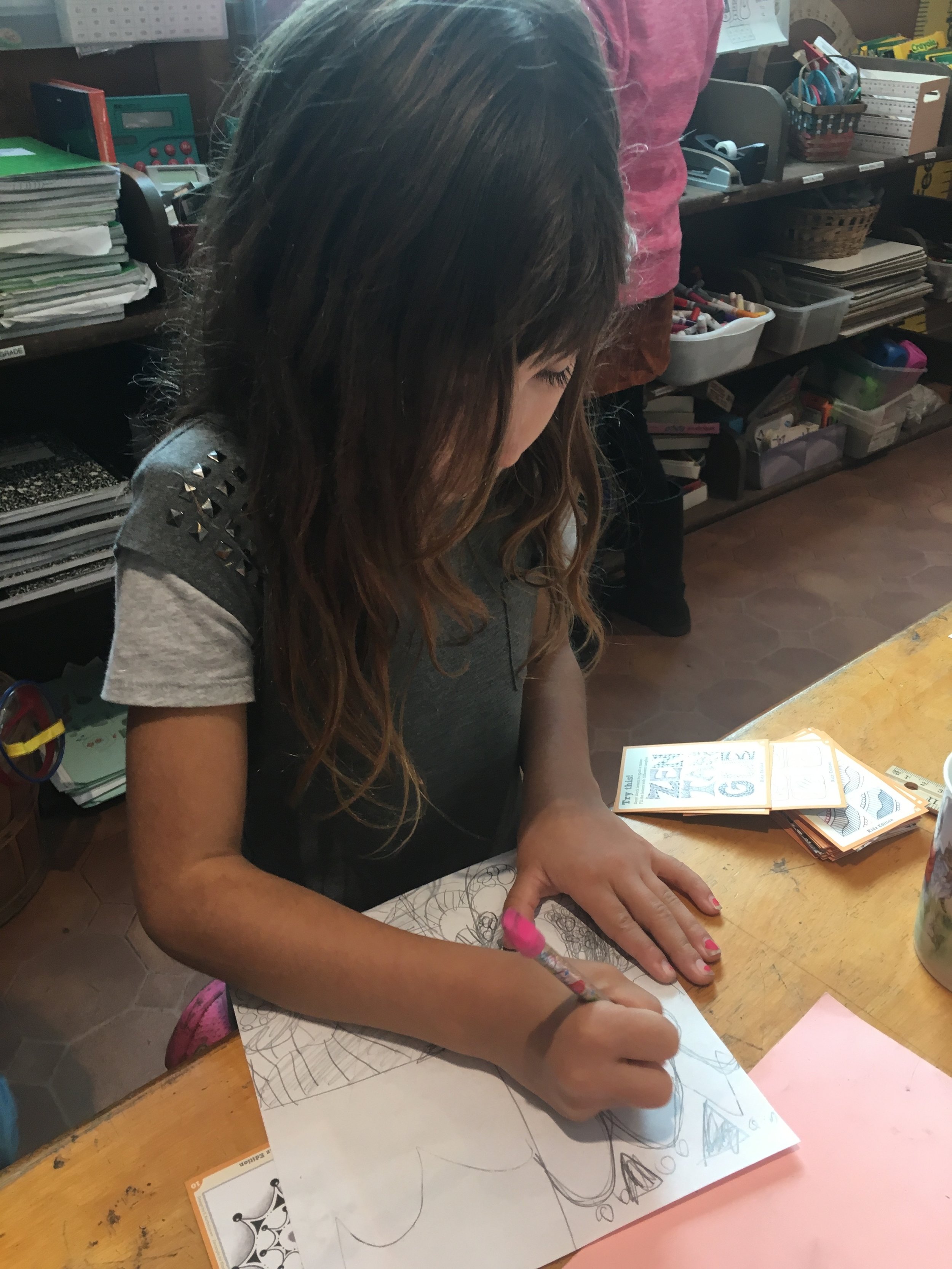
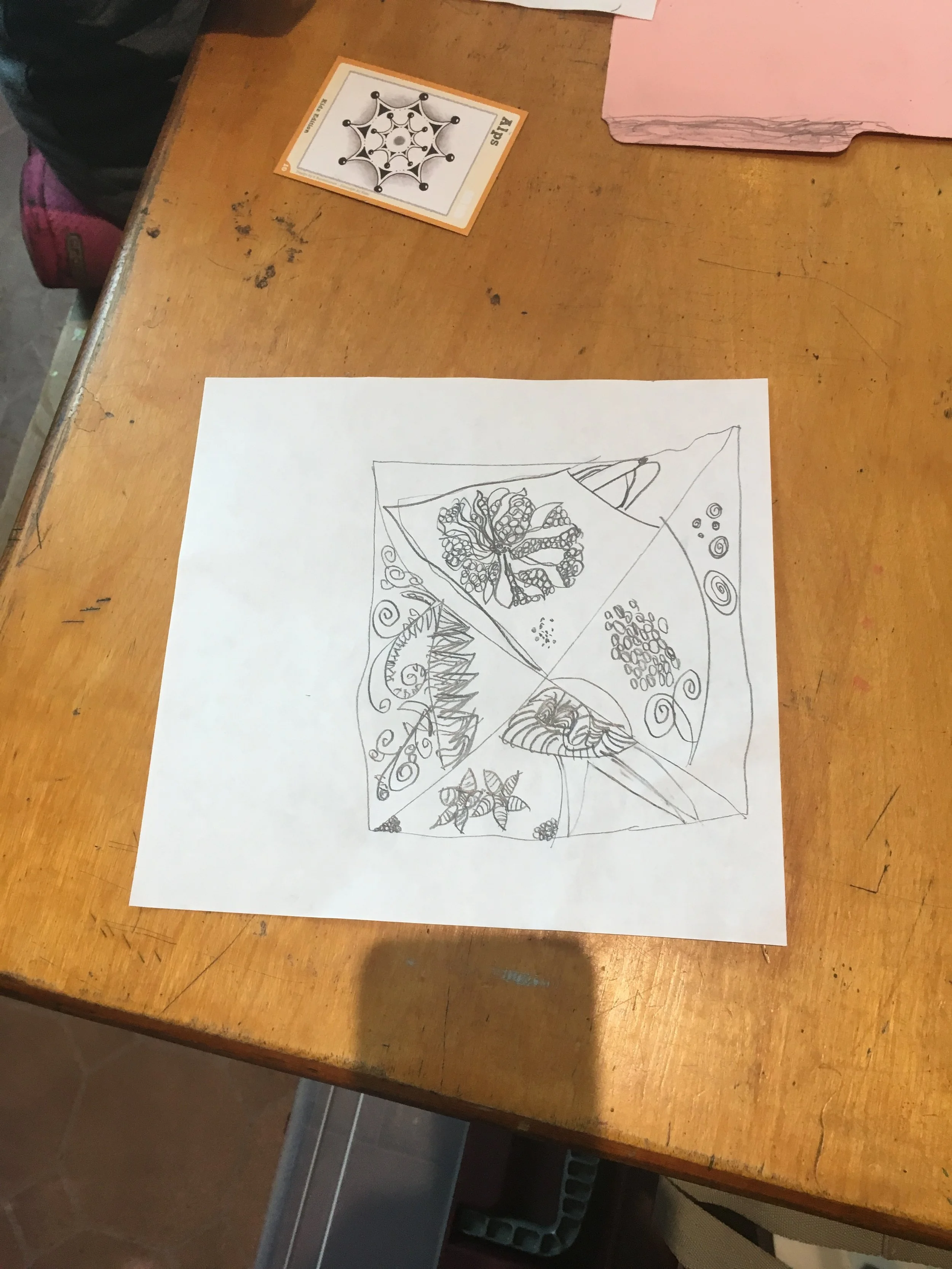
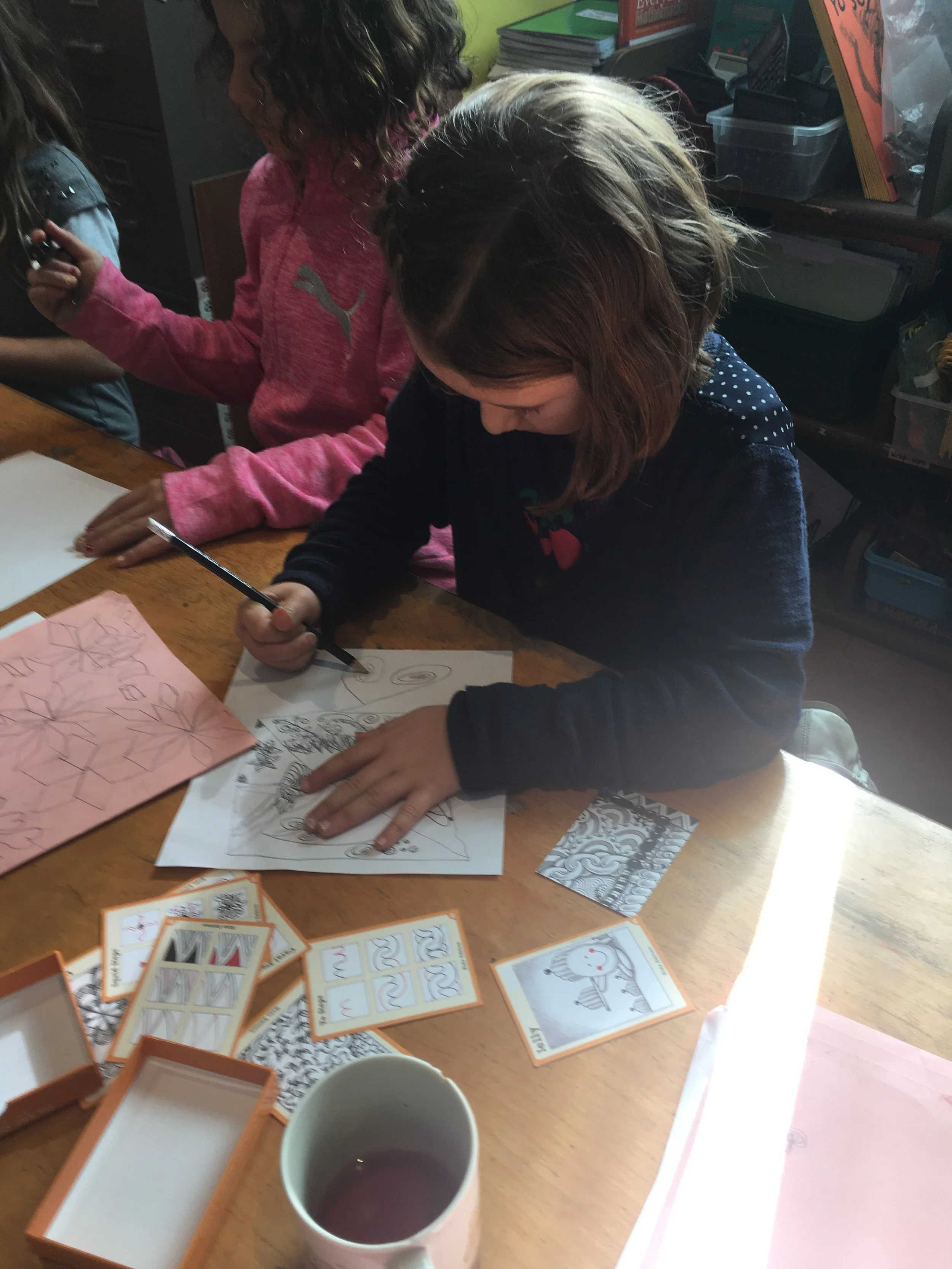
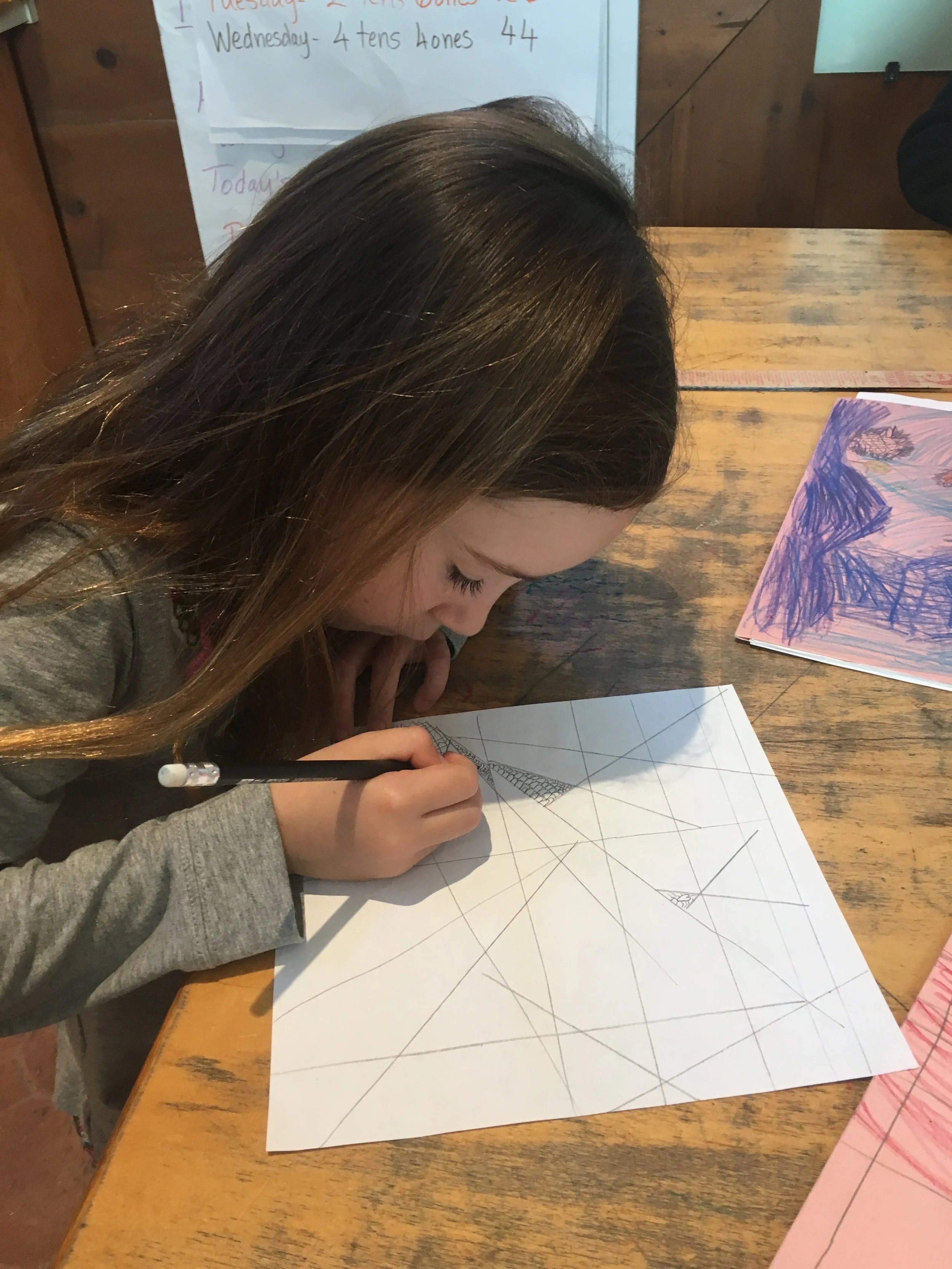
Play rehearsal meant that I only had the students on Monday of the week of the play. However, during the time period leading up to break, we worked on our scrolls (still their favorite activity), created zentangle cards and bookmarks, made six pointed star snowflakes, solved flip overs (addition, subtraction, division depending on understanding), made cookies, and solved a real world investigation about how we would share out the cookies given the yield of the recipe. This is a beginning understanding of division and remainders. I continue to be amazed this group's enthusiasm, creativity, and ability to focus.
Below, photos from the entangle exploration.